
Authors
-
5teveh
-
6bsude
-
abbietoal
-
abigailane30
-
akcharl
-
amycortvriend
-
anfieldbhoy
-
anitawrzesniewska
-
FlowerViolet
-
asteven08
-
aysheaobrien1ca0bcf715
-
bethanyrdavies
-
bonnieleighmiddleton
-
bronaghvh
-
bwilleva
-
charlottejdann
-
cherylgardner2015
-
chris13418861
-
criminologyanon
-
criminologysocietyuon
-
davidjpalmer57
-
Demi King
-
drkukustr8talk
-
ej213
-
finlaywilliams24
-
Francine Bitalo
-
gilliansiddall
-
gregpaillet
-
Gwen
-
haleysread
-
hannahmaysmith
-
hanpearce93
-
helenpoole2
-
helentrinder
-
ifedamilola
-
jackrichmond21
-
jazzie9
-
jesjames50
-
justinkotze
-
kayleighwillis21
-
keziaasante
-
kirstyk196
-
klgrant1
-
liammiles1
-
Lilly Lewis
-
madams1965
-
Maddyk97
-
manosdaskalou
-
marlywindle
-
Maxine
-
meganking046
-
molliekel13
-
Mr_Hari_Parekh
-
nahidatakhtar
-
natalieh2000
-
npetfo
-
Paula Bowles
-
paulsquaredd
-
robynmansfield1
-
saffron_garside
-
Sallek Yaks Musa
-
samc0812
-
samtilley7
-
samuellangley
-
seanrj94
-
shanwareing
-
Shaun Ken-ucheonye
-
sineqd
-
Sophie Rowson
-
spatchett94
-
svr2727
-
tgomesx
-
Tré Ventour-Griffiths
-
tuesdaywoodward23
-
Vaseem Khan Ltd
-
wadzanain7
-
zeechee
-
zo3conneely

Criminology is everywhere!
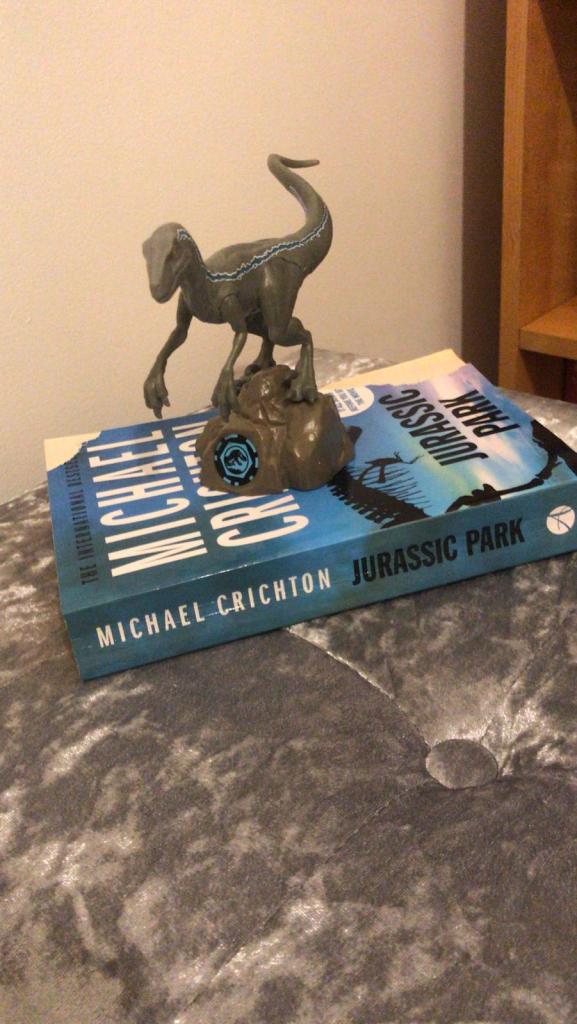
When I think back to thinking about choosing a degree, way back when, I remember thinking Criminology would be a good choice because it is specific in terms of a field: mainly the Criminal Justice System (CJS). I remember, naively, thinking once I achieved my degree I could go into the Police (a view I quickly abandoned after my first year of studies), then I thought I could be involved in the Youth Justice System in some capacity (again a position abandoned but this time after year 2). And in third year I remember talking to my partner about the possibility of working in prisons: Crime and Punishment, and Violence: from domestic to institutional (both year 3 modules) kicked that idea to the curb! I remember originally thinking Criminology was quite narrow and specific in terms of its focus and range: and oh my was I wrong!
Whilst the skills acquired through any degree transcend to a number of career paths, what I find most satisfying about Criminology, is how it infiltrates everything! A recent example to prove my point which on the outside may have nothing to do with Criminology, when in actual fact it could be argued it has criminological concepts and ideas at its heart is the 2015 film: Jurassic World. It is no secret that I am a huge lover of Crichton novels but also dinosaurs. But what I hope to illustrate is how this film is excellent, not just in relation to dinosaur content: but also in relation to one of my interests in Criminology.
Jurassic World, for those of you who have not had the pleasure of viewing, focuses on the re-creation of a Jurassic Park, sporting new attractions, rides and dinosaurs in line with the 21st century. The Indominus Rex is a genetically modified hybrid which is ‘cooked-up’ in the lab, and is the focus of this film. Long story short, she escapes, hunts dinosaurs and people for sport, and is finally killed by a joint effort from the Tyrannosaurus, Blue the Velociraptor and the Mosasaurus: YAY! But what is particularly Criminological, in my humble opinion, is the focus and issues associated with the Indominus Rex being raised in isolation with no companionship in a steeled cage. Realistically, she lives her whole life in solitary confinement, and the rangers, scientists and management are then shocked that she has 0 social skills, and goes on a hunting spree. She is portrayed in the film as a villain of sorts, but is she really?
Recently in Violence: from domestic to institutional, we looked at the dangers and harms of placing individuals in solitary confinement or segregation. Jurassic World demonstrates this: albeit with a hybrid dinosaur which is fictitious. The dangers, and behaviours associated with the Indominus Rex are symbolic to the harms caused when we place individuals in prison. The space is too small, there is no interaction, empathy or relationships formed with the dinosaur apart from with the machine that feeds it. The same issues exist when we look at the prison system and it raises questions around why society is shocked when individuals re-offend. The Indominus Rex is a product of her surroundings and lack of relationships: there are some problematic genes thrown in there too but we shall leave that to one side for now.
There are a number of criminological issues evident in Jurassic World, (have a watch and see) and all of the Jurassic Park movies. Criminology is everywhere: in obvious forms and not so obvious forms. The issues with the prison system, segregation specifically, transcend to schools and hospitals, society in general and to dinosaurs in a fictional movie. Criminology, and with it critical thinking, is everywhere: even in the Lego Movie where everything is awesome! Conformity and deviance wrapped up in colourful bricks and catchy tunes: have a watch and see…

Share this:


Reflecting on reflection

For some years now students taking the third year Critiquing Criminalistics module on our criminology course at the university have had an assessment relating to a reflective diary. Most educators and those in other professions will be aware of and understand the advantage of reflection and reflective diaries so it is probably not necessary to revisit the well-rehearsed arguments about benefits to learning and personal development. Each year, I have found that over the course of the module, the students have come to recognise this and have intimated how they have enjoyed reflecting on what they have learnt in the class or how reflecting on personal experiences has been beneficial. And they comment on how they have sought out further information to gain additional knowledge or to put what they have learnt in some form of perspective. It is of course what we as educators would want and expect from a reflective diary assessment that after all counts towards their marks for the module.
What has surprised me though is how much reviewing these modules has benefited me. I have learnt from and continue to learn my students. We all recognise or at least should the old saying ‘the more I know, the more I realise I don’t know’ or similar. My students prove that is the case often with each round of diary entries I review. The diaries can provide an insight into students lives and thoughts. For some of them it may be a cathartic release to capture their feelings on paper, for me it is enlightening and provides a greater understanding of some of the challenges they face not only as students but also as predominately young adults in a challenging and at times hostile social and economic environment. Perhaps what is equally as enlightening is the additional knowledge that students provide about the subject area being discussed and taught. It is almost like sending out my own little army of literature reviewers with a challenge to advance their knowledge and ipso facto, mine. I am clear that part of the reflection process is about taking what you have learnt further and as this an assessment, demonstrating this additional knowledge with some academic rigor. And so, I find that in some cases what I have stated in the class (currently online) is challenged and that challenge is supported by academic reading. When I read some of these little gems, I smile but alongside this is the additional work created as I review the journal article they have referenced and then decide whether to revisit my lectures to add in the additional information. Even if I don’t, it all adds to my knowledge and, on reflection as my students are proving, there is plenty of scope to find out more.
Share this:


Switching off?

I am not sure whether this relates to age or not but during my late 20s I became increasingly reluctant to engage with watching television, using my phone and engaging in social media. I suppose there are a number of reasons for this. One reason is that I enjoy being able to ‘switch-off’ from looking at any form of screen. The change in the nature of my job role and in this current lockdown context means that at the moment I am less able to ‘switch-off’.
The increased screen time demand plays all sorts of tricks on the human body. We seem to be a nation of people that are experiencing the sensation of a ‘buzzing brains’, ‘square eyes’, headaches and ‘burning faces’ due to too much screen time.
Recently, I made an irrational decision to watch the rather grim Fifteen Million Merits episode of Black Mirror. This episode consists of individuals being forced to look at screens at all hours, and it also included much seedier scenes. This episode has absolutely no resemblance to the current situation that we are all in. Although, the episode did remind me of some of the diffculties that people may be experiencing in terms of not being able to ‘switch-off’ from looking at screens whilst working from home.
Work now consists of me using my laptop in my office. I do wonder whether living in smaller living spaces makes matters worse? In terms of my own flat, my office is six steps away from my living room and two steps away from my bedroom. I have never experienced such close proximity to work. When work ends I then attempt to ‘wind-down’ by using my phone or watching the television. My whole day seems to consist of looking at some form of screen. Some of us are fortunate to have gardens. I wonder if this helps people to spend a bit or time relaxing whilst working from home?

Maybe we will all be diagnosed with ‘square eyes’ and ‘buzzing brain’ disorders in the future. Maybe these terms will make it into the dictionary. What I do know is that when lockdown ends I would love to spend a whole day just staring into space, lying on the grass or floating in a warm sea somewhere outside of the U.K. Is it just me that feels this way? Maybe I have just lost the plot.
The moral of this story is, do not watch dystopian television programmes during a lockdown. As you may begin to reflect about all sorts of nonsense!
Share this:


#CriminologyBookClub: The Tiger’s Wife
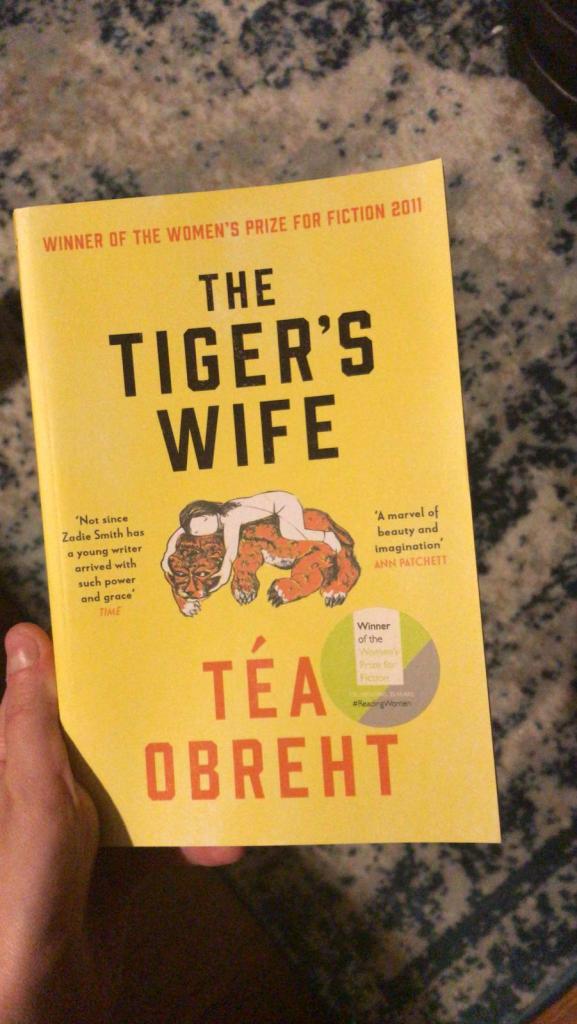
I selected The Tiger’s Wife for us all to read for book club. On first impressions the book seemed to be very interesting. My understanding was that the book would be about a tiger, his wife, a grandad and The Jungle Book. I have very little knowledge of Disney, but I did enjoy the upbeat ‘Bare Necessities’ Jungle Book song as a child. As it turns out, both The Jungle Book and The Tiger’s Wife are both grim tales. In terms of The Tiger’s Wife, I enjoyed the elements of humour within the book. I also enjoyed reading about the smells, scenery and tastes of another country given that I have not been able to leave Britain for a while. The ‘deathless man’ character was also quite intriguing. I do feel unsure about this book though. At times I was puzzled about the plot. It is also an incredibly sad and heavy tale which covers themes like war, death, disease and domestic violence – perhaps not the most appropriate choice given that we are in a national lockdown! I think this is a book that I may return to in better times.
@haleysread
What struck me about the book was that it centred around death but was largely devoid of emotion. The grandmother was described as being emotional about the death of her husband, but the book was narrated in such a way that this emotion was not felt by the reader because the grandmother was not wholly present. She was always at the other end of the phone and therefore removed from the reader. Instead, the book was lightened with humorous characters such as the Deathless Man and folk tales of superstition. These characters and tales transformed what could (and perhaps should) have been a depressing tale to a mildly sorrowful yet darkly comedic series of tragedies.
@amycortvriend
This was quite possibly my favourite of all the book club reads so far, although it is a particularly tight call (4th instalment of inspector Chopra is a gem: but shhhh spoilers)! I am quite surprised by how much I enjoyed this book which appears much to the contrast of my esteemed friends in book club. It was beautifully written, depressing, full of escapism and challenging at the same time. I was truly lost in this book as a story: I am not sure I can tell you what the story is about or what the message or meaning behind it is. But I adored it. It made me think of Big Fish and The Bee Keeper of Aleppo all mixed together (another 2 gems if you have not read them). I can appreciate how perhaps it was not the most fitting for a global pandemic, but nevertheless it is a text that I will most certainly read again!
@jesjames50
In a far away corner in Europe, people try to live with the aftermath of a war. The conflict has brought up in the community, wounds that take time to heal and the doctors who look after the physical wounds are trying to cope with the long-term effects of harm. In the backdrop of that, the story of a young doctor who is remembering her beloved grandfather takes central stage. The woman discovers a grandfather through the eyes of others. This is a post war society and many things do not make sense. The author, Téa Obreht, stitches together a story of reality with a lot of surrealism to underline the absurdness of war especially a civil conflict. Symbolism becomes intricate to the story and in the end you are left wondering who is The Tiger’s Wife?
@manosdaskalou
I found the book to be hard going. That’s not to say that there weren’t some parts of it that I enjoyed but on the whole I didn’t find much in the book to excite me and at the end I was left with a feeling of …’and’. I found that too often I was unable to follow the plot getting bogged down in, what I must admit, were beautiful descriptions of countryside, villages, animals and people. For me, the story lacked purpose, describing old superstitions, combined with historical tales which seemed to have little purpose other than to provide perhaps a vivid description of the cruelty of war and its aftermath. On a more positive note, it has prompted me to research the wars in the Balkans and maybe, that will push me to return to the book
@5teveh
The timing of The Tiger’s Wife as our book club read was impeccable. Leading up to the Christmas holidays, everything seemed to become overwhelming and I felt rather numb. Reading The Tiger’s Wife with its dreamlike qualities suited my mood extraordinarily well. The subject of war, and the damage it causes, is close to my heart. In this book, it is not tales of heroes and villains, but the quiet, pervasive harm which war leaves in its wake, touching everyone and everything, in small, often indiscernible ways. We may not be at war in the UK, but it made me consider what life will be like after the pandemic, when many of those harms are also prevalent. For instance, our NHS workers may not have been in battlefield hospitals, but treating severely ill Covid-19 patients, with a high death rate, on a daily basis will undoubtedly have a profound impact. Ultimately, The Tiger’s Wife is an anti-war book, with more questions than answers, but as the pandemic has shown us, uncertainty does not mean the end of hope.
@paulaabowles

Share this:


Data collection in a pandemic: Discovering what’s up with WhatsApp *or any other instant messaging service

Many of our students will be thinking about or preparing for, their dissertations. Ordinarily this is the fun part of a degree. The part where you have the freedom to research a topic of interest. Two or three years ago, none of us could have predicted we would be in the midst of a global pandemic which limits research opportunities, particularly for undergraduates who have practical and ethical limitations. One thing that I would encourage students – or indeed anyone doing research in the pandemic – to do, is to be innovative and think outside of the box when planning research. Here in the UK we are lucky enough that most of us have access to the internet. The way I communicate with friends, family and colleagues most frequently is using instant messaging services and so I incorporated this technology into my own research. In sharing my own experience of using instant messaging as a data collection tool, I hope to offer some hope that where there are obstacles, there are also ways to overcome them.
I conducted my most recent research prior to the pandemic, however I had other barriers to navigate. I was researching the victimisation of asylum seekers, and wanted to understand if, and how, they coped with these experiences. I was lucky enough to undertake two face to face interviews with most of the participants which helped me to gain an understanding of their life histories and the broader aspects of their experiences but I also wanted to understand the day to day stressors and how they coped with these events. I knew that a diary method would be an appropriate approach to elicit the data I required, however there were some limitations with using traditional written journals. All the asylum seekers who participated in my research spoke some English as a second language and some spoke the language but could not read or write proficiently. In addition to this, traditional journal entries can be time consuming and there were additional practical considerations to consider such as how I would retrieve the journals. To overcome these obstacles I decided to use digital technology to collect diary data, in part because electronic methods have been found to increase response rates, but also because most asylum seekers I have come across own a mobile phone. Mobile phones are essential to enable to contact their family in their country of origin as well as maintaining contact with their solicitor and other agencies working with them.
Once I had decided to use mobile technology, I sent weekly messages to each of the people I interviewed, asking them how they were that day and how their week had gone, what were some of the good and bad things that had happened. I did this for 12 weeks before conducting their follow up interviews. For the purpose of my doctoral thesis, the method provided data that would help me understand the day to day stress of being an asylum seeker, often resulting from structural harms perpetrated by the Home Office. This may be the mother feeling guilty after being late to pick her children up from school because she had to catch three buses to report to the Home Office and fulfil the conditions of her immigration bail; or the feeling of dread in the pit of her stomach when a brown envelope came through the door, fearful that this may be what feels like a death warrant from the Home Office ordering her deportation. Events such as these were often not mentioned during interview, when interviewees would often recall the major life events and forget the moments of everyday life. Using mobile technology meant that participants could write in their first language and either them or I could translate it. It also meant that they could quickly send a message in the moment, while a particular event was fresh in their minds.
Using mobile technology to collect data worked well for me as it helped me to stay in contact with participants and inform my follow up interviews as well as providing the information I required to answer the research questions. As anticipated the response rate was good – even those who could not afford credit were often able to access Wi-Fi and send a message from a public space. The use of mobile technology to collect diary entries overcame more barriers than it presented, and the method proved fit for purpose, gaining the data required to get a fuller picture of those I was researching. For students planning dissertations or other research projects that are to be undertaken soon, I urge you to think creatively about your research methods and modes of data collection. Although a large part of our teaching focuses on traditional methods, I encourage you to be independent thinkers and so solve the problem of doing research in a pandemic.
Share this:


Late: The word that defines the UK’s Coronavirus pandemic management

Picture the scene. We are in Downing Street and the news media are awaiting another coronavirus press conference. Professor Chris Whitty, the Chief Medical Officer for England is ready. Sir Patrick Vallance the Chief Scientific Advisor is ready. Where is the Prime Minister (PM)? Late again.
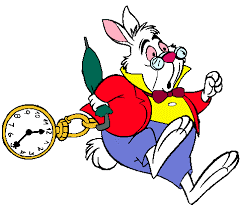
I have this vision of our PM frantically scurrying around like the White Rabbit in Alice in Wonderland humming “I’m late I’m late for very important date”. We might all smile at this vision but I’m afraid the analogy of being late is not a laughing matter when it is applied as the major theme for the UK governments management of what I described in a previous blog as the worst public health crisis in my lifetime. I also recall the PM famously using the phrase “A stitch in time saves nine” which is indeed true however in a pandemic being late or not sewing that stitch in time can and has cost thousands of lives.
In the week that has seen the UK pass 100,000 deaths it is right to reflect on the tragic loss of life. The call from government saying this is not the time to analyse why the UK has done so badly is in my view the wrong line to take. The government could learn a thing or two from the UK health care professions who for years have developed themselves as reflective practitioners. Donald Schon (1983) wrote extensively about reflection in terms of the creation of learning organisations who can both reflect in and on action. It is the former that has been sadly lacking in the UKs response to the coronavirus crisis. Reflection needs to be on the table throughout the pandemic and had it been, we may not have repeated the same mistakes. The management of pandemics is well documented in the medical literature. Professor Chris Whitty the Chief Medical Officer for England outlines how to manage a pandemic in this useful lecture at Gresham College.
Indeed it is also important to remind us of the words of Sir Patrick Vallance who when recommending the urgency of action in a pandemic implored that we “go earlier than you think you want to, go a bit harder than you think you want to and go broader than you think you want to in terms of restrictions.” My observation of the UK pandemic response leads me to conclude that we failed to do any of these. However, for this blog let’s focus on timing. Going early in terms of restrictions and other actions can have an enormous beneficial impact.
The last year has been to coin an overstated phrase “unprecedented” with many arguing that any government would have been overwhelmed and struggled to manage the crisis. Is this fair? One can look at other countries who have managed the situation better and as such have had better outcomes. New Zealand, Australia, Korea for example. Others will point to the differences between countries in terms of geography, population, culture, transport, relative poverty, healthcare systems, reporting mechanisms and living conditions which make comparisons inherently complex.
With the current death toll in the UK so high and continuing to rise, and many scientists telling us that things will inevitably get worse before they get better the question everyone is asking is : What has gone wrong? In this blog I’m going to argue that in large part our problems are based on a lack of urgency in acting. I’m arguing that we have not followed Sir Patrick Vallance’s recommendation and in particular we have been late to act throughout. Below I will set out the evidence for this and propose some tentative reasons as to why this has been the case.
Firstly, despite a pandemic being recognised as the largest threat to any country (it will always be top of any country’s risk register) the UK was slow to recognise the impending crisis and late to recognise the implications of a virus of this nature and how quickly it can spread globally. History informs us of how quickly Spanish flu spread in 1918. The UK was never going to be immune. Late recognition and poor pandemic preparedness meant we were late to get in place the critical infrastructure required to mount a response. Despite several warnings and meetings of the civil contingencies committee (COBR) the health secretary Matt Hancock was dismissive of the threat playing it down. Indeed, the PM failed to attend several early meetings giving the impression that the UK were not taking this as seriously as they should.
When faced with a looming medical/public health emergency it is important that the scientific advisors are in place early (which they were) and that their advice is acted upon. The evidence clearly points to a slow response to this advice which manifested itself in several critical late decisions early in the pandemic. The UK did not close its borders and implement quarantine measures allowing the virus to seed extensively in all parts of the community. Once community transmission had been established it was too late. It did not have in place a substantive testing regime, largely because we were unprepared. It very quickly became clear when we switched from community testing to testing only those in hospital with Covid symptoms that we lacked critical mass testing capacity and hence spent months trying to catch up. Evidence from previous outbreaks of SARS and MERS demonstrated how important mass testing was in controlling the spread, a position advocated by the World Health Organization (WHO). The UK saw case numbers grow rapidly and was slow to get the important public health messages out. Consequently, hospital admissions increased, and the death toll leapt. We were in serious danger of the NHS becoming overwhelmed with critically ill Covid patients.
Public health, medical and scientific experts suggested through their modelling exercises that the death toll, if we didn’t act quickly, could exceed 500,000; a situation socially and politically unpalatable. Therefore, in the absence of no known treatments and no vaccine we would have to resort to the tried and tested traditional methods for the suppression of a respiratory borne virus. Robust hand hygiene, respiratory/cough etiquette and maintaining social distance to reduce close social interaction. The logical conclusion was that to radically reduce social contacts we needed to lockdown. It is widely acknowledged now that the UK was at least a week late in introducing the first lockdown in March 2020.
In the meantime, the virus was sweeping through vulnerable elderly groups in care homes. We were again late to recognise this threat and late to protect them despite Hancock’s claims of throwing a ring of protection around them. The death toll continued to mount. At this stage both the Health (NHS) and care sectors were under enormous pressure and ill equipped to manage. The greatest worry at that stage was lack of adequate Personal Protective Equipment (PPE). Due to our ill preparedness we were late to provide appropriate PPE to both the NHS and the care home sector, exposing healthcare workers to undue risk. The death toll of healthcare workers in any pandemic is high and we were now starting to see this rise in the UK.
Another major criticism during the earlier months was how slow we were in ramping up testing capacity, tracking, tracing cases and ensuring isolation measures were in place. Indeed, concerns about test, trace and isolation continue today. However, lockdown and other public health measures did reduce the case numbers through the summer but inevitably the virus, which thrives in cold damp conditions started to cause further problems as we approached autumn and winter. Combined with this the UK saw a new variant of the virus emerge in the autumn with greater transmissibility. Cases started to rise again along with the inevitable hospital admissions and deaths. It appeared despite warnings from all scientists and health professionals that a second wave was highly possible we were late to recognise the emergence of a second wave of infections. The signs of which were there in September 2020. This led to a second lockdown in November when the advice from the scientific advisors was to lockdown in mid-October or earlier. This decision was compounded by a complex tiered restrictions arrangement to manage outbreaks locally aimed at the avoidance of unnecessary restrictions. Meanwhile the death toll continued to mount.
Notwithstanding the emergence of a new variant of the virus during the second lockdown everyone’s attention was switched to Christmas. The advice offered from government that restrictions would be relaxed for five days was met with incredulity by health professions who argued that this would simply allow the virus to be spread exponentially through greater household mixing. All the evidence at this stage pointed to household mixing as the primary source of transmission. As the situation worsened following the release of lockdown in early December it became obvious that the Christmas guidance had to change. To no ones surprise the advice was changed at the last-minute meaning everyone would have to rearrange their plans. The late change to the Xmas guidance probably meant more family mixing than would have happened had the advice been robust and communicated to the public earlier. Very quickly after Christmas we saw rapid changes to the tier management despite calls for a further lockdown. Cases rose rapidly, hospital admissions were now worse than in the first wave and scientists called for a lockdown. Consequently, we were late implementing Lockdown 3.
Throughout the pandemic the government has provided detailed guidance on restrictions, care homes, travel arrangements and education. It’s difficult to get this right all the time but the issuing of guidance was at times so late it became difficult to interpret the issues with clarity. Probably one the best examples of this relates to the advice provided to schools. Should they stay open or close? What should the Covid secure measures be? How do you construct bubbles of students to reduce social contact? Covid testing of pupils and staff? examinations and assessment guidance? However, the final straw was surely when schools opened in January after the Christmas break to only be told they had to close the very next day as we moved into Lockdown 3.

In conclusion it is said that to manage a pandemic you need a clear, robust strategic plan. The evidence presented here would suggest a lack of strategic planning with crisis decision making on the hoof. Some have argued that we have a PM who struggles to take the big decisions required, who procrastinates and inevitably is left with Hobson’s choice. If you couple this with a group of key ministers who appear to lack the competence to carry their portfolios we have the recipe for a disaster. The consequence of which means the UK has experienced a terrible outcome across a whole set of health, education and economic indicators.
References
Schon, D. (1983) The reflective practitioner: how professionals think in action Basic Books, New York
Whitty, C. (2018) How to Control an Epidemic https://www.youtube.com/watch?v=rn55z95L1h8
Share this:


Education, education, education: We’ve lost the plot

Some of you might remember Tony Blair’s speech introducing the Labour party’s education manifesto in 2001. In it he proclaimed that education was at the forefront of government policy. Education is often high on government’s agenda even if it is only to berate previous administrations for failing our youngsters. I have watched with interest the current government’s farcical approach to education and in particular the attainment of qualifications during the first period of Covid lockdown and to some extent even felt sorry for them as they grappled with what were not insignificant problems. My benevolence, however, has long been drained as I watch the news more recently only to see the same farce emerging. But what really intrigues me is the conflation of the notion of qualifications and education. It seems to me the clamber to get children back into school is only right given that they are missing out on education and other social aspects. However, I cannot see how the dealing with the qualifications issue can ignore the fact that the students have not received all of their education.
In a previous blog I have used the analogy of a driving instructor giving lessons to a pupil. In that blog the point being made was that the education of the pupil was a two-way enterprise. If the pupil didn’t engage or didn’t turn up for their lessons, then the instructor could not be held responsible for the pupil’s failure in the driving test. But what of the test itself, what is that designed to achieve? It is not simply to provide a person with a driving licence, what would be the point of that? It is to ensure that the person taking the test can drive to a satisfactory standard that would help ensure the roads were safe for all users. So, the point of the driving lessons is to provide the education in ‘road craft’ and the point of the driving test is to test knowledge and ability in that ‘road craft’ to ensure it meets satisfactory standards. The driving licence is a form of certificate that states the driver has achieved the knowledge and skills required.
So, what of education? Surely GCSEs, A levels, BTec and so on are a test of the knowledge and skills acquired. A degree is the same, is it not? How then could we reasonably expect students to pass any of these tests if they have lost significant periods of tutorship or teaching? The suggestion, dumb down the tests in some way by only testing what they have been taught, or as in the case of university students suggestions, be more lenient with the marking. Now as I understand it, that would be akin to saying to a learner driver that because through no fault of their own, they could not engage in all of their lessons, they will only be tested on their ability to park and not on their ability to carry out an emergency stop as they hadn’t been taught the latter. How ridiculous would that be? Imagine then that the very same driver, who now has a driving licence, goes onto some advanced motoring course. A course that starts with the premise that they have all the skills tested in a ‘full’ driving test.
Whilst, I can understand students’ preoccupation with tests and qualifications, I somehow think that government and teaching establishments should be more concerned with education and the knowledge gap. How will they ensure that students have the requisite skills and knowledge? Tony Blair may have said ‘Education, Education, Education’ and subsequent governments might well nod in agreement, but somehow I think they’ve all lost the plot.
Share this:


MLK: In his day-n-this day in 2021. #BlackedAsiaWithLove
In his day, they called Martin Luther King a thug. They said that he was disturbing the peace. They accused him of sedition, and jailed him on any charge they could find. The got him on any perceivable and inconceivable traffic violation. Mostly, the only charges they could find were loitering or disobeying a police order – do what I say, niggra! They convicted him to a 4-month sentence for a sit-in. They fined him and anyone in the movement for anything. You can’t imagine the trial/fiasco around his arrest for leading a bus boycott.
Sending his kids to school, peacefully.
Attending a comrade’s trial, peacefully. Loitering, peacefully. Sitting-in, peacefully. Driving, peacefully. Marching, peacefully. Preaching in the pulpit about the Prince of Peace, peacefully. Harassed, taunted, goaded, surveilled, bullied, bashed, arrested, convicted, abused by the police and their brethren among politicos – violently. Dear reader, please don’t find me pedantic by pointing out that this all sounds like 2020.
Here’s Dr. King’s full arrest record. He never once incited riots, yet they called him a thug. He never once missed an opportunity to call for calm, yet they said he was a looter. They made him a repeat offender, notoriously flaunting the law. Who was notoriously flaunting the law? The same sorts of folks who flaunted the law on January 6, 2021!
MLK grew up in the tradition of Black Liberation Theology, radically different from the individualist salvation and racism preached in white churches. King began to address this in a letter to white clergy, he wrote from a jail cell in bloody Birmingham. The pen is indeed mightier than the…cowardice of mobs and bombs.
Follow the drinking gourd
Dr. King understood that resistance is in our blood as strongly as the will to survive. Even with all of the stories I’ve heard from my elders, I still can’t imagine what it was like, even for my grandparents growing up picking cotton deep in the Jim Crow south. Yet, they resisted. And while I am sure that they feared white people their whole lives, they refused to study hate on them. Growing up, my grandparents had few choices in how they dealt with their white masters. Yet, they resisted hate. The roots of non-violence runs deep in our culture.
The roots of non-violent protest runs deep in American culture, but particularly so in terms of righting the legacy of our nation’s original sin: Slavery. In 1892, Homer Plessy was arrested for sitting in the white section of a street car in New Orleans. Four years later, the US Supreme Court upheld states’ right to segregate by race. This solidified Jim Crow at the highest court, and gave way to a host of racial segregation laws, policies and everyday practices that means virtually every aspect of life was unequal. This is the world into which Dr. King was born.
Culminating nearly a century after the Civil War the Civil Rights Movement worked to address the legacy of Slavery. It took that long, so dear reader, please do imagine a century of Jim Crow. Emancipation, then that.
Dr. King, Bayard Rustin and plenty, plenty others in their crew were repeatedly jailed and dismissed as agitators. Now, how many poor people sit in jail because in the New Jim Crow, they can’t afford the fines and fees, that means you pay for your own bondage. This is where your taxes go. Violence won’t solve this problem, but they won’t listen when you take a knee. They call you an agitator.
We chose the BALLOT they chose the BULLET
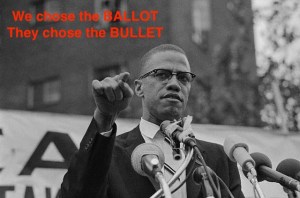
Dr. King used all his power to negotiate reconciliation, peacefully, yet he was gunned down and murdered, violently. Now, they advocate for their right to bear arms, knowing they’ve always been spurred to arm themselves in order to squash us (and not their own masters). They traded in whips and chains for guns and jails upon Emancipation. Now, their descendants are so twisted and confused about it that they claim not to know that’s also our blood shed and the Rebel flag, not just theirs. They still don’t get it. They are threatened by inclusion, perhaps fearing their own mediocracy, so they’d rather build a wall. In 2021, they were finally able to wave the Confederate Battle Flag in the halls of the US Capitol.
Their people fought and died for the independent right to bond and enslave us, yet now they speak of Dr. King like he’s some poster child for kneeling and praying for forgiveness in response to any atrocity they commit (even that kid who staged a massacre in a Black church was taken into custody, peacefully). Now, the same people call Dr. King a national hero in the same breath used to denounce those peacefully protesting for equity and justice today. For them, Black Lives do not Matter.
Share this:


The Memeification of Bernie Sanders speaks to a different kind of politics
What has now been donned as the ‘mitten meme’ shows a different kind of politics is possible. The inaugarations and campaigns of the past portray a culture of Hollywood and slick photo-finishes. The rise of meme culture in the last decade shows that the things that go viral aren’t perfect, but genuine, catching moments and people at both their most vulnerable but also most relaxed. Moments in history of pure beauty. The recent Bernie Sanders ‘mittens meme’ that went viral is an indicator that the US’ Hollywood-esque nature of politics is fast ending, in the epilogue of Ronald Reagan, Donald Trump, and even the duke John Wayne when he used his stardom to support presidential candidates in the Golden Age of Hollywood up to the 1950s. Where once, nice photos and poetry would have been enough, they are now being dwarfed by meme culture.
Amanda Gorman’s poem will go down in history and the Obama-Harris fist bump was a nice touch, but memes have a wide-ranging universal appeal that the Dems need to use if they are to remain relevant and not get left behind, and perhaps lose re-election 2025
The American political left(ish) with Sen. Bernie Sanders, Rep. Alexandra Ocasio-Cortez (AOC), Rep. Cori Bush and The Squad, show the side of the Democratic Party that is forward-thinking and embracing of ideas that some would call radical, or simply ‘socialist’ putting people first. I mean, AOC is on Tik Tok, and engages with her base over videogames. With the exit of Donald Trump, the United States has been restored to its default settings. The more establishment side of the Democratic Party with Joe Biden, Kamala Harris, Barack Obama and their like need to embrace the changes that are fast coming whether they like it or not. This could start with welcoming those more progressive members of the Democrats in a Party that is violently split.

In the UK, Labour also have that split, with Starmer and company on one side and those that supported Corbyn on the other. If Labour is to be relevant, they need to embrace the progressives (like Zara Sultana for example), and be some sort of opposition to the Tories (one would hope). Labour may well be elected at the next election due to the draconian leadership of the Tories this past year, but will Labour keep power if they continue with their omerta? In 2020, Sultana brought her student finance statement into House of Commons, an allegory for a generation that have no problems in being critical of power in a very direct manner. Especially in a time where women, even in politics, are tone-policed for speaking their minds. Imagine being part of an institution, where you have to police outrage as people die by the day from this deadly contagion.
Speaking on things how you see it without repercussion has often always been a privilege exclusive to cishet White men. Progressives, pertinently those that are women of colour, continue to be policed by the Whiteness around them, and I would say Whiteness in this context has as much to do with skin colour as patriarchy has to do with men. In essence, the Whiteness presented by the Black and Brown Tories exhibits the spirit of empire and patriarchy can be reproduced by women as well. Simone de Beavoir (1947) wrote that “the oppressor would not be so strong if he did not have accomplices among the oppressed themselves.” When we talk about privilege, Senator Bernie Sanders scored the jackpot of white, straight man but he also marched with Dr. Martin Luther King on Washington in 1963. Sanders is nearly 80 years old and age is so often scapegoated as a block for doing equality, someone that’s dedicated their life to anti-discriminatory causes.
The Memeification of Bernie Sanders didn’t start with those mittens but earlier. The Bernie Sanders Dank Meme Stash is not just an honourific but a real Facebook group. I think one of the most forward-thinking things the Biden-Harris Administration could do is embrace the more progressive members of the Democratic Party. If they want to combat things like racism, this also means interrogating capitalism. But these interrogations of capitalism are also what ultimately ended Jimmy Carter’s career in his ‘crisis of confidence.’ If the Biden-Harris administration are serious about about making Black lives matter, perhaps they should take ‘Defund the Police’ more seriously (but Harris is the US’ top cop). Something Cori Bush ran a campaign rallied around. Obama criticised it as a “snappy slogan” but this is a demand to keep Black people alive.
There are many that want reform to policing and prisons, but isn’t reform what got us here? All it does is maintain the status quo. Angela Davis (2020) argues that “movements against racist police violence and against entrenched racial injustices in [America’s] jails and prisons can claim a history that is almost as old as the institutions themselves.” Davis one of the longest-standing advocates of prison abolition, is essentially saying that these movements are as long-standing as the histories of violence within these structures. She continues “…because opposition and protests calling for reform have played such a central role in shaping structures of policing and punishment, the notion of reform has superseded other paths toward change.”
Biden-Harris aren’t radical; yet, post-COVID, more left-leaning politics is going to be the difference between life and death, at least for the working-class and ethnic minorities. Moreover, the power of memes as a campaigning and propaganda tool is still being treated as a millenial/iGen fad, and the Dems/Labour are missing a trick here to assure their legacy for a generation or more, whilst also remaining grounded with the youth.
Share this:


How should we honour “Our sheroes and heroes”?*

The British, so it seems, love a statue. Over the last few months we’ve seen Edward Colston’s toppled, Winston Churchill’s protected and Robert Baden-Powell’s moved to a place of safety. Much of the narrative around these particular statues (and others) has recently been contextualised in relation to the Black Lives Matter movement, as though nobody had ever criticised the subjects before. Colston, one time resident of Bristol and slave-trader was deemed worthy of commemoration some 174 years after his death and 62 years after the abolition of slavery. Likewise, one-time military man, accused of war crimes, homophobe and support for Nazism, Baden-Powell suddenly needed to be memorialised in 2008, almost 70 years after the second world world (and his death) and over 40 years since the passing of the Sexual Offences Act 1967. For both of these men profound problems were clear before the statues went up. Churchill, seen as a “hero” by many for his leadership in World War II has a very unsavoury history which is not difficult to locate in his own writings. His rehabilitation also ignores that his status for many of his contemporaries was as a warmonger. His passion for eugenics and his role in decisions to bomb Dresden, Hiroshima and Nagasaki can be wilfully swept under the carpet. Hero-worship is a dangerous game, it is also anti-intellectual. Churchill, like all of us, was a complex human, thus his legacy needs to be explored deeply and contextualised and only then can we decide what his place in his history should be. His statues and soundbites from speeches on repeat, do not allow for this.
Perhaps the most interesting part of this debate is to witness the inflamed defence of individuals who have a clearly documented history as slave owners, or as enthusiastic proclaimers of eugenic ideology, racism, homophobia and so on. As long as they have been ascribed “hero” status, we can ignore the rest of the seedy detail. We are told we need these statues, these heroic men, to remind us of our history….strangely Germany is able to reflect on its history, without statues of Hitler.

It seems as a nation we far prefer these individuals, responsible for so much misery, harm and violence in their lifetimes, than to present Black Britons and British Asians on a plinth. When we are reliant on South African President, Nelson Mandela to take up two of those London plinths, it is evident we have a serious racial imbalance in those “we” choose to commemorate.
Furthermore, the British appear to love an argument about statues, for instance, the criticism levelled at the artist Maggi Hambling’s statue to “Mother of Feminism” Mary Wollstencraft and Martin Jenning’s artistic tribute to Nurse Mary Seacole. For Wollstencroft, much of the furore has been directed at the artist, rather than the subject. There appears to be no irony in women attacking other women, in this case, Hambling, all in the name of supposed defence of The feminism. In the case of Mary Seacole, racially infused arguments from The Nightingale Society have suggested that this statue should not be in sight of that of Florence Nightingale. It seems that even when all important parties are long dead, it is deemed appropriate to use barely disguised racism to protect the stone image of your heroine. Important to remember that patriarchy has no gender. It is evident that criticism revolves around women’s representation in statuary, as well as women’s involvement in sculpture. When statues of men are said to outnumber those of women by around 16 to 1 (and that’s only when Queen Victoria is counted) it is evident we have a serious gender imbalance in those “we” choose to commemorate.
If there’s one thing the British love more than statues, it’s war commemorations. Think of the Cenotaph, standing proud in Whitehall, a memorial to ‘The Glorious Dead’ of firstly, World War I and latterly, British and Commonwealth military personnel have died in all conflicts.

Close by in Park Lane, we even have the imagination to create a memorial to Animals in War. We love to worship at these altars to untold misery and suffering, as if we could learn something important from them. Unfortunately, the most important message of “Never Again” is lost as we continue to thrust our military personnel and their deadly arsenal all over the world.
There is a strong argument for commemorating the war dead of all nations in the two World Wars. All sides, both central powers/axis and allies were comprised in the main of conscripted personnel. These were men and women that did not join the armed forces voluntarily, but were compelled by legislation to take up arms. With little time to consider or prepare, these people, all over the world, were thrust into life-threatening situations, with little or no choice. The Cenotaph and other war memorials mark this sacrifice and to some degree, acknowledge the experiences of those who served in a uniform that they did not consent to, without the compulsion of legislation. Unfortunately, civilians don’t feature so heavily in memorialisation, yet we know they experienced life-changing events which have repercussions even today. From children who were evacuated, to families who experienced fathers and husbands with short fuses, to those whose fear of hunger has never really left them, those experiences leave a mark.
To me, as a nation it appears that we don’t want to engage seriously with our history, preferring instead a white-washed, heteronormative, male-dominated, war-infused, saccharine sweet, version of events. But British people, both historically and contemporaneously, are a diverse and disparate group, good, bad and indifferent, so surely our statues should reflect this?
I recognise the violence which runs throughout British history, I learnt it, not through statues, but through books and oral testimony, through documentary and discussion. I also recognise that I have only begun to explore a history that silences so very many, making any historical narrative, partial, poignant and heavy with the missing voices. I recognise the heavy burden left by slavery, discrimination, war and other myriad violences, understanding the desire to commemorate and celebrate and tear down and replace.
What we need is a statue that recognises all of us, in all shapes and sizes, warts and all? We are living in a global pandemic, the death toll is currently standing at over 2.5 million. In the UK alone, the death toll stands at close to 100,000. Why not have a memorial with all those names; men, women, children, Black, white, Asian, mixed heritage, Muslim, Catholic, Buddhist, Christian, atheists, gay, straight, trans, lesbian, young, old and all those in between. People that have been coerced, through financial impetus, caring responsibility, career or vocation into dangerous spaces, who have not chosen to sacrifice their lives on the altar of bad decisions taken by governments and institutions (reminiscent of the world wars). Such a commemoration would be a way to recognise the profound impact on all of our lives, as drastic as any world war. It will recognise that you don’t have to wear a uniform or conform to a particular ideal to be of value to Britain and every person counts.
* Title borrowed from ‘Our sheroes and heroes’ (Maya Angelou ; interviewed by Susan Anderson in 1976)


