
Authors
-
5teveh
-
6bsude
-
abbietoal
-
abigailane30
-
akcharl
-
amycortvriend
-
anfieldbhoy
-
anitawrzesniewska
-
FlowerViolet
-
asteven08
-
aysheaobrien1ca0bcf715
-
bethanyrdavies
-
bonnieleighmiddleton
-
bronaghvh
-
bwilleva
-
charlottejdann
-
cherylgardner2015
-
chris13418861
-
criminologyanon
-
criminologysocietyuon
-
davidjpalmer57
-
Demi King
-
drkukustr8talk
-
ej213
-
finlaywilliams24
-
Francine Bitalo
-
gilliansiddall
-
gregpaillet
-
Gwen
-
haleysread
-
hannahmaysmith
-
hanpearce93
-
helenpoole2
-
helentrinder
-
ifedamilola
-
jackrichmond21
-
jazzie9
-
jesjames50
-
justinkotze
-
kayleighwillis21
-
keziaasante
-
kirstyk196
-
klgrant1
-
liammiles1
-
Lilly Lewis
-
madams1965
-
Maddyk97
-
manosdaskalou
-
marlywindle
-
Maxine
-
meganking046
-
molliekel13
-
Mr_Hari_Parekh
-
nahidatakhtar
-
natalieh2000
-
npetfo
-
Paula Bowles
-
paulsquaredd
-
robynmansfield1
-
saffron_garside
-
Sallek Yaks Musa
-
samc0812
-
samtilley7
-
samuellangley
-
seanrj94
-
shanwareing
-
Shaun Ken-ucheonye
-
sineqd
-
Sophie Rowson
-
spatchett94
-
svr2727
-
tgomesx
-
Tré Ventour-Griffiths
-
tuesdaywoodward23
-
Vaseem Khan Ltd
-
wadzanain7
-
zeechee
-
zo3conneely

I think that I am becoming one of THOSE Black people. #BlackenAsiaWithLove
I think that I am becoming one of THOSE Black people.
I think that I am becoming one of those Black people who doesn’t speak about race in mixed company, at least not casually, and certainly not in any space not specifically determined for such a conversation. If the invitation doesn’t say ‘race’ in the title, then I most assuredly won’t be bringing up sexism, racism nor classism, nor religious chauvinism – even if social status is evident and apparent by the time we get there. It’s too complicated, and I’ve been the unwitting sounding board too often for too many illiberals, or just folks who hadn’t ever really taken any time to (attempt to) put themselves in anyone else’s shoes – not even as a mental exercise to forward their own understanding of our world and its complexities.
Hurt people hurt people
I am an empath, and so shifting through perspectives is more organic to me than seems ‘normal’. Empaths more naturally take that Matrix-style 360-degree snapshot of any given scenario, distinct from neurotypical folks. I am also ‘a black man in a white world’, a gay man in a straight world, a Buddhist man in a Christian world, so I supposed I have made it a survival tactic to see the world through other’s eyes, knowing full well most hadn’t even considered I’d existed. It’s only other empaths who aren’t so surprised how we all got here across our differences. I have not had the luxury of surrounding myself with people just like me, and yet this has rarely made me feel unsafe.
This snapshot is also a means of connection: I like people and usually see similarities between people where they usually show me they’ve only ever seen differences. This isn’t to imply that I am colorblind or don’t see across differences. Naw, it’s that I am more interested in sharing hearts, no matter how deeply one has learned to bury and conceal theirs. Hence, I usually respond with “why” when told something ridiculously racist or sexist, and ask “how come you think that,” when something homophobic is said; and then I patiently listen. I genuinely want to know. I’ve observed that this response can throw people off balance, for they’ve become accustomed to people either joining in or ignoring their ignorance. Really, no one ever purely inquired how’d you become so hate-filled!?!
I wear my heart on my sleeve for I know how to recover from the constant assault and barrage of disconnection. Yes, it saddens me that so many have been so conditioned, and convinced for so long that we are so disconnected.
They want our RHYTHM but not our BLUES
Now, with my elite education and global aspirations, I often gain access to spaces that explicitly work to exclude people from any non-elite backgrounds. It’s not that I want to pass as anything other than myself, it’s just that I am often surrounded by folks who rarely seem to have considered that someone could – or would – simultaneously exist in a plethora of boxes. I can’t fit into any one box other than human. Yet, I used to try to fit in, to avoid standing out as a means to shield myself from the bullying or peering eyes and gossip as folks try to figure out in which box I reside – a classic tactic of projection.
I am a dark-skinned Black person with a nappy head and a stereotypical bubble butt. I neither bleach my skin nor straighten my hair, so I am identifiably Black up-close and from afar. I don’t even hide my body under baggy clothes, so even my silhouette is Black. I’ve lived, worked, studied and traveled in North America, western Europe, west Africa as well as north, south and southeast Asia, so I’ve taken 360-degree snapshots of radically different societies ‘seeing’ a Black man, and oh how radically different the reactions. I’m becoming one of those Black people who notices this, but won’t speak about race in mixed company because as an empath, one sees how defensive people become when raising race. I went through a phase where I would more readily speak about gender, then draw the parallels to race and class, for most folks can only handle one form of oppression at a time (fellow Audre Lorde fans may appreciate that pun).

Hello, my name is: Diversity.
I think that I am becoming one of those Black people who never questions people when they describe their backgrounds as ‘good’, when all they really mean is moneyed, racially and religiously homogenous. Many get all defensive when I reveal that my entire education was radically diverse by design, from second grade through my master’s. I know I had a “better” education than them because I was taught inclusion alongside people who were similar and different from me – and we went to each other’s homes.
I don’t look in the mirror and say ‘hey diversity’; I just see the face I was given, and do with it what I can. Yet, I have often been called upon to speak on behalf of many people. I offer my opinion, or relay my observations, and suddenly I am a spokesman for the gays, or the Blacks, rarely just me. So, what’s it like being on the inside of cultures of power? Darnit, I shan’t ask that either!
Share this:


A pit and no pendulum
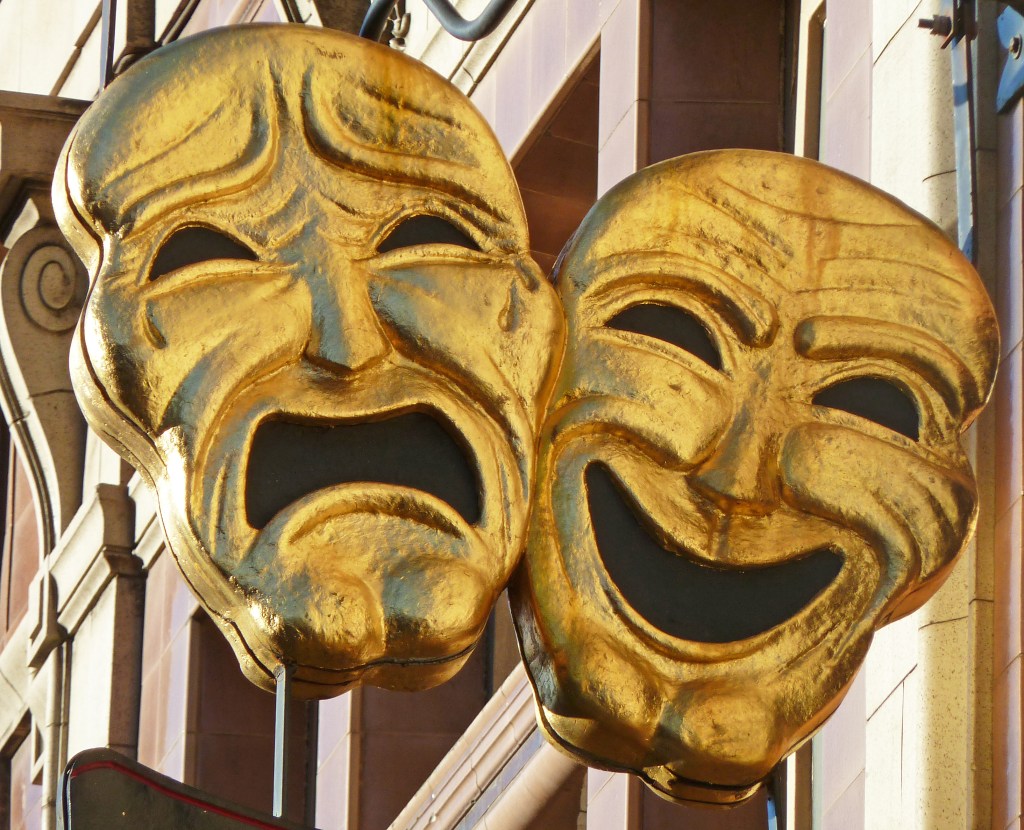
Laughter is a great healer; it makes us forget miserable situations, fill us with endorphins, decreases our stress and make us feel better. Laughter is good and we like people that make us laugh. Comedians are like ugly rock-stars bringing their version of satire to everyday situations. Some people enjoy situational comedy, with a little bit of slapstick, others like jokes, others enjoy parodies on familiar situations. Hard to find a person across the planet that does not enjoy a form of comedy. In recent years entertainment opened more venues for comedy, programmes on television and shows on the theatres becoming quite popular among so many of us.
In comedy, political satire plays an important part to control authority and question the power held by those in government. People like to laugh at people in power, as a mechanism of distancing themselves from the control, they are under. The corrosive property of power is so potent that even the wisest leaders in power are likely to lose control or become more authoritarian. Against that, satire offers some much needed relief on cases of everyday political aggression. To some people, politics have become so toxic that they can only follow the every day events through the lens of a comedian to make it bearable.
People lose their work, homes and even their right to stay in a country on political decisions made about them. Against these situations, comedy has been an antidote to the immense pain they face. Some politicians are becoming aware of the power comedy has and employ it, whilst others embrace the parody they receive. It was well known that a US president that accepted parody well was Ronald Reagan. On the other end, Boris Johnson embraced comedy, joining the panel of comedy programmes, as he was building his political profile. Tony Blair and David Cameron participated in comedy programmes for charity “taking the piss” out of themselves. These actions endear the leaders to the public who accept the self-deprecating attitude as an acknowledgment of their fallibility.
The ability to humanise leaders is not new, but mass media, including social media, make it more possible now. There is nothing wrong with that, but it is something that, like smoking, should come with some health warnings. The politicians are human, but their politics can sometimes be unfair, unjust or outright inhuman. A person in power can make the decision to send people to war and ultimately lead numerous people to death. A politician can take the “sensible option” to cut funding to public spending directed at people who may suffer consequently. A leader can decide on people’s future and their impact will be long lasting. The most important consequence of power is the devastation that it can cause as the unanticipated consequence of actions. A leader makes the decision to move people back into agriculture and moves millions to farms. The consequence; famine. A leader makes the decision not to accept the results of an election; a militia emerges to defend that leader. The political system is trying to defend itself, but the unexpected consequences will emerge in the future.
What is to do then? To laugh at those in power is important, because it controls the volume of power, but to simply laugh at politicians as if they were comedians, is wrong. They are not equivalent and most importantly we can “take the piss” at their demeanour, mannerisms or political ideology, but we need to observe and take their actions seriously. A bad comedian can simply ruin your night, a bad politician can ruin your life.
Share this:


What’s the Capitol of Insurrection? #BlackenAsiaWithLove
A week ago, I was writing -hopefully – about the peaceful transition of power. I was thinking to myself that even if Georgia’s run-off election didn’t release the American senate from the hooves and cleaves of the CONservative right, that somehow, the world would be in a better state now that dialogue-oriented ‘liberals’ were leading the administrative cabinet. This week, however, I am writing about a failed coup d’etat in the United States.
Lynch mob
Much of American history is steeped in the struggle for freedom. To be clear: WE have never, ever been free in America. None of us. Sure, relative to where I sit right now in S.E. Asia, the fact that I am talking openly about politics, and speaking ill of other people’s nasty votes, attests to this relative freedom I enjoy just by having that bald eagle on my passport. The fact that it’s a national pass-time to be critical of power, all the while coveting it for myself, points to the hypocrisy with which each and every American struggles internally. It’s not that people of other nations don’t share this struggle, but it’s just that we Americans do this in the world’s richest, most ethnically diverse nation. And ‘the problem we all live with’ persists.
By signing the Emancipation Proclamation, Lincoln didn’t defeat white supremacy any more than the Declaration of Independence defeated tyranny and injustice. “With great power comes great responsibility,” goes the Spiderman mantra. Yet, here I am on my knees, in tears, crying for the death a of a democracy that’s been in decay ever since my people were brought to those shores in shackles, owned by those mentally enslaved by white-washed Jesus.
Unfortunately, it would be facile and naïve to pretend that this American moment isn’t painful. It hurt me, personally, to see the siege of our Capitol, live and in technicolor, more vivid than any dream I’ve dreamt or nightmare about this very scenario. And I have had both dreams and nightmares about the siege. My mother’s parents grew up southern, Black, poor and politically disenfranchised as a matter of everyday practice under Jim and Jane Crow. It’d would have been nothing for a lynch mob to tackle any negro attempting to vote. That was business as usual, even as they conscripted my grandfather into the army to go to Europe and fight Hitler. The irony has never, ever been lost on any of us.
Many days, in my daydreams, I’ve often wondered what it’d be like if a bunch of freedom-loving folks just stormed the Capitol and occupied the seats of power until the elected leaders conceded to formally grant our freedom. Yet, I would never want to see the mass graves they’d have to dig should any negro or negro-loving white person even gather to talk about storming the Capitol – let alone share plans and munitions. Besides, I am an earnest follower of non-violence and genuinely believe liberation is found therein. Instead, we’ve spent years – decades, nearly a century of recorded history – warning the world where white supremacy would lead us, if left unchecked. I’d be as rich as Jeff Bezos if I had a nickel for every time someone told me that racism was dead, and that I was dredging up hate by insisting we speak about it. Yet, here we are. Whatcha gonna do now?
Share this:


Midnight’s Children
Recently I was reading a blog entry from @vaseemk2 on Midnight’s Children and it was like opening a door to a past that I temporarily forgot. It was 1989 and the work of Salman Rushdie received a lot of international attention. His book, The Satanic Verses was becoming a book that was banned across the world with Ayatollah Ruhollah Khomeini (the supreme religious leader of Iran), issuing a Fatwa requesting the author’s death for blasphemy.
The controversy alone was enough to entice me to my local bookshop to get the book. The title, the Fatwa on the author and the protests around the world intrigued me and spiked my curiosity of what could be so offensive in that book. I began to read it and chapter after chapter I was trying to find the offensive text with great anticipation. The more I read, the more confused I became. The story was disjointed between some references to England and some dream sequences I did not understand or relate. To be really honest, I did not like the book at all. It was disappointing to find that the book that caused some much upheaval in my eyes was not the literary contribution that I expected.
I returned to the book shop, I used to go there a lot and talk to the people. Told them of my disappointment of reading something that I did not really like. It was then that I was recommended a different book from the Rushdie. It was Midnight’s Children. The book is talking in metaphor about the birth of a new nation of one of the world’s oldest civilisations. At that point, in my life I knew of Gandhi and the peaceful resistance movement. The idea of coming against a superpower with no guns, no armies but solely on conviction and principles excited me but that is all I knew. Very little for such a rich culture.
The book was a revelation. Apart from the writing the characters brought to life an unknown conflict to me in such a way I could relate to the suffering and the loss. Despite the superhuman abilities of the children the narrative had an incredibly sensitivity and humanity about the everyday people. Contrary to that those in power appear less favourably. This took away the usual history is written by the victors. There are no victors in a civil conflict. All of the protagonists are underdogs who are trying to make sense of the madness of conflict. The challenge is to continue to aim for something higher even when war brings primordial hate on to the surface.
I felt pain and sorrow not just for Saleem but for all of the children born into a world that gears up for conflict. The superpower of bringing people together is fantastic but it is not his telepathy that is endearing but his empathy. The humanity in situations of incredible cruelty is palpable and follows those Gandhi ideas of peaceful resistance. Out of a rather disappointing experience I got to know a writer that I respect and a book and that I regard as a classic. So, the lesson for me was not to judge a writer on one of his works without seeing what else they have done. Also, not all pieces of work will relate to me in that same way and to accept that not everything is a masterpiece. In life like in fiction we can only manage to succeed if you are prepare to tolerate and accept even those things that may not be tolerable. It is difficult, but Gandhi, among so many others has pointed the way.
To be reminded of that time that blasphemy carried so much offence around the world, arousing tensions and dividing communities. In the UK the law regarding blasphemy changed in 2008 but still around the world this is regarded as a very serious crime, one that to this day carries the death penalty, in several countries. In addition, the control of a writer’s freedom of expression was always the counterweight of these laws. These tension results in laws about censorship which, in some cases, can restrict the way writers and artists can express themselves. It is interesting to observe this tension vis a vis of something like the work of Rushdie now. I wonder if the changes to the law post terrorism law in the UK would have allowed its publication or not. This is a definitely an issue for another blog….
Share this:


A year of many firsts
2020 was a year of many firsts for myself, and therefore in spite of the global pandemic (which brought with it the destruction of lives both figuratively and literally) it was actually quite an interesting personal year. I am exceptionally fortunate to be able to say I still have my health (physical, cannot claim with as much certainty about my mental health), a job, a roof over my head and have not suffered direct loss of loved ones due to COVID. Therefore, I feel a content warning is required: this blog does not look to boast or minimalize all the loss, hardship and destruction that was experienced in 2020. But taking a leaf out of my colleagues’ book, I would like to try and reflect upon 2020 positively where possible: and in all honesty I experienced some really beautiful firsts in 2020.
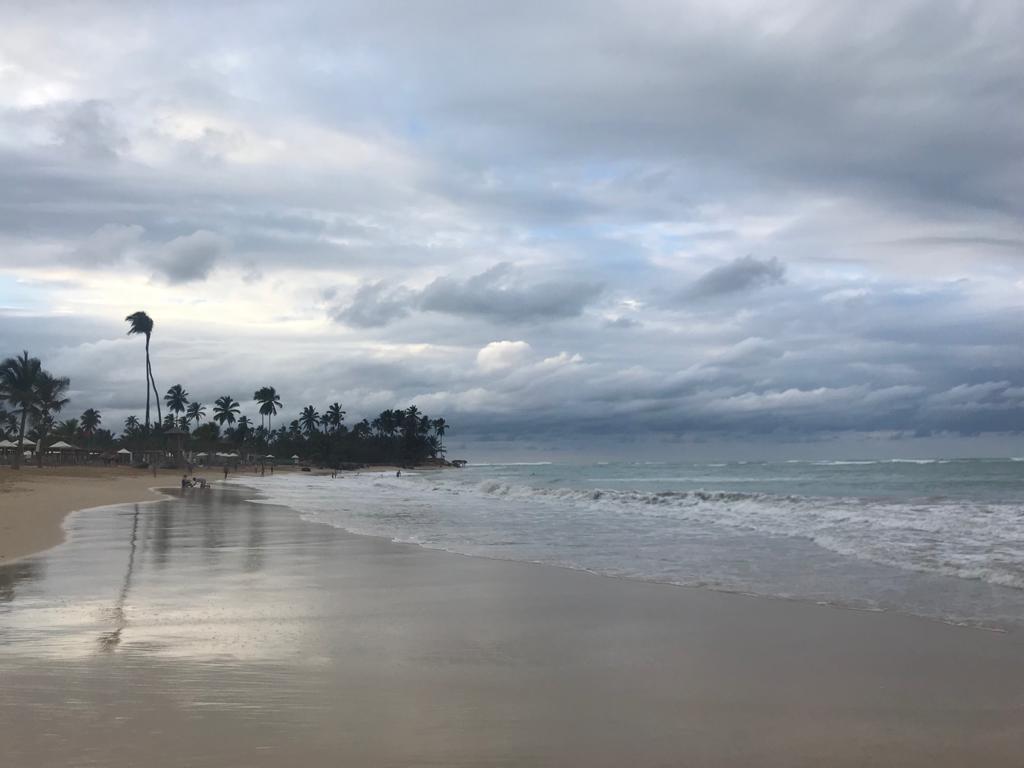
January 2020 saw the most magical ‘first’ I have experienced in my life: the first (and I am very hopeful my only) day as a bride! The day was filled with so much love, joy, food and laughter: where memories where created which cause me to smile on even my darkest days! And with this magical day came a wonderful honeymoon where my first experiences as a newly-wed were not too shabby at all! The Dominican Republic was beautiful in scenery, activities and people! Again, memories which fill me with warmth.
January also saw me graduate with my first masters, although I did not attend the graduation as was sunning it up with cocktails and novels in the DR!
During the first lockdown, my partner and I moved. This brought with it my first experience of living without a washing machine, along with my first experience of purchasing a washing machine (not that fun and quite expensive!). It was also my first experience of living in a house with my partner, with more than 3 rooms! Which, during a lockdown, proved to be essential in many ways: a luxury I know many could not afford.
The Criminology book club began in lockdown (not my first book club: sorry guys), but it was my first virtual book club which is something! Along with this came the delivery of workshops online, another first, and later in the year the delivery of lectures online, again another first! I also experienced my first online interview (panel, presentation the whole works) which was joyous. And received my first offer of full-time employment.
The holiday season brought with it the odd few firsts as well. It was the first holiday season my partner did not work in all the years I have known them (not through choice unfortunately), it was the first time we both drank on Christmas day (partner is usually driving or conscious of work on Boxing day). And it was the first time I did not feel the ‘lull’ in between Christmas and New Years, which was more scary than anything else.
2020 started out with such promise and hope, and threw some serious ‘end of the world’ vibes at us, and for some these were more than just vibes. It has been hard for all and catastrophic for many, but there have been glimmers throughout the year which have kept us going when it did not seem possible. For me 2020 will always be the year of destruction but also a year of firsts: some of which are currently up there as the best days, experiences and moments of my life 😊
Share this:

My new year nightmare: finance, political imperatives and a lack of strategy

The new year is here. At its last knockings, the previous year offered hope of some sort of return to normality. The second new vaccine was on its way, far easier to store and distribute, it offered hope. Unfortunately, the joy of the new year has been somewhat muted as we have witnessed Covid-19 cases rise to new heights. Talks of stricter measures have turned into our new reality, as one minute the government insisted on schools opening then the next a partial U-turn before a forced full-scale retreat. But as we watch all of this unfold, I am reminded of a comment I heard from a radio presenter on the lead up to Christmas. Her view was that there was much to be happy about, we know more about the virus now than we ever did and scientists have developed a vaccine, several vaccines, in record time. Over the Christmas and new year period I reflected on last year and tried to think about what we have learnt.
Brexit has just proved to be a complete farce. Promises of a good deal turn out to be not so good, ‘no deal is better than a bad deal’ the politicians said. And then in desperation, realising that any deal was better than no deal and that the best deal was the one where we were in the European Union they settled on something and thanked the gods that there was far more pressing bad news to hide their incompetence. So, we are now a ‘sovereign’ nation but poorer to boot and whilst we think we have regained control over our borders, it is only limited to bureaucratic, time consuming form filling, as we beg people to come here to work in our care homes and on the farms for a pittance. Perhaps the refugees that we have reluctantly accepted might help us out here. Brexit has been delivered but at what cost? No wonder Stanley wants to take up his opportunity for a French passport.
We are all equal its just that some are far more equal than others. We saw the rise of the Black Lives Matter movement and I have a feeling that I wouldn’t be able to do that discussion justice; I’ll leave that to others that are far more capable. It did have a profound impact on me though as a former serving police officer, I would like to think it had an impact on others both retired and serving, but I’m not so sure. I think that quite often the police are simply a reflection of our society and I’m not willing to bet much on that changing rapidly. I remember Michael Holding, a former West Indian cricketer, turned commentator, talking about ‘white privilege’ and he provided what I thought at the time was a good example. Now I’m not so sure, this so called ‘white privilege’, isn’t privilege at all, it’s rights. It’s the rights that white people avail themselves of everyday in a democratic society (well that’s what we are supposed to be in anyway) without a second thought. The problem isn’t that white people have those rights, it’s that Black and ethnic minority individuals don’t, or where they do, the rights are somehow conditional. I might be wrong in my thinking, but I know one thing, without some very clear leadership from government, institutions and general societal attitudes are unlikely to change sufficiently. Although footballers and staff take a knee before every match, I fear that the momentum is likely to be lost. By the way, I’m not holding out much hope on the leadership gambit.
Sticking to the we are all equal theme; the pandemic has shone a spotlight on poverty in this country. Yes, Mr high and mighty Reece-Mogg, there really are very poor people in this country and they do need a helping hand. The fact that food banks are even required is shameful. The fact that foodbanks rely on charity is an even more shameful indictment of our government. The fact that a senior politician can stand up in the house of commons and accuse a charity of political motives when distributing aid beggar’s belief. I find it extraordinary that pre pandemic, homeless people were left to their own devices on the streets, reliant on charity and handouts and yet as soon as we went into lockdown, the government found money from somewhere to house them. What changed? My worry is that when the pandemic is over, the government are going to be more concerned about balancing the books than they are about the pervasive poverty endemic in our nation.
Children returning to school has been a huge issue for government and they rely on evidence that suggests that the best place for children is at school. A headmaster reminded us in an interview on the radio that this ‘online learning’ phrase that trips off the tongue is far easier to talk about than to achieve. What hits home is the huge disparity in opportunity for children to avail themselves of online learning. Poorer families cannot provide the technology required. Poorer families are likely to live in cramped conditions making it impossible for children to concentrate on work as siblings run around trying to keep themselves amused. And let’s not forget the plight of the parents who are more likely to be in jobs that require them to be at work, not home. Then of course there are those children that are vulnerable where school is a safe haven from abuse, whether that’s physical or mental or simply because school is where they will be fed. So, in a sense for many, school is a better place than home, but we really ought to be asking why that is. What does that say about our society? If I were to hazard an educated guess, I’d say its broken. The return of children to school had wider implications. What about the teachers and staff? It seems to me that government have different standards of risk depending on what suits. I’ll come back to this in time but I think the closure of schools owes itself more to the action of teachers in their refusal to turn up to work in an unsafe environment than it does any sensible government strategy.
Sticking to the education theme, the pandemic shone a rather harsh spotlight on higher education too. What became increasingly obvious was that the return of students to campus was purely financially driven. At least one vice chancellor put his head above the parapet and stated as much. His university would fail if he did not fill the halls of residence. So here we had a situation where scientific advisors were stating it was folly to open universities and yet universities did so with the backing of government. The reason, we can’t put education on hold and yet how many students take a gap year, before going to university? Putting education on hold doesn’t appear to be that damaging to the individual, but it is very damaging to a morally corrupt educational business model that needs halls of residence to be filled to prop up the system. To make matters worse, students flocked to university only to find that face to face teaching was patchy, the university experience was not what they were promised or envisaged it would be, and more time was spent in isolation and lock down than was healthy. If education was supposed to be good for their mental health, it had the opposite effect for many. I don’t think it required a rocket scientist to work out that online teaching was really going to be a default position, so either management and government were very naïve and reckless, or they were somewhat economical with the truth. Time to revisit higher education, I think.
Talking about government advisors, what’s the point in having them? Everything I read suggests that government advisors say one thing and government does something else or dillies and dallies its way into a dead end where it finally admits the advisors are in some way right, hence another eleventh hour lock down. The advisor’s said universities should not go back, they did and is it coincidence it coincided with a rise in Covid-19 cases? Advisors were saying schools shouldn’t go back but the government insisted they should and many did for just one day. There is a saying about tactics and strategy. Strategy is unlikely to be achieved without tactics but tactics without a strategy are useless. I have yet to understand what the government strategy is, there is however a plethora of disparate (or is that desperate?) tactics . The result though, anguish and suffering to more than is necessary. Some of the tactics seem to be based on decision regarding who is most at risk. We hear that term an awful lot. I watched the prime minister at lunch time, the man who promised us a fantastic Brexit deal, as he explained how important it was that children went back to school. Children are at very little risk going to school he said and then added, and teachers are not at very much risk or at least at no more risk than they would be normally. He bumbled and blustered over the latter part; I wonder why? A few hours later he told us schools would be closed until at least the 15th February. What happened to ‘no risk’? When we talk about risk, there are a number of ways of viewing it. There is the risk of death, easily understood and most definitely to be avoided, but what seems to be neglected is the risk of serious illness or the risk of ‘long Covid’. By ordering schools to be opened or that universities resume face to face teaching, the policy seems to have been that as long as you are not at a high risk of death then it is an acceptable risk. Time for a bit of honesty here. Does the government and do managers in these organisations really think that a group of people in a room for a number of hours with inadequate ventilation is not a serious risk to the spreading of the disease? Maybe some of the managers could reassure us by doing most of the face to face teaching when we prematurely come out of lock down again.
It seems to me that much is being made, on the news in particular, about the effect a lock down has on mental health, especially children. And I do understand the mental health issues, I can’t help but think though that whilst this is a very valid argument there is the elephant in the room that is either ignored or conveniently understated. The elephant; the fear engendered by the virus, the fear and anguish of those that have had to face the loss of a loved one. Just to put that in perspective that’s over 70,000 people whose families and friends have had to go through firstly the fear and anxiety of a loved one being ill and then the additional fear and anxiety of having lost them. Add to this the fear and anxiety of those that have caught the virus and ended up in hospital coupled with the fear and anxiety of their loved ones. Now add to this the fear and anxiety of those who have to work in conditions where they are at serious risk of catching Covid and the fear and anxiety of their loved ones. And then of course there is the fear and anxiety caused to the general population as the virus spins out of control. Somehow I think a little perspective on mental health during lock down might be needed. Is it any wonder teachers decided that what they were being asked to do was unsafe and unnecessary?
And then I think about all of those parties and gatherings despite restrictions. The shopping trips from tier 4 areas into tier two areas to snap up bargains in the sales. The Christmas and New years eve parties that defy any logic other than pure self-indulgence. Just as we see all of those selfless people that work in organisations that care for others or keep the country running in some capacity, we see a significant number of selfish people who really don’t care about the harm they are causing and seem to be driven by hedonism and a lack of social values. Unfortunately, that accusation can also be aimed at some of the very people that should be setting an example, politicians.
We should of course be happy and full of hope. We have a new vaccine (that’s providing it still works on the mutated virus) and normality is around the corner, give or take a few months and a half decent vaccination strategy (that’s us done for). A vaccine that was found in an extraordinary time period. I wonder why a vaccine for Ebola wasn’t found so quickly? I agree with my colleague @paulaabowles when she says we all must do better but more importantly I think its about time we held government to account, they really must do better. After the second world war this country saw the birth of the NHS and the welfare state. What we need now is a return to the fundamental values that prompted the birth of those provisions. There are so many pressing needs and we really mustn’t allow them to be forgotten. A strategy to tackle poverty might just ameliorate a raft of other ills in our society and the cost of tackling it might easily be mitigated by a reduction in demand in the NHS and many other public services. I can but dream, but my reality envisages a nightmare world driven by finance, political imperatives and a lack of strategy.
Share this:


Christmas ’20: I Bought Presents for the First Time in a Decade
As someone that lives in the privilege of not actually had to experience Coronavirus (to my knowledge), I have spent a good portion of last year on the sidelines. Losing my auntie during my undergrad in January 2017, and then my cousin Steve at the start of 2020 (some of you may know him as the owner of Kettering Road’s Driver), I think many would agree with me when I say ‘grief makes you humble.’ In typical Caribbean fashion, Steve’s wake made me remember the importance of community and togetherness. He ran Drivers Menswear in Northampton and if you blinked you wouldn’t know it was there, a shop that had been there since the 1980s. With its closure in 2020, that marked the end of an era, and I will now have to find somewhere else to buy jeans!
Growing up here, many of the people I know in the community and work with have actually known me for years. And in some cases, have known me for all my life (basically), very much including staples of the West Indian community like at Inspiration FM
Some time after Steve’s funeral, we were thrust into Lockdown 1.0 by the Government and it was in those months between March and June that I saw that power of community again. Albeit a symbolic gesture, clapping for the National Health Service on Thursdays in some cases was the one thing keeping some people going. It was a recurrence that kept their mind at bay in the chaos of the pandemic. I ran events online too, and people were grateful. In that same breath, it is evident to see the number of people grassing up their neighbours for flouting the rules, or attacking people for criticising the police’s £10,000 fines for those that break the rules. Last year, I also watched a number of films, including a rewatch of Goodfellas. Even in a health crisis where people have broken the rules, Robert DeNiro’s voice as Jimmy Conway is in my head telling me “to never rat on your friends and always keep your mouth shut.” When in doubt, listen to Scorsese!

These people may be rule-breakers but I know if it comes to the wire, these are also the same people (not government) that would put people ahead of profit. Fellow blogger @drkukustr8talk wrote a Facebook post saying “If anything, Corona taught us____” and I commented “There is more of a community than I thought there was”, to which he replied “NOW, dear Tre, THAT is a LOT coming from you.” Yes, I’m sure @paulaabowles and @manosdaskalou will attest to that too, seeing from our number of conversations since meeting them in September 2019. Cynicism and realism are two sides of the same coin and I grew up in The Commmunity. However, not like I have seen this past year. My work as an educator engaging with people inside and outside Northamptonshire’s borders tied, with the Murder of George Floyd/the protests and the pandemic, it’s left me thinking that when I gave humanity chance, locally, humanity actually delivered.
November came and I was awarded ‘Northampton’s Male Role Model of the Year.’ That was humbling. It wasn’t the award that really got to me. It’s the love and respect of your neighbours, and that’s not something one can articulate in words. I thought about this feeling again when I found myself watching the 1970 adaptation of The Railway Children. Albert Perks has always been my favourite character, very much a man of his generation. Not taking charity but also respects his community. You do right to others, they do right to you. That sort of mentality. This is a character I came across at twelve years old and I have not been the same since. The award is second to the number of people that voted for me, and I will take that to my grave.

December came, and I bought Christmas presents. I am as surprised as you. For years, I have famously been a humbug inside and outside of my family. Forever anti-Christmas on the basis it was “a super-spreader of consumerism” (Ventour, 2010). My mother makes jokes about it, recalling to when I was kid walking around Abington Street in a hat with bah humbug on the side. The pandemic tied with BLM and meeting all the wonderful people at Amplified NN allowed me to break my “life rules.” Grief makes you humble. With the addition of Coronavirus, you could say it has made me soft (not that I was an awful person before). If the COVID pandemic and lockdowns have taught us anything, it’s that so many of us were living life on incompatible frequencies and were trying to make the parts fit. We also saw how kindness was a shock to the system, since in the words Tennessee Williams so few have ever “depended on the kindness of strangers.”
I bought presents for the first time in ten years; I have the love and respect of my neighbours and I started a Masters in September. I don’t spend my days waving at ‘kind old gentlemen’ on the trains going by, but I think in fifty years that there may be three children that may think of me as that old gentleman (but not that old of course), or by the time I’m forty-one… I’m not too different to Albert Perks and there is power in that.
Share this:


2020: A Year on “Plague Island”
Last year in this blog, I argued that 2019 had been a year of violence. My colleague, @5teveh provided a gentle riposte, noting that whilst things had not been that good, they were perhaps not as bad as I had indicated. Looking back at both entries it is clear that my thoughts were well-evidenced, but it is @5teveh‘s rebuttal that has proved most prescient in respect of what was to come….
The year started off on a positive, personally and professionally, when both @manosdaskalou and I were nominated for Changemaker Awards. Although beaten by some very tough competition, shortly before leaving campus we were both awarded High Sheriff Awards, alongside our prison colleagues, for our module CRI3006 Beyond Justice. As colleagues and students will know, this module is taught entirely in prison to year 3 criminology students and their incarcerated peers. Unfortunately, the awards took place in the last week on campus, but we are hopeful that we can continue to work together in the near future.
Understandably much of our attention this year has been on Covid-19 and the changes it has wrought on individuals, communities, society and globally. Throughout this year, the Thoughts from the Criminology Team have documented the pandemic in a variety of different ways. From my very early thoughts, written in the panic of abandoning campus for the experience of lockdown to entries from @helentrinder @treventoursu @jesjames50 @cherylgardner2015 @5teveh @manosdaskalou @anfieldbhoy @samc0812 @drkukustr8talk @zeechee @saffrongarside @svr2727 @haleysread The blog has explored Covid-19 from a variety of different angles reflecting on the unprecedented experience of living through a pandemic. It is interesting to see how the situation and our understanding and responses have adapted over the past 9 months.
Alongside the serious materials, it was obvious very early on that we also needed to ensure some lightness for the team and our readers. With this in mind, early in the first lock down, we created the #CriminologyBookClub. We’re currently on our 8th novel and we’ve been highly critical of some of the texts ;), as well as fallen in love with others. However, I know I speak for my fellow members when I say this has offered some real respite for what’s going on around us.
Another early initiative was to invite all our bloggers to contribute an entry entitled #MyFavouriteThings. We ended up with over twenty entries (which you’ll find via the link) from the criminology team, students, as well as a our regular and occasional contributors. Surprisingly we learnt a lot about each other and about ourselves. The process of something as basic as writing down your favourite things, proved to be highly cathartic.
Whilst supporting each other in our learning community, we also didn’t forget our friends and colleagues in prison. Although, the focus has rightly been on the NHS and carers, the pandemic has hit the prison communities very hard. Technology can solve some of the issues of loneliness, but to be locked in a small room, far away from family and friends creates additional problems. For the men and the staff, the last 9 months has brought challenges never seen before. Although, we could not teach the module, we did our best, along with colleagues in Geography and the Vice Chancellor @npetfo, to provide quizzes and competitions to help pass the hours.
In June, the world was shocked by the killing of George Floyd in the USA. For many of us, this death was one in a long line of horrific killings of Black men and women, whereby society generally turned a blind eye. However, in the middle of a pandemic, the killing of George Floyd meant that people could not turn away from what was playing on every screen and every platform. This lead to a resurgence of interest in Black Lives Matter and an outpouring of statements by individuals, organisations, institutions and the State.
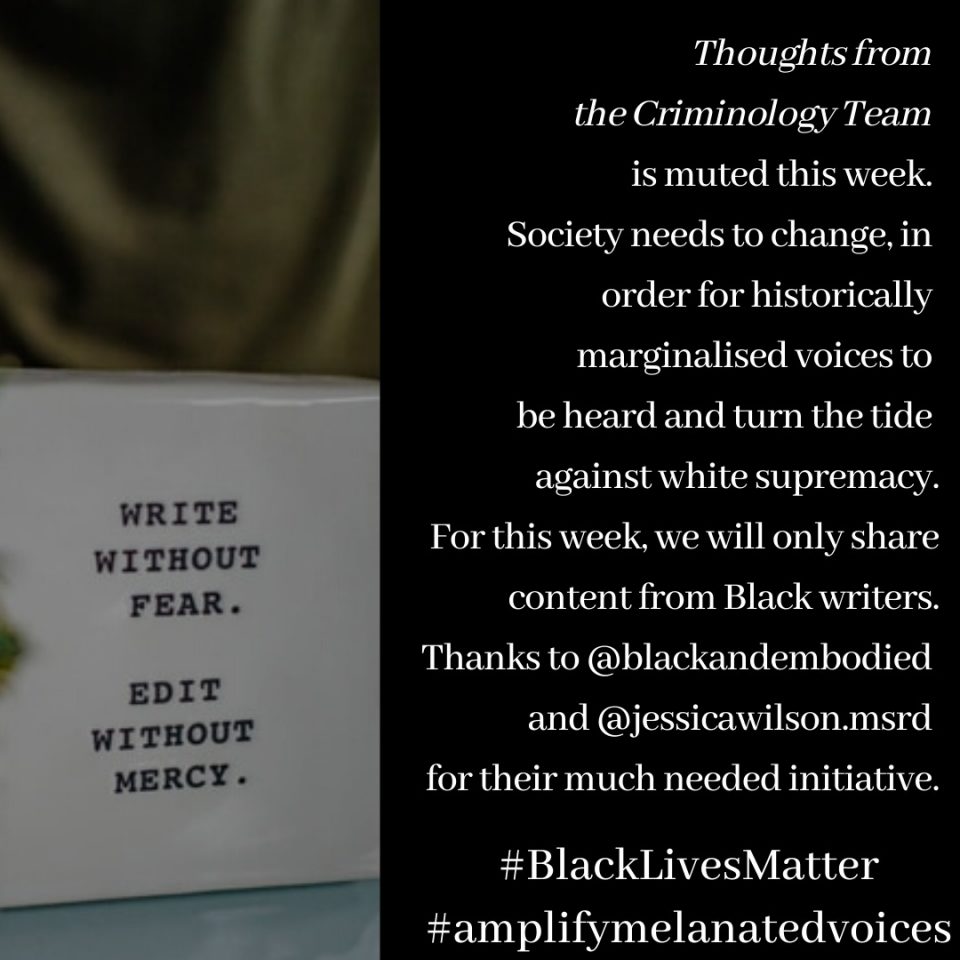
For a week in June, the Thoughts from the Criminology Team muted all their social media to make space for the #AmplifyMelanatedVoices initiative from Alishia McCullough and Jessica Wilson This was a tiny gesture in the grand scheme of things but refocused the team’s attention on making sure there is a space for anyone who wants to contribute.
Whether this new found interest in Black Lives Matters and discussions around diversity, racism, decolonisation and disproportionality continue, remains to be seen. Hopefully, the killing of George Floyd, alongside the profound evidence of privilege and need made evident by the pandemic, has provided a catalyst for change. One thing is clear, everyone knows now, we can no longer hide, there are no more excuses and we all can and must do better.
This year some old faces left for pastures new and we welcomed some new colleagues to the Criminology Team. If you haven’t already, you can read about our new (or, in some cases, not so new) team members’ – @jesjames50 @haleysread and @amycortvriend – academic journeys to becoming Lecturers in Criminology.
Finally, looking back over the last 12 months, certain themes catch my eye. Some of these are obvious, the pandemic and Black Lives Matter have occupied a lot of our minds. The focus has often been on high profile individuals – Captain Tom Moore, Joe Wickes, Marcus Rashford – but has also shone on teams/organisations/institutions such as the NHS, carers, shop workers, delivery drivers, the scientists working on the vaccines, the list goes on. Everyone has played a part, even if that is just by staying at home and out of the way, leaving space for those with a frontline role to play. Upon reflection it is evident that the over-riding themes (and why @5teveh was right last year) are ones of kindness, of going the extra mile, of trying to listen to each other, of reaching out to each other, acknowledging unfairness and privileges, recognising the huge loss of life and the impact of illness and bereavement and trying to make things a little better for all. Hope has become the default setting for all of us, hope that the pandemic will be over, alongside hopes that we can build a better world with its passing. It has also become extremely clear that critical thinking is at a premium during a pandemic, with competing narratives, contradictory evidence and uncertainty, testing all of our ability to cope with change and respond with humility and humanity.
There is no doubt 2020 has been an unprecedented year and one that will stay with us for ever in the collective memory. Going into 2021 it’s important that we remember to consider the positives and keep trying to do better. Hopefully, in 2021 we will get to celebrate Criminology’s 21st Birthday together
Remember to stay safe, strong and well and look out for yourself and others.

Share this:


Twenty Twenty Won: New Year, New MBE
Part 2 of a Two-Part Post
When I have had discussions with students and even academics about empire or the violence of the English state, it always interests me to hear the excuses as to why white people may have less of a reason to turn down a British Empire medal when it comes to the Queen’s Honours. There’s this idea that the violence of the British Empire only impacted those who were visibly not white. Whilst you cannot necessarily alot a skin colour to Ireland, it is a stereotypical white place, and hasn’t had Black populations for a long time (Dabiri, 2019). Ireland was also a testing ground for British colonialism. There is a very good reason why so many of my Irish colleagues are anti-imperialist. It’s almost as if, in discourses about not only the British Empire but the history of the English monarchy in relation to its neighbours (Scotland and Wales too), there is a historical amnesia, including the history in the title of the ‘ Prince of Wales’ dating back to the twelfth century.
In 2017 actor Michael Sheen quietly gave up his OBE so he could openly criticise the Royal Family without being labelled a hypocrite. Before the twelfth century, the title ‘Prince of Wales’ was held by native Welsh princes. Edward I, an English king, gave his son, Edward, the title, the first English prince of Wales in 1301. Sheen elected to give up his OBE after doing research for his 2017 Raymond Williams lecture. Learning about his native Welsh history, he saw he could not both do this lecture and hold on to his medal. In conversation with Owen Jones, Sheen talks about how in 2018 there was push to rename the second Severn Crossing the ‘Prince of Wales Bridge’, later recieving a petition against it garnering over 30,000 signatures. History holds power and the reason why Edward made his son Prince of Wales was to help quash the Welsh ‘rebellion.’
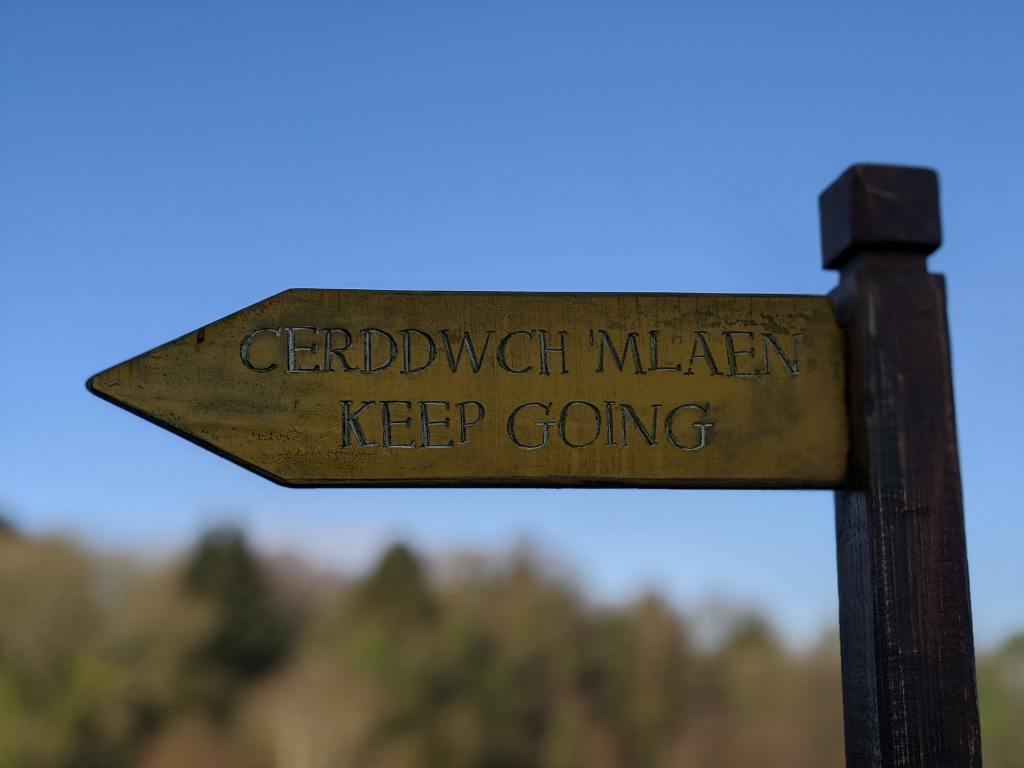
The reasons why some reject Honours are in many cases much ado with the British Empire but the violence committed by the Royal Family to its neighbours far predates our contemporary views of what defined the colonial project. Robert van Krieken (2011) states that looking at Irish history “makes it possible to see the extent to which the English conception of ‘the savage’ and indeed of the whole colonial project was anchored in the perception of the Irish and ‘Irishness’.” This dates back to the twelfth century and English encounters with the Irish, Welsh and Scots “constituted an important watershed in the development of what both civilization and barbarianism were…” So concepts that were donned on Black and Brown people during colonialism through racist science, actually originated with the othering of those also racialised as white.
In November 2020, activist Gina Martin declined an OBE concerned about its ties to oppression and the British Empire. She was being honoured for her activist work, namely the anti-upskirting campaign that lead to the construction of the Voyerusim (Offences) Act 2019. Over the years, many have declined honours, from Ken Loach and Nigella Lawson to Benjamin Zephaniah and Howard Gayle. Today, when ethnic minorities more generally accept or decline these awards, it is deeply politicised. In accepting one, you will be judged as ‘selling out’ to the establishment and in declining one, there is a possible interpretation of you being ‘too angry’ or ‘political’, and the worst of all ‘ungrateful’ to the country you live in. And the connotations of gratefulness in the context of Black people, Brown people and immigrants is a story also worth telling.
A good portion of the people I would call role models (to varying degrees) have them, from some of my favourite actors to empire historians, filmmakers and activists. In the New Year, Lewis Hamilton is set to add a knighthood to his MBE. Both my grandfather and Lewis Hamitlon’s grandfather grew up on the same hill in Grenada. As children, they would race carts down the hill together. Seeing Lewis Hamilton come out for the Black lives matter movement as he did during the summer was a positive. He already had an MBE at that point. However, now in seemingly accepting a knighthood as well for contributions to sport, I am asking more quesitons. Perhaps he’s virtue signalling off the back of this new pro-Black consciousness. In his knighthood, I am reminded of the stories of how Leapers’ Hill in Grenada gained its name… how the First People jumped from the hills to their deaths to avoid capture and/or enslavement. Or that’s the European version… seemingly if we knew the real details, this would be a gross understatement of what actually happened!

The Honours list raises more concerns for me about the face of Black activism in Britain, very much one that is establishment. Despite the success of Small Axe, Steve McQueen like Lewis, has two honours, a knighthood and a CBE. During the summer, we saw David Olusoga OBE deliver a brilliant MacTaggart lecture on race and representation in the media, and a video on white privilege by John Amaechi OBE went viral. I have also seen people awarded honours for contributions to equality, diversity and inclusion… oxymoron much? In Marcus Rashford, I see someone that was a victim of his MBE, with possible pressure from his family to accept at such a young age. Would he have had to campaign for free school meal vouchers for children, had it not been for the Government’s 19th century policies and ideologies? The answers I get to my dislike of the Honours system is that it allows change from within. But I wonder, how can you put a fire out from inside the house?
In the face of Black activism and those speaking out on television, there is a large whiff of Black exceptionalism and unsaid thoughts of them being “some of the good ones”… the voices of the Black working-class are lost, and a few Guardian articles isn’t enough.
The fact ‘British Empire’ is also in the title is another problem, linked to the idea that the Royal Family hand out these medals based on recommendations from Government. The most ironic one of late being Marcus Rashford, it almost feels like the powers that be had the last laugh. In discussions about the Honours system and change from within, I would ask you to think about Audre Lorde’s ideas about power as “the master’s tools will never dismantle the master’s house. They may allow us temporarily to beat him at his own game, but they will never enable us to bring about genuine change.” The tools of colonisers were not designed to liberate the colonised; Whiteness cannot be used to dismantle White supremacy; “this fact is only threatening to [those] who still define the master’s house as their only source of support.” (Lorde, continued). There is an African proverb that states “the child who is not embraced by the village will burn it down to feel its warmth.”
Those three letters after your name are one problem, historical amnesia is another; however, the biggest one of all is how activists and community campaigners still take emblems to empire undermining the integrity of all activist movements. Not every activist/campaigner with Honours feels disowned by their community, but we need to be careful in what local leaders accept from the local/national ivory towers, so those working to tackle inequalities in our communities do not end up looking like hypocrites.
Share this:


A Christmas blog
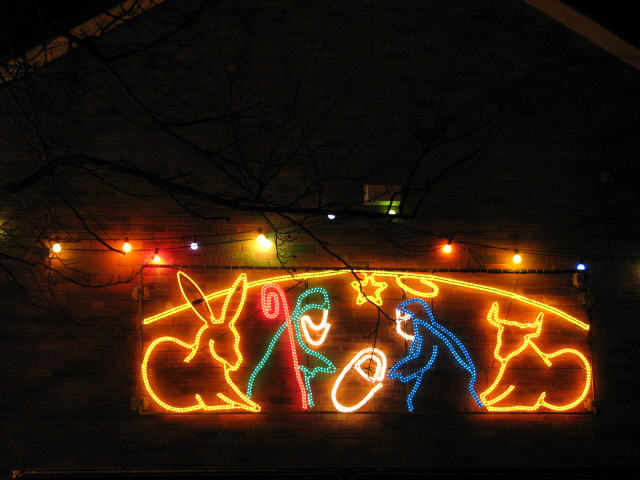
What is Christmas? A date in the calendar in winter towards the end of the year to celebrate one of the main religious festivals of the Christian calendar. The Romans replaced a pagan festival with the birth of the head of the, then new, religion. Since then as time progresses, more customs and traditions are added, to make this festival more packed with meaning and importance. The gift of the 20th century’s big corporations was the addition to the date, the red Santa Claus who travels the planet on his sledge from the North Pole in a single day, offering gifts to all the well-behaved kids. The birth of Christ is miles away from the Poles but somehow the story’s embellishment continues.
In schools, kids across the world will re-enact the nativity scene, a romantic version of the birth of Jesus, minus their flight to Egypt and the slaughter of the infants. The nativity, is for many, their first attempt at theatre and most educators’ worst nightmare, as they will have to include all children regardless of talent or interest to this production. The play consists mostly of male characters (usually baby Jesus is someone’s doll) except for one. That of the mother of Jesus. The virgin Mary is located centre stage, sitting quietly, the envy of all other parent’s that their kid was not cast in such a reverent role. In recent years, charlatans tried to add more female roles by feminising the Angels and even giving the Inn keeper a daughter or even a wife. In most cases it was the need of introducing more characters in the play. Most productions now include barn animals (cats and dogs included), reindeers, trees, villagers, stars and even a moon. All castable parts not necessarily with a talking part.
The show usually feels that it lasts longer than it does. The actors become nervous, some forget their lines, others remember different lines, the music is off key and the parents jostle to get to prime position in order to record this show, that very few will ever watch. The costumes will be coming apart almost right after the show and the props are just about holding on with a lot of tape and superglue. The play will signal the end of the school season carrying the joyful message from the carpark to the people’s homes. This tradition carries on regardless of religious sentiments and affiliations. People to commemorate the birth of a man that billions of people consider the head of their faith.
Nativity is symbolic but its meaning changes with the times, leaving me wondering what our nativity will be in the 21st century. Imagine a baby Jesus floating face down on torrential Aegean waters, a virgin Mary hoping that this will be the last client for the day on the makeshift brothel maybe today is the day she gets her passport back; Joseph a broken man, laying by the side of the street on a cardboard; the angel a wingless woman living alone in emergency accommodation, living in fear, the villagers stunned in fear and everyone carrying on . Not as festive as the school production but after all, people living for year in austerity, and a lockdown and post-referendum decisions make it difficult to be festive. Regardless of the darkness that we live in, the nativity has a more fundamental message: life happens irrespective of circumstances and nothing can stop the birth of a new-born.
Merry Christmas to all from the Criminology Team


