Home » Articles posted by saffron_garside
Author Archives: saffron_garside
Power, Punishment and Panopticism in Roald Dahl’s Matilda: A Foucauldian Reading
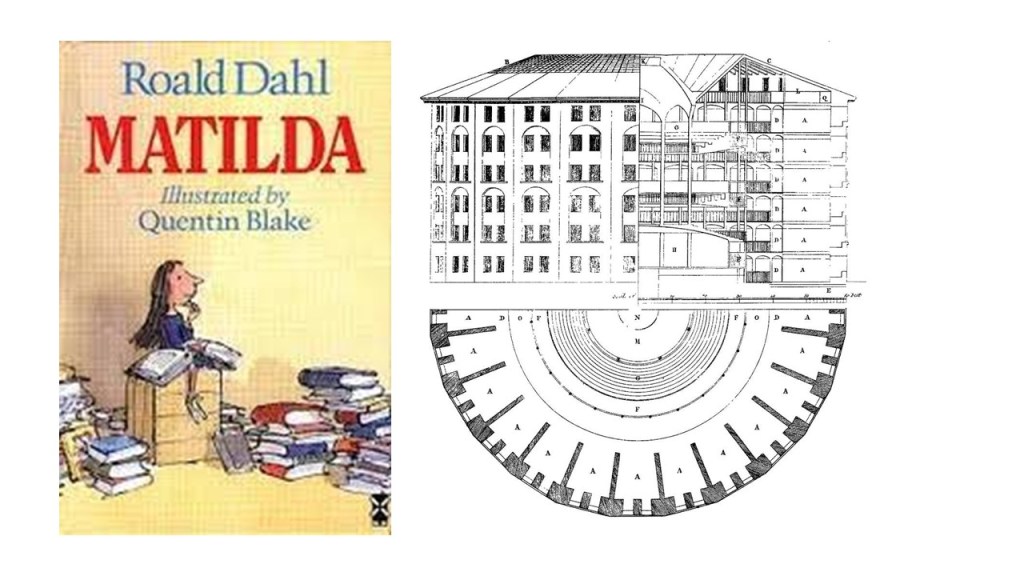
Roald Dahl’s Matilda (1988) tells the tale of a bright young girl’s discovery that she has psychic powers as she seeks to improve the situation of herself and those around her. From an unhappy home life with parents who fail to understand her, to the overthrow of the tyrannical Headmistress of her school, the book explores themes of resistance, rebellion and empowerment. It also subverts the idea that in adult/child relationships the adults hold all the power. Let us consider how theories of power are played out in the story and whether Matilda can affect real and lasting change for herself.
Matilda’s parents do not care for her physically or emotionally and make no attempts to understand her; she is treated as an inconvenience, and her cleverness is mocked and denied. Matilda’s refusal to conform with the wishes of her parents illustrates her own strength and self-assuredness and that despite the many restraints and obstacles placed on her, and on children in general, she continues to be true to herself. Despite her parents’ best efforts, she continues to speak out of turn when she knows the answer, asserts her morals when she realises her father is tricking his customers and continues to borrow and read books from the library after she has been forbidden to do so. Before she has even uncovered her telekinetic powers, she applies herself to devising “suitable punishment[s] for the poisonous parent”, in the hopes of correcting her father’s behaviour and teaching him a lesson.
In Discipline and Punish, Foucault makes several references to the ways in which schools can function as institutions, maintaining power through discipline. Claiming “the prison is like a rather disciplined barracks, a strict school […] but not qualitatively different”.
Crunchem Hall then, is the reverse: a strict school that is not qualitatively different to a prison. It is run as such, and both the children and the staff think of it in these terms. The name of the school itself represents the headmistress, Miss Trunchbull’s, educational philosophy of strict discipline and a breaking down of the children – quite literally ‘crunching them’. She relies not on mutual respect and natural authority but on public spectacles of punishment to keep them in line and Foucault reminds us to “regard punishment as a political tactic”. Examples in the text abound of the ways in which the children and Trunchbull frame the school as prison, as evidenced in the 10-year-old Hortensia’s: “welcome to Borstal”. Hortensia’s role is to warn Matilda and Lavender and tell them of the things she has done to fight back, including putting itching powder in the Trunchbull’s spare underwear and putting golden syrup on her seat: all reasons that she has ended up in “the Chokey”.
As an older character with many stories to tell, the reader is given the impression that things have always been this way and that resistance, though satisfying, is futile. Like a crude iron maiden, the Chokey itself represents the spectacle of punishment, much like Foucault’s spectacle of the scaffold, and is enough to control most of the children and ‘keep them in line’. Hortensia describes it as:
a very tall but very narrow cupboard. The floor is only ten inches square so you can’t sit down or squat in it. You have to stand. And three of the walls are made of cement with bits of broken glass sticking out all over, so you can’t lean against them. […] The door’s got thousands of sharp spiky nails sticking out of it.
A legend within the school and the threat that anyone could be punished at any time, is sufficient to mitigate the children’s behaviour. Aside from Hortensia’s stories of the many times that she has ended up in the Chokey, we hear of no other children being placed in this torture device. It is a symbolic instrument which serves the purpose of controlling the children just by existing. The Trunchbull bases her punishments on hunches and does not care if she is correct, so long as someone gets the blame. Matilda observes that this is what makes her so dangerous to the children, she is unpredictable almost to the point of madness.
Trunchbull repeatedly refers to the students with derogatory and dehumanising names: wart, poisonous pustule, foul carbuncle and othering them in the process. She uses language of crime and punishment when she refers to Bruce Bogtrotter as a “robber bandit” and a “pirate” for stealing a slice of her chocolate cake. Bruce’s punishment is being forced to consume an entire chocolate cake in front of the school, receiving no support or reprieve from the other members of staff – another example of the use of public punishment as spectacle and a means by which to control the children and make it clear who is in charge. This scene frames the battle as adults vs. children; the children united by their status as ‘crusaders’ cheering Bruce on to victory, while Trunchbull remains alone.
She gets away with the punishments she enacts because they are so outrageous and unbelievable that parents wouldn’t believe their children even if they told them – and perhaps they are just as scared of her! Trunchbull epitomises discipline and control, always watching and always ready to deliver a cruel and imaginative punishment, swinging a child by the pigtails, throwing a boy out through the classroom window, picking a child up by the ears and stretching them etc. Education, for her, is about control and stamping out the ‘childness’ in her child pupils. She abhors cleverness and the traits which mark the students out as individual from one another.
The main action of Matilda unfolds within the family home and at school, locations typically associated with adult control and discipline. Ann Alston, following Foucault, notes that families are small institutions where children are first immersed in ideology and learn that there is the possibility of constant surveillance. Children’s bedrooms, she argues, can be simultaneously a source of refuge and safety and a cell within which the child is separated from the adults and a potential site of punishment. The ways in which home and school spaces are organised reconfirm adult power and control; from who has access to which rooms, to the different discipline and rules applied within them, adults appear to hold all the cards. For Foucault, school often involves “enclosure” in a protected place of disciplinary monotony to reduce the inconveniences that come with trying to control a group of bodies in space. The very history of schools and educational establishments points to an exercising of control and power over subjects.
Matilda has limited positive adult role models available to her. A mother who favours looks over books and ignores both her husband’s illegal activities and her daughter. Miss Trunchbull who, whilst representing a self-sufficient woman with a career and an Olympics sports background, loathes children and metes out cruel punishments with no remorse. Not to mention her abuse of Miss Honey and the stealing of her estate. There are many other indicators of Trunchbull’s ‘badness’; she is large, strong, dislikes children, dresses unappealingly and is unmarried – all traits which are unacceptable to the feminine ideal. And finally, there is Miss Honey who, though kind and a good teacher, is so meek and subservient as to be completely ineffectual at saving herself or fully helping the children whom she cares for. If Miss Honey represents the perfect woman, it is damning that she is trapped by her life’s circumstances and unable to break free without the assistance of a child. Trunchbull is made monstrous by her activity and Miss Honey is stuck because of her own passivity.
Matilda is at once a story of supernatural power and a domestic story of the search for a happily-ever-after. Although Matilda achieves many things over the course of the story her goal is to find herself a loving family and the quiet home life she has been missing. Her powers recede once she has liberated Honey and adopted her as a surrogate parent; they were borne of frustration and temporary – “the power had gone. I think I have lost it completely”. Once her life is back on track and her dreams of a perfect family have been realised, she can get back on with the serious business of being a girl. In the ways in which Matilda is, on the surface, just like any other girl with “no outward signs” of her brilliance – she is quiet, unassuming and sensible – Dahl adheres to existing stereotypes of femininity without challenging them. Dahl builds limitations into the powers he gives Matilda, they will be effective just long enough for her to get her happy ending but without having to deal with the implications of a child wielding these powers into future adulthood. “But the fact remained that any five-year-old girl in any family was always obliged to do as she was told” – the message remains in place that children ultimately must defer to their parents. If she were able to keep her abilities, she would remain in a position of greater power over the adults around her and potentially struggle to fit in with the domestic mundanity of her life going forward. Would Miss Honey be so keen to care for her if she were able to wield this power at will? Dahl allows her enough, but not too much. Despite Matilda’s rejection of, or rejection by, her biological family, the end goal for her is still a traditional happy family. Leaving aside the fact that Miss Honey is single and unmarried, she can meet all the requirements that Matilda’s own parents were lacking; an appreciation for fine literature, home cooked meals, cosy domesticity and an active interest in the child’s life and interests.
Matilda reverses traditional adult and child roles by having Matilda (age 5) outsmart her parents, frighten the immovable and dangerous Miss Trunchbull and emancipate her beloved Miss Honey. Repeated references to Matilda being a somewhat “grown-up child” suggest that Dahl sidesteps the issue of giving all the power to a child by making her different and exceptional enough to not really be a child at all. She can talk, read and do advanced mathematics earlier than her peers and is shown to be just as competent, if not more, than the adults. Miss Honey feels comfortable and able to share her very adult worries and concerns with Matilda on an equal footing, but at what cost to Matilda’s childhood? By making Matilda’s achievements far beyond the reach of most children, Dahl ensures that, whilst the character is both empowering and empowered, she is no real threat to the status quo of adult dominance.
Matilda’s revenge echoes Trunchbull’s own disciplinarian techniques: she utilises constant surveillance and the omnipresent threat of punishment when she manifests the ‘ghost’ of Miss Honey’s father, Magnus. Using her telekinesis to manipulate a piece of chalk to write on the blackboard, Matilda spells out a message from the late Doctor; he has seen how Trunchbull treats his daughter, he knows she took away the house and inheritance and if she doesn’t change her ways “I will come and get you […] I am watching you Agatha”. The idea of being watched by hidden or invisible forces connotes a similar threat to Bentham’s Panopticon, discussed at length by Foucault, which has permanent effects even when there is no one actively observing. You do not need to know you are being watched to behave as if you are. The ‘ghost’ makes visible the coercive powers that Trunchbull herself has been using against the children and she is right to fear it – who wants to live with the threat of constant surveillance hanging over them? In this sense, Matilda and Trunchbull are not so different after all; they share similar ideas of punishment and discipline, and both attempt to control or change the behaviour of those around them. Matilda’s power manifests itself in a ‘ghostly’ fashion every time she uses it, and she relies on not being seen to act, playing on the supernatural fears of those around her. The anonymity of Matilda’s actions, or reactions, towards Trunchbull and her parents serves to make them more insidious, and Matilda thus avoids physical confrontation. Readers see Matilda’s behaviour as the triumph of good over evil, as being morally justified, whilst viewing the same behaviour by Miss Trunchbull as abhorrent. But could it be that Matilda is on her way to becoming one of the oppressive adults she loathes?
Works Cited:
Alston, A. The Family in English Children’s Literature Taylor & Francis, 2008.
Dahl, R Matilda, Puffin Books, 2009.
Foucault, M, Discipline and Punish, Penguin Group, 1991.
Images from L-R A copy of Dahl’s Matilda and a blueprint for the Panopticon.
Share this:


#CriminologyBookClub: Murder at the Grand Raj Palace
As you know from our last #CriminologyBookClub entry a small group of us decided the best way to thrive in lockdown was to seek solace in reading and talking about books. Building on on what has quickly become standard practice, we’ve decided to continue with all seven bloggers contributing! Our latest book was chosen by all of us (unanimously) after we fell in love with the first instalment. Without more ado, let’s see why we all adore Inspector Chopra (retired) et al.:
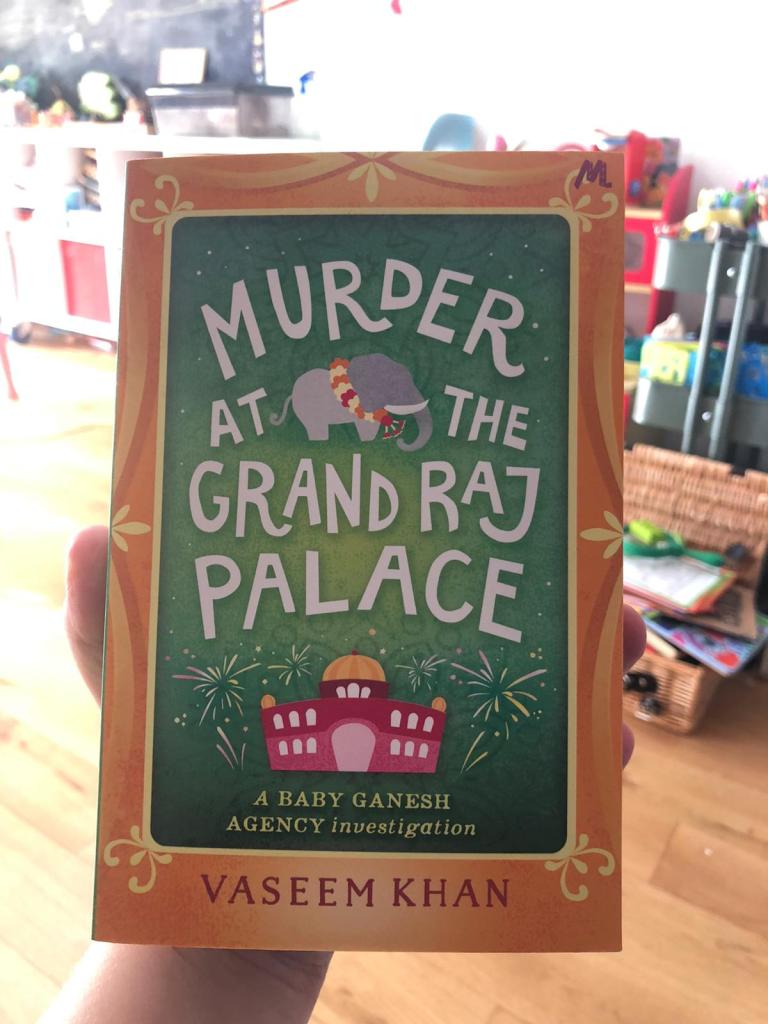
What a great read! I was extremely excited to read another book in the Baby Ganesh Agency Series and once again I was not disappointed. There was more mystery, a rich subplot and of course my favourite baby elephant. Vaseem, charmingly immerses the reader into the colourful and picturesque Grand Raj Palace. The way the book is written sets your mind up as though you are watching a film. The story allows you to escape from the uncertainty and mundane realities of life. Which is always welcome! And thrusts you into a mystery within a mystery. I would advise any reader that is interested in reading the series to definitely consider starting at the beginning, with the Unexpected Inheritance of Inspector Chopra. Although the stories do not pick up from each other, you definitely get an appreciation for the characters as they grow and change throughout the series. I liked the way Poppy is taken out of her supporting character role and is put centre stage, while investigating her own mystery. With laugh out loud humour, dark revenge and whacky characters, this is a book that will entertain you from start to finish.
@svr2727

In this instalment of the baby Ganesh Agency investigates a homicide of a very important person in a very important hotel. Inspector Chopra (retired) is on the case with his very unusual sidekick, investigating the world of corporations, big business and luxury. In the meantime, the Chopra universe is expanding and the characters are becoming more intricate and multifaceted. The household, now apart from the striking tenacious baby elephant, has little Irfan a child Chopra and his wife Poppy so desperately wanted. The story takes us through a different world paying homage to some corporate crimes that made it to the news. The conclusion of the drama is a reveal of whodunit in a very classic revelation scene. One thing you are left wondering, what will happen when the baby elephant grows to his full size?
@manosdaskalou
So far I have loved each of the Baby Ganesh Agency books. They have brightened my day and taken my attention away from life in a pandemic. As ever, with @vaseemk2’s series, you get the heat, the smells, the tastes, the views of India, attacking your senses. In this book, there is a striking contrast between light and dark in the cases resolved by Inspector Chopra (Rtd) and the wonderful Poppy. For me, the exploration of institutional violence caught my attention, the parallels to the Bhopal disaster, drawn clear and bright. Even in fictionalised form, institutional violence takes your breath away in the harm perpetuated and the complete absence of official interest. Lives lost without remark, without empathy. Without giving away any spoilers, equally striking was the almost Agatha Christie-like sleight of hand, where readers are encouraged to embrace their prejudices, only to have them destroyed with the denouement. At this point, I have the 5th book in hand and whilst I am excited to get started, I am also seriously worried. I really don’t want this series and its wonderful characters to come to an end….
@paulaabowles
Murder at the Grand Raj Palace was by far my favourite of the Baby Ganesh Agency novels! I particularly enjoyed the closeness of both cases, the uncomfortableness of Chopra in the presence of a beautiful woman who was not his wife, and Poppy’s strong and independent, yet interconnected, storyline. The twist on who committed the murder at the Grand Raj Palace, and why: I can honestly say I did not see coming! Without trying to give too much away: it is a must read which entwines themes of justice, family and social ills! Inspector Chopra does not disappoint: YET AGAIN!
@jesjames50
What is there to say about this series that we haven’t already? I love these books! They are vibrant and colourful and genuinely immerse you in another place with characters that feel like old friends now. The fourth book was possibly my favourite of the series so far: the setting of the Grand Raj Hotel, the monkey movie star’s assaults on Ganesha, spending more time with Poppy as she solves a mystery of her own, Chopra’s uncompromising resolve to crack the case and his grand unmasking of the criminal at the end. I didn’t want it to be over – bring on book 5!
@saffrongarside
This book includes my favourite sub-plot of the Chopra series so far. Poppy herself plays detective! I thought that it was great that the sub-plot and the main plot were based within the same setting, this made the book seem action-packed. Usually with the Chopra books I enjoy reading at a steady pace but I found this book difficult to put down, and this is not a bad thing. Sometimes when I read books I am disappointed by the ending, with this Chopra series this has not happened yet. Perhaps this is why these books are so pleasing to read. I was very pleased with what happened at the end with the women in red.
@haleysread
As the newest member of book club, I had missed out on the previous books in the Chopra series. Although the book is part of a series, I never felt as though I had missed anything or that I needed to catch up. I immediately liked the characters, particularly Poppy and the baby elephant, Ganesha. I identified with Poppy as a strong woman and Ganesha, despite being an elephant has the personality of a human. Secondly, I enjoyed the way in which the author wrote about India and how his fictional version reflected reality. Having been to India I was instantly reminded of the sights, sounds and smells. Members of the royal families and the fuss around the wedding recalled memories of my sister’s Indian wedding. Indeed, it was Poppy’s investigation which engaged my attention more than the murder. In the end, I was more concerned with the whereabouts of the bride than I was the uncovering of the murderer. This was a joy to read during the Christmas after a frantic first term of lecturing in the pandemic. I have already made a start on the final Chopra episode but I will definitely return to the first few books.
@amycortvriend
Share this:


“My Favourite Things”: Saffron Garside

My favourite TV show - It's probably Peep Show, I've rewatched it so many times and it doesn't stop being funny. I often find myself quoting it to other people too and it's what I put on when I don't want to think about anything

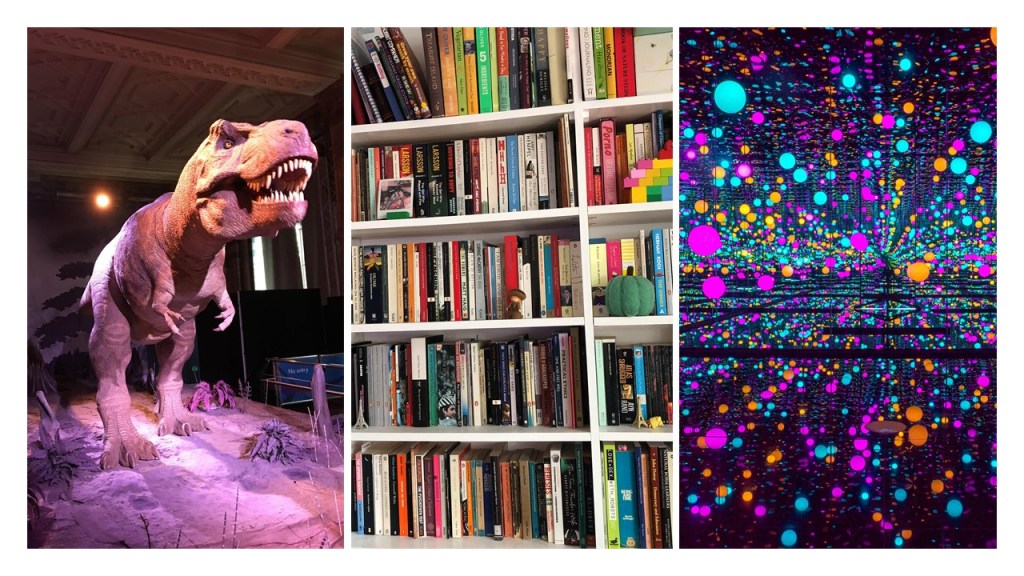
My favourite place to go - The Natural History Museum has been my favourite place to go for a very long time - the building is beautiful and you could spend days in there and still not see everything. I learn something new every time I go. I also love taking the kids there now - some stuff is still the same as when I was small like the T-Rex and the earthquake room! It'll be one of the first places we go when museums and galleries reopen

My favourite city - It's definitely Paris - it really reminds me of London in a lot of ways, it feels small and big at the same time and there is so much to see and do there. I was lucky enough to go at the beginning of March on a surprise trip - it was fun to be a tourist and we walked so much!

My favourite thing to do in my free time - Read! If I'm not doing something else then I'm usually reading. I carry a book everywhere just in case I get a couple of minutes to read. I'm in two book clubs so always juggling a few books at once

My favourite athlete/sports personality - I'm not a big sports fan and I'm not sure this counts but the kids and I have been loving doing PE with Joe Wicks. It's been great for keeping us moving during the lockdown and it's a pretty big commitment to show up every day. He always seems so positive

My favourite actor - Edward Norton. I think I've seen nearly all the films he's ever been in!

My favourite author - It's too difficult to choose. I really like Chuck Palahniuk and I've reread the Harry Potter series by J.K. Rowling a lot of times!

My favourite drink - I'm not sure you can beat a good cup of tea. It's about the most comforting thing I can think of and it's never not a good time to put the kettle on

My favourite food - caramel shortbread - but it has to be one of the really good ones (no digestive base!) and you need a good chocolate to caramel ratio!

My favourite place to eat - Every Sunday my husband and I take it in turns to cook a big family meal (complete with pudding!) and we play lots of board games after. It's one of my favourite times in the week and it always feels special.

I like people who - are enthusiastic about life and the things they are learning about, who want to share stories and make spontaneous decisions

I don’t like it when people - don't communicate their feelings or try to resolve things through conversation - I think things would often be simpler if people tried to talk about things honestly

My favourite book - I think my favourite book of all time is Treasure Island by Robert Louis Stevenson it's such a good adventure story and bits of it are really scary!

My favourite book character - Bilbo Baggins! I really enjoyed The Hobbit as a child and my kids love it so much we've already read it together twice. There is something wonderful about how his character develops throughout his quest - he goes from being a reluctant adventurer to the person holding the whole thing together. He isn't motivated by greed or fame and commits himself to seeing it through. Whenever he feels disheartened he dreams of the comforts of home; cooked meals, a boiling kettle, a warm fire

My favourite film - Fight Club is easily my favourite film- great actors, great soundtrack, great twist!

My favourite poem - Wild Geese by Mary Oliver. She's my absolute favourite poet and it felt like magic when I first discovered her! She writes about nature with such reverence and wonder

My favourite artist/band -  For more than half my life it's been Green Day so I think I am stuck with them now!

My favourite song - In My Mind - Amanda Palmer. I really, really love this song - positive messages and ukulele, what more do you need?

My favourite art - I don't know if I have a very favourite piece of art - I love going to a modern art gallery like the Tate Modern in London or the Centre Pompidou in Paris and just spending hours losing myself in all the emotions that get stirred up. I really love the work of Yayoi Kusama but haven't been lucky enough to see her art in person yet

My favourite person from history - Mary Anning made some really important fossil discoveries but didn't really get the recognition she deserved during her lifetime. Plus she was struck by lightning as a baby, which is a pretty cool story!
Share this:


Home educating in a pandemic
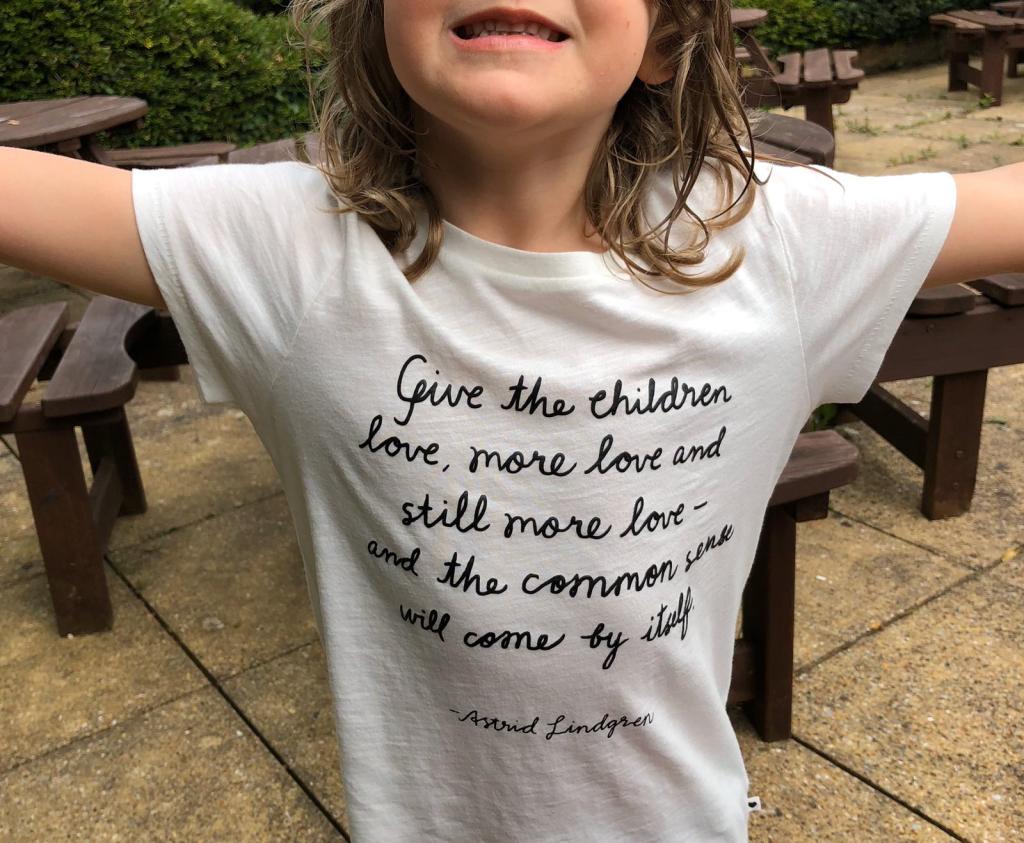
“Give the children love, more love and still more love - and the common sense will come by itself” - Astrid Lindgren
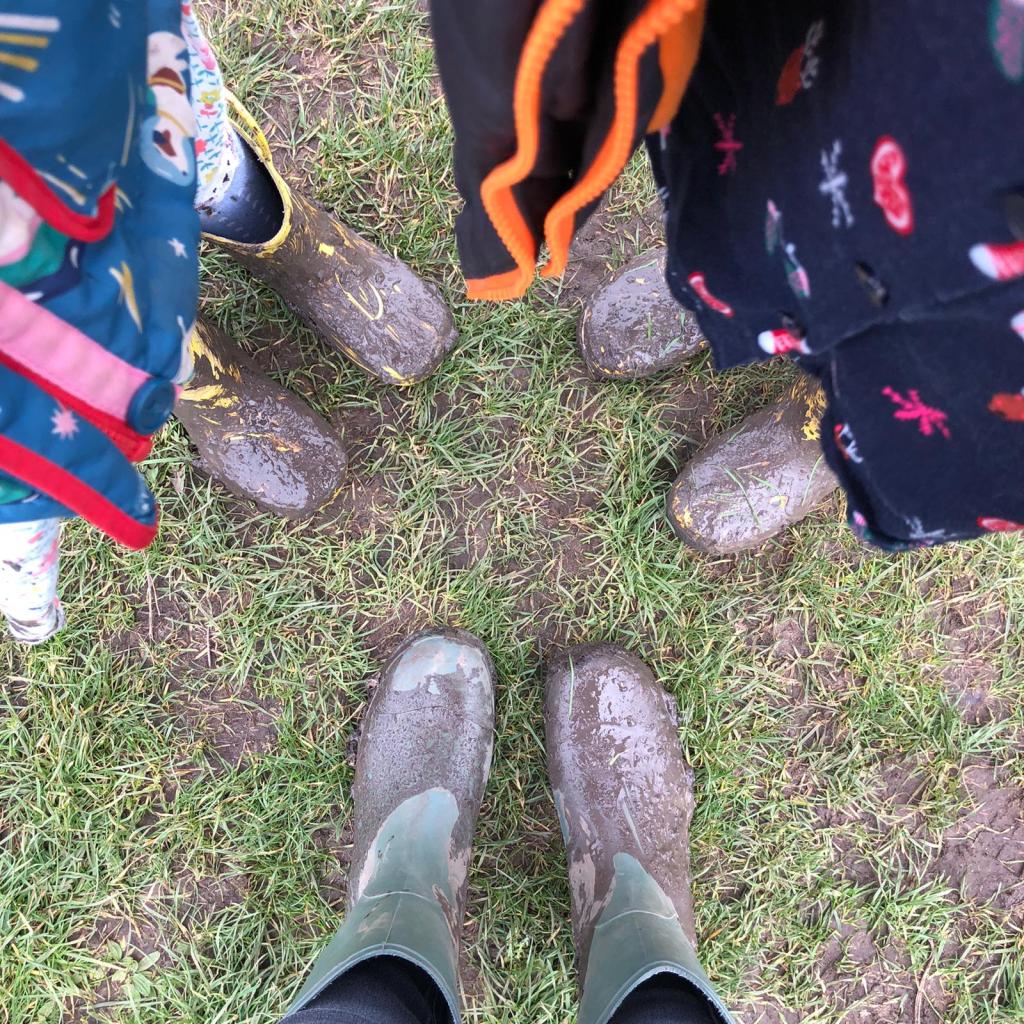
My children are aged 5 and 7 and they have never been to school. We home educate and though ‘home’ is in the title, we are rarely there. Our days are usually filled with visits to museums and galleries, meet-ups with friends, workshops in lego, drama and science and endless hours at the park. We’ve never done a maths lesson: sometimes they will do workbooks, but mostly they like to count their money, follow a recipe, add up scores in a game, share out sweets… I am not their teacher but an enthusiastic facilitator – I provide interesting ideas and materials and see what meaning they can take and make from them. Children know their own minds and learning is what they are built for.
If there was ever a time to throw away the rulebook it’s when the rules have all changed. Put ‘home’ at the centre of your homeschooling efforts. Make it a safe and happy place to be. Fill it with soft, warm and beautiful things. Take your time.
All this to say that what children need most is your love and attention. This is so far from an ideal situation for anyone – so cut yourselves some slack and enjoy your time together. You don’t need to model your home like a school. Share stories and poems, cuddle, build dens, howl at the moon, play games, look for shapes in clouds and stars, do experiments round your kitchen table, bake cakes, make art, explore your gardens and outside spaces and look for nature everywhere. This is the stuff that memories are made of.
As adults we don’t continue to categorise our learning by subjects – we see the way things are interconnected across disciplines, sometimes finding parallels in unlikely places. When we allow children to pursue their own interests we give them the tools and the freedom to make their own connections.
What’s important is their happiness, their kindness, their ability to love and be loved in return. They are curious, they are ready made learning machines and they seek out the knowledge they need when they need it.
It’s an interesting time to be a home educator – more children than ever are currently out of school and the spotlight is on ‘homeschooling’. I prefer the term ‘home educator’ because for me and my family it isn’t about replicating the school environment at home and perhaps it shouldn’t be for you either.
Treat it as an extended holiday and do fun stuff together but also let them be bored.