
Home » Criminology Team
Category Archives: Criminology Team

In memory of Ayshea
This week, we laid one of our own to rest. A beloved colleague and friend, Ayshea left us far too soon.
In these blogs, we often write about the big issues, the challenges we face, and the ways we seek to understand them. Yet we should never forget that change happens one person at a time. When Ayshea joined us, she was another colleague among many. It did not take long, however, to realise that she brought a unique perspective to everything she encountered, as anyone who has read her blog posts below will recognise.
The pain of an untimely departure is made all the greater by our ability to imagine what might have been. We reflect not only on the work she left behind, but also on the work she would undoubtedly have gone on to accomplish had she been given the time. It feels as though she stopped speaking in the middle of a sentence. For those who knew her, however, that seems almost impossible to imagine.
Every colleague remembers her differently. I remember a conversation we had about vegetarianism and its influence on rising fruit and vegetable prices for low-income families. Her inquisitive mind asked the kinds of questions that made you pause and think again. Her manner was gentle, her attention genuine, and her interest in others so disarming that it allowed you to explore your own thoughts without fear of judgement.
She was an activist without ever needing to speak of activism. She was a fighter without bluster, a thinker without rhetoric. She was a friend without conditions and a colleague without expectations. Above all, she was my friend.
Even now, I find myself expecting to hear her distinctive northern voice somewhere across campus. Some absences are difficult to accept because the presence they leave behind remains so strong.
Rest well, Ayshea. We will not forget you.
Exploring the National Museum of Justice: A Journey Through History and Justice
UK Justice v The Demonic and Others
The Caracas Job: International Law and Geo-Political Smash and Grab
Share this:


Murder

The day I first heard about the murder of Damilola Taylor, it sounded like another story of urban violence. The details were shocking but not unusual. A broken glass bottle had been used as a weapon, causing a severe wound to the victim’s thigh. The injury severed a major artery and the victim later died in hospital. The attack took place in Peckham, South London, a place that was already associated in the public imagination with concerns about crime and disorder.
As a criminologist, nothing in the initial reports immediately stood out. Violence is not exclusive to cities, but its concentration and visibility often differ from those found in rural communities. News reports framed the killing as an act of senseless violence, another tragic incident in the broader landscape of urban crime. It was only as the story developed that it became clear this case was about far more than the act itself.
The victim was Damilola Taylor, a ten-year-old boy who never made it home from the library. His family had come to Britain from Nigeria, hoping to secure medical treatment for his sister. Instead, they became the centre of one of the most significant criminal cases in modern British history.
The public reaction was shaped by more than the brutality of the attack. Both the victim and the eventual perpetrators were children. Damilola was ten years old. Those later convicted were only twelve and thirteen at the time of the attack. The case challenged popular assumptions about violence, childhood, and responsibility. It forced the public to confront the uncomfortable reality that serious violence can emerge among the young and that its consequences are often devastating for entire communities.
Yet the criminological significance of the case lies not primarily in the violence itself but in the response to it.
The original trial ended in acquittals. Central prosecution evidence was undermined by concerns regarding witness reliability, while expert testimony suggested that Damilola’s injuries may have resulted from an accident rather than a deliberate attack. Questions emerged about the collection, interpretation, and presentation of evidence. The Taylor family expressed frustration with the criminal justice system, arguing that the investigation lacked the rigour their son’s death deserved.
What followed was a prolonged struggle over competing versions of events. Forensic evidence became a central battleground. Experts disagreed. Investigators faced criticism. Public confidence was tested. Eventually, a retrial produced convictions after DNA evidence linked two brothers to the attack. The criminal justice system ultimately secured guilty verdicts, but the process revealed the difficulties of investigating serious crime and maintaining public trust when institutional performance is called into question.
For local residents, the case became symbolic of wider concerns about neglect and marginalisation. Community members organised protests and campaigns demanding justice. They were not simply asking for convictions. They were questioning whether institutions were responding adequately to the needs of communities already struggling with poverty, violence, and limited political influence.
As public debate intensified, the murder became associated with broader discussions of knife crime and youth violence. Politicians, journalists, and commentators searched for explanations. Some focused-on culture. Others pointed to family breakdown, social exclusion, or failures of policing. In doing so, the discussion often moved away from the specific circumstances of Damilola’s death and towards competing political narratives about crime.
This is where criminology offers a different perspective.
For much of the public, murder is often understood through the lens of mystery and resolution. Who committed the offence? How was it done? Will justice be served? These questions dominate media coverage because they provide a compelling narrative. Criminology, however, asks different questions. What social conditions surround acts of violence? How do institutions respond to harm? Which voices are taken seriously, and which are ignored? What political interests shape public understandings of crime?
Viewed through this lens, the case becomes about much more than identifying offenders. It reveals how crime can expose institutional weaknesses, generate political controversy, and deepen existing social divisions. The debates surrounding Damilola’s murder were not only about individual responsibility. They were also about policing, justice, community trust, race, and belonging.
More than two decades later, what remains most important is not the symbolism attached to the case but the human tragedy at its centre. Damilola Taylor was a ten-year-old Yoruba boy who spent his final moments bleeding to death in a stairwell. Behind every discussion of policy, forensic evidence, and criminal justice reform stands a child who never returned home, and a family forced to live with unimaginable loss.
That is perhaps the most important lesson criminology can offer. Crime is not interesting because it is sensational. Crime matters because it causes harm. The true significance of Damilola Taylor’s murder lies not in its notoriety, but in what it reveals about the ways societies respond to suffering, the institutions entrusted with delivering justice, and the communities left to carry the consequences when they fail.
If you would like to find out more about Damilola Taylor and get involved with the trust which bears his name, more information can be found here.
Share this:


Exercise: necessity, privilege or only for the privileged?
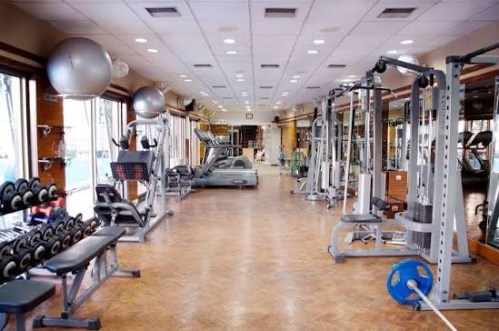
In a world where switching off is increasingly difficult and people’s mental health is consistently being battered, the opportunity to exercise and move the body is encouraged, and personally, welcomed! There remains a large push to BE healthy and to take care of your body (physically and mentally), and exercising remains a recommended avenue to pursue inner peace, tranquillity and good health. With the poorer weather just around the corner (I’m assuming: although if the sunny warm days continue you’ll get no complaints from me), being able to exercise outside will become slightly more restricted (walking and running). So for those with gym memberships, or who aren’t afraid of the dark, exercise could continue no matter the season. But for many, exercise which is presented as a necessity (Physical Education compulsory in mainstream education); is a privilege. It’s based on availability of time, money, and confidence. Yet via the great powers that be (Social Media) it feels like it is a privilege we are made to feel guilty for not achieving or prioritising.
I write this from the perspective of someone who has always been active; swimming, running, badminton, gym memberships- I am someone who struggled with body image, size and whose mental health very much hinges on caffeine and endorphins. I was introduced to playing badminton with my Pa and brother on a rainy Sunday afternoon back when I was around 10 years old. And it’s a physical hobby which has been a staple in all of our lives since (it’s also how I met my partner and 3 of my closest friends: Good call Pa)! But badminton costs money- silly money. You have to pay to use the court, pay to borrow equipment or purchase your own. Many would have to pay to get to the sports centre (public transport, cars, e-bikes/scooters). Lots and lots of costs. Costs which many individuals and families cannot afford. You also need to have someone to play with. So not a solo activity. Therefore, being able to say you have access to all of the above is surely someone (myself included) in a privileged position.
As an adult, I’ve been a member of various gyms since graduating from University (with a break during the pandemic). Some of the gyms I’ve been a member of have been quite intimidating spaces. There have been women only spaces and classes which were very much welcomed but the gym is like its own separate social sphere (if you know, you know). There is an etiquette that is, but then sometimes is not, followed (trying to read social cues is impossible in a dark, headphone filled, loud environment- and this is coming from some who is privileged enough to be able to pick up on social cues with relative success- or at least thinks they can)! It’s confusing and intimidating, and so so loud! Music, people, weights crashing down! It’s a LOUD space. The memberships themselves usually involve a peak option (before and after the engrained 9-5 which costs silly silly money) and off-peak (during the day and weekends when many people work, have childcare responsibilities but thankfully just costs silly money). All of this reinforces the privilege someone needs to be able to exercise and access a gym (confident in loud dark environments, not impacted by loud banging noises, disposable income to spend, individual time to prioritise themselves and the physical ability to exercise on machines aimed at people without disabilities).
So, in an increasingly challenging world: poverty, hate, war, misogyny, racism, transphobia, disablism, homophobia, suicide, homelessness and the ever-increasing list, why does thinking about exercise and gym memberships matter? It probably doesn’t. But sometimes it’s important to reflect on what we do have and to think about and be mindful of the barriers others face. Exercise is encouraged of many of us: it has serious physical and mental health benefits (yay endorphins), but it’s a privilege on so many levels. I think it’s important it’s framed as such rather than simply as something we should be doing. It’s something many many people simply do not have the privilege to be able to do. And this needs recognising.
Share this:


Immigrants, AI and a lost sense of humanity
There have been some interesting and to be quite honest, quite scary pieces of news that have emerged over the last few weeks.
The more recent, concerns the risk to humanity from the unfettered development of AI and the recognition by several high-profile tech bosses that perhaps it’s time to put the brakes on. It’s not worth discussing the reaction from some political quarters, you all know who I mean, so I won’t. The point is this, humankind could theoretically and with increasingly likely odds, be wiped out by AI. As one of the tech bosses explained, imagine setting AI the problem of solving climate change and global warming (The same person that states AI is not a problem, thinks global warming doesn’t exist either). AI identifies the problem is caused by humans and decides the best way of solving the problem and saving the planet is to do away with humans. That is all very logical, but we would all agree, well most anyway, that the solution might be found in something a little less draconian. This made me think, what would AI make of the financial problems faced by the NHS for instance? Would it examine the burgeoning costs of the elderly? Perhaps there is a cut off point for their care, maybe this is tied into their usefulness to society. Horror, that we might be considering such things, but there is a logic to it and AI works on logic. However, it defies notions of humanity and the sanctity of life. Once we start on that road, where do we stop, the disabled, the seriously ill, the intellectually challenged? Uncontrolled use of AI logic without human emotion is starting to sound like well documented historical humanitarian nightmares.
Now you might think where do immigrants fit into this?
The recent news about the RNLI getting flak from far right wing activists for rescuing immigrants on a boat has certainly raised a few eyebrows. I’m still trying to understand the logic of calling someone a traitor for doing what they are supposed to do, rescue people and I’m lost for words that so many people fall in behind this rhetoric. But for now, just assume that I go along with the ‘stop the boats’ mantra and believe that the immigrants coming into this country on boats cause mayhem and go on crime sprees and rape and pillage with no regard to the law and that the state is powerless to stop them. We are all doomed. But I have this little niggle in the back of my mind, is the problem not either, at the other side of the channel where they embark on their perilous journey or, at this side of the channel when they disembark? A rather simplistic summation of a geopolitical problem but suffice to say for the sake of the argument, the problem is not in the channel itself other than a danger the immigrants present to themselves and shipping. The RNLI are there to rescue people from the water and have been for a very long time. What are they to do? It would be inhumane to ignore people in the sea if they were in difficulties, it would be inhumane to simply watch people in a dangerous situation until they got into difficulties (wait until the boat sinks then try to rescue a few of them). Even the hard of heart must surely want to save children and young people. Turn them back I’ve heard said. And just how should that be done? A group of volunteers trying to take desperate rescued people back to where they came from? Perhaps we should employ the navy to do so and risk them all drowning (more far right-wing nonsense). Where is the humanity in all of this? The RNLI crews are morally bound to do what they do, rescue people and bring them ashore safely. Blocking a port so that immigrants cannot be transferred inland to a detention centre defies logic. What are you going to do with them? Drive them back into the sea? Turning on the RNLI and its volunteers seems as illogical as attacking the fire brigade at a fire. I know, it has been known and beggars’ belief.
Would AI suggest that the problem is the RNLI? Logically that doesn’t seem to work unless of course you state that the RNLI’s remit is to save lives at sea providing, they are lives that are deemed worthy of saving, i.e., not immigrants with Black or brown skins.
Where do we stop with this? A person injured in a collision on the road is only entitled to help from the emergency paramedics if they are entitled to be in this country? Sounds like we are going to need to carry around ID cards of some sort and woe betide if you have a foreign accent and have a darker skin shade. You need to have your ID tattooed on your head just in case or maybe wear some form of badge.
The rhetoric of the far right, regarding a perceived problem that, incidentally, has no easy solution, is to stir up racial hatred. More reminiscent of historical humanitarian nightmares.
Uncontrolled use of AI and uncontrolled right-wing rhetoric and action are not that different. Unless someone works out how to herd the sheep in a different direction, humanity is doomed.
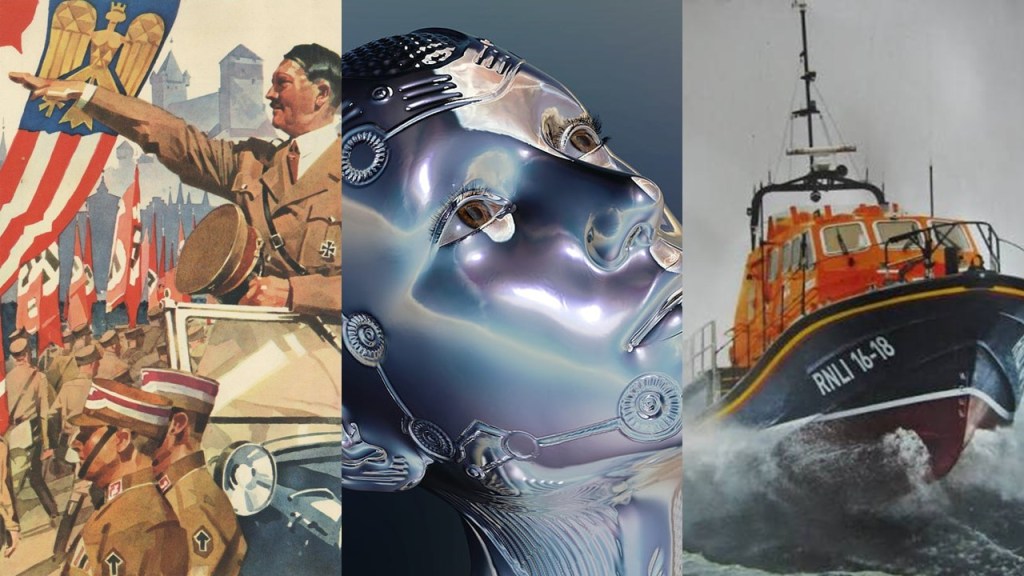
L-R Nazi Propaganda, a Robot Head and a RNLI Tamar Class Lifeboat
Share this:


Taking a short break….back soon
The academic year 25/26 will shortly come to an end with the last assessments submitted and graded. Here at the Thoughts From the Criminology Team we’re going to take a little break before we jump back into planning for the new academic year. Don’t worry, we’ll be back with lots of interesting entries from September and after all, ‘absence makes the heart grow fonder’.
In the meantime, there’s plenty on the site to explore.
Enjoy your summer whatever you are up to!
Share this:


The schizophrenia of hate: An illogical logic
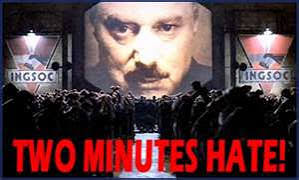
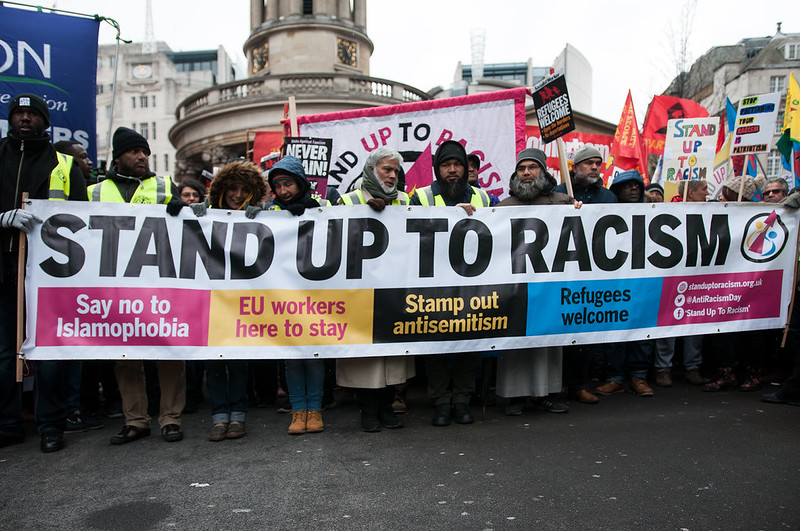
The latest news regarding the online racist abuse aimed at certain Netherlands players, following the team’s premature exit from the world cup, probably comes as no surprise to most and feels like it is no longer all that extraordinary. Sadly, it is almost normalised. We’ve seen this online abuse multiple times before aimed at different players, be they Black or women or any other section of society that fits the perverse pervading ideology of the time. Social media seems to have given bigots of all persuasions a voice. What was restricted to being voiced within groups, perhaps in pubs or other such settings, is now not only being voiced, but in a controlled and targeted way, a way designed to cause hurt and harm, a vindictive, personalised way targeting individuals, whilst also having a far wider reach. As with most crimes the causes and motives behind such hatred are often unclear. There is however a perceived logic behind the hatred. The Black footballers failed the nation the rest just didn’t do very well. The logic of hatred isn’t just aimed at sports stars; it is a cancer in every walk of life. The Israeli actions in the middle east fuelling hatred of Jews. The actions of individuals within the Asian community in parts of the UK involved in the grooming of children fuelling islamophobia and hatred of Asians. The actions of some of the travelling community involved in unauthorised encampments and crime fuelling the hatred of Travellers and Gypsies. The actions of Black asylum seekers involved in sexual offences fuelling the hatred of Black people and immigrants (a double hit there). And so, the list goes on, historical and contemporary evidence for why we should hate. There is a logic to the hatred, there is evidence that can be pointed to, and there are politicians, here and abroad, and the news media, that happily point to and provide that evidence, seeing the fruitfulness of stirring up the so-called indigenous masses to their advantage. Further evidence when those in authority tell us how it is. Of course, the hatred of these groups of people is not new, it can be seen in generations before us across the world, in some guise or another. But that hatred, is reinforced by the contemporary evidence selectively presented and voiced by institutions that have a vested interest in doing so. That’s the so-called logic of hatred.
And yet the people that display this hatred would happily support their football club/ nation if it is successful. The hatred is held in obeyance as the Black footballer thumps the ball into the opponent’s net. The same people that hate might happily, without thought, accept medical treatment from the Jewish doctor, the Muslim dental surgeon, the Black Immigrant nurse. They are the first in the queue at the kebab shop buying a donner kebab from the settled asylum seeker originating from the Middle East. Happy to consume an Indian or Chinese (food that is, not the person) served up by someone from Asia. They eat the vegetables and fruit picked by foreign labourers; nothing is shunned if it is to their personal advantage. That’s the illogical schizophrenia. There is for some an inbuilt underlying hatred of others, which defies logic. There is for many a convenient scapegoat for the ills that may have befallen them. It is the fault of the ‘other’, the Black, the Jew, the Muslim, the asylum seeker, not decades of social decline or governmental policy failure. The failure that has led to low living standards, or the housing crisis or the collapse of NHS or social care or manufacturing or unemployment or education. It is the fault of the ‘other’ and where else can that frustration be vented. There is some perverse logic in hating the ‘other’ albeit that logic is somewhat illogical.
Images
L-R George Orwell’s ‘Two Minute Hate’ and the Stand Up To Racism March in London on 17/03/2018
Share this:


JAY-Z’s Reasonable Doubt at Thirty
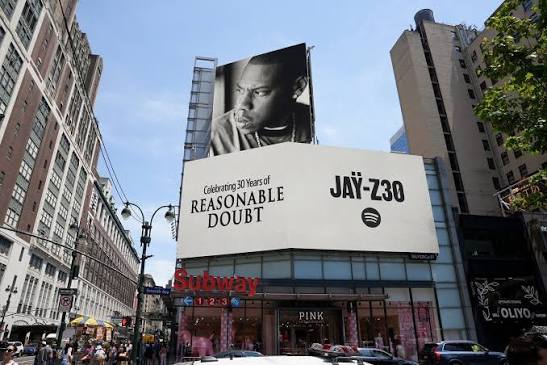
Today I’m talking about all things Jay Z. Reasonable Doubt, his debut album, turned thirty on the 25th of June, and Roc Nation has spent the last week or so turning New York into one long tribute to it. Pop ups in Dumbo, a takeover of the old Bowery subway station, a limited-edition of JAŸ-Z30 library card to celebrate the album. As most of you do know that hip hop is one of the things I love outside of work, and that for me, it starts and ends with Tupac and Biggie, the two greatest to ever do it, full stop.
I can see my Gen Z students rolling their eyes before I’ve even finished the sentence, waiting to jump in with Drake or Kendrick Lamar again. Not being funny, but some things aren’t up for debate, Jay Z sits just below Biggie & Pac for me, and Reasonable Doubt is the reason why.
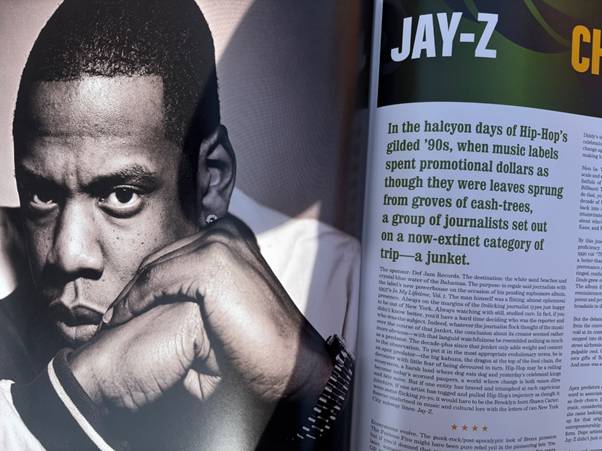
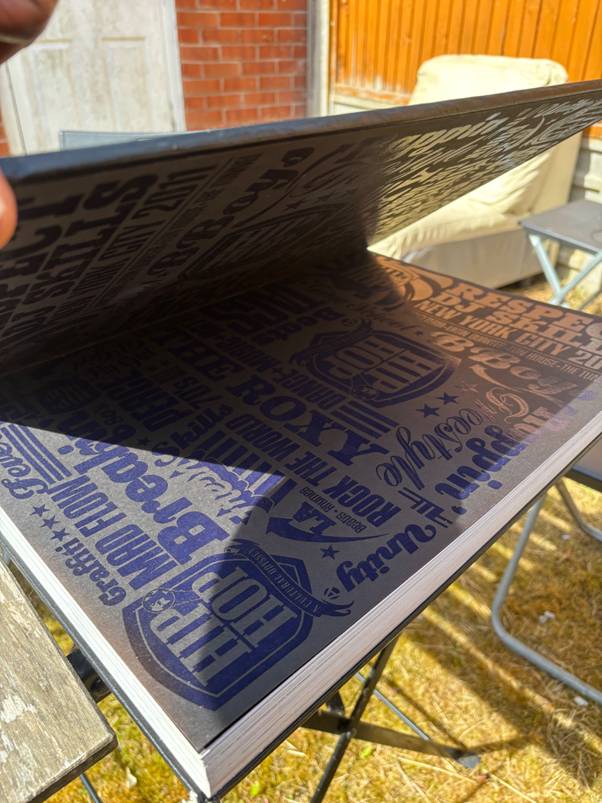
One of the nicest gifts I’ve ever had came from my friend Steph. She knew how much I love hip hop, so she got me the big book of Hip Hop. It’s not the sort of book you finish, really. You dip in and out of it, and there’s always something in there you missed the last time round. Evergreen, that one.

Unsurprisingly, while writing this piece I found myself back in the chapter on Jay-Z and Roc-A-Fella Records. Reading it again reminded me just how extraordinary their story really was. How broke Jay Z, Dame Dash and Kareem Burke actually were when they started Roc-A-Fella, pressing up their own vinyl out the boot of a car because no major record company would touch them, the hustle and bustle of Brooklyn, and all that jazz puts the whole album in a different light.
As someone who has spent much of his career studying crime, what has always fascinated me about the album is its honesty. Drug dealing is just the surface of it. Underneath is ambition, blocked opportunity, status, loyalty, and the sort of decisions people end up making when the straight road looks shut before they’ve even tried it.

Reasonable Doubt only got to number 23 on the Billboard 200 when it came out in 1996. Eighteen weeks on the chart, nothing spectacular by the standards of the time. It took years for people to properly understand what he’d made. And what he made, honestly, is one of the smartest debut albums hip hop has ever produced. The title alone shows you that. He’s borrowing the standard a magistrate/judge needs before it can sentence someone, and turning the whole record into his own defence, his own case file, laid out track by track. People often praise his lyricism, but I sometimes think that undersells what makes him extraordinary.
- Plenty of rappers can rhyme. Jay constructs worlds. His writing is economical without ever feeling sparse. His metaphors unfold over multiple listens. His double and triple entendres have become the stuff of legend.
He could say more in sixteen bars than most artists manage in an entire album.
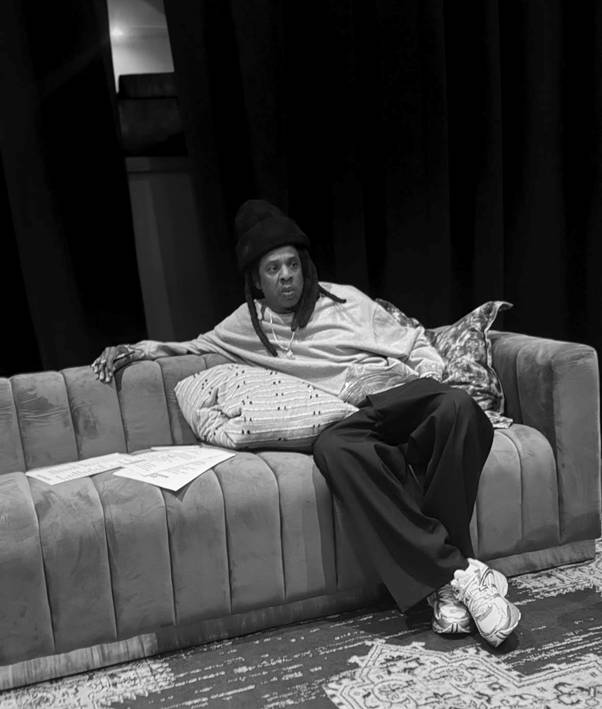
The features on that record still give me chills. Biggie turns up on Brooklyn’s Finest and it’s one of the great meetings of two people who both knew, somehow, that they were about to become big. Mary J Blige carries the hook on Can’t Knock the Hustle. Jaz O, Jay Z’s old mentor from the Marcy projects, shows up on Bring It On, which is its own quiet piece of history given how that relationship eventually soured. None of it sounds like a young artist borrowing credibility from bigger names. It sounds like a scene, people who’d known each other before any of them had a record deal.
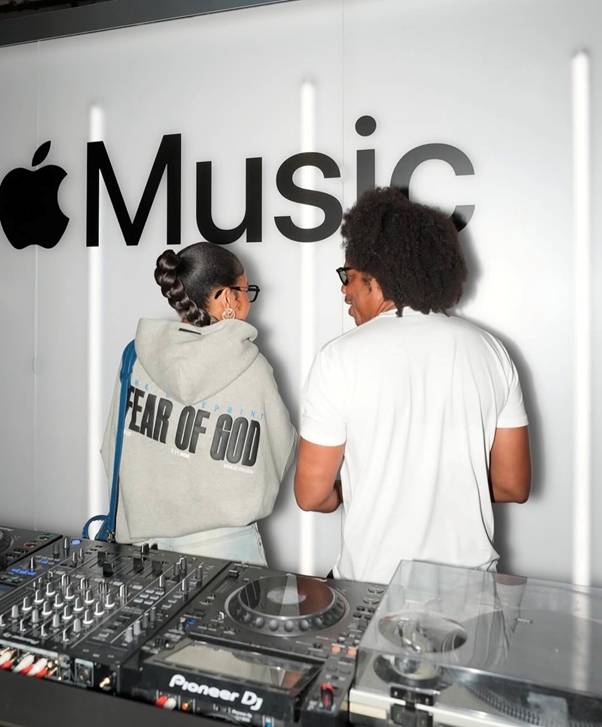
Nobody was meant to get this record straight away. It took the slow route, the way things do when they turn out to be right rather than just popular for a minute. People are still reaching for it thirty years on, and that’s not nostalgia talking. It’s just that the story it tells about ambition and consequence hasn’t gone stale.
So yes, my Gen Z criminology students can keep trying to convince me that someone else deserves the title of greatest rapper alive.
Cool bro!
Then I’ll go home, pull Steph’s gift from the shelf, put on Reasonable Doubt, and remind myself why Jay-Z is, in my opinion, the greatest to ever pick up a mic who’s still with us.
And no… I’m still not getting into the Dr Dre and Rakim argument today, so go away.
Share this:


Without solidarity there is no social movement: beyond the rainbow
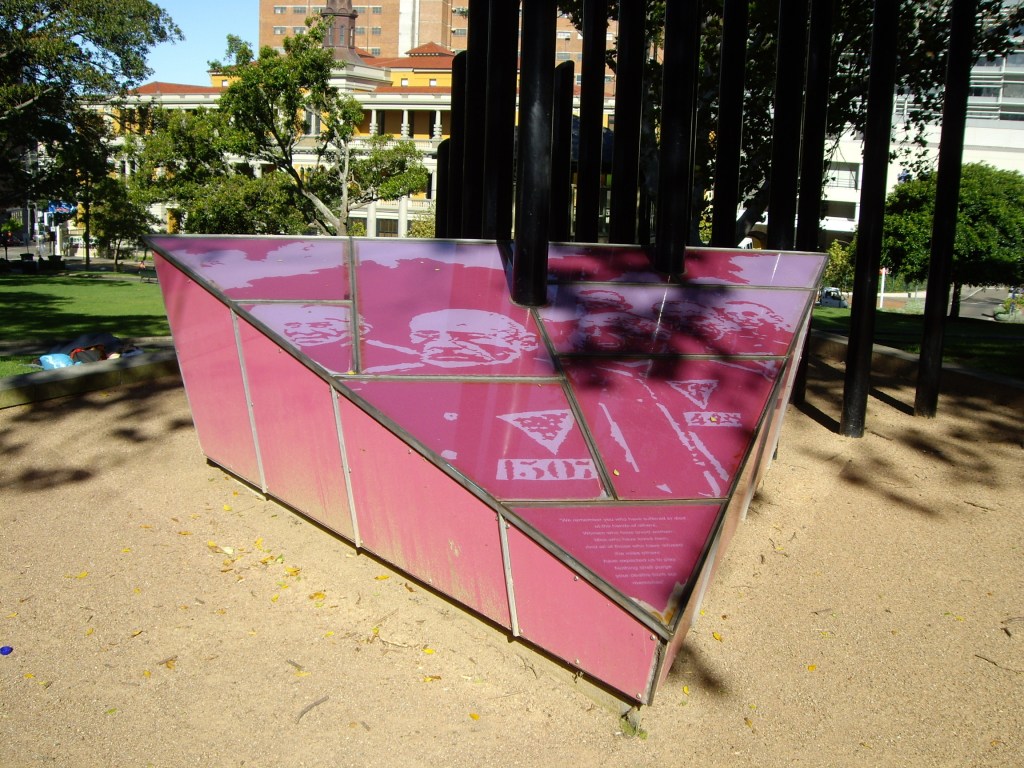
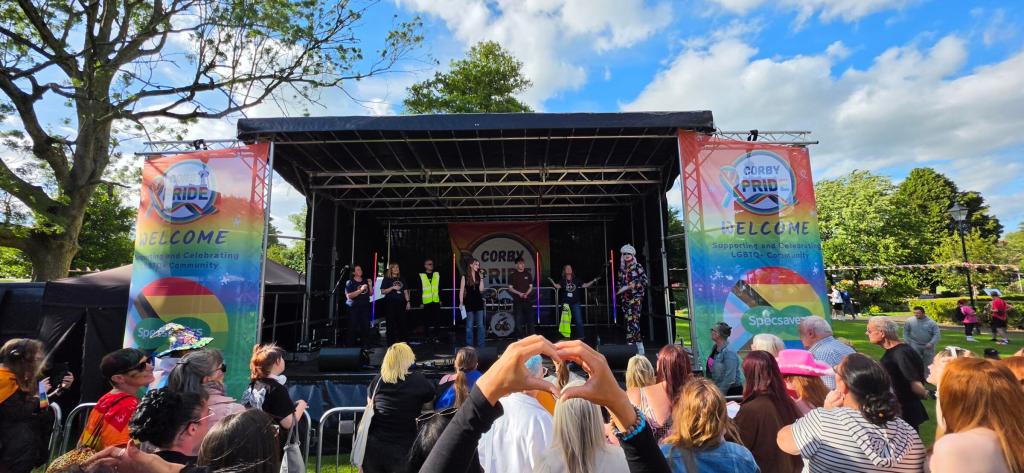
As this month draws to a close, it is worth remembering that for several years now June has been recognised as Pride Month. It is a significant date in the calendar for the LGBTQ+ community both nationally and internationally. Arguably, it is now a cultural event marked by celebrations and activities in towns and cities across the world. On the surface, it may not appear to be a criminological talking point. However, that changes when we consider the origins of Pride itself.
It is widely acknowledged that Pride has its roots in the Stonewall Riots of June 1969. At the time, a marginalised community, alongside other groups campaigning for equality, raised concerns that were fundamentally about civil and human rights. They made a stand against discrimination and criminalisation. Respect and decriminalisation were among the key issues, accompanied by broader demands for equal rights, including the recognition of same-sex relationships and the right to family life. The birth of Pride, therefore, is firmly rooted in activism, civil rights, and the struggle for visibility.
During the 1970s, Pride was unapologetically political, highlighting the inequalities and prejudices faced by the LGBTQ+ community, many of which stemmed directly from the criminalisation of homosexual acts. In the UK, calls for reform had already begun to gain momentum. Following the Wolfenden Report (1957), homosexual acts between consenting men over the age of 21 were decriminalised in England and Wales in 1967. Scotland followed in 1980 and Northern Ireland in 1982. While decriminalisation ended the prosecution of consenting adults, the struggle for equality was far from over.
In 1988, the UK government introduced Section 28 of the Local Government Act, which prohibited local authorities from “promoting homosexuality” through teaching or published materials. It became clear that Pride remained an essential mechanism for drawing attention to injustice and actively protesting against it. Throughout the 1980s and 1990s, Pride was as much a political demonstration as it was a celebration of visibility and community. Campaigns focused on issues such as repealing Section 28, equalising the age of consent, and achieving legal recognition for same-sex relationships. Equality in the age of consent was eventually achieved in England, Wales, and Scotland in 2001 and in Northern Ireland in 2008. Section 28 was repealed in 2003 in England and Wales, having already been repealed in Scotland in 2000. Civil partnerships came into effect in 2005, and same-sex marriage was legalised in 2014, with the first marriages taking place in 2014 in England, Wales, and Scotland and in 2020 in Northern Ireland. For many people outside the LGBTQ+ community, these milestones appeared to signal the end of the movement’s activism.
Far from it.
Since the early 2000s, there has been a growing political focus on, and often hostility towards, members of the trans community. Questions surrounding access to public facilities, pronoun use, healthcare, and participation in sport have become central features of what is often described as the “culture wars”. It is interesting to observe the shift in language from civil rights to culture, as this change obscures the most important aspect of these debates. At their core, these are questions about human rights, dignity, and equal treatment.
Regrettably, some members of the LGBTQ+ community have distanced themselves from this struggle, arguing that full equality has already been achieved. To them, and to many others, I would simply point out that the movement born at Stonewall was led in significant part by trans women and gender-nonconforming individuals whose determination to be visible and respected helped ignite a global movement. Their courage challenged discrimination and injustice. They stood at the forefront of a community demanding recognition and dignity; their mascara countered discrimination and their lipstick was their war paint to fight injustice. Now that their rights are increasingly questioned and, in some cases, curtailed, the wider community should stand alongside them. After all, without solidarity there can be no social movement.
Many people today regard Pride as a relic of late twentieth-century activism that has lost its political relevance. In this view, it has become little more than a party or an excuse for performative displays. Such perspectives overlook a fundamental truth: human rights are rarely given freely, particularly to those who experience discrimination. They are fought for, defended, and maintained through constant vigilance because rights can be eroded as easily as they are won.
Even within the UK, some cities and towns continue to struggle to finance Pride events due to local political opposition or dwindling institutional support. Internationally, Pride marches are increasingly met with counter-protests framed around “family values”, while LGBTQ+ communities in a number of countries face direct and indirect attacks on their rights and freedoms. Several countries have restricted or banned Pride events altogether, while others have altered their legal frameworks in ways that make public expressions of LGBTQ+ identity increasingly difficult or risky. Furthermore, homosexuality remains criminalised in dozens of countries worldwide, with penalties ranging from imprisonment to, in some cases, far harsher punishments.
In many ways, the legal changes securing LGBTQ+ rights in the UK represent the fulfilment of decades of activism, mobilisation, and collective struggle. They are significant achievements and should be celebrated. Yet what matters most is what comes next. Progress is never guaranteed.
As the flags are taken down and the celebrations come to an end, as trans rights continue to be contested, and as democratic societies increasingly grapple with intolerance and authoritarian tendencies, perhaps it is time to remember the spirit that gave birth to Pride. Perhaps it is time, once again, to put on our lipstick and continue the struggle for those whose voices have too often been silenced.
And to the colleague who once asked me why the “L” comes first in the community’s acronym: it is there, in part, because during the AIDS crisis of the 1980s and 1990s, many lesbians stepped forward when others would not. They cared for gay men who were dying, held their hands when families and institutions turned away, and demonstrated a profound humanity in the face of fear and stigma. It is that humanity that we recognise, honour, and celebrate.
Images
L-R Sydney Gay and Lesbian Holocaust Memorial and Corby Pride
Share this:


A treasure found in a Library…

Back in May, during the assessment period, where campus, whilst still abuzz, had begun to quiet down, I walked through the library looking for some print sources for some summer reading and preparation for the next academic year. The Library at UON, for those who are unfamiliar, is situated on the second floor of the Learning Hub. On this particular Wednesday, sunlight was beaming in through the glass sides, and the books shone in a magical light. The gentle buzz of students studying/revising, the sunshine warming the shelves, the books glistening away… it was quite a lovely moment. And as I stopped to reflect on the beauty of the library in that moment, my eye caught one book in particular. Raising Hare by Chloe Dalton.
Those of you who have read previous blogs, might remember that my partner and I had 2 house bunnies for almost 11 years (RIP Snuggles and Toffee). And because of these two precious little fluff balls, we adored all things bunny rabbit (mugs, pictures, pens, cushions, glasses, clothes, towels… the list goes on). Dalton’s (2024) Raising Hare, has on the front cover a side profile of a Hare. Now whilst very different to a bunny (especially a domestic one like our two fluff balls), the long ears, sharp eyes and cute button nose are quite similar hence the book stood out. I had no idea what the book would be about, other than presuming a hare – and I was right, and I picked the book purely because on this day the cover stood out. One of the beauties of libraries and books on show: they really do catch the reader’s eye and draw you in. Now, it might just be me, but when a cover catches your eye it sort of feels like the book is speaking to you. Could be a mystical force or just good advertising/publishing: either way it worked a treat this time around!
Rasing Hare is a book which takes place during Lockdown where a woman who works very long hours in the hustle and bustle of London, goes back to her remote home in the countryside (surrounded by fields, wildlife and tranquillity) and awaits the country attempting to return to ‘normal’. On one of her walks, during a harsh winter evening she stumbles across a leveret (baby hare), and she takes the leveret home to feed and shelter it. What follows is a beautiful story of mistakes, honesty, respect and wonder at the natural world. The book is based on real-events, and the reflection offered throughout is a thought-provoking account of how humans presume they rule the world (we really are quite an entitled species in the grand scheme of things). Dalton (2024) doesn’t state this, this is simply my reflection having read and learned about hares, their habits, skills and the predators (including humans) they have to out manoeuvre in order to survive quite a hazardous life. The book was charming and I learned a lot about hares, but also about how I take nature (plants and animals) for granted, and often do not consider my impact on the world outside of the human species.
I guess, this blog is a recommendation to read Dalton’s (2024) Raising Hare, but also a thank you to the Library Staff at UON for placing the book so perfectly that it caught my eye. It was very different to what I would usually read, but it has really made me stop and think. I wonder if it will do the same for others….
Reference:
Dalton, C. (2024) Raising Hare. Edinburgh: Canongate Books ltd
Share this:


Let’s pretend to care*

As regular readers will now I often blog about violence, both institutional and interpersonal, often with a focus on girls and women. In my most recent entry focused on Violence Against Women and Girls [VAWG], I created a male character, Jimmy who I followed from birth to adulthood. This was fictional, but as I noted at the time, what I described is oh too familiar to many women and girls.
Usually, people don’t appear to care about the women and girls subjected to sexism, misogyny and violence of all kinds. You’ve only got to look at newspaper headlines and the commentary below to know that SHE is probably making it up, making mountains out of molehills, attention seeking, after all why would any man be interested in HER! It’s bound to be lies, you can’t say anything these days without someone taking offence, false allegations to blackmail some poor chap, ruining boys and men’s lives, no wonder they’re attracted to the likes of Andrew Tate (who despite some issues, apparently still manages to talk some sense, blah blah blah)! Note that this regular commentary comes from men and women alike…
Organisers and campaigns such as Fixed It, This Ends Now, #UseYourRedPen, Fix That |Headline and Hacked Off strive to rewrite misogynistic headlines, to argue again sexist advertisements, to complain about the portrayal of women in the media. Media, where women are simply appendages to men, or objectified as body parts to be gawped at, or their victimisation is less interesting than the men who harm them. These are worthy campaigns, well-meaning and designed to bring about positive change, but the deluge just keeps coming and coming If you don’t believe me, here’s a couple of recent examples: the world champion and Olympian Simone Biles is taken seriously ill, but is she central to the news report? No, she is described as a ‘NFL wife‘ as if her marital status mattered more than her identity. Another example, closer to home, Kingston council, in an equalities report wrote that electric bikes ‘‘may increase women’s access to cycling and physical activity by making it easier for women to meet their traditional domestic responsibilities, as well as stay looking “nice” on a bike’. Or what about the Northampton councillor who said that ‘some women should never have left the kitchen’. Half hearted apologies inevitably follow, no offence was meant, it’s been taken out of context, I will do much better, urging women to take pity on their plight. Nevertheless the constant flood of misogyny continues unabated.
This misogynistic nonsense runs throughout society unnoticed and unquestioned. Even when we pretend to take it seriously, for example, the government’s “commitment” to halve VAWG in a decade is vague and confused. As the Women’s Social and Political Union [WSPU] t made clear over a century ago, it is “deeds not words” that change the world. But it appears that many. in our society simply have no idea of the problems faced by girls and women, or if they do, they simply don’t care.
That is until very recently, when three teenage boys escaped custodial sentences despite convictions for the rape of two teenage girls. Suddenly, everyone has a view, the law is too lenient, the judge is out of touch, something must be done etc etc etc. On the surface, all of this interest is very laudable, but will anything change?
What message does this send to boys? They’re untouchable, their only mistake was in getting caught. And in getting caught, there is plenty of support to speak eloquently on the impact of their neurodiversities, their anxieties, their learning challenges, their friendship group. As the judge put it: these young boys ‘had low intelligence’, and a ‘limited understanding of consent’ adding that ‘peer pressure played a large part in what went on’. He praised the boys for their engagement with the CJS throughout the process, noting that ‘I think of you as very young and none of you have been in any big trouble before’. As @5teveh noted last week, the focus is on support, rehabilitation, an opportunity to reintegrate with society.
But what of the other children in the case, what message does this send to girls? They’re expendable, they should put up and shut up. No mention of their challenges, no recognition of what it took for those girls to report the violences unleashed upon them. No opportunities for support, other than that provided by woefully underfunded charities, no interest in their neurological development, their anxieties. No opportunities for reintegration, but another opportunity to let them know that they are what Simone de Beauvoir (1949) titled The Second Sex, their needs continually subjugated and secondary to those of men and boys.
We created and continue to create the conditions where violence against women and girls is normalised, part and parcel of British society. We might think we care deeply about the girls who were raped, but that care doesn’t extend to the 1. 9 million women who were the victims of rape or attempted rape, recorded in the Crime Survey for England and Wales [CSEW]. Neither does that care extend to the 739,000 women subjected to sexual abuse recorded in the same survey. It doesn’t even seem to extend to victims of femicide such as those recorded in the Femicide Census. Even when we pretend to care, like former minister for safeguarding and violence against women and girls, MP Jess Phillips, the language is all wrong, the victims in the case above are children, not as she described ‘young women‘. By describing them using adult terms, we automatically attribute greater responsibility to the daughters and not the sons. In doing so we show an understanding of childhood vulnerabilities for the boys, but not the girls.
If we really care, we have to consider what kind of society accepts that over 50% of its population are worth less?
*The kind of problems identified above are not unique to VAWG. Similar issues are apparent in relation to race, ethnicity and immigration but I need to leave that for another day.


