Taking a short break….back soon

The academic year 25/26 will shortly come to an end with the last assessments submitted and graded. Here at the Thoughts From the Criminology Team we’re going to take a little break before we jump back into planning for the new academic year. Don’t worry, we’ll be back with lots of interesting entries from September and after all, ‘absence makes the heart grow fonder’.
In the meantime, there’s plenty on the site to explore.
Enjoy your summer whatever you are up to!
Share this:


The schizophrenia of hate: An illogical logic

The latest news regarding the online racist abuse aimed at certain Netherlands players, following the team’s premature exit from the world cup, probably comes as no surprise to most and feels like it is no longer all that extraordinary. Sadly, it is almost normalised. We’ve seen this online abuse multiple times before aimed at different players, be they Black or women or any other section of society that fits the perverse pervading ideology of the time. Social media seems to have given bigots of all persuasions a voice. What was restricted to being voiced within groups, perhaps in pubs or other such settings, is now not only being voiced, but in a controlled and targeted way, a way designed to cause hurt and harm, a vindictive, personalised way targeting individuals, whilst also having a far wider reach. As with most crimes the causes and motives behind such hatred are often unclear. There is however a perceived logic behind the hatred. The Black footballers failed the nation the rest just didn’t do very well. The logic of hatred isn’t just aimed at sports stars; it is a cancer in every walk of life. The Israeli actions in the middle east fuelling hatred of Jews. The actions of individuals within the Asian community in parts of the UK involved in the grooming of children fuelling islamophobia and hatred of Asians. The actions of some of the travelling community involved in unauthorised encampments and crime fuelling the hatred of Travellers and Gypsies. The actions of Black asylum seekers involved in sexual offences fuelling the hatred of Black people and immigrants (a double hit there). And so, the list goes on, historical and contemporary evidence for why we should hate. There is a logic to the hatred, there is evidence that can be pointed to, and there are politicians, here and abroad, and the news media, that happily point to and provide that evidence, seeing the fruitfulness of stirring up the so-called indigenous masses to their advantage. Further evidence when those in authority tell us how it is. Of course, the hatred of these groups of people is not new, it can be seen in generations before us across the world, in some guise or another. But that hatred, is reinforced by the contemporary evidence selectively presented and voiced by institutions that have a vested interest in doing so. That’s the so-called logic of hatred.
And yet the people that display this hatred would happily support their football club/ nation if it is successful. The hatred is held in obeyance as the Black footballer thumps the ball into the opponent’s net. The same people that hate might happily, without thought, accept medical treatment from the Jewish doctor, the Muslim dental surgeon, the Black Immigrant nurse. They are the first in the queue at the kebab shop buying a donner kebab from the settled asylum seeker originating from the Middle East. Happy to consume an Indian or Chinese (food that is, not the person) served up by someone from Asia. They eat the vegetables and fruit picked by foreign labourers; nothing is shunned if it is to their personal advantage. That’s the illogical schizophrenia. There is for some an inbuilt underlying hatred of others, which defies logic. There is for many a convenient scapegoat for the ills that may have befallen them. It is the fault of the ‘other’, the Black, the Jew, the Muslim, the asylum seeker, not decades of social decline or governmental policy failure. The failure that has led to low living standards, or the housing crisis or the collapse of NHS or social care or manufacturing or unemployment or education. It is the fault of the ‘other’ and where else can that frustration be vented. There is some perverse logic in hating the ‘other’ albeit that logic is somewhat illogical.
Images
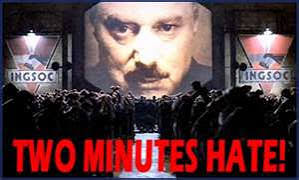
L-R George Orwell’s ‘Two Minute Hate’ and the Stand Up To Racism March in London on 17/03/2018
Share this:

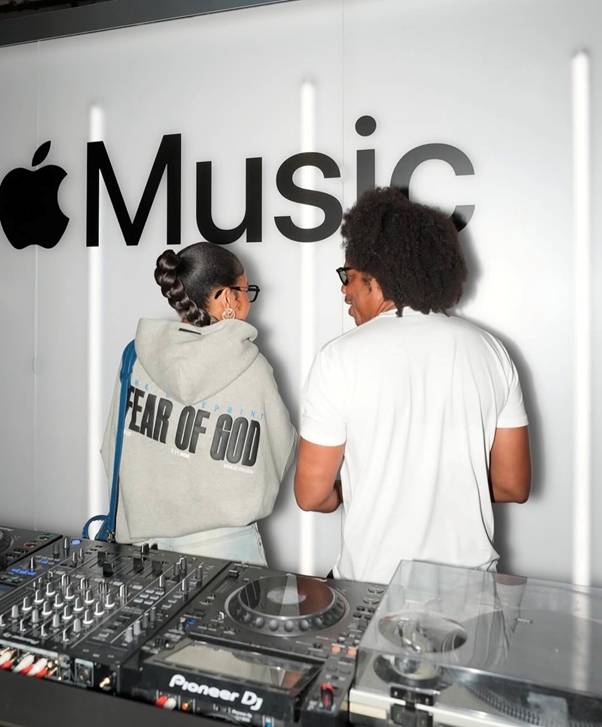
JAY-Z’s Reasonable Doubt at Thirty
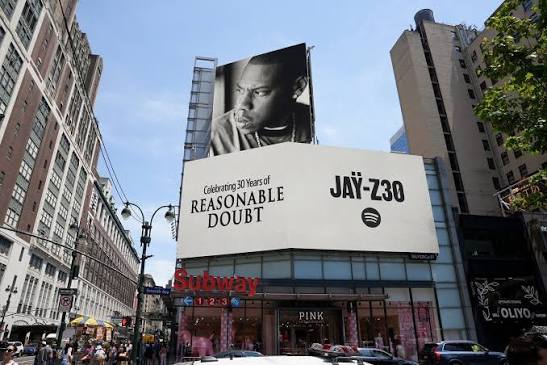
Today I’m talking about all things Jay Z. Reasonable Doubt, his debut album, turned thirty on the 25th of June, and Roc Nation has spent the last week or so turning New York into one long tribute to it. Pop ups in Dumbo, a takeover of the old Bowery subway station, a limited-edition of JAŸ-Z30 library card to celebrate the album. As most of you do know that hip hop is one of the things I love outside of work, and that for me, it starts and ends with Tupac and Biggie, the two greatest to ever do it, full stop.
I can see my Gen Z students rolling their eyes before I’ve even finished the sentence, waiting to jump in with Drake or Kendrick Lamar again. Not being funny, but some things aren’t up for debate, Jay Z sits just below Biggie & Pac for me, and Reasonable Doubt is the reason why.
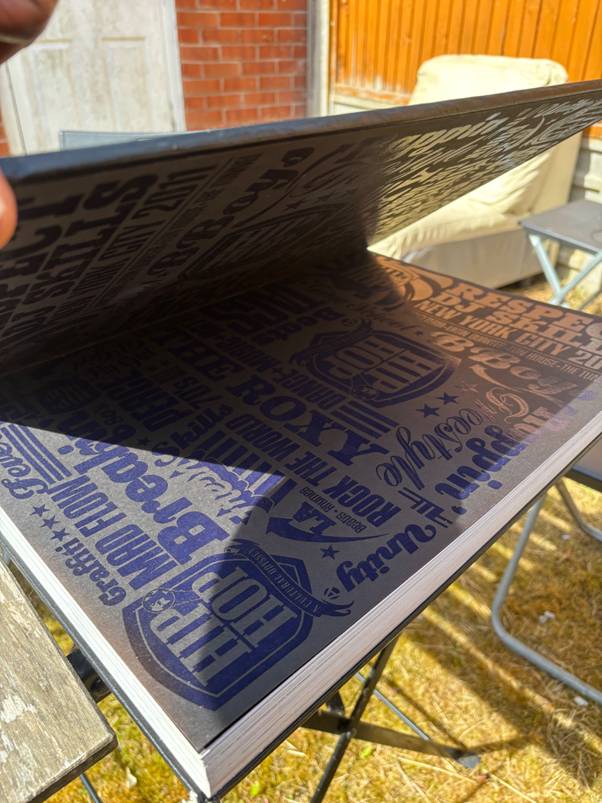
One of the nicest gifts I’ve ever had came from my friend Steph. She knew how much I love hip hop, so she got me the big book of Hip Hop. It’s not the sort of book you finish, really. You dip in and out of it, and there’s always something in there you missed the last time round. Evergreen, that one.
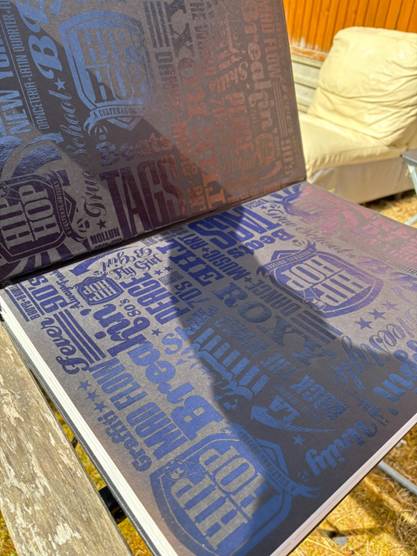
Unsurprisingly, while writing this piece I found myself back in the chapter on Jay-Z and Roc-A-Fella Records. Reading it again reminded me just how extraordinary their story really was. How broke Jay Z, Dame Dash and Kareem Burke actually were when they started Roc-A-Fella, pressing up their own vinyl out the boot of a car because no major record company would touch them, the hustle and bustle of Brooklyn, and all that jazz puts the whole album in a different light.
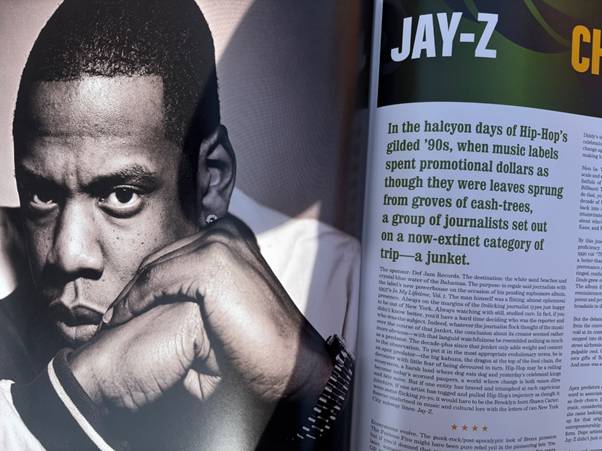
As someone who has spent much of his career studying crime, what has always fascinated me about the album is its honesty. Drug dealing is just the surface of it. Underneath is ambition, blocked opportunity, status, loyalty, and the sort of decisions people end up making when the straight road looks shut before they’ve even tried it.
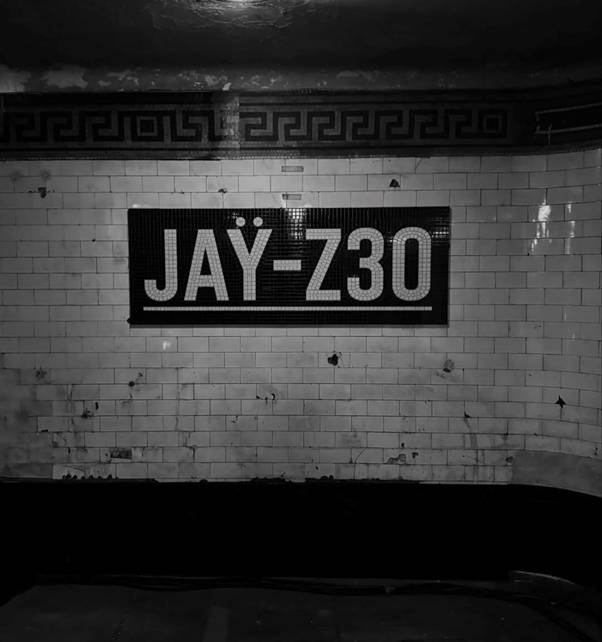
Reasonable Doubt only got to number 23 on the Billboard 200 when it came out in 1996. Eighteen weeks on the chart, nothing spectacular by the standards of the time. It took years for people to properly understand what he’d made. And what he made, honestly, is one of the smartest debut albums hip hop has ever produced. The title alone shows you that. He’s borrowing the standard a magistrate/judge needs before it can sentence someone, and turning the whole record into his own defence, his own case file, laid out track by track. People often praise his lyricism, but I sometimes think that undersells what makes him extraordinary.
- Plenty of rappers can rhyme. Jay constructs worlds. His writing is economical without ever feeling sparse. His metaphors unfold over multiple listens. His double and triple entendres have become the stuff of legend.
He could say more in sixteen bars than most artists manage in an entire album.
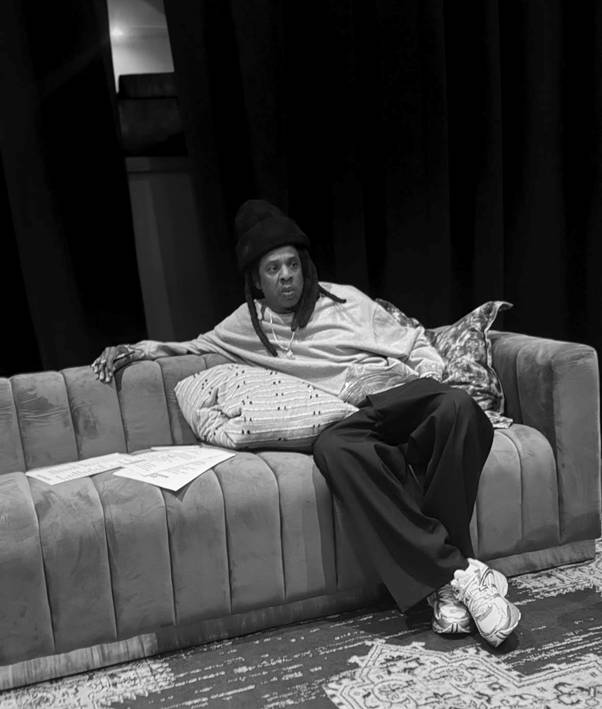
The features on that record still give me chills. Biggie turns up on Brooklyn’s Finest and it’s one of the great meetings of two people who both knew, somehow, that they were about to become big. Mary J Blige carries the hook on Can’t Knock the Hustle. Jaz O, Jay Z’s old mentor from the Marcy projects, shows up on Bring It On, which is its own quiet piece of history given how that relationship eventually soured. None of it sounds like a young artist borrowing credibility from bigger names. It sounds like a scene, people who’d known each other before any of them had a record deal.
Nobody was meant to get this record straight away. It took the slow route, the way things do when they turn out to be right rather than just popular for a minute. People are still reaching for it thirty years on, and that’s not nostalgia talking. It’s just that the story it tells about ambition and consequence hasn’t gone stale.
So yes, my Gen Z criminology students can keep trying to convince me that someone else deserves the title of greatest rapper alive.
Cool bro!
Then I’ll go home, pull Steph’s gift from the shelf, put on Reasonable Doubt, and remind myself why Jay-Z is, in my opinion, the greatest to ever pick up a mic who’s still with us.
And no… I’m still not getting into the Dr Dre and Rakim argument today, so go away.