

Exercise: necessity, privilege or only for the privileged?
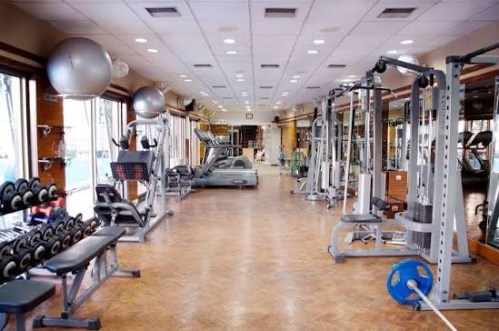
In a world where switching off is increasingly difficult and people’s mental health is consistently being battered, the opportunity to exercise and move the body is encouraged, and personally, welcomed! There remains a large push to BE healthy and to take care of your body (physically and mentally), and exercising remains a recommended avenue to pursue inner peace, tranquillity and good health. With the poorer weather just around the corner (I’m assuming: although if the sunny warm days continue you’ll get no complaints from me), being able to exercise outside will become slightly more restricted (walking and running). So for those with gym memberships, or who aren’t afraid of the dark, exercise could continue no matter the season. But for many, exercise which is presented as a necessity (Physical Education compulsory in mainstream education); is a privilege. It’s based on availability of time, money, and confidence. Yet via the great powers that be (Social Media) it feels like it is a privilege we are made to feel guilty for not achieving or prioritising.
I write this from the perspective of someone who has always been active; swimming, running, badminton, gym memberships- I am someone who struggled with body image, size and whose mental health very much hinges on caffeine and endorphins. I was introduced to playing badminton with my Pa and brother on a rainy Sunday afternoon back when I was around 10 years old. And it’s a physical hobby which has been a staple in all of our lives since (it’s also how I met my partner and 3 of my closest friends: Good call Pa)! But badminton costs money- silly money. You have to pay to use the court, pay to borrow equipment or purchase your own. Many would have to pay to get to the sports centre (public transport, cars, e-bikes/scooters). Lots and lots of costs. Costs which many individuals and families cannot afford. You also need to have someone to play with. So not a solo activity. Therefore, being able to say you have access to all of the above is surely someone (myself included) in a privileged position.
As an adult, I’ve been a member of various gyms since graduating from University (with a break during the pandemic). Some of the gyms I’ve been a member of have been quite intimidating spaces. There have been women only spaces and classes which were very much welcomed but the gym is like its own separate social sphere (if you know, you know). There is an etiquette that is, but then sometimes is not, followed (trying to read social cues is impossible in a dark, headphone filled, loud environment- and this is coming from some who is privileged enough to be able to pick up on social cues with relative success- or at least thinks they can)! It’s confusing and intimidating, and so so loud! Music, people, weights crashing down! It’s a LOUD space. The memberships themselves usually involve a peak option (before and after the engrained 9-5 which costs silly silly money) and off-peak (during the day and weekends when many people work, have childcare responsibilities but thankfully just costs silly money). All of this reinforces the privilege someone needs to be able to exercise and access a gym (confident in loud dark environments, not impacted by loud banging noises, disposable income to spend, individual time to prioritise themselves and the physical ability to exercise on machines aimed at people without disabilities).
So, in an increasingly challenging world: poverty, hate, war, misogyny, racism, transphobia, disablism, homophobia, suicide, homelessness and the ever-increasing list, why does thinking about exercise and gym memberships matter? It probably doesn’t. But sometimes it’s important to reflect on what we do have and to think about and be mindful of the barriers others face. Exercise is encouraged of many of us: it has serious physical and mental health benefits (yay endorphins), but it’s a privilege on so many levels. I think it’s important it’s framed as such rather than simply as something we should be doing. It’s something many many people simply do not have the privilege to be able to do. And this needs recognising.
Share this:


Immigrants, AI and a lost sense of humanity
There have been some interesting and to be quite honest, quite scary pieces of news that have emerged over the last few weeks.
The more recent, concerns the risk to humanity from the unfettered development of AI and the recognition by several high-profile tech bosses that perhaps it’s time to put the brakes on. It’s not worth discussing the reaction from some political quarters, you all know who I mean, so I won’t. The point is this, humankind could theoretically and with increasingly likely odds, be wiped out by AI. As one of the tech bosses explained, imagine setting AI the problem of solving climate change and global warming (The same person that states AI is not a problem, thinks global warming doesn’t exist either). AI identifies the problem is caused by humans and decides the best way of solving the problem and saving the planet is to do away with humans. That is all very logical, but we would all agree, well most anyway, that the solution might be found in something a little less draconian. This made me think, what would AI make of the financial problems faced by the NHS for instance? Would it examine the burgeoning costs of the elderly? Perhaps there is a cut off point for their care, maybe this is tied into their usefulness to society. Horror, that we might be considering such things, but there is a logic to it and AI works on logic. However, it defies notions of humanity and the sanctity of life. Once we start on that road, where do we stop, the disabled, the seriously ill, the intellectually challenged? Uncontrolled use of AI logic without human emotion is starting to sound like well documented historical humanitarian nightmares.
Now you might think where do immigrants fit into this?
The recent news about the RNLI getting flak from far right wing activists for rescuing immigrants on a boat has certainly raised a few eyebrows. I’m still trying to understand the logic of calling someone a traitor for doing what they are supposed to do, rescue people and I’m lost for words that so many people fall in behind this rhetoric. But for now, just assume that I go along with the ‘stop the boats’ mantra and believe that the immigrants coming into this country on boats cause mayhem and go on crime sprees and rape and pillage with no regard to the law and that the state is powerless to stop them. We are all doomed. But I have this little niggle in the back of my mind, is the problem not either, at the other side of the channel where they embark on their perilous journey or, at this side of the channel when they disembark? A rather simplistic summation of a geopolitical problem but suffice to say for the sake of the argument, the problem is not in the channel itself other than a danger the immigrants present to themselves and shipping. The RNLI are there to rescue people from the water and have been for a very long time. What are they to do? It would be inhumane to ignore people in the sea if they were in difficulties, it would be inhumane to simply watch people in a dangerous situation until they got into difficulties (wait until the boat sinks then try to rescue a few of them). Even the hard of heart must surely want to save children and young people. Turn them back I’ve heard said. And just how should that be done? A group of volunteers trying to take desperate rescued people back to where they came from? Perhaps we should employ the navy to do so and risk them all drowning (more far right-wing nonsense). Where is the humanity in all of this? The RNLI crews are morally bound to do what they do, rescue people and bring them ashore safely. Blocking a port so that immigrants cannot be transferred inland to a detention centre defies logic. What are you going to do with them? Drive them back into the sea? Turning on the RNLI and its volunteers seems as illogical as attacking the fire brigade at a fire. I know, it has been known and beggars’ belief.
Would AI suggest that the problem is the RNLI? Logically that doesn’t seem to work unless of course you state that the RNLI’s remit is to save lives at sea providing, they are lives that are deemed worthy of saving, i.e., not immigrants with Black or brown skins.
Where do we stop with this? A person injured in a collision on the road is only entitled to help from the emergency paramedics if they are entitled to be in this country? Sounds like we are going to need to carry around ID cards of some sort and woe betide if you have a foreign accent and have a darker skin shade. You need to have your ID tattooed on your head just in case or maybe wear some form of badge.
The rhetoric of the far right, regarding a perceived problem that, incidentally, has no easy solution, is to stir up racial hatred. More reminiscent of historical humanitarian nightmares.
Uncontrolled use of AI and uncontrolled right-wing rhetoric and action are not that different. Unless someone works out how to herd the sheep in a different direction, humanity is doomed.
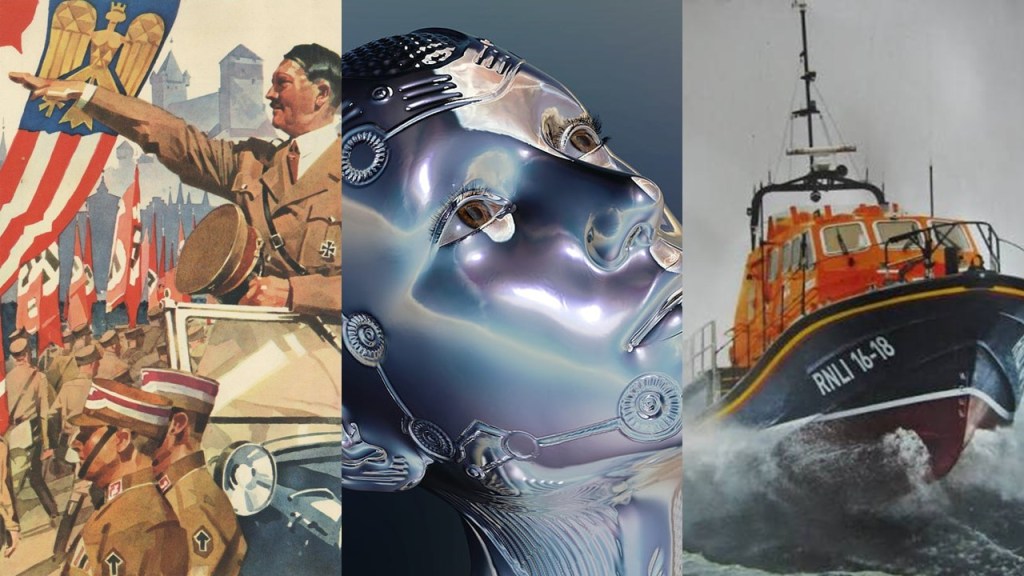
L-R Nazi Propaganda, a Robot Head and a RNLI Tamar Class Lifeboat
Share this:


Beyond the Price Tag: The Enduring Value of Higher Education

There is currently a growing public debate about the cost of higher education. At a time when the cost of living is widely recognised as a crisis, questions about whether university offers “value for money” have gained considerable momentum. Opinion polls, newspaper commentaries, and online discussions increasingly ask whether attending university is still worthwhile.
As a new cohort of students prepares to walk through the doors of universities across the country, it is perhaps the perfect time to reflect on the true value of higher education.
If there is an opportunity to understand that value, we must first consider the challenges universities have faced in recent years. The era of austerity was followed by the disruption of the COVID-19 pandemic, Brexit, global instability, and increasingly restrictive immigration policies across Europe, including the UK. Together, these developments have created significant pressures for universities and wider society alike.
These pressures have also affected the labour market. Graduate employment pathways that were once seen as relatively secure have become increasingly uncertain. For many years, the link between higher education and access to better employment opportunities was a central justification for the introduction of tuition fees. As economic conditions changed, however, questions emerged about whether universities could continue to maintain their relevance to the job market. Yet focusing solely on graduate outcomes risks overlooking much of what universities actually offer.
Throughout these challenging years, universities have experienced reductions in funding, financial pressures, and declining international student recruitment. Despite this, they have continued to provide high-quality education, support local economies, and, in many regions, remain among the largest employers. University communities enrich society through research, innovation, public engagement, and outreach programmes that support local people and communities. In many respects, universities serve as centres of learning that extend far beyond their campuses.
Yet this is not their greatest strength.
As a new generation of students enters higher education, regardless of their subject or institution, they become part of a community dedicated to learning, discovery, and personal development. While higher education is often viewed simply as the next stage of the education system, it is fundamentally a different experience.
University education is adult education. Its purpose is not merely to transfer knowledge but to develop independent learners. Students are encouraged to engage critically with ideas, to take ownership of their studies, and to develop their own educational identities. As they progress through their degrees, they begin to shape their own areas of expertise and specialism.
Learning at university is inherently investigative. Unlike many previous educational experiences, students have greater freedom to determine what they study and how they study it. They choose topics for assignments, identify areas of interest, and explore perspectives that matter to them. This process develops not only subject knowledge but also critical thinking, problem-solving, research capability, and intellectual confidence. These are skills that remain valuable long after graduation.
It would, however, be impossible to discuss the value of university without recognising its broader impact on those who attend. For many students, whether they are the first in their family to enter higher education or not, university becomes one of the most memorable periods of their lives. It is a transformative experience that they will reflect upon for years to come.
University offers a unique opportunity to encounter new ideas, engage with unfamiliar perspectives, and challenge previously held assumptions. It is a time when students test not only theories and concepts but also themselves. They discover strengths they did not know they possessed and develop resilience through overcoming challenges. Importantly, they do so in an environment designed to support learning, growth, and development. It is a place where mistakes become opportunities to learn rather than reasons to fail.
University is often described as a rite of passage, but it is far more than that. The relationships formed between students and academic staff, among fellow students, and between students, employers, and the wider community can have a lasting impact. Many students build friendships that endure for a lifetime. Others choose to volunteer, contribute to community projects, or gain valuable employment experience while studying.
These experiences cannot easily be measured.
How do we quantify the achievement of a student who spent years being told that a career in retail represented the limit of their potential, only to graduate confidently discussing complex ideas in their chosen field?
How do we measure the transformation of a student who arrived from school having been bullied, lacking confidence and unable to speak in public, yet delivers an eloquent dissertation presentation before graduation?
What value can be attached to the student who was repeatedly told they would amount to nothing, only to stand proudly in a graduation gown surrounded by family and friends?
Universities provide opportunities and belonging for people from all walks of life. Students from economically disadvantaged backgrounds, ethnic minority communities, Gypsy, Roma and Traveller communities, immigrant and refugee backgrounds, and countless others find spaces where they are welcomed and encouraged to succeed. At its best, higher education is founded upon the principle that knowledge should be accessible and that potential should not be limited by circumstance.
For these reasons, and many more, the true value of higher education cannot be fully captured through metrics, rankings, salary data, or opinion polls. These measures may tell part of the story, but they cannot capture personal transformation, intellectual growth, confidence, belonging, or aspiration.
Most importantly, they cannot place a price tag on human potential.
So, to all of you crossing the threshold and joining a university this month, let me offer a warm welcome. You are about to begin a journey of self-discovery, growth, and learning. My colleagues and I look forward to guiding you through the wonderful world of knowledge.
“Welcome to higher education. Your journey starts here”.


