

Without solidarity there is no social movement: beyond the rainbow
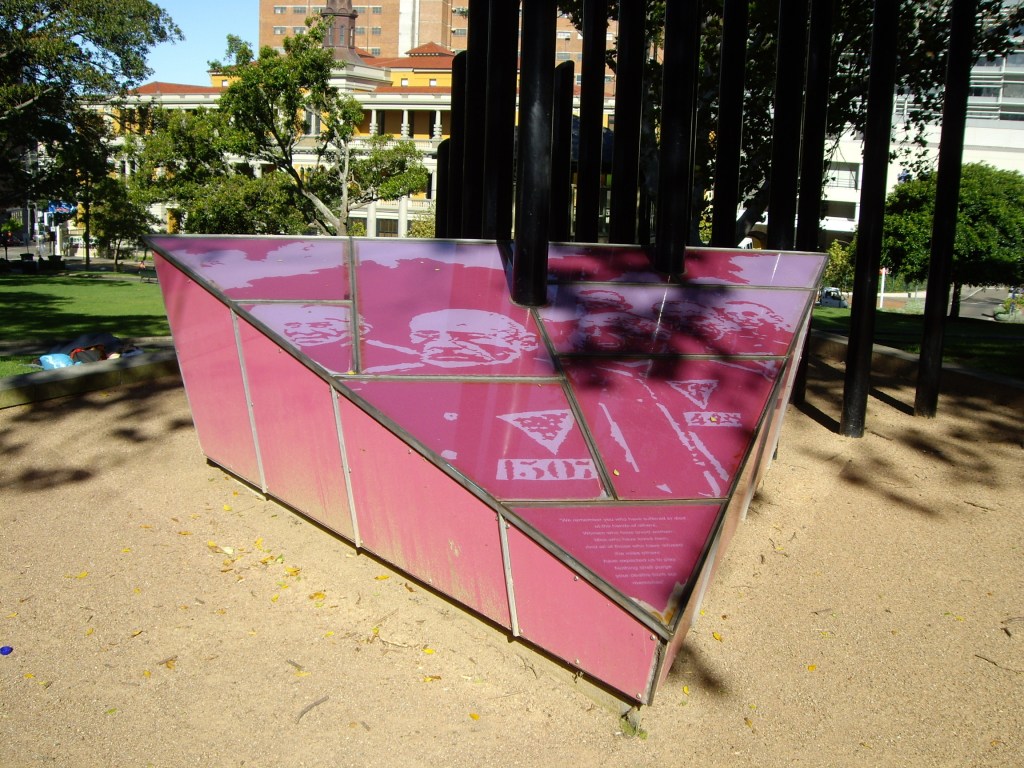
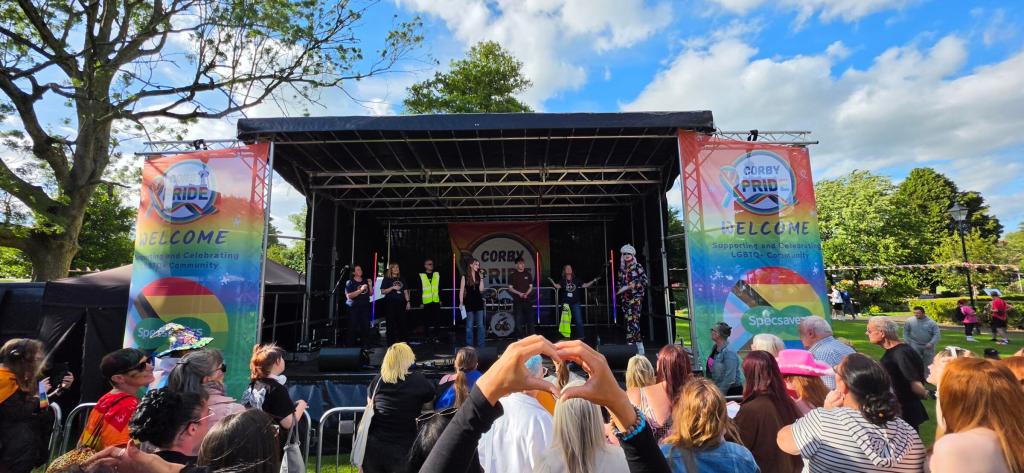
As this month draws to a close, it is worth remembering that for several years now June has been recognised as Pride Month. It is a significant date in the calendar for the LGBTQ+ community both nationally and internationally. Arguably, it is now a cultural event marked by celebrations and activities in towns and cities across the world. On the surface, it may not appear to be a criminological talking point. However, that changes when we consider the origins of Pride itself.
It is widely acknowledged that Pride has its roots in the Stonewall Riots of June 1969. At the time, a marginalised community, alongside other groups campaigning for equality, raised concerns that were fundamentally about civil and human rights. They made a stand against discrimination and criminalisation. Respect and decriminalisation were among the key issues, accompanied by broader demands for equal rights, including the recognition of same-sex relationships and the right to family life. The birth of Pride, therefore, is firmly rooted in activism, civil rights, and the struggle for visibility.
During the 1970s, Pride was unapologetically political, highlighting the inequalities and prejudices faced by the LGBTQ+ community, many of which stemmed directly from the criminalisation of homosexual acts. In the UK, calls for reform had already begun to gain momentum. Following the Wolfenden Report (1957), homosexual acts between consenting men over the age of 21 were decriminalised in England and Wales in 1967. Scotland followed in 1980 and Northern Ireland in 1982. While decriminalisation ended the prosecution of consenting adults, the struggle for equality was far from over.
In 1988, the UK government introduced Section 28 of the Local Government Act, which prohibited local authorities from “promoting homosexuality” through teaching or published materials. It became clear that Pride remained an essential mechanism for drawing attention to injustice and actively protesting against it. Throughout the 1980s and 1990s, Pride was as much a political demonstration as it was a celebration of visibility and community. Campaigns focused on issues such as repealing Section 28, equalising the age of consent, and achieving legal recognition for same-sex relationships. Equality in the age of consent was eventually achieved in England, Wales, and Scotland in 2001 and in Northern Ireland in 2008. Section 28 was repealed in 2003 in England and Wales, having already been repealed in Scotland in 2000. Civil partnerships came into effect in 2005, and same-sex marriage was legalised in 2014, with the first marriages taking place in 2014 in England, Wales, and Scotland and in 2020 in Northern Ireland. For many people outside the LGBTQ+ community, these milestones appeared to signal the end of the movement’s activism.
Far from it.
Since the early 2000s, there has been a growing political focus on, and often hostility towards, members of the trans community. Questions surrounding access to public facilities, pronoun use, healthcare, and participation in sport have become central features of what is often described as the “culture wars”. It is interesting to observe the shift in language from civil rights to culture, as this change obscures the most important aspect of these debates. At their core, these are questions about human rights, dignity, and equal treatment.
Regrettably, some members of the LGBTQ+ community have distanced themselves from this struggle, arguing that full equality has already been achieved. To them, and to many others, I would simply point out that the movement born at Stonewall was led in significant part by trans women and gender-nonconforming individuals whose determination to be visible and respected helped ignite a global movement. Their courage challenged discrimination and injustice. They stood at the forefront of a community demanding recognition and dignity; their mascara countered discrimination and their lipstick was their war paint to fight injustice. Now that their rights are increasingly questioned and, in some cases, curtailed, the wider community should stand alongside them. After all, without solidarity there can be no social movement.
Many people today regard Pride as a relic of late twentieth-century activism that has lost its political relevance. In this view, it has become little more than a party or an excuse for performative displays. Such perspectives overlook a fundamental truth: human rights are rarely given freely, particularly to those who experience discrimination. They are fought for, defended, and maintained through constant vigilance because rights can be eroded as easily as they are won.
Even within the UK, some cities and towns continue to struggle to finance Pride events due to local political opposition or dwindling institutional support. Internationally, Pride marches are increasingly met with counter-protests framed around “family values”, while LGBTQ+ communities in a number of countries face direct and indirect attacks on their rights and freedoms. Several countries have restricted or banned Pride events altogether, while others have altered their legal frameworks in ways that make public expressions of LGBTQ+ identity increasingly difficult or risky. Furthermore, homosexuality remains criminalised in dozens of countries worldwide, with penalties ranging from imprisonment to, in some cases, far harsher punishments.
In many ways, the legal changes securing LGBTQ+ rights in the UK represent the fulfilment of decades of activism, mobilisation, and collective struggle. They are significant achievements and should be celebrated. Yet what matters most is what comes next. Progress is never guaranteed.
As the flags are taken down and the celebrations come to an end, as trans rights continue to be contested, and as democratic societies increasingly grapple with intolerance and authoritarian tendencies, perhaps it is time to remember the spirit that gave birth to Pride. Perhaps it is time, once again, to put on our lipstick and continue the struggle for those whose voices have too often been silenced.
And to the colleague who once asked me why the “L” comes first in the community’s acronym: it is there, in part, because during the AIDS crisis of the 1980s and 1990s, many lesbians stepped forward when others would not. They cared for gay men who were dying, held their hands when families and institutions turned away, and demonstrated a profound humanity in the face of fear and stigma. It is that humanity that we recognise, honour, and celebrate.
Images
L-R Sydney Gay and Lesbian Holocaust Memorial and Corby Pride
Share this:


A treasure found in a Library…

Back in May, during the assessment period, where campus, whilst still abuzz, had begun to quiet down, I walked through the library looking for some print sources for some summer reading and preparation for the next academic year. The Library at UON, for those who are unfamiliar, is situated on the second floor of the Learning Hub. On this particular Wednesday, sunlight was beaming in through the glass sides, and the books shone in a magical light. The gentle buzz of students studying/revising, the sunshine warming the shelves, the books glistening away… it was quite a lovely moment. And as I stopped to reflect on the beauty of the library in that moment, my eye caught one book in particular. Raising Hare by Chloe Dalton.
Those of you who have read previous blogs, might remember that my partner and I had 2 house bunnies for almost 11 years (RIP Snuggles and Toffee). And because of these two precious little fluff balls, we adored all things bunny rabbit (mugs, pictures, pens, cushions, glasses, clothes, towels… the list goes on). Dalton’s (2024) Raising Hare, has on the front cover a side profile of a Hare. Now whilst very different to a bunny (especially a domestic one like our two fluff balls), the long ears, sharp eyes and cute button nose are quite similar hence the book stood out. I had no idea what the book would be about, other than presuming a hare – and I was right, and I picked the book purely because on this day the cover stood out. One of the beauties of libraries and books on show: they really do catch the reader’s eye and draw you in. Now, it might just be me, but when a cover catches your eye it sort of feels like the book is speaking to you. Could be a mystical force or just good advertising/publishing: either way it worked a treat this time around!
Rasing Hare is a book which takes place during Lockdown where a woman who works very long hours in the hustle and bustle of London, goes back to her remote home in the countryside (surrounded by fields, wildlife and tranquillity) and awaits the country attempting to return to ‘normal’. On one of her walks, during a harsh winter evening she stumbles across a leveret (baby hare), and she takes the leveret home to feed and shelter it. What follows is a beautiful story of mistakes, honesty, respect and wonder at the natural world. The book is based on real-events, and the reflection offered throughout is a thought-provoking account of how humans presume they rule the world (we really are quite an entitled species in the grand scheme of things). Dalton (2024) doesn’t state this, this is simply my reflection having read and learned about hares, their habits, skills and the predators (including humans) they have to out manoeuvre in order to survive quite a hazardous life. The book was charming and I learned a lot about hares, but also about how I take nature (plants and animals) for granted, and often do not consider my impact on the world outside of the human species.
I guess, this blog is a recommendation to read Dalton’s (2024) Raising Hare, but also a thank you to the Library Staff at UON for placing the book so perfectly that it caught my eye. It was very different to what I would usually read, but it has really made me stop and think. I wonder if it will do the same for others….
Reference:
Dalton, C. (2024) Raising Hare. Edinburgh: Canongate Books ltd
Share this:


Let’s pretend to care*

As regular readers will now I often blog about violence, both institutional and interpersonal, often with a focus on girls and women. In my most recent entry focused on Violence Against Women and Girls [VAWG], I created a male character, Jimmy who I followed from birth to adulthood. This was fictional, but as I noted at the time, what I described is oh too familiar to many women and girls.
Usually, people don’t appear to care about the women and girls subjected to sexism, misogyny and violence of all kinds. You’ve only got to look at newspaper headlines and the commentary below to know that SHE is probably making it up, making mountains out of molehills, attention seeking, after all why would any man be interested in HER! It’s bound to be lies, you can’t say anything these days without someone taking offence, false allegations to blackmail some poor chap, ruining boys and men’s lives, no wonder they’re attracted to the likes of Andrew Tate (who despite some issues, apparently still manages to talk some sense, blah blah blah)! Note that this regular commentary comes from men and women alike…
Organisers and campaigns such as Fixed It, This Ends Now, #UseYourRedPen, Fix That |Headline and Hacked Off strive to rewrite misogynistic headlines, to argue again sexist advertisements, to complain about the portrayal of women in the media. Media, where women are simply appendages to men, or objectified as body parts to be gawped at, or their victimisation is less interesting than the men who harm them. These are worthy campaigns, well-meaning and designed to bring about positive change, but the deluge just keeps coming and coming If you don’t believe me, here’s a couple of recent examples: the world champion and Olympian Simone Biles is taken seriously ill, but is she central to the news report? No, she is described as a ‘NFL wife‘ as if her marital status mattered more than her identity. Another example, closer to home, Kingston council, in an equalities report wrote that electric bikes ‘‘may increase women’s access to cycling and physical activity by making it easier for women to meet their traditional domestic responsibilities, as well as stay looking “nice” on a bike’. Or what about the Northampton councillor who said that ‘some women should never have left the kitchen’. Half hearted apologies inevitably follow, no offence was meant, it’s been taken out of context, I will do much better, urging women to take pity on their plight. Nevertheless the constant flood of misogyny continues unabated.
This misogynistic nonsense runs throughout society unnoticed and unquestioned. Even when we pretend to take it seriously, for example, the government’s “commitment” to halve VAWG in a decade is vague and confused. As the Women’s Social and Political Union [WSPU] t made clear over a century ago, it is “deeds not words” that change the world. But it appears that many. in our society simply have no idea of the problems faced by girls and women, or if they do, they simply don’t care.
That is until very recently, when three teenage boys escaped custodial sentences despite convictions for the rape of two teenage girls. Suddenly, everyone has a view, the law is too lenient, the judge is out of touch, something must be done etc etc etc. On the surface, all of this interest is very laudable, but will anything change?
What message does this send to boys? They’re untouchable, their only mistake was in getting caught. And in getting caught, there is plenty of support to speak eloquently on the impact of their neurodiversities, their anxieties, their learning challenges, their friendship group. As the judge put it: these young boys ‘had low intelligence’, and a ‘limited understanding of consent’ adding that ‘peer pressure played a large part in what went on’. He praised the boys for their engagement with the CJS throughout the process, noting that ‘I think of you as very young and none of you have been in any big trouble before’. As @5teveh noted last week, the focus is on support, rehabilitation, an opportunity to reintegrate with society.
But what of the other children in the case, what message does this send to girls? They’re expendable, they should put up and shut up. No mention of their challenges, no recognition of what it took for those girls to report the violences unleashed upon them. No opportunities for support, other than that provided by woefully underfunded charities, no interest in their neurological development, their anxieties. No opportunities for reintegration, but another opportunity to let them know that they are what Simone de Beauvoir (1949) titled The Second Sex, their needs continually subjugated and secondary to those of men and boys.
We created and continue to create the conditions where violence against women and girls is normalised, part and parcel of British society. We might think we care deeply about the girls who were raped, but that care doesn’t extend to the 1. 9 million women who were the victims of rape or attempted rape, recorded in the Crime Survey for England and Wales [CSEW]. Neither does that care extend to the 739,000 women subjected to sexual abuse recorded in the same survey. It doesn’t even seem to extend to victims of femicide such as those recorded in the Femicide Census. Even when we pretend to care, like former minister for safeguarding and violence against women and girls, MP Jess Phillips, the language is all wrong, the victims in the case above are children, not as she described ‘young women‘. By describing them using adult terms, we automatically attribute greater responsibility to the daughters and not the sons. In doing so we show an understanding of childhood vulnerabilities for the boys, but not the girls.
If we really care, we have to consider what kind of society accepts that over 50% of its population are worth less?
*The kind of problems identified above are not unique to VAWG. Similar issues are apparent in relation to race, ethnicity and immigration but I need to leave that for another day.
Share this:


The demise of the punitive state – you can’t have your cake and eat it


The sentences passed down to three teenagers for serious sexual offences and the subsequent furore over the perceived leniency hit the headlines recently. I think I should add right now this blog is not intended to pass judgement, pardon the pun, on the sentencing, lenient or not, nor is it intended to convey my feelings on that particular case. We are after all only provided with information by the press, who quite frankly have a field day when they think there’s a story to be had. My take on the political machinations and other commentary is that it is premature and for the most part self-serving. There is a judicial process and that should have ben allowed to take place before everyone jumped on the bandwagon of indignation and finger pointing.
I think I probably digressed a little. The purpose of the blog is merely to point out that there are a number of issues within the criminal justice system that we as a society, have never managed to resolve. Politicians kick the criminal justice football around dependent on the fickleness of the public whilst at the same time trying to manage an administrative and financial burden. The prison estate costs money, punitive attitudes towards offending is costly when it leads to custodial sentences. Given the public finances, there is a sound argument to utilise non-custodial sentences as much as possible. There is an abundance of academic literature that points to the fact that prison does not work (include in that youth custody). There is an abundance of literature that suggests that criminalising young people severely diminishes their chances in life and leads to reoffending. So many criminologists will point to the futility of prisons and even advocate complete abolition. Given the recent prison over crowding crisis, it is little wonder that the Justice Secretary called for a reduction in custodial sentences. Nothing new there though, they do that these politicians from time to time, dependent on the crisis and the public mood. Whipped up by the media of course. The whole system is in chaos and that chaos impacts real people, defendants, offenders, victims and a myriad of other people, rarely considered. What of family, friends and those people involved in the cases in one way or another.
What is the purpose of the criminal justice system? If the purpose is justice, what is justice and can it really be achieved? Does justice consider the impact of the crime on the victim or on the offender or both? Should what happens to the offender really matter or matter more than the victim’s feelings? I wonder how many decisions are made, not on the basis of what is right, but on what is viewed as administratively convenient and affordable. How does the system satisfy the victim and the public and at the same time give offenders the best opportunity to turn their lives around? Why have prisons? Is the purpose punishment, retribution, rehabilitation, deterrence, public protection or something else? To be honest, I don’t think we really know. If you are a victim of crime, then you may have a particular view in the aftermath of the crime. That view may or may not change over time. You might suggest it all depends on the crime, but then what crime is more important, more serious, more deserving of attention? We ask our judiciary, to make judgements about this, often with their hands tied by political motive and public opinion. Go one way, and you’ll have the abolitionists, anti-custodial mob lamenting the rise in the prison population, the punitive society and penal politics. Go the other way and the mob will be baying for your blood, life should mean life, not 12 years, hard labour, throw away the key, bring back capital punishment.
I don’t know the answer, but I don’t suppose that anyone will be opposing a custodial sentence for the teenage boys. No one will be brave enough to put their head above the parapet. There are too many interested parties ready to take a pot shot and public opinion, whatever that is, will be brought to bear. What was it John Stewart Mill said, ‘Beware the tyranny of the majority’. I know one thing; you can’t on the one hand be in the abolitionist camp and then on the other call for a review of the sentences meted out because you find the crime committed so appalling. I really don’t think you can have your cake and eat it.
Just for the record, given the nature of the offence, I really don’t think the key should ever be found.
Images
L-R HMP Wormwood Scrubs and a delightful cake


