
Authors
-
5teveh
-
6bsude
-
abbietoal
-
abigailane30
-
akcharl
-
amycortvriend
-
anfieldbhoy
-
anitawrzesniewska
-
FlowerViolet
-
asteven08
-
aysheaobrien1ca0bcf715
-
bethanyrdavies
-
bonnieleighmiddleton
-
bronaghvh
-
bwilleva
-
charlottejdann
-
cherylgardner2015
-
chris13418861
-
criminologyanon
-
criminologysocietyuon
-
davidjpalmer57
-
Demi King
-
drkukustr8talk
-
ej213
-
finlaywilliams24
-
Francine Bitalo
-
gilliansiddall
-
gregpaillet
-
Gwen
-
haleysread
-
hannahmaysmith
-
hanpearce93
-
helenpoole2
-
helentrinder
-
ifedamilola
-
jackrichmond21
-
jazzie9
-
jesjames50
-
justinkotze
-
kayleighwillis21
-
keziaasante
-
kirstyk196
-
klgrant1
-
liammiles1
-
Lilly Lewis
-
madams1965
-
Maddyk97
-
manosdaskalou
-
marlywindle
-
Maxine
-
meganking046
-
molliekel13
-
Mr_Hari_Parekh
-
nahidatakhtar
-
natalieh2000
-
npetfo
-
Paula Bowles
-
paulsquaredd
-
robynmansfield1
-
saffron_garside
-
Sallek Yaks Musa
-
samc0812
-
samtilley7
-
samuellangley
-
seanrj94
-
shanwareing
-
Shaun Ken-ucheonye
-
sineqd
-
Sophie Rowson
-
spatchett94
-
svr2727
-
tgomesx
-
Tré Ventour-Griffiths
-
tuesdaywoodward23
-
Vaseem Khan Ltd
-
wadzanain7
-
zeechee
-
zo3conneely

Brexit, bullying and bull****.
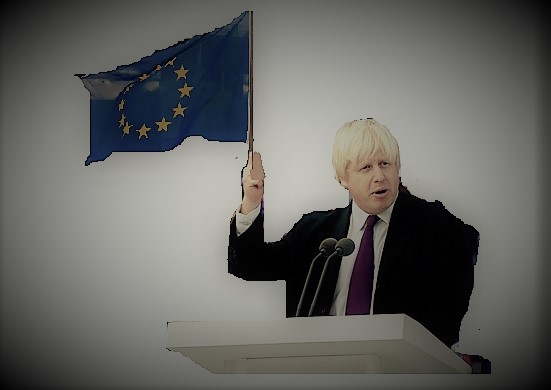
“Boris Mayor of London” by Fred Dawson is licensed under CC BY-NC-ND 2.0 (edited)
It seems remarkable doesn’t it that that we have reached the stage where the democratic institutions we hold dear are so openly crumbling before our eyes. Whilst many have been sceptical about how much you can trust a politician; rarely do we get the opportunity to gaze at the vitriolic evidence that embodies everything that we thought about politics in this country.
We have a prime minister who appears so simplistically single minded that he is blinded to the obvious and prepared to put the peace process in Ireland at risk, ruin the fragile economy, run rough shod over democracy and further damage his own party in the process.
Two concepts come to mind, the concept of leadership and ethics. There are several leadership typologies and I don’t propose to rehearse them here, save to say that there are good leaders and there are bad. The good ones we will follow anywhere, the bad, well they fall by the wayside eventually but usually not without having some calamitous impact. And as for ethics, I am minded to revert to the ‘Nolan principles’, the basis of ethical standards in public life. An examination of some of these principles against the backdrop of past and current political events reveals some interesting incongruities.
Selflessness – Holders of public office should act solely in terms of the public interest.
When former prime minister David Cameron called for a referendum did he have the ‘national interest’ at heart or was it more to do with the divisions within the Tory party? What government would be so foolhardy to think that there would be no consequences from such a referendum? Where were the government advisors pointing to the very real possibility that peace on the Irish mainland would be threatened if the referendum went the wrong way? Did anyone in government really care; was healing the divisions in the Tory party more important?
When Boris Johnson decided to prorogue parliament, did he do so in the public interests or was it simply to ensure that the possibility of parliament having its say on Brexit would be seriously curtailed? For ministers to state this is simply ordinary business appears to be somewhat disingenuous given the circumstances and the extraordinary length of the break.
When ‘leave means leave’ does that mean that ‘a no deal’ Brexit is in the public interests?
Objectivity – Holders of public office must act and take decisions impartially, fairly and on merit, using the best evidence and without discrimination or bias.
How can the prime minister state that he is taking decisions on merit using best evidence when he intends to shut down parliament, preventing any debate? Where is the impartiality when he is so single minded? How can he be viewed as impartial when he advocates bullying to get his own way, threatening to withhold the whip from any that vote against his wishes. Bullying is not leadership, threats of job losses will not galvanise people to the cause, it only alienates and divides.
Accountability – Holders of public office are accountable to the public for their decisions and actions and must submit themselves to the scrutiny necessary to ensure this.
Just where is the scrutiny if parliament is prorogued? Just how accountable are ministers if they avoid confirming that they will abide by any legislation that prevents a ‘no-deal’ Brexit being passed?
Honesty – Holders of public office should be truthful.
Now here lies the crux of it all. Leaders are not leaders if the have a propensity to be somewhat economical with the actualité. Enter the red bus, just how truthful was it to suggest that we could save £350 million a week and use that to fund the NHS? Just how honest is it to say that proroguing parliament had nothing to do with shutting up opponents? Just how much can we believe this prime minister or any other leader when the lies are so obviously blatant?
Leadership – Holders of public office should exhibit these principles in their own behaviour. They should actively promote and robustly support the principles and be willing to challenge poor behaviour wherever it occurs.
It isn’t too difficult to conclude that a leader that does not display ethical behaviours is hardly likely to promote them elsewhere. Currently, as with so many institutions, this government lacks real leadership and it would appear that principles are no more than a wish list. Just who will hold government and the past and current leaders to account for Brexit, bullying and all the bull****?
Share this:


How to prepare for a year in University

In our society consumerism seems to rain supreme. We can buy stuff to make us feel better and we can buy more stuff to express our feeling to others and mark almost most events around us. Retail and especially all the shops have long been aware of this and so they have developed their seasonal material. These seasonal promotions may have become consumer events now although they do signify something incredibly important to culture and our collective consciousness. There is time for Christmas decorations and festive foods, Easter time and chocolate eggs, mother’s day and nauseating cards father’s day for equally grinchworthy cards. There is valentine’s day to say I love you in full fat chocolates, Halloween to give little kids rotten teeth and a red poppy to remember some of our dead. To those add the summer season with the disposable BBQs and of course the back to school season!
The back to school is one of the interesting ones. Geared to prepare pupils and parents for going back to school and plan ahead. From ordering the uniforms to getting all the stationery and books required. I remember this time of the year with some rather mixed emotions. It was the end of my summer holidays, but it was also the time to get back to school. Until one day I finished school and I went to university. Education is seen as part of a continuous process that we are actively involved from the first day at school to the last day in high school and more recently for more people also involve the first day of going to university. Every year is more challenging than the next, but we move up and continue. For those of us who enjoy education we continue the journey further to further or high education.
There is something to said about the preparation process coming to University; it is interesting seeing advertisements on education this time of the year on the tv and social media promoting stuff for this transition; from the got to have smartphone to the best laptop, the fastest printer scanner all in one thingy to the greatest sound system and many more stuff that would get you ready for the year ahead. Do they really help us out and if not, what do we got to do to prepare for coming to university?
Unfortunately, there is no standard formula here but there is a reason for that. Higher education is adult education. This is the first time in our educational journey that we are sitting firmly on the driving seat. We choose to study (or ought to) what we wish to study. It is an incredibly liberating process to have choice. This however is only the beginning. We make plans of our time. In higher education the bulk of the time required is independent study, and as such we got to negotiate how we will plan our time. We got to decide which reading we are going to do first which notes to read what seminar we shall prepare and what assignment we will make a draft of.
There will be days spent in the library looking for a book, days in a coffee shop talking to fellow students about the seminar reading, days in the learning hub working on an assignment. There are highs, lows and everything in between. But regardless of the emotion at every stage thee will be a sense of ownership of knowledge.
In the first couple of sessions, the bulk of the students keep quiet expecting the correct answer to be given. One interpretation or one truth that describes all. It takes a few times before the realisation emerges that the way we analyse, and project knowledge can be different provided we go through the same processes of scrutiny and analysis. Then conversation emerges and the more reading the better the quality of the ideas that shall emerge.
The first year at University is definitely a declaration of independence and the realisation that we all have a voice. Getting on to the road on empowerment. This is a long journey, and on occasions arduous but incredibly rewarding because it leads to an insight greater than before that removes ignorance and lifts the veil of the unfamiliar.
To our newest students – Welcome to the University and to our returning 2 and 3 years – Welcome back!
Share this:

As a Member Pioneer supporting the Police
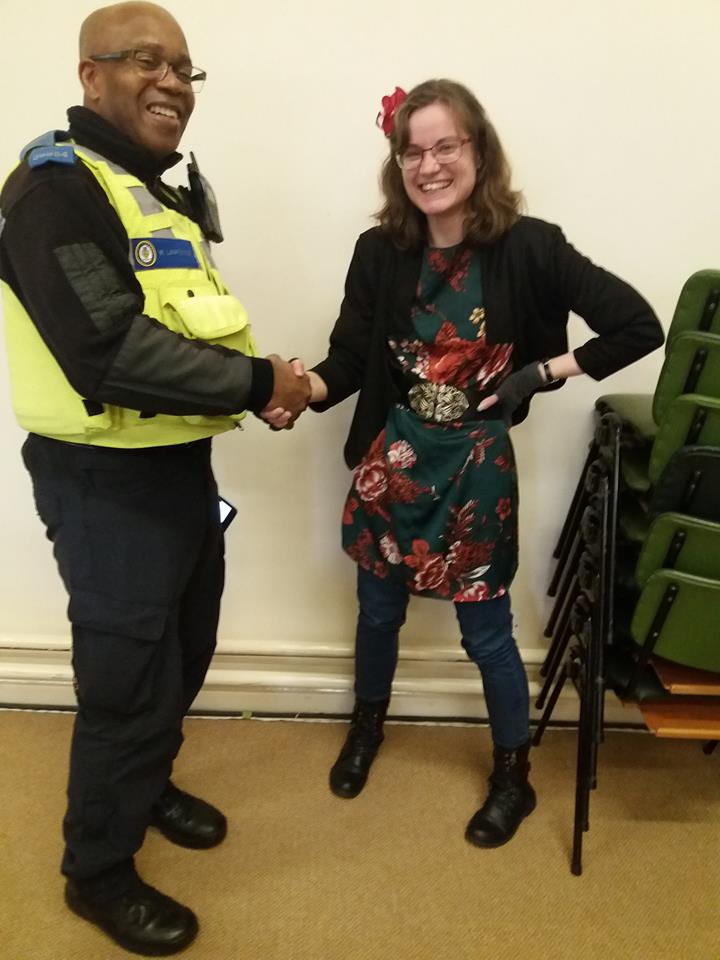

Stephanie graduated in 2015 having read BA (Hons) Criminology (with Education Studies
Since January 2018, I have worked part time as a Co-op Member Pioneer, for the area of Yardley Wood in Birmingham. In my role, I do charity work, support the local causes, aid the community and local people, run a litter pickers’ forum, build and establish local networks, do work with the council and the police. Throughout my time doing this role, I have loved every challenge thrown at me, and have increasingly done more work supporting the police.
When I first met with some of the PCSOs [Police Community Support Officers] last year, I began doing more work supporting them, and helping the community with crime-related issues. I had been informed by one of the PCSOs that the Billseley Police (whom cover Yardley Wood) are the smallest police team in the country, made up of 7 staff (the Sergeant, 4 PCSOs and 2 police officers, soon to become 3 as one of the PCSOs is training to be a full officer).
In June 2018 and 2019, during the Co-op Fortnight, I hosted a ‘Meet your Member Pioneer’ event in store, where the local community could anonymously write down something to make the local community better. I received a huge number of crime related issues, such as people knowing where drug dealers and addicts were, issues of people speeding and parking dangerously outside schools, issues of knife crime, anti-social behaviour, and people wanting there to be more police on the streets for safety and protection.
On both occasions, after getting all the crime-related notes out, I emailed the police department everything that had been written down, helping the police get more information from the public on different issues that were all dealt with. Being a community pioneer in non-police uniform, it made it easier for the public to privately disclose and offload their crime-related concerns, knowing that it would be taken seriously, and forwarded on. In an effort to further support the police with extending the reach to the local community, I advertise their events on my social media sites, saving them time and resources, and encourage people to attend, or message me any concerns they would like me to take forward.
After being introduced to staff, from Livingstone House (an organisation that helps recovering addicts), SIFA Fireside (that deals with homelessness and social exclusion), the Moseley Exchange (a business enterprise group that runs various community projects), I’m helping build community networks that the police can rely on to help people from different demographics, as well as aid them in their understanding of how to help addicts, beggars, the homeless, and many others. This has enabled the police to have access to a range of resources and information and contacts whom they can rely on and get advice from.
More recently, after getting in touch with David Jamieson, the Police and Crime Commissioner, I am helping the police set up a knife bank near the station. I’ve also gotten in touch with and organisation called Activating Creative Talent that does knife crime awareness training in schools, and am working with one of the PCSOs on delivering knife awareness education in schools and in the community. It’ll be a big, ongoing community project that is soon to take off!
In the role, I love all that I do supporting the police. I never imagined that as a community pioneer, I would aid and support the police in the capacity that I have.
Share this:


‘Quelle surprise’: it’s all in the timing.

“Inauguration of Polish EU Presidency (011)” by Bruce MacRae is licensed under CC BY-NC-SA 2.0 edited by SH
The Office of National Statistics has admitted to some frailties in its data collection around migration. What a shock it must have been to discover that the manner in which it collected the data was somewhat flawed, so much so that they have now downgraded the data to ‘experimental’.
It might seem almost laughable that an organisation that prides itself in, and espouses data accuracy and has in the past criticised police recorded figures for being inaccurate (we know they are) has itself fallen foul of inaccuracies brought about by its own ill thought out data gathering attempts. The issue though is far greater than simple school boy errors, these figures have had a major impact on government policy for years around immigration with calls for greater control of our borders and the inevitable identification of the ‘other’.
The figures seem to be erroneous from somewhere between the mid-2000s and 2016, although it is unclear how accurate they are now. New analysis shows that European Union net migration was 16% higher in 2015-16 than first thought. Whilst the ONS admits that its estimation of net migration from non-EU countries is overestimated, it is not clear exactly by how much this might be.
Such a faux pas led to the story hitting the news; ‘EU migration to UK ‘underestimated’ by ONS’ (BBC, 2019) and ‘Office for National Statistics downgrades ‘not fully reliable’ official immigration data as experts claim figures have been ‘systematically under-estimating net migration from EU countries’ (Daily Mail, 2019).
So, there we are the ONS gets statistics wrong as well and the adjusted figures simply support what Brexiteers have been telling everyone all along. But why release the figures now? When were these errors identified? Surely if they have been inaccurate until 2016 then the mistake must have been found some short time after that. So why wait until the eleventh hour when ‘Brexit means Brexit’ is about to come to a calamitous conclusion? And why those headlines? Why not the headline ‘Big mistake: net migration from outside the EU vastly overestimated’?
I’m not one to subscribe to conspiracy theories but at times it is difficult to overlook the blindingly obvious. So called independent bodies may not be that independent, the puppet master pulls the strings and the puppets dance. Little value in headlining facts that do not support the right-wing rhetoric but great political value to be had in muddying the waters about the EU and open borders.
This discourse ignores the value of migration and simply plays on the fears of the populace, these are well rehearsed and now age-old arguments that I and many others have made*. The concern though is when ‘independent institutions’ subtly start to join in the furore and the moral compass starts to become distorted, subjugated to political ideals. I can’t help but wonder, what would Durkheim make of it?
* It is well worth watching Hollie McNish’s Mathematics on YouTube.
Share this:


When the Police takes to Tweeter HashTags to Seek ‘Justice’

https://twitter.com/PoliceNG/status/1159548411244371969?s=20)
I am tempted to end this blog in one sentence with the famous Disney lyrics, “disaster is in the air” but this may do no justice to the entry as it lacks a contextual background. So last week, Nigerian Twitter was agog with numerous tweets, retweets, comments, and reactions following the news that soldiers of the Nigerian Army had allegedly killed one civilian and three police personnel in the line of duty. A brief summary of the case is that the killed police personnel had arrested an alleged notorious and ‘wanted’ kidnaper and were transporting him to a command headquarters when they ran into a military checkpoint. Soldiers at the checkpoint allegedly opened fire at close range, killed the police who were said to have attempted identifying themselves, and freed the handcuffed ‘kidnapper.’
In a swift reaction, a Joint Investigation Panel comprised of the Police and the Army was constituted to investigate the incident. Notwithstanding this, the Police took to their Twitter handle @PoliceNG calling out for justice and expressing dissatisfaction and concerns in what metamorphosed into series of threads and hashtags – #WhereIsEspiritDCorp and #ProvideAnswersNigerianArmy. Ordinarily, this should have aroused and generated wide condemnation and national mourning, but, the comments, tweets and reactions on twitter suggests otherwise. While Nigerians expressed sympathy to the victims of the unfortunate incident, they also took to the social media platform to unravel their anger with many unleashing unsympathetic words and re-stating their distrust in the Police. In fact, it was the strong opinion of many that the incident was just a taste of their medicine as they often infringe on the rights of civilians daily, and are notoriously stubborn and predatory.
Certainly, this issue has some criminological relevance and one is that it brings to light the widely debated conversation on the appropriateness and the potency of deploying the military in society for law enforcement duties which they are generally not trained to do. Hence, this evokes numerous challenges including the tendency for it to make civilians loathe to interact with the military. I have previously argued that the internal use of the Nigerian military in law enforcement duties has exacerbated rather than ameliorated insecurity in several parts of the country. As with this instance, this is due to the penchant of the military to use force, the unprofessional conduct of personnel, and a weak system of civil control of the military to hold personnel accountable for their actions.
Similarly, this issue has also raised concerns on the coordination of the security forces and the need for an active operational command which shares security information with all the agencies involved in internal security. However, the reality is that interagency feud among the numerous Nigerian security agencies remains a worrying concern that not only undermine, but hinders the likelihood for an effective coordination of security activities.
Another angle to the conversation is that the social media provides a potent weapon for citizens to compel response and actions from state authorities – including demanding for justice. However, when the police is crippled and seemingly unable to ensure the prosecution of rights violations and extrajudicial killings, and they resort to twitter threads and hashtags to call out for justice, overhauling the security architecture is extremely necessary.
Share this:


Terrorised into compliance

Learning and teaching is a complex business, difficult to describe even by those in the process of either/or both. Pedagogy, as defined by Lexico is ‘[t]he method and practice of teaching, especially as an academic subject or theoretical concept’. It underpins all teaching activity and despite the seemingly straightforward definition, is a complex business. At university, there are a variety of pedagogies both across and within disciplines. How to teach, is as much of a hot topic, as what to teach and the methods and practices are varied.
So how would you feel if I said I wanted Criminology students to quake in their boots at the prospect of missing classes? Or “literally feel terror” at the thought of failing to do their reading or not submitting an assessment? Would you see this as a positive attempt to motivate an eager learner? A reaction to getting the best out of lazy or recalcitrant students? A way of instilling discipline, keeping them on the straight and narrow on the road to achieving success? After all, if the grades are good then everything must be okay? Furthermore, given many Criminology graduate go on to careers within Foucault’s ‘disciplinary society’ maybe it would be useful to give them a taste of what’s to come for the people they deal with (1977: 209).
Hopefully, you are aghast that I would even consider such an approach (I promise, I’m definitely not) and you’ve already thought of strong, considered arguments as to why this would be a very bad idea Yet, last week the new Home Secretary, Pritti Patel stated that she wanted people to “literally feel terror” at the prospect of becoming involved in crime. Although presented as a novel policy, many will recognise this approach as firmly rooted in ideas from the Classical School of Criminology. Based on the concepts of certainty, celerity and severity, these ideas sought to move away from barbaric notions and practices to a more sophisticated understanding of crime and punishment.
Deterrence (at the heart of Classical School thought) can be general or specific; focused on society or individuals. Patel appears to be directing her focus on the latter, suggesting that feelings of “terror” will deter individuals from committing crime. Certainly, one of the classical school’s primary texts, On Crime and Punishment addresses this issue:
‘What is the political intention of punishments? To terrify, and to be an example to others. Is this intention answered, by thus privately torturing the guilty and the innocent?’
(Beccaria, 1778: 64)
So, let’s think through this idea of terrorising people away from crime, could it work? As I’ve argued before if your crime is a matter of conscience it is highly unlikely to work (think Conscientious Objectors, Suffragettes, some terrorists). If it is a crime of necessity, stealing to feed yourself or your family, it is also unlikely to succeed, certainly the choice between starvation and crime is terrifying already. What about children testing boundaries with peers, can they really think through all the consequences of actions, research suggests that may not be case (Rutherford, 1986/2002). Other scenarios could include those under the influence of alcohol/drugs and mental health illnesses, both of which may have an impact on individual ability to think through problems and solutions. All in all, it seems not everyone can be deterred and furthermore, not all crimes are deterrable (Jacobs, 2010). So much for the Home Secretary’s grand solution to crime.
As Drillminister demonstrates to powerful effect, violent language is contextual (see @sineqd‘s discussion here). Whilst threats to kill are perceived as violence when uttered by young, black men in hoods, in the mouths of politicians they apparently lose their viciousness. What should we then make of Pritti Patel’s threats to make citizens “literally feel terror”?
Selected bibliography
Beccaria, Cesare, (1778), An Essay on Crimes and Punishments, (Edinburgh: Alexander Donaldson), [online]. Available from: https://archive.org/details/essayoncrimespu00Becc/page/n3
Foucault, Michel, (1977), Discipline and Punish: The Birth of the Prison, tr. from the French by Alan Sheridan, (London: Penguin Books)
Jacobs, Bruce A., (2010), ‘Deterrence and Deterrability’, Criminology, 48, 2: 417-441
Rutherford, Andrew, (1986/2002), Growing Out of Crime: The New Era, (Winchester: Waterside Press)
Share this:


The Crime of Tourism

Every year millions of people will visit a number of countries for their summer vocations. European, American and Asian, mainly tourists will pack their bags and seek sea, sun and long beaches to relax, in a number of countries. In Greece for example, tourism is big business. The country’s history, natural beauty, large unspoiled countryside and of course, climate make it an ideal destination for those who wish to put some distance between the worries of work and their annual leave. There is something for everyone, for the culture seeker, to the sun lounger, to the all-inclusive resident. For the next however long you are on Greek time.
Last year the country was visited by approximately 30 million tourists, 3 million of whom come from the UK. This is not simply a pleasure trip; it is a multi-billion dollar industry, involving tour operators, airlines, hotels, catering, tour-guides, car rentals and so many more industries. They all try to acquire the tourist dollar in the pursuit of happiness; in Greece alone the tourist contributions last year came somewhere near to 14 billion euros and provide 17% of the country’s jobs.
In this context, tourism is a wonderful social activity that allows people from different cultures to come together, try new things and perspectives. Most importantly to get some tan, so people in the office know we were away, get some tacky t-shirts and a bottle of suspiciously strong local drink which tasted like ambrosia whilst on holiday. Some of us will learn to pronounce (badly) places we have never heard of, while others will
be reading questionable novels about romance, mystery or drama. Others will bag a romance, maybe a venereal disease, heartbreak (especially if the previous is confirmed) or even the love of their life. All these and many more will happen this summer and every summer since the wave of mass tourism began.
During this season and every season, countless people will prepare meals, clean rooms, and serve cold drinks on the sinking sand, paid minimum wage and rely heavily on the few tips left behind. The work hours are excruciatingly long, over 8 hours in the baking sun in some cases, without a hat, protection or even a break. If this was a mine it would have been the one I read about in Herodotus, where the Athenians were sent to as slaves. In the back of the house an army of trainee cooks, warehouse staff and cleaners will slave away without tips or recognition. In their ranks, there is a number of unrecorded migrants that work under exploitative conditions out of fear of deportation or worst.
In the midst of the worker’s exploitation we have the odd cultural clashes between tourists as to who gets the sun lounger closest to the pool and who can push pass the queue to get first to the place of interest you were told by someone in the office you must go to. Of course there are those who have famously complained before, because on their way to their exclusive resort were confronted by sad looking refugees. Not a real advertisement on tolerance and co-existence, quite the opposite. Of course, in this blog I have left completely out the carbon footprint we leave whenever we do these summer escapes, but that shall be the subject for another post.
Tourism is a great thing but when Eurostat claims that one in two Greeks cannot afford a weeks’ vacation in Greece, then something maybe wrong with the world. Holidays are great and we want the places to be clean, we want to travel in comfort and we want quality in what we will consume. I wonder if we have the same concerns about those people who enter Europe in shaky boats, the back of lorries or on foot, crossing borders without shoes.
Share this:


A positive new story for HMPPS – a step in the right direction

There are not many good news stories about our prison and probation system so of course, when one does crop up, it catches our attention. Recently, ‘failing Grayling’ has dominated discussion, with the reforms to the National Probation Service described as disastrous, ill-thought out and costing the tax payer millions of pounds. The academic criminology community and practitioners on the front line all saw it coming, but there is little comfort to be taken from being vindicated. Instead, for me there remains the question of ‘when will they learn?’ This is a subject I have written about before, my frustration at the lack of political will to meaningfully reform the CJS despite all the evidence demonstrating the need for this and the viable alternatives which could be adopted. However, it is still the case that a tough stance on law and order continues to gain political traction, just see some of the quotes coming from our new Home Secretary, Priti Patel, who seems determined to re-introduce the death penalty and has already outlined plans for increased surveillance.
So, back to the good news. A restaurant, open and managed by CLINKS has been shown to have a significant impact on re-offending rates – according to research conducted by the Ministry of Justice (Coughlan, 2019). CLINKS are an organisation which supports voluntary work in the CJS (see https://www.clinks.org). I first came across them when doing research into the experiences of BAME ex-offenders. It was clear this was a group who particularly benefitted from the work of volunteers, due to state services not meeting their cultural and spiritual needs, or even acknowledging their existence. In addition, CLINKS advised the Ministry of Justice on tackling the over-representation of BAME groups in the prison system. The research I did with colleagues at Birmingham City University also showed that having the status of an ‘ex-offender’ further compounded participants sense of hopelessness and resignation about the discrimination they faced (Sharp et al, 2006).
The ‘Clink’ restaurant is an initiative run in various prisons throughout the UK, and it has been cited as successful in providing prisoners with valuable work experience while serving their sentence – a project which Clink chief Christopher Moore said “works on both sides of the walls”. The Ministry of Justice clearly liked the link to employment and education, and the outcome of driving down re-offending rates – the figures do make for interesting reading, at a time when there is not much else to celebrate. For those trained in the restaurant at HMP Brixton, the re-offending rate was 11%, compared to those with similar offending history, who had a re-offending rate of 32%. But beyond the statistics, what really struck me was what some of those prisoners who were involved with the restaurant said. They expressed emotions of positivity, hope, and feeling valued.
There are clear links here to literature on desistance, which requires behavioural change and structural change to offer those willing to desist from crime, realistic and sustainable opportunities for them to do so (King, 2012). The Clink restaurant project also helps prisoners gain City and Guilds vocational qualifications, to be able to work in the wider hospitality industry. There is recognition of the need to help prisoners overcome the stigma they faced when trying to get jobs, homes and even make connections for social support. Another interesting quote came from a City and Guilds manager working with CLINKS, who said that “educating prisoners is not a reward for committing a crime – it’s about preventing further crime from being committed.” This shows the shift in thinking which is needed throughout government, the CJS and the wider public – that rehabilitation is necessary to prevent crime, and should be prioritised over those approaches which only promise to deter others.
This research and the reactions by prisoners themselves demonstrates how important is to understand what works in terms of outcomes, but also why. In this case there is a clear emotional need being met in training prisoners to work in teams, rely on each other, be valued and be able to respond positively to a training opportunity. The ethos of the Clink restaurant and those providing training show a clear sense of inclusivity and being non-judgemental for a group of people who experience stigma and discrimination, before, during and after their sentence. This ethos is at the heart of the voluntary sector who work with prisoners and ex-offenders more widely.
But what must be clear by now, is the best will in the world cannot overcome basic needs which must be met, resources which are needed to implement and sustain projects, and for the same opportunities and ethos to be replicated in the community. These are bigger issues to address, they reflect how limited the effect of an initiative such as Clinks restaurant can be for ex-prisoners needing to get jobs, homes and support outside the prison gates. However, perhaps this broader change can come with small, but significant steps, to change the narrative of the purpose of punishment and the approach of law and order in England and Wales. If that is the case, our current cabinet may find themselves on the wrong side of history, reflecting views which need to be consigned to an uncivil past. There is much to be done, it will probably get worse before it gets better, but those who know what works, why it works and how it works need to be the vanguard of reform in the CJS, and need to keep pushing for this.
References
Couglan, S. (2019) Prison restaurant serves up cut in reoffending, BBC News, see https://www.bbc.co.uk/news/education-49150997.
King, S. (2012) Transformative agency and desistance from crime. Criminology and Criminal Justice. 13 (3), 366-383.
Sharp, D, Atherton, S & Williams, K (2006) Everyone’s Business: Investigating The Resettlement Needs Of Black And Minority Ethnic Ex-Offenders In The West Midlands Government Office For The West Midlands.
Share this:


The tyranny of populism

Himmler (1943)
So, we have a new prime minister Boris Johnson. Donald Trump has given his endorsement, hardly surprising, and yet rather than having a feeling of optimism that Boris in his inaugural speech in the House of Commons wished to engender amongst the population, his appointment fills me with dread. Judging from reactions around the country, I’m not the only one, but people voted for him just the same as people voted for Donald Trump and Volodymyr Zelensky, the recently elected Ukrainian president.
The reasons for their success lie not in a proven ability to do the job but in notions of popularity reinforced by predominantly right-wing rhetoric. Of real concern, is this rise of right wing populism across Europe and in the United States. References to ‘letter boxes’ (Johnson, 2018), degrading Muslim women or tweeting ethnic minority political opponents to ‘go back to where they came from’ (Lucas, 2019) seems to cause nothing more than a ripple amongst the general population and such rhetoric is slowly but surely becoming the lingua franca of the new face of politics. My dread is how long before we hear similar chants to ‘Alle Juden Raus!’ (1990), familiar in 1930s Nazi Germany?
It seems that such politics relies on the ability to appeal to public sentiment around nationalism and public fears around the ‘other’. The ‘other’ is the unknown in the shadows, people who we do not know but are in some way different. It is not the doctors and nurses, the care workers, those that work in the hospitality industry or that deliver my Amazon orders. These are people that are different by virtue of race or colour or creed or language or nationality and, yet we are familiar with them. It is not those, it is not the ‘decent Jew’ (Himmler, 1943), it is the people like that, it is the rest of them, it is the ‘other’ that we need to fear.
The problems with such popular rhetoric is that it does not deal with the real issues, it is not what the country needs. John Stuart Mill (1863) was very careful to point out the dangers that lie within the tyranny of the majority. The now former prime minister Theresa May made a point of stating that she was acting in the national Interest (New Statesman, 2019). But what is the national interest, how is it best served? As with my university students, it is not always about what people want but what they need. I could be very popular by giving my students what they want. The answers to the exam paper, the perfect plan for their essay, providing a verbal precis of a journal article or book chapter, constantly reminding them when assignments are due, turning a blind eye to plagiarism and collusion*. This may be what they want, but what they need is to learn to be independent, revise for an exam, plan their own essays, read their own journal articles and books, plan their own assignment hand in dates, and understand and acknowledge that cheating has consequences. What students want has not been thought through, what students need, has. What students want leads them nowhere, hopefully what students need provides them with the skills and mindset to be successful in life.
What the population wants has not been thought through, the ‘other’ never really exists and ‘empire’ has long gone. What the country needs should be well thought out and considered, but being popular seems to be more important than delivering. Being liked requires little substance, doing the job is a whole different matter.
*I am of course generalising and recognise that the more discerning students recognise what they need, albeit that sometimes they may want an easier route through their studies.
Alle Juden Raus (1990) ‘All Jews Out’, Directed by Emanuel Rund. IMDB
Himmler, H. (1943) Speech made at Posen on October 4, 1943, U.S. National Archives, [online] available at http://www.historyplace.com/worldwar2/holocaust/h-posen.htm [accessed 26 July 2019].
Johnson, B. (2018) Denmark has got it wrong. Yes, the burka is oppressive and ridiculous – but that’s still no reason to ban it, The Telegraph, 5th August 2018.
Lucas, A. (2019) Trump tells progressive congresswomen to ‘go back’ to where they came from, CNBC 14 July 2019 [online] available at https://www.cnbc.com/2019/07/14/trump-tells-progressive-congresswomen-to-go-back-to-where-they-came-from.html [accessed 26 July 2019]
Mill, J. S. (1863) On Liberty, [online] London: Tickner and Fields, Available from https://play.google.com/store/books [accessed 26 July 2019]
New Statesman (2019) Why those who say they are acting in “the national interest” often aren’t, [online] Available at https://www.newstatesman.com/politics/uk/2019/01/why-those-who-say-they-are-acting-national-interest-often-arent [accessed 26 July 2019]
Share this:


The struggle is real

© Jonathan McHugh
Stephanie is a BA Criminology graduate of 2019 and was motivated to write this blog through the experience of her own dissertation.
Last year was a very important time for me, during my second year of studying Criminology I began doing a work placement with Race Act 40, which was an oral history project to celebrate 40 years of the Race Relations Act 1974. The interviews that were conducted during my placement allowed me to get a variety of in-depth stories about racial inequalities of Afro-Caribbean migration settlers in the UK. During my time with the Race Act 40 project it became clear to me that the people who had volunteered their stories had witnessed a long line of injustices from not only individuals within society, but also institutions that makeup the ‘moral fabric’ within society. When exploring whether they have seen changes post and pre-Race Relations they insisted that although the individual within society treated them better and accepted them post-Race relations, to an extent there is a long way to go to improve the hostile relationships that has been formed with politicians and police.
The notion of hostility between politicians and the Afro-Caribbean community was reinforced, as the UK was going through the Windrush scandal which affected the core of every Afro-Caribbean household within the UK. This was extremely important for me as both paternal and maternal grandparents were first generation Windrush settlers. During the scandal my father became extremely anxious and the ramifications of the Windrush scandal hit home when some of his friends that came to the UK in 1961, the same time as he did, were detained and deported on the grounds of them being ‘illegals’. The UK Government used their ‘Hostile Environment’ policy to reintroduce Section 3 paragraph 8 of the Immigration Act 1971, which puts burden of proof on anyone that is challenged about their legal status in the UK’.
The UK government was ‘legally’ able to deport Caribbean settlers, as many of them did not have a British passport and could not prove their legal right to be in the UK and the Home Office could not help them prove their legal rights because all archival documents had been destroyed. This was a hard pill to swallow, as the United Kingdom documents and preserves all areas of history yet, overnight, the memory of my family’s journey to the UK was removed from the National Archives, without any explanation or reasoning. The anxiety that my father felt quickly spread over my whole family and while I wanted to scream and kick down doors demanding answers, I used my family’s history and the experiences of other Black people under British colonial rule as the basis for my dissertation. The hostility that they faced stepping off the Windrush echoed similar hostility they were facing in 2018, the fact that the British government had started deporting people who were invited into the country as commonwealth workers to build a country that had been torn apart as a corollary of war was a slap in the face.
Under Winston Churchill’s government, officials were employed to research Black communities to prove they were disproportionately criminal as a strategy to legally remove them from the UK and although they did not have any evidence to prove this notion the government did not apologize for the distasteful and racist treatment they demonstrated. It is hard to convince Black people in 2019 that they are not targets of poor similar treatment when they have been criminalised again and documents have been destroyed to exonerate them from criminality.
A final thought:
I have outlined the reasons why this topic has been important to me and my advice to any Criminology student who is going to be writing a dissertation is, to find a topic that is important and relevant to you, if you are passionate about a topic it will shine through in your research.

 Thoughts from the criminology team