
Authors
-
5teveh
-
6bsude
-
abbietoal
-
abigailane30
-
akcharl
-
amycortvriend
-
anfieldbhoy
-
anitawrzesniewska
-
FlowerViolet
-
asteven08
-
aysheaobrien1ca0bcf715
-
bethanyrdavies
-
bonnieleighmiddleton
-
bronaghvh
-
bwilleva
-
charlottejdann
-
cherylgardner2015
-
chris13418861
-
criminologyanon
-
criminologysocietyuon
-
davidjpalmer57
-
Demi King
-
drkukustr8talk
-
ej213
-
finlaywilliams24
-
Francine Bitalo
-
gilliansiddall
-
gregpaillet
-
Gwen
-
haleysread
-
hannahmaysmith
-
hanpearce93
-
helenpoole2
-
helentrinder
-
ifedamilola
-
jackrichmond21
-
jazzie9
-
jesjames50
-
justinkotze
-
kayleighwillis21
-
keziaasante
-
kirstyk196
-
klgrant1
-
liammiles1
-
Lilly Lewis
-
madams1965
-
Maddyk97
-
manosdaskalou
-
marlywindle
-
Maxine
-
meganking046
-
molliekel13
-
Mr_Hari_Parekh
-
nahidatakhtar
-
natalieh2000
-
npetfo
-
Paula Bowles
-
paulsquaredd
-
robynmansfield1
-
saffron_garside
-
Sallek Yaks Musa
-
samc0812
-
samtilley7
-
samuellangley
-
seanrj94
-
shanwareing
-
Shaun Ken-ucheonye
-
sineqd
-
Sophie Rowson
-
spatchett94
-
svr2727
-
tgomesx
-
Tré Ventour-Griffiths
-
tuesdaywoodward23
-
Vaseem Khan Ltd
-
wadzanain7
-
zeechee
-
zo3conneely

It’s summer in America. #BlackenAsiaWithLove
It’s summer. I’ve returned to the UK, got vaccinated, continued to work online, kept calm and carried on. Away for nearly 2 years and so much has changed. Many have spent months on lockdown, clicking-n-collecting everything they need, when what they crave is companionship – non-digital human interaction. And fresh air. Worse, for many, pandemic-induced fear and social-distancing routines have festered into genuine social isolation and alienation. Here, please be mindful that social media cannot replace what we do IRL. A comment or thumbs-up cannot replace a real conversation (surprise!?!). Besides, life is short, speak to folks directly!
Across the pond, there are hundreds of prosecutions underway against individual January 6th insurrectionists. Plus, there’s a new congressional investigation into the the insurgency; the police officers’ testimonies are damning, exposing the ugliness of white supremacy and violence at the core. One particular insurgent’s hate crime against a Black Capitol Police officer really cuts to the core. Officer Harry A. Dunn said in interviews in the days after the attack, and repeatedly in his written and oral congressional testimonies:
One woman in a pink “MAGA” shirt yelled, “You hear that, guys, this nigger voted for Joe Biden!” Then the crowd … joined in screaming…”
At the same time, the traditional celebration of Emancipation is now a national holiday. All this during global outbreaks of an unprecedented worldwide pandemic, dramatizing both all our humanity and all our interconnectedness – irregardless of any social and political/politicized divisions. Diseases, like storms, don’t respect maps. All this, and still Mr. Backlash is right on time, thus Nina penned-n-crooned:
So, Mr. Backlash, Backlash
Who do you think I am?
You raise my taxes, freeze my wages
Send my son to Vietnam
It’s summertime, and the livin’ ain’t easy. CONservatives have set their sights (of their guns) on continuing to serve a bleached version of our history next to their bleached burgers in schools. Taken right out of the Jim Crow playbook, they’re not only suppressing votes by stoking fear of foreigners, CONservatives sit in congress and call the events of January 6th “peaceful protests” to the faces of officers giving testimony, who barely survived that day.
True to Jim Crow, they keep the masses ignorant by reducing Intersectionality to ‘Critical Race Theory’, and pitting that as the enemy of America. Yet, when you present them with the facts of our collective history, say, by simply acknowledging that many “founding fathers” were slave-owners-boasting-bout-freedom, they’re as silent as an electric car (shhhhhh).
Like zombies, CONservatives silently retreat to their narrow view of their Bible “and their bombs, and their guns.” It’s as if they don’t know we can learn how to have better conversations. To be sure, Intersectionality and CRT are inter-related enemies of fear, ignorance and therefore, crucially, white supremacy. It’s not in your head, they are fighting.
It’s now summer in America and three multi-billionaires are racing to go to space. At the same time, so much about our nation is broken: outdated and decaying schools, policing, healthcare and infrastructure… and now both our spirits and democracy are threatened. Insurrection betrays the very spirit of democracy – let’s not act new! Coupled with the empty shop shelves in a post-Brexit/mid-Covid Britain, this moment reminds me of something seminal spoken-word artist Gil Scott-Heron spat in 1970:

The man just upped my rent last night.
(’cause Whitey’s on the moon)
No hot water, no toilets, no lights.
(but Whitey’s on the moon)
I wonder why he’s upping me?
(’cause Whitey’s on the moon?)
I wuz already paying him fifty a week.
(with Whitey on the moon)
Taxes taking my whole damn check…
It’s summer, summer, summertime 2021 in America and we’re still asking, “what did it cost our nation to put whitey on the moon?” Is it summer in America, or is it winter? Can’t be, there ain’t no more glaciers. Happy MF’ing New Year. Have a great summer. See you on ‘the other side of the moon’.
P.S.
Did you catch all those space-billionaire and musical references? Despite all this sickness-n-division, near-n-far, yet-n-still, “music makes the people come together… yeah.”

PIX:
Gil Scott-Heron: https://genius.com/Gil-scott-heron-whitey-on-the-moon-annotated
Whitewash History, adapted from: https://www.evanstonian.net/archived-opinion/2014/10/05/history-lessons-whitewash-history/
Share this:


Taking a short break….back soon

The Covid-19 pandemic has taken its toll on everyone in a myriad of different ways. Nobody has escaped the impact of the last 16 months and we’re not out of the woods yet. Here at the Thoughts From the Criminology Team we’re no different. All of us are beginning to run out of steam and need a little break. Never fear, we’ll be back with lots of interesting entries from September. In the meantime, there’s plenty on the site to explore.
Enjoy your August whatever you are up to!
Share this:


The pathology of performance management: obscuration, manipulation and power

My colleague @manosdaskalou’s recent blog Do we have to care prompted me to think about how data is used to inform government, its agencies and other organisations. This in turn led me back to the ideas of New Public Management (NPM), later to morph into what some authors called Administrative Management. For some of you that have read about NPM and its various iterations and for those of you that have lived through it, you will know that the success or failure of organisations was seen through a lens of objectives, targets and performance indicators or Key Performance Indicators (KPIs). In the early 1980s and for a decade or so thereafter, Vision statements, Mission statements, objectives, targets, KPI’s and league tables, both formal and informal became the new lingua franca for public sector bodies, alongside terms such as ‘thinking outside the box’ or ‘blue sky thinking’. Added to this was the media frenzy when data was released showing how organisations were somehow failing.
Policing was a little late joining the party, predominately as many an author has suggested, for political reasons which had something to do with neutering the unions; considered a threat to right wing capitalist ideologies. But policing could not avoid the evidence provided by the data. In the late 1980s and beyond, crime was inexorably on the rise and significant increases in police funding didn’t seem to stem the tide. Any self-respecting criminologist will tell you that the link between crime and policing is tenuous at best. But when politicians decide that there is a link and the police state there definitely is, demonstrated by the misleading and at best naïve mantra, give us more resources and we will control crime, then it is little wonder that the police were made to fall in line with every other public sector body, adopting NPM as the nirvana.
Since crime is so vaguely linked to policing, it was little wonder that the police managed to fail to meet targets on almost every level. At one stage there were over 400 KPIs from Her Majesty’s Inspectorate of Constabulary, let alone the rest imposed by government and the now defunct Audit Commission. This resulted in what was described as an audit explosion, a whole industry around collecting, manipulating and publishing data. Chief Constables were held to account for the poor performance and in some cases chief officers started to adopt styles of management akin to COMPSTAT, a tactic born in the New York police department, alongside the much vaunted ‘zero tolerance policing’ style. At first both were seen as progressive. Later, it became clear that COMPSTAT was just another way of bullying in the workplace and zero tolerance policing was totally out of kilter with the ethos of policing in England and Wales, but it certainly left an indelible mark.
As chief officers pushed the responsibility for meeting targets downwards through so called Performance and Development Reviews (PDRs), managers at all levels became somewhat creative with the crime figures and manipulating the rules around how crime is both recorded and detected. This working practice was pushed further down the line so that officers on the front line failed to record crime and became more interested in how to increase their own detection rates by choosing to pick what became known in academic circles as’ low hanging fruit’. Easy detections, usually associated with minor crime such as possession of cannabis, and inevitably to the detriment of young people and minority ethnic groups. How else do you produce what is required when you have so little impact on the real problem? Nobody, perhaps save for some enlightened academics, could see what the problem was. If you aren’t too sure let me spell it out, the police were never going to produce pleasing statistics because there was too much about the crime phenomenon that was outside of their control. The only way to do so was to cheat. To borrow a phrase from a recent Inquiry into policing, this was quite simply ‘institutional corruption’.
In the late 1990s the bubble began to burst to some extent. A series of inquiries and inspections showed that the police were manipulating data; queue another media frenzy. The National Crime Recording Standard came to fruition and with it another audit explosion. The auditing stopped and the manipulation increased, old habits die hard, so the auditing started again. In the meantime, the media and politicians and all those that mattered (at least that’s what they think) used crime data and criminal justice statistics as if they were somehow a spotlight on what was really happening. So, accurate when you want to show that the criminal justice system is failing but grossly inaccurate when you can show the data is being manipulated. For the media, they got their cake and were scoffing on it.
But it isn’t just about the data being accurate, it is also about it being politically acceptable at both the macro and micro level. The data at the macro level is very often somehow divorced from the micro. For example, in order for the police to record and carry out enquiries to detect a crime there needs to be sufficient resources to enable officers to attend a reported crime incident in a timely manner. In one police force, previous work around how many officers were required to respond to incidents in any given 24-hour period was carefully researched, triangulating various sources of data. This resulted in a formula that provided the optimum number of officers required, taking into account officers training, days off, sickness, briefings, paperwork and enquiries. It considered volumes and seriousness of incidents at various periods of time and the number of officers required for each incident. It also considered redundant time, that is time that officers are engaged in activities that are not directly related to attending incidents. For example, time to load up and get the patrol car ready for patrol, time to go to the toilet, time to get a drink, time to answer emails and a myriad of other necessary human activities. The end result was that the formula indicated that nearly double the number of officers were required than were available. It really couldn’t have come as any surprise to senior management as the force struggled to attend incidents in a timely fashion on a daily basis. The dilemma though was there was no funding for those additional officers, so the solution, change the formula and obscure and manipulate the data.
With data, it seems, comes power. It doesn’t matter how good the data is, all that matters is that it can be used pejoratively. Politicians can hold organisations to account through the use of data. Managers in organisations can hold their employees to account through the use of data. And those of us that are being held to account, are either told we are failing or made to feel like we are. I think a colleague of mine would call this ‘institutional violence’. How accurate the data is, or what it tells you, or more to the point doesn’t, is irrelevant, it is the power that is derived from the data that matters. The underlying issues and problems that have a significant contribution to the so called ‘poor performance’ are obscured by manipulation of data and facts. How else would managers hold you to account without that data? And whilst you may point to so many other factors that contribute to the data, it is after all just seen as an excuse. Such is the power of the data that if you are not performing badly, you still feel like you are.
The above account is predominantly about policing because that is my background. I was fortunate that I became far more informed about NPM and the unintended consequences of the performance culture and over reliance on data due to my academic endeavours in the latter part of my policing career. Academia it seemed to me, had seen through this nonsense and academics were writing about it. But it seems, somewhat disappointingly, that the very same managerialist ideals and practices pervade academia. You really would have thought they’d know better.
Share this:

#CriminologyBookClub: The Guest List
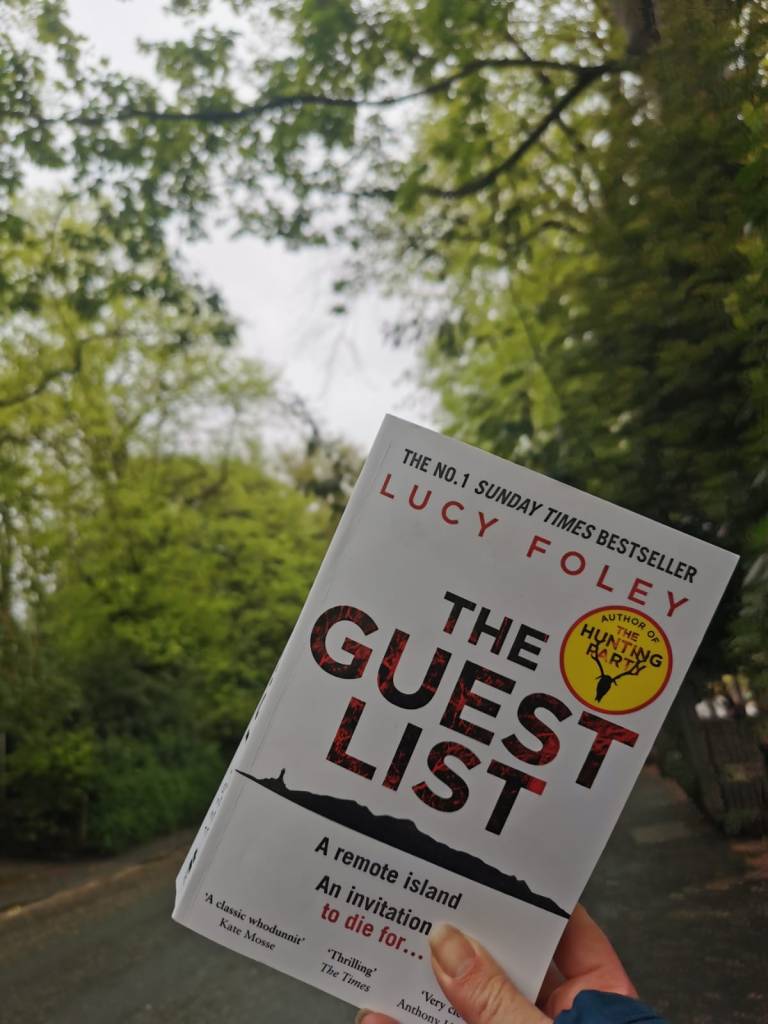
As you know by now, a small group of us decided the best way to thrive in lockdown was to seek solace in reading and talking about books. Hence the creation of #CriminologyBookClub! Building on on what has quickly become standard practice, we’ve decided to continue with all eight bloggers contributing! This title was chosen by @svr2727and is our 12th book. Read on to find out what we thought….
I took one look at the cover and didn’t think the book would be for me. The cover gave the impression it would be scary, and I don’t do scary. One of the reasons for book club is to read things we wouldn’t ordinarily go for so I started reading – and couldn’t stop. The bitesize chapters not only enabled me to pick the book up more frequently, but they also made me want to keep reading. I would tell myself ‘just one more, another, last one now, this is definitely the last one then I’ll make tea/go to sleep/get out of bed. The second thing I liked about it was that the narrative viewpoint changed each chapter, flitting between the perspectives of each character. However, what was odd that I felt no strong connection to any of the characters. I am a pacifist and would not wish anyone dead in real life, but I desperately wanted Will to be the one to die. It was quite obvious he was a wrong ‘un early on. Each of the characters had been victimised in one way or another by Will at some point in their lives but it was almost as if the author wrote in barriers to building empathy with them, either in their personality or their actions. Jules was stuck up and pretentious, her sister wouldn’t tell us what was wrong with her for a long time, Johnno was complicit in the death of a child and we didn’t know about Aoife’s connection until the end. I liked this. It ties in nicely with one of my favourite concepts in victimology, Christie’s (1986) theory of the ‘Ideal Victim’, the idea that people will not fully be accepted as a victim unless they exhibit particular characteristics and behaviours. The book therefore tied right into my criminological interests. They say never judge a book by its cover and in this case the phrase could not be more accurate.
Christie, N., 1986. The Ideal Victim. In: Fattah, E. (Ed.), 1986. From Crime Policy to Victim Policy: Reorienting the Justice System. Basingstoke: Macmillan
@amycortvriend
The most recent read for Book Club was very hard to put down, and equally difficult to pick up. Let me explain. Once reading, the story is interesting, swapping between narratives is ingenious but also frustrating as you don’t ever get a full picture. The characters are vile, so once the book was put down, I wasn’t in a hurry to get back to them: I did not warm to any of them, even the ones I think I was supposed to like. However the story was well worked, I did not see the many twists coming and I was exceptionally satisfied with who the unfortunate ‘victim?’ was. Overall it was a brilliant, fast-past read: I just wished I liked the characters! Looking forward to reading more of her work!
@jesjames50
The Guest List is a good book for those that enjoy reading books of the thriller genre. Whilst reading this book you really feel that anticipation that you get from wanting to know what will happen next. The book illustrates some interesting themes about wealth and privilege. This is not really a book that is suited to my own tastes, as I tend to read books where the characters are likeable. Although, with a thriller, disliking the characters means that its feels ok if any of these dreadful characters are then brutally murdered.
@haleysread
The story is told from the point of view of several different characters and has some clever twists that keep the reader guessing until near the end. Whilst I liked the style of writing, I wasn’t as enamoured with the storyline or the characters who seemed to display some very stereotypical traits. An enjoyable book but it just wasn’t different enough for me to consider it a ‘must read’.
@5teveh
This is a proper old school “whodunnit”, reminiscent of Agatha Christie, particularly in terms of tying up most of the loose ends. The atmospheric island, full of dangerous hazards and damaged people takes you on a journey. Clues aplenty abound and you get the chance to explore each of the characters in terms of their back story. Like many of the others in the Criminology Book Club, I didn’t like the individual characters, far too reminiscent of the Bullingdon Club. and other arrogant influencers…. Nevertheless, I enjoyed using my wits to follow the clues and work out who was going to be murdered and who did the deed. Ideal reading for holidays, or during a pandemic lockdown!
@paulaabowles
I really enjoyed losing myself in this story and read it very quickly. It was very atmospheric and I could really picture the island and the venue and the stormy weather. It all added up to create a real sense of foreboding. I enjoyed the way the story was paced – the flashes of the present interspersed with the back stories and leading up to the conclusion. It was also interesting to be trying to solve the crime and figure out who was the victim simultaneously (I didn’t solve it, I’m terribly bad at whodunnits but I still really enjoy them anyway!). I didn’t feel much empathy towards any of the characters however, and so by the end I didn’t really mind who did it!
@saffrongarside
This was an enjoyable read. We follow a group of characters that are going on a very secluded island, off the coast of Ireland to attend a super exclusive and lavish wedding. The groom is portrayed as handsome charismatic man and he is also a reality TV star. The bride is portrayed as a smart, successful, and rich women……It appears they have everything one would desire.
The story is regressive as it starts with a murder at their wedding, but then you are quickly thrust back to the events leading up to the point of the murder. Each chapter is written as a point of view from the guests at the wedding. This is a great addition, as you see the development of the characters and the secrets, mysteries, and tensions between them. I would like to point out that none of the characters were particularly likeable. I won’t give away any spoilers, but based on their behaviour throughout the book, I would not have felt sad if any of them were the victims of the murder and it seemed they were all capable of being the murderer. However, you will be kept guessing, and you won’t find out until the last few chapters of the book.
I loved that you are pulled in the weary atmosphere of the story, and at times I could almost feel the cold air and hear the waves crashing on the rocks. This mystery thriller definitely whisks you away.
If you are looking for some light summer reading, I would highly recommend, you will not be disappointed.
@svr2727
You are invited to a friend’s wedding in a remote island off the cost of Ireland and with the group of people that one is more obnoxious than the other, would you consider going? This was the question playing at the back of my head whilst I am reading this fast-moving whodunit thriller. The scenery is very pulpable and quite reminiscent of the Victorian crime novels; the mist that covers everything allowing crimes to happen whilst the guests look on terrified. Is this an accident or one of many to come? This is a tried and tested recipe brought into the 21st century, although I wonder if anyone can survive this long anymore without Wi-Fi! The story for the fans of the genre is culminating to an expected end with some interesting twists and turns. In the end I was just left wondering, why I did not care for any of the characters!
@manosdaskalou
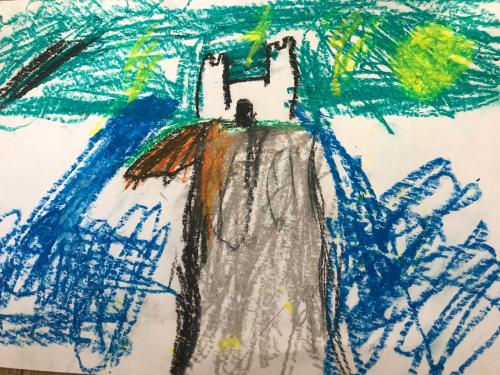
In case you struggle to imagine the island at the centre of The Guest List…thanks to Quinn and Paisley for their fabulous works of art.

Share this:


Do we have to care?

In recently published The end-to-end rape review report on findings and actions the responsible minister admitted that “victims of rape [are] being failed”. This stark admission is based on data that indicates that the current situation on dealing with rape is far worst than 5 years ago. The ministers are “ashamed” of the data but luckily in their report they offer some suggestions on how to improve things; what to do to bring the conviction rates to the 2016 level and to move more cases forward for trial, leading to successful convictions. At that point, the report presents the Criminal Justice System [CJS] as a singular entity that needs to address the issue collectively. This, in part, is a fair assessment although it ignores the cultural differences of the constituent parts of the system. Nonetheless, the government has identified a problem, commissioned a report and has a clear “ambitious” plan of how to address it.
The report indeed presents some interesting findings and I urge people to review it whenever they can (https://www.gov.uk/government/publications/end-to-end-rape-review-report-on-findings-and-actions). We know for example already that the number of cases that went into prosecution were low; in the last years this has become even lower. That despite the prevalence rate remaining more or less the same. Victims report that they are treated poorly, not believed arguing that the investigative model needs changing. No wonder the ministers appear apologetic of the situation. A headline crime category that is likely to cause an uproar and whilst thinking of the political fallout they come out in support of the victims! Who wouldn’t? Supporting a victim of crime, any crime is one of the main objectives of the CJS; once they have handed out retribution and prioritised on making an example of specific crimes and focusing on particular criminals, then their focus is on the victims! The findings were expected, but even so when reading about the higher vulnerability of disabled women to rape and sexual abuse, underscores the systemic failure to deal with this crime. It does not read like care!
If I was an agitator, I would say that a criminal committing rape has less chance (statistically) to be convicted than someone who commits theft; but then I will be making a criminological cardinal sin; conflating criminalities and confusing the data. In our profession we deal with data all the time. Many of them come in the form of metrics looking at the way different crimes are reported, recorded etc. We also know that context gives a perspective to these data. Numbers may look the same, but that is arguably part of the problem. It does not take into account the source of the data and their circumstances. Not all numbers are the same and most importantly they do not measure similar trends. The way the success rates are to be measured is not dissimilar from before and without owning a magic ball, it can be foreseen that rape will remain as is. Of course, the metrics may change colour to signal improvement, but that will not alter the fundamental issues.
On the day, one may have their car broken into, to report the incident can be a requirement from their insurance if they are to cover the cost. On the day, the said person got raped by a current/former partner the matter is not about insurance. These acts are not similar and to treat criminality as a singularity draws up uneven comparisons. In this case we have a list of recommendations trying to ameliorate the bad metrics. What are the recommendations? The focus is again on the police and the Crime Prosecution Service [CPS] and the court experience the victims will have. Again, indicates that these institutions have been criticised before for similar failings. The change of practices in the police does not go as far as exploring the institutional culture. The CPS’s requirement to do more is tied with the successful cases they will prosecute. The need for the two organisations to work together more closely has been a discussion point for the last 20 years; as for the better experience in courts, it is definitely welcomed but in recent years, Victim Support as an organisation was stripped bare, the additional services cut and the domestic violence shelters disappearing. The call for more services was continuously met with the offer of voluntary organisations stepping in, into such a complex area to provide help and support. One may think that if we are to prioritise on victim experience these services may need to become professional and even expand the current ones.
Lastly in this document the tone is clear; the focus yet again is reactionary. We have some bad data that we need to change somehow; we have got some clear action plans and we can measure them (as the report intimates) at regular times. This approach is the main problem on dealing with rape! It does not offer any interventions prior to the crime. There is nothing to deal say with rape culture, the degradation of women, the inequality and the rape myths that women are still subjected to. Interestingly there are mention of empathy toward the rape victim but there is not a plan to instil empathy for people more widely. No plan to engage the educational system with respect for the other (whoever the other is; a woman, a person of colour, disability, different origin) regarding sexual behaviours. The report tenuously mentions consent (or lack of understanding it) instead of making plans how it can be understood across. Unfortunately, this crime reveals the challenges we face in the discipline but also the challenges we face as a society that has traded care for metrics and the tyranny of managerialism.
Share this:


Mentally ill people are the “normal” ones
One of the most horrifying thing about Coronavirus, aside from the deaths (in excess of 100,000 people that needlessly died), is the underpinning mental health crisis we were actually in the vice of before March 2020. UK universities, for example, saw 95 students commit suicide in the 2016/17 academic year with ten deaths also in the space of eighteen months being at Bristol (Kwakye and Ogunbiyi, 2019: 109). For those of us that have any experience of institutional life, very much so in education, I know most will have experience with mental illness. We are told that we need to get used to it and we are made into the problems rather than putting the onus on institutions to change how they operate, and as Sara Ahmed (2018) writes “how feminist complaint becomes a form of institutional disloyalty. You are not being affected in the right way. Not be happy and positive is to become difficult; to become a problem” (p337). Still today, I am told mental health is “all in your head.” Whilst in the literal meaning, that may be true, the crux of it is how society has normalised things like inequalities that in-part create these issues. Those making those assumptions, do they ever ask why so many people have mental health problems? We are made to feel that we are broken for simply having a mental illness. Honestly, if I could be so bold, I would ask why all people don’t feel mental ill-health. I think there is something wrong when a person has normalised the goings-on of an evidently sick world. When you think about the nature of our environment in a matter-of-fact manner, you begin to realise that your pain makes sense.
“If you’re depressed and anxious, you’re not a machine with broken parts. You’re a human being with unmet needs. You need food, … water, [and] clean air. You need warmth. If I took those things away from you, you would go haywire really quickly.” – Johann Hari
Many months ago I watched the above video constructed by Double Down News (please subscribe) presented by Johann Hari. It really changed my outlook on my own mental health. He articulates something I have thought for over a decade but really struggled to articulate. As someone that is neurodivergent, I am not sure I know anyone with autism, ADHD, dyslexia, dyspraxia or other neurodiverse conditions that also do not suffer from mental health problems, maybe because we also don’t necessarily see the world in the ways neurotypical people do. Simply, rather than see the world (which we do), I’m more inclined to say that we feel the world. Many of us are also Highly Sensitive People [HSPs] which is that we feel emotions much more deeply than our non-HSP and / or in some cases neurotypical friends and colleagues. We feel things everyone does, simply those feelings are amplified tenfold than non-HSPs.
As humans we are encouraged to live in destructive ways, simply that are incompatible for us to function and that is violence, since many of us are also dying early because of it (i.e the Windrush Scandal). I have been told countless times that mental health issues, (especially depression) are about a chemical imbalances (debunked) in the brain and the people telling me this turn it into an isolated academic matter, often completely detached from what that “science” does to people. Poor mental health is a response to psychological needs not being met by our lived environment. The Coronavirus pandemic is awful for all of us. However, the pre-COVID world was not great nor should it have been normal. Hari states that “our ancestors were really good at one thing … banding together and cooperating. Often they were not bigger or stronger than the kind of beasts they took down and ate. What they were was incredibly good at was cooperating compared to other species.” Today, this culture of neoliberalism promotes individualistic thinking over community organising and family-centric cohesion. There is a reason why in Northamptonshire, community groups have a better trackrecord than local authorities and big institutions when engaging communities, because these community-focused groups are about banding together and cooperating. Other institutions are not.
During the pandemic, many of us have had to rely on the kindness of our neighbours who in some cases were also strangers. I was quite fortunate that my neighbourhood is quite pleasant and we have a good relationship with our neighbours. Not everyone is so lucky. Charities like Happy Hood have been doing this sort of work for a while (check out their Instagram @thehappyhood), along with Creating Equalz, NorFAMtoN, Northamptonshire Rights and Equality Council, Eve and others. Speaking with friends and colleagues, I think there are many out there now that would sooner call local charities and their friends to solve problems, rather than engage with local authorities or even the judgement of local police departments. Since the invention of capitalism in the days of colonial expansions, and the eventual versions of this since, “we are the first human beings to ever try to disband our tribes and live alone where the high priestess of neoliberalism Margaret Thatcher told us, ‘there’s no such thing as society. There are individual men and women and there are families'” (Johann Hari). Should the British public (not the Government) have followed Thatcher’s ethos in response to Coronavirus, we would be staring into a greater abyss, and many more hundreds of thousands of corpses than we already are. At the start, communities came out for each other helping each other in accordance to human need. But you know “your pain is just some unexplainable chemical imbalance in the brain, right?”
I’m no medical doctor, however, my academic experience / writing does delve into the social sciences. Whilst myths of debunked chemical imbalances float around, if you are not asking questions about what is happening in peoples’ lives, are you really asking the right questions? For many of us, we have been victims of institutions and structures: economic violence, racial capitalism, hate crimes, poverty, domestic abuse and others. Plus, through COVID under a government that used a pandemic for profit and practicing forms of neocolonial eugenics in its herd immunity tactics to throw swathes of the British public under the bus. A lot of the things causing mental health problems were in full force before Coronavirus arrived. Hari states “a lot of the factors that are causing depression and anxiety had already been rising before the internet came along, we were becoming much lonelier.” My parents tell me stories about when they were growing up, that although neoliberalism was a thing, they still knew who their neighbours were and it was still possible to make real human physical connections with people in your vicinity.
My parents were teenagers in the 1980s where despite that decade’s woes, this was a world before Facebook and TikTok, and before the internet. My father now works in IT and knows his way round computers – from coding to website-building and lots in between. He taught it to himself when computers were in their infancy, yet in knowing that, he also sees their flaws and how they’re not a replacement for humans. I did not get a Facebook account until I was 16 and schoolchildren bullied me for it. However, now I know what he was protecting me from … the need to fill an emotional hole. The want for human contact … and in the pandemic now, people are now feeling the blight of this hole in the image of constant calls on Zoom, Microsoft Teams and social media, where people just want to see their friends again; a hug from grandma and granddad; a conversation with their cousins they have not seen in over 18 months. Bosnian writer Alexander Haman said that “home is where people notice when you’re not there.” For those of us with mental health problems, many just want to feel that we belong somewhere and what is happening with this mental health crisis, is a wider symptom of a society that has normalised suffering, everything including and in between the overworked educators in schools and HE to settler colonialism in the illegal occupation of Palestine by the Israeli state.
Looking back on my life now, it never occured to me that I was depressed as a thirteen year-old from not only the systematic racist and ableist bullying I experienced from other children, but that causes of my depression were not that something was wrong with me. I was a troubled child rejecting the social conditions of the society he lived in. Many of us have looked for and found solutions in medications, and there is nothing wrong with this. They have helped countless people I know. However, I don’t believe it can be the only solution to a problem that has its roots in violent social conditions. What made us ill in the first place? What caused those so-debunked imbalances in the brain? Whilst they are useful, there are other antidepressants that are also useful. Lots of my neurodivergent friends are creative and they have used different artforms including poetry, filmmaking, photography and fine art to find their tribe and somewhat give their lives meaning. Those of us that work in institutions, how many hours of the day do we have a boss looking over our shoulder, physically or virtually? It doesn’t always feel very nice, especially when you are being micro-managed. The biological weathering that happens in institutional workspaces impacts mental health too, very much so in the lives of POCs. That’s why I like to work with community-focused charities, in that language of collectivism.
When you talk to people in your community, you realise there are more like you than not. And struggling with mental health is not something to be ashamed of. This is what I take from the work I do in education, that people who don’t struggle with their mental health (or don’t think they do / never have struggled) are who I would like to ask questions to, since I feel it is a sign of ill mental health “to be well adjusted to a sick society.” When we follow the neoliberalist playbook verbatim, this is where the powers that be want us. Isolated. Confused. Disorientated. Medications may take the edge off (good). However, solving systemic issues really shakes those in power to the core. What’s more, when communities stick and stay together, making demands for the better, the powerful don’t actually look that powerful.
Referencing
Ahmed, Sara (2018). ‘Rocking the Boat: Women of Colour as Diversity Workers’. Dismantling Race in Higher Education: Race, Whiteness and Decolonising the Academy, eds. Jason Arday and Heidi Safia Mirza. London: Palgrave.
Kwakye, Chelsea and Ogunbiyi, Ore (2019). Taking Up Space: The Black Girl’s Manifesto for Change. London: Merky
Share this:


Vaccine day
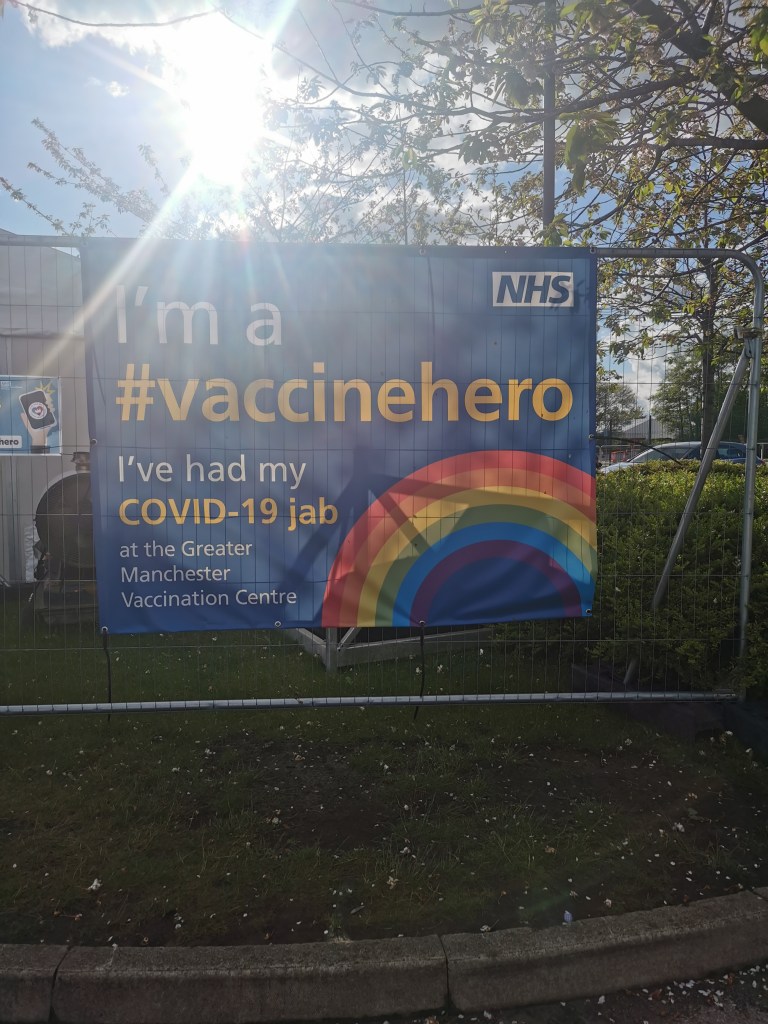
I had my first Covid-19 vaccine recently and the day was emotional, to say the least. I am 99% compliant with Covid-19 restrictions, partly because it is the law but primarily because I believe it is the right thing to do to protect others. In fact, there have been many times over the last 15 months where I have avoided the news for my own sanity so half the time, I do not exactly know what the latest rules are. I am guided by my own risk assessments and am probably more restrictive than the law in most scenarios. Up until vaccine day I thought that I wasn’t scared of contracting Covid-19, that I was complying as an act of altruism and that I would not be able to live with myself if I unwittingly passed the virus on to somebody vulnerable to severe illness and death.
Back in March 2020 when infections then the death toll started to rise, and the NHS became increasingly overwhelmed I would watch what my daughter and I called ‘the Boris show’ where the Prime Minister and the scientists would recall the daily death data, hospitalisations and cases. Each ‘next slide please’ bringing more bad news. Each day I would think about the families of every single one of those people who had died. It was quite overwhelming, and I eventually had to limit the information I ingested, living in both a physical and informational bubble. I recall the death toll announcements were met with responses from the covid-deniers, ‘but they’re old or ill anyway’, and ‘but they could have been hit by a bus and still counted as a covid death’. As a victimologist, this infuriated me. Who were these people to flippantly dismiss right to life based on age or health? It frustrated me that people with no knowledge of statistics, medicine or science were making assumptions based on anecdotal evidence from Bob on Facebook. But then again perhaps these are the tales people told themselves to get through. If they deny it, they have nothing to fear.
A few months later in June 2020, my somebody close to me contracted Covid-19. I was told they were doing well and seemed to be recovering from the virus. They died more than 28 days after having first being diagnosed with Covid-19, but it was Covid-19 that killed them. I know because I saw them to say goodbye a couple of hours before they died. This person who was always so full of life, love and who saw the good in everyone and everything, was now fading away. But what haunts me to this day was the sound of their lungs. The sound I’d heard people talk about on the news. Crisp packet lungs. And it was that sound that was like an earworm in my head on my way to the vaccination centre.
I’ve been looking forward to getting vaccinated since vaccines were on the horizon so I was excited when I received the text invitation. I booked to attend the Greater Manchester vaccination centre at the Etihad stadium, the home of Manchester City Football Club. It was well organised, despite the large numbers of people coming through. First, I was required to check in and was allocated the Moderna vaccine and a green sticker which ensured staff could direct me to the correct queue. Then I checked in at another desk where I was given some information, asked some health questions and, most importantly, I was asked, ‘do you want the vaccine?’. Those who have sat one of the research methods modules I have taught this year will have heard me discuss the importance of informed consent and this also applies to real life situations such as this. After this I joined another queue and finally reached the vaccination point, had the jab, waited for 15 minutes and left. Just like that. The whole thing took about an hour and given the volume of people being vaccinated (the site is a mass vaccination hub for a large area), I found it to be incredibly efficient. Every staff member I met was informative and did what they could to put people at ease.
From the moment I left home to go to the vaccination centre, to the moment my head hit the pillow that evening, I couldn’t help reflecting on the last 15 months. I felt a wave of emotions. I felt extreme sadness and sorrow at all the lives lost and all the families and friends left behind. It has been a traumatic time for so many of us. Getting the vaccine, I felt some sort of release from this, like it was nearly over. I have worked from home throughout and have had little social interaction, except when the gyms have been open or I have undertaken caring responsibilities for various friends and family. There were also a few weeks towards the end of lockdown 1 where my sister came to stay after returning from India. Overall, I have been alone with a teenager at a desk in my living room. It’s been awful. I’m tired and I need a break. I am well overdue a mum-cation. I felt some hope that sometime soon I might be able to get a parenting break and that my daughter can also get a break from me. I said earlier how I believed I had not feared contracting covid but having the vaccine and the relief I felt made me realise that I was more scared than I would care to admit. I am young(ish) and extremely healthy and I would probably be at low risk of developing serious symptoms but what if I was an unlucky one?
Aside from my personal experiences, I felt a collective relief. The global pandemic has created global trauma. There are still countries being ravished by the virus without the resources to operate mass vaccination of entire populations. I worry for the world and wonder what borders will look like after, if there ever is an after but I’ll ponder this further in another blog later. Getting vaccinated and being part of a mass vaccination programme made me feel cautiously optimistic. However, a few weeks on and we are now in a situation where the Delta variant is spreading like wildfire. Deaths have risen by 42.5% in the last week and hospital admissions by 44.7%. The numbers are still incredibly low in comparison to the first and second wave but every one of those deaths and hospitalisations matter. They are not a number on a presentation slide. They are people who have families and friends, who are cared for by the NHS. Every one of the deaths is a loss to these people, and has a butterfly effect in terms of the impact each death has.
Restrictions are set to lift imminently I believe (still avoiding the news) and it makes me feel uneasy to say the least. I’ve seen experts whom I trust argue on both sides of the fence. Some say this is dangerous, others suggest summer is the best opportunity to lift restrictions. It sometimes feels like we are living in some kind of twisted experiment. Regardless, I will continue to assess and manage the risk to myself and those around me. I’ll probably wear masks way after it is legal to do so and expect I will still be cautious about who I am physically close to and how I socialise. There’s things that I love and miss such as the theatre, cinema and the occasional gig but I don’t feel ready. I have a feeling this pandemic is far from over.
Share this:


Visiting the Zoo: a staple of privilege
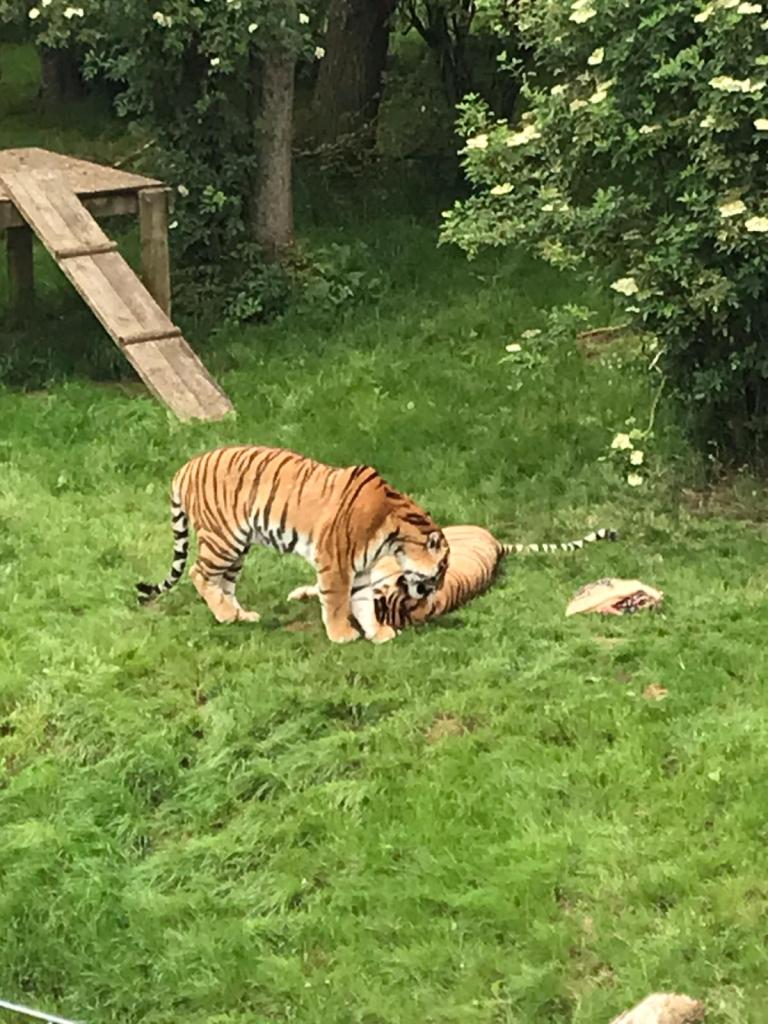
Whilst the current weather may not imply it, we are into the summer months! At this time of year staff and students begin to take a much needed and well-deserved rest after the challenging academic year we have all faced. With this time, holidays, day trips, meals out, picnics, walks and many more joyful pastimes begin to fill up the calendar, although many of us find ourselves quite restricted due to the ongoing pandemic. Nevertheless, we should all make the most of the time off to re-charge and spend time with our loved ones. For myself and my partner, this meant a day trip to Whipsnade Zoo!
Whilst the weather app assured us it would not rain, we spent a fairly windy and wet day walking around Whipsnade Zoo viewing the animals and all in all having a fabulous day. The schools are not out yet, therefore most visitors were adults on annual leave, individuals who I assume are retired, or parents with small children. We had plenty of space and time throughout the day to see the animals, read the information plaques and enjoy a wet but scrummy picnic. I dread to think what it would have been like in the height of the summer holidays!
But where am I going with this other than to brag about my fabulous day at the Zoo and what has this got to do with checking our privilege? Well, it begins with the cost to entire said Zoo. I have not been to a Zoo since I was in my school years. We used to visit Colchester Zoo most summer holidays with the Tesco Clubcard vouchers, which in a nutshell meant you could exchange Clubcard points for vouchers/tickets which included the Zoo. Therefore a trip to the Zoo when we were younger cost petrol money and a picnic (which was always done on the cheap). This is an affordable day out, but we were only a family of 3 (1 adult and 2 children), so not that many Clubcard points required, and quite a minimal picnic. Also we were fortunate enough to have a car which is not the case for all families. So even with the vouchers and picnic I cannot help but reflect and think how privileged we were to be able to visit the Zoo.
The Zoo trip this week cost just short of £50 for a student admission and an adult admission. I did think this was quite a lot. I think about what the cost would be for 2 adults and a child (or multiple children). Already this is gearing up to be an expensive day out. The Zoo has lots of interactive parts for children to engage with and learn from, and of course they have animals. But is the Zoo really aimed at educating all children or is it only those children whose families can afford it (E.I children belonging of a certain socio-economic status)? Once we arrived at the Zoo and looked around the carpark we couldn’t see a Bustop. What about the families who cannot afford a car? The food outlets were extortionate: £4 for a coffee!! Its cheaper in the West End! The same statement although different prices applies to ice-cream. I feel good that we have taken our makeshift picnic and flasks with us: but what about those who cannot?
The long-winded and verbose point I am trying to make is that even everyday things require us to check our privilege. I spoke to my partner on the drive home about the beauty and wonder of the Zoo and how we are fortunate to be able to go and how I was fortunate to go most summers as a child. But once the Clubcard vouchers stopped, so did the trips to the Zoo. There are many who are unable to enjoy the Zoo, to gain from the educational experience of learning about the animals, what they eat, where they live etc. And I can’t help but reflect and wonder is this establishment really inclusive to all? Is there something society can do to break down the class barriers which appear to be present when planning a trip to the Zoo?
Share this:


#CriminologyBookClub: Bad Day at the Vulture Club
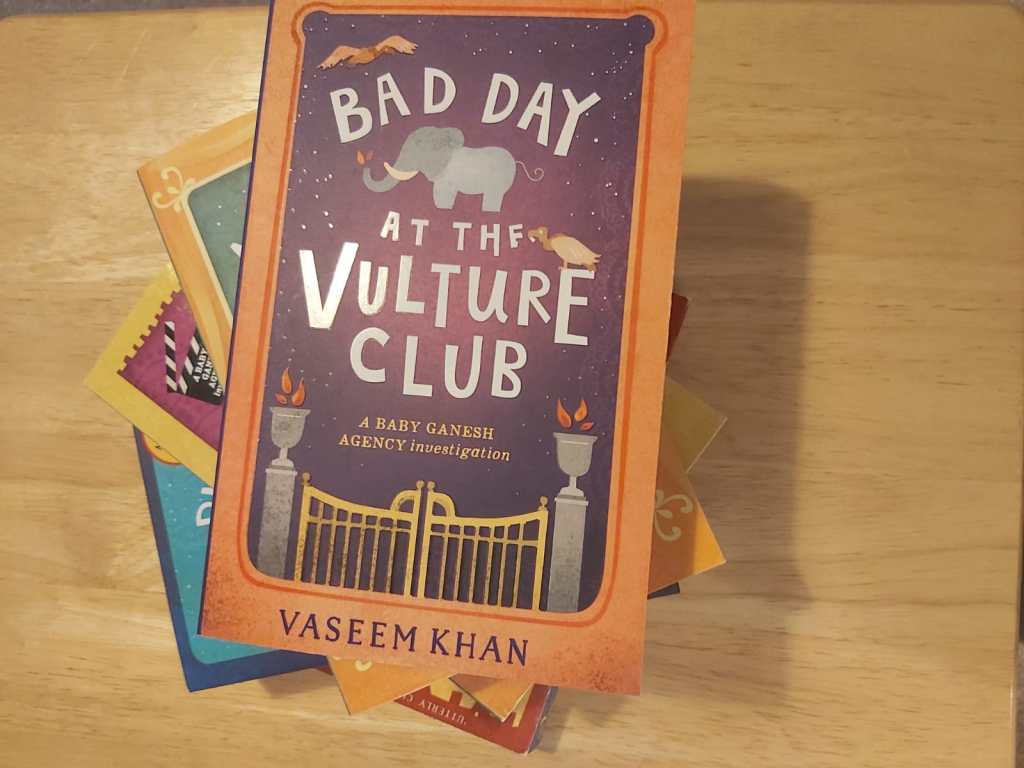
As you know by now, a small group of us decided the best way to thrive in lockdown was to seek solace in reading and talking about books. Hence the creation of #CriminologyBookClub! Building on on what has quickly become standard practice, we’ve decided to continue with all eight bloggers contributing! Our latest book was chosen by all of us (unanimously) after we fell in love with the first instalment. Without more ado, let’s see why we all adore Inspector Chopra (retired) et al. and why we’re all so very sad to reach the (temporary, we hope!) end of @vaseemk2‘s wonderful series:
The final of the Chopra series was delightful. As with the previous books, the story is a crime novel but there is a continuance of a broader (and arguably) more damaging topic, social harm. I found this book so interesting to read as Vaseem shines a light on Parsee culture that was unknown to myself until reading this book. Although this is a series of fictional books, parts of these books are based on real life events and I think this allows for a lot of reflection. I finished the book thinking about the plight of the vultures and the impact that this has on humans. Book Club is yet to find another book that we all collectively enjoy, let alone a series. This series is wonderful.
@haleysread

The fifth book of the series introduces us to the community of the Parsees. Inspector Chopra is exploring a world full of secrecy, hidden messages and innuendos. Is it a family dispute gone wrong or an attack on a small community that is flickering away? The victim is powerful, well respected and without any obvious foes. Maybe the death is an accident or one of those unfortunate events? Chopra doesn’t think so! With the help of his pet elephant he uncovers the truth, despite the authorities’ incompetence collecting evidence and the need of many in the circle of suspects to withhold information. This is a more mature outing of the detective as the case makes him question his own mortality when he is faced with ancient customs. The team remains the same although the addition of a recovering vulture makes the group as surreal as ever. The dialogues are lively and the exchanges are sharp but in the end, what is the truth? Who is going to crack when Inspector Chopra reveals “whodunit”?
@manosdaskalou
As a latecomer to book club, this was my second of the Chopra series and once again I loved it. @vaseemk2 writes in such a way that he brings everything to life with vibrancy. This book featured a vulture who developed a personality of its own and just like the previous book, I enjoy the characters of the animals. Aside from the characters, the author is very good at introducing real life events or people. This book introduced the Parsee community which I had not heard of and it encouraged me to go away and learn more. I am looking forward to playing Chopra catch up over summer.
@amycortvriend
I approached this book with mixed feelings. I desperately wanted to immerse myself into the sunshine and colour of India. However, I also was very aware this was the (current!) last book in Vaseem Khan’s awesome series (I am seriously hoping for many more, take note @vaseemk2!). Fortunately, I forgot the latter, as I immersed myself in the former. As with previous Inspector Chopra cases there is the theme of institutional violence, of ordinary people, elephants and vultures subjected to the vagaries of powerful people. In 1967, Howard Becker asked “whose side are we on? and answered, the powerless. Vaseem’s series takes the same approach, there is a sense of camaraderie and empathy towards those who are different, those who are outside of mainstream society, the underdogs. Whether they are eunuchs, Parsees or even vultures, compassion is present in Chopra et al.’s responses and actions. Although gutted that the series has come to a (temporary!) halt, this book was a joy to read. I’m going to miss all the characters but will simply pretend they’ve gone on a holiday!
@paulaabowles
Bad Day at the Vulture Club was yet another wonderful investigation involving the Book Club’s favourite motley crew! The story was intriguing, the characters charming (although some of them not so much), scenery vivid and as always, overall utterly brilliant! This is the last book in the Inspector Chopra series, so far, and if I’m being overly critical it did not feel like an ending. Maybe there will be more to come? Hint Hint @vaseemk2!
@jesjames50
Having read the previous books in the series and having become embroiled in the Baby Ganesh Agency’s quirky and endearing machinations, I picked up this final book with eagerness, anticipation and dread in equal measure. Why dread, well it’s the last in the series (I know I’ve already said that but its worth restating), no more Insp. Chopra (Retd), no more Ganesha, Poppy, Irfan or the erstwhile Rangwalla. As we have become accustomed to, the book paints a colourful and wonderful picture of Mombai and its inhabitants whilst also providing saddening detail of the darker side of corruption and desperate poverty. With the usual twists and turns, injections of humour and triumph coupled with some interesting historical backdrops the story line is both intriguing and captivating. Another page turner, but as each page disappears, so too is the recognition that it is all going to come to an end. Whilst all the characters deserve a well-earned rest, it would seem a travesty for the redoubtable Insp. Chopra and his less than ordinary sidekick Ganesha to permanently retire
@5teveh
Goodbye for now, Inspector…….
Another great addition to the inspector Chopra series. More wacky characters, great comedy, and a great mysterious plot. I have also learned some interesting things about India’s culture, which has encouraged me to do further reading.
Reflecting on my time reading this series, I have enjoyed every single book. Like the other 4 books prior, Bad Day at the Vulture Club gives you delightful excitement and adventure which is far from what has been present in real life. During uncertain times and difficult lockdowns these books have provided much need escapism. During the final chapters I did feel a wave of sadness, as I knew this was the last book in the series. But I hopeful we will see a return of baby Ganesh, Poppy and Inspector Chopra, as we have still not unlocked the mystery of Ganesh. I recommend the complete series, if you like courageous elephants and want a light hearted page turner.
@svr2727
It goes without saying that I loved this book. I’ve so enjoyed following the exploits of Chopra and Ganesha over the last year and a half and there’s definitely a bit of a hole in my life now! I’ll admit that I read it with trepidation – worried that something awful would befall the characters I had come to care about, given that it’s the final book in the series. But I needn’t have worried! I found myself once again immersed in a mystery and following the threads through India – learning loads about the country and the culture on the way. I almost loved the vulture as much as I love the elephant. I really hope this isn’t the last we hear from these characters!
@saffrongarside
We shall leave the final thought to some younger fans of Baby Ganesha and the Vulture….thanks to Quinn and Paisley for their fabulous artistry

Vulture (Quinn Age 8) 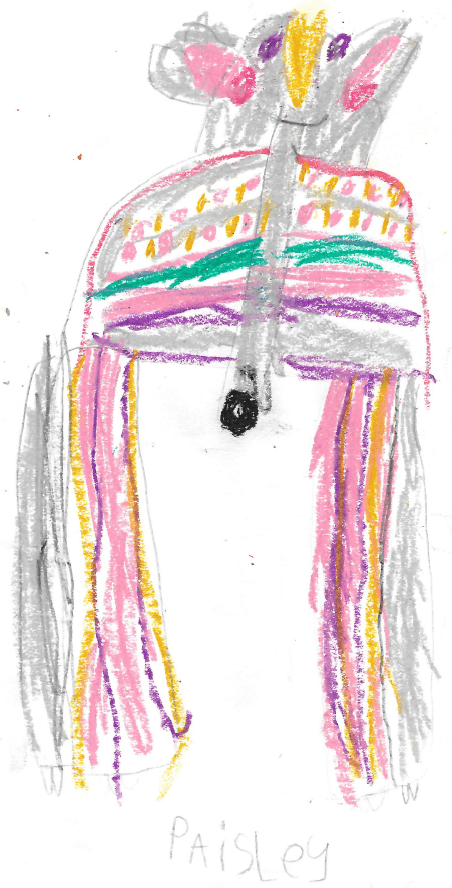
Baby Ganesha (Paisley (Age 6) 
Vulture (Paisley Age 6) 
Baby Ganesh (Quinn Age 8)
Share this:


Gypsy, Roma, Traveller History Month: #MakeSomeSpace

When I reflect upon my childhood, I recall the fondness that I have towards the Romany culture. I am reminded of the wonderful bond that my family had with horses, of good people, of the older generations of my family telling stories and singing Romany songs around tables at parties, of a strong sense of tight-knit togetherness and resilience when times got tough. I remember being educated about life from a young age and being taught the skills needed to be able to earn a living when it became difficult to do so. I am also reminded of the generosity involved in giving all that you can to your family and friends despite not having much. I especially think of this generosity in relation to the Irish Travellers that welcomed my brothers into their homes and provided for them when they were in times of need.
My instant thoughts about Gypsy, Romany Travellers (GRT) is that of fondness, but living in our society I have learnt that this is not the typical thoughts of the dominant public, media or government. When considering dominant media, public and government attitudes towards travellers, I am reminded of the GRTs that live in a society where people are prejudice because of long-standing stereotypes that have been created about their culture. I am also reminded of the lack of understanding and/or empathy that others have about the disproportionate amounts of social harm that those within the GRT families will encounter.
Since the recent Black Lives Matter protests there has been an explosion of anti-racist efforts, which I am hopeful of, yet, even some of those who are passionately ‘anti-racist’ continue to either project prejudice towards GRT people or deny that prejudice towards GRT is a problem. Adding to this, anti-racist messages communicated via the media do not seem to apply to GRT. A recent example of this is Dispatches: The Truth About Traveller Crime which is like a thorn in my side. This documentary discusses GRT as though they are a group of ‘dangerous criminals’. With an ‘expert’ criminologist present within the documentary it becomes difficult for the public to understand the stereotypes and lack of understanding that the documentary includes.
This year I have been able to incorporate GRT into the modules that I teach. I am pleased that some students have been able to navigate themselves to information about GRT from organisations like Traveller Movement and Friends Families and Travellers as these provide me with some hope in terms of GRT awareness and inclusion. However, it seems that these organisations will continue to have many pressing concerns to deal with, especially as the recent government proposals included within the Police, Crime, Sentencing and Courts Bill seem to be nothing more than another attack on the more traditional way GRT of life.

There is a worry for some GRT that upon moving into housing these cultures will decline. In terms of my own family my Nan was my idol, she was born in the 1920s in a traditional horse drawn wagon. Since moving into housing my Nan remained proud of her Romany heritage and she instilled this within my Dad’s upbringing. I only ever practiced aspects of the Romany culture in a marginal sense, and the decline of this part of my own heritage is connected to the social harm that my own family have experienced.
With GRT month I hope that more people question the prejudices that they have about others, I hope that people also question the media, government and supposed ‘experts’. You could begin by attempting to put yourself in the shoes of others, try to imagine how you would feel if society collectively judged yourself or your family despite knowing little to nothing about who you/they are. After all, this kind of overt prejudice that GRT encounter would not be acceptable in many situations if this was aimed at other groups, so why should it be acceptable when aimed at GRT?


