
Authors
-
5teveh
-
6bsude
-
abbietoal
-
abigailane30
-
akcharl
-
amycortvriend
-
anfieldbhoy
-
anitawrzesniewska
-
FlowerViolet
-
asteven08
-
aysheaobrien1ca0bcf715
-
bethanyrdavies
-
bonnieleighmiddleton
-
bronaghvh
-
bwilleva
-
charlottejdann
-
cherylgardner2015
-
chris13418861
-
criminologyanon
-
criminologysocietyuon
-
davidjpalmer57
-
Demi King
-
drkukustr8talk
-
ej213
-
finlaywilliams24
-
Francine Bitalo
-
gilliansiddall
-
gregpaillet
-
Gwen
-
haleysread
-
hannahmaysmith
-
hanpearce93
-
helenpoole2
-
helentrinder
-
ifedamilola
-
jackrichmond21
-
jazzie9
-
jesjames50
-
justinkotze
-
kayleighwillis21
-
keziaasante
-
kirstyk196
-
klgrant1
-
liammiles1
-
Lilly Lewis
-
madams1965
-
Maddyk97
-
manosdaskalou
-
marlywindle
-
Maxine
-
meganking046
-
molliekel13
-
Mr_Hari_Parekh
-
nahidatakhtar
-
natalieh2000
-
npetfo
-
Paula Bowles
-
paulsquaredd
-
robynmansfield1
-
saffron_garside
-
Sallek Yaks Musa
-
samc0812
-
samtilley7
-
samuellangley
-
seanrj94
-
shanwareing
-
Shaun Ken-ucheonye
-
sineqd
-
Sophie Rowson
-
spatchett94
-
svr2727
-
tgomesx
-
Tré Ventour-Griffiths
-
tuesdaywoodward23
-
Vaseem Khan Ltd
-
wadzanain7
-
zeechee
-
zo3conneely

Not so Priti politics: setting a clear example
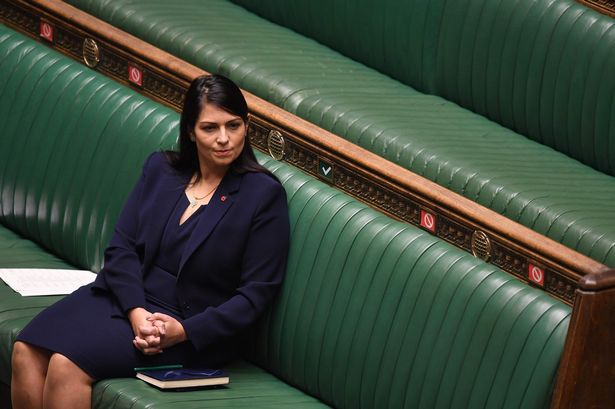
Of course Priti Patel the home secretary is correct when she declared that England fans have a right to boo England football players taking the knee before the England versus Croatia match on Sunday. Correct that is, in considering the spirit of the European Convention on Human Rights and Article 10, Freedom of Expression. This being encapsulated in our own Human Rights Act 1998. But whilst, the home secretary considers such booing, lets call it a form of protest, acceptable, she then adds that the ‘taking of the knee’ is simply ‘gesture politics’ and finds this form of protest unacceptable. The players and others through television advertising have made it clear that the statement is not political, it is simply a reminder of the need to tackle inequality and racism.
So, I’m left considering this, according to Priti Patel, it is acceptable to protest against those that oppose inequality and in particular racism, but it is not acceptable to protest against that in equality and racism. The first is a right, the second is some form of gesture politics. Ms Patel doesn’t end it there though but bemoans the Black Lives Matter protests and the ‘devastating impact they had on policing’. Somehow, I think she’s missed the point. If it is simply about the resources required to police the BLM protests, well the right of expression you say people have (you can boo if you want to) was simply being exercised and the police have a duty to facilitate those protests, devastating or not. If the devastation was about some other impact such as morale, then I think a bit of introspection wouldn’t go amiss. There is far too much evidence to show that the criminal justice system and the application of policing in particular is unequal, unfair and in need of change.
The home secretary is ultimately in charge of policing in this country. A politician, yes, but also supposedly a leader, who should be leading by example. What sort of example have her views set police forces across the country? Carry on folks, this is just gesture politics. No empathy, no understanding and a devil may care attitude, suggests that tackling inequality is not on the home secretary’s, let alone this government’s, agenda. This is not politics of the right, this smacks of politics of the far right. This is something we should all be worried about.
Share this:


For Services to Whiteness: Give Black Britain a Gong over the head
For as long as I have been a contributor on this blog, lots of my entries have sought to discuss issues of race, both when I was a student union officer and then afterwards following the Murder of George Floyd. And in writing those entires since the second half of 2019, I have also written about Honours. I do not intend to stop now. During the Black Lives Matter resurgence last year after the killings of George Floyd and Breonna Taylor, Black Britain also responded with protests and even in some cases, revisited anti-racism within our insitutions, as well as opening up discussions about racism (and Whiteness somewhat) in the UK. And whilst many designated as spokespeople for Black communities bent the knee in solidarity with Black Lives Matter – in the twelve months since those protests, members of the Black establishment sprinted to Buckingham Palace when they were called for the gong … more like a gong over the head. With all that bending, I do wonder if their backs have now grown crooked.
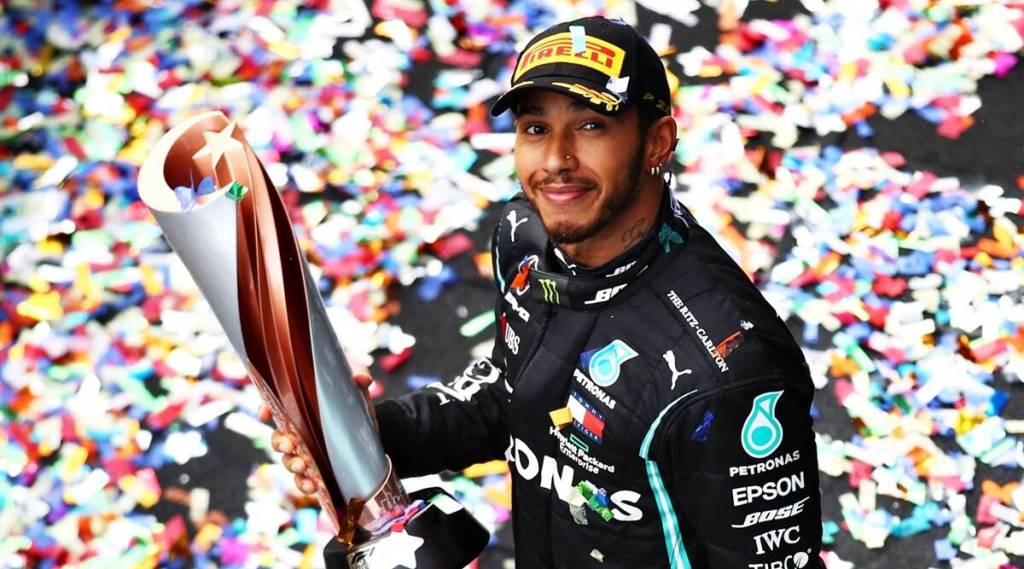
Last summer, at that point Lewis Hamilton (MBE) was one of the most vocal celebrities when it came to challenging racism only to then upgrade his already accepted MBE (from 2009) for a knighthood (KBE) that December. In January 2019, the famed historian David Olusoga who has been one of the most piercing critics of empire since at least 2010 with his book The Kaiser’s Holocaust: Germany’s Forgotten Genocide and the Colonial Roots of Nazism (co-written with historian Casper Erichsen), took an Order of the British Empire (OBE) for services to history. Despite that book being about Germany’s colonialism in East Africa, the public history professor has gone on to write books and documentaries featuring the atrocities of the British Empire as well. This is someone whose career has sought to give voice to Black British colonial and postcolonial experiences, including Black soldiers of empire (The World’s War) and the Windrush Generation (The Unwanted: The Forgotten Windrush Files) further to his critiques on enslavement (Britain’s Forgotten Slaveowners) … only then to collect an Order of the British Empire when the state came calling. His contributions to Civilisations are excellent, as are his House Through Time documentaries (really a historian of many talents).
In July 2020, he delivered his MacTaggart Lecture about racism and representation in the media, which makes me think as TweetsbyBilal writes “I truly don’t understand the cognitive dissonance it takes to accept an OBE & simultaneously talk about anti-oppression.” If there was anyone that I would expect to decline Honours, it would be someone that presented themselves as an anti-imperialist and anti-racist historian (while this year presenting Statue Wars: One Summer in Bristol with Marvin Rees critiquing colonial statues). In 2019, finding out he had accepted an OBE, I think I was more gentle with my critiques then than I am now. Having been given time to think, his acceptance in particular sticks in my throat in addition to that of Lewis Hamilton in December 2020. Moving on, Marcus Rashford became MBE for services to vulnerable children last summer responding to the Victorian policies of PM Boris Johnson and his Tories, verily a page straight out of Dickens’ Oliver Twist … Sykes, Dodger, Fagin, Warts and all. This was 2020 but felt incredibly Dickensian and the State saw fit to make the footballer a Member of the British Empire [MBE] for his efforts.
Last year, I saw Marcus Rashford’s accolade as an insult and I still see it as insult now, followed this year with Raheem Sterling being made an MBE for services to race equality. To accept Honours is to condone the horrors of colonialism and the British Empire. I do wonder how much pressure the players recieved from their families for Rashford and Sterling to accept. Rashford is 23 years old, I am 25 and Sterling is 26 (but worlds apart). However, I also know that parts of Caribbean communities both in Britain and on those small islands hold on to things like this. Famed cricketer Vivian Richards has an OBE (1994) and a knighhood (1999) with Andy Roberts AKA The Hitman, recieveing the equivalent of a knighthood from his native Antiguan government in 2014, an award no less in the image of Britain’s own Honours system reaking of imperial delusions in the service of White supremacy.
As Black and Brown people, we should not have to be burdened with the responsibility to change things for people of the same race, but when people have spent their lives criticising the state including empire, and then take medals in its namesake, I then have a problem. In my own life as a creative, many of the creatives whose writing and work I respect, hold empire medals – from Malorie Blackman (OBE) and David Oyelowo (OBE) to David Harewood (MBE), filmmaker Amma Asante (MBE), [Akala’s sister] singer Ms Dynamite (MBE), Beverley Knight (MBE), and MIA (MBE) whose music in large always had an anti-imperialist slant. “When those who have made their names from challenging the lingering evils of the empire jump at the chance of being superficially validated by it, the hypocrisy is extremely grating” writes Prishita Maheshwari-Aplin for Gal-Dem. By all means accept your medals, but don’t call yourself activists and / or even pro-equality. It’s not a hard choice, if you do not want to be part of the establishment with the privileges that entails, and as as Chardine Taylor Stone continues in discussing activist Amika George … “and knowing that’s it’s hypocritical given your takes on colonialism and Empire” (though could just as well apply to most of the mentioned too).
Meanwhile, many big names in D&I are Honours recipients. Marcus Ryder was made an MBE for service to diversity in the media last October. Additionally, from a quick Google I found an Asif Sadiq MBE and Cherron Inko-Tariah MBE at D&I Leaders (there others). Why are so many names in D&I recipients? TweetsbyBilal states that “Well if the end goal is being included and not the dismantling of systems that cause harm, it makes sense”, and he goes on to talk about “To be “included” shouldn’t be the goal. It shouldn’t be about allowing those who have historically been minoritised to also acquire positional power to enact harm through broken systems – the point should be a complete transformation of these systems.” And to transfom these system would not seek to diversify Honours and the establishment, but to abolish Honours completely. If we want to seriously decolonise, we must entertain the fact that things like Honours would need to be abolished, not reformed, not reinvented under new names (i.e British Empire = Commonwealth).
Last summer, many of us were impressed with Sky Sports’ response to Black Lives Matter. As an avid cricketer myself, both as a player and spectator, I was also a victim of the lesser discussed racism that happens in cricket. Say what you want about football, but cricket was constructed to replace the cultural institution of enslavement in the Caribbean and thus rolled out across the British Empire in the first half of the 19th century. It was designed to reproduce the White supremacy of enslavement only across all of Britain’s colonial dominions. Football has its issues with racism, I know this, but cricket still continues to be in service to Whiteness (as much as I do enjoy the game), very much in the UK where there are so few Black and Brown players playing at the national level for England. Coincidence, I think not. In light of her appearance with Michael Holding last year, Ebony Rainford-Brent took her gong for an MBE in the Queen’s Birthday Honours (June 2021) after talking about racism in women’s cricket last summer (cognitive dissonance ahem).
Cricket is one of the most potent examples of privilege, as it is so expensive to get into. When you realise 3 in 5 ethnic minority households in Britain live in poverty, cricket will more likely attract those from more working-middle-class / upper-middle class households. Football famously is a sport seen to help working-class players out of poverty as well (i.e your Marcus Rashfords), while cricket is the sport of private schools (which is how I got into the game, growing up incredibly privileged compared to many people in my community that look just like me). Ebony Rainford-Brent taking an MBE follows the Whiteness of the sport, a game in itself born out of British colonialism in the West indies on those small islands. Nonetheless, I have only listed some of the recent awardees of medals and really until there is a mass boycott of Honours, Black lives will never matter in Britain and our pushes for anti-racism are futile.
This comes in the same breath when seven out the ten of the commissioners of the infamous and horrific Sewell Report have honours, whilst claiming there was no evidence of institutional racism in the UK. Meanwhile, Raheem Sterling was honoured for contributions to race equality or as Aditya Iyer writes, “Poor Sewell and Toby. Must sting to see lesser toadies being rewarded for their service to Whiteness by merely licking the boot whilst those they were deepthroating it.” Although those that take Honours may continue to fight for justice in our institutions, for me that comes at the cost of their credibility (to varying degrees). To tell people how they ought to be doing anti-racism and anti-oppression work, while you are happy to bend the knee to empires of sugar, tobacco, and cotton, is just insulting. So, we must also consider that the history of the British Empire was not a deal-breaker for them to further their ambitions, and in some cases, nor was the murders, executions and rapes, of their ancestors.
As “activists” like Amika George accepted an MBE, it seems “activism” is a symbolic term where she claims that reframing the MBE was “a way of representing my community, showing the next generation of young British Asians that they hold just as much political power as their white friends, and they are just “British” as anyone else …” but as Audre Lorde wrote, back in the 1980s “the master’s tools will never dismantle the master’s house. They may allow us temporarily to beat him at his own game, but they will never enable us to bring about genuine change.” George claimed that she did not have the privilege to decline Honours, flying in the face of the countless Black and Brown Brits that did, including Benjamin Zephaniah, Howard Gayle, and this year author Nikesh Shukla. It would be much easier if these Black and Brown Britons that want the Gong just admit they want to be part of the establishment class experiencing the type of success that treats success as proximity to Whiteness and acknowledgement from the State.
In finding out 1 in 7 nominees at the last round were from an ethnic minority group, it reminds us that State’s tactics will continue to use our bodies as instruments in upholding racist structures. The allure of state recognition plays on the ‘gratefulness’ complex that persists through families that came to the Global North from from Britain’s former-colonies and as Musa Okwonga wrote “… growing up in Britain; it was always a case of making sure I was grateful … after all, my parents were brought to the UK as refugees, fleeing the hyper-violent regime of Ida Amin, and so there was no question that they had been given a second chance at life.” Okwonga’s statement is similar to many of us second and third-generation Africans, Caribbeans, and Asians that have immigrant parents and grandparents that were born British subjects in the 1930s, 1940s, and 1950s. To decline, can in some cases, be seen as being ungrateful.
I hope as our knowledge grows about empire, people of my generation (late millennials) feel that they do not need to accept (to feel validated) and ultimately become agents of Whiteness and as Prishita Maheshwari-Aplin writes, to become “tools for the empire’s PR machine.” After a year where protesters pulled down the statue of Edward Colston in Bristol with educator-activists hosting meetings about teaching empire on school curicula, to then have Black so-called activists and the like buying into the imperialist machine undermines all pushes for social justice – for anti-racism to mean anything and if we want education on empire to mean anything in schools, we must boycott the Honours system. Black people. Brown people. White people too, who think they are above this (whilst histories of colonialism in Ireland continue to have an impact today, as well as the pre-colonial history of oppression in the context of the royals).
As Black people, Brown people and people of colour, we must boycott these “(dis)Honours” from the State as they are examples of Whiteness as a violent material practice. In Northamptonshire, there were recipients who recieved them for acts against COVID, very much a juxtaposition where the manufacturers of inequalities rewarded people for fighting a contagion that did not have to be this way. White people that think of themselves as pro-equality / anti-racists have no business accepting Honours. If you are serious and have any ounce of respect for your Black and Brown neighbours, give the Honours back. The continued acceptance of Honours greenlights the colonial violence and postcolonial struggle, and as Ash Sakar puts it, “the problem with liberal identity politics is that it puts recognition from the state above self-organisation, … collective struggle and above solidarity. So, if we want those ingredients to mean anything we’ve got to divest ourselves of the desire to be recognised by those at the top and start recongising each other.”
The liberal politics of “diversifying the Honours list” insinuates more Black faces in high spaces is what we need to end racism (absolute nonsense) I question why we need an establishment in the first place … unless “inclusion” is just double talk for a privileged minority within an oppressed one? Whiteness appears in Blackface, nothing but a circus with medals and all.
Share this:


Thinking Criminologically: Engaging with darkness

Often when you mention the word criminology to lay people outside of the academy, the initial response is “ooh that’s interesting” or “that sounds exciting”. The next step in the conversation usually reverts to the most extreme forms of interpersonal violence, murderers, serial killers and so on. For many, criminology appears to be the home of “whodunnits”. People talk of Ted Bundy, Ian Brady and Myra Hindley, Fred and Rose West and want to know why they did what they did. For decades, the unsolved case of Jack the Ripper has been pored over by authors, television makers and the general public. For those who choose to engage, we have seen the female victims of this unknown man, eviscerated, degraded and ultimately slain, again and again for the reader/viewers’ delectation. This is not criminology.
Criminology recognises there are no winners in crime, only people left shattered, those devastated by their actions or those impacted by criminality. People are left bloody, bowed and bereaved through victimisation by individuals, institutions and the State. Yet just look on a bookshops ‘Crime’ shelves or flick through the programme schedules and you will find no sign of this. As a society we revel in this darkness and package it as entertainment. This is not criminology.
On the news we see discussions around crime and criminals. What should we do? Shall we give the police yet more powers? Shall we give those oh so lenient judges less leeway for discretion? Should we lock the offenders up and throw away the key? Should we bring back National Service? What about a boot camp? Should we consider bringing back the death penalty? How can we teach these people a lesson they won’t forget? Notice that all of these suggestions are designed to be more and more punitive, no discussions are focused around purely rehabilitative programmes, defunding the police or penal abolition. This is not criminology.
The problem with all of the ideas contained within the preceding paragraphs, is they are entirely negative. Criminology despite its focus on crime, criminality and criminalisation, has a positive focus, motivated by empathy and non-violence, if not pacifism. It is about trying to understand complexity and nuance in human and institutional behaviour. It is not interested in simplistic, quick fire, off the cuff answers for crime. It is forward looking, unconcerned with the status quo and more focused on what ought or might be. It intrinsically has social justice at its heart, an overwhelming desire for fairness for everyone, not just some. This is criminology.
This month is Gypsy, Romany, Traveller History Month, this week is also Refugee Week. Both are groups rarely treated fairly, they are criminalised and subjected to victimisation by individuals, institutions and the State. Their narratives have profound importance to our society. These experiences are far more central to Criminology than who Jack the Ripper might have been. This is criminology.
Also the beginning of this week marked the fourth anniversary of the disaster at Grenfell Tower. The graffiti above (I know, @5teveh and @jesjames50!) seems to capture the feelings of many when we consider this horrific tragedy. I taught for the first time on Grenfell in 2020/2021 and again this year. Both times I have been wracked with huge concerns around whether it was appropriate (many of our students are intimately connected), whether it was too soon and whether I could teach around the disaster with sensitivity. Running counter to this was a strong belief that criminology had a duty to acknowledge the disaster and enable our students to also make sense of such horror. In classes we have utilised poetry, music, graffiti and testimony in sessions to give us all space to consider how we can respond as a society. The biggest question of all, is what would justice look like for the bereaved, the survivors, friends, families and neighbours, the first responders? Some of that discussion is focused on the Grenfell Inquiry but far more is on how we can support those involved, what kind of advocacy can we engage with and how we can all raise our voices. As a society we cannot bring the dead back to life, but we can insist that the survivors and their families get meaningful answers. We can also insist that we make room for these individuals and families to have their voices heard. We can demand that fundamental changes are made so that disasters like these do not happen again. That we learn valuable lessons. This is criminology.
Unfortunately, experience tells us that previous victims of similarly horrible disasters do not receive anything that approximates justice, consider the events at Hillsborough in 1989. Likewise, as a society we do not seem able to learn lessons from inquiries, think about the deaths of Victoria Climbié and Peter Connelly. Nevertheless, as humans we have huge capacity for change, we do not need to keep repeating the same behaviours ad nauseum. As scholars of criminology we are well placed to argue for this change, to understand holistically, the complexities of crime and deviance, to empathise and to make space for marginalised voices to be heard. In addition we must be prepared to challenge and advocate for change. Some of us may be pacifist in orientation, but we must never be passive! This is Criminology.
Share this:


Fifty Pounds Per Child Per Year

Usually I consume my news through the BBC app, although occasionally I enjoy getting the run down of political affairs from the horses mouth, so to speak. Often I watch the Prime Ministers Questions, getting riled up at the majority of topics raised. However, yesterday (9/06/21), I found myself getting particularly outraged and passionate at a certain issue that has also been highly reported in the news.
Earlier last week, the Prime Minister outlined his Covid recovery package for schools, he pledged £1.4bn to enable students to catch up on the work, education and socialisation that has been missed. The controversy appears when comparing this figure to £13.5bn, originally suggested by Education Policy Institute (Education Policy Institute, 2021). To put it into perspective, £1.4bn equates to about £50 per child, per year- apparently you certainly can put a price on children’s education. Even with Johnson’s additional £1bn funding that will stretch across the next three years, the ‘recovery’ package is frankly laughable, it was a move that saw the education recovery commissioner, Kevan Collins, resign in protest.
Putting funding and economics aside, I think that this was a prime example of how the importance of education is once again, being forgotten. The potential power of the education system is not being utilised by any means. Politicians are still not realising that education reform doesn’t have to mean tougher discipline and it doesn’t have to mean more Ofsted checks and it certainly doesn’t have to mean more stressful, ‘rigorous testing’ of students, something which former education secretary Michael Gove pushed for in 2013 (Adams, 2013).
“Simply making exams harder does not guarantee higher standards nor mean that students will be prepared for a job.”
~ Brian Lightman (Adams, 2013)
Forcing misbehaved children out of school through punitive disciplinary actions, suspensions and exclusions simply puts them on the road to loosing faith in the education system and increases their likely hood of antisocial behaviour, which can lead to criminal careers later in life. The importance of creating an educational environment that students actually want to be a part of cannot be understated.
Furthermore, the importance of altering the current curriculum is completely overlooked. School has the potential to give children and teenagers the ability to have more autonomy over so many aspects of their later life; adequate lessons about political ideology, history and the voting system, done in an accessible way, has the potential to raise more politically aware, inclined individuals that feel equipped to engage and participate in the democratic process on a local and national scale.
Appropriate finance and law classes could eventually go on to raise a higher number of adults who feel able to handle their money situations in a better, healthier way; they could also begin to understand their rights and the court processes better. Finally, focusing on the decolonisation of the curriculum could allow ethnic minorities and other marginalised demographics to learn about their ancestors, history and culture in a more mainstream, impartial way. The impacts of restructuring the standard and the content of the schooling curriculum could have an abundance of benefits, not only to individuals but to society itself.
However, with no clear moves for the education secretary to explore theses benefits further and implement any changes, along with the promised £50 per pupil, per year, it is evident that the potential power of the education system has once again been understated and that, education is, indeed, not a priority for the current government.
Adams, R., 2013. GCSEs to become more demanding and rigorous, says Michael Gove. [online] The Guardian. Available at: <https://www.theguardian.com/education/2013/jun/11/gcse-demanding-rigorous-michael-gove>
Education Policy Institute. 2021. EPI responds to the government’s new education recovery package – Education Policy Institute. [online] Available at: <https://epi.org.uk/comments/epi-responds-to-the-governments-new-education-recovery-package/>
A link for the Prime Minister’s Questions episode: https://m.youtube.com/watch?v=zQkiEAZ2oh0&feature=youtu.be
A link for the Prime Minister’s Question with BSL: https://youtu.be/ZgcnQqbChZs
Share this:


Refugee Week 2021
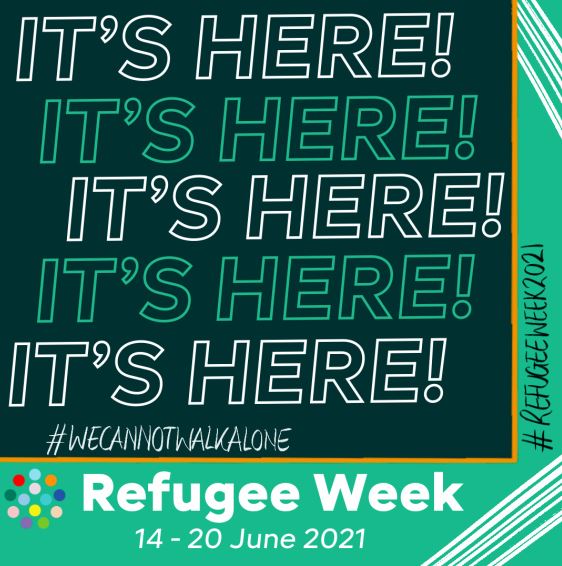
This year’s refugee week begins today, 14th June 2021 with the theme ‘we cannot walk alone’. The aim is to encourage all of us to reach out and help someone new. This week is close to my heart as border criminology is one of my key research interests. I am strongly committed to impactful research, activism and contributing my time and resources to helping refugees and making those fleeing persecution feel welcome in the UK’s hostile environment. As the resident border criminologist, I want to introduce Refugee Week activities at the University of Northampton but also to suggest how we can help ensure nobody walks alone.
The University of Northampton is hosting a week of talks in conjunction with Northampton Town of Sanctuary. Beginning on Monday at 2pm we welcome Gulwali Passarlay who fled Afghanistan at the age of 12, travelling alone through 8 countries to the UK where he was eventually granted asylum. Having spent the last few years interviewing, supporting and advocating for refugees I have heard many stories of survival. No two have been the same but each shares such painful paths that I cannot imagine. Each time I hear a refugee speak about the situations they fled I feel humbled, and grateful that despite its array of flaws, the UK is safe. In our Outsiders module, students were recently asked to challenge assumptions of minority groups. Hearing the stories of refugees from the mouths of refugees is enough to shatter any assumptions, rhetoric and media narratives about those fleeing persecution so for those who have undertaken or will sit the module next year this is a must!
On Tuesday 15th June at 2pm there will be an introduction and update to the City of Sanctuary movement. Being a City (or Town) of Sanctuary means committing to becoming a place which welcomes those seeking safety. The movement extends to universities, many of which offer Sanctuary Scholarships to asylum seekers and refugees. The Northampton Town of Sanctuary movement wants the University of Northampton to become a University of Sanctuary. Dependents of asylum applicants who arrive in the UK as children, go to school and college here, make friends, speak English, and have GCSEs and A-levels, are then unable to continue in their education as they would be liable to pay international student fees. Asylum seekers currently receive £39.63 per week from the government and are prohibited from seeking employment. They are not entitled to student finance. They are at the end of the road, forced to sit quietly and wait for the letter to come through their door with a decision.
In my own research, many of the asylum seekers I interviewed had been in the asylum process for years. For those who arrived as children and attended school here, once they left college and all their friends were going to university, they were left behind with nothing to do. This had enormous impact on their mental health and their sense of identity. They hid their asylum-seeking identity from their friends in fear of judgement, creating false narratives about who they were. This was often due to past experience of xenophobic abuse after disclosing their immigration status at school. Upon leaving school they would further advance these false narratives, making up stories about why they were not working or going to university. Just one of the people I interviewed managed to secure a Sanctuary Scholarship, despite many of them submitting applications. Having seen the impacts of exclusion from higher education, I want to see every university being a University of Sanctuary, but let’s start with the University of Northampton.
The third talk of the week is delivered by Emma Harrison from IMIX, an organisation which delivers valuable work in changing the conversation around migration and refugees. We’ve all seen the headlines and media reports of ‘illegal immigrants’ (the term ‘illegal immigrant’ infuriates me but that’s another future blog). We’ve heard Priti Patel’s plans to overhaul the ‘broken’ immigration system. The plans include further criminalisation of people seeking safety, avoiding death, rape, persecution, war; and extreme sentencing rules for those who help them reach a place of safety. The media and political rhetoric are relentless and a change in the conversation is desperately needed. I often feel hopeless about my work, that the work of myself and other border criminologists falls on deaf ears. I was at a conference a few weeks ago where the keynote was discussing the abolition of immigration detention. Immigration detention is pointless and harmful and research outputs have been good at pointing out the harms but perhaps we need to tell them what they want to hear: immigration detention is a pointless waste of money. I am looking forward to listening and hope I can pick up some tips to alter the way I communicate findings to different audiences. This talk is on Wednesday 16th June at 2pm.
The final talk of the week is delivered by a representative from the British Red Cross on Friday 18th June at 11am. The British Red Cross do a range of invaluable work from practical support such as supplying clothing and food, to finding missing family members of people seeking sanctuary. The talk will be focussed on the work the organisation does in Northamptonshire and Leicestershire during the pandemic. One of the first things I intend to do when I move to Northampton is to familiarise myself with the local service provision for refugees and asylum seekers and get involved so for me this will be a good place to start.
I encourage all our students to attend at least one of these events. They are all virtual so you could even listen while you sunbathe in the park. To attend, please email Nick who will forward a link. For our students who are interested in supporting refugees, we have a Student Action for Refugees branch at the university who coordinate student efforts to help refugees. There are many other ways we can all contribute to making sure people do not ‘walk alone’. We can read books such as Behrouz Boochani’s No Friend but the Mountains or The Good Immigrant edited by Nikesh Shukla, or watch one of the films free on the British Film Institute’s Refugee Week event. We can have conversations with others and try to think about what refugees might be going through. Next time you see a news report about a conflict talk about what you would do in that situation, what belongings you would take, which of your family would you leave behind? Having conversations such as these helps to build empathy and compassion. We can go further to challenge racist and xenophobic assumptions. I often ask, ‘what is your fear?’ to which I can invariably rationally explain why whatever they disclose will not materialise. Do one, all or some of these things. But I implore you to do SOMETHING to contribute not only to Refugee Week but to making the UK a more welcoming place.
Share this:


A smorgasbord of thought (AKA a head full of magic)

Its been a few weeks since I’ve written a blog and whilst there are plenty of topics to pick from, I never quite got my head round writing about anything in depth. I’ve thought about a lot, I never stop thinking about a lot, some it meaningful and some of it not. I like to think that some of the stuff is quite profound but that’s just in my imagination, I think. Anyway, rather than trying to put together some deep and meaningful narrative about the state of the world I thought I’d provide a few highlights.
When I read Jes’ blog the other week about graffiti, I couldn’t help thinking that we do far too much to try to justify and somehow nullify the effects of criminality. For all our theorising and empathising as criminologists, we shouldn’t lose sight of the fact that crime results in victims and being a victim of crime is at best an unpleasant experience. So, I have to disagree with Jes on one point, grafitti is not art, its criminal damage, vandalism if you like. Very rarely have I ever gazed upon a graffiti covered bridge, wall, shop front, shutter, railway station siding or railway carriage and thought to myself, wow that’s nice. Let’s call it what it is.
I think it was the same week that I read a post on ‘LinkedIn’ about the silence surrounding the murder of Julia James, a 53-year-old Police Community Support Officer. The silence the author of the post was referring to was the contrast between the public response to Julia James’ death and that of Sarah Everard, a 33-year-old marketing executive. No vigil, no public outrage, no ‘claim the streets back’. I wondered what dictates the public response to such horrific events. Is it age, occupation, circumstance or just timing?
I watched the news this week somewhat bemused by the response of some industry chiefs and business owners. The airline industry is less than pleased with the government’s approach to relaxing of restrictions around travel and some business owners are apoplectic about the fact that the removal of restrictions might be delayed. It might be a bit simplistic to state this, but it seems that they value business more than lives.
As for those that went on holiday abroad, thinking they wouldn’t need to quarantine when they came back only to find that the rules changed, and they now have to. More fool you, maybe I’ve missed a trick here, but I don’t think the Covid virus and its mutations will wait for you to enjoy the rest of your holiday before spreading a little more. Don’t complain about quarantine nor the cost of testing, you put yourself in that position, now take some responsibility and suck it up instead of blaming someone else.
In a conversation, a friend of mine told me ‘the problem is people don’t like being told what to do’. This was said in the context of Covid and our discussion about the idiots that think any rules or guidance just doesn’t apply to them. The comment did however make me think about a paper I read some time ago by Storch (1975). When the new police were introduced into this country in 1829, there were few who looked upon them favourably. One of the main issues was simply that the populace did not like being restricted in their ‘immoral or illegal’ pastimes. We can have a debate about who makes the rules but it seems to me the most pressing point is that little has changed. Take off the rose-tinted glasses, there never was a golden era of policing, the police have never been liked and never will be. I wonder how the population would act if there were no police though?
I’m a little weary now, all of this thinking and writing has worn me out. Time for a lie down in a darkened room.
Share this:


Making a Criminal: A game on criminology
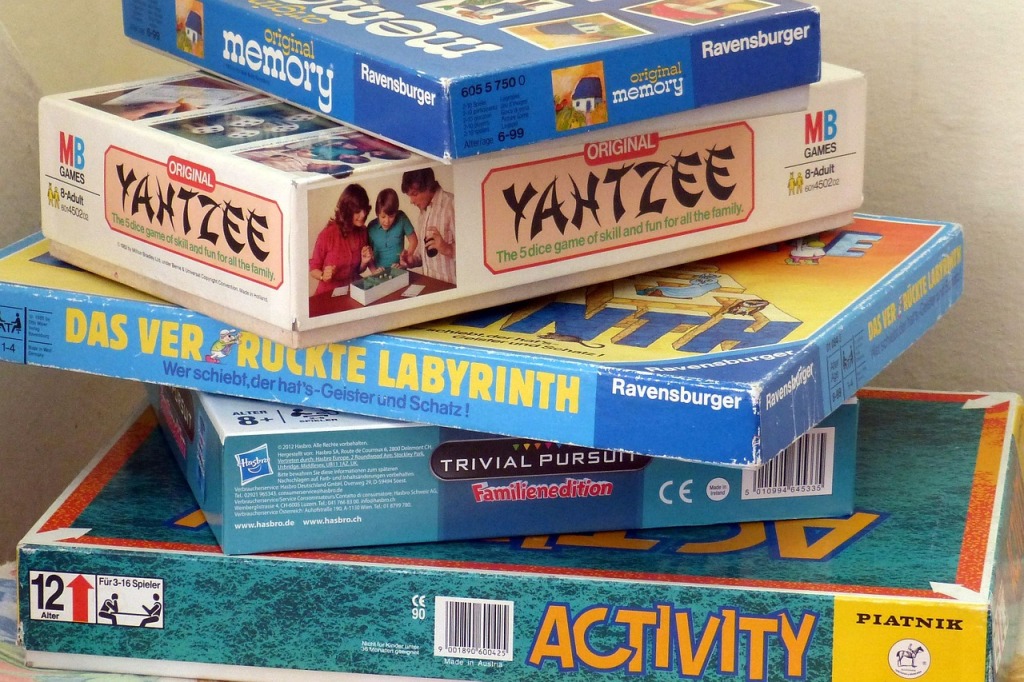
Summer is here and as we try to destress from another annus horribilis …let us play a game. This is one of the mental games we play in a way to understand a discipline shrouded in mystery and speculation. You will need no pen, nor paper, just your imagination and a few minutes.
Clear you mind, isolate your thoughts and give yourself 5 minutes of time to complete. It is all about your imagination.
Think of a criminal. Try to think of their face first. What do they look like? Imagine their face, their eyes, the nose and the cheekbones. Hair colour and style. How’s the neck, the body type, the hands, the legs. Can you tell their gender, age and their race? Any other features? What are they wearing?
Now try to keep that image in your mind. You have conjured your criminal and you ought to give them a crime. What crime has this person committed? Was it their first crime or have they done the same crime before? What made them do the crime(s) they did?
How do you feel about them? What do you wish to be done about them? What is your solution to your imaginary villain? Do you think there are others like them, or was this the one that once removed from your imagination will become unable to generate more images?
Our mind is truly wonderous. It can conjure all sorts of images and for those of you, who, managed to engage and to get through the questions and to develop your criminal, well done.
This approach was used when investigators tried to help people to recall events following a crime, usually involving violence. The questions are reasonable, and it allowed you, at least those who tried, to form an image and a backstory. This approach was later discredited, purely because it allowed our stereotypes and prejudices to come to the surface. You see this game is not about crime; it is about your perception of crime. It is not about those who do crime, it is simply about you.
Bring back to mind your criminal. Your details and characteristics are the projections that you make on what you think about the other, the criminal. For example, did you think of yourself when asked to imagine a criminal? What you don’t think you are a criminal? Ah, you are one of those who think they have never committed a crime. Ever! Are you sure? Not even drinking in the park in your teen years, or a little bit of speeding away from speed cameras?
Still you do not consider yourself as a criminal, but as a person. Which is why criminality takes such a hold of people’s imagination. Criminals are always other people. Crime is something unthinkable. Our representation of crime is to evoke our fears and insecurities, as when we were kids entering a dark room. The mind is truly wonderous, but it can also make us imagine the most horrible things. Not that horrible things do not happen, but the mind reinforces what it hears, what is sees and what it experiences. If any of you have experienced crime before, the face of the person who victimised you may become traumatically etched in your consciousness. Part of that trauma will become fear; it is interesting to note that similar fear is experienced from those who have never been victims of crime.
Previously, I mentioned investigative processes. Our fear of crime and our desire to control crime has generated a number of approaches in crime investigation that have tried to unmask the criminal. Unfortunately, many of those were based on imagination rather than fact. Why? Because of how we feel about crime. Crime causes harm and pain and invokes a lot of our emotions. Those emotions when tapped by investigators blind us and release our darker stereotypes about the others!
Share this:


#ReadingForCriminologists: The End Of Policing- Alex S.Vitale
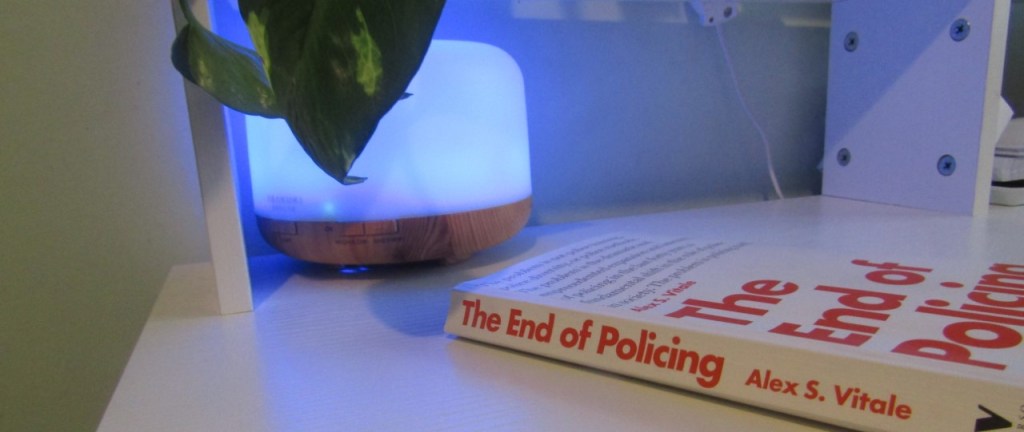
During the past year, like many, I have certainly had more time on my hands, I’ve started a plethora of hobbies (some more successful than others) but a constant past time for me has been reading. In the past I’ve sporadically read a few classic fiction books but this year that I’ve been focusing on nonfiction literature.
This book focuses mainly on the American police force in a historical and contemporary context. The book tackles some of the big topics in current policing such as the school to prison pipeline, the war on drugs, prostitution and mental health. In each chapter, the author critiques current policing strategy and gives recommendations towards effective reform.
My Thoughts
Of course, it is important to note that this book comments on American policing strategies and discusses social issues from a western, North American perspective. However, the book at times, does become relevant to UK topics. Comments about the war on drugs, the criminalisation of the homeless, immigrants and prostitutes and political policing are some examples.
“Tactical equipment with semi-automatic weapons”
Vitale, A., 2018. The end of policing. Verso Books, p.65.
There was one main part in the book that stuck out to me. In the School to Prison Pipeline chapter, the author gives a quote from an annual convention held for police officers based on school sites (known as Resource Officers). The book says it mainly consists of military contractors selling security systems to schools, a keynote speaker, specialising in anti-terrorism describes American schools as all containing ‘the next Columbine’, that every officer must be a ‘one-man fighting force’ and that police officers in schools must always wear full ‘tactical equipment with semi-automatic weapons’.
The author used this example in an extremely effective way, commenting on how the very nature of policing must change. It was written that currently, the police force is inherently a force and that the ethos of policing along with the ‘warrior mentality’ is part of the reason that policing in America is not as effective and beneficial as it could be to its citizens and communities.
With the continuation of social and racial unrest in America, the topics raised in the book could not be more relevant. The most interesting thing about this book was that it presented concepts and opinions I had never thought of before, and whether or not I was in agreement with the points raised, it became an extremely thought provoking read.
I guess that if escapism is more of your reasoning for reading this, perhaps, isn’t the book for you. The author speaks about the harsh reality that certain communities face when it comes to American policing and society.

Some Main Takeaways
Since beginning to take a greater interest in nonfiction books, I’ve realised how beneficial it is to to take note of differing opinions. The beauty in any social science is that one topic can have many opinions attached to it and often, opinions that differ from your own can be the most interesting and thought provoking ones. On the whole, the author presented quite a lot of concepts that I agree with, which made for a passionate read and the opinions I did not agree with, opened up opportunity to research and further understand.
This book has called into question some of my own opinions and thoughts around police reform. Perhaps more police training, more funding and education within the police force cannot fix an institution that was formed to essentially supress and control some of the most marginalised and disadvantaged groups of people.
Share this:


The UK is not Innocent: “Babylon, for True” #SubnormalABritishScandal
Last December I watched the final entry of Small Axe entitled ‘Education‘, the best entry in my opinion and thus I delivered a blog on the film too. The finale articulated the history behind the schools for the ‘Educationally Subnormal’ [ESN] or ‘special schools’, and it took me back to when I was a nine year-old boy being treated as if I was intellectually inferior or incapable, by my White teachers in comparison to the White children. It turns out I was dyspraxic. The story of Maisie Barrett, however, in the recent documentary Subnormal: A British Scandal resonated. My schooling experience differs from most Black children in Britain today (since I was at private, not state) but the story of Maisie Barrett resonates because she was dyslexic (word blindness in the 1960s/1970s) and simply, like my teachers with my dyspraxia, they did not know how to teach her or me. She was placed in one of those ‘special schools’ really because she happened to be Black and her dyslexia translated as “difficult” to the teachers of the time.
In the 1960s and 1970s, hundreds of Black children in Britain were caught in an education scandal where many were sent to schools designed for the ‘educationally subnormal’. Some children were labelled as “subnormal” by the state, as they were seen to have low intelligence and not fit for the mainstream school system. A decision by the state that would see many (if not all) of these children to grow into adults traumatised by their experience with that childhood trauma impacting their adult lives. What happened in the 1960s and 1970s disproportionately to Black British children of Caribbean descent has an enduring legacy today, where battles are still being fought in the name of race and racism, from Early Years all the way up to higher education [HE] in universities. In the 1944 Education Act, the term “educationally subnormal” entered British lexicon to describe children that the state deemed intellectually deficient.
The people that we now know in the colloquial sense as the Windrush Generation (Caribbeans that came here between 1948-1970), came here to work. This scandal impacted their children and is really an aftershock of the hostility to Caribbean arrival in 1948. My own great-grandparents themselves came to this country from the Caribbean in the late 1950s, early 1960s with some of their children (including my grandmother) coming on her parents’ passports. And I know my maternal great-grandparents were factory workers when they first came. I’m told they went to work at Long and Hambly, a Northamptonshire-based plastics manufacturer. However, these ESN schools should not be relegated to history as the education sector continues to fail Black and Brown students at every level. Whilst back then the state called them ‘special schools’, now we have Pupil Referral Units [PRU] where Black students in schools continue to be placed when they become “too difficult” for the mainstream system of education.
Watching Subnormal, it struck me that whilst it claims this scandal started in the 1960s with the arrival of the Windrush Generation and whilst I earlier claimed it as an aftershock of 1948, I would take this back further. Why were / are Black students being treated as if they were / are less intelligent? In the documentary, Prof. Gus John states “there were many academics who were equating race with lack of intellectual ability [with] the reason for Black underachievement as those children were Black” … academics like Professor Hans Eysenck, a key figure in discourses around race and intelligence in the 1970s. He believed genetics played a role in influenceing intelligence and that “entire racial groups might be genetically condemned to lower intelligence” (Subnormal). These ideas lead to beliefs that Black children were not as capable of academic success as White children. With people like Prof. Eysenck leading on this, it made ESNs not really a national scandal but justifiable … essentially justifying racism with “science.”
Yet, going back to the 18th and 19th centuries we also know that similar ‘race science’ was used to used to justify colonialisms and also enslavement as well as the subjugation of Black people in the Caribbean and the African continent. In her book Superior, Angela Saini traces the origins of race really showing the racial hierachies that existed in that era with White European people at the top and Black people of African descent at the bottom and “what Europeans saw as cultural shortcomings in other populations in the early nineteenth century soon become conflated with how they looked” (p11). So-called ‘race scientists’ drew on physical differences to emphasise us and them and I believe the ideas perpetuated by the Government in constructing the ESNs do not sound too far from the pseudoscientific racial theories that underpinned colonial racial thinking of the 18th and 19th century. Very much followed by the Nazis themselves, inspired by UK-US eugenics creating policies also discriminating based on disabilities, that would have included neurodivergent conditions like dyslexia (or as they called it in the 1970s … word blindness).
Black people being seen as intellectually inferior is a stereotype that goes back to the days of White masters and Black enslaved people. The justifications made for the ESNs were simply an afterthought of the “academic reasonings” made to subjugate Black people on slave plantations. Simply, the UK government were standing on the shoulders of old stereotypes created in the slave polity. When you link this with the hostility to Caribbean arrival, we can then see that the conditions of anti-Blackness have been in Britain since the 16th century. In watching the film, what we saw is ‘race science’ playing out in a contemporary context, as well as eugenics, which was also pioneered by men like Winston Churchill, who the British public saw fit to vote as the Best Briton in 2002, and then have on the £5-note in 2016.
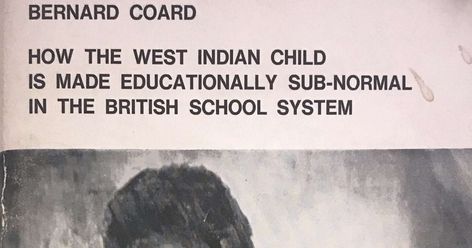
In British schools and universities, we continue to see these same stereotypes playing out (the return of race science, to put it bluntly) but more importantly, this is White supremacy in action. Whilst I enjoyed (if that’s the term), the documentary as it had lots to take away, I felt it was not critical enough. Much alike lots of the documentaries we have received from especially the BBC since the George Floyd killing, they go as far as to say ‘racism is bad and we need to talk about it’ but fall short in naming White supremacy as a social and political system (Mills, 2004). Further to the fact of how institutional Whiteness (White Spaces) allows our structures to continue to centre and frame the emotions of White people in dealing with racist incidents. The scandal that culminated in Bernard Coard’s book How the West Indian Child is Made Educationally Sub-normal in the British School System, was well articulated by the BBC as well as showing the role of Black parents, community leaders and activists, but falls short at showing the overarching system leading us to believe this as an isolated tragedy and not part of complex system that was orchestrated from dot.
We had lots of testimony from the victims as well as parents, community leaders, activists and the like but much akin to so much of the trauma narratives of late, the people that helped facilitate these crimes are nowhere to be seen … we have a victim-focussed narrative with no analysis on the mechanics of the oppression itself. 50 years on, more awareness for sure … but no accountability. The BBC is the establishment broadcaster and it shows. Babylon, for true!
References
Coard, B. (1971) How the West Indian Child is Made Educationally Subnormal in the British School System. In: Richardson, B. Tell it like it is: How our schools fail Black children. Stoke-on-Trent: Trentham Books.
Mills, C (2004) Racial Exploitation and the Wages of Whiteness. In: Yancy, G (ed). What White Looks Like: African American Philosophers on the Whiteness Question. Abingdon: Routledge.
Saini, Angela (2019) Superior: The Return of Race Science. London: 4th Estate.
Ventour, T (2021) The Alternative History Behind the Windrush Scandal. Medium [online]
White Spaces. Institutional Witnesses. White Spaces [online].
Share this:


#amplifymelanatedvoices 2021
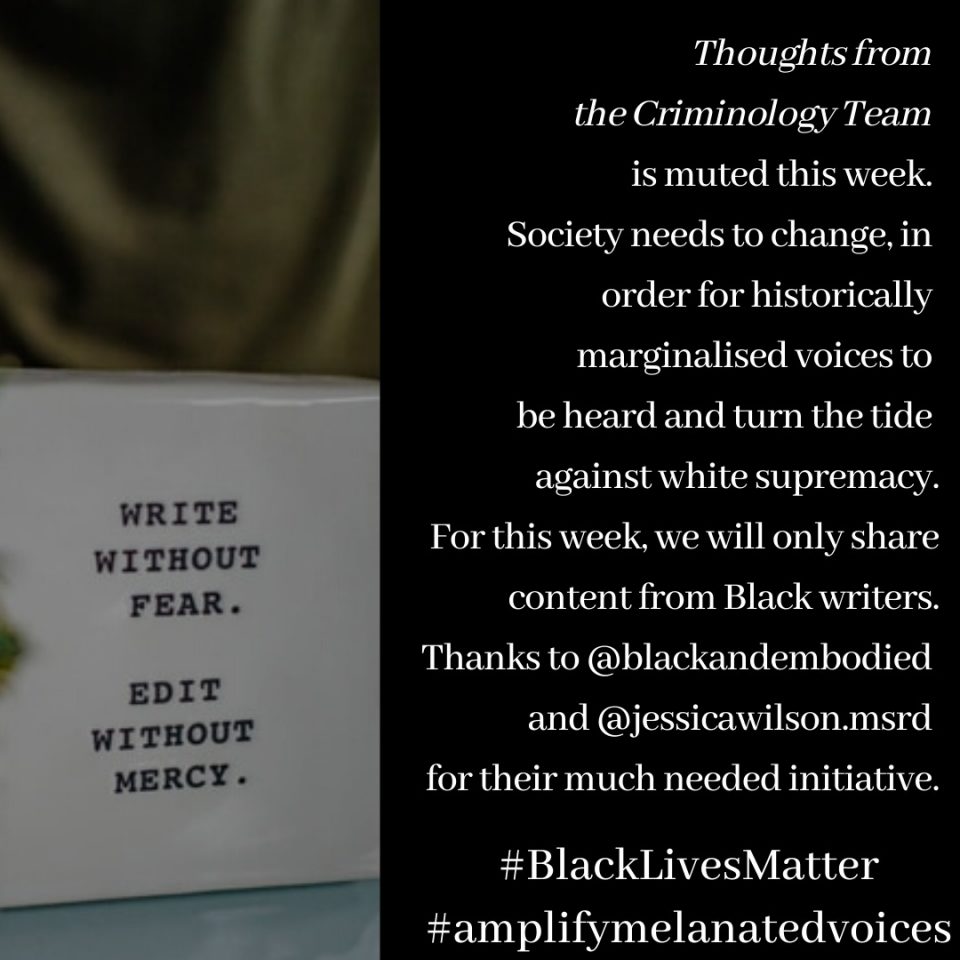
In June 2020, the Thoughts from the Criminology Team blog took part in an initiative started by @blackandembodied and @jessicawilson.msrd over on Instagram. For one week, we only posted/reshared blog entries from Black writers to reiterate our commitment to do better in the fight against White supremacy, racist ideology, as well as individual, institutional, and structural violences.
With the first-year anniversary of George Floyd’s murder fast approaching (25 May), we want to run the same initiative, with entries which focus on aspects of this heinous crime. We recognise that whilst the world was shocked by George Floyd’s racist murder, for many of our friends, families and communities, his death represented generational trauma. For this reason, we have not requested new entries (although they are always welcome) and instead want our readers to have another opportunity to (re-)engage with some excellent and thoughtful entries from our talented writers.
Take some time to read, think and reflect on everything we have learned from George Floyd’s murder. In our discipline, we often strive for objectivity and run the risk of losing sight of our own humanity. So, do not forget to also look after yourself and those around you, whether physically or virtually. And most importantly listen to each other.


