
Authors
-
5teveh
-
6bsude
-
abbietoal
-
abigailane30
-
akcharl
-
amycortvriend
-
anfieldbhoy
-
anitawrzesniewska
-
FlowerViolet
-
asteven08
-
aysheaobrien1ca0bcf715
-
bethanyrdavies
-
bonnieleighmiddleton
-
bronaghvh
-
bwilleva
-
charlottejdann
-
cherylgardner2015
-
chris13418861
-
criminologyanon
-
criminologysocietyuon
-
davidjpalmer57
-
Demi King
-
drkukustr8talk
-
ej213
-
finlaywilliams24
-
Francine Bitalo
-
gilliansiddall
-
gregpaillet
-
Gwen
-
haleysread
-
hannahmaysmith
-
hanpearce93
-
helenpoole2
-
helentrinder
-
ifedamilola
-
jackrichmond21
-
jazzie9
-
jesjames50
-
justinkotze
-
kayleighwillis21
-
keziaasante
-
kirstyk196
-
klgrant1
-
liammiles1
-
Lilly Lewis
-
madams1965
-
Maddyk97
-
manosdaskalou
-
marlywindle
-
Maxine
-
meganking046
-
molliekel13
-
Mr_Hari_Parekh
-
nahidatakhtar
-
natalieh2000
-
npetfo
-
Paula Bowles
-
paulsquaredd
-
robynmansfield1
-
saffron_garside
-
Sallek Yaks Musa
-
samc0812
-
samtilley7
-
samuellangley
-
seanrj94
-
shanwareing
-
Shaun Ken-ucheonye
-
sineqd
-
Sophie Rowson
-
spatchett94
-
svr2727
-
tgomesx
-
Tré Ventour-Griffiths
-
tuesdaywoodward23
-
Vaseem Khan
-
wadzanain7
-
zeechee
-
zo3conneely

Things I Miss (and don’t) – Flower Violet (Stephanie Nixon)

“Once this is all over, Steph, you can come over and we can have a great big hug!”
Things I miss… let’s just start by highlighting that it is a lot of things!
Since the lockdown and being furloughed, my daily routine been shot, and all the freedoms that everyone once had have now been restricted. However, I am taking each day as it comes, and I endeavor to remain as positive as possible and do what makes me happy. This pandemic has opened up people’s eyes to everything that they take for granted on a daily basis, whether it’s visiting friends and family, going shopping or spending time out with others.
Here are some of the things that I miss:
I miss visiting some of my friends in the local area. I miss having cups of tea and doing shopping with them too.
I miss my occasional trip to Costa, or some cafe, where I can sit on my own, gather my thoughts, and put together my to-do list.
I miss going to my 2 church services on Saturday evenings, and Sunday Mornings. I miss serving the church community, and spending time with people that I love, and supporting Christian campaigns.
I miss taking my dad who his favourite Indian restaurant, and my mum to her favourite Singaporean and Malaysian restaurant.
I miss doing all my face-to-face community work and activities, and meeting with members of the community.
I miss visiting family members, and have had to call and text them to check in on them, and make sure that they are safe.
I miss going out to collect donations of glasses and small ink jets for my local Lions club as part of our local and international service.
I miss being able to regularly leave my house and go out as many times as I would like to. Before the pandemic, I would often leave the house on multiple occasions (predominantly on Saturdays as I work Monday-Friday) whether it’s to do a family shop run, post bottle tops to Lush, visiting friends and family, or going for a long walk.
However, whilst there is so much I miss doing, I am getting as much done as I possibly can during this time too, so, it’s not all that bad and negative.
I am doing so much more writing, have drafted multiple blog posts and have even tried my hand at poetry! (1) I have also immersed myself in other hobbies, such as reading more books, doing longer and multiple workouts at home. I’ve also got more time to continue working on my author page and reach more people (2).
I am calling my partner multiple times a day! Due to being furloughed and my partner working from home, we can speak on the phone for longer periods, and call each other during the day to check in on each other! It’s wonderful being able to check in on each other regularly! ❤️
As I am at home most of the time now, I am using the time to rest, recharge my batteries, and clear my head. Something which I really need to do more of…
I’ve caught up with people that I haven’t spoken to in a while. I’ve connected with old friends from university, and kept in touch with people to see how everyone is doing during this time. It’s been great catching up and speaking to people who I love and care about ❤️

In my part time job as a Member Pioneer, myself and the store have worked tirelessly to help the community. Together, we have donated PPE equipment to district nurses, donated care packs to the police, fire service and NHS staff for their work, and donated 100 Easter Eggs, 50 for nurses and 50 for a local food pantry, to say thank you, and help struggling families. This was earlier blogged about here: Love, Resilience and Practicality in the face of a Pandemic ❤️
In addition, there has been a massive increase in the time spent with the family at home! Everyone is together, and we have played games, laughed together, done family workouts, done more baking, did a family BBQ in the hot sunshine, and have spent so much more time together! The family bonding has been wonderful!
It does ask the question; once this pandemic is over, will we ever take for granted all the liberties and freedoms that were restricted? I know I certainly will not!
Let’s just take each day at a time – we’ll all pull through this!
Links
(1) The poem I wrote: Mercy! Mercy! https://blog.sivanaspirit.com/mercy-mercy/
(2) https://www.facebook.com/LifeOfMiraclesAndLove/
Other
My author page: https://www.facebook.com/LifeOfMiraclesAndLove/
Share this:


Mourning Travel. #BlackenAsiaWithLove
Mourning Travel.
One of the first casualties of Corona was travel. Nations immediately began controlling the flow of people in and out of ever-broader borders. First neighborhoods, then cities, regions, and countries all closed. As fear of the virus spreading spread, different parts of the world became associated with Corona, though bullheaded public figures even continued to call it “Chinese”
A few years ago, I got a 10 -year visa to China through work and had planned to travel there much more than time has allowed. Now, I am fearful of ever traveling there before my visa expires. I am unable to accept the many invitations to connect with my previous students who’ve returned to China and know of my interest in the region’s cultures. I have been to southern China on several study trips with students. We finally ventured to Beijing and its wonders on a later trip. Naturally, I did my happy dance when I reached a peak on the Great Wall just a few years ago. I am now on sabbatical in Hanoi, just released from lockdown.
It was a lifelong dream to visit China, I was raised on my godmother’s stories about growing up in Hong Kong, savoring the flavors of her homeland in her kitchen in Kentucky. I knew I had to see for myself. As a kid, she and I would go on shopping day-trips to Chicago’s Chinatown, a 7-hour drive each way. For those few hours in Chi-town, we’d be transported to a world where finally she was the insider. She spoke for hours in several dialects with all the people around that I didn’t understand, and we even browsed restaurants that resembled what she’d told me home was like. We’d go in and eat not from the tourist but from the Chinese menus – foods that were not nearly available in Kentucky.
Kentucky is pretty black and white, but there, in the heart of Chinatown, in the heartland of America, smack in the middle of the 80’s, I got to experience my godmother being in the majority. Growing up close to my godmother confirmed I could experience more freedom through travel. This was a key insight into the world for a gay kid growing up in the Bible Belt; I could just go away. Travel has always exposed me to new ways of being in the world.

Pride, Nehru Park, New Delhi 2008
“You’ve got to go to the city/They’re going to find you there…” -Flawless, George Michael
Travel is essential for the development of a healthy self-identity as a queer person. ‘Travel’ is, in fact, inseparable from the notion of a gay community. This is exemplified by having to leave our homes and communities to commune with others queers, and certainly the richness of gay tourism. One might also consider how gay identity uniquely depends on the very idea of gayness traveling far and wide to enter the minds of gays isolated everywhere.
Knowing gay people is a primal impetus for me to travel. Rather than just seeking to know ‘different’ people, places and cultures, I crave knowing how people like me thrive in those places. We’re everywhere.
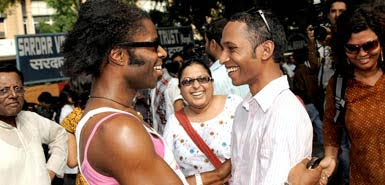
Celebrating India’s decriminalization!
It has always struck me that as queer people of color, we too often must venture outside our ethno-cultural communities to meet gay people. I came out at 16 and by then only knew gays within my age-group. Fortunately, in that era of grand community building, a local charity had organized a gay youth group. There, in addition to comradery, the adult facilitation and guest speakers provided mentorship and what we now understand as inter-generational knowledge. They also alerted me to queer writers: Through Sister Outsider, I’d traveled around the world with Audre Lorde long before I stepped foot outside of north-America. This is a powerful glue that can sustain solidarity within any community.
By attempting to transport certain functions of the gay club scene into the virtual world, we have certainly lost a core opportunity for inter-generational bonding. The ominous gay club also functions as a platform for the exchange of knowledge and experience. This phenomenon is sustained by travel, particularly tourism, migration, immigration. Or, how long did it take for nations to consider asylum for queers fleeing in deadly homophobic regimes? Flawless:
Don’t you know, you’ve got to go to the city
You’ve got to reach the other side of the glass
I think you’ll make it in the city baby
I think you know that you are more than just
Some F-ed up piece of ass
Pride – both metaphorically and literally – has circulated the globe, first and foremost through travel and tourism, then through globalizing the fight against AIDS. By the mid-90’s, the attention of gay rights advocates had widened to confronting homophobia. If health was a human right, then surely freedom from stigma is, too. Mind you, this same argument fueled the successful campaign in India to decriminalize same-sex sex, which was based on colonial legislation. Rights advocates in India had successfully used case law to articulate access to healthcare as a civil right, showing how stigma impeded this for queers.
Sadly, the exact same Victoria-era law has been strengthened and extended in many African nations, legitimizing jungle justice! For many, travel is a lifeline, including asylum. For queers in the African Diaspora, this is yet another form of exile – banishment from the motherland.
Under the bridge downtown…
If there were ever a community consumed with travel, it would be LGBTQ+ folk. Our folk knowledge is transmitted in myth and music, for example, lyrics urging gays to head to the shelter of the city. Whether chants about finding a YMCA, or told to Go West to be “together” in the sanctuary, mythical San Francisco, for gays to achieve self-realization, we needed to ‘know’ urban life to counter traditional values in the homestead. “I think you’ll make it in the city, baby.” There -away- we’re promised a new beginning with freedom. I’m very proud to have seen this through.
Gay civil rights have advanced globally far faster than those of any other recognized minority group, and certainly, one factor is… (drumroll) …we’re everywhere, even where there’s no Pride! Like ether, our pride travels through the stratosphere.
Share this:


#CriminologyBookClub: The Yellow Room

In times of crisis it is beneficial to occupy yourself with things to do. This helps us to cope with boredom, and to distract us from the bleakness of reality. What better way to help with this than to start a book club? That’s right, whilst some of us were sitting at home twiddling our thumbs, @paulaabowles had sent us all a book that we were to read and discuss in virtual book club meetings. Little did we know that this book club was to be our very own ray of sunshine during such an unprecedented time.
Our first book is The Yellow Room by Mary Robert Rinehart (dubbed the American Agatha Christie by the blurb, which is generous). Set in Maine (USA) during WWII, this is a classic whodunit crime novel. With the wealthy Spencer family finding themselves tangled in a web of evidence that instigates their involvement with a dead woman that is found in the closet of their holiday home. The book is filled with intrigue and the plot thickens with each chapter, with more and more clues being thrown into the mix. Until too much is thrown in, and what is left of the book is quite simply… a mess.
The book consists of 30 chapters, and we think the club is in agreeance that the first 20-24 chapters are pretty great. Rinehart throws a number of spanners in the works, with near misses, burning hillsides, death by frights, illegitimate children and secret marriages. We all had our theories, some boarding on plagiarism (they know who they are!). However as it turns out a few of us were half right, and then so were some of the others. We will not give away any spoilers, but the ending, the answer we were all waiting for was disappointing and quite frankly we are still not 100% sure who did it, and what was actually done. The leading lady of the book Carol Spencer, dubbed drippy Carol by the club, because she is, well… DRIPPY, does nothing but smoke and drink coffee, whilst surrounded by crime and uncertainty. But, alas, when all is righted, she finds herself in the arms of an arrogant moody man, all happily engaged! Possibly a romance (although a bad one) or possible a classic whodunit (a half decent one), who can tell?
Overall the book was a success: it inspired intrigue and discussion! The virtual book club even more so! A bunch of misfits, gathered together (20minutes after the allotted time because one member of the group is late- @manosdaskalou), discussing the book, thinking about the social context, the characters, and how it is received today. It is a fantastic virtual club consisting of familiar suspects: the princess, the athlete, the criminal, the brain, the basket case, the parent and the “carol” (representations may not be literal or accurate). What will the misfits think of the next book? Will they all agree? Will one read ahead and sit silently and sheepishly, without the others knowing? Stay tuned…
@jesjames50 and @haleysread – founding members of the #CriminologyBookClub
Share this:


Teaching, Technology, and reality

I’m not a fan of technology used for communication for the most part, I’d rather do things face to face. But, I have to admit that at this time of enforced lockdown technology has been to a large extent our saviour. It is a case of needs must and if we want to engage with students at all, we have to use technology and if we want to communicate with the outside world, well in the main, its technology.
However, this is forced upon us, it is not a choice. Why raise this, well let me tell you about my experiences of using technology and being shut at home! Most, if not all my problems, probably relate to broadband. It keeps dropping out, sometimes I don’t notice, that is until I go to save my work or try to add the final comment to my marking. I know other colleagues have had the same problem. Try marking on Turnitin only to find that nearly all of your feedback has just disappeared in a flash. Try talking to colleagues on Webex and watch some of them disappearing and reappearing. Sometimes you can hear them, sometimes you can’t. And isn’t it funny when there is a time lag, a Two Ronnies moment when the question before the last is answered. ‘You go, no you go’, we say as we all talk over each other because the social cues relied on in face to face meetings just aren’t there. I’ve tried discussion boards with students, it’s not like WhatsApp or Messenger or even text. It is far more staid than that. Some students take part, but most don’t and that in a module where attendance in class before the shutdown was running at over seventy per cent. I’m lucky to get 20% involved in the discussion board. Colleagues using Collaborate tell me a similar tale, a tale of woe where only a few students, if any appear. Six hours of emptiness, thumb twiddling and reading, that’s the lecturer, not the students.
Now I don’t know whether my problems with the internet are resultant of the increased usage across the country, or just in my area. I suspect not because I had problems before the lockdown. I live in a village and whilst my broadband package promises me, and delivers brilliant broadband speed at times, it is inconsistent, frequently inexplicably dropping out for a minute or two. It is frustrating at times, even demoralising. I have a very good laptop (supplied by the university) and it is hardwired in, so not reliant on Wi-Fi, but it makes little difference. I suspect the problems could be anywhere in the broadband ether. It could be at the other end, the university, it could be at Turnitin for instance or maybe its somewhere in a black hole in the middle. Who knows, and I increasingly think, who cares? When my broadband disappeared for a whole day, a colleague suggested that I could tether my phone. A brilliant idea I thought as our discussion became distorted and it sounded like he was talking to me from a goldfish bowl. I guess the satellite overhead moved and my signal gradually disappeared. I can tell you now that my mobile phone operator is the only one that provides decent coverage in my area. Tethered to a goldfish bowl, probably not a solution, but thanks anyway.
If I suffer from IT issues, then what about students? We are assured that those that live on campus have brilliant Wi-Fi but does this represent the majority of our student body? Not usually and certainly not now. Do they all have good laptops; do they all have a decent Wi-Fi package? I hazard a guess, probably not. But even if what they have is on par with what I have available to me could they not also be encumbered with the same problems? We push technology as the way forward in education but don’t bother to ask the end user about their experience in using it. I can tell you from student feedback that many don’t like Collaborate, find the discussion boards difficult to engage with and some are completely demotivated if they cannot attend physical classes. That’s not to say that all students feel this way, some like recorded lectures as it gives them the opportunity to watch it at their leisure, but many don’t take that final step of actually watching it. They intend to, but don’t for whatever reason. Some like the fact that they can get books electronically, but many don’t, preferring to read from a hard copy. Even browsing the shelves in the library has for some, a mystical pleasure.
I’ll go back to the beginning, technology has undoubtedly been our saviour at this time of lockdown, but wouldn’t it be a real opportunity to think about teaching and technology after this enforced lockdown? Instead of assuming all students are technology savvy or indeed, want to engage with technology regardless of what it is, should we not ask them what works for them. Instead of telling staff what they can do with technology, e.g. you can even remotely mark students’ work on a Caribbean island, should we not ask staff what works? Let’s change the negative narrative, “you’re not engaging with technology”, to the positive what works in teaching our students and how might technology help in that. Note I say our students, not other students at other universities or some pseudo student in a theoretical vacuum. We should simply be asking what is best for our students and a starting point might be to ask them and those that actually teach them.
Share this:


Love Film: You Can’t Blame The Youth

On the basis of a reliable academic study, research by The University’s top senior lecturers on Criminology, I am by their words and definition “the Youth of Today.” However, my younger brother (age 12) is The Youth of Tomorrow. In our group chat, this ongoing conversation (now months old) also includes (not Harvard) references to The Youth of Yesterday (age 30+) or Yesteryear (if you’re ancient, ahem). It’s really quite amusing. Am I The Youth of Today? I hadn’t listened to any Stormzy until he did Glastonbury and our conversations around “Vossi Bop” really are worthy of critical acclaim. Is one’s youth status pigeon-holed to their date of birth?
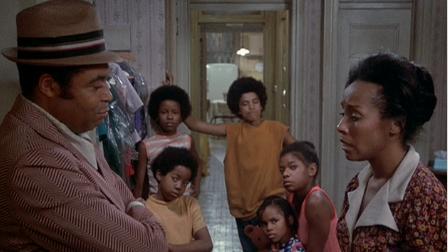
By the time I was 17, I had watched most of Hitchcock’s catalogue and I think Woody Allen is one of the funniest writers alive (despite his controversy). Is this the point in the blog where I need to mention someone other than a White man? Again, another point of discussion in our chats. Diversity. So, true to form, I have seen the entire filmography of Vivien Leigh. I think Diane Keaton is understated in The Godfather films and Claudine with Diahann Carroll is underrated, and should be on seminal film lists when we talk about working-class life in America. It’s a lesson to us now in Britain, haunted by depressions of austerity and universal credit.

Yet, this blog isn’t about group chats, but generalisations. Are today’s youth beyond the grasp of Old Hollywood or even films made before the 2000s that aren’t franchise, or nostalgia pictures like Jumanji? I aim this question at The Youth of Tomorrow too (born post-7/7). Is it true? Maybe, maybe not. The idea remains that many people despite age are still dismissive of Old Hollywood in general, and the classic films made before the 1990s.
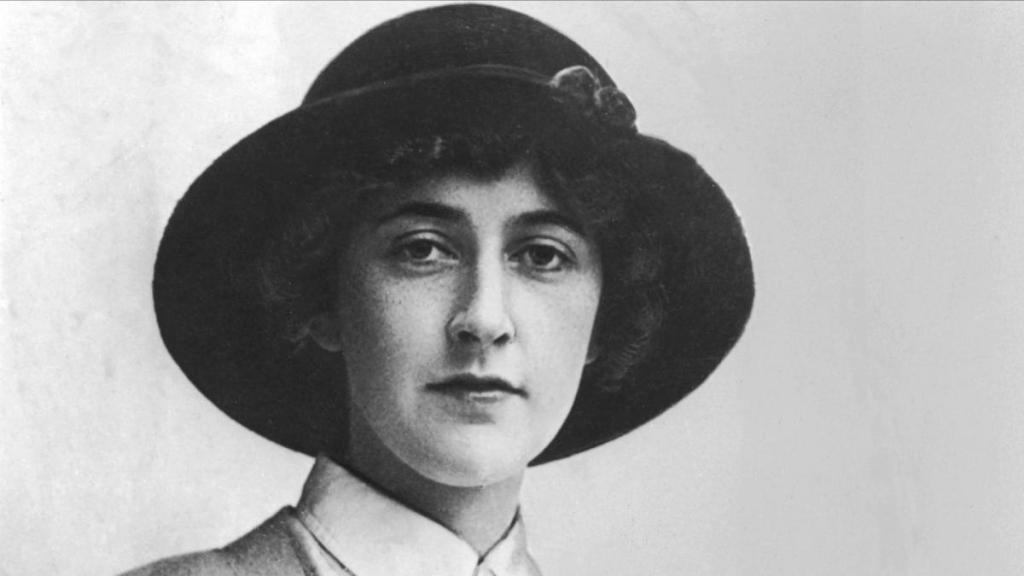
Criminology senior lecturer @paulaabowles has an affinity for Agatha Christie but seldom do I hear young people talk about Agatha when thinking crime stories, be it literature or not. I hear much love for Idris Elba as DI John Luther. Yet, it is arguable to say there would be no modern whodunnit without the massive contributions of crime writer Agatha Christie, who a century ago was defining the things we now we would call clichés. These people are seriously missing out by dismissing “The Old”. All it takes is the right story to alter perceptions, changing minds forever.
I do love to read, but film / the moving-image is more my thing. One of my favourite films is Mr Smith Goes to Washington. I’m of that generation that some of the boomer generation are talking about when they say “kids today” in relation to not enjoying the films that were around in their youth. I watched this film when I was 19 and I still am surprised by how complex yet simple it is. Audiences who have watched things like Veep, Netflix’s House of Cards or Thick of It will get on with James Stewart as Mr Smith.
Its searing portrayal of how systems of power crush good people just wanting to do the right thing can still be seen in society today; from politics to policing, exploring corruption and greed in the deeply flawed human imagination whilst simultaneously acting as a commentary for humanity’s blitz spirit in a film, which I would not be surprised influenced Stan Lee in creating the character of Captain America in 1941. No matter how hard you try, what keeps human beings going is their determination to fight on.
I could be offended at people that say my generation “wouldn’t know a good film if it was staring at them in the face” because “Hollywood only now makes films for sixteen year-olds and China” (both real quotes) but I’m not, because in my experience outside of online film groups on Facebook, and Film Twitter, I have seen this to be true. I will never forget the time when a former-colleague refused to watch Ridley Scott’s Alien because it was old.
When people ask me for recommendations, I need to get a notion of that person’s likes first in case I get a repeat Alien situation (I am still salty about this) Nonetheless, I think everyone should watch classic cinema, including black and white films, as they are some of the best films ever made.
In a time now where sex sells, another in for classic cinema would be to introduce them to Old Hollywood through pictures like Some Like It Hot. Most people have heard of Marilyn Monroe, and the Youth of Today or Yesterday may in fact be seduced by the “crude” title and its star, only then to get mesmerised by a God-ordained masterpiece of American cinema, mixing film noir with banter and action, a film that is certainly not boring.

Though, very much a product of the late 1960s, To Sir with Love hasn’t aged a day. Growing up in a household where education and learning were core values, watching this film at 20 was a homecoming for me. Only to then screen it at the Students’ Union as part of Black History Month 2019. It reminds me of today in how we are in a sector where many students don’t want to learn and many teachers don’t want to teach, before we even get to issues of disparities of outcomes between different student groups.
Mark Thackeray (Sidney Poitier) is the teacher we all wish we had, and certainly an entrance into Old Hollywood for The Youth of Tomorrow, let alone the wonderful song by Lu Lu. To Sir, with Love is optimistic while still commenting on social issues, including race and class. It’s pure of heart in its ideas about British education but also access to education for poor working-class communities in the East End of London. Moreover, how teaching back then was a noble profession and a pillar of the community.
If “kids today” are to have access to these films, it will often be how I had access to them. Through a clunky VHS system at school watching things for English class like Elia Kazan’s A Streetcar Named Desire. I will never forget the time my brother asked me what a VHS was. And I then thought I had failed my duties. Or am I just passed it? Does he think I’m ancient? I think we’re at DVD now, or even BluRay? Who decides what a classic is? That’s another question and that debate will have to wait for another time.
Do kids today know who Steven Spielberg is? He has had a defining film for every decade of his career. Surely, they know who he is? They must have watched Jaws? Sometimes, I want to despair but I was in their position once, possibly when I was in nappies. I think I might have had grey hair then too. As we all sit in lockdown, there is no better time to watch the epics. Whilst many of us will be bingeing the likes of Peter Jackson’s Lord of the Rings, what about the epics of the silver screens of Old Hollywood?
When talking to young people, we do often look at how accessible a film is, and whether it’s in high definition? Those are two selling points. Gone with the Wind, Giant, Lawrence of Arabia, Cleopatra, Doctor Zhivago, Spartacus, Ben-Hur – these are some of my favourite epics. Cleopatra sits at a wholesome 5hrs 20mins. These were event films in the same way we court Lord of the Rings today. We don’t get many event films anymore but you can’t blame the youth for not knowing what they do not know.
And with a massive diversity of content across streaming platforms like Netflix and Amazon Prime as well, do the Youth of Today (and Tomorrow) need older films, or am I locked in the time trap of nostalgia and golden age thinking?
Share this:


“My Favourite Things”: Sallek
My favourite TV show - I am a huge fan of crime fiction series and could commit all my time to re-watch some of the very interesting series. I have enjoyed Criminal Minds, Suits and Nikita, and I really can’t decide on which is more favourite

My favourite place to go - Although I am not a programmer, I am highly tech-savvy and curious about technology. I just love technology and I always fancy those moments when I get lost trying to know and understand recent strides and technological advancement. So, I always long to catch a glimpse or visit places where new advancements and latest technologies are on display or put into practical everyday use. I guess this means I have a lot of travelling or catching up to always do as new technological innovations in various fields are always birthed

My favourite city - I could quickly conclude that Rome is without a doubt my favourite city – it reminds me of my dear country, but even more, the ancient history of the city culminated with the Colosseum - one of the new 7 wonders of the world. However, I have heard so much about Paris and I long to visit the city, but until then, I consider Cape Town as my favourite city. Cape Town is filled with live, blessed with a beautiful landscape, the Table Mountain and the historical Robben Island which beckons on tourists. However, in spite of her glory, the city portrays the injustice of humanity, the reluctance to address the concerns, and the resultant inequality and inequity

My favourite thing to do in my free time - One thing I love doing in my free time is writing songs, especially rap lyrics. I also enjoy reading, running, and engaging in some few indoor sports such as pool and playing Pro Evolution Soccer (PES). The latter helps me get rid of mental stress and anxiety. I remember spending the whole day playing PES before my PhD viva in the evening and it worked the magic of taking my mind off the thought of the ‘defence’

My favourite athlete/sports personality - The GOAT (Greatest Of All Time) of football, Cristiano Ronaldo dos Santos Aveiro – one can always learn a lot about commitment and determination, discipline, passion, work ethic, and hard work from him. After about two decades of cutting off from wrestling, a friend persuaded me to attend a live WWE event, and since then, I added the Big Dog, Roman Reigns (Leati Joseph Anoa’i) to this list

My favourite actor - I am not sure I have a favourite actor, probably because I feel they are all act scripts which favours some and rarely favours others. However, if pushed, I will pick Jackie Chan because he goes the extra to make his stunts

My favourite author - This is tricky - I read by titles and this makes it difficult having any one favourite author

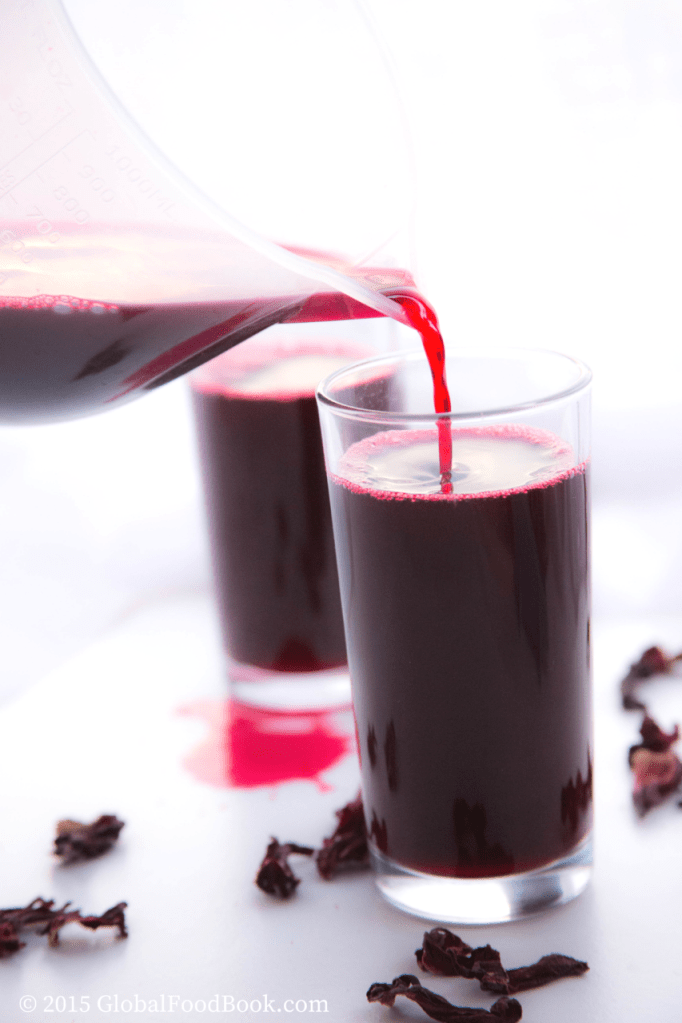
My favourite drink - Zobo, and I know I will have to do some explaining here. Zobo is made from a combination of fruits such as pineapples, watermelon, orange, and cucumber mixed in a boiled dried Roselle as the main ingredient (Roselle is a common specie of Hibiscus in West Africa). A chilLed glass of Zobo tastes far better than any drink

My favourite food - Plantain, pizza, and any tasty and spicy food

My favourite place to eat - None in particular, but if together with one or more persons, I have the best of meals

I like people who - never quit without exhausting all possible options

I don’t like it when people -  quit without a hard fight or fail to give in their best to any task

My favourite book - Chinua Achebe’s A Man of the People to which I add William Shakespeare’s Merchant of Venice and George Orwell’s Animal Farm as the storylines depict some of the political quagmires across many states

My favourite book character - Shylock in William Shakespeare’s Merchant of Venice

My favourite film - The Fast and Furious series

My favourite poem - The Road Not Taken by Robert Frost; it helps keep my sanity in check – no room for regrets

My favourite artist/band -  Extremely difficult to pick one, but left with no option, Fela Anikulapso Kuti and Lucky Dube

My favourite song - Suffering and Smiling by Fela Anikulapo Kuti

My favourite art - unfortunately, I have little appreciation of arts work, but I definitely love the passion depicted in Michelangelo’s Pietà

My favourite person from history - Ken Saro-Wiwa (Kenule Beeson Saro-Wiwa), a Nigerian writer, television producer and environmental activist who was executed by the regime of General Sani Abacha over his non-violent campaign over the degradation of the Niger Delta oil region of Nigeria and the marginalisation of its people
Share this:


“My Favourite Things”: Flower Violet (Stephanie Nixon)

My favourite TV show - Don't really watch much TV, though I do love David Attenborough and his nature documentaries ❤ I also love the South Park series! My favourite place to go - Ulm; Southern Germany. My partner got a job working in Germany, so I visited him in July 2019. Ulm is a very homely, colourful and picturesque place, home to the Ulmer Münster (world's tallest church) and a beautiful Danube!My favourite city - Birmingham! My beautiful, vibrant home city! My favourite thing to do in my free time - I love writing! I'm currently working on my second Everyday Miracles Book, I have a blog and I write in a daily journal, and monthly reflection 🙂 I also love walking, weightlifting and doing charity work and supporting campaigns My favourite athlete/sports personality -Tatsuo Suzuki; an 8th Dan Wado-Ryu martial artist, who helped spread Wado-Ryu throughout Europe and the world My favourite actor – I love Signourney Weaver and Saoirse Ronan My favourite author - Lorna Byrne My favourite drink - Latte - always love a latte ❤ My favourite food - Roast Duck My favourite place to eat - I have 2 favourite places; one is Blue Ocean, which is Singaporean and Malaysian food, and the other is Bombay Brasserie, which does British and Indian food I like people who - are compassionate, caring, open-minded, loving and respectful I don’t like it when people - are rude, disrespectful, arrogant, prejudiced and wilfully ignorant My favourite book - I've read many amazing books… my favorite at this point has to be The Dawkins Delusion by Alister McGrath, and all of the Lorna Byrne books; ❤ My favourite book character - Not too sure… I've read lots of books… My favourite film - I don't really have a favourite film… I do love The Passion of the Christ though. My favourite poem - "First they came for…" by Martin Niemoeller My favourite artist/band - Tangerine Dream!!! My favourite song - Too Hot for My Chinchilla, by Tangerine Dream. This song always makes me so happy My favourite art - Star of Bethlehem by Sir Edward Burne-Jones My favourite person from history - Jesus Christ ❤ Jesus changed the face of the Earth by demonstrating unconditional love to everyone he met. He preached love, challenged religious authorities, performed countless miracles, and changed people's lives for the better ❤ John 15:12 'My Command is this: Love each other, as I have loved you'

Share this:


The day after!
“I know not with what weapons World War III will be fought, but World War IV will be fought with sticks and stones.” This quote allegedly belongs to A. Einstein who imagined a grim day in the aftermath of a world war among nations who carried nuclear arms.
It is part of human curiosity to imagine beyond the current as to let the mind to wonder on the aftermath of this unique international lockdown! Thoughts wonder on some prosaic elements of the lockdown and to wonder the side effects on our psyche. Obviously as I do not have a vast epidemiological knowledge, I can only consider what I know from previous health scares.
The previous large-scale health scare was in the 1980s. I still remember the horrible ad with the carved headstone that read AIDS. One word that scared so many people then. People were told to practice safe sex and to avoid sharing needles. People became worried and at the time an HIV diagnoses was a death sentence. Images of people suffering Kaposi’s sarcoma began to surface in what became more than a global epidemic; it became a test in our compassion. Early on, gay people reported discrimination, victimisation and eventual, vilification. It took some mobilisation from the gay community and the death of some famous people to turn the tide of misconceptions, before we turned the tide of the disease. At this stage, HIV is not a death sentence and people who are in receipt of medical attention can live full and long lives.
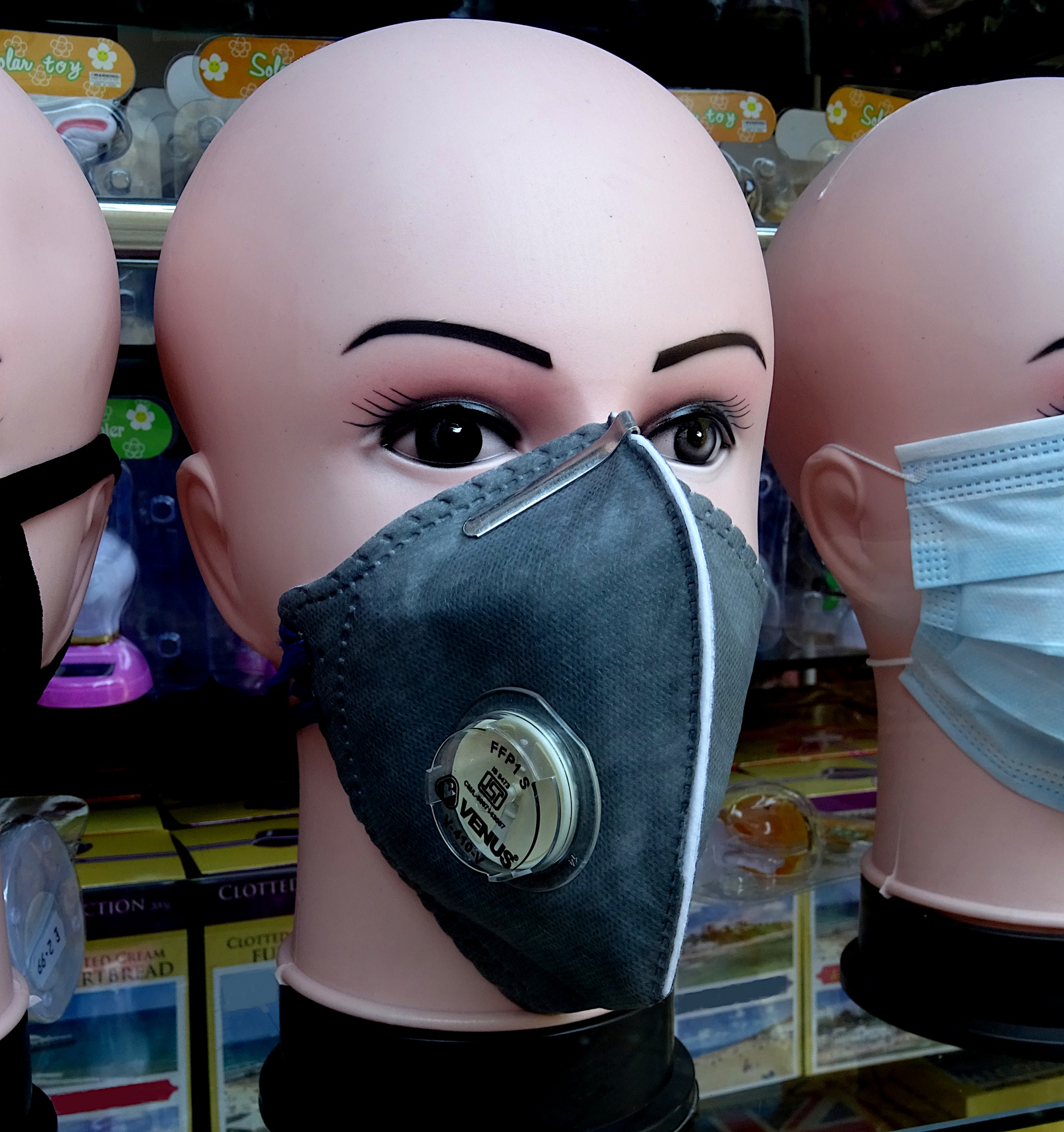
It is interesting to consider how we will react to the easing of the restrictions and the ushering on a new age. In some Asian countries, since SARS in 2003 some people wear face masks and gloves. Will that become part of our attire and will it be part of professional wear beyond the health care professions? If this becomes a condition, how many people will comply, and what will happen to those who will defy them.
We currently talk about resilience and the war spirit (a very British motif) but is this the same for all? This is not a lockdown on equal terms. There are people in isolation in mansions, whilst some others share rooms or even beds with people, they would rather they did not. At the same time, we talk about resilience, all domestic violence charities speak of a surge in calls that have reached crisis levels. “Social distancing” has entered the lexicon of our everyday, but there are people who simply cannot cope. One of the effects the day after, will be several people who will be left quite traumatised. Some may develop an aversion to people and large crowds so it will be interesting to investigate if agoraphobia will surge in years to come.
In one of my exercise walks. I was observing the following scene. Grandparents waving at their children and grandchildren from a distance. The little ones have been told not to approach the others. You could see the uneasiness of contactless interaction. It was like a rehearsal from an Ibsen play; distant and emotionally frigid. If this takes a few more months, will the little ones behave differently when these restrictions are lifted? We forget that we are social animals and although we do not consciously sniff each other like dogs, we find the scent of each other quite affirming for our interactions. Smell is one of the senses that has the longest memory and our proximity to a person is to reinforce that closeness.
People can talk on social media, use webcams and their phones to be together. This is an important lifeline for those fortunate to use technology, but no one can reach the level of intimacy that comes from a hug, the touch on the skin, the warmth of the body that reassures. This was what I missed when my grandparents died, the ability to touch them, even for the last time.
If we are to come out of social distancing, only to go into social isolation, then the disease will have managed something that previous epidemics did not; to alter the way we socialise, the way we express our humanity. If fear of the contagion makes us withdrawn and depressed, then we will suffer a different kind of death; that of what makes us human.
During the early stages of the austerity we saw the recurrence of xenophobia and nationalism across Europe. This was expected and sociologically seemed to move the general discussions about migration in rather negative terms. In the days before the lockdown people from the Asian community already reported instances of abusive behaviour. It will be very interesting to see how people will react to one another once the restrictions are lifted. Will we be prepared to accept or reject people different from ourselves?
In the meantime, whilst doctors will be reassessing the global data the pandemic will leave behind, the rest of us will be left to wonder. Ultimately for every country the strength of healthcare and social systems will inevitably be evaluated. Countries will be judged, and questions will be asked and rightfully so. Once we burry our dead, we must hold people to account. This however should not be driven by finding a scapegoat but so we can make the most of it for the future. Only if we prepare to see the disease globally, we can make good use of knowledge and advance our understanding of the medicine.
So maybe, instead of recriminations, when we come outside from our confinement, we connect with our empathy and address the social inequalities that made so many people around us, vulnerable to this and many other diseases.
Share this:


Things I miss (and things I don’t) – Haley

It’s my first days off after a set of shifts and I’m sitting here thinking that I am quite happy to spend my days off sleeping, spending time indoors and going out to exercise once per day. I am happy to rest on my days off for a few months as work is more tiring than usual.
I am relatively ‘new’ to my team of work colleagues but I still I miss them. I miss working with them rather than working with less people/alone. I miss their support, help and company. I miss dealing with familiar and usual situations at work. But I am not complaining, as the virus has thrown a spanner in the works of many organisations.
After finishing my last night shift I went to the shop to collect some essentials. Then I realised that I missed ‘normality’. Like not having to do strange distanced dances in shops with strangers whenever we find ourselves near to breaching the 2 metres of proximity rule with each other. And being able to cough in a shop without having to see the look of sheer panic plastered on the faces of those near-by.
Going to and from work has been a different experience, as the city centre is very quiet. Part of me likes this- it’s because my pace of everyday life can slow down a bit. There is less traffic, getting onto public transport is no longer an ‘every person for themselves’ situation. I have not had to watch as a train takes off without my said self being able to fit on it. And I don’t have to pretend that I am playing dodgems as I rush through hoards of people every time I reach the city centre.
I am no longer rushing around on my days off, making sure all tasks are completed, all purchases have been purchased, and that I have socialised enough before starting my next set of shifts. My once a day dogs walks are fabulous; the views are great, the flowers are beautiful, the sun is shining, there is no litter on the floors and it is quiet enough to hear the bird singing late into the afternoon.
I do miss seeing people though. I miss going to the pub/food places with friends and meeting up with my family. I miss going to my local park and seeing everyone enjoying themselves in the sun. I miss not doing the things that I had planned to do this spring and summer; like going to festivals, going abroad, and going on days out to the seaside with others.
Whilst technology has helped me to keep in contact with people I care about it just doesn’t feel the same as being in the constant presence of other humans. As it turns out, I cannot live with people, but I cannot live without them either.
Share this:


A song for Terry. #BlackenAsiaWithLove
A song for Terry.
Terry was just six when he died.
Not a long time spent on this Earth,
But enough to make himself known to the universe.
There were many obstacles in life waiting for boys like Terry.
If life is a vast ocean, then he only sailed a meager ferry.
Terry was born in a place, in a time and
In a body that didn’t count much –
A poor, southern Black boy and such.
He was loved, for sure,
I’d see his grandmother kiss him every morning,
As she sent Terry off to school.
Like mine,
Terry’s household didn’t look like those on TV.
None of ours did.
There weren’t any of those Cosby kids.
But Terry was like my brother, my dear friend.
I looked forward to walking to school with Terry each day.
He always had something interesting to say.
Terry and I were in the same class.
He lived across the street,
And our school was just a few blocks away.
There and back,
I wanted to be by his side.
Sometimes I would walk to my grandparents’ after school,
And momma would pick me up after work.
No sooner did we get home and settled did I ask to go outside and play,
With Terry.
Our story was short-lived.
Two kids on the block,
On the poor side of town,
We lived cocooned in a world of luxury:
We were cared for and we were safe.
Everyone on the block looked out for all the kids;
There were no strangers around home base.
But, we also lived
In a time and place of misery,
Where things like poverty,
Would determine your destiny,
And all the dreams we would dream,
Would have to fight the sun to live.
A handsome little brown boy,
And a finely picked mini ‘Fro.
An easy smile,
And an easy-going way about him.
Terry was a nice guy.
And did I mention he was loved?
He was not the most popular kid in class –
Naw, everybody feared that guy!
Terry was the one everyone liked.

For Valentine’s day,
The whole class exchanged heart-shaped candies and notes with one another-
All in pink, my favorite color.
My one time of year to shine!
I was so excited to choose one especially for Terry, my brother:
Will you be my Valentine?
Even the teacher got along with him.
Terry never got in trouble.
He got sad-eyed when any of us got marched off to get paddled.
At lunch, I’d always sit with Terry.
Terry got free lunch, and
Peanut butter and jelly is what I got when momma packed mine!
We’d hurry to the front of the line,
And finish our food quickly,
So we could go to the play area the rest of the time.
I didn’t like milk, but Terry did.
And he didn’t care for apple sauce, but I did.
Sometimes we’d split:
Half a piece of pizza for half my sandwich.
We’d trade.
We didn’t keep score, but
We were always even.
There, right in the middle of the cafeteria,
Smack in the middle of the school,
Was a large, carpeted recreational area.
There, we’d play and everything was cool.
After lunch, but also before and after school,
We could climb and crawl,
Spin and jump,
Run and hide,
Seek and find,
And holler as loud as we’d want.
Teachers would monitor from nearby, but
They left us alone and took their break-time.
Our teachers would even rotate who had this monitoring job to do.
We weren’t a rowdy bunch,
So, there were no fights to break-up.
There were neither hoops nor balls to tussle over.
No nets, no bats –
No competition and all that.
Just a space…
Where us kids could be free.
We were free.
Terry died in the middle of first grade.
We had found out from our teacher that Terry was sick,
We’d all heard of sickle cell, many in our own families, like mine.
But none of us knew what it means.
We knew Terry was not always sturdy.
One time he’d had a bad bout with asthma.
Our teacher helped him take his inhaler,
That she’d showed us where it was kept in her desk drawer.
Now, she was telling us that Terry was just spending a few days in the hospital.
The whole class avidly awaited Terry’s return.
She didn’t know more than that,
I needed to know when Terry’d be back.
I knocked on his door, one day
On the way home from school,
To tell his grandmother I hoped Terry’d be ok.
I knew my grandmother would be heartbroken if anything like that happened to one of us.
Kids that little aren’t supposed to die.
Not here, and not of diseases we can’t even see.
Even at that age, I knew this just shouldn’t be.
And yet turn on the TV,
Every day we see signs and symptoms of little Black boys’ morbidity.
Whether from war or starvation in distant lands, or
Dilapidation and disease on these burning sands.
Just like what was happening to Terry:
A casualty of a neglectful society.
I didn’t get to mourn Terry,
Didn’t have some cathartic corral with our classmates about
The fun times we had or how much we missed him.
There was no school counselor coming to our class –
No one explaining the cycle of life, nor
Asking us about our feelings.
I knew how I felt.
I loved Terry, and knew the way I loved him was seen as peculiar;
I couldn’t let anyone know about this one-sided affair.
I was sad, and all this was unfair.
What would I say?
We were only 6 years old, and
Terry was the first boy I ever loved.
—
 In memory of Muhammed Ali, another Black boy who survived those same streets and corridors.

 Thoughts from the criminology team