
Authors
-
5teveh
-
6bsude
-
abbietoal
-
abigailane30
-
akcharl
-
amycortvriend
-
anfieldbhoy
-
anitawrzesniewska
-
FlowerViolet
-
asteven08
-
aysheaobrien1ca0bcf715
-
bethanyrdavies
-
bonnieleighmiddleton
-
bronaghvh
-
bwilleva
-
charlottejdann
-
cherylgardner2015
-
chris13418861
-
criminologyanon
-
criminologysocietyuon
-
davidjpalmer57
-
Demi King
-
drkukustr8talk
-
ej213
-
finlaywilliams24
-
Francine Bitalo
-
gilliansiddall
-
gregpaillet
-
Gwen
-
haleysread
-
hannahmaysmith
-
hanpearce93
-
helenpoole2
-
helentrinder
-
ifedamilola
-
jackrichmond21
-
jazzie9
-
jesjames50
-
justinkotze
-
kayleighwillis21
-
keziaasante
-
kirstyk196
-
klgrant1
-
liammiles1
-
Lilly Lewis
-
madams1965
-
Maddyk97
-
manosdaskalou
-
marlywindle
-
Maxine
-
meganking046
-
molliekel13
-
Mr_Hari_Parekh
-
nahidatakhtar
-
natalieh2000
-
npetfo
-
Paula Bowles
-
paulsquaredd
-
robynmansfield1
-
saffron_garside
-
Sallek Yaks Musa
-
samc0812
-
samtilley7
-
samuellangley
-
seanrj94
-
shanwareing
-
Shaun Ken-ucheonye
-
sineqd
-
Sophie Rowson
-
spatchett94
-
svr2727
-
tgomesx
-
Tré Ventour-Griffiths
-
tuesdaywoodward23
-
Vaseem Khan
-
wadzanain7
-
zeechee
-
zo3conneely

Stop Protecting the #PervertPrince

In the past six months, I have been reflecting on recent stories that have hit media headlines. Although these topics are extremely important, in my opinion not enough “meaningful” discussion has been had. I’m referring to the sexual exploitation of children – the power imbalance, that powerful men within society have abused and have seeming got away with. I start with Jeffrey Epstein.
Although he was convicted of sexual crimes against children, his conviction is one of deceit. The American justice system let down his victims, disguising the severity of his crimes, allowing him to continue his abuse of power on vulnerable children. He was not charged with paedophilia or rape, the US legal system thought it would be fitting to charge him with solicitation of minors for prostitution.

There are various things that are problematic with this, but one of the biggest problems for me is using minors and prostitution in the same sentence. It annoys me that we tend to view our society as progressive and yet we still label children as prostitutes, forgetting that there is a legal age of consent and no child can be a prostitute as they cannot give consent, as much as the law would suggest. This is reminiscent of the Rotherham sex ring, where police labelled minors as prostitutes, forgetting that they are victims of coercion, exploitation and rape. This ideology quickly moves the emphasis away from the perpetrators of crime while negatively impacting the victim. It is time that we have compassion for the victims of such awful crimes and move away from labelling and blaming.
It makes my blood boil that people have the audacity to argue that the US legal systems failings can be used as an outlet of blame for the relationship that Epstein, Prince Andrew and President Clinton had. Lady Colin Campbell stated that if the US legal system had been more transparent Clinton and the shamed Prince would have made better judgements on their friendship with him. She and others have come to this defence of the ‘upper crust,’ using the American justice system failings as a crutch for their wrongdoings.
Although some may agree with her, I must highlight some glaring points that should be raised, before she states such ludicrous statements – such as: Prince Andrew and Bill Clinton’s advisors would have done thorough background checks on Epstein. This would have identified his crimes and his monstrous ways. They would have disclosed the information that was flagged to them and then warned them against forming relationships with the known predator. If these men had any shred of decency, then they would have kept a distance.
My conclusion as to why they did not, is because they feel they are above the law and do not have to conform to the norms that the rest of society subscribes too. It is all about money and status to them, if you are not one of them, you are not human. This notion was visible when Prince Andrew had his very uncomfortable interview with Emily Maitlis. During the interview he never displayed any kind of remorse for the victims. He didn’t even mention them or their harm. He used phrases like Epstein engaged in activity that is unbecoming rather than condemning his actions and showing any kind of emotion. This reaction, or lack of, has only stretched his credibility. He blazingly lied throughout the interview and his actions have made him look like a bumbling pervert.
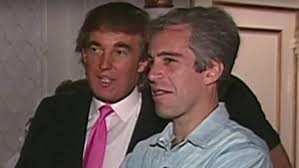
Even though Prince Andrew has demonstrated a lack of morality, the biggest discussion that surrounds this entity is whether he should step down from his royal duties. It seems everyone forgets that he has shown a lack of compassion, he has been pictured with young girls who have accused him and Epstein of violating them. But being a prince trumps all these facts, as he is let off lightly.
He is rich and powerful, and like Epstein, their status has sheltered them from real-world consequences. Epstein is now deceased, but it was all on his terms and once again the victimisation of children has been overshadowed by the circumstances of how he died. The salacious topic of how he managed to commit suicide and whether he was murdered is now big news. As for Prince Andrew, I cannot imagine he will be found guilty and he will not speak publicly about this topic again. Some may demand answers, but he will be protected from any real justice.
It is time that we start opening our eyes and acknowledging the victims of these crime. It is time to make it known that just because you are royalty, a billionaire or a socialite you are not above the law. We need to fight for the voiceless in our society, against the people who abuse their power and stop making excuses for them.
Share this:


Is it a wonderful life?
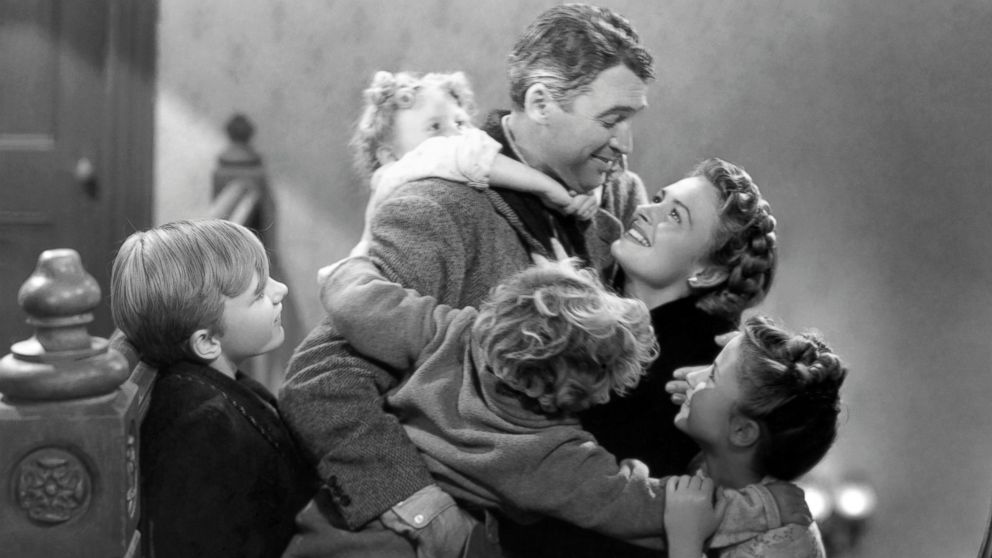
George Bailey (James Stewart) spent his life giving to The People of Bedford Falls. Overwhelmed by his family business, community responsibilities and life expectations, he feels rooted to a company he had no interest in working for, living a life he never wanted to begin with. As George morphs into a middle-aged man, he sees his life passing him by. Told from the perspective of some angels, he’s met by his guardian angel Clarence (Henry Travers), who shows George what Bedford Falls would be like if he had never been born.
Most people I know who watch this film every year love it for its warmth, and Victorian themes, what today we’d now call family values. Something that fits Christmas so well. However, my affinity to it is for it’s social commentary. For a Christmas film, it’s quite depressing – which is a contrary opinion to the many that have it as part of their annual traditions.
Released in 1946, Frank Capra’s Christmas cracker dropped right as America left one of the most difficult fifteen years (and a bit) of its history, from the Great Depression in 1929 up to the end of the Second World War in 1945. George Bailey is part of “The Greatest Generation,” the millions that came of age during the Wall Street Crash which ushered in the Depression of the 1930s. The undertones of this film, to me, are in that ruthless Wall Street capitalism via characters like Mr Potter (Lionel Barrymore).
Yet, the character of Mr Potter is a reminder for many people of what happened in 1929. Between The Crash and the end of The Second World War sat FDR’s New Deal. Within this time, we had The Banking Act of 1933, which is relevant to the characters of Frank Capra’s film, and the bank run. Whilst Capra’s film was released in 1946, Potter is a reminder of how it used to be before Roosevelt and the Democrats ushered through the New Deal.

(It’s a Wonderful Life, RKO Radio Pictures)
Once, communism could have been called anti-greed, anti-corporations, anti-fat-businessmen-with-a-cigar-in-their-mouth-getting-rich off-poor-people-in-slums. It’s a Wonderful Life is a voice for the working classes. It’s the I, Daniel Blake of its time, a stark indictment of a system that eats people below the poverty line for dinner. It comments on class and family values, but also austerity in America. In its time, FBI Director, J. Edgar Hoover donned it, (what was the buzz term of the post-war years), “anti-American.”
Watching this film, it’s hard not to draw comparisons with modern Britain, in its themes of class and austerity that laid the backbone for Jeremy Corbyn’s Labour Manifesto. This is a film that cares about people, the individual working people of America – where the American Dream is just that. A dream. Echoing the thoughts of Arthur Miller’s Death of a Salesman.
Slumlord Potter (Barrymore) describes the poor as “A thrifty working class,” which shows you the measure of the man.
In wake of the recent General Election, I will watch this film once more at Christmas for its straight-at-the-jugular representation of working-class communities. Britain has voted for five more years of austerity (oppression), more likely another decade under the Conservatives. It’s a Wonderful Life shows what happens when the powerful do not care about powerless. But isn’t that how they became powerful in the first place?
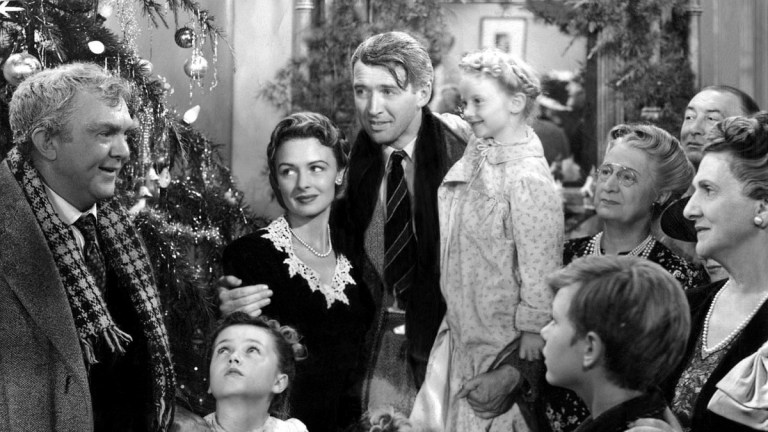
(It’s a Wonderful Life, RKO Radio Pictures)
For families around the world, watching this film is a yearly tradition. But as long as the powerful step on the powerless, this film’s legacy will endure. Institutional violence plods on. Bailey runs a business that helps poor people onto the property ladder. Played to perfection by James Stewart (Mr Smith Goes to Washington), this is a man who cares what happens to those around him. Potter is out for Bailey, wanting the company to close so he can swoop in, and coerce more residents into living in his slum-level housing.
Potter is a metaphor for power, the controlling state that denies people dignity in their own home. Call him Potter, or Boris, or Trump… every era has their tyrants who stop others from thriving, just because they can.
And as long as man is man, history is the last place he will look for his lessons, as history is written by the victors.
Share this:


Ho ho homeless: Boris and reasons to be cheerful.

“Homeless Rough Sleeper” by Deadly Sirius is licensed under CC BY-NC-ND 2.0
A week has passed since the election and our political parties have had time to reflect on their victory or demise. With such a huge majority in parliament, we can be certain, whether we agree with it or not, that Brexit will be done in one form or another. The prime minister at the first meeting of his cabinet, and as if on cue ready for my blog, in front of the cameras repeated the pre-election promise of 40 extra hospitals and 50,000 extra nurses.
Putting aside my cynicism and concern about how we, as a country, are going to grow enough money trees without our foreign agricultural workers after Brexit, I welcome this much needed investment. I should add here that in the true sense of fairness, pre-election, other parties were likewise offering wonderful trips to fairyland, with riches beyond our wildest dreams. Trying to out trump each other, they managed to even out trump Trump in their hyperbole.
However, rather appropriately as it turns out, whilst sitting in the waiting room at a general hospital on election day, I read a couple of disturbing articles in the i newspaper. Pointing to the fact that makeshift shelters are becoming increasingly common in British cities one article quoted statistics from Homeless Link showing that rough sleeping had increased by 165% since 2010 (Spratt, 2019). Alongside, another article stated that A&E admissions of homeless patients had tripled in the last eight years with 36,000 homeless people attending in the last year (Crew 2019). Whilst I am always cautious regarding statistics, the juxtaposition makes for some interesting observations.
The first being that the promised investment in the NHS is simply a sticking plaster that attempts to deal with the symptoms of an increasingly unequal society.
The second being that the investment will never be enough because groups in society are becoming increasingly marginalised and impoverished and will therefore become an increasing burden on the NHS.
Logic, let alone the medical profession and others, leads me to conclude that if a person does not have enough to eat and does not have enough warmth then they are likely to become ill both physically and probably mentally. So, alongside the homeless, we can add a huge swathe of the population that are on the poverty line or below it that need the services of the NHS. Add to this those that do not have job security, zero-hour contracts being just one example, have massive financial burdens, students another example, and it is little wonder that we have an increasing need for mental health services and another drain on NHS resources. And then of course there are the ‘bed blockers’, a horrible term as it suggests that somehow, it’s their fault, these are of course the elderly, in need of care but with nowhere to go because the social care system is in crises (As much of the right-wing pre-Brexit rhetoric has espoused, “It’ll be better when all the foreigners that work in the system leave after Brexit”). It seems to me that if the government are to deal with the crises in the NHS, they would be better to start with investment in tackling the causes, rather than the symptoms*.
Let me turn back to the pre-election promises, the newspaper articles, and another post-election promise by Boris Johnson.
My recollection of the pre-election promises was around Brexit, the NHS, and law and order. We heard one side saying they were for the people no matter who you were and the other promising one nation politics. I don’t recall any of them specifically saying they recognised a crisis in this country that needed dealing with urgently, i.e. the homeless and the causes of homelessness or the demise of the social care system. Some may argue it was implicit in the rhetoric, but I seem to have missed it.
In her article, Spratt (2019:29) quotes a Conservative candidate as saying that ‘nuisance council tenants should be forced to live in tents in a middle of a field’. Boris Johnson’s one nation politics doesn’t sound very promising, with friends like that, who needs enemies?**
* I have even thought of a slogan: “tough on poverty, tough on the causes of poverty”. Or maybe not, because we all know how that worked out under New Labour in respect of crime.
** The cynical side of me thinks this was simply a ploy to reduce the number of eligible voters that wouldn’t be voting Conservative but, I guess that depends on whether they were Brexiteers or not.
Crew, J. (2019) Homeless A&E admissions triple. i Newspaper, 12 Dec 2019, issue 2824, pg. 29.
Spratt, V. (2019) ‘You Just didn’t see tents in London or in urban areas on this scale. It’s shocking’: Makeshift shelters are becoming increasingly common in British cities. i Newspaper, 12 Dec 2019, issue 2824, pg. 29.
Share this:


Mark Thackeray is radical pedagogy in action

Is it wishful thinking to have wanted some ethnic diversity in those that taught me at school? I never had a Black or brown teacher. And the data around diversity in management in primary-secondary ed is damning. Whilst I despise BAME, it’s really a sad indictment on the system that diversity in teaching staff is a massive issue.
At the Students’ Union, almost every Friday during term time, I’ve shown a number of films that push audiences to think, but also sometimes to show role models that students can look up to. One Friday in October, we watched To Sir, with Love starring the great Sidney Poitier, met with a positive reception from staff, students and members of the public, including children. Perhaps in watching that film, these children and university students may think about being teachers. I want to show films with people that look like them, and for a Black man to be in a role like that. Epic.
Mark Thackeray is an anomaly to me. This character’s not something that’s familiar. Sidney Poitier is famous for playing the straight jacket and Mark Thackeray is symbolic of what Black men can represent, something other than what numerous screen representations show us to be. No matter if that’s the funny man, or some drug dealer on the streets of London in Top Boy. Sidney Poitier, the man that was loved by everyone in his day. White people. Black people. Good-looking … well-dressed … and got the best lines.
Whilst the narratives shown in Top Boy, for example, are very real, it’s not anything we haven’t seen before. Those types of stories sell and make headlines. Whether we’re talking about Top Boy or taking a trip back to the 1980s and 1990s with those Hollywood thug films and Blaxploitation – from Boyz n the Hood to Do the Right Thing and Richard Roundtree in Shaft. Or if you want something more in the now, what about Blue Story? We continue to push these kind of stories and these images travel all round the world.
Mark Thackeray teaching poor East London children showed an image of a Black man I’d ever only seen in my own family unit. The self-sacrificing father figure, but more importantly, a highly elevated image of a Black male who did not fit the stereotypes of the British establishment. He showed them, that despite their backgrounds, they could have dignity and values. And what’s more, there is nothing wrong with being working class.
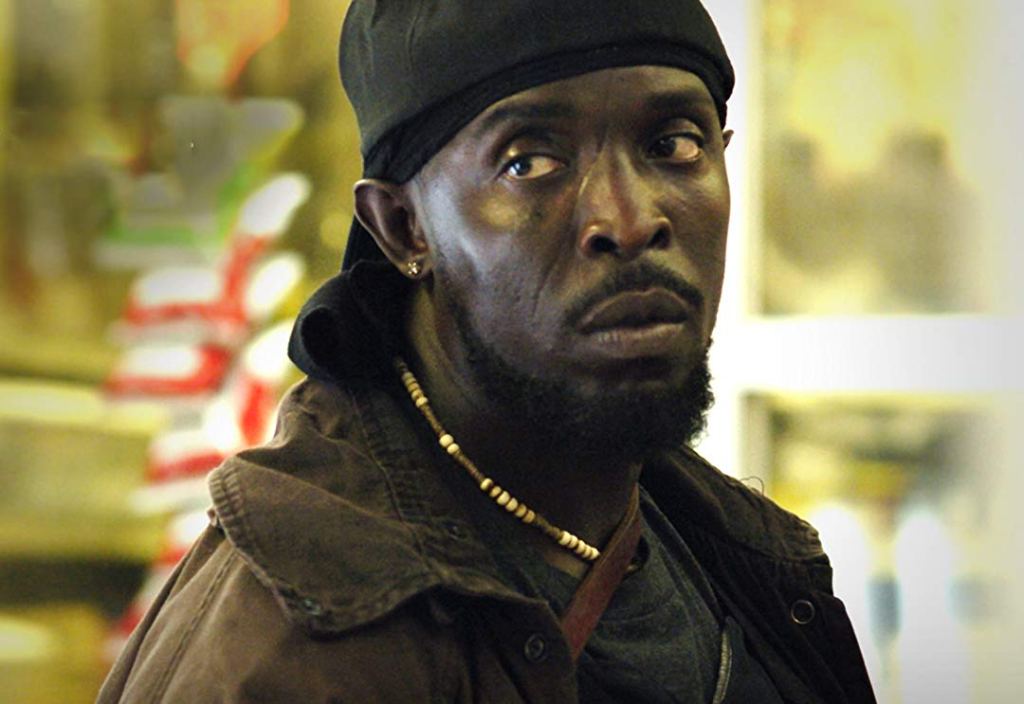
To see someone that looked like me that wasn’t violent, a rapist, or a thief, and so on, brings me joy. Whilst characters in shows like The Wire contradict stereotypes, they still look (stereotypically) like thugs. Growing up, and now today, to tell people I did not grow up by Grenfell Tower or in Handsworth, in socio-economically deprived areas still shocks them.
Diversity in teaching is a must; the closest I’ve had to a Black teacher is @drkukustr8talk. Though, he was a lecturer at the University of Northampton where I studied, he wasn’t my lecturer. Not even the same course. Let alone same faculty. He’s a family friend. Yet, he’s been a mentor to me for many years, and have developed more of a comfort for literature because of him. I didn’t feel like I was scaling the walls into somewhere I didn’t belong. He helped me, to, navigate inside my own head, and decolonise my degree. By mentally dismantling race and class inside the academy, I was then able to confidently push boundaries on my course.
Sidney Poitier is a conduit for millions of little Black boys to more positive images of themselves. A contemporary comparison would be the Hollywood actor David Oyelowo, specifically in Queen of Katwe, where he mentors a number Black children in learning how to play chess and in the process, helps them along into finding their identity, self-worth and pride.
In his last post, Dr. Diepiriye quotes bell hooks: “The classroom remains the most radical space of possibility in the academy” and this is entwined with how Black and brown teachers can aid Black and brown students into finding themselves at school and at universities. When students see themselves in the classroom, that’s an element of safety, the second rung on Maslow’s Hierarchy of Needs in a person’s quest for self-actualisation.
To Sir, with Love is one of the most important films ever made, as it still has relevance today, whilst our education system is still underrepresented, and yet to break the colour bar. What of the emotional labour Black and brown teachers take on within these structures? What about institutional racism in the education sector? What about the schools’ prison pipeline of exclusion that disproportionately impacts children from an ethnic minority background? Exclusion from class only to be excluded from society later on.
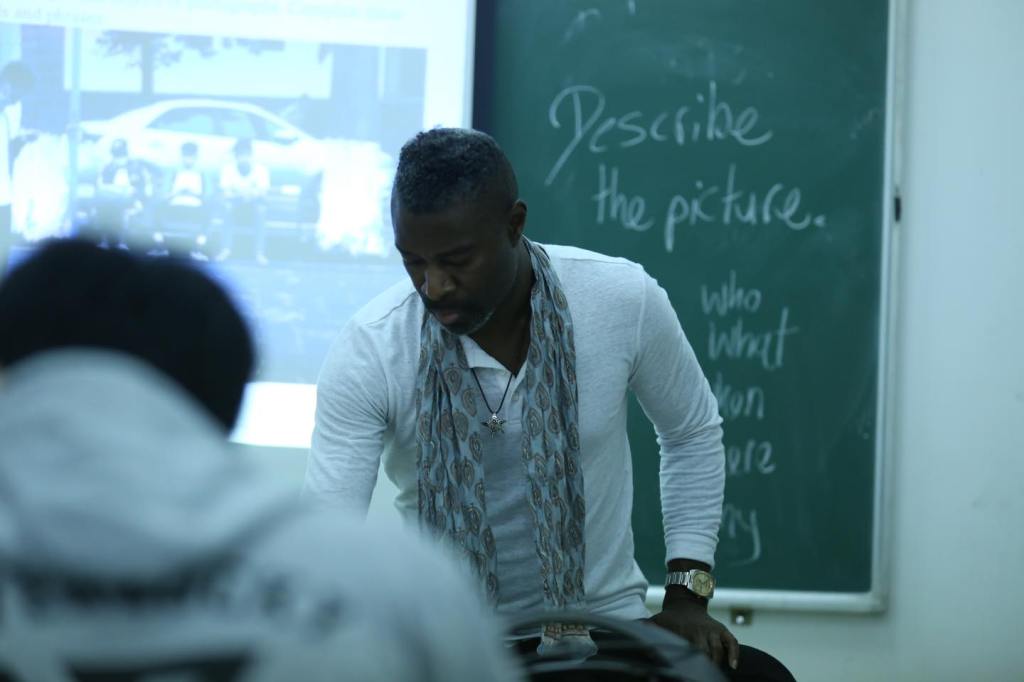
Whilst To Sir, with Love reached its 50th anniversary in 2017, education continues to face cuts, and diversity continues to be a tertiary issue, as universities are run like corporations: ID cards, data crunching, and how much? James Clavell’s classic brings us back to focus on the student. What about the individual needs? What makes each student tick? What’s going on in their lives apart from study? What about community and inclusion?
Race matters, but why do we continue to pigeon-hole Black and brown educators in a system that refuses to change?
Works of Note
Coard, Bernard. How the West Indian Child is Made Educationally Sub-Normal in the British School System. London: Unknown, 1971. Print.
Richardson, Brian. Tell it Like it Is: How Our Schools Fail Black Children. London: Bookmarks, 2005. Print.
Share this:


The Unremembered: Churchill shrugs his shoulders at the 1m African war dead
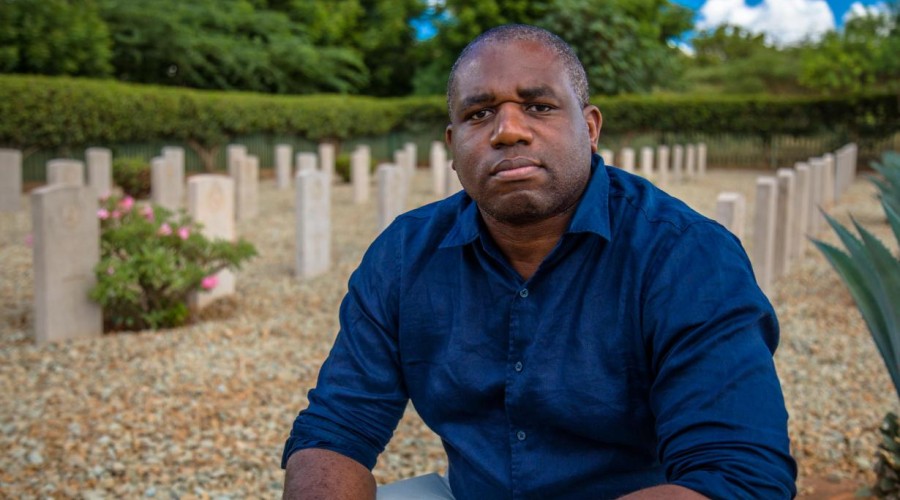
There’s something inspiring about seeing people that look like me speaking on something, in Britain, that’s been portrayed as a vocation for middle class White people (mainly men). Watching candidate for Tottenham David Lammy in the Commonwealth war graveyard in Voi (Kenya) talking about history took me back to when I first saw David Olusoga, a Black historian talking about history in a way that wasn’t detached in hope of being objective. Whilst Olusoga is a historian, Lammy is not. However, seeing Black people on British TV talking about history is not a narrative I’m familiar with.

In The Unremembered: Britain’s Forgotten War Heroes we are pushed to remember the two million Africans from British East Africa (now Kenya) dragged into the First World War, many of whom were press-ganged into service. One million joined the dead. In the Voi cemetery, we are witness to a site fitting for those who gave their lives for king, country and commonwealth. But they were White. Each decorated with a headstone, as written into the equalities policy by the Commonwealth War Grave Commission. However, if you were a Black African, then your service was not seen as equal to that of a White person. You were nothing. Forgotten.
“The erection of memorials to the memory of native troops, carriers etc, depends upon local conditions,” wrote the colonial secretary in 1919. “In ordinary circumstances, the Commission would not erect individual headstones but a central memorial in some suitable locality to be selected by the Government concerned.” That colonial secretary’s name was Winston Churchill, who’d go on to be knighted and elected as Britain’s prime minister. In his view, Black Africans (who were British subjects) did not fit into the Commission’s frame of reference for equality.
“I hate Indians, they are beastly people with a beastly religion.” – Winston Churchill
A century on, this year, is the centenary of the first remembrance service. Is it time we confront this legacy of discrimination and institutional racism? The bodies of Black Africans were not in the Voi cemetery, but beyond a fence under canopies of bushes. Here, we see how much the colonial office cared. David Olusoga wrote “Black soldiers were expendable – then forgettable.” Their corpses were in a wasteland under bushes and litter. Here’s the opening of the documentary, and so the investigation begins.
Whilst it can be interpreted as a harmless doc, it follows in the footsteps of The Unwanted: The Secret Windrush Files, as both show the institutional racism implemented by the British establishment against those of African heritage. Moreover, investigating how the imperial mindset and colonial-era racial thinking has been allowed to fester into modern Britain.
It’s no secret that British history is a study in erasure, and the stories of Black and brown people in our history books struggle to reach print. These stories really are scaling the walls to get noticed and the unmarked burial sites of hundreds of thousands of Black Africans, including women and children, is just one more example of structural racism. And that the only way to get these histories integrated, is to acknowledge that the establishment erased these stories because of its white supremacist thinking, evident in the heads of the gatekeepers, policy and colonial laws.
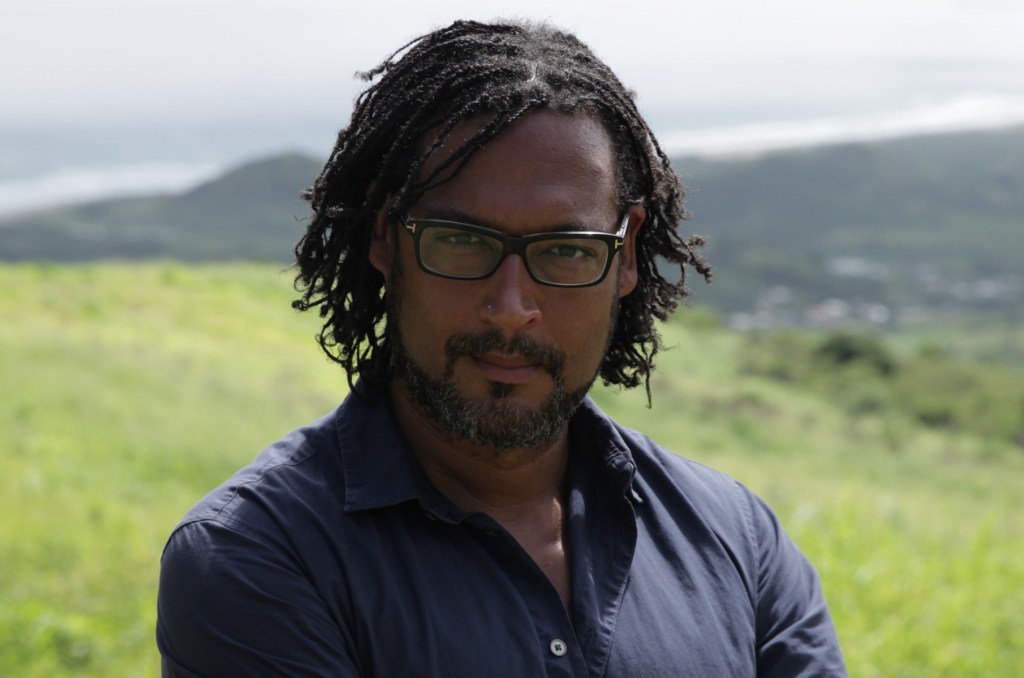
The Macpherson Report was in response to the police investigation into the murder of Stephen Lawrence. Its definition of institutional racism includes neglect and “failure to act.” His definition could as easily be applied to the plight of Black and brown colonial soldiers during the world wars, when they came home, and the Black war dead on the African continent.
“the collective failure of an organisation to provide an appropriate and professional service to people because of their colour, culture or ethnic origin” – Macpherson Report, 1999
Whilst MacPherson’s report is about the police, academic frameworks like Critical Race Theory argues that racism is ingrained in the fabrics of society, linking whiteness to power and blackness / brownness to social subordination, allowing White Privilege to thrive. CRT says it’s not about the individual racist, but the system as a collective. And is the system broken, if it was built “racistly” to benefit the White elite? Knowing this, in the mix of the colonial racial thinking in the system, is it really surprising that Black and brown soldiers were treated abominably, both in life and in death?
Channel 4’s documentary is riddled with devastating moments and really leaves no hope for the viewer. David Lammy meets Mwamkono Mwavaka, a man whose now dead grandfather was one of the Carrier Corps – men, women and children taken on to carry supplies on mules to the front lines. In Dar es Salaam sits a massive war cemetery, where British and Germans are buried side-by-side. Yet, no such love is given to the Native Africans who gave their lives. “Where do I go in my own country?” cries an interviewee.
The final act is a metaphor for talking about race in Britain – hostile and resistant to any critique. Lammy at the HQ of the Commonwealth War Graves Commission in conversation with its director general is uncomfortable viewing. “Do we have the names? I don’t believe we do,” says Victoria Wallace, hostilely. Refusing to talk about race, historically, and how institutions like the CWGC were complicit in systemic racial inequality.
The story ends with no apology, just a few words on some money for a plaque on African soldiers. And yet, no comments on how someone voted the Best Briton by the British public (Churchill) was a racist and complicit in some of the worst crimes in human history – from the Bengal Famine in what was then British India (in 1943) to the Boer War Concentration Camps.
Reparations is faceless: to some its money, but to me it’s historical awareness, which begs the question why there’s so much resistance to teaching colonial history, or is the establishment scared of what it potentially might find?
Share this:


Friday the 13th
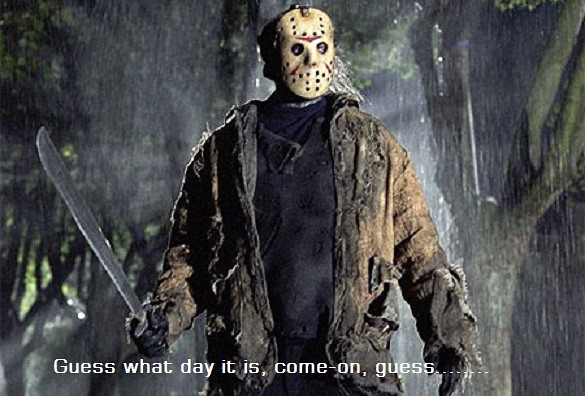
Odd thing superstition, it makes reasonable and seemingly rational people think and behave in the most irrational and inexplicable manner. Always we notice these behaviours and thoughts in other people, but so many of us carry in the back of our minds equally irrational ideas and beliefs. We hear of football club managers who always wear the same clothes at a game, athletes that engage in the same pre-game routine and of course, politicians who act in certain ways during their election campaign. For the rest of us there are ladders in the street, black cats, that we may avoid or there are dates in the calendar that we take notice. Friday the 13th is one of those Anglo-Saxon dates that people take notice of.
I am sure that some of my historian friends will be able to give a good account of the origin of the unfortunate date, but I can only go with the “official tradition” of Jesus, the 13th student, (Judas) and his subsequent arrest on the Friday before the Crucifixion. The day, somehow, became one of those that we notice, even when we are not superstitious. There is even a psychologically recognised fear of the date Triskaidekaphobia; which in Greek means the fear of 13! Of course social fears are blended with wider social anxieties, whether that is the fear of the unknown or the realisation that in life, there are things that we have little control of.
In the days leading up to this Friday the 13th we engaged with political discussions about what direction the country shall take. The health service, the justice system, the state’s responsibility, all the way to welfare and the state of the union, were all eclipsed by one topic that has dominated discourses, that of the execution of leave from the European Union commonly known as Brexit. Ironically the “exit” preface was used before for Greece (Grexit), and Italy (Italexit) but seems that Brexit has won the battle of the modern lexicon. The previous “exits” where used as a cautionary tale for the countries being forced out of the union, whilst Brexit is about leaving the Union.
Having considered all the issues, this one issue became the impetus for people to give politicians a mandate. Complete this issue before and above all the rest. It is an issue likened to a divorce, given a texture, (soft/hard) and has even been seen as the reason for generational conflicts. Therefore the expectation is clear now . Leave the European Union, and then let’s see what we can do next. The message is fairly clear and the expectation is palpable. Beliefs and hopes of the people narrowed down to one political move that shall terminate membership to the European Union. Of course there are subsequent questions and issues that this act of national defiance may come with. As for the state of the Union, that may have to be the next thing we discuss. This follow up conversation may not be as welcome, but it is definitely interesting. If joining the EU back in 1975, warranted a discussion, then the 1536 Act of Union may become the next topic for conversation. As for healthcare, justice, education and welfare, we may have to wait a little bit more longer. Whether this will mark Friday 13th December 2019 as a date of fortune or misfortune, that is yet to be decided, but that is the same for every day of the week.
Just for your records and for the Triskaidekaphobians out there, the next Friday the 13 is in March 2020 followed by the one in November 2020. Just saying…
Share this:


But… but stories are about White people?

As someone who has loved the art of storytelling for all his short twenty-four years, on characters you are often told “it’s not about the colour of a their skin, but the content of their character” that keeps you engaged. Growing up I struggled to find characters like me in the stories I committed to. Malorie Blackman has been fighting the good fight for the best part of twenty years, but in one of my favourite literary genres, YA Fiction (Young Adults) , Black men are not a commonality. And that’s just the first layer. What about characters in coming-of-age stories for little Black girls? What about those children with non-White skin who happened to be dyslexic, dyspraxic, or even on the autistic spectrum? And this was one of the reasons I read Creative Writing. There were no characters like me growing up, so I started to write my own.
But reading young adults fiction, still even today, I see nothing much has changed. I’m still making the same comments I made when I was ten and twelve years old. Are there fewer authors of colour writing young adults fiction? Are there fewer Black and brown filmmakers wanting to make these films? Or is there a culture in the industry that what sells is “stale” and “pale.” And, you know, Wakanda and all that… but a Black Brit from Peckham has carried a trilogy of films in that little franchise called Star Wars. When John Boyega’s big Black face popped up in the first trailer for The Force Awakens, I cried. Diversity sells, but statistics in YA fiction are dire, whether we’re talking about the number of non-White lead characters or the lack of Black or brown authors getting published in this genre.
At its bones, Barry Jenkins’ Moonlight is a young adults drama but it was pushed as art house / drama / LGBT Cinema… to sell tickets. And LGBT Cinema is not a genre. YA comes in many forms. YA is John Hughes’ The Breakfast Club, and George Lucas’ American Graffiti, a film that’s so good that I forgave him for the prequel trilogy. But these films are still very White. Mean Girls, The Perks of Being a Wallflower, Carrie Pilby, The Fault in Our Stars, Call Me By Your Name, The Diary of a Wimpy Kid – the list goes on.
YA is whitewashed. When it comes to LGBT representation, we don’t see the intersectionality. Moonlight has become the go-to film for representation of gay Black men. And even there, “gay Black men” are not the focus. It’s more about class, race, and gender than sexuality. Internalised rage from repressed emotions. Its depictions of masculinity, whilst sexuality is marginalised. And as a straight ally who loves films, I struggle to name (mainstream) films about LGBT identity that include Black / brown people.
Moonlight and Tangerine come to mind but you do end up having to look outside of British film and Hollywood; there’s a plethora in non-English speaking cinema – I think of South Africa’s The Wound and it’s really something special.
Well-meaning White people say “it’s not about the colour of their skin [yap yap yap],” and to say that comes from a vantage point of privilege. Most people look like you, since society was built in your image. When you look at the history of Black actors in Hollywood, at how much they had to fight –from Diahann Carroll (Claudine) to Sidney Poitier (To Sir, with Love), to Denzel Washington (Training Day), Spike Lee (School Daze) and John Singleton (Boyz n the Hood), look how much it took to get Malcolm X made!

All this said, most of my favourite story characters have been White. In Carrie, from Caren Lissner’s Carrie Pilby I saw a version of myself. Hopelessly introverted with a love of literature and a realist approach to life. Blind faith? “Just go with it?” What the eff’s that? In Charlie, from Perks of Being a Wallflower, there were elements of child me. But neither Charlie nor Carrie had to contend with the first time they were called nigger when they were five years old, or being told “they were pretty for a Black girl,” as numerous Black women I know have been told time and time again.
Seeing yourself reflected in your environment is vital, and whilst we endlessly debate why we need to decolonise the curriculum, can we have a look at how media has often depicted African hair? And why we live in a society where texts like Don’t Touch My Hair by Emma Dabiri are necessary into understanding the nuances of race. Or if you want something less academic, there’s My Hair by Hannah Lee. “Unruly” and “like weeds” are only two of the phrases I’ve heard Black people’s hair described as. How do you think these comments and perceptions impact teenagers and children?
These experiences are YA (including children’s literature), as are the ones in Louisa May Alcott’s Little Women, or any John Hughes film or an Enid Blyton novel. Whilst here I am discussing young adult stories, this European-centric hetero-normative culture is rampant in almost every industry. From education to journalism, and especially publishing and arts.
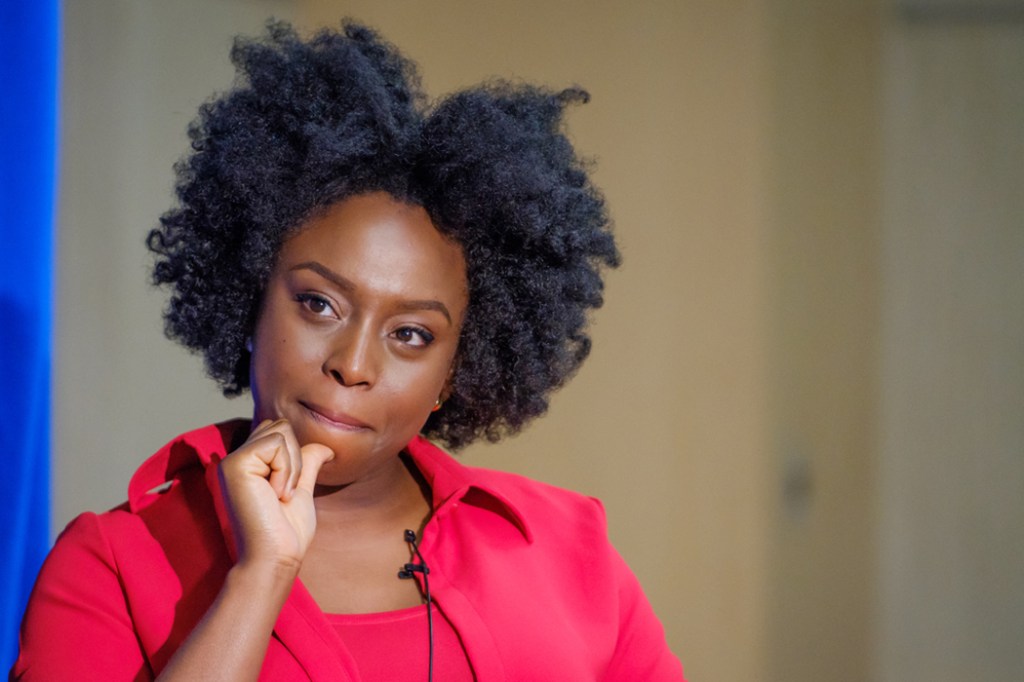
The politics of Black hair is a tale as old of time, but it has come
to redefine beauty standards, a standard that has always been set by The European
Seeing yourself reflected in your environment is necessary. And to White people, it may seem trivial. But really, most people look like you. I never had a teacher that wasn’t White British. The stats in our schools are damning. The closest thing I had to a teacher that looked like me was Diepirye @drkukustr8talk – who’s a family friend. He was a lecturer at the University, just not my lecturer, yet, still gave me a leg-up in my reading, via a number of authors through debate, conversations and critical thought.
When we are small, we often have our imaginations and dreams bludgeoned out of us by teachers who have lost the ability to dream. To draw a picture, to write a story, to act and express yourself, is no match for science, mathematics, history, geography, foreign languages or “proper subjects.” And retconning a nice shiny A into S. T. E. A. M is not a good look.
It’s a big old world; and it’s cruel enough as it is, but if our children and young people can’t find themselves in stories, how will they ever be able to find themselves in society?
Share this:


Ode to ‘radical openness’ at school. #BlackenAsiaWithLove
“The classroom remains the most radical space of possibility in the academy”
bell hooks, Teaching to Transgress: Education as the Practice of Freedom.
Many of my students have never felt safe at school. I know because I ask. Early in my career, this thread of inquiry was prompted by students’ guardedness and/or surprise that I encourage dialogue, including debate and dissent. I insist that we all listen and endeavor to appreciate our distinct voices. I demonstrate that personal experience is as valuable as ‘book knowledge’ when both are subjected to criticality. This is distinct from the conventional objectiveness and alleged neutrality that we now know as universalising whiteness, maleness, bourgeois values (e.g. hooks, 1994: 16). If they hadn’t known, my students quickly learn what it means to bring the whole self into the classroom.
Many fellow educators have never known a classroom where teachers build a community of “mutual engagement,” through what bell hooks calls “radical openness” (1994: 205). I am frustrated that rather than transform, they opt to re-instantiate the dominance/subordination of conventional pedagogy. This dynamic “often creates a context where the student is present in the classroom to serve the will of the professor, meeting his or her needs, whether it be the need for an audience… or the need to assert dominance over subordinated students” (hooks, 2003: 91). This is intellectual sadomasochism (hooks, 2000: 165).
Unsurprisingly, that conventional banking’ model “where students are regarded merely as passive consumers” still receives credence in bureaucratic institutions worldwide (hooks, 1994: 40). Like abused children, many are eager to uphold that status quo due to “their cathected feelings for those adults” who were otherwise meant to care (hooks, 2000: 49).
Safe(r) in school
I have always liked school. From the memories I (now) select to represent the institution to me, it has always been a safe space of ‘radical openness’. The irony, of course, is that to love a place with integrity, one must know its opposite: I have experienced both love and terror within the classroom. I knew both by the time I was 6.
I continue to teach because I earnestly believe the classroom is the most radical space on the planet. It is the one space where there seems universal agreement that humans must grow. There is universal agreement that classrooms SHOULD be safe, though clearly there is no agreement on how that safety should be met. For example, I first realised I was gay inside a classroom, accepted it in another, and understood both its potential destructive and transformative implications in yet others.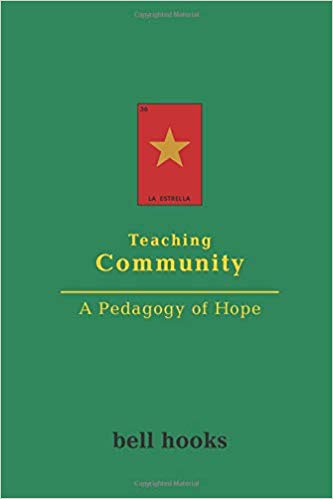
In first grade, I had a crush on a guy named Freddie and a girl named Renée. In retrospect, I realised I wanted Freddie to like me the way that all the boys seemed to like Renée – the lightest-skinned black girl with the longest, bone-straight hair. Gay, right?
In 7th grade, when I was 12, I had two clear epiphanies during two separate chorus classes. First, an older classmate mocked my speech pattern as ‘gay’ to which I retorted: “Just because I talk proper doesn’t mean I’m gay.” He was one of the star basketballers on our school’s team; everyone looked up to him and laughed at his jokes. At that moment, it was hurtful and confusing. Crucially, however, that same classmate seamlessly continued to treat me like a little brother, and we grew even closer over the years. Teasing was his only means of discussing alternate masculinities. Typical jock, right?
Shortly thereafter, when our beloved chorus teacher went on maternity leave, her replacement was an effeminate Black man – what Brits call ‘camp’. Unlike our other teachers, he never said anything about his life outside the classroom – this was the Bible Belt in the 80’s. Yet, there was an immediate cathartic sense of identification that still warms me. I distinctly recall working out in my 12-year-old head that not only my school, but my state’s school system had to have approved of this individual. I was for the first time seeing someone like me ‘in the world’. Years later when I bumped into him at ‘the club’ I thanked him for his service. Representation matters!
That summer I participated in an enrichment program on the university campus where my parents and godparents all met one another. During one class, the guest speaker concluded his motivational talk by mocking an effeminate man who’d come to meet him after another talk. It was unclear why campiness had suddenly become the topic, so I asked a question to quickly change the subject. As the speaker began his response, another student muttered loudly “you’re talking to one right now”. No one came to my defense, including me. I couldn’t believe that a room full of kids and adults had allowed such a hateful slur. I felt terrified, yet held my tears for the bus ride home.
 Such incidents at 12 years old convinced me of two things: 1) The classroom is the safest space for radical openness, and 2) I had to leave Kentucky, as George Michael sang in Flawless: “You know you’re wasted here, wasted here/And there ain’t no miracles happening any time soon.”
I am an exile, yet at home everywhere else in the world where there is a classroom. Students generally appreciate my honesty and willing openness about my life’s journey. As educators, we tend to forget that unless challenged, students somehow believe that we were born like this – as fully formed teachers. Share your journey; it allows them to map their own.
For more inFormation
hooks, bell.
– (1994) Teaching to Transgress: Education as the Practice of Freedom. New York: Routledge.
– (2000) All About Love: New Visions. New York: William Marrow and Co.
– (2003) Teaching Community: A Pedagogy of Hope. New York: Routledge.
Share this:


NN Austere: What the Hell Happened?

Picture Credit: belongs to Action for Children
In its long, eventful history, the town that I grew up in has been home to theatre proprietors like John Franklin. It’s also been home to Thomas Beckett, Charles Bradlaugh, and partook in the Wars of the Roses. What’s now Delapré acted as the stage for the Battle of Northampton in 1475. Northamptonshire housed slaves from the era of Britain’s colonial ambition. It was the muse of Alan Moore’s Jerusalem, and sporting legends, including Mobbs’ Own battalion of rugby players during the First World War, as well as Walter Tull, who went on to be the first Black (mixed-race) officer in the British Army. But now embarking on a general election before entering 2020, we are in a homelessness epidemic, rivalling the plot of Charles Dickens’ Oliver Twist. These are austere times.

Whilst Walter Tull and his siblings feared the workhouse in the epilogue of Victorian Britain, our buzz terms in 2019 are “austerity” and “universal credit,” essentially prisons of the poor. Growing up in the county, with all its beauty and brutality, it’s now a much changed environment. Its landscape has much changed from the one I remember as a youth. It’s not identifiable to my seven-year-old self climbing trees in Abington Park and Salsey Forest, Charlie B standing menacingly in Abington Square, whilst the Doddridge Centre played host to many a community event by Jimmy’s End.
On the brink of one of the most important elections since forever, “He who rules Northampton, rules England,” stated All Saints’ Father Oliver Cross. I look at the town I grew up in and I want to weep. Walking through Town Centre and into the outer rim, you can see how austerity has ravaged communities. How community spirit has rotted from the inside, as apathy and hopelessness can be tasted and sweated, foaming at the mouth – from blood in the River Nene to knife crime, and bus stops stood like cenotaphs.
Walking through London’s southwest last Wednesday to see homelessness brushing shoulders with the Ritz reminded me of the some 14,000 children in poverty in the shoe town. Austerity is a scouring pad to these brittle streets, orchestrated by a system that eats people below the poverty line for breakfast, lunch and dinner. The release of I, Daniel Blake in 2016 and Sorry We Missed You in 2019 are prime examples of how institutional violence has been used to rip gaping holes through working-class Britain.

On exiting MK Central, it’s a sight that leaves a lump in your throat. Milton Keynes has been nicknamed “Tent City” purely for its massive street-sleeping population. And the grass patch near the site of Northampton’s old bus station has been nicknamed “Rat Island.” I think that speaks for itself.
Seeing how the Government has operated these last ten(ish) years, it’s a migraine to the soul, temporarily broken by fireworks at New Year and the gong of church bells at Christmas. But the heart-shattering discordant noise of “spare some change, sir” on Abington Street and The Market is enough to make this Northamptonian cry. From childhood to being a student at the university, the homeless population here and I are acquainted – as I walked to catch my school bus in the morning, as I now walk to Waterside Campus.
Suddenly, Northampton has shrunk to a few miles of boarded up buildings, shivering hands, defaced shoes, and fleeting images of a hollowed-out shell of what used to be a thriving high street. A thriving community. Businesses come and go, and the street-dwellers, students and members of the public alike I’ve seen, to be devoid of all expression. I watch their writhing white eyes, looking into this winter of discontent – as the consumer capitalist culture of Christmas sneaks up on us like a gentle hand out of a grave.
When I see a homeless person, I greet them like I would anyone else. “Good morning, sir (or ma’am).” And I give them some change if I have it. But what else can I say? What else do I do? I walk through the underpass behind Boots. I see wrapped up bodies on the ground. They look dead. Cold corpses, but the system sheds no tears for them. Forgotten in a split second of time. They shiver, freshly alive. And now they are footnotes to history.
Hardworking people going to food banks because their wages do not cover the basics. Working students that have student finance at food banks because it does not cover the basics. Austerity’s mortar fire. Machine gun fire. Austerity grinds on the bones. Austerity chases you down river rapids, collecting fallen objects from your pockets, taking from the mouths of your children. It’s zero-hour contracts and six-days of fourteen hour shifts p/w.
Northampton is a zombie. Sheep Street’s boarded-up buildings and how the Hope Centre which was once a charity for the homeless, is now one that supports austerity-stricken communities and families and people that are deprived and have fallen on hard times too. Hope saves lives. Having spoken to CEO Robin Burgess a number of times, he highlighted to me how a number of the rough sleepers are citizens from mainland Europe. The EU.

Oliver Twist, Les Mis, Poldark – texts on poverty. When we think about poverty, it’s always the third world. In places like India, where I visited in 2016: amputees on the streets and children on the precipice of death. I look into their eyes. I wasn’t the same after that. I think I cried for a fortnight when I returned. Our public services are in a state of disarray – social care, the NHS, the police, education – this is Britain, in 2019, as the idea of Brexit has split families and friends, as it eats away at the national consciousness.
This is a parable of biblical proportions: Northampton won’t survive another decade of this, and we have not even begun to talk about austerity through the lens of minority Britain, where gender, race and sexuality all play roles of bias.
Share this:


OUT NOW: Agatha Christie Goes to War

Exciting news! I’m thrilled to reveal that Agatha Christie Goes to War, a book of essays I
co-edited with Dr Rebecca Mills, has been

published by Routledge. You can get it in hardback or e-book form, for your library or yourself. My author copies arrived last week, and they’re quite a thing to behold.
Agatha Christie has never been substantially considered as a war writer, even though war is a constant presence in her writing. This interdisciplinary collection of essays considers the effects of these conflicts on the social and psychological textures of Christie’s detective fiction and other writings, demonstrating not only Christie’s textual navigation of her contemporary surroundings and politics, but also the value of her voice as a popular fiction writer reflecting popular concerns. Agatha Christie Goes to War introduces the ‘Queen of Crime’ as an essential voice in the discussion of war, warfare, and twentieth century…
View original post 443 more words

 Thoughts from the criminology team