
Authors
-
5teveh
-
6bsude
-
abbietoal
-
abigailane30
-
akcharl
-
amycortvriend
-
anfieldbhoy
-
anitawrzesniewska
-
FlowerViolet
-
asteven08
-
aysheaobrien1ca0bcf715
-
bethanyrdavies
-
bonnieleighmiddleton
-
bronaghvh
-
bwilleva
-
charlottejdann
-
cherylgardner2015
-
chris13418861
-
criminologyanon
-
criminologysocietyuon
-
davidjpalmer57
-
Demi King
-
drkukustr8talk
-
ej213
-
finlaywilliams24
-
Francine Bitalo
-
gilliansiddall
-
gregpaillet
-
Gwen
-
haleysread
-
hannahmaysmith
-
hanpearce93
-
helenpoole2
-
helentrinder
-
ifedamilola
-
jackrichmond21
-
jazzie9
-
jesjames50
-
justinkotze
-
kayleighwillis21
-
keziaasante
-
kirstyk196
-
klgrant1
-
liammiles1
-
Lilly Lewis
-
madams1965
-
Maddyk97
-
manosdaskalou
-
marlywindle
-
Maxine
-
meganking046
-
molliekel13
-
Mr_Hari_Parekh
-
nahidatakhtar
-
natalieh2000
-
npetfo
-
Paula Bowles
-
paulsquaredd
-
robynmansfield1
-
saffron_garside
-
Sallek Yaks Musa
-
samc0812
-
samtilley7
-
samuellangley
-
seanrj94
-
shanwareing
-
Shaun Ken-ucheonye
-
sineqd
-
Sophie Rowson
-
spatchett94
-
svr2727
-
tgomesx
-
Tré Ventour-Griffiths
-
tuesdaywoodward23
-
Vaseem Khan Ltd
-
wadzanain7
-
zeechee
-
zo3conneely

Fifty Shades of Beige: On BAFTA, yes I’m bitter
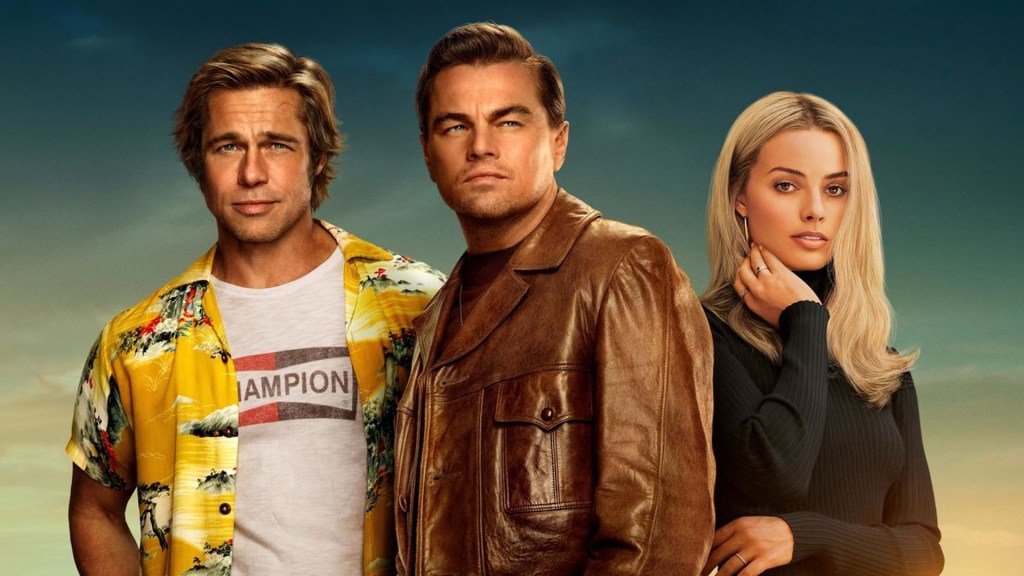
Almost all the Best Picture nominees for BAFTA and the Oscars are about White men, existential angst in toe (à la Joker). The exceptions are Once Upon a Time in Hollywood (on Sharon Tate, played by Margot Robbie) despite the mainly White-male-Cast, and Little Women. Whiteness prevails, irrespective of the gender, and intersectionality continues to be an inconvenient myth. Though, Cynthia Erivo picking up an acting nomination for Harriet has not gone unnoticed. But at this point, throughout the main categories, it just feels like Erivo being nominated is a “you should be grateful” tokenistic handout.” to the Black community “Yes, you can have this one.” One in, one out.
The Oscars did better than BAFTA, but by the skin of their teeth. Whilst BAFTA nominated Parasite for Best Picture, they also nominated Margot Robbie and Scarlett Johansson twice. And like the rest of Britain’s institutions, why shouldn’t BAFTA be bludgeoned with the tag of institutional violence? Why shouldn’t it be whacked with “racist”, “elitist” and “misogynistic?” In a year that gave us Portrait of a Lady on Fire, Atlantic and The Souvenir, there is really no excuse for this level of discrimination.
Racism to British culture is what to America is to apple pie. So, you really don’t have to think very hard why Black British and British Asian talented actors go to Hollywood for better opportunities when their own country treats them abominably. What’s more, Britain is miles behind the States as far as representation is concerned. And in a bold, almost-colonial move of Englishness, BAFTA asked Cynthia Ervio to perform, despite not being nominated for her performance as Harriet Tubman, nor any nominations going to Harriet director Kasi Lemmons (Eve’s Bayou).
Though, not really impressed with Greta Gerwig’s Little Women, and certainly letdown by Joker, I was impressed by The Irishman. Yet, when diversity does not directly impact you, it is possible to have a passive approach to it. i.e White, straight men. When most people in positions of power look like you (and you hire in your own image), it’s not something you notice, nor have to have an interest in. It in fact benefits your sociopolitical power and “whiteness” to not do diversity work.

Britain’s track record of stepping over minority groups is well-documented (i.e Grenfell) and as long BAFTA continues on this path, institutional violence will have a place in British society, no matter if we’re talking about screen media or criminal justice. When whiteness runs fluid, implicit bias cannot be denied and this goes to the very top of all of Britain’s institutions.
This being the seventh year in a row with no women (since Kathryn Bigelow, 2013) confirms that BAFTA is structurally misogynist and racist; and Britain’s national conscience’s denial of its historic and contemporary institutional violence, is just the latest example of why the decolonisation movement is bigger than just the education sector.
Share this:

Gymtastic
Last year when the new year arrived, like lots of people, I joined a gym. I wanted to get fit (as in I can run a marathon, not fit as in good looking) and I wanted to look like some of those Love Island fellows on tv. I had other reasons to join, family were pressurising me to join, it’s what everyone else is doing and the tv and everyone else says you need to be fit and look good to get on in life. I’m not sure I really wanted to join a gym, but I went along with the idea.
There are lots of gyms near where I live, some more expensive than others and I went to lots of ‘see what we can offer meetings’. The most impressive was the gym I’m at now. They have lots of brand new weight stuff, a sauna and steam room as well as a swimming pool and best of all they have a bar where you can get alcoholic, as well as boring drinks, and they do food, pie and chips and all that sort of stuff. They also do lots of quiz evenings and music and stuff and they’ve got Sky Sports so I can get legless on a Saturday afternoon whilst watching the footie.
I was given a personal trainer when I joined, seems alright, but over the time I’ve been there, he keeps trying to get me to do stuff that is hard, I mean really hard. The other day I had to run for five minutes on the treadmill, he said it was more a jog, but I can tell you it was like proper running. And, get this, I have to cut down on my 10 pints of beer a week and cut out the starchy foods. I don’t know what he expects, after that run I needed a pint and something to eat. I did cut down last week because the Guinness was off, I complained about that. Anyway, I am also supposed to try a bit of running in my own time at home, he gave me this schedule and told me to read up on diets and things. I googled quite a lot and got some cool diets and stuff from America. But I’m beginning to think this gym malarkey is boring and not only that, I can tell you now I’m not getting any fitter and my body is more ‘Michelin man’ than ‘Adonis’ (apparently, he’s a really fit person). I don’t think my personal trainer is any good and I’m paying for this ****. To be honest, I haven’t been to the gym the last few weeks, I don’t see the point.
Funnily enough, I was in the pub the other day talking to my mate Billy, he goes to the same gym, and he said my personal trainer was pretty pissed off. It had something to do with the fact that people turn up and then don’t bother trying and anything he asks them to do or think about doing before the session just isn’t being done. But get this, I almost feel sorry for him, laugh, he gets it in the neck from his manager, I mean really in the neck like proper shouting and stuff, when his clients (apparently, we are clients now) don’t reach their fitness goals. He has some sort of review every month and Billy says he might not get paid because they measure how many people are close to or at their goals and how many are failing. Serves him right really, if he can’t get me fit then who is he going to get fit. Billy says the same, he’s going to complain because when he got weighed at the gym last time he had put on weight, not lost it. He says its something to do with the weighing machine or the weight the gym instructor gave him.
Anyway, I’m going to be like Forrest Gump and say, ‘that’s all I’ve got to say about that’.
Disclaimer:
The gym and characters are purely fictional and any resemblance to an institution near you is purely coincidence.
Share this:


Black son of the south (A 2-part short story in prose). #BlackenAsiaWithLove
Pt. 1: Somewhere Over the Rainbow
As the sun rises, and over the horizon, I can see the first capital of the Confederacy, I am forced to remember that this is the south.
There’s country music blasting from the speakers in this restaurant, and the young woman serving me has such a twang, you’d think she’s about to sing…her own rendition of Achy Breaky Heart.
The waitress calls me ‘Sweetie’ though she’s clearly half my age.
I’d much rather be called ‘sweetie’ than sir, not that I’m ashamed of being middle-aged.
I appreciate coming back down south and feeling this cosy feeling from virtually everyone I meet. Plus she’s sincere, too. I can see that the staff here are mixed, and yet I have this burning feeling that there’s more here than meets the eye.
In this part of the country, we pride ourselves on our gentile ways. For years I’ve wondered if this is just how we southerners learned to cope with an excessively violent past.
My grandparents fled from here in the 40’s, just after the war, so terrorized were they of establishing a life of dignity outside the cotton fields they plucked as kids. Now, there is a localised justice initiative to mark the numerous racial hate crimes known as lynching.
The initiative has an eerie collection of jars filled with actual soil from (known) lynching sites. There’s at least one of these large pickle jars full-o-dirt from every county in this state alone. You know it’s Bama, too; there’s so much of that familiar chalky, red clay that’s still all around us. Dirt so red, you now wonder if it’s ferrous or blood!

Notoriously, lynching is NOT a practice of the antebellum south, for black labour was far too valuable to just maim, torture and burn up black bodies like what’s done in these heinous hate crimes then.
I know not every white person down here is a descendant of slave-holders, slave-drivers or slave-catchers. Many may have never owned a single slave, yet…
Yet, any white person down here benefits from white-skin-privilege. Even white immigrants have famously fallen into line, capitalising on the slave economy, commoditizing King Cotton in one way or another. Not only Stevie Wonder, but even Wikipedia can see that.
The Wiki history entry of the in-famous commodities firm Lehman Brothers’ opens dryly like this: “In 1844, 23-year-old Henry Lehman, the son of a Jewish cattle merchant, emigrated to the United States from Rimpar, Bavaria. He settled in Montgomery, Alabama, where he opened a dry-goods store…”
Henry’s brothers came over within a few years – legally, supposedly – and thus began the in-famous firm. The brothers quickly saw that the farmers were rich during harvest and broke when it came time to plant. The dry-goods store quickly began accepting raw cotton as a form of payment. They hoarded cotton when it was plentiful and cheap, selling it when stocks drew low; economics running counter-cyclical to farm life. Did it matter to the brothers that the cotton was produced by slaves?
The brothers opened their first branch in NYC in 1858. That’d be New Yawk ‘fore the Northern War of aggression, y’all. Their firm dug so deep into the commodities trading economy that the youngest Lehman brother’s son, Herbert, was eventually a senator, 4-time governor of New York, and among other accolades is quoted in the current US passports espousing the value of immigrants to the nation’s roots and success. Lehman Brothers’ 2008 bankruptcy has been called “the biggest corporate failure in history!”
Did you know there are entire regions of the United Kingdom that evolved on the back of King Kotton as a commodity? Manchester, “famed as the world’s first industrial city,” was nicknamed Cottonopolis. The Industrial Revolution was fuelled by slavery! Ironically, the liberation of one group of people depended upon the enslavement of another. His-story should tell both sides, else it’s a damn lie. Did you know those cotton mill workers were sent aid by the Union government when the Civil War curtailed these cheap exports?
But anyone down south was in one way or another entangled in the slave economy as much as all of us today can’t have a smartphone free of labour and land exploitation. The fact that I may never see a child mining tin in Indonesia, or set sights on bonded labourers toiling away for cobalt in the Congo, does not admonish me and my gadgetry from any responsibility to do better.
So, the pleasantries that we southerners find necessary are well-crafted ways of disarming one another from a past filled with mass artilleries in everyday life.
I am a Black son of the south.

@ The Equal Justice Initiative
Free from these chains, I hasten to think what life was like for my grandparents. Armed with their southern draws, having actually grown up cultivating the region’s cash crops, what life could they possibly have imagined for themselves as adults there?
What I do know, however, and I’ve heard this from my own elders, is that while they couldn’t imagine a future there for themselves, they did dream of that vision for us.
And so, here I am living my life…somewhere. Over the rainbow.
Share this:


Did Walter McMillian receive a just mercy?
“The degree of civilization in a society can be judged by entering its prisons.” – Dostoevsky
And if you enter our prisons in the United Kingdom, you will see these places weren’t built for rehabilitation, but for degeneration. And American prisons are not any different. These places are designed, purpose-built to break people’s spirits, sapping its inmates of all hope. On entering HMP Onley, there was this almost dystopian tinge, and I was only there for a few hours.
So, when I went to watch Just Mercy on Thursday night, about convicted-then-acquitted murderer Walter McMillian, I went into that screening with a conscious bias of how prisons do not treat inmates like human beings and it was as if the entire Black population was on Death Row.
Moreover, how the US criminal justice system is a tool of institutional violence, if you happen to be Black / poor (State of Tennessee v. Cyntoia Brown), rather than White / rich (The People v. Turner). And this injustice is widespread across America; however, the same structural violence, often racism, is pertinent to the British criminal justice system too (Lammy 2017, Macpherson 1999), as well as institutional use of their privilege to blame The People rather than take responsibility (Grenfell, Hillsborough).
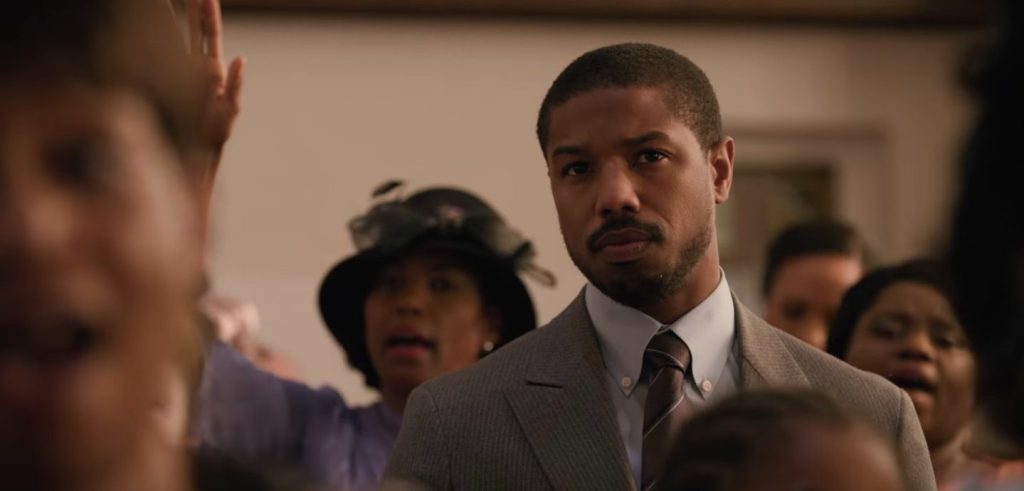
Just Mercy tells a story of Black insurrection against White authority. After graduating Harvard, a young lawyer, Bryan Stevenson (Michael B. Jordan), journeys to Alabama to represent those wrongly convicted or not given proper representation. In the tint of Jim Crow Laws, most of these men are Black, second-class citizens outside and then second-class prisoners inside.
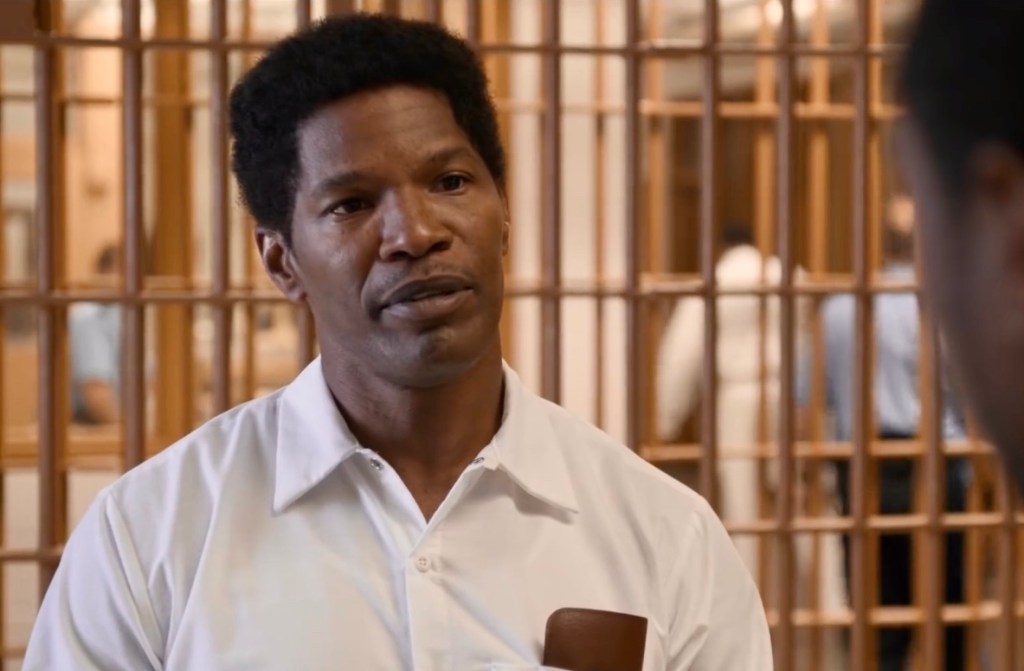
One of his early cases was that of Walter McMillian (Jamie Foxx), who is put on deathrow in 1987 for the murder of an eighteen year-old White girl, regardless of the evidence proving his innocence. Throughout the case, Stevenson battles political and legal maneuverings, as well as overt and institutional racism, all in the name of fighting for his client. A man who happened to be Black in the state of Alabama, easy pickings for a system that eats Black people (especially men), for breakfast, lunch and dinner.
Meeting many people quickly, including Walter’s family, Bryan turns from naive boy out of law school into a man that soon sees the epidemic that’s festered in a post-Jim Crow South, venturing further into the case soon seeing how unwilling the State of Alabama is to release an innocent man.
The State knows he didn’t do it, but they’d rather lock up a Black man then one of their own. The cliché of “savage” Black men killing “fair” White girls and women goes back to slavery, including how D. W. Griffith’s Birth of Nation was responsible for the resurgence of the Klu Klux Klan.
The United States of America is supposed to be the “land of the free” but it is home to 5% of the world’s population and 25% of the world’s inmates (13th). What’s that about?
Just Mercy is a tear-jerker for sure, and begs the question, “Did Walter McMillian receive his just mercy?” This legal drama is an indictment on the racism you can’t see. It’s not about being called “nigger” in the street, but about policymakers who clearly have a conscious bias, who are consciously racist enforcing laws, and create a culture of racism among their colleagues. i.e prisons. A grim indictment on prisons but also the state of the American national memory that has never shaken its slave-trading history, as Stevenson witnesses images of cotton pickers that look exactly like him.
I cannot fault Michael B. Jordan’s stellar lead performance. The fact that this man hasn’t been nominated for an Oscar yet is criminal. First seeing him as Wallace in HBO’s The Wire (unarguably one of the greatest TV series ever made) to Creed, Fruitvale Station and Black Panther, Just Mercy is just his latest excellent performance. As Bryan Stevenson, Michael B. Jordan is a testament to Black men, as Sidney Poitier was in To Sir with Love and David Oyelowo in Queen of Katwe. He’s the do-gooder, activist, straight jacket.
This picture stands with Ava DuVernay’s Selma, When They See Us and 13th, all of which are sobering accounts of racism and bureaucratic White Power, and how it is used to step on poor people and people of colour, as well as the fiction of everyone is equal under the law. Seeing the over-policing of Black people in this film – from the nature of McMillian’s arrest to Stevenson being strip-searched on his way into prison, I couldn’t help getting caught up in its themes of social justice, equality and equity, especially after being stop and searched myself by police at fourteen.
“Children of immigrants are often assured by well-meaning parents that educational access to the middle classes can absolve them from racism. We are told to work hard, go to a good university, and get a good job.”
Reni Eddo-Lodge
Why I’m No Longer Talking to White People About Race
Stevenson may not be a child of immigrants, but there is still this notion that even today being Black and wealthy can absolve you of racism. Stevenson went to Harvard but was still strip searched in a prison before going to meet clients. David Lammy and Diane Abbot, both MPs, face racism daily. As does journalist, former-barrister and Brit(ish) author Afua Hirsch. Meghan Markle married into one of the most elite families in the world, but still faces racism from the right-wing British press and was then forced to leave the UK. Black Britain understands Meghan. Point taken, Reni.
Whilst this film uses many clichés, including the broken prisoner trope, it is so well-acted. And this is not just a film, it’s a truth-to-power comment on laws as tools of institutional violence. Walter got his mercy, but I don’t think it was just. How many Walters are on death row because they’re at the mercy of a system still operating in a white supremacist power structure?
And really, violent crimes (i.e murder) are only given scope when a White person is involved. White empathy to Black insurrection is a tale that goes back to colonial times. The shock of White audiences to films like this is what separates them from us. People of colour expect to be unequal under the law (i.e Central Park 5) because that is our norm. But to White people, it’s in their norm to expect a fair trial because that’s their lived experience.
So, if we take history as a guide, can you really blame Black and brown communities for being critical (almost cynical) of a system that has done nothing but treat us with contempt?
Works Mentioned
13th. (2017). [Online]. Directed by Ava DuVernay. America: Kandoo Films [Viewed January 11, 2020]. Available from Netflix.
Birth of a Nation. (1915). [Online]. Directed by D. W. Griffith. America: David W. Griffith Corp [Viewed January 8, 2020]. Available from YouTube.
Eddo-Lodge, R. (2017). Why I’m No Longer Talking to White People About Race. London: Bloomsbury.
Hirsch, A (2018). Brit(ish). London: Vintage.
Home Office. (1999). The Stephen Lawrence Inquiry. (Chairperson: William Macpherson). London: TSO.
Ministry of Justice (2017). The Lammy Review. (Chairperson: David Lammy MP). London: TSO
Nashville-Davidson County’s Juvenile Court. (2004). The State of Tennessee vs Cyntoia Denise Brown. (Ruling Judge: Betty Adams Green).
Santa Clara County Superior Court (2016). The People of the State of California v. Brock Allen Turner. (Ruling Judge: Aaron Persky).
Selma. (2014). [Online]. Directed by Ava DuVernay. America: Pathé et al [Viewed January 10, 2020]. Available from Netflix.
When They See Us. (2019). Netflix Television, May 2019.
Share this:


Not good but, maybe not that bad…

https://www.smithsonianmag.com/arts-culture/who-really-invented-the-smiley-face-2058483/
Having read a colleague’s reflection on the past year, I started to think about my own experiences of the year and what meaning it had for me.
As a criminologist I am critical of what I read, see and experience, consequently I have a fairly cynical view of the world and I have to say, the world rarely disappoints. But amongst all the chaos, violence and political hubris, there must surely be chinks of light, otherwise what is the point. A challenge then, to find the positive rather than view the negative, as hard as that may seem.
My year was difficult on both a professional and personal front and it tested my resilience and patience to the full. I have suffered poor health resulting in spells in hospital and long periods away from work. Difficult to engineer any positive spin on that but I’m sure I can give it a go.
We all have read about and no doubt many of us have experienced the crippling effect of an often reported, failing National Health Service (NHS). It would be easy to state the problems and apportion blame, but in doing so we miss some nuggets of positivity (is that a real word?). I have nothing but praise for the staff working under extreme pressure within the health system. When I was suddenly taken ill at home the paramedics that attended were brilliant, one a student from our home university. When I arrived at the hospital, despite a manic casualty unit, I was well cared for by another student from the university. I single these students out because there is a sense of pride in knowing that I am part of an institution that helps teach and coach health staff that care so well for others. Of course, it would be remiss of me not to mention that all of the other staff were kind and caring. Later when I was admitted to hospital after a number of visits, I found my care to be exemplary. I know this is not everyone’s experience and when we read the news or watch it on television it is all about failure. My exemplary care and that of many around me isn’t particularly newsworthy. Whilst in hospital I was visited by volunteers who were distributing books, kind people that give up their time to help others. When my wife visited, she came in with a cup of coffee purchased from a café within the hospital run by volunteers. More people giving up their time. I know of and feel privileged to have taught and still teach students that volunteer in all sorts of organisations around the country. The cynical side of me says that we shouldn’t have to have volunteers doing this but that is not really the point is it? The point is that there are kind and caring people around that do it to make life a little easier for others.
A prolonged absence from work caused some chaos in teaching, mitigated by colleagues that stepped in. Busy colleagues, overloaded colleagues, who had additional burdens placed upon them due to my absence. Even now on returning to work colleagues are having to take up the slack to cover for my current inability to work at full capacity. But despite these burdens, I have experienced nothing but support and kindness not just resultant of my illness but throughout what has been a difficult year. Difficult to be cynical except that to say some of the difficulties faced should never have arisen but the point is that there were kind and caring people around to provide much needed help and support.
If I turn my thoughts to wider issues, the dreadful events at Fishmonger’s Hall served to remind us of the violent world we live in but that very event also serves to remind us of the kind, caring and brave nature of many. The victims Jack Merritt and Saskia Jones were both engaged in a project that was aimed at making society a better place. Those that tackled the terrorist showed the sort of selfless bravery that epitomises the essence of human nature.
If we think about it and it probably doesn’t take too much thinking, we can find countless examples of good things being done by kind and caring people. We can be cynical and suggest that the situations should never have arisen in the first place that necessitated that kindness or those actions, but the incidents and situations are there and are played out in society every day, C’est la vie’. Maybe, just occasionally, rather than thinking about doom and gloom, we should celebrate the capacity of people to simply be human.
Share this:


A $40 tip at the all-day-breakfast joint (A Prose about this American moment). #BlackenAsiaWithLove

1st Sunday 2020 Sunrise over Lake Jordan, Alabama
It’s 6:20am.
I’ve stopped by an infamous breakfast food chain and ordered a bottomless coffee, and a breakfast combo that comes with two fried eggs, two different rations of fried pork and bottomless pancakes.
Waiting for my order, I notice that not less than four varieties of syrup rest on the table, accompanied by salt, pepper, and a ceramic cup full of packages of sugar and two varieties of artificial sweeteners.
A whole tub of single-serve full fat creamers comes with my bottomless coffee, which I promptly sent back.
The young lady serving is massively obese, as are most of the other people who both serve and patronize this business.
And this is business as usual throughout the south, and now most of America, particularly at these sorts of times, especially in these sorts of businesses.
The joint had only been open since the top of the hour, and so I could overhear the duty manager dealing out the day’s duty rations.
As two of the team followed her around, I heard her explain that she was reserving the spillover seating section for whoever showed up “super-late.”
Knowing management speak, I heard ‘super-late’ as a shaming label used to monitor and control behavior.
I heard her punctuate these instructions by explaining that someone’s shift had started at 5:30 yet they still hadn’t shown up.
“You ok, sweetie,” the young lady breezes over and asks me casually.
“I’m fine,” I quickly replied, adding: “It’s good, too,” as if she or the cook had actually hand-made any of this meal.
They’ve each opened a prescribed set of processed-food packages, followed heavily prescribed recipes, and followed heavily prescribed orders passed down from management.
And yet I do appreciate their labour.
In my capacity, I get to sit and muse about them, while THIS is their career.
Yesterday, while sitting in another infamously southern* roadside-mass-food-chain, my uncle mentioned that he was pleased to see that young people were working at these types of places again.
“Uh huh,” I hummed agreeingly as I panned the restaurant noting the youthfulness of the staff.
Since the 90’s and certainly since the recession, these jobs had become life-long career moves, where previously these were held down by early-career part-timers.
Whether paying their way through school or training, or beefing their resumes for eventual factory employment, these part-timer jobs weren’t suitable for adults as they come with few, if any, benefits…most notably, healthcare.
This satellite town, for example, sits just outside the seat of Civil Rights and grew during Jim Crow around a large paper mill that one can still smell miles away.
Back in my bottomless breakfast, my server keeps inquiring if I’m ok as she goes about setting up the condiments and flatware for each table.
I’m the only one here, which I remark upon.
This is the south, so that remark garnered a whole commentary on her part.
She detailed when they opened and closed, and that she’d recently shifted from the nightshift to mornings, as “making $10 here and $10 there don’t cut it.”
She then added that she’d served a party of 15 who’d left her a $40 tip.
She further explained that last year she’d served at a 1-year old’s birthday party, “because they didn’t have no cake.”
By now, I’ve gotten a good look at the server and sense that she’s in her mid-twenties.
As I listen, I, of course, contemplate what sort of tip I should leave: Would it be obscene to leave a $10 tip which I could easily afford. Afterall, I had shown up in what must seem like a large, expensive, exotic European vehicle (how could she know it’s my mom’s not mine; how would she know that I’m just passing through town).
This year, she continued, they had her “second birthday party right back there,” pointing to a far corner.
Remember, all I did to kick off this conversation was remark how quiet it was at this time in the morning.
From then on, the server kept offering me little tidbits of info each time she passed by.
I hadn’t lived in the south for many years, but it was still this sort of human interaction that drummed-up home for me.
“I’m gonna go ahead and do my syrups,” she quipped as she passed each table over lightly with a dry cloth.
Then, after passing to reassure me that my next helping of pancakes was on its way, she explained that the location was under new management.
Pointing to the woman I’d overheard earlier dealing out duties and instructions, the server said, “This one’s only been here since Sunday.”
It’s Tuesday morning.
Now, I notice that the server has leaned against a nearby chair, pausing with her other hand on her hip.
It’s as if settling in to tell me a good story. She is now giving me unsolicited insider information.
I start to realize and remember just how such interactions are so disarming. She had something to say each time she was within earshot, as if mindfully managing our shared personal space.
I smile at this realization, recalling the familiarity with which people speak in Vietnam. The distance of more formal ways of being and communicating seem silly here…and there.
I am simultaneously reminded of life in Mali, where people genuinely do greet anyone nearby, referring to those in their personal space with some term of familial familiarity depending on the relationship and perceived ages like auntie/uncle, or else girl/boy-friend (teri- muso/ce), big/little- sister/brother (koro-/dogo- muso/ce).
It’s as if all of these experiences collide into the present moment, and I experience them all at once, like Dr. Manhattan.
The server then explained in detail how the previous manager had fallen ill and could therefore only show up intermittently.
Apparently, the point of all this was that they were hiring a manager, and sought someone outside the current team, because, as my server said, “We all know one another.”
“Don’t that make sense,” she said raising her brow, nodding grinningly.
“So, if you know anybody with management experience,” she said, then tailored off.
I suddenly wonder what Flannery O’Conner must have witnessed in her life and times in the dirty south.
I was on my way to grab a coffee at THAT internationally known coffee house, but passed this all-day-breakfast joint on the way.
I recalled the bottomless offers here and knew I could get more value here than a $5 Latte. Sure, I’ve got country music in the background, but at least it’s not tuned to conservative propaganda Faux News like in most other public spaces here in Alabama.
Indeed, for just a few dollars more, I’ve got access to bottomless filtered coffee and well more than any human should eat in any one sitting.
Besides, no one is in here posing, and, as I said, I got a side of free companionship.
—
*Infamously southern food consists of mostly fried foods negotiated in ingredients and meaning along the color line.
Share this:


Hate crime in The Period Drama fanbase is endemic

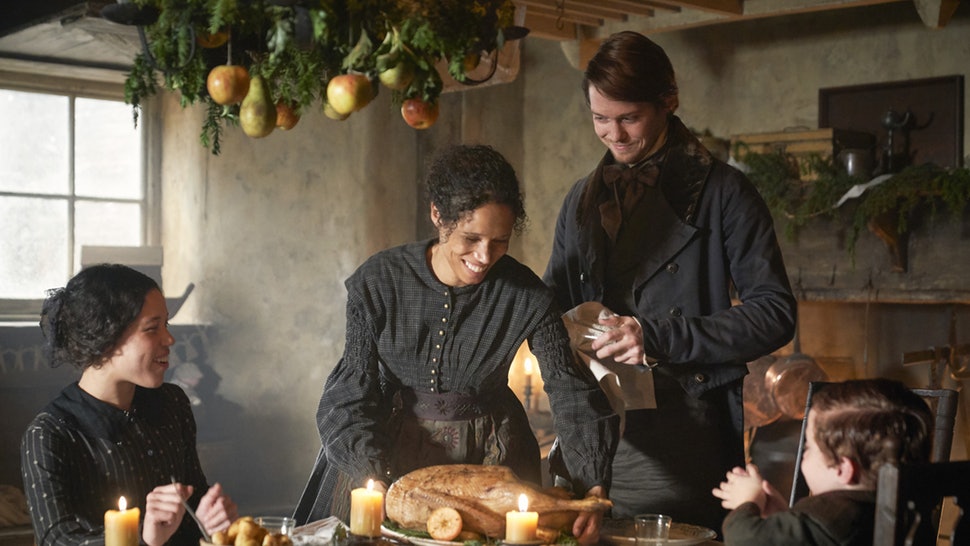
After reading a blog by History’s Drew Grey on ‘Racism, Diversity and Contested Histories: Some Reflection on Christmas Just Past’, I began to think about my favourite television genre (by some distance), the Period Costume Drama. Reading his post took me back to when I saw David Olusoga presenting Black and British for the first time on the BBC, but more specifically his monologues about mixed-race families in Georgian Britain. Whilst Drew’s post boasts diversity in the latest adaptation of A Christmas Carol (based on the Charles Dickens story) by Peaky Blinders‘ Stephen Knight, diversity in the Period Drama fanbase is a contentious discussion.
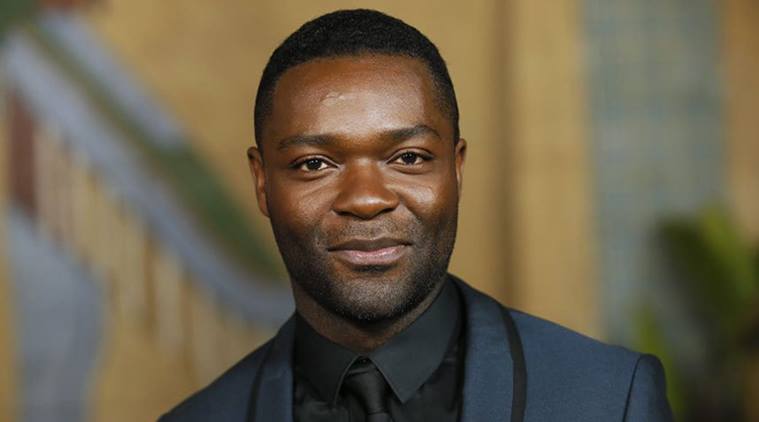
His post reminded me of my dissertation where I was looking at my roots. Finding myself. Lost in my race-identity politics, it feels like a decade ago reading Reni Eddo-Lodge’s Why I’m No Longer Talk to White People About Race for the first time. A text that colleague and blogger @paulaabowles calls “a machine gun,” (with a smirk). It’s simply relentless. However, it was David Oyelowo’s quote in the Radio Times that’s stayed with me ever since.
“We make period dramas [in Britain], but there are almost never any black people in them, even though we’ve been on these shores for hundreds of years. I remember taking a historical drama with a black figure at its centre to a British executive with greenlight power, and what they said was if it’s not Jane Austen or Dickens, the audience do not understand.” – David Oyelowo (in Eddo-Lodge, p55)
Oyelowo goes on to say “I thought – OK – you are stopping people having a context for the country they live in and you are marginalising me.” So, is it any wonder why so many of our Black actors have gone to Hollywood and made it big? Idris Elba made it as Stringer Bell in The Wire before we knew him as DCI John Luther. Oyelowo was Martin Luther King in Selma (as well as his British co-star Carmen Ejogo as Coretta Scott King), and has had roles in The Help, Queen of Katwe and Disney’s Star Wars Rebels. John Boyega was in Star Wars and Daniel Kaluuya slayed as Chris Washington in Get Out.
Whilst many of these works aren’t all costume pieces, the fact that Black actors have to go overseas bothers me. Yet, Black History to British audiences has always been African-American history. To find Black British history, you really have to look for it. So, when we see characters like Kitty Despard (Poldark) or Miss Lambe (Sanditon) or even Dev Patel as David in the upcoming The Personal History of David Copperfield, it’s in opposition to the histories we think we know, the histories we were taught at school.
So, why is there such a backlash to non-White people in this genre? Is it one more example of Black and brown people being where they shouldn’t? You know Black faces in White spaces? From the streets of Georgian London to Walter Tull mobbed by 20,000 Bristol fans in 1909. Or is it a consequence of a population bludgeoned by historical misinformation? After all, isn’t the best way to have complacent people, to cut them off from knowledge? And if you don’t know your own history, do you know who you really are?
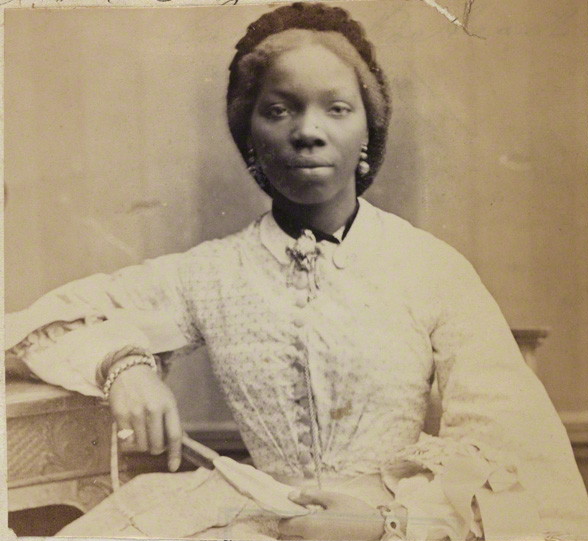
Photo Credit: Camille Silvy (September 1862)
In the same century Charles Dickens was writing about Jacob Marley, Scrooge and Tiny Tim, Queen Victoria’s African goddaughter Sarah Forbes Bonnetta was growing up in England wondering the streets of London, as “part of Britain’s imperial project.” It’s the story of Black Victorians, many of which could “only be told through the words of others” (Olusoga, p331).
Whilst these discussion forums, are majorly female, they are some of the most misogynistic places I’ve seen on the internet. There’s one Facebook group where I have been labelled a “troublemaker” for calling out racism and homophobia, as many members are also American, card-carrying Republicans who voted for Donald Trump. And feminism is only White. They see intersectionality as an inconvenient myth and the stories of non-White women in history an afterthought. That’s how White Privilege works.
This culture of hate against non-normative voices is dominant in the Fandom Menace, as I like to call it. The online forums are infested with racism, misogyny and homophobia: from Gentleman Jack to Beecham House, Drew’s descriptions of the backlash to the mixed-race Cratchit family act as a metaphor for a toxic fanbase, and contesting these histories can often be a homophobic act, a racist act, even if it’s born from ignorance.
There is an endemic problem within society, where we allow older generations, including “sweet old ladies” in The Period Drama fanbase to get away with hate speech because that’s “how they are” and they “don’t really know any different.”
What’s more, and what was great about A Christmas Carol was how unapologetic the makers were about their diversity. This family were Black and they were White. This was mixed-race Britain in the 19th century. Moreover, Mary Cratchit and how Black women take on everyone’s emotional labour. Be it modern times or Victorian times, Black women are in the business of saving grown-ass men from their own emotional work!
Mixed-race inclusion is a testament to our history and a thumb bite to Englishness as a synonym for whiteness, and the colonised imperatives that continue to dominant storytelling, as said (but not so bluntly) by Darren Chetty in ‘You Can’t Say That! Stories Have to be About White People‘. Due to the inherent whiteness of institutions, they recruit in their own image, and history is no different. What’s that saying about apples and trees?
Certain members of the Period Drama community would like to believe Britain was only White before the 1950s. No, it’s simply the establishment has done a grand job of writing us out of British history books, but Black people have been part of every era of British history. I can tell you that.
BBC’s A Christmas Carol shows why representation matters and that history is not only the responsibility of historians. Artists also carry the load of telling these social histories (that’s what Dickens is) accurately and they can do better when it comes to the spectrum of diversity in the Period Drama.
And due to how History has been taught to every generation at all levels of education, is it surprising I encounter “sweet old ladies” using “historical (in)accuracy,” as a conduit to enable their racist, homophobic and misogynistic views?
Works Mentioned
Chetty, D. (2017). You Can’t Say That! Stories Have to Be About White People. In: Shukla, N (ed). The Good Immigrant. London: Unbound Publishing, pp. 96 – 107.
Kwakye, C and Ogunbiyi, O. (2019). Taking Up Space. London: Merky Books.
Lodge-Eddo, R. (2017). Why I’m No Longer Talking to White People About Race. London: Bloomsbury.
Olusoga, D. (2017). Black and British. London: Macmillan.
Share this:


“Back to the future”: 2019 A Year of Violence?

When I was young, 2020 seemed like the stuff of science fiction. Programmes like Tomorrow’s World held the promise of a future full of leisure, with technology taking the strain in all aspects of human life. Now we’re in 2020 it appears we have plenty of technology, but whether it adds or subtracts from the lived human experience, is still very much up for discussion. Certainly, it is increasingly difficult to separate work from leisure with the liquidity technology brings.
As is traditional for this time of year, the mind turns to reflection on the year gone by. This year is no different, after all it, like many others, has been packed with both good and bad experiences. Personally, 2019 was challenging in a number of different arenas, my patience, temerity and resilience have been tested in many novel ways. Events have caused me to reflect upon my own values and philosophies and my moral and ethical compass has been and continues to be tested. I don’t intend to go into lots of detail here, but it feels to me as if violence is increasingly impinging on all aspects of life. The first few days of 2020 suggests this perception is likely to continue with Trump’s decision to assassinate ‘Iran’s top general and second most powerful official, Qassem Suleimani’.
In December, 2019 we saw yet another general election. Whatever your particular persuasion, it is difficult to view British politics as anything other than increasingly personalised and aggressive. Individuals such as David Lammy MP, Diane Abbott MP, Caroline Dinenage MP, as well as campaigners such as Gina Miller and Greta Thunberg are regularly attacked on twitter and through other media. However, it is not all one sided, as Drillminster showed us in 2018 with his artistic triumph Political Drillin. It is clear that these verbal attacks are beginning to become part and parcel of political life. Such behaviour is dangerous, on many levels, political discourse is a necessity in a mature democracy and shutting up discordant voices cannot lead to unity in the UK.
In November, we were shocked and horrified by the terrorist attack at Fishmonger’s Hall. This attack on colleagues involved in prison education, raised questions around individual and collective decisions to engage with criminology with convicted criminals. Nevertheless, despite such horrific violence, the principles and practice of prison higher education remain undaunted and potentially, strengthened.
October, saw the publication of Grenfell Phase 1. This document identifies some of the issues central to the horrific fire at Grenfell Tower in 2017. Whether this and later publications can ever really make sense of such complexity, offer the victims and survivors comfort and go some way to ensuring justice for all those involved, remains to be seen. Those who have studied CRI3003 Violence with me are likely to be cynical but it is early days.
For much of September, the focus was on the prorogation of parliament and the subsequent court case. As with December, there were many complaints about the violence of language used both inside and outside parliament. Particularly, notable was the attack on MP Jess Phillips’ constituency office and arguments around the inflammatory language used by PM Boris Johnson.
In August, the media published video footage of Prince Andrew with his friend, the convicted sex offender Jeffrey Epstein. This story rumbles to the end of the year, with more allegations made toward the prince, culminating in an infamous interview which threatens to continue unabated.
July saw the end of a trial into modern slavery, leading to prison sentences for 8 of those involved. The judge concluded that slavery was still thriving in the UK, often ‘hiding in plain sight’. What support is available to those subjected to this violence, is not clear, but prison sentences are unlikely to make any material benefit to their lives.
In June, shocking footage emerged of MP Mark Field forcibly removing a female protester. Strikingly his colleague, MP Johnny Mercer tweeted ‘if you think this is “serious violence” you may need to recalibrate your sensitivities’. After some years teaching around violence, I have no idea what Mr Mercer feels qualifies as violence, but putting your hands on another’s throat would seem to a reasonable starting point.
May saw attention drawn to the media, with the racism of Danny Baker and inherent cruelty of the Jeremy Kyle Show. Arguments which followed suggest that, for many, neither were seen as problematic and could be dismissed as so-called “entertainment”.
April saw the collapse of the first trial of David Duckenfield, police commander at the 1989 Hillsborough disaster. Although put on trial again, later in the year, he was found not guilty on the 28 November, 2019. The chair of the Hillsborough Family Support Group, Margaret Aspinall perhaps spoke for everyone involved when she asked ‘When 96 people – they say 95, we say 96 – are unlawfully killed and yet not one person is accountable. The question I’d like to ask all of you and people within the system is: who put 96 people in their graves? Who is accountable?’ After 30 years, it seems justice is still a long way away for the victims, survivors and their families.
After years of growth in life expectancy, in March the Institute and Faculty of Actuaries published data suggested that this was no longer the case in the UK. Although they offered no conclusions as to why this was the case, evidence indicating that the ideology of austerity costs lives, cannot be discounted.
In February, the Office for National Statistics announced homicidal knife crime was at the highest level for over 70 years. Despite harsher sentences for those carrying knifes, evidence from the College of Policing indicates that such penalties exacerbate rather than improve the situation.
The new year began with squabbling about Brexit and the expected impact on Northern Ireland. On the 20 January 2019 a bomb detonated in Londonderry, fortunately with no injuries. For those of us old enough to remember “The Troubles”, footage of the incident brings back many horrific memories. Nevertheless, discussions around Northern Ireland and Brexit continue throughout 2019 and into 2020, with little regard for the violence which has ensued in the past.
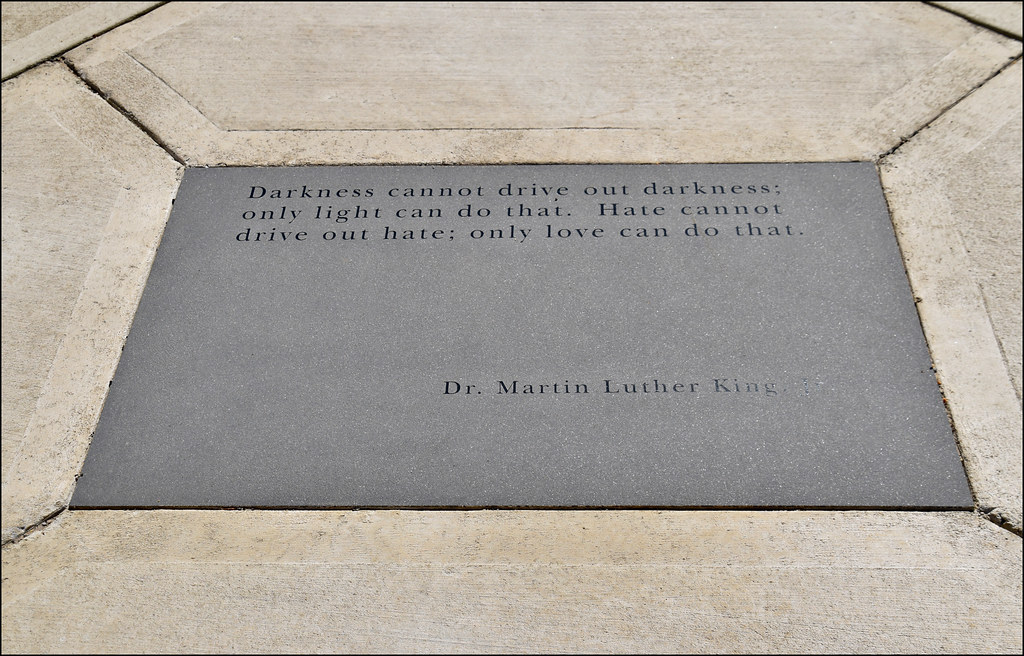
Many events have happened in 2019, as with every other year and what stays in the mind is an individual matter. I feel that my world has become more violent, or maybe I have just become more attuned to the violence around me. I make no apology for my adherence to pacifist ideology, but this perspective has been and no doubt, will continue to be challenged. I must consider whether there comes a time when ideology, values, philosophy, temerity and resilience, are little more than good old-fashioned stubbornness. Until that point of no return comes, I will stand my ground and for every violent action that occurs, I will try my best to work toward a better world, once in which equality, peace and social justice reign supreme.
Share this:


Should we be impressed by those who OBEy?
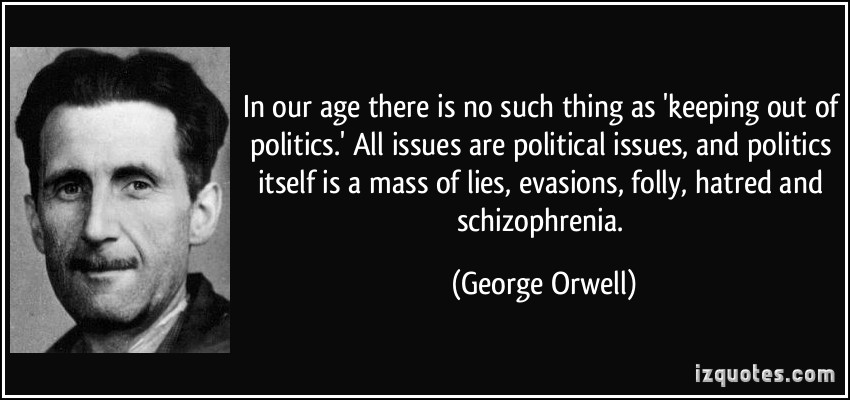
In the aftermath of the General Election, Britain continues to spiral with most of Europe down the hole of despair, into something that George Orwell wrote about in his 20th century novel, Nineteen Eighty-Four. And in this hysteria, imperial thinking is now back on the rise. But that’s not what this post is about. Well, not much.
Every year, the “best of the best” of this country are decorated by the Queen in what’s known as the Honours List. Knighthoods, MBEs, OBEs and CBEs. Nods to the British Empire, racism and colonialism. Watching debates on Sky News’ ‘The Pledge’ has shown me how resistant Britain is to talking about race, but deeper still, its ventures in colonialism overseas.
Amidst the Windrush Scandal and Brexit, that resistance was put onto the world stage. It got me to think about British history but also how specifically working-class people often defend the monarchy and patronage, an institution that despises them. Do people that have been honoured have a feeling of accomplishment by having those three letters after their name? Would their ancestors feel the same way? Or is it a feeling of “I’ve made it,” a ruse of passing from one class into another?
When people are named Member of the British Empire (MBE), it leaves me feeling icky inside. Seeing that after someone’s name, leaves me feeling sick. Order of the British Empire (OBE), Commander of the British Empire (CBE). It’s obsolete, drawing up thoughts of genocide, conquest and stolen land.
When I hear the word “empire,” especially in this country, I think about oppression of minority Britain in the jaws of Little England. It’s reminiscent of how my ancestors were slaves in the Caribbean. It’s Apartheid, the American Revolution, the Suez Crisis, Potato Famine, the Mau Mau, the Amritsar Massacre and so much more. To have that after your name is really to celebrate racism, classism, genocide, stolen land etc etc.
And it’s because of Britain’s nostalgia for this history that I grew up going to school being taught Black history as only slavery. We didn’t even get as far postwar immigration, as that’s the other common denominator of the Black British narrative. It’s because of that, why I don’t know my name.
Not Ventour, that’s a slave name. I don’t know the name my ancestors had before Ventour was forced upon them under the lynch and the lash of Caribbean plantation slavery.
My crisis of identity is not due to history, it’s more so due to the present day climate where British people of colour are routinely having their Britishness contested. I’m staunchly anti-monarchy and anti-empire. And there’s something weird about debating the concept of the Queen’s Honours with people who are either ambivalent to it or are so pro-monarchy that they can’t possibly acknowledge that there’s negative connotations with the Royal institution. I’ve been in quite a few discussions with people about the monarchy. Thankfully, none have gotten ugly and we’re still friends today.

These Honours awards are to people that have made significant contributions to society through their professions — from arts, including: theatre, literature and film — to everyday people doing great work in the community, to journalists. That last one, I don’t like. Should journalists really be accepting awards from people they’ve critiqued, or even vilified?
The Honours awards are a slap in the face of multiracial / working-class Britain. When it comes to the British Empire, many have asked “Does the end justify the means?” And my reply to that is, no. How much is life worth to you? You cannot justify torture and genocide. Life isn’t flesh for cash. It’s not a business. And those colonial statues littered throughout Britain, including London, Bristol and Glasgow; all those British streets named for slave traders; all those White imperialistic university module choices.
The concept of “Honours” feels like Britain clinging on to a past bygone. Given the chance, would Britain enslave its Black British population? Would it let three million Indians die in the Bengal Famine if the circumstances were to present themselves again? Would it commit to a Scramble for Africa and a starving Ireland? If these circumstances were to happen again?
Institutionally, The Monarchy sanctioned slavery, and yet, millions still defend it. Truth is, I don’t understand how anyone, regardless of their background can accept awards with attachments as deeply horrific as these ones.
They came out of a system that oppressed people of colour, women and the LGBTQ+ community. There are many Black and brown people that love those awards. It makes them feel accomplished, whilst simultaneously speaking out against racism. Whilst being part of the system they speak out against, they’re some of its proudest members. They are activists against the ruling class but then accept invitations to Buckingham Palace. In breaking their backs for babylon, are they willing to accept chains on their ankles?
These awards go to Joe and Jane Bloggs. They go to musicians, authors, poets, businesspeople, celebrities and more. These awards are given to people, irrespective of class or colour. Seeing those three letters after their name feels like betrayal. Should I bow to them? Do I have to act impressed?
I’m a poet before anything else and have recited my own work, unpicking British history, including empire and conquest, and how those things impact the present day.
I’ve been called racist and anti-White (I’m anti-White Supremacy). But really, I want to reach an audience of people that are willing to listen. That the history we’re taught at school is what my mother would call “chang-chang” — in bits and pieces. Did Christopher Columbus discover America or was he only the first White man to get there? Could the same be said for Captain Cook with Australia? Is explorer a synonym for coloniser?
I’m a storyteller. What in the old days people would call a bard. What the Celts called the Awen. I probably will never be offered one of those awards. And if I was — to accept one would be to lose my dignity. I wouldn’t be able to look my younger brother in the eye. I would lose all pride and respect for myself. Which is why I have so much respect for people that decline them and live their best life, doing what they do best, living livelihoods without want of incentive, be it an OBE or being named Poet Laureate.
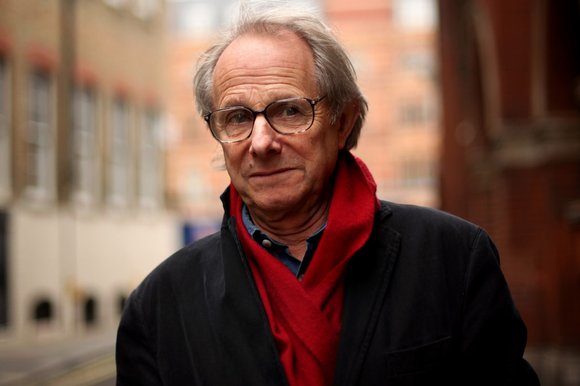
Your Benjamin Zephaniahs and Ken Loaches. Who both showed me that art is more than the Tate, The National Gallery or arthouse cinema.That poetry is more than Tennyson, Blake and Wordsworth, that history is written in black and white. It’s poor people, LGBTQ+ and women and…
“Look around, look around, at how lucky we are to be alive right now” — The Schuyler Sisters (Hamilton)
And anyone close to me will know why I despise January 1 and The Queen’s Birthday, since it’s the date the the Honours Lists are released. A better honour would be if the British Museum gave those stolen pieces back to places like Ghana and Greece. OBEs, CBEs, MBEs , knighthoods — genocide, slavery, torture, class oppression, massacres and more massacres, war and violence — and it’s 2020. When will the British Empire shut its mouth?
Let history be history. The British Empire is not cause for celebration. For every colonial statue in this land there should be a slave child next to it, or a starving woman, a symbol showing how the end doesn’t justify the means.
Let’s call the British Empire what it was: a business venture that consumed the lives of millions, not something to be worn like a badge of honour, because it is honourless.
Share this:


On finding out I was Black: I was five years old

In a society that defines you by race (through othering of non-whiteness), it wasn’t until I was five I realised I was Black. This was the first time I was called nigger. It was in the school playground and I was a little youth. You will notice that I call it by its name, and not “The N-Word.” And to call it by its name, I believe, strips it of the fear attached to it. Though, made popular by mainstream rap music, including artists I appreciate like N. W. A and Public Enemy, when I think of the word, I envisage scenes of burning crosses, the KKK, and chattel slavery.
Growing up, I saw Black people hating themselves. That level of self-loathing is something I’ve seen in different characters throughout my life. Women that grew being told their hair was “wild” and “unruly.” Questions like “how can you tame such a wild thing?” bring me back to slave markets – the prodding and poking of the Black torso. Descriptions of the Black body, including “savage” and “animalistic,” and that includes hair, and those are connotations of The Word rappers love to use in lyrics. And how do Black rappers use the word, despite the rise of White nationalism worldwide?
I have seen men like Chiron and Kevin from Barry Jenkins’ Moonlight thinking they have to assert themselves because that’s what the environment demands. I see it on campus, Black students from London. But you don’t have to do that in Northampton. And these people all have stories of racism. Racism is trauma and I can bet you any money that most of our Black population (including mixed-race) have stories about the first time they were called nigger, be it from strangers or their family members.

Finding out you’re Black is not always something so hard-hitting as being called “nigger” in the street. Sometimes, it’s being the go-to in conversations about race. When and if you learn about slavery at school or university, it’s everyone staring at you when the discussions occur. It’s being told in not so many words by White people to “know your place” and “be grateful.”
However, hate crime has seen a spike under Brexit. We have a prime minister that’s comfortable comparing Muslim women to “bankrobbers,” and Black people to “piccaninnies.” But you know, the UK is one of the least racist societies in Europe, or so I’m told by White British people who do not have to have to choose carefully where they holiday, in case of any (specifically) anti-Black racism they may encounter. If you’re White British, you can realistically go to any country and be okay. That’s White Privilege.
My race is part of my identity because my environment made it so. From eight years old, I was told by my parents that you’ll have to work twice as hard for half as much … because you’re Black … just like they did, and their parents did, who are Windrush Generation migrants. I was born Tré Ventour – who liked to read, and play in the park and watch films and collect Pokémon cards and do all the dumb stuff children like to do.

But until I was five, I didn’t think of myself in regards to my race. But “nigger” is in the Queen’s Honours. It’s in knighthoods, OBEs, MBEs (etc) and Empire. It’s in UKIP and the Daily Mail. It’s in the structures. It’s in colonial statues and The Academy. It comes from slavery, Jim Crow Laws and Apartheid. It’s in art, culture, literature and the social fabrics that make up this country, which is institutionally, structurally, and “100% racist,” as Stormzy was misquoted. And, I’d argue there are flowers in his misquote.
Is Britain 100% racist? Definitely, 100%, it’s beyond the individual racist, it’s in the institutions; from Macpherson to the Lammy Report, Britain has a serious problem.
At five years old, in the bloom of childhood innocence, being called “nigger” and “wog” by other children set me up for life as a person of colour in Britain. That’s when I found out what racism was, in the prologue of Enid Blyton novels – learning how great Columbus was, not how he opened the doors to the European pillage and plunder of the American continent.
Yet our structures continue to show how it doesn’t trust us or want us, unless you’re grateful, “a good nigger” scaling apartment blocks or bowing to babylon, being named in the Queen’s Honours and OBEying come New Years Day.


