
Authors
-
5teveh
-
6bsude
-
abbietoal
-
abigailane30
-
akcharl
-
amycortvriend
-
anfieldbhoy
-
anitawrzesniewska
-
FlowerViolet
-
asteven08
-
aysheaobrien1ca0bcf715
-
bethanyrdavies
-
bonnieleighmiddleton
-
bronaghvh
-
bwilleva
-
charlottejdann
-
cherylgardner2015
-
chris13418861
-
criminologyanon
-
criminologysocietyuon
-
davidjpalmer57
-
Demi King
-
drkukustr8talk
-
ej213
-
finlaywilliams24
-
Francine Bitalo
-
gilliansiddall
-
gregpaillet
-
Gwen
-
haleysread
-
hannahmaysmith
-
hanpearce93
-
helenpoole2
-
helentrinder
-
ifedamilola
-
jackrichmond21
-
jazzie9
-
jesjames50
-
justinkotze
-
kayleighwillis21
-
keziaasante
-
kirstyk196
-
klgrant1
-
liammiles1
-
Lilly Lewis
-
madams1965
-
Maddyk97
-
manosdaskalou
-
marlywindle
-
Maxine
-
meganking046
-
molliekel13
-
Mr_Hari_Parekh
-
nahidatakhtar
-
natalieh2000
-
npetfo
-
Paula Bowles
-
paulsquaredd
-
robynmansfield1
-
saffron_garside
-
Sallek Yaks Musa
-
samc0812
-
samtilley7
-
samuellangley
-
seanrj94
-
shanwareing
-
Shaun Ken-ucheonye
-
sineqd
-
Sophie Rowson
-
spatchett94
-
svr2727
-
tgomesx
-
Tré Ventour-Griffiths
-
tuesdaywoodward23
-
Vaseem Khan Ltd
-
wadzanain7
-
zeechee
-
zo3conneely

The bitter-sweet sport of boxing

For over a decade, the sport of boxing had not witnessed an undisputed heavyweight championship. The last time the undisputed heavyweight title was held was by Lennox Lewis in 1999. However, on Saturday, the 18th of May, the boxing world witnessed a historic moment as a new king was crowned in the heavyweight division. The Ukrainian boxer, Oleksandr Usyk handed Tyson Fury his first career loss, becoming the first undisputed heavyweight champion and the only one to hold all the belts simultaneously.

Boxing is a sport that unites people from diverse backgrounds, where we celebrate the tactical movements and the sweet science of the sport. It is a discipline filled with emotions, deep concentration, and strategic movements. While the crowning of a new undisputed heavyweight champion is a momentous occasion and a historic achievement worth celebrating, it is also important to reflect on the inherent dangers of the sport. The tragic death of British boxer Sherif Lawal serves as a sobering reminder of the risks that these athletes face every time they step into the ring. Boxing, like many combat sports, carries the potential for serious and life-altering injuries, including traumatic brain injuries, concussions, facial injuries, and so forth.. The sport has witnessed several heartbreaking stories, such as the case of Muhammad Ali and Michael Watson, who suffered devastating injuries that forever changed the course of their lives. Thus, as we celebrate in the excitement of a new undisputed heavyweight champion, we must also acknowledge the sacrifices these warriors make and the commitment they have to their craft. It is a delicate balance – celebrating the sweet science of boxing while recognising the inherent dangers that come with it. By keeping these realities in mind, we can appreciate the greatness of the sport while advocating for the utmost safety measures and support for those who put their well-being on the line for our entertainment.
Rest easy Champ!! 🕊 🕊

Share this:


Birth Trauma

I recently passed through Rugby Motorway Services with my family and I was amazed by what was on offer. It consisted of a free internal and external play area and the most baby friendly changing rooms that I have ever encountered. This visit to the Rugby services made me think;
Isn’t it a shame that the same amount of family friendly consideration is not found elsewhere.
Even more so;
Isn’t it a shame that many babies, mothers and birthing parents are treated with such a common and serious violence during the birth
The Birth Trauma Inquiry has been published this week, I am sure that CRI3003 students would be able to critique this Inquiry but in terms of the responses from mothers who have experienced birth trauma it makes for an incredibly harrowing read.
In the words of one mother;
‘Animals were treated better than the way we were treated in hospital’ (p.26).
Yet, none of these accounts of violence are surprising; casual conversations with friends, family, relatives resemble many of the key themes highlighted within the inquiry. The inquiry includes accounts of mothers before, during and after birth being ‘humiliated’ (p.20) and bullied, experiencing extreme amounts of pain, financial ruin, life limiting physical and mental health problems, due to institutional issues raised such as: negligence, poor professional practice, mistakes, mix ups, lack of consent, inhumane treatment, lack of pain relief and compassion. With the most serious consequences being baby and or mother loss.
The report also makes reference to at least a couple of incidents involving mobile phone usage. This did remind me of a conversation that I was having with a fellow criminologist quite recently. Aside from issues that have existed for a long time, it seems that the use of phones may impact on our ability to work in a safe and compassionate manner. I am sure that some staff scroll on phones when victims of crime report to the police station, or scroll whilst ‘caring’ for someone who is either mentally or physically unwell. How such small technological devices seem to have such huge impact on human interaction amazes me.
A quote from the inquiry states: ‘the baby is the candy, the mum is the wrapper, and once the baby is out of the wrapper, we cast it aside’ (p.20), how awful is that?
All-Party Parliamentary Group. Listen to Mums: Ending the Postcode Lottery on Perinatal Care (2024). Available at: https://www.theo-clarke.org.uk/sites/www.theo-clarke.org.uk/files/2024-05/Birth%20Trauma%20Inquiry%20Report%20for%20Publication_May13_2024.pdf [Accessed 16/05/24].
Share this:


I want to study Criminology

This is the time of the year we meet a lot of prospective students who come to one of our discovery/open days telling us why they wish to join us! I have taken some of their ideas and put them into content reflecting on our curriculum and the programme(s) we offer at the UON
I have read something in my sociology textbook, it was talking about deviant behaviour, and I thought to myself; that is interesting! I was reading in a psychology textbook something about a doll that adults are hitting and the kids watching them emulate their behaviour and I thought, if that explains the behaviour in my school when the kids used to fight. I was going over my notes in religious education talking about ethics and morality and I wondered if we are born with an innate moral compass that tell us right from wrong. The starting point in all three examples is curiosity. We explore some ideas at school, we hear stories in the news, and we are intrigued. The name sounds interesting because at the end of deviance lies crime, in the explanation of doll hitting the behaviour is violence and at the end of the questions about morality, rests criminality. For some others the curiosity comes from a true crime book that describes how a monstrous killer was able to kill two schoolgirls whilst joining the town in their search: or after watching a documentary of this female serial killer who worked as a sex worker and occasionally killed her punters. Maybe it was that crime series about this seemingly nice, terminally ill schoolteacher who started making drugs and selling them to gangs.
Any of the above sound exciting, interesting to enroll in at a university of your choice. In fact, every year hundreds of UK students will choose to study criminology in one of the different available ways to study it across the country. The curiosity and interest materialise and in recent years criminology has overtaken several cognate disciplines in terms of student numbers. Universities have invested in teams delivering renditions of criminology across the country. Our version of criminology is focused on multidisciplinary perspectives exploring different theoretical conventions and helping our students to grow in confidence in an area that is both fascinating and complex. Firstly we dispel the mythology on criminology from the reality and the scientific explorations of the discipline. We provide the relevant examples to see the evolution of thought and the development of perspectives. Then we work with our students to acquire the skills to seek out the information that will become their knowledge base. We encourage the development of independence, creativity and critical analysis.
In a recent session with finalists, one student commented that she found criminology challenging. It is a discipline that looks at crime and its aftermath but also considers that as a phenomenon crime is a social construct. In other words, of course its complex; we are talking about harm and the effects/causes it has on individuals and the wider society; but understanding how crime is generated, the impact it has and the ways we can address the “problem of crime” is an insightful educational experience. Like going up a mountain, you may feel the strain and pain of doing it whilst at the base camp or halfway but once you reach the peak, you get views of something else. For those who wish to join us; be open to new perspectives and be prepared to have your mind blown!
To find out more, please visit:
BA (Hons) Criminology with Psychology
Share this:


It’s all about perspective…

Within criminology, and other social science disciplines, the understanding that knowledge is socially constructed and meaning is given to things from people and their interactions is particularly pertinent: especially for researchers involved with people. And ‘perspective’ can be challenging to navigate, challenging to be critical of and challenging to recognise within and outside of a research context. Thinking about the public, the understanding of the nature of knowledge is often taken at face value and not viewed critically; perhaps a skill or requirement which should be part of mainstream education, then again maybe not. Consider the below example, your thoughts and attitudes towards the actors, actions and outcomes… consider your perspective.
A boy begins testing boundaries with his father, he deliberately disobeys him around where he can go and what he can do. He even encourages a friend to join him on his adventures: ducking away from the adult eyes that are watching over them. The boy is told off for putting himself and friend in a dangerous situation, and he appears sincere for his mistakes. Alas, he finds himself in trouble again; this time with dire consequences. The boy’s father dies trying to get him out of trouble. The boy runs away to a place where his past is unknown, and joins a group of outcasts. He grows up into a young man on the fringes of society. He is persuaded to return home, whereby he is involved in a violent fight, which almost results in his death. Luckily, he overcomes his opposition; finding himself with a only a few cuts and bruises. His opponent is forced to flee. He is triumphant, but at what cost?
This is one perspective and overview: from an outsider looking in. There are other ways to describe the example below (which we will come on to), but firstly: what are your thoughts on the young boy and his behaviour? What outcomes are required, if any, and at what stages of this boy’s life? Is this something which requires support, love and care or surveillance, control and discipline?
Another way of looking at the above scenario is to watch the Lion King (1994).1 The young boy in question is Simba. Maybe you already spotted that, maybe you aren’t familiar with the story or perspectives the film is told by. Perspectives matter….
- For those less familiar with Disney animations, the themes are also apparent within Shakespeare’s Hamlet (c. 1600). ↩︎
Share this:


Reflecting on my viva experience
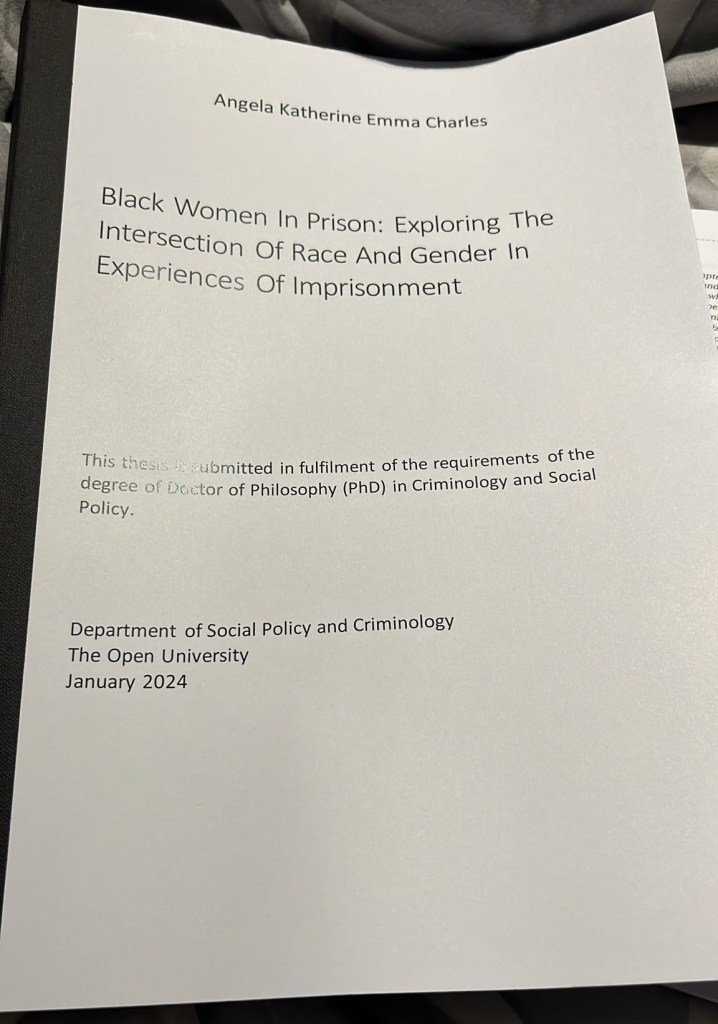
I reflect one week after one of the most important examinations in academia, the viva. Like any examination you never know what is going to come up and therefore you have to be prepared for anything. This makes preparation tricky, uncertain and at times perplexing. There were areas I thought might come up, and in those cases I had a response ready.
On the day, despite all the preparation there were questions that required pause, thought, navigation and discussion. Upon reflection, there were times where I would have liked to provide a more polished and articulate answer, but I am not a robot and therefore my answers are human, with stutters and pauses, passion and dedication; they are unpolished and there is a beauty to that.
What made the difference was having two very supportive examiners that were approachable, interested in my research and wanting me to fulfil my potential. Their additional years in the field/academia over mine were not used to demonstrate their superiority, but instead to guide me in the final process of completing my thesis.
The process acted as a reminder to me that how you approach a situation is so important. In academia, whilst we may be trying to highlight the flaws in a potential project or correcting errors or misconceptions in student’s writing so they can improve, we also ought to put the effort into seeing the good in someone’s work where possible. Think about whether your approach is constructive, how can that individual be supported to the finish line. It pays to maybe think back to the time when your work was being dissected, analysed, with the outcome affecting your academic career in front of you, what type of examiner would you have wanted, maybe that is the one you need to strive to be to others.
I passed with minor corrections that they stressed would only take a few days work. I hope this is acts a testament to what is possible. As a first-generation Black woman that tentatively stepped into academia, achieved a first-class honours degree, navigated a masters at Oxford University, was successful in achieving a funded PhD to then pass with minor corrections, challenge yourself and dare to dream!
Share this:


Teaching, Learning, and Some Grey Areas: A Personal Reflection
Sallek Yaks Musa
Trigger warning: sections of this blog may contain text edited/generated by machine learning AI.

Growing up in a farming community, I gained extensive knowledge of agricultural practices and actively participated in farming processes. However, this expertise did not translate into my performance in Agricultural Science during senior high school. Despite excelling in other subjects and consistently ranking among the top 3 students in my class, I struggled with Agricultural Science exams, much to the surprise of my parents.
I remembered my difficulties with Agricultural Science while reflecting on the UK Professional Standards Framework (UKPSF) for teaching and supporting learning in higher education. This reflection occurred shortly after a student asked me about the minimum qualifications needed to become a lecturer in higher education (HE). Unlike in lower educational levels, a specific teaching certification is not typically required in HE. However, most lecturing positions require a postgraduate certification or higher as a standard. Additionally, professional memberships are crucial and widely recognized as necessary to ensure lecturers are endorsed, guided, and certified by reputable professional bodies.
Reputable professional organizations typically establish entry criteria, often through summative tests or exams, to assess the suitability and competency of potential members. In the UK, Advanced HE stands as one of the widely acknowledged professional bodies.
Advanced HE offers four levels of professional recognition: associate, fellow, senior, and principal fellows. Applicants must evidence proficiency and comprehension across three pivotal competency areas: areas of activity, core knowledge, and professional values, as outlined in the UKPSF Dimensions of the Framework. Among others, these competency areas emphasize the importance of prioritising the enhancement of the quality of education, evaluating assessment strategies, and recognizing and supporting diverse learners throughout their educational journey.
It was not until the third term of my first year in senior high school that I began to understand why I struggled with Agricultural Science. Conversations with classmates who consistently excelled in the subject shed light on our collective challenge, which I realized extended beyond just myself to include our teacher. With this teacher, there was little room for innovation, self-expression, or independent thinking. Instead, success seemed contingent upon memorization of the teacher’s exact notes/words and regurgitating them verbatim. Unfortunately, cramming and memorization were skills I lacked, no matter how hard I tried. Hence, I could not meet the teachers’ marking standard.
The truth of this became glaringly apparent when our teacher went on honeymoon leave after marrying the love of his life just weeks before our exams. The junior class Agricultural Science teacher took over, and for the first time, I found success in the subject, achieving a strong merit. Unsurprising, even the school principal acknowledged this achievement this time around when I was called for my handshake in recognition of my top 3 performance.
In our school, the last day of each term was always eventful. An assembly brought together students and teachers to bid farewell to the term, recognize the top performers in each class with a handshake with the principal, and perhaps offer encouragement to those who struggled academically. This tradition took on a more solemn tone on the final day of the school year when the names of students unable to progress to the next class were announced to the entire assembly. This is a memory I hope I can revisit another day, with deeper reflection.
My pursuit of Advanced HE professional membership stirred memories of my struggles with Agricultural Science as a student, highlighting how our approach to teaching and assessment can profoundly impact learners. In my own experience, failure in Agricultural Science was not due to a lack of understanding but rather an inability to reproduce the teacher’s preferred wording, which was considered the sole measure of knowledge. Since then, I have been committed to self-evaluating my teaching and assessment practices, a journey that began when I started teaching in primary and secondary levels back in September 2005, and eventually progressed to HE.
A recent blog by Dr. Paul Famosaya, questioning whose standards we adhere to, served as a timely reminder of the importance of continuous reflection beyond just teaching and assessment. It further reinforced my commitment to adopting evidence-based standards, constantly refining them to be more inclusive, and customizing them to cater to the unique needs of my learners and their learning conditions.
The Advanced HE UKPSF offers educators a valuable resource for self-assessing their own teaching and assessment methods. Personally, I have found the fellowship assessment tasks at the University of Northampton particularly beneficial, as they provide a structured framework for reflection and self-assessment. I appreciate how they spur us as educators to acknowledge the impact of our actions on others when evaluating our teaching and assessment practices. Certainly, identifying areas for improvement while considering the diverse needs of learners is crucial. In my own self-evaluation process, I often find the following strategies helpful:
- Aligning teaching and assessment with learning objectives: Here, I evaluate whether my teaching methods and assessment tasks align with the module’s intended learning outcomes. For example, when teaching Accounting in senior secondary school, I assess if the difficulty level of the assessment tasks matches or exceeds the examples I have covered in class. This approach has informed my teaching and assessment strategies across various modules, including research, statistics, data analysis, and currently research at my primary institution, as well as during my tenure as a visiting lecturer at another institution.
- Relatability and approachability: An educator’s approachability and relatability play a significant role in students’ willingness to seek clarification on assessment tasks, request feedback on their work, and discuss their performance. This also extends to their engagement in class. When students feel comfortable approaching their educator with questions or concerns, they are more likely to perceive assessments as fair and supportive. Reflecting on how well you connect with students is essential, as it can enhance learning experiences, making them more engaging and meaningful. Students are more inclined to actively participate in class discussions, seek feedback, and engage with course materials when they view the educator as accessible and empathetic. If students leave a class, a one-on-one meeting, or a feedback session feeling worse off due to inappropriate word choices or communication style, word may spread, leading to fewer attendees in future sessions. Therefore, fostering an environment of approachability and understanding is crucial for promoting a positive and supportive learning atmosphere.
- Enhancing student engagement: Prior to joining the UK HE system, I had not focused much on student engagement. In my previous teaching experiences elsewhere, learners were consistently active, and sessions were lively. However, upon encountering a different reality in the UK HE environment, I have become proactive in seeking out strategies, platforms, and illustrations that resonate with students. This proactive approach aims to enhance engagement and facilitate the learning process.
- Technological integration: Incorporating technology into teaching and assessment greatly enhances the learning process. While various technologies present their unique challenges, the potential benefits and skills acquired from utilizing these tools are invaluable for employability. However, there is a concern regarding learners’ overreliance on technological aids such as AI, referencing managers, discussion boards, and other online tools, which may lead to the erosion of certain cognitive skills. It is essential to question whether technological skills are imperative for the modern workplace. Therefore, one must evaluate whether technology improves the learning experience, streamlines assessment processes, and fosters opportunities for innovation. If it does in the same way that the changing nature of work favours these new skills, then educators and universities must not shy away from preparing and equipping learners with this new reality lest learners are graduated unprepared due to an attempt to be the vanguard of the past.
- Clarity of instruction and organisation: Evaluate whether students comprehend expectations and the clarity of instructions. Drawing from my experience in the not-for-profit sector, I have learned the effectiveness of setting objectives that are SMART (specific, measurable, achievable, relevant, and time-bound). Emphasizing SMART learning outcomes is crucial in teaching and learning. However, where learning outcomes are broad, ambiguous, or subject to individual interpretation, educators must ensure that assessment marking criteria are clearly articulated and made clear to learners. This clarification should be provided in assessment briefs, support sessions, and during class contacts. Reflecting on this ensures that students understand what is expected of them and prevents educators from inadvertently setting them up for failure. It becomes apparent that assessment criteria lacking validity and reliability hinder the accurate measurement of student understanding and skills, even if same has been consistently used over time. Therefore, continuous reflection and refinement are essential to improve the effectiveness of assessment practices. Afterall, reflection should be a mindset, and not just a technique, or curriculum element.
- Feedback mechanisms: The effectiveness of feedback provided to students is always important. Reflecting on whether feedback is constructive and actionable could help to foster learning and improvement, irrespective of how short or lengthy the feedback comments are. Anyone who has passed through the rigour of research doctoral supervision would appreciate the role of feedback in all forms on learner progression or decision to drop out.
- Inclusivity and diversity: In a diverse educational setting, it is imperative to engage in continuous reflection to ensure that teaching and assessment practices are inclusive and responsive to the varied backgrounds, learning peculiarities, and abilities of learners. Educators hold a significant position that can either facilitate or hinder the progress of certain learners. In cases where barriers are inadvertently created, unconscious bias and discrimination may arise. Therefore, ongoing reflection and proactive measures are essential to mitigate these risks and create an environment where all students can thrive.
- Ethical considerations: Teaching and assessment practices carry ethical responsibilities. Fundamentally, educators must prioritize fairness, transparency, and integrity in all assessment procedures, setting aside personal biases and sentiments towards any individual, cohort, or group of students. It is equally important to consider how one’s position and instructional choices influence students’ well-being and academic growth. Striving for ethical conduct in teaching and assessment ensures a supportive and equitable learning environment for all students.
End.
Share this:


Liberalism, Capitalism and Broken Promises

With international conflict rife, imperialism alive and well and global and domestic inequalities broadening, where are the benefits that the international liberal order promised?
As part of my masters, I am reading through an interesting textbook named Theories of International Relations (Burchill, 2013). Soon, I’ll have a lecture speaking about liberalism within the realm of international relations (IR). The textbook mentions liberal thought concerning the achievement of peace through processes of democracy and free trade, supposedly, through these mechanisms, humankind can reach a place of ‘perpetual peace’, as suggested by Kant.
Capitalism supposedly has the power to distribute scarce resources to citizens, while liberalist free trade should break down artificial barriers between nations, uniting them towards a common goal of sharing commodities and mitigating tensions by bringing states into the free trade ‘community’. With this, in theory, should bring universal and democratic peace, bought about by the presence of shared interest.
Liberal capitalism has had a long time to prove its worth, with the ideology being adopted by the majority of the west, and often imposed on countries in the global south through coercive trade deals, political interference and the establishment of dependant economies. Evidence of the positives of liberal capitalism, in my opinion are yet to be seen. In fact, the evidence points towards a global and local environment entirely contrary to the claims of liberal capitalism.
The international institutions, constructed to mitigate against the anarchic system we live under become increasingly fragile and powerless. The guarantee of global community and peace seems further and further away. The pledge that liberalism will result in the spread of resources, resulting in the ultimate equalisation is unrealised.
Despite all of this, the global liberal order seems to still be supported by the majority of the elite and by voters alike. Because with the outlined claims comes the promise that one day, with some persistence, patience and hard work, you too could reap the rewards of capitalism just like the few in society do.
Share this:


Civilian Suffering Beyond the Headlines
In the cacophony of war, amidst the geopolitical chess moves and strategic considerations, it’s all too easy to lose sight of the human faces caught in its relentless grip. The civilians, the innocents, the ordinary people whose lives are shattered by the violence they never asked for. Yet, as history often reminds us, their stories are the ones that linger long after the guns fall silent. In this exploration, we delve into the forgotten narratives of civilian suffering, from the tragic events of Bloody Sunday to the plight of refugees and aid workers in conflict zones like Palestine.

On January 30, 1972, the world watched in horror as British soldiers opened fire on unarmed civil rights demonstrators in Northern Ireland, in what would become known as Bloody Sunday. Fourteen innocent civilians lost their lives that day, and many more were injured physically and emotionally. Yet, as the decades passed, the memory of Bloody Sunday faded from public consciousness, overshadowed by other conflicts and crises. But for those who lost loved ones, the pain and trauma endure, a reminder of the human cost of political turmoil and sectarian strife.
Fast forward to the present day, and we find a world still grappling with the consequences of war and displacement. In the Middle East, millions of Palestinians endure the daily hardships of life under occupation, their voices drowned out by the rhetoric of politicians and the roar of military jets. Yet amid the rubble and despair, there are those who refuse to be silenced, who risk their lives to provide aid and assistance to those in need. These unsung heroes, whether they be doctors treating the wounded or volunteers distributing food and supplies, embody the spirit of solidarity and compassion that transcends borders and boundaries.

But even as we celebrate their courage and resilience, we must also confront our own complicity in perpetuating the cycles of violence and injustice that afflict so many around the world. For every bomb that falls and every bullet that is fired, there are countless civilians who pay the price, their lives forever altered by forces beyond their control. And yet, all too often, their suffering is relegated to the footnotes of history, overshadowed by the grand narratives of power and politics.
So how do we break free from this cycle of forgetting? How do we ensure that the voices of the marginalized and the oppressed are heard, even in the midst of chaos and conflict? Perhaps the answer lies in bearing witness, in refusing to turn away from the harsh realities of war and its aftermath. It requires us to listen to the stories of those who have been silenced, to amplify their voices and demand justice on their behalf.
Moreover, it necessitates a revaluation of our own priorities and prejudices, a recognition that the struggle for peace and justice is not confined to distant shores but is woven into the fabric of our own communities. Whether it’s challenging the narratives of militarism and nationalism or supporting grassroots movements for social change, each of us has a role to play in building a more just and compassionate world.
The forgotten faces of war remind us of the urgent need to confront our collective amnesia and remember the human cost of conflict. From the victims of Bloody Sunday to the refugees fleeing violence and persecution, their stories demand to be heard and their suffering acknowledged. Only then can we hope to break free from the cycle of violence and build a future were peace and justice reigns supreme.
Share this:


Witches, Broomsticks and Libraries
My son has been gifted and collected many delightful children’s books since his recent birth. A book which stands out to me on Women’s History Month is: Room on the Broom (2001) by writer Julia Donaldson and Illustrator Axel Scheffler.
Aside from the fabulous use of words and illustrations, the main character of the story is a lovely witch who makes room on her broom for her cat, a dog, bird and frog. The latter part of the story consists of the broom snapping, presumably due to the extra weight of these passengers, then the witch risks being eaten by a dragon. But eventually all is well as the witch creates a new super broomstick with;
seats for the witch
and the cat and the dog,
a nest for the bird and
a shower for the frog.

This book’s depiction of the witch as a morally good character is wonderful but this is not usual. In popular culture, such as fiction, television and film witches seem to have flawed character traits, are morally bad cackling devious women who fly about casting spells on poor and (un/)suspecting folk.
The negative connotations of witches today reflect a long dreadful real-life history of outsiders being accused of being witches – with some being tortured and murdered due to this. The outsiders aka witches tended to be women, women who were providing a service for other women, such as support during childbirth or healing practices, or those that practice spiritualisms that differ to dominant religions. If re-born today some of these women may have been celebrated as midwifes and nurses, although their wages and workloads would still illustrate that predominantly women centered roles tend to be under appreciated.
On International Women’s Day I finished reading Disobedient Bodies (2023) by Emma Dabiri. Disobedient Bodies reminds me about how in a white capitalist cis male world bodies categorised as female and women are constructed as deviant. Proof of being a witch was apparently not just found in practices but on the bodies of women. Emma Dabiri adds to the discussion on witches that I did not consider; that groups of women aka groups of deviant witches were considered to be the most threatening to witch hunters. For a long time women have been pitted against each other, the historical nature of women meeting in groups to support each other as a threat to patriarchal capitalist white systems has added to this.
My son is very privileged to have so many book at the age of 1. Unfortunately I am writing during a time where there are threats to close 25 libraries in Birmingham. Notably, the libraries that me and my son frequent consist of mostly women staff (both paid and volunteers). In addition to the potential for job losses, if this happens there will be babies, children and adults without access to books, artistic classes, warm and safe spaces. To quote my friend and colleague, “soon there will be nothing left”.
Share this:


Doing the right thing
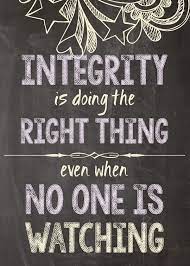
It seems that very often, the problem with politics in this country is that it gets in the way of doing the right thing. Despite the introduction of the The Seven Principles of Public Life known as the Nolan Principles, politicians (not all of them of course, but you will have seen ample examples) still seem to be hell bent on scoring political advantage, obfuscating on matters of principle and where possible avoiding real leadership when the country is crying out for it. Instead, they look to find someone, anyone, else to blame for failures that can only be described as laying clearly at the door of government and at times the wider institution of parliament.
One example you may recall was the complete farce in parliament where the speaker, Sir Lyndsay Hoyle, was berated for political interference and breaking the rules of the house prior to a debate about a ceasefire in Gaza. It became quite obvious to anyone on the outside that various political parties, Conservatives, Labour and the Scottish National Party were all in it to score points. The upshot, rather than the headlines being about a demand for a ceasefire in Gaza, the headlines were about political nonsense, even suggesting that the very core of our democracy was at stake. Somehow, they all lost sight of what was important, the crises, and it really is still a crisis, in Gaza. Doing the right thing was clearly not on their minds, morals and principles were lost along the way in the thrust for the best political posturing.
And then we come to the latest saga involving political parties, the WASPI women (Women Against State Pension Inequality) campaign. The report from the Parliamentary and Health Service Ombudsman has ruled that the Department for Work and Pensions (DWP) “failed to provide accurate, adequate and timely information” about changes to pension ages for women. The report makes interesting reading. In essence, it accuses the DWP of maladministration on several counts.
The Pensions Act 1995 changed the way in which women could draw their pensions in an effort to equalise the age with men. A timetable was drawn up raising the qualifying age for women from 60 to 65, with the change phased in between 2010 and 2020. However, under the Pensions Act 2011, the new qualifying age of 65 for women was brought forward to 2018. The report acknowledges that the DWP carried out campaigns from 1995 onwards but in 2004 received results of research that a considerable number of affected women still believed that their retiring age was 60. Unfortunately, through prevarication and for some quite inexplicable reasoning the women affected were not notified or were notified far too late. There was a calculation carried out that suggested some women were not told until 18 months before their intended retirement date. The matter was taken before the courts but the courts ruling did nothing to resolve the issue other than providing a ruling that the DWP were not required by law to notify the women.
You can read about the debacle anywhere on the Internet and the WASPI women have their own Facebook page. What seems astounding is that both the Government and the opposition have steadfastly avoided being drawn on the matter of compensation for these women. I should add that the maladministration has had serious detrimental impacts on many of them. Not even a sorry, we got it wrong. Instead we see articles written by right wing Conservatives suggesting the women had been provided with ample warning. If you read the report, it makes it clear that provisions under the Civil Service Code were not complied with. It is maladministration and it took place under a number of different governments.
Not getting it right in the first instance was compounded by not getting it right several times over later on. It seems that given the likely cost to the taxpayer, this maladministration is likely, like so many other cock ups by government and its agencies, to be kicked into the long grass. Doing the right thing is a very long, long way away in British politics. And lets not forget the Post Office scandal, the infected blood transfusion scandal and the Windrush scandal to name but a few. So little accountability, such cost to those impacted.
- The quotation in the image is often wrongly misattributed to C. S. Lewis. ↩︎


