
Authors
-
5teveh
-
6bsude
-
abbietoal
-
abigailane30
-
akcharl
-
amycortvriend
-
anfieldbhoy
-
anitawrzesniewska
-
FlowerViolet
-
asteven08
-
aysheaobrien1ca0bcf715
-
bethanyrdavies
-
bonnieleighmiddleton
-
bronaghvh
-
bwilleva
-
charlottejdann
-
cherylgardner2015
-
chris13418861
-
criminologyanon
-
criminologysocietyuon
-
davidjpalmer57
-
Demi King
-
drkukustr8talk
-
ej213
-
finlaywilliams24
-
Francine Bitalo
-
gilliansiddall
-
gregpaillet
-
Gwen
-
haleysread
-
hannahmaysmith
-
hanpearce93
-
helenpoole2
-
helentrinder
-
ifedamilola
-
jackrichmond21
-
jazzie9
-
jesjames50
-
justinkotze
-
kayleighwillis21
-
keziaasante
-
kirstyk196
-
klgrant1
-
liammiles1
-
Lilly Lewis
-
madams1965
-
Maddyk97
-
manosdaskalou
-
marlywindle
-
Maxine
-
meganking046
-
molliekel13
-
Mr_Hari_Parekh
-
nahidatakhtar
-
natalieh2000
-
npetfo
-
Paula Bowles
-
paulsquaredd
-
robynmansfield1
-
saffron_garside
-
Sallek Yaks Musa
-
samc0812
-
samtilley7
-
samuellangley
-
seanrj94
-
shanwareing
-
Shaun Ken-ucheonye
-
sineqd
-
Sophie Rowson
-
spatchett94
-
svr2727
-
tgomesx
-
Tré Ventour-Griffiths
-
tuesdaywoodward23
-
Vaseem Khan
-
wadzanain7
-
zeechee
-
zo3conneely

A personal account of the NHS

A personal tale about the NHS – I am one of the lucky ones
This blog recounts the experience of the care of my parents in the last two years, which has been exemplary and, in the context of the recent reports about the crises in the NHS, reminds me how lucky I was to experience this. It also reveals how well the NHS can perform when it is not under stress, is properly resourced and valued, even when dealing with health problems associated with old age and during the extra strains which occur during winter.
My father passed away at the end of August last year, after 2 years under the care of an NHS facility specialising in caring for dementia patients. The illness had not just affected his memory, but had also led to aggressive behaviour which required him being sectioned under the Mental Health Act. This was obviously a stressful time for us all, but also a time when we understood this was the only option. He soon settled into a new routine, in a home where he felt safe, cared for and where his needs could be met. It was also vital that this was located near his home in North Yorkshire, so that my mother could visit three times a week, and maintain the bond of their marriage, providing both of them with the companionship they so valued. Visiting could be difficult if he had a bad day, but most of the time he appreciated the company and was clearly happy to be in a place where he just did not have to worry about anything.
What struck me most about the place was the demeanour of the staff – they were helpful, kind, accommodating, caring – all the things you would want from those in the health and social care professions. This facility brought these sectors together in a partnership to meet the many physical health needs of dementia patients, while remembering their role as carers. It was not just about administering the medication needed to keep patients calm, it was also about interacting with them, taking them for walks, days out and bringing in a variety of forms of entertainment. Patients celebrated Halloween, Christmas, Easter and engaged in activities which took them back to places and people they could remember, often through music of various genres. Dad always liked jazz, and occasionally classical, with a real fondness for Ella Fitzgerald. These times were so important, for 2 years, even though things had changed, the Dad we knew was back during some of our visits, and we could just appreciate this time until he passed away.
I feel sadness now at his loss, but also because I know not everyone with dementia who needs this sort of care will get it. In the lottery of health and social care, we won, and the prize was the sort of care I think everyone should have access to. What angers me about this is that it is NHS Trusts across the country, simply cannot provide this. They have to make decisions about the care of citizens based on budget spreadsheets and staff availability, rather than what is understood to be the best practice, clinically sound and will create the best outcomes for patients and relatives. The recent BBC report on the ‘10 charts that show why the NHS is in trouble’ (see http://www.bbc.co.uk/news/health-42572110) clearly illustrate why not everyone receives the care my Dad received. For example, it emphasises that we have an ageing population, meaning the NHS is dealing with increased numbers of patients with chronic conditions such as diabetes, heart disease and dementia. These are conditions which are described as ‘more about care than cure’ where patients need support, where healthcare requires as much of a focus on social care as it does on medical interventions. This has financial implications, as care for ‘average’ patients over 65 years old costs the NHS 2.5 times more, compared to the ‘average’ 30 year old, and this only increases with age.
Spending on the NHS has decreased from 6% of the government budget during 1997 to 2009, to 1% as part of the austerity agenda of the Conservative/Liberal Democrat coalition, with a slight increase back up to 2.5% under the current government. This also represents a lower proportion spent on healthcare compared to other EU countries such as Germany, Sweden and France – who are all above the EU average. They do this by through increased taxes, and this seems to be the crux of the matter. Would the citizens of the UK tolerate a rise in taxes to have better provisions in health and social care, for themselves and their family? According to a poll by Ipsos MORI, 40% would back a rise in income tax, with 53% supporting an increase in National Insurance payments. However, it was also revealed that the majority of participants valued the NHS and did not wish to change to an insurance based system.
So, a choice must be made. Personally, with what I experienced with my Dad and more recently, when my Mum had heart surgery to replace a valve, from which she is recovering very nicely, I cannot imagine not having the NHS. Perhaps we do not recognise its value until we need it, but given the strains it is under now, and that one way to alleviate this is to increase funding, then governments should surely consider tax rises to provide this. The NHS provides health and social care we will need one day, if not for us, then for loved ones, and it seems to be a model of healthcare most people in this country would prefer. With an ageing population, the current investment being below the average of 4% provided to the NHS since its inception in 1948, is having an impact. It is an impact which Jeremy Hunt and Theresa May seem to bat away as isolated problems, not trends, and as problems they are dealing with. I do not think we should be discussing our health service as being able to cope with crises and unexpected demands. We should be discussing in terms of being able to provide equality of care, even in the face of the unexpected, using a service which reflects the values of the welfare state, to ensure wellbeing, safety and healthcare from cradle to grave, for all citizens.
Susie Atherton
Senior Lecturer in Criminology
Share this:


Homelessness: Shedding an unfavourable light on a beautiful town!

Let me start by apologising for the tone of this blog and emphasis that what follows is rant based on my own opinion and not that of the university or co-authors of the blog. On 3 January I was incensed by a story in the Guardian outlining comments made by Simon Dudley, the Royal Borough of Windsor and Maidenhead’s Conservative leader, regarding homelessness and the impact (visually) that this could have on the forthcoming royal wedding. Mr Dudley commented that having homeless people on the streets at the time of the wedding would present “a beautiful town in a sadly unfavourable light” and that “Windsor is different and requires a more robust approach to begging” (Dudley, cited in Sherwood, 2018, online). Unfortunately, I am no longer shocked by such comments and have come to expect nothing less of Conservative leaders. I am however profoundly saddened that such a deep rooted social issue is brought back into the spot light, not because it reflects wider issues of inequality, disadvantage, poverty, or social exclusion that need addressing but because of a class based narrative driven by a royal wedding. Is Windsor really in need of special treatment? Is their experience of homelessness really worse than every other city in the UK? Or is simply that in an area with such wealth, and social connection, showing the world that we have a problem with homelessness is taking it a step too far. Whatever the reason, Shelter’s[1] (2017) tweet on the 29 December reminds us that homelessness is ‘…a crisis we are not handling as a country’.
As we approached the Christmas period it was estimated that children experiencing homelessness had reached a 10 year high with headlines like ‘Nearly 130,000 children to wake up homeless this Christmas’ (Bulman, 2017) marking our approach to the festive season. Similarly, Shelter warned of a Christmas homeless crisis and as the temperatures dropped emergency shelters were opened across London, contrary to the policy of only opening after three consecutive days of freezing temperatures (TBIF, 2017). Yet the significance of these headlines and the vast body of research into the homelessness crisis appears lost on Mr Dudley whose comments only add to an elitist narrative that if we can’t see it, it isn’t a problem. My issue is not with Mr Dudley’s suggestion that action is needed against aggressive begging and intimidation but with his choice of language. Firstly, to suggest that homelessness is a ‘sad’ thing is a significant understatement made worse by the fact that the focus of this sadness is not on homelessness itself but the fact that it undermines the tone of an affluent area. Secondly, the suggestion that the police should clear the homeless from the streets along with their ‘bags and detritus’ (Dudley, cited in Sherwood, 2018) is symbolic of much of the UK’s approach to difficult social issues; sticking a band aid on a fatal wound and hoping it works. Thirdly, and more deeply disturbing for me is the blame culture evident in his suggestion that homelessness is a choice that those begging in Windsor are ‘…not in fact homeless, and if they are homeless they are choosing to reject all support services…it is a voluntary choice’ (Dudley, cited in Sherwood, 2018). Homelessness is complex and often interlinked with other deeply rooted problems, therefore this blame attitude is not just short sighted but highly ignorant of the difficulties facing a growing proportion of the population.
Shelter. (2017) A safe, secure home is a fundamental right for everyone. It’s a crisis we are not handling as a country [Online]. Twitter. 29 December. Available from: https://twitter.com/shelter?lang=en [Accessed 4 January 2018].
Sherwood, H., (2018) Windsor council leader calls for removal of homeless before royal wedding. The Guardian [online]. Available from: https://www.theguardian.com/society/2018/jan/03/windsor-council-calls-removal-homeless-people-before-royal-wedding [Accessed 04 January 2018].
The Big Issue Foundation. (2017) TBIF joins the Mayor of London’s Coalition to tackle rough sleeping [Online]. The Big Issue Website. Available from: https://www.bigissue.org.uk/news [Accessed 4 January 2018].
[1] a charity offering advice and support to those facing or experiencing homelessness
Share this:


Thank f**k it’s Christmas!

Jessica is an Associate Lecturer teaching modules in the first year.
We have arrived at that time of the year once again: CHRISTMAS! ‘Tis’ the season to celebrate, party, give and receive gifts, catch up with friends and family, and most importantly… catch up on some much needed sleep. We have arrived at the end of the first term of the academic year, and all I can think is: Thank f**k it’s Christmas. The first term always feels the longest: whether you are first years beginning your academic journey, second and third years re-gathering yourselves after the long summer, or staff getting back into the swing of things and trying to locate and remember all the new and old names. But now is the time to kick back, relax and enjoy the festive season: ready to return to academic life fresh faced and eager come the New Year, ready to start it all over again. Well not quite…
According to Haar et al., (2014) work-life balance is something which is essential to all individuals, in order to ensure job satisfaction, life satisfaction and positive mental health. If Christmas is as needed as it feels; perhaps we are not managing a good work-life balance, and perhaps this is something we can use the Christmas break to re-consider. Work-life balance is subjective and relies on individual acceptance of the ‘balance’ between the commitments in our lives (Kossek et al., 2014). Therefore, over the Christmas break, perhaps it would be appropriate to re-address our time management skills, in order to ensure that Easter Break doesn’t feel as desperately needed as Christmas currently does.
Alongside an attempt to re-organise our time and work load, it is important that we remember to put ourselves first; whether this be through furthering our knowledge and understanding with our academic endeavours, or whether it is spending an extra 15 minutes a day with a novel in order to unwind. Work-life balance is something we are (potentially) all guilty of undermining, at the risk of our mental health (Carlson, et al., 2009). I am not suggesting that we all ignore our academic responsibilities and say ‘yes’ to every movie night, or night out that is offered our way. What I am suggesting, and the Christmas break seems like a good place to start, is that we put the effort in with ourselves to unwind, in order to ensure that we do not burn out.
Marking, reading, writing and planning all need to be done over the Christmas break; therefore it is illogical to suggest taking our feet off the pedals and leaving academia aside in order to have the well needed break we are craving. What I am suggesting, is that we put ourselves in neutral and coast through Christmas, without burning out: engaging with our assignments, marking and reading, therefore still moving forward. BUT, and it is a big but, we remember to breathe, have a lie in, go out and socialise with friends and family, and celebrate completing the first term of this academic year. And with this in mind, try to consider ways, come the new term, where you can maintain a satisfying work-life balance, so that when Easter comes, it doesn’t feel so desperately needed.
However, it is highly likely that this will still be the case: welcome to the joys and stresses of academia.
Merry Christmas everyone!
References:
Carlson, D.S., Grzywacz, J.G. and Zivnuska, S. (2009) ‘Is work family balance more than conflict and enrichment?’ Human Relations. 62(10): 1459-1486.
Haar, J.M., Russo, M., Sune, A. and Ollier- Malaterre, A. (2014) ‘Outcomes of work-life balance on job satisfaction, life satisfaction and mental health: A study across seven cultures’. Journal of Vocational Behaviour. 85: 361-373.
Kossek, E.E., Valcour, M. and Kirio, P. (2014) ‘The sustainable workforce: Organizational strategies for promoting work-life balance and well-being’. In: Cooper, C. and Chen, P. (Eds) Work and Well-being. Oxford: Wiley-Blackwell. Pp:295-318.
Bibliography:
Ashurst, A. (2014) ‘How to… Manage time and resources effectively’. Nursing and Residential Care. 16(5): 296-297.
Kuhnel, J., Zacher, H., De Bloom, J and Bledow, R. (2017) ‘Take a Break! Benefits of sleep and short breaks for daily work engagement’. European Journal of Work and Organization Psychology. 26(4): 481-491.
Logan, J., Hughes, T. and Logan, B. (2016) ‘Overworked? An Observation of the relationship Between Student Employment and Academic Performance’. Journal of College Student Retention: Research, Theory and Practice. 18(3): 250-262.
Lyness, K.S. and Judiesch, M.K. (2014) ‘Gender egalitarianism and work-life balance for managers: Multisource perspectives in 36 countries’. Applied Psychology. 63(1): 96-129.
Mona, S. (2017) ‘Work-life Balance: Slow down, move and think’. Journal of Psychological Nursing and Mental Health Services. 55(3):13-14.
Share this:


“A Christmas Carol” for the twenty-first century
The build up to Christmas appears more frenetic every year, but there comes a point where you call it a day. This hiatus between preparation and the festivities lends itself to contemplation; reflection on Christmases gone by and a review of the year (both good and bad). Some of this is introspective and personal, some familiar or local and some more philosophical and global.
Following from @manosdaskalou’ recent contemplation on “The True Message of Christmas”, I thought I might follow up his fine example and explore another, familiar, depiction of the festive period. While @manosdaskalou focused on wider European and global concerns, particularly the crisis faced by many thousands of refugees, my entry takes a more domestic view, one that perhaps would be recognised by Charles Dickens (1812- 1870) despite being dead for nearly 150 years.

One of the most distressing news stories this year was the horrific fire at Grenfell Tower where 71 people lost their lives. [1] Whilst Dickens, might not recognise the physicality of a tower block, the narratives which followed the disaster, would be all too familiar to him. His keen eye for social injustice and inequality is reflected in many of his books; A Christmas Carol certainly contains descriptions of gut wrenching, terrifying poverty, without which, Scrooge’s volte-face would have little impact.
In the immediacy of the Grenfell Tower disaster tragic updates about individuals and families believed missing or killed in the fire filled the news channels. Simultaneously, stories of bravery; such as the successful endeavours of Luca Branislav to rescue his neighbour and of course, the sheer professionalism and steadfast determination of the firefighters who battled extremely challenging conditions also began to emerge. Subsequently we read/watched examples of enormous resilience; for example, teenager Ines Alves who sat her GCSE’s in the immediate aftermath. In the aftermath, people clamoured to do whatever they could for survivors bringing food, clothes, toys and anything else that might help to restore some normality to individual life’s. Similarly, people came together for a variety of different celebrity and grassroots events such as Game4Grenfell, A Night of Comedy and West London Stand Tall designed to raise as much money as possible for survivors. All of these different narratives are to expected in the wake of a tragedy; the juxtaposition of tragedy, bravery and resilience help people to make sense of traumatic events.
Ultimately, what Grenfell showed us, was what we already knew, and had known for centuries. It threw a horrific spotlight on social injustice, inequality, poverty, not to mention a distinct lack of national interest In individual and collective human rights. Whilst Scrooge was “encouraged” to see the error of his ways, in the twenty-first century society appears to be increasingly resistant to such insight. While we are prepared to stand by and watch the growth in food banks, the increase in hunger, homelessness and poverty, the decline in children and adult physical and mental health with all that entails, we are far worse than Scrooge. After all, once confronted with reality, Scrooge did his best to make amends and to make things a little better. While the Grenfell Tower Inquiry might offer some insight in due course, the terms of reference are limited and previous experiences, such as Hillsborough demonstrate that such official investigations may obfuscate rather than address concerns. It would seem that rather than wait for official reports, with all their inherent problems, we, as a society we need to start thinking, and more, importantly addressing these fundamental problems and thus create a fairer, safer and more just future for everyone.
In the words of Scrooge:
“A merry Christmas to everybody! A happy New Year to all the world!” (Dickens, 1843/1915: 138)
[1] The final official figure of 71 includes a stillborn baby born just hours after his parents had escaped the fire.
Dickens, Charles, (1843/1915), A Christmas Carol, (Philadelphia: J. B. Lippincott Co.)
Share this:


The true message of Christmas

One of the seasonal discussions we have at social fora is how early the Christmas celebrations start in the streets, shops and the media. An image of snowy landscapes and joyful renditions of festive themes that appear sometime in October and intensify as the weeks unforld. It seems that every year the preparations for the festive season start a little bit earlier, making some of us to wonder why make this fuss? Employees in shops wearing festive antlers and jumpers add to the general merriment and fun usually “enforced” by insistent management whose only wish is to enhance our celebratory mood. Even in my classes some of the students decided to chip in the holiday fun wearing oversized festive jumpers (you know who you are!). In one of those classes I pointed out that this phenomenon panders to the commercialisation of festivals only to be called a “grinch” by one of the gobby ones. Of course all in good humour, I thought.
Nonetheless it was strange considering that we live in a consumerist society that the festive season is marred with the pressure to buy as much food as possible so much so, that those who cannot (according to a number of charities) feel embarrassed to go shopping; or the promotion of new toys, cosmetics and other trendy items that people have to have badly wrapped ready for the big day. The emphasis on consumption is not something that happened overnight. There have been years of making the special season into a family event of Olympic proportions. Personal and family budgets will dwindle in the need to buy parcels of goods, consume volumes of food and alcohol so that we can rejoice.
Many of us by the end of the festive season will look back with regret, for the pounds we put on, the pounds we spent and the things we wanted to do but deferred them until next Christmas. Which poses the question; What is the point of the holiday or even better, why celebrate Christmas anymore? Maybe a secular society needs to move away from religious festivities and instead concentrate on civic matters alone. Why does religion get to dictate the “season to be jolly” and not people’s own desire to be with the ones they want to be with? If there is a message within the religious symbolism this is not reflected in the shop-windows that promote a round-shaped old man in red, non-existent (pagan) creatures and polar animals.
According to the religious message about 2000 years ago a refugee family gave birth to a child on their way to exile. The child would live for about 33 years but will change the face of modern religion. He promised to come back and millions of people still wait for his second coming but in the meantime millions of refugee children are piling up in detention centers and hundreds of others are dying in the journey of the damned. “A voice is heard in Ramah, mourning and great weeping, Rachel weeping for her children, because her children are no more” (Jeremiah 31:15). This is the true message of Christmas today.
Happy Holidays to our students and colleagues.
FYI: Ramah is a town in war torn Middle East
Share this:


Driving value for money: My fairy tale

A few years ago I had the good fortune of being able to go to a driving experience event where I was able to drive an Aston Martin (my dream car) around a race track.
I arrived on the day and presented my provisional driving licence, a full licence was required really, but the nice people there said I could have a go as I said I loved Aston Martin cars and I would try really hard to learn to drive them.
There was a briefing about car safety that I went to and I listened but don’t think I took that much in, it was a bit boring, just some chap talking really. Then we were given the opportunity to be driven, in groups of three, around the track by an experienced driver. He would show us how to drive and the best lines to take so that we could take the corners at speed. I was a bit nervous about this and I didn’t want to be in the car with others so I missed this bit. Another nice driver took me out on my own and showed me what to do.
After that I got to drive my first Aston Martin, I took it steady because the driver kept telling me to do things and I wanted to stop because my phone was pinging and I needed to look at it. Anyway we did the track about ten times, it got a bit boring in the end. After the drive I was told to go to the briefing room and get further instructions about a time trial. I went and got some coffee and looked at Facebook on my phone, I didn’t need to go to the briefing because I’ve done the track anyway and it’s not very exciting. I did the time trial thingy, I didn’t do very well, and I don’t think they taught me much about driving or about Aston Martins.
Three weeks later I was asked by a research company what I thought about my driving experience. I said it wasn’t very good. I remember one of the questions was about value for money. The whole day cost me a lot of money and I don’t think it was value for money at all.*
Anyway I’m off to read that National Audit Office report on universities, I’m thinking about going to one sometime soon.
*The reality was that my driving experience in an Aston Martin was both frightening and exhilarating. I learnt so much on the day but it was hard work concentrating on the instructions being given and pushing myself to the limit in respect of my driving capabilities. The staff were brilliant and in the end I think I got it but there is so much more to do and as for value for money – I want to go back, that should say it all.
Share this:


Why Volunteer?

Bethany is an Associate Lecturer teaching modules in the first year.
Before I started lecturing at the university, unsurprisingly, I also once attended university as a criminology student. Very similar to the current university experience, I had deadlines, money stress and at times a lack of direction of what I wanted to do. Therefore, firstly, if you have experienced this or if you currently are, then you can find some comfort in knowing that you are not alone.
About 2 months into my first year, my seminar leader mentioned a volunteering opportunity for a mentor role at Milton Keynes Probation Office. I contemplated the idea for a couple of weeks; I was interested in the idea of volunteering, mainly because I had near enough zero work experience at all. I was however complacent in the idea of working for free, which is a common issue for students. However, when I took the plunge and put myself forward for it, it was honestly one of the best decisions and jobs I have ever had.
After getting out of my comfort zone in the first few weeks, In which I had some training about general health and safety and data protection. I suddenly found myself helping out in classes for English, maths, stress management, ICT and even a construction class! In these classes, there were ‘students’ who were issued to attend as part of a court order or had it suggested to them following a meeting with their probation officer. It was very rewarding and made me understand a lot of what I was doing in my modules.
The most important points from this for me that I feel should be shown more to all students is that:
- Time: You can give as much time as you want: I started only helping out in 1 class which lasted less than 2 hours every other week. I increased this to every week when I started my second year and more so again in my third year.
- Money: No, you will not make money, you will however 99% of the time be able to claim your expenses from the company running the volunteer group. I was able to claim for all my train tickets and any lunch I had while volunteering. Also mimicking the above point on time, I was able to still do volunteering alongside university and a part-time
- Experience: This was not only a good experience because I was able to do both my 2nd-year criminology placement at the probation office, but I was also able to interview offenders for my dissertation. But also you have great hands-on experience in the criminal justice field and you might actually help someone who is vulnerable and needs your patience and support.
This post is therefore in no way to make people feel bad for not volunteering or to say its’ easy, as it has many challenges and we are not all in the same position to give up time. However, If you are considering volunteering, whether that be to build up your CV, prepare for placement or you just want to give back for an hour or so. Below are some places currently looking for volunteers and I am sure your criminology expertise will be of use:
SOVA: Probation Volunteering
https://www.sova.org.uk/search-roles
Victim Support
https://www.victimsupport.org.uk/get-involved/volunteer
Safe Families For Children
Step Together ( Supporting Rehabilitation of Ex-Offenders)
Share this:


Tattoos: deviance or individualism?
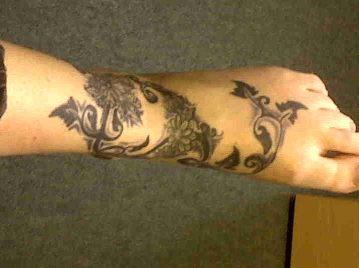
For my blog this week I thought I’d follow up on @charlottejdann’s blog on tattoos and add some personal experiences to the discussion. The media certainly have had their part to play in the negative connotations surrounding tattoos and the types of people with them, however I question the extent to which the media influence those perceptions today. Based purely on my own experience and opinion I believe that tattoos have become relatively common and as we saw in Charlotte’s blog the rise in tattoo studios would certainly seem to support this assumption. In fact, I think a process of normalisation has occurred whereby it is more surprising when someone hasn’t got a tattoo than when they have. Furthermore, the negative connotations and ‘expressed shock’ at the increase in tattooing is, in my humble opinion, typically associated to those of the older, more traditional generation for whom tattooing was a symbol of deviance, rebellion and/or disrepute.
I got my first tattoo when I was just 14; a small black panther discreetly placed on my thigh. My choice of phrase here is not accidental, being just 14 and below the age of legal consent the placement of this tattoo had to be discrete to hide it from my mother. The intentional law breaking and deception of this act would certainly look like deviance to an outside observer. Since then I added two more tattoos to my collection and have another one planned for the near future. Reflecting on this notion of deviance and my own motivation I arrive at a number of conclusions. My first tattoo was, without doubt, an act of rebellion against the expectations placed upon me by family and peers to be a ‘good girl’ and a ‘high achiever’. I don’t in any way regret that tattoo but I can recognise the reason for getting it. My second tattoo was more daringly placed on my upper arm and in hindsight was not thought through or carefully picked but at the same time it was not an act of rebellion. Those of you with tattoos may understand when I say that getting tattoos is like an addiction, you either love them or hate them but once you’ve got one, you want more. It was this ‘addiction’ so to speak that led to my second tattoo. My third tattoo which covers my foot and spreads up my ankle, symbolises the changing direction of my life after the birth of my first child and is by far my favourite to date. In short, the meaning or motivation for each tattoo has shifted over time reflecting my growth as a person and my life experiences.
At the point of my third tattoo I’d entered the world of academia and was establishing my professional identity; an identity that was in some ways at odds with my tattooed body. Wearing a professional suit and heels with a tattoo on my foot and ankle certainly led to some raised eyebrows and disapproving looks from older colleagues. This reaction was nothing compared to the openly disapproving judgements I later encountered from fellow magistrates; not only was I young to be a magistrate but I was also tattooed and had the audacity to display them in court! Linking this reaction back to my earlier statement about deviance, rebellion and disrepute, the simplest thing would be for me to wear a trouser suit in court and hide my tattoos, in essence, conforming to societies expectations of that position. However, my reasons for not doing so are twofold, firstly I am a bit of rebel at heart and secondly, I do not see my tattoos as an act of deviance but one of self-expression. In all other areas of life, I conform to the norms and values of society, I have a career and present myself as a professional, I’m trying to raise my children to be good law-abiding citizens, I pay my bills on time, I put out my rubbish when asked and I try to treat others with compassion and respect. In short, I’ve joined the collective, blended into society and accepted the expectations of me as a woman, a mother, a daughter and so forth. My tattoos therefore are a reflection of self-expression, my little rebellious side that says, “I’m more than one of the collective, I’m an individual”. Each tattoo reflects my journey, where I have come from, what I have experienced, who I am and where I am going. They tell the reader that I am more than just a number, I am an individual embracing self-expression through body art because to me tattoos are not just ink, they are pieces of art symbolising your life journey. For this reason, I agree with Charlotte’s argument that tattooed people cannot be stereotyped as a homogeneous group because tattoos by their very nature make us unique individuals.
Share this:


Perceptions of tattooed bodies

Charlotte Dann is a psychology lecturer in the Faculty of Health and Society, researching women’s tattooed bodies. You can find out more and get in touch via Twitter – @CharlotteJD
Whenever I discuss my tattoo research, I always frame it historically, because I think it’s important to consider how we have come to the point we are at with how tattoos are perceived and understood. And you know, it’s good for a laugh.
In the late 1800s, Lombroso researched deviancy and criminality, and as part of this, came to the conclusion that people who had tattoos were criminals and prostitutes. However, this research was conducted on – you guessed it – criminals and prostitutes. Despite the poor correlation that was presented, his research was influential in how we perceive deviancy and deviant bodies, to the point that those negative connotations towards tattooed bodies still ring true today. Tattoos may be ever rising in popularity (figures indicated one in five has a tattoo, and the number of studios rose by around 170% in the last decade in the UK), but tattooed bodies can still be found to be associated with deviancy.
Let’s consider the influence of the media in this. Over the past few years, there has been a flurry of articles that express shock for the fact that ‘normal’ people are getting tattoos, and why tattoos are becoming more popular for women. It only takes a quick gander at the comments left on these articles to see that public opinion hasn’t changed that much, and that these articles perpetuate negative perceptions about tattoos (i.e. they’re not meant for ‘normal’ people). Newspaper articles such as this often make reference to the ‘normal’ people who are now adorning their bodies – normal being white, middle-class, ‘respectable’ people. The narrative of such newspaper articles often seems to rely on a discourse that positions tattooing as the proper domain of ‘the other’, associated with deviant, problematised, and generally male bodies. Newspaper articles often reflect a certain moral panic about the rise of tattoos among so called ‘normal’ people, whilst at the same time, normalise the practice of tattooing itself.
The media does not do a good job in quelling negative connotations regarding tattooed people, as they tend to focus more on the extremes – the eye-catching headlines, the things that make you wince and tut, not the everyday person who is tattooed. In recent years, newspapers have reported on tattooed teachers as being ‘inappropriate’ for children, on young adults who get cheap ‘joke’ tattoos on holidays in Magaluf, and present morality tales such as those who regret their tattoo choices. In addition, they also frame our understandings of ‘who’ this ‘normal’ tattooed person is (look – even Samantha Cameron and David Dimbleby have them!)
I think what we need to do is question the idea of what a ‘normal’ body is, and really think about the assumptions we make about that body based on frankly outdated perceptions. There is no longer one particular type of person who is tattooed – the availability and accessibility of tattoo studios, designs, and techniques, has meant that you cannot stereotype all tattooed people as one homogenous group.
Share this:


Just good business or theft?

In October the Citizens Advice Bureau published a report about overcharging by mobile phone companies for mobile phones (CAB 2017). In short, a mobile phone contract usually includes the price of the mobile phone as well as the service. ‘Many people take out a mobile phone contract with the cost of the new handset included in the overall price of the fixed term deal – the majority of which are paid off on a monthly basis for a period of 2 years’ (CAB 2017). The companies often notify the consumer that the contract is coming to an end and offer an upgrade and new contract. If you are too busy or forgetful or naïve and leave the contract running, you will continue to pay for the phone even though it is paid up. According to CAB this can be as much as £38 a month.
Now consider this scenario, you enter a shop and hand over £10 for goods purchased and receive change for £20. Realising the mistake, you pocket the money despite having knowledge of the mistake.
Sections 1-7 of the Theft Act 1968 are very clear and Section 1 states:
“(1) A person is guilty of theft if he dishonestly appropriates property belonging to another with the intention of permanently depriving the other of it; and “thief” and “steal” shall be construed accordingly.
(2) It is immaterial whether the appropriation is made with a view to gain, or is made for the thief’s own benefit.
Section 5 is also very clear in defining whether property belongs to another and subsection 4 states:
Where a person gets property by another’s mistake, and is under an obligation to make restoration (in whole or in part) of the property or its proceeds or of the value thereof, then to the extent of that obligation the property or proceeds shall be regarded (as against him) as belonging to the person entitled to restoration, and an intention not to make restoration shall be regarded accordingly as an intention to deprive that person of the property or proceeds.”
In the case of the wrong change being provided at the shop, it is very clear that theft has occurred. So why not so for mobile phone overcharging? It is clear that you have handed over more money than you should through your bank account and this is an error, unless of course you wanted to pay more for your phone than it’s worth. The company keeps the money, knowing that they have overcharged you. Does that not sound like theft too? I don’t think a contract is worded in such a way that you give permission to be overcharged, nor can the company rely on the fact that the contract represents the whole package, otherwise how else would they maintain a pricing differentiation between different models? Maybe they can argue that all transactions are automated and therefore nobody forms any intent. To the latter I would suggest to those that are overcharged, ask for your money back from a person in the company and when they refuse…. Is it good business or theft?
Citizens Advice Bureau (2017) Mobile phone networks overcharging loyal customers by up to £38 a month, [online] available at www.citizensadvice.org.uk/about-us/how-citizens-advice-works/media/press-releases/ [accessed 24 November 2017].

 Thoughts from the criminology team