
Authors
-
5teveh
-
6bsude
-
abbietoal
-
abigailane30
-
akcharl
-
amycortvriend
-
anfieldbhoy
-
anitawrzesniewska
-
FlowerViolet
-
asteven08
-
aysheaobrien1ca0bcf715
-
bethanyrdavies
-
bonnieleighmiddleton
-
bronaghvh
-
bwilleva
-
charlottejdann
-
cherylgardner2015
-
chris13418861
-
criminologyanon
-
criminologysocietyuon
-
davidjpalmer57
-
Demi King
-
drkukustr8talk
-
ej213
-
finlaywilliams24
-
Francine Bitalo
-
gilliansiddall
-
gregpaillet
-
Gwen
-
haleysread
-
hannahmaysmith
-
hanpearce93
-
helenpoole2
-
helentrinder
-
ifedamilola
-
jackrichmond21
-
jazzie9
-
jesjames50
-
justinkotze
-
kayleighwillis21
-
keziaasante
-
kirstyk196
-
klgrant1
-
liammiles1
-
Lilly Lewis
-
madams1965
-
Maddyk97
-
manosdaskalou
-
marlywindle
-
Maxine
-
meganking046
-
molliekel13
-
Mr_Hari_Parekh
-
nahidatakhtar
-
natalieh2000
-
npetfo
-
Paula Bowles
-
paulsquaredd
-
robynmansfield1
-
saffron_garside
-
Sallek Yaks Musa
-
samc0812
-
samtilley7
-
samuellangley
-
seanrj94
-
shanwareing
-
Shaun Ken-ucheonye
-
sineqd
-
Sophie Rowson
-
spatchett94
-
svr2727
-
tgomesx
-
Tré Ventour-Griffiths
-
tuesdaywoodward23
-
Vaseem Khan
-
wadzanain7
-
zeechee
-
zo3conneely

That old familiar feeling

It would seem it’s human nature to seek out similarities in times of uncertainty. An indication that someone somewhere has experience they can share. Some sort of wisdom they can provide or at the very least a recognisable element that can somehow be interpreted to give an indication, that when it happened before everything turned out ok in the end. With the current world pandemic leaving so much free time to think and observe what is going on, one has to wonder at some point if the differences should be a more prominent focus point.
Historically world pandemics are not new. The plague, small pox, Spanish flu, all form part of a collective historical account of the global devastating impacts a new disease has on mankind. I found myself re-reading The Plague (Camus, 1947/2002) and pondering the similarities. Self-isolation and whole town isolation, the socioeconomic impacts on the poor seeking employment, despite the risk to health these roles carried and the heart-breaking accounts of families unable to say goodbye to loved ones or bury the dead in a dignified, ordinary manner.
Early on politicians and media were quick to compare the pandemic with war. Provocative language became commonplace. Talk of fighting the invisible enemy in the new ‘war’, with the ‘frontline’ NHS staff our new heroes giving the country hope we could win. It came as no surprise to wake one morning and see ‘memes’ shared on social media portraying Boris Johnson as the new Churchill.
Media quickly changed. Suddenly films which dramatised pandemics grew in popularity. These fictitious accounts of how the world would respond, the mistakes which would be made and the varying outcomes individual responses towards official advice would have on their chances of survival. Even I have to admit a scene from Contagion discussing the use of hand washing and refraining from touching your face seemed to echo government advice. Fortunately, the scenes of supermarket looting were overdramatic but the empty supermarket shelves and panic buying hysteria was all the same.
There were however, some comparisons made, which haunted me. I’m sure everyone has their own reasons for finding distaste and maybe mine were unique to me. A combination of my academic knowledge and background mixed amongst my own personal views and current situation. As a mother of three, I had suddenly become a teacher with the closure of schools. My recent master’s degree in education fortunately allowed me a basic, self-researched understanding of mainstream education and home education methods.
I watched as friends and family members concerns grew about how they as parents could provide an education. Initially most looked-for similarities once again. Similar timetables to school, similar methods of teaching, trying as a parent to morph into a similar role their children’s teacher has. I think most parents felt overwhelmed quite early on. Many most likely still do, because the thing is, home education is not comparable to mainstream education in many ways at all. That’s not to say one is superior, this is certainly not my opinion. Quite simply, they’re fundamentally different approaches.
I often find myself throughout my academic journey looking for comparison with concepts and areas in which I’m familiar. My undergrad in law and criminology makes occasional appearance in most of my writing, perhaps more often than not, in fact, I used my continued interest in criminological and legal concepts to make my education MA my own. Further reinforcing the idea, familiarity provides some sort of comfort as we enter something unknown.
One comparison which deeply worried me that finds its roots in criminological concepts, is those who have compared self-isolation with prison. Having experienced a long, heated debate previously following a comment I made displaying my disgust for the re-introduction of the death penalty, it seemed futile to raise the issues with this in the only social environment I had access to currently, social media. I remain hopeful, most criminologists recognise the obvious differences between the two.
In the end when we look back at this moment in history, there will no doubt be many more comparisons made. We often look to history to learn lessons and I’m not sure we can do that without recognising some sort of parallels with the situation. Whether that be for comfort, guidance, information or to learn, entirely depends on the individual. I will leave you with a quote of something I heard a few days ago which has stuck with me and provided inspiration for this writing…
“History doesn’t repeat itself but it often rhymes”
With that in mind, I would suggest we take comfort in the familiarity of similar situations, that this pandemic won’t last forever, but the difference it may make on our lives will always be our personal experiences. When we look back and search for comparison of life during the pandemic and life afterwards, we may well appreciate the experiences we once took for granted.
Reference
Camus, A (2002). The Plague. London: Penguin classics
Share this:


Is my obsession with cinema just golden age thinking?
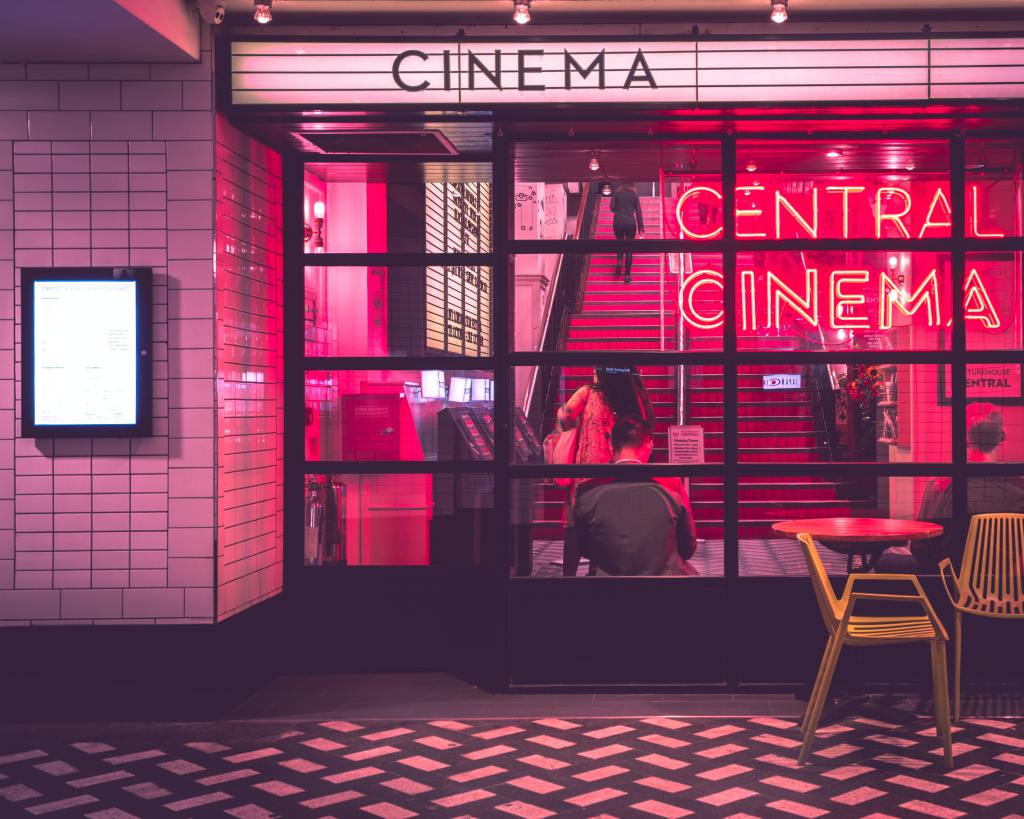
The past four weeks we’ve been in isolation is the longest period I’ve gone without going to the cinema in four years. As a holder of a Cineworld card, the cinema comes as natural to me as breathing. However, seemingly, with the arrival of streaming platforms, including Netflix and Amazon Prime, as well as access to films through torrenting, fewer people are going to the cinema when we can watch films at home with the added bonus of pausing it when you want to go to the toilet. And going to the cinema with your family is a pastime that millions of people across the world take part in. For many families, going to see the latest blockbuster is fun, but for me it’s more a home from home.
Flicking between streaming platforms, my books and other forms of entertainment, it’s given me time to contemplate about things I’m interested in, including the film industry
Since childhood, I’ve always had a respect for storytelling through the moving image, being force-fed Disney at five years old. And is it possible to enjoy 20th-century Disney films whilst seeing all the racist, sexist, misogynistic messages and imagery they hold? Nonetheless, from memory, one trip to the cinema with my parents was in the summer of 2005 at the release of Star Wars: Revenge the Sith. Then, I loved it. Now, I loathe it. Yet, in 2005, I recall going to the cinema was a family affair. An event.
Nowadays, your Joe and Jane Bloggs seem to go to the cinema because of an 85% fresh rating on Rotten Tomatoes.
What put it into perspective was when Martin Scorsese’s Silence (2016) tanked in the box office. Alas, subjectively one of the best films of 2016 and Scorsese knows his craft – from Mean Streets (1973), to Goodfellas (1990), to today with The Irishman (2019). You’re only as good as your last, and I don’t think he has ever done a bad film. Film now is less about filmmaking or going to the cinema as an event, and more about spectacle. Whilst board execs of big production companies still wanted to make money in the old days, it’s evident that Old Hollywood still had an equilibrium between maintaining standards of quality and making money in the box office.
I grew up around Double Indemnity, The Third Man, Cleopatra, Gone with the Wind and Giant, let alone Detective Virgil Tibbs, Norman Bates and Miss Blanch DuBois.
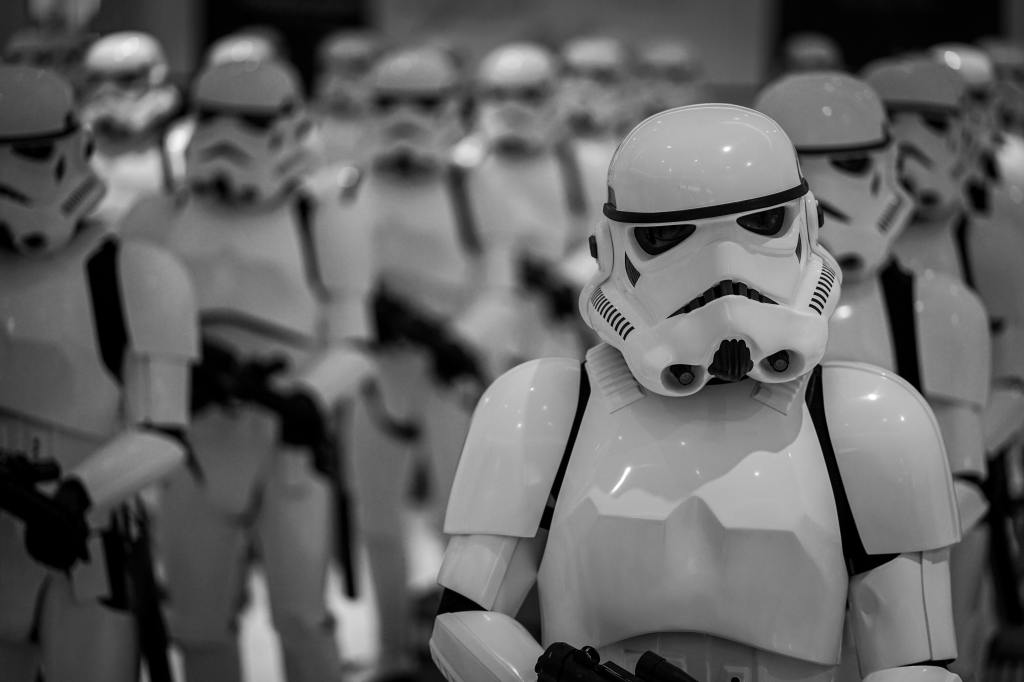
Heck, even films like Richard Roundtree in Shaft (1971), as politically incorrect as it is. And many of my family are of a delicate disposition! There are no “movie stars” anymore. Whilst once, people would have gone to watch that Harrison Ford film, as he was was the golden child of the 1980s (Blade Runner, Indiana Jones), now it’s about franchise. Robert Downey Jr. isn’t a movie star, Tony Stark is. Whilst my parents grew up going to see the latest Harrison Ford film, now it’s about the latest in the Fast and Furious franchise, or the next sequel, or Disney remake (as much I enjoy them).
The emergence of the Marvel Cinematic Universe changed the way Hollywood did business forever, especially since 2012 with Avengers Assemble which was unprecedented, let alone Infinity War and Endgame. The coming of these vigilantes has meant the death of filmmaking as we knew it. The [metaphorical] death of movie stars such as Stallone, Schwarzenegger and Will Smith. Whilst films were once made for, at least in-part, due to love of the art, now it’s about making bank in what feels like tinting the lense of nostalgia in the public consciousness. Goonies would never get made today, so let’s put it on Netflix and call it Stranger Things.
I hear the elderly, and even my parents’ generation use terms like “kids today” and the “youth of today.” And I really do feel bad for my brothers’ generation, who grew up with social media and will never know a film industry before the Marvel Cinematic Universe. Born in 2008, he is now twelve years old and was born in the same year Robert Downey Jr. debuted as Tony Stark in Iron Man (2008). When folks say kids today, I’m not sure whether they mean me (I’m 24) or him (12). When I say it, I mean children.
Born in 1995, I came into this world with Jumanji (1995), Home Alone (1990) and Matilda (1996). Moreover, the whole Disney catalogue was rammed down my throat dating back to Snow White (1939). Home Alone would not get made today. Jumanji would not get made today (not like that). My parents had Goonies (1985) and E.T the Extra-Terrestrial (1982), which would not get made today. I grew up with the same references my parents did, including Back to the Future (1985), meanwhile my brother / his peers watch YouTubers like it’s television (which I continue to find perplexing).
The way my parents talk about growing up in the 1980s, makes me envy them even more. I’m incredibly jealous of that generation. Whilst capitalism was still a thing, there was more love for storytelling. Going to the cinema now is about companies making bank, whilst then and even up to pre-2008 it was about making good films that made bank. And I think that’s why a lot of people are reluctant to go to the cinema and spend over £100 for a family of five. Most films that come out of the Hollywood system are bad. I take more pleasure out of independent films, art house, foreign films (big up Parasite) where they often still make films that are good for art’s sake.

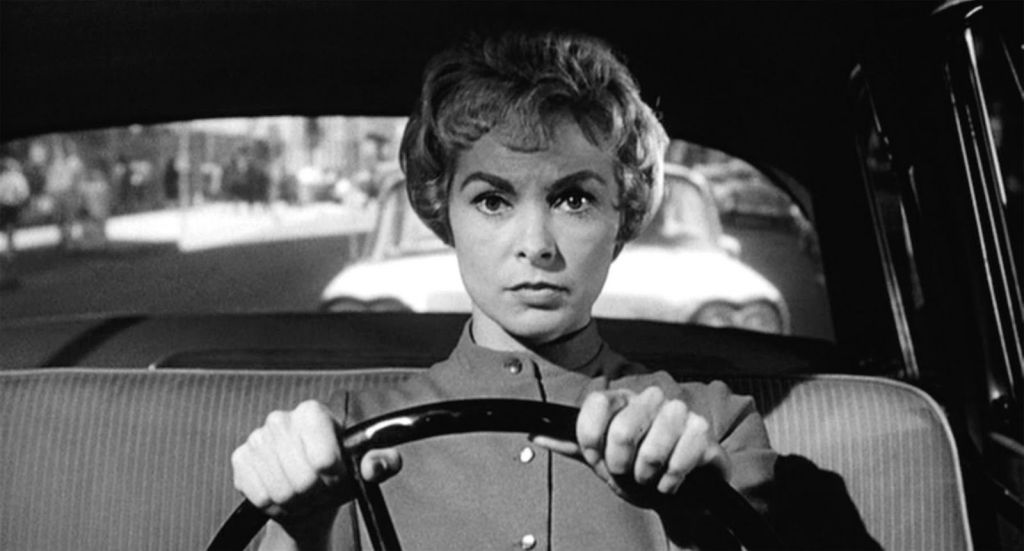
I loved Jumanji: Welcome to the Jungle and Beauty and the Beast (2017) as well as, Jon Favreau’s Jungle Book (2016), but do we need to keep remaking films and giving them sequels? Some of my favourites, including Scarface (1983) and Ben-Hur (1959) are remakes, but they add to their predecessors, rather than bringing nothing new to what was already a perfectly reasonable film. The Godfather (1972), 12 Angry Men (1957), Psycho (1960) –lock them in an unbreakable vault and throw away the key! Coming to America (1988), 48 Hours (1982), Annie Hall (1977), you can’t copy that!!
I spend a lot of time at my favourite place, the cinema. It’s bliss. I watch the blockbusters but spend an awful lot of time watching the low-key films. Supporting the types of artists that will probably be struggling due to the social impact of Coronavirus. The fact that I had to travel to Birmingham to watch Moonlight on its release speaks volumes. Many of the films I want to watch get a limited release. The cinema is sacred. I’m not certain we can say it’s dying yet, but the psychology of going to the cinema has changed.
Being holed up because of the pandemic has further shown me why I so enjoy films made before the 1970s, when there were more films that were good made for art sake; however, when they were bad, you could not hide its badness behind stylish camera angles and ostentatious uses of special effects
Share this:


“My Favourite Things”: Helen Trinder

My favourite TV show - I don’t generally like watching violence on TV – I deal with enough real-life violence that I don’t find it entertaining, but I love Killing Eve. It’s full of wit, and interesting complex personalities while being far-fetched enough to provide some escapism. In complete contrast, I also love The Great Pottery Throw Down. There’s something soothing and weirdly sensual about watching people doing pottery and I’m fascinated by how easily Keith is moved to tears by the efforts of the contestants!

My favourite place to go - There are lots of places I like to go but now that I can’t go anywhere the thing that I miss most is watching my son sail. Since he became good at it, just over a year ago, we have been to a number of sailing clubs across the country, but our home club is just down the road in Haversham. It’s a lovely tranquil spot, only a stone’s throw from Milton Keynes. In a normal summer we would be there three or four times a week, and would often camp there over the weekend

My favourite city - Of all the cities I’ve visited, my favourite is New Orleans, although I haven’t been there since it was devastated by Hurricane Katrina. I visited in 1992 and again in 1997 when it was vibrant, jazzy and very cool. I also love Oxford. I lived there for three years and still visit regularly

My favourite thing to do in my free time - I play cornet in a brass band. I enjoy making music, particularly with other people, and sharing it with an appreciative audience. No band practice at the moment, but I’m doing more personal practice than I have for a long time!

My favourite athlete/sports personality - I think Dina Asher-Smith is a great role-model, completing her degree while also training to become a world champion. I also think that Gareth Southgate is an example of a good leader. He is calm, rational and professional, he listens to his players and he puts their interests first

My favourite actor - For the ability to make me laugh and to convey so many thoughts and feelings with his face and body it has to be Rowan Atkinson. And for a huge body of very diverse work, always portrayed with sensitivity, warmth and humour, I choose Julie Walters

My favourite author - I haven’t read any of her books for a while (they can be a bit of a marathon!) but my favourite author is George Eliot. She portrays complex characters with all their qualities and flaws, and the gradual ways in which they change over time in response to their experiences

My favourite drink - Gin and tonic, preferably with some kind of fancy artisan gin

My favourite food - A bacon sandwich, obviously!

My favourite place to eat - It depends what I’m eating. If it’s the aforementioned bacon sandwich, then a warm, sunny campsite. Fish and chips taste best at the seaside, seasoned by the sea air. A Sunday roast is best at home with my family

I like people who -are enthusiastic, open-minded and willing to look at things from different perspectives

I don’t like it when people -are negative or rigid in their thinking. I’m not very tolerant of pessimists!

My favourite book - is still Winnie the Pooh by A.A. Milne. Lots of gentle humour and gems of wisdom.

My favourite book character - I have a soft spot for Adrian Mole. I first discovered him when I was about 11 or 12 and he was 13¾. We have grown up together!

My favourite film - The Pink Panther films featuring Peter Sellers as Inspector Clouseau always have my husband and I rolling round with laughter

My favourite poem - My favourite poet is John Betjeman. I like the rhythm of his writing and his use of brand names, place names and technical terms which convey a strong sense of time and place. However, I think my favourite poem is A Gift by Henry Normal. It describes someone bringing an amazing gift (a mountain) which the recipient doesn’t really understand

My favourite artist/band - I’m a big fan of 90's Britpop and I particularly like Pulp. I think their songs have clever and sophisticated lyrics

My favourite song - Following on from the above, my favourite song is Common People. It is both humorous and moving, with a strong message to people like me who come from a position of privilege and want to promote social justice. However well-meaning we may be, sometimes we just don’t get it! If I wanted some feel-good music though, I would choose Sandstorm by Darude

My favourite art - When I was 20, I went inter-railing with a friend from university. We visited the Vatican and spent a good 20 minutes simply staring at the ceiling of the Sistine Chapel. The art is exquisite – so much detail and so much movement and fluidity in the painting

My favourite person from history - As a Shropshire girl, and the daughter of an industrial archaeologist, I’m going to say Abraham Darby, who first smelted iron ore using coke instead of charcoal at Coalbrookdale. He took what he had learned from quite different contexts and applied his knowledge to provide a novel solution that kick-started the industrial revolution. And as a Quaker he also took a keen interest in social justice, in supporting his workforce and developing his community

Share this:


“My Favourite Things”: Kiera Slaven
My favourite TV show - Let’s start this off by going full nerd and saying that my all time fave tv show has to be Star Trek. Something that resonates with me is that this TV show paints the possibility of exploration of the unknown and as a global society we’ve constructed that reality. Perhaps not to the extent of beaming onto another space ship but certainly sending our own technology out to Mars…. it just fascinates me. fact check: the show started production in 67’ and we went to the moon in 69’

My favourite place to go - Easy… into nature! I’ve most definitely spent the majority of my life at Sywell Reservoir, Northamptonshire has a beautiful countryside to offer, in the spring/summer I tend to drive out into the small country villages and find a nice spot (usually a farmer's field with a public walking path) and just go for a stroll

My favourite city - Not a city person! I’ve travelled to many great cities but naturally I drift to the outskirts, the small towns, the countrysides. My favourite town would have to be Alice Springs, Australia. That dirt red town is full of so much life, vibrancy, culture, yes there is an evil side to it but there is so much beauty too

My favourite thing to do in my free time - Oh, easy one…. I love visiting second hand, vintage and charity shops. Honestly you find so many great wonders. Usually on the hunt for 60’s/70’s retro vintage furniture. Northampton has a great deal of vintage shops to offer, I would personally recommend the Vintage Retreat, lovely spot for lunch too

My favourite athlete/sports personality - certainly an oddball answer, but it would have to be Rey Mysterio. His identity eluded me when I was younger and he’s been in the business a long old time! (wrestling business that is)

My favourite actor - Jeff Bridges… what a man

My favourite author - H.P Lovecraft, an outsider in every sense of the word. He dove deep into his own mind and questioned the importance of the human race by stripping back the ego that surrounds us, and enforced the notion that actually human beings are not the most important thing in this universe. Also, he brought Cthulu to life

My favourite drink - Johnny Walker Red Label and Irn Bru (Scottish Heritage)

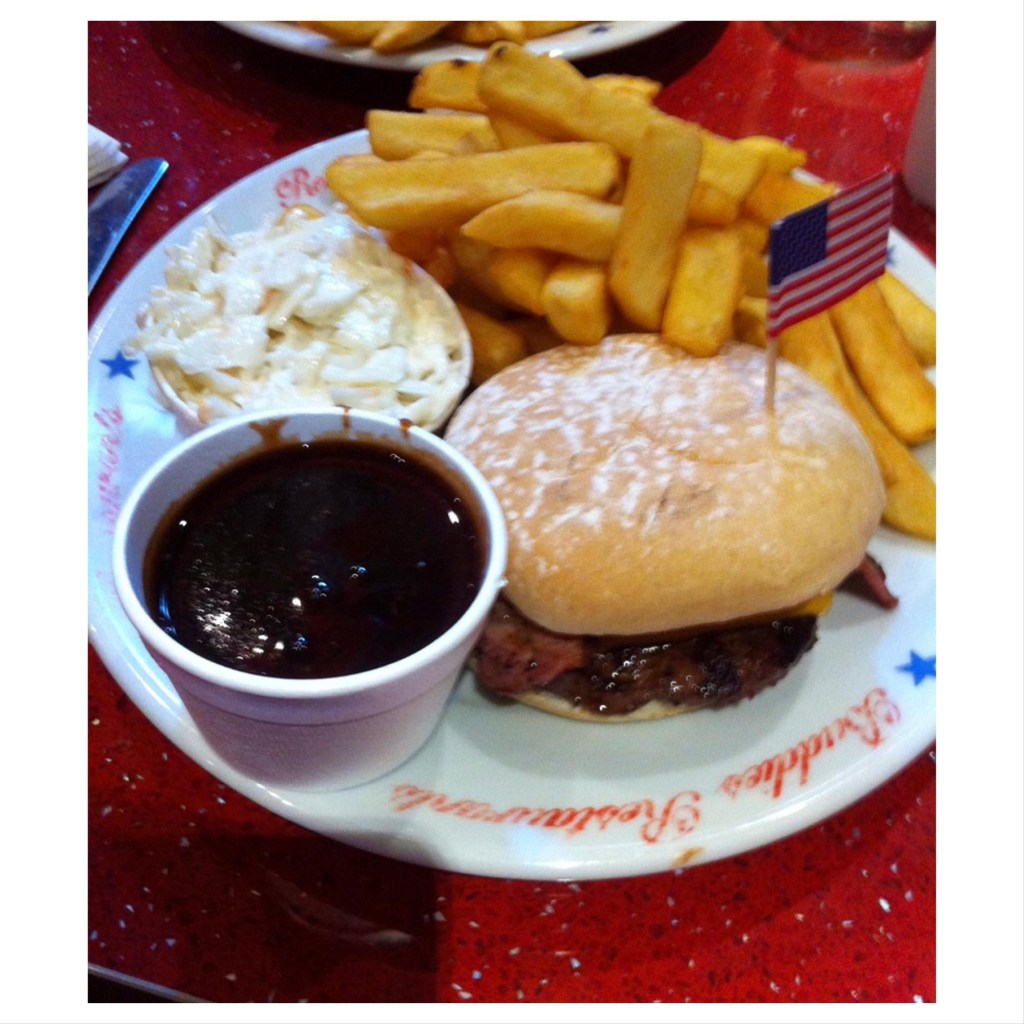
My favourite food - A sloppy Joe burger with extra rib sauce from Buddies. I'm bit rubbish at this because I can’t just pick one thing, so my other fave food would be my Granny’s home-made stovies

My favourite place to eat - Smoke Pit, in Northampton town centre, bit pricey but the food is so worth it

I like people who - are honest with themselves

I don’t like it when people - act out of fear

My favourite book - Collection of books, would have to be the graphic novel series Berserk which follows the lone mercenary Guts, for any comic book/manga fans out there, this one is a must

My favourite book character - Sorry but I have spent a few hours trying to figure my fave book character out and its just not happening. In replacement I will offer my fave TV show character and it would have to be Ragnar Lothbrok (from Vikings). Although I'm sure he exists in a historical book somewhere

My favourite film - No Country for Old Men. Need I say more

My favourite poem - I have never been one to frequent in poems, so I will insert my favourite quote here instead and you may seem to notice a reoccurring theme here (my love for H.P Lovecraft). “The oldest and strongest emotion of mankind is fear, and the oldest and strongest kind of fear is fear of the unknown.” It is certainly poetic

My favourite artist/band - Metallica!!!

My favourite song - Sam Cooke, A Change is Gonna Come and The Eagles, Hotel California

My favourite art - ANYTHING Raoul Dufy. Light hearted bursts of colour that paint the most luxurious and relaxing scenes. Artwork to get lost in

My favourite person from history - Marcus Aurelius. If you don’t know who it is get your google on, you won’t regret it. Fun fact: Aurelius’ personal ethics are informed by the philosophical concept of stoicism, a fascinating philosophical concept and one I deeply resonate with
Share this:


RTFQ and the real world

The other day I had occasion to contact Her Majesty’s Revenue and Customs (HMRC) and I did this via a web chat. My query was simply about seeking an explanation regarding tax relief. I compiled my question starting off with ‘good morning, I’ve had my tax code updated and am a little confused.’ I then went on to explain in a few short words where the confusion lay.
The response back was quite familiar, it would be to those that use web chat and quite expected, ‘Thank you for your patience, the next available advisor will be with you shortly. You are 7 in the queue’. Little was I to know at this stage, that my patience was about to be severely tested, not by the waiting time but by the advisor who, to avoid any embarrassment to the real person, we will simply call ‘Jo’. After eight minutes of waiting (not a particularly long time) I was through to Jo and greeted with a request for my details for security.
Once supplied, I was told that Jo would be looking at my record. Jo then responded by telling me that the adjustment in my tax code was due to an underpayment from the 18/19 tax year, explained how much it was and the fact it would be collected through the tax code. Now I should point out, this was not the question I was asking, RTFQ, I wanted to know about an aspect of tax relief and just to add to the confusion, the HMRC website tells me I do not owe any tax from the 18/19 year. The latter makes sense to me because I paid off the amount owed in 19/20. A little agitated I responded with my question again trying to make it a little clearer, as if it wasn’t clear enough. I added to this by asking if my assumptions were perhaps incorrect and if so could Jo tell me when the rules had changed. The response was ‘one moment’. Four minutes later I asked, ‘are you still there?’, the terse response was, ‘yeah, i (sic) am looking through the guidance for you’. This does not bode well!
Trying to be helpful, I responded by explaining the tax relief I received last year, and the fact that I ought to receive it this year, unless of course the rules have changed the response, ‘one moment please’. To be followed by ‘the 480 is from 480.00/40% = 1200 so its at 40%’. Now I’m no Trigger (see Only Fools and Horses) but this mathematical genius has me somewhat perplexed, so I pushed a little further to see if I could get an explanation of this. I ended up with ‘480.00/40% =1200 which is 40% of the 480’.
My patience wearing a little thin now, I asked to speak to a supervisor only to be told there was no supervisor available and ‘They will be telling you the same thing, you can call in to speak to someone else if you want’. So, I can hang up on the web chat, start another and in the lottery of numpties, I will take my chance that I might not get another Jo to answer my query, I think not. To add insult to injury, Jo had just previous to this provided me with an answer that was in fact the basis of my question, we seemed to have gone full circle (RTFQ). In desperation and trying to prevent my blood pressure rising further I tried to draw this to a close by pointing out the problem as I see it, prefixing this with, ‘I’m not trying to be difficult. I just want an explanation as to why …’. I followed this up with, ‘If you cannot answer that, then please just say so’. The response, ‘I have explained to you the best way i (sic) can Stephen’. Now that’s me told! Best not push it further.
I recall first hearing the term RTFQ when I was about to sit a promotion exam. RTFQ the invigilator shouted, before gazing upon my quizzical expression, ‘read the f*** question’ he explained. I frequently remind my students of this mantra before they sit exams, it is one that serves us well, not just at university when sitting exams or completing assignments, but in life. Although I’m not sure that RTFQ is something that Jo needs to prioritise whilst tripping through the wonderment of mathematical equations.
Or maybe, just maybe, it is a new tactic by HMRC to limit enquiries. I certainly won’t be calling back in a hurry.
Share this:


Things I Miss, or Introverts vs Coronavirus

The thing I hate most about self-isolation is how quickly I eased into this new pace of life. Is that the privilege of having somewhere to self-isolate to or does it come with having an introverted personality? Before quarantine, many would perceive me as a mild-mannered individual. I ask a lot of questions. I guess that’s where my affinity for journalism comes from. Yet, in a global crisis, not much has changed. For someone that suffers from anxiety, one would think I would have more emotional unrest during the worst public health crisis in a generation. But no. I’m content, staying at home.
Whilst this pandemic has been liberating for me, it has shown how much privilege I still have despite being at three disadvantages in society: the colour of my skin, my invisible disability and being an introvert in a world designed for extroverts. Yet, cabin fever does set in once in a blue moon and sometimes it does feel like Groundhog Day. Despite being at comfort in my own space, my concept of time is being challenged. Like, what is a weekend? Not even Bill Murray can save me from this paradox. Not my books, nor Disney+ subscription, films, or The Doctor, Martha and that fogwatch.
What I hate about being an introvert in the buzz term of today – “unprecedented times” – is how I’m not suffering like my extroverted friends. Perhaps this is what it means to live in society designed to accommodate you. The world outside of a health crisis – is this what it’s like? Imagine if I also happened to be an able-bodied, White, straight man as well? Just imagine. Today, extroverts are suffering. Ambiverts are suffering. When this is over will we see an increase in agoraphobia?
And in a society where extroverts are privileged over introverts, the outgoing outspoken marketing professional is valued more than the introverted, reclusive schoolteacher.
Yet, today, we are seeing the value of nurses, doctors, teachers, lecturers / academics and so forth. Many of whom will be introverts going against the grain of what feels normal to them. The person seen to be outgoing and talking and networking is regarded as a team player, in comparison to the freelance blogger or journalist writing away on their computer at home. Many of my teacher friends that talk for a living also love to recluse in their homes, as drinking your own drinks and eating your own food in your own house is great. Can you hear the silence, the world in mute? Priceless.
In my job, I recall in the training we did the Myers-Briggs test in order to get to know each other better. Safe to say I was 97% introvert, which had increased somewhat since I was a student. Coincidence, I think not. In a job where I also go to meetings for a living, and network and people (if I can make a verb out of people), it can be draining. The meetings, the networking, the small talk, the different hats and masks people wear.
As awful as Coronavirus is, I will go back to my intro in saying that this new pace of life is almost like a dream, with intermittent periods of cabin fever. I can recharge my life batteries when I want. I can be alone when I want. I can read, watch films and television series when I want. I like to engage in activities that require critical thought. Self-isolation has given ample time for that. And good things have come from my introspection. Moreover, many conversations with myself. No, I’m not Bilbo Baggins. However, to talk with oneself is freeing. It’s the first sign of intelligence, don’t ya know?
But self-isolation to me and many of my introvert colleagues, it’s our normal. Social distancing is a farce because we are still being social. “Physical distancing” is a better term. Not in this era of WhatsApp, Instagram and Zoom, we’ve never been more social. Coronavirus has shown us a social solidarity that I thought I would not see in my lifetime. To put it bluntly, Coronavirus has pretty much eliminated the quite British obsession of small talk, and given me opportune moments to think.

Whilst my extrovert colleagues want to have that picnic in the park, I’m quite happy to sit in the garden. There lies another privilege. Simultaneously, I seldom feel the need to go out. Where I miss my cinema trips, I remember Netflix, Amazon Prime, Britbox and Disney+. Sure they’re not IMAX but they’ll do. I miss the pub but there’s the supermarket with all sorts of choices of IPA to choose from. Indeed, I have found solace in having my access stripped right back. The freedom to choose afforded to me because I work and live in a “developed country” (I use this term loosely).
For those of us that live in Britain, Coronavirus has swiftly shown that we live in a first-world country with a third-world healthcare system and levels of poverty – highly-skilled medical professionals in a perilously underfunded NHS systematically cut for the last ten years by the Tories.
Unlike University, I can mute social media for a couple of hours, and do some reading. I hate that I am so comfortable, whilst others are not. I often think about international students shafted by visa issues, and rough sleepers who don’t have the privilege of thinking about self-isolation. What about those having to self-isolate in tower blocks like Grenfell? What if we were to have another tragedy like Grenfell during a public health crisis? I hate how Coronavirus has exposed underlying inequalities, and how after this, these systems of power will likely carry on like it’s business as usual.
I don’t feel defeated or bored but the other inequalities in society do make me worry. Having been a victim of racism ten times over, both by individuals and institutions, I know that racism is its own disease and it won’t simply go on holiday because we’re in a pandemic. I know increasing police powers will disproportionately impact people from Black backgrounds, especially in working-class communities, but as Black people (pre-Coronavirus) at a rate of nine times more likely to be stopped and searched than a White person in Northamptonshire is bad enough, isn’t it?
This solitude has pushed me creatively with my poetry and own blogs. Take Eric Arthur Blair, or George Orwell as he was known; when he was sick with TB, he wrote Nineteen Eighty-Four. The book we now lord about today is essentially a first draft. Rushed. A last bout before death. In my isolation, I’m excited for the number of dystopian texts that will come out of Coronavirus, particularly political narratives on how Britain and America reacted. I’m looking forward to artistic expression and if the British public will hold the Government to account. One could argue their thoughtlessness, and support of genocide (herd immunity) is a state crime.
Whilst it is easy to blame the Chinese government, our own government have a lot to answer for and metaphorically speaking, someone (or quite a few people) need to hang.
A good friend and confidant has implored me to write a book as a project. Being naturally inward in my personality, I could do it. Though, I have my reservations. Perhaps I could write a work of genius that goes on to define a generation. Nonetheless, I observe that during lockdowns around the world, there will be both introverts and extroverts applying their minds to art and creativity. Writing books. Painting pictures. Discovering theories, like Isaac Newton did when he was “confined” to his estate during the Plague in 1665.
One day the curve will flatten: we will see each other again at the rising of the sun, folks say we must make use of this time; however, this is unprecedented, so it is also perfectly okay to be at peace with your loved ones, cherish those moments, and do absolutely nothing of consequence at all.
Share this:


I wanna be like Mike #BlackenAsiaWithLove
Originally written: 26 November 2001
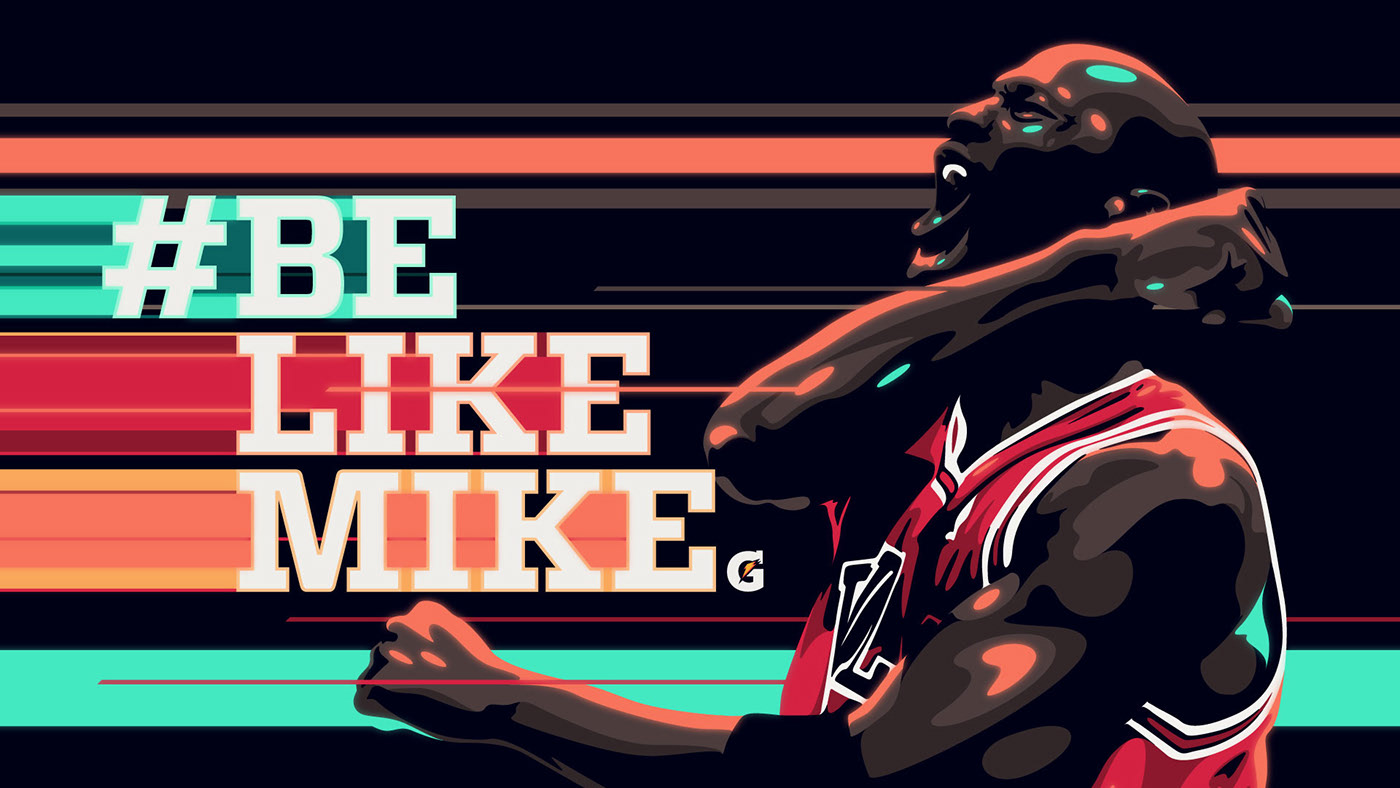
I wanna be like Mike. Mike is filthy rich, in great physical condition, is well perceived by not only his fans, but also the wider public, and he’s even faithful to his monogamous relationship. Mike is generally agreeable, and you almost never see him expressing aggression towards others outside of the game. Mike has never been ‘exposed’ as gun-totting, neither bashing women nor gays, and he’s even pretty articulate. Rumors spread about his philanthropic efforts the same low-income communities where he grew up in a hard-working family. His best friend and biggest fan is his dad, and Mike is so sensitive and secure with his manhood that he wept before the nation upon his dad’s death. Mike’s at the very top of his craft yet never brags and never rests on his laurels. Mike’s humble and certainly a team player. “Nothin’ but net.” Mike works hard.

This is what America tells the world, and outside of this country (which is neither the center of the universe nor even this tiny planet) many believe that Mike is wholly representative of the American dream. For sleuths of Americans, he’s likely representative of the ideal American. I mean, I am not a sports gladiator nor was I born with a trust fund. Hence, in order to be like Mike, I am in school. I work hard. Thus far I’ve earned a degree from an elite university and am currently enrolled in another. I estimate that so far, my education itself has indebted me over one hundred twenty thousand; and I am nowhere near done. There’s little guarantee that I’ll be wealthy, or even employed. There’s absolutely no guarantee, and in fact, factors are working against me finding a lifelong stable monogamous relationship.
 And I am quite privileged. Imagine if you will, most of the world. Most of us have received that chain e-mail which looks at the world population scaled down to one hundred folks. Imagine if this entire Earth’s population were composed of just one hundred people, there would be less than one person with the opportunities I’ve had. So then, how many would have those opportunities like Mike?
Don’t e’rybody wanna be like Mike?

Imagine now, that you have a happy, humble life. You work hard. You live in the south of France and you attend to the vineyard, just as generations upon generations of your ancestors have done before. What are your chances of ever being like Mike? Imagine that you’re a social worker in Kazakhstan with few resources to offer those who present themselves before you, regardless of their destitute. You work hard. Imagine you’re a child soldier in Sierra Leon who was forced to burn his village to the ground after being forced to massacre several relatives. You cling to the drugs your captors make you take numb you when they rape your mother and sister. You work hard. Imagine that you’re sitting with a doctor in Botswana as she tells you that you are HIV+. You join a quarter of Botswana’s population who live with HIV/AIDS. You work hard, but the monthly medical costs of a person living with AIDS is much more than a year’s salary for you and your husband, who is also positive. Now imagine you are their kids. You like basketball, too. And you practice every day with the plastic carton nailed to the tree out back. You work hard. Imagine you’re the same kid, with the same circumstances, only you’re in the ghettos of America, just like Mike. If you work hard, wouldn’t you become an Olympiad? Wouldn’t Obama present you the Presidential Medal of Freedom in the White House with the Gates? Couldn’t your image become a logo?

Be Like Mike in the coupons section of your local Sunday paper!
What are your chances of ever being like Mike? You work hard. Would it anger you that these images bombard your life? This world is big, but Mike’s dream persists…and penetrates every market on Earth. We’re all sold that version of that dream – that anyone, even a kid as regular as Mike, could be like Mike. If he can do it, anyone can (and you can with this can of cola, sports drink, burger, apparel, underwear, or other consumable… be like Mike) Don’t it inspire you? No rim! Don’t you want to be like Mike?
Share this:


Within Grey Walls
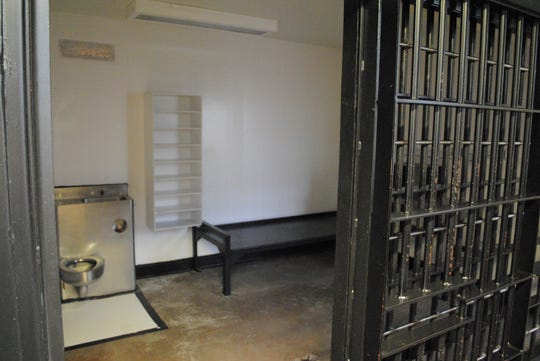
“Waking up to gray walls and black bars…in the silence of ones own thoughts, leaves one to a feeling of somberness…as those around begin to stir and began their individual day, hope creeps into ones mind….as the discussions regarding legal strategies began, hope then becomes more than just a shadow…as guys began to discuss their potential future beyond prison and being locked in a cell for days at a time, hope becomes more than just a fleeting moment! Silence can sometimes be ones own enemy on death row:-…So I condition myself to discover the “why” I fight through the fits of depression and despair, instead of focusing on the “how’s”….because pursuit of the “why’s” bring about methods of finding a solution….encouragement to remain hopeful!”
Everyone has the right to life, liberty and security of person (1).
Without the right to life, we cannot enjoy the freedoms set forth in the Universal Declaration of Human Rights.
However, what if one’s life was imprisoned and waiting to be ended for crime? In addition, what if a person was to be put to death for associating with a particular demographic?
The death penalty is the authorization of the state to kill a citizen for a crime, whether it’s murder, rape, treason, or more severe crimes, such as crimes against humanity and genocide (2).
Whilst the death penalty can be a deterrent, provide justice, and be the ultimate punishment for a crime and justice for victims, it is also used in some countries to persecute minority groups, such as the LGBT community (3) (4). (In references, there is a link to an interactive map of countries that utilize the death penalty for LGBT groups).
According to the Death Penalty Information Centre (DPIC), around 82% of cases involving capital punishment, race was a determining factor of giving this punishment, in comparison to white counterparts (5). However, the justice system is far from perfect, and miscarriages of justice occur. Due to issues of racism and racial bias (particularly within the American Justice System), this has seen members of minority groups and innocent people put on death row whilst a criminal still walks free. A damning example of a miscarriage of justice, and a clear demonstration of racism, is the case of George Stinney, whom, at the age of 14, was wrongly accused of murdering 2 girls. He was taken to court, tried by an all white jury, and was given the electric chair (6).
This, ultimately, is the state failing to protect its citizens, and causing irreparable damage to others. The George Stinney case is a condemnatory example of this. On top of that, it is hard to measure deterrence, and whether capital punishment actually deters people from committing crime.
However, what is it actually like being on death row?
June 2017 saw the start of a new friendship – a unique friendship. What simply started out with me wanting to reach out and be a ray of light to someone on death row, turned into a wonderful experience of sharing, support and immeasurable beauty. In June 2017, I began writing to a man on death row, and simply wanted to be a ray of light to someone in a dark place.
He has shared some of his thoughts of what it is like to be on death row:
“Perseverance. This is key when facing a day in prison (physically and mentally) because is never “where” you are physically, but your ability and willingness took push through those times of adversity and overcome the very things that have the power to bring you down….such as evil”. BUT- when we examine the word “evil” look closely…. Do you see it yet? ….. It’s “LIVE” backwards and to me its when we lose our patience to “LIVE” that we have brushes with “evil”…no???? So within these walls I do my best to find the “silver lining” and develop the better aspects of me”.
Now, it may seem effortlessly -but- in all honestly….its very difficult to face each day with the uncertainty of knowing whether the presence I have is one that has significance….in here I have to prepare myself on a constant basis in order to be the best version of myself no matter what lays ahead.
Thankfully….I have met an incredible person, who guides me by way of her words…offers me comforts by way of her thoughts and prayer and encourages me through her never ending presence! She is beautiful in every aspect of the word…She has helped me to discover that EVERYTHING and NOTHING awaits beyond forever!
References
(1) Universal Declaration of Human Rights (UNDH) Article 1 Available online at: https://www.un.org/en/universal-declaration-human-rights/ Accessed on 21/01/2020
(2) Louise Gaille ’15 Biggest Capitol Pros and Cons’ Available online at: https://vittana.org/15-biggest-capital-punishment-pros-and-cons Accessed on 24/03/2020
(3) The Human Dignity Trust ‘Saudi Arabia: Types of Criminalisation’ Available online at: https://www.humandignitytrust.org/country-profile/saudi-arabia/ Accessed on 24/03/2020
(4) Death Penalty Information Centre ‘Executions By Race and Race of Victim’ Available online at: https://deathpenaltyinfo.org/executions/executions-overview/executions-by-race-and-race-of-victim
(5) Ibid
(6) Snopes Fact Check ‘Did South Carolina Execute 14-year-old George Stinney, then declare him innocent 70 years later?’ Available online at: https://www.snopes.com/fact-check/george-stinney-execution-exoneration/ Accessed on 24/03/2020
Other
Interactive map of countries where the death penalty is used against the LGBT community: https://www.humandignitytrust.org/lgbt-the-law/map-of-criminalisation/?type_filter=crim_gender_exp
Human Writes: https://www.humanwrites.org
Share this:

Are We All God’s Children? #BlackenAsiaWithLove
Warning: This is prose is an original work of fiction about an aching and divided world. May we develop a culture that values the strength to love.
Somebody once tried to tell me that we were all God’s children,
That all people were born into His kingdom,
Flesh of His flesh,
And meant to reign over the Earth on His behalf, with His grace.
I never bought that crap.

If people believed in God, would they alter his garden so drastically, that the earth itself is fighting back for life?
How can we say we were put here by Him,
Only to treat this place like crap!?!
If people believed in God, then
Why do so many of us try to rework the image He gave us?
We prick, pull, peel, perm, slim down and slice up our bodies so dramatically, that
We’re often unrecognizable to ourselves.
If we were created in His image, why do we mutilate it so?
I never bought that crap.
If people really believed in God, then
Why do we give in so easily to jealousy,
Riding the coat-tails of others,
Admonishing those who do good, but
We’re still victims of what we consider to be as ‘perfect’.
You can’t be Woke in this word unless you’re Jesus,
And you see what happened to Him.
If Jesus Christ walked into the White House, The Vatican or #10 today,
They’d crucify Him all over again.
Did I mention today’s Easter Saturday…the one day between crucifixion and resurrection…
The one day when Jesus is truly dead…
Only the believers believe that he’ll come back.
But His followers today would be ready to make Him a martyr all over again…
Just to keep their story straight.
I never bought that crap.
WWJD Today?
If Jesus walked in here today,
I believe he’d be trying to heal the masses with some universal salve that cures all…
But drug companies saw their profits dive and so they crucified Him.
They were out for blood, and with the strength of their lobbying,
Blood is what they got.
If Jesus walked in here today,
I believe he’d feed the needy.
But conservatives would see their power draining,
Since they needed to demonize the poor as welfare losers.
Jesus was giving them a hand up, not a hand-out, and
Many had climbed out of poverty,
Too many climbed out to manipulate, so
They labelled Him a socialist.
Conservatives got together and decided to crucify Him.
If Jesus walked in here today,
I believe he’d rid us of WMD.
That includes guns!
Masses of people are killed by their own guns.
But Jesus wouldn’t want people going around gunning down wild animals for sport, either– Even to the point of extinction.
They called Jesus a tree-hugger because He brought up the near extinction of the North American bison in the same breath as
He gave the stank face to big-game hunters today.
Jesus said:
“Hanging the dead corpse of your kill on the wall was death worship,” and
Questioned if such people could call themselves Christian?
He was here to promote Life.
Jesus said anyone was a hypocrite for restricting access to birth control.
He accused those religious zealots of misusing His name in order to control women’s bodies and wealth through meds and policies.
Jesus promoted reproductive choices with the proceeds people always gave Him.
Jesus even invested in birth control for men, including
A pill, an injectable and a scrotum implant.
He claimed He was empowering men to be able to have that choice.
Worse still, Jesus was not only a carpenter, but an avid horticulturist…
He grew His own.
Everything.
And He had led pilgrimages through forests to hug trees.
He only hugged trees tapped for logging,
Jesus loved hugging trees so much he’d once got several thousand people to go down to the Amazon and chain themselves to the trees high up in the canopy.
He said forests were his Father’s first cities; who were we to tear them down?
Logging was sacrilege.
And as for this tree-hugging crap,
Jesus was a vegan, too.
He said He couldn’t hurt any of God’s creatures, and
Even though He didn’t suggest we all refrain from meat,
He used His YouTube channel to interview more humane animal farmers around the world.
(Oh yeah, there was also that time Jesus went to Davos – uninvited-
He weighed in on fair trade. Isolationists were none too pleased).
He even had vegan cosmetics lines.
He had interviews with His farmers, factory workers, warehousing, delivery, even retailers to show good working conditions and fair pay.
Because of this, consumers said His pricing was fair, and began campaigns to press the other major companies into transparency, too.
LVMH’s sales took nose dive, as did others.
Worse, still, He only marketed His vegan haircare brand, Glory Locks, through
Online tutorials for wooly hair.
His conditioner, Kinky Salvation, became a sensation in the natural hair care community, where
It was discovered that the formula also beat hair loss!
Jesus could regrow hair!
That year, GQ put Him on the cover as The Man of the Millennium.
He caused a bidding war between major cosmetics companies when He agreed to sell His patented mineral foundation, Holy Teint.
There were lines in stores when He released new compact motifs-
The blue dove and the red cross sold out within hours.
Reviews in Vogue, Bazaar, Cosmo and more all said His foundation matched coppery skin tones above all other brands.
His vegan cocoa butter, Divine Skin, had seen sales of Vaseline drop by 50%.
As a vegan,
He was most animate about respecting God’s plants enough not manipulate seed genes that can’t reproduce,
Just so farmers would have to buy more each season.
The giants of pesticides and seeds, beef, logging all got together to take Him down.
Big chicken, Big Fish and Big Pork all joined in the Jesus bashing, too,
For they knew he’d soon come for them.
He’d already posted a nasty comment on a viral video about an industrial chicken farm, for which Netflix had given Him a ten-part special called: Unholy Food, Inc.
He went all vegan, too!
Not even honey was safe,
And the episodes of palm oil and avocado saw those commodities’ stocks dive the day after each debut!
Now, that’s gangster!
Jesus was no joke!
At Michael Jackson’s funeral,
Jesus did an interpretive dance to the artist’s Will You Be There.
At the end of His performance, He suddenly grabbed the mic in tears and said:
“I love my Jackson 5 nostrils, and I believe if Michael had, too, he’d still be here.”
Katherine and Joe Jackson just hung their heads.
‘I love my Jackson 5 nostrils’ quickly became a meme and
Later incorporated into a pop song.
He was accused of being anti-white.
In an MTV interview about the controversial lyrics, He said:
“The clear message here is that…
What we consider beautiful too often has too little to do with our authentic selves.
We do the exact same to mother Earth,
Digging, prodding, cementing over and dirtying up the air and waters of My father’s kingdom.”
Jesus was deep.
He was an avid reader, too.
Jesus wept when He read the Letter from a Birmingham Jail.
When asked for comment He simply said:
“So few in My Father’s kingdom have the strength to love.”
For the 50th anniversary of the Stonewall Riots,
Jesus accepted invitations to lead Pride parades all over the world.
People thought he’d had enough in New York, Chicago, Boston, LA and of course, San Fran.
But many were surprised when Jesus was on the first float at Black Gay Pride in Atlanta and DC!
None were shocked, then, when
Jesus showed up at London and Paris Pride and Christopher Street Day in Berlin.
But no one, and I mean no one,
Imagined for a second
That He’d dress up silly and
Dance with a gay Christian Carnival Crew at Cologne’s CSD Day!
When did He even have time to practice those moves?
Who knew He had such an angelic voice…
Until they heard His rendition of George Michael’s Jesus to a Child.
He brought everyone to tears that day in Heumarkt Square.
Plus, everybody loved the performance He did with Conchita Wurst of Beyoncé and Lady Gaga’s Telephone.
The two bearded men literally re-enacted the whole music video !
Who knew Conchita could do Gaga drag?
They popped-locked-n-rolled in spandex just like in the video.
Who knew Jesus had a black-boy-bubble-butt…
Like somebody cut a basketball in half and hung it off His tail bone.
Both videos went viral.
This was way too much for those in Africa who’d used His name to bash gay people.
They buckled down and passed anti-gay laws,
Nigeria making sure they out did Uganda.
They dismissed this Jesus as evidence of the decay in European values.
When He accepted the invitation to Pride in Cape Town and Nairobi…
Those in the region got ready.
Pride was canceled in Uganda.
Others roused lynch mobs from the pulpit.
They crucified Him all over again.
If Jesus walked in here today,
I believe he’d heal the disabled.
Jesus wouldn’t heal their conditions by some miracle of making a blind man see, a deaf man hear, or a crippled man walk.
Nah, nothing so simple.
Jesus removed what really hurts – fear and discrimination.
He targeted the stigma against disability.
No longer viewing different abilities as a liability,
Jesus undermined entire industries built around keeping them down.
Suddenly, office workers had to compete with the wheel-chair bound because,
Who needs to be able to walk into an office?
People had already seen how Autistic Savants could
Show us patterns in our lives that unfold life’s mysteries,
But Jesus showed the people how every person of every ability had something to contribute.
Charities for the poor fell because,
There were no more poor people – everyone had enough.
Politicians who’d been shoring-up votes by vilifying the Other as leachers could no longer galvanize their base around these fears.
The people eventually elected politicians who represented the people.
Somebody had to “take the country back, to make it great again,” so
Big Lobbying fought back.
Jesus had removed the control large corporations had over these politicians, so
They crucified Him.
Needless to say, because Jesus intervened,
There was universal healthcare that cared for the whole body – any body.
They resisted calling Him a socialist, but when Corona happened,
Everyone saw that unlike society, diseases don’t discriminate.
More of those who confessed to follow Him could see the sense in universal healthcare.
Insurance companies got together with Big Pharma and crucified Jesus for he’d taken away their monopoly.
Jesus exposed all their tricks, from
Inventing diseases to which only they had the cure, to
Hiding antidotes when they could instead sell us life-long supplies of meds that
Keep us just barely alive.
Jesus was fed up with humanity, but never gave up.
Jesus not only made room for the disabled, but
Made sure everyone got looked after.
He had to die.
He was much too good for this world.
It was clear to them that the only good Jesus was a dead Jesus –
The dead one they’d created in their holy books.
This resurrected one just wouldn’t do.
So, Jesus had gone too far.
War-mongers would vilify Him in the UN, and
Circumvent the authority of the world community, and
Wage a military campaign to track Him down.
For these war-mongers would charge Jesus with hoarding WMD.
They preferred the Iron Curtain to the Prince of Peace, so
They convincingly made the public scared of Him.
Big men wielding big sticks hunted Him down,
During a 40-day Vipassana retreat He’d taken in the Judean desert.
24-hour News spent months replaying drone and Body-Cam footage of His last moments,
Where their bullets crucified Him on the spot.
Just as they’d done for Osama Bin Laden,
Crowds of Christians gathered that night at the capitol to celebrate the blood-shedding.
They were death worshippers.
They even built a statue of Him on that spot to commemorate His sacrifice.
Crowds gathered there each Easter for festivities.

Share this:


If Slavery is the crime, my surname’s the crime scene

As we reach the 180th anniversary of the emancipation for when the last slave was truly free in the British Empire, we must look at the legacy of the Slave Trade today. It can be seen in the names of many Black Britons from Caribbean backgrounds. Griffiths (Welsh) and Ventour (British-French), you cannot get more European than that. My names are proof that Britain and France took part in the oppression of my ancestors. They are part of my family history. And as Glasgow Councillor Graham Campbell says, “When you are part of the crime scene, you cannot let the evidence walk away.”
My brother’s visit to the International Slavery Museum in Liverpool with my mother brings it home. That in going there, for him it was slavery in black and white, literally. It showed that slavery didn’t discriminate by age. It impacted people from babies in their mother’s arms up to the elderly. I watched Roots for the first time at eight years old. And I will never forget Kunta Kinte saying his name. Desperately clinging on to the last piece of himself. His name. Not the name of the slave master. His African name.

In my exploration of my own names and their links with transatlantic slavery, I have seen I am the worst kind of person. When I ask a person I know to be Black British with a European-sounding last name about their names, what I’m doing is fishing on how they got that name. The fact that I know Black Britons whose last names are things like Richards, Smith or Francis. That on a CV, you would not know the colour of their skin based on their name. Speaking to many Black Britons, I find our slave-ridden past to be an uncomfortable topic, but it’s also a story that the White establishment in Britain would prefer to keep invisible out of the way.
The other day before Britain went into lockdown, I went to afternoon tea with some colleagues of mine from University. Being Black in those settings is strange in my opinion – an everyday thing that comes from colonial times, reminding me of big houses and slave plantations, and escapees would have their legs and feet amputated like Kunta Kinte. It reminds me of famine in Ireland and India, and the genocide of Indigenous Americans.
That when my ancestors were working under masters’ wrath, Master Ventour and Master Griffiths would be indulging in tea and cakes. In Britain we present colonialism as something to be proud of. That we went to these places as explorers and “civilised” the indigenous people, passing it off today as teaching them about English niceties, etiquette and table manners.
In my role at university, whenever I have encountered international students, I do my utmost to try to inform them of the history this country does not tell in its travel guides. That if they went on a tour of Trafalgar Square they would not learn that Admiral Nelson married a plantocrat’s daughter on a Nevitian slave plantation. That as part of the Royal Navy, it was his job to protect British commerce, including slave ships. We do not tell this history to holidaymakers or students in any real depth because it shows that our good etiquette and table manners are written in blood.
When I broach these subjects, I see people that just want this Black person to go back to whatever “shithole nation” he came from. Growing up, I was often silenced by my peers at school for talking about slavery. However, if you tried to silence the Jews for talking about The Holocaust or the Irish for talking about the Potato Famine, I am certain they would have something to say. For Black people, the Slave Trade is our Auschwitz and those sugar, tobacco and cotton plantations in the US and Caribbean were death camps.
Whilst there are more positive images of Black history we need to see, we cannot neglect the over two hundred years of British slavery. And if you walk around this country with its grandeur and National Trust stately homes, you will see the money of colonialism without the blood.
So, when you have the Windrush, along with their children and grandchildren living in the centre of colonial power, you are part of the crime scene and you can’t just walk away.

 Thoughts from the criminology team