
Authors
-
5teveh
-
6bsude
-
abbietoal
-
abigailane30
-
akcharl
-
amycortvriend
-
anfieldbhoy
-
anitawrzesniewska
-
FlowerViolet
-
asteven08
-
aysheaobrien1ca0bcf715
-
bethanyrdavies
-
bonnieleighmiddleton
-
bronaghvh
-
bwilleva
-
charlottejdann
-
cherylgardner2015
-
chris13418861
-
criminologyanon
-
criminologysocietyuon
-
davidjpalmer57
-
Demi King
-
drkukustr8talk
-
ej213
-
finlaywilliams24
-
Francine Bitalo
-
gilliansiddall
-
gregpaillet
-
Gwen
-
haleysread
-
hannahmaysmith
-
hanpearce93
-
helenpoole2
-
helentrinder
-
ifedamilola
-
jackrichmond21
-
jazzie9
-
jesjames50
-
justinkotze
-
kayleighwillis21
-
keziaasante
-
kirstyk196
-
klgrant1
-
liammiles1
-
Lilly Lewis
-
madams1965
-
Maddyk97
-
manosdaskalou
-
marlywindle
-
Maxine
-
meganking046
-
molliekel13
-
Mr_Hari_Parekh
-
nahidatakhtar
-
natalieh2000
-
npetfo
-
Paula Bowles
-
paulsquaredd
-
robynmansfield1
-
saffron_garside
-
Sallek Yaks Musa
-
samc0812
-
samtilley7
-
samuellangley
-
seanrj94
-
shanwareing
-
Shaun Ken-ucheonye
-
sineqd
-
Sophie Rowson
-
spatchett94
-
svr2727
-
tgomesx
-
Tré Ventour-Griffiths
-
tuesdaywoodward23
-
Vaseem Khan
-
wadzanain7
-
zeechee
-
zo3conneely

RACIST BRITAIN – “Skin is a Passport”: When You Are the white Shade of Asylum Seeker …
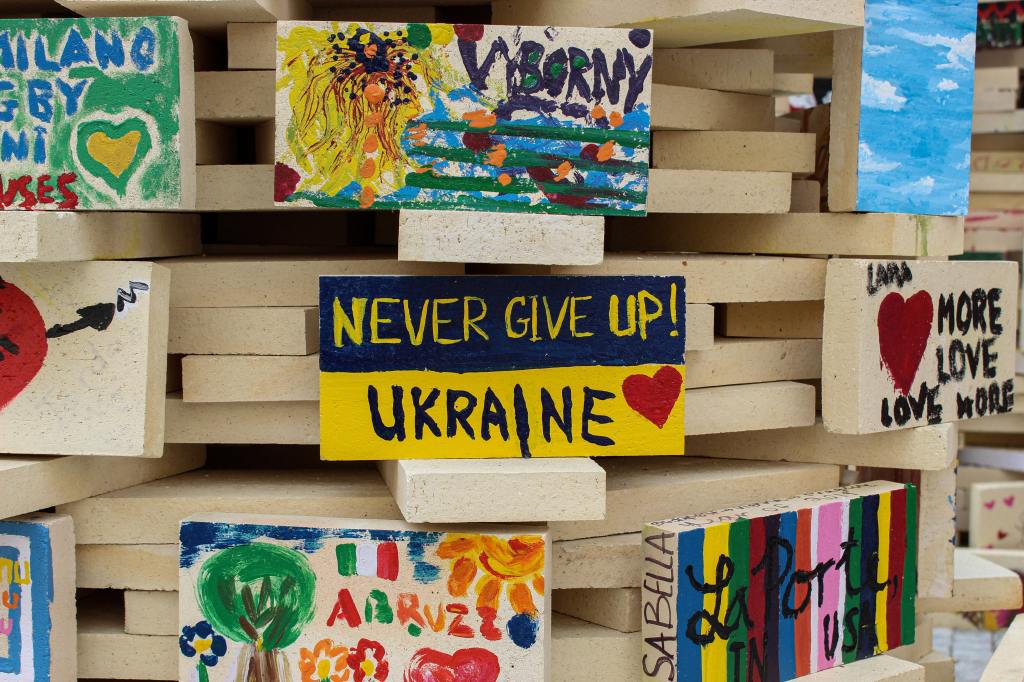
NB: In this blog the term ‘white’ will be used to describe those racialised as white within the UK as a white nation (Hage, 1998; Hunter, 2010), and those that benefit the most from white privilege. Though many Ukranian asylym seekers may in cases be racialised as white, their culture sits juxtaposed to the dominant thus ‘not white enough’, so may not always be seen as white by white British people (see what Kalwant Bhopal writes on this in the context of Gypsy Roma Travellers (2018: 29-47). Noel Ignatiev’s book How the Irish Became White may show another context in relation to Irish migration into the United States.
“Extending the gaze to whiteness enables us to observe the many shades of difference that lie within this category – that some people are ‘whiter’ than others, some are not white enough and many are inescapably cast beneath the shadow of whiteness” (Nayak, 2007).
“Skin is a passport. Epidermal citizenship” – Tao Leigh Goffe.
People tell me I spend too much time thinking and need to actually write the thing I spend so much time thinking about! However, with this blog about Ukraine, I did not want to jump on the journalistic bandwagon of being “the first” or “right”, but being thoughtful. I wanted to offer something different to mainstream consensus of “big evil Putin”, and talk about some of the discourses to race that I have been thinking about in relation to the images I have seen over the last months (much inspired by tweets, threads, and conversations lead by many Black and Brown scholars on Twitter).
Following the University’s response to the crisis, it brought me to consider how there has been more “action” than in prior crises, including Black Lives Matter and Free Palestine. For those of us descended from Black and Brown migrants who came to Britain between the 1948 Nationality Act and 1971 Immigration Act, I do not have to explain the pernicious ways British foreign policy has often tried to keep Black and Brown people out and white people in. For example, the Government’s Nationality and Borders Bill that seeks to criminalise asylum seekers, and introduce powers to revoke the citizenship of those with dual nationality (likely to impact up to six million people). When we critique the racist double standards in their response to Ukraine, white people are surprised while Black and Brown people are not.
The ease to which Britain adjusted to the cause of white Ukranians but did not and have not adjusted – to not only overseas crises in Somalia, the Yemen, and Palestine – but also at home in Europe to Black Lives Matter … is deplorable. Meanwhile numbers of Black and Brown asylum seekers are left to drown in the Channel. Seemingly, when white lives are on the line, things move! As Olena Lyubchenko writes, “Ukraine’s sovereignty and self-determination are increasingly understood by local elites to be bound up with incorporation into ‘fortress Europe’ and the making of the ‘Ukrainian nation’ as ‘white’ and ‘European.’”
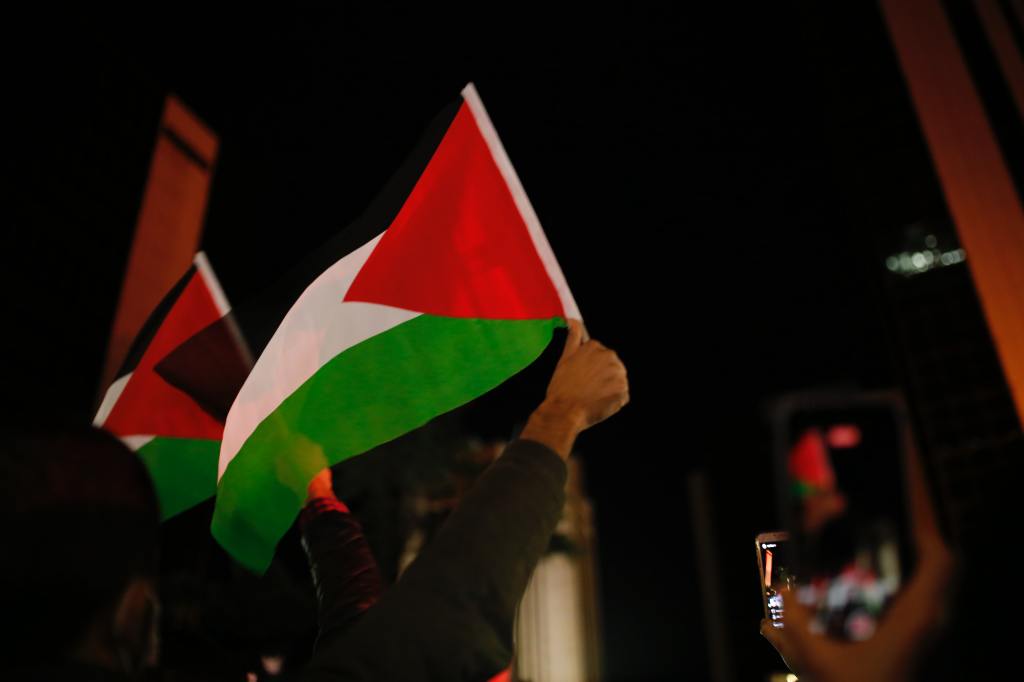
The way organisations rallied around the Ukraine crisis shows when it is politically relevant to white structures and institutions, and it comes to white lives, there is a will and a way to go above and beyond what is reasonable. Meanwhile organisations that made Black Lives Matter statements in 2020 are giving lip service to anti-racism in their celebration of the Queen’s Platinum Jubilee (ahem) and gaining influence from it. Yet, equality commitments extended to Ukranian asylum seekers are not extended to Black and Brown people, both those domiciled in white nations and those migrating from areas of the Global South – where a white nation can be described as a country “… whose self-understanding, collective symbolic and affective practices, as well as material relations, are enacted through the naturalisation of whiteness via processes of external … and internal … colonisation of Black subjects” (Hunter, 2015).
If there is to be an example of ‘white solidarity’, the British response to the war in Ukraine is certainly among them. For people not racialised as white, though what’s happening in Ukraine is awful, when similar things happen to Black and Brown people, white institutions do not rush to our defense. Whether it is Somalia, the Yemen, Palestine or other Black / Brown countries, white supremacy is very much in play in whose lives are seen of worth. The treatment of Black and Brown students fleeing Ukraine at the border is also of note in the face of white supremacy and Neo-Nazism itself.
“[Ukraine] isn’t a place, with all due respect, like Iraq or Afghanistan, that has seen conflict raging for decades. This is a relatively civilized, relatively European – I have to choose those words carefully, too – city, one where you wouldn’t expect that, or hope that it’s going to happen”.
Charlie D’Agata, cbs Senior foreign correspondent (february, 2022)
In dominant media discourse, Black and Brown people continue to be dehumanised. A pattern of constructing white Europeanness as civilised in juxtaposition to “senseless” conflicts in the Global South continue. A way of thinking that Edward Said long pointed out in his discussion of the East / West binary in Orientalism stating it as “… the corporate institution for dealing with the Orient – dealing with it by making statements about it, authorizing views of it” (Said, 1979: 3). This behaviour finds itself in ‘whiteness as ownershhip” (Harris, 1993), and through the white institution of the media making claims about the Global South “Describing it, by teaching it, settling it, ruling over it: in short Orientalism as a Western style for dominating, restructuring, and having authority over the Orient” (Said, 1979: 3).
The above quote from Charlie D’Agata as well, also revisits colonial formations of that term “white” as civilised yet at the same time othering “Black” and “Brown” as something uncivilised.
Maya Goodfellow writes:
“As they plundered, exploited and brutally controlled colonies and the people in them, all to enrich Britain as part of the growth of the capitalist project, colonialists swore by the racial hierarchy. Whiteness was not simply a descriptor; it was used to give anchor to the idea that Europe was the place of modernity and civilisation. White Europeans – in particular white upper-class men – were thought inherently modern and sophisticated; their black and brown counterparts, the opposite. The former, human; the latter, not. These ideas live on, subtly drawing a line between the developed and the developing, the advanced and the backward” (Goodfellow, 2019: 51)
The University of Northampton’s response did not really do anything, much in the same trajectory as their 2020 Black Lives Matter statement. Words lost behind inaction with no reference to Russian and Ukranian students studying at the university, nor the continuous racial trauma Black and Brown students are forced to experience. Only this time to see Black and Brown people victim yet again to ‘white terrorism’ (hooks, 1992; Yancy, 2017). For people racialised outside of whiteness, countries like Britain can be a wasteland with no escape. And this is when we are forced to create “safe spaces” seperate from the dominant.

I am not an immigrant to this country, though racialised outside of whiteness often places me as a “space invader” (Puwar, 2004) and means I can be treated like I am from somewhere else both “internally” and “externally” colonised (Hunter, 2015) in this white nation fantasy (Hage, 1998). As Black and Brown migrant bodies continue to be drowned in the seas, the 2020 Netflix film His House positions the experiences of Black asylum seekers fleeing South Sudan as pure horror. To think, the only reason people flee their countries like that and chance the seas, is if what you’re fleeing is scarier than the unknown of your destination. “Be one of the good ones” says the social worker (Matt Smith) with a wry smile.
The war in Ukraine reminds us that whiteness constitutes itself differently for those read as white, where in Britain the treatment of Gypsy Roma Traveller [GRT] people follows this pattern. Further to the treatment of Eastern Europeans such as Polish and Romanian immigrants. The legal rights of GRT people will be eroded further should the government’s Crime, Policing and Sentencing Bill reach fruition. Whiteness is as exclusively about being white as patriarchy is exclusively about being a man. It’s much more complex, but we do not get to the crux in our media culture of sound bites and simplistic answers to complex questions. Discussions about racism needs to change to extend the gaze to many shades of whiteness.
Emma Dabiri writes:
“The myth of a unified white ‘race’ makes white people, from what are in truth distinct groups, better able to identify common ground with each other and to imagine kinship and solidarity with others racialized as ‘white’, while at the same time withholding the humanity of racialized others. The ability of whiteness to create fictive kinships where differences might outweigh similarities, or where one ‘white’ group thrives and prospers through the exploitation of another ‘white’ group, all united under the rubric of whiteness constructs at the same time a zone of exclusion for racialized ‘others’, where in fact less expected affinities and even cultural resonances might reside.
In truth, this is the work of whiteness, whose invention was to serve that function. Saying that all “white” people are the same irrespective of say, culture, nationality, location, and class literally does the work of whiteness for it. But despite the continuities of whiteness – the sense of superiority that is embedded in its existence – we cannot disregard the differences that exist. This demands a truthful reckoning with the fact that the particulars of whiteness, as well as the nature of the relationship between black and white, will show up differently in different countries and require the crafting of different responses.”
From: What White People Can Do Next (2021: 45-46)
Emma Dabiri’s What White People Can Do Next (2021) follows David Roediger’s Wages of Whiteness (1991), Noel Ignatiev’s How the Irish Became White (1995), Matthew Jacobson’s Whiteness of a Different Color (1998) and Nell Irvin Painter’s The History of White People (2010), all of which in some way show how different white groups have modifiers attached when talking about “white people.” This must be discussed interlocking with other factors including culture, place/geography, and class. Through Roediger, Ignatiev, Jacobson, Painter, Dabiri, and other scholars, we can see how whiteness splits and mutates to serve its purpose of divide and rule, and really how white supremacy may also negatively impact against those read as white and ‘not white enough’ in different ways.
Social discourses to Palestine and Black Lives Matter are two examples of Black and Brown lives being beyond the interest of white institutions, while Ukraine reminds us in spite of their reality, white lives matter more. In 1985, co-founder of Critical Race Theory Derrick Bell coined a term called ‘interest convergence’ to describe the way US civil rights only became a priority when it met the “interests” of white people. Ukraine in much the same way is a declaration of white solidarity, where under white supremacy whiteness will always protect itself over the interests of those racialised outside of it.
For as long as the invention of race has ‘existed’, the protection of white interests (ownership – see Cheryl Harris) has always trumped the protection of Black and Brown lives. Ukraine aside, to think the police are there to protect you is a mark of privilege when it is the job of the police to uphold the status quo which implicates upholding white supremacy. Black and Brown students at the border were just “objects” to be moved out of the way, no different to how Black and Brown students are seen and treated on the streets in the Global North including at school and university campuses.
Nirmal Puwar writes
“There is an undeclared white masculine body underlying the universal construction of the enlightenment ‘individual’. Critics of the universal ideal human type in Western thought elaborate on the exclusionary somebody in the nobody of political theory that proclaims to include everybody. In the face of a determined effort to disavow the (male) body, critics have insisted that the ‘individual’ is embodied, and that it is the white male figure, of a changing habitus, who is actually taken as the central point of reference. The successive unveiling of the disembodied human ‘individual’ by class theorists, feminists and race theorists has collectively revealed the corporeal specificity of the absolute human type. It is against this template, one that is defined in opposition to women and non-whites – after all, these are the relational terms in which masculinity and whiteness are constituted – that women and ‘black’ people who enter these spaces are measured” (Puwar, 2004: 141).
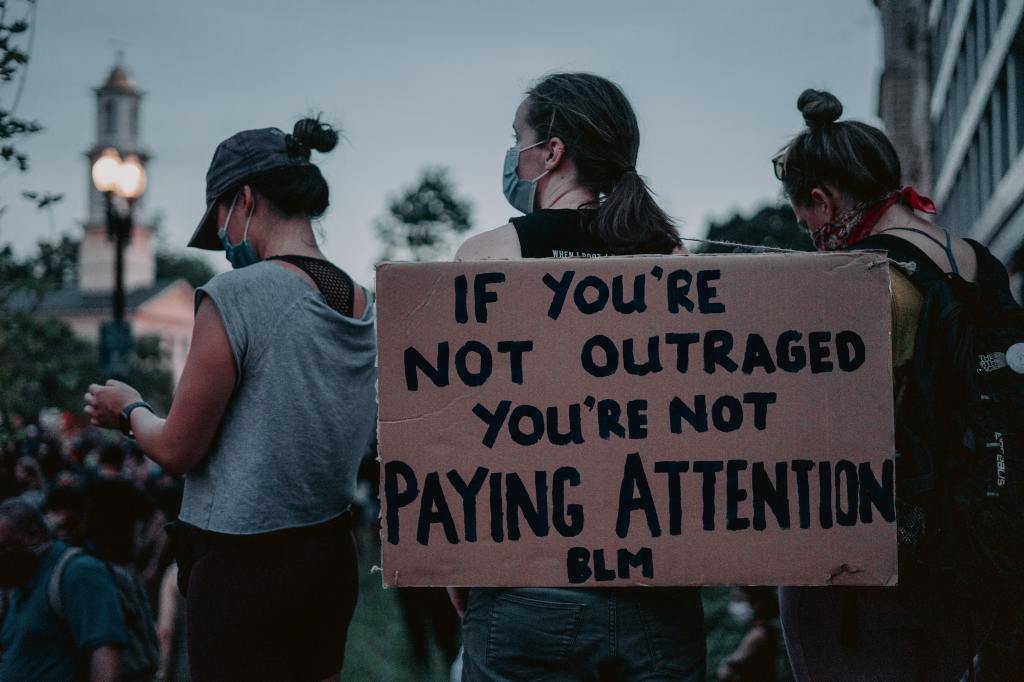
The constructing of ‘white’ as neutral is central to white supremacy and this is also what makes Diversity and Inclusion such a problem (Bhanot, 2015). However, the Ukraine crisis further shows how whiteness can come with qualifiers and that white supremacy will use those seen as ‘less white’ to discriminate against those (overtly … schema-wise) marked outside of that ‘white’ category. Tao Leigh Goffe tweeted “Skin is a passport. Epidermal citizenship”, in my opinion to act as a double meaning. Firstly, that skin is a literal passport and can grant citizenship through various levels of “white-skin privilege” (Allen and Ignatiev, 1967; McIntosh, 1988; Kyla Lacey, 2017; Eddo-Lodge, 2017; Bhopal and Henderson, 2021).
However, there could be a further meaning to mean a passport through spaces coded as white, and citizenship in certain spaces that Black and Brown people would not be granted entry to. So, our discussions around whiteness must extend to how it appears through various social markers including class, gender, culture, political affiliation and more. If the Ukraine crisis is to be our conduit, it shows our conversations and knowledge-building around whiteness must extend from what one scholar names as “the more fasionable white privilege” into a more critical conversation about white supremacy (Mills, 2004: 31) where whiteness can work like a virus – mutating, splitting, growing, reproducing, adapting, multiplying (Seshadri-Crooks, 2000; Chow, 2002; Wiegman, 2012).
We have work to do!
Share this:

RACIST BRITAIN – ‘Uncommon Wealth’: Colonialism in the Present Tense
The main title for this piece comes from a book of the same namesake by Kojo Koram.
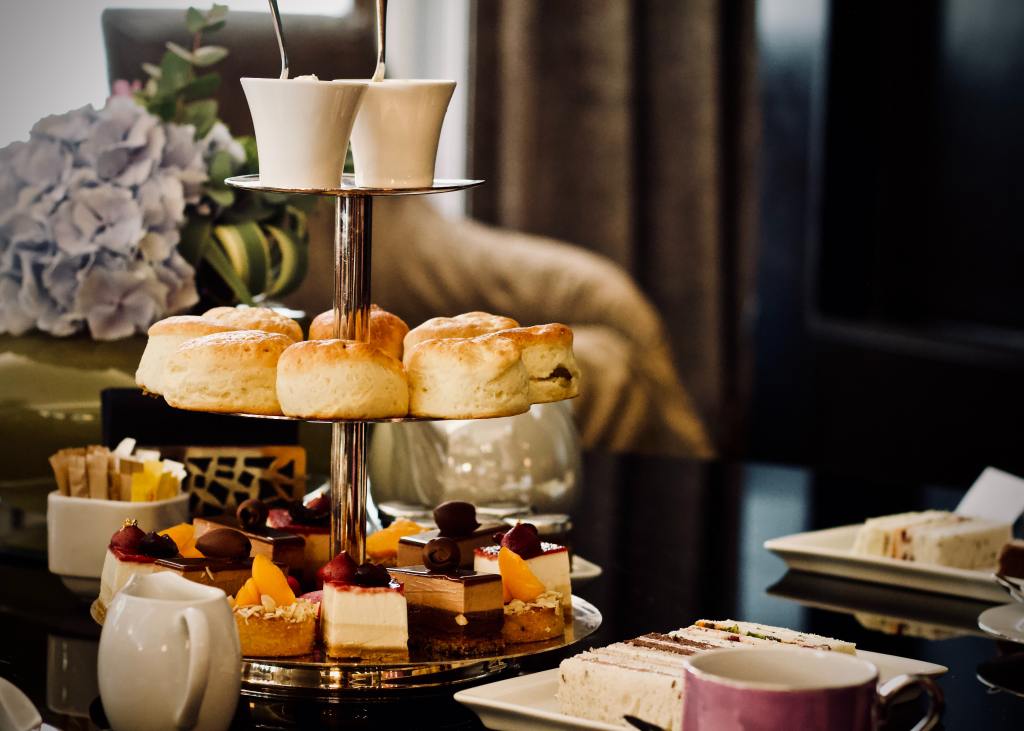
Plantations and pub gardens; afternoon tea, cakes, caps, graduation gowns and colonial statues; white supremacist symbols upon symbols. An (in)visible web of arcane history blurring the lines between chants for anti-racism in schools and schools of white thought celebrating the Queen’s Platinum Jubilee and the ‘Best of British’. No politician, no lawyer, no academic could keep up with such walking contradictions, even the Tories and their wine and cheese soirées or a university vice chancellor mired in scandal! These entanglements even make the Prime Minister look modest.
Who wants consistency in anti-racist commitments when you can have fantasy? Who wants to talk of motifs to enslavers when you can munch on crumpets? Who wants punishment collars when there’s a national holiday and a pint in the sunshine? Pull away the veil and what are we left with? A country that boasts about multiculturalism and anti-racism in one breath, and the seemingly unconnected Platinum Jubilee in the next. Tell a story with the bite of Ozymindias, and even the most staunch anti-racists will be sitting down for a nice sherry come the Jubilee. What these narratives do, is “spectacularise” individuals and that is the power of storytelling. It turns human beings into gods and this is mass media marketing to the very extreme. Her name is Elizabeth Queen of Queens, look upon this mighty charade and despair.
Following anti-colonial resistance in the Caribbean to royal visits, current Jubilee celebrations on the British side of the Atlantic appear insensitive (these visits are simply a catalyst, not an exclusive … they were always problematic). However, as I wonder the Northampton streets I grew up on, admiration for The Crown does not seem to waiver amid local and chain businesses, seemingly having learned nothing from the 2020 Black Lives Matter protests. The same institutions who posted solidarity statements that summer … colonisations of the mind remains ever-present (wa Thiong’o, 1986) in Northampton’s pubs, shops, theatres, and other institutions. While the Queen’s neck grows crooked under stolen loot, hypocrites swarm to the announcement of a national holiday. What short memories human beings have.

During a pandemic that has had a devastating impact on business (especially independent businesses), one cannot blame them taking every chance they get to recuperate losses. Yet, to do so with empire and colonialism still kicking is just not cricket. Neoliberalism, better known as neoliberal capitalism trumps all with a back-handed flag-waving jingoistic holiday while more activists will run to Buckingham Palace this summer when they get called for their gong. Arising … superficially validated by the same empire project that sustains “equal access to unjust systems” (Manzoor-Khan, 2019: 81). They need a gong over the head! I can feel this to be another long summer, full of actions that undermine pushes for lasting change. Admittedly, I am not beyond critique, but claiming to be anti-racist while peddling support for the Queen’s Jubilee is the baseline for what not to do.
Seeing numbers of organisations and people who were posting black squares and the like that summer in 2020, to now be celebrating the Jubilee, clearly their commitment was temporary.
With civil unrest in the Caribbean and anti-racism debates on this side of the Atlantic still growing strong, the level of cognitive dissonance must be astronomical to peddle anti-racism while celebrating the Queen’s Jubilee. It appears many people and their dogs have jumped on the imperial carriage to celebrate someone whose very existence undermines the best of Britain. In the same year the Colston Four were acquitted by a public jury for dispatching the Bristolian enslaver into the river, we celebrate someone in much the same symbol of pillage and plunder. Deplorable does not begin to describe it.
While I see people saying that the Queen did not benefit from colonialism in her lifetime, I remind you colonialism isn’t over. Moreover, historic events like the Mau Mau Uprisings (1952-1960) and the Suez Crisis (1956) are well within her reign, further to violent fights for independence within Caribbean Black Power movements. The British Monarchy is a constitutional monarchy, so the Queen has little power as an individual, yet the institution is no less violent than policing, prisons, the Church and others. For all Britain’s flag-waving, we know very little British history. While I do not claim to know all, I remain curious. Though, curiosity to see what lurks in the closet many would rather not know. As I frequent my favourite local venues, my spirit weeps at the sight of union jacks and St George’s flags (a symbol of violence I associate with racism and white supremacy).
The red and white … amid this nationalist fever in the regalia of Brexit, it is a reminder I am unwelcome in the country I have always called home. The acceptance of racist symbols is common in our mainstream, but worse when you see it condoned by your friends. While popularised by Lord Macpherson in the Stephen Lawrence Inquiry, the term institutional racism in practice goes back centuries. Queen Elizabeth I introduced the Royal Proclomation in 1603 which could be cited as the second act of institutionalised racism on British soil, demanding “Blackamores” be expelled from her kingdom (Fryer, 1984: 12). This was precedented by the 1193 expulsion of the Jews, where Simon DeMontfort (from whom the DeMontfort University gets its name) expelled the Jews from Leicester City (DeMontfort Students’ Union, 2021).
Every monarch from Elizabeth I to George III subsequently gave their blessing to the human trafficking of Black Africans (Hirsch, 2017: 51), thus before British independent traders broke into enslavement the original beneficiaries were the monarchy. As the ‘royal’ in Royal African Company for example, is more than an honorific, but a namesake. The late Tudors and early Stuarts were up to their necks in the blood of Black people (Olusoga, 2017: 22), as were the Georgians and Victorians. Furthermore, the wealth of the monarchy we see now was largely necessitated by colonial ambition. Heck, Victoria was donned Empress of India and Elizabeth I granted the royal charter to the East India Company (Sanghera, 2021: 12).
In his 1916 book Why Men Fight, Bertrand Russell writes how “All our institutions have their historic basis in Authority.” The Crown sits among them, like bloodsucking parasites who gained most of their wealth from stealing from others including the Global South. Yet, Scotland and Wales and Ireland also have their own reasons to dislike the Crown, including the history of the Prince of Wales title which I talked about in an earlier blog (and were still up in the Caribbean doing their colonial nonsense). You have to hand it to the British state, they have perfected the art of brainwashing … convincing large swathes of the oppressed to support the monarchy while also getting the working-class to vote Conservative.
However, with the Platinum Jubilee looming I am disgusted to see numbers of organisations who were posturing Black Lives Matter statements and black squares in the long summer of 2020 now bootlicking the empire itself. It is a reminder to me that within the British Isles that there is still very little public knowledge on the history of The Crown, both as the original colonisers but also as wielders of violence against working-class communities. Those who perfected social murder. Performance and vanity.
For example, after the Murder of George Floyd in June 2020 the University of Northampton posted a BLM statement (nonetheless weak). This statement came from pressure via Twitter (after eleven days of silence, the University posted a statement). This also came with a blog entry, as it was my last as a sabbatical officer. Now, they are holding events in the image of whiteness, colonialism, and racism for the Queen’s Platinum Jubilee celebrations. This sits adjacent to UON’s “efforts” to decolonise the university (recolonise may be a more fitting term). Concurrently, the University held a week-long thread of events about the climate emergency in November 2021 which was a study in whitewashing fitting under the wider banner of whitewashing COP26. And in April 2022, they were voted among the top 25 universities for tackling inequalities in spite of repeated strike action from staff since 2021 over fair pay, pensions, and race / gender pay gaps as part of UCU industrial action nationwide. Make this make sense!!
As someone that was very active that summer and has been since, I have been tested lately thinking about the many people that claim to be anti-oppression while also supporting the Queen and thus, the institution of the monarchy. Discrimination against Harry and Meghan is also of note amid the Royal Family itself, as well as from British media. If you’re a monarchist by all means stand by your beliefs, but don’t try to be so while claiming to be anti-oppression. Worse, as Prishita Maheshwari-Aplin wrote about UK Honours: “when those who have made their names from challenging the lingering evils of the empire jump at the chance of being superficially validated by it, the hypocrisy is extremely grating.”
For a university to pontificate about its place on a list of twenty-five universities for tackling inequality, while numbers of staff are on strike during a cost of living crisis … that’s Priti Patel levels of evil. Who were the judges, Dr Strangelove and Darth Vader?
So, if you consider yourself remotely pro-human rights, I would consider thinking about your stance on the monarchy … some of the biggest hoarders of wealth and the epitome of whiteness as ownership (Harris, 1993). The pulling down of Edward Colston; the National Trust audit into stately homes and their links to enslavement and colonialism; anti-colonial uprisings in the Caribbean; the Windrush Scandal and decolonising education are all entangled in this web amid the Jubilee’s nationalist (colonialist white supremacist) fever. Whilst it may be considered British to support the Queen, it is just as British to dissent.
The fight against capitalism certainly includes ‘wealth-hoarders’ pertinently inherited wealth (and those who got it through dubious means). To be anti-racist, we must also be anti-capitalist which fundamentally underpins many intersectional movements. For example, anti-capitalism is vital to disability justice, the class struggle, and LGBT+ rights. And while everyday folks have hopped on to this jubilee band-carriage, I would really question if we should. Abolishing the monarchy is just the starting the point.
Share this:


What’s happened to the Pandora papers?

Sometime last week, I was amid a group of friends when the argument about the Pandora papers suddenly came up. In brief, the key questions raised were how come no one is talking about the Pandora papers again? What has happened to the investigations, and how come the story has now been relegated to the back seat within the media space? Although, we didn’t have enough time to debate the issues, I promised that I would be sharing my thoughts on this blog. So, I hope they are reading.
We can all agree that for many years, the issues of financial delinquencies and malfeasants have remained one of the major problems facing many societies. We have seen situations where Kleptocratic rulers and their associates loot and siphon state resources, and then stack them up in secret havens. Some of these Kleptocrats prefer to collect luxury Italian wines and French arts with their ill-gotten wealth, while others prefer to purchase luxury properties and 5-star apartments in Dubai, London and elsewhere. We find military generals participating in financial black operations, and we hear about law makers manipulating the gaps in the same laws they have created. In fact, in some spheres, we find ‘business tycoons’ exploiting violence-torn regions to smuggle gold, while in other spheres, some appointed public officers refuse to declare their assets because of fear of the future. Two years ago, we read about the two socialist presidents of the southern Spanish region and how they were found guilty of misuse of public funds. Totaling about €680m, you can imagine the good that could have been achieved in that region. We should also not forget the case of Ferdinand Marcos and his wife, both of whom (we are told) amassed over $10 billion during their reign in the Philippines. As we can see below that from the offshore leak of 2013 to the Panama papers of 2016 and then the 2017 Paradise papers, data leaks have continued to skyrocket. This simply demonstrates the level to which politicians and other official state representatives are taking to invest in this booming industry.

These stories are nothing new, we have always read about them – but then they fade away quicker than we expect. It is important to note that while some countries are swift in conducting investigation when issues like these arise, very little is known about others. So, in this blog, I will simply be highlighting some of the reasons why I think news relating to these issues have a short life span.
To start with, the system of financial corruption is often controlled and executed by those holding on to power very firmly. The firepower of their legal defence team is usually unmatchable, and the way they utilise their wealth and connections often make it incredibly difficult to tackle. For example, when leaks like these appear, some journalists are usually mindful of making certain remarks about the situation for the avoidance of being sued for libel and defamation of character. Secondly, financial crimes are always complex to investigate, and prosecution often takes forever. The problem of plurality in jurisdiction is also important in this analysis as it sometimes slows down the processes of investigation and prosecution. In some countries, there is something called ‘the immunity clause’, where certain state representatives are protected from being arraigned while in office. This issue has continued to raise concerns about the position of truth, power, and political will of governments to fight corruption. Another issue to consider is the issue of confidentiality clause, or what many call corporate secrecy in offshore firms. These policies make it very difficult to know who owns what or who is purchasing what. So, for as long as these clauses remain, news relating to these issues may continue to fade out faster than we imagine. Perhaps Young (2012) was right in her analysis of illicit practices in banking & other offshore financial centres when she insisted that ‘offshore financial centers such as the Cayman Islands, often labelled secrecy jurisdictions, frustrate attempts to recover criminal wealth because they provide strong confidentiality in international finance to legitimate clients as well as to the crooks and criminals who wish to hide information – thereby attracting a large and varied client base with their own and varied reasons for wanting an offshore account’, (Young 2012, 136). This idea has also been raised by our leader, Nikos Passas who believe that effective transparency is an essential component of unscrambling the illicit partnerships in these structures.
While all these dirty behaviours have continued to damage our social systems, they yet again remind us how the network of greed remains at the core centre of human injustice. I found the animalist commandant of the pigs in the novel Animal Farm, by George Orwell to be quite relevant in this circumstance. The decree spells: all animals are equal, but some animals are more equal than others. This idea rightly describes the hypocrisy that we find in modern democracies; where citizens are made to believe that everyone is equal before the law but when in fact the law, (and in many instances more privileges) are often tilted in favour of the elites.
I agree with the prescription given by President Obama who once said that strengthening democracy entails building strong institutions over strong men. This is true because the absence of strong institutions will only continue to pave way for powerful groups to explore the limits of democracy. This also means that there must be strong political will to sanction these powerful groups engaging in this ‘thievocracy’. I know that political will is often used too loosely these days, but what I am inferring here is genuine determination to prosecute powerful criminals with transparency. This also suggests the need for better stability and stronger coordination of law across jurisdictions. Transparency should not only be limited to governments in societies, but also in those havens. It is also important to note that tackling financial crimes of the powerful should not be the duty of the state alone, but of all. Simply, it should be a collective effort of all, and it must require a joint action. By joint action I mean that civil societies and other private sectors must come together to advocate for stronger sanctions. We must seek collective participation in social movements because such actions can bring about social change – particularly when the democratic processes are proving unable to tackle such issues. Research institutes and academics must do their best by engaging in research to understand the depth of these problems as well as proffering possible solutions. Illicit financial delinquencies, we know, thrive when societies trivialize the extent and depth of its problem. Therefore, the media must continue to do their best in identifying these problems, just as we have consistently seen with the works of the International Consortium of Investigative Journalists and a few others. So, in a nutshell and to answer my friends, part of the reasons why issues like this often fade away quicker than expected has to do with some of the issues that I have pointed out. It is hoped however that those engaged in this incessant accretion of wealth will be confronted rather than conferred with national honors by their friends.
References
BBC (2021) Pandora Papers: A simple guide to the Pandora Papers leak. Available at: https://www.bbc.co.uk/news/world-58780561 (Accessed: 26 May 2022)
Young, M.A., 2012. Banking secrecy and offshore financial centres: money laundering and offshore banking, Routledge
Share this:


Catalog of Negores, mules, carts and wagons to be sold
In September 2021, I visited the newly expanded Equal Justice Initiative’s Legacy Museum: From Enslavement to Mass Incarceration, in my maternal grandparents’ hometown, Montgomery, Alabama. I was struck by the range of artifacts used to chronicle each era. Consider these1854 slave market advertisements from the Montgomery Advertiser and Gazette – still the local newspaper!
Catalog of Negroes, mules, carts, wagons and Co., to be sold in Montgomery. Headlines included: Wenches and bucks, quality Negroes for sale.
Nancy – about 26, fieldhand, cannot recommend her particularly, complains of indisposition, but probably a proper master might cure her.
Ben – A strong and hearty man, about 30 years old, an excellent field hand, and a remarkably handy boy, in any use, being usually quick and intelligent; a No. 1 Negro.
Suckey, A remarkably intelligent Negro girl about 15 years of age, understands General house work well for her age; can sew tolerably, and is a most excellent nurse and attendant for children; has remarkable strength of constitution, and never known to have been complaining even for a moment; a pretty good field hand, and would make an excellent one.
Allison – about 15, fine body and house servant, carriage driver and Ostler, honest, steady, handy, healthy, smart, intelligent, and in all respects a choice and desirable boy.
Mary Jane – about 11.
Martha – about 10.
Louisa – about 7.
Old George – as faithful and honest an old African as ever lived.
His wife Judy, the same sort of character.
Henrietta – about 24… First-rate cotton picker.
One of the humans being trafficked recounted:
“To test the soundness of a male or female slave… They are handled in the grossest manner, and inspected with… disgusting minuteness… in the auction room where the dealer is left alone with the ‘chattels’ offered… God has recorded the wickedness that is done there, and punishment will assuredly fall upon the guilty.” -J. Brown.
The ebb and flow of freedom.
Each exhibit in the ‘Enslavement to Mass Incarceration’ museum takes visitors seamlessly through the Atlantic slave trade, past Jim and Jane Crow segregation, to a recorded face-to-face visit with a real-life, modern-day inmate. As you enter what seems like the final hall, you are confronted with an array of individual seats at a glass window/screen projecting an inmate calmly sitting, waiting. Like a real prison visit, there’s a telephone, which once lifted, the prisoner does the same, introduces themselves, and recounts their story. History confronts you in the present: The confederacy surrendered on April 9, 1865. By 1898, 73% of state revenue came from convict leasing. Now?
One explicit goal of the EJI project, reflected and reinscribed in the exhibits’ descriptions, is a shift in language from slavery and slaves to human trafficking and enslavement. Surely, one can feel the sublingual, subliminal shift from victimology to responsibility, and that implies accountability. To be clear, the entire economy centered around usurping land, driving-out or exterminating the indigenous people, human trafficking and slave labor, shredding the natural environment into farmland to produce cotton, cane and tobacco, manufacturing a range of commodities from these raw materials, trading around the world. Who got rich? Whose labor was exploited?
Who is accountable for giving birth to Jim Crow, if slavery died with ole Abe Lincoln’s Emancipation Proclamation? Who is accountable for cultivating chronic poverty and voter intimidation, if we’d exterminated white lynch mobs through the Civil Rights codes of the sixties? Who indeed is responsible for mass incarceration? The exhibits challenge language that focuses on the victim and remains hush about the status quo, masking the ensuing abuse of power needed for its maintenance, especially hidden from abusers who may themselves be exploited by the myth of meritocracy.
As a side note, perhaps people will not actually be able to reckon with this cognitive dissonance of heroic CONfederate generals and their cause to uphold each state’s right to let white men traffic and enslave Blacks. I’d truly like to see public statues of say, the valiant General Lee, standing next to two or three statues of enslaved people, and a few statues of the white people charged with the quotidian physical labor of enslavement, e.g., driving labor (whip crackers), capturing and punishing escapees (slave catchers, the original law-enforcement force), breaking in new arrivals (torture), breeding ((gang)rape), and general humiliation throughout these duties (sadomasochism). Perhaps the museum just needs to add another exhibit with busts of them.
With stark population stats posted big and bold as visitors transition from room to room, the exhibits chronologically shift through significant eras. Today in the prison industrial complex there are 8 million incarcerated. 10 million were segregated under Jim and Jane Crow until the Civil Rights movement. 9 million terrorized by lynching, accelerating the erosion of Reconstruction. The nation was born and raised with 12 million kidnapped and enslaved Africans. Dear reader, right now I ask, what precisely has our nation done to upend caste?
Share this:


Policy, procedures, processes, and failure

Examine any organisation and you will find a myriad of policy and procedures that are designed to inform its processes and guide employees. On paper, these formalised ideals and directions make absolute sense but frequently they bear no relationship to reality and rather than empowering, they constrain and often demoralise. These idealistic notions of how an organisation should function facilitate the dehumanising effects of managerial diktat and engender an internalisation of failure amongst employees.
By way of an example, in the 1990s police forces began to consider notions of Standard Operating Procedures (SOPs) in respect of crime investigation. These SOPs seemed on the face of it to be a good idea. The police service, driven by government notions of New Public Management, were being measured on crime reduction and crime detection. Performance indicators were propped up by idealistic notions coming out of government supported by HMIC and the now defunct Audit Commission that catching more criminals would engender a virtuous circle resulting in crime reduction. Nothing of course, was further from the truth. But the introduction of SOPs was meant to attempt to address police failings. These, certainly in one force, were at the outset seen as a guide, a minimum standard required in an investigation. They weren’t intended to constrain.
A small department was set up in this force to measure adherence to these SOPs and to report back where there were inherent failures. For example, on attending a house burglary, the attendant officers were required to take a statement from the householder, and they were required to carry out house to house enquiries in the vicinity. At the very least, they needed to knock on doors either side of the house that had been burgled and a couple of houses across the road. Frequently the statement wasn’t taken, or the house-to-house enquiries hadn’t been completed. It became clear that the officers were failing to carry out simple procedures. Measuring adherence to SOPs and providing feedback to promote improvement soon resulted in measuring adherence in order to enforce compliance.
In hindsight, there should have been a realisation that the SOPs, far from being helpful were in fact having a detrimental effect. Where officers could have carried out further investigations based on their professional judgement, they adhered to the minimum required in the SOPs or simply failed to comply with them fully. This was partially resultant of a notion amongst officers that discretion was being curtailed, but more notably it was driven by other processes and organisational priorities. These other processes were to do with attendance at other incidents. Graded as a priority by the control room, officers were being pulled off the burglary investigation and therefore couldn’t comply with the burglary investigation SOPs. Police forces were also being measured on how quickly they responded to and arrived at various calls for service. There was clearly a direct conflict between management ideals and reality with the officers being set up to fail in one aspect or another. There were simply not enough staff to do all the work and to manage the overwhelming demands at certain times.
One way of dealing with the failures was to link these to the performance and development review (PDR) process. The development aspect was a somewhat redundant term as the PDR was all about performance. Of course, each time the PDR came around the officers had failed to achieve their objectives. This provided lots of evidence of people not doing their job properly. In the wider gamut of crime figures officers at various levels began to realise that the only way to avoid accusations of poor performance was to manipulate the crime figures. In the meantime, those driving the behaviours, washed their hands of them whenever someone was found out, often hiding behind the SOPs and policy. The misuse of the PDR process and the consistent scrutiny of performance metrics resulted in the internalising of failure by staff. Whole systems and processes had been set up to measure failure, after all how could success be measured if it could never be achieved. Of course, it could never be achieved because the ambition and driving force behind this, government’s notions of crime control, were based on ideals and rhetoric not science. But the overriding fact was that it could never be achieved because there were never enough resources to achieve it.
The failure of course wasn’t in the officers that didn’t adhere to the SOPs or those that manipulated crime figures to try to avoid overbearing scrutiny, it was the failure of managers to provide adequate resources. It was a failure of managers to try to understand what reality looked like and it was a failure of managers to deal with the dehumanising effects of policy, procedure and processes.
Having left the police, I thought higher education would somehow be different. I don’t think I need to say anymore.
Share this:


Au revoir Le Pen, take the rest of the far right with you!

The recent French election once again saw centrist Macron head to head with far right nationalist Le Pen. Macron won the election by a much narrower margin that the 2017 elections. I have an interest in the French elections as my parents live there and are not far away from applying for citizenship. For them, the prospect of a far right president was worrying.
The politics of much of the world has shifted to the right of late, often to the far right. Perhaps this hasn’t been a recent thing. Indeed, before this wave of Trump, Modi, and Le Pen, we had UKIP and for a while the BNP was making a lot of noise. The writing was on the wall with New Labour and their many new immigration offences, Blair’s tough on crime and it’s causes approach, and not forgetting war on Iraq and Afghanistan. This was swiftly followed with then Home Secretary Theresa May’s hostile environment agenda which has been advanced again and again by consecutive Home Secretaries until we passed the point of no return with Priti Patel and her Nationality and Borders Act 2022 (it pains me to type ‘Act’ instead of ‘Bill’ – it’s black and white now) from which not the Lords nor God nor the best lawyers in the land seem have yet been able to save us from. What we see now is a Conservative government embedded with far right ideology, and this is not an isolated island in that respect.
This current uprising of the far right, racist, and xenophobic politicians is a global phenomenon. Modi, the far right Hindu nationalist is knee deep in his campaign against Muslims, revoking autonomy in Jammu and Kashmir (ironically – or deliberately – this took place on 31st October 2019, the day Britain was supposed to leave the EU), invoking the Citizenship (Amendment) Act 2019 which disproportionately affects the citizenship of Muslims who now face the possibility of expulsion, and even outright attacks on Muslims.
Then there was Trump and the less said about him, the better. But let us return to France. This is the second consecutive election in which Macron has faced Le Pen and won. In France, elections are held in two stages. All parties and candidates go head to head in stage one and if no candidate holds a majority, a second round between the top two candidates takes place. In 2017, Macron won the second stage with 66.1% of the vote. This time around, the vote was much narrower 58.6%. Le Pen’s Rassemblement National party has ‘transformed’ since the 2017 election, with the party’s councillor for Gironde arguing that they are not the far right, and instead are localists and nationalists. Are they not one and the same?
In recent years, the rise of the far right in Europe has been fuelled by fears of refugees, terrorism, and open borders within the European Union. In addition to this, concerns over employment and poverty have contributed to this. It is not all about them, it is preservation of us.

In a globalised era, we have seen decades of erosion of the working class jobs of old combined with distorted perceptions of immigration and population changes. People living in poverty, unemployed or in insecure employment look for someone to blame and the someone tends to be them. So, parties who say they stand for the working man and oppose immigration become popular, not because voters are necessarily racist but because they are fearful and suffering. Bearing that in mind, where does that leave us now? The whole of Europe is facing a cost of living crisis, war on our doorstep. Here in the UK, inflation and interest rates are rising but wages are not. We cannot blame this on them, on people fleeing persecution, on people who come to the UK to fill the jobs nobody wants or are not qualified to do. This us and them narrative causes nothing but division and hatred, fuelling hateful politicians who – let’s face it – serve nobody’s interests but their own.
My Monday message: Choose love
Share this:


No ways tired: Miss Lillie, arrested with Mrs. Parks.
12 September 2021
Visit to the Equal Justice Initiative Museum, From Enslavement to Mass Incarceration.
Near the end of the EJI’s newly expanded museum, there is a wall of slightly larger than life-size mugshots of folks arrested alongside Mrs. Rosa Parks in just another local act of civil disobedience. I’ve rarely seen a more earnest collection of everyday people, not unlike the folks around me as I get to know Montgomery today.
Mugshots.
Men in suits, ladies sporting pretty hats in their Sunday best.
Farmers in overalls and working women in neat dresses.
Learned-looking men with glasses, and fancy tiepins.
Young men in sleek fedoras and two or three older men in derbies.
Another man wears a skullcap.
Meaningful women and men of age, of reconstruction age, whom we imagine had by then seen every intimate and public side of Jim and Jane Crows’ wickedness.
They were representin’.
The only thing they seem to have in common is their determination.
(Sigh).
I found myself face-to-face and fixated with
Miss Lillie Bell Robinson.
She sat,
Framed,
With her arms,
Crossed.
Double-crossed.
With her head,
Tilted,
With her expression, tired, but
Also, a particular squint in her eye – or perhaps a gleam – that betrays her obvious fatigue,
As if saying: “No ways tired.”
I moan in tune, and
This somehow keeps my knees from buckling under the weight of it all, since
The preceding exhibits have already taken us along a long timeline where
Every glimpse of justice gets trampled upon –
Again, and again.
I sigh and see why they are tired.
On that day, did Miss Lillie know that much more violence, much more real intensified violence was yet to come?
This was the mid-50’s, and
Could Miss Lillie have imagined that:
Just 5-6 years later,
Freedom Riders from the north would arrive around the corner,
Riding federally desegregated, public coaches, and
The same local sheriffs would stand by, and
Let them get beaten, assaulted, brutally, and
Battered by white-hot mobs –
Only to arrest the so-called outside agitators?
Probably all of you, Miss Lillie, were battered by many of the same hands, and
Abandoned by many of the same actors of local justice.
I estimate Miss Lillie to be my grandparents’ age, and
By that day, they’d already fled and made their way to Kentucky.
I am wondering where Miss Lillie is now – right now?
(I take a deep sigh and realize that I’ve not yet reached the mass incarceration part of the museum, and ultimately just skimmed on by.
Graciously, the final exhibit is a “Recovery room,” a hall of walls of portraits,
which we might also call “mugshots,”
As each face had all, actively, over centuries,
Activated against oppression.
I recognized writers, musicians, poets, painters, politicians, preachers, teachers, activists of all flavors, and
After the weight of the truth shown in each timeframe, this left me feeling full of joy.
And, I moaned along with the tunes, there, too.
That day,
She’d had had enough, and
Though reluctant before,
Somehow now,
Miss Lillie could no longer stand by, and
Just wait for justice, and
Just go on about her own merry way, and
Pretend like this is ok, and
Adjust to the insanity of segregation, and
The very look on her face said this is “why we can’t wait.”
Her face calm, but
Twisted.
The mug shot ID, hanging around her neck like a shackle: #7010.
Business as usual, and for sure somebody’s gettin’ paid.
So, she not knowing.
She, not knowing if this all will work.
If getting arrested today mattered.
If any of this is worth it.
If this time change is coming,
having nothing left but Faith…
in herself, in others, and
Somehow faith in her nation… to do the right thing,
Despite this day, and
In spite of the many apparent setbacks, and
A million everyday,
Tiny little cuts.
We rise.
That day, Miss Lillie rose to the occasion.
She and all these others stepped up so we could step out, and
Step in here now,
Free to learn about each step along our legacy of peace.
I’m now in awe of Miss Lillie, and
Take a step back and
Smile at her, and
Take in the glory of this sensation.
Hats off to you, Miss Lillie.

Share this:


Youth or Adult: can you tell?
This week’s blog begins with a game: youth or adult, secure estate in England and Wales. Below are some statements, and you simply need to guess (educated guesses please), whether the statement is about the youth, or adult secure estate. So, are the statements about children in custody (those under the age of 18 years old) or adults in custody (18+). When you’re ready…
- 70% decrease in custody in comparison to 10 years ago
- Segregation, A.K.A Solitary Confinement, used as a way of managing the most difficult individuals and those who pose a risk to themselves or others
- Racial disproportionality in relation to experiencing custody and being remanded to custody
- Self-harm is alarmingly high
- 1/3 have a known mental health disability
- Homelessness after release is a reality for a high proportion of individuals
- Over half of individuals released from custody reoffend, this number increases when looking at those sentenced to 6months of less
How many did you answer youth secure estate, and how many adult secure estate? Tally up! Did you find a 50/50 split? Did you find it difficult to answer? Should it be difficult to spot the differences between how children and adults are treated/experience custody?
All of the above relate specifically to children in custody. The House of Commons Committee (2021) have argued that the secure estate for children in England and Wales is STILL a violent, dangerous set of environments which do little to address the needs of children sentenced to custody or on remand. Across the academic literature, there is agreement that the youth estate houses some of the most vulnerable children within our society, yet very little is done to address these vulnerabilities. Ultimately we are failing children in custody! The Government said they would create Secure Schools as a custody option, where education and support would be the focus for the children sent here. These were supposed to be ready for 2020, and in all fairness, we have had a global pandemic to contend with, so the date was pushed to 2022: and yet where are they? Where is the press coverage on the positive impact a Secure School will make to the Youth estate? Does anyone really care? A number of Secure Training Centres (STCs) have closed down across the past 10 years, with an alarmingly high number of the institutions which house children in custody failing Ofsted inspections and HM Inspectorate of Prisons (2021) found violence and safety within these institutions STILL a major concern. Children experience bullying from staff, could not shower daily, experience physical restraint, 66% of children in custody experienced segregation which was an increase from the year prior (HM Inspectorate of Prisons, 2021). These experiences are not new, they are re-occurring, year-on-year, inspection after inspection: when will we learn?
The sad, angry, disgusting truth is you could have answered ‘adult secure estate’ to most of the statements above and still have been accurate. And this rings further alarm bells. In England and Wales, we are supposed to treat children as ‘children first, offenders second’. Yet if we look to the similarities between the youth and adult secure estate, what evidence is there that children are treated as children first? We treat all offenders the same, and we treat them appallingly. This is not a new argument, many have raised the same points and concerns for years, but we appear to be doing very little about it.
We are kidding ourselves if we think we have a separate system for dealing with children who commit crime, especially in relation to custody! It pains me to continue seeing, year on year, report after report, the same failings within the secure estate, and the same points made in relation to children being seen as children first in England and Wales: I just can’t see it in relation to custody- feel free to show me otherwise!
References:
House of Commons Committees (2021) Does the secure estate meet the needs of young people in custody? High levels of violence, use of force and self-harm suggest the youth secure estate is not fit for purpose [Online]. Available at: https://houseofcommons.shorthandstories.com/justice-youth-secure-estate/index.html. [Last accessed 4th April 2022].
HM Inspectorate of Prisons (2021) Children in Custody 2019-2020: An analysis of 12-18-year-old’s perceptions of their experiences in secure training centres and young offender institutions. London: Her Majesty’s Inspectorate of Prisons.
Share this:


Industrial action, knowledge, and blurred lines

Another week has flown by, where has the time gone? Every day I diligently fill out a time sheet, every week I work over my contracted hours and at the end of every week I reflect on the things that have not been done, thinking well when I get time, I’ll have a look at that.
In conversations around the university, I hear students complaining about the current industrial action, one such conversation suggested it was disgusting that lecturers had been on strike. Another overheard student conversation thought it was disgusting that students didn’t turn up for lectures and if they were the lecturer they wouldn’t allow them back in class, after all don’t they know how long it must have taken that lecturer to prepare for the class. Juxtapose this with a workload model that only allows an hour for preparation and marking for every hour spent in the classroom and we have an interesting mosaic of what can only be described as blissful ignorance of what a lecturer’s job entails.
Now I can’t talk about other subject areas but I’m sure that many of the lecturers in those areas will have the same issues that we have in criminology or that I have regarding what we do. There are some subjects within the criminology discipline that are pretty much the staple diet and as such don’t really change much, after all Bentham’s ideas for instance were formed a couple of centuries ago and teaching a class about Bentham’s ideas won’t really change much over time. That is of course until someone, probably far brighter than me, discovers something about Bentham or produces a different take on Bentham’s writings. But generally, I suppose I might be inclined to suggest that preparation time for a lecture and seminar around the topic of Bentham’s ideas would not be too lengthy. But then what is too lengthy? How long would it take to prepare a lecture and a seminar task? That would depend on how much research was required, how many books and papers were read and probably importantly, well it is for me, how prepared the lecturer wants to be for the session. Do we as lecturers prepare for the lowest common denominator, the student that rarely reads anything and perhaps hardly turns up or do we prepare for the student that is an avid reader and will have read more than what they can find on Wikipedia. How long is a piece of string when it comes to preparation time.
Those of you that might have read my first blog about the industrial action will recall how I described that having been signed off ill with work related stress, I was told that I was burnt out. One of the questions in conversation was whether I ever turned off, the answer of course was no. And it is still difficult to do that, Criminology is one of those disciplines that is all consuming. I watch the news, or I read about something, and I immediately think of criminological aspects. I must admit most of the time I have the Metropolitan Police to thank for that. There doesn’t seem to be much delineation, certainly in terms of cerebral activity, between being at work and being off. I want to make my lectures, seminars or workshops (call them what you will) interesting and current. By exploring current issues in society, I end up researching both the current and historic, I end up making links between reality and theory and I produce what I hope is thought provoking and interesting subject matter for consumption in class. I have recently prepared a workshop which required me to read two IPCC reports and a three hundred word plus transcript of a civil case, all highly relevant to the topic of failed investigations. The civil case took me to 10 other stated cases. I can’t tell you exactly how long it took me, but it was longer than a day. Most of it in my own time because the topic is of interest to me. Lecturing, the acquisition of knowledge and at times the production of knowledge takes time, often the lines are blurred as to whose time is being used. My seeds of ideas and basic research are often in my time not my employer’s time. To have students turn up unprepared for my workshops, to turn up late (frequently) to fail to engage and then to have the gall to bemoan industrial action is soul destroying. To have a workload model that allows a pitiful time for preparation of lectures is simply ignorance and quite frankly, crass. We are in higher education not a sausage factory.
It is easy then, to see on reflection, where my time has gone each week. Given the work entailed in lecturing and the myriad of other requirements, it is hardly a surprise that there is a successful mandate for continued industrial action. I’m working more hours than is stated in my contract, cheating a bit on ASOS because it feels impossible not to, and I still can’t get anywhere near to fulfilling my workload. When I fill out my time sheet, I don’t include all of my own time as I’ve described above.
I won’t stop formulating my ideas. I wont stop using my own time to further my knowledge so that I can pass it on to students that are interested. But I would like some acknowledgement that the current system employed for gauging my workload is out of kilter with reality. And for those students that put the effort in and by doing so make my classes enjoyable, I am extremely grateful. As for the rest, well I suppose ignorance is bliss.
Share this:


Protect international law

In criminological discourses the term “war crime” is a contested one, not because there are no atrocities committed at war, but because for some of us, war is a crime in its own right. There is an expectation that even in a war there are rules and therefore the violation of these rules could lead to war crimes. This very focused view on war is part of a wider critique of the discipline. Several criminologists including, Ruggiero, DiPietro, McGarry and Walklate, to name a few, have argued that there is less focus on war as a crime, instead war is seen more as part of a metaphor used in response to social situations.
As far back as the 1960s, US President Johnson in his state of the union address, announced “The administration today here and now declares unconditional war on poverty in America”. What followed in the 1964 Economic Opportunity Act, was seen as the encapsulation of that proclamation. In some ways this announcement was ironic considering that the Vietnam war was raging at the time, 4 years before the well documented My Lai massacre. A war crime that aroused the international community; despite the numbers of soldiers involved in the massacre, only the platoon leader was charged and given a life sentence, later commuted to three and a half years incarceration (after a presidential intervention). Anyone can draw their own conclusion if the murder of approximately 500 people and the rape of women and children is reflected in this sentence. The Vietnam war was an ideological war on communism, leaving the literal interpretation for the historians of the future. In a war on ideology the “massacre” was the “collateral damage” of the time.
After all for the administration of the time, the war on poverty was the one that they tried to fight against. Since then, successive politicians have declared additional wars, on issues namely drugs and terror. These wars are representations of struggles but not in a literal sense. In the case of drugs and terrorism criminology focused on trafficking, financing and organised crimes but not on war per se. The use of war as a metaphor is a potent one because it identifies a social foe that needs to be curtailed and the official State wages war against it. It offers a justification in case the State is accused being heavy handed. For those declaring war on issues serves by signalling their resolve but also (unwittingly or deliberately) it glorifies war as an cleansing act. War as a metaphor is both powerful and dangerous because it excuses State violence and human rights violations. What about the reality of war?
As early as 1936, W.A Bonger, recognised war as a scourge of humanity. This realisation becomes ever more potent considering in years to come the world will be enveloped in another world war. At the end of the war the international community set up the international criminal court to explore some of the crimes committed during the war, namely the use of concentration camps for the extermination of particular populations. in 1944 Raphael Lemkin, coined the term genocide to identify the systemic extermination of Jews, Roma, Slavic people, along with political dissidents and sexual deviants, namely homosexuals.
In the aftermath of the second world war, the Nuremberg trials in Europe and the Tokyo trials in Asia set out to investigate “war crimes”. This became the first time that aspects of warfare and attitudes to populations were scrutinised. The creation of the Nuremberg Charter and the outcomes of the trials formulated some of the baseline of human rights principles including the rejection of the usual, up to that point, principle of “I was only following orders”. It also resulted in the Nuremberg Code that set out clear principles on ethical research and human experimentation. Whilst all of these are worthwhile ideas and have influenced the original formation of the United Nations charter it did not address the bigger “elephant” in the room; war itself. It seemed that the trials and consequent legal discourses distanced themselves from the wider criminological ideas that could have theorised the nature of war but most importantly the effects of war onto people, communities, and future relations. War as an indiscriminate destructive force was simply neglected.
The absence of a focused criminological theory from one end and the legal representation as set in the original tribunals on the other led to a distinct absence of discussions on something that Alfred Einstein posed to Sigmund Freud in early 1930s, “Why war?”. Whilst the trials set up some interesting ideas, they were criticised as “victor’s justice”. Originally this claim was dismissed, but to this day, there has been not a single conviction in international courts and tribunals of those who were on the “victors’” side, regardless of their conduct. So somehow the focus changed, and the international community is now engaged in a conversation about the processes of international courts and justice, without having ever addressed the original criticism. Since the original international trials there have been some additional ones regarding conflicts in Yugoslavia and Rwanda. The international community’s choice of countries to investigate and potentially, prosecute has brought additional criticism about the partiality of the process. In the meantime, international justice is only recognised by some countries whilst others choose not to engage. War, or rather, war crimes become a call whenever convenient to exert political pressure according to the geo-political relations of the time. This is not justice, it is an ad hoc arrangement that devalues the very principles that it professes to protect.
This is where criminology needs to step up. We have for a long time recognised and conceptually described different criminalities, across the spectrum of human deviance, but war has been left unaccounted for. In the visions of the 19th and 20th century social scientists, a world without war was conceptualised. The technological and social advancements permitted people to be optimistic of the role of international institutions sitting in arbitration to address international conflicts. It sounds unrealistic, but at the time when this is written, we are witness to another war, whilst there are numerous theatres of wars raging, leaving a trail of continuous destruction. Instead of choosing sides, splitting the good from the bad and trying to justify a just or an unjust war, maybe we should ask, “Why war”? In relation to youth crime, Rutherford famously pondered if we could let children just grow out of crime. Maybe, as an international community of people, we should do the same with war. Grow out of the crime of war. To do so we would need to stop the heroic drums, the idolisation of the glorious dead and instead, consider the frightened populations and the long stain of a violence which I have blogged about before: The crime of war

 Thoughts from the criminology team