
Authors
-
5teveh
-
6bsude
-
abbietoal
-
abigailane30
-
akcharl
-
amycortvriend
-
anfieldbhoy
-
anitawrzesniewska
-
FlowerViolet
-
asteven08
-
aysheaobrien1ca0bcf715
-
bethanyrdavies
-
bonnieleighmiddleton
-
bronaghvh
-
bwilleva
-
charlottejdann
-
cherylgardner2015
-
chris13418861
-
criminologyanon
-
criminologysocietyuon
-
davidjpalmer57
-
Demi King
-
drkukustr8talk
-
ej213
-
finlaywilliams24
-
Francine Bitalo
-
gilliansiddall
-
gregpaillet
-
Gwen
-
haleysread
-
hannahmaysmith
-
hanpearce93
-
helenpoole2
-
helentrinder
-
ifedamilola
-
jackrichmond21
-
jazzie9
-
jesjames50
-
justinkotze
-
kayleighwillis21
-
keziaasante
-
kirstyk196
-
klgrant1
-
liammiles1
-
Lilly Lewis
-
madams1965
-
Maddyk97
-
manosdaskalou
-
marlywindle
-
Maxine
-
meganking046
-
molliekel13
-
Mr_Hari_Parekh
-
nahidatakhtar
-
natalieh2000
-
npetfo
-
Paula Bowles
-
paulsquaredd
-
robynmansfield1
-
saffron_garside
-
Sallek Yaks Musa
-
samc0812
-
samtilley7
-
samuellangley
-
seanrj94
-
shanwareing
-
Shaun Ken-ucheonye
-
sineqd
-
Sophie Rowson
-
spatchett94
-
svr2727
-
tgomesx
-
Tré Ventour-Griffiths
-
tuesdaywoodward23
-
Vaseem Khan Ltd
-
wadzanain7
-
zeechee
-
zo3conneely

Majority Verdicts and Reasonable Doubt

Recently I attended an Inside Justice Live Crime event hosted by Anglia Law School at Anglia Ruskin University. The last speaker for the evening was Kevin Lane who is trying to have his wrongful conviction overturned, during his discussion he mentioned that he was found guilty of murder by a 10-2 majority verdict. It came as quite a shock to me to hear that majority verdicts are used for murder charges in England.
In 1994 Robert Magill was shot dead by a hitman while walking his dog in Hertfordshire, two men fled the scene in a BMW car. In 1995 Lane and a co-accused were charged with the murder of Magill. The prosecution alleged that Lane had received payment for this murder and submitted that fingerprints were found in bin liners in the car. Police were unable to link Lane to the scene of the crime, were unable to prove he had received payment, and he has always maintained his innocence.
There were a number of limitations and concerns in this case – the murder weapon was never recovered, two prime suspects who were brought to the police’s attention soon after the murder were not properly investigated and were later found to have an inappropriate relationship with the investigating police officer, and there were on going disclosure problems. Further, in 2002 the investigating officer was sent to prison for four years of conspiracy to steal £160,000 from the Hertfordshire Police and misconduct in a public office. (This is a very brief summary of a complicated case).
A majority verdict is used when the jury cannot reach a unanimous verdict and where the jury consists of usually 12 jurors and at least 10 or 11 agree (depending on the jurisdiction) – under certain conditions the judge is able to accept the jury’s verdict. The provision of a majority verdict is generally used when a prescribed period of time has elapsed, and the judge is satisfied that the jury are unlikely to reach a unanimous verdict after further deliberation. Majority verdicts have been used in England since 1974 and were originally introduced to prevent the intimidation or bribing of jurors.
While I am aware of majority verdicts, as they are used in Queensland, Australia (where I completed my legal education). Majority verdicts cannot be used for murder trials, for an offence which has mandatory life imprisonment as a penalty, and Commonwealth offences. The overall concern with majority verdicts is that if the jury is unable to reach a unanimous decision then they cannot be said to have reached a decision ‘beyond a reasonable doubt’ which is the standard of proof for criminal matters, and as a consequence have demonstrated reasonable doubt.
Unanimous jury verdicts have been part of the common law since the 14thcentury. Prior to 1866, if a jury could not reach an agreement they could be ‘carried around in a wagon with the court without meat or drink, fire or candle until they were starved or frozen into agreement.’ We have obviously come a long way since the days of locking jurors up and separating them from their family and friends until they reached a decision.
Using unanimous verdicts is argued to reduce the risk of convicting an innocent person, that unanimity is a fundamental feature of a jury trial, it leads to better deliberation, and that disagreement in a jury is not unreasonable. When considering the issue from the perspective of the accused, majority verdicts place them at a great disadvantage when one considers that the prosecution has much more resources. There are already a number of contributors to wrongful convictions which the accused needs to contest with, and the fact that appeals are very difficult.
It can be argued there are benefits for majority verdicts – they reduce the instance of a hung jury (where the accused is neither acquitted or convicted) and the potential for a retrial (and the economic cost associated for a criminal justice system which is already overloaded). Majority verdicts are said to overcome problems with ‘rogue’ jurors, bribery and intimidation. The use of majority verdicts allows there to be finality in the case for the victim/s, the accused, the family and friend of the victim/s and accused, and the community.
Personally, I believe that in the interest of justice majority verdicts should not be used in serious criminal cases – such as murder and offences which carry mandatory life imprisonment penalty. These cases are much too serious and if reasonable doubt is present then this should be recognised. In Kevin Lane’s case he would not have been convicted, served 18 years in prison, and still be trying to overturn his conviction.
Further reading
Cowdery, N. (2007). Majority jury verdicts. Reform Issue. 90, 18-19.
Garrett, B.L. & Neufeld, P.J. (2009). Invalid forensic science testimony and wrongful convictions. Virginia Law Review. 95(1), 1-97.
Gray, A. (2009). A guarantee right to trial by jury at state level? Australian Journal of Human Rights. 15(1), 97-125.
Roberts, S. & Weathered, L. (2009). Assisting the factually innocent: The contradictions and compatibility of Innocence Projects and the Criminal Cases Review Commission. Oxford Journal of Legal Studies. 29(1), 43-70.
Sankoff, P. (2006). Majority jury verdicts and the Charter of Rights and Freedoms. UBC Law Review. 39(2), 333-369.
Share this:


Forgotten
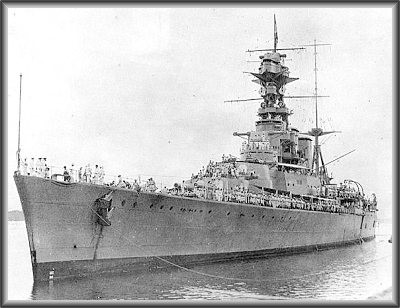
It is now nearly two weeks since Remembrance Day and reading Paula’s blog. Whilst understanding and agreeing with much of the sentiment of the blog, I must confess I have been somewhat torn between the critical viewpoint presented and the narrative that we owe the very freedoms we enjoy to those that served in the second world war. When I say served, I don’t necessarily mean those just in the armed services, but all the people involved in the war effort. The reason for the war doesn’t need to be rehearsed here nor do the atrocities committed but it doesn’t hurt to reflect on the sacrifices made by those involved.
My grandad, now deceased, joined the Royal Navy as a 16-year-old in the early 1930s. It was a job and an opportunity to see the world, war was not something he thought about, little was he to know that a few years after that he would be at the forefront of the conflict. He rarely talked about the war, there were few if any good memories, only memories of carnage, fear, death and loss. He was posted as missing in action and found some 6 months later in hospital in Ireland, he’d been found floating around in the Irish Sea. I never did find out how this came about. He had feelings of guilt resultant of watching a ship he was supposed to have been on, go down with all hands, many of them his friends. Fate decreed that he was late for duty and had to embark on the next ship leaving port. He described the bitter cold of the Artic runs and the Kamikaze nightmare where planes suddenly dived indiscriminately onto ships, with devastating effect. He had half of his stomach removed because of injury which had a major impact on his health throughout the rest of his life. He once described to me how the whole thing was dehumanised, he was injured so of no use, until he was fit again. He was just a number, to be posted on one ship or another. He swerved on numerous ships throughout the war. He had medals, and even one for bravery, where he battled in a blazing engine room to pull out his shipmates. When he died I found the medals in the garden shed, no pride of place in the house, nothing glorious or romantic about war. And yet as he would say, he was one of the lucky ones.
My grandad and many like him are responsible for my resolution that I will always use my vote. I do this in the knowledge that the freedom to be able to continue to vote in any way I like was hard won. I’m not sure that my grandad really thought that he was fighting for any freedom, he was just part of the war effort to defeat the Nazis. But it is the idea that people made sacrifices in the war so that we could enjoy the freedoms that we have that is a somewhat romantic notion that I have held onto. Alongside this is the idea that the war effort and the sacrifices made set Britain aside, declaring that we would stand up for democracy, freedom and human rights.
But as I juxtapose these romantic notions against reality, I begin to wonder what the purpose of the conflict was. Instead of standing up for freedom and human rights, our ‘Great Britain’ is prepared to get into bed with and do business with the worst despots in the world. Happy to do business with China, even though they incarcerate up to a million people such as the Uygurs and other Muslims in so called ‘re-education camps’, bend over backwards to climb into bed with the United States of America even though the president is happy to espouse the shooting of unarmed migrating civilians and conveniently play down or ignore Saudi Arabia’s desolation of the Yemini people and murder of political opponents.
In the clamber to reinforce and maintain nationalistic interests and gain political advantage our government and many like it in the west have forgotten why the war time sacrifices were made. Remembrance should not just be about those that died or sacrificed so much, it should be a time to reflect on why.
Share this:


‘The Problem We All Live With’
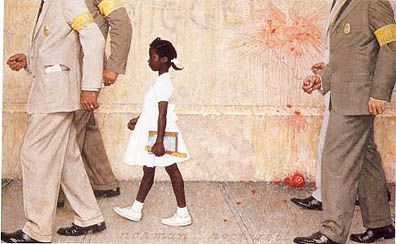
The title of this blog and the picture above relate to Norman Rockwell’s (1964) painting depicting Ruby Bridges on her way to school in a newly desegregated New Orleans. In over half a century, this picture has never lost its power and remains iconic.
Attending conferences, especially such a large one as the ASC, is always food for thought. The range of subjects covered, some very small and niche, others far more longstanding and seemingly intractable, cause the little grey cells to go into overdrive. So much to talk about, so much to listen to, so many questions, so many ideas make the experience incredibly intense. However, education is neither exclusive to the conference meeting rooms nor the coffee shops in which academics gather, but is all around. Naturally, in Atlanta, as I alluded to in my previous entry this week, reminders of the civil rights movement are all around us. Furthermore, it is clear from the boarded-up shops, large numbers of confused and disturbed people wandering the streets, others sleeping rough, that many of the issues highlighted by the civil rights movement remain. Slavery and overt segregation under the Jim Crow laws may be a thing of the past, but their impact endures; the demarcation between rich and poor, Black and white is still obvious.
The message of civil rights activists is not focused on beatification; they are human beings with all their failings, but far more important and direct. To make society fairer, more just, more humane for all, we must keep moving forward, we must keep protesting and we must keep drawing attention to inequality. Although it is tempting to revere brave individuals such as Ruby Bridges, Claudette Colvin, Martin Luther King Jr, Rosa Parks, Malcolm X to name but a few, this is not an outcome any of them ascribed to. If we look at Martin Luther King Jr’s ‘“The Drum Major Instinct” Sermon Delivered at Ebenezer Baptist Church’ he makes this overt. He urges his followers not to dwell on his Nobel Peace Prize, or any of his other multitudinous awards but to remember that ‘he tried’ to end war, bring comfort to prisoners and end poverty. In his closing words, he stresses that
If I can help somebody as I pass along,
If I can cheer somebody with a word or song,
If I can show somebody he’s traveling wrong,
Then my living will not be in vain.
If I can do my duty as a Christian ought,
If I can bring salvation to a world once wrought,
If I can spread the message as the master taught,
Then my living will not be in vain.
These powerful words stress practical activism, not passive veneration. Although a staunch advocate for non-violent resistance, this was never intended as passive. The fight to improve society for all, is not over and done, but a continual fight for freedom. This point is made explicit by another civil rights activist (and academic) Professor Angela Davis in her text Freedom is a Constant Struggle. In this text she draws parallels across the USA, Palestine and other countries, both historical and contemporaneous, demonstrating that without protest, civil and human rights can be crushed.
Whilst ostensibly Black men, women and children can attend schools, travel on public transport, eat at restaurants and participate in all aspects of society, this does not mean that freedom for all has been achieved. The fight for civil rights as demonstrated by #blacklivesmatter and #metoo, campaigns to end LGBT, religious and disability discrimination, racism, sexism and to improve the lives of refugees, illustrate just some of the many dedicated to following in a long tradition of fighting for social justice, social equality and freedom.
Share this:


Theater of Forgiveness
A very powerful piece of writing

Hafizah Geter | Longreads | November 2018 | 32 minutes (8,050 words)
On Wednesday, October 24th, 2018, a white man who tried and failed to unleash his violent mission on a black church, fatally killed the next black people of convenience, Vickie Lee Jones, 67, and Maurice E. Stallard, 69, in a Jeffersontown, Kentucky Kroger. Today, I am thinking of the families and loved ones of Stallard and Jones, who the media reports, along with their grief, their anger, their lack of true recourse, have taken on the heavy work of forgiveness.
***
June 17, 2015, two hours outside my hometown, a sandy blonde-haired Dylann Roof walked into Emanuel African Methodist Episcopal Church in Charleston, South Carolina. That night, Roof, surely looking like an injured wolf, someone already on fire, sat with an intimate group of churchgoers, and I have no doubt, was prayed for. If history repeats itself, then…
View original post 8,189 more words
Share this:


Are we really free?
This year the American Society of Criminology conference (Theme: Institutions, Cultures and Crime) is in Atlanta, GA a city famous for a number of things; Mitchell’s novel, (1936), Gone with the Wind and the home of both Coca-Cola, and CNN. More importantly the city is the birthplace and sometime home of Dr Martin Luther King Jr and played a pivotal role in the Civil Rights Movement. Throughout the city there are reminders of King’s legacy, from street names to schools and of course, The King Center for Non-Violent Social Change.
This week @manosdaskalou and I visited the Center for Civil and Human Rights, opened in 2014 with the aim of connecting the American Civil Rights Movement, to broader global claims for Human Rights. A venue like this is an obvious draw for criminologists, keen to explore these issues from an international perspective. Furthermore, such museums engender debate and discussion around complex questions; such as what it means to be free; individually and collectively, can a country be described as free and why individuals and societies commit atrocities.
According to a large-scale map housed within the Center the world is divided up into countries which are free, partially free and not free. The USA, the UK and large swathes of what we would recognise as the western world are designated free. Other countries such as Turkey and Bolivia are classified as partially free, whilst Russia and Nigeria are not free. Poor Tonga receives no classification at all. This all looks very scientific and makes for a graphic illustration of areas of the world deemed problematic, but by who or what? There is no information explaining how different countries were categorised or the criteria upon which decisions were made. Even more striking in the next gallery is a verbatim quotation from Walter Cronkite (journalist, 1916-2009) which insists that ‘There is no such thing as a little freedom. Either you are all free, or you are not free.’ Unfortunately, these wise words do not appear to have been heeded when preparing the map.
Similarly, another gallery is divided into offenders and victims. In the first half is a police line-up containing a number of dictators, including Hitler, Pol Pot and Idi Amin suggesting that bad things can only happen in dictatorships. But what about genocide in Rwanda (just one example), where there is no obvious “bad guy” on which to pin blame? In the other half are interactive panels devoted to individuals chosen on the grounds of their characteristics (perceived or otherwise). By selecting characteristics such LGBT, female, migrant or refugee, visitors can read the narratives of individuals who have been subjected to such regimes. This idea is predicated on expanding human empathy, by reading these narratives we can understand that these people aren’t so different to us.
Museums such as the Center for Civil and Human Rights pose many more questions than they can answer. Their very presence demonstrates the importance of understanding these complex questions, whilst the displays and exhibits demonstrate a worldview, which visitors may or may not accept. More importantly, these provide a starting point, a nudge toward a dialogue which is empathetic and (potentially) focused toward social justice. As long as visitors recognise that nudge long after they have left the Center, taking the ideas and arguments further, through reading, thinking and discussion, there is much to be hopeful about.
In the words of Martin Luther King Jr (in his 1963, Letter from Birmingham Jail):
‘Injustice anywhere is a threat to justice everywhere. We are caught in an inescapable network of mutuality, tied in a single garment of destiny. Whatever affects one directly, affects all indirectly’
Share this:


Lest we forget

Today marks 100 years since the end of the First World War and commemorations will be taking place across the land. I will be overseas for much of the pomp and circumstance, but the build-up each year appears to begin earlier and earlier. As a pacifist, I always find this time of year very troubling, particularly the focus on the Royal British Legion [RBL] poppy.
Most combatants (both axis and allies) in both world wars were conscripted, that is they were legislatively compelled into military uniform. This was also the case in the UK, with the passing of the Military Service Act, 1916, Military Training Act, 1939 and National Service Act, 1948 ensuring that men had little option but to spend a period of time in the military. Objections on the grounds of conscience were legally tolerated, although not always upheld. As I have written about previously, this was a particularly treacherous path to follow in WWI.
So, for many men* during the period of 1916-1960, military service was not a choice, thus it makes sense to talk about a society which owes a debt to these individuals for the sacrifice of their time, energy and in some cases, lives. Remember these men were removed from their jobs and their families, any aspirations had to be put on hold until after the war, and who knew when that was likely to occur?
Since 1960, military service in the UK has been on a voluntary basis, although, we can of course revisit criminological discussions around free will, to ascertain how freely decisions to enlist can truly be. Nevertheless, there is a substantive difference between servicemen during that period and those that opt for military service after that period. Such a distinction appears to pass by many, including the RBL, who are keen to commemorate and fetishize the serviceman as intrinsically heroic and worthy of society’s unquestioning support.
The decision to wear a poppy, whether RBL red or peace pledge union [ppu] white is a personal one. The former is seen as the official national symbol of commemoration, designed to recognise the special contribution of service personnel and their families. The latter is often attacked as an affront to British service personnel, although the ppu explicitly note that the white poppy represents everybody killed during warfare, including all military combatants and victims. It draws no distinctions across national borders, neither does it privilege the military over the civilian victims. These different motifs, each with their own specific narratives, pose the question of what it is as individuals and as a society we mean by ‘Lest we forget’.
- Do we want to remember those conscripted soldiers and swear that as a society we will not force individuals into the military, regardless of their personal viewpoints, desires, aspirations?
- Do we want to remember soldiers and swear that as a society we will not go to war again?
If it is the latter, we should take more notice of the work of RBL, who although coy about their relationships with arms dealers, accept a great deal of money from them (cf. Tweedy, 2015, BAE Systems, 2018). We should also consider the beautiful and poignant display at the Tower of London in 2014, entitled Blood Swept Lands and Seas of Red (Cummins and Piper, 2014). The week after this display began to be dismantled, a dinner for arms dealers was held at the same venue. Whilst RBL is keen to deny that their poppy is partisan and political, it is evident that this little paper flower is not neutral. Discussions and arguments on social media have demonstrated that this motif can and is used as a battering ram to close down questions, anxieties and deliberation. Even more worrying is the rewriting of history, that WWI and WWII were won by British forces, neglecting that these were world wars, involving individuals; men, women and children, from all over the globe. This narrative seems to have attached itself to the furor around Brexit, “we saved Europe, they owe us”!
For me, on an extremely personal level, we should be looking to end war, not looking for ways in which to commemorate past wars.
*For more detail around the conscription of women during WWII see Nicholson (2007) and Elster and Sørensen (2010).
References
BAE Systems, (2018), ‘Supporting the Armed Forces,’ BAE Systems, [online]. Available from: https://www.baesystems.com/en-uk/our-company/corporate-responsibility/working-responsibly/supporting-communities/supporting-the-armed-forces [Last accessed 20 October 2018]
Cummins, Paul, (2016), ‘Important Notice,’ Paul Cummins Ceramics, [online]. Available from: https://www.paulcumminsceramics.com/important-notice/ [Last accessed 11 November 2016]
Cummins, Paul and Piper, Tom, (2014), Blood Swept Lands and Seas of Red, [Ceramic Installation], (London: Tower of London)
Elster, Ellen and Sørensen, Majken Jul, (2010), ‘(Eds), Women Conscientious Objectors: An Anthology, (London: War Resisters’ International)
Military Service Act, 1916, (London: HMSO)
Military Training Act, 1939, (London: HMSO)
Milmo, Cahai, (2014), ‘The Crass Insensitivity’ of Tower’s Luxury Dinner for Arms Dealers, Days After Poppy Display, i-news, Thursday 27 November 2014, [online]. Available from: https://www.independent.co.uk/news/uk/home-news/the-crass-insensitivity-of-tower-s-luxury-dinner-for-arms-dealers-days-after-poppy-display-9888507.html [Last accessed 27 November 2014]
National Service Act, 1948, (London: HMSO)
Nicholson, Hazel, (2007), ‘A Disputed Identity: Women Conscientious Objectors in Second World War Britain,’ Twentieth Century British History, 18, 4: 409-28
peace pledge union [ppu], (2018), ‘Remembrance & White Poppies,’ peace pledge union, [online]. Available from: https://ppu.org.uk/remembrance-white-poppies [Last accessed 11 November 2018]
Tweedy, Rod, (2015), My Name is Legion: The British Legion and the Control of Remembrance, (London: Veterans for Peace UK), [online]. Available from: http://vfpuk.org/wp-content/uploads/2016/10/my_name_is_legion-web.pdf [Last accessed 14 May 2017]
Share this:


The roots of criminology; the past in the service of the future;

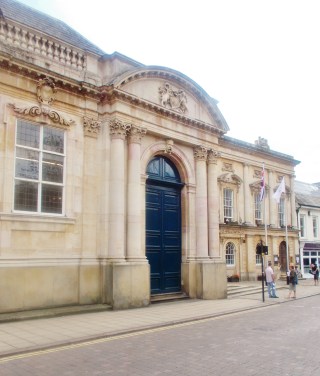
In a number of blog posts colleagues and myself (New Beginnings, Modern University or New University?Waterside: What an exciting time to be a student, Park Life, The ever rolling stream rolls on), we talked about the move to a new campus and the pedagogies it will develop for staff and students. Despite being in one of the newest campuses in the country, we also deliver some of our course content in the Sessions House. This is one of the oldest and most historic buildings in town. Sometimes with students we leave the modern to take a plunge in history in a matter of hours. Traditionally the court has been used in education primarily for mooting in the study of law or for reenactment for humanities. On this occasion, criminology occupies the space for learning enhancement that shall go beyond these roles.
The Sessions House…
View original post 473 more words
Share this:

“Political Drillin”
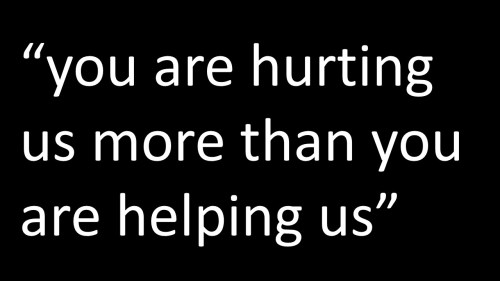
A recent track that has come to light which incorporates Drill Music is that called ‘Political Drillin’. On the track the artist manages to incorporate quotes from politicians; which proves he is highly deserving of his title ‘DrillMinister’.
What was particularly shocking to me was how easy it was for the governmental quotes to actually fit in with what he was initially rapping about, considering how frowned upon the genre is by these same figures.
It becomes very obvious that the slurs deemed as “violent” are ones that much of us are accustomed to hearing on a daily basis. In my interpretation, the artist seems to be bringing this to light. When young people use similar racial, derogatory terms towards one another it is seen to be violent and makes headlines, but politicians seem to throw these around in parliament without being reprimanded for their actions. Why is this continuously tolerated?
The fact that these comments are known to all and no action is taken against them demonstrates that there is a certain calibre of people that can be deemed as criminal and those who will not. Once again shedding light on the class, age and racial division that is hanging over society.
So once again I put the question out…is drill music a cause of violent crime, or are we simply a criminal society? If the DrillMinister can be labelled violent, surely politicians should be too?
*The image contains a quote from Jess Phillips MP utilised as a lyric by DrillMinister:
https://www.youtube.com/watch?v=spJoRLpDLLM
Share this:


The roots of criminology; the past in the service of the future;

In a number of blog posts colleagues and myself (New Beginnings, Modern University or New University? Waterside: What an exciting time to be a student, Park Life, The ever rolling stream rolls on), we talked about the move to a new campus and the pedagogies it will develop for staff and students. Despite being in one of the newest campuses in the country, we also deliver some of our course content in the Sessions House. This is one of the oldest and most historic buildings in town. Sometimes with students we leave the modern to take a plunge in history in a matter of hours. Traditionally the court has been used in education primarily for mooting in the study of law or for reenactment for humanities. On this occasion, criminology occupies the space for learning enhancement that shall go beyond these roles.
The Sessions House is the old court in the centre of Northampton, built 1676 following the great fire of Northampton in 1675. The building was the seat of justice for the town, where the public heard unspeakable crimes from matricide to witchcraft. Justice in the 17th century appear as a drama to be played in public, where all could hear the details of those wicked people, to be judged. Once condemned, their execution at the gallows at the back of the court completed the spectacle of justice. In criminology discourse, at the time this building was founded, Locke was writing about toleration and the constrains of earthy judges. The building for the town became the embodiment of justice and the representation of fairness. How can criminology not be part of this legacy?
There were some of the reasons why we have made this connection with the past but sometimes these connections may not be so apparent or clear. It was in one of those sessions that I began to think of the importance of what we do. This is not just a space; it is a connection to the past that contains part of the history of what we now recognise as criminology. The witch trials of Northampton, among other lessons they can demonstrate, show a society suspicious of those women who are visible. Something that four centuries after we still struggle with, if we were to observe for example the #metoo movement. Furthermore, from the historic trials on those who murdered their partners we can now gain a new understanding, in a room full of students, instead of judges debating the merits of punishment and the boundaries of sentencing.
These are some of the reasons that will take this historic building forward and project it forward reclaiming it for what it was intended to be. A courthouse is a place of arbitration and debate. In the world of pedagogy knowledge is constant and ever evolving but knowing one’s roots allows the exploration of the subject to be anchored in a way that one can identify how debates and issues evolve in the discipline. Academic work can be solitary work, long hours of reading and assignment preparation, but it can also be demonstrative. In this case we a group (or maybe a gang) of criminologists explore how justice and penal policy changes so sitting at the green leather seats of courtroom, whilst tapping notes on a tablet. We are delighted to reclaim this space so that the criminologists of the future to figure out many ethical dilemmas some of whom once may have occupied the mind of the bench and formed legal precedent. History has a lot to teach us and we can project this into the future as new theoretical conventions are to emerge.
Locke J, (1689), A letter Concerning Toleration, assessed 01/11/18 https://en.wikisource.org/wiki/A_Letter_Concerning_Toleration
Share this:


Halloween Prison Tourism

Haley Read is an Associate Lecturer teaching modules in the first and third years.
Yes, that spooky time of the year is upon us! Excited at the prospect of being free to do something at Halloween but deterred by the considerable amount of effort required to create an average-looking carved pumpkin face, I Google, ‘Things to do for Halloween in the Midlands’.
I find that ‘prison (and cell) ghost tours’ are being advertised for tourists who can spend the night where (in)famous offenders once resided and the ‘condemned souls’ of unusual and dangerous inmates still ‘haunt’ the prison walls today. I do a bit more searching and find that more reputable prison museums are also advertising similar events, which promise a ‘fun’ and ‘action packed’ family days out where gift shops and restaurants are available for all to enjoy.
Of course, the lives of inmates who suffered from harsh and brutal prison regimes are commodified in all prison museums, and not just at Halloween related events. What appears concerning is that these commercial and profit-based events seem to attract visitors through promotional techniques which promise to entertain, reinforce common sensical, and at times fabricated (see Barton and Brown, 2015 for examples) understandings of history, crime and punishment. These also present sensationalistic a-political accounts of the past in order to appeal to popular fascinations with prison-related gore and horror; all of which aim to attract customers.
The fascination with attending places of punishment is nothing new. Barton and Brown (2015) illustrates this with historical accounts of visitors engaging in the theatrics of public executions and of others who would visit punishment-based institutions out of curiosity or to amuse themselves. And I suppose modern commercial prison tourism could be viewed as an updated way to satisfy morbid curiosities surrounding punishment and the prison.
The reason that this concerns me is that despite having the potential to educate others and challenge prison stereotypes that are reinforced through the media and True Crime books, commercialised prison events aim to entertain as well as inform. This then has the danger of cementing popular and at times fictional views on the prison that could be seen as being historically inaccurate. Barton and Brown (2015) exemplify this idea by noting that prison museums present inmates as being unusual, harsh historical punishments as being necessary and the contemporary prison system as being progressive and less punitive. However, opposing views suggest that offenders are more ordinary than unusual, that historical punishments are brutal rather than necessary and that many contemporary prisons are viewed as being newer versions of punitive discipline rather than progressive.
Perhaps it could be that presenting a simplified, uncritical and stereotyped version of the past as entertainment prevents prison tourists from understanding the true pains experienced by those who have been incarcerated within the prison (see Barton and Brown, 2015, Sim, 2009). Truer prison museum promotions could inform visitors of staff corruption, the detrimental social and psychological effects of the prison, and that inmates (throughout history) are more likely to be those who are poor, disempowered, previously victimised and at risk of violence and self-harm upon entering prison. But perhaps this would attract less visitors/profit…And so for another year I will stick to carving pumpkins.
Photo by Markus Spiske temporausch.com on Pexels.com
Barton, A and Brown, A. (2015) Show me the Prison! The Development of Prison Tourism in the UK. Crime Media and Culture. 11(3), pp.237-258. Doi: 10.1177/1741659015592455.
Sim, J. (2009) Punishment and Prisons: Power and the Carceral State. London: Sage.

 Thoughts from the criminology team