
Authors
-
5teveh
-
6bsude
-
abbietoal
-
abigailane30
-
akcharl
-
amycortvriend
-
anfieldbhoy
-
anitawrzesniewska
-
FlowerViolet
-
asteven08
-
aysheaobrien1ca0bcf715
-
bethanyrdavies
-
bonnieleighmiddleton
-
bronaghvh
-
bwilleva
-
charlottejdann
-
cherylgardner2015
-
chris13418861
-
criminologyanon
-
criminologysocietyuon
-
davidjpalmer57
-
Demi King
-
drkukustr8talk
-
ej213
-
finlaywilliams24
-
Francine Bitalo
-
gilliansiddall
-
gregpaillet
-
Gwen
-
haleysread
-
hannahmaysmith
-
hanpearce93
-
helenpoole2
-
helentrinder
-
ifedamilola
-
jackrichmond21
-
jazzie9
-
jesjames50
-
justinkotze
-
kayleighwillis21
-
keziaasante
-
kirstyk196
-
klgrant1
-
liammiles1
-
Lilly Lewis
-
madams1965
-
Maddyk97
-
manosdaskalou
-
marlywindle
-
Maxine
-
meganking046
-
molliekel13
-
Mr_Hari_Parekh
-
nahidatakhtar
-
natalieh2000
-
npetfo
-
Paula Bowles
-
paulsquaredd
-
robynmansfield1
-
saffron_garside
-
Sallek Yaks Musa
-
samc0812
-
samtilley7
-
samuellangley
-
seanrj94
-
shanwareing
-
Shaun Ken-ucheonye
-
sineqd
-
Sophie Rowson
-
spatchett94
-
svr2727
-
tgomesx
-
Tré Ventour-Griffiths
-
tuesdaywoodward23
-
Vaseem Khan
-
wadzanain7
-
zeechee
-
zo3conneely

“My Favourite Things”: Paul

My favourite TV show - I prefer a movie any day.. episodes are draining

My favourite place to go - Home

My favourite city - London, Zanzibar, and Lagos... Ain’t no party like a Lagos party!

My favourite thing to do in my free time - Bonding with my toddler

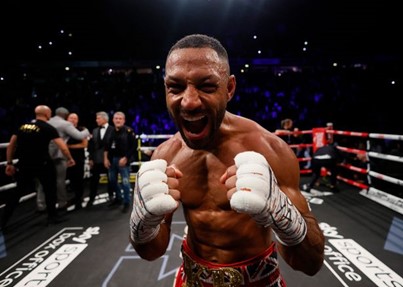
My favourite athlete/sports personality - – BOXING: The Special One! Kell Brook

My favourite actor - Joe Pesci

My favourite author - Sidney Sheldon

My favourite drink - Depends.. Red wine after work or Whiskey for the Weekends

My favourite food - Medium Rare Steak, Lasagne (only from Rodizio Rico, O2 arena), or Egusi & Pounded Yam (Authentic)

My favourite place to eat - As long as the wine is delightful and the food is delicious, I don’t mind

I like people who - are generous & helpful

I don’t like it when people - don’t mind their business

My favourite book - The Doomsday Conspiracy

My favourite book character - Who has time to read fiction?

My favourite film - The Goodfellas, of course!

My favourite poem - 'The Second Coming' by William B Yeats

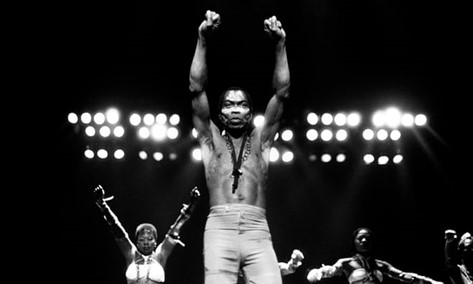
My favourite artist/band -  FELA!

My favourite song - 1. Coffin for Head of State by Fela
 2.  The soundtrack of the Sound of Music – that’s one album I can listen to without skipping a track (My wife thinks I’m weird)

My favourite art - Jean Basquiat: GOD, LAW – an exceptional piece full of symbolism. I need to write a blog on this painting at some point!

My favourite person from history - My favourite person from history – Too many to name just one – but for the sake of this blog, I’ll go with Patrice Lumumba of the Democratic Republic of Congo

Share this:


Is Easter relevant?

What if I was to ask you what images will you conjure regarding Easter? For many pictures of yellow chicks, ducklings, bunnies, and colourful eggs! This sounds like a celebration of the rebirth of nature, nothing too religious. As for the hot cross buns, these come to our local stores across the year. The calendar marks it as a spring break without any significant reference to the religion that underpins the origin of the holiday. Easter is a moving celebration that observers the lunar calendar like other religious festivals dictated by the equinox of spring and the first full moon. It replaces previous Greco-Roman holidays, and it takes its influence for the Hebrew Passover. For those who regard themselves as Christians, the message Easter encapsulates is part of their pillars of faith. The main message is that Jesus, the son of God, was arrested for sedition and blasphemy, went through two types of trials representing two different forms of justice; a secular and a religious court which found him guilty. He was convicted of all charges, sentenced to death, and executed the day after sentencing. This was exceptional speed for a justice system that many countries will envy. By all accounts, this man who claimed to be king and divine became a convicted felon put to death for his crimes. The Christian message focuses primarily on what happened next. Allegedly the body of the dead man is placed in a sealed grave only to be resurrected (return from the death, body and spirit) roamed the earth for about 40 days until he ascended into heavens with the promise to be back in the second coming. Christian scholars have been spending time and hours discussing the representation of this miracle. The central core of Christianity is the victory of life over death. The official line is quite remarkable and provided Christians with an opportunity to admire their head of their church.
What if this was not really the most important message in the story? What if the focus was not on the resurrection but on human suffering. The night before his arrest Jesus, according to the New Testament will ask “Father, if thou be willing, remove this cup from me” in a last attempt to avoid the humiliation and torture that was to come. In Criminology, we recognise in people’s actions free will, and as such, in a momentary lapse of judgment, this man will seek to avoid what is to come. The forthcoming arrest after being identified with a kiss (most unique line-up in history) will be followed by torture. This form of judicial torture is described in grim detail in the scriptures and provides a contrast to the triumph of the end with the resurrection. Theologically, this makes good sense, but it does not relate to the collective human experience. Legal systems across time have been used to judge and to punish people according to their deeds. Human suffering in punishment seems to be centred on bringing back balance to the harm incurred by the crime committed. Then there are those who serve as an example of those who take the punishment, not because they accept their actions are wrong, but because their convictions are those that rise above the legal frameworks of their time. When Socrates was condemned to death, his students came to rescue him, but he insisted on ingesting the poison. His action was not of the crime but of the nature of the society he envisaged. When Jesus is met with the guard in the garden of Gethsemane, he could have left in the dark of the night, but he stays on. These criminals challenge the orthodoxy of legal rights and, most importantly, our perception that all crimes are bad, and criminals deserve punishment.
Bunnies are nice and for some even cuddly creatures, eggs can be colourful and delicious, especially if made of chocolate, but they do not contain that most important criminological message of the day. Convictions and principles for those who have them, may bring them to clash with authorities, they may even be regarded as criminals but every now and then they set some new standards of where we wish to travel in our human journey. So, to answer my own question, religiosity and different faiths come and go, but values remain to remind us that we have more in common than in opposition.
Share this:


When This is Over: Reflections on an Unequal Pandemic
This week a book was released which I both co-edited and contributed to and which has been two years in the making. When This is Over: Reflections on an Unequal Pandemic is a volume combining a range of accounts from artists to poets, practitioners to academics. Our initial aim of the book was borne out of a need for commemoration but we cannot begin to address this without considering inequalities throughout the pandemic.
Each of the four editors had both personal and professional reasons for starting the project. I – like many – was (and still is) deeply affected by the COVID-19 pandemic. When we first went into lockdown, we were shown the data every day, telling us the numbers of people who had the virus and of those who had died with COVID-19. Behind these numbers, I saw each and every person. I thought about their loved ones left behind, how many of them died alone without being able to say goodbye other than through a video screen. I thought about what happened to the bodies afterwards, how death rites would be impacted and how the bereaved would cope without hugs and face to face social support. Then my grandmother died. She had overcome COVID-19 in the way that she was testing negative. But I heard her lungs on the day she died. I know. And so, I became even more consumed with questions of the COVID-19 dead, with/of debates. I was angry at the narratives surrounding the disposability of people’s lives, at people telling me ‘she had a good innings’. It was personal now.
I now understood the impact of not being able to hug my grandpa at my grandmother’s funeral, and how ‘normal’ cultural practices surrounding death were disturbed. My grandmother loved singing in choirs and one of the traumatic parts of our bereavement was not being able to sing at her funeral as she would have wanted and how we wanted to remember her. Lucy Easthope, a disaster planner and one of my co-authors speaks of her frustrations in this regard:
“we’ve done something incredibly traumatising to the families that is potentially bigger than the bereavement itself. In any disaster you should still allow people to see the dead. It is a gross inhumanity of bad planning that people couldn’t’t visit the sick, view the deceased’s bodies, or attend funerals. Had we had a more liberal PPE stockpile we could have done this. PPE is about accessing your loved ones and dead ones, it is not just about medical professionals.”
The book is divided into five parts, each addressing a different theme all of which I argue are relevant to criminologists and each part including personal, professional, and artistic reflections of the themes. Part 1 considered racialised, classed, and gendered identities which impacted on inequality throughout the pandemic, asking if we really are in this together? In this section former children’s laureate Michael Rosen draws from his experience of having COVID-19 and being hospitalised in intensive care for 48 days. He writes about disposability and eugenics-style narratives of herd immunity, highlighting the contrast between such discourse and the way he was treated in the NHS: with great care and like any other patient.
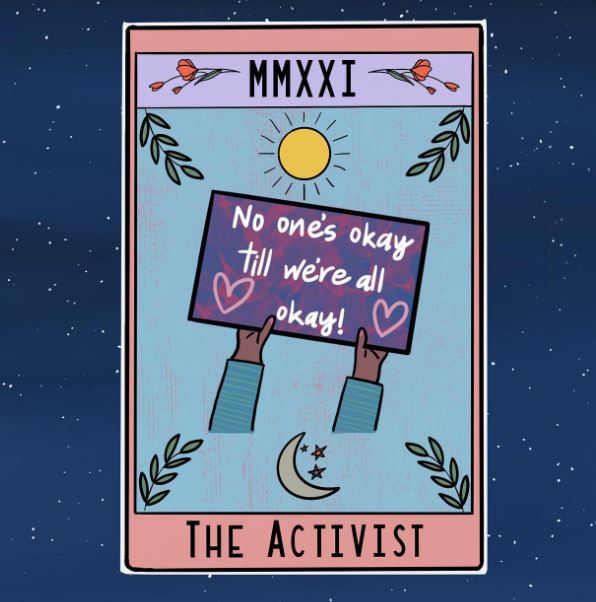
The second part of the book considers how already existing inequalities have been intensified throughout the pandemic in policing, law and immigration. Our very own @paulsquaredd contributed a chapter on the policing of protests during the pandemic, drawing on race in the Black Lives Matter protests and gender in relation to Sarah Everard. As my colleagues and students might expect, I wrote about the treatment of asylum seekers during the initial lockdown periods with a focus on the shift from secure and safe self-contained housing to accommodating people seeking safety in hotels.
Part three considers what happens to the dead in a pandemic and draws heavily on the experiences of crematoria and funerary workers and how they cared for the dead in such difficult circumstances. This part of the book sheds light on some of the forgotten essential workers during the pandemic. During lockdown, we clapped for NHS workers, empathised with supermarket workers and applauded other visible workers but there were many less visible people doing valuable unseen work such as caring for the dead. When it comes to death society often thinks of those who cared for them when they were alive and the bereaved who were left to the exclusion of those who look after the body. The section provides some insight into these experiences.
Moving through the journey of life and death in a pandemic, the fourth section focusses on questions of commemoration, a process which is both personal and political. At the heart of commemorating the COVID-19 dead in the UK is the National COVID Memorial Wall, situated facing parliament and sat below St Thomas’ hospital. In a poignant and political physical space, the unofficial wall cared for by bereaved family members such as Fran Hall recognises and remembers the COVID dead. If you haven’t visited the wall yet, there will be a candlelit vigil walk next Wednesday, 29th March at 7pm and those readers who live further afield can digitally walk the wall here, listening to the stories of bereaved family members as you navigate the 150,837 painted hearts.

The final part of the book both reflects on the mistakes made and looks forward to what comes next. Can we do better in the next pandemic? Emergency planner Matt Hogan presents a critical view on the handling of the pandemic, returning to the refrain, ‘emergency planning is dead. Long live emergency planning’. Lucy Easthope is equally critical, developing what she has discussed in her book When the Dust Settles to consider how and what lessons we can learn from the management of the pandemic. Lucy calls out for activism, concluding with calls to ‘Give them hell’ and ‘to shout a little louder’.
Concluding in his afterword, Gary Younge suggests this is ‘teachable moment’, but will we learn?
When This is Over: Reflections on an Unequal Pandemic is published by Policy Press, an imprint of Bristol University Press. The book can be purchased directly from the publisher who offer a 25% discount when subscribing. It can also be purchased from all good book shops and Amazon.
Share this:

An inspirational note to students on the issue of students’ non-engagement in Universities
I am not a motivational speaker, nor claim to have been inducted into the motivational speaker’s hall of fame. However, my choice to write about this blog stems from some of the challenges being faced by students that I have observed in the last couple of months. This is an inspirational blog for students and not so much about the issues of laziness in studies and so on. The aim here is to try to guide students on how they can fight through some of the challenges they are going through and be better achievers. As an educator, I owe it a duty to myself to offer advice and guidance to my students wherever necessary – in the hope that they can benefit sufficiently from the experiences that university life brings them. Remember my first point, I am not a motivational speaker, and so the recommendations that I present here are not exhaustive but brief and straight to the point.
In this post-pandemic era, several academics have drawn attention to the general lack of engagement of students in their various universities, and some colleagues have written and spoken about this issue on different platforms and forums. Some academics and students, none I know, often conclude and sum up the problem as ‘mere laziness’. While I do not disagree entirely with them in some cases, I wish to reflect on some of my observations with students from different universities. In these dialogues, my aim was to know their views on the general lack of engagement with their studies and to pick their brains on why some students struggle to attend classes. Many issues have been raised, but I will attempt to sum them up into three categories.
Firstly, one of the key issues that some students have raised is the impact of the pandemic and the need to bring back remote learning. Undoubtedly, COVID-19 messed us all up, and I get it. It was a painful period of uncertainty and a period where academic achievements dropped almost to their lowest across many countries. Online collaborate, and other online classes made life really easy for many students to the point where students could turn up to their 9 am online class under their duvet just a few minutes before the start of the class. The obligation to complete workshop reading was minimal because students could easily fake a network connection glitch and sign out when called to answer a question. There was also no obligation (in some cases) to turn on your camera or mic – because the famous phrase ‘my mic isn’t working’ was not too far away. These examples may seem inconsequential, but they help us understand some foundational problems affecting students’ motivation to engage with their studies.
We should also not forget that the need to queue up for trains at 7 am, where you have people breathing down your neck during the expensive peak time or rush hour period to meet a 9 am lecture, was reduced to the lockdown rules. This life has led to what I call the ‘soft life’. The soft life of having things done at your own time, in your bed, and at your own pace. To a large extent, the ‘soft life’ of remote learning has made it really difficult for some students to readjust to real life and to fire up their motivations to engage with their studies. My recommendation is that students start fighting through this soft life because the real-life upon graduation is not particularly soft, and the labour market (as some of you may be aware) is particularly fierce in its competition.
The second issue here is the problem of finance and the current cost-of-living crisis. I will not go into specific details because we are all feeling the heat of the current austerity, but the result of the current cost of living crises, such as the rise in transportation fares, has been raised as one of the reasons why students do not turn up to classes. We all know that the austere situation of price hikes is being experienced by many of us today. As a result, we are witnessing several strike actions across the country. From teachers to train drivers and from hospital workers to bus drivers, hundreds of thousands of workers are calling for changes in their pay schemes, working conditions and so on. Students are also suffering from these crises too, and it becomes even more compounded for students with dependents.
We can all agree that studying under harsh financial conditions can increase anxiety and reduce motivation to engage in university. These, coupled with family commitments and health challenges, are a recipe for discouragement and demoralisation. In managing this problem in academic studies, one of the key recommendations is for students to identify the support services available to them in their various institutions. Get in touch with your lecturers and update them on your predicament. Don’t ‘ghost’ on your PATs; speak to your academic advisers and other services available to you as you deem fit. Keeping your problems to yourself will only intensify anxiety. After all, a problem well stated is a problem half solved.
Another overarching narrative in my dialogue with some students reflects the general feeling of not wanting to go to university because of a lack of belonging to the campus or the course/module. Some students have noted higher confidence levels in peer learning and that their inability to establish a strong relationship with friends on campus or in classrooms has made it difficult for them to engage. When it relates to in-class workshop exercises, minimal students attend class, thus restricting peer learning. I once heard, ‘why do I need to attend when it’s only going to be 3 of us in the class’. Again, very many examples have been raised in my dialogues, but what is important here is for students to recognise some of the benefits of this and to use it to their advantage instead of taking it as a reason not to engage. One example is that such situations can provide a more ‘personable atmosphere’ where you can clarify burning issues relating to the module. It can also help with attention, and it can help build confidence.
Gnerally, non-engagement with studies has some implications for later years. Gone were the days when the probability of getting a job was relatively high upon completing university degree. However, in recent times, the competition in the labour market has become so stiff that those with a 2.1 or 1st-class degree sometimes find it hard to secure a job – particularly where experience is limited. Making informed decisions, being autonomous in your education and taking responsibility for your education will assist in dealing with quite a lot of challenges in later years. Remember the saying, if life throws lemons at you, make lemonade out of it. So keep on striving.
Overall, anxiety, stress and demoralisation reduce work productivity and social functioning. We are in a period where we, as a society, need each other more than ever. People are struggling and going through different crises, and as a people, the least we can do is to be kind to individuals and alley their fears whenever possible and necessary. Kindness here becomes the goal.
I hope you find strength for those going through other issues, such as ill health and other challenges that are beyond their control! Happy Weekend!
Share this:


Thinking about ‘Thoughts from the Criminology Team’

This is the sixth anniversary of the blog, and I am proud to have been a contributor since its inception. Although, initially I only somewhat reluctantly agreed to contribute. I dislike social media with a passion, something to be avoided at all costs, and I saw this as yet more intrusive social media. A dinosaur, perhaps, but one that has years of experience in the art of self-preservation. Open up to the world and you risk ridicule and all sorts of backlash and yet, the blog somehow felt and feels different. It is not a university blog, it is our team;s blog, it belongs to us and the contributors. What is written are our own personal opinions and observations, it is not edited, save for the usual grammar and spelling faux pas, it is not restricted in any way save that there is an inherent intolerance within the team for anything that may cause offence or hurt. Government, management, organisations, structures, and processes are fair game for criticism or indeed ridicule, including at times our own organisation. And our own organisation deserves some credit for not attempting to censure our points of view. Attempts at bringing the blog into the university fold have been strongly resisted and for good reason, it is our blog, it does not belong to an institution.
As contributors, and there are many, students, academics and guests, we have all been able to write about topics that matter to us. The blog it seems to me serves no one purpose other than to allow people space to write and to air their views in a safe environment. For me it serves as a cathartic release. A chance to tell the world (well at least those that read the blog) my views on diverse topics, not just my views but my feelings, there is something of me that goes into most of my writing. It gives me an opportunity to have fun as well, to play with words, to poke fun without being too obvious. It has allowed us all to pursue issues around social injustices, to question the country, indeed the world in which we live. And it has allowed writers to provide us all with an insight into what goes on elsewhere in the world, a departure from a western colonial viewpoint. I think, as blogs go it is a pretty good blog or collection of blogs, I’m not sure of the terminology but it is certainly better than being a twit on Twitter.
Share this:


Tyre Nichols’ last bird’s eye view.
[Spoken Word/Read aloud]

After my death, the New York Times reported that you all gave me “at least 71 commands.”
“Many were contradictory or impossible,” the Times tweeted.
In a mob frenzy throughout the whole ordeal, y’all kept shouting at me over each other.
When I couldn’t comply – and even when I did manage to obey– you…(SMH)
“Responded with escalating force.”
Hmph!
NYT’s tweet is cleverly crafted, with a photo – a bird’s eye view of us from the street camera.
There we see 4 of you hunched down on me, pressing my whole body against the ground.
The 5th thug is lunging toward me with a weapon.
After my death, I wonder how y’all will explain this footage –
Knowing the nature of these viral tweets?
I’ve personally reposted too many posts of Black bodies in my exact position to count.
I know I didn’t have to do anything to get here,
Knowing this brings me no comfort in this moment.
All of your commands ignore my humanity.
I am powerless and yet you persist.
In the many video angles of your fatal attack, we all see that…
Each of you had so many chances to just stop!
I’ve always tried to make sense of such lethal violence.
I try to understand the who, what and why of your attack that led to my death.
You had me pinned and pressed to the ground when you kept barking:
“Get on the ground.”
When you kept yelling, one after the other, “Give me your hands,”
Two or three of you were already bending my arms backward and forward with force.
I contort myself and try to comply, yet
You keep screaming “Stop resisting,” meanwhile,
At the same time, two or three of you are manhandling some part of me, at all times.
At the end when you leaned my beaten-up, bleeding, limp body against your car,
One of you snaps-n-shares pictures of me with colleagues and friends.
He’s proud and reaching out to folks who’ll pat him on the back for his latest accomplishment.
During the whole attack, I notice this is the only time he’s cool. He smiles.
He’s clearly used to this exact same rush, this exact same thrill.
I’m more disappointed than angered by his grin.
Mine is an all-American honor killing –
Most just get shot, but many have been tortured just like me.
We see this is how too many of his brethren defend their shield.
Where was I to go?
Appeal to the other officers on the scene whose negligence is pristine?
I tried to run, you captured me, which provoked more torture; nowhere feels safe.
Why was I being terrorized?
And by you, who’ve pledged to protect us from (this) terrorism and (this) thug behavior.
What was I to do?
Flight, freeze or fight.
I am tiny compared to any one of you, y’alls combat training and y’alls five big bodies built-up for battle.
I am a fly; you act like lords.
“Bruh,” you call me, but there is no evidence of brotherliness here.
Or, does your fraternity honor and practice such sadomasochistic rituals?
I like skateboarding and photography, another magazine writes, trying to digest my senseless murder.
Yet the videos of me captured for the world to see are
“…absent all beauty and sterilized of hope.”
When would this end?
Would I have to die for you to stop.
How had I possibly provoked this attack?
Who was I to obey?
You? You’re no good, like Linda Ronstadt said:
You’re no good. You’re no good. Baby, you’re no gooooooood…..
You’re no good.
Or perhaps good in your god’s eyes?
Or, are you God?
No.
You’re not anybody’s God, but…
You play one out here on these streets.
Now, you’re playing my God… my life is keenly in your fists.
Yes! These unceasing murders that I’ve seen – not just mine now–
Is what makes this place hell on Earth in the here and now.
So perhaps y’all’re just agents of the devil,
A force unleashed from the depths upon these streets.
“Momma,” I cry out as loud as I can, and you continue to holler obscenities at me.
Momma used to say all people are fundamentally good,
But lately, I’ve felt fundamentally unsure, and now I’m convinced.
“I didn’t do anything,” I plea, rolling on the ground with my hands behind my back.
Y’all kick me.
“Mom,” I cry out again.
I will die here alone.
No mother should lose her child like this.
The agony inside now, as I call out to my momma, is not for her help,
But because I can already feel her pain once she hears how I’m dying.
Since momma fought for the public release of the videos of my attack,
My name is a hashtag and we have been written about a plenty.
“Every Black mother knows she is a split second,” one newspaper writes,
“… a quirk of chance, from joining a lineage of suffering that stretches back through Mamie Elizabeth Till-Mobley…”
When she saw y’all in court for my kidnapping, assault, oppression, and murder,
Momma said you didn’t even have the courage to look her in the face.
Cowards.
Momma said you’re gonna see her each time you are called to see the judge.
-END-
Photo:
NPR OBITUARIES: “Tyre Nichols loved skateboarding. That’s how his friends say they’ll remember him.”
Share this:


Cash Strapped, Vote-Buying, Petroleum Scarcity, and the Challenge of a 21st Century Election
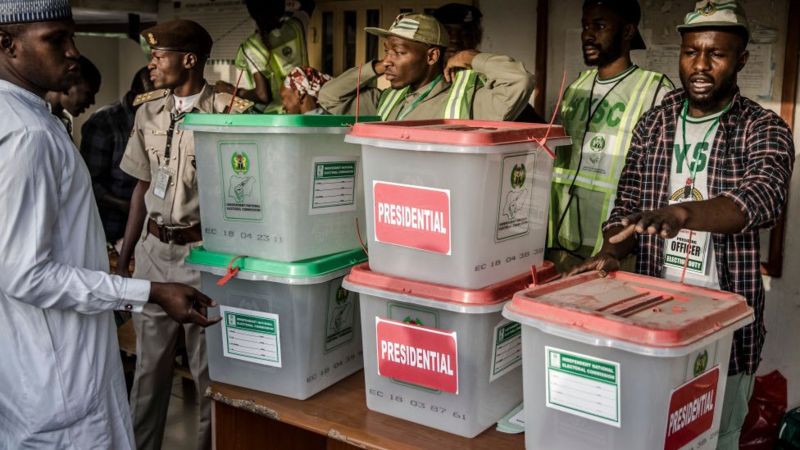
Democratic elections are considered an important mechanism and a powerful tool used to choose political leaders. However, the level of transparency and the safety of votes, the electorates, and the aspirants as recent elections in supposed strong democracies indicate is not a given. Even more, in weak and fragile states, voters grapple with uncertainties including the herculean task of deciding on whom or perhaps what to pledge allegiance to?
Nigerians face such uncertainties as over 93 million voters are set to decide the new leadership of the most populous country in Africa in less than 24 hours. Three contestants: Ahmed Bola Tinubu of the ruling All Progressive Congress (APC); Peter Obi of the Labour Party(LP); and Atiku Abubakar of the Peoples Democratic Party (PSP) are considered the major contestants of the coveted seat of the presidency. All 3 contestants are neither strangers to political power nor free of controversies. Nevertheless, a plethora of problems awaits the successful candidate, including a spiking impatience with government policies from the populace.
Since assuming office in 2015, President Muhammadu Buhari has consciously implemented numerous policies aimed at changing the tide of the crippling economy of Nigeria. One of this was tightening control of foreign exchange and forex restrictions to minimise pressure on the weak exchange rate of the naira against other currencies, and to encourage local manufacturing. Furtherance to this, the government implemented more restrictions including closing all its land borders in August 2019 to curtail smuggling contrabands and to boost agricultural outputs. These policies have been criticised for increasing the hardship of the mostly poor masses and failing to yield desired goals, despite its resulting in an increase in local production of some agricultural products.
The aviation sector and multinational companies were also heavily impacted by the forex restrictions. International airliners were unable to access and repatriate their business funds and profits. As a result, some suspended operations while some multinationals closed down completely. Flawed policy articulation and implementation and a slow or total failure to respond to public disenchantment has been the bane of the 8 years of Buhari regime which ends in a few months. While the masses grappled with surviving movement restrictions during the Covid-19 lockdown, palliative meant for to ease their suffering were hoarded for longer than necessary, thereby provoking series of mass looting and destruction of the storage warehouses.
Demands for action and accountability over police reform also assumed a painful dimension. On 20 October 2020, peaceful protesters demanding the abolishment of a notoriously corrupt, brutal, rogue, and stubborn police unit called SARS were attacked by government forces who killed at least 12 protesters. Incidents as this supports Nigeria’s ranking as an authoritarian regime on the democratic index. Unsurprisingly, the regime appears numb to the spate of violence, insecurity, and recurring killings perpetrated by a complex mix of militias, criminal groups, terrorists, and state institutions as the #EndSARS massacre demonstrates. Thus, a wave of migration among mainly skilled and talented young Nigerians now manifests as a #Japa phenomenon. The two most impacted sectors, health and education ironically supply significant professionals in nations where the political class seek medical treatment or educate their children while neglecting own sectors.
Certainly, the legacy of the Buhari regime would be marred by these challenges which his party presidential candidate and prominent party stalwarts have distanced from. Indeed, they fear electorates would vote against the party as a protest over their suffering. Suffice it that Nigerians lived through the previous year in acute scarcity and non-availability of petroleum products, which further deepened inflation. Currently, cash scarcity is causing untold hardship due to the implementation of a currency redesign and withdrawal limits policy. The timing of the implementation of the policy coincides with the election and is thought to aim at curtailing vote-buying as witnessed in party primary elections. However, there is no guarantee that bank officials would effectively implement the policy.
Thus, as Nigeria decides, the 3 contestants present different realities for the country. For some, voting in the ruling APC candidate who has a questionable history could mean a continuation of the woes endured during the Buhari regime. The PDP candidate who was instrumental in the 2015 election of Buhari has severally been fingered for numerous controversies and corruption, despite having not been prosecuted for any. Similarly, allegations levelled against the LP candidate who has found wide popularity and acceptance amongst the young population has not resulted in any prosecution. However, while the candidate is popular for his anti-establishment stance and desire to change the current system, it is unclear if his party which has no strong political structure, serving governors, or representatives can pull the miracle his campaign has become associated with to win the coveted seat.
Share this:


“Over-policed and under-protected”- School children and policing: some criminological discussions

During the first week of Semester 2, the Criminology team put on a number of small sessions designed around topic areas to encourage some ‘radical’ discussion. Topic areas were designed to deliberately encourage debate and critical consideration. Due to the increasing use of police in schools, and relatively recent (within the past few years) issues around police stop and search in schools, disproportionately being used in schools with a majority Black and Brown cohort, often framed as ‘urban’ schools: it is an area of great interest for both Stephanie and myself. We were expecting some lively discussions around whether the Police should be in schools, and if so, in what capacity: and whilst the students did not disappoint in relation to this matter, they also raised some excellent points around the policing of school children and the control the school forces upon them. It is this area of the discussions that I would like to share with you.
Policing as a form of social control, exerted by schools, not necessarily the Police force, is rife within schools: something the students were quick to draw attention to. This was raised in relation to the policing of Black children’s hair. They are told to alter their appearances based on white standards, have been sent home for not conforming to the school dress code, sent to the back of classrooms for having distracting hair: in both primary and secondary school settings. This power over Black children’s hair, stands in contrast to the idea that children have no say over their hair, and are held to white westernised standards, yet can be held criminally responsible and subject to the force of the law as they are recognised as mature enough to understand crime and its consequences.
This baffling, controlling narrative is also evident in the use of school uniforms. Students raised the inappropriateness of some of the school uniforms in relation to the length of skirts, banning trainers, and piercings, which was a method of control which removed all sense of individuality and identity. It was recognised that children are encouraged to ‘grow up’ and ‘mature’ and ‘figure out’ what they want to do, but they had the methods of exploring this, especially in relation to their identity, restricted and policed. The limited autonomy over hair, clothes, piercings and children’s bodies stands in stark contrast to the legal discourse of children being criminally responsible at the age of 10years old in England and Wales. This was baffling to us!
A further way of policing students in school was through the surveillance the schools exerted over children. The use of CCTV, fingerprints as a method of purchasing lunch was originally considered as a form of security: the all seeing eye of big brother, oops sorry the school, and the attempt to reduce bullying by removing the carrying of cash was originally framed as a way of protecting children. However, the students were very critical of whether this surveillance was intended as protection, or rather as control. The idea of being deterred from delinquency through the use of CCTV, and preventing bullying by removing the possibility of money was considered, but again this refers back to the controlling of children’s behaviour.
There isn’t enough space to include all areas of the 2 hour discussion, and the time flew by quickly as the students and staff lost themselves in considering the role police play in schools, and the role schools play in policing children. The session concluded with us considering the school as an institution and whether its primary role was that of education, or of the creation of obedient bodies. I won’t tell you where we settled, but it is worth a ponder…
With thanks to all those who attended and stimulated the critical discussions around over-policed and under-protected: school children and policing: Gloria, Lucy, Kayode, Uche, Christivie, Joseph, Rosemary, Katya, Kayleigh, Chrissy, Diamante, Shola-Renee, Ellie, Sarah, Zoe, Stephanie and Jessica.
Share this:


Is the cost of living crisis just state inflicted violence

Back in November 2022, social media influencer Lydia Millen was seen to spark controversy on the popular app ‘TikTok’ when she claimed that her heating was broken, so she therefore was going to check into the Savoy in London.
Her video, which she filmed whilst wearing an outfit worth over £30,000, sparked outrage on the app and across popular social media platforms. People began to argue that her comment was not well received in our current social climate, where people have to choose whether they should spend money on heating or groceries. For many, no matter your financial situation, problems with heating rarely resorts in a luxury stay in London.
With pressure mounting, Lydia decided to reply to comments on her video. When one individual stated “My heating is off because I can’t afford to put it on”, Lydia replied “It’s honestly heart breaking I just hope you know that other people’s realities can be different and that’s not wrong”. Sorry, Lydia; it is wrong. Realities are not different; they are miles apart. This is clearly seen in the fact that the National Institute of Economic and Social Research estimate that 1.5 million households in the UK over the next year will be landed in poverty (NIESR, 2022).
Ultimately, this is a social issue. Like Lydia said, in a society in which individuals are stratified based on their economic, cultural and social capital, we are conditioned to believe that this is just the way it is, and therefore, it is not wrong that other people have different realities. However, for me, it is not ‘different realities’, it is a matter of being able to eat and be warm versus being able to stay in a luxury hotel in London.
So, why is this a criminological issue? The cost of living crisis is simply just state inflicted poverty. Alike to Lydia with her social following, the government have the power to make change and use their position in society to remedy cost of living issues, but they don’t. This is not a mark of their failure as a government, it is a mark of their success. You only have to look at the government’s complete denial surrounding social issues to realise that this was their plan all along, and the longer this denial continues, the longer they succeed. This is seen in the case of Lydia Millen, who has acted as a metaphor for the level of negligence in which the government exercises over its citizens. Ultimately, for Lydia, it is very easy to tuck yourself into a luxury bed in the Savoy and close the curtains on the real world. The people affected by the crisis are not people like Lydia Millen, they are everyday people who work 40+ hours a week, and still cannot make ends meet. For the government, the cost of living crisis is the perfect way to separate the wheat from the chaff.
Ultimately, the cost of living crisis is not too dissimilar to the strikes that the UK is currently experiencing. Alike to the strikes, the cost of living crisis was always going to happen at the hands of a negligent government. The only way we can begin to address this problem is by giving our support, by supporting strikes all across the country, and by standing up for what is right. After all, the powers in our country have shown that our needs as a society are not a priority, so it is time to support ourselves.
“Injustice anywhere is a threat to justice everywhere.” ― Martin Luther King Jr.
References:
National Institute of Economic and Social Research (2022) What Can Be Done About the Cost-of-Living Crisis? NIESR [online]. Available from: https://www.niesr.ac.uk/blog/what-can-be-done-about-the-cost-of-living-crisis [Accessed 23/01/23].
Share this:

A world without prisons follow-up. A student/staff reflection piece
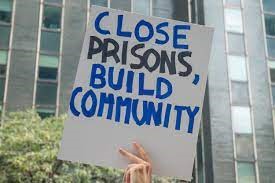
As a department Criminology has pushed the envelope in promoting discussions around the key disciplinary debates. @franbitalo and myself co-ordinated a conversation where the main focus was to imagine “a world without prisons”. The conversation was very interesting, and we decided to post parts of it as a legacy of the social debates we engage in. The discussion is captured as a series of comments made by the students with some prompts in bold.
The original question stands, can you imagine a world without prisons? First thing first, there is a feeling that prisons will always exist as mechanisms to control our society. Mainly because our society is too punitive and focused on punishment rather than rehabilitation. We live in a society that ideologically sees the prison as the representation of being hard on crime. Further to this point we may never be able to abolish the prison, so it can always remain as the last resort of what to do with those who have harm others. Especially for those in our society who deserve to be punished because of what they did. Perhaps we could reform it or extend the use of the probation service dealing with crime.
In an ideal world prisons should not exist especially because the system seems to target particular groups, namely minorities and people from specific background. It important to note that it does stop people seeking or taking justice into their hands and deflecting any need for vengeance “eye for an eye”. Prison is a punishment done in the name of society, but it does carry political overtones. There are parts of political ideology that support the idea that punishment is meant to make an example of those breaking the law. This approach is deeply rooted, and is impervious to reform or change. Which can become one of the biggest issues regarding prisons.
Then there is the public’s view on prisons. When people hear that prisons will go they will be very unhappy and even frightened. They will feel that without prisons people will go crazy and commit crimes without any consequences. Society, people feel, will go into a state of anarchy where vigilantism will become the acceptable course of action. This approach becomes more urgent when considering particular types of criminals, like sex offenders and in particular, paedophiles. Regardless of the intention of the act, these types of crime cause serious harm that the victim carries for the rest of their lives. The violation of trust and the lack of consent makes these crimes particularly repulsive and prison worthy. How about child abduction? Not sure if we should make prison crime specific. That will not serve its purpose, instead it will make it the dumping ground for some crime categories, sending a message that only some people will go to prison.
Will that be the only crime category worthy of prison? In an ideal world, those who commit serious financial crimes should be going to prison, if such a prison existed. Again, here if we are considering harm as the reason to keep prisons open these types of crime cause maximum harm. The implication of white-collar crime, serious fraud and tax evasion deprive our society of taxes and income that is desperately needed in social infrastructure, services and social support. Financial crime flaunts the social contract and weakens society. Perhaps those involved should be made to contribute reparations. The prison question raises another issue to consider especially with all the things said before! Who “deserves” to go to prison. Who gets to go and who is given an alternative sentence is based on established views on crime. There are a lot of concerns on the way crime is prioritised and understood because these prioritisations do not reflect the reality of social disorder. Prison is an institution that scapegoats the working classes. Systematically the system imprisons the poor because class is an imprisonable factor; the others being gender and race.
If we keep only certain serious crimes on the books, we are looking at a massive reduction in prison numbers. Is that the way to abolitionism? The prison plays too much of a role in the Criminal Justice System to be discounted. The Industrial Prison Complex as a criminological concept indicates the strengths of an institution that despite its failings, hasn’t lost its prominence. On the side of the State, the establishment is a barrier to any reform or changes to this institution. Changes are not only needed for prison, but also for the way the system responds to the victims of crime as well. Victims are going through a process of re-victimisation and re-harming them. This is because the system is using the victims as part of the process, in giving evidence. If there is concern for those harmed by crime, that is not demonstrated by the strictness of the prison.
As a society currently we may not be able to abolish prisons but we ought to reduce the harm punishment has onto people. In order to abolish prisons, the system will have to be ready to allow for the change to happen. In the meantime, alternative justice systems have not delivered anything different from what we currently have. One of the reasons is that as a society we have the need to see justice being served. A change so drastic as this will definitely require a change in politics, a change in ideology and a change in the way we view crime as a society in order to succeed. The conversation continues…
Thank you to all the participating students: Katja, Aimee, Alice, Zoe, Laura, Amanda, Kayleigh, Chrissy, Meg, and Ellie also thank you to my “partner in crime” @franbitalo.

 Thoughts from the criminology team