
Home » #ReadingForCriminologists
Category Archives: #ReadingForCriminologists
Not reading criminology? That’s criminal!
There are two kinds of criminology conversations I get embroiled in these days! Those with people who read criminology where we discuss many social/cultural phenomena under a specific lens or those with people who find criminology interesting, but consume popular crime instead. The first group with varying level of engagement is beginning to decode some tell-tell signs in current events, using their knowledge of the discipline, as a deciphering mechanism. The second group is quite different. Their understanding of crime is based on dramatisations and literary conventions around plots and characters. Even real crime is harbouring under the guise of some “exclusive” journalistic exposé…far from any basic criminological understanding.
Years ago, a colleague from Sociology told me a story regarding a family event. They were completing their PhD in the discipline, and they were questioned by an elderly person, as to what they would do when they finished their thesis. They responded in the usual way many graduate students tend to, about hoping to get into academia or get some funding for some further research. The elderly person didn’t seem satisfied…. they prompted further. What will be your specialism? What will you be able to tell people that you are proficient in? Society and people, the colleague replied! That’s hardly a skill, the old relative replied; we all live in society! The colleague was equally intrigued and offended. They thought that by offering a succinct response it would have helped their relative to understand without being confounded with notions on symbolic interactionism and ethnomethodology. This was a little anecdote that resonates with many social scientists, criminologists included, that whilst they try to explore people and culture around them, they are becoming distant to the actual people around them.
The degree of challenge in recent years seems to increase for disciplines where people in general have a vague idea of what it is. Many try to use psychological terms to explain other people’s behaviours, without realty appreciating, the clinical and scientific conditions of the term. That is relevant to criminology too. The representation of crime for public consumption has introduced some of the discipline’s terms into everyday parlance. From forensic terms on profiling, to the origins of criminality, expectations on crime are forged. A criminologist’s reaction to popular criminology pundits tends to be, well not quite, only to be met with disbelief of the criminology they know!
One of the ways to appeal to those interested in popular criminology and take them to the discipline will be to add some facts and figures that promote reality. Perhaps but that has been done before but only to give a gloss of “legitimacy” in fiction. It makes it more compelling, but it doesn’t really offer the depth of knowledge. To understand criminology, one must read criminology. The history is filled with colleagues who brought their imagination to the discipline. From Bonger’s Criminality and Economic Conditions to Jock Young and The Criminological Imagination there are books and papers that are waiting to be read by a new audience to try to figure out these ideas.
Maybe we all live in society and heard about crime and even experienced it, but to understand it we need some criminology. The discipline, as with all social sciences, is a dialogue between people ready to carry forward the next constructs that shall appear as crimes. If we read them and take part in these conversations maybe the area of harsh punishments, exclusion and persecution may not be as appealing. We are an academic discipline but at the same time we open the discussion to our community. So if you are neither a student, graduate, nor fellow academic and you are interested in criminology, why don’t you come to visit? https://www.northampton.ac.uk/about-us/contact-us/open-days/
Share this:


A Love Letter to Criminology at UON


In 2002, I realised I was bored, I was a full-time wife and parent with a long-standing part-time job in a supermarket. I first started the job at 15, left at 18 to take up a job at the Magistrates’ court and rejoined the supermarket shortly after my daughter was born. My world was comfortable, stable and dependable. I loved my family but it was definitely lacking challenge. My daughter was becoming increasingly more independent, I was increasing my hours and moving into retail management and I asked myself, is this it? Once my daughter had flown the nest, could I see myself working in a supermarket for the rest of my life? None of this is to knock those those that work in retail, it is probably the best training for criminology and indeed life, that anyone could ask for! I got to meet so many people, from all backgrounds, ethnicities, ages, religions and classes. It taught me that human beings are bloody awkward, including myself. But was it enough for me and if it wasn’t, what did I want?
At school, the careers adviser suggested I could work in Woolworths, or if I tried really hard at my studies and went to college, I might be able to work for the Midland Bank (neither organisation exists today, so probably good I didn’t take the advice!). In the 1980s, nobody was advocating the benefits of university education, at least not to working-class children like me. The Equal Pay Act might have been passed in 1970 but even today we’re a long way from equality in the workplace for women. In the 1980s there was still the unwritten expectation (particularly for working class children from low socio economic backgrounds) that women would get married, have children and perhaps have a part-time job but not really a career….I was a textbook example! I had no idea about universities, knew nobody that had been and assumed they were for other people, people very different from me.
That changed in 2002, I had read something in a newspaper about a Criminology course and I was fascinated. I did not know you could study something like that and I had so many questions that I wanted to answer. As regular readers of the blog will know I’m a long-standing fan of Agatha Christie whose fiction regularly touches upon criminological ideas. Having been born and raised in North London, I was very familiar with HMP Holloway’s buildings, both old and new, which raised lots of questions for a curious child, around who lived there, how did they get in and out and what did they do to the women held inside. Reading suffragette narratives had presented some very graphic images which further fed the imagination. Let’s just say I had been thinking about criminology, without even knowing such a discipline existed.
Once I was aware of the discipline, I needed to find a way to get over my prejudices around who university was for and find a way of getting in! To cut a long story short, I went to an Open Day and was told, go and get yourself an access course. At the time, it felt very blunt and reinforced my view that universities weren’t for the likes of me! Looking back it was excellent advice, without the access course, I would never have coped, let alone thrived, after years out of education.
In 2004 I started reading BA Criminology, with reading being the operant word. I had been an avid reader since early childhood (the subject of an earlier blog) and suddenly I was presented with a license to read whatever and whenever I wanted and as much as I could devour! For the first time in my life, people could no longer insist that I was wasting time with my head always in a book, I had “official” permission to read and read, I did! I got the chance to read, discuss, write and present throughout the degree. I wrote essays and reports, presented posters and talked about my criminological passions. I got the chance to undertake research, both empirical and theoretical, and lawks did I revel in all this opportunity. Of course, by looking back and reflecting, I forget all the stresses and strains, the anxieties around meeting so many new people, the terror of standing up in front of people, of submitting my first assessment, of waiting for grades….but these all pale into insignificance at the end and three years goes so very quickly….
In the summer of 2007, I had a lovely shiny degree in Criminology from the University of Northampton, but what next? By this point, I had the studying bug, and despite my anticipation that university would provide all the answers, I had a whole new set of questions! These were perhaps more nuanced and sophisticated than before but still driving me to seek answers. As I said earlier, human beings are awkward and at this point I decided, despite my earlier passion, I didn’t want to be put in a box labelled “Criminology“. I felt that I had finally cracked my fear of universities and decided to embark on a MA History of Medicine at Oxford Brookes. I wanted to know why Criminology textbooks and courses still included the racist, sexist, disablist (and plenty more) “theories” of Cesare Lombroso, a man whose ideas of the “born criminal” had been discredited soon after they were published.
But again the old fears returned….what did I know about history or medicine? What if the Criminology degree at Northampton hadn’t been very good, what if they just passed everyone, what if I was kidding myself? Everything at Brookes felt very different to Northampton, everyone on the course had studied BA History there. Their research interests were firmly centred on the past and on medicine, nursing, doctoring, hospitals and clinics and there was me, with my ideas around 20th century eugenics, a quasi-scientific attempt to rationalise prejudice and injustice. Along with studying the discipline, I learnt a lot about how different institutions work, I compared both universities on a regular basis. What did I like about each, what did I dislike. i thought about how academics operate and started to think about how I would be in that profession.
I successfully completed the MA and began to think maybe Northampton hadn’t given me good grades out of our pity or some other misplaced emotion, but that I had actually earnt them. I was very fortunate, I had maintained connection with Criminology at UON, and had the opportunity to tip my toe in the water of academia. I was appointed as an Associate Lecturer (for those not familiar with the title, it is somebody who is hourly paid and contribute as little or as much as the department requires) and had my first foray into university teaching. To put it bluntly, I was scared shitless! But, I loved every second in the classroom, I began to find my feet, slowly but surely, and university which had been so daunting began to seep into my very being.
Fast forward to 2025, I have been involved with UON for almost 22 years, first as a student, then as an academic, achieving my PhD in the process It is worth saying that the transition is not easy, but then nothing worth having ever is. I have gained so much from my studies, my relationship with two universities and the experiences I have had along the way. It is fair to say that I have shed many tears when studying, but also had some of my very highest highs, learning is painful, just watch a small child learning to read or write.
Hopefully, over the past decades I have repaid some of the debt I owe to the academics that have taught me, coached me, mentored me and supported me (special mention must go to @manosdaskalou who has been part of my journey since day 1). My life looks very different to 2002 and it is thanks to so many people, so many opportunities, the two universities that have provided me with a home from home and all of the students I have had the privilege to engage with.
I am so delighted to have been part of Criminology at UON’s 25 years of learning and teaching. To my colleagues, old and new, students, graduates and everyone I have met along the way, I raise my glass. Together we have built something very special, a community of people committed to exploring criminological ideas and making the world an equitable place.
Share this:


Book blurbs: a necessity or frill?

I have always been, and imagine I will always be, a lover of books. Until the summer of last year, it has always been physical books. The feel, the smell, the shock when you drop it as you’re drifting off to sleep, the dampness of pages when you’ve picked it up too quickly after getting out of a pool or the sea on holiday and that beautiful crinkle crisp after the page dries. Physical books are beautiful (even the ugly ones). And this holds for academic sources, non-fiction books and novels! One of the joys of selecting a book (new or often second-hand charity gems), is reading the blurb. It might give you a brief introduction to characters you are following, or if an academic source it might provide you with a brief list of topics the book navigates. The blurb might also contain some quotations and reviews expressing the ‘excellence’ or ‘gripping’ nature of the book. And whilst this is generally a positive feature, since reading e-books (where I do not read the blurb or even access the blurb), I have started to wonder if the blurb is actually a hinderance to the potential reader…
Now, this entry is not to debate the great debate of the 21st century: e-book versus book. But rather the format of an e-book not having a blurb per se versus the blurb on the back of a book. I am fortunate enough to have a Kindle: one of my most prized possessions. It’s beautiful, it can be read in all environments (warmth setting and light setting is incredible), it’s lightweight and fits in almost all of my bags and many of my pockets #notsponsored, but I have never read a blurb of a book on the Kindle, and I can’t work out if I’m missing out or if this is actually an improvement of the ‘book selection’ process.
Some positives of not accessing the blurb on the e-readers is it has opened up my reading list astronomically. I have read and loved books I am certain I would never have picked up or purchased had I read what they were about. Some have been heavy, taxing reads but so worth it in the end, others have been bizarre and wonderful but not something I would have ever recommended to myself. Had these been physical books, having read the blurb, these would have been left by me on the shelf and therefore I would have lost out on the joy, wonder and sadness that these books had to offer.
There are of course issues with not reading the blurbs and these issues reinforce the importance of the feature as a necessity and not just a frill. I have also read a number of books I quite simply wish I hadn’t. And had I read the blurb I would have known not to start these monstrosities (once I’ve started, unfortunately my brain makes me finish – commitment [even to books] is important to my brain). I have also read some incredible books but at the wrong time: again had I read the blurb I would have known that this book is not a sensible choice given my headspace.
The issue is most likely me, rather than whether blurbs are actually necessary or just frill. And I’d imagine it’s better to have them and not use them, them not have them and miss them. But if they aren’t being used, they have no purpose and become redundant. Is this a wider symptom of the rise of the e-book or just a side-effect that no one else is concerned about but me? I do not know. But I find it strange how heavily I rely on blurbs with physical books and how void they are with e-books. Are e-books the beginning of the end for blurbs or am I over think this? Penny for your thoughts?

Share this:

A review of In-Extremis: The Life of War Correspondent Marie Colvin
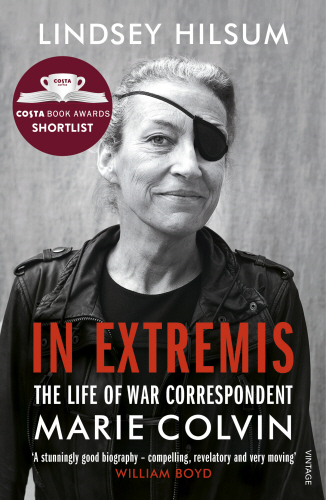
Recently, I picked up a book on the biography of Marie Colvin, a war correspondent who was assassinated in Syria, 2012. Usually, I refrain from reading biographies, as I consider many to be superficial accounts of people’s experiences that are typically removed from wider social issues serving no purpose besides enabling what Zizek would call a fetishist disavowal. It is the biographies of sports players and singers, found on the top shelves of Waterstones and Asda that spring to mind. In-Extremis, however, was different. I consider this book to be a very poignant and captivating biography of war correspondent Marie Colvin, authored by fellow journalist Lindsey Hilsum. The book narrates Marie’s life before her assassination. Her early years, career ventures, intimate relationships, friendships, and relationships with drugs and alcohol were all discussed. So too were the accounts of Marie’s fearless reporting from some of the world’s most dangerous conflict zones, including Sri-Lanka, Iraq, Lebanon, and Syria. Hilsum wrote on the events both before Marie’s exhilarating career and during the peak of her war correspondence to illustrate the complexities in her life. This reflected on Marie’s insatiability of desire to tell the truth and capture the voices of those who are absent from the ‘script’. So too, reporting on the emotions behind war and conflict in addition to the consistent acts of personal sacrifice made in the name of Justice for the disenfranchised and the voiceless.
Across the first few chapters, Hilsum wrote on the personal life of Marie- particularly her traits of bravery, resilience, persistence, and an undying quest for the truth. Hilsum further delved into the complexities of Marie’s personality and life philosophies. A regular smoker, drinker and partygoer with a captivating personality that drew people in were core to who Marie was according to Hilsum. However, the psychological toils of war reporting became clear, particularly as later in the book, the effects of Marie’s PTSD and trauma began to present itself, particularly after Marie lost eyesight in her left eye after being shot in Sri-Lanka. The eye-patch worn by Marie to me symbolised the way she carried the burdens of her profession and personal vulnerabilities, particularly between maintaining her family life and navigating her occupational hazards.
In writing this biography, Hilsum not only mapped the life of one genuinely awesome and inspiring woman, but also highlighted the importance of reporting and capturing the voices of the casualties of war. Much of her work, I felt resonated with my own. As an academic researcher, it is my job to research on real-life issues and to seek the truth. I resonated with Marie’s quest for the truth and strongly aligned myself to her principles on capturing the lived experiences of those impacted by war, conflict, and social justice issues. These people, I consider are more qualified to discuss these issues than those of us who sit in the ivory towers of institutions (me included!).
Moreover, I considered how I can be more like Marie and how I can embed her philosophies more so into my own research… whether that’s through researching with communities on the cost-of-living crisis or disseminating my research to students, fellow academics, policymakers, and practitioners. I feel inspired and moving forward, I seek to embody the life and spirit of Marie and thousands of other journalists and academics who work tirelessly to research on and understand the truth to bring forward the narratives of those who are left behind and discarded by society in its mainstream.
Share this:


The 7 Year Itch
Back in 2017, as a team we started talking of developing a forum where we can write about ideas, which we had run out of time to discuss in class or wanted to raise in addition to what we do. The first of our entries was called “Reflections from a Pilot” and it was all about the prison module we were running. Since then, all colleagues, many students, graduates and esteemed fellows have contributed to our blog, bringing a variety of perspectives and opinions. The bulk of the reflections are mostly focused on the discipline of Criminology but there are several others that explore wider educational issues, social situations, and cultural commentary. This alone demonstrates the variety and extent that our discipline can go into inspiring people who have been given the criminological gaze.
700 blog posts later and we are still going strong. As a team we have seen, Brexit, the relocation to a new campus, a global pandemic, war in Europe, environmental issues and many more. We have commented on crimes and criminalities, cultural conventions, and wider social issues. Our students and graduates brought in their reflections from the challenges on studying to presenting their own research and criminological interests. One of our esteemed colleagues Dr Steve O’Brien blogged about the Hillsborough disaster drawing the connections between sports, policing, and criminology. An interesting juxtaposition, but not unique when it comes to criminology.
We produced several posts that followed the academic year, from welcome week to exams and graduation, whilst we simultaneously posed questions about content and material that we thought our students and readers outside of our campus will find interesting. Our objective was to instigate conversations, to inform and to motivate. We have received emails, comments and we have started conversations based on the topics we introduced. Our blog entries have reflected on the life changes colleagues and students have gone through, with the most notable the pandemic, when we tried to make sense of it and keep our spirits up for the team and the people around us. Teams in academia change, form, reform, group, regroup but regardless of that we continue “to keep calm and carry on”. That is the nature of academia! The continued strive for improvement is one of those traits that are so underrated.
Overall, the initial concept of sharing ideas was surpassed by the variety of use we have for the blog. We have found many different creative ways, including posts from our book club, reflections on movies, whilst we also managing to attract guest authors who provide some excellent insight like our travelling blogger Diepiriye or our social commentator Tré who brought in some cultural paradigms to the blog. The blog became a collective noticeboard of ideas that demonstrated the diversity and reach of the discipline of Criminology. In an ever-changing world we feel proud that we raise the flag for issues regarding social justice, equality, education. We took our personal experiences and expertise and put them in a context for our wider academic community but also for anyone who is interested in what we have to say. We would like to thank all those who took the time to read our blogs. Some of you are avid readers and we thank you; to our contributors past and present for your insight and to the people who shared our stories our gratitude for increasing the extent of our readership. From a few people at the beginning, we have become a blog with a readership of over 10K. We are delighted and we raise our virtual glass to all! 7 years went through so quickly, so here’s for the next 7 years and beyond! -Spoiler alert- Next year the team will be celebrating our Silver Jubilee so keep reading as more interesting blogs are to come!

Share this:


When This is Over: Reflections on an Unequal Pandemic
This week a book was released which I both co-edited and contributed to and which has been two years in the making. When This is Over: Reflections on an Unequal Pandemic is a volume combining a range of accounts from artists to poets, practitioners to academics. Our initial aim of the book was borne out of a need for commemoration but we cannot begin to address this without considering inequalities throughout the pandemic.
Each of the four editors had both personal and professional reasons for starting the project. I – like many – was (and still is) deeply affected by the COVID-19 pandemic. When we first went into lockdown, we were shown the data every day, telling us the numbers of people who had the virus and of those who had died with COVID-19. Behind these numbers, I saw each and every person. I thought about their loved ones left behind, how many of them died alone without being able to say goodbye other than through a video screen. I thought about what happened to the bodies afterwards, how death rites would be impacted and how the bereaved would cope without hugs and face to face social support. Then my grandmother died. She had overcome COVID-19 in the way that she was testing negative. But I heard her lungs on the day she died. I know. And so, I became even more consumed with questions of the COVID-19 dead, with/of debates. I was angry at the narratives surrounding the disposability of people’s lives, at people telling me ‘she had a good innings’. It was personal now.
I now understood the impact of not being able to hug my grandpa at my grandmother’s funeral, and how ‘normal’ cultural practices surrounding death were disturbed. My grandmother loved singing in choirs and one of the traumatic parts of our bereavement was not being able to sing at her funeral as she would have wanted and how we wanted to remember her. Lucy Easthope, a disaster planner and one of my co-authors speaks of her frustrations in this regard:
“we’ve done something incredibly traumatising to the families that is potentially bigger than the bereavement itself. In any disaster you should still allow people to see the dead. It is a gross inhumanity of bad planning that people couldn’t’t visit the sick, view the deceased’s bodies, or attend funerals. Had we had a more liberal PPE stockpile we could have done this. PPE is about accessing your loved ones and dead ones, it is not just about medical professionals.”
The book is divided into five parts, each addressing a different theme all of which I argue are relevant to criminologists and each part including personal, professional, and artistic reflections of the themes. Part 1 considered racialised, classed, and gendered identities which impacted on inequality throughout the pandemic, asking if we really are in this together? In this section former children’s laureate Michael Rosen draws from his experience of having COVID-19 and being hospitalised in intensive care for 48 days. He writes about disposability and eugenics-style narratives of herd immunity, highlighting the contrast between such discourse and the way he was treated in the NHS: with great care and like any other patient.
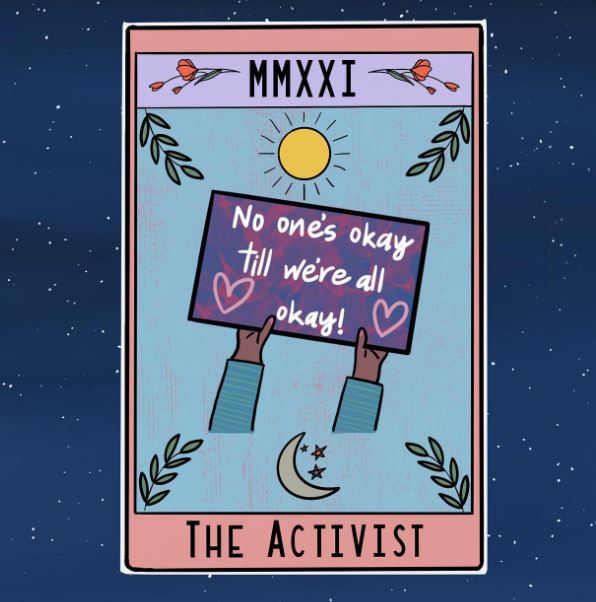
The second part of the book considers how already existing inequalities have been intensified throughout the pandemic in policing, law and immigration. Our very own @paulsquaredd contributed a chapter on the policing of protests during the pandemic, drawing on race in the Black Lives Matter protests and gender in relation to Sarah Everard. As my colleagues and students might expect, I wrote about the treatment of asylum seekers during the initial lockdown periods with a focus on the shift from secure and safe self-contained housing to accommodating people seeking safety in hotels.
Part three considers what happens to the dead in a pandemic and draws heavily on the experiences of crematoria and funerary workers and how they cared for the dead in such difficult circumstances. This part of the book sheds light on some of the forgotten essential workers during the pandemic. During lockdown, we clapped for NHS workers, empathised with supermarket workers and applauded other visible workers but there were many less visible people doing valuable unseen work such as caring for the dead. When it comes to death society often thinks of those who cared for them when they were alive and the bereaved who were left to the exclusion of those who look after the body. The section provides some insight into these experiences.
Moving through the journey of life and death in a pandemic, the fourth section focusses on questions of commemoration, a process which is both personal and political. At the heart of commemorating the COVID-19 dead in the UK is the National COVID Memorial Wall, situated facing parliament and sat below St Thomas’ hospital. In a poignant and political physical space, the unofficial wall cared for by bereaved family members such as Fran Hall recognises and remembers the COVID dead. If you haven’t visited the wall yet, there will be a candlelit vigil walk next Wednesday, 29th March at 7pm and those readers who live further afield can digitally walk the wall here, listening to the stories of bereaved family members as you navigate the 150,837 painted hearts.

The final part of the book both reflects on the mistakes made and looks forward to what comes next. Can we do better in the next pandemic? Emergency planner Matt Hogan presents a critical view on the handling of the pandemic, returning to the refrain, ‘emergency planning is dead. Long live emergency planning’. Lucy Easthope is equally critical, developing what she has discussed in her book When the Dust Settles to consider how and what lessons we can learn from the management of the pandemic. Lucy calls out for activism, concluding with calls to ‘Give them hell’ and ‘to shout a little louder’.
Concluding in his afterword, Gary Younge suggests this is ‘teachable moment’, but will we learn?
When This is Over: Reflections on an Unequal Pandemic is published by Policy Press, an imprint of Bristol University Press. The book can be purchased directly from the publisher who offer a 25% discount when subscribing. It can also be purchased from all good book shops and Amazon.
Share this:


A Love Letter: in praise of the blog

This is my fourth “love letter”, it follows on from personal dedications to art, poetry and the writing of Agatha Christie. This one is the newest of my “loves” and also marks a celebration.
Yesterday marked the 5th birthday of the Thoughts From the Criminology Team blog. I’ve documented our history before, so don’t want to go over the same ground. However, it is worth mentioning that very soon we will have reached over 50,000 views across 129 countries. (Interesting fact, after the UK and the USA, our next biggest group of readers is based in Hong Kong). We’ve come a very long way from our first cautious forays into the blogsphere and today I want to celebrate the things that I love most about our blog.
First, it provides accountability, it means that even in the most difficult times when writers’ block hits, I have to write. It may not be my best writing, at times it is very loosely structured and when I look back I do wonder what was in my mind. Nevertheless, something was written, which means that something else can be written. It means my ideas are captured and can be explored further, combined with other ideas or even abandoned. Over time it has also enabled me to see what reoccurs enabling me to develop my academic and personal passions.
Second, it provides a refuge and solace for writers (and hopefully readers). This was most obvious during the first year of the Covid-19 pandemic when we were rapidly releasing entries, sometimes on a daily basis. In total in 2020, the blog published 222 separate entries containing 190,226 words. To put that into context, in an “ordinary” year, we generally manage around 90 entries a year. It is fair to say our bloggers have explored this unprecedented time in many different way. This place of refuge and solace has also been very apparent in entries centred on Black Lives Matter. Most recently in can be observed in entries around the recent UCU industrial action, see here, here, here. here and here.*
In August 2011, following soon after the police shooting of Mark Duggan, riots broke out in many of our inner cities. I desperately wanted to discuss what was happening with my colleagues and students, but alas it was peak summer and everyone was away. This brings me to my third point, the blog allows writers to respond quickly to events happening, both in the UK and globally, in a way that isn’t always possible in the classroom (timing, constraints of the timetable and curriculum). For instance, responses to the sexual allegations against Prince Andrew, the Windrush scandal, the murder of George Floyd, and Russia’s invasion of Ukraine to name but a few. It also allows us to take part in national and global initiatives such as Gypsy Roma Traveller History Month and Amplify Melanated Voices giving more space to those too often excluded.
Fourth, it allows writers to focus on issues that are very close to them. For instance, the Hillsborough and Grenfell disasters and Black history. These are extremely difficult to address in a single blog entry, hence they are discussed by a variety of different authors approaching them in diverse ways. What is more important than answers is the space to explore these issues, without censorship and with room for others to also contribute an alternative perspective.
Fifth, the blog provides a place to showcase student and graduate excellence outside of institutional paremeters. For example our now annual ‘First Week Activity‘ offers the opportunity for students to work together to create posters on very current issues. in 2020/21 the criminological issues discussed were Knife Crime, Policing Protest and Creating Covid Criminals and our students demonstrated their criminological knowledge and understanding to a very high standard. The blog also provide a space for our newest (or soon to be) graduates to write about their dissertations as well as students and graduates to write about the things that excite their criminological imagination.
Sixth, it provides space for debate, discussion and most importantly, disagreement. A beautiful example of this is the two entries focusing on policing and racism, here and here. Similarly, discussions around misogyny, femicide and the murders of Sarah Everard and so many other women, here, here and here. Only through thoughtful and empathetic dialogue and exposure to different standpoints can we hope to gain the holistic understanding so imperative to criminology.
Seventh, there are no rules around blog writing, only the constraints provided by the medium. Those that write for the blog are provided with very generic guidance to allow them to decide how best to explore their subject, maybe through a short essay, complete with references, maybe in the style of a news article with lots of images, or perhaps through poetry. The choice is down to the individual blogger and very little in the way of copy editing, beyond the occasional correction of typo goes on behind the scenes.
By now it should be clear that my love for the blog is strong and unwavering. From the smallest of ideas, the blog has grown into something beautiful and inspiring, beyond my imagination in 2017. It has attracted a wonderful collective of very different people coming from all different standpoints and perspectives. Equally important there is space for many more voices to contribute. For sure, there is plenty more we can do, to provide space for more subjects, more bloggers, more perspectives, more initiatives and we will keep striving to offer this. Nevertheless, I am incredibly proud to have played a part and to continue to be involved in this joint enterprise as partners in criminology. Our blog is definitely something worth celebrating and not just on its birthday. To my fellow bloggers, I raise a glass, may we never lose the desire to argue, debate, discuss and continue to learn from each other.

*It is worth noting that in discussions around what constituted Action Short of a Strike [ASOS], the Criminology Team decided that the blog was too important to each of us to consider abandoning it, even for a short period time while industrial action is ongoing.
Share this:


#CriminologyBookClub: The Hundred-Year-Old Man Who Climbed Out of the Window and Disappeared

As you know by now, a small group of us decided the best way to thrive in lockdown was to seek solace in reading and talking about books. Hence the creation of #CriminologyBookClub! Building on on what has quickly become standard practice, we’ve decided to continue with all eight bloggers contributing! This title was the second chosen by @paulaabowles and is our 13th book. Read on to find out what we thought….
I chose this book on the strength of its quirky title. In terms of quirkiness, it didn’t disappoint. What’s not to like about the adventures of a centenarian? Part history lesson, part Forrest Gump, the cast of characters includes Stalin, Chiang Kai-shek and Harry Truman, alongside Allan, Beauty and an elephant called Sonya (seems Criminology Book Club cannot escape elephants from our reading diet…)! The story, despite including all manner of improbable deaths, is a gentle read. In many ways, it reminded me of Leslie Thomas’ The Adventures of Goodnight and Loving and I do have to say I prefer that story. Nevertheless, it was lovely to see the representation of older characters in an adventurous tale.
@paulaabowles
A centenarian is the most unlikely hero! Their mortality alone makes them too frail and fragile to be featured in a movie where villains end up dead in a path of carnage. In this book, the title is not a metaphor but most literal. A century old man is running away in his slippers dragging a stolen suitcase; somehow the story of what happens next, becomes compelling in this fast-paced action-packed adventure. The old man is carrying with him also a century of stories involving “who’s who” of the 20th century! At some point you are wondering if this is a comedy of errors, a farce or a spy thriller. The old man, in his back and forth stories, is bringing to light the absurdity of the 20th century, the political and ideological conflict of the time. This part of the story becomes a bit of a parody and the flashbacks become a bit tiresome as they seem to take us away from the main story, as you are left wondering will the old man live another day?
@manosdaskalou
I found this book an absolute joy to read, laughing out loud throughout. The book was about a centenarian who gets into all kinds of adventures and has done throughout his life. Each story of how he accidentally fell into situations with various historical political figures made me chuckle. What I also liked was that the book was devoid of any emotion. The love stories were quite clinical, the life and death situations fearless but this is just what I needed, and I think it made the book even more funny. More slapstick humour than romcom, it was completely ridiculous and an unlikely tale but because of this I could laugh at the dinners with murderous war mongers and the protagonist’s penchant for blowing stuff up.
@amycortvriend
We’ve come full circle in relation to book choices: it is Paula’s choice once again! And in all fairness, this book was more enjoyable than the Yellow Room. The Hundred-Year-Old Man Who Climbed Out the Window and Disappeared, was a book of two halves for me. The first half was witty, quick paced, and not like anything I had read before. However the second half of the book, was repetitive and without giving away any spoilers, the characters did not develop into the loveable rogues I thought they were. They remained quite stagnant. Nevertheless, I did really enjoy the book and found myself chuckling away at various points. Something which none of the other choices (excluding Inspector Chopra) have done. Good choice, @paulaabowles: I wonder how @manosdaskalou’s second choice will fare?
@jesjames50
The 100 Year Old Man was a novelty for me. Prior to this I had never encountered a book where the main character at 100 years old gets up to all kinds of unintended mischief. The sense of adventure included within the book was something that I needed at the time, although I found that the appeal of the book began to wear off at the half-way point. I also found some descriptions to be problematic from my own point of view, but overall I enjoyed the book!
@haleysread
I don’t suppose you get to be a hundred years old without having a few tales to tell. Allan’s life appears to have been a little more adventurous than most and his absconding from an old people’s home seems to be a continuation of mishaps and mayhem. A delightfully funny book, cleverly written to incorporate some historic characters into the narrative. The chapters jump from the past to the present and back again, sometimes leaving you wanting to skip a chapter to continue the narrative of the past or to find out what happens next in this tale of murder and destruction. Its amazing what you can get away with when you are a hundred years old. I can’t wait to get my hands on the next book.
@5teveh
I haven’t read a book like this before and really enjoyed the whole concept of a much older than average ‘hero’ and their adventures both past and present. The glimpses into his colourful past and the famous faces from throughout history that he met along the way gave this book an interesting sense of time and place – both completely fictional and yet almost plausible in the real world. The writing style was also different from the other books we have read as a group and I found it very funny in places. Overall I found the book slightly too long – the novelty began to wear off and I found myself a little fed up with the alternating chapters between past and present ( I preferred those set in the present, though I know others in the group preferred those set in the past) but am still excited to find out what happens to him and his friends in the next book!
@saffrongarside
I was not expecting what I was going to read….elephants, gangsters and men locked in freezers. This book is a light and easy read. It centres around the very colourful life of 100 year old Alan Karlsson. Throughout the book Alan takes you on a journey to meet some interesting historical figures such as Stalin and President Truman. In many ways Alan influences these characters, which in essence shapes events that have happened in history.
We also follow Alan’s life in present day, in which we follow outlandish characters through a very humorous story. Overall, I really enjoyed this book. It kept me entertained and wanting more. Although some parts of the book were about some dark things, such as Eugenics and abuse under the guise of ‘medicine’ the humorous present-day story of Alan’s journey balanced this book out, making it a light hearted tale.
@svr2727
Share this:


#ReadingForCriminologists: The End Of Policing- Alex S.Vitale
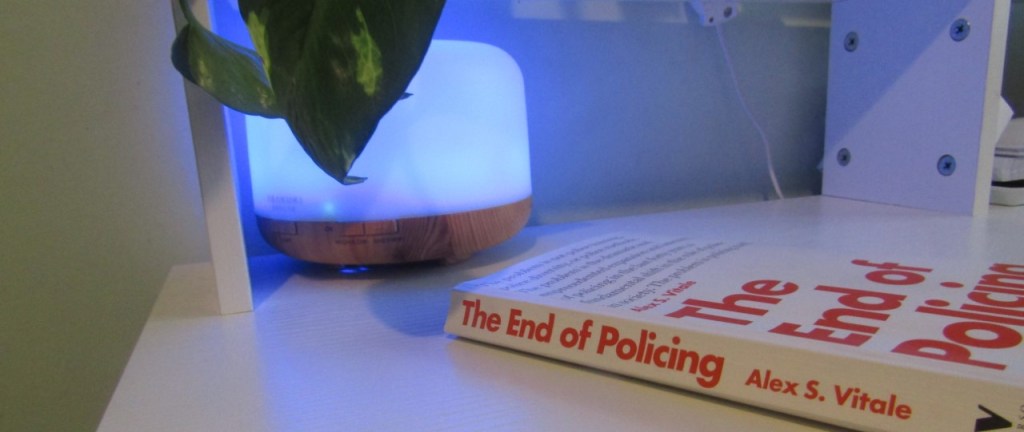
During the past year, like many, I have certainly had more time on my hands, I’ve started a plethora of hobbies (some more successful than others) but a constant past time for me has been reading. In the past I’ve sporadically read a few classic fiction books but this year that I’ve been focusing on nonfiction literature.
This book focuses mainly on the American police force in a historical and contemporary context. The book tackles some of the big topics in current policing such as the school to prison pipeline, the war on drugs, prostitution and mental health. In each chapter, the author critiques current policing strategy and gives recommendations towards effective reform.
My Thoughts
Of course, it is important to note that this book comments on American policing strategies and discusses social issues from a western, North American perspective. However, the book at times, does become relevant to UK topics. Comments about the war on drugs, the criminalisation of the homeless, immigrants and prostitutes and political policing are some examples.
“Tactical equipment with semi-automatic weapons”
Vitale, A., 2018. The end of policing. Verso Books, p.65.
There was one main part in the book that stuck out to me. In the School to Prison Pipeline chapter, the author gives a quote from an annual convention held for police officers based on school sites (known as Resource Officers). The book says it mainly consists of military contractors selling security systems to schools, a keynote speaker, specialising in anti-terrorism describes American schools as all containing ‘the next Columbine’, that every officer must be a ‘one-man fighting force’ and that police officers in schools must always wear full ‘tactical equipment with semi-automatic weapons’.
The author used this example in an extremely effective way, commenting on how the very nature of policing must change. It was written that currently, the police force is inherently a force and that the ethos of policing along with the ‘warrior mentality’ is part of the reason that policing in America is not as effective and beneficial as it could be to its citizens and communities.
With the continuation of social and racial unrest in America, the topics raised in the book could not be more relevant. The most interesting thing about this book was that it presented concepts and opinions I had never thought of before, and whether or not I was in agreement with the points raised, it became an extremely thought provoking read.
I guess that if escapism is more of your reasoning for reading this, perhaps, isn’t the book for you. The author speaks about the harsh reality that certain communities face when it comes to American policing and society.

Some Main Takeaways
Since beginning to take a greater interest in nonfiction books, I’ve realised how beneficial it is to to take note of differing opinions. The beauty in any social science is that one topic can have many opinions attached to it and often, opinions that differ from your own can be the most interesting and thought provoking ones. On the whole, the author presented quite a lot of concepts that I agree with, which made for a passionate read and the opinions I did not agree with, opened up opportunity to research and further understand.
This book has called into question some of my own opinions and thoughts around police reform. Perhaps more police training, more funding and education within the police force cannot fix an institution that was formed to essentially supress and control some of the most marginalised and disadvantaged groups of people.

 Thoughts from the criminology team