
Home » Criminal Justice System (Page 8)
Category Archives: Criminal Justice System

Emotions and reason in criminal justice – or facts vs conspiracy?
I was watching a You Tube clip from Channel Four news (see https://www.youtube.com/watch?v=eUYPGNvsHXk) about the Tommy Robinson contempt of court case. It provided an explanation of the law, the justice system, and why the case is not as claimed, an example of the repression of free speech, but simply, the processes of justice working as they should. It is a clear and dispassionate account explaining that Tommy Robinson has not been ‘disappeared’ but has simply been jailed for contempt of court, to which he pleaded guilty. Tommy Robinson currently presents himself as an independent reporter – well not currently, he is serving his sentence, but you know what I mean. Prior to this he was leader of the English Defence League and a reporter for ‘Rebel Media’, a Canadian far right online political commentary media site, described as a ‘global platform for anti-Muslim ideology’.
He then re-invented himself to his most recent role of independent reporter, which for him became a mission to report on cases of serious sexual assaults committed by Asian men, whether the court had placed reporting restrictions on the case or not. This was seemingly for him, a way to ensure a conviction, to influence juries about defendants and secure justice for victims. The incident which led to his imprisonment occurred when he posted a Facebook live commentary on a case, which had reporting restrictions. He was arrested for breach of the peace, it transpired that his activities also meant he was in contempt of court, which given he was already on a suspended sentence, led to his jail sentence of 13 months. The outrage focused on the fact that Robinson was arrested and jailed within one day, there were claims he had no legal representation and that this was a repression of free speech. The Channel 4 news report points out the facts. Contempt of court has to be dealt with quickly, as it threatens to derail trials, at great cost to the taxpayer and those seeking a fair trial and for justice to be done. As well as pleading guilty, Robinson knew, as a reporter, he should follow the laws on reporting restrictions. The report emphasises the consequences of derailing the trials, and therefore that his intentions to secure justice are misguided.
This case and this report highlights one of the great challenges for our justice system, that the laws and processes in place to support victims, uphold rights of defendants and witnesses and secure justice are frequently misrepresented and misunderstood. The explanations of the law in the report are clear, concise and easy to grasp, but as I said earlier they are dispassionate, and many would argue, so they should be. The problem is, those who present opposition to these facts, claiming fake news, alternative facts, repression of free speech and political correctness gone mad are not dispassionate. They tap into emotions of fear, a sense of injustice, hate and then offer solutions which promise to alleviate these fears and make the world a better place. For those who are afraid, who feel their lives could be better, this will get their attention, more so than someone presenting facts, laws, and objective reviews of events.
A recent conference at De Montfort University, the Emotions and Criminal Justice conference, tackled this theme as to how the CJS needs to acknowledge the emotional impact of crime and justice, beyond the immediate victims and their family, to the wider public who read about cases. Professor Robert Canton in his presentation ‘Mending what has been torn: Reflections on emotions related to punishment and reconciliation’, outlined the need to understand the type of thinking which occurs when we hear about crime, and what people would consider to be an effective response. He stated ‘the separation of emotion and reason is a bad start…lets talk about emotions as well as reason.’ He cited feelings of anger and disgust against those who have wronged us, and it is these very feelings which Tommy Robinson taps into from his roving reporting on serious sexual assault cases. What is also interesting about this case is the emotions of Robinson’s supporters, that they disregard facts, or don’t know them in the first place, and instead go straight to the position of a sense of injustice, an unfair system and repression of free speech. On the one hand, the presentation of the facts in the report can easily be defined as reason, and the cries of injustice and repression from Robinson’s supporters across the globe, as emotion. But to those expressing this, they are perfectly within their rights, they are upholding this precious commodity of free speech, they are reasoned, right and need to be heard. The dispassionate fact checkers are almost spoiling their fun, tackling their misguided emotional response with reason, established laws and pointing out the flaws in their argument. In amongst all this thinking, I realised one other thing. The supporters of Tommy Robinson, via twitter, gained a lot of traction and attention about their ‘plight’, the report I found was something I came across and chose to watch as I follow Channel Four news, and, crucially, I wanted to know more about the facts of the case. So many people would not seek out such facts, and are all too comfortable to ignore the issue, have their prejudices and conspiracies confirmed and hang on to those initial emotional responses as the facts and explanations of the case. Before we all get too despondent, perhaps the signs are there, of recognising these views as part of our society, to grasp the significance of emotions in all of this, and just maybe, to ensure future generations don’t fall into the same traps.
Share this:


My Calling in Life

I used to think waking up for lectures was the hardest thing in life. Little did I know that the 9am until 5pm isn’t a joke!
I graduated nearly 3 years ago now. Since then I have been trying to find my ‘calling’ in life. The world showed me it is not always easy finding this calling. If you want something you have to go and get it. Having a degree does not mean you will be successful. I had to start from the bottom and through trial and error; I can say I am starting to get there. Initially I was applying for any and every job possible. My first job was for an IT and Business training company and I was made redundant. That was difficult. Here I was thinking redundancy is for old people. Life had just started teaching its lessons.
After that I realised my passion was Criminology and I was determined in finding a job within this sector. So I started working for my County Court as clerk. I realised that I was definitely not cut out for the public sector. The frustration from the public because the court system is so slow (which I completely understood I would have been annoyed too). Don’t even get me started on the fact that I had to use dial up internet and buy my own teabags and milk! From that moment on I knew I had to get back into the private sector but still have a job in Criminology
I applied for a job as a Financial Crime Analyst for a bank and I was given the job without an interview! I knew I had found my ‘calling’. It is more Compliance based. I have had to start from the bottom. My senior managers appreciate the fact that I have a Criminology degree. But my colleagues make remarks like “Oh, you went to uni and we are still at the same level”. It is a slap in the face. But I am grateful for my degree. It has made me humble and look at people in a different light. When my colleagues are laughing at the crimes people commit such as an 80 year old man being involved in the drug trade or an 18 year old running a brothel. As a Criminologist I can ask questions such as “I wonder if this person is being coerced into this” or “I wonder if they have an drug problem or they did not grow up in a happy home”. I can empathise with these people and see beyond the information that is presented in front of me. I have been told I am too soft. But that is the life of a Criminologist and I would not change it for the world!
Share this:

Graduation: the end of the beginning?

Helen is an Associate Lecturer teaching on modules in years 1 and 3.
I joined the University of Northampton as an associate lecturer in 2009, teaching at first on the Offender Management foundation degree and then joining the Criminology team, although I had been a visiting lecturer in Criminology for a number of years prior to that. I am sorry that a prior commitment means that I am unable to join you for the Big Criminology Reunion, although the occasion has inspired me to reflect on the professional journey that starts with graduation.
Last week I received an e-mail from a former student in the 2010 Offender Management cohort. She is just about to qualify as a probation officer and she was asking for advice about giving evidence at Parole Board hearings. It was great to think back, to remember what a vibrant and enthusiastic student she was, and to project forwards; perhaps I’ll see her at an oral hearing soon. She will probably make an excellent probation officer, and the fact that she is asking for advice before she even starts is evidence of that. She will possibly be the first of our offender management students to become an offender manager!
A couple of years ago I was at a Parole Hearing at HMYOI Aylesbury where I was very impressed by the evidence of the trainee psychologist. She had prepared a clear, concise but thorough and analytical report on the prisoner and she gave her oral evidence confidently and thoughtfully. After the end of the hearing, she popped back in to tell me that she had been initially inspired to take up prison psychology after hearing my guest lecture on Manos’ Forensic Psychology module. I saw her again earlier this year and she’s still doing a great job!
For undergraduates, completing a degree, submitting a dissertation, putting the pen down at the end of the last exam and then graduating with friends, seems like the end of a long and arduous process. And of course it is! But as the stories above show, it is also just the beginning. Just the beginning of a professional journey which may or may not involve direct application of the subjects covered on the course. Not all our students become probation officers or prison psychologists or academic criminologists, but they will take something of what they learn out into the world with them. It may be a more critical way of digesting the news, a wider appreciation of the social forces that shape our world, a readiness to reflect and question and see the world from different perspectives. All of that will help them on their journey. I hope that you all have a great time at the reunion and that as you compare each other’s journeys you have fond memories of the degree course that seemed a marathon at the time but was really only the first step!
Share this:


(In)Human Rights in the “Compliant Environment”

In the aftermath of the Windrush generation debacle being brought into the light, Amber Rudd resigned, and a new Home Secretary was appointed. This was hailed by the government as a turning point, an opportunity to draw a line in the sand. Certainly, within hours of his appointment, Sajid Javid announced that he ‘would do right by the Windrush generation’. Furthermore, he insisted that he did not ‘like the phrase hostile’, adding that ‘the terminology is incorrect’ and that the term itself, was ‘unhelpful’. In its place, Javid offered a new term, that of; ‘a compliant environment’. At first glance, the language appears neutral and far less threatening, however, you do not need to dig too deep to read the threat contained within.
According to the Oxford Dictionary (2018) the definition of compliant indicates a disposition ‘to agree with others or obey rules, especially to an excessive degree; acquiescent’. Compliance implies obeying orders, keeping your mouth shut and tolerating whatever follows. It offers, no space for discussion, debate or dissent and is far more reflective of the military environment, than civilian life. Furthermore, how does a narrative of compliance fit in with a twenty-first century (supposedly) democratic society?
The Windrush shambles demonstrates quite clearly a blatant disregard for British citizens and implicit, if not, downright aggression. Government ministers, civil servants, immigration officers, NHS workers, as well as those in education and other organisations/industries, all complying with rules and regulations, together with pressures to exceed targets, meant that any semblance of humanity is left behind. The strategy of creating a hostile environment could only ever result in misery for those subjected to the State’s machinations. Whilst, there may be concerns around people living in the country without the official right to stay, these people are fully aware of their uncertain status and are thus unlikely to be highly visible. As we’ve seen many times within the CJS, where there are targets that “must” be met, individuals and agencies will tend to go for the low-hanging fruit. In the case of immigration, this made the Windrush generation incredibly vulnerable; whether they wanted to travel to their country of origin to visit ill or dying relatives, change employment or if they needed to call on the services of the NHS. Although attention has now been drawn to the plight of many of the Windrush generation facing varying levels of discrimination, we can never really know for sure how many individuals and families have been impacted. The only narratives we will hear are those who are able to make their voices heard either independently or through the support of MPs (such as David Lammy) and the media. Hopefully, these voices will continue to be raised and new ones added, in order that all may receive justice; rather than an off-the-cuff apology.
However, what of Javid’s new ‘compliant environment’? I would argue that even in this new, supposedly less aggressive environment, individuals such as Sonia Williams, Glenda Caesar and Michael Braithwaite would still be faced with the same impossible situation. By speaking out, these British women and man, as well as countless others, demonstrate anything but compliance and that can only be a positive for a humane and empathetic society.
Share this:


Is Easter a criminological issue?

Spring is the time that many Christians relate with the celebration of Easter. For many the sacrament of Easter seals their faith; as in the end of torment and suffering, there is the resurrection of the head of the faith. All these are issues to consider in a religious studies blog and perhaps consider the existential implications in a philosophical discourse. How about criminology?
In criminology it provides great penological and criminological lessons. The nature of Jesus’s apprehension, by what is described as a mob, relates to ideas of vigilantism and the old non-professional watchmen who existed in many different countries around the world. The torture, suffered is not too dissimilar from the investigative interrogation unfortunately practiced even today around the world (overtly or covertly). His move from court to court, relates to the way we apply for judicial jurisdiction depending on the severity of the case and the nature of the crime. The subsequent trial; short and very purposefully focused to find Jesus guilty, is so reminiscent of what we now call a “kangaroo court” with a dose of penal appeasement and penal populism for good measure. The final part of this judicial drama, is played with the execution. The man on the cross. Thousands of men (it is not clear how many) were executed in this method.
For a historian the exploration of past is key, for a legal professional the study of black letter law principles and for a criminal justice practitioner the way methods of criminal processes altered in time. What about a reader in criminology? For a criminologist there are wider meanings to ascertain and to relate them to our fundamental understanding of justice in the depth of time. The events which unfolded two millennia back, relate to very current issues we read in the news and study in our curriculum. Consider arrest procedures including the very contested stop and search practice. The racial inequalities in court and the ongoing debates on jury nullification as a strategy to combat them. Our constant opposition as a discipline to the use of torture at any point of the justice system including the use of death penalty. In criminology we do not simply study criminal justice, but equally important, that of social justice. In a recent talk in response to a student’s question I said that that at heart of each criminologist is an abolitionist. So, despite our relationship and work with the prison service, we remain hopeful for a world where the prison does not become an inevitable sentence but an ultimate one, and one that we shall rarely use. Perhaps if we were to focus more on social justice and the inequalities we may have far less need for criminal justice
Evidently Easter has plenty to offer for a criminologist. As a social discipline, it allows us to take stock and notice the world around us, break down relationships and even evaluate complex relationships defying world belief systems. Apparently after the crucifixion there was also a resurrection; for more information about that, search a theological blog. Interestingly in his Urbi et Orbi this year the Pope spoke for the need for world leaders to focus on social justice.
Share this:


Netflix and Study?

Bethany Davies is an Associate Lecturer teaching modules in the first year.
As each year and each term goes by, it brings to light how much more we are all connected through media and also how we use media to socialise and also learn.
Now, watching television, movies and using music to learn is not a new concept, I understand this, but on a personal level, I have found more individuals using television and more specifically, crime documentaries to fuel their interest in criminology and their understanding of elements of the criminal justice system.
I believe firstly, the idea of enjoying, what is termed ‘binge watching’, crime documentaries, an interesting concept. As previously explored on the blog regarding ‘enjoyment’ and ‘fun’ of criminology, the themes in these documentaries are very dark and in most cases, the gorier it is, the more it seems to be enjoyed by some viewers. Each September that rolls around we have the (sometimes dreaded) ‘ice breaker’ session, where we get to know our students and what has made them want to pursue a criminology degree at this University. Within that you will always have some who choose to voice their love of a certain crime TV show. This does not always end at first introductions either, there is often a continuation of comparisons made between that of a serious historical event and that of Netflix documentary (for example) which can often contain more dramatic music and pictures than it does criminological discussion.
The question I would like to present is, do we nourish the idea of using documentaries and crime dramas to keep the interest of those who wish to pursue criminology as a field of learning, or would doing so be disingenuous to what criminology is and neglect the love for reading and debates in criminology? I do not necessarily feel this is a question we have to worry about tremendously as I feel those who seek to study criminology purely based on their love for crime documentaries will either soon realise that there is so much of criminology that does not fit those ideas and either love it or abandon it at that point.
But in years to come these questions may be more significant than they are currently. Especially if used as a tool in universities to attract more students into a certain discipline. There are such large elements of criminology that I feel have to be explored with literature or within a seminar setting with questions and debates, and it can be easy for institutions to say that these elements will always be fundamental to a criminology degree for years to come. However, if other institutions start to use more and more media and visual aids to demonstrate a theory or issue of crime in the future, or what I suspect more as a marketing campaign to attract students, will we conform? There are some articles (from questionable sources) that some institutions are using Snapchat and social media takeovers to help attract students to certain courses, most of which I have read about have been media based, granted. But let’s hope all this drivelling nonsense is just my brain after a long bank holiday weekend and not a possibly looming prospect of the future of criminology, right?
Share this:

Anniversaries and Festivities
 About a year ago, as a team we started this blog in order to relate criminological ideas into everyday life. News, events and markers on our social calendar became sources of inspiration and inquiry. Within a year, we have managed somehow to reflect on the academic cycle, some pretty heavy social issues that evoked our passions and interests. Those of you who read our entries, thank you for taking the time, especially those who left comments with your own experiences and ideas.
For us as a contributing team, the opportunity to talk outside the usual spaces about things that we regard as interesting is a real pleasure. A colleague of mine, tends to say that criminology is a subject made for discussions. These discussions usually grow in classrooms but they are restricted of time. In some way, our blog is an extension of that environment but we are also cognisant that we want to talk beyond the parochial “ivory towers” of academia.
The first blog entry was about running a pilot then, for a new module delivered entirely in prison with students from the university and the prison. This week, we celebrated the first cohort who completed the module. I have been an observer of social conventions all my life and to see the way people in the celebration connected with each other was great. For all of us in the module, it makes perfect sense because we have done that journey together but for anyone coming for the first time in prison this must have been an astounding experience.
This is what we commemorate in a celebration. Not necessarily the end result whatever that is, but the journey. As people consumed with speed in a modern society, we very rarely take the time to look back and reflect. It can be argued that we can do so when we reach our ever expanding retiring age; reflect on our life’s work. Nonetheless, it is important now and then to look back and see how we get here. For example, I am proud that I serve a university that offers opportunities to students from the wider society without barriers or obstacles. Some of our students are first in their family to go to University. This is an amazing opportunity that leaves the doors of social mobility open. A number of our graduates are now my colleagues or work in the wider criminal justice system.
So what is a celebration? A moment in time to look back and say, “hey I have a journey ahead but look how far I have come”. This is why these little moments are so watershed to all; whether we celebrate a year in the blog, a year on a module or a year in a job, marriage etc. Some celebrations are small reminders of time, other of events and some other of accomplishments. In a world where the news should be accompanied with health warnings, as people feel insignificant as individuals to bring about change, a celebration is a mark that things can happen. A person who decides to be an agent of change, whether it is a message against racism (#blacklivesmatter) sexual abuse (#metoo), or gun violence (#enoughisenough), they can do so without realising that one day when they will look back things will be very different for all; a possible cause for another celebration then. It matters to look back when you want to change the future. Life is experiential journey and marking these experiences is our way of leaving a trace on a large social wall.
In a couple of months (May 14) we shall be celebrating 18 years of Criminology at the University of Northampton. Another moment in time to reflect of the impact and the effects this programme has had on the students and the community.
Cheers
Share this:


The trials of Theresa May

Not long after starting my new post at the University of Northampton, I one day remarked ‘you know, I do feel a bit sorry for Theresa May’, or words to that effect. Well, my colleagues were shocked and stunned, clearly I had touched a nerve. But you know what, they were absolutely right to feel this way. Let me first explain myself. I was reflecting on the challenges she has faced as Prime Minister overseeing our exit from the European Union and the seemingly constant questions over her legitimacy and capability as a leader. She had faced a humiliating election result on top of everything else and was criticised for holding Donald Trump’s hand as a symbol of her courting favour with someone many find…..distasteful. So, I thought, she must be feeling attacked from all sides. Also, I did definitely say I was feeling ‘a bit’ sorry for her. However, my colleagues’ reaction did make me think about this view. They pointed out her decisions had led to this and, as it turns out, they also reveal a pattern of behaviour which reinforce their views, not mine. When you examine this from her time as Home Secretary and as Prime Minister, there are numerous examples which show her limitations as a leader.
Let us start with Theresa May, Home Secretary. In 2010, the Conservative-Liberal Democrat coalition promised to tackle the budget deficit and through the ‘Big Society’ initiative, reclaim communities for the ‘law abiding majority’. Theresa’s speech to the Police Federation struck a triumphant tone, and presented a plea to accept her deal to cut spending, to allow the police more autonomy, less bureaucracy and less focus on targets. She celebrated the police as heroes, the front line in the fight to fix the ‘broken society’ and deal with the criminals we were all living in fear of. The slogan of the Conservative Party campaign was reiterated, to tell the police that ‘we’re all in this together’. She promised to always back the police, always fight for them and support them.
Her 2015 speech was less conciliatory and did not celebrate the work of the police. In her announcement to the Police Federation in May 2015, she accused the police service and management of scaremongering as they presented evidence on the impact of cuts, especially on neighbourhood policing functions. Perhaps bolstered by the recent Conservative party election win, she went in all guns blazing. Neighbourhood policing was described as an ‘endangered species’ by serving officers, and they also took this opportunity to plead with her to listen and not resort to her usual position of dismissing their concerns (BBC News, 20 May 2015). For the police service, preserving neighbourhood policing was clearly important. It offers safety, reassurance, a visible police presence and a conduit between the police and public to uphold their legitimacy and consent (Johnston, 2001; Rowe, 2008). Reduced budgets are bound to impact these services not deemed a priority, even though they can help to prevent crime and enable productive partnerships between the police and the citizens they serve (Thurman et al, 2001). For Theresa however, the falling crime rate was proof positive to justify cuts to spending, and that ‘angry and demoralised’ officers with their claims of putting the public in danger were ‘crying wolf’ (BBC News, 20 May, 2015).
It is not surprising then that at the end of Theresa May’s speech, polite applause was all that could be offered. The process of reflection and consideration of the premise that one can be wrong that I undertook, is something Theresa May seems unable to grasp. Her performance at Police Federation conference has further demoralised the police and embedded a sense of hopelessness that anything would change under her leadership. The need for the police to plead with her to listen to them is also a real concern – good leaders should not need to be flattered or cajoled into listening to those who deliver front line services such as policing.
So, as we now seem to be hurtling towards an exit from the EU which means we leave the Custom’s Union, despite the concerns about the impact this will have on the economy and Northern Ireland, Theresa remains resolute, and firmly aligned with the belief that hard Brexit is the way to go. This is presented as appeasing the hard Brexiteers in the Conservative party, who are ready to pounce should she not deliver what they want. However, her speech at Lancaster House presented Brexit as the promise of a new ‘global’ Britain, taking advantage of the opportunities outside the EU, while also offering the hand of friendship with platitudes about our European partners, that we will remain ‘reliable partners, willing allies and close friends.’ Also, she voted remain. She campaigned to keep Britain in the EU in the interests of business and jobs, to maintain security and protections against terrorism and crime, for trade access – and I quote ‘it is in the national interest to remain a member of the European Union.’ I am an ardent remainer, so on this, the Theresa May campaigning in 2016 and I agree. But now we are poles apart.
This is where I have seen the error of my ways to feel sorry for her. Her stance in 2010, celebrating the work of the police when she was new in post, was clearly to cement her status as Home Secretary, so she asked nicely for them to accept the reductions in spending. In 2015, she made a clear shift, to tell the police to stop whining, that there is no more money and she made no reference to the heroic efforts of the police at all. In fact, to her, they were making things worse. The same pattern of shifting loyalties to preserve her position seems to occur on a weekly basis, as we lurch back and forth from soft Brexit to hard Brexit (remember, at one point it was a red, white and blue Brexit?).
So, my problem is not just that we disagree, it is that she does not make decisions based on evidence and what is best for the country. She certainly does not offer leadership in which we can feel reassured about our future. She seems to bend to the will of mysterious others, editors of right wing press, hard Brexiteers and then, occasionally, softens her stance after meetings in Brussels. Or, what I like to call, a reality check. But I no longer think she is struggling to deal with tensions between her belief in a Hard Brexit and the evidence presented to her from her negotiations with the EU. She is also seemingly ignoring concerns raised by MPs, business sectors, universities, and the many who voice their concerns about the legitimacy and consequences of this goal of a hard Brexit. Her leadership style is reflected in the frustration of the press and public when she repeats meaningless platitudes. Remember, ‘strong and stable’, the classic ‘Brexit means Brexit’, prefixing everything with ‘let me be clear’, and then being anything but this. Good leadership is meant to empower others, and in policy making is defined as an approach to generate collective responsibility as found in Belbin’s (1993) ‘team leader’ approach. This is a form of leadership is distinct from role of managers, as they must act to seek new opportunities, transform activities of a group, to be a visionary, to be clear on their goals. The divisions in the Conservative party do not reflect this. It seems that the Maybot’s leadership programming setting has defaulted to her true self and her goal of self-preservation. Therefore, it is not merely a misjudgment to feel even a ‘bit’ of sympathy for her, it is an act of delusion.
Susie Atherton
Senior Lecturer in Criminology
University of Northampton
References
BELBIN, R.M. (1993). Team Roles at Work. Oxford: Butterworth-Heinemann
BBC NEWS (2010) Police Federation crying wolf over cuts, says Theresa May, (see http://www.bbc.co.uk/news/uk-32806520)
JOHNSTON, L. (2001) ‘Crime, fear and civil policing’, Urban Studies, 38(5/6), 959–77.
PRIME MINISTER’S OFFICE (2017) The government’s negotiating objectives for exiting the EU: PM speech (see https://www.gov.uk/government/speeches/the-governments-negotiating-objectives-for-exiting-the-eu-pm-speech)
ROWE, M. (2008) Introduction to Policing. London: Sage.
THURMAN, Q., ZHAO, J. and GIACOMAZZI, A. (2001) Community Policing in a Community Era: An Introduction and Exploration California: Roxbury Publishing Company
Share this:


Justice on Trial
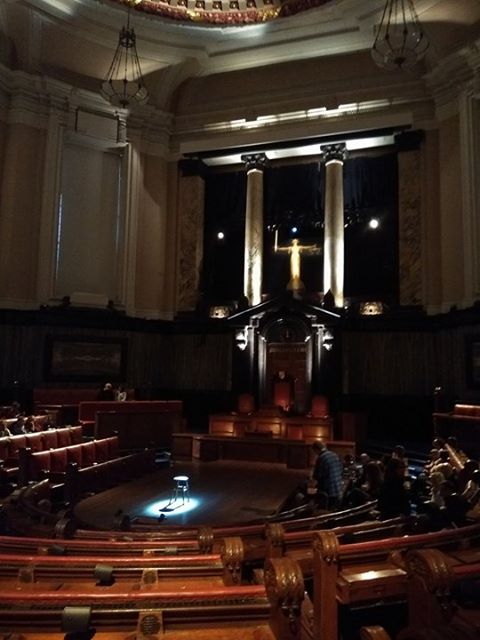
Last weekend I was fortunate enough to be treated to theatre tickets for Agatha Christie’s Witness for the Prosecution. The setting – London’s County Hall – was exquisite, the play sublime and the actors fabulous. An afternoon of sheer escapism, even for a die hard Christie fan like myself. Having read the short story/play many times is no replacement for seeing this on the stage. The theatre offers the opportunity to see the action from all perspectives; you can put yourself in the shoes of the defendant, the court actors and of course, the witnesses. Such a perspective vividly demonstrates the immense power of the State, not only through physical violence (although this is also evident) but through verbal dexterity. To see the defendant – Leonard Vole – on trial; so small and defenceless against the majesty of the courtroom, is thought provoking. Furthermore, this environment is staffed by legal professionals, who unlike him, understand the world in which they operate. The cut and thrust of legalistic argument performed in the play (and in modern day courts daily) conceals the sheer ferocity of authority’s attack on the individual. Remember at the time the play was written, the death penalty was still in force, and Leonard Vole is on trial for the capital crime of murder. In essence, he is openly fighting for his very life, but subjected to the machinations and mediation of professionals who openly profess to be seeking justice. When he tries to speak, to argue, to cajole, he is silenced. There is no place for the defendant’s perspective unless it is expressed via the mandated professional who speaks on his (or her) behalf.
In the twenty-first century (and indeed, for the latter part of the twentieth century), capital punishment in the UK has not been a sentencing option. Whilst defendants may not be faced with a possible date with the hangman, the finality of sentencing and punishment is no laughing matter. Whilst there is no doubt that dramatic denouements have their place in the theatre, in the serious business of the criminal courts such antics seem out of place. If we look at the criminal court as a theatrical scene, we start to observe all manner of incongruity (cf. Carlen, 1976). For starters; the language used and the costumes worn. For anyone that has ever grappled to understand the works of Shakespeare or the Brontë’s, such reading requires patience and perseverance to understand the beauty of such writing. In 2018, we would not request that our surgeons operate on us without the benefit of anaesthesia, neither would we want to be treated with procedures such as bloodletting or trepanning. Similarly, we don’t expect soldiers to carry muskets or form into schiltrons just because that’s how it used to be. Yet we accept and arguably, expect our courts to run as if they were stuck in time. What chance does the individual defendant have in this archaic, theatrical setting? After all, they are the star of the show, yet they have neither costume, nor the opportunity to learn their lines. It is hard to argue, that such practices are conducive to the pursuit of justice.
On the surface, going to the theatre appears to offer a pleasurable break from academia, yet the reality is it offers the opportunity to consider criminology from a novel perspective. Reading (and you all know how keen I am on reading!!) is only part of Criminology; talking, listening, thinking and exploring away from the classroom are equally important. My advice; get out, explore – the arts; theatre, cinema, literature, museums – and add this experiential knowledge to your academic studies. See things from a different perspective and unleash your Criminological Imagination (Young, 2011).
References:
Carlen, Pat, (1976), ‘The Staging of Magistrates’ Justice,’ The British Journal of Criminology, 16, 1: 48–55
Christie, Agatha, (2018), Witness for the Prosecution, Directed by Lucy Bailey. London County Hall, [11 February 2018]
Young, Jock, (2011), The Criminological Imagination, (London: Polity)
Share this:


Why Volunteer?

Bethany is an Associate Lecturer teaching modules in the first year.
Before I started lecturing at the university, unsurprisingly, I also once attended university as a criminology student. Very similar to the current university experience, I had deadlines, money stress and at times a lack of direction of what I wanted to do. Therefore, firstly, if you have experienced this or if you currently are, then you can find some comfort in knowing that you are not alone.
About 2 months into my first year, my seminar leader mentioned a volunteering opportunity for a mentor role at Milton Keynes Probation Office. I contemplated the idea for a couple of weeks; I was interested in the idea of volunteering, mainly because I had near enough zero work experience at all. I was however complacent in the idea of working for free, which is a common issue for students. However, when I took the plunge and put myself forward for it, it was honestly one of the best decisions and jobs I have ever had.
After getting out of my comfort zone in the first few weeks, In which I had some training about general health and safety and data protection. I suddenly found myself helping out in classes for English, maths, stress management, ICT and even a construction class! In these classes, there were ‘students’ who were issued to attend as part of a court order or had it suggested to them following a meeting with their probation officer. It was very rewarding and made me understand a lot of what I was doing in my modules.
The most important points from this for me that I feel should be shown more to all students is that:
- Time: You can give as much time as you want: I started only helping out in 1 class which lasted less than 2 hours every other week. I increased this to every week when I started my second year and more so again in my third year.
- Money: No, you will not make money, you will however 99% of the time be able to claim your expenses from the company running the volunteer group. I was able to claim for all my train tickets and any lunch I had while volunteering. Also mimicking the above point on time, I was able to still do volunteering alongside university and a part-time
- Experience: This was not only a good experience because I was able to do both my 2nd-year criminology placement at the probation office, but I was also able to interview offenders for my dissertation. But also you have great hands-on experience in the criminal justice field and you might actually help someone who is vulnerable and needs your patience and support.
This post is therefore in no way to make people feel bad for not volunteering or to say its’ easy, as it has many challenges and we are not all in the same position to give up time. However, If you are considering volunteering, whether that be to build up your CV, prepare for placement or you just want to give back for an hour or so. Below are some places currently looking for volunteers and I am sure your criminology expertise will be of use:
SOVA: Probation Volunteering
https://www.sova.org.uk/search-roles
Victim Support
https://www.victimsupport.org.uk/get-involved/volunteer
Safe Families For Children
Step Together ( Supporting Rehabilitation of Ex-Offenders)

 Thoughts from the criminology team