
Home » Criminal Justice System (Page 7)
Category Archives: Criminal Justice System

Friday the 13th

Odd thing superstition, it makes reasonable and seemingly rational people think and behave in the most irrational and inexplicable manner. Always we notice these behaviours and thoughts in other people, but so many of us carry in the back of our minds equally irrational ideas and beliefs. We hear of football club managers who always wear the same clothes at a game, athletes that engage in the same pre-game routine and of course, politicians who act in certain ways during their election campaign. For the rest of us there are ladders in the street, black cats, that we may avoid or there are dates in the calendar that we take notice. Friday the 13th is one of those Anglo-Saxon dates that people take notice of.
I am sure that some of my historian friends will be able to give a good account of the origin of the unfortunate date, but I can only go with the “official tradition” of Jesus, the 13th student, (Judas) and his subsequent arrest on the Friday before the Crucifixion. The day, somehow, became one of those that we notice, even when we are not superstitious. There is even a psychologically recognised fear of the date Triskaidekaphobia; which in Greek means the fear of 13! Of course social fears are blended with wider social anxieties, whether that is the fear of the unknown or the realisation that in life, there are things that we have little control of.
In the days leading up to this Friday the 13th we engaged with political discussions about what direction the country shall take. The health service, the justice system, the state’s responsibility, all the way to welfare and the state of the union, were all eclipsed by one topic that has dominated discourses, that of the execution of leave from the European Union commonly known as Brexit. Ironically the “exit” preface was used before for Greece (Grexit), and Italy (Italexit) but seems that Brexit has won the battle of the modern lexicon. The previous “exits” where used as a cautionary tale for the countries being forced out of the union, whilst Brexit is about leaving the Union.
Having considered all the issues, this one issue became the impetus for people to give politicians a mandate. Complete this issue before and above all the rest. It is an issue likened to a divorce, given a texture, (soft/hard) and has even been seen as the reason for generational conflicts. Therefore the expectation is clear now . Leave the European Union, and then let’s see what we can do next. The message is fairly clear and the expectation is palpable. Beliefs and hopes of the people narrowed down to one political move that shall terminate membership to the European Union. Of course there are subsequent questions and issues that this act of national defiance may come with. As for the state of the Union, that may have to be the next thing we discuss. This follow up conversation may not be as welcome, but it is definitely interesting. If joining the EU back in 1975, warranted a discussion, then the 1536 Act of Union may become the next topic for conversation. As for healthcare, justice, education and welfare, we may have to wait a little bit more longer. Whether this will mark Friday 13th December 2019 as a date of fortune or misfortune, that is yet to be decided, but that is the same for every day of the week.
Just for your records and for the Triskaidekaphobians out there, the next Friday the 13 is in March 2020 followed by the one in November 2020. Just saying…
Share this:


Empathy Amid the “Fake Tales of San Francisco”*

This time last week, @manosdaskalou and I were in San Francisco at the American Society of Criminology’s conference. This four-day meeting takes place once a year and encompasses a huge range of talkers and subjects, demonstrating the diversity of the discipline. Each day there are multiple sessions scheduled, making it incredibly difficult to choose which ones you want to attend.
Fortunately, this year both of our two papers were presented on the first day of the conference, which took some of the pressure off. We were then able to concentrate on other presenters’ work. Throughout discussions around teaching in prison, gun violence and many other matters of criminological importance, there was a sense of camaraderie, a shared passion to understand and in turn, change the world for the better. All of these discussions took place in a grand hotel, with cafes, bars and restaurants, to enable the conversation to continue long after the scheduled sessions had finished.
Outside of the hotel, there is plenty to see. San Francisco is an interesting city, famous for its Golden Gate Bridge, the cable cars which run up and down extraordinarily steep roads and of course, criminologically speaking, Alcatraz prison. In addition, it is renowned for its expensive designer shops, restaurants, bars and hotels. But as @haleysread has noted before, this is a city where you do not have to look far to find real deprivation.
I was last in San Francisco in 2014. At that point cannabis had been declassified from a misdemeanour to an infraction, making the use of the drug similar to a traffic offence. In 2016, cannabis was completely decriminalised for recreational use. For many criminologists, such decriminalisation is a positive step, marking a change from viewing drug use as a criminal justice problem, to one of public health. Certainly, it’s a position that I would generally subscribe to, not least as part of a process necessary to prison abolition. However, what do we really know about the effects of cannabis? I am sure my colleague @michellejolleynorthamptonacuk could offer some insight into the latest research around cannabis use.
When a substance is illegal, it is exceedingly challenging to research either its harms or its benefits. What we know, in the main, is based upon problematic drug use, those individuals who come to the attention of either the CJS or the NHS. Those with the means to sustain a drug habit need not buy their supplies openly on the street, where the risk of being caught is far higher. Thus our research population are selected by bad luck, either they are caught or they suffer ill-effects either with their physical or mental health.
The smell of cannabis in San Francisco is a constant, but there is also another aroma, which wasn’t present five years ago. That smell is urine. Furthermore, it has been well documented, that not only are the streets and highways of San Francisco becoming public urinals, there are also many reports that public defecation is an increasing issue for the city. Now I don’t want to be so bold as to say that the decriminalisation of cannabis is the cause of this public effluence, however, San Francisco does raise some questions.
- Does cannabis cause or exacerbate mental health problems?
- Does cannabis lead to a loss of inhibition, so much so that the social conventions around urination and defecation are abandoned?
- Does cannabis lead to an increase in homelessness?
- Does cannabis increase the likelihood of social problems?
- Does the decriminalisation of cannabis, lead to less tolerance of social problems?
I don’t have any of the answers, but it is extremely difficult to ignore these problems. The juxtaposition of expensive shops such as Rolex and Tiffany just round the corner from large groups of confused, homeless people, make it impossible to avoid seeing the social problems confronted by this city. Of course, poor mental health and homelessness are not unique to San Francisco or even the USA, we have similar issues in our own town, regardless of the legal status of cannabis. Certainly the issue of access to bathroom facilities is pressing; should access to public toilets be a right or a privilege? This, also appears to be a public health, rather than CJS problem, although those observing or policing such behaviour, may argue differently.
Ultimately, as @haleysread found, San Francisco remains a City of Contrast, where the very rich and the very poor rub shoulders. Unless, society begins to think a little more about people and a little less about business, it seems inevitable that individuals will continue to live, eat, urinate and defection and ultimately, die upon the streets. It is not enough to discuss empathy in a conference, no matter how important that might be, if we don’t also empathise with people whose lives are in tatters.
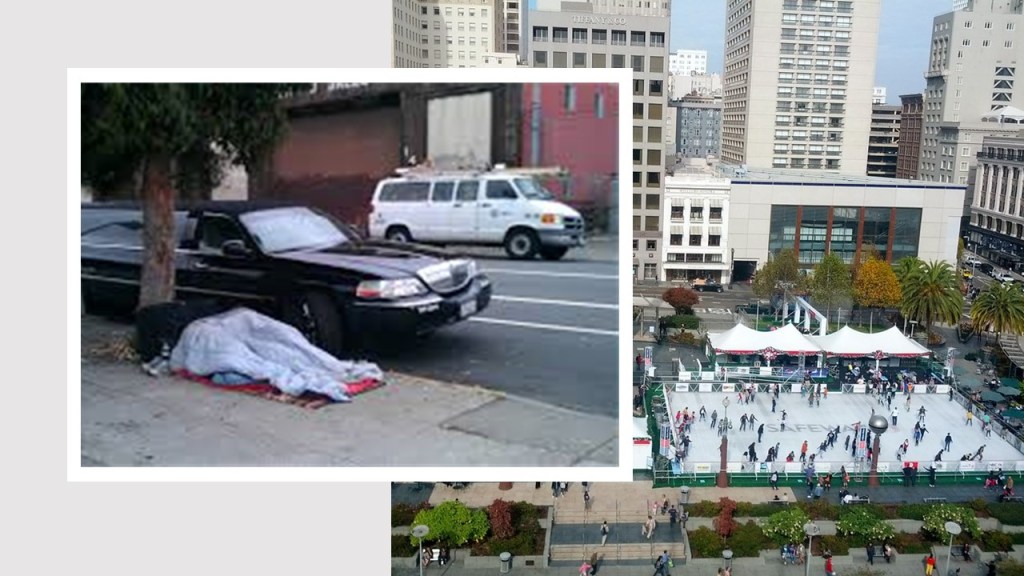
*Turner, Alex, (2006), Fake Tales of San Francisco, [CD]. Recorded by Arctic Monkeys in Whatever People Say I Am, That’s What I’m Not, The Chapel: Domino Records
Share this:


Care Leavers, Criminal Justice and Higher Education

“These children are in our care; we, the state, are their parents- and what are we setting them up for…the dole, the streets, an early grave? I tell you: this shames our country and we will put it right.”
David Cameron MP, Prime Minister October 2015 at the Conservative Party Conference.
Well, I think it would be fair to say that politicians’ minds have not been exercised unduly over the fate of care leavers since David Cameron made the above promise in 2015. I worked with children in care and care leavers involved in the youth justice system for over thirty years and although his analysis of the outcomes for care leavers was simplistic and crude, tragically Cameron’s statement rings true for many of those leaving care.
With regard to the criminal justice system, Lord Laming’s independent review “In Care, Out of Trouble” http://www.prisonreformtrust.org.uk/Portals/0/Documents/In%20care%20out%20of%20trouble%20summary.pdf, notes that there is no reliable data on the numbers of looked after children in custody. However, based on data from a number of sources, the review came to the conclusion that around 400 looked after children are in custody at any one time. The total number of children in custody for July 2019 is 817. So, slightly less than half of those children in custody are looked after children according to the best estimates available, drawn from different sources. http://youthjusticeboard.newsweaver.co.uk/yots2/1g2x6m3h9q315chudc9elc?email=trueYJBulletin
Moving the spotlight, a huge 40% of care leavers are not engaged in Education, Training or Employment and only 6% of care leavers gain entry to university https://assets.publishing.service.gov.uk/government/uploads/system/uploads/attachment_data/file/464756/SFR34_2015_Text.pdf . This at a time when around 50% of children now have access to Higher Education and the opportunities that this can provide. Also, 20% of young people who are homeless have previously been in care.
Naturally, we have to be careful to provide a level of balance to the above rather desperate and shocking figures. Lord Laming’s review found that 94% of children in care did not get in trouble with the law. However, children in care are six times more likely to be cautioned, or convicted of an offence than children in the wider population. Furthermore, children in care who come to police attention are more likely to be prosecuted and convicted than cautioned when compared to the wider child population.
So, what has happened since 2015 when David Cameron declared his intention to “put it right”? In truth, there have been some steps forward and these need to be celebrated and built upon. The Care Leaver Covenant, a promise made by private, public or voluntary organisations to provide support for care leavers aged 16-25 has meant the availability of employment opportunities for young care leavers in the Civil Service, local authorities and a range of private sector organisations. Closer to home, here at the University of Northampton, we have launched a new package of support for care leavers who want to study with us. The package offers the possibility, from 2020, of a fully funded place in our Halls of Residence for the first academic year, a contract which extends their accommodation lease to include the summer vacation. A block for many care leavers entering Higher Education is the very real issue of where to live at the end of the academic year, so this tries to address this issue. Another block experienced is financial hardship; the offer provides a non-means tested financial award of up to £1,500 per year to help with course and living costs, and this alongside the local authority’s statutory responsibility to support access to higher education may also help. We also have a designated member of support staff to provide advice and guidance. All these demonstrate our commitment to widening participation and encouraging ambition.
Of course, this is only part of the picture. Arguably, our engagement with young people in care needs to start shortly after their transition to secondary school. The wider social structures which perpetuate disadvantage and poverty will continue to challenge those who are children in care and leaving care. The “adverse childhood experiences” – a rather unedifying term for physical, sexual, and emotional abuse perpetrated by carers or parents-will still have an impact for this group and potentially impair their ability or commitment to study.
If however, I learnt anything from my years working with children in care and children leaving care, it is that you should not underestimate their ability to overcome the obstacles placed in their way. With the right support and a child centred approach, education can provide the right framework for opportunities. Victor Hugo famously said that if you open a school door, you close a prison. Let’s kick open the door of Higher Education a little wider and increase the life chances of these children in OUR care.
As a footnote, I should say that my mum was in care from the age of four until she was fifteen when she was adopted. I would therefore be happy to acknowledge that this has some influence on my perspective and my interest in this group of young people.
Dave Palmer Lecturer in Criminal Justice Services
Share this:


You can’t tell me what to do….

It seems that much criminological discussion centres on motivation. This ranges from focusing on the motivation to commit crime, the motivation to report victimisation, the motivation to work within the criminal justice system, all the way though to the motivation for punishment. In each of these circumstances, much is taken for granted, assumed and reacted to as if there were a consensus.
However, how much do we really know about motivation? To be sure, there are plenty of criminological theories focusing on individual explanations for criminality and deviance, particularly around psychopathy, personality and biology. Others, such as Classical theory assume that we are all the same, rational creatures motivated by the same factors. But take a moment and consider what motivates you? Are those factors positive or negative?
Let’s take the prison for example. According to some politicians, the media and other commentators, incarceration can punish and rehabilitate, frighten people out of crime whilst also empowering them to move away from crime. It offers an opportunity to desist from drug taking, whilst simultaneously enabling prisoners to develop a drug habit. Prison can offer a haven from social problems on the outside, whilst also creating a dangerous environment on the inside and these are just a few of the many pronouncements on the prison. Although oppositional, these differing narratives all indicate the prison as a place of change; transformation, the only difference is whether this is positive or negative, in essence does prison make people better or worse?
Considering much of the blog’s readership is focused on education, it might be useful to apply the prison experience to our own personal motivations. Would it be helpful to have someone constantly telling you what to do? Escorting you to and from the toilet, the classroom, the workplace? Controlling your every move? Deciding when and what you eat? Determining if you can access a shower, the library, the gym and so on? Passing judgement on who can visit you and when they can come? Would these “motivational” factors inspire you to study more? What if you were locked in a very small room (think student accommodation) for hour upon end, would your essays be any better?
For me personally, all of the above, would not motivate; they might frighten or even terrify me. They would allow me to feel resentful, bitter, alienated, perhaps even aggressive. Maybe I would become depressed, self-harm, or turn to drugs for consolation. Maybe, I could retreat into studying as release from an oppressive regime, but is that motivation? or escapism? or even institutionalisation?
I wonder, surely there must be far better, less harmful ways of tapping into motivation? By looking at our own experiences and considering what has motivated us in a positive way previously, we can begin to consider how we might motivate ourselves and others. Some of the motivational factors I can identify from my own life include, people who are prepared to listen to my ideas (good and bad) without interrupting, to guide (but not tell, never tell!) me to finding solutions to problems and to treat me with dignity and respect. Other examples, include introducing me to important literature, but not batting an eyelid when I excitedly tell them all about the content. Being there for me as a fellow human regardless of status (perceived or otherwise), when everything is a challenge, and I just want to vent and celebrating all successes (however tiny). These are just a few, personal reflections, but what they have in common, is the focus on another human who matters to you, who is cheering you on from the side-lines and is able to empathise and encourage. The other commonality, of course, is that these factors are not entrenched within the prison or the wider criminal justice system.[1]
Have a think for yourself and see if you can find anything currently within the prison or CJS that would motivate you! If it doesn’t, you need to question what it is the prison is actually trying to achieve.
[1] This does not preclude individual positive interpersonal relationships within the prison or CJS, but it is not a primary function of either.
Share this:


“What do you want to do?”

I was twenty-five when I first applied for university, studying BA Criminology. When I first told my family and friends, they were unsure. They did not understand why I wanted to change my career and study a subject without having a ‘plan’. I had accomplished many things since leaving school, such as buying a house with my partner, buying a dog and at the time I was a supervisor in a nursery. However, I was not satisfied, I wanted to be challenged and wanted to try something new. In all honesty when family and friends asked me what I wanted to do, I did not know.
Growing up, I was told I was not smart enough for university, as a young person you begin to believe it. It wasn’t until I began looking after children when I realised that children should be encouraged and if I was going to reinforce my belief – that you can do whatever you set your mind to – I should believe it in myself.
Choosing criminology was easy for me, crime was something I was sheltered from as a child, I did not experience crime. I only began my fascination, after watching documentaries on Netflix and even then, I was curious about the concept and naively wondered, ‘what makes a criminal?’ After studying for one year, it is now easy to see that it is not an easy question to answer – but don’t take my word for it, study criminology and see for yourself!
Reflecting on my first year, it was a lot of trial and error. Like many students, I was learning how to write essays again and abide by deadlines, work a part time job, balance study, volunteering and home life and try not to consume too much alcohol in the meantime.
As summer comes to an end, I am excited to begin again, the stresses of university become worth it, when you build friendships and have the realisation that you are one step closer to graduating. I will continue to be determined and optimistic in my future, because I believe I can finally be satisfied. The next time someone asks me what I want to do, I can be confident and say, ‘I haven’t decided yet, but you can do anything you set your mind to, and no-one can tell me I am not smart enough for university’.

Share this:


How literature failed me as a black student

My name is Francine Bitalo, I am 21 years old and a Criminology undergraduate at the University of Northampton. Coming from a black African background I have always had a strong interest in the Criminal Justice System and its treatment towards different groups in society.
My dissertation was based on the impact of police practices such as stop and search on young black men and their families. Whilst statistics present the alarming racial disproportionately which exist in many areas in the criminal justice system, it fails to portray the long-lasting effects it has had on Black families. For example, the daily harassment and differential treatment subjected to young Black men has forced black families to reinvent themselves to conform to institutional racism. Coming from a Black family myself and having male family member, the findings in my dissertation quickly became personal to me, as I could constantly relate them to the structuring of my own family. For example, the fact that it would take my father longer to find a job due to institutional racism, making my mother the breadwinner, or when my mother is preparing my brothers for police harassment and discrimination, but not me and sisters.
While conducting my research I was quick to learn that what literature may describe as a phenomenon, for many of us is a reality. If I am honest the writing stage of my dissertation was difficult for me because it was a passionate topic. I experienced a lot of self-doubt regarding my positionality for example, being a Black woman and facing my own forms of discrimination and now having to talk about the experiences of young Black men. I think my dissertation tutor would agree with me on this as I remember emailing her after I submitted my work expressing how I felt like I didn’t effectively capture the effects and the voices of the young Black men I interviewed, despite that being my main goal. I mean who would blame me, as a student, if I am honest I felt like literature really let me down for instance, when writing my literature review I found that literature neglected the subject of racism solely from the perspectives of young Black men, despite statistics showing them to being the largest group to experience institutional racism. At this point I had to laugh at the criminal justice system and its propositions to improving police relations as well as re offending.
With that being said the information I did come across I couldn’t help but sense the notion of white privilege lingering in the perspective of some scholars. I understand this is a strong claim to make however I say this because not only did literature provide little of the work of Black scholars regarding the topic, yet it was evident that most white scholars did not see the issue with stop and search and its discriminate use. Arguments for this were discussed in my dissertation for example, some argued that the process of racial socialisation in Black households were ineffective to police relations and the functioning of their services, which creates the notion that the Black community should submit to discrimination and harassment in favour of procedures and compliance during police encounter. Some tried to justify the disproportionality in stop and search by claiming that young Black men should be harassed because they tend to be out more especially in certain urban areas or the disproportionate targeting of Black minors is due to parental criminality. I felt there was a lack of accountability from white scholar thus, little understanding in the issue of race which is natural because their experiences do not allow them to understand. Yet this led me to ask questions such as why shouldn’t Black mothers have the right to prepare their sons for police discrimination, does it matter what time and area should a person of colour be around for them to be targeted at?
After completing my dissertation and getting a First Class I felt extremely proud of myself, the fact that I did not shy away from the research topic despite it being limited in literature. As a result, it was satisfying to know that I was able to articulate the experiences of others to a First Class standard. I hope this can encourage others to trust in their abilities and put aside any doubts especially when choosing a research topic. As a student writing a dissertation or even an assignment, I believe we should explore the unexplored, open the unopened and always be willing to discover and learn. Do not be afraid of researching something that is limited or has never been done. Lastly as my dissertation was extremely passionate to me I have decided to turn it into a personal project and continue researching the topic
Share this:


Teaching Criminology….Cui Bono?

Following several conversations with students and reflecting on another year of studying it got me thinking, what is or can be the quintessentially criminological issue that we can impart onto them? It is always interesting to hear from others how your ideas are transferred into their notes, phrases and general understanding. I think that there are a few things that are becoming clear early on, like the usual amazement of those outside the discipline who hear one studying criminology; a reverence as if the person reading the subject is on a par with those committing the deed. There is a natural curiosity to crime in all walks of life and those seen closer to the topic, attract part of that curiosity.
There are however some more profound issues relating to criminology that are neither clear nor so straightforward. The discipline is an amalgamation of thoughts and theories making it incredibly difficult to pinpoint a generic appreciation for the discipline. Some of us like the social discourses relating to social injustice, a matter traditionally closer to sociology or social work, while others ponder the conceptual dynamics of human behaviour, mostly addressed in philosophical debates, then there are those who find the individual characteristics and personality socio-dynamic dimensions intriguing. These distinct impressions will not only inform our understanding but will also provide each of us with a perspective, a way of understanding criminology at a granular level.
In criminological discourses, informed by law, I used to pose the old Latin question: Cui bono (who benefits)? A question posed by the old legal experts to trace liability and responsibility of the act committed. Obviously in their view crime is a choice committed freely by a deviant mind. But then I was never a legal expert, so my take on the old question was rather subversive. The question of who benefits can potentially lay the question of responsibility wide open, if it is to be looked from a social harm perspective. The original question was incredibly precise to identify a person for the benefit of a trial. That’s the old criminal evidence track.
Taking this question outside the forensic setting and suddenly this becomes quite a loaded query that can unpack different responses. Cui bono? Why are we talking about drug abuse as a crime and not about tax avoidance? Why is the first regarded a crime, whilst the second is simply frowned upon? Cui bono? When we criminalise the movement of people whose undocumented by we have very little information for those who have procured numerous properties in the country? If our objection is on transparency of movement then there is clearly a difference of how this is addressed. Cui bono? When we identify violence at interpersonal level and we have the mechanisms to suppress it, but we can engage in state violence against another state without applying the same mechanisms? If our objection is the use of violence, this is something that needs to be addressed regardless of the situation, but it is not. Ironically some of the state violence, may contribute to the movement of people, may contribute to the exploitation of population and to the use of substances of those who returned home broken from a violence they embraced.
Our criminology is merely informed from our perspective and it is my perspective that led me to those thoughts. I am very sure that another colleague would have been making a series of different connections when asked “Cui Bono?”
Share this:


The roots of criminology; the past in the service of the future;

In a number of blog posts colleagues and myself (New Beginnings, Modern University or New University? Waterside: What an exciting time to be a student, Park Life, The ever rolling stream rolls on), we talked about the move to a new campus and the pedagogies it will develop for staff and students. Despite being in one of the newest campuses in the country, we also deliver some of our course content in the Sessions House. This is one of the oldest and most historic buildings in town. Sometimes with students we leave the modern to take a plunge in history in a matter of hours. Traditionally the court has been used in education primarily for mooting in the study of law or for reenactment for humanities. On this occasion, criminology occupies the space for learning enhancement that shall go beyond these roles.
The Sessions House is the old court in the centre of Northampton, built 1676 following the great fire of Northampton in 1675. The building was the seat of justice for the town, where the public heard unspeakable crimes from matricide to witchcraft. Justice in the 17th century appear as a drama to be played in public, where all could hear the details of those wicked people, to be judged. Once condemned, their execution at the gallows at the back of the court completed the spectacle of justice. In criminology discourse, at the time this building was founded, Locke was writing about toleration and the constrains of earthy judges. The building for the town became the embodiment of justice and the representation of fairness. How can criminology not be part of this legacy?
There were some of the reasons why we have made this connection with the past but sometimes these connections may not be so apparent or clear. It was in one of those sessions that I began to think of the importance of what we do. This is not just a space; it is a connection to the past that contains part of the history of what we now recognise as criminology. The witch trials of Northampton, among other lessons they can demonstrate, show a society suspicious of those women who are visible. Something that four centuries after we still struggle with, if we were to observe for example the #metoo movement. Furthermore, from the historic trials on those who murdered their partners we can now gain a new understanding, in a room full of students, instead of judges debating the merits of punishment and the boundaries of sentencing.
These are some of the reasons that will take this historic building forward and project it forward reclaiming it for what it was intended to be. A courthouse is a place of arbitration and debate. In the world of pedagogy knowledge is constant and ever evolving but knowing one’s roots allows the exploration of the subject to be anchored in a way that one can identify how debates and issues evolve in the discipline. Academic work can be solitary work, long hours of reading and assignment preparation, but it can also be demonstrative. In this case we a group (or maybe a gang) of criminologists explore how justice and penal policy changes so sitting at the green leather seats of courtroom, whilst tapping notes on a tablet. We are delighted to reclaim this space so that the criminologists of the future to figure out many ethical dilemmas some of whom once may have occupied the mind of the bench and formed legal precedent. History has a lot to teach us and we can project this into the future as new theoretical conventions are to emerge.
Locke J, (1689), A letter Concerning Toleration, assessed 01/11/18 https://en.wikisource.org/wiki/A_Letter_Concerning_Toleration
Share this:


The Criminology Toolbox

Whilst sitting at my desk at work recently I realised just how much I took away with me in my toolbox from my time studying Criminology. I wanted this blog to be about exactly how this discipline has helped me in my personal and working life and the transferable skills I acquired without even realising I was using them.
In 2011 I came to University an 18 year old with a very closed and one sided mind set and this is something I will openly admit to! A memory that I feel will stick with me forever is from a Crime and Society seminar in the first year with @manosdaskalou. I remember openly saying to him that I felt prisoners should not be allowed to have televisions whilst in prison and that they were there to do their sentence and not watch this week’s Hollyoaks (@manosdaskalou you may remember that sour faced girl sat in front of you, although the sour face is still very much there!). I am sure those of you reading will be cursing BUT my self-righteous opinions did change and the more I attended various lectures and seminars, the more I became open to listening to and respecting the opinions of my peers and became further educated about the impact rehabilitation and second chances have on lives.
In my second year I volunteered for an organisation focusing primarily on helping individuals who had been in the Criminal Justice System with gaining employment and education. As soon as I walked through those doors I saw first-hand the positive impact this organisation had on the lives of those using the service.
I had an opportunity to assist on a healthy living course for individuals recovering from drug and alcohol addictions. Some of those attending the course had never taken an exam before or even been in an educational setting and others struggled with reading. I quickly realised the privileged position I was in to be able to even be at University and do things I feel we all take for granted sometimes such as reading. I also provided some advice to a young female who completely freaked out at the idea of taking a multiple choice test. I gave her some tips before that I had acquired from my own experiences. She was so very thankful to me and I will always remember her.
In terms of the other skills I now have in my toolbox, the thought of standing up and presenting in front of my peers at University terrified me, however in doing that I can now confidently stand up in front of my colleagues and bosses to present information and contribute in meetings. I can also provide evidence in court thanks to learning about the criminal process.
Having the opportunity to debate certain issues within the criminological world and society has taught me to have a voice and provide my point in a professional manner whilst listening to others. From the assignments set, to working within a timetable, it has all enabled me to build upon my time management and organisational skills. Working to tight deadlines also does not daunt me especially when I now have work to them daily.
I think we can all be truthful here and say we did groan a little bit when we were given extra reading to do at home and to critically analyse various pieces of text for the next seminar (heaven forbid!). However, being able to analyse a piece of text is a skill I use every day in my job with Northamptonshire Police especially when building court files and reading the fibs and fairy tales that some of our customers can provide. Criminology taught me to be critical of everything around me, take on board criticism and ask questions. I now ensure I stick my head above the parapet and often put the police officers in their place, as they do need it sometimes!
On the whole, I am thankful for the transferable skills I acquired from studying Criminology despite using them daily and not realising until my desk epiphany! I graduated in 2014 with a toolbox of skills ready for the big wide world and I will cherish them always. Who knows, it may even help me with becoming a parent in November!
Share this:

An Officer’s Perspective

Northampton University…. In 2011, I first moved up to Northampton to study criminology and sociology. At the time I had never moved away from home before and it was a somewhat daunting experience. However, now looking back at this, it was one of the best decisions I have made.
Before I set out to go to university I had always said to my family I wanted to join the police force. I chose to study criminology as I believed this was going to help me with joining the police and also provide me with an insight as to what I was potentially going to be letting myself in for.
From studying criminology for three years I learnt about various ideas surrounding police and their interactions with communities, portrayal within the media and about the history of the police and how it has developed into the service we have today.
I remember, in particular, being interested in the way in which the media portrayed the police and the impact this had on how young people, and whether this influenced their opinions on police, so much to the point I completed a dissertation on this topic. This interest came about from a module called YOUTH CRIME AND MEDIA. Ultimately, I found that young people, in particular those aged between 18-25, were influenced by the media and this helped them form their opinions of the police.
Whilst I was at Northampton University, I was a Special Constable for the Metropolitan Police having joined them in 2013, my third year at uni. This began to give me some experience into what the police dealt with on a day to day basis. Although I was only doing this for 16 hours per month, I would recommend this to anybody who is considering joining the police.
Since graduating from Northampton University, I joined the Metropolitan Police as a PC and I have been with the Met now for 2 years. I can honestly say that, when people say this is a job like no other, they are all correct. I go to work not knowing what I am going to encounter from one call to the next. The one thing which has really stood out for me since joining as a PC, and having graduated from university, is how misunderstood the role of police appears to have become. When I was growing up I remember thinking that the role of police was to chase criminals and drive fast cars. However, this nowadays is a small proportion of the work we do and the role of police officers is a lot more diverse and changing daily. We have a lot of interactions with people who are suffering a mental health crisis who may need our assistance because they are feeling suicidal, investigate the disappearance of missing people and even attend calls where someone is suffering a cardiac arrest and a defibrillator is required, as police officers now carry these in their vehicles.
However. I feel the biggest thing that my criminology degree has assisted me with in relation to my job is how I analyse situations. Criminology was largely centred around different theories and analysing these perspectives. On a day to day basis I regularly find myself analysing information provided to me and trying to understand different accounts people provide me with and trying to use these accounts to decide what action needs to be taken. Overall criminology has allowed me to take a step back from somewhat stressful situations and analyse what has happened. This has given me the confidence to present different viewpoints to people and also challenge people at times on controversial topics or viewpoints they may have.
I do think that I took the right path to becoming a police officer; criminology did equip me with various different skills that I utilise in my day-to-day role. I wouldn’t change the path I took. I enjoyed every bit of my degree, and the lecturers were always supportive.


