
Home » Articles posted by Paula Bowles (Page 5)
Author Archives: Paula Bowles

#amplifymelanatedvoices 2020
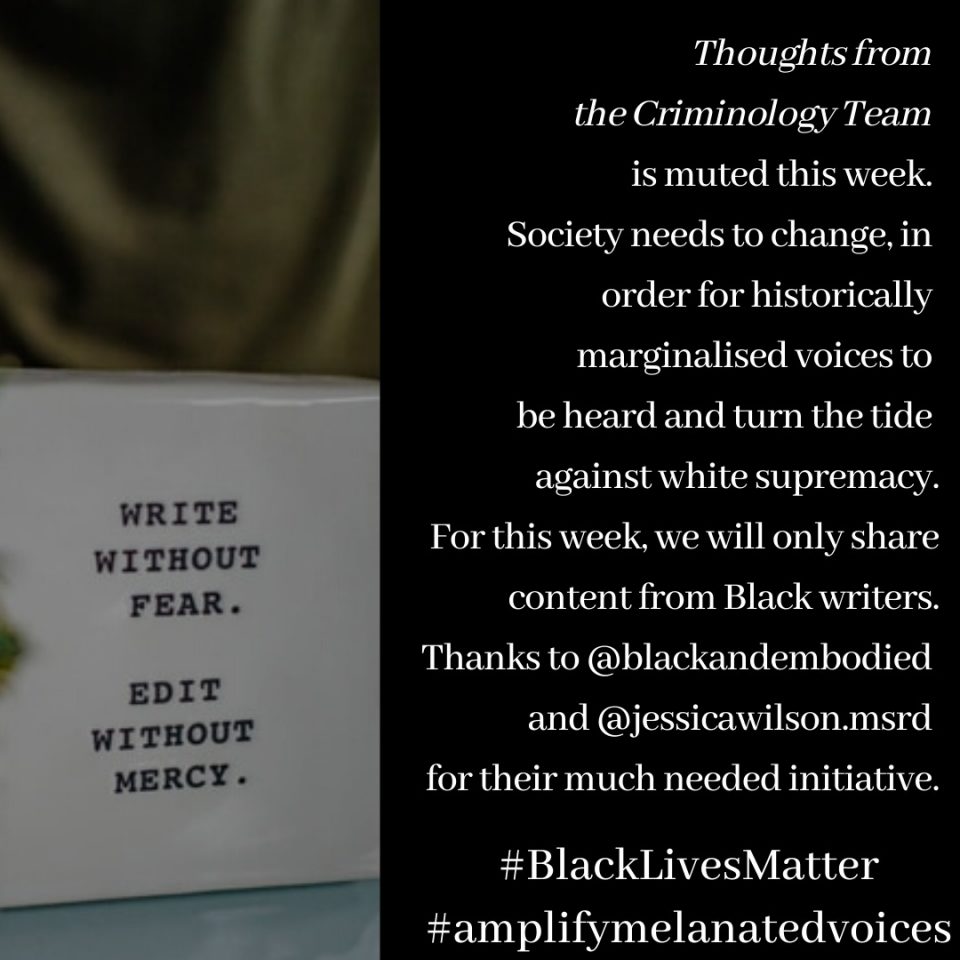
Over the past week or so, the Thoughts From the Criminology Team has taken part in the #amplifymelanatedvoices initiative started by @blackandembodied and @jessicawilson.msrd over on Instagram. During that time we have re-shared entries from our regular bloggers @treventoursu and @drkukustr8talk as well as entries from our graduates @franbitalo, @wadzanain7, @sineqd, @sallekmusa, @tgomesx, @jazzie9, @chris13418861 and @ifedamilola. In addition, we have new entries from @treventoursu, @drkukustr8talk and @svr2727. Each of these entries has offered a different perspective and each has provided the starting point for further dialogue.
We recognise that taking part in the #amplifymelanatedvoices is a tiny gesture, and that everyone can and should do better in the fight against white supremacy, racist ideology and individual and institutional violences.
Although this particular initiative has come to an end, the Thoughts from the Criminology Team retains its ethos, which is ‘to provide an inclusive space to explore a diversity of subjects, from a diverse range of standpoints’. We hope all of our bloggers continue to write for us for many years, but there is plenty of room for new voices.
Share this:


Life in the UK: Nigerians migrating from the other side

Damilola is a 2017 graduate having read BA Criminology with Sociology. Her blog entry reflects on the way in which personal experience can inform and be informed by research. Her dissertation is entitled Life in the UK: The individual narratives of Nigerians living in the United Kingdom and the different problems they faced during their integration into the UK
During my research on the topic of migration and integration, it was important to me, to make the individuals the focal point. This is because the majority of research in this area, depicts a holistic perspective. Therefore, understanding each individual story was vital during my research. It enabled an insight into the different coping mechanisms the Nigerian migrants used, to compensate for the sense of othering they often felt.
One of the most eye opening stories was that of a woman who had bleached her skin to become lighter. She felt…
View original post 658 more words
Share this:


LET’S END HATE CRIME

Chris is a BA Criminology graduate of 2017 and was motivated to write this blog through the experience of his own dissertation. His dissertation was on the Experience of Hate crime: Exploring professional perspectives of racist hate crime against ethnic minority.
The issue of racially motivated violence against ethnic minority groups in the UK was an important focus of media discussion both during and after the referendum on leaving the EU. Hate crimes, in general, have often been a source of debate for legal theorists, academics, politicians, journalists and law enforcement officials. Many perceive it to be a crime that is usually driven by prejudice towards the victim. Professionals working in the field have therefore all made efforts to understand and address hate crime, as one of the most unpleasant manifestations of human prejudice.
As a research topic, racist hate crime within the UK has been widely explored ever…
View original post 560 more words
Share this:


An Officer’s Perspective

Northampton University…. In 2011, I first moved up to Northampton to study criminology and sociology. At the time I had never moved away from home before and it was a somewhat daunting experience. However, now looking back at this, it was one of the best decisions I have made.
Before I set out to go to university I had always said to my family I wanted to join the police force. I chose to study criminology as I believed this was going to help me with joining the police and also provide me with an insight as to what I was potentially going to be letting myself in for.
From studying criminology for three years I learnt about various ideas surrounding police and their interactions with communities, portrayal within the media and about the history of the police and how it has developed into the service we have today.
I…
View original post 514 more words
Share this:


The Other Side of Intelligence


After I graduated I had a bit of tunnel vision of what I wanted to do. I wanted to either work with young offenders or work with restorative justice. Many opportunities actually came up for me to do several different things, but nothing really worked out and nothing felt right.
I carried on working in retail till February 2018; I was honestly starting to lose hope that I would find something that I would enjoy. I started working for a security company that does many things; from employment vetting to gaining intelligence of various kinds. Although the role is not focused on the criminality side entirely, the theme is very much apparent. I find myself thinking about all the different concepts of criminology and how it ties in to what I am doing.
A big part of my role is intelligence and at first, I didn’t think I would enjoy…
View original post 288 more words
Share this:


Visa by Impression, Atavism or Exploitation?

My paper, ‘beyond institutional
autonomy: a quadrumvirate interaction theory of civil-military relations’ was
accepted for presentation at the 2019 Biennial International Conference of the Inter-University
Seminar on Armed Forces and Society scheduled for November 8-10, 2019 at the
Hyatt Regency, Reston, Virginia. However, I am unable to attend the conference
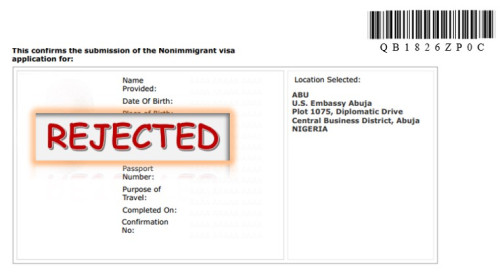
because I was denied visa at the US Embassy in Abuja, Nigeria. In this entry, I
wish to highlight and add my voice to the concerns academics and non-academics,
especially those from the ‘Global South’ face in securing visas to enable them
attend conferences in the supposed ‘developed world.’ Hence, this entry is a
personal reflection on the US visa regime in Nigeria, and its nexus with criminology.
Individual visas are often issued
based on the merit of an application and the adequacy of the supporting
documents submitted by applicants who are also required to pay certain fees and
charges…
View original post 760 more words
Share this:


Whiteness Walks into a Bar

When we think about race: the narratives, stories and experiences of people of colour are raised. And to be “of colour,” is essentially tied to anything from Black to Polynesian, Middle Eastern and Asian, including mixed-race. The perception of whiteness is the absence of blackness / brownness, that makes people that look like me up to nine times more likely to be stop and searched by police in Northamptonshire than a White person. But white is a colour too, is it not? When it comes to talks about “whiteness,” not a peep is to be heard from the people it impacts most, White European-looking people. Shocked? Not really! It can’t just be up to people of colour to talk to about whiteness. White people need to be talking about whiteness!
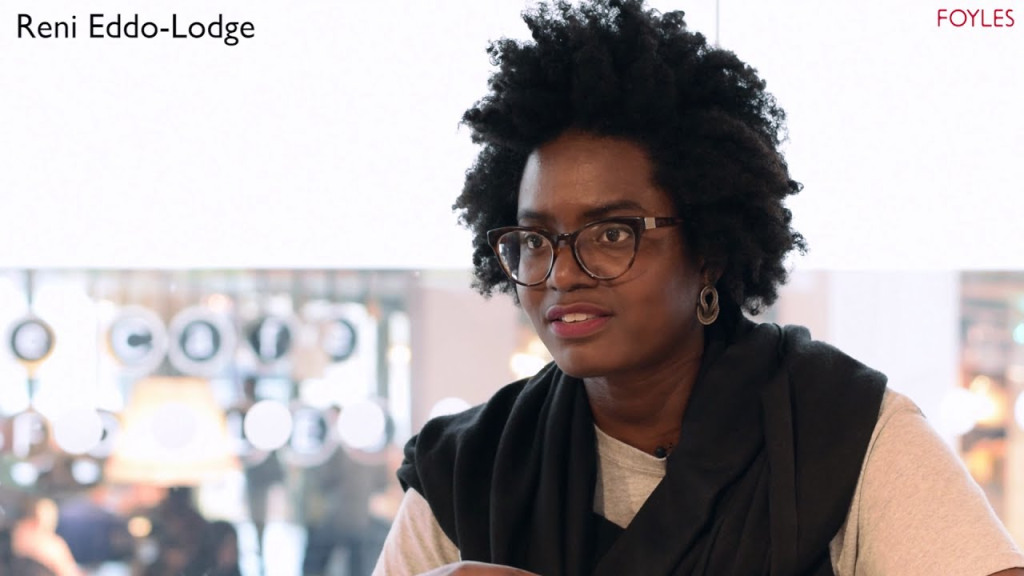
Photo Credit: Foyles
In the conversations about unconscious bias, as far as race…
View original post 892 more words
Share this:


The Voice Behind the Music

Marginalised voices were the focal point of my dissertation.
My dissertation explored social issues through the musical genres of Rap and Hip-Hop. During the time period of writing my dissertation there was the rising debate surrounding the association of a new genre, Drill music, being linked to the rise in violent crimes by young people in England (London specifically). The following link to an article from the Guardian newspaper will provide a greater insight to the subject matter:
The idea of music having a direct correlation with criminality sweeps issues such as poverty, social deprivation, class and race all under the rug; when in reality these are just a few of the definitive issues that these marginalised groups face. We see prior examples of this in the late 80s, with rap group N.W.A with their song “F*** the police”. The song surrounded the topic of police brutality and…
View original post 274 more words
Share this:


Racism in the work place


Growing up in a small town and having dealt with racism from a young age; I felt as if getting a degree would prove that I deserve to sit with the top dogs and that would be the end of me experiencing racism.
But I was sadly mistaken. I have experienced racism at 3 out of the 4 jobs I have had since graduating. I never dealt with it head on. I would just apply for other jobs and pray that the next job would be different. Thinking of reporting people for the comments they said was never an option for me as they were managers or supervisors.
Until I had the 3rd person who said a racist comment and I broke down. At this point I was done with running. I reporte d it and it was dealt with. But since then I have been dealing with covert racism…
View original post 166 more words
Share this:

News Flash #BlackenAsiaWithLove #SpokenWord

This Spoken word piece was inspired by watching the TV news with my aunt Shirley. Shout-out to Evelyn from the Internets, because I’m calling in Black tomorrow.
Audience/Reader: Hum, snap, step, clap, sing ‘Another One Bites the Dust’
Newsflash at dawn:
After several overnight reports of disturbances,
Police are on thelookoutthis morning for a smart negro male,
Accused of bringing up racism and angering the masses.
The suspect is considered armed with intelligence,
and other deadly weapons such as pen and paper.
Bang!
9 0’clock morning News:
Police are on thelookout for a smart negro male,
Accused of bringing up racism and angering the masses.
Suspect is considered armed with intelligence and other deadly weapons.
The public is advised NOT to approach the suspect,
And notify authorities immediately…
Immediately…
Sohe can be shot.
Bang!
Bang!
News at noon.
Police are on thelookout for a smart negro male,
Accused…
View original post 649 more words

 Thoughts from the criminology team