
Home » Articles posted by Paula Bowles (Page 6)
Author Archives: Paula Bowles

The Other Side of Intelligence


After I graduated I had a bit of tunnel vision of what I wanted to do. I wanted to either work with young offenders or work with restorative justice. Many opportunities actually came up for me to do several different things, but nothing really worked out and nothing felt right.
I carried on working in retail till February 2018; I was honestly starting to lose hope that I would find something that I would enjoy. I started working for a security company that does many things; from employment vetting to gaining intelligence of various kinds. Although the role is not focused on the criminality side entirely, the theme is very much apparent. I find myself thinking about all the different concepts of criminology and how it ties in to what I am doing.
A big part of my role is intelligence and at first, I didn’t think I would enjoy…
View original post 288 more words
Share this:

Visa by Impression, Atavism or Exploitation?

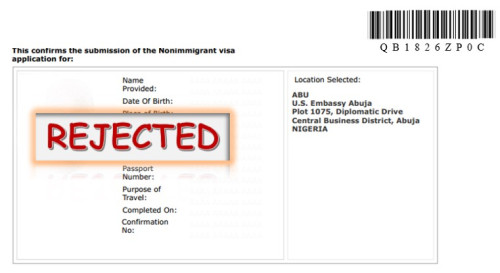
My paper, ‘beyond institutional
autonomy: a quadrumvirate interaction theory of civil-military relations’ was
accepted for presentation at the 2019 Biennial International Conference of the Inter-University
Seminar on Armed Forces and Society scheduled for November 8-10, 2019 at the
Hyatt Regency, Reston, Virginia. However, I am unable to attend the conference
because I was denied visa at the US Embassy in Abuja, Nigeria. In this entry, I
wish to highlight and add my voice to the concerns academics and non-academics,
especially those from the ‘Global South’ face in securing visas to enable them
attend conferences in the supposed ‘developed world.’ Hence, this entry is a
personal reflection on the US visa regime in Nigeria, and its nexus with criminology.
Individual visas are often issued
based on the merit of an application and the adequacy of the supporting
documents submitted by applicants who are also required to pay certain fees and
charges…
View original post 760 more words
Share this:


Whiteness Walks into a Bar

When we think about race: the narratives, stories and experiences of people of colour are raised. And to be “of colour,” is essentially tied to anything from Black to Polynesian, Middle Eastern and Asian, including mixed-race. The perception of whiteness is the absence of blackness / brownness, that makes people that look like me up to nine times more likely to be stop and searched by police in Northamptonshire than a White person. But white is a colour too, is it not? When it comes to talks about “whiteness,” not a peep is to be heard from the people it impacts most, White European-looking people. Shocked? Not really! It can’t just be up to people of colour to talk to about whiteness. White people need to be talking about whiteness!
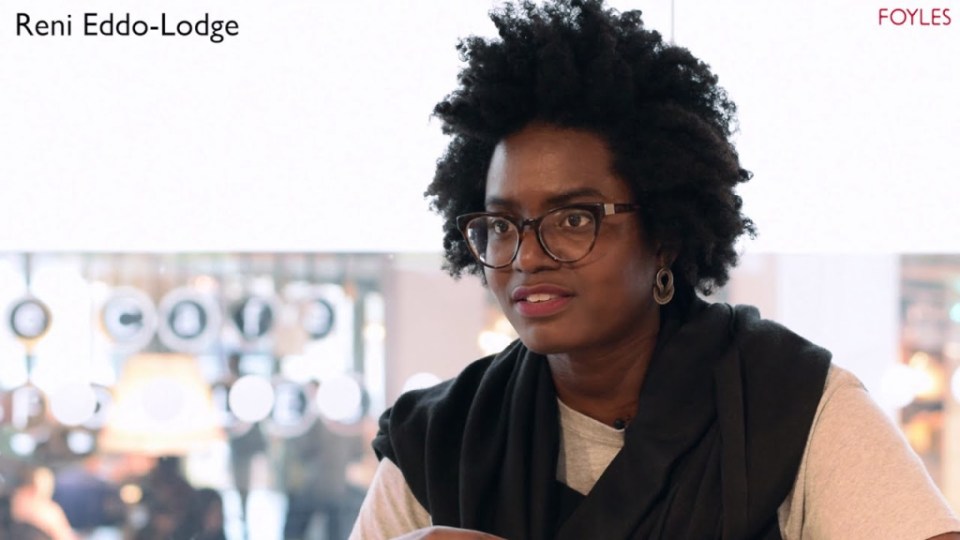
Photo Credit: Foyles
In the conversations about unconscious bias, as far as race…
View original post 892 more words
Share this:


The Voice Behind the Music


Marginalised voices were the focal point of my dissertation.
My dissertation explored social issues through the musical genres of Rap and Hip-Hop. During the time period of writing my dissertation there was the rising debate surrounding the association of a new genre, Drill music, being linked to the rise in violent crimes by young people in England (London specifically). The following link to an article from the Guardian newspaper will provide a greater insight to the subject matter:
The idea of music having a direct correlation with criminality sweeps issues such as poverty, social deprivation, class and race all under the rug; when in reality these are just a few of the definitive issues that these marginalised groups face. We see prior examples of this in the late 80s, with rap group N.W.A with their song “F*** the police”. The song surrounded the topic of police brutality and…
View original post 274 more words
Share this:


Racism in the work place


Growing up in a small town and having dealt with racism from a young age; I felt as if getting a degree would prove that I deserve to sit with the top dogs and that would be the end of me experiencing racism.
But I was sadly mistaken. I have experienced racism at 3 out of the 4 jobs I have had since graduating. I never dealt with it head on. I would just apply for other jobs and pray that the next job would be different. Thinking of reporting people for the comments they said was never an option for me as they were managers or supervisors.
Until I had the 3rd person who said a racist comment and I broke down. At this point I was done with running. I reporte d it and it was dealt with. But since then I have been dealing with covert racism…
View original post 166 more words
Share this:

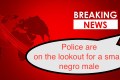
News Flash #BlackenAsiaWithLove #SpokenWord

This Spoken word piece was inspired by watching the TV news with my aunt Shirley. Shout-out to Evelyn from the Internets, because I’m calling in Black tomorrow.
Audience/Reader: Hum, snap, step, clap, sing ‘Another One Bites the Dust’
Newsflash at dawn:
After several overnight reports of disturbances,
Police are on thelookoutthis morning for a smart negro male,
Accused of bringing up racism and angering the masses.
The suspect is considered armed with intelligence,
and other deadly weapons such as pen and paper.
Bang!
9 0’clock morning News:
Police are on thelookout for a smart negro male,
Accused of bringing up racism and angering the masses.
Suspect is considered armed with intelligence and other deadly weapons.
The public is advised NOT to approach the suspect,
And notify authorities immediately…
Immediately…
Sohe can be shot.
Bang!
Bang!
News at noon.
Police are on thelookout for a smart negro male,
Accused…
View original post 649 more words
Share this:


How literature failed me as a black student

My name is Francine Bitalo, I am 21 years old and a Criminology undergraduate at the University of Northampton. Coming from a black African background I have always had a strong interest in the Criminal Justice System and its treatment towards different groups in society.
My dissertation was based on the impact of police practices such as stop and search on young black men and their families. Whilst statistics present the alarming racial disproportionately which exist in many areas in the criminal justice system, it fails to portray the long-lasting effects it has had on Black families. For example, the daily harassment and differential treatment subjected to young Black men has forced black families to reinvent themselves to conform to institutional racism. Coming from a Black family myself and having male family member, the findings in my dissertation quickly became personal to me, as I could constantly relate them to…
View original post 650 more words
Share this:


Please don’t clap or cheer

In an uncomfortable irony, my regular blog entry has fallen on the 8 May 2020, the seventy-fifth anniversary of the end of World War 2 in Europe. I say uncomfortable because I find this kind of commemoration particularly challenging to comprehend, given my pacifist tendencies. I’m therefore going to take a rather circuitous route through this entry.
On the 20 March 2020 I wrote the first Thoughts from the Criminology team blog entry (focused on Covid-19), just a few hours after the University had moved to virtual working. Since then the team has tackled the situation in a variety of different ways. In that I detailed my feelings and observations of life, as we knew it, suddenly coming to abrupt halt. Since then we have had 7 weeks of lockdown and it is worth taking stock of where we are currently.
At present the UK has recorded over 30,000 deaths attributed to the virus. These figures are by necessity inaccurate, the situation has been moving extremely fast. Furthermore, it is incredibly challenging to attribute the case of death, particularly in cases where there is no prior diagnosis of Covid-19. There has been, and remains a passionate discourse surrounding testing (or the lack of it), the supplies of Personal Protective Equipment (or the lack of it) and the government’s response (or lack of) to the pandemic. Throughout there has been growing awareness of disparity, discrimination and disproportionality. It is clear that we are not in all this together and that some people, some groups, some communities are bearing the brunt of the current crisis.
Having studied institutional violence for many years, it is evident that the current pandemic has shown a spotlight on inequality, austerity and victimisation. The role of institutions has been thrown into sharp relief, with their many failings in full view of anyone who cared to look. In 1942, Beveridge was clear that his “five giant evils” could have been addressed, prior to World War 2, yet in the twenty-first century we have been told these are insurmountable. Suddenly, in the Spring of 2020, we find that councils can house the homeless, that hungry children can be fed, that money can be found to ensure that those same children have access to educational resources. We also find that funds can be located to build emergency hospitals and pay staff to work there and across all other NHS sites.
Alongside this new-found largesse, we find NHS staff talking about the violences they face. The violence of being unable to access the equipment they need to do their jobs, the violence of being deprived of regular breaks, the violence of racism, which many staff face both internally and externally. We hear similar tales from care workers, supermarkets workers, delivery drivers, the list goes on. Yet we are told by the government that we are all in this together. This we are told, is demonstrated by gathering on doorsteps to clap the NHS and carers. It can be compared with the effort of those during World War II, or so we are told. If we just invoke that “Blitz Spirit” “We’ll Meet Again” at the “White Cliffs of Dover”.
However, such exhortations come cheap, it costs nothing in time, or money, to clap, or to sing war time songs. To do so puts a veneer of respectability and hides the violent injustices inherent in UK society and the government which leads it. It disguises and obfuscates the data that shows graphic racial and social economic disparity in the death toll. Similarly, it avoids discussion of the role that different individuals, groups and communities play in working to combat this horrible virus. As a society we have quickly forgotten discussions around deserving/undeserving poor, the “hostile environment” and those deemed “low-skilled”. It camouflages the millions of people who are terrified of unemployment, poverty and all of the other injustices inherent within such statuses. It hides the fact that these narratives are white and male and generally horribly jingoistic by ignoring the contribution of anyone, outside of that narrow definition, to WWII and to the current pandemic. It is trite and demonstrates an indifference to human suffering across generations.
Let’s stop focusing on the cheap, the obvious and the trite and instead, once this is over, treat people (all people) with respect. Pay decent wages, enable access to good quality nutrition, education, health care, welfare and all of the other necessities for a good life. And by all means commemorate the anniversary of whatever you like, but do not celebrate war, the biggest violence of all, without which many more lives would be improved.
Share this:


New Heroes for the Twenty-First Century? (Clue: they don’t wear khaki)
I have blogged before on the way in which society seems to choose what to remember and what to forget. Similarly, I have mused on remembrance, the poppy and the increasing militarisation inherent in paying homage to Britain’s war generation. In the current crisis, despite the despair, I sense a change in our understanding of the term heroism, which I will explore further below.
In the 20th century there was concerted focus on idolising the military man and his function within British society. This is unsurprising, it is not for nothing that Camus describes this period as ‘the century of fear’ (1946/2007: 27). This period was, and remains remarkable, for the two world wars, as well as a variety of other conflicts, within which Britain was involved (along with many other nations). The two world wars provide foundations for the way in which the twentieth-century is discussed and understood, with substantial periods of time often delineated into the short-hand of pre-war, inter-war and post-war.
Although only twenty years in, it is clear that the twenty-first century, cannot be described as peaceful. Rather it has continued with the same approach to international relations, often argued to be immoral, if not illegal, of using military violence to obtain, what Britain views as, reasonable and tangible gains. Whether we focus on Afghanistan, Iran, Iran, Libya, Sierra Leone or Syria, British military might is deemed appropriate, proportionate and necessary (as least in Britain). Certainly, a number of authors have already dubbed our current century, as being in a perpetual, ‘war without end’ (cf. McAlister, 2002, Tertrais, 2004, Schwartz, 2008).
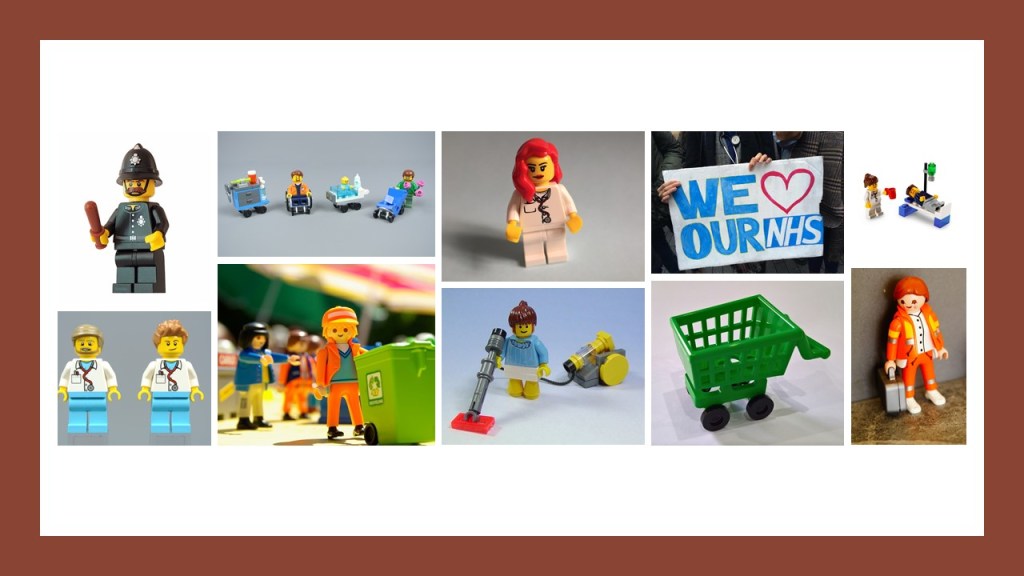
However, in 2020 the world is facing a far more challenging enemy, one which threatens us all, Coronovirus, or as it is more scientifically known, Covid-19. More importantly this is an enemy that cannot be shot, exploded, tortured or conquered in the traditional, well-worn ways of warfare. Instead, this crisis calls for a different kind of hero, one who does not have recourse to an arsenal of increasingly, terrifying weapons.
As with the war, there are two distinctly different experiences, those on the front line and those who are not. Each group has a role to play, for some they will take their lives in their hands, on a daily basis, to tend to the sick, to deliver supplies to organisations, communities and individuals, to maintain vital services. This group will see things, again and again, that are upsetting, that will test their resolve, their empathy, their patience, good-humour and their confidence. For others, their role is to stay out of the way, to stay indoors, to ensure that the disease does not spread further. Each group will have their own tales to tell to each other, as well as to the generations which will follow.

Once this is all over, once we emerge from our enforced isolation, we will have a return to some kind of “normality”, yet this experience is unlikely to disappear from our individual and collective memories. As our forebears, had the war experience to shape their lives, and that of those who followed them (in many unexpected ways), so shall we have a similar defining moment. Whilst the hero of the twentieth century was indisputably a white, straight, able bodied, (nominally) Christian man dressed in khaki, the hero of the twenty-first century will appear in a variety of diverse guises. From the supermarket worker to the school teacher to the carer to the paramedic to the police officer to the undertakers to the cleaners to the small business owners to the scientists, to the nurses, paramedics, doctors, surgeons and all the others, each are serving on the front line of the fight against coronavirus. They are women, men, Black, Asian, white, Muslim, Buddhist, Sikh, Christian and atheist, they are young and old, they are experienced professionals and those just starting out on their working lives, they are well-renumerated, they are poorly paid, they have fears and anxieties, families, friends, and those that love and fear for their safety.
These people have little in common but their humanity and they are redefining heroism second by second, minute by minute, hour by hour, day by day.

References
Calhoun, Laurie, (2002), ‘The Phenomenology of Paid Killing,’ The International Journal of Human Rights, 6, 1: 1-18
Camus, Albert, (1946/2007), Neither Victims Nor Executioners: An Ethic Superior to Murder, tr. from the French by Dwight Macdonald, (Eugene: Wipf and Stock Publishers)
McAlister, Melani, (2002), ‘A Cultural History of the War without End,’ The Journal of American History, 89, 2: 439-455
Tertrais, Bruno, (2004), War Without End, (New York: The New Press)
Schwartz, Michael, (2008), War Without End: The Iraq Debacle in Context, (Chicago: Haymarket Books)
Share this:

“My Favourite Things”: Paula

My favourite TV show - I am not really one for television, but I recently stumbled upon a 1960's series, called The Human Jungle, lots of criminological and psychological insight, which I adore. I also absolutely loved Gentleman Jack (broadcast on BBC1 last summer)

My favourite place to go - Wherever I go the first thing I look for are art galleries, so I would have to say Tate Modern. Always something new and thought provoking, alongside the familiar and oft visited treasures

My favourite city - I love cities and my favourite, above all others, is the place I was born, London. The vibrancy, the people, the places, the atmosphere....need I say more?

My favourite thing to do in my free time - Read, read, read, read, read, read, read, read......

My favourite athlete/sports personality - This is tricky, sport isn't really my thing. However, I do have a secret penchant for boxing,  which isn't brilliant for someone who identifies as pacifist, so I'll focus on feminism and pick Nicola Adams

My favourite actor - (Getting easier) Dirk Bogarde

My favourite author - (Too easy) Agatha Christie

My favourite drink - Day or night? If the former, tea....

My favourite food - Chocolate, always

My favourite place to eat - So many to choose from, but provided I am surrounded by people I love, with good food and drink, I'm happy

I like people who - read!

I don’t like it when people - claim to be gender/colour blind....sorry mate, check your privilege

My favourite book - (oooh very, very tricky) Virginia Woolf's A Room of One's Own primarily because of the profound effect it had and continues to have on my understanding

My favourite book character - (Easy, peasy) Hercule Poirot

My favourite film - (Despite my inner feminist screaming nooooooooo) The original Alfie with its wonderful swinging sixties' vibe

My favourite poem - (Decisions, decisions, so many wonderful poems to choose from) I'll plump for Hollie McNish's Mathematics

My favourite artist/band - The Beatles

My favourite song - (Given the previous answer) it has to be Dear Prudence

My favourite art - I love art, but hands down Picasso's Guernica is my favourite piece. To stand in front of that huge painting and consider the horror of war is profound

My favourite person from history - The pacifist, suffragette Sylvia Pankhurst, a beautiful example of the necessity to be confident in your own ethics and principles


