
Home » Reflection (Page 2)
Category Archives: Reflection

HE and the curse of generative AI

A good part of the last academic year was spent debating the use of AI in Higher Education. Well, that’s what it felt like in our department. It became clear early on that some of our students had taken to using AI to generate their essays. Whilst we, as academics, debated its use, a number of issues became apparent. First and foremost was that of detecting its use in summative work. Despite the university guidelines about using AI and the need to reference its use, indicating where and how it had been used, students were producing work and passing it off as their own. Some of my colleagues were bothered about how its use could be detected, whereas others promoted its use and advocated teaching students how to use it. The arguments abound about how it might be used, not just to generate ideas but also to help improve grammar, for example. There are arguments about how it can help provide a literature review, saving time and effort. There are arguments about how it can help with essay structure and can help with that writer’s block, so many of us suffer from.
Whilst I understand its uses and understand my own limitations in knowledge and understanding about its many uses, I cannot but help thinking that somehow those that advocate its use have been blinded by the allure of something shiny and new. They will say they are just keeping up with technology, in the meantime, the tech giants are making a fortune and leading us further and further into a toxic dependency on technology which they in turn generate to quench our insatiable appetite. For those of you that remember, what was wrong with ‘Word 6’?
My stance seems to be somewhat simplistic on the matter, that is my stance on using generative AI in Higher Education to produce summative work in our field. It seems to me that the use of generative AI to produce summative work, bypasses all that Higher Education seeks to achieve. The British Society of Criminology provides a comprehensive menu of knowledge and skills that a student studying criminology should be able to boast at the end of their degree programme. We do our best to provide the building blocks for that achievement and test, using a variety of methods, whether the students have that knowledge and skills to the requisite standard. At the end of their studies, the students receive a certificate and a classification which indicate the level of skills and knowledge.
How then can we say that a student has the requisite knowledge and skills if they are allowed to use generative AI to produce their work? If a key skill is the ability to analyse and synthesise, how does an AI generated literature review assist with that skill? How will an AI generated essay format help the student navigate the vagaries of report writing and formatting in the workplace (different formats according to audience and needs)? How does a grammar check help the student learn if the words produced by the AI tool are not understood by the student; they won’t even know if it’s the correct word or tense or grammar that has been used. Often the mistake made by those advocating the use of AI is that they forget about how we learn. Having something produced for you is not learning, nowhere near it.
Even if a student acknowledges the use of AI in their work, what does that bit of work demonstrate about the student? Would we credit a student that had simply copied a large chunk from a book, or would we say that they needed to demonstrate how they can summarise that work and combine it with other pieces of work? In other words, would we want the student to produce something that is theirs?
There are tools for detecting the use of AI, just as there are tools for detecting plagiarism, the problem is that the former are not that reliable and are likely to produce a significant number of false positives. The consequence of the worries around the use of AI by students is that some of my colleagues, both at the university and the wider community are advocating that we return to exams and the like. I think that would be a retrograde step. We need students to be able to read, explore, and write so that they can demonstrate some quite critical skills. Skills that employers want.
Whilst it seems right that we show students how to use AI, we need to be clear about its limitations. More importantly we need to be clear that its use can be debilitating as much as it is useful. Not everything that is shiny and new is what it purports to be, good honest graft has far more value. There are no shortcuts to learning. If graduates are unable to demonstrate the requisite skills for a job, then their degree holds little value. I fear that many will be cursing the day they ever discovered generative AI.
Share this:


Headlines and Happiness: Balancing News Consumption and Wellbeing

As part of my reflective diary assessment for my third-year module ‘Critiquing Criminalistics’, I reflected on the importance of being up to date with world events to be able to apply criminological knowledge to them. I also reflected on the fact that I have avoided much of the news and media to manage my despair at the current state of the world. However, in order to further my academic knowledge and its application, I decided I just needed a safe way to keep on top of these things, so I compiled some tips and reminders for myself, and I’d like to share them with you.
Choose wisely: Choose reputable news sources, academic reports or reviews from trusted organisations, some will be better balanced, and much less sensationalised than others.
Practice media literacy: Be critical of the information you find; don’t believe everything you see and hear. Verify news stories from multiple sources before accepting them and remember what the media is designed to do. Plus, social media is full of misinformation and sensationalism and largely speaking, not a good resource!
Need to know basis: Consider which topics are most important for you to stay informed about, and limit exposure to news that is not relevant to your wellbeing or interests. It’s very easy to fall down the rabbit hole!
Limit your consumption: Put some boundaries in place that work for you, whether that’s setting an allotted time frame to catch up like to only listen to the radio on your drive into campus, taking a break from social media, or making sure those notifications are turned off so you’re not ambushed by breaking news.
Managing Traumatic Topics: If you are avoiding any particular topic, it might be helpful to have a trusted person read/watch for you first. Additionally, for any recommended films or series, try finding them on ‘Does the Dog Die?’ https://www.doesthedogdie.com/ to check for triggering content.
Find the happy stuff too: There is so much good happening in the world as well as all the bad, make sure you feed your brain some of that too, whether that’s in the news, or on social media.
Here are some other sources:
Look after yourself: Further to those things, take a break every once in a while, prioritise whatever it is that makes you see your world positively and seek support if you need it, that might be support from a professional, or talk to a trusted person, colleague, or staff member to air out those thoughts – go and ‘talk to a criminologist!’ If you’re particularly prone or you are a chronic catastrophiser (guilty!) – a perspective from someone else can be a useful tool.
Lastly, there is a quote I heard years ago, and while over time, there are some thoughts and applications of it that are less than favourable, I occasionally find it comforting; Fred Rogers passed along a message from his mother who said ‘Look for the helpers. You will always find people who are helping.’
If you are able to manage the discomfort, sometimes it is good to find what makes you feel, and listen to it, let it fire you up! Perhaps you’ll become the helper.
Share this:


The 7 Year Itch

Back in 2017, as a team we started talking of developing a forum where we can write about ideas, which we had run out of time to discuss in class or wanted to raise in addition to what we do. The first of our entries was called “Reflections from a Pilot” and it was all about the prison module we were running. Since then, all colleagues, many students, graduates and esteemed fellows have contributed to our blog, bringing a variety of perspectives and opinions. The bulk of the reflections are mostly focused on the discipline of Criminology but there are several others that explore wider educational issues, social situations, and cultural commentary. This alone demonstrates the variety and extent that our discipline can go into inspiring people who have been given the criminological gaze.
700 blog posts later and we are still going strong. As a team we have seen, Brexit, the relocation to a new campus, a global pandemic, war in Europe, environmental issues and many more. We have commented on crimes and criminalities, cultural conventions, and wider social issues. Our students and graduates brought in their reflections from the challenges on studying to presenting their own research and criminological interests. One of our esteemed colleagues Dr Steve O’Brien blogged about the Hillsborough disaster drawing the connections between sports, policing, and criminology. An interesting juxtaposition, but not unique when it comes to criminology.
We produced several posts that followed the academic year, from welcome week to exams and graduation, whilst we simultaneously posed questions about content and material that we thought our students and readers outside of our campus will find interesting. Our objective was to instigate conversations, to inform and to motivate. We have received emails, comments and we have started conversations based on the topics we introduced. Our blog entries have reflected on the life changes colleagues and students have gone through, with the most notable the pandemic, when we tried to make sense of it and keep our spirits up for the team and the people around us. Teams in academia change, form, reform, group, regroup but regardless of that we continue “to keep calm and carry on”. That is the nature of academia! The continued strive for improvement is one of those traits that are so underrated.
Overall, the initial concept of sharing ideas was surpassed by the variety of use we have for the blog. We have found many different creative ways, including posts from our book club, reflections on movies, whilst we also managing to attract guest authors who provide some excellent insight like our travelling blogger Diepiriye or our social commentator Tré who brought in some cultural paradigms to the blog. The blog became a collective noticeboard of ideas that demonstrated the diversity and reach of the discipline of Criminology. In an ever-changing world we feel proud that we raise the flag for issues regarding social justice, equality, education. We took our personal experiences and expertise and put them in a context for our wider academic community but also for anyone who is interested in what we have to say. We would like to thank all those who took the time to read our blogs. Some of you are avid readers and we thank you; to our contributors past and present for your insight and to the people who shared our stories our gratitude for increasing the extent of our readership. From a few people at the beginning, we have become a blog with a readership of over 10K. We are delighted and we raise our virtual glass to all! 7 years went through so quickly, so here’s for the next 7 years and beyond! -Spoiler alert- Next year the team will be celebrating our Silver Jubilee so keep reading as more interesting blogs are to come!

Share this:


State Crime

A year ago, on this day a terrible accident took place. Two trains collided head on: a passenger and a cargo train. The crash was ferocious, following a massive bright explosion, that was heard for miles. The official count of fatalities are 57 dead and over 100 injured, some of whom very seriously, one of whom at least on a medically-induced coma. The term accident implies something that happened unintentionally and unexpectedly. As the story emerged, different elements came to the surface which indicated that what happened, was not unexpected. The people who worked in the train service raised the alarm months, if not years in advance, sending official statements to the relevant departments and the minister for transport. There were several accidents months before the disaster and there were calls to correct the infrastructure, including the signalling system. Several politically motivated appointments in key positions also meant that the people in the organisation at certain levels lacked the expertise and knowledge to work with the complexities of the railways. The employees’ protests were largely ignored as they never received an official response. So, was it an accident, a disaster, or a crime?
I have left the details, names and even the country of the disaster out, for one reason only. This tragedy can happen in any place at any time and for any kind of people. The aftermath leaves people wondering why it happened and if it was preventable. The pain of those who lost loved ones transcends borders, race, and origin. The question posed earlier remains. Worldwide we have seen similar disasters some of which have permanently marked the local and international community. It is the way we deal with the aftermath that will partially answer the question of what this tragedy was. A disaster goes in deep highlighting questions such as; what do people pay taxes for, what is the role of the State and how important is human life?
People in position of power were warned about it beforehand. There were similar incidents that should have signalled that something wasn’t right. There was underfunding and lack of staffing. All of these may have happened separately, but considered together, they cannot support this being an accidental event. It was a disaster waiting to happen. Then the question is whether this event is a crime or not. Crime is usually seen as a social construction of individual behaviour in conflict with social conventions. This focuses crime onto an action by an individual and therefore the motivations and intent focus on the usual gains, opportunity and other personal rewards. This approach largely ignores an entire section of criminology that deals with harm and social injustices. A crime of this magnitude has individual actors who for their own motivations contributed to the disaster. Nonetheless this is something bigger; it encompasses, services, organisations, departments, and ministries. This is a State crime. Different parts of the State contributed to the disaster and once it happened, they tried to provide a harried response on an individual’s fault…human error.
Years ago, in another place the toxic gases of a plant killed and blinded thousands of people; a nuclear cloud was released in another incident and people were made to evacuate their homes for ever. Some years ago, a fault in a type of plane grounded an entire fleet after a couple of crashes. A terrible earthquake which revealed errors in construction and design. Boats full of people sinking and no one seems to take any notice. A similar picture in most disasters: people looking for their loved ones, feeling powerless in front of a State that took decisions to ignore the risk and the calls of the experts. So, what does this train disaster, the plane crashes, the boat sinkings and the earthquake destruction have in common? They are all State crimes. In modern literature we have learnt to recognise them, identify the commonalities, and explain what a State crime is. What we haven’t done as effectively is to find a way to punish those responsible. Each State, like in this train disaster, recoils into providing all necessary information and changing its mechanisms; maybe because for some countries profit is above people, providing of the main intentions behind State crime. Whilst the State delays, the dead await justice.
In memoriam to the 57 and to the millions of victims of state crimes.
Share this:


Reflecting on Research Access

I am currently undertaking a part-time PhD and, as part of my qualitative research project, I need to keep a reflexivity diary, reflecting on my own position in relation to the subjects of my research. My first entry reflects on the process of negotiating access, and I thought it might make an interesting subject for a criminology blog!
As a reflexive qualitative researcher it is important constantly to reflect on my own position in relation to my research and my participants. I am about to start collecting data but only after a very lengthy process of negotiating access (12 months). This process was one in which my own position and history had a significant influence.
For my first project, I am conducting detailed qualitative interviews with serving prisoners. This required approval from the HMPPS National Research Committee (NRC). As a former HMPPS employee, I thought that my inside knowledge would be helpful – indeed at a later stage, in negotiating access to specific prisons, I think it has been. However, at the stage of submitting my application for national approval my prior experience added emotional baggage.
I worked for the Prison Service for nearly 12 years. I really enjoyed working with prisoners and I also enjoyed the camaraderie of working within the tight community of a prison. I worked with some lovely individuals who were dedicated to helping people and who supported me personally in my career. However, the Prison Service is a large, unwieldy organisation and large unwieldy organisations do not always treat individuals well. There were several times in my career when I felt that the organisation had treated me badly: when a recruitment freeze was introduced just after I passed the assessment centre so that I was stuck in limbo without a permanent job; when the in-house MSc was abolished (with no replacement) just before I was due to start it; when I ended up taking on my boss’ responsibilities as well as my own with no promotion or increase in pay; when my request to work part-time after maternity leave was declined; when my post was put on the “surplus list” during a phase of job cuts. It was not all negative – as I say, I enjoyed the work very much, I was proud to be a prison psychologist and there were times when the organisation was good to me (I eventually had a different distance learning MSc funded by the Prison Service, and I was able to take a 12 month career break following my maternity leave) but those negative incidents felt like personal insults when I was working hard. The biggest kick in the teeth came more recently in 2020 when I applied to re-join HMPPS when my tenure on the Parole Board came to an end. I had an unremarkable remote interview and was then turned down. I knew that HMPPS advertised for qualified psychologists every month, so there were plenty of vacancies – that they didn’t want me when I knew I was a good psychologist and had already given them the best years of my career really hurt.
Since then, I have started my PhD and secured a great job with St Andrew’s Healthcare which suits me better and has taken me in a new direction. The memory of the rejection was still lingering, however, when my initial research application to the HMPPS NRC was rejected. I felt like they were kicking me in the teeth again. My initial application was for a piece of research with both a quantitative and a qualitative element. The feedback in relation to the quantitative project was so devastating that I scrapped this part of the research altogether and focused on the qualitative part only. To be fair, the feedback was justified and the re-written proposal is for a much more methodologically sound piece of research, but it still felt personal at the time.
Conducting research during a pandemic is not easy. By the time I had responded to the NRC feedback and was ready to re-submit, there was a resurgence in COVID-19 cases and the NRC were not accepting any further applications. I was advised not to re-submit until applications were being accepted again, otherwise I would have been rejected with no chance to re-submit again. This caused a three-month delay and I had to chase to find out when applications re-opened. When I finally re-submitted, my application was not rejected, but I did receive a long list of requests for further information. Some of these seemed very petty. Responding to them was a significant piece of work and the sense of personal rejection and being made to jump through hoops returned. I was very grateful to one of my supervisors who read my responses before I submitted them and helped to remove the irritation that was evident!
Having submitted the answers to these further questions I waited for ages for a reply. By this stage, I was on first name terms with the reviewer on the NRC. She had sent my application for further feedback from the HMPPS Interventions Team (one of whom I had worked closely with in the past). I was given further questions to answer (which seemed to miss the point of what I was trying to achieve). I tried my hardest to remain positive and to suppress the irritation. HMPPS had the power and were entitled to it. They had every right to reject my research application. Just because I had been a good employee in the past, did not oblige them to give me research access. I resigned myself to receiving a final rejection and started to think of other ways to explore my research questions. And as I reached this point of acceptance, I finally received a positive response saying that my application had been accepted!
Since then, things have moved quickly. I revised my University ethics application in the light of all the amendments I had made following the HMPPS feedback and this was quickly approved. I approached individual prisons for specific access and received positive responses from HMP Grendon and HMP Onley – in these cases possibly reaping the benefits of personal connections from my time in the Prison Service. I will be going into HMP Grendon in early January to start to recruit participants. I no longer work for HMPPS or for the Parole Board, but my status as a Forensic Psychologist and as a former HMPPS employee and Parole Board member will have an influence on my relationships with participants. They will have had experiences with psychologists (and may have had experiences with the Parole Board) which may be positive or negative and which may facilitate or hinder trust in me as a researcher. I will need to look out for these influences and reflect on them as the research progresses.
Share this:

Higher education, students, the strikes and me*

It was somewhat disappointing to read some of the comments purportedly from a university student in our local newspaper the other week. Critical of the current UCU industrial action and its impact on students, the student suggested that lecturers knew what they were signing up for and should just get on with it. I found it interesting and somewhat incongruent with what the national student union stance is (actually, I was livid). I know there has been a response to the article from the local union representative and other comments perhaps suggesting that my previous blog should be read (I wouldn’t think anyone in their right mind would have signed up for what I described). But just to be clear, I signed (or my union did on my behalf) a contract that states I am required to work 37 hours a week with the occasional evening or weekend work and that the normal working week is Monday to Friday. I take the meaning of ‘occasional’ as the definition found in the English dictionary (take your pick as to which one you’d like to use), which is not ‘permanently’ or ‘all of the time’ or ‘ad infinitum’. I can only speak for myself and not for my colleagues, but I don’t mind working a little longer at times and working the weekend to do marking or open days, but I didn’t sign up to be working all of the time. So, for me the industrial action is not just about my working conditions but about a contract, a legal obligation, which I am fulfilling but my employer seems to suggest that I am not because I am not working far in excess of my contracted hours. That to me, is illogical.
I remember a discussion where a senior manager stated that bullying included giving someone excessive workloads. I wonder whether that means that most lecturers are being bullied by management, isn’t there a policy against that? And then I seem to recall that there is some legislation against inequality, would that not include paying lower wages to women, disabled staff and people from minority ethnic groups? Systemic bullying and discrimination, not a pretty picture in higher education.
But perhaps the most important point is that as lecturers we don’t want to impact our student’s education, and this shouldn’t be about us versus the students. It’s what management would like because it detracts from so many issues that plague our higher education system. Students should quite rightly be unhappy with their lot. A system that plunges students into a lifetime of debt that they will rarely if ever be able to repay and at the same time lines the pockets of private companies seems to me to be immoral. A system that requires students to pay extortionate fees for accommodation is completely bonkers especially when it means the less affluent students have to work to afford to live. A system that requires students to study for approximately 46 hours per week in semester time (If we accept that they are entitled to holiday time) seems overly punitive. Couple this with the need to work to afford to live and it becomes unsustainable. Add to that any caring responsibilities or anything else that complicates their lives, and it starts to look impossible. I and my colleagues are not really surprised that so many fail to properly engage, if at all, and that there are so many stressed students and students with mental health issues. Of course, if we add to that individual capabilities, think unconditional offers and low school grades and let’s be honest widening participation becomes simply a euphemism for widening deBt, misery and, more importantly establishment profit.
The students were on strike for one day the other week, someone asked me why, well I rest my case. Whilst I understand student anger about the strikes, that anger is directed at the wrong people. We all signed up for something different and it’s simply not being delivered.
*The first part of this entry can be found here.
Share this:


Let it be Light

You may have probably heard of the title before and you may or may not be able to place it. It is a quote from the bible! It is profoundly creationist proclaiming the world created in days; from the 1st for the light and the 6th for the people and animals. A seemingly busy week for an almighty being who needed a day of rest afterwards. The contribution of organised religion to everyday life, the realisation that people need rest and recuperation from the labours of work. This however is not the reason I chose this dive into scriptures. I am not a theologian so I will not examine the religious content.
Instead there are two different reasons I have chosen to start with this quote; the first is the positive affirming message it conveys, the second is its immediacy. What we have here is light and brightness that is instant gratification. This message feels like a piece of chocolate melting in your mouth, releasing sweet sensations, as a flooding of smooth cocoa disintegrates, releasing its sensual solids. Therefore, the command on creating light resonates; we rejoice because unlike reality we find pleasure in immediate gratification.
Would we care that light was not created but emerged after the Big Bang and took billions of years to form in the way we now recognise it as our sun? Does it matter that progress is long and arduous and not immediate as the command suggests? Our sense of time dwarfs in the time required for events to happen. It is astonishing that we still try to comprehend the vastness of time through human lifetime. The command is also palatable because it happens without virtually any real effort. It does not represent the labours, pains of creation and development. In short, evolution is painful, long but here is presented as something immediate and effortless. In that a series of commands completing complex processes seems preferable to the reality of evolution. Maybe it is pertinent to point out that the command reveals the “majestic totalitarianism” of the divine against the great equalizer of nature and progression.
In life however, big creations cannot happen by command. “Let it be Baby!” I wonder how many mothers would favour this one, or in our line of work “let it be knowledge” how many will choose this option. This is when we realise that this pleasant message is shielding us from the reality of the process and the nature of reality itself. We may want things to happen immediately, but this is not necessarily the best option. In parenting, if you could more forward into having a baby, why not move further past the terrible twos or even further into the dreadful adolescent years of having your authority challenged. Essentially have a child created fully functioning and obedient to parental will. Maybe because this is not parenting. The stories that remain are those of growing pains; without growth there is no parenting. Let’s explore it in knowledge; can we find shortcuts in the way we learn a trade, an education, a professional identity? Maybe skipping the first parts on getting to know how to write in the appropriate conventions; perhaps we can skip on the tedious referencing process that only anally retentive individuals apparently enjoy. What if instead of books and hours of reading different texts we got laminated sheets with terms and conditions and whenever we embark on writing we are told step by step what we write. Because this will not be knowledge. The slow and arduous process has an exceptional trait within it; insight! After reading my books, making notes on my articles, going over my notes and trying to make sense of what it the point I am trying to make; in a moment after hours and hours of studying, suddenly and unexpectedly, the “penny drops”! This moment of insight is like a lightbulb moment…and that is light! A light, not by magic or immediate gratification, but the sustained understanding that comes from knowledge. It has been a difficult year for all of us but please remember that light comes from inside and to quote a great teacher Goethe, “more light”.
Share this:


Reflecting on reflection

For some years now students taking the third year Critiquing Criminalistics module on our criminology course at the university have had an assessment relating to a reflective diary. Most educators and those in other professions will be aware of and understand the advantage of reflection and reflective diaries so it is probably not necessary to revisit the well-rehearsed arguments about benefits to learning and personal development. Each year, I have found that over the course of the module, the students have come to recognise this and have intimated how they have enjoyed reflecting on what they have learnt in the class or how reflecting on personal experiences has been beneficial. And they comment on how they have sought out further information to gain additional knowledge or to put what they have learnt in some form of perspective. It is of course what we as educators would want and expect from a reflective diary assessment that after all counts towards their marks for the module.
What has surprised me though is how much reviewing these modules has benefited me. I have learnt from and continue to learn my students. We all recognise or at least should the old saying ‘the more I know, the more I realise I don’t know’ or similar. My students prove that is the case often with each round of diary entries I review. The diaries can provide an insight into students lives and thoughts. For some of them it may be a cathartic release to capture their feelings on paper, for me it is enlightening and provides a greater understanding of some of the challenges they face not only as students but also as predominately young adults in a challenging and at times hostile social and economic environment. Perhaps what is equally as enlightening is the additional knowledge that students provide about the subject area being discussed and taught. It is almost like sending out my own little army of literature reviewers with a challenge to advance their knowledge and ipso facto, mine. I am clear that part of the reflection process is about taking what you have learnt further and as this an assessment, demonstrating this additional knowledge with some academic rigor. And so, I find that in some cases what I have stated in the class (currently online) is challenged and that challenge is supported by academic reading. When I read some of these little gems, I smile but alongside this is the additional work created as I review the journal article they have referenced and then decide whether to revisit my lectures to add in the additional information. Even if I don’t, it all adds to my knowledge and, on reflection as my students are proving, there is plenty of scope to find out more.
Share this:


The power of the written word: fact, fiction and reality
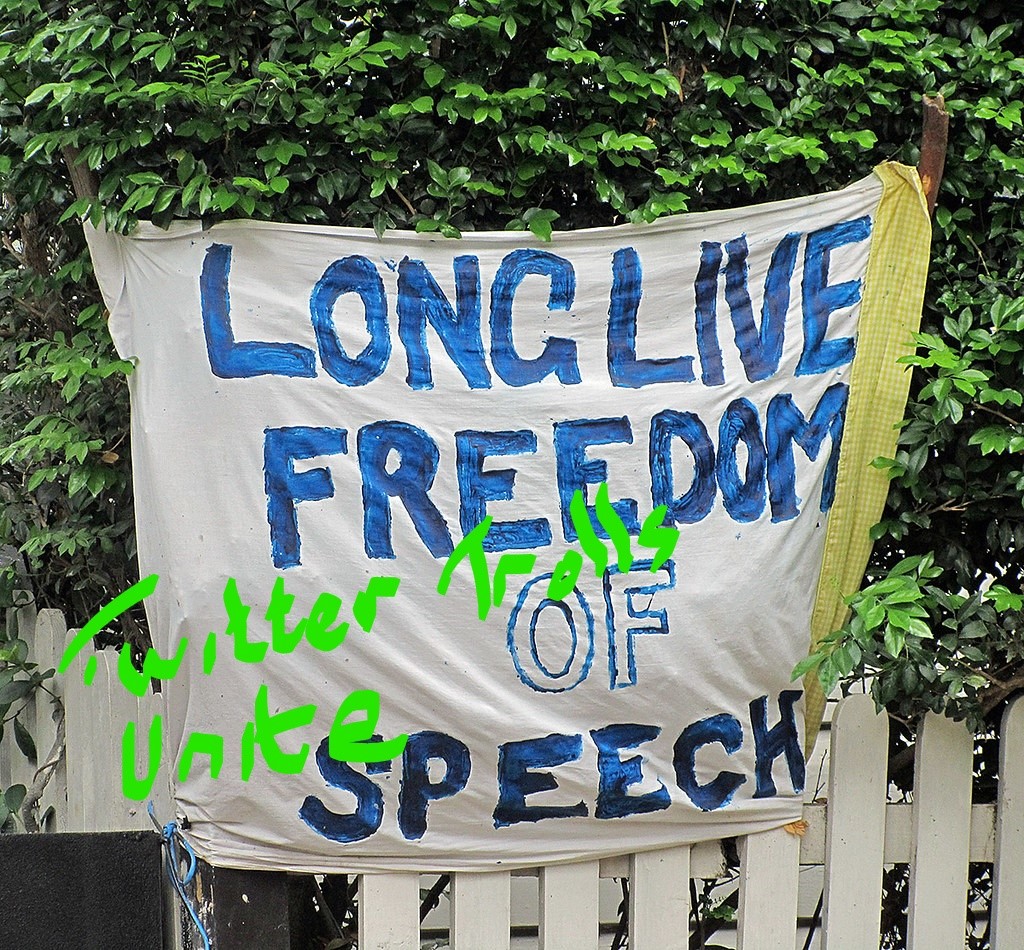
The written word is so powerful, crucial to our understanding and yet so easily abused. So often what gets written is unregulated, even when written in the newspapers. Whilst the press is supposedly regulated independently, we have to question how much regulation actually occurs. Freedom of the press is extremely important, so is free speech but I do wonder where we draw the line. Is freedom of speech more important than regulating damaging vitriolic hyperbole and rhetoric? Is freedom of speech more important than truth?
We only have to read some of the sensationalist headlines in some newspapers to realise that the truth is less important than the story. What we read in papers is about what sells not about reality. The stories probably tell us more about the writer and the editor than anything else. We more often than not know nothing about the circumstances or individuals that are being written about. Stories are told from the viewpoint of others that purport to be there, or are an ‘expert’ in a particular field. The stories are just that, stories, they may represent one person’s reality but not another’s. Juicy parts are highlighted, the dull and boring downplayed. Whilst this can be aimed at newspapers, can the same not be said about other forms of media?
A few weeks ago, I was paging through LinkedIn on my phone catching up with the updates I had missed. Why I have LinkedIn I don’t really know. I think its because a long time ago when I was about to go job hunting someone told me it was a good idea. Anyway, I digress, what caught my eye was a number of people congratulating Rachel Swann on becoming the next Chief Constable of Derbyshire. I recognised her from the news, remember the story when the dam was about to burst?
It wasn’t the fact that she’d been promoted that caught my eye, it was the fact that someone had written that she should ignore the trolls on Twitter. I had a quick look to see what they were on about. To say they were vitriolic is an understatement. But all of the comments based her ability to do the job on her looks and her sexuality. I thought to myself at the time, how do you get away with this? I doubt that any of those people that wrote those comments have any idea about her capabilities. Unkind, rude and I dare say hurtful comments, made that are totally unregulated. The comments say more about the writers than they do about Rachel Swann. You don’t get to the position of Assistant Chief Constable let alone Chief Constable without having displayed extraordinary qualities.
And then I think about Twitter and the nonsense that people are allowed to write on this medium. President Trump is a prime example. There isn’t a day that goes by without him writing some vitriolic nonsense about someone or some nation. Barack Obama used to be in his sights and now it’s Joe Biden. I know nothing about any of them, but if I follow the Trump twit feed, they are incompetent fools and disaster looms if Biden is elected as president. As I said before, sometimes what is written says more about the writer than anyone else.
I’m conscious that I’m writing this for a blog and many that read it don’t know me. Blogs are no different to other media outlets. If I am to criticise others for what they have written, then I ought to be careful about what I write and how. I have strong views and passionately believe in free speech, but I do not believe that the privilege I have been given allows me to be hurtful to others. My views are my views and sometimes I think readers get a little glimpse of the real me, the chances are they have a better idea about me than what I am writing about. I write with a purpose and often from the heart, but I try not to be unkind nor stretch the truth or tell outright lies. I value my credibility and if I believe that people know more about me than the story, I owe it to myself to try to be true to my values. I just wish sometimes that when people write for the newspapers, post comments on Twitter or write blogs that they thought about what they are writing and indulged in a bit of self-reflection. Maybe they don’t because they wont like what they see.
Share this:

Domestic Abuse Misinterpreted: Beyond the Scope of Violence
Background
The framework behind my dissertation arose from a lifelong unanswered question in my mind: “why is psychological and emotional abuse often overlooked in domestic abuse scenarios?” This question had formed in my precocious mind as a child, this was due to experiencing domestic abuse in the family home for many years and in many forms.
Early Stages of the Dissertation
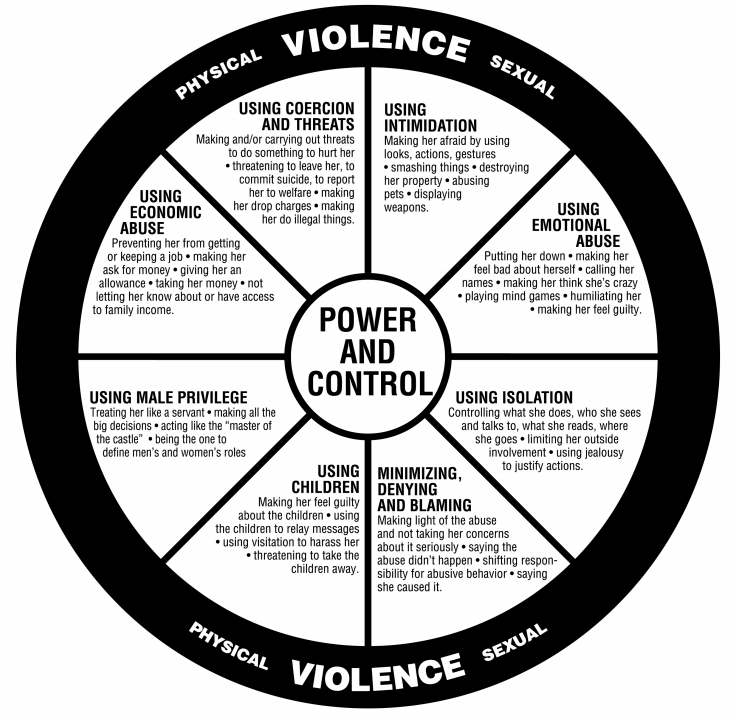
It was only when I began studying criminology at university that I unearthed many underlying questions relating to the abuse I suffered as a child and from watching my mother be psychically and mentally abused. I was understanding my experiences from an academic standpoint, as well as my peers’ experience of domestic abuse too. As a child, I had recognised that the verbal and psychological abuse was increasingly more detrimental on the victim’s mental wellbeing than the physical violence; the physical violence is a tactic used by abusers to install fear in the victim. In the early stages of my dissertation, I was gathering literature to aid my understanding on domestic abuse. I came across two essential books, one book was recommended by @paulaabowles, my dissertation supervisor: Scream Quietly or the Neighbours Will Hear (1979) by Erin Pizzey. This book provided great insight to the many aspects of domestic abuse from the memoires of Erin Pizzey who founded the first domestic abuse refugee in London 1971 known as, Chiswick Women’s Aid. The second book was: Education Groups for Men Who Batter: The Duluth Model (1993) by Pence and Paymar. This book aided my knowledge on the management of male abusers and how their abusive behaviour is explained by the using the visual theoretical framework known as, the Duluth Model; the Power and Control Wheel. I gathered more literature on domestic abuse and formed the backbone for my dissertation, it was time to self-reflect and establish my standpoint so that I could conduct my research as effectively and ethically.
The Research
This was the most important aspect of the dissertation; the most influential too. In my second-year studies, we were required to conduct research in a criminal justice agency to form a placement report; I chose a charitable organisation based in Northampton that provided support to female victims and offenders in the criminal justice system. For my dissertation, I chose to go back to the facility to conduct further research, this time my focus was on the detrimental effects experienced by female victims of domestic abuse.
Using a feminist standpoint alongside an autoethnographic method/ methodology, I was able to conduct primary research together with the participants of the study. I chose feminism as my standpoint due to the fundamental theoretical question centred in the social phenomenon of domestic abuse: gender inequality. I believe the feminist perspective was the most compatible and reliable standpoint to tackle my research with, it allowed room for self-reflection to identify my own biases and to recognise societal influences on how I interpret experiences and emotions. The standpoint’s counterpart – autoethnography – was employed so that I could actively insert myself into the research; this was supported by my research tool of observation participation and by recording qualitative data in a research diary. Over the course of nine weeks, I had formed trustworthy and respectful relationships with the participants, I had also encountered epiphanies and clarities regarding my own experiences of domestic abuse. Through using the research method observation participation, I was able to observe the body language and facial expressions of the participants alongside witnessing their emotions and participating in conversation. Collectively, my research methods enabled me to gather in-depth, first-hand accounts of the women’s experiences of domestic abuse. When writing the conclusion for my dissertation, I was able to establish that psychological and emotional abuse can be more detrimental to the victim than the physical violence itself. Interestingly, I had identified patterns and trends in the abuser’s behaviour and how it impacts the victim’s response; the victims tend to mimic their abusive partners traits e.g. anger and guilt.
I was able to conclude my dissertation with supporting evidence to credit my original question, through using personal experience and the experience of the wonderful women that participated in my research. Many of the women’s experiences highlighted in my dissertation research corresponded with the Duluth Model thesis embedded in my literature review. I was able to demonstrate how the elements of power and control in the abusive partner behaviour can adversely affect the victim; consequences of mental health issues, substance misuse and changes in victim’s lifestyle and behaviour. Overall, the experience was incredibly insightful and provided me with transferable interpersonal and analytical skills.


