
Home » Reading (Page 8)
Category Archives: Reading

Have you been radicalised? I have

On Tuesday 12 December 2018, I was asked in court if I had been radicalised. From the witness box I proudly answered in the affirmative. This was not the first time I had made such a public admission, but admittedly the first time in a courtroom. Sounds dramatic, but the setting was the Sessions House in Northampton and the context was a Crime and Punishment lecture. Nevertheless, such is the media and political furore around the terms radicalisation and radicalism, that to make such a statement, seems an inherently radical gesture.
So why when radicalism has such a bad press, would anyone admit to being radicalised? The answer lies in your interpretation, whether positive or negative, of what radicalisation means. The Oxford Dictionary (2018) defines radicalisation as ‘[t]he action or process of causing someone to adopt radical positions on political or social issues’. For me, such a definition is inherently positive, how else can we begin to tackle longstanding social issues, than with new and radical ways of thinking? What better place to enable radicalisation than the University? An environment where ideas can be discussed freely and openly, where there is no requirement to have “an elephant in the room”, where everything and anything can be brought to the table.
My understanding of radicalisation encompasses individuals as diverse as Edith Abbott, Margaret Atwood, Howard S. Becker, Fenner Brockway, Nils Christie, Angela Davis, Simone de Beauvoir, Paul Gilroy, Mona Hatoum, Stephen Hobhouse, Martin Luther King Jr, John Lennon, Primo Levi, Hermann Mannheim, George Orwell, Sylvia Pankhurst, Rosa Parks, Pablo Picasso, Bertrand Russell, Rebecca Solnit, Thomas Szasz, Oscar Wilde, Virginia Woolf, Benjamin Zephaniah, to name but a few. These individuals have touched my imagination because they have all challenged the status quo either through their writing, their art or their activism, thus paving the way for new ways of thinking, new ways of doing. But as I’ve argued before, in relation to civil rights leaders, these individuals are important, not because of who they are but the ideas they promulgated, the actions they took to bring to the world’s attention, injustice and inequality. Each in their own unique way has drawn attention to situations, places and people, which the vast majority have taken for granted as “normal”. But sharing their thoughts, we are all offered an opportunity to take advantage of their radical message and take it forward into our own everyday lived experience.
Without radical thought there can be no change. We just carry on, business as usual, wringing our hands whilst staring desperate social problems in the face. That’s not to suggest that all radical thoughts and actions are inherently good, instead the same rigorous critique needs to be deployed, as with every other idea. However rather than viewing radicalisation as fundamentally threatening and dangerous, each of us needs to take the time to read, listen and think about new ideas. Furthermore, we need to talk about these radical ideas with others, opening them up to scrutiny and enabling even more ideas to develop. If we want the world to change and become a fairer, more equal environment for all, we have to do things differently. If we cannot face thinking differently, we will always struggle to change the world.
For me, the philosopher Bertrand Russell sums it up best
Thought is subversive and revolutionary, destructive and terrible; thought is merciless to privilege, established institutions, and comfortable habits; thought is anarchic and lawless, indifferent to authority, careless of the well-tried wisdom of the ages. Thought looks into the pit of hell and is not afraid. It sees man, a feeble speck, surrounded by unfathomable depths of silence; yet it bears itself proudly, as unmoved as if it were lord of the universe. Thought is great and swift and free, the light of the world, and the chief glory of man (Russell, 1916, 2010: 106).
Reference List:
Russell, Bertrand, (1916a/2010), Why Men Fight, (Abingdon: Routledge)
Share this:


Productive Procrastination
 There’s the saying ‘Find your passion and you’ll never work a day in your life,’ however I much prefer the updated version ‘Find your passion and you’ll work every day of your life’ BUT you’ll love it. Criminology and the law are everything to me and I enjoy my profession and my ability to work in a field that allows me to direct my interests. It is a very special position to be in and not something I take for granted. I am fortunate to be starting at The University of Northampton this coming semester as a criminology lecturer and I’m looking forward to meeting and getting to know all my colleagues and students.
As a student you may not always want to study, and it is also important to take time off. You may feel guilty if you’re not studying as there is always more reading or research to do for your assignment – it is a veritable rabbit hole. I highly recommend that you undertake ‘Productive Procrastination.’ Productive Procrastination is not working on the task you should be working on, but it is still related closely enough to your work that you don’t feel guilt. (Yes, maybe some mental gymnastics to get to this point!)
It is very important to stay up to date with the current news and research in criminology and criminal justice. To achieve this I use Twitter, read books, and listen to so many podcasts. Apart from being entertaining and educational, the best thing about listening and reading is it often gives your mind to think about what you’re learning differently.
Some of my top podcast recommendations are:
- Criminal
- My Favorite Murder
- Once Upon a Crime
- RedHanded
- Casefile
- Hidden Brain
- They Walk Among Us
- Death in Ice Valley
Some book recommendations from my reading over the last couple of months are:
- Memoirs of a Radical Lawyer – Michael Mansfield
- All that Remains: A life in Death – Sue Black
- Home Fire – Kamila Shamsie
- Outliers – Malcolm Gladwell
- Why I’m No Longer Talking to White People About Race – Reni Eddo-Lodge
- In Cold Blood – Truman Capote
- The Secret Barrister
- Women & Power: A Manifesto – Mary Beard
If you like any of these podcasts or books, please let me know as I can make a lot more recommendations. Alternatively, please provide me suggestions! Happy Productive Procrastination!
I have a personal blog Academic Traveller if you would like to read more about my experiences.
Reference:
Image is inspired by New Yorker Cartoon: Sipress, D. (2014). The New Yorker Daily Cartoon: Friday, December 5th [Online image]. Retrieved from <https://www.newyorker.com/cartoons/daily-cartoon/daily-cartoon-friday-december-5th?mbid=social_twitter> Image created by Glen Holman.
Share this:


Criminology: in the business of creating misery?

I’ve been thinking about Criminology a great deal this summer! Nothing new you might say, given that my career revolves around the discipline. However, my thoughts and reading have focused on the term ‘criminology’ rather than individual studies around crime, criminals, criminal justice and victims. The history of the word itself, is complex, with attempts to identify etymology and attribute ownership, contested (cf. Wilson, 2015). This challenge, however, pales into insignificance, once you wander into the debates about what Criminology is and, by default, what criminology isn’t (cf. Cohen, 1988, Bosworth and Hoyle, 2011, Carlen, 2011, Daly, 2011).
Foucault (1977) infamously described criminology as the embodiment of utilitarianism, suggesting that the discipline both enabled and perpetuated discipline and punishment. That, rather than critical and empathetic, criminology was only ever concerned with finding increasingly sophisticated ways of recording transgression and creating more efficient mechanisms for punishment and control. For a long time, I have resisted and tried to dismiss this description, from my understanding of criminology, perpetually searching for alternative and disruptive narratives, showing that the discipline can be far greater in its search for knowledge, than Foucault (1977) claimed.
However, it is becoming increasingly evident that Foucault (1977) was right; which begs the question how do we move away from this fixation with discipline and punishment? As a consequence, we could then focus on what criminology could be? From my perspective, criminology should be outspoken around what appears to be a culture of misery and suspicion. Instead of focusing on improving fraud detection for peddlers of misery (see the recent collapse of Wonga), or creating ever increasing bureaucracy to enable border control to jostle British citizens from the UK (see the recent Windrush scandal), or ways in which to excuse barbaric and violent processes against passive resistance (see case of Assistant Professor Duff), criminology should demand and inspire something far more profound. A discipline with social justice, civil liberties and human rights at its heart, would see these injustices for what they are, the creation of misery. It would identify, the increasing disproportionality of wealth in the UK and elsewhere and would see food banks, period poverty and homelessness as clearly criminal in intent and symptomatic of an unjust society.
Unless we can move past these law and order narratives and seek a criminology that is focused on making the world a better place, Foucault’s (1977) criticism must stand.
References
Bosworth, May and Hoyle, Carolyn, (2010), ‘What is Criminology? An Introduction’ in Mary Bosworth and Carolyn Hoyle, (2011), (eds), What is Criminology?, (Oxford: Oxford University Press): 1-12
Carlen, Pat, (2011), ‘Against Evangelism in Academic Criminology: For Criminology as a Scientific Art’ in Mary Bosworth and Carolyn Hoyle, (eds), What is Criminology?, (Oxford: Oxford University Press): 95-110
Cohen, Stanley, (1988), Against Criminology, (Oxford: Transaction Books)
Daly, Kathleen, (2011), ‘Shake It Up Baby: Practising Rock ‘n’ Roll Criminology’ in Mary Bosworth and Carolyn Hoyle, (eds), What is Criminology?, (Oxford: Oxford University Press): 111-24
Foucault, Michel, (1977), Discipline and Punish: The Birth of the Prison, tr. from the French by Alan Sheridan, (London: Penguin Books)
Wilson, Jeffrey R., (2015), ‘The Word Criminology: A Philology and a Definition,’ Criminology, Criminal Justice Law, & Society, 16, 3: 61-82
Share this:


“Στον πατέρα μου χρωστώ το ζην, στον δάσκαλό μου το ευ ζειν” To my father I owe living, to my teacher I owe my wellbeing (Alexander the Great)

I remember this phrase from school, among with other ones about the importance of education in life. Since then there have been several years but education is something that we carry with us and as such we take little memories of knowledge like pieces of a gigantic jigsaw that is our lives and put them together. Experience is that glue that makes each piece of knowledge to stick at the right time whenever you want to find the words or feelings to express the world around us. Education plays such an immense part in this process because it give us these words that explain our world a little more clearly, precisely, deeply
This phrase had great resonance with me as I have never known my father and therefore I had no obvious person to relate this to or to have a way to express gratitude for living to anyone (obviously from my paternal family branch). So for a very long time, I immerse myself in education. Teachers in and out of the classroom, living or dead, have left a trail of knowledge with me that defined me, shaped my thoughts and forge some intense memories that is now is my turn to share with my students.
Education has been my refuge, my friend and a place of great discovery. Knowledge has that power to subvert injustice and challenge ignorance. Arguably education comes in different guises and a formal school curriculum sometimes restricts the student into normatives of performance that relegates knowledge into bitesize information, easily digestible and reproduced. The question, of a fellow student of mine who asked, “sir, why do I need algebra?” could have only be met from the bemused teacher’s response…”for your education”! Maybe I am romanticizing my own education and potentially forget that formal compulsory education is always challenging and challenged because of the purpose it is called to play.
Maybe this is why, what I consider of value in education, I have always attributed to my own journey, things that I read without being in any curriculum, or discussions I had with my teachers that took us away from the strict requirements of a lesson plan. The greatest journey in education can start with one of the most basic of observations, situations, words that lead to an entire discussion on many complex ideas, theories and perspectives. These journeys were and are the most rewarding because you realise that behind a question is the accumulated human curiosity spanning the entire history of life.
One of the greatest places for anyone to quench this thirst for learning is the University. In and out of the classroom knowledge is there, ready to become part of a learners’ experience. It is not bestowed in the latest gadget or the most recent software and other gimmicky apparatus but in the willingness to dwell into knowledge, whether it is reading late in the library or having a conversation with fellow students or a tutor (under a tree as one of my students, once professed). Perhaps my trust in education is hyperbolic even obstinate but as I see it, those of us who have the choice, can choose to live or to live well. For the first, we can carry on existing, but for the latter the journey of knowledge is neither a short one nor one that comes easy but at least it will be rewarding.
Share this:


Just Keep Swimming

This isn’t going to be the intellectual blog post I had expected myself to write. I am writing this as I am undertaking my post-grad dissertation and in all honesty, I can’t be bothered anymore. And I feel secure in the fact that I am not the only person who feels this and I most certainly will not be the last. Heck, I’ve been close to giving up altogether a handful of times throughout both my under and post-grad. I will be the first to admit that I don’t know how to leave work mode alone when I have deadlines due. And it is only through friends and family that I have to be reminded that all work and no play, doth not make for a mentally healthy Bronagh. I have always struggled separating the two and have been known to cancel or decline plans so I can do work; low and behold, I don’t write a word.
Be mindful of your mental health. You can’t work at it constantly. Between work and uni, you need to allow yourself those stress-free days off so you can produce the best work that you are capable of. I hate to harp on about the most obvious scenario. But as someone who felt bad for taking time off to have fun and as someone who is currently struggling for the motivation to complete this dissertation, just know that you are not alone. It is not uncommon to feel burnt out towards the end of your degree, be it 1 year, 3 years, or more. Just know that you have not come this far to fall at the final hurdle.
My biggest motivation was having friends going through the same situation. Meeting up to go the library so none of us bailed. Telling one another to “shut up, we need some quiet time”, putting headphones in so as not to get dragged into another one-hour chat about that dire television show we all watched the other night. As with everything, it’s all about moderation. You are your own worst enemy, but it is you who will pull yourself out of your slump and show your self-doubt that you are both capable and worthy. This isn’t forever and you will relish those days where you have no deadlines to worry about, but trust me, you will also miss them. Do not let these tough times get the better of you and certainly do not let them put you off any possibilities of further education. The motivation will come and you will get there in the end. Carry on doing the things you enjoy and take everything in your stride.
Just keep swimming, you’ve got this.
Share this:


Painting by numbers: The problem with HE.

Tillovision, http://www.Tillovision.com
I read a report the other week about concern over the number of 1st degrees that are being achieved within higher education in the UK (Richmond, 2018) and the fact that the volume of such achievements is devaluing university degrees. I juxtapose this with another report that states that 32% of students do not think they get value for money (Neves and Hillman, 2018) and the result is some soul searching about what it is I’m trying to achieve as a lecturer, aside from survival, and what higher education (HE) is about. A conversation with a friend who works in Information Technology muddies the water even more. He’s a high flyer, jetting backwards and forwards to the USA, solving problems, advising on, and implementing major change projects within large corporations and generally making a lot of money along the way. For him a degree is not as important as the ability to ‘think outside the box’, find solutions to problems and show leadership that enables change or fixes. If you have a degree then you ought to be able to do all these things to some extent, experience will then build on it. He lets on that his company will not touch graduates from certain universities, simply because they do not have the requisite skills or abilities, their degrees are effectively meaningless. A sad generalisation but one that is becoming increasingly prominent amongst employers. One other thing that he was quick to point out is that the ‘real world’ is highly competitive and his company are looking for the best potential.
So, what is higher education all about, higher than what? What is the benchmark and what is the end goal? I have always believed that higher education is about taking students beyond what can be read in books or can be followed in manuals. It is about enhancing the understanding of the world in which we operate, either professionally or socially and being able to redesign or reimagine that world. It is about leadership in its many guises, problem solving and the ability to use initiative and autonomy. It is about moving a student from being able to paint by numbers under supervision to a student that can paint free hand, understanding light and colours, understanding how to capture moods or how to be evocative, a student who uses materials that they want to use, and they are not frightened to do so. It stands to reason that not every student can achieve excellence. If the starting point is the ability to paint by numbers, then some will move only slightly beyond this and some will excel, but only a few will warrant a 1st degree. What is clear though is that the students really ought to be able to paint by numbers before they enter HE otherwise they will need to be taught that skill before they can move on. That then is no longer higher education but further education (FE) and more importantly, it sets students up to fail, if they are being measured against HE standards. An alternative to avoid this potential failure requires HE standards to be lowered to those of FE. In which case what is the point of HE?
So why would I be confused about HE? Well, when students are seen as cash cows, each being worth £9250 a year to an institution, being able to paint by numbers becomes a barrier to recruitment in a highly competitive market. Institutions can help students that do not have the requisite skills, but this requires either extra time before joining the HE course, this has funding implications, or a lot of extra work by the student during the HE course, and this means that students with limited academic ability struggle. A need to retain students over the three-year period of a degree, to ensure institutional financial stability or even viability, becomes problematic. Struggling students have a double whammy, they have to catch up to the starting point for each year, whilst also progressing through the year. The choices are stark for HE institutions, progress students by lowering standards or lose them.
HE institutions are measured on the number of good degrees and it makes for good advertising. There is enough literature around to suggest that such unsophisticated quantitative measures are never a good thing. The complexity of higher education, where there is a heavy reliance on students engaging in their studies (there is something to be said about reading for a degree), puts much of the achievement of grades beyond the control of lecturers or even institutions. The resultant solution appears to be the lowering of assessment standards and teaching to assessments. In effect, HE is falling in line with FE and teaching students to paint by numbers. It is easy to see why there is disquiet then about an increase in 1st degrees and more importantly, in a competitive world, why employers are becoming increasingly concerned about the value of a degree. As for value for money for students, for many, it’s a bit like being charged a fortune to race a Maserati round a track for a day but not being able to drive.
Neves, J. and Hillman, N. (2018) Student Academic Experience Survey report 2018 [online] available at https://www.heacademy.ac.uk/knowledge-hub/student-academic-experience-survey-report-2018 [accessed 20 June 2018]
Richmond, T. (2018) A degree of uncertainty: An investigation into grade inflation in universities. [online] available at, http://www.reform.uk/publication/a-degree-of-uncertainty-an-investigation-into-grade-inflation-in-universities/ [accessed 20 June 2018].
Share this:

That Fat-Tuition: International Students’ Career Prospects

Sallek is a graduate from the MSc Criminology. He is currently undertaking doctoral studies at Stellenbosch University, South Africa.
As an international student studying for my doctorate in South Africa, I have been pushed and compelled to think more and more about life after studies. This push does not often come from the most caring hearts. It would seem some South Africans have been wired to ask every ‘foreign national’ they meet, ‘would you go back to your country when you are done studying?’ The motive for asking this question is not as important for me as the reality packed in the question. This reality is that of the post-PhD blues, a time of unsettling emotions, and transitioning from studying to a career or post-doctoral study. Experience shows that the waiting period stirs emotions of rejection after interviews or for just not being shortlisted and when the value of one’s research and academic competency is questioned. For some the experience is short, others simply return to their former employment, while for many others, it could take a year or two, or even more.
Recently, the thought of graduating and life after the ‘PhD’ has been in my mind, and sometimes, it encroaches into my active study hours. However, this entry does not depict the reality of life after PhD alone. I had this moment after my bachelor degree and even more after my Criminology degree at UoN when I had to consider the thought of returning to my home country. I am certain some international students would relate with this. I have had numerous conversations and have heard the opinions of many on this. However, given that graduation is not only an end, but a new beginning as Helen rightly notes, careful thought out plans, perseverance and patience has helped me navigate these periods.
As the labour market has become more competitive, the need for perseverance, thought-through plans and sometimes, ingenuity has become even more important after studying and receiving beautiful grades. Statistics indicates that a significant percentage of faculty positions are non-permanent appointments and this makes the academic career prospect of young and aspiring researchers unpromising. Outside of the academia, not only is the labour market competitive, but applicants are stifled with years of experience requirements and these issues brings me to the crux of this entry.
Beyond doubt, the cost of studying for international students in most countries is comparably higher than those of ‘home’ students. I do not refer to the economic costs in terms of higher tuition, international registration fee requirements, and other sundry maintenance requirements only. Added to this is the immense social cost such as the loss of personal relationship with family, friends and one’s social network. For some, studying in Europe or the West generally attracts certain prestige and a huge pressure from social-expectation that one will return to begin a lucrative work. But, the reality is far from this. Africa has an existential youthful unemployment crisis, serious insecurity challenges and several countries lack basic infrastructures and social amenities. Hence, after studying, some elect to never return, even if it means keeping that beautiful certificate away, picking a menial job or staying back illegally. After all, besides selling all their possession or borrowing to pay the huge tuition, they have nothing to return to and have to eke out a living. These factors undermines and affects the career prospects of international students.
Share this:

Park Life
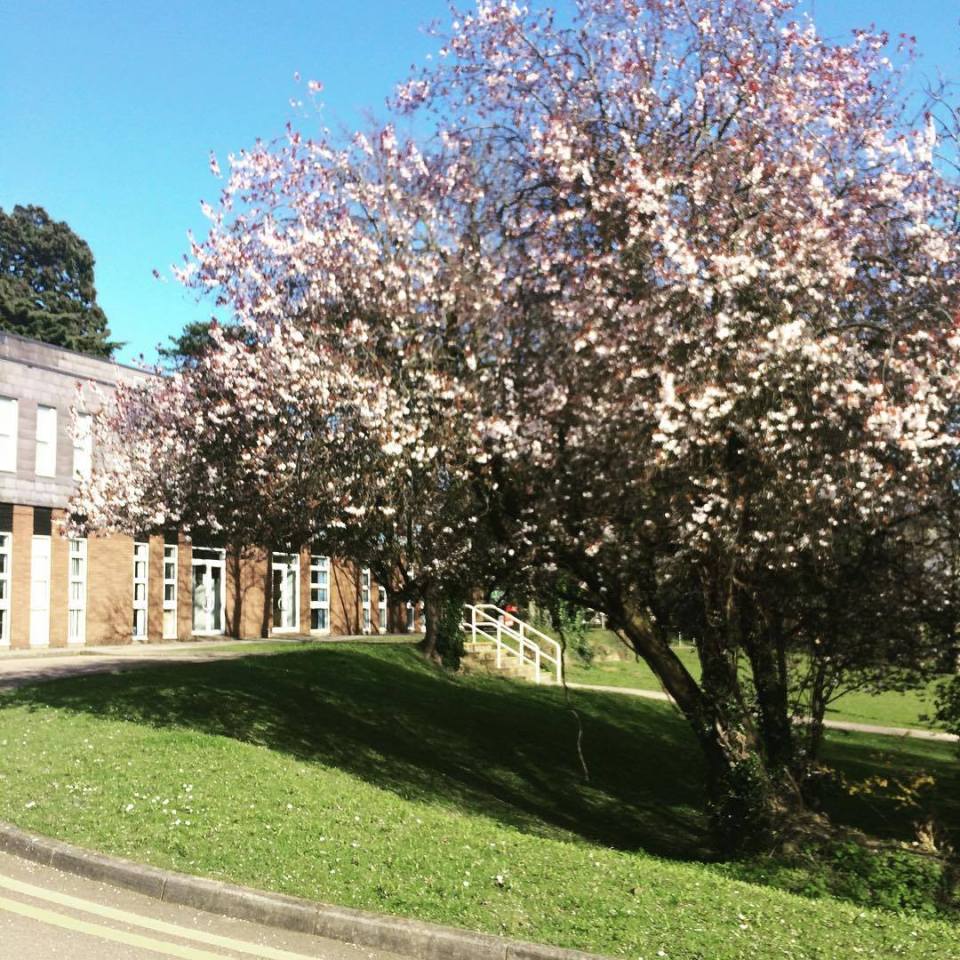
Bethany Davies is an Associate Lecturer teaching modules in the first year.
Park Campus has now been an active part of my life for around 7 years. In 2011 , after an open day and ‘taster session’ and a few months of obsessing over UCAS points and student finance, I stepped foot onto Park Campus, filled with anxiety, excitement and Redbull. It only took me a few weeks to work out, that I really did not know what Criminology was. Years later and the questions keep on coming, I may have a better understanding of theories and have new ideas and opinions, but if there is one thing Criminology at Northampton has ever taught me, is; the more you learn, the more you realise you do not know.
Studying Criminology is not for everyone, it requires a lot of passion for things that some may find tedious, such as reading, research and more reading. For many of us and hopefully those still studying Criminology it is also some of the best bits about Criminology. The rewards of reading something not necessarily to produce an essay but just to feed an interest or challenge your own views is a gift Criminology has given me. From discussions with those at the reunion, it was evident that Criminology never really leaves any of us and it does not matter whether you work in a criminological field or not, there are always moments for us to appreciate our time studying Criminology at Northampton.
Park Campus has meant so many different things to me over the years. Firstly, while I would not yet define myself as a fully grown adult by any means (does anyone?) but Park Campus was the starting point of many learning curves for fundamental skills that I needed to experience before entering the ‘working world’. Park Campus was the place I found a love for learning, a place where I could ask questions without the feeling of dread hanging over me, a place I met my current partner and many lifelong friends. When I graduated in 2014, I was unsure what to do next, luckily, I was not alone in that feeling and for the most part, it was down to losing the routine of working towards a particular goal (usually in the form of an essay or exam date).
Park Campus then took on a new meaning for me, when I joined the Criminology team in 2015. I still have a mixture of feelings when I am on campus, a mixture of familiarity and happiness to walk around as if I were still a student, but also a general sense of pride to be part of such a fantastic team. Luckily, as we move to Waterside I will not only still be surrounded by a great team but also each year brings a new cohort of students with views and ideas that I can witness change, inspire or challenge others around them.
While I’m not much of a Blur fan, but I am a fan of a bit of corny writing (hence the soppy blog post), I leave you with the chorus lyrics to Park Life, which I find enjoyably fitting …
All the people
So Many People
And they all go hand in hand
Hand in hand through their Parklife
Share this:

The changing face of criminology

We can profess that those of us in academia get to own a small nugget of knowledge on their chosen subject. This is how specialism is developed and cultivated. We start our long journey into knowledge first by learning the discipline as a whole, going through the different theories and issues, becoming aware of the critical debates, before we embrace the next step of in depth understanding. Little by little knowledge becomes a road full of junctions, intersections and byroads, constantly fueled by one of the most basic but profound parts of human experience, curiosity. Academia, was originally developed by a person looking up in the wider cosmos and wondering; surely there is more to life than this. When the recorded experience aligned with imagination it produced results; civilization emerged as a collective testament of being. Arguably the first ever question, whenever it was posed and however it was phrased, philosophy was born; any attempt to answer it generated reason and logic.
The process of learning is painstaking because education is a process and as such it requires us to grow as we absorb it. This process is never ending because “The eye never has enough of seeing, nor the ear its fill of hearing” to quote Ecclesiastes and therefore learning is lifelong. In academia, in particular, this thirst for knowledge is unquenchable and because of it we progress our respective disciplines further, constantly expanding the boundaries. Anyone of us who had a discussion in or out of a classroom will testify that even on the same topic, with the same material, a seminar is never the same. The main reason for this is, education is active and as a learner I gain from whatever I can relate to and comprehend. Time and time again, I go back to my own learning as I adapt my pedagogy, because to teach is a dialectic; we impart an idea and we let it flourish to those who shall be taking it further.
There is a reason why I am so reflecting of education on this entry; recently we had a reunion of our alumni and in preparation of the event, I was looking back at the way we taught criminology, what changed and how things have progressed. Colleagues, moved on as expected and the student demographics may have changed but the subject is still taught. It is this ongoing process that fascinated me in that reflection. The curriculum and the ideas behind it. As an institution we offer a number of subject areas, criminology included, that other institutions around the world do, but no other institution will have the unique blend of what we offer. This part is quite astounding that in the reproduction of ideas and across the continuity of disciplinary knowledge, there is always a place for originality.
On the day, I could hear the stories from some of our alumni with a latent sense of pride as they spoke with some confidence about their life plans, work commitments and ideas. These were the same people who some years ago, blushed in a seminar from shyness, were anxious about their exam results and worried about their degree classification. Now with confidence, they embrace their education with the realisation that they have just made the first step into a terra incognita… their journey into learning continues. During the next weeks (and hopefully, months), a number of our alumni (and current students) will put pen to paper of their thoughts, on our blog and talk about their experiences and their criminology. We thank them in advance and are looking forward to read their thoughts.
Share this:


Netflix and Study?

Bethany Davies is an Associate Lecturer teaching modules in the first year.
As each year and each term goes by, it brings to light how much more we are all connected through media and also how we use media to socialise and also learn.
Now, watching television, movies and using music to learn is not a new concept, I understand this, but on a personal level, I have found more individuals using television and more specifically, crime documentaries to fuel their interest in criminology and their understanding of elements of the criminal justice system.
I believe firstly, the idea of enjoying, what is termed ‘binge watching’, crime documentaries, an interesting concept. As previously explored on the blog regarding ‘enjoyment’ and ‘fun’ of criminology, the themes in these documentaries are very dark and in most cases, the gorier it is, the more it seems to be enjoyed by some viewers. Each September that rolls around we have the (sometimes dreaded) ‘ice breaker’ session, where we get to know our students and what has made them want to pursue a criminology degree at this University. Within that you will always have some who choose to voice their love of a certain crime TV show. This does not always end at first introductions either, there is often a continuation of comparisons made between that of a serious historical event and that of Netflix documentary (for example) which can often contain more dramatic music and pictures than it does criminological discussion.
The question I would like to present is, do we nourish the idea of using documentaries and crime dramas to keep the interest of those who wish to pursue criminology as a field of learning, or would doing so be disingenuous to what criminology is and neglect the love for reading and debates in criminology? I do not necessarily feel this is a question we have to worry about tremendously as I feel those who seek to study criminology purely based on their love for crime documentaries will either soon realise that there is so much of criminology that does not fit those ideas and either love it or abandon it at that point.
But in years to come these questions may be more significant than they are currently. Especially if used as a tool in universities to attract more students into a certain discipline. There are such large elements of criminology that I feel have to be explored with literature or within a seminar setting with questions and debates, and it can be easy for institutions to say that these elements will always be fundamental to a criminology degree for years to come. However, if other institutions start to use more and more media and visual aids to demonstrate a theory or issue of crime in the future, or what I suspect more as a marketing campaign to attract students, will we conform? There are some articles (from questionable sources) that some institutions are using Snapchat and social media takeovers to help attract students to certain courses, most of which I have read about have been media based, granted. But let’s hope all this drivelling nonsense is just my brain after a long bank holiday weekend and not a possibly looming prospect of the future of criminology, right?

 Thoughts from the criminology team