
Home » Learning (Page 10)
Category Archives: Learning

That Fat-Tuition: International Students’ Career Prospects

Sallek is a graduate from the MSc Criminology. He is currently undertaking doctoral studies at Stellenbosch University, South Africa.
As an international student studying for my doctorate in South Africa, I have been pushed and compelled to think more and more about life after studies. This push does not often come from the most caring hearts. It would seem some South Africans have been wired to ask every ‘foreign national’ they meet, ‘would you go back to your country when you are done studying?’ The motive for asking this question is not as important for me as the reality packed in the question. This reality is that of the post-PhD blues, a time of unsettling emotions, and transitioning from studying to a career or post-doctoral study. Experience shows that the waiting period stirs emotions of rejection after interviews or for just not being shortlisted and when the value of one’s research and academic competency is questioned. For some the experience is short, others simply return to their former employment, while for many others, it could take a year or two, or even more.
Recently, the thought of graduating and life after the ‘PhD’ has been in my mind, and sometimes, it encroaches into my active study hours. However, this entry does not depict the reality of life after PhD alone. I had this moment after my bachelor degree and even more after my Criminology degree at UoN when I had to consider the thought of returning to my home country. I am certain some international students would relate with this. I have had numerous conversations and have heard the opinions of many on this. However, given that graduation is not only an end, but a new beginning as Helen rightly notes, careful thought out plans, perseverance and patience has helped me navigate these periods.
As the labour market has become more competitive, the need for perseverance, thought-through plans and sometimes, ingenuity has become even more important after studying and receiving beautiful grades. Statistics indicates that a significant percentage of faculty positions are non-permanent appointments and this makes the academic career prospect of young and aspiring researchers unpromising. Outside of the academia, not only is the labour market competitive, but applicants are stifled with years of experience requirements and these issues brings me to the crux of this entry.
Beyond doubt, the cost of studying for international students in most countries is comparably higher than those of ‘home’ students. I do not refer to the economic costs in terms of higher tuition, international registration fee requirements, and other sundry maintenance requirements only. Added to this is the immense social cost such as the loss of personal relationship with family, friends and one’s social network. For some, studying in Europe or the West generally attracts certain prestige and a huge pressure from social-expectation that one will return to begin a lucrative work. But, the reality is far from this. Africa has an existential youthful unemployment crisis, serious insecurity challenges and several countries lack basic infrastructures and social amenities. Hence, after studying, some elect to never return, even if it means keeping that beautiful certificate away, picking a menial job or staying back illegally. After all, besides selling all their possession or borrowing to pay the huge tuition, they have nothing to return to and have to eke out a living. These factors undermines and affects the career prospects of international students.
Share this:


Why Criminology terrifies me

Cards on the table; I love my discipline with a passion, but I also fear it. As with other social sciences, criminology has a rather dark past. As Wetzell (2000) makes clear in his book Inventing the Criminal: A History of German Criminology 1880-1945 the discipline has (perhaps inadvertently) provided the foundations for brutality and violence. In particular, the work of Cesare Lombroso was utilised by the Nazi regime because of his attempts to differentiate between the criminal and the non-criminal. Of course, Lombroso was not responsible (he died in 1909) and could not reasonably be expected to envisage the way in which his work would be used. Nevertheless, when taken in tandem with many of the criticisms thrown at Lombroso’s work over the past century or so, this experience sounds a cautionary note for all those who want to classify along the lines of good/evil. Of course, Criminology is inherently interested in criminals which makes this rather problematic on many grounds. Although, one of the earliest ideas students of Criminology are introduced to, is that crime is a social construction, which varies across time and place, this can often be forgotten in the excitement of empirical research.
My biggest fear as an academic involved in teaching has been graphically shown by events in the USA. The separation of children from their parents by border guards is heart-breaking to observe and read about. Furthermore, it reverberates uncomfortably with the historical narratives from the Nazi Holocaust. Some years ago, I visited Amsterdam’s Verzetsmuseum (The Resistance Museum), much of which has stayed with me. In particular, an observer had written of a child whose wheeled toy had upturned on the cobbled stones, an everyday occurrence for parents of young children. What was different and abhorrent in this case was a Nazi soldier shot that child dead. Of course, this is but one event, in Europe’s bloodbath from 1939-1945, but it, like many other accounts have stayed with me. Throughout my studies I have questioned what kind of person could do these things? Furthermore, this is what keeps me awake at night when it comes to teaching “apprentice” criminologists.
This fear can perhaps best be illustrated by a BBC video released this week. Entitled ‘We’re not bad guys’ this video shows American teenagers undertaking work experience with border control. The participants are articulate and enthusiastic; keen to get involved in the everyday practice of protecting what they see as theirs. It is clear that they see value in the work; not only in terms of monetary and individual success, but with a desire to provide a service to their government and fellow citizens. However, where is the individual thought? Which one of them is asking; “is this the right thing to do”? Furthermore; “is there another way of resolving these issues”? After all, many within the Hitler Youth could say the same.
For this reason alone, social justice, human rights and empathy are essential for any criminologist whether academic or practice based. Without considering these three values, all of us run the risk of doing harm. Criminology must be critical, it should never accept the status quo and should always question everything. We must bear in mind Lee’s insistence that ‘You never really understand a person until you consider things from his point of view. Until you climb inside of his skin and walk around in it’ (1960/2006: 36). Until we place ourselves in the shoes of those separated from their families, the Grenfell survivors , the Windrush generation and everyone else suffering untold distress we cannot even begin to understand Criminology.
Furthermore, criminologists can do no worse than to revist their childhood and Kipling’s Just So Stories:
I keep six honest serving-men
(They taught me all I knew);
Their names are What and Why and When
And How and Where and Who (1912: 83)
Bibliography
Browning, Christopher, (1992), Ordinary Men: Reserve Police Battalion 101 and the Final Solution in Poland, (London: Penguin Books)
Kipling, Rudyard, (1912), Just So Stories, (New York: Doubleday Page and Company)
Lee, Harper, (1960/2006), To Kill a Mockingbird, (London: Arrow Books)
Lombroso, Cesare, (1911a), Crime, Its Causes and Remedies, tr. from the Italian by Henry P. Horton, (Boston: Little Brown and Co.)
-, (1911b), Criminal Man: According to the Classification of Cesare Lombroso, Briefly Summarised by His Daughter Gina Lombroso Ferrero, (London: G. P. Putnam’s Sons)
-, (1876/1878/1884/1889/1896-7/ 2006), Criminal Man, tr. from the Italian by Mary Gibson and Nicole Hahn Rafter, (London: Duke University Press)
Solway, Richard A., (1982), ‘Counting the Degenerates: The Statistics of Race Deterioration in Edwardian England,’ Journal of Contemporary History, 17, 1: 137-64
Wetzell, Richard F., (2000), Inventing the Criminal: A History of German Criminology 1880-1945, (Chapel Hill: The University of North Carolina Press)
Share this:

The Power of Education

“Education is the most powerful weapon which we can use to change the world” (Nelson Mandela)
My name is Stephanie, and I was a Criminology (with Education Studies) student at Northampton from 2012-2015. After graduating, I proceeded with my masters in International Criminal Law and Security at Northampton still. I graduated with my Masters in February 2018. This blog post is a dedication to how one lecture and one seminar, from 2 different modules at different points in my university ignited a fire in me, which is still in me today.
Education opens our minds to new things; we see things differently and can use it as a force to make the world a better place and we can better understand the world around us. It can empower us to make change, teach and impart our knowledge to others.
During the 1st year of my undergrad, in a lecture in Crime and Society focussing on sexual crime, my heart sank. I thought back to when I was 13 years old, I was sexually assaulted at school. I didn’t realise it at that time, until that session on sexual crime.
I reminisced of the horrible occasion, telling the boy who assaulted me to stop and pushed his hands away. Despite any efforts to stop him, he still invaded my personal space and touched me without my consent, leaving deep emotional scars, my body feeling utterly violated, physically sick and was uncomfortable in my own skin (of which hung with me for a number of years after).
In the session on sexual crime, anger and distress bubbled in my stomach, as I tried to ignore the memories that were resurfacing. It was not until my final year in a Crime and Punishment seminar, where a role play of a rape victim reporting to the police demonstrated in class was done that a fire of inspiration was ignited. A fierce passion burned inside me, and I deeply felt that I had to do something.
This was inspiration behind my petition on making it compulsory to teach consent in schools: https://www.change.org/p/rt-hon-justine-greening-mp-to-make-it-compulsory-to-teach-consent-within-secondary-school-pshe-sex-education-classes
That seminar left me feeling a mixture of things; firstly, I was (and still am) appalled by the rape myths that are riddled in our society and justice system, and the lack of compassion shown to rape victims. I felt angry and somewhat distressed, because of my own experience of sexual assault.
It most importantly, started a fire of wanting to make change to better inform people in society of these rape myths, and to understand consent. To all who have read this, please sign, share and encourage others to do the same for this petition.
On another note, you are also more than welcome to follow my personal blog here at: https://wordpress.com/stats/day/flowervioletblog.wordpress.com
Share this:

My Calling in Life

I used to think waking up for lectures was the hardest thing in life. Little did I know that the 9am until 5pm isn’t a joke!
I graduated nearly 3 years ago now. Since then I have been trying to find my ‘calling’ in life. The world showed me it is not always easy finding this calling. If you want something you have to go and get it. Having a degree does not mean you will be successful. I had to start from the bottom and through trial and error; I can say I am starting to get there. Initially I was applying for any and every job possible. My first job was for an IT and Business training company and I was made redundant. That was difficult. Here I was thinking redundancy is for old people. Life had just started teaching its lessons.
After that I realised my passion was Criminology and I was determined in finding a job within this sector. So I started working for my County Court as clerk. I realised that I was definitely not cut out for the public sector. The frustration from the public because the court system is so slow (which I completely understood I would have been annoyed too). Don’t even get me started on the fact that I had to use dial up internet and buy my own teabags and milk! From that moment on I knew I had to get back into the private sector but still have a job in Criminology
I applied for a job as a Financial Crime Analyst for a bank and I was given the job without an interview! I knew I had found my ‘calling’. It is more Compliance based. I have had to start from the bottom. My senior managers appreciate the fact that I have a Criminology degree. But my colleagues make remarks like “Oh, you went to uni and we are still at the same level”. It is a slap in the face. But I am grateful for my degree. It has made me humble and look at people in a different light. When my colleagues are laughing at the crimes people commit such as an 80 year old man being involved in the drug trade or an 18 year old running a brothel. As a Criminologist I can ask questions such as “I wonder if this person is being coerced into this” or “I wonder if they have an drug problem or they did not grow up in a happy home”. I can empathise with these people and see beyond the information that is presented in front of me. I have been told I am too soft. But that is the life of a Criminologist and I would not change it for the world!
Share this:


Netflix and Study?

Bethany Davies is an Associate Lecturer teaching modules in the first year.
As each year and each term goes by, it brings to light how much more we are all connected through media and also how we use media to socialise and also learn.
Now, watching television, movies and using music to learn is not a new concept, I understand this, but on a personal level, I have found more individuals using television and more specifically, crime documentaries to fuel their interest in criminology and their understanding of elements of the criminal justice system.
I believe firstly, the idea of enjoying, what is termed ‘binge watching’, crime documentaries, an interesting concept. As previously explored on the blog regarding ‘enjoyment’ and ‘fun’ of criminology, the themes in these documentaries are very dark and in most cases, the gorier it is, the more it seems to be enjoyed by some viewers. Each September that rolls around we have the (sometimes dreaded) ‘ice breaker’ session, where we get to know our students and what has made them want to pursue a criminology degree at this University. Within that you will always have some who choose to voice their love of a certain crime TV show. This does not always end at first introductions either, there is often a continuation of comparisons made between that of a serious historical event and that of Netflix documentary (for example) which can often contain more dramatic music and pictures than it does criminological discussion.
The question I would like to present is, do we nourish the idea of using documentaries and crime dramas to keep the interest of those who wish to pursue criminology as a field of learning, or would doing so be disingenuous to what criminology is and neglect the love for reading and debates in criminology? I do not necessarily feel this is a question we have to worry about tremendously as I feel those who seek to study criminology purely based on their love for crime documentaries will either soon realise that there is so much of criminology that does not fit those ideas and either love it or abandon it at that point.
But in years to come these questions may be more significant than they are currently. Especially if used as a tool in universities to attract more students into a certain discipline. There are such large elements of criminology that I feel have to be explored with literature or within a seminar setting with questions and debates, and it can be easy for institutions to say that these elements will always be fundamental to a criminology degree for years to come. However, if other institutions start to use more and more media and visual aids to demonstrate a theory or issue of crime in the future, or what I suspect more as a marketing campaign to attract students, will we conform? There are some articles (from questionable sources) that some institutions are using Snapchat and social media takeovers to help attract students to certain courses, most of which I have read about have been media based, granted. But let’s hope all this drivelling nonsense is just my brain after a long bank holiday weekend and not a possibly looming prospect of the future of criminology, right?
Share this:


The number’s up for quantitative research! Or is it?

As my colleagues will no doubt confirm, I’m not a fan of numbers. Although, I always enjoyed maths, particularly algebra, my distaste for numbers comes when they are applied to people. Whilst I appreciate there are a lot of us, somewhere around 7.6 billion on the planet, the reduction of a human to a number doesn’t sit comfortably. This aversion to numbering people partly stems from academic study of the Holocaust, which was facilitated by the Nazi’s determination to reduce individual human lives first to digits and then to ashes. It also comes from my own lived experience, particularly in education, of knowing that individuals can and do change.
Criminologists such as Stanley Cohen (1988), Nils Christie (1997) and Jock Young (2011) have long recognised the fundamental flaws inherent in much quantitative criminology. They recognise that numbers are often used to obfuscate and confuse, taking readers down a route whereby they are presented as having their own intrinsic meaning, entirely distinct from the people whose data is being manipulated. Furthermore, those numbers are deemed scientific and authoritative, having far more sway than qualitative research predicated on finding meaning in individual lives.
Despite my antipathy to numbers, I have spent the last few months studying attempts to quantify a particular prison population; ex-servicemen. Much of this research is flawed in the same way as recognised by the eminent criminologists above. Instead, of answering what appears on the surface to be a straightforward question, many of these reports struggle to even define what they are trying to measure, let alone make sense of the measurements.
All this has made me think about the way we measure “engagement”. Last week, as you may have noticed from Manos’ entry, was the blog’s first birthday. Underneath, the professional front page lies, what WordPress rather hopefully describes, as ‘Stats’. From here, it is possible to identify the number of visitors per day, month and year, as well as the number of views. There is also a detailed map of the world, displaying all the countries from which these visitors are drawn. In essence, I have enough data to tell you that in our first year we have had 3,748 visitors and 5,124 views from 65 countries.
All of this sounds very encouraging and the team can make statements about how views are up on the period before, or make claims that we have attracted visitors from countries for the first time. If, so inclined, we could even have a leader board of the most popular contributor or entry; thankfully that doesn’t seem appeal to the team. If I wanted to write a report, I could include some lovely, bar or pie charts, even some infographics; certainly if you look below you will see a rather splendid Wordle which displays 233 different categories, used a total of 781 times.
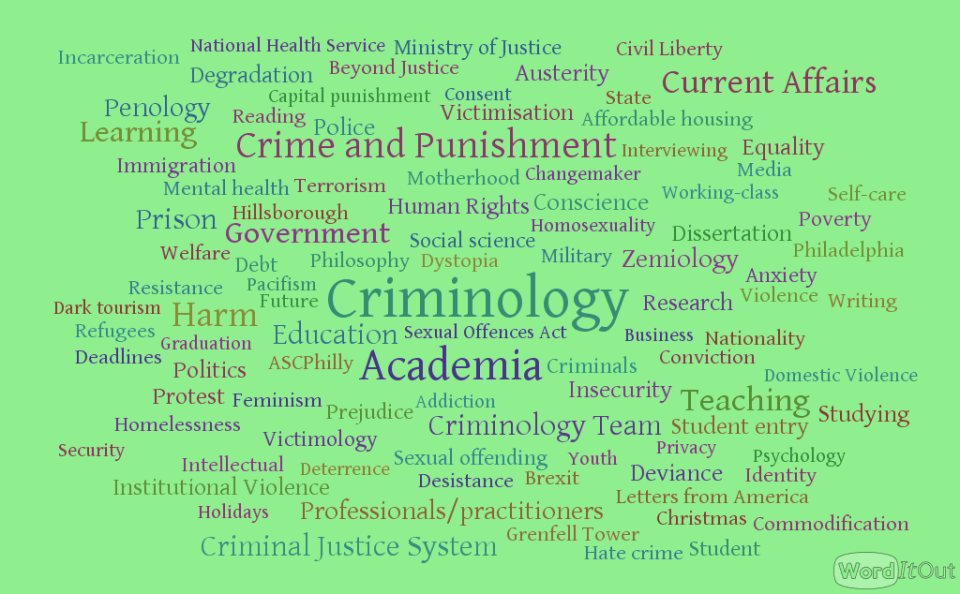
However, what exactly do we know? I would argue, not a lot. We have some evidence that some people have visited the blog at least once, but as to how many are regular readers; we have no clue. Do they read the entries and do they enjoy them? Again, no idea. Maybe they’re just attracted by particular pictures (the evidence would suggest that the Yellow Submarine, Kermit, the Pink Panther and tattoos do exceedingly well).[i] There is some evidence that many of the visitors come via Facebook and Twitter and these offer their own illusion of measurable activity. Certainly, Twitter offers its own ‘Analytics’ which advises me that my tweet containing Manos’ latest blog entry earned an impressive 907 ‘Impressions’, and 45 ‘Engagements’ which equals an ‘Engagement Rate’ of 5%! What any of that means; your guess is good as mine! Does scrolling mindlessly on your newsfeed whilst waiting for the kettle to boil count as an impression or an engagement? Should I be impressed or embarrassed by a 5% engagement rate – who knows? If I add it to my imaginary report, at least I’ll be able to add some more colourful charts to accompany my authoritative narrative. Of course, it will still be largely meaningless but it should look splendid!
More concerning are the repercussions to any such report, which would seem to imply that I had total control over improving such metrics and if they didn’t improve, that would ultimately be down to my inertia, inability or incompetence. Of course, the blog is a voluntary labour of love, created and curated by a group of like-minded individuals… However, if we consider this in relation to criminology and criminal justice, things take a more sinister turn….the numbers may indicate something, but at the end of the day those numbers represent people with their own ideas, concerns and behaviours. Discussions around payment by results seem to miss this vital point, but of course it means that failure to achieve these results can be blamed on individuals and companies. Of course, none of the above denies quantitative data a place within Criminology, but it has to be meaningful and not just a series of statements and charts.
Now, I’ve got my anti-quantitative rant of my chest, I’ll leave the final words to Nils Christie (1997) and his command to make criminology exciting and passionate as befits its subject matter. In his words, avoid ‘[l]ong reports of the obvious. Repetitions. Elaborate calculations leading to what we all know’ (Christie, 1997: 13).
Instead we should always consider:
[h]ow can it be like this? How come that so much criminology is that dull, tedious and intensely empty as to new insights? It ought to be just the opposite, in a science based on material from the core areas of drama. Our theories are based on situations of conflict and heroism, danger and catastrophe, abuses and sacrifices – just those areas where most of our literary heroes find their material. And still so trivial! (Christie, 1997: 13).
Rather than mindlessly churning out quantitative data that looks and is perceived as sophisticated, as criminologists we need to be far more critical. If you don’t believe Christie, what about taking heed of Green Day’s command to ‘question everything? Or shut up and be a victim of authority’ (Armstrong et al., 2000).
References:
Armstrong, Billie Joe, Dirnt, Mike and Cool, Tre, (2000), Warning [LP]. Recorded by Green Day in Warning, Reprise: Studio 880
Christie, Nils, (1997), ‘Four Blocks Against Insight: Notes on the Oversocialization of Criminologists,’ Theoretical Criminology, 1, 1: 13-23
Cohen, Stanley, (1988), Against Criminology, (Oxford: Transaction Books)
Young, Jock, (2011), The Criminological Imagination, (London: Polity Press)
A revised and reworked submission of this entry was published on the British Society of Criminology blog on 1 June 2018.
[i] This point will be “tested under experimental conditions” by the gratuitous inclusion of a picture showing teddy bears “reading”.
Share this:


Out early on good behaviour
Dr Stephen O’Brien is the Dean for the Faculty of Health and Society at the University of Northampton
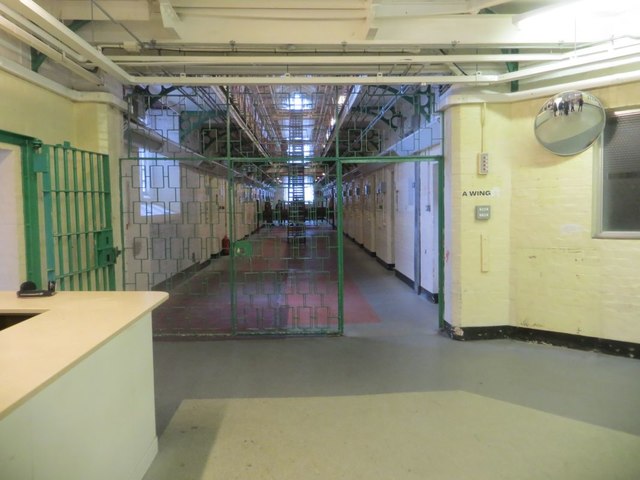
The other week I had the opportunity to visit one of our local prisons with academic colleagues from our Criminology team within the Faculty of Health and Society at the University of Northampton. The prison in question is a category C closed facility and it was my very first visit to such an institution. The context for my visit was to follow up and review the work completed by students, prisoners and staff in the joint delivery of an academic module which forms part of our undergraduate Criminology course. The module entitled “Beyond Justice” explores key philosophical, social and political issues associated with the concept of justice and the journeys that individuals travel within the criminal justice system in the UK. This innovative approach to collaborative education involving the delivery of the module to students of the university and prisoners was long in its gestation. The module itself had been delivered over several weeks in the Autumn term of 2017. What was very apparent from the start of this planned visit was how successful the venture had been; ground-breaking in many respects with clear impact for all involved. Indeed, it has been way more successful than anyone could have imagined when the staff embarked on the planning process. The project is an excellent example of the University’s Changemaker agenda with its emphasis upon mobilising University assets to address real life social challenges.
My particular visit was more than a simple review and celebration of good Changemaker work well done. It was to advance the working relationship with the Prison in the signing of a memorandum of understanding which outlined further work that would be developed on the back of this successful project. This will include; future classes for university/prison students, academic advancement of prison staff, the use of prison staff expertise in the university, research and consultancy. My visit was therefore a fruitful one. In the run up to the visit I had to endure all the usual jokes one would expect. Would they let me in? More importantly would they let me out? Clearly there was an absolute need to be on my best behaviour, keep my nose clean and certainly mind my Ps and Qs especially if I was to be “released”. Despite this ribbing I approached the visit with anticipation and an open mind. To be honest I was unsure what to expect. My only previous conceptual experience of this aspect of the criminal justice system was many years ago when I was working as a mental health nurse in a traditional NHS psychiatric hospital. This was in the early 1980s with its throwback to a period of mental health care based on primarily protecting the public from the mad in society. Whilst there had been some shifts in thinking there was still a strong element of the “custodial” in the treatment and care regimen adopted. Public safety was paramount and many patients had been in the hospital for tens of years with an ensuing sense of incarceration and institutionalisation. These concepts are well described in the seminal work of Barton (1976) who described the consequences of long term incarceration as a form of neurosis; a psychiatric disorder in which a person confined for a long period in a hospital, mental hospital, or prison assumes a dependent role, passively accepts the paternalist approach of those in charge, and develops symptoms and signs associated with restricted horizons, such as increasing passivity and lack of motivation. To be fair mental health services had been transitioning slowly since the 1960s with a move from the custodial to the therapeutic. The associated strategy of rehabilitation and the decant of patients from what was an old asylum to a more community based services were well underway. In many respects the speed of this change was proving problematic with community support struggling to catch up and cope with the numbers moving out of the institutions.
My only other personal experience was when I spent a night in the cells of my local police station following an “incident” in the town centre. This was a case of being in the wrong place at the wrong time. (I know everyone says that, but in this case it is a genuine explanation). However, this did give me a sense of what being locked up felt like albeit for a few hours one night. When being shown one of the single occupancy cells at the prison those feelings came flooding back. However, the thought of being there for several months or years would have considerably more impact. The accommodation was in fact worse than I had imagined. I reflected on this afterwards in light of what can sometimes be the prevailing narrative that prison is in some way a cushy number. The roof over your head, access to a TV and a warm bed along with three square meals a day is often dressed up as a comfortable daily life. The reality of incarceration is far from this view. A few days later I watched Trevor MacDonald report from Indiana State Prison in the USA as part of ITV’s crime and punishment season. In comparison to that you could argue the UK version is comfortable but I have no doubt either experience would be, for me, an extreme challenge.
There were further echoes of my mental health experiences as I was shown the rehabilitation facilities with opportunities for prisoners to experience real world work as part of their transition back into society. I was impressed with the community engagement and the foresight of some big high street companies to get involved in retraining and education. This aspect of the visit was much better than I imagined and there is evidence that this is working. It is a strict rehabilitation regime where any poor behaviour or departure from the planned activity results in failure and loss of the opportunity. This did make me reflect on our own project and its contribution to prisoner rehabilitation. In education, success and failure are norms and the process engenders much more tolerance of what we see as mistakes along the way. The great thing about this project is the achievement of all in terms of both the learning process and outcome. Those outcomes will be celebrated later this month when we return to the prison for a special celebration event. That will be the moment not only to celebrate success but to look to the future and the further work the University and the Prison can do together. On that occasion as on this I do expect to be released early for good behaviour.
Reference
Barton, R., (1976) Institutional Neurosis: 3rd edition, Butterworth-Heinemann, London.
Share this:


Justice on Trial
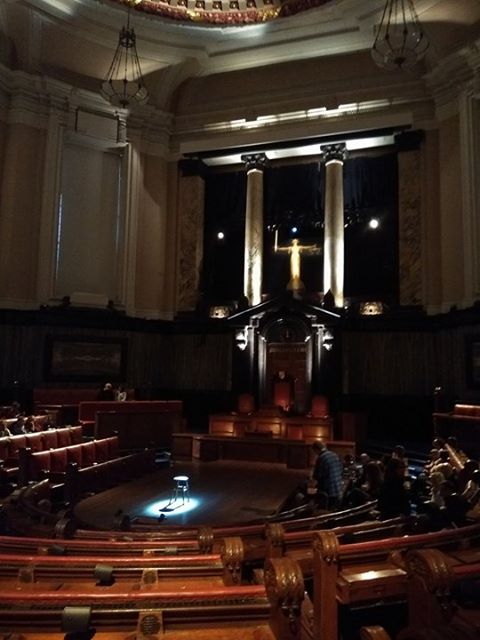
Last weekend I was fortunate enough to be treated to theatre tickets for Agatha Christie’s Witness for the Prosecution. The setting – London’s County Hall – was exquisite, the play sublime and the actors fabulous. An afternoon of sheer escapism, even for a die hard Christie fan like myself. Having read the short story/play many times is no replacement for seeing this on the stage. The theatre offers the opportunity to see the action from all perspectives; you can put yourself in the shoes of the defendant, the court actors and of course, the witnesses. Such a perspective vividly demonstrates the immense power of the State, not only through physical violence (although this is also evident) but through verbal dexterity. To see the defendant – Leonard Vole – on trial; so small and defenceless against the majesty of the courtroom, is thought provoking. Furthermore, this environment is staffed by legal professionals, who unlike him, understand the world in which they operate. The cut and thrust of legalistic argument performed in the play (and in modern day courts daily) conceals the sheer ferocity of authority’s attack on the individual. Remember at the time the play was written, the death penalty was still in force, and Leonard Vole is on trial for the capital crime of murder. In essence, he is openly fighting for his very life, but subjected to the machinations and mediation of professionals who openly profess to be seeking justice. When he tries to speak, to argue, to cajole, he is silenced. There is no place for the defendant’s perspective unless it is expressed via the mandated professional who speaks on his (or her) behalf.
In the twenty-first century (and indeed, for the latter part of the twentieth century), capital punishment in the UK has not been a sentencing option. Whilst defendants may not be faced with a possible date with the hangman, the finality of sentencing and punishment is no laughing matter. Whilst there is no doubt that dramatic denouements have their place in the theatre, in the serious business of the criminal courts such antics seem out of place. If we look at the criminal court as a theatrical scene, we start to observe all manner of incongruity (cf. Carlen, 1976). For starters; the language used and the costumes worn. For anyone that has ever grappled to understand the works of Shakespeare or the Brontë’s, such reading requires patience and perseverance to understand the beauty of such writing. In 2018, we would not request that our surgeons operate on us without the benefit of anaesthesia, neither would we want to be treated with procedures such as bloodletting or trepanning. Similarly, we don’t expect soldiers to carry muskets or form into schiltrons just because that’s how it used to be. Yet we accept and arguably, expect our courts to run as if they were stuck in time. What chance does the individual defendant have in this archaic, theatrical setting? After all, they are the star of the show, yet they have neither costume, nor the opportunity to learn their lines. It is hard to argue, that such practices are conducive to the pursuit of justice.
On the surface, going to the theatre appears to offer a pleasurable break from academia, yet the reality is it offers the opportunity to consider criminology from a novel perspective. Reading (and you all know how keen I am on reading!!) is only part of Criminology; talking, listening, thinking and exploring away from the classroom are equally important. My advice; get out, explore – the arts; theatre, cinema, literature, museums – and add this experiential knowledge to your academic studies. See things from a different perspective and unleash your Criminological Imagination (Young, 2011).
References:
Carlen, Pat, (1976), ‘The Staging of Magistrates’ Justice,’ The British Journal of Criminology, 16, 1: 48–55
Christie, Agatha, (2018), Witness for the Prosecution, Directed by Lucy Bailey. London County Hall, [11 February 2018]
Young, Jock, (2011), The Criminological Imagination, (London: Polity)
Share this:


Why you should trust your work

Bethany Davies is an Associate Lecturer teaching modules in the first year.
It is only human to doubt yourself in certain situations; however, academia can be a problematic situation to doubt your ideas and abilities. It can lead you to change your standpoint unnecessarily and also create so much stress that you give up on an idea or project entirely.
I deal with this less so now since my university experience but still regularly and I felt it may provide comfort to those currently studying or recently graduated, these examples are personal and are only two of many. In particular I want to address doubting your own ideas and work and how important it is to keep challenging those thoughts.
Upon starting university, my first ‘big essay’ (I describe this with humour as it was 3000 words, but as a first year that can seem like quite the ask) was a biographical assignment. This assignment required an interview with a family member or anyone who would be willing to talk to you and to apply that to research by highlighting some key events/accomplishments. I feared writing that essay as I had many friends with parents who were lawyers or grandparents who had been in the war or immigrants. These stories surely would be so interesting and my essay on my dad who worked in a warehouse would be seen as boring, perhaps. This was my first experience with fear and doubt over my work, but then I did the interview, wrote the essay, took a deep breath and submitted. Turns out it was one of my favourite pieces of work and the programme leaders liked it. It was an honest essay and while not glamorous, it was personal to me and that made the approval and grade that more rewarding.
In my second year, I conducted my placement at a probation office and based my research around a case study of one male who was doing an English class and aimed to discuss the success of that class. After around 8 weeks of observations and an interview with the male. I went to my seminar leader at the time (@paulaabowles) in a complete panic and almost teary-eyed. I told her how I felt my research was not good enough because the male was lying to me, in fact he was almost lying to the whole probation experience as he was more or less just turning up to tick the boxes he needed but then conducting his behaviour differently to me in certain situations and the interview. I felt I had failed as a researcher and also as a teacher almost, as I was assisting in the teaching of the class he was in. I was then told some of the great truths of research and also why I had not failed and actually I had done very well. My research was good research and I just had not realised it. The research didn’t find what I wanted it to, in fact it found the opposite, which was still good research. My research which I had titled ‘Playing the system’ had actually proved to not be a failure and my doubts were unnecessary but not anything to be ashamed of. As in my quest at the time to find answers of why was I such a ‘bad researcher’ and interviewer, I found a plethora of other people online and among peers with the same doubts over some great work they had produced.
Whether it be doubts or fear of speaking up in fear of failure or sounding stupid, I hope others may be able to see not only are they not alone, but actually you are normal because of these doubts. We should just maybe work on believing in our work more and not waiting to get the approval of others for those ideas. With this I feel it is fitting to use one of my favourite quotes from Bertrand Russell:
“The whole problem with the world is that fools and fanatics are always so certain of themselves, and wiser people so full of doubts.”
Share this:


Thank f**k it’s Christmas!

Jessica is an Associate Lecturer teaching modules in the first year.
We have arrived at that time of the year once again: CHRISTMAS! ‘Tis’ the season to celebrate, party, give and receive gifts, catch up with friends and family, and most importantly… catch up on some much needed sleep. We have arrived at the end of the first term of the academic year, and all I can think is: Thank f**k it’s Christmas. The first term always feels the longest: whether you are first years beginning your academic journey, second and third years re-gathering yourselves after the long summer, or staff getting back into the swing of things and trying to locate and remember all the new and old names. But now is the time to kick back, relax and enjoy the festive season: ready to return to academic life fresh faced and eager come the New Year, ready to start it all over again. Well not quite…
According to Haar et al., (2014) work-life balance is something which is essential to all individuals, in order to ensure job satisfaction, life satisfaction and positive mental health. If Christmas is as needed as it feels; perhaps we are not managing a good work-life balance, and perhaps this is something we can use the Christmas break to re-consider. Work-life balance is subjective and relies on individual acceptance of the ‘balance’ between the commitments in our lives (Kossek et al., 2014). Therefore, over the Christmas break, perhaps it would be appropriate to re-address our time management skills, in order to ensure that Easter Break doesn’t feel as desperately needed as Christmas currently does.
Alongside an attempt to re-organise our time and work load, it is important that we remember to put ourselves first; whether this be through furthering our knowledge and understanding with our academic endeavours, or whether it is spending an extra 15 minutes a day with a novel in order to unwind. Work-life balance is something we are (potentially) all guilty of undermining, at the risk of our mental health (Carlson, et al., 2009). I am not suggesting that we all ignore our academic responsibilities and say ‘yes’ to every movie night, or night out that is offered our way. What I am suggesting, and the Christmas break seems like a good place to start, is that we put the effort in with ourselves to unwind, in order to ensure that we do not burn out.
Marking, reading, writing and planning all need to be done over the Christmas break; therefore it is illogical to suggest taking our feet off the pedals and leaving academia aside in order to have the well needed break we are craving. What I am suggesting, is that we put ourselves in neutral and coast through Christmas, without burning out: engaging with our assignments, marking and reading, therefore still moving forward. BUT, and it is a big but, we remember to breathe, have a lie in, go out and socialise with friends and family, and celebrate completing the first term of this academic year. And with this in mind, try to consider ways, come the new term, where you can maintain a satisfying work-life balance, so that when Easter comes, it doesn’t feel so desperately needed.
However, it is highly likely that this will still be the case: welcome to the joys and stresses of academia.
Merry Christmas everyone!
References:
Carlson, D.S., Grzywacz, J.G. and Zivnuska, S. (2009) ‘Is work family balance more than conflict and enrichment?’ Human Relations. 62(10): 1459-1486.
Haar, J.M., Russo, M., Sune, A. and Ollier- Malaterre, A. (2014) ‘Outcomes of work-life balance on job satisfaction, life satisfaction and mental health: A study across seven cultures’. Journal of Vocational Behaviour. 85: 361-373.
Kossek, E.E., Valcour, M. and Kirio, P. (2014) ‘The sustainable workforce: Organizational strategies for promoting work-life balance and well-being’. In: Cooper, C. and Chen, P. (Eds) Work and Well-being. Oxford: Wiley-Blackwell. Pp:295-318.
Bibliography:
Ashurst, A. (2014) ‘How to… Manage time and resources effectively’. Nursing and Residential Care. 16(5): 296-297.
Kuhnel, J., Zacher, H., De Bloom, J and Bledow, R. (2017) ‘Take a Break! Benefits of sleep and short breaks for daily work engagement’. European Journal of Work and Organization Psychology. 26(4): 481-491.
Logan, J., Hughes, T. and Logan, B. (2016) ‘Overworked? An Observation of the relationship Between Student Employment and Academic Performance’. Journal of College Student Retention: Research, Theory and Practice. 18(3): 250-262.
Lyness, K.S. and Judiesch, M.K. (2014) ‘Gender egalitarianism and work-life balance for managers: Multisource perspectives in 36 countries’. Applied Psychology. 63(1): 96-129.
Mona, S. (2017) ‘Work-life Balance: Slow down, move and think’. Journal of Psychological Nursing and Mental Health Services. 55(3):13-14.

 Thoughts from the criminology team