
Home » Learning (Page 11)
Category Archives: Learning

Out early on good behaviour
Dr Stephen O’Brien is the Dean for the Faculty of Health and Society at the University of Northampton
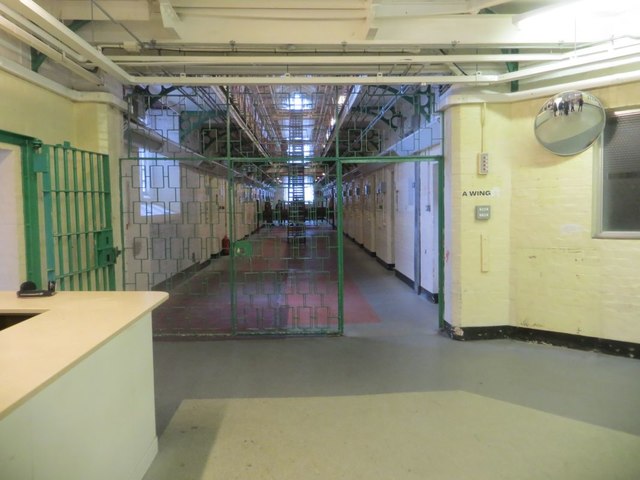
The other week I had the opportunity to visit one of our local prisons with academic colleagues from our Criminology team within the Faculty of Health and Society at the University of Northampton. The prison in question is a category C closed facility and it was my very first visit to such an institution. The context for my visit was to follow up and review the work completed by students, prisoners and staff in the joint delivery of an academic module which forms part of our undergraduate Criminology course. The module entitled “Beyond Justice” explores key philosophical, social and political issues associated with the concept of justice and the journeys that individuals travel within the criminal justice system in the UK. This innovative approach to collaborative education involving the delivery of the module to students of the university and prisoners was long in its gestation. The module itself had been delivered over several weeks in the Autumn term of 2017. What was very apparent from the start of this planned visit was how successful the venture had been; ground-breaking in many respects with clear impact for all involved. Indeed, it has been way more successful than anyone could have imagined when the staff embarked on the planning process. The project is an excellent example of the University’s Changemaker agenda with its emphasis upon mobilising University assets to address real life social challenges.
My particular visit was more than a simple review and celebration of good Changemaker work well done. It was to advance the working relationship with the Prison in the signing of a memorandum of understanding which outlined further work that would be developed on the back of this successful project. This will include; future classes for university/prison students, academic advancement of prison staff, the use of prison staff expertise in the university, research and consultancy. My visit was therefore a fruitful one. In the run up to the visit I had to endure all the usual jokes one would expect. Would they let me in? More importantly would they let me out? Clearly there was an absolute need to be on my best behaviour, keep my nose clean and certainly mind my Ps and Qs especially if I was to be “released”. Despite this ribbing I approached the visit with anticipation and an open mind. To be honest I was unsure what to expect. My only previous conceptual experience of this aspect of the criminal justice system was many years ago when I was working as a mental health nurse in a traditional NHS psychiatric hospital. This was in the early 1980s with its throwback to a period of mental health care based on primarily protecting the public from the mad in society. Whilst there had been some shifts in thinking there was still a strong element of the “custodial” in the treatment and care regimen adopted. Public safety was paramount and many patients had been in the hospital for tens of years with an ensuing sense of incarceration and institutionalisation. These concepts are well described in the seminal work of Barton (1976) who described the consequences of long term incarceration as a form of neurosis; a psychiatric disorder in which a person confined for a long period in a hospital, mental hospital, or prison assumes a dependent role, passively accepts the paternalist approach of those in charge, and develops symptoms and signs associated with restricted horizons, such as increasing passivity and lack of motivation. To be fair mental health services had been transitioning slowly since the 1960s with a move from the custodial to the therapeutic. The associated strategy of rehabilitation and the decant of patients from what was an old asylum to a more community based services were well underway. In many respects the speed of this change was proving problematic with community support struggling to catch up and cope with the numbers moving out of the institutions.
My only other personal experience was when I spent a night in the cells of my local police station following an “incident” in the town centre. This was a case of being in the wrong place at the wrong time. (I know everyone says that, but in this case it is a genuine explanation). However, this did give me a sense of what being locked up felt like albeit for a few hours one night. When being shown one of the single occupancy cells at the prison those feelings came flooding back. However, the thought of being there for several months or years would have considerably more impact. The accommodation was in fact worse than I had imagined. I reflected on this afterwards in light of what can sometimes be the prevailing narrative that prison is in some way a cushy number. The roof over your head, access to a TV and a warm bed along with three square meals a day is often dressed up as a comfortable daily life. The reality of incarceration is far from this view. A few days later I watched Trevor MacDonald report from Indiana State Prison in the USA as part of ITV’s crime and punishment season. In comparison to that you could argue the UK version is comfortable but I have no doubt either experience would be, for me, an extreme challenge.
There were further echoes of my mental health experiences as I was shown the rehabilitation facilities with opportunities for prisoners to experience real world work as part of their transition back into society. I was impressed with the community engagement and the foresight of some big high street companies to get involved in retraining and education. This aspect of the visit was much better than I imagined and there is evidence that this is working. It is a strict rehabilitation regime where any poor behaviour or departure from the planned activity results in failure and loss of the opportunity. This did make me reflect on our own project and its contribution to prisoner rehabilitation. In education, success and failure are norms and the process engenders much more tolerance of what we see as mistakes along the way. The great thing about this project is the achievement of all in terms of both the learning process and outcome. Those outcomes will be celebrated later this month when we return to the prison for a special celebration event. That will be the moment not only to celebrate success but to look to the future and the further work the University and the Prison can do together. On that occasion as on this I do expect to be released early for good behaviour.
Reference
Barton, R., (1976) Institutional Neurosis: 3rd edition, Butterworth-Heinemann, London.
Share this:


Justice on Trial
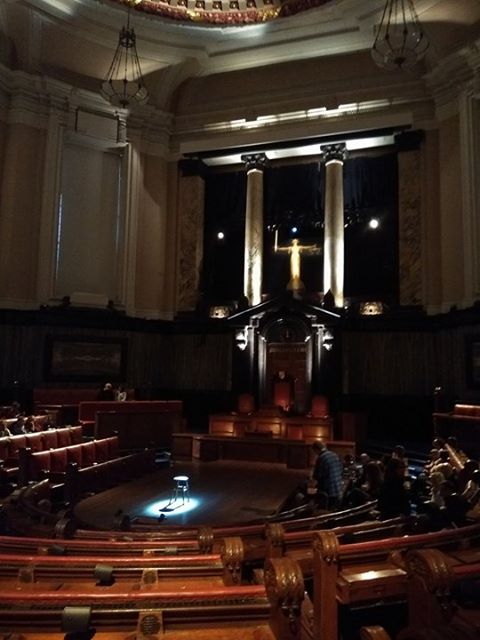
Last weekend I was fortunate enough to be treated to theatre tickets for Agatha Christie’s Witness for the Prosecution. The setting – London’s County Hall – was exquisite, the play sublime and the actors fabulous. An afternoon of sheer escapism, even for a die hard Christie fan like myself. Having read the short story/play many times is no replacement for seeing this on the stage. The theatre offers the opportunity to see the action from all perspectives; you can put yourself in the shoes of the defendant, the court actors and of course, the witnesses. Such a perspective vividly demonstrates the immense power of the State, not only through physical violence (although this is also evident) but through verbal dexterity. To see the defendant – Leonard Vole – on trial; so small and defenceless against the majesty of the courtroom, is thought provoking. Furthermore, this environment is staffed by legal professionals, who unlike him, understand the world in which they operate. The cut and thrust of legalistic argument performed in the play (and in modern day courts daily) conceals the sheer ferocity of authority’s attack on the individual. Remember at the time the play was written, the death penalty was still in force, and Leonard Vole is on trial for the capital crime of murder. In essence, he is openly fighting for his very life, but subjected to the machinations and mediation of professionals who openly profess to be seeking justice. When he tries to speak, to argue, to cajole, he is silenced. There is no place for the defendant’s perspective unless it is expressed via the mandated professional who speaks on his (or her) behalf.
In the twenty-first century (and indeed, for the latter part of the twentieth century), capital punishment in the UK has not been a sentencing option. Whilst defendants may not be faced with a possible date with the hangman, the finality of sentencing and punishment is no laughing matter. Whilst there is no doubt that dramatic denouements have their place in the theatre, in the serious business of the criminal courts such antics seem out of place. If we look at the criminal court as a theatrical scene, we start to observe all manner of incongruity (cf. Carlen, 1976). For starters; the language used and the costumes worn. For anyone that has ever grappled to understand the works of Shakespeare or the Brontë’s, such reading requires patience and perseverance to understand the beauty of such writing. In 2018, we would not request that our surgeons operate on us without the benefit of anaesthesia, neither would we want to be treated with procedures such as bloodletting or trepanning. Similarly, we don’t expect soldiers to carry muskets or form into schiltrons just because that’s how it used to be. Yet we accept and arguably, expect our courts to run as if they were stuck in time. What chance does the individual defendant have in this archaic, theatrical setting? After all, they are the star of the show, yet they have neither costume, nor the opportunity to learn their lines. It is hard to argue, that such practices are conducive to the pursuit of justice.
On the surface, going to the theatre appears to offer a pleasurable break from academia, yet the reality is it offers the opportunity to consider criminology from a novel perspective. Reading (and you all know how keen I am on reading!!) is only part of Criminology; talking, listening, thinking and exploring away from the classroom are equally important. My advice; get out, explore – the arts; theatre, cinema, literature, museums – and add this experiential knowledge to your academic studies. See things from a different perspective and unleash your Criminological Imagination (Young, 2011).
References:
Carlen, Pat, (1976), ‘The Staging of Magistrates’ Justice,’ The British Journal of Criminology, 16, 1: 48–55
Christie, Agatha, (2018), Witness for the Prosecution, Directed by Lucy Bailey. London County Hall, [11 February 2018]
Young, Jock, (2011), The Criminological Imagination, (London: Polity)
Share this:


Why you should trust your work

Bethany Davies is an Associate Lecturer teaching modules in the first year.
It is only human to doubt yourself in certain situations; however, academia can be a problematic situation to doubt your ideas and abilities. It can lead you to change your standpoint unnecessarily and also create so much stress that you give up on an idea or project entirely.
I deal with this less so now since my university experience but still regularly and I felt it may provide comfort to those currently studying or recently graduated, these examples are personal and are only two of many. In particular I want to address doubting your own ideas and work and how important it is to keep challenging those thoughts.
Upon starting university, my first ‘big essay’ (I describe this with humour as it was 3000 words, but as a first year that can seem like quite the ask) was a biographical assignment. This assignment required an interview with a family member or anyone who would be willing to talk to you and to apply that to research by highlighting some key events/accomplishments. I feared writing that essay as I had many friends with parents who were lawyers or grandparents who had been in the war or immigrants. These stories surely would be so interesting and my essay on my dad who worked in a warehouse would be seen as boring, perhaps. This was my first experience with fear and doubt over my work, but then I did the interview, wrote the essay, took a deep breath and submitted. Turns out it was one of my favourite pieces of work and the programme leaders liked it. It was an honest essay and while not glamorous, it was personal to me and that made the approval and grade that more rewarding.
In my second year, I conducted my placement at a probation office and based my research around a case study of one male who was doing an English class and aimed to discuss the success of that class. After around 8 weeks of observations and an interview with the male. I went to my seminar leader at the time (@paulaabowles) in a complete panic and almost teary-eyed. I told her how I felt my research was not good enough because the male was lying to me, in fact he was almost lying to the whole probation experience as he was more or less just turning up to tick the boxes he needed but then conducting his behaviour differently to me in certain situations and the interview. I felt I had failed as a researcher and also as a teacher almost, as I was assisting in the teaching of the class he was in. I was then told some of the great truths of research and also why I had not failed and actually I had done very well. My research was good research and I just had not realised it. The research didn’t find what I wanted it to, in fact it found the opposite, which was still good research. My research which I had titled ‘Playing the system’ had actually proved to not be a failure and my doubts were unnecessary but not anything to be ashamed of. As in my quest at the time to find answers of why was I such a ‘bad researcher’ and interviewer, I found a plethora of other people online and among peers with the same doubts over some great work they had produced.
Whether it be doubts or fear of speaking up in fear of failure or sounding stupid, I hope others may be able to see not only are they not alone, but actually you are normal because of these doubts. We should just maybe work on believing in our work more and not waiting to get the approval of others for those ideas. With this I feel it is fitting to use one of my favourite quotes from Bertrand Russell:
“The whole problem with the world is that fools and fanatics are always so certain of themselves, and wiser people so full of doubts.”
Share this:


Thank f**k it’s Christmas!

Jessica is an Associate Lecturer teaching modules in the first year.
We have arrived at that time of the year once again: CHRISTMAS! ‘Tis’ the season to celebrate, party, give and receive gifts, catch up with friends and family, and most importantly… catch up on some much needed sleep. We have arrived at the end of the first term of the academic year, and all I can think is: Thank f**k it’s Christmas. The first term always feels the longest: whether you are first years beginning your academic journey, second and third years re-gathering yourselves after the long summer, or staff getting back into the swing of things and trying to locate and remember all the new and old names. But now is the time to kick back, relax and enjoy the festive season: ready to return to academic life fresh faced and eager come the New Year, ready to start it all over again. Well not quite…
According to Haar et al., (2014) work-life balance is something which is essential to all individuals, in order to ensure job satisfaction, life satisfaction and positive mental health. If Christmas is as needed as it feels; perhaps we are not managing a good work-life balance, and perhaps this is something we can use the Christmas break to re-consider. Work-life balance is subjective and relies on individual acceptance of the ‘balance’ between the commitments in our lives (Kossek et al., 2014). Therefore, over the Christmas break, perhaps it would be appropriate to re-address our time management skills, in order to ensure that Easter Break doesn’t feel as desperately needed as Christmas currently does.
Alongside an attempt to re-organise our time and work load, it is important that we remember to put ourselves first; whether this be through furthering our knowledge and understanding with our academic endeavours, or whether it is spending an extra 15 minutes a day with a novel in order to unwind. Work-life balance is something we are (potentially) all guilty of undermining, at the risk of our mental health (Carlson, et al., 2009). I am not suggesting that we all ignore our academic responsibilities and say ‘yes’ to every movie night, or night out that is offered our way. What I am suggesting, and the Christmas break seems like a good place to start, is that we put the effort in with ourselves to unwind, in order to ensure that we do not burn out.
Marking, reading, writing and planning all need to be done over the Christmas break; therefore it is illogical to suggest taking our feet off the pedals and leaving academia aside in order to have the well needed break we are craving. What I am suggesting, is that we put ourselves in neutral and coast through Christmas, without burning out: engaging with our assignments, marking and reading, therefore still moving forward. BUT, and it is a big but, we remember to breathe, have a lie in, go out and socialise with friends and family, and celebrate completing the first term of this academic year. And with this in mind, try to consider ways, come the new term, where you can maintain a satisfying work-life balance, so that when Easter comes, it doesn’t feel so desperately needed.
However, it is highly likely that this will still be the case: welcome to the joys and stresses of academia.
Merry Christmas everyone!
References:
Carlson, D.S., Grzywacz, J.G. and Zivnuska, S. (2009) ‘Is work family balance more than conflict and enrichment?’ Human Relations. 62(10): 1459-1486.
Haar, J.M., Russo, M., Sune, A. and Ollier- Malaterre, A. (2014) ‘Outcomes of work-life balance on job satisfaction, life satisfaction and mental health: A study across seven cultures’. Journal of Vocational Behaviour. 85: 361-373.
Kossek, E.E., Valcour, M. and Kirio, P. (2014) ‘The sustainable workforce: Organizational strategies for promoting work-life balance and well-being’. In: Cooper, C. and Chen, P. (Eds) Work and Well-being. Oxford: Wiley-Blackwell. Pp:295-318.
Bibliography:
Ashurst, A. (2014) ‘How to… Manage time and resources effectively’. Nursing and Residential Care. 16(5): 296-297.
Kuhnel, J., Zacher, H., De Bloom, J and Bledow, R. (2017) ‘Take a Break! Benefits of sleep and short breaks for daily work engagement’. European Journal of Work and Organization Psychology. 26(4): 481-491.
Logan, J., Hughes, T. and Logan, B. (2016) ‘Overworked? An Observation of the relationship Between Student Employment and Academic Performance’. Journal of College Student Retention: Research, Theory and Practice. 18(3): 250-262.
Lyness, K.S. and Judiesch, M.K. (2014) ‘Gender egalitarianism and work-life balance for managers: Multisource perspectives in 36 countries’. Applied Psychology. 63(1): 96-129.
Mona, S. (2017) ‘Work-life Balance: Slow down, move and think’. Journal of Psychological Nursing and Mental Health Services. 55(3):13-14.
Share this:


Driving value for money: My fairy tale

A few years ago I had the good fortune of being able to go to a driving experience event where I was able to drive an Aston Martin (my dream car) around a race track.
I arrived on the day and presented my provisional driving licence, a full licence was required really, but the nice people there said I could have a go as I said I loved Aston Martin cars and I would try really hard to learn to drive them.
There was a briefing about car safety that I went to and I listened but don’t think I took that much in, it was a bit boring, just some chap talking really. Then we were given the opportunity to be driven, in groups of three, around the track by an experienced driver. He would show us how to drive and the best lines to take so that we could take the corners at speed. I was a bit nervous about this and I didn’t want to be in the car with others so I missed this bit. Another nice driver took me out on my own and showed me what to do.
After that I got to drive my first Aston Martin, I took it steady because the driver kept telling me to do things and I wanted to stop because my phone was pinging and I needed to look at it. Anyway we did the track about ten times, it got a bit boring in the end. After the drive I was told to go to the briefing room and get further instructions about a time trial. I went and got some coffee and looked at Facebook on my phone, I didn’t need to go to the briefing because I’ve done the track anyway and it’s not very exciting. I did the time trial thingy, I didn’t do very well, and I don’t think they taught me much about driving or about Aston Martins.
Three weeks later I was asked by a research company what I thought about my driving experience. I said it wasn’t very good. I remember one of the questions was about value for money. The whole day cost me a lot of money and I don’t think it was value for money at all.*
Anyway I’m off to read that National Audit Office report on universities, I’m thinking about going to one sometime soon.
*The reality was that my driving experience in an Aston Martin was both frightening and exhilarating. I learnt so much on the day but it was hard work concentrating on the instructions being given and pushing myself to the limit in respect of my driving capabilities. The staff were brilliant and in the end I think I got it but there is so much more to do and as for value for money – I want to go back, that should say it all.
Share this:


Why Volunteer?

Bethany is an Associate Lecturer teaching modules in the first year.
Before I started lecturing at the university, unsurprisingly, I also once attended university as a criminology student. Very similar to the current university experience, I had deadlines, money stress and at times a lack of direction of what I wanted to do. Therefore, firstly, if you have experienced this or if you currently are, then you can find some comfort in knowing that you are not alone.
About 2 months into my first year, my seminar leader mentioned a volunteering opportunity for a mentor role at Milton Keynes Probation Office. I contemplated the idea for a couple of weeks; I was interested in the idea of volunteering, mainly because I had near enough zero work experience at all. I was however complacent in the idea of working for free, which is a common issue for students. However, when I took the plunge and put myself forward for it, it was honestly one of the best decisions and jobs I have ever had.
After getting out of my comfort zone in the first few weeks, In which I had some training about general health and safety and data protection. I suddenly found myself helping out in classes for English, maths, stress management, ICT and even a construction class! In these classes, there were ‘students’ who were issued to attend as part of a court order or had it suggested to them following a meeting with their probation officer. It was very rewarding and made me understand a lot of what I was doing in my modules.
The most important points from this for me that I feel should be shown more to all students is that:
- Time: You can give as much time as you want: I started only helping out in 1 class which lasted less than 2 hours every other week. I increased this to every week when I started my second year and more so again in my third year.
- Money: No, you will not make money, you will however 99% of the time be able to claim your expenses from the company running the volunteer group. I was able to claim for all my train tickets and any lunch I had while volunteering. Also mimicking the above point on time, I was able to still do volunteering alongside university and a part-time
- Experience: This was not only a good experience because I was able to do both my 2nd-year criminology placement at the probation office, but I was also able to interview offenders for my dissertation. But also you have great hands-on experience in the criminal justice field and you might actually help someone who is vulnerable and needs your patience and support.
This post is therefore in no way to make people feel bad for not volunteering or to say its’ easy, as it has many challenges and we are not all in the same position to give up time. However, If you are considering volunteering, whether that be to build up your CV, prepare for placement or you just want to give back for an hour or so. Below are some places currently looking for volunteers and I am sure your criminology expertise will be of use:
SOVA: Probation Volunteering
https://www.sova.org.uk/search-roles
Victim Support
https://www.victimsupport.org.uk/get-involved/volunteer
Safe Families For Children
Step Together ( Supporting Rehabilitation of Ex-Offenders)
Share this:


“Letters from America”: Why do we even bother?

As I sit in one of those busy hotel cafés writing these lines, worrying that someone will spill their double decaf latte with a dash of hazelnut, over my laptop, I wonder. What is the point to a conference? Why seemingly normal academics will spend any time in hotels next to noisy honeymooners or loud party people who like to play their tunes at 03:00?
As we finished our first session the other day, in keeping with our own tradition, we overran, we sat and had a long discussion of the key points we got out of the session. The discussion was very interesting to talk to people who may do something similar to you, but so very different. “Comparing notes” has always been one of those processes in academia that promote understanding and enhance the way we learn.
The conference for any discipline is a mass gathering of professionals that do just that; exchange ideas and engage in discussions about the discipline and its practices away from all the other less academic endeavours of the profession.
Usually conferences carry a theme, our conference the theme this year is “Crime, Legitimacy and Reform”. I found it interesting, considering the sessions we are presenting, focus on subverting facets of an established penal institution into providing higher education classes and altering ever so slightly some of its founding principles. Reform? Perhaps, but definitely an attempt to address a profound disciplinary question what are prisons for? This is a question that considers if prison is a relevant institution for a 21st century society. Education in prisons is not a novel idea, but introducing HE education inside a carceral environment provides a new suggestion of what prisons might be for. Clearly this is something worth debating and this week we have been exploring some of the aspects of our work and research.
In a group discussion after one session, we identified the principle ideas of our approach to HE in prisons. The notions of mutual respect, equity for all and educational purpose are the things we identify as the most important. It was interesting to hear the responses from other delegates who seemed to have slightly different views about who ought to participate in such an educational initiative. Sessions such as these allows me to reflect also on what we do. One of the thoughts, I have had regarding the educational approach we have taken, is whether we “normalise” incarceration in a way that justifies/legitimises its hold as an established penal institution rather than challenging its authority (as @paulaabowles asks, quite graphically, is it better to be inside the tent and pissing outside than be outside the tent pissing in?!) Leaving colourful metaphors to one side, the question of what is the obligation/duty of a modern day criminologist regarding criminal justice institutions remains. In essence, should it be different from before; what Liebling calls; a critical friend towards all those institutions of control or not?
Finally the conference is where trends and ideas come to be tested, explored and debated. I remember being in one session back in 2000, when one colleague said; looking into the new century and predicting that the main concern for criminology will be youth crime and initiatives to control it. A year later, 9/11 made terrorism an emerging priority and the collective discussion shifted quite dramatically.
What are conferences for? A great deal of academic discourse…and an interaction that reaffirms why we care so deeply for our discipline
Share this:


Reading is dead, long live the book

The first week of teaching is always a bit of a culture shock. The transition at the end of term from teaching to other activities and vice versa marks a change of tempo and a change of focus. For me, the summer is a time of immersion in reading, thinking and writing. All of these activities continue throughout the year but far less intensively. It’s is perhaps ironic then, that this week’s blog post has left me struggling for ideas…
Previously, I have blogged about the stresses and strains of writing, so this week I thought I might turn my attention to reading; a far more pleasurable personal experience. The first questions is why read? The simple answer is to accumulate knowledge, to find the answer to a question and to educate and entertain. Arguably, all of these purposes can be achieved far more easily by looking on the internet, getting a quick (if not always correct) answer. Why bother learning things when the internet can provide information 24 hours a day? Furthermore, who can fail to find something to entertain and amuse on the television, in the cinema or on the internet? Perhaps the death knell for the old-fashioned art of reading books is sounding with increasing urgency and volume? I disagree!
I learnt to read at around the age of 5 and very quickly I was hooked. Throughout my childhood I was teased for my seeming inability to put a book down even with eating or walking. This never dissuaded me away from the book and even when that one was finished, there would always be another one to take its place. This reading “addiction” has never left me and has meant that I have been able to explore mythical places such as Eastasia, Erewhon, Gilead, Lilliput, Manderley, Narnia and Utopia and without even leaving my armchair. I have explored America, Australia, Botswana, Germany, India, the Netherlands and South Africa to a name a few, not to mention my home city, both over ground and underground. In my reading life, I have travelled on the Orient Express, fought in the American Civil War, WWI and WWII, hidden from Nazis, as well as served prison sentences in Reading Gaol and Robben Island. I have solved crimes with Mikael Blomkvist, Scout Finch, the Famous Five and Hercule Poirot. I have felt the pains of Lady MacBeth, Jane Eyre and the second Mrs de Winter, been left unmoved by Flora Poste and Jay Gatsby and felt terrorised with Joanna Eberhart, Offred and Gregor Samsa.
Whilst the above may illustrate my love of reading, it does not really explain why it is so important to me and my career. For one, it is the only activity that really holds my concentration, particularly for extended periods of time. In the twenty-first century, where life seems so fast-paced and we jump from screen to screen, triggered by notifications as if we are one of Pavlov’s dogs, such a skill requires protection and cultivation. Second, it is intensely independent and personal; I can share stories with others, I can even discuss books in detail, but my reading is my own. Thirdly, and probably the most important for criminology is the opportunity to try someone else’s life for size. The famous line from Harper Lee; that ; ‘[y]ou never really understand a person until you consider things from his point of view – until you climb into his skin and walk around in it’ sums this up beautifully (1960/2006: 30). By reading accounts of crime, criminality, victimisation and criminal justice; even if fictionalised, we have an opportunity to test out ideas, to find out how comfortable we are with responses, actions and penalties. In particular, dystopic novels offer the unique potential to imagine the world differently. Whilst on the surface such texts, as with criminology, are presented as negative; dealing with uncomfortable, frightening and disturbing behaviours and responses, they are ultimately full of hope. The potential for change is both explicit and implicit in dystopic fiction and criminology; all is never lost, hope remains no matter what.
If you still need to be persuaded by my argument for reading everything and anything that can get your hands on, perhaps Beccaria’s words of wisdom will help ‘I should have everything to fear, if tyrants were to read my book, but tyrants never read’ (1872: 18).
And after all, who wants to be a tyrant? Not me!
Beccaria, Cesare, (1872), An Essay on Crimes and Punishments, (Albany: W. C. Little Co.), [online]. Available from: http://oll.libertyfund.org/index.php?option=com_staticxt&staticfile=show.php%3Ftitle=2193&Itemid=27 [Last accessed 24 March 2012]
Lee, Harper, (1960/2006), To Kill A Mockingbird, (London: Arrow Books)
Share this:


Welcome Week

Every year in late autumn, all universities prepare to welcome new students onto their campuses. In the media, we know this as “Freshers week”, a period when new students become familiar with university life. Throughout the years this particular week has grown in importance for the students’ social life, activities and other out of classroom activities. Students can taste the nightlife of the campus and that of the nearby town, engage in group activities, join a society and of course have, in many cases, their first taste of independence away from home. For the University, it is the first opportunity to engage students and get them involved in societies, volunteering and other after hours activities.
Year by year, this week is becoming increasingly important for the student calendar.
Returning students participate and graduating students remember when they were involved. A clear watershed moment in the student diary, so much so that special wristbands are produced and different special events are organised, only for this week. There is clearly some attraction, into being part of “freshers” so strong, that is now recorded into our collective vernacular. Finally, the freshers apart from the commercial, cultural attractions, is even connected with health, the infamous “freshers flu” is presented as the scourge for many students who will suffer some ill-health in their first term at Uni/life.
For an academic welcome week is interpreted differently. It is definitely an important week because it signifies the start to another form of education. It is transitional in terms of age for those who just crossed the 18 year old threshold marking the first part of adult education. It is a declaration of independence for many students and the time to make one of the many transitions into the world of academia.
This is why, instead of wristbands, I was frantically preparing my plenary lecture last week. Every year, I dig deep inside to find something that will signal to our newest cohort why I feel so passionate about criminology. This year, using the 50 years since the decriminalisation of homosexuality, I considered the importance of criminology, as a discipline. The main points focused on the multidisciplinary nature of criminology, the ability of criminology to holistically explore complex phenomena and the immense service, criminology offers to understanding crime from a dynamic/ever changing standpoint. The reason for going through the “pains” of delivering a plenary is clear to me: welcome week is the first week of the next three years of academic study. The start of a wider conversation that allows lay people to embrace those skills that will allow them to understand, evaluate, critique and argue with evidence and knowledge. Unfortunately there is no wristband for that, only a certificate at the end of the road, that will just about quell the thirst for knowledge. For many, this thirst will grow further and whilst the wristband may fade and the band attended may break-up, the knowledge that our students will acquire will be with them forever. This is the tool we offer and this is the beginning of how we do it.
To all of our new students, Welcome!
Share this:

The commodification of youth: waiting to grow up
 I find myself reflecting on the problems of youth as I watch my two lads growing up and preparing to leave school. Well I think they’ll leave school and I think they’ll grow up. The latter begs the question, when is a young person grown up, when does a young person embark on that journey into adulthood?
In the eyes of the law an adult is 18 or over and yet in certain aspects, young people are treated differently until they are 25, for example, state benefits are not equitably distributed between those that are under 25 and those that are over. Young people cannot buy alcohol or cigarettes until they are 18 and yet they can legally have sex, get married, with parental consent, and sign up to a near enough £30,000 debt as part of their commitment to higher education, a commitment that derives many a time from external social and economic pressures and expectation rather than personal choice.
At the age of 16 I left school and went to work with 5 O’ levels to my name. I had a choice and looking back, it was a good job I did; education at that time was not for me. What choice do 16 year olds have now? Stay at home and be funded by parents, an extension of childhood and then at 18 a debt that hangs over them like a Sword of Damocles, waiting to be sold off to the highest commercial bidder later on? Or simply stay at home with parents and then at 18 seek work in low paid zero hours contract jobs that belie the true state of unemployment in this country. A somewhat limited choice, I would suggest.
I have watched the manufacturing industries of the past disappear and with them the hope of jobs for many a youngster, perhaps not academically inclined to go through higher education. So the choice for young people is stark, low paid, irregular work usually in a service industry, resulting in a need to stay in the parental home, or a massive debt and some offer of freedom, albeit perhaps temporary.
Unemployment is at its lowest level and there are more people accessing higher education than ever before. On the surface a success story but delve a little deeper and it is the young that are a paying the price for the elongation and commercialisation of education. They are prevented from growing up by the restriction on school leaving age and the socio-economic pressures that seem to abound. But if the young cannot get jobs, are not allowed to grow up and develop into adults that contribute to the treasury’s coffers, then in the not too distant future they will not be the only ones to suffer as various services slowly disintegrate due to the lack of funding. It is time government rethought education but more importantly thought about the future of the young, they are after all our future and deserve better than a lifetime of debt, poverty and insecurity.


