
Home » Government (Page 5)
Category Archives: Government

Days to mark on our calendar!

It is common practice to have a day in the year to commemorate something. In fact, we have months that seemed to be themed with specific events. I look at the diary at the days/months which are full of causes, some incredibly important, others commemorating and then there are those more trivial. Days in a year to make a mark to remind us of things. An anniversary of events that brings something back to a collective consciousness. Once the day/month is over, we busily prepare for the next event, month and somehow between the months and days, I cannot help but wonder; what is left after the day/month?
When International Women’s Day was originally established, at the beginning of the 20th century, socialism was a driving political movement and women’s suffrage was one of the main social issues; since then other issues have been added whilst the main issue of equality remains on the cards. Has women’s movement advanced through the commemoration of International Women’s Day? Debatable if it had an impact. Originally the day was a call for strikes and the mobilisation of women workers. Today it is a day in the calendar that allows politicians to utter platitudes about how important the day is, and of course how much we respect and love women these days! It is hardly a representation of what it was or set out to be. Like so many, numerous other events are marked on our calendar, but wehave lost sight of what they were originally set out to be.
Consider the importance of a day to commemorate the Nazi Holocaust. Never again! The promise that such a mass crime should never happen; the recognition that genocide has no place in our respective societies. Since that genocide, numerous others have taken place, not to mention the mass murder, violent relocations, and the massacres and ethnic cleanings that have happened since. Somehow the “never again”, to people in Biafra, East Timor, Rwanda, Darfur, former Yugoslavia, Afghanistan, Iraq, Syria, Libya, and many other places simply sounds ironic! We commemorate the day, but we do not honour the spirit of that day.
In this mixture of days and months we also have days for mothers, fathers, lovers, friends, hugs, happiness, and many other national and international events. To commemorate or to offer a moment of reflection. Somehow the reflection is lost and for some of these days, millions of people are required to purchase something to demonstrate that they care or worst still, to make something! How many mothers worldwide have had to admire badly made pottery or badly drawn cards from kids who wanted to say “I love you” on one specific day. Leaves me to wonder what they would want to say on all other days!
So, is it better to forget them? Get rid of these days and if anyone suggests the creation of another, we feed them to crocodiles? It would have been easy from one point to end them all. Social issues are never easily resolved so we can recognise that a day or a month does not resolve them! It raises awareness but it’s not the solution. In the old days when the Olympics started there was a call for truce. They did not allow for the games to take place whilst a war was happening. Tokenism? Perhaps, but also the recognition that for events to have any credibility they need to go beyond words; they must have actions associated with them. What if those actions go further than the day/month of the commemoration? Imagine if we respect and honour women, not only on IWD but every day, imagine if we treat people with the respect, they deserve beyond BHM, LGBTQ+ months? Maybe it is difficult but if we recognise it to be right, we ought to try. We know that the Holocaust was a bad thing so lets not just remember it…lets avoid it from happening …Never again!
Share this:

Higher education, students, the strikes and me*

It was somewhat disappointing to read some of the comments purportedly from a university student in our local newspaper the other week. Critical of the current UCU industrial action and its impact on students, the student suggested that lecturers knew what they were signing up for and should just get on with it. I found it interesting and somewhat incongruent with what the national student union stance is (actually, I was livid). I know there has been a response to the article from the local union representative and other comments perhaps suggesting that my previous blog should be read (I wouldn’t think anyone in their right mind would have signed up for what I described). But just to be clear, I signed (or my union did on my behalf) a contract that states I am required to work 37 hours a week with the occasional evening or weekend work and that the normal working week is Monday to Friday. I take the meaning of ‘occasional’ as the definition found in the English dictionary (take your pick as to which one you’d like to use), which is not ‘permanently’ or ‘all of the time’ or ‘ad infinitum’. I can only speak for myself and not for my colleagues, but I don’t mind working a little longer at times and working the weekend to do marking or open days, but I didn’t sign up to be working all of the time. So, for me the industrial action is not just about my working conditions but about a contract, a legal obligation, which I am fulfilling but my employer seems to suggest that I am not because I am not working far in excess of my contracted hours. That to me, is illogical.
I remember a discussion where a senior manager stated that bullying included giving someone excessive workloads. I wonder whether that means that most lecturers are being bullied by management, isn’t there a policy against that? And then I seem to recall that there is some legislation against inequality, would that not include paying lower wages to women, disabled staff and people from minority ethnic groups? Systemic bullying and discrimination, not a pretty picture in higher education.
But perhaps the most important point is that as lecturers we don’t want to impact our student’s education, and this shouldn’t be about us versus the students. It’s what management would like because it detracts from so many issues that plague our higher education system. Students should quite rightly be unhappy with their lot. A system that plunges students into a lifetime of debt that they will rarely if ever be able to repay and at the same time lines the pockets of private companies seems to me to be immoral. A system that requires students to pay extortionate fees for accommodation is completely bonkers especially when it means the less affluent students have to work to afford to live. A system that requires students to study for approximately 46 hours per week in semester time (If we accept that they are entitled to holiday time) seems overly punitive. Couple this with the need to work to afford to live and it becomes unsustainable. Add to that any caring responsibilities or anything else that complicates their lives, and it starts to look impossible. I and my colleagues are not really surprised that so many fail to properly engage, if at all, and that there are so many stressed students and students with mental health issues. Of course, if we add to that individual capabilities, think unconditional offers and low school grades and let’s be honest widening participation becomes simply a euphemism for widening deBt, misery and, more importantly establishment profit.
The students were on strike for one day the other week, someone asked me why, well I rest my case. Whilst I understand student anger about the strikes, that anger is directed at the wrong people. We all signed up for something different and it’s simply not being delivered.
*The first part of this entry can be found here.
Share this:


Higher education, the strikes and me
I joined the UCU last year, the first time I’d ever been a member of a union in my 43 years of working life. Admittedly, thirty years of that working life was spent in policing where membership of a union was unlawful. Yes, there was the Police Federation but to be honest it was a bit of a toothless tiger. During my career I saw successive governments hack away at pay and conditions in policing, sometimes only to be halted from catastrophic changes when they thought there might be an all-out mutiny, an example of which was the reaction to the Sheehy Inquiry in the early 1990s. In that policing career I was called upon to be involved in policing of pickets, sometimes peaceful, sometimes not. I never thought about joining a union or being part of a picket and when I started a second career in Higher Education, I didn’t think about it then. But my experiences in higher education over the last few years has driven me to join a union, mismanagement in various guises, has driven me to join.
I thought it somewhat ironic when I first saw the UCU posters declaring ‘we are at breaking point’; too late I thought, I’ve already been broken, and whilst I may have recovered, the scars are still there. Thirty years of policing, with all the horrors, the stresses and the strains didn’t break me, but 7 years of higher education managed to do so.

A couple of years ago, having been ill, resulting a short stay in hospital, I found myself on a farcical fast track of phased return to work. I managed to get back to some form of normality with the help of my colleagues, who took the brunt of my workload; I will return to that later. The new normality was however short lived, Covid hit, and we all went into lockdown and teaching online. It seemed that we might weather the storm and later the same year, amidst reported complaints from students about lockdowns, teaching online and mental health, our institution like nearly every other university in the country vowed there would be face-to-face teaching. And of course, if you promise it, you have to deliver it, particularly if you are under pressure from national student bodies about refunds and the like. As Covid took hold in earnest, as reports came in about people dying in the thousands, as the proliferation of news suggested who were the most vulnerable, and as we saw 50% of our team leave to join other institutions, our managers continued to insist that we do face to face teaching. Three members of staff could work 5 days a week, teaching over 250 students. The maths was confounding, the incredibility of it all was only surpassed by the staggering management determination to ensure that at least 2 hours of face-to-face teaching took place. The breath-taking simple-mindedness saw suggestions of cramming students, 40 at time into hired, poorly ventilated, venues. The risks were quite simply ignored, government guidelines were side-lined as were the university’s promises of a Covid secure environment. It was apparent, nobody cared; all that mattered was delivery of 2 hours of face-to-face teaching. The university had decreed it and so it had to be done.
If that wasn’t bad enough, our team had to endure machinations around how many new staff to advertise for. Three had left to be replaced by two because of the uncertainty around student recruitment. Even when we had ridden the wave of Covid, if we survived it unscathed, we were to be worked to the bone. The fifty to sixty odd hours a week would have to be increased. Nobody cared, just do what you are told and get on with it. Make use of associate lecturers, we were told, when we had very few and they were threatening to leave. Recruit more, from where we asked and what about their training? Such trivial matters were met with stony silence, face to face teaching, that was the mantra.
I remember one meeting, my colleagues will tell you about one meeting, where enough was enough. I was done and I couldn’t do anymore, I didn’t argue, I didn’t get cross, I just stopped, numbed by the sheer callousness and stupidity of it all. Signed off sick with work related stress I was told I was mentally burnt out. I was asked whether I ever switched off from work, the answer was no. Not because I didn’t want to, of course I did. But with lectures to prepare and deliver, with modules to manage, with Blackboard sites to build, with expectations of visiting schools and working open days, with expectations of helping with validations, with the incessant marking and second marking with dissertation tutorials and personal academic tutorship and the myriad of other tasks, I couldn’t switch off. Working evenings and weekends to keep up has been the norm, working even harder to buy space to take annual leave became unmanageable. Hollow words from management suggesting we have to take our annual leave. Hollow because they do not give you the time to do it. An extra closed day was the reward for our hard work, thank you, I worked that day as well. And after my absence from work, another attempt at fast tracking my phased return. And a return to full time work just meant a continuation of the fifty hours plus working week. My colleagues took a lot of work, too much work, to try to help manage workloads. So not just a return to challenging workloads for me but a guilt trip as well, as I felt I hadn’t been pulling my weight. On the one hand the institution makes the right noises, Covid safe environments and occupational health assistance and on the other its managers give scant regard for the human beings that work for them. Utilising outdated and unfathomable workload management tools, they manipulate data to provide a thin veneer of logic and fairness. If ever there were a good example of neo-Taylorism, look no further than higher education.
I’ve been on strike because of what happened to me and because of what is happening to my colleagues across the country. A failure to acknowledge working conditions, a failure to treat staff with dignity and respect and a failure to provide equal opportunity shows how little managers care for higher education vis-a-vis profit. I’ve been on strike because I don’t want my colleagues to be burnt out. I’ve been on strike because I don’t know how else to try to change the future for those that work in higher education. I don’t want to strike, I don’t want to impact my student’s education, but my colleagues are at breaking point, what else should we do?
Share this:


Who’s to blame, Jimmy Carr or the system that feeds him?

NB: The term ‘white’ in this blog is being used to describe those racialised as white within the dominant culture of the UK, and those that benefit the most from white privilege. Though Gypsy Roma Traveller [GRT] communities may in cases be racialised as white, their culture sits juxtaposed to the dominant thus ‘not white enough’, so may not always be seen as white by white British people (see Bhopal, 2018: 29-47).
“Extending the gaze to whiteness enables us to observe the many shades of difference that lie within this category – that some people are ‘whiter’ than others, some are not white enough and many are inescapably cast beneath the shadow of whiteness” (Nayak, 2007).
Following Haley’s excellent blog on the Jimmy Carr debacle, I would like to bring another perspective. For those of us racialised outside of whiteness, I know I do not need to describe the litany of examples where those racialised as white portray racist hatred as humour on and off social media. Haley continues in writing, “Jimmy Carr’s [His] Dark Material stand-up comedy is the latest in a long line of everyday racism that has been subjected to a trial by Twitter.” When we challenge these “jokes”, at least in my experience I was told iterations of “stop being so sensitive”; “it’s just a joke”; “lighten up” and so on …
In her long-essay What White People Can Do Next: From Allyship to Coalition, Irish author-academic Emma Dabiri (2021) writes:
“I grew up in a culture of bantering and, ngl, I love a caustic riposte. And while in certain ways I resent the current policing of language, there is a distinction. I hate to break it to you, but a “joke” in which the gag is that the person is black isn’t a joke, it’s just racism disguised as humor. A joke told to a white audience where the punch line is a racist stereotype isn’t a joke, again it’s just racism; if there is only one black person present, it’s also cowardly and it’s bullying. Jokes of this nature probably aren’t funny for black people.”
Emma Dabiri (2021: 98)

Whilst in my time writing for Thoughts I have engaged with many issues, one I have not yet written on is the ‘canteen culture’ of bantering I grew up in amid the English private school system. So, I am quite familiar with the culture of private schools having gone to them myself (aged 5-16) where racism (specifically anti-Blackness) against me was passed off as “a ‘joke’ in which the gag is … just racism disguised as humour”(Dabiri, 2021: 98). As a boy, Carr went to sixth form at Royal Grammar School, a selective boys’ school in High Wycombe in the image of a posh state school famous for projecting its boys into Oxbridge. Thus Jimmy Carr passed into Gonville and Caius College, Cambridge.
If there was to be a culture of ‘banter’ where Carr learned such behaviours, these selective schools and universities are a good place to start. For people not racialised as white, these places can be a new-kind of hell very much in the image of colonial-style racism. At school, in my experience there existed a toxic human concotion of racism (as banter) which infected not only the students but also the staff. It’s this sort of thing that may sit under the thinking behind Carr’s “joke”, and why he thought it was okay to make it in the first place. However, as much as I would like make this about him, this isn’t really about him at all.
Carr has had a very successful career of punching down on the marginalised and historically excluded, profiting from their suffering. For me, this is more about how large institutions like Netflix give platforms to people they know are bad news and let them espouse hatred anyway. Professor Sunny Singh tweeted how it is a “reminder that Jimmy Carr’s joke went through a whole production process in order to appear on @netflix.” When we consider how any piece of media goes through a rigorous editing / production process, the fact nobody questioned a Holocaust “joke” about Roma and Sinti people is a stark reminder of how white supremacy functions in media.
Here a white man makes a “joke” to an audience of mostly white people backed by a production team (largely white, let’s be honest) at a white institution Netflix … with ‘institutional whiteness’ hardening (Ahmed 2006; 2007; 2012; 2014; Hunter, 2015; 2019; White Spaces). Simply affirming what the late Charles Mills (2004) wrote where “… white supremacy implies the existence of a system that not only privileges whites but is run by whites, for white benefit” (p31).
The uproar to Jimmy Carr’s “joke” follows #ClanchyGate where author-schoolteacher Kate Clanchy was criticised for perpetuating racism and ableism in her 2019 memoir Some Kids I Taught and What They Taught Me. She used descriptions like “chocolate-coloured skin” and “almond-shaped eyes.”Moreover, she referred to autistic children as “unselfconsciously odd” and “probably more than an hour a week” around them “would irriate me, too, but for that hour I like them very much.”
Like Netflix, her publisher Picador did not spot these in the editing process. Or they did spot them, and said nothing … reiterating the ableism, racism, and white supremacy that exists in publishing where rather than hold Kate Clanchy accountable, her colleagues like Philip Pullman berated women of colour who challenged her taking to Twitter and comparing them to the Taliban. The same three women of colour who have been erased from this discourse. The issue with Picador is a reminder of how predominantly white artists (not always … like Dave Chappelle in his Netflix special The Closer) with power are then platformed with no accountability when they cause harm (intended or not). Kate Clanchy has since gone on to find another publisher for her book after she was required to rewrite!!
Jimmy Carr follows Chapelle, Clanchy as well as Joe Rogan and his racist rhetoric. Not only is Carr’s just horrific, but it also reinforces the the discrimination Gypsy, Roma, and Traveller [GRT] people face in Britain where their cultures will be erased should the government’s crime, policing and sentencing bill reach fruition. The conversation around Carr’s “joke” reminds me how general opinion is still comfortable with racism so long as it is wrapped in ‘humour’. With the ‘free speech’ champions following behind. It’s also showing me the number of people that think racism only happens to those racialised as Black or Brown.
It is not so simple. The way we define racism is worthy of further discussion and analysis when we consider the racism that happens because of cultural belongings. As Emma Dabiri writes:
“The myth of a unified white ‘race’ makes white people, from what are in truth distinct groups, better able to identify common ground with each other and to imagine kinship and solidarity with others racialized as ‘white’, while at the same time withholding the humanity of racialized others. The ability of whiteness to create fictive kinships where differences might outweigh similarities, or where one ‘white’ group thrives and prospers through the exploitation of another ‘white’ group, all united under the rubric of whiteness constructs at the same time a zone of exclusion for racialized ‘others’, where in fact less expected affinities and even cultural resonances might reside.
In truth, this is the work of whiteness, who invention was to serve that function. Saying that all “white” people are the same irrespective of say, culture, nationality, locatioin, and class literally does the work of whiteness for it. But despite the continuities of whiteness – the sense of superiority that is embedded in its existence – we cannot disregard the differences that exist. This demands a truthful reckoning with the fact that the particulars of whiteness, as well as the nature of the relationship between black and white, will show up differently in different countries and require the crafting of different responses.”
(Dabiri, 2021: 45-46)
Emma Dabiri’s What White People Can Do Next (2021) follows David Roediger’s Wages of Whiteness (1991), Noel Ignatiev’s How the Irish Became White (1995), Matthew Jacobson’s Whiteness of a Different Color (1998) and Nell Irvin Painter’s The History of White People (2010), all of which in some way show how different white groups have modifiers attached when talking about “white people.” This must be discussed interlocking with other factors including culture, place/geography, and class. Through Roediger, Ignatiev, Jacobson, Painter, Dabiri, and other scholars, we can see how whiteness splits and mutates to serve its purpose of divide and rule, and really how white supremacy may also negatively impact against those read as white and ‘not white enough’ in different ways.

The late archbishop Desmond Tutu believed that our quest for liberating the oppressed must also come with liberating the oppressor too. He saw how white South Africans during Apartheid had become bitter and hateful as a result of the racism that pervaded through their lives on a daily basis. Visiting Israel as well, he saw the same thing in the Israeli state’s dehumanisation of the Palestinian people. As Tutu himself states:
“Part of my own concern for what is happening there [Israel] is in fact not what is happening to the Palestinians, but is what the Israelis are doing to themselves. When you go to those checkpoints and you see these young soldiers behaving abominably badly, they are not aware when you carry out dehumanising policies, whether you like it or not those policies dehumanise the perpetrator.”
Demond Tutu
That ‘dehumanisation of the Other’ is central to any system of oppression, and we see this again in Britain with the police’s treatment of Black people going all the way back to 1919. However, we also see it in the state’s treatment of GRT people, compounded by the policing and sentencing bill. On a local level, the dehumanisation of GRT communities can be seen again when we observe the comments sections of local news. The comments of everyday people reflect the racist policymaking of politicians. In the continuous persecution of racialised minorities more generally in Britain, we must also consider what racism does to the perpetrators and what this ‘dehumanisation of the Other’ has done to the cultural majority. Even scarier, what has this dehumanisation done to the people that do not even realise they are racist?
When that ‘dehumanising’ appears on big public platforms like stand-up “comedy” shows, we have a problem – essentially giving racism the green light underpinned by violent policymaking in government. So, the discussions around Jimmy Carr not only show me that there needs to be more conversation about how whiteness impacts those read as Black or Brown, but also how whiteness impacts those read as white or not white enough (GRT, Eastern Europeans and so forth). We have work to do and lots of it.
Share this:


Jimmy Carr and Acceptable Racism
Jimmy Carr’s Dark Material stand-up comedy is the latest in a long line of everyday racism that has been subjected to a trial by Twitter. The context in which the joke is told is as follows:
A wealthy white gorger man mocks Roma and Sinti people because of who they are. His mostly white gorger audience than laughs and finds this hilarious. This man’s stand-up is so successful that it is endorsed by Netflix, of which the CEO appears to be a rich white gorger man. Both Jimmy Carr and Netflix profit from dehumanising a marginalised group of people.
If the joke had been delivered to audiences which were predominantly Gypsy Roma and Traveller people this would not have been viewed as funny. To adapt Emma Dabiri’s (2021, p. 98) work, ‘a ‘joke’ in which the gag is that the person is [a Gypsy, Roma or Traveller] isn’t a joke, it’s just racism disguised as humour’ (2021, p. 98).
Carr’s joke should not be surprising as he prides himself on his use of homophobic, racist and misogynistic ‘career ending’ jokes and these jokes are enjoyed by many.
The anti-racist Twitter reactions to this joke could provide some hope that many people are becoming more willing to challenge racism. Some Tweets were aimed at increasing the awareness and calling-out racism. Many Tweets were kind, and others were asking for Jimmy to provide a genuine apology. Although, Carr’s words (plus the support of the audience and Netflix) are a symptom of a racist society, so does the focus on Carr’s interpersonal actions mean that people are being distracted from the broader structural issues of racism and white supremacy?
After scrolling though Twitter there was a clear divide between those claiming to be ‘anti-racist’ and those claiming that ‘the freedom of speech’ is more important than combating racism. This left me thinking,
How do we get to a point where people are willing to recognise that oppressive systems impact us all, but differently, in some way shape or form?
And;
How could people be encouraged to fight against unequal and damaging systems in a way that encourages social change and forgiveness rather than hate and division?
It seems that online activism might be useful for raising awareness and giving voices to those pushed out of mainstream media. However, if focused on just ‘calling out’ individual acts of racism whilst online there is a danger of being caught up in an online culture war and not actually doing much to change structural issues in the offline world.
Whilst the Jimmy Carr Twitter debates continue, the Police, Crime, Sentencing and Courts Bill which could further damage Gypsy Roma and Traveller lives is in the final stages of Bill passage. As well as this, inequality and misery is set to become further entrenched with the impending surge in energy bills. All of this is thanks to a government which is a mess, corrupt and devoid of any sense of morality. Even so, maybe Jimmy Carr should stick to making jokes about his own experiences of upper class tax avoidance next time.
Note: Thank you to Emma Dabiri’s What White People Can Do Next (2021) for helping me to articulte my frustrations with online Twitter debates.
Share this:


Do we have to care?

In recently published The end-to-end rape review report on findings and actions the responsible minister admitted that “victims of rape [are] being failed”. This stark admission is based on data that indicates that the current situation on dealing with rape is far worst than 5 years ago. The ministers are “ashamed” of the data but luckily in their report they offer some suggestions on how to improve things; what to do to bring the conviction rates to the 2016 level and to move more cases forward for trial, leading to successful convictions. At that point, the report presents the Criminal Justice System [CJS] as a singular entity that needs to address the issue collectively. This, in part, is a fair assessment although it ignores the cultural differences of the constituent parts of the system. Nonetheless, the government has identified a problem, commissioned a report and has a clear “ambitious” plan of how to address it.
The report indeed presents some interesting findings and I urge people to review it whenever they can (https://www.gov.uk/government/publications/end-to-end-rape-review-report-on-findings-and-actions). We know for example already that the number of cases that went into prosecution were low; in the last years this has become even lower. That despite the prevalence rate remaining more or less the same. Victims report that they are treated poorly, not believed arguing that the investigative model needs changing. No wonder the ministers appear apologetic of the situation. A headline crime category that is likely to cause an uproar and whilst thinking of the political fallout they come out in support of the victims! Who wouldn’t? Supporting a victim of crime, any crime is one of the main objectives of the CJS; once they have handed out retribution and prioritised on making an example of specific crimes and focusing on particular criminals, then their focus is on the victims! The findings were expected, but even so when reading about the higher vulnerability of disabled women to rape and sexual abuse, underscores the systemic failure to deal with this crime. It does not read like care!
If I was an agitator, I would say that a criminal committing rape has less chance (statistically) to be convicted than someone who commits theft; but then I will be making a criminological cardinal sin; conflating criminalities and confusing the data. In our profession we deal with data all the time. Many of them come in the form of metrics looking at the way different crimes are reported, recorded etc. We also know that context gives a perspective to these data. Numbers may look the same, but that is arguably part of the problem. It does not take into account the source of the data and their circumstances. Not all numbers are the same and most importantly they do not measure similar trends. The way the success rates are to be measured is not dissimilar from before and without owning a magic ball, it can be foreseen that rape will remain as is. Of course, the metrics may change colour to signal improvement, but that will not alter the fundamental issues.
On the day, one may have their car broken into, to report the incident can be a requirement from their insurance if they are to cover the cost. On the day, the said person got raped by a current/former partner the matter is not about insurance. These acts are not similar and to treat criminality as a singularity draws up uneven comparisons. In this case we have a list of recommendations trying to ameliorate the bad metrics. What are the recommendations? The focus is again on the police and the Crime Prosecution Service [CPS] and the court experience the victims will have. Again, indicates that these institutions have been criticised before for similar failings. The change of practices in the police does not go as far as exploring the institutional culture. The CPS’s requirement to do more is tied with the successful cases they will prosecute. The need for the two organisations to work together more closely has been a discussion point for the last 20 years; as for the better experience in courts, it is definitely welcomed but in recent years, Victim Support as an organisation was stripped bare, the additional services cut and the domestic violence shelters disappearing. The call for more services was continuously met with the offer of voluntary organisations stepping in, into such a complex area to provide help and support. One may think that if we are to prioritise on victim experience these services may need to become professional and even expand the current ones.
Lastly in this document the tone is clear; the focus yet again is reactionary. We have some bad data that we need to change somehow; we have got some clear action plans and we can measure them (as the report intimates) at regular times. This approach is the main problem on dealing with rape! It does not offer any interventions prior to the crime. There is nothing to deal say with rape culture, the degradation of women, the inequality and the rape myths that women are still subjected to. Interestingly there are mention of empathy toward the rape victim but there is not a plan to instil empathy for people more widely. No plan to engage the educational system with respect for the other (whoever the other is; a woman, a person of colour, disability, different origin) regarding sexual behaviours. The report tenuously mentions consent (or lack of understanding it) instead of making plans how it can be understood across. Unfortunately, this crime reveals the challenges we face in the discipline but also the challenges we face as a society that has traded care for metrics and the tyranny of managerialism.
Share this:


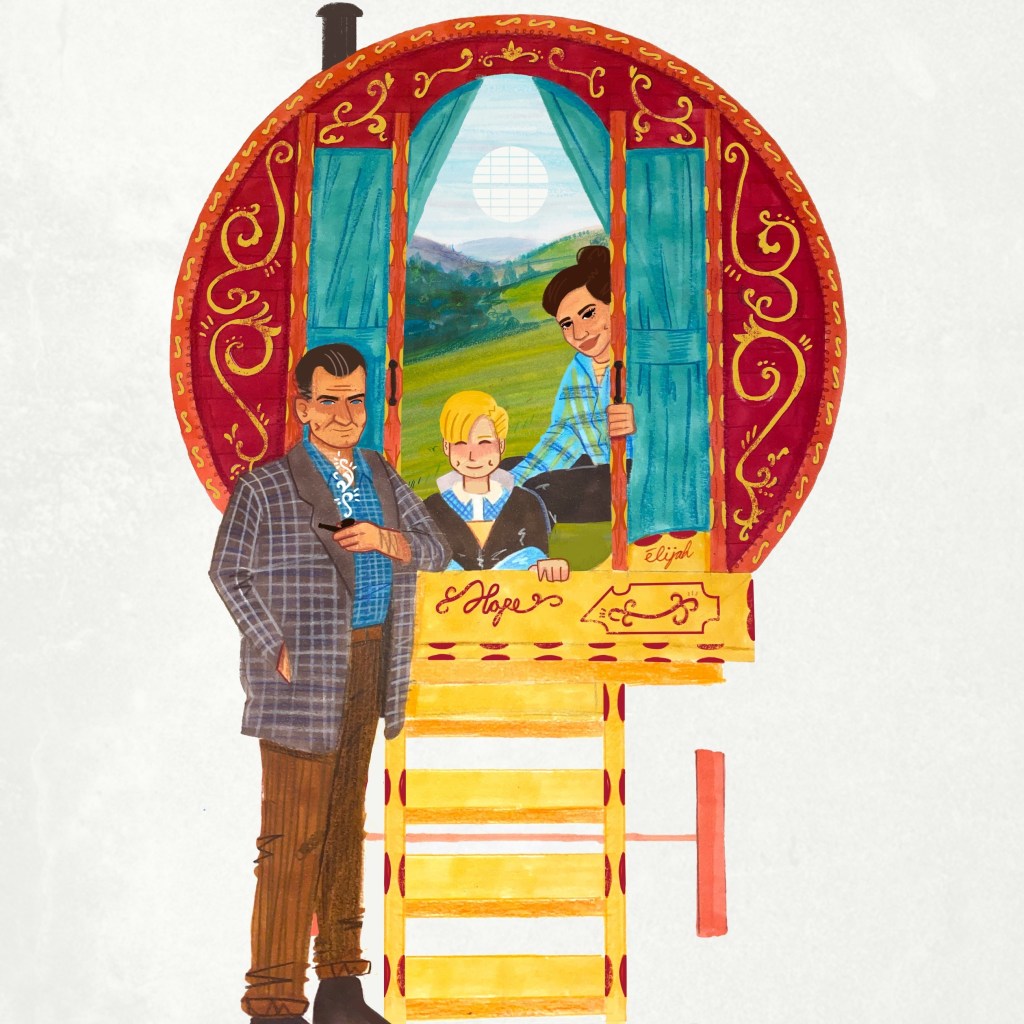
Gypsy, Roma, Traveller History Month: #MakeSomeSpace

When I reflect upon my childhood, I recall the fondness that I have towards the Romany culture. I am reminded of the wonderful bond that my family had with horses, of good people, of the older generations of my family telling stories and singing Romany songs around tables at parties, of a strong sense of tight-knit togetherness and resilience when times got tough. I remember being educated about life from a young age and being taught the skills needed to be able to earn a living when it became difficult to do so. I am also reminded of the generosity involved in giving all that you can to your family and friends despite not having much. I especially think of this generosity in relation to the Irish Travellers that welcomed my brothers into their homes and provided for them when they were in times of need.
My instant thoughts about Gypsy, Romany Travellers (GRT) is that of fondness, but living in our society I have learnt that this is not the typical thoughts of the dominant public, media or government. When considering dominant media, public and government attitudes towards travellers, I am reminded of the GRTs that live in a society where people are prejudice because of long-standing stereotypes that have been created about their culture. I am also reminded of the lack of understanding and/or empathy that others have about the disproportionate amounts of social harm that those within the GRT families will encounter.
Since the recent Black Lives Matter protests there has been an explosion of anti-racist efforts, which I am hopeful of, yet, even some of those who are passionately ‘anti-racist’ continue to either project prejudice towards GRT people or deny that prejudice towards GRT is a problem. Adding to this, anti-racist messages communicated via the media do not seem to apply to GRT. A recent example of this is Dispatches: The Truth About Traveller Crime which is like a thorn in my side. This documentary discusses GRT as though they are a group of ‘dangerous criminals’. With an ‘expert’ criminologist present within the documentary it becomes difficult for the public to understand the stereotypes and lack of understanding that the documentary includes.
This year I have been able to incorporate GRT into the modules that I teach. I am pleased that some students have been able to navigate themselves to information about GRT from organisations like Traveller Movement and Friends Families and Travellers as these provide me with some hope in terms of GRT awareness and inclusion. However, it seems that these organisations will continue to have many pressing concerns to deal with, especially as the recent government proposals included within the Police, Crime, Sentencing and Courts Bill seem to be nothing more than another attack on the more traditional way GRT of life.

There is a worry for some GRT that upon moving into housing these cultures will decline. In terms of my own family my Nan was my idol, she was born in the 1920s in a traditional horse drawn wagon. Since moving into housing my Nan remained proud of her Romany heritage and she instilled this within my Dad’s upbringing. I only ever practiced aspects of the Romany culture in a marginal sense, and the decline of this part of my own heritage is connected to the social harm that my own family have experienced.
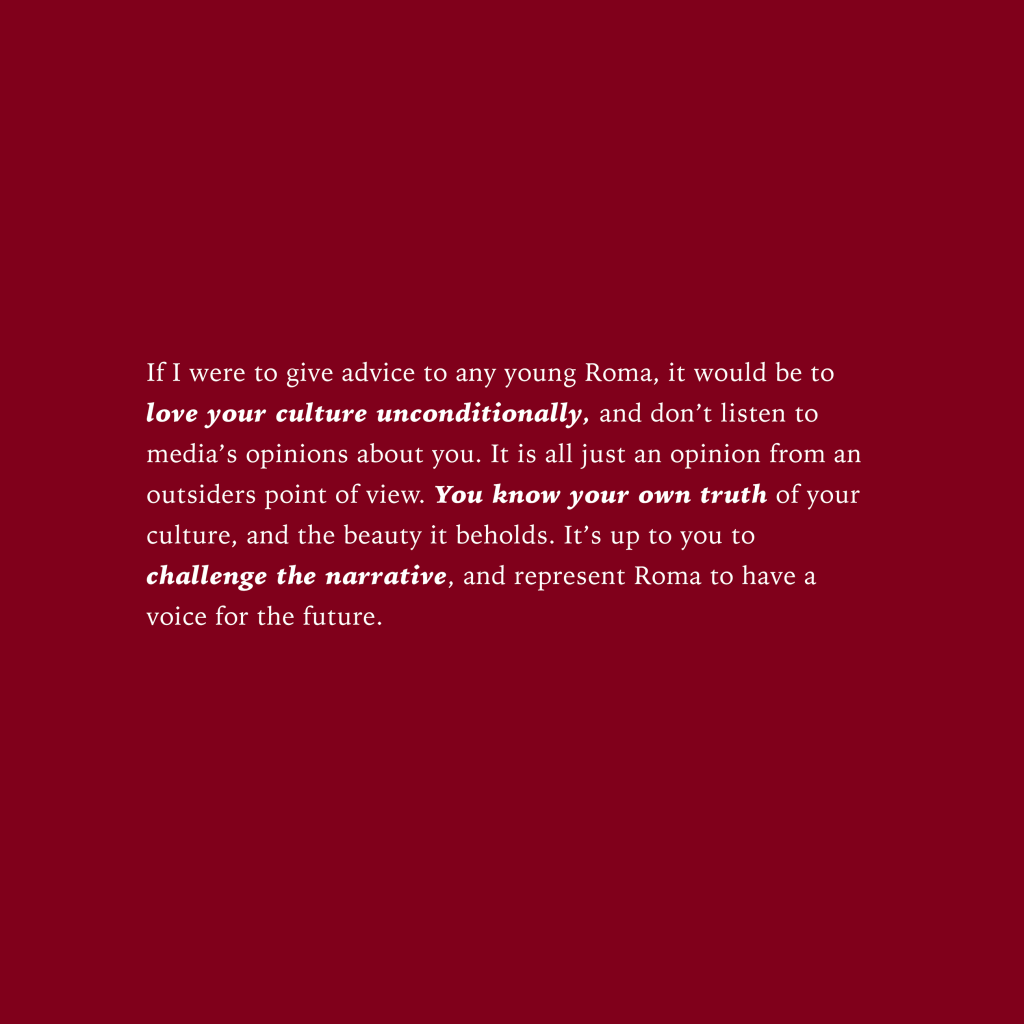
With GRT month I hope that more people question the prejudices that they have about others, I hope that people also question the media, government and supposed ‘experts’. You could begin by attempting to put yourself in the shoes of others, try to imagine how you would feel if society collectively judged yourself or your family despite knowing little to nothing about who you/they are. After all, this kind of overt prejudice that GRT encounter would not be acceptable in many situations if this was aimed at other groups, so why should it be acceptable when aimed at GRT?
Share this:


Fifty Pounds Per Child Per Year

Usually I consume my news through the BBC app, although occasionally I enjoy getting the run down of political affairs from the horses mouth, so to speak. Often I watch the Prime Ministers Questions, getting riled up at the majority of topics raised. However, yesterday (9/06/21), I found myself getting particularly outraged and passionate at a certain issue that has also been highly reported in the news.
Earlier last week, the Prime Minister outlined his Covid recovery package for schools, he pledged £1.4bn to enable students to catch up on the work, education and socialisation that has been missed. The controversy appears when comparing this figure to £13.5bn, originally suggested by Education Policy Institute (Education Policy Institute, 2021). To put it into perspective, £1.4bn equates to about £50 per child, per year- apparently you certainly can put a price on children’s education. Even with Johnson’s additional £1bn funding that will stretch across the next three years, the ‘recovery’ package is frankly laughable, it was a move that saw the education recovery commissioner, Kevan Collins, resign in protest.
Putting funding and economics aside, I think that this was a prime example of how the importance of education is once again, being forgotten. The potential power of the education system is not being utilised by any means. Politicians are still not realising that education reform doesn’t have to mean tougher discipline and it doesn’t have to mean more Ofsted checks and it certainly doesn’t have to mean more stressful, ‘rigorous testing’ of students, something which former education secretary Michael Gove pushed for in 2013 (Adams, 2013).
“Simply making exams harder does not guarantee higher standards nor mean that students will be prepared for a job.”
~ Brian Lightman (Adams, 2013)
Forcing misbehaved children out of school through punitive disciplinary actions, suspensions and exclusions simply puts them on the road to loosing faith in the education system and increases their likely hood of antisocial behaviour, which can lead to criminal careers later in life. The importance of creating an educational environment that students actually want to be a part of cannot be understated.
Furthermore, the importance of altering the current curriculum is completely overlooked. School has the potential to give children and teenagers the ability to have more autonomy over so many aspects of their later life; adequate lessons about political ideology, history and the voting system, done in an accessible way, has the potential to raise more politically aware, inclined individuals that feel equipped to engage and participate in the democratic process on a local and national scale.
Appropriate finance and law classes could eventually go on to raise a higher number of adults who feel able to handle their money situations in a better, healthier way; they could also begin to understand their rights and the court processes better. Finally, focusing on the decolonisation of the curriculum could allow ethnic minorities and other marginalised demographics to learn about their ancestors, history and culture in a more mainstream, impartial way. The impacts of restructuring the standard and the content of the schooling curriculum could have an abundance of benefits, not only to individuals but to society itself.
However, with no clear moves for the education secretary to explore theses benefits further and implement any changes, along with the promised £50 per pupil, per year, it is evident that the potential power of the education system has once again been understated and that, education is, indeed, not a priority for the current government.
Adams, R., 2013. GCSEs to become more demanding and rigorous, says Michael Gove. [online] The Guardian. Available at: <https://www.theguardian.com/education/2013/jun/11/gcse-demanding-rigorous-michael-gove>
Education Policy Institute. 2021. EPI responds to the government’s new education recovery package – Education Policy Institute. [online] Available at: <https://epi.org.uk/comments/epi-responds-to-the-governments-new-education-recovery-package/>
A link for the Prime Minister’s Questions episode: https://m.youtube.com/watch?v=zQkiEAZ2oh0&feature=youtu.be
A link for the Prime Minister’s Question with BSL: https://youtu.be/ZgcnQqbChZs
Share this:


What about women?
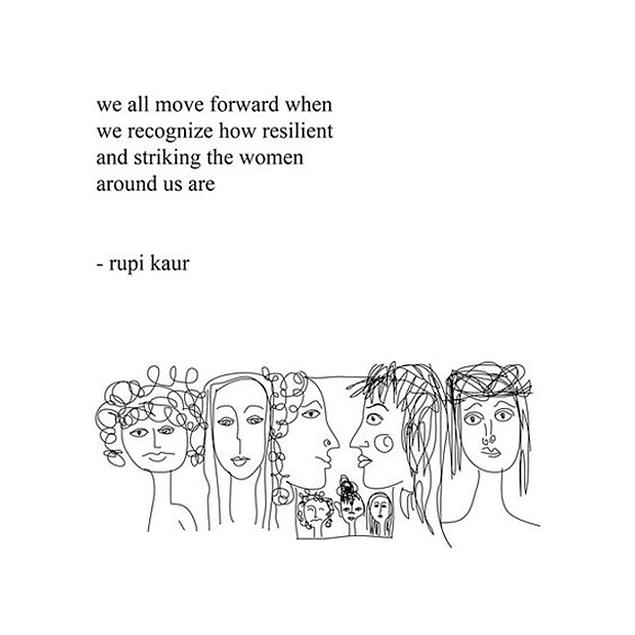
This month marks Women’s History Month. It’s a time where I reflect on how privileged I am to be surrounded by a group of women who have added so much to my life just by being in it.
I am also reminded of writers and poets (both past and present) like Woolf, De Beauvoir, Lorde, Walker, Kaur, Attwood and Evaristo whose words have not only added so much to my outlook on life but they also continue to remind me that as a woman I need to continue to listen, provide support and uplift other women. It is incredibly sad but necessary that we need to be reminded of the need to support one another.
Women’s History Month has coincided with the murder of Sarah Everard, another of the many women who have been murdered by men whilst walking home alone. The policing and arresting of women at Sarah’s vigil, the justifications for such arrests and the events themselves are now being reported as false. Followed by the government’s predictable draconian response to silence and restrict protesting rights is maddening. And more importantly, the solidarity illustrated with women gathering to pay their respects to Sarah has now been spoilt due to these damaging enforcement responses.
I find it so sad that commentary by some women surrounding the murder of Sarah had taken the stance of defending men. There are so many very good men in this world, and it is true that not all men are bad, but the reality is that men tend to be the perpetrators when other men, women and children are murdered.
We live in a society which reinforces gender inequality, oppression and stereotypes about women to the point that women internalise misogyny. As a result, some women are quick to defend men to the point that, in some cases, men who are the perpetrators are presented as the victims. And the women who are actual victims are blamed for their own victimisation.
This attitude towards women comes at the detriment of not allowing the space for people to begin to consider that femicide and gendered violence are the damaging consequences of living in an unequal society. The pain caused to the victims also becomes either diluted or made invisible. This is especially the case with Asian or Black women’s victim experiences, as these are rarely found within the news, and if shown, are rarely believed.
There are many obstacles faced by women who attempt to flee routine gendered violence. Attempts to seek support can result in many women losing their homes, jobs and contact with their friends and families. As well as this, women who intend to report being victims of gender-based violence may battle to overcome the stigma that is attached to being a victim. For women with visas that state that there is ‘no recourse to public funds’ escaping violence becomes even more difficult, post Brexit, this now also applies to women from the EU.
Whilst online debates occur surrounding Sarah Everard’s case, the reality is that many women are scared to walk alone. Many are also scared to live within their own homes due to the fear of violence. If we are quick to defend men in light of such tragic events how will we ever be able to support these women? How will they ever feel empowered to report being victims of crime? Yes, not all men are bad, but when a case like Sarah’s is publicised perhaps our first response should be empathising with other women.
Share this:


Reflecting on International Women’s Day
On International Women’s Day I wanted to write a blog to celebrate the incredible women who have inspired me, supported me, fought for the rights of women all over the world both past and present. Perhaps that post will come but I felt sadness and anger, rage that made me want to shout and swear from the rooftops that feminism is not done. Gender equality has not been completed. We may have advanced a few levels, but patriarchy is still alive and free right here in England as well as throughout the world. The reality is that gender equality is a myth. Ordinarily I’m more hopeful and positive and maybe the pandemic combined with finishing my PhD is pushing me over the edge. But as well as celebrating International Women’s Day I wanted to identify some of the areas in which there is work to do, both in the UK and worldwide.
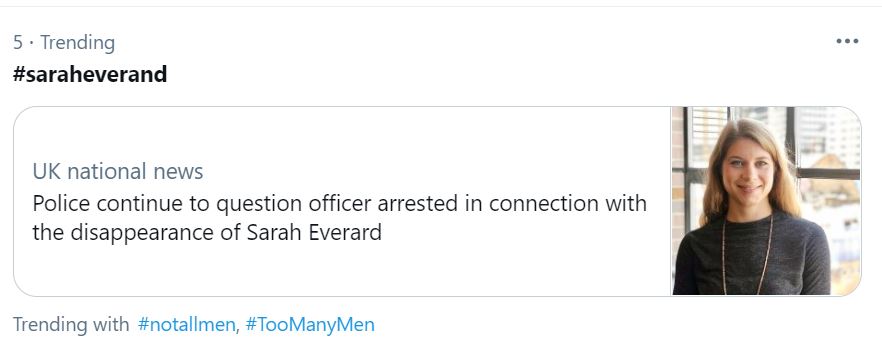
On the week of International Women’s Day, the media has been filled with women, but not for the right reasons. Let us start with the interview broadcasted on International Women’s Day with Megan Markle and Prince Harry which highlighted not only her position as a woman but also the intersectionality of being a woman of colour in the royal family and the implications of this. The interview was responded in an appalling manner by Piers Morgan who questioned her experience of feeling suicidal which was then reflected on social media (never read the comments!!!). A woman’s experiences with mental health were questioned and ridiculed. Not long after the tragic death of Caroline Flack, people – including many other women – have forgotten to #bekind. The investigation over the disappearance of Sarah Everard was responded to by the Met police advising women in the local area not to go out at night, perpetuating a culture of victim blaming. A woman’s actions were being questioned. So here we are in 2021 with our internal thoughts and emotions and our external actions being judged by others. When women have spoken out about our right to feel safe walking home at night, about how we walk the long way home and hold a key between our fingers for protection, #notallmen resurfaces on Twitter, in a similar tone to #alllivesmatter last year. When one group renews a call for equality, the patriarchs and supremacists oppress harder. These are just a couple of examples in the media, the public domain, this week but there is also clear inequality in domestic life.
Throughout the pandemic there have been numerous reports suggesting that women have disproportionately undertaken childcare which has had a devastating impact, particularly for single mothers. While data from the Office for National Statistics shows that home schooling is distributed equally in mixed sex couples, women have undertaken substantially more of non-developmental childcare – the bathing, bedtime routine, feeding etc. I recall the days of being a working single parent with a small child. With no after school club and no family available to chip in, I relied on childcare swaps, a childminder (who I couldn’t afford to pay more than a couple of days per week). It was a case of beg, borrow or steal whatever childcare I could get to get to work and would often miss lectures because I didn’t have any childcare (note to students – if you have childcare responsibilities and are struggling please do not hesitate to drop me an email. I have almost a decade of experience juggling kids with studies and I am always happy to share tips or just have a mutual rant about how hard it is!). I cannot imagine how I would have managed with the pandemic if my children were younger. I am lucky enough to work in a team where my colleagues don’t bat an eyelid when my teenager pops her head in asking for food or help with schoolwork but I do have friends telling me how their male counterparts have given them advice on how to juggle virtual meetings with parenting small children. Men (not all men – some men are excellent allies) having no clue how hard women have to fight as women to do it all – the career, the childcare, the housework, all while earning less than our male counterparts (currently 15.5% less). Of course the data on equal pay is complex but the bottom line is we get paid less, it’s harder to advance our careers because as we live in the bodies that produce babies and we have career breaks when we take maternity leave or go part time while the children are young – the only way that can change is if we choose not to have kids and we are criticised for that too!
I have so far established that the UK is hostile in the media and not equal in the home and employment but where do we sit globally? It was placed 21st on the Global Gender Gap Index 2020. Do you think you could guess which countries are higher than the UK? Go on, spend a minute and write down who you would expect to be in the top 20. Of course, there are the countries one might expect – Iceland is top of the list, Norway, Finland and New Zealand too. But let’s throw a curveball in there. Albania. Having worked with and interviewed many female Albanian asylum seekers and refugees who have usually fled Albania due to at least one but often many forms of gendered violence this comes as quite a surprise to me. Of course, I have a biased experience and have only come into contact with those who have had devastating experiences of patriarchy in the country. Rwanda is up there too within the top 10. Not long after the devastating genocide in Rwanda where women were brutally raped as a weapon of war (see here for a cheeky plug and an analysis of sexual violence in conflict in a different geographical context). Today, women make up half of the politicians in the country. Women have risen up and have taken power. In the UK I look at the female politicians in power today and in recent years and I recoil in horror. Priti Patel is probably (barring the Queen) the most powerful female politician in England. I witness first hand in my work with asylum seekers the harm she causes every day. Intentional harm, following in Theresa May’s footsteps to create a hostile environment for migrants. These women are not the people I want to look up to, or want my children to look up to. In fact, one of the few shared interests my daughter and I have is our disdain for these women.
The women I do look up to are those asylum seekers Patel and her band of merry men at the Home Office are trying to repel. Those who have fled situations that I, as a middle class white woman cannot even begin to comprehend. All the women who I have interviewed in my doctoral research had either fled gendered violence including forced and child marriage, domestic abuse, sex trafficking and honour violence; or their gender had intersected with other forms of persecution making their living situation untenable because they were women. They fled life or death situations to the point of leaving their homes, families and countries because their governments could not, or would not, protect them. They arrive in the UK and are faced with the hostile environment conjured by May and continued by Patel and both the Home Secretaries in between. They face structural violence in the forms of forced poverty, illegal detention, substandard and sometimes dangerous accommodation perpetrated under the mandate of women. All the while being vilified by the tabloids and swathes of the public. Some of my participants arrived here as children and were bullied in school because they were asylum seekers, being told that they were taking jobs and money. The bullies could not comprehend that they were prohibited by law from working and were given £5 per day to live on. They then hid their identities, never telling anyone that they were an asylum seeker, lying to their friends about why they couldn’t go on college trips abroad, why they couldn’t have a bank account, why they couldn’t get a job or go to university.
I want to celebrate Amira* who defied the odds. She came here when she was in her early teens, knowing just a few words of English. She worked hard to learn the language and passed her GCSEs and A-levels, gaining a competitive Sanctuary scholarship which funded her university education. I want to celebrate Drita, an Eastern European woman who was physically abused by her father as a child, forced to marry an abusive man who eventually left her destitute with three children. She then left her children with her parents while she sought work, got a boyfriend who sold her into sex slavery, set her room on fire to kill herself but managed to escape, picked up her children and fled a lifetime of gendered violence from every man she had ever met. She spent 2 days in a lorry with her children to get to the UK. Not really the UK, she would have gone anywhere, just out of her country to safety. These women are survivors. These women fought to stay alive. They fought to escape. They didn’t escape. They arrived here to face May’s legacy of a hostile environment. These women are terrified every time they have to report to the Home Office, every letter they get threatens them with detention and deportation and reminds them that they or on bail, literally equating them with a process usually found in the criminal justice system. These women are heroes and should be celebrated for surviving. On International Women’s Day yes, let us celebrate all that all we have achieved so far but it cannot end here. Each year we need a renewed call for action for women.
*All names are pseudonyms to protect the anonymity of participants


