
Home » Government (Page 4)
Category Archives: Government

Public confidence in the CJS: ending on a high?

2022 has been a turbulent and challenging year for many. Social inequalities and disadvantage are rife, with those in power repeatedly making bad, inhumane decisions and with very little, to no, accountability or consequences (insert your favourite example from the sh** storm that is the Conservative Party here). Union after Union, across sectors, engage in industrial action in response to poor working conditions and pay, amidst a cost-of-living crisis. And although seemingly unconnected, as the year comes to a close, the Sentencing Guidelines (2022) report on Public Confidence in the Criminal Justice System (CJS) has got me feeling frustrated. My previous blog entries have often been ‘moans’. And whilst January is often dubbed the month of new beginnings and change for the year ahead: we’re not quite there yet so true to form here is my latest moan!
The report exists as one of many conducted by Savanta to collate data on public confidence, in terms of effectiveness and fairness, in the CJS and public awareness of the sentencing guidelines. The data collected in March 2022, was via online surveys given to a “nationally representative sample of 2,165 adults in England and Wales” (Archer et al., 2022, p.9). Some of their highlighted ‘Key Findings’ include that confidence levels in CJS remains relatively stable in comparison to 2018, on the whole, respondents viewed sentences as ‘too lenient’ however this varied based on offence, the existence of the sentencing guidelines improves respondent’s confidence in the fairness of sentencing, and that engagement with broadcast news sources was high across respondents (Archer et al., 2022). It is not the findings, per se, that I take umbrage with, but rather the claim it is a “nationally representative sample of adults in England and Wales” (Archer et al., 2022, p.9).
I take issue on two fronts. The first being that the sample size of 2,165 adult respondents is representative when the demographic factors included are: gender (male and female), age (18-34yo, 35-54yo and 55+), region, ethnicity (White, Mixed, Asian, Black and Other) and socio-economic grade. Now considering we are, thankfully, at the end of 2022 we should all be able to recognise that a sample which only includes cis-gendered options, narrows ethnicity down to 4 categories and the charming ‘other’, and does not include disabilities is problematic. There has been a large body of research done on people with disabilities and their experiences within the CJS, the lack of representation, the lack of accessibility to space and decisions, potentially impacting a defendant’s right to a fair trial, and a victim’s right to justice (Equality and Human Rights Commission, 2021; Hyun et al., 2013 ). So I ask, is this not something which needs considering when looking at public confidence in the CJS of a “nationally representative” sample?
In addition to this, I take issue with the requirement that the sample be “nationally representative”. We have research piece upon research piece about how Black men and Black boys experience the CJS and its various agencies disproportionately to their white counterparts (Lammy, 2017; Monteith et al., 2022; Parmar, 2012). Their experiences of stop and search, sentencing, bail, access to programmes within the Secure and Youth estate. There is nothing representative about our CJS in terms of who it processes, how this is done, and by whom. According to Monteith et al., (2022) 1% of Judges in the CJS are Black, and there are NO Black judges on the High Court, Court of Appeal of Supreme Court: this is not representative! Why then, are we concerned with a representative sample when looking at public confidence in CJS and the sentencing guidelines, when it is not experienced in a proportionate manner?
Maybe I’ve missed the point?
The report is clear, accessible, visible to the public: crucial concepts when thinking about justice, and measuring public confidence in the CJS is fraught with difficulties (Bradford and Myhill, 2015; Kautt and Tankebe, 2011). But this just feels like another nail being thumped into the coffin that is 2022. Might be the eagerness I possess to leave 2022 behind, or the impeding dread for the year to follow but the report has angered me rather than reassured me. As a criminologist, I am hopeful for a more inclusive, representative, fair and accountable CJS, but I am not sure how this will be achieved if we do not accept that the system disproportionately impacts (but not exclusively) Black men, women and children. Think it might be time for another mince pie…
Happy New Year to you all!
References:
Archer, N., Butler, M., Avukatu, G. and Williams, E. (2022) Public Knowledge of Confidence in the Criminal Justice System and Sentencing: 2022 Research. London: Sentencing Council.
Bradford, B. and Myhill, A. (2015) Triggers of change to public confidence in the police and criminal justice system: Findings from the crime survey for England and Wales panel experiment, Criminology and Criminal Justice, 15(1), pp.23-43.
Equality and Human Rights Commission (2021) Does the criminal justice system treat disabled people fairly? [Online] Available at: https://www.equalityhumanrights.com/en/inquiries-and-investigations/does-criminal-justice-system-treat-disabled-people-fairly [ Accessed 4th November 2021].
Hyun, E., Hahn, L. and McConnell, D. (2013) Experiences of people with learning disabilities in the criminal justice system, British Journal of Learning Disabilities, 42: 308-314.
Kautt, P. and Tankebe, J. (2011) Confidence in the Criminal Justice System in England and Wales: A Test of Ethnic Effects, International Criminal Justice Review, 21(2),pp. 93-117.
The Lammy Review (2017) The Lammy Review: An independent review into the treatment of, and outcomes for, Black Asian and Minority Ethnic Individuals in the Criminal Justice System, [online] Available at: https://assets.publishing.service.gov.uk/goverment/uploads/system/uploads/attachment_data/file/643001/lammy-review-final-report-pdf [Last Accessed 14th February 2021].
Monteith, K., Quinn, E., Dennis, A., Joseph-Sailsbury, R., Kane, E., Addo, F. and McGourlay, C. (2022) Racial Bias and the Bench: A Response to the Judicial Diversity and Inclusion Strategy (2020-2025), [online] Available at: https://documents.manchester.ac.uk/display.aspax?DOCID=64125 [Accessed 4th November 2022].
Parmar, A. (2012) Racism and ethnicity in the criminal justice process, in: Hucklesby, A. and Wahidin, A. (eds.) Criminal Justice, 2nd ed, Oxford: Oxford University Press, pp.267-296.
Share this:


An alternative Christmas message

Sometime in October stores start putting out Christmas decorations, in November they slowly begin to play festive music and by December people organise office parties and exchange festive cards. For the best part of the last few decades these festive conventions seem to play a pivotal role in the lead up to Christmas. There are jumpers with messages, boxes of chocolates and sweets all designed to spread some festivity around. For those working, studying, or both, their December calendar is also a reminder of the first real break for some since summer.
The lead up to Christmas with the music, stories and wishes continues all the way to the New Year when people seem to share their goodwill around. Families have all sorts of traditions, putting up the Xmas tree on this day, ordering food from the grocers on that day, sending cards to friends and family by that day. An arrangement of dates and activities. On average every person starts in early December recounting their festive schedule. Lunch at mum’s, dinner at my brother’s, nan on Boxing Day with the doilies on the plates, New Years Eve at the Smiths where Mr Smith gets hilariously drunk and starts telling inappropriate jokes and New Year’s at the in-laws with their sour-faced neighbour.
People arrange festivities to please people around them; families reunite, friends are invited, meaningful gifts are bought for significant others and of course buy we gifts for children. Oh, the children love Christmas! The lights, the festive arrangements, the delightful activities, and the gifts! The newest trends, the must have toys, all shiny and new, wrapped up in beautiful papers with ribbons and bows. In the festive season, we must not forget the kind words we exchange, the messages send by local communities, politicians and even royalty. Words full of warmth, well-meaning, perspective and reflection. Almost magical the sights and sounds wrapped around us for over a month to make us feel festive.
It is all too beautiful, so you can be forgiven to hardly notice the lumbering shadow, at the door of an abandoned shop. Homelessness is not a lifestyle as despicably declared by a Conservative councillor/newspapers decades ago. It is the human casualty of those who have been priced out in the war of life. Even since the world went into a deep freeze due to the recession over a decade ago and the world is still in the clutches of that freeze. More people read about Christmas stories in books and in movies, because an even increasing number of people do not share the experience. Homelessness is the result of years of criminal indifference and social neglect that leads more people to live and experience poverty. A spectre is haunting Europe, the spectre of homelessness. There is no goodwill at the inn whilst the sins of the “father” are now returning in the continent! Centuries of colonial oppression across the world lead to a wave of refugees fleeing exploitation, persecution, and crippling poverty. Unlike the inn-keeper and his daughter, the roads are closed, and the passages are blocked. Clearly, they don’t fit with the atmosphere… nor do the homeless. Come to think of it, neither do the old people who live alone in their cold homes. None of these fit with the festive narrative.
As I walked down a street I passed a homeless guy is curled up in a shop door. A combination of cardboard, sleeping bag and newspapers all jumbled together. Next to him a dog on the cardboard and around them fairy lights. This man I do not know, his face I have not seen, his identity I ignore; but I imagine that when he was born, there was someone who congratulated his mother for having a healthy boy. Now he is alone, fortunate to have a canine companion, as so many do not have anyone. What stands out is that this person, who our festive plans had excluded, is there with his fairy lights, maybe the most festive of all people, without a burgundy coat, I hear some people like these days.
It is so difficult to say Merry Christmas this year. In a previous entry the world cup and its aftermath left a bitter taste in those who believe in making a better world. The economic gap between whose who have and those who do not, increases; the social inequalities deepen but I feel that we can be like that man with the fairy lights, fight back, rise up and end the party for those who like to wear burgundy, or those who like to speak for world events, at a price.
Merry Christmas, my dear criminologists, the world can change, when we become the agents of change.
Share this:


“Quelle surprise” – another fine mess

The recent HMICFRS publication An inspection of vetting misconduct and misogyny in the police service makes difficult reading for those of us that have or have had any involvement in the police service in England and Wales. Of course, this is not the first such report and I dare say it will not be the last. There is enough evidence both academic and during the course of numerous inquiries to suggest that there is institutional corruption of all sorts in the police service, coupled with prevailing racist and misogynistic attitudes. Hardly a surprise then that public confidence is at an all-time low.
As with so many reports and associated inquiries, the finger of blame is pointed at the institution or individuals within it. The failings are organisational failings or departmental or individual. I cast my mind back to those inquiries into the failings of social services or the failings of NHS trusts or the failings of the Fire and Rescue service or any other public body, all the fault of the organisation itself or individuals within it. Too many inquiries and too many failings to count. More often than not the recommendations from these reports and inquiries involve rectifying processes and procedures and increasing training. Rarely if ever do these reports even dare to dip their toe into the murky waters relating to funding. Nobody on these inquiries would have the audacity to suggest that the funding decisions made in the dark corridors of government would later have a significant contribution to the failings of all of these organisations and the individuals within them. Perhaps that’s why those people are chosen to head the inquiries or maybe the funding decisions are long forgotten.
Twenty percent budget cuts in public services in 2010/11 meant that priorities were altered often with catastrophic consequences. But to be honest the problems go much further back than the austerity measures of 2010/11. Successive governments have squeezed public services in the interest of efficiency and effectiveness. The result, neither being achieved, just some tinder box ready to explode into disaster. And yet more hand wringing and finger pointing and costly inquiries.
The problem is not just that the organisations failed or that departments or individuals failed, the problem is that all the failings might have been prevented if there was money available to deliver the service properly in the first place. And to do that, there needs to be enough staff, enough training, and enough equipment. And who is responsible for ensuring that happens?
Now you may say that is all very well but what of the police officers that are racist and misogynistic or corrupt and what of institutional corruption? After all the HMICFRS report is not just about vetting procedures but about the attitudes and behaviours of staff. A good point but let me point you to the behaviour of government, not just this government but preceding governments as well. The expenses scandal, the bullying allegations, the improper behaviour in parliament, the complete disregard for the ethics or for that matter, common decency. And what of those successive budget cuts and lack of willingness to address very real issues faced by staff in the organisations.
Let me also point you to the behaviour of the general public from whom the police officers are recruited. A society where parents that attend children’s football matches and hurl abuse at the referee and linesmen, even threatening to see them in the car park after the match. Not a one off but from recent reports a weekly occurrence and worse. A society now where staff in shops are advised not to challenge shoplifters in fear of their own safety. A society where there is a complete disregard for the law by many on a daily basis, including those that consider themselves law abiding citizens. A society where individuals blame everyone else, always in need of some scapegoat somewhere. A society where individuals know individually and collectively how they want others to behave but don’t know or disregard how they should behave.
I’m not surprised by the recent reports into policing and other services, saddened but not surprised. I’m not naïve enough to think that society was really any better at some distant time in the past, in fact there were some periods where it was definitely worse and policing of any sort has always been problematic. My fear is we are heading back to the worst times in humanity and these reports far from highlighting just an organisational problem are shining a floodlight on a societal one. But it suits everyone to confine the focus to the failings of organisations and the individuals within them. Not my fault, not my responsibility it’s the others not me, quelle surprise.
Share this:


The ‘Chocolate Cost-of-Living Crisis’

Despite the turmoil and mess the country is currently in, this week’s blog post is dedicated to chocolate, and how to maintain a very much needed chocolate fix during the cost-of-living crisis and the sh** storm which British Politics currently is. Do not even get me started on the Casey Review (2022) which has been overshadowed by that sh** storm I previously mentioned. So, in an attempt to address a serious concern plaguing us all, but disproportionately those most vulnerable, I would like to share some of my findings on the ‘chocolate cost-of-living crisis’.
Before the ‘official’ cost-of-living crisis hit, chocolate was seriously upping its price tag. What used to be 99p or £1 for branded ‘share’ bag (I mean who actually has the self-control to share a share bag?!), has now risen to a huge £1.25 per bag! Now this is for Cadbury’s ‘share’ bags (buttons, wispa bites, twirl pieces to name a few), you are looking at £1.35 for Mars products (Magic stars, Minstrels, Maltesers, MnMs)! Those of us that eat Vegan, lactose-free chocolate are looking at an even higher price tag for an even smaller product. Supermarket chocolate has also gone up in price, and remains nowhere near as scrumptious as the likes of Cadbury, Mars and even Nestle (although I myself am not a Nestle loving due to their questionable ethical practices*). But given the sh** storm the Country is currently in, and the impact of the cost-of-living crisis is having, we need chocolate more than ever! But do not fear: I have some handy tips when it comes to selecting the most reasonably priced and therefore affordable chocolate to help get us through these sh***y times.
The key when looking at the cost of chocolate, and all products, is to look at the price per g/kg. This is usually in teeny tiny writing at the bottom of the price tag on the shelves. Most chocolate (and because I am a self-proclaimed chocolate snob, I am discussing branded chocolate) is coming in around the 85p+ per 100g mark. But there are some sneaky little joys which are undercutting this, and I highly recommend stocking up!
Terry’s Milk Chocolate Orange: £1, (63p/100g): a clear winner! They have various types, dark chocolate, white chocolate and popping candy, and these vary in weights but come in between 63p/100g to 69p/100g!
Cadbury Dairy Milk (360g bar): £3, (83p/100g): the key to Cadburys is the bigger the cheaper! Do not be fooled by the smaller bars and their ‘cheaper’ price. They are not cheaper: and lets be honest who wouldn’t want 360g of chocolate over 150g?!
HOWEVER
Galaxy Caramel (135g bar): 99p (73p/100g): good news for caramel lovers! The smaller caramel bar is cheaper than the 360g Galaxy smooth milk bar (97p/100g), so in this case less is actually more!
Galaxy Minstrels ‘More to Share’ Bag: £1.99 (83p/100g): best value share bag out there at the moment. Again, do not be tricked by the smaller and what may seem like cheaper bags, because they are not!
Growing up with a single-parent father who worked the ‘mum’ shift in a warehouse meant we were very stringent and careful with money: mainly because we didn’t have much. This skill of checking value for money and the price per g/kg is something engrained within me, and something I am extremely grateful for! Check those £’s per g/kg people! It may mean you can have a treat at the end of the week, which doesn’t burn through your pockets, to help off-set the sh** we are currently dealing with.
*it has recently been brought to my attention, the unethical historical practices of Cadbury’s in relation to the Slave Trade, and their racist advertisements in the early 2000’s (not sure how I missed this)! Morally, as I try to avoid Nestle products due to their unethical practices, I will also attempt the same with Cadbury’s: but I fear this will not be an easy transition.
Share this:


ASUU vs The Federal Government

It will be 8 months in October since University Lecturers in Nigeria have embarked on a nationwide strike without adequate intervention from the government. It is quite shocking that a government will sit in power and cease to reasonably address a serious dispute such as this at such a crucial time in the country.
As we have seen over the years, strike actions in Nigerian Universities constitute an age-long problem and its recurring nature unmasks, quite simply, how the political class has refused to prioritise the knowledge-based economy.
In February 2022, the Academic Staff Union of Universities (ASUU) leadership
(which is the national union body that represents Nigerian University Lecturers during disputes) issued a 4-week warning strike to the Nigerian government due to issues of funding of the public Universities. Currently, the striking University Lecturers are accusing the government of failing to revitalise the dilapidated state of Nigerian Universities, they claim that the government has refused to implement an accountability system called UTAS and that representatives of the government have continued to backtrack on their agreement to adequately fund the Universities.
The government on the other hand is claiming that they have tried their best in negotiating with the striking lecturers – but that the lecturers are simply being unnecessarily difficult. Since 2017, several committees have been established to scrutinize the demands and negotiate with ASUU, but the inability of these committees to resolve these issues has led to this 8-month-long closure of Nigerian Universities. While this strike has generated multiple reactions from different quarters, the question to be asked is – who is to be blamed? Should the striking lecturers be blamed for demanding a viable environment for the students or should we be blaming the government for the failure of efforts to resolve this national embarrassment?
Of course, we can all understand that one of the reasons why the political class is often slow to react to these strike actions is because their children and families do not attend these schools. You either find them in private Universities in Nigeria or Universities abroad – just the same way they end up traveling abroad for medical check-ups. In fact, the problems being faced in the educational sector are quite similar to those found within the Nigerian health sector – where many doctors are already emigrating from the country to countries that appreciate the importance of medical practitioners and practice. So, what we find invariably is a situation where the children of the rich continue to enjoy uninterrupted education, while the children of the underprivileged end up spending 7 years on a full-time 4-year program, due to the failure of efforts to preserve the educational standards of Nigerian institutions.
In times like these, I remember the popular saying that when two elephants fight, it’s the grass that suffers. The elephants in this context are both the federal government and the striking lecturers, while those suffering the consequences of the power contest are the students. The striking lecturers have not been paid their salaries for more than 5 months, and they are refusing to back down. On the other hand, the government seems to be suggesting that when they are “tired”, they will call off the strike. I am not sure that strike actions of the UK UCU will last this long before some sort of agreement would have been arranged. Again, my heart goes out to the Nigerian students during these hard times – because it is just unimaginable what they will be going through during these moments of idleness. And we must never forget that if care is not taken, the idle hand will eventually become the devil’s workshop!
Having said this, Nigerian Universities must learn from this event and adopt approaches through which they can generate their income. I am not inferring that they do not, but they just need to do more. This could be through ensuring large-scale investment programs, testing local/peculiar practices at the international level, tapping into research grant schemes, remodeling the system of tuition fees, and demonstrating a stronger presence within the African markets. As a general principle, any institution that wishes to reap the dividends of the knowledge-based economy must ensure that self-generated revenues should be higher than the government’s grants – and not the other way. So, Universities in Nigeria must strive to be autonomous in their engagements and their organisational structure – while maintaining an apolitical stance at all times.
While I agree that all of these can be difficult to achieve (considering the socio-political dynamics of Nigeria), Universities must remember that the continuous dependence on the government for funds will only continue to subject them to such embarrassments rather than being seen as respected intellectuals in the society. Again, Nigerian Universities need a total disruption; there is a need for a total overhaul of the system and a complete reform of the organisational structure and policies.
Share this:


Chaos in Colombo: things fall apart

Following the mutiny that we witnessed in Downing street after members of the Johnson’s cabinet successfully forced him to resign over accusations of incompetency and the culture of inappropriate conducts in his cabinet, the people of Sri Lanka have also succeeded in chasing out their President, G. Rajapaksa, out of office over his contributions to the collapse of the country’s economy. This blog is a brief commentary on some of the latest events in Sri Lanka.
Since assuming office in 2019, the government of Rajapaksa has always been indicted of excessive borrowing, mismanagement of the country’s economy, and applying for international loans that are often difficult to pay back. With the country’s debt currently standing at $51bn, some of these loans, is claimed to have been spent on unnecessary infrastructural developments as well as other ‘Chinese-backed projects’, (see also; the Financial Times, 2022). Jayamaha (2022; 236) indicated that ‘Sri Lanka had $7.6 billion in foreign currency reserves at the end of 2019. However, by March 2020, it had exhausted its reserves to just $1.93 billion.’ One of Rajapaksa’s campaign promises was to cut taxes, which he did upon assuming office. His critics faulted this move, claiming it was unnecessary at that particular time. His ban on fertilizers, in a bid for the country to go organic (even though later reversed), had its own effect on local farmers. Rice production for example, fell by 20% following the ban – a move that eventually forced the government to opt for rice importation which was in itself expensive (see also; Nordhaus & Shah 2022). Critics warned that his investments and projects have no substantial and direct impact on the lives of the common people, and that what is the essence of building roads when the common people cannot afford to buy a car to ride on those roads? The fact that people have to queue for petrol for 5 days and only having to work for 1 day or where families cannot afford to feed their children simply shows how the government of Rajapaksa seem to have mismanaged the economy of the country. Of course, the problem of insecurity and the pandemic cannot be left out as crucial factors that have also impacted tourism levels and the economy of the country.
Foreign reserves have depleted, the importation of food is becoming difficult to actualise, living expenses have risen to high levels, the country is struggling with its international loan repayments, the value of Rupees has depreciated, there is inflation in the land, including shortages of food supplies and scarcity of fuel. Those who are familiar with the Sri Lanka’s system will not be particularly surprised at the nationwide protests that have been taking place in different parts of the country since May, because the Rajapaksa’s regime was only sitting on a keg of gun powder, ready to explode.
In an unprecedented fashion on July 9, several footages and images began to emerge online showing how protesters had successfully overpowered the police and had broken into the residence of the President. Their goal was to occupy the presidential palace and chase the president out of his residence. In fact, there are video footages online allegedly showing the motorcade of the president fleeing from his residence as the wave of protest rocked the capital.
Upon gaining entry into the innermost chambers of the president’s dwelling, protesters started touring and taking selfies in euphoria, some of them had quickly jumped into the presidential shower, others helped themselves to some relaxation on the president’s bed after days of protests, some were engaged in a mock presidential meeting in the president’s cabinet office, some preferred to swim in the president’s private pool while others helped themselves to some booze.
Indeed, these extraordinary scenes should not be taken for granted for they again reaffirm WB Yeats classic idea of anarchy (in ‘the second coming’ poem), being the only option to be exercised when the centre can no longer hold.
Of course, some may ask that now that they have invaded the presidential villa, what next? In my view, the people of Sri Lanka seem to be on the right direction as President Rajapaska has eventually bowed to pressure and agreed to resign. The next phase now is for the country to carefully elect a new leader who will revive the sinking ship, amend the economic policies, foster an effective democratic political culture which (hopefully) should bring about a sustainable economic plan and growth reforms.
Importantly, this is a big lesson not just for the political class of Sri Lanka, but for other wasteful leaders who continue to destroy their economies with reckless and disastrous policies. It is a lesson of the falcon and the falconer – for when the falcon can no longer hear the falconer, scenes like these may continue to be reproduced in other locations of the world.
Indeed, things fell apart in Colombo, but it is hoped that the centre will hold again as the country prepare to elect its new leaders.
Here is wishing the people of Colombo, and the entire Sri Lankans all the best in their struggle.
References
Financial Times (2022) [Twitter] 20 July. Available at: https://mobile.twitter.com/FinancialTimes/status/1549554792766361603
Jayamaha, J. (2022) “The demise of Democracy in Sri Lanka: A study of the political and economic crisis in Sri Lanka (Based on the incident of the Rambukkana shooting)”, Sprin Journal of Arts, Humanities and Social Sciences, 1(05), pp. 236–240. doi: 10.55559/sjahss.v1i05.22.
Nordhaus, T & Shah S, (2022) In Sri Lanka, Organic Farming Went Catastrophically Wrong, March 5, FP. Available at: https://foreignpolicy.com/2022/03/05/sri-lanka-organic-farming-crisis/
Share this:


What’s happened to the Pandora papers?

Sometime last week, I was amid a group of friends when the argument about the Pandora papers suddenly came up. In brief, the key questions raised were how come no one is talking about the Pandora papers again? What has happened to the investigations, and how come the story has now been relegated to the back seat within the media space? Although, we didn’t have enough time to debate the issues, I promised that I would be sharing my thoughts on this blog. So, I hope they are reading.
We can all agree that for many years, the issues of financial delinquencies and malfeasants have remained one of the major problems facing many societies. We have seen situations where Kleptocratic rulers and their associates loot and siphon state resources, and then stack them up in secret havens. Some of these Kleptocrats prefer to collect luxury Italian wines and French arts with their ill-gotten wealth, while others prefer to purchase luxury properties and 5-star apartments in Dubai, London and elsewhere. We find military generals participating in financial black operations, and we hear about law makers manipulating the gaps in the same laws they have created. In fact, in some spheres, we find ‘business tycoons’ exploiting violence-torn regions to smuggle gold, while in other spheres, some appointed public officers refuse to declare their assets because of fear of the future. Two years ago, we read about the two socialist presidents of the southern Spanish region and how they were found guilty of misuse of public funds. Totaling about €680m, you can imagine the good that could have been achieved in that region. We should also not forget the case of Ferdinand Marcos and his wife, both of whom (we are told) amassed over $10 billion during their reign in the Philippines. As we can see below that from the offshore leak of 2013 to the Panama papers of 2016 and then the 2017 Paradise papers, data leaks have continued to skyrocket. This simply demonstrates the level to which politicians and other official state representatives are taking to invest in this booming industry.

These stories are nothing new, we have always read about them – but then they fade away quicker than we expect. It is important to note that while some countries are swift in conducting investigation when issues like these arise, very little is known about others. So, in this blog, I will simply be highlighting some of the reasons why I think news relating to these issues have a short life span.
To start with, the system of financial corruption is often controlled and executed by those holding on to power very firmly. The firepower of their legal defence team is usually unmatchable, and the way they utilise their wealth and connections often make it incredibly difficult to tackle. For example, when leaks like these appear, some journalists are usually mindful of making certain remarks about the situation for the avoidance of being sued for libel and defamation of character. Secondly, financial crimes are always complex to investigate, and prosecution often takes forever. The problem of plurality in jurisdiction is also important in this analysis as it sometimes slows down the processes of investigation and prosecution. In some countries, there is something called ‘the immunity clause’, where certain state representatives are protected from being arraigned while in office. This issue has continued to raise concerns about the position of truth, power, and political will of governments to fight corruption. Another issue to consider is the issue of confidentiality clause, or what many call corporate secrecy in offshore firms. These policies make it very difficult to know who owns what or who is purchasing what. So, for as long as these clauses remain, news relating to these issues may continue to fade out faster than we imagine. Perhaps Young (2012) was right in her analysis of illicit practices in banking & other offshore financial centres when she insisted that ‘offshore financial centers such as the Cayman Islands, often labelled secrecy jurisdictions, frustrate attempts to recover criminal wealth because they provide strong confidentiality in international finance to legitimate clients as well as to the crooks and criminals who wish to hide information – thereby attracting a large and varied client base with their own and varied reasons for wanting an offshore account’, (Young 2012, 136). This idea has also been raised by our leader, Nikos Passas who believe that effective transparency is an essential component of unscrambling the illicit partnerships in these structures.
While all these dirty behaviours have continued to damage our social systems, they yet again remind us how the network of greed remains at the core centre of human injustice. I found the animalist commandant of the pigs in the novel Animal Farm, by George Orwell to be quite relevant in this circumstance. The decree spells: all animals are equal, but some animals are more equal than others. This idea rightly describes the hypocrisy that we find in modern democracies; where citizens are made to believe that everyone is equal before the law but when in fact the law, (and in many instances more privileges) are often tilted in favour of the elites.
I agree with the prescription given by President Obama who once said that strengthening democracy entails building strong institutions over strong men. This is true because the absence of strong institutions will only continue to pave way for powerful groups to explore the limits of democracy. This also means that there must be strong political will to sanction these powerful groups engaging in this ‘thievocracy’. I know that political will is often used too loosely these days, but what I am inferring here is genuine determination to prosecute powerful criminals with transparency. This also suggests the need for better stability and stronger coordination of law across jurisdictions. Transparency should not only be limited to governments in societies, but also in those havens. It is also important to note that tackling financial crimes of the powerful should not be the duty of the state alone, but of all. Simply, it should be a collective effort of all, and it must require a joint action. By joint action I mean that civil societies and other private sectors must come together to advocate for stronger sanctions. We must seek collective participation in social movements because such actions can bring about social change – particularly when the democratic processes are proving unable to tackle such issues. Research institutes and academics must do their best by engaging in research to understand the depth of these problems as well as proffering possible solutions. Illicit financial delinquencies, we know, thrive when societies trivialize the extent and depth of its problem. Therefore, the media must continue to do their best in identifying these problems, just as we have consistently seen with the works of the International Consortium of Investigative Journalists and a few others. So, in a nutshell and to answer my friends, part of the reasons why issues like this often fade away quicker than expected has to do with some of the issues that I have pointed out. It is hoped however that those engaged in this incessant accretion of wealth will be confronted rather than conferred with national honors by their friends.
References
BBC (2021) Pandora Papers: A simple guide to the Pandora Papers leak. Available at: https://www.bbc.co.uk/news/world-58780561 (Accessed: 26 May 2022)
Young, M.A., 2012. Banking secrecy and offshore financial centres: money laundering and offshore banking, Routledge
Share this:


Policy, procedures, processes, and failure

Examine any organisation and you will find a myriad of policy and procedures that are designed to inform its processes and guide employees. On paper, these formalised ideals and directions make absolute sense but frequently they bear no relationship to reality and rather than empowering, they constrain and often demoralise. These idealistic notions of how an organisation should function facilitate the dehumanising effects of managerial diktat and engender an internalisation of failure amongst employees.
By way of an example, in the 1990s police forces began to consider notions of Standard Operating Procedures (SOPs) in respect of crime investigation. These SOPs seemed on the face of it to be a good idea. The police service, driven by government notions of New Public Management, were being measured on crime reduction and crime detection. Performance indicators were propped up by idealistic notions coming out of government supported by HMIC and the now defunct Audit Commission that catching more criminals would engender a virtuous circle resulting in crime reduction. Nothing of course, was further from the truth. But the introduction of SOPs was meant to attempt to address police failings. These, certainly in one force, were at the outset seen as a guide, a minimum standard required in an investigation. They weren’t intended to constrain.
A small department was set up in this force to measure adherence to these SOPs and to report back where there were inherent failures. For example, on attending a house burglary, the attendant officers were required to take a statement from the householder, and they were required to carry out house to house enquiries in the vicinity. At the very least, they needed to knock on doors either side of the house that had been burgled and a couple of houses across the road. Frequently the statement wasn’t taken, or the house-to-house enquiries hadn’t been completed. It became clear that the officers were failing to carry out simple procedures. Measuring adherence to SOPs and providing feedback to promote improvement soon resulted in measuring adherence in order to enforce compliance.
In hindsight, there should have been a realisation that the SOPs, far from being helpful were in fact having a detrimental effect. Where officers could have carried out further investigations based on their professional judgement, they adhered to the minimum required in the SOPs or simply failed to comply with them fully. This was partially resultant of a notion amongst officers that discretion was being curtailed, but more notably it was driven by other processes and organisational priorities. These other processes were to do with attendance at other incidents. Graded as a priority by the control room, officers were being pulled off the burglary investigation and therefore couldn’t comply with the burglary investigation SOPs. Police forces were also being measured on how quickly they responded to and arrived at various calls for service. There was clearly a direct conflict between management ideals and reality with the officers being set up to fail in one aspect or another. There were simply not enough staff to do all the work and to manage the overwhelming demands at certain times.
One way of dealing with the failures was to link these to the performance and development review (PDR) process. The development aspect was a somewhat redundant term as the PDR was all about performance. Of course, each time the PDR came around the officers had failed to achieve their objectives. This provided lots of evidence of people not doing their job properly. In the wider gamut of crime figures officers at various levels began to realise that the only way to avoid accusations of poor performance was to manipulate the crime figures. In the meantime, those driving the behaviours, washed their hands of them whenever someone was found out, often hiding behind the SOPs and policy. The misuse of the PDR process and the consistent scrutiny of performance metrics resulted in the internalising of failure by staff. Whole systems and processes had been set up to measure failure, after all how could success be measured if it could never be achieved. Of course, it could never be achieved because the ambition and driving force behind this, government’s notions of crime control, were based on ideals and rhetoric not science. But the overriding fact was that it could never be achieved because there were never enough resources to achieve it.
The failure of course wasn’t in the officers that didn’t adhere to the SOPs or those that manipulated crime figures to try to avoid overbearing scrutiny, it was the failure of managers to provide adequate resources. It was a failure of managers to try to understand what reality looked like and it was a failure of managers to deal with the dehumanising effects of policy, procedure and processes.
Having left the police, I thought higher education would somehow be different. I don’t think I need to say anymore.
Share this:


Youth or Adult: can you tell?
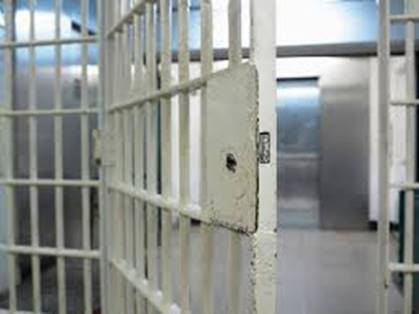
This week’s blog begins with a game: youth or adult, secure estate in England and Wales. Below are some statements, and you simply need to guess (educated guesses please), whether the statement is about the youth, or adult secure estate. So, are the statements about children in custody (those under the age of 18 years old) or adults in custody (18+). When you’re ready…
- 70% decrease in custody in comparison to 10 years ago
- Segregation, A.K.A Solitary Confinement, used as a way of managing the most difficult individuals and those who pose a risk to themselves or others
- Racial disproportionality in relation to experiencing custody and being remanded to custody
- Self-harm is alarmingly high
- 1/3 have a known mental health disability
- Homelessness after release is a reality for a high proportion of individuals
- Over half of individuals released from custody reoffend, this number increases when looking at those sentenced to 6months of less
How many did you answer youth secure estate, and how many adult secure estate? Tally up! Did you find a 50/50 split? Did you find it difficult to answer? Should it be difficult to spot the differences between how children and adults are treated/experience custody?
All of the above relate specifically to children in custody. The House of Commons Committee (2021) have argued that the secure estate for children in England and Wales is STILL a violent, dangerous set of environments which do little to address the needs of children sentenced to custody or on remand. Across the academic literature, there is agreement that the youth estate houses some of the most vulnerable children within our society, yet very little is done to address these vulnerabilities. Ultimately we are failing children in custody! The Government said they would create Secure Schools as a custody option, where education and support would be the focus for the children sent here. These were supposed to be ready for 2020, and in all fairness, we have had a global pandemic to contend with, so the date was pushed to 2022: and yet where are they? Where is the press coverage on the positive impact a Secure School will make to the Youth estate? Does anyone really care? A number of Secure Training Centres (STCs) have closed down across the past 10 years, with an alarmingly high number of the institutions which house children in custody failing Ofsted inspections and HM Inspectorate of Prisons (2021) found violence and safety within these institutions STILL a major concern. Children experience bullying from staff, could not shower daily, experience physical restraint, 66% of children in custody experienced segregation which was an increase from the year prior (HM Inspectorate of Prisons, 2021). These experiences are not new, they are re-occurring, year-on-year, inspection after inspection: when will we learn?
The sad, angry, disgusting truth is you could have answered ‘adult secure estate’ to most of the statements above and still have been accurate. And this rings further alarm bells. In England and Wales, we are supposed to treat children as ‘children first, offenders second’. Yet if we look to the similarities between the youth and adult secure estate, what evidence is there that children are treated as children first? We treat all offenders the same, and we treat them appallingly. This is not a new argument, many have raised the same points and concerns for years, but we appear to be doing very little about it.
We are kidding ourselves if we think we have a separate system for dealing with children who commit crime, especially in relation to custody! It pains me to continue seeing, year on year, report after report, the same failings within the secure estate, and the same points made in relation to children being seen as children first in England and Wales: I just can’t see it in relation to custody- feel free to show me otherwise!
References:
House of Commons Committees (2021) Does the secure estate meet the needs of young people in custody? High levels of violence, use of force and self-harm suggest the youth secure estate is not fit for purpose [Online]. Available at: https://houseofcommons.shorthandstories.com/justice-youth-secure-estate/index.html. [Last accessed 4th April 2022].
HM Inspectorate of Prisons (2021) Children in Custody 2019-2020: An analysis of 12-18-year-old’s perceptions of their experiences in secure training centres and young offender institutions. London: Her Majesty’s Inspectorate of Prisons.
Share this:


They think it’s all over…….

Probably the most famous quote in the history of English football was that made by Kenneth Wolstenholme at the end of the 1966 World Cup final where he stated as Geoff Hurst broke clear of the West German defence to score the 4th goal that “Some people are on the pitch…. they think it’s all over…….it is now”. I have been reminded of this quote as we reach April 1st, 2022 when all Coronavirus restrictions in England essentially come to an end. We are moving from a period of pandemic restrictions to one of “living with Covid”. Whilst the prevailing narrative has focussed on “it’s over” the national data sets would suggest it is most definitely not. We are currently experiencing another wave of infections driven by the Omicron BA-2 variant. Cases of Covid infection have been rising steadily over the past couple of weeks and we are now seeing hospital admissions and deaths rise too. This has led to an interesting tension between current politically driven and public health driven advice.
The overriding question then is why remove all restrictions now if infection rates are so high. The answer sits with science and the success of the vaccination programme, and the protection it affords, which to date has seen 86% of the eligible population have two jabs and 68% boosted with a third. Furthermore, we are now at the start of the Spring booster programme for the over 75s and the most vulnerable. The introduction of the vaccine has seen a dramatic fall in serious illness associated with infection and the UK government now believe that this is a virus we can live with and we should get on with our lives in a sensible and cautious way without the need for mandated restrictions. The advances gained in both the vaccination programme, anti-viral therapies and treatments have been enormous and underpin completely the current and future situation. So, the narrative shifts to one that emphasises learning to live with the virus and to that end the Government has provided us with guidance. The UK Government’s “Living with Covid Plan” COVID-19 Response – Living with COVID-19.docx (publishing.service.gov.uk) has four key principles at its heart:
- Removing domestic restrictions while encouraging safer behaviours through public health advice, in common with longstanding ways of managing most other respiratory illnesses;
- Protecting people most vulnerable to COVID-19: vaccination guided by Joint Committee on Vaccination and Immunisation (JCVI) advice, and deploying targeted testing;
- Maintaining resilience: ongoing surveillance, contingency planning and the ability to reintroduce key capabilities such as mass vaccination and testing in an emergency; and
- Securing innovations and opportunities from the COVID-19 response, including investment in life sciences.
So, in addition to the restrictions already removed from 1 April, the Government will:
- Remove the current guidance on voluntary COVID-status certification in domestic settings and no longer recommend that certain venues use the NHS COVID Pass.
- Update guidance setting out the ongoing steps that people with COVID-19 should take to minimise contact with other people. This will align with the changes to testing.
- No longer provide free universal symptomatic and asymptomatic testing for the general public in England.
- Consolidate guidance to the public and businesses, in line with public health advice.
- Remove the health and safety requirement for every employer to explicitly consider COVID-19 in their risk assessments.
- Replace the existing set of ‘Working Safely’ guidance with new public health guidance
My major concern with these changes is the massive scaling back of infection testing. In doing so we run the risk of creating a data vacuum. Being able to test and undertake scientific surveillance of the virus’s future development would help us identify any future threats from new variants; particularly those classified as being “of concern”. What we should have learned from the past two years is that the ability to understand the virus and rapidly scale up our response is critical.
What is also now abundantly clear from the current data is that this is far from over and it is going to take some time for us to adapt as a society. The ongoing consequences for the most vulnerable sections of our society are still incredibly challenging. It will not be a surprise to any health professional that the pandemic was keenest felt in communities already negatively impacted by health inequalities. This has been the case ever since the publication of the “Black Report” (DHSS 1980), which showed in detail the extent to which ill-health and death are unequally distributed among the population of the UK. Indeed, there is evidence that these inequalities have been widening rather than diminishing since the establishment of the National Health Service in 1948. It is generally accepted that those with underlying health issues and therefore most at risk will be disproportionately located in socially deprived communities. Consequently, there is a genuine concern that the most vulnerable to the virus could be left behind in isolation as the rest of society moves on. However, we are now at a new critical moment which most will celebrate. Regardless of whether you believe the rolling back of restrictions is right or not, this moment in time allows us an opportunity to reflect on the past two years and indeed look forward to what has changed and what could happen in terms of both Coronavirus and any other future pandemic.
Looking back, I have no doubt that the last two years have changed life considerably in several positive and negative ways. Of course, we tend to migrate to the negative first and the overall cost of life, levels of infection and the long-term consequences have been immense. The longer-term implications of Covid (Long Covid) is still something we need to take seriously and fully understand. What is not in doubt is the toll this has had on individuals, families, communities and the future burden it places on our NHS. The psychological impact of social isolation and restrictions has been enormous and especially so for our children, young people, the vulnerable and the elderly. The social and educational development of school children is of particular concern. The wider economic implications of the pandemic will take some time to recover. Yet, whilst the negative implications cause us grave concern many features of our lives have improved. Many have identified that this pandemic has helped them re-asses what is important in life, how important key workers are in ensuring society continues to operate smoothly and the critical role health and social services must play in times of health crisis. Changing perspectives on work, work life balance and alternative ways of conducting business have been embraced and many argue that the world of work will never be the same again.
On that final note it’s important that as a society we have learned from what I have previously described as the greatest public health crisis in my lifetime. Pandemic planning was shown to be woefully inadequate and we must get this better because there is no doubt there will be another pandemic of this magnitude at some point in the future. Proper support for health and social services are critical and the state of the NHS at the start of all this was telling. Yes, it rose to the challenge as it always does but health and social care systems were badly let down in the early stages of this pandemic with disastrous consequences. Proper investment in science and research is paramount, for let’s be honest it was science that came to our rescue and did so in record time. There will inevitably be a large public enquiry into all aspects of the pandemic, its management and outcomes. We can only hope that lessons have been learned and we are better prepared for both the ongoing management of this pandemic and inevitably the next one.
Dr Stephen O’Brien
FHES
Originally posted here


