
Home » Government (Page 6)
Category Archives: Government

Lockdown and Locked In

The COVID-19 pandemic has caused a whole range of issues for so many people. Everything from job losses, businesses closing down, people being unable to leave the house, people panic buying and stock piling. There has also been a sharp increase in mental health issues, loneliness, isolation, and fears about what the future holds.
However, one thing that has been reported on, is the increase in domestic violence that has occurred across the country. In April 2020, phone calls to the charity Refuge were up by 49%, (1) and people accessing their website seeking help had increased by 417% (2). As more people are working from home, abusers are at home too, making it harder for survivors of domestic abuse to get away from their partners.
In an effort to combat domestic abuse, and to provide confidential help to survivors, the government launched the ‘Ask for ANI‘ codeword scheme (Action Needed Immediately) whereby a survivor of abuse can go to their local pharmacy and get private and confidential help. Survivors can ask if they want to get help from a domestic violence refuge, or to get the police involved. Everything will be led by the survivor who will be in the private consultation room with the pharmacist helping the survivor (3)
References
(1) Home Office (2021) ‘Domestic Abuse and Risks of Harm Within the Home’ Available online at: https://publications.parliament.uk/pa/cm5801/cmselect/cmhaff/321/32105.htm#_idTextAnchor000 Accessed on 19/02/2021
(2) House of Commons (2020) ‘Home Affairs Committee’ Available online at: https://publications.parliament.uk/pa/cm5801/cmselect/cmhaff/correspondence/HASC-transcript-15-April.pdf – page 24. Accessed on 19/02/2021
(3) HM Government (2020) ‘Guidance for Pharmacies Implementing the Ask for ANI Domestic Abuse Codeword Scheme’ Available online at: https://assets.publishing.service.gov.uk/government/uploads/system/uploads/attachment_data/file/940379/Training_information_-_Ask_for_ANI.pdf Accessed on 19/02/2021
Other Sources
Unlisted (2020) ‘Domestic Abuse Codeword Pharmacy Training Video’ Available online at: https://www.youtube.com/watch?v=OOs3awxx5YU&feature=youtu.be Accessed on 19/02/2021
Share this:


Keep Calm and Forget the Pandemic or What to do in a pandemic? Take advantage of the situation
Eleven months now and there is a new spectre haunting Europe; a plague that has taken hold of our lives and altered our lifestyles. Lockdowns, the r rate, viral transmission, mutations are new terms that common people use as if we are experienced epidemiologists. Masks, made of cloth or the surgical ones, gloves and little bottles of antiseptic have become new fashion accessories. Many people report mental fatigue and others a state of confinement inside their own homes. Some people have started complaining that there is no light in this long tunnel, in country after country face with overwhelmed medical staff and system.
The optimist in me is unequivocal. We can make it through. Life is far more powerful than a disease and it always finds a way to continue, even in the most hostile of conditions. In my view however this is not going to be a feat of a great person; this is not going to be resolved by one solution. The answer is in us as a collective. Humanity thrived when it gets together and the ability to form meaningful bonds that is the backbone of our success to survival.
Imagine our ancestors making their first communities; people that had no speed like the felines, no strength like the great apes and no defensive shell to protect them. Coming out of Africa thousands of years ago, this blood creature had no offensive nor defensive structures to prevail. Our ancestors’ survival must have been on the brink. Who could imagine that some thousands of years ago, we were the endangered species? Our endurance lies on the ability to form a group that worked together and understood each other, carried logic, used tools and communicated with each other.
The current situation is a great reminder of the importance of society and its true purpose. People form societies to protect each other and advance their opportunity for success. We may have forgotten that and understandably so, since we have had people who claimed that there is no such thing as a society, only the individual. The prevailing economic system focuses on individual success, values individual recognition and prioritises individual issues. In short, why worry about others, miles away, feet away, steps away from us if we are doing well.
It is interesting to try to imagine a society as a random collection of indifferent individuals, but more people begin to value the importance of the other. After years of austerity and the promotion of individualism, more people live alone, make relationships through social networking and mostly continue to live a solitary life even when they live with others. Communities, as an ex-prime minister claimed as broken and so people waste no time with them. We take from our communities, the things we need, and we discard the rest. Since the start of the pandemic, deliveries, and online companies have been thriving. Whilst physical shops are facing closure, online ones can hardly cope with the demand. As a system, capitalism is flexible enough to retune the way wealth is made. Of course, when you live alone, there are things you cannot have delivered; intimacy, closeness, intercourse. People can fulfil their basic needs apart from the one that makes them people; their socialisation. We will have to address it and perhaps talk about the need to be a community again.
In the meantime, what happens at the top? In the Bible there was the story of the pool of Siloam. This miraculous pond blessed by an angel offered the opportunity for clemency for those who swam in the waters. Wipe the slate clean and start again. So, what do governments do? Interestingly not as much. Right now, as people try to come to terms with loss, isolation and pain, different governments try to address other political issues. One country is rocked by the revelations that its head of state has created a palace to live in. Another one, has finished construction of his summer palace. In another country they are bringing legislation to end abortions, in another they propose the introduction of police on campuses. Others are restricting the right to protest, and in a country famed for its civil rights, legislation is being introduced not to take pictures of police officers in public, even if they may be regarded in violation of duties. It seems that it is open season for the curtail of civil liberties through the back door. In an island kingdom the system has ordered and moves forward with the construction of more and bigger prisons. A sign that they anticipate public upheaval. Maybe; whatever the reason this opportunity to supress the masses may be tantalising, but it is wrong. When ever we come out of this we need to reconnect as a community. If this becomes an opportunity for some, under the suppression of civic rights, things will become problematic. For starters, people will want to see their patience and perseverance rewarded. My advice to those who rule, listen to your base.
Share this:


Late: The word that defines the UK’s Coronavirus pandemic management

Picture the scene. We are in Downing Street and the news media are awaiting another coronavirus press conference. Professor Chris Whitty, the Chief Medical Officer for England is ready. Sir Patrick Vallance the Chief Scientific Advisor is ready. Where is the Prime Minister (PM)? Late again.
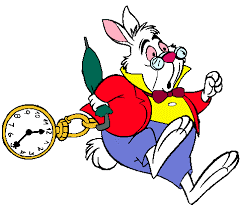
I have this vision of our PM frantically scurrying around like the White Rabbit in Alice in Wonderland humming “I’m late I’m late for very important date”. We might all smile at this vision but I’m afraid the analogy of being late is not a laughing matter when it is applied as the major theme for the UK governments management of what I described in a previous blog as the worst public health crisis in my lifetime. I also recall the PM famously using the phrase “A stitch in time saves nine” which is indeed true however in a pandemic being late or not sewing that stitch in time can and has cost thousands of lives.
In the week that has seen the UK pass 100,000 deaths it is right to reflect on the tragic loss of life. The call from government saying this is not the time to analyse why the UK has done so badly is in my view the wrong line to take. The government could learn a thing or two from the UK health care professions who for years have developed themselves as reflective practitioners. Donald Schon (1983) wrote extensively about reflection in terms of the creation of learning organisations who can both reflect in and on action. It is the former that has been sadly lacking in the UKs response to the coronavirus crisis. Reflection needs to be on the table throughout the pandemic and had it been, we may not have repeated the same mistakes. The management of pandemics is well documented in the medical literature. Professor Chris Whitty the Chief Medical Officer for England outlines how to manage a pandemic in this useful lecture at Gresham College.
Indeed it is also important to remind us of the words of Sir Patrick Vallance who when recommending the urgency of action in a pandemic implored that we “go earlier than you think you want to, go a bit harder than you think you want to and go broader than you think you want to in terms of restrictions.” My observation of the UK pandemic response leads me to conclude that we failed to do any of these. However, for this blog let’s focus on timing. Going early in terms of restrictions and other actions can have an enormous beneficial impact.
The last year has been to coin an overstated phrase “unprecedented” with many arguing that any government would have been overwhelmed and struggled to manage the crisis. Is this fair? One can look at other countries who have managed the situation better and as such have had better outcomes. New Zealand, Australia, Korea for example. Others will point to the differences between countries in terms of geography, population, culture, transport, relative poverty, healthcare systems, reporting mechanisms and living conditions which make comparisons inherently complex.
With the current death toll in the UK so high and continuing to rise, and many scientists telling us that things will inevitably get worse before they get better the question everyone is asking is : What has gone wrong? In this blog I’m going to argue that in large part our problems are based on a lack of urgency in acting. I’m arguing that we have not followed Sir Patrick Vallance’s recommendation and in particular we have been late to act throughout. Below I will set out the evidence for this and propose some tentative reasons as to why this has been the case.
Firstly, despite a pandemic being recognised as the largest threat to any country (it will always be top of any country’s risk register) the UK was slow to recognise the impending crisis and late to recognise the implications of a virus of this nature and how quickly it can spread globally. History informs us of how quickly Spanish flu spread in 1918. The UK was never going to be immune. Late recognition and poor pandemic preparedness meant we were late to get in place the critical infrastructure required to mount a response. Despite several warnings and meetings of the civil contingencies committee (COBR) the health secretary Matt Hancock was dismissive of the threat playing it down. Indeed, the PM failed to attend several early meetings giving the impression that the UK were not taking this as seriously as they should.
When faced with a looming medical/public health emergency it is important that the scientific advisors are in place early (which they were) and that their advice is acted upon. The evidence clearly points to a slow response to this advice which manifested itself in several critical late decisions early in the pandemic. The UK did not close its borders and implement quarantine measures allowing the virus to seed extensively in all parts of the community. Once community transmission had been established it was too late. It did not have in place a substantive testing regime, largely because we were unprepared. It very quickly became clear when we switched from community testing to testing only those in hospital with Covid symptoms that we lacked critical mass testing capacity and hence spent months trying to catch up. Evidence from previous outbreaks of SARS and MERS demonstrated how important mass testing was in controlling the spread, a position advocated by the World Health Organization (WHO). The UK saw case numbers grow rapidly and was slow to get the important public health messages out. Consequently, hospital admissions increased, and the death toll leapt. We were in serious danger of the NHS becoming overwhelmed with critically ill Covid patients.
Public health, medical and scientific experts suggested through their modelling exercises that the death toll, if we didn’t act quickly, could exceed 500,000; a situation socially and politically unpalatable. Therefore, in the absence of no known treatments and no vaccine we would have to resort to the tried and tested traditional methods for the suppression of a respiratory borne virus. Robust hand hygiene, respiratory/cough etiquette and maintaining social distance to reduce close social interaction. The logical conclusion was that to radically reduce social contacts we needed to lockdown. It is widely acknowledged now that the UK was at least a week late in introducing the first lockdown in March 2020.
In the meantime, the virus was sweeping through vulnerable elderly groups in care homes. We were again late to recognise this threat and late to protect them despite Hancock’s claims of throwing a ring of protection around them. The death toll continued to mount. At this stage both the Health (NHS) and care sectors were under enormous pressure and ill equipped to manage. The greatest worry at that stage was lack of adequate Personal Protective Equipment (PPE). Due to our ill preparedness we were late to provide appropriate PPE to both the NHS and the care home sector, exposing healthcare workers to undue risk. The death toll of healthcare workers in any pandemic is high and we were now starting to see this rise in the UK.
Another major criticism during the earlier months was how slow we were in ramping up testing capacity, tracking, tracing cases and ensuring isolation measures were in place. Indeed, concerns about test, trace and isolation continue today. However, lockdown and other public health measures did reduce the case numbers through the summer but inevitably the virus, which thrives in cold damp conditions started to cause further problems as we approached autumn and winter. Combined with this the UK saw a new variant of the virus emerge in the autumn with greater transmissibility. Cases started to rise again along with the inevitable hospital admissions and deaths. It appeared despite warnings from all scientists and health professionals that a second wave was highly possible we were late to recognise the emergence of a second wave of infections. The signs of which were there in September 2020. This led to a second lockdown in November when the advice from the scientific advisors was to lockdown in mid-October or earlier. This decision was compounded by a complex tiered restrictions arrangement to manage outbreaks locally aimed at the avoidance of unnecessary restrictions. Meanwhile the death toll continued to mount.
Notwithstanding the emergence of a new variant of the virus during the second lockdown everyone’s attention was switched to Christmas. The advice offered from government that restrictions would be relaxed for five days was met with incredulity by health professions who argued that this would simply allow the virus to be spread exponentially through greater household mixing. All the evidence at this stage pointed to household mixing as the primary source of transmission. As the situation worsened following the release of lockdown in early December it became obvious that the Christmas guidance had to change. To no ones surprise the advice was changed at the last-minute meaning everyone would have to rearrange their plans. The late change to the Xmas guidance probably meant more family mixing than would have happened had the advice been robust and communicated to the public earlier. Very quickly after Christmas we saw rapid changes to the tier management despite calls for a further lockdown. Cases rose rapidly, hospital admissions were now worse than in the first wave and scientists called for a lockdown. Consequently, we were late implementing Lockdown 3.
Throughout the pandemic the government has provided detailed guidance on restrictions, care homes, travel arrangements and education. It’s difficult to get this right all the time but the issuing of guidance was at times so late it became difficult to interpret the issues with clarity. Probably one the best examples of this relates to the advice provided to schools. Should they stay open or close? What should the Covid secure measures be? How do you construct bubbles of students to reduce social contact? Covid testing of pupils and staff? examinations and assessment guidance? However, the final straw was surely when schools opened in January after the Christmas break to only be told they had to close the very next day as we moved into Lockdown 3.

In conclusion it is said that to manage a pandemic you need a clear, robust strategic plan. The evidence presented here would suggest a lack of strategic planning with crisis decision making on the hoof. Some have argued that we have a PM who struggles to take the big decisions required, who procrastinates and inevitably is left with Hobson’s choice. If you couple this with a group of key ministers who appear to lack the competence to carry their portfolios we have the recipe for a disaster. The consequence of which means the UK has experienced a terrible outcome across a whole set of health, education and economic indicators.
References
Schon, D. (1983) The reflective practitioner: how professionals think in action Basic Books, New York
Whitty, C. (2018) How to Control an Epidemic https://www.youtube.com/watch?v=rn55z95L1h8
Share this:


Christmas ’20: I Bought Presents for the First Time in a Decade
As someone that lives in the privilege of not actually had to experience Coronavirus (to my knowledge), I have spent a good portion of last year on the sidelines. Losing my auntie during my undergrad in January 2017, and then my cousin Steve at the start of 2020 (some of you may know him as the owner of Kettering Road’s Driver), I think many would agree with me when I say ‘grief makes you humble.’ In typical Caribbean fashion, Steve’s wake made me remember the importance of community and togetherness. He ran Drivers Menswear in Northampton and if you blinked you wouldn’t know it was there, a shop that had been there since the 1980s. With its closure in 2020, that marked the end of an era, and I will now have to find somewhere else to buy jeans!
Growing up here, many of the people I know in the community and work with have actually known me for years. And in some cases, have known me for all my life (basically), very much including staples of the West Indian community like at Inspiration FM
Some time after Steve’s funeral, we were thrust into Lockdown 1.0 by the Government and it was in those months between March and June that I saw that power of community again. Albeit a symbolic gesture, clapping for the National Health Service on Thursdays in some cases was the one thing keeping some people going. It was a recurrence that kept their mind at bay in the chaos of the pandemic. I ran events online too, and people were grateful. In that same breath, it is evident to see the number of people grassing up their neighbours for flouting the rules, or attacking people for criticising the police’s £10,000 fines for those that break the rules. Last year, I also watched a number of films, including a rewatch of Goodfellas. Even in a health crisis where people have broken the rules, Robert DeNiro’s voice as Jimmy Conway is in my head telling me “to never rat on your friends and always keep your mouth shut.” When in doubt, listen to Scorsese!

These people may be rule-breakers but I know if it comes to the wire, these are also the same people (not government) that would put people ahead of profit. Fellow blogger @drkukustr8talk wrote a Facebook post saying “If anything, Corona taught us____” and I commented “There is more of a community than I thought there was”, to which he replied “NOW, dear Tre, THAT is a LOT coming from you.” Yes, I’m sure @paulaabowles and @manosdaskalou will attest to that too, seeing from our number of conversations since meeting them in September 2019. Cynicism and realism are two sides of the same coin and I grew up in The Commmunity. However, not like I have seen this past year. My work as an educator engaging with people inside and outside Northamptonshire’s borders tied, with the Murder of George Floyd/the protests and the pandemic, it’s left me thinking that when I gave humanity chance, locally, humanity actually delivered.
November came and I was awarded ‘Northampton’s Male Role Model of the Year.’ That was humbling. It wasn’t the award that really got to me. It’s the love and respect of your neighbours, and that’s not something one can articulate in words. I thought about this feeling again when I found myself watching the 1970 adaptation of The Railway Children. Albert Perks has always been my favourite character, very much a man of his generation. Not taking charity but also respects his community. You do right to others, they do right to you. That sort of mentality. This is a character I came across at twelve years old and I have not been the same since. The award is second to the number of people that voted for me, and I will take that to my grave.

December came, and I bought Christmas presents. I am as surprised as you. For years, I have famously been a humbug inside and outside of my family. Forever anti-Christmas on the basis it was “a super-spreader of consumerism” (Ventour, 2010). My mother makes jokes about it, recalling to when I was kid walking around Abington Street in a hat with bah humbug on the side. The pandemic tied with BLM and meeting all the wonderful people at Amplified NN allowed me to break my “life rules.” Grief makes you humble. With the addition of Coronavirus, you could say it has made me soft (not that I was an awful person before). If the COVID pandemic and lockdowns have taught us anything, it’s that so many of us were living life on incompatible frequencies and were trying to make the parts fit. We also saw how kindness was a shock to the system, since in the words Tennessee Williams so few have ever “depended on the kindness of strangers.”
I bought presents for the first time in ten years; I have the love and respect of my neighbours and I started a Masters in September. I don’t spend my days waving at ‘kind old gentlemen’ on the trains going by, but I think in fifty years that there may be three children that may think of me as that old gentleman (but not that old of course), or by the time I’m forty-one… I’m not too different to Albert Perks and there is power in that.
Share this:


2020: A Year on “Plague Island”
Last year in this blog, I argued that 2019 had been a year of violence. My colleague, @5teveh provided a gentle riposte, noting that whilst things had not been that good, they were perhaps not as bad as I had indicated. Looking back at both entries it is clear that my thoughts were well-evidenced, but it is @5teveh‘s rebuttal that has proved most prescient in respect of what was to come….
The year started off on a positive, personally and professionally, when both @manosdaskalou and I were nominated for Changemaker Awards. Although beaten by some very tough competition, shortly before leaving campus we were both awarded High Sheriff Awards, alongside our prison colleagues, for our module CRI3006 Beyond Justice. As colleagues and students will know, this module is taught entirely in prison to year 3 criminology students and their incarcerated peers. Unfortunately, the awards took place in the last week on campus, but we are hopeful that we can continue to work together in the near future.
Understandably much of our attention this year has been on Covid-19 and the changes it has wrought on individuals, communities, society and globally. Throughout this year, the Thoughts from the Criminology Team have documented the pandemic in a variety of different ways. From my very early thoughts, written in the panic of abandoning campus for the experience of lockdown to entries from @helentrinder @treventoursu @jesjames50 @cherylgardner2015 @5teveh @manosdaskalou @anfieldbhoy @samc0812 @drkukustr8talk @zeechee @saffrongarside @svr2727 @haleysread The blog has explored Covid-19 from a variety of different angles reflecting on the unprecedented experience of living through a pandemic. It is interesting to see how the situation and our understanding and responses have adapted over the past 9 months.
Alongside the serious materials, it was obvious very early on that we also needed to ensure some lightness for the team and our readers. With this in mind, early in the first lock down, we created the #CriminologyBookClub. We’re currently on our 8th novel and we’ve been highly critical of some of the texts ;), as well as fallen in love with others. However, I know I speak for my fellow members when I say this has offered some real respite for what’s going on around us.
Another early initiative was to invite all our bloggers to contribute an entry entitled #MyFavouriteThings. We ended up with over twenty entries (which you’ll find via the link) from the criminology team, students, as well as a our regular and occasional contributors. Surprisingly we learnt a lot about each other and about ourselves. The process of something as basic as writing down your favourite things, proved to be highly cathartic.
Whilst supporting each other in our learning community, we also didn’t forget our friends and colleagues in prison. Although, the focus has rightly been on the NHS and carers, the pandemic has hit the prison communities very hard. Technology can solve some of the issues of loneliness, but to be locked in a small room, far away from family and friends creates additional problems. For the men and the staff, the last 9 months has brought challenges never seen before. Although, we could not teach the module, we did our best, along with colleagues in Geography and the Vice Chancellor @npetfo, to provide quizzes and competitions to help pass the hours.
In June, the world was shocked by the killing of George Floyd in the USA. For many of us, this death was one in a long line of horrific killings of Black men and women, whereby society generally turned a blind eye. However, in the middle of a pandemic, the killing of George Floyd meant that people could not turn away from what was playing on every screen and every platform. This lead to a resurgence of interest in Black Lives Matter and an outpouring of statements by individuals, organisations, institutions and the State.
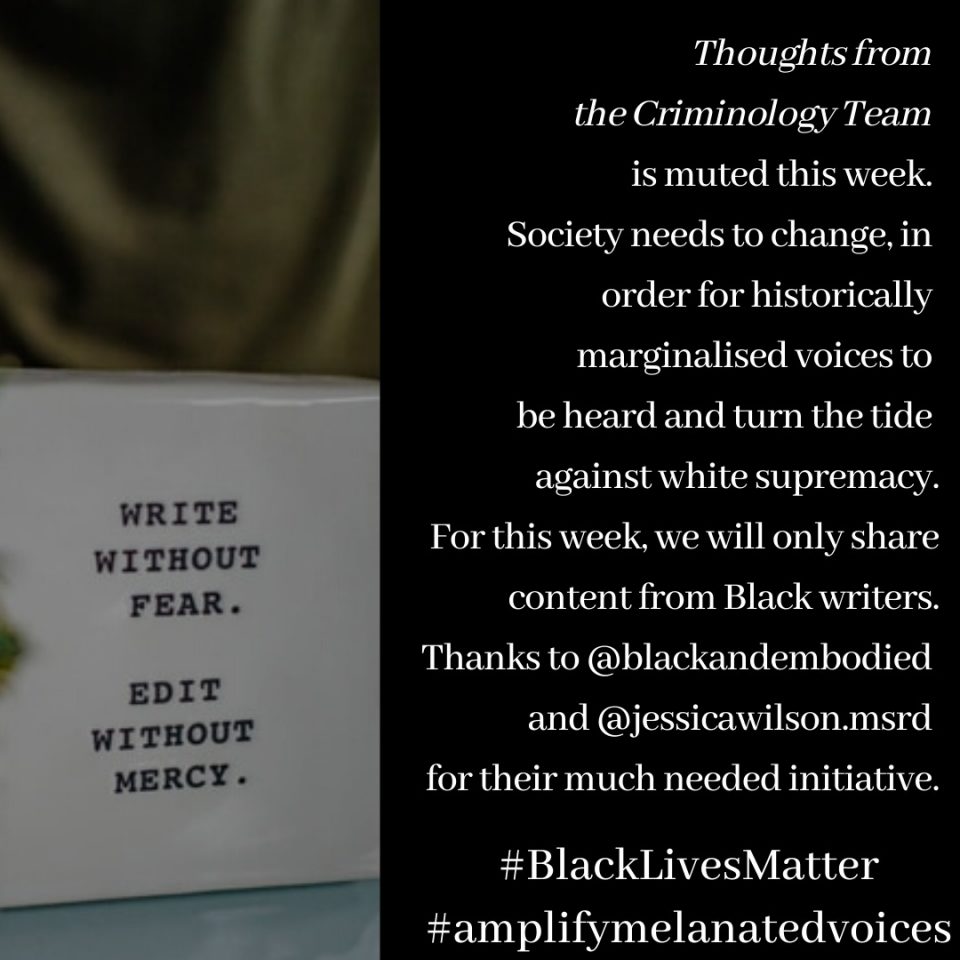
For a week in June, the Thoughts from the Criminology Team muted all their social media to make space for the #AmplifyMelanatedVoices initiative from Alishia McCullough and Jessica Wilson This was a tiny gesture in the grand scheme of things but refocused the team’s attention on making sure there is a space for anyone who wants to contribute.
Whether this new found interest in Black Lives Matters and discussions around diversity, racism, decolonisation and disproportionality continue, remains to be seen. Hopefully, the killing of George Floyd, alongside the profound evidence of privilege and need made evident by the pandemic, has provided a catalyst for change. One thing is clear, everyone knows now, we can no longer hide, there are no more excuses and we all can and must do better.
This year some old faces left for pastures new and we welcomed some new colleagues to the Criminology Team. If you haven’t already, you can read about our new (or, in some cases, not so new) team members’ – @jesjames50 @haleysread and @amycortvriend – academic journeys to becoming Lecturers in Criminology.
Finally, looking back over the last 12 months, certain themes catch my eye. Some of these are obvious, the pandemic and Black Lives Matter have occupied a lot of our minds. The focus has often been on high profile individuals – Captain Tom Moore, Joe Wickes, Marcus Rashford – but has also shone on teams/organisations/institutions such as the NHS, carers, shop workers, delivery drivers, the scientists working on the vaccines, the list goes on. Everyone has played a part, even if that is just by staying at home and out of the way, leaving space for those with a frontline role to play. Upon reflection it is evident that the over-riding themes (and why @5teveh was right last year) are ones of kindness, of going the extra mile, of trying to listen to each other, of reaching out to each other, acknowledging unfairness and privileges, recognising the huge loss of life and the impact of illness and bereavement and trying to make things a little better for all. Hope has become the default setting for all of us, hope that the pandemic will be over, alongside hopes that we can build a better world with its passing. It has also become extremely clear that critical thinking is at a premium during a pandemic, with competing narratives, contradictory evidence and uncertainty, testing all of our ability to cope with change and respond with humility and humanity.
There is no doubt 2020 has been an unprecedented year and one that will stay with us for ever in the collective memory. Going into 2021 it’s important that we remember to consider the positives and keep trying to do better. Hopefully, in 2021 we will get to celebrate Criminology’s 21st Birthday together
Remember to stay safe, strong and well and look out for yourself and others.

Share this:


Covid -19: An opportunity too good to miss
And so, vast swathes of the country have gone into a new lock down (tier 4). We all must have known in hearts that this was coming and those of us that are not in tier 4 will be wondering just when the new lock down will hit us. We can all moan about our ruined Christmas and feel bitterly disappointed about not seeing relatives and friends. We can blame Boris for this monumental cock up, but we have to face facts, Covid -19 is here and something has to be done to stop the spread of the disease.
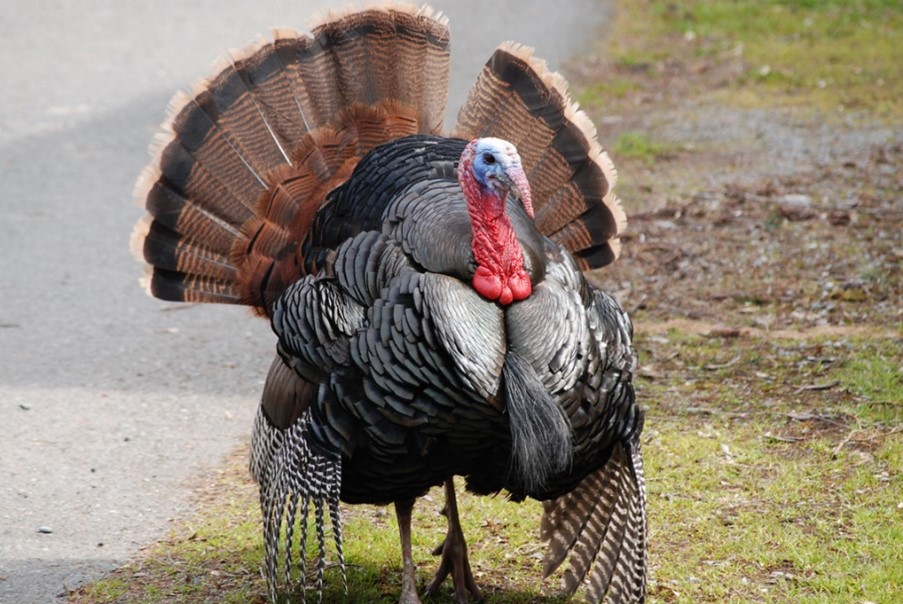
I, like so many, am upset that I will not be able to see my family in person this Christmas but over the last few days I began to wonder just how much of a hardship that is. There was a man on the news the other day that was moaning about the Christmas restrictions, he and his wife had a 15 lb turkey that was now going to waste. My first thought was, so you’d rather catch Covid you *^&$£” **. But this morning I thought, aren’t you lucky to have a 15lb turkey and, as my wife and I discussed whether we will be having a roast on Christmas day and the Sunday after, I thought aren’t I lucky too. There are two things that strike me, I’m able to have what food I want on Christmas day and I’m saving a bloody fortune not having to have all the family round or take them out for Christmas dinner and drinks. The pandemic has some upsides.
But, this is the crux of the matter, how can I sit down to my Christmas lunch knowing that I have money I would have spent sitting in the bank when there are people out there who will be wondering right now, not about the massive turkey, or the family not coming round, or whether to have chicken on Christmas day and Sunday but, whether they can feed themselves and their family tomorrow, let alone Christmas day. We could of course blame Boris and his government (a very rational decision) but judging by Reece Mogg’s comments the other day, they have little interest. We could just ignore it, don’t think about it, pretend all is well and on Christmas day raise a glass to our nearest and dearest and those that we are missing. But as we must face facts that Covid – 19 is here, so must we face facts that people, real people, are starving in this country. It shouldn’t be like that, but it is.
So my wife and I have decided that we will work out how much extra we would have spent this Christmas, by going out, by going to parties, by catering for family and we will spend that money on food and give it to a food bank. It won’t be very much in the greater scheme of things, but it will be something. I’m not writing this blog to say how marvellous we are, far from it, but rather to challenge all of you to do the same. Even a little extra in your shopping before Christmas is going to make a huge difference. Let’s turn this Christmas into one we can remember for the right reasons and turn the Covid- 19 pandemic into an opportunity that we seized for the good.
Please see below for a list of local and national organisations helping families this Christmas and throughout the year:
AmplifiedNN Community Group
AmplifiedNN Festive Family Fundraiser
Northamptonshire Food Poverty Network
Share this:


Misfortune and the Blame Game
It seems to be a peculiar past-time in this country to moan and find fault with everything and blame anyone but ourselves for our mishaps and misfortune.
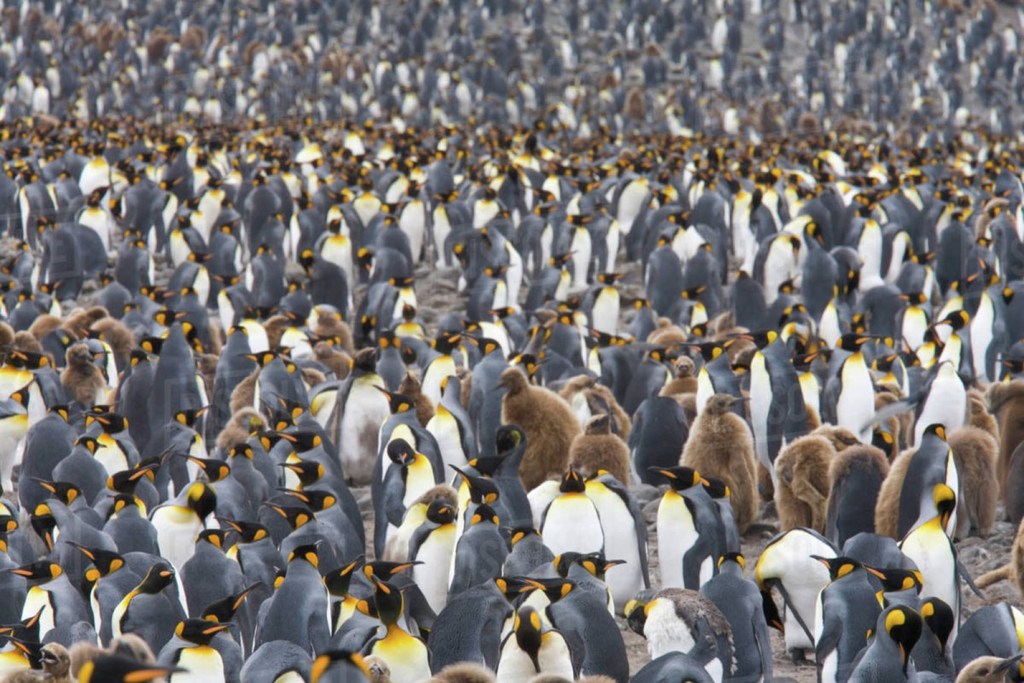
I was watching a television programme last night about Britain’s bizarre weather conditions in 2020 and what struck me, actually you could have slapped me round the face with a wet kipper, was the behaviour of people in the heatwave of April 2020. An extraordinary heatwave saw people flocking to parks and to the beach. Some scenes looked more akin to those pictures we see of seals or penguins on a remote island where there isn’t an inch to move without stumbling over the next incumbent, all staking their claim to a little parcel of land on which they can sunbathe or nest. ‘Weren’t we supposed to be social distancing and in lockdown’? Of course, we blame the government for lockdown 2 and the tier system. How unfair it is that we can’t see our loved ones, oh the mental anguish when we miss school, or have to learn online or get made redundant or our business goes belly up. But flock to the seaside we must, go to the park and mingle is a necessity, rush to the pub and drink and make merry, have parties and raves and forget about social distancing and that awful thing that the government keeps wittering on about. Let’s blame the police for dishing out fines, its so unfair and let’s even blame the hospitals, that’s where my loved one caught Corona virus. Yes, the government were to blame for suggesting that we should ‘eat out to help out’, but did we really think it was suddenly fine to plunder food from every outlet that provided a cut-price meal? Like lemmings, people rushed to pack out restaurants and pubs in search of a culinary bargain and many got more than they bargained for. ‘Two for the price of one’ had a new meaning.
None of this of course is a new phenomenon; the virus might be, the behaviour is not. We speed along the road and when caught by the police ask them if they haven’t got anything better to do than stop us. We complain about the NHS but carry on drinking lots, eating rubbish and failing to exercise. Our illness in the morning is due to the bad kebab, not the large amount of alcohol we consumed. We moan about our rubbish grades, somehow expecting that the parties, the staying in bed all day, the failure to attend, the work commitments and all the other hubris will get us an A grade or at least a B. It’s the way the lecturers teach, not our lack of commitment, that’s the problem here, ‘oh and I’m paying for this rubbish’. In football, we blame the referee for not giving a foul or for giving a foul when we are convinced it wasn’t one and yet watch players carry on diving all over the place rolling around as if they’ve been scythed down by the grim reaper and then chewed up by Jaws before being magically revived by the miraculous sponge. More at home with an Equity Card, players constantly seek to bamboozle the referee, it’s no wonder they sometimes get it wrong. We moan about the stampede at the start of the shop sales, not that that’s been a problem this year, well not yet anyway, but we are part of the stampede, shoving and trampling over others to get to the much reduced bargain. We lament the demise of the high street, watching the tumbleweed blow past as we scuttle away to our laptops, pads and phones to do a bit more online shopping only rushing out in droves (social distancing ignored) to take advantage of the demise of yet another retail outlet.
Whilst ministers are trying to hammer out a Brexit deal, posturing and moaning about the intransigence of the other side, they probably secretly hope that there will be no deal. That way we can blame the Europeans and the Europeans can blame us. But are we not to blame for this monstrosity; we voted for it? We live in a democracy and are rightly proud of it and yet Trump like we are quick to point out that we personally didn’t vote for that bit that we don’t like, and the vote was probably rigged anyway. Having realised our error, we still voted in the government that said it would get it done and we didn’t care about the price. Let’s hope that a return to the troubles in Ireland doesn’t become a reality, but if it does, it’ll no doubt be the fault of the Irish. Our sense of history only stretches back to when we saved the world from the Nazis.
We need to look to ourselves and our own action and behaviour before we start blaming everyone and everything around us. Yes, misfortune does fall on some of us and sometimes it isn’t our fault but like it or not, many of the problems are caused by us and we compound the problems by blaming others. If we fail to grip the notion that we have responsibility, then history will judge us as a nation that moaned about everything and did nothing but cause calamitous problems for ourselves and the rest of the world.
Share this:

A grand day out
Have you noticed how the news is reported these days in respect of Covid-19? Gone are the individualised and personalised stories of the casualties of this awful virus. Gone are the stories of individual and collective heroism of ordinary, actually extraordinary, people. Gone is the mention of the R rate and the discussion around it. Gone are those pictures of the people that died. No longer the headline, Covid- 19 is reduced to the middle order and consists predominately of the number of cases and the number of deaths. We watch these figures rise on a daily basis and we hear discussion about local lockdowns and areas with high incidents. We hear confusing stories about lockdown and then no lock down and then lockdown or is it partial lockdown and where exactly does it apply? We hear about areas that have high incidents where no action is being taken, well not yet anyway. And companies that remain open despite outbreaks only to be forced to close, let’s be honest, because of media scrutiny. We hear more from Nicola Sturgeon the first minister of Scotland than we do from our own prime minister.
We are sucked into a world of tourism, safe corridors and safe countries, lists and the plight of the aviation industry. We hear tourists moaning about self-isolation (I constantly scream at the tv you made that choice you ****). We are sucked into the debacle around schools and qualifications and returning to school. And we are told by Boris that we should all go back to work, back to the office. We hear of tourists returning on flights having contracted Covid-19 and passengers not wearing masks on flights. At the same time, we are told by bosses in the aviation industry that the industry is doomed unless something is done about it, this self-isolation malarkey really isn’t good for business. Once again, I shout at the tv (I don’t suppose you’ll be getting on one of those cattle trucks in a hurry you ***). Do I sound angry, I guess I am?
When the virus first struck, whenever that was, we all probably didn’t take it that seriously, serious but you know, not that serious. Then there was the lockdown, now that was serious, and it hit home how serious it was. Then we watched the tv and that reinforced how serious it was and if you weren’t a little concerned for yourself, your friends and your loved ones then you really weren’t in touch with reality. And then the economic costs started to rack up and that became really serious. And then, the government decided that since the NHS hadn’t been overwhelmed it was now permissible to open things up. And then, the government decided that it would pass the responsibility for the management of Covid to local authorities. And somewhere along the line, the responsibility for ensuring my safety, and yours became that of business. As long as businesses could assure us that they were Covid safe then we could go back to work and go shopping and eat out. In fact, you could eat out for 50% less in some places aided by a government scheme. A scheme to get businesses back on their feet which of course involved packing people in. Just how Covid secure are these places, well you take your chance, but you can feel assured.
I decided to venture out with my wife to get ourselves a new mattress. The old one has had its day, we meet in the middle of the bed every night, whether we want to or not, the only solution, to try to sleep as close to the edge as you can and if possible somehow cling on. Time for a new mattress. I’m not sure about these new-fangled mattresses (you know, the ones that come in a box and then pop out never to be returned to the box) and so rather than shopping on line we went to a store. We entered the store, masked up as is required, to be greeted by an assistant who pointed to the hand sanitiser. “oh, that bottle doesn’t work”, she says, “try the other but you’ll have to hit it quite hard”. Oh well, at least she’s wearing a face shield and I notice the other assistants are doing the same, except that theirs are up, a bit like a visor really, as they hang about talking to each other. One saunters over to us and after a brief conversation leaves us to look at and try the mattresses. Now that sounds alright doesn’t it, except that not only was his face shield not down, he’d taken it off altogether and thrown it onto the bed. We kept our distance. So, the markings on the floor suggesting 2 metre distance and the hand sanitiser at the entrance and the issue of face shields to staff are all Covid compliant but in operation, not really. Still we had a grand day out and felt quite assured.
As we hear the clamour to get schools back up and running, we hear about the plight of the school children and as a consequence, the voices and concerns of the teachers are drowned out. As we hear the concerns of lecturers from their union, the lecturers themselves and even the medical profession, their voices are drowned out. The only thing that seems to matter now is the economy and business. Those that run it are not on the coal face and will not be putting themselves at risk, but they tell us how we must all do our bit and return to work. If you wonder how getting children back to school fits in, well parents caring for children at home are not in the office working.
I selected some passages from the government guidelines regarding Covid 19.
“The more people you have interactions with, the more chance the virus has to spread. Therefore, try to limit the number of people you see – especially over short periods of time”
“limit the number of different activities which you partake in succession to reduce the potential chain of transmission”
“group size should be limited to the minimum which allows the activity to take place”
Now isn’t that confusing. We must all get back to work and back to the offices and, yet the government’s own guidelines seem to suggest this should not happen unless absolutely necessary. How exactly does this fit with teaching and class sizes and the number of students that teachers interact with? The same applies to lecturers at university, of course they have the added problem that the students will have come from all over the country and then come together in a Covid -19 cauldron. Pack them all in but you can feel assured that schools and campuses are Covid safe (a bit like those planes returning from foreign climes).
I feel like I am in a socio-economic experiment. An experiment where I see the disadvantaged and weak in our society put at risk for the sake of business. Where the older generation are made to feel dispensable and unimportant. Where figures are manipulated to downplay the seriousness of the problem. Die on day 29 after infection and you won’t be included in the Covid statistics. I see an experiment where facts are bent, ignored, and a narrative that subjugates the truth to management and business ideals. It looks like I’m going to be shouting at the tv for a very long time and I must be honest I really don’t feel very assured.

Share this:


Covid-Universities and what if
Over the past week or so there have been some mutterings about whether it is safe to open up universities. There is the advice from the scientific advisors (Universities get some Indie SAGE advice on reopening campuses in September) and some thoughts from academics ‘Why universities must move all teaching online this autumn’.
As we move closer to the start of term, so my dread of what is ahead comes into sharper focus. I try to imagine what it would be like and try to reassure myself that the risk assessments have been done and the reassurances that the universities are Covid safe are true rather than simply fantasy and wishful thinking.
In this safe environment I imagine that the number of students and staff on campuses will be carefully managed as it is with many large stores.
I imagine that all staff and students will be wearing face coverings. This is not for protection of themselves, as the use of coverings is a somewhat altruistic venture, I cover my face and protect you and you cover yours and protect me.
I imagine that all thoroughfares will be marked and monitored. Social distancing is important, and we need to be at least a metre apart.
I imagine that the classrooms will be laid out in such a way that social distancing can be maintained and that the classrooms will be well ventilated, even in the middle of winter. I imagine all the chairs and desks and any other equipment will be wiped down after each session.
I imagine that face to face teaching will be limited and interactions with multiple groups of students will be severely curtailed to ensure lecturers are not put at unnecessary risk. I imagine each class will comprise only a few students to minimise risk.
I imagine that anyone who is symptomatic will not attend a university and will after being tested self-isolate. I imagine that all the people they have been in contact with will do the same for a whole, boring, 14 days.
I imagine that the universities’ management will be at each university, leading from the front. They will be checking to ensure the safety of students and staff. They will be mixing with staff and students, receiving feedback and continuously monitoring. I imagine the safety of the students and staff is paramount.
And then I think, what if…
What if campuses are a free for all. Students can come and go as they please, there is no monitoring of volumes. Or what if there is, but it is impossible to enforce with limited staff to do so. And those staff tasked with this endeavour are at greater risk due to the proximity with large volumes of students.
What if people decide not to wear face coverings or having got into the building decide to take them off or several people are exempt for some reason or another. Altruism has gone out of the window. I’m a criminologist and I know that people break the rules for all sorts of reasons and the only certainty is that some people will break the rules.
What if social distancing becomes all too difficult. Many of us have experienced it in stores. A one-way system works for most, but a significant number just don’t abide by it, for whatever reason. People break rules.
What if the social distancing in classes is impossible, there just isn’t enough classes to maintain it with the volume of students on the course. What if ventilation is impossible, other than air conditioning, some classes are in the middle of buildings. Who will clean the chairs and equipment after each class? Go to a restaurant and tables and chairs are wiped down after each use so who will do it at a university?
What if lecturers have to teach multiple groups face to face as there are not enough staff to spread the load. Teaching in a classroom for two hours multiple times in a day with different groups each time must surely expose lecturers to much greater risk.
What if students are of the age group where they are more likely to be asymptomatic? How many that are infected might be at a university, spreading the virus around campus and around the locality. Even if they are symptomatic, how likely are they to self-isolate? Judging by the street parties and illegal raves reported on the news, there is a good chance that some will break the rules. Let’s be realistic, if you are only likely to suffer affects akin to a cold, why would you be that bothered about social distancing or self-isolation?
And finally, what if all managers avail themselves of the much-vaunted government advice, work from home if you can. Leadership from the rear, the bottom line is more important than the safety of others. We can of course dress this up in management psychobabble about what the students need.
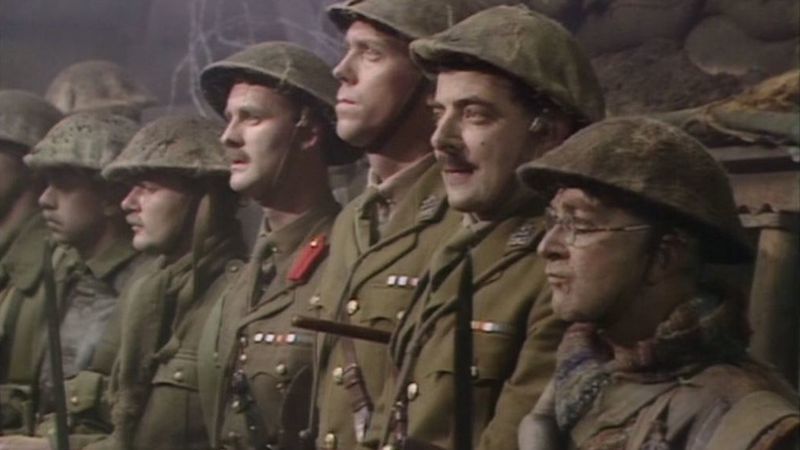
Never mind, ‘Tally ho and all of that sort of thing and over the top we go’*.
* For those of you that are lost at this point it might be worth a visit to the last episode of Blackadder Goes Forth.
Share this:


Volunteering Matters

Some people volunteer because they have to, I volunteer because I want to. From a personal perspective I knew that the foodbank was the place that I wanted to be at.
I started volunteering in 2016, doing just 1 day a week and as the years have gone by it has meant more hours spread over a couple of days, especially during the Christmas holidays which are incredibly busy. Proving that many volunteers are necessary and needed to help keep it going.
It is a place that suits me because its local and fits around my studies. I am able to learn new skills and gain insightful knowledge. The volunteers are very welcoming and warm people. However, over the years I’ve noticed a dramatic increase in the use of the foodbank and its diversity. In theory, its usage should be on the decrease.
Within the foodbank, we deal with some very complex individuals who require different approaches. It sounds cliché, but I volunteer to make a difference and eradicate the myth that the foodbank is used for those in society that are labelled as people who can’t budget properly.
I have found that service users are predominantly people living on low incomes. People who are working on zero hours contracts; or have reduced hours and having their wages topped up with benefits like Universal Credit. As a result, they just don’t have enough money coming in; leaving hardly anything for essentials such as food and heat. I found during my research that many families have been without electricity, that means no cooking facilities or warmth! Pushing them further into poverty. In this day and age people should not be without the basics.
In my time as a volunteer I have met some lovely people who have been affected by different adverse life events and it is heartbreaking to witness, but equally by giving something back I can see their eyes light up when they are given their food parcels. I feel I am learning to be more compassionate. However, if the person has no access to electricity how are they supposed to cook or provide a meal for their children without electricity?
On a weekly basis we see many different people from so many backgrounds; from civil servants, to social workers and the homeless. Service users can often be emotional and sometimes defensive, who feel they don’t deserve to be given food because they are working. The foodbank does not discriminate, it sees everyone as equal.
What does that say about the world we live in? That being food poor or food insecure is something that must stay hidden and not be talked about…people living with food insecurity would rather go without, than ask for help. The basic income does not cover the essentials such as food after paying bills.
It makes me mad that poverty is an accepted part of society and service users state they feel undervalued and unaccepted. The question that must be asked ‘Is poverty violence? The answer is a resounding YES, due to the structures within society that prevent people living with food insecurity from accessing food. Therefore, locking them into poverty, preventing them from moving out of the cycle of deprivation.
It is left to charitable organisations to do whatever they can to help that person to be able to eat and survive. But how long can these charities go on for? The Trussell Trust began in 2000 in the UK….
Children and families should not be going without food, as it is a fundamental right that everyone should have access to the basics. Food insecurity is more prominent now than ever with The Trussell Trust (2020) reporting an increase of 81% in emergency food parcels.
The foodbank is available to help people to access a 3 day food parcel to ‘see them through” a difficult period in their lives. During my time spent conducting my dissertation within the foodbank, food poverty was a combination of a variety of reasons such as low income, often together with a contributory factor such as an adverse life event. For example, the loss of employment or breakdown of a relationship which will only add more shame and stigma. The foodbank is not just about giving away free food, it’s about offering a safe place to sit and get warm and service users can relax, tell their stories and feel free for as long as they can, before they have to face more challenges from the world.
Furthermore, some in society see the foodbank as the sticking plaster that holds the poor in society together. I would say that without the foodbank many people would be committing crimes or be starving. Some politicians have stated that food banks are the heart of community cohesion. The only time I have seen the local MP at our foodbank is for a photo opportunity. The poor in society are forgotten and its about time they weren’t!
The service users are people who are neglected by society and the government, who by definition, make them feel they are to blame for their situation. By visiting the foodbank we show them respect and compassion.


