
Home » Government (Page 7)
Category Archives: Government

The pandemic and me – Lessons I’ve learnt from the #lockdown

This lockdown has certainly given us time to think and perhaps reflect on a variety of topics and situations. I’ve shared a few thoughts below and I wonder just how many are universal in some way.
I need to ensure I have a structure to my day and week. I think we all need some sort of structure to our lives and that structure is often given to us by work and perhaps other sociable events such as going to the gym or going to a coffee shop. It may be that the weekly shopping provides us with an anchor, Saturday may be a shopping day or religion might dictate a visit to a place of worship on a particular day. At times I’ve found myself getting confused about what day it is, Groundhog Day, I think. However, for the most part, I think I’ve got it sorted out. My wife and I discuss our schedule every morning over a cup of coffee. We have sorted out a routine of work, daily chores, fun bits and exercise.
My willpower is tested but I can be determined. I have never been a heavy drinker, the occasional binge, yes but then who hasn’t? It is however, quite easy to slip into the habit of having a glass or two of wine in the evening, every evening and perhaps a gin and tonic or two. I can’t go anywhere so thinking about having to drive the next day is not an issue. It’s not until you start totting up the consumption that you realise maybe you might have to reign this in. ‘School nights’ are back again, no drinking in the week. I make up for it at the weekend though.
I’m not risk adverse, I just like to think I’m logical. I don’t think it takes a rocket scientist or in fact any scientist to work out that the government (particularly a Conservative government) would not enforce the cessation of most business in the country without a very, very, very good reason. Stay in has been the mantra and of course we all know how difficult it is and we all know that as usual, the most vulnerable in society have been hit the hardest by this pandemic. Logic dictates, well at least to me, that going out to any store anywhere carries a risk. Some risks are necessary, for instance a trip to the chemist to pick up a prescription, but a trip to a DIY store, really? I’m sorry but given the risks, I think it’s a no brainer. Not only do I not want to catch the virus, but I would be distraught if I thought that through my own selfishness I had passed it onto someone else.
I never really thought about all those people that are truly special. We clap every week for the carers and the NHS and all those involved who are truly remarkable. I do ask myself though, would I want to turn up to work in a supermarket? Would I want to be out delivering parcels or the post? Would I be a NHS volunteer? Would I be happy working on public transport or emptying dust bins? There are so many people doing ordinary, even mundane jobs and volunteering roles that I now appreciate more than ever. And I would go far as to say I am humbled by what they do and continue to do despite the risks.
I appreciate the world around me. Not being able to go out and socialise in some way, be that work, or friends or family has provided more time for other activities. Our walks to the next village and back on roads devoid of most traffic has revealed an astonishing array of wildlife to be gazed upon and appreciated. That is of course if you’re not gasping for breath following a walk up a steep hill (well I call it steep but in a car its barely noticeable).
Some things don’t change. I’ve also noticed the gate to the footpath across the fields near our house has gone. A heavy wooden gate which, apparently has been stolen. On our walks we have noticed the increased number of cyclists whizzing along the road. Most give a wide birth, but some don’t seem to have a care for others, one nearly colliding with us as he flew around the corner. It seems with the reduction of cars; the idiotic driver has now given way to the idiotic cyclist.
What will a ‘new normal’ look like. At some stage we will get back to normal but its difficult to contemplate when that will be and what it will look like. Maybe getting back to the old normal is not what is needed. I’m trying to envisage how I will make changes in consideration of what I have learnt during this lockdown. What changes will you make?
Share this:


Coronavirus (Covid-19): The greatest public health crisis in my lifetime
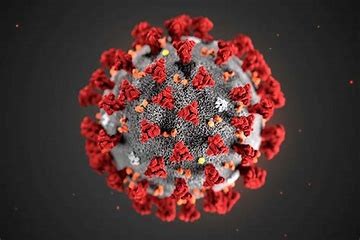
The coronavirus has caused an ongoing pandemic of coronavirus disease 2019 (COVID-19), caused by severe acute respiratory syndrome. The outbreak started in Wuhan, Hubei province, China, as early as November 2019. The World Health Organization (WHO) declared the outbreak to be a Public Health Emergency of International Concern on 30 January 2020 and recognized it as a pandemic on 11 March 2020. Whilst we all have an interest in the ongoing spread and consequence of the greatest public health crisis in generations it holds a specific interest for me given my visits to Wuhan and Hubei province whilst working for Coventry University. Wuhan is a massive city with over 11 million of a population, but little heard of until this outbreak. It is believed that its origins are most likely linked to the Huanan Seafood Wholesale Market, in Wuhan which also sold live animals, and one theory is that the virus came from one of these kinds of animals. The virus spread quickly through the population of Wuhan City which led to comprehensive lockdown to contain the virus. However, the virus spread beyond the city across China and into other countries. The scale of the spread has been significant and by the time the World Health Organisation declared the outbreak a full pandemic in March 2020 there were cases recorded in hundreds of countries.
Cases in the UK emerged on January 31st 2020, which prompted a government response to manage the outbreak. In the early stages there was some discussion about “taking it on the chin” and allowing the virus to spread through the population in order to gain “herd immunity”. However, the public health, medical and scientific experts at Imperial College London suggested that the death toll through their modelling exercises, if this strategy played out, could be in excess of 500,000. This was a situation that would be socially and politically unpalatable, and a change of thinking emerged with a combination of social distancing, public health advice on washing hands and a strategy to protect the capacity of the NHS to cope with escalating cases. A new lexicon emerged that we are now all familiar with: flattening the curve, delaying the spread, the peak of the infection and latterly the language of the health professionals in the frontline supporting and caring for people acutely ill with Covid-19; Personal Protective Equipment (PPE), Continuous Positive Airway Pressure (CPAP), ventilation and oxygen saturation and therapy. This is because the virus can attack the respiratory system leading to pneumonia and in several cases an immune response that leads to multi-organ shutdown. The media presentation of this crisis is all very frightening.
At the time of writing the pandemic has progressed relentlessly in the UK with currently over 65,000 people have tested positive and of those hospitalised nearly 8,000 patients have died. Some commentators have suggested that the UK was slow to recognise the seriousness of the virus and was slow to initiate the “lockdown” measures required to halt the spread. In addition, the UK’s position on testing for the virus has been criticised as slow, lacking preparation despite the global warnings from WHO and a shortage of the essential materials required. Whether these criticisms are valid only time will tell but the UK’s data on cases, hospitalisation, need for critical care and deaths is on a trajectory like other countries which could be described as liberal democracies. Here is the first clue to the timing of the response. The measures required to halt the spread of the virus have massive economic consequences. Balancing these two issues is incredibly difficult and has led to some commentators suggesting all liberal democracies will struggle to respond quickly enough.
What is now abundantly clear is that this is going to take some time for us to get through as a society and the consequences for large sections of our society are going to be devastating. However, what I’d like to discuss in the remainder of this blog are a number of early lessons and personal observations in terms of what we are seeing play out.
First, the data emerging indicates that the narrative about the “virus does not discriminate” is a false one. It is clear that health professionals are much more greatly exposed and that the data on cases and deaths indicate higher numbers of the socially deprived and BAME community. This should not be a surprise as the virus will be keenest felt in communities negatively impacted by health inequalities. This has been the case ever since we recognised this in the “Black Report” (DHSS 1980). The Report showed in detail the extent to which ill-health and death are unequally distributed among the population of Britain and suggested that these inequalities have been widening rather than diminishing since the establishment of the National Health Service in 1948. It is generally accepted that those with underlying health issues and therefore most at risk will be disproportionately from socially deprived communities.
Second, the coronavirus will force the return of big government. The response already supports this. In times of real crisis, the “State” always takes over. Will this lead to more state intervention going forward? If so then we will witness the greatest interventionist Conservative government in my lifetime.
Third, the coronavirus provides one more demonstration of the mystique of borders and will help reassert the role of the nation state. Therefore, the coronavirus is likely to strengthen nationalism, albeit not ethnic nationalism. To survive, the government will ask citizens to erect walls not simply between states but between individuals, as the danger of being infected comes from the people we meet most often. It is not the stranger but those closest to you who present the greatest risk.
Fourth, we see the return of the “expert”. Most people are very open to trusting experts and heeding the science when their own lives are at stake. One can already see the growing legitimacy that this has lent to the professionals who lead the fight against the virus. Professionalism is back in fashion, including recognition of the vital role of the NHS.
Fifth, the coronavirus could increase the appeal of the big data authoritarianism employed by some like the Chinese government. One can blame Chinese leaders for the lack of transparency that made them react slowly to the spread of the virus, but the efficiency of their response and the Chinese state’s capacity to control the movement and behaviour of people has been impressive.
Sixth, changing views on crisis management. What governments learned in dealing with economic crises, the refugee crisis, and terrorist attacks was that panic was their worst enemy. However, to contain the pandemic, people should panic – and they should drastically change their way of living.
Seventh, this will have an impact on intergenerational dynamics. In the context of debates about climate change and the risk it presents, younger generations have been very critical of their elders for being selfish and not thinking about the future seriously. Ironically the coronavirus reverses these dynamics.
Finally, I return to a point made earlier, governments will be forced to choose between containing the spread of the pandemic at the cost of destroying the economy or tolerating a higher human cost to save the economy. In conclusion, I have heard many say that this crisis is different to others we may have faced in the past 30 years and that as a result we can see society changing. Whilst I’m sure a number of the issues raised in this blog could potentially lead to society change it is also a truism that our memories are short, and we may return to life as it looked before this crisis quite quickly. Only time will tell.
Reference
“The Black Report” (1980): Inequalities in Health: Report of a Research Working Group. Department of Health and Social Security, London, 1980.
Share this:


Hypocrites or just human?

At a time of a significant religious festival in the Christian calendar and at a time of global anxiety, sacrifice and distress, it seems apt to reflect on where we stand in it all.
Like most, I watch the television, listen to the radio, tap into social media (albeit only on limited occasions), receive emails and listen to family, friends and colleagues.
I am amazed by the sacrifice that some people make to protect or look after others and yet dismayed by the actions and comments of some. And yet as I ponder on the current situation I realise that it only brings into focus behaviours, actions and comments that were already there. Perhaps, the circumstances have allowed some to shine or provided more of a focus on those that already do outstanding things, and this is a good thing but human nature as it is, doesn’t really change. Here are a few examples, I’m sure if you reflect on these you will think of more.
- We lament at the inequality in the world, but we do little about it. Instead, we fight to buy up all the toilet rolls that we can, lest we run out.
- We complain the government haven’t done enough in the current crisis and then flout the guidelines they gave us on social gatherings and movement or cause others to do so (did you really need that Amazon order?)
- We complain about our work conditions, but we are content for the company or organisation to continue paying us, often saying they don’t pay us enough
- We are upset by colleagues who do us a disservice and then denigrate others because of their so-called ineptitude
- We complain about being bullied but go on to display the same bullying behaviours that we complained about
- We call people misogynistic but then in the same breath suggest that the world would be better without men or that women do a better job
- We accuse people of being racist but then use derogatory and stereotypical language to describe those that we accuse
- We condemn those that we see as privileged and suggest they should give up their wealth and status. And yet we fail to consider our own privilege and are not prepared to give up what we have (see the first comment re inequality)
- We see the criminal justice system as unfair but would be the first to complain if we were a victim of crime and the offender wasn’t brought to justice. What we see as justice is dependent on the impact the wrongful act has on us
- We commit crimes, albeit perhaps minor ones or committed crimes when we were younger and didn’t know better, yet we castigate others for being criminal. Welfare cheats are awful, but tax payments are to be avoided
I could go on, but I think by now you get the general idea. I’ll return to religion if I may, not that I’m religious, but I did start off the blog with an acknowledgement of the timing in line with the Christian calendar: “He that is without sin among you, let him cast the first stone at her”, (John, 8:7). Maybe we should be a little more honest with ourselves and think about what we say or do before we judge and condemn others. I do wonder though, are we all hypocrites, or is it part of the pathology of just being human?
Share this:


A utilitarian argument for human rights
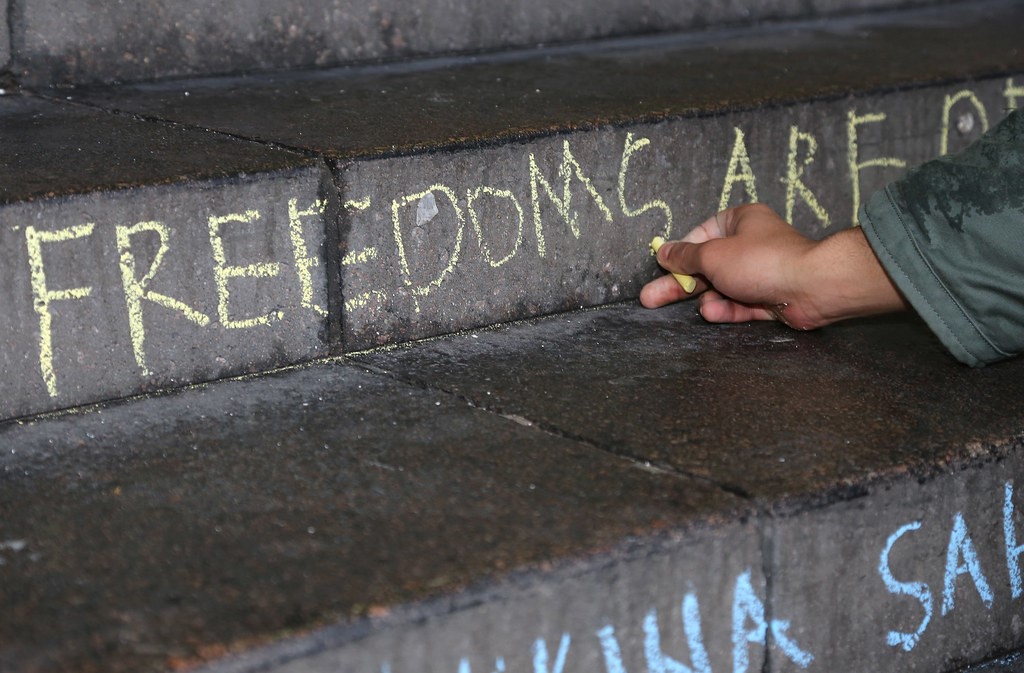
I am minded to write something about both utilitarianism and human rights as a consequence of watching the news the other night. Two separate but linked news articles struck a chord. The first about police being heavy handed in applying the emergency laws surrounding the restricting of movement and the second about the emergency laws being passed to suspend jury trials in Scotland. Both have an impact in respect of human rights.
Turning to the first, the complaint is that the police across England and Wales have in some cases been disproportionate in their dealing with the public when attempting to manage the restrictions around movement. The example shown was the uploading of videos onto social media depicting people walking around the Peak District. The captions simply asked whether the trip was necessary.
The government guidance is pretty clear regarding staying at home but perhaps is a little less clear about travelling to a location to partake in exercise. I must admit though I am a little perplexed at the accusation of heavy handedness. The Human Rights Act 1998 provides for a right to life and it has been held that the government and its agencies have a positive obligation to facilitate this. There are of course some caveats as it would be almost impossible to ensure this in all circumstances. There is no doubt that people are dying from Covid-19. The approach to enforce social distancing, presently predominantly through information and the reliance on responsibility and good will, seems to be the only current viable approach to combating this killer. The curtailment of some Human Rights is it seems necessary to ensure the greater good and to preserve life. The latter of course is a primary duty that most police officers would recognise. The greater good for the many is it seems compatible with a key principle of human rights.
Turning to the second news article. The right to a fair trial is a fundamental human right. The suspension of a jury may be against longstanding legal principles but, the Human Rights Act does not specify that the trial should be before a jury, merely an independent judge. The argument could be made that trials should be suspended but this might be impinging on rights in respect of defendants being held in custody awaiting trial. The convening of a jury would flout the rationale behind current legislation in place to enforce social distancing and would quite simply be contrary to obligations to protect life.
The notions of utilitarianism are often viewed as in conflict with individual rights and therefore the Human Rights Act. Many see the two as incompatible, one relates to the many and the other the individual. This argument though fails to have vision, it is not truly consequentialist. Human Rights are utilitarian in their very nature. Is it not to the greater good that people have a right to life, a right to freedom of association, a right to a fair trail to name but a few? Should it not be considered that every individual case that is examined under the Human Rights Act has consequences for the many as well as the individual? A breach of the Act if unchallenged opens the way for abuses by governments and their agencies, it is utilitarian in nature, it is there for the greater good, not just the individual circumstances that are being examined. But should we also not consider that there is a need to prioritise rights, particularly in the circumstances the country and world finds itself in? Some parts of the Act are in clearly on occasions, incompatible with others. Curtailment of some freedoms and rights is necessary for the greater good but more importantly, it is necessary to save lives, perhaps even the life of the individual complaining of the curtailment. We can but hope that amidst all of this, good sense prevails.
Share this:


Ho ho homeless: Boris and reasons to be cheerful.
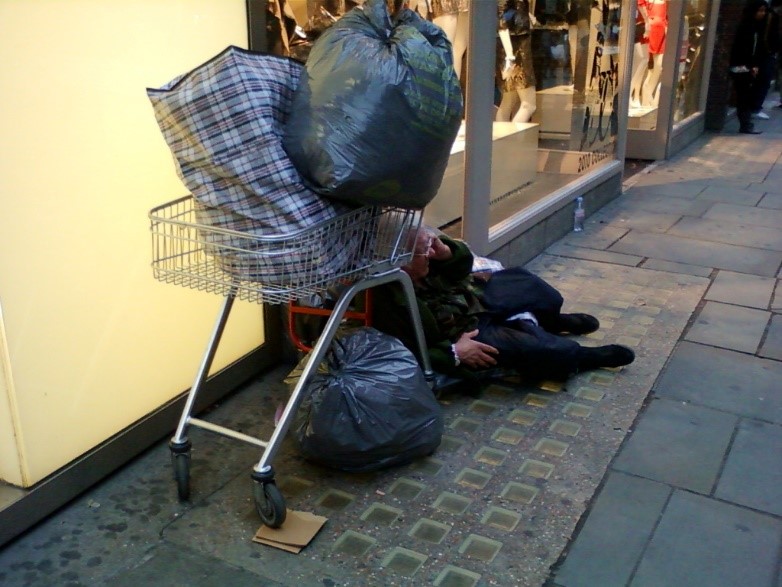
“Homeless Rough Sleeper” by Deadly Sirius is licensed under CC BY-NC-ND 2.0
A week has passed since the election and our political parties have had time to reflect on their victory or demise. With such a huge majority in parliament, we can be certain, whether we agree with it or not, that Brexit will be done in one form or another. The prime minister at the first meeting of his cabinet, and as if on cue ready for my blog, in front of the cameras repeated the pre-election promise of 40 extra hospitals and 50,000 extra nurses.
Putting aside my cynicism and concern about how we, as a country, are going to grow enough money trees without our foreign agricultural workers after Brexit, I welcome this much needed investment. I should add here that in the true sense of fairness, pre-election, other parties were likewise offering wonderful trips to fairyland, with riches beyond our wildest dreams. Trying to out trump each other, they managed to even out trump Trump in their hyperbole.
However, rather appropriately as it turns out, whilst sitting in the waiting room at a general hospital on election day, I read a couple of disturbing articles in the i newspaper. Pointing to the fact that makeshift shelters are becoming increasingly common in British cities one article quoted statistics from Homeless Link showing that rough sleeping had increased by 165% since 2010 (Spratt, 2019). Alongside, another article stated that A&E admissions of homeless patients had tripled in the last eight years with 36,000 homeless people attending in the last year (Crew 2019). Whilst I am always cautious regarding statistics, the juxtaposition makes for some interesting observations.
The first being that the promised investment in the NHS is simply a sticking plaster that attempts to deal with the symptoms of an increasingly unequal society.
The second being that the investment will never be enough because groups in society are becoming increasingly marginalised and impoverished and will therefore become an increasing burden on the NHS.
Logic, let alone the medical profession and others, leads me to conclude that if a person does not have enough to eat and does not have enough warmth then they are likely to become ill both physically and probably mentally. So, alongside the homeless, we can add a huge swathe of the population that are on the poverty line or below it that need the services of the NHS. Add to this those that do not have job security, zero-hour contracts being just one example, have massive financial burdens, students another example, and it is little wonder that we have an increasing need for mental health services and another drain on NHS resources. And then of course there are the ‘bed blockers’, a horrible term as it suggests that somehow, it’s their fault, these are of course the elderly, in need of care but with nowhere to go because the social care system is in crises (As much of the right-wing pre-Brexit rhetoric has espoused, “It’ll be better when all the foreigners that work in the system leave after Brexit”). It seems to me that if the government are to deal with the crises in the NHS, they would be better to start with investment in tackling the causes, rather than the symptoms*.
Let me turn back to the pre-election promises, the newspaper articles, and another post-election promise by Boris Johnson.
My recollection of the pre-election promises was around Brexit, the NHS, and law and order. We heard one side saying they were for the people no matter who you were and the other promising one nation politics. I don’t recall any of them specifically saying they recognised a crisis in this country that needed dealing with urgently, i.e. the homeless and the causes of homelessness or the demise of the social care system. Some may argue it was implicit in the rhetoric, but I seem to have missed it.
In her article, Spratt (2019:29) quotes a Conservative candidate as saying that ‘nuisance council tenants should be forced to live in tents in a middle of a field’. Boris Johnson’s one nation politics doesn’t sound very promising, with friends like that, who needs enemies?**
* I have even thought of a slogan: “tough on poverty, tough on the causes of poverty”. Or maybe not, because we all know how that worked out under New Labour in respect of crime.
** The cynical side of me thinks this was simply a ploy to reduce the number of eligible voters that wouldn’t be voting Conservative but, I guess that depends on whether they were Brexiteers or not.
Crew, J. (2019) Homeless A&E admissions triple. i Newspaper, 12 Dec 2019, issue 2824, pg. 29.
Spratt, V. (2019) ‘You Just didn’t see tents in London or in urban areas on this scale. It’s shocking’: Makeshift shelters are becoming increasingly common in British cities. i Newspaper, 12 Dec 2019, issue 2824, pg. 29.
Share this:


Empathy Amid the “Fake Tales of San Francisco”*
This time last week, @manosdaskalou and I were in San Francisco at the American Society of Criminology’s conference. This four-day meeting takes place once a year and encompasses a huge range of talkers and subjects, demonstrating the diversity of the discipline. Each day there are multiple sessions scheduled, making it incredibly difficult to choose which ones you want to attend.
Fortunately, this year both of our two papers were presented on the first day of the conference, which took some of the pressure off. We were then able to concentrate on other presenters’ work. Throughout discussions around teaching in prison, gun violence and many other matters of criminological importance, there was a sense of camaraderie, a shared passion to understand and in turn, change the world for the better. All of these discussions took place in a grand hotel, with cafes, bars and restaurants, to enable the conversation to continue long after the scheduled sessions had finished.
Outside of the hotel, there is plenty to see. San Francisco is an interesting city, famous for its Golden Gate Bridge, the cable cars which run up and down extraordinarily steep roads and of course, criminologically speaking, Alcatraz prison. In addition, it is renowned for its expensive designer shops, restaurants, bars and hotels. But as @haleysread has noted before, this is a city where you do not have to look far to find real deprivation.
I was last in San Francisco in 2014. At that point cannabis had been declassified from a misdemeanour to an infraction, making the use of the drug similar to a traffic offence. In 2016, cannabis was completely decriminalised for recreational use. For many criminologists, such decriminalisation is a positive step, marking a change from viewing drug use as a criminal justice problem, to one of public health. Certainly, it’s a position that I would generally subscribe to, not least as part of a process necessary to prison abolition. However, what do we really know about the effects of cannabis? I am sure my colleague @michellejolleynorthamptonacuk could offer some insight into the latest research around cannabis use.
When a substance is illegal, it is exceedingly challenging to research either its harms or its benefits. What we know, in the main, is based upon problematic drug use, those individuals who come to the attention of either the CJS or the NHS. Those with the means to sustain a drug habit need not buy their supplies openly on the street, where the risk of being caught is far higher. Thus our research population are selected by bad luck, either they are caught or they suffer ill-effects either with their physical or mental health.
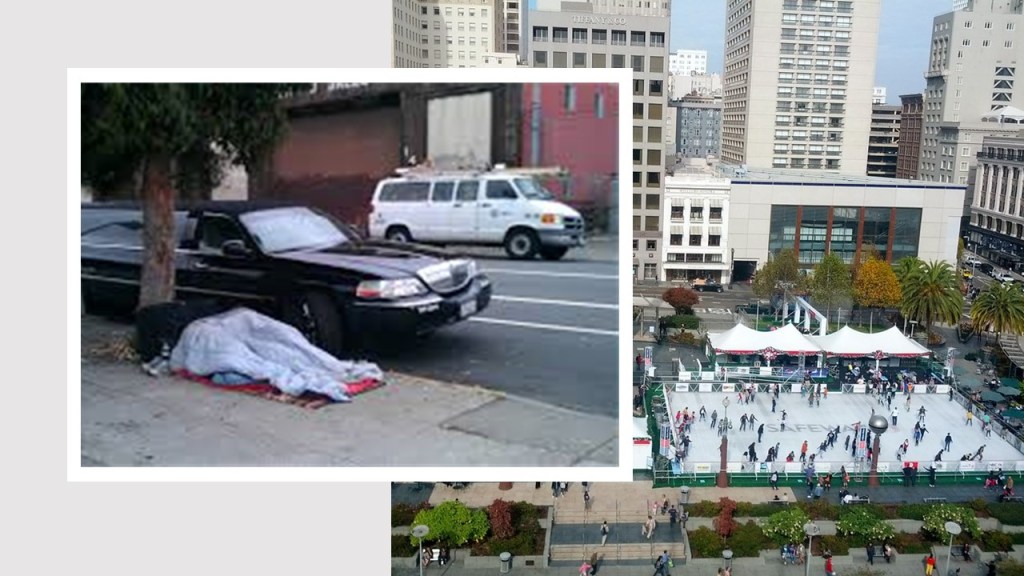
The smell of cannabis in San Francisco is a constant, but there is also another aroma, which wasn’t present five years ago. That smell is urine. Furthermore, it has been well documented, that not only are the streets and highways of San Francisco becoming public urinals, there are also many reports that public defecation is an increasing issue for the city. Now I don’t want to be so bold as to say that the decriminalisation of cannabis is the cause of this public effluence, however, San Francisco does raise some questions.
- Does cannabis cause or exacerbate mental health problems?
- Does cannabis lead to a loss of inhibition, so much so that the social conventions around urination and defecation are abandoned?
- Does cannabis lead to an increase in homelessness?
- Does cannabis increase the likelihood of social problems?
- Does the decriminalisation of cannabis, lead to less tolerance of social problems?
I don’t have any of the answers, but it is extremely difficult to ignore these problems. The juxtaposition of expensive shops such as Rolex and Tiffany just round the corner from large groups of confused, homeless people, make it impossible to avoid seeing the social problems confronted by this city. Of course, poor mental health and homelessness are not unique to San Francisco or even the USA, we have similar issues in our own town, regardless of the legal status of cannabis. Certainly the issue of access to bathroom facilities is pressing; should access to public toilets be a right or a privilege? This, also appears to be a public health, rather than CJS problem, although those observing or policing such behaviour, may argue differently.
Ultimately, as @haleysread found, San Francisco remains a City of Contrast, where the very rich and the very poor rub shoulders. Unless, society begins to think a little more about people and a little less about business, it seems inevitable that individuals will continue to live, eat, urinate and defection and ultimately, die upon the streets. It is not enough to discuss empathy in a conference, no matter how important that might be, if we don’t also empathise with people whose lives are in tatters.
*Turner, Alex, (2006), Fake Tales of San Francisco, [CD]. Recorded by Arctic Monkeys in Whatever People Say I Am, That’s What I’m Not, The Chapel: Domino Records
Share this:

Constitutional Crisis? What Crisis
Dr Stephen O’Brien is the Dean for the Faculty of Health, Education and Society at the University of Northampton
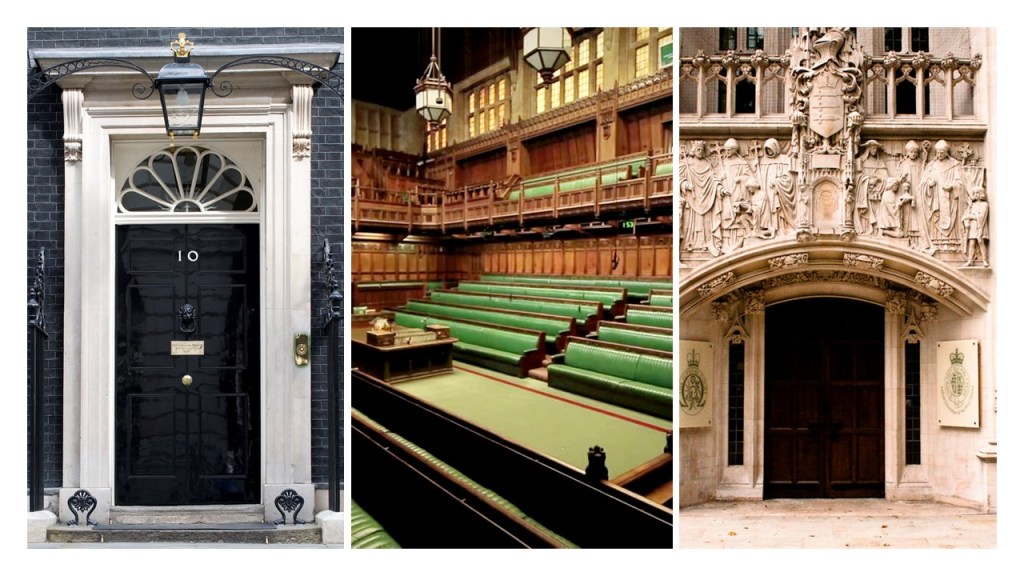
Over the past few weeks our political lexicon has been further developed. We have all learned a new word. The word in question is prorogation. Hands up who had heard of this term before recent events in parliament? I see very few hands up. What we all now know is that this is the term that defines the discontinuation of a session of a parliament or other legislative assembly without dissolving it. It means parliament’s sitting is suspended and it ends all current legislation under discussion. It is usual for this to happen every autumn. The current prorogation is for five weeks and includes a three-week period that would typically be recess anyway, during which the Liberal Democrat, Labour and Conservative party conferences are held, but is nevertheless longer than usual. However, there are several highly irregular factors at play here. For prorogation to last more than a month is unprecedented in recent times. For example, since the 1980s prorogation has typically lasted less than a week. So, what is going on and why is this prorogation proving to be so contentious?
The heart of the matter is the issue that has dominated UK politics for the past three years, namely Brexit. Despite a vote to leave the European Union (EU) back in June 2016 we currently remain part of the EU with the deal negotiated under the previous prime minister Theresa May culminating in a withdrawal agreement that was soundly rejected by parliament on several occasions. This has set up tensions between the people and parliament. How do we enact the will of the people and honour the referendum result within a parliamentary democracy where there is no majority for any Leave deal on the table?
The new prime minister Boris Johnson and his cabinet are resolved to break the political impasse by leaving come what may “do or die” by October 31st, 2019. So, with the country rapidly approaching the deadline for leaving the EU, Parliament has been working to pass a law that would prevent the UK crashing out without a deal, regardless of the fact that Boris Johnson has promised to leave on that date. With no deal currently agreed and no law allowing a no deal exit the Government would be obliged to ask the EU for another extension. There are suggestions from some quarters that the Government might ignore any law requiring them to agree an extension with the EU. Given this situation some politicians have been dismayed that parliament will not be sitting while the situation remains unresolved. Hence the view that this prorogation is stifling parliamentary debate on the most crucial political issue in a generation.
The act of prorogation took place in the early hours of Tuesday September 10th with a ceremony involving a message from the Queen being read in the House of Lords and then Black Rod summoning MPs from the Commons. A list of all the bills passed by the parliament was read, followed by a speech on behalf of the Queen announcing what has been achieved by the government before MPs were sent home. Johnson intends for parliament to return on 14 October with a Queen’s speech, which he says will “bring forward an ambitious new legislative programme for MPs’ approval”. He will then almost immediately have to head to Europe for the vital EU council, which is the last chance for him to obtain a new Brexit deal or to ask for an extension of article 50.
The situation has been deemed a constitutional crisis by some and the fact that parliament is not sitting at this critical time is being seen by some as undemocratic, indeed unlawful. Indeed, the act of prorogation has been subject to judicial review for the past couple of weeks. Scottish appeal court judges declared Boris Johnson’s decision to suspend parliament in the run-up to the October Brexit deadline unlawful. The three judges, chaired by Lord Carloway, Scotland’s most senior judge, overturned an earlier ruling that the courts did not have the power to interfere in the prime minister’s political decision to prorogue parliament. The key issue in question being whether the act was in breach of the constitution, as it was designed to stifle parliamentary debate and action on Brexit.
Regardless of the legal arguments which ended up being played out in three dramatic days this week in the Supreme Court the Brexit process and endgame has pointed up a range of tensions at the intersections of our constitution. The old political landscape is being swept away and being replaced by a much more complex set of political indicators. Left versus Right which had been making a comeback after years of centrist neo-liberalism has been replaced by Leave versus Remain which pervades across the old battle lines. Furthermore, other tensions are apparent as set out below.
- People versus Parliament (How to deliver the referendum result in a parliamentary democracy)
- Executive (Government) versus Parliament (especially when the executive has no overall voting majority)
- The Executive versus the Judiciary
- The position of the Judiciary as related to Constitution
- Politics versus The Law
- The roles and power relationships of the Executive, Parliament and the Judiciary as related to The Constitution.
What the overall Brexit process has created is a new socio-political landscape in the UK, with distinct differences in each of the four countries. It also illustrates how complex the nature of our constitution is given there is no written version and we depend on precedent and convention. The intersections are thrown into sharp relief by the current “crisis”.
Whilst all of this may be concerning as the old order shifts the really concerning question is whether the Executive will abide by the law. Given the outcomes of Parliament in terms of blocking “no deal” regardless of the Supreme Court Judgement on the legality of the prorogation. So, will we leave EU on October 31st? Utilising classic political phraseology, I’d say there is still all to play for, it’s too close to call and all bets are off.
Dr Stephen O’Brien
Share this:

Cutting to the chase: A policy of ruination and mayhem.

“London Riots (Hackney) 8/8/11” by Mohamed Hafez is licensed under CC BY-SA 4.0 (edited)
The governments contingency plan ‘Operation Yellowhammer’ has just been released. Notice I use the words released rather than published, the latter suggesting that the government provided the information to the public willingly. Of course, nothing is further from the truth, the government were forced by parliament to release the document and it does not make pretty reading.
On closer examination, there are few surprises. Food prices will go up as certain foods become less available. More importantly, the document recognises that vulnerable groups, those on low incomes “will be disproportionately affected by any price rises in food and fuel”.
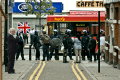
Protests and counter protest will take place across the country, inevitably this will lead to major disorder and will stretch an already overstretched police service to breaking point. The 20,000 extra police officers the government has promised are going to be needed. Some serious magic is required to produce these and quickly.
Lorries will be queuing up to cross the channel further stretching police and highways resources as they attempt to implement ‘Operation Brock’. The flow of goods will be severely disrupted and could have an impact on the supply of medicines and medical supplies. Once again, the vulnerable will be hit the hardest.
Some businesses will cease trading. You can bet that the people affected will not be those with money, only those without. Unemployment will go up as the economy takes a nose dive and fewer jobs become available.
There will be a growth in the black market. It doesn’t take a genius to work out the concept of supply and demand. Left unchecked, we could see the rise of organised crime far beyond that impacting the country presently. To exacerbate the problem, law enforcement data between the EU and the UK will be disrupted. Those 20,000 police officers are going to need to do double shifts.
Social care providers might fail. Never mind, its only the most vulnerable in society that are being looked after by them. If you can afford a good care home, it shouldn’t impact, if not, there are always police cells.
Just a few minor problems then with the advent of a ‘no deal Brexit’. Possibly exacerbated by natural phenomena such as flooding (of course that never happens) or a flu pandemic (I hope you’ve had your flu vaccine).
It doesn’t matter whether you voted to leave the European Union, or you voted to stay, you would have to be rather vacuous if you are not concerned by the contents of ‘Operation yellowhammer’.
But the most worrying aspect of all of this is that the government have been openly and vigorously pursuing a policy of leaving the EU with or without a deal. Let’s cut to the chase then, by pursuing its course of action, this government’s policy is to ruin the country and create mayhem. Would you really vote for that, I know I wouldn’t?
Share this:

Brexit, bullying and bull****.
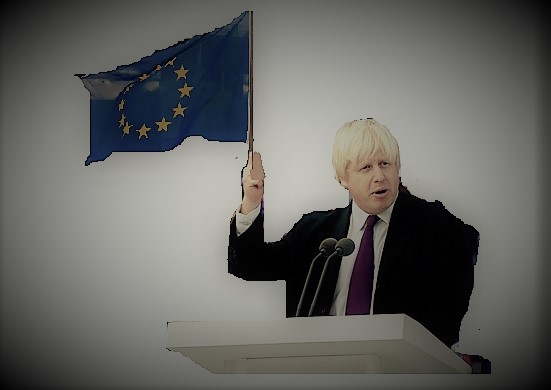
“Boris Mayor of London” by Fred Dawson is licensed under CC BY-NC-ND 2.0 (edited)
It seems remarkable doesn’t it that that we have reached the stage where the democratic institutions we hold dear are so openly crumbling before our eyes. Whilst many have been sceptical about how much you can trust a politician; rarely do we get the opportunity to gaze at the vitriolic evidence that embodies everything that we thought about politics in this country.
We have a prime minister who appears so simplistically single minded that he is blinded to the obvious and prepared to put the peace process in Ireland at risk, ruin the fragile economy, run rough shod over democracy and further damage his own party in the process.
Two concepts come to mind, the concept of leadership and ethics. There are several leadership typologies and I don’t propose to rehearse them here, save to say that there are good leaders and there are bad. The good ones we will follow anywhere, the bad, well they fall by the wayside eventually but usually not without having some calamitous impact. And as for ethics, I am minded to revert to the ‘Nolan principles’, the basis of ethical standards in public life. An examination of some of these principles against the backdrop of past and current political events reveals some interesting incongruities.
Selflessness – Holders of public office should act solely in terms of the public interest.
When former prime minister David Cameron called for a referendum did he have the ‘national interest’ at heart or was it more to do with the divisions within the Tory party? What government would be so foolhardy to think that there would be no consequences from such a referendum? Where were the government advisors pointing to the very real possibility that peace on the Irish mainland would be threatened if the referendum went the wrong way? Did anyone in government really care; was healing the divisions in the Tory party more important?
When Boris Johnson decided to prorogue parliament, did he do so in the public interests or was it simply to ensure that the possibility of parliament having its say on Brexit would be seriously curtailed? For ministers to state this is simply ordinary business appears to be somewhat disingenuous given the circumstances and the extraordinary length of the break.
When ‘leave means leave’ does that mean that ‘a no deal’ Brexit is in the public interests?
Objectivity – Holders of public office must act and take decisions impartially, fairly and on merit, using the best evidence and without discrimination or bias.
How can the prime minister state that he is taking decisions on merit using best evidence when he intends to shut down parliament, preventing any debate? Where is the impartiality when he is so single minded? How can he be viewed as impartial when he advocates bullying to get his own way, threatening to withhold the whip from any that vote against his wishes. Bullying is not leadership, threats of job losses will not galvanise people to the cause, it only alienates and divides.
Accountability – Holders of public office are accountable to the public for their decisions and actions and must submit themselves to the scrutiny necessary to ensure this.
Just where is the scrutiny if parliament is prorogued? Just how accountable are ministers if they avoid confirming that they will abide by any legislation that prevents a ‘no-deal’ Brexit being passed?
Honesty – Holders of public office should be truthful.
Now here lies the crux of it all. Leaders are not leaders if the have a propensity to be somewhat economical with the actualité. Enter the red bus, just how truthful was it to suggest that we could save £350 million a week and use that to fund the NHS? Just how honest is it to say that proroguing parliament had nothing to do with shutting up opponents? Just how much can we believe this prime minister or any other leader when the lies are so obviously blatant?
Leadership – Holders of public office should exhibit these principles in their own behaviour. They should actively promote and robustly support the principles and be willing to challenge poor behaviour wherever it occurs.
It isn’t too difficult to conclude that a leader that does not display ethical behaviours is hardly likely to promote them elsewhere. Currently, as with so many institutions, this government lacks real leadership and it would appear that principles are no more than a wish list. Just who will hold government and the past and current leaders to account for Brexit, bullying and all the bull****?
Share this:

‘Quelle surprise’: it’s all in the timing.
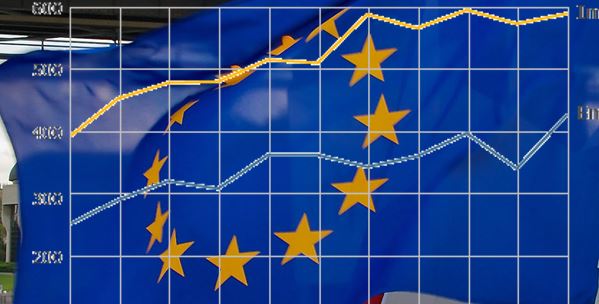
“Inauguration of Polish EU Presidency (011)” by Bruce MacRae is licensed under CC BY-NC-SA 2.0 edited by SH
The Office of National Statistics has admitted to some frailties in its data collection around migration. What a shock it must have been to discover that the manner in which it collected the data was somewhat flawed, so much so that they have now downgraded the data to ‘experimental’.
It might seem almost laughable that an organisation that prides itself in, and espouses data accuracy and has in the past criticised police recorded figures for being inaccurate (we know they are) has itself fallen foul of inaccuracies brought about by its own ill thought out data gathering attempts. The issue though is far greater than simple school boy errors, these figures have had a major impact on government policy for years around immigration with calls for greater control of our borders and the inevitable identification of the ‘other’.
The figures seem to be erroneous from somewhere between the mid-2000s and 2016, although it is unclear how accurate they are now. New analysis shows that European Union net migration was 16% higher in 2015-16 than first thought. Whilst the ONS admits that its estimation of net migration from non-EU countries is overestimated, it is not clear exactly by how much this might be.
Such a faux pas led to the story hitting the news; ‘EU migration to UK ‘underestimated’ by ONS’ (BBC, 2019) and ‘Office for National Statistics downgrades ‘not fully reliable’ official immigration data as experts claim figures have been ‘systematically under-estimating net migration from EU countries’ (Daily Mail, 2019).
So, there we are the ONS gets statistics wrong as well and the adjusted figures simply support what Brexiteers have been telling everyone all along. But why release the figures now? When were these errors identified? Surely if they have been inaccurate until 2016 then the mistake must have been found some short time after that. So why wait until the eleventh hour when ‘Brexit means Brexit’ is about to come to a calamitous conclusion? And why those headlines? Why not the headline ‘Big mistake: net migration from outside the EU vastly overestimated’?
I’m not one to subscribe to conspiracy theories but at times it is difficult to overlook the blindingly obvious. So called independent bodies may not be that independent, the puppet master pulls the strings and the puppets dance. Little value in headlining facts that do not support the right-wing rhetoric but great political value to be had in muddying the waters about the EU and open borders.
This discourse ignores the value of migration and simply plays on the fears of the populace, these are well rehearsed and now age-old arguments that I and many others have made*. The concern though is when ‘independent institutions’ subtly start to join in the furore and the moral compass starts to become distorted, subjugated to political ideals. I can’t help but wonder, what would Durkheim make of it?
* It is well worth watching Hollie McNish’s Mathematics on YouTube.


