
Home » Education (Page 10)
Category Archives: Education

Graduation: the end of the beginning?

Helen is an Associate Lecturer teaching on modules in years 1 and 3.
I joined the University of Northampton as an associate lecturer in 2009, teaching at first on the Offender Management foundation degree and then joining the Criminology team, although I had been a visiting lecturer in Criminology for a number of years prior to that. I am sorry that a prior commitment means that I am unable to join you for the Big Criminology Reunion, although the occasion has inspired me to reflect on the professional journey that starts with graduation.
Last week I received an e-mail from a former student in the 2010 Offender Management cohort. She is just about to qualify as a probation officer and she was asking for advice about giving evidence at Parole Board hearings. It was great to think back, to remember what a vibrant and enthusiastic student she was, and to project forwards; perhaps I’ll see her at an oral hearing soon. She will probably make an excellent probation officer, and the fact that she is asking for advice before she even starts is evidence of that. She will possibly be the first of our offender management students to become an offender manager!
A couple of years ago I was at a Parole Hearing at HMYOI Aylesbury where I was very impressed by the evidence of the trainee psychologist. She had prepared a clear, concise but thorough and analytical report on the prisoner and she gave her oral evidence confidently and thoughtfully. After the end of the hearing, she popped back in to tell me that she had been initially inspired to take up prison psychology after hearing my guest lecture on Manos’ Forensic Psychology module. I saw her again earlier this year and she’s still doing a great job!
For undergraduates, completing a degree, submitting a dissertation, putting the pen down at the end of the last exam and then graduating with friends, seems like the end of a long and arduous process. And of course it is! But as the stories above show, it is also just the beginning. Just the beginning of a professional journey which may or may not involve direct application of the subjects covered on the course. Not all our students become probation officers or prison psychologists or academic criminologists, but they will take something of what they learn out into the world with them. It may be a more critical way of digesting the news, a wider appreciation of the social forces that shape our world, a readiness to reflect and question and see the world from different perspectives. All of that will help them on their journey. I hope that you all have a great time at the reunion and that as you compare each other’s journeys you have fond memories of the degree course that seemed a marathon at the time but was really only the first step!
Share this:


‘I read the news today, oh boy’
 The English army had just won the war
A crowd of people turned away
But I just had to look
Having read the book
(Lennon and McCartney, 1967),
The news these days, without fail, is terrible. Wherever you look you are confronted by misery, death, destruction and terror. Regular news channels and social media bombard us with increasingly horrific tales of people living and dying under tremendous pressure, both here in the UK and elsewhere in the world. Below are just a couple of examples drawn from the mainstream media over the space of a few days, each one an example of individual or collective misery. None of them are unique and they all made the headlines in the UK.
‘Deaths of UK homeless people more than double in five years’
‘Syria: 500 Douma patients had chemical attack symptoms, reports say’
‘London 2018 BLOODBATH: Capital on a knife edge as killings SOAR to 56 in three months’
So how do we make sense of these tumultuous times? Do we turn our backs and pretend it has nothing to do with us? Can we, as Criminologists, ignore such events and say they are for other people to think about, discuss and resolve?
At the beginning of the twenty-first century, Stanley Cohen, posed a similar question; ‘How will we react to the atrocities and suffering that lie ahead?’ (2001: 287). Certainly his text States Of Denial: Knowing about Atrocities and Suffering makes clear that each of us has a part to play, firstly by ‘knowing’ that these things happen; in essence, bearing witness and acknowledging the harm inherent in such atrocities. But is this enough?
Cohen, persuasively argues, that our understanding has fundamentally changed:
The political changes of the last decade have radically altered how these issues are framed. The cold-war is over, ordinary “war” does not mean what it used to mean, nor do the terms “nationalism”, “socialism”, “welfare state”, “public order”, “security”, “victim”, “peace-keeping” and “intervention” (2001: 287).
With this in mind, shouldn’t our responses as a society, also have changed, adapted to these new discourses? I would argue, that there is very little evidence to show that this has happened; whilst problems are seemingly framed in different ways, society’s response continues to be overtly punitive. Certainly, the following responses are well rehearsed;
- “move the homeless on”
- “bomb Syria into submission”
- “increase stop and search”
- “longer/harsher prison sentences”
- “it’s your own fault for not having the correct papers?”
Of course, none of the above are new “solutions”. It is well documented throughout much of history, that moving social problems (or as we should acknowledge, people) along, just ensures that the situation continues, after all everyone needs somewhere just to be. Likewise, we have the recent experiences of invading Iraq and Afghanistan to show us (if we didn’t already know from Britain’s experiences during WWII) that you cannot bomb either people or states into submission. As criminologists, we know, only too well, the horrific impact of stop and search, incarceration and banishment and exile, on individuals, families and communities, but it seems, as a society, we do not learn from these experiences.
Yet if we were to imagine, those particular social problems in our own relationships, friendship groups, neighbourhoods and communities, would our responses be the same? Wouldn’t responses be more conciliatory, more empathetic, more helpful, more hopeful and more focused on solving problems, rather than exacerbating the situation?
Next time you read one of these news stories, ask yourself, if it was me or someone important to me that this was happening to, what would I do, how would I resolve the situation, would I be quite so punitive? Until then….
Whoever fights monsters should see to it that in the process he does not become a monster. And when you look long into an abyss, the abyss also looks into you (Nietzsche, 1886/2003: 146)
References:
Cohen, Stanley, (2001), States Of Denial: Knowing about Atrocities and Suffering, (Cambridge: Polity Press)
Lennon, John and McCartney, Paul, (1967), A Day in the Life, [LP]. Recorded by The Beatles in Sgt Pepper’s Lonely Hearts Club Band, EMI Studios: Parlaphone
Nietzsche, Friedrich, (1886/2003), Beyond Good and Evil: Prelude to a Philosophy of the Future, tr. from the German by R. J. Hollingdale, (London: Penguin Books)
Share this:


Netflix and Study?

Bethany Davies is an Associate Lecturer teaching modules in the first year.
As each year and each term goes by, it brings to light how much more we are all connected through media and also how we use media to socialise and also learn.
Now, watching television, movies and using music to learn is not a new concept, I understand this, but on a personal level, I have found more individuals using television and more specifically, crime documentaries to fuel their interest in criminology and their understanding of elements of the criminal justice system.
I believe firstly, the idea of enjoying, what is termed ‘binge watching’, crime documentaries, an interesting concept. As previously explored on the blog regarding ‘enjoyment’ and ‘fun’ of criminology, the themes in these documentaries are very dark and in most cases, the gorier it is, the more it seems to be enjoyed by some viewers. Each September that rolls around we have the (sometimes dreaded) ‘ice breaker’ session, where we get to know our students and what has made them want to pursue a criminology degree at this University. Within that you will always have some who choose to voice their love of a certain crime TV show. This does not always end at first introductions either, there is often a continuation of comparisons made between that of a serious historical event and that of Netflix documentary (for example) which can often contain more dramatic music and pictures than it does criminological discussion.
The question I would like to present is, do we nourish the idea of using documentaries and crime dramas to keep the interest of those who wish to pursue criminology as a field of learning, or would doing so be disingenuous to what criminology is and neglect the love for reading and debates in criminology? I do not necessarily feel this is a question we have to worry about tremendously as I feel those who seek to study criminology purely based on their love for crime documentaries will either soon realise that there is so much of criminology that does not fit those ideas and either love it or abandon it at that point.
But in years to come these questions may be more significant than they are currently. Especially if used as a tool in universities to attract more students into a certain discipline. There are such large elements of criminology that I feel have to be explored with literature or within a seminar setting with questions and debates, and it can be easy for institutions to say that these elements will always be fundamental to a criminology degree for years to come. However, if other institutions start to use more and more media and visual aids to demonstrate a theory or issue of crime in the future, or what I suspect more as a marketing campaign to attract students, will we conform? There are some articles (from questionable sources) that some institutions are using Snapchat and social media takeovers to help attract students to certain courses, most of which I have read about have been media based, granted. But let’s hope all this drivelling nonsense is just my brain after a long bank holiday weekend and not a possibly looming prospect of the future of criminology, right?
Share this:


Remembering Stephen Hawking: A legacy for us all

On March 14th 2018, Professor Stephen Hawking died at the age of 76. For many people, his life was as much about his long battle with motor neurone disease as it was about his achievements as a theoretical physicist. The first thing I saw when clicking on news sites was this quote:
‘Remember to look up at the stars and not down at your feet. Try to make sense of what you see and about what makes the universe exist. Be curious. And however difficult life may seem, there is always something you can do, and succeed at. It matters that you don’t just give up’.
To me, this reflects the value he placed on the pursuit of knowledge, to see this as an opportunity, not a burden and to strive to make sense of it all. For him, it was the universe, the vast expanse of stars and galaxies to be understood in ways I could not even being to fathom. For those studying social sciences, our world is not out there beyond the Earth’s atmosphere, but it is a world we must also seek to understand and, as lecturers and students to communicate this understanding to others. There is a lot of concern in HE as to how to engage students, to consider what we can do to keep them attending and studying their chosen subject outside the classroom. I am beginning to think this is not just to do with our efforts in lectures and seminars, but also perhaps we don’t emphasise enough the opportunity students have, and the value of being in HE is so much more than the qualification itself.
One thing is clear – we should not be in the business of spoon feeding information, to be repeated in assessments, in order for students to be awarded a degree based on their strategy to work towards assessments, and little else. It may sometimes feel like this, so we do have to consider whether this is to do with the way we teach, or the way students respond to this. I think the latter needs as much attention, in that it needs to be clear that students must take responsibility for their learning, and one obvious way to do this is to make the most of opportunities provided by their university. There are students I have taught in my 14 years in HEIs who have clearly appreciated the opportunity they have been given – they make it all worthwhile. There are those who never seem to engage on any level, not even to pass assessments, and who realise HE is not for them. I have more respect for someone coming to that conclusion and seeking a different type of opportunity than those who muddle through and hope it just gets easier.
By the way, if the tone of this seems judgemental, it is not meant that way. My reflections are based on my experiences as a lecturer, but crucially, also as a student. Here is where I have to confess something. In my BSc I was one of those students who muddled through. Then half way through year 2, I realised I was wasting the opportunity I had been given, got a grip and graduated with a 2:2. I know I could have done so much better. The next stage of my academic journey was a combination of being in the right place at the right time and working in a university as a course administrator where one of the staff benefits was to subsidise the cost of degree programmes. The university was the London School of Economics and Political Science, the degree was an MSc in Criminal Justice Policy, and it was very heavily subsidised. My attitude to this opportunity was so different. I was amazed to be accepted onto the programme and found myself being taught by Professor Janet Foster, Professor Robert Reiner, Professor Andrew Ashworth, Professor Maurice Punch, and Professor Ben Bowling. Sorry for the name dropping, but this was the last thing I expected to happen to me. I came away with a Merit award and it set me on this path to be a criminologist. I engaged with the degree by attending everything, working during evenings and weekends, following advice and making the most of it. Then to find myself undertaking a PhD, well it has been a long and arduous journey at times, but I knew my experiences before had set me up well to take on the challenge. It can feel isolating and lonely sometimes, and it can take over your life, but once again, I value the opportunity not just as the pursuit of knowledge, but also the way it has made me overcome challenges and not give up.
The experience of studying for a degree when I was engaged, interested and committed was so much better, with less anxiety, a sense of achievement and I knew I had done my best. As I said earlier, as academics we can do our bit, and many of us do – we consider how best to communicate theories, concepts, policies, debates, and to empower students to have their say. We offer opportunities for interaction, discussion, challenging ideas and enabling students to think more critically. We do this so that students enjoy their studies, make the most of the opportunity and value this as a pursuit of knowledge, as well as the qualification. However, we can only do this successfully when students engage with this process and understand and then accept their role. My role as a lecturer in criminology is about to change significantly, as the move to a new campus changes teaching methods and provision. I have my anxieties about adapting my modules over summer to fit with this model, IT fails, and the usual issues about going through big changes. I know our students share the same anxieties, it’s natural. But, the one thing we can do is ensure that we, as staff and students alike recognise the important role we have, to embrace this change and make the best of it.
So, my plea to students is this. If we don’t keep seeking to expand our understanding and valuing this process of learning, if we stop being curious, then we don’t advance. That is the legacy of Professor Hawking, to remember to keep asking questions, to value learning and to strive to better understand the world around us. Sometimes it will feel like there are barriers put in your way and you cannot overcome them. At this point, it is worth remembering what Professor Hawking had to deal with on a daily basis and ask yourself what you can do to solve these problems. Not only will you do better in your studies, you will learn important skills for the future and will look back knowing you have done your best and overcame whatever life threw at you. That is a legacy to be proud of.
Susie Atherton, Humanoid, Planet Earth.
Share this:


Anxious about being anxious

The fact that the digital readout on my car tells me that it is a due a service and that it needs to be looked at because something is very wrong does not provide comfort, just a nagging concern that it might break down soon, but how soon? On my way to work I left a message on my wife’s mobile phone, ‘it’s only me, just calling to say on my way to work’. She didn’t answer the phone, she’s out riding the horse, has something happened? Mid conversation with a work colleague, my phone’s just pinged, I must check it, it’s only my mate asking me out for a drink… ‘Nice one, next Thursday?’… What was that you were saying Susie? It’s not that the conversation is unimportant it’s just that I might miss something important on the phone. Checking emails, that email I sent an hour ago still hasn’t been responded to… back to Susie.
An hour later… must check my emails. What’s on Facebook, another notification has come through… must respond … ‘like’, there done. Better check I haven’t missed anything. Ebay… I’m still the highest bidder… should I increase my bid… just in case, Ebay says it would be a good idea. Google the item… what’s it worth… back to Ebay… Increase bid. Must check it again soon. Text from wife, all is good. Check emails… check phone … check Ebay… Check Facebook… all quiet, are they working..? Is it a network problem? Thank goodness I haven’t got a Twitter account to worry about. Now I have to write a blog entry… what to write about, will anyone read it let alone like it? Off to my seminar, I wonder if the laptop will work, will it connect to that new screen and stay connected, last week it kept disconnecting… will the technology work… busy, worry…
Before the days of connectivity and the great digital advancement, I didn’t worry about such things. But then I wouldn’t have phoned my wife on the way to work, in fact I wouldn’t have spoken to or heard from her for the whole day until I got home. I wouldn’t be worrying about the car because it would either be working or have broken down. Any correspondence I received would be in my in tray on a desk and would be dealt with and put into an out tray, the pending tray, or the bin. The pending tray was usually just waiting for the bin. Nothing to ping and rudely distract me from my conversation with a colleague. No need to worry about whether I was the highest bidder, I would be at the auction bidding, it would be happening there and then. I wouldn’t have been connected to a world of ‘friends’ producing meaningless drivel about where they were having their cup of coffee or the fact they liked some article in a paper about mass rape or murder. As for the laptop and the screen, paper never let me down.
We live in a digital age and everything is at your fingertips and it’s available right now. But what does that do? It may give you an edge in some respects but it also makes you edgy. I look around and see and hear about so many people suffering from anxiety, old and young alike. Perhaps the cause is not technology alone but it certainly doesn’t help. Maybe I worry too much, maybe I’m just becoming anxious about being anxious.
Share this:

Anniversaries and Festivities
 About a year ago, as a team we started this blog in order to relate criminological ideas into everyday life. News, events and markers on our social calendar became sources of inspiration and inquiry. Within a year, we have managed somehow to reflect on the academic cycle, some pretty heavy social issues that evoked our passions and interests. Those of you who read our entries, thank you for taking the time, especially those who left comments with your own experiences and ideas.
For us as a contributing team, the opportunity to talk outside the usual spaces about things that we regard as interesting is a real pleasure. A colleague of mine, tends to say that criminology is a subject made for discussions. These discussions usually grow in classrooms but they are restricted of time. In some way, our blog is an extension of that environment but we are also cognisant that we want to talk beyond the parochial “ivory towers” of academia.
The first blog entry was about running a pilot then, for a new module delivered entirely in prison with students from the university and the prison. This week, we celebrated the first cohort who completed the module. I have been an observer of social conventions all my life and to see the way people in the celebration connected with each other was great. For all of us in the module, it makes perfect sense because we have done that journey together but for anyone coming for the first time in prison this must have been an astounding experience.
This is what we commemorate in a celebration. Not necessarily the end result whatever that is, but the journey. As people consumed with speed in a modern society, we very rarely take the time to look back and reflect. It can be argued that we can do so when we reach our ever expanding retiring age; reflect on our life’s work. Nonetheless, it is important now and then to look back and see how we get here. For example, I am proud that I serve a university that offers opportunities to students from the wider society without barriers or obstacles. Some of our students are first in their family to go to University. This is an amazing opportunity that leaves the doors of social mobility open. A number of our graduates are now my colleagues or work in the wider criminal justice system.
So what is a celebration? A moment in time to look back and say, “hey I have a journey ahead but look how far I have come”. This is why these little moments are so watershed to all; whether we celebrate a year in the blog, a year on a module or a year in a job, marriage etc. Some celebrations are small reminders of time, other of events and some other of accomplishments. In a world where the news should be accompanied with health warnings, as people feel insignificant as individuals to bring about change, a celebration is a mark that things can happen. A person who decides to be an agent of change, whether it is a message against racism (#blacklivesmatter) sexual abuse (#metoo), or gun violence (#enoughisenough), they can do so without realising that one day when they will look back things will be very different for all; a possible cause for another celebration then. It matters to look back when you want to change the future. Life is experiential journey and marking these experiences is our way of leaving a trace on a large social wall.
In a couple of months (May 14) we shall be celebrating 18 years of Criminology at the University of Northampton. Another moment in time to reflect of the impact and the effects this programme has had on the students and the community.
Cheers
Share this:


Out early on good behaviour
Dr Stephen O’Brien is the Dean for the Faculty of Health and Society at the University of Northampton
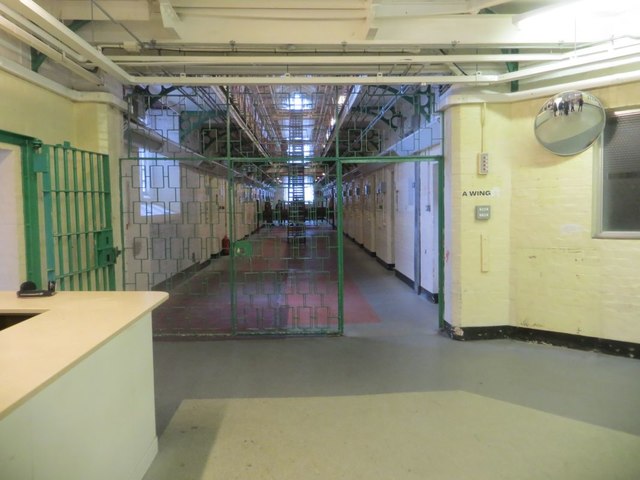
The other week I had the opportunity to visit one of our local prisons with academic colleagues from our Criminology team within the Faculty of Health and Society at the University of Northampton. The prison in question is a category C closed facility and it was my very first visit to such an institution. The context for my visit was to follow up and review the work completed by students, prisoners and staff in the joint delivery of an academic module which forms part of our undergraduate Criminology course. The module entitled “Beyond Justice” explores key philosophical, social and political issues associated with the concept of justice and the journeys that individuals travel within the criminal justice system in the UK. This innovative approach to collaborative education involving the delivery of the module to students of the university and prisoners was long in its gestation. The module itself had been delivered over several weeks in the Autumn term of 2017. What was very apparent from the start of this planned visit was how successful the venture had been; ground-breaking in many respects with clear impact for all involved. Indeed, it has been way more successful than anyone could have imagined when the staff embarked on the planning process. The project is an excellent example of the University’s Changemaker agenda with its emphasis upon mobilising University assets to address real life social challenges.
My particular visit was more than a simple review and celebration of good Changemaker work well done. It was to advance the working relationship with the Prison in the signing of a memorandum of understanding which outlined further work that would be developed on the back of this successful project. This will include; future classes for university/prison students, academic advancement of prison staff, the use of prison staff expertise in the university, research and consultancy. My visit was therefore a fruitful one. In the run up to the visit I had to endure all the usual jokes one would expect. Would they let me in? More importantly would they let me out? Clearly there was an absolute need to be on my best behaviour, keep my nose clean and certainly mind my Ps and Qs especially if I was to be “released”. Despite this ribbing I approached the visit with anticipation and an open mind. To be honest I was unsure what to expect. My only previous conceptual experience of this aspect of the criminal justice system was many years ago when I was working as a mental health nurse in a traditional NHS psychiatric hospital. This was in the early 1980s with its throwback to a period of mental health care based on primarily protecting the public from the mad in society. Whilst there had been some shifts in thinking there was still a strong element of the “custodial” in the treatment and care regimen adopted. Public safety was paramount and many patients had been in the hospital for tens of years with an ensuing sense of incarceration and institutionalisation. These concepts are well described in the seminal work of Barton (1976) who described the consequences of long term incarceration as a form of neurosis; a psychiatric disorder in which a person confined for a long period in a hospital, mental hospital, or prison assumes a dependent role, passively accepts the paternalist approach of those in charge, and develops symptoms and signs associated with restricted horizons, such as increasing passivity and lack of motivation. To be fair mental health services had been transitioning slowly since the 1960s with a move from the custodial to the therapeutic. The associated strategy of rehabilitation and the decant of patients from what was an old asylum to a more community based services were well underway. In many respects the speed of this change was proving problematic with community support struggling to catch up and cope with the numbers moving out of the institutions.
My only other personal experience was when I spent a night in the cells of my local police station following an “incident” in the town centre. This was a case of being in the wrong place at the wrong time. (I know everyone says that, but in this case it is a genuine explanation). However, this did give me a sense of what being locked up felt like albeit for a few hours one night. When being shown one of the single occupancy cells at the prison those feelings came flooding back. However, the thought of being there for several months or years would have considerably more impact. The accommodation was in fact worse than I had imagined. I reflected on this afterwards in light of what can sometimes be the prevailing narrative that prison is in some way a cushy number. The roof over your head, access to a TV and a warm bed along with three square meals a day is often dressed up as a comfortable daily life. The reality of incarceration is far from this view. A few days later I watched Trevor MacDonald report from Indiana State Prison in the USA as part of ITV’s crime and punishment season. In comparison to that you could argue the UK version is comfortable but I have no doubt either experience would be, for me, an extreme challenge.
There were further echoes of my mental health experiences as I was shown the rehabilitation facilities with opportunities for prisoners to experience real world work as part of their transition back into society. I was impressed with the community engagement and the foresight of some big high street companies to get involved in retraining and education. This aspect of the visit was much better than I imagined and there is evidence that this is working. It is a strict rehabilitation regime where any poor behaviour or departure from the planned activity results in failure and loss of the opportunity. This did make me reflect on our own project and its contribution to prisoner rehabilitation. In education, success and failure are norms and the process engenders much more tolerance of what we see as mistakes along the way. The great thing about this project is the achievement of all in terms of both the learning process and outcome. Those outcomes will be celebrated later this month when we return to the prison for a special celebration event. That will be the moment not only to celebrate success but to look to the future and the further work the University and the Prison can do together. On that occasion as on this I do expect to be released early for good behaviour.
Reference
Barton, R., (1976) Institutional Neurosis: 3rd edition, Butterworth-Heinemann, London.
Share this:


A Bloody Shame

I find it fascinating that when I ask my students whether they watch or read the news the reply is generally in the negative. Maybe part of the reason might be found in the fact that so much news resides only temporarily in our conscience before it is replaced by yet another item of news, ‘fake or not’ and we are bombarded with information churned out 24/7, minute by minute. What is alarming is that important issues are reported on, sometimes in a somewhat perfunctory manner, and lost in the mix of other important and less important issues.
And so it is for an item of news that caught my eye just before Christmas. I didn’t really think much about it until somewhere in the back of my mind I had a niggling feeling that just can’t be right. The news item, as I recall it, related to a protest outside Downing Street about women’s sanitary products. A young lady led the protest about the lack of availability of the products for young people, or was it that V.A.T was being added to the products? I just remember the banal comments made by some supporting actress and what I thought were somewhat distasteful banners being displayed. But on reflection all of this masked a serious issue, that of equality and Human Rights. Part of the storyline behind the news was that some young women were not going to school at certain times because they could not afford sanitary products. I couldn’t even imagine the embarrassment this must cause for young ladies. And then I thought about how it might affect other women on low or no income.
There has been much in the news about equality for women recently, most notably around the issue of equal pay. But this issue of sanitary products is even more fundamental. If you don’t have a decent education, how can you get into the work place, let alone achieve parity on pay?
The last time I looked, education was a Human Right. I don’t think the basis of this was something along part time education according to certain times of the month. Women did not ask to be put into this position and it isn’t something that afflicts men. I bet if it did, sanitary products would be available in every public toilet for free and you could probably order your free delivery on line.
I’m not sure how it should work but if we believe in Human Rights and we believe in equality, sanitary products, or the lack of should not be allowed to hold women back. There may be a cost but the payback would be tremendous.
More recently in the news, the Prime Minister, Mrs May, has been visiting China and according to the news had some difficult conversations about Human Rights records. I would suggest that perhaps she ought to look closer to home. And as for the media, perhaps some issues should linger longer to have a chance of embedding themselves in the public’s conscience.
Share this:


Why you should trust your work

Bethany Davies is an Associate Lecturer teaching modules in the first year.
It is only human to doubt yourself in certain situations; however, academia can be a problematic situation to doubt your ideas and abilities. It can lead you to change your standpoint unnecessarily and also create so much stress that you give up on an idea or project entirely.
I deal with this less so now since my university experience but still regularly and I felt it may provide comfort to those currently studying or recently graduated, these examples are personal and are only two of many. In particular I want to address doubting your own ideas and work and how important it is to keep challenging those thoughts.
Upon starting university, my first ‘big essay’ (I describe this with humour as it was 3000 words, but as a first year that can seem like quite the ask) was a biographical assignment. This assignment required an interview with a family member or anyone who would be willing to talk to you and to apply that to research by highlighting some key events/accomplishments. I feared writing that essay as I had many friends with parents who were lawyers or grandparents who had been in the war or immigrants. These stories surely would be so interesting and my essay on my dad who worked in a warehouse would be seen as boring, perhaps. This was my first experience with fear and doubt over my work, but then I did the interview, wrote the essay, took a deep breath and submitted. Turns out it was one of my favourite pieces of work and the programme leaders liked it. It was an honest essay and while not glamorous, it was personal to me and that made the approval and grade that more rewarding.
In my second year, I conducted my placement at a probation office and based my research around a case study of one male who was doing an English class and aimed to discuss the success of that class. After around 8 weeks of observations and an interview with the male. I went to my seminar leader at the time (@paulaabowles) in a complete panic and almost teary-eyed. I told her how I felt my research was not good enough because the male was lying to me, in fact he was almost lying to the whole probation experience as he was more or less just turning up to tick the boxes he needed but then conducting his behaviour differently to me in certain situations and the interview. I felt I had failed as a researcher and also as a teacher almost, as I was assisting in the teaching of the class he was in. I was then told some of the great truths of research and also why I had not failed and actually I had done very well. My research was good research and I just had not realised it. The research didn’t find what I wanted it to, in fact it found the opposite, which was still good research. My research which I had titled ‘Playing the system’ had actually proved to not be a failure and my doubts were unnecessary but not anything to be ashamed of. As in my quest at the time to find answers of why was I such a ‘bad researcher’ and interviewer, I found a plethora of other people online and among peers with the same doubts over some great work they had produced.
Whether it be doubts or fear of speaking up in fear of failure or sounding stupid, I hope others may be able to see not only are they not alone, but actually you are normal because of these doubts. We should just maybe work on believing in our work more and not waiting to get the approval of others for those ideas. With this I feel it is fitting to use one of my favourite quotes from Bertrand Russell:
“The whole problem with the world is that fools and fanatics are always so certain of themselves, and wiser people so full of doubts.”
Share this:


Is education more fun than building a Lego Yellow Submarine? Discuss

This week some students, independently and across the years, introduced me to the novel idea that education should be “enjoyable” and “fun”. Furthermore, if it wasn’t enjoyable, it wasn’t being done right. Given Criminology’s subject matter is often grim, dark, focusing on the worst aspects of humankind, enjoyable and fun are not descriptions that often appear in relation to the discipline. Certainly, such a perspective is not one that I personally recognise; a day at an art gallery, playing Hungry Hippos with two little people, a nice bottle of wine, lunch with friends, building a Lego Yellow Submarine etc are things that I would say are enjoyable, perhaps even fun. But education……I’m not convinced! What follows are my vague ramblings around a subject which is very close to my heart (you are warned!).
All of the enjoyable activities I have described above are ones that I spend very little of my time doing and that to me, is part of their enjoyability (if such a word exists). They are attractive because they are rare and unusual, in my life at least. But education, learning, knowledge are part and parcel of my everyday existence, and dare I say fundamental to who am I. However, does any of this preclude education from being fun? Maybe, I just take for granted my thirst for knowledge in the same way as my thirst for water, just everyday appetites that need to be fed to maintain equilibrium and optimal performance.
I love considering new ideas and new perspectives, particularly if they challenge my thinking and jolt me out of complacency, so I want to consider this concept of enjoyable education. I’ve always been a curious person, there’s lots of questions that I want to know the answer to and they generally begin with “why”? Like all children, I expect I drove my parents mad with the constant questions; never fully satisfied with the answer. I can trace my first early, tentative steps into criminological thinking to when I was a child and regularly had to pass HMP Holloway[1] on the way to various hospital appointments. I used to wonder who lived in this huge, forbidding building, why they were there, what had they done, when would they get out and where would they go? Some decades on, I have answers to some of those questions but I’m still actively searching for the others. This, of course, is experiential learning and children’s books (at that time) offered little by way of answers to such profound criminological questions.

At school, the type of learning I liked best was when I could explore for myself. An experienced and knowledgeable teacher or lecturer explaining complex ideas could open the door so far, but I wanted to find out for myself as much as possible. For me, the best educationalists are those that gently guide and enable, not those who deliver information on demand. They also engender self-confidence and self-discipline encouraging the scholar to take control of their own intellectual journey. All of this leads me to the conclusion that learning is intrinsically neither enjoyable nor fun, although both may be by-products. Education, knowledge, learning, all of these are painful, challenging, at times they appear almost impossible. But! The level of personal satisfaction, achievement and growth means that ‘some kind of happiness is’, not as the Beatles suggest ‘measured out in miles’, but through intellectual endeavour (Lennon and McCartney, 1969). And to answer the essay question I set in the title, Lego has many charms but independent, self-direction is not one of them. Provided you follow the step-by-step illustrated instructions you will have your very own Yellow Submarine, but there are no surprises, whether positive or negative, which means I have no intellectual investment in the process. Furthermore, take the instructions away and I would not be able to recreate this “masterpiece”. Having said that, it does look rather lovely on my book case 🙂
Lennon, John and McCartney, Paul, (1969), Hey Bulldog, [LP]. Recorded by The Beatles in Yellow Submarine, Northern Songs: Apple
[1] HMP Holloway closed its doors for the final time in July 2016.


