
Home » Criminology (Page 66)
Category Archives: Criminology

The changing face of criminology

We can profess that those of us in academia get to own a small nugget of knowledge on their chosen subject. This is how specialism is developed and cultivated. We start our long journey into knowledge first by learning the discipline as a whole, going through the different theories and issues, becoming aware of the critical debates, before we embrace the next step of in depth understanding. Little by little knowledge becomes a road full of junctions, intersections and byroads, constantly fueled by one of the most basic but profound parts of human experience, curiosity. Academia, was originally developed by a person looking up in the wider cosmos and wondering; surely there is more to life than this. When the recorded experience aligned with imagination it produced results; civilization emerged as a collective testament of being. Arguably the first ever question, whenever it was posed and however it was phrased, philosophy was born; any attempt to answer it generated reason and logic.
The process of learning is painstaking because education is a process and as such it requires us to grow as we absorb it. This process is never ending because “The eye never has enough of seeing, nor the ear its fill of hearing” to quote Ecclesiastes and therefore learning is lifelong. In academia, in particular, this thirst for knowledge is unquenchable and because of it we progress our respective disciplines further, constantly expanding the boundaries. Anyone of us who had a discussion in or out of a classroom will testify that even on the same topic, with the same material, a seminar is never the same. The main reason for this is, education is active and as a learner I gain from whatever I can relate to and comprehend. Time and time again, I go back to my own learning as I adapt my pedagogy, because to teach is a dialectic; we impart an idea and we let it flourish to those who shall be taking it further.
There is a reason why I am so reflecting of education on this entry; recently we had a reunion of our alumni and in preparation of the event, I was looking back at the way we taught criminology, what changed and how things have progressed. Colleagues, moved on as expected and the student demographics may have changed but the subject is still taught. It is this ongoing process that fascinated me in that reflection. The curriculum and the ideas behind it. As an institution we offer a number of subject areas, criminology included, that other institutions around the world do, but no other institution will have the unique blend of what we offer. This part is quite astounding that in the reproduction of ideas and across the continuity of disciplinary knowledge, there is always a place for originality.
On the day, I could hear the stories from some of our alumni with a latent sense of pride as they spoke with some confidence about their life plans, work commitments and ideas. These were the same people who some years ago, blushed in a seminar from shyness, were anxious about their exam results and worried about their degree classification. Now with confidence, they embrace their education with the realisation that they have just made the first step into a terra incognita… their journey into learning continues. During the next weeks (and hopefully, months), a number of our alumni (and current students) will put pen to paper of their thoughts, on our blog and talk about their experiences and their criminology. We thank them in advance and are looking forward to read their thoughts.
Share this:

Graduation: the end of the beginning?

Helen is an Associate Lecturer teaching on modules in years 1 and 3.
I joined the University of Northampton as an associate lecturer in 2009, teaching at first on the Offender Management foundation degree and then joining the Criminology team, although I had been a visiting lecturer in Criminology for a number of years prior to that. I am sorry that a prior commitment means that I am unable to join you for the Big Criminology Reunion, although the occasion has inspired me to reflect on the professional journey that starts with graduation.
Last week I received an e-mail from a former student in the 2010 Offender Management cohort. She is just about to qualify as a probation officer and she was asking for advice about giving evidence at Parole Board hearings. It was great to think back, to remember what a vibrant and enthusiastic student she was, and to project forwards; perhaps I’ll see her at an oral hearing soon. She will probably make an excellent probation officer, and the fact that she is asking for advice before she even starts is evidence of that. She will possibly be the first of our offender management students to become an offender manager!
A couple of years ago I was at a Parole Hearing at HMYOI Aylesbury where I was very impressed by the evidence of the trainee psychologist. She had prepared a clear, concise but thorough and analytical report on the prisoner and she gave her oral evidence confidently and thoughtfully. After the end of the hearing, she popped back in to tell me that she had been initially inspired to take up prison psychology after hearing my guest lecture on Manos’ Forensic Psychology module. I saw her again earlier this year and she’s still doing a great job!
For undergraduates, completing a degree, submitting a dissertation, putting the pen down at the end of the last exam and then graduating with friends, seems like the end of a long and arduous process. And of course it is! But as the stories above show, it is also just the beginning. Just the beginning of a professional journey which may or may not involve direct application of the subjects covered on the course. Not all our students become probation officers or prison psychologists or academic criminologists, but they will take something of what they learn out into the world with them. It may be a more critical way of digesting the news, a wider appreciation of the social forces that shape our world, a readiness to reflect and question and see the world from different perspectives. All of that will help them on their journey. I hope that you all have a great time at the reunion and that as you compare each other’s journeys you have fond memories of the degree course that seemed a marathon at the time but was really only the first step!
Share this:


(In)Human Rights in the “Compliant Environment”
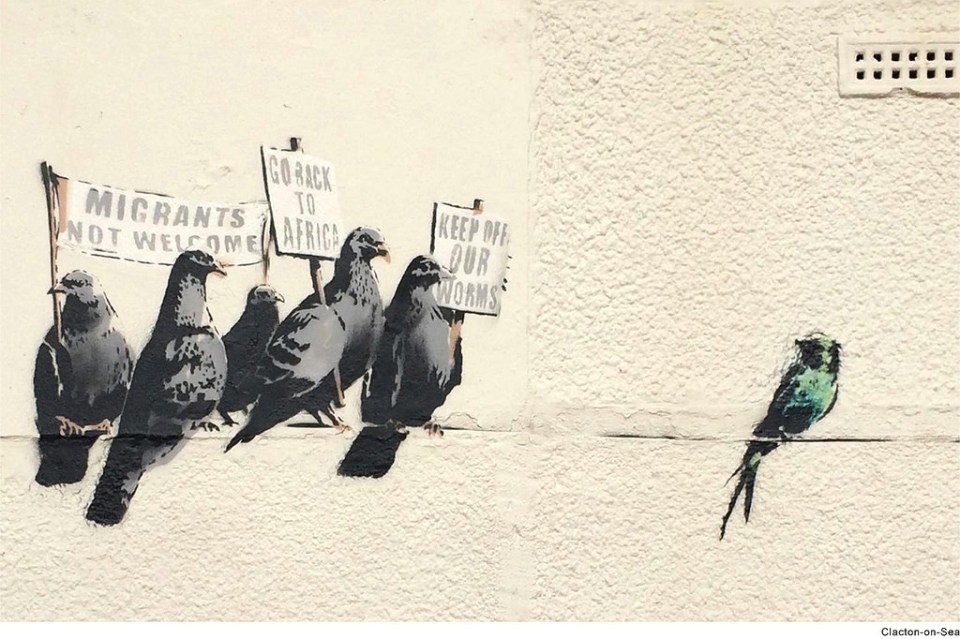
In the aftermath of the Windrush generation debacle being brought into the light, Amber Rudd resigned, and a new Home Secretary was appointed. This was hailed by the government as a turning point, an opportunity to draw a line in the sand. Certainly, within hours of his appointment, Sajid Javid announced that he ‘would do right by the Windrush generation’. Furthermore, he insisted that he did not ‘like the phrase hostile’, adding that ‘the terminology is incorrect’ and that the term itself, was ‘unhelpful’. In its place, Javid offered a new term, that of; ‘a compliant environment’. At first glance, the language appears neutral and far less threatening, however, you do not need to dig too deep to read the threat contained within.
According to the Oxford Dictionary (2018) the definition of compliant indicates a disposition ‘to agree with others or obey rules, especially to an excessive degree; acquiescent’. Compliance implies obeying orders, keeping your mouth shut and tolerating whatever follows. It offers, no space for discussion, debate or dissent and is far more reflective of the military environment, than civilian life. Furthermore, how does a narrative of compliance fit in with a twenty-first century (supposedly) democratic society?
The Windrush shambles demonstrates quite clearly a blatant disregard for British citizens and implicit, if not, downright aggression. Government ministers, civil servants, immigration officers, NHS workers, as well as those in education and other organisations/industries, all complying with rules and regulations, together with pressures to exceed targets, meant that any semblance of humanity is left behind. The strategy of creating a hostile environment could only ever result in misery for those subjected to the State’s machinations. Whilst, there may be concerns around people living in the country without the official right to stay, these people are fully aware of their uncertain status and are thus unlikely to be highly visible. As we’ve seen many times within the CJS, where there are targets that “must” be met, individuals and agencies will tend to go for the low-hanging fruit. In the case of immigration, this made the Windrush generation incredibly vulnerable; whether they wanted to travel to their country of origin to visit ill or dying relatives, change employment or if they needed to call on the services of the NHS. Although attention has now been drawn to the plight of many of the Windrush generation facing varying levels of discrimination, we can never really know for sure how many individuals and families have been impacted. The only narratives we will hear are those who are able to make their voices heard either independently or through the support of MPs (such as David Lammy) and the media. Hopefully, these voices will continue to be raised and new ones added, in order that all may receive justice; rather than an off-the-cuff apology.
However, what of Javid’s new ‘compliant environment’? I would argue that even in this new, supposedly less aggressive environment, individuals such as Sonia Williams, Glenda Caesar and Michael Braithwaite would still be faced with the same impossible situation. By speaking out, these British women and man, as well as countless others, demonstrate anything but compliance and that can only be a positive for a humane and empathetic society.
Share this:


Another broken promise – Ministry of Justice announcement to postpone plans to reduce female prison population

The plight of women in prison aptly demonstrates some of the issues I have with our current government. There seems to be a pattern of u-turns, postponing on strategies and little remorse or concern shown for the impact of these decisions. Now I don’t know if this is to do with focus on Brexit, or some other reason that only those in the corridors of power can know. What I am concerned about is the cavalier way this government back tracks and displays levels of incompetency that anyone else would be sacked for. I am concerned because these tactics affect lives, they impact on people’s health wellbeing and survival. Women in prison suffer disproportionately compared to men, and it seems, they are easy target to disregard. They are also a prison population which is predominantly low risk and would benefit from assistance, welfare and support, much more so than punishment and retribution. By the way, I also firmly believe there are plenty of male prisoners and young offenders in the same boat – as do others. Women in prison, including those who are also mothers (up to 66%) (Epstein, 2014) do however face greater impact for a variety of reasons. It is these reasons which make the recent announcement by the Ministry of Justice to postpone plans to reduce the female prison population all the more galling.
An article in the Guardian states ‘women account for 5% of the prison population of in England and Wales but have much higher rates of deaths, suicide attempts and self-harm than men’ (Syal, 2018). The focus of the multimillion pound government strategy to reduce the number of women being imprisoned for non-violent offences was to set up community prisons and provide more support for female offenders. The postponement was reported to be due to spending pressures, which is also affected spending on the prison system more widely. This is a strategy which has been developed over several years and this postponement must surely test the patience of those reformers who have campaigned for this change. Indeed, Peter Dawson, the director of the Prison Reform Trust has expressed disbelief that a strategy which had widespread support is being treated in this way. He also added that to cite the postponement as an issue with cost is contradictory, given better support in the community and the aims of the strategy to reduce the numbers of women in prison would actually reduce costs to the Ministry of Justice. Women prisoners have complex needs, with mental health issues, abuse, debt, homelessness, poor education as well a significant number having child care responsibilities and with a prison sentence, facing the very real prospect of losing their child to the social care system (Baldwn, 2017).
The MoJ strategy embraced multi-agency working and even found a way to navigate achieving its aims under the current Transforming Rehabilitation arrangements, with the National Probation Service working with the police, mental health charities and courts to co-ordinate better support services and better arrangements to help women due for release. The need for this was clear as a report by Inquest (2018) showed that 116 women died post release during 2010-11 and 2016-17. In addition to increased incidences of self-harm and suicides, and given that 84% of women are imprisoned for non-violent offences (ibid), it was clear that not only should something be done, but also that something could be done. The benefits were evident in saving money, reducing risks to women prisoners and not compromising on public protection. The report by Inquest (2018) also shows that the disproportionate number of women on short term sentences (62%) reiterates the need to reduce this, given the disruptive effects on housing, jobs and childcare. Deborah Coles of Inquest suggest this postponement by the MoJ will costs lives and that the harms of the justice system to women need to be acknowledged.
This need for change is also supported by the Magistrates Association, who also report that help and support is much more effective than short term sentences. Given this arena is where the decision to sentence occurs, it is an important move to get magistrates thinking differently about the delivery of justice. This is not just about considering community sentences, but also to consider how the court room can be a place for different approaches to those offenders – male or female – who present complex needs, experiences of abuse and discrimination and who require more than stern words and retributive acts of punishment.
There have long been concerns about the rising numbers of female prisoners, given that this is attributed to increasing punitiveness in sentencing decisions (Hedderman, 2004). There is a strong case for using community sentencing where this is appropriate (Corston, 2007; Prison Reform Trust 2011; Baldwin, 2015), i.e. for non-violent and low risk offenders. This is evidence from campaigns (e.g. from the Howard League for Penal Reform, the Prison Reform Trust, Women in Prison, Make Justice Work) to reduce the use of custody more generally, but especially for women and mothers who break the law. A recent edited text on the plight of mothers in prison further emphasises the need for a different approach (Baldwin, 2015). It collates contributions from academics and practitioners working within the prison system, managing the needs of mothers and mothers to be, as well as those research these issues (e.g. Baldwin, 2015; Epstein, 2012; Minson 2014). A core theme is that short term sentences create a narrative of continuing disadvantage, felt for generations (Baldwin, 2015). It also demonstrates the long-term effects of the imprisonment of mothers, as a ripple effect which impacts the mother, their child, other family members for a length of time way past the length of the sentence – what Baldwin (2015) has referred to as a ‘sentence which keeps on punishing’. This text reiterates the potential for change starting with the courts, where different approaches would have a lasting impact and lead to more positive outcomes.
This is just the tip of the iceberg in terms of evidence which shows a different way to deal with offenders is possible, the evidence is there, the options are there and until recently, some degree of political will and investment was also there. I hope this is a postponement and not just another broken promise. This seems to be a pattern for this government, and there seems to be no one holding them to account when such decisions are made. It may well be because the prison population is a group we can all too easily disregard. However, given that these are people who have faced a life of disadvantage and whose reformation would benefit all of us who wish to feel safe in our communities, this view is misguided. The problem is, it seems it is all too easily accepted.
References
Baldwin, L. (2015) Mothering Justice: Working with Mothers in Criminal and Social Justice Settings, Waterside Press.
Baldwin, L. (2015d). Rules of Confinement: Time for Changing the Game. Criminal Law and Justice Weekly, 179 (10).
Corston, J. (2007). The Corston Report: A report by Baroness Jean Corston of a Review of Women with Particular Vulnerabilities in the Criminal Justice System. London: Home Office.
Epstein, R. (2014). Mothers in Prison: The sentencing of mothers and the rights of the child, Howard League What is Justice? Working Papers 3/2014, Howard League for Penal Reform.
Hedderman, C. (2004). The ‘criminogenic’ needs of women offenders. In G. McIvor
(ed) Women Who Offend: Research Highlights in Social Work 44. London: Jessica
Kingsley Publishers.
Inquest (2016) Still Dying On The Inside: Examining deaths in women’s prisons (see https://www.inquest.org.uk/Handlers/Download.ashx?IDMF=8d39dc1d-02f7-48eb-b9ac-2c063d01656a)
Minson, S. (2014). Mitigating Motherhood: A study of the impact of motherhood on sentencing decisions in England and Wales, Howard League for Penal Reform, London.
Prison Reform Trust (2011). Reforming Women’s Justice: Final Report of the Women’s Justice Taskforce. London: Prison Reform Trust.
Syal, R. (2018) Ministry of Justice postpones plans to reduce female prison population, The Guardian, 2 May 2018.
Share this:


Social Media – Friend or Foe?
 After reading about the backlash to Shania Twain’s proclamation that she would have voted for Donald Trump in the 2016 US Election (BBC News, 2018) I started thinking about the power that social media has over us and our lives. The irony of the fact that I’m writing a blog on the issue, which in itself is a form of social media, is not lost on me. Personally, I’m not a fan of social media yet I, like so many, conform to the pressure of having a facebook or twitter account because that is expected of us both personally and professionally but I wonder if it actually adds value to our lives. It is undeniable that social media platforms allow for greater connectivity between people but is there any quality in that connectivity? News events are instant but are they good quality? Messaging is easy but is it accurate or easy to interpret? Whatsapp or messenger tell us whose online and when but do we need to know that or does it just increase our anxiety when we don’t get a response? Facebook and Instagram document our lives for posterity’s sake but is it necessary to do so, I certainly don’t care what others had for dinner or what I had for dinner 6 months ago to be honest. Scarier still is the tech in our phones which recently allowed someone to tell me exactly when another family member would be home by checking their location on their phone. I recognise the benefit of such technology when it comes to checking on the safety of our children or loved ones but the cynic in me fears the abuse that such software is open to and the potential harm that can be done to others through its use.
Maybe I’m overthinking this or just stuck in the past but before social media we talked, we had physical conversations through which we learnt things, not just information that helped shape us as human beings but also the art of reading signs, body language, social cues and so forth – we actually made time for one another. These things cannot be learnt through text or messaging so how are the younger generation supposed to learn these things? Equally as important is the need for those skills to be practiced so that they are not lost. How many times do you have a conversation with someone who cannot maintain eye contact or who interrupts before you’ve finished your point? Is this a symptom of messaging which puts the pauses in for you and allows you to talk over others without actually doing it, after all messages are presented in a sequential order. That said, the creation of facetime or Skype may bridge the gap between phone conversations and physical ones and therefore enable us to continue learning and practicing these skills but how often do we opt for that over a quick text message? Let’s face it, we live busy lives and its quicker and easier to fire off a text than it is to schedule in an uninterrupted call. I have certainly been accused recently of favouring text messaging over phone calls but then I’ve never liked talking on the phone either. When you add into the mix, the lack of punctuation and the use of text talk the problems become more profound, firstly because this means that the art of writing appropriately is diminishing but secondly because it’s almost impossible to interpret the meaning of a message with no punctuation.
Furthermore, I regularly find myself in the company of people whose lives appear to be lived online and what I’ve observed is that they struggle in a crowd, they are socially anxious and often struggle with the fluidity of a group conversation. Maybe they would be that way regardless of social media but I do wonder whether social media is destroying social skills and how long it will be before the joy of an in-person conversation with like minded people becomes a thing of the past. Obviously, as with most things the simple answer is to find a balance between the two but in a world determined to make us digital natives, this is increasingly difficult.
Share this:


Oh, just f*** off.

A strange title to give to a blog but, one that expresses my feelings every time I turn the television and watch politicians procrastinating about a major issue. How else do I try and express my utter contempt for the leaders of this country that cause chaos and misery and yet take no responsibility for what they have done.
I watch Donald Trump on television and I’m simply given to thinking ‘You’re an idiot’, I appreciate that others may have stronger words, particularly some immigrants, legal or illegal, in the United States. I will draw parallels with his approach later, how could I not, given the Empire Windrush disgrace.
A week or so ago a significant topic on the news was the gender pay gap. The Prime Minister Theresa May was all over this one, after all it is the fault of corporations and businesses the pay gap exists. No responsibility there then but votes to be had.
Within the same news bulletin, there was an interview with a teacher who explained how teachers were regularly taking children’s clothes home to wash them as the family couldn’t afford to do so. Children were appearing at school and the only meal they might have for the day was the school meal. Now that might seem terrible in a third world country but he wasn’t talking about a third world country he was talking about England. Surprisingly, the prime minister was not all over that one, no votes to be had.
Within the same time frame there were more deaths in London due to gang crime. The Prime Minister and the Home Secretary Amber Rudd were all over that one, well of sorts, but then it is a political hot potato. The police and the community need to do more, an action plan is produced.
Then we have the Windrush debacle, tragedy and disgrace. The Home Secretary eventually said she was sorry and blamed the civil servants in the Home Office. They had become inhuman, clearly not her fault. The Prime Minister said sorry, it was under her watch at the Home Office that the first seeds of this disaster were plotted and then hatched, clearly though not her fault either. Got the right wing votes but seem to have lost a few others along the way.
What ties all of these things together; class structure, inequality and poverty and an unwillingness in government to address these, not really a vote winner. The gender pay gap is someone else’s fault and even if addressed, won’t deal with the inequalities at the bottom of the pay structure. Those women on zero hour contracts and minimum wages won’t see the benefit, only those in middle or higher ranking jobs. Votes from some but not from others, a gain rather than any loss.
The fact that children exist in such poverty in this country that teachers have to intervene and take on welfare responsibilities is conveniently ignored. As is the fact that much of the violence that plagues the inner city streets happens to occur in poor neighbourhoods where social and economic deprivation is rife. The Windrush issue is just another example of right wing rhetoric leading to right wing action that impacts most on the vulnerable.
When the gender pay gap hit the news there was a senior figure from a company that appeared in the news. He said that addressing the gender pay gap by having more women in higher positions in his company was good for the company, good for the country, and good for the economy.
Judging from the example given by the country’s senior management, I have to say I am far from convinced. And yes as far as I’m concerned, when they open their mouths and pontificate, they can just f*** off.
Share this:


‘I read the news today, oh boy’
 The English army had just won the war
A crowd of people turned away
But I just had to look
Having read the book
(Lennon and McCartney, 1967),
The news these days, without fail, is terrible. Wherever you look you are confronted by misery, death, destruction and terror. Regular news channels and social media bombard us with increasingly horrific tales of people living and dying under tremendous pressure, both here in the UK and elsewhere in the world. Below are just a couple of examples drawn from the mainstream media over the space of a few days, each one an example of individual or collective misery. None of them are unique and they all made the headlines in the UK.
‘Deaths of UK homeless people more than double in five years’
‘Syria: 500 Douma patients had chemical attack symptoms, reports say’
‘London 2018 BLOODBATH: Capital on a knife edge as killings SOAR to 56 in three months’
So how do we make sense of these tumultuous times? Do we turn our backs and pretend it has nothing to do with us? Can we, as Criminologists, ignore such events and say they are for other people to think about, discuss and resolve?
At the beginning of the twenty-first century, Stanley Cohen, posed a similar question; ‘How will we react to the atrocities and suffering that lie ahead?’ (2001: 287). Certainly his text States Of Denial: Knowing about Atrocities and Suffering makes clear that each of us has a part to play, firstly by ‘knowing’ that these things happen; in essence, bearing witness and acknowledging the harm inherent in such atrocities. But is this enough?
Cohen, persuasively argues, that our understanding has fundamentally changed:
The political changes of the last decade have radically altered how these issues are framed. The cold-war is over, ordinary “war” does not mean what it used to mean, nor do the terms “nationalism”, “socialism”, “welfare state”, “public order”, “security”, “victim”, “peace-keeping” and “intervention” (2001: 287).
With this in mind, shouldn’t our responses as a society, also have changed, adapted to these new discourses? I would argue, that there is very little evidence to show that this has happened; whilst problems are seemingly framed in different ways, society’s response continues to be overtly punitive. Certainly, the following responses are well rehearsed;
- “move the homeless on”
- “bomb Syria into submission”
- “increase stop and search”
- “longer/harsher prison sentences”
- “it’s your own fault for not having the correct papers?”
Of course, none of the above are new “solutions”. It is well documented throughout much of history, that moving social problems (or as we should acknowledge, people) along, just ensures that the situation continues, after all everyone needs somewhere just to be. Likewise, we have the recent experiences of invading Iraq and Afghanistan to show us (if we didn’t already know from Britain’s experiences during WWII) that you cannot bomb either people or states into submission. As criminologists, we know, only too well, the horrific impact of stop and search, incarceration and banishment and exile, on individuals, families and communities, but it seems, as a society, we do not learn from these experiences.
Yet if we were to imagine, those particular social problems in our own relationships, friendship groups, neighbourhoods and communities, would our responses be the same? Wouldn’t responses be more conciliatory, more empathetic, more helpful, more hopeful and more focused on solving problems, rather than exacerbating the situation?
Next time you read one of these news stories, ask yourself, if it was me or someone important to me that this was happening to, what would I do, how would I resolve the situation, would I be quite so punitive? Until then….
Whoever fights monsters should see to it that in the process he does not become a monster. And when you look long into an abyss, the abyss also looks into you (Nietzsche, 1886/2003: 146)
References:
Cohen, Stanley, (2001), States Of Denial: Knowing about Atrocities and Suffering, (Cambridge: Polity Press)
Lennon, John and McCartney, Paul, (1967), A Day in the Life, [LP]. Recorded by The Beatles in Sgt Pepper’s Lonely Hearts Club Band, EMI Studios: Parlaphone
Nietzsche, Friedrich, (1886/2003), Beyond Good and Evil: Prelude to a Philosophy of the Future, tr. from the German by R. J. Hollingdale, (London: Penguin Books)
Share this:


Is Easter a criminological issue?

Spring is the time that many Christians relate with the celebration of Easter. For many the sacrament of Easter seals their faith; as in the end of torment and suffering, there is the resurrection of the head of the faith. All these are issues to consider in a religious studies blog and perhaps consider the existential implications in a philosophical discourse. How about criminology?
In criminology it provides great penological and criminological lessons. The nature of Jesus’s apprehension, by what is described as a mob, relates to ideas of vigilantism and the old non-professional watchmen who existed in many different countries around the world. The torture, suffered is not too dissimilar from the investigative interrogation unfortunately practiced even today around the world (overtly or covertly). His move from court to court, relates to the way we apply for judicial jurisdiction depending on the severity of the case and the nature of the crime. The subsequent trial; short and very purposefully focused to find Jesus guilty, is so reminiscent of what we now call a “kangaroo court” with a dose of penal appeasement and penal populism for good measure. The final part of this judicial drama, is played with the execution. The man on the cross. Thousands of men (it is not clear how many) were executed in this method.
For a historian the exploration of past is key, for a legal professional the study of black letter law principles and for a criminal justice practitioner the way methods of criminal processes altered in time. What about a reader in criminology? For a criminologist there are wider meanings to ascertain and to relate them to our fundamental understanding of justice in the depth of time. The events which unfolded two millennia back, relate to very current issues we read in the news and study in our curriculum. Consider arrest procedures including the very contested stop and search practice. The racial inequalities in court and the ongoing debates on jury nullification as a strategy to combat them. Our constant opposition as a discipline to the use of torture at any point of the justice system including the use of death penalty. In criminology we do not simply study criminal justice, but equally important, that of social justice. In a recent talk in response to a student’s question I said that that at heart of each criminologist is an abolitionist. So, despite our relationship and work with the prison service, we remain hopeful for a world where the prison does not become an inevitable sentence but an ultimate one, and one that we shall rarely use. Perhaps if we were to focus more on social justice and the inequalities we may have far less need for criminal justice
Evidently Easter has plenty to offer for a criminologist. As a social discipline, it allows us to take stock and notice the world around us, break down relationships and even evaluate complex relationships defying world belief systems. Apparently after the crucifixion there was also a resurrection; for more information about that, search a theological blog. Interestingly in his Urbi et Orbi this year the Pope spoke for the need for world leaders to focus on social justice.
Share this:


Netflix and Study?

Bethany Davies is an Associate Lecturer teaching modules in the first year.
As each year and each term goes by, it brings to light how much more we are all connected through media and also how we use media to socialise and also learn.
Now, watching television, movies and using music to learn is not a new concept, I understand this, but on a personal level, I have found more individuals using television and more specifically, crime documentaries to fuel their interest in criminology and their understanding of elements of the criminal justice system.
I believe firstly, the idea of enjoying, what is termed ‘binge watching’, crime documentaries, an interesting concept. As previously explored on the blog regarding ‘enjoyment’ and ‘fun’ of criminology, the themes in these documentaries are very dark and in most cases, the gorier it is, the more it seems to be enjoyed by some viewers. Each September that rolls around we have the (sometimes dreaded) ‘ice breaker’ session, where we get to know our students and what has made them want to pursue a criminology degree at this University. Within that you will always have some who choose to voice their love of a certain crime TV show. This does not always end at first introductions either, there is often a continuation of comparisons made between that of a serious historical event and that of Netflix documentary (for example) which can often contain more dramatic music and pictures than it does criminological discussion.
The question I would like to present is, do we nourish the idea of using documentaries and crime dramas to keep the interest of those who wish to pursue criminology as a field of learning, or would doing so be disingenuous to what criminology is and neglect the love for reading and debates in criminology? I do not necessarily feel this is a question we have to worry about tremendously as I feel those who seek to study criminology purely based on their love for crime documentaries will either soon realise that there is so much of criminology that does not fit those ideas and either love it or abandon it at that point.
But in years to come these questions may be more significant than they are currently. Especially if used as a tool in universities to attract more students into a certain discipline. There are such large elements of criminology that I feel have to be explored with literature or within a seminar setting with questions and debates, and it can be easy for institutions to say that these elements will always be fundamental to a criminology degree for years to come. However, if other institutions start to use more and more media and visual aids to demonstrate a theory or issue of crime in the future, or what I suspect more as a marketing campaign to attract students, will we conform? There are some articles (from questionable sources) that some institutions are using Snapchat and social media takeovers to help attract students to certain courses, most of which I have read about have been media based, granted. But let’s hope all this drivelling nonsense is just my brain after a long bank holiday weekend and not a possibly looming prospect of the future of criminology, right?
Share this:


Remembering Stephen Hawking: A legacy for us all

On March 14th 2018, Professor Stephen Hawking died at the age of 76. For many people, his life was as much about his long battle with motor neurone disease as it was about his achievements as a theoretical physicist. The first thing I saw when clicking on news sites was this quote:
‘Remember to look up at the stars and not down at your feet. Try to make sense of what you see and about what makes the universe exist. Be curious. And however difficult life may seem, there is always something you can do, and succeed at. It matters that you don’t just give up’.
To me, this reflects the value he placed on the pursuit of knowledge, to see this as an opportunity, not a burden and to strive to make sense of it all. For him, it was the universe, the vast expanse of stars and galaxies to be understood in ways I could not even being to fathom. For those studying social sciences, our world is not out there beyond the Earth’s atmosphere, but it is a world we must also seek to understand and, as lecturers and students to communicate this understanding to others. There is a lot of concern in HE as to how to engage students, to consider what we can do to keep them attending and studying their chosen subject outside the classroom. I am beginning to think this is not just to do with our efforts in lectures and seminars, but also perhaps we don’t emphasise enough the opportunity students have, and the value of being in HE is so much more than the qualification itself.
One thing is clear – we should not be in the business of spoon feeding information, to be repeated in assessments, in order for students to be awarded a degree based on their strategy to work towards assessments, and little else. It may sometimes feel like this, so we do have to consider whether this is to do with the way we teach, or the way students respond to this. I think the latter needs as much attention, in that it needs to be clear that students must take responsibility for their learning, and one obvious way to do this is to make the most of opportunities provided by their university. There are students I have taught in my 14 years in HEIs who have clearly appreciated the opportunity they have been given – they make it all worthwhile. There are those who never seem to engage on any level, not even to pass assessments, and who realise HE is not for them. I have more respect for someone coming to that conclusion and seeking a different type of opportunity than those who muddle through and hope it just gets easier.
By the way, if the tone of this seems judgemental, it is not meant that way. My reflections are based on my experiences as a lecturer, but crucially, also as a student. Here is where I have to confess something. In my BSc I was one of those students who muddled through. Then half way through year 2, I realised I was wasting the opportunity I had been given, got a grip and graduated with a 2:2. I know I could have done so much better. The next stage of my academic journey was a combination of being in the right place at the right time and working in a university as a course administrator where one of the staff benefits was to subsidise the cost of degree programmes. The university was the London School of Economics and Political Science, the degree was an MSc in Criminal Justice Policy, and it was very heavily subsidised. My attitude to this opportunity was so different. I was amazed to be accepted onto the programme and found myself being taught by Professor Janet Foster, Professor Robert Reiner, Professor Andrew Ashworth, Professor Maurice Punch, and Professor Ben Bowling. Sorry for the name dropping, but this was the last thing I expected to happen to me. I came away with a Merit award and it set me on this path to be a criminologist. I engaged with the degree by attending everything, working during evenings and weekends, following advice and making the most of it. Then to find myself undertaking a PhD, well it has been a long and arduous journey at times, but I knew my experiences before had set me up well to take on the challenge. It can feel isolating and lonely sometimes, and it can take over your life, but once again, I value the opportunity not just as the pursuit of knowledge, but also the way it has made me overcome challenges and not give up.
The experience of studying for a degree when I was engaged, interested and committed was so much better, with less anxiety, a sense of achievement and I knew I had done my best. As I said earlier, as academics we can do our bit, and many of us do – we consider how best to communicate theories, concepts, policies, debates, and to empower students to have their say. We offer opportunities for interaction, discussion, challenging ideas and enabling students to think more critically. We do this so that students enjoy their studies, make the most of the opportunity and value this as a pursuit of knowledge, as well as the qualification. However, we can only do this successfully when students engage with this process and understand and then accept their role. My role as a lecturer in criminology is about to change significantly, as the move to a new campus changes teaching methods and provision. I have my anxieties about adapting my modules over summer to fit with this model, IT fails, and the usual issues about going through big changes. I know our students share the same anxieties, it’s natural. But, the one thing we can do is ensure that we, as staff and students alike recognise the important role we have, to embrace this change and make the best of it.
So, my plea to students is this. If we don’t keep seeking to expand our understanding and valuing this process of learning, if we stop being curious, then we don’t advance. That is the legacy of Professor Hawking, to remember to keep asking questions, to value learning and to strive to better understand the world around us. Sometimes it will feel like there are barriers put in your way and you cannot overcome them. At this point, it is worth remembering what Professor Hawking had to deal with on a daily basis and ask yourself what you can do to solve these problems. Not only will you do better in your studies, you will learn important skills for the future and will look back knowing you have done your best and overcame whatever life threw at you. That is a legacy to be proud of.
Susie Atherton, Humanoid, Planet Earth.


