
Home » Criminology (Page 62)
Category Archives: Criminology

Questions, questions, questions…..
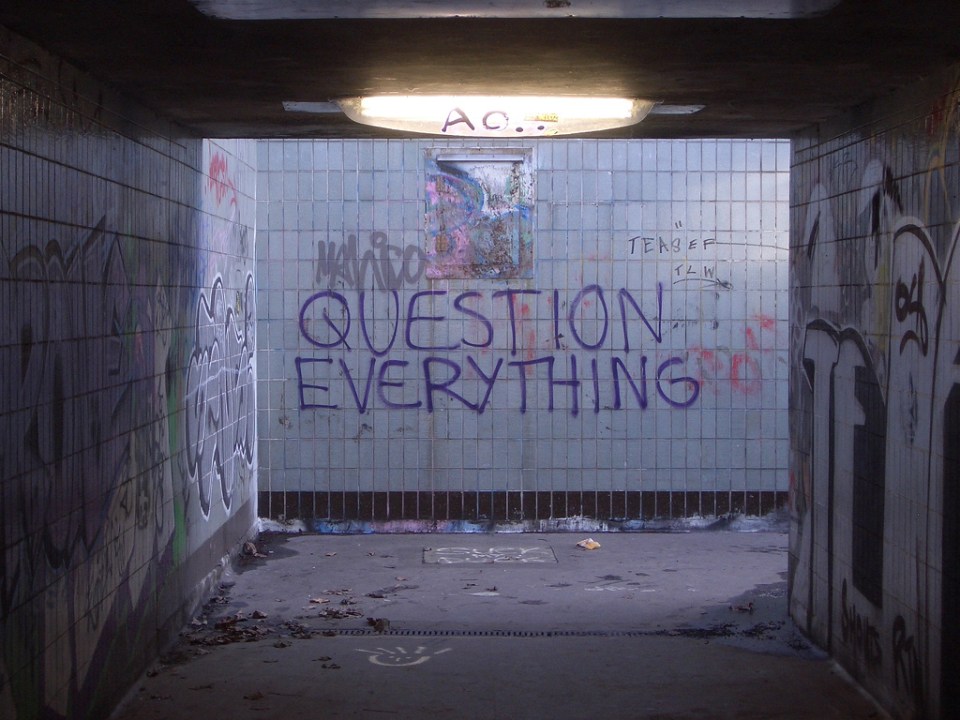
Over the last two weeks we have welcomed new and returning students to our brand-new campus. From the outside, this period of time appears frenetic, chaotic, and incredibly noisy. During this period, I feel as if I am constantly talking; explaining, indicating, signposting, answering questions and offering solutions. All of this is necessary, after all we’re all in a new place, the only difference is that some of us moved in before others. This part of my role has, on the surface, little to do with Criminology. However, once the housekeeping is out of the way we can move to more interesting criminological discussion.
For me, this focuses on the posing of questions and working out ways in which answers can be sought. It’s a common maxim, that within academia, there is no such thing as a silly question and Criminology is no exception (although students are often very sceptical). When you are studying people, everything becomes complicated and complex and of course posing questions does not necessarily guarantee a straightforward answer. As many students/graduates over the years will attest, criminological questions are often followed by yet more criminological questions… At first, this is incredibly frustrating but once you get into the swing of things, it becomes incredibly empowering, allowing individual mental agility to navigate questions in their own unique way. Of course, criminologists, as with all other social scientists, are dependent upon the quality of the evidence they provide in support of their arguments. However, criminology’s inherent interdisciplinarity enables us to choose from a far wider range of materials than many of our colleagues.
So back to the questions…which can appear from anywhere and everywhere. Just to demonstrate there are no silly questions, here are some of those floating around my head currently:
- This week I watched a little video on Facebook, one of those cases of mindlessly scrolling, whilst waiting for something else to begin. It was all about a Dutch innovation, the Tovertafel (Magic Table) and I wondered why in the UK, discussions focus on struggling to feed and keep our elders warm, yet other countries are interested in improving quality of life for all?
- Why, when with every fibre of my being, I abhor violence, I am attracted to boxing?

3. Why in a supposedly wealthy country do we still have poverty?
4. Why do we think boys and girls need different toys?

5. Why does 50% of the world’s population have to spend more on day-to-day living simply because they menstruate?
6. Why as a society are we happy to have big houses with lots of empty rooms but struggle to house the homeless?

7. Why do female ballroom dancers wear so little and who decided that women would dance better in extremely high-heeled shoes?
This is just a sample and not in any particular order. On the surface, they are chaotic and disjointed, however, what they all demonstrate is my mind’s attempt to grapple with extremely serious issues such as inequality, social deprivation, violence, discrimination, vulnerability, to name just a few.
So, to answer the question posed last week by @manosdaskalou, ‘What are Universities for?’, I would proffer my seven questions. On their own, they do not provide an answer to his question, but together they suggest avenues to explore within a safe and supportive space where free, open and academic dialogue can take place. That description suggests, for me at least, exactly what a university should be for!
And if anyone has answers for my questions, please get in touch….
Share this:


Changes in Life
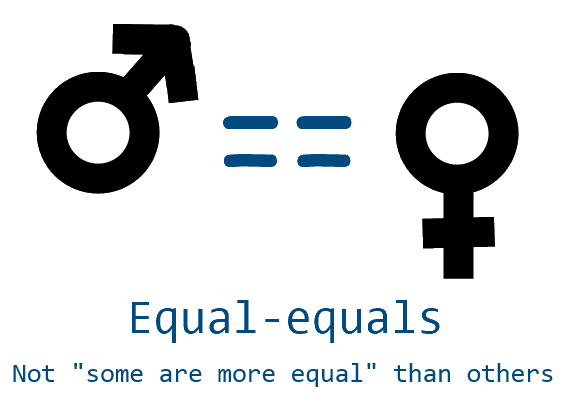
When I suggested writing for this blog to certain colleagues I was told that this topic would be of no interest and nobody would read it as it is not relevant. I consider the topic very relevant to me and to every woman. The term used is ‘women of a certain age’ (I hate the expression) to explain the menopause.
I am a 55-year-old woman who is going through the menopause and I make no apologies as there is nothing I can do about it. There is acceptance of women starting their periods and the advertisements for period poverty. There are extensive adverts, promotions, books all on pregnancy but very little about the menopause. At last, just this evening, I have seen an advert by Jenny Éclair on TV about a product for one symptom of the menopause. I fail to understand why this subject is not discussed more openly?
Having reached the menopause, I can honestly say this is the worst I have ever felt both emotionally and physically. The brain fog, not being able to put a sentence together sometimes, clumsiness, the lack of sleep, loss of confidence, weight gain; aching limbs. The list goes on. I know that each woman is different, and their body responds differently so I speak for me. I know that I am not alone though just by the conversations I have with other women and on the menopause chat room.
In accepting my situation and desperately trying to work through these symptoms I reflect on an incident where my mother was arrested for shoplifting. She would have been my age at the time. I was so angry at her as I was a serving police officer and I was so embarrassed. I never tried to understand why she did it. Did the menopause contribute to the theft of cushion covers she did not need? To this day we have never spoken about the incident and never will.
Also, my thoughts around this situation extends to the research I am conducting around the treatment of transgender people in prison. Researching the prison estate, I find that the prison population is getting older and the policies link to women in prison, catering for women and babies, addictions, mental health etc but there is no mention of older women going through the menopause?
I served in the police at a time when women were not equal to men and I would never have raised, and written this blog entry exposing ‘weaknesses’. To write this is progress for me and I can even see that the police are addressing the issues of the menopause through conversations, presentations and support groups. They have come a long way. All family, friends, colleagues and employers need to try and understand this debilitating change in life for us ‘women of a certain age’.
Share this:

What are Universities for?

As we go through another welcome week it becomes quite apparent in conversations with new students that their motivation for coming to University and joining a course is not singular. Of course there are some very clear objectives that are shared across like the interest for the subject and the employability afterwards for underlying those there are so many different personal motivations and aspirations attached.
In the eyes of our new cohort, I can see a variety of responses, the eagerness to learn the joy of studying, the expectation of belonging and the anticipation of ordering their lives across the University life, just to name but a few.
In conversation, I see these attributes in a different light. “I want to belong but I am shy”, “I wish to learn but I am worried about learning” “I want to engage but I am concern with my writing”. This is the soft underbelly of becoming a student; because in education our own insecurities are playing up. These little devils, who rest on the back of the head of many people who doubt themselves and worry them.
One of the greatest fears I hear and see been rehearsed before me is that of intellectual ability. This is one of those issues that becomes a significant barrier to many people’s fear when joining a University course. Of course the intellectual level of study is high. There are expectations of the degree of knowledge a student will build on and the way they will be able to utilise that level of knowledge. After all a University is an institution of High Learning. The place where disciplines are explored in totality and subjects are taught holistically. Nevertheless the University is not the end of one’s education but rather the door to a new dimension of learning.
For myself and many of my colleagues what makes this process incredibly exciting is to see those eyes of the new students across the years brighten up, as they “get it” as the penny drops and they connect different parts of knowledge together. Once people reach that part of their educational journey realise that coming to University was not simply an means to an end but something beyond that; the joy of lifelong learning.
As this is a early session, I shall address the intellectual fear. The greatest skills that any student need to bring with them in class is patience and passion. Passion for the subject; this is so important because it will sustain during the long cold winter days when not feeling 100%. Patience is equally important; to complete the course, needs plenty of hours out of class and a level of concentration that allows the mind to focus. Any successful student can testify to the long hours required to be in the library or at home going over the material and making sense of some challenging material. This ultimately unravels the last of the requirements, that of perseverance. It is through trial and error, rising up to a challenge that each student thrives.
So for those who joined us this year, welcome. The door to an exciting new world is here, to those returning, we shall pick up from where we left off and those who completed, hopefully University has now opened your eyes to a new world.
Share this:


Waterside: What an exciting time to be a student!

Bethany Davies is an Associate Lecturer teaching modules in the first year.
Last Friday I viewed the new Waterside campus for the first time, and my overwhelming thought now is… it’s a really exciting time to be a student at the University of Northampton.
Leading up to my visit, I had seen a few pictures and people had told me a few things about the campus, but to be honest I kind of let the worries of ‘change’ affect how I was viewing it in my head. I pictured it as a huge and daunting place and that I was going to feel like I was teaching for the first time even though it’s been many years now.
When I arrived, every fear and worry I had about the new term, training and changes I was going to face… just slipped away. I was blown away by how beautiful the place was and I felt like I was having flash backs to the feelings I had when I went to an open day at Park Campus as a student many years ago now. This feeling however was on an elevated level. The way the university seems to balance the old with the new and the large feature of natural surroundings almost seems like it’s a signature style of the university as it’s carried these aspects to the new campus.
My reason for attending was for training on the new system which will allow students more freedom to work all around the campus and also some new creative interactive features. Some of these might not be as crucial to criminology lectures and seminars as other classes, but seeing the scale of what can be done is testament to the university’s aim to advance the student experience. Following the training, I wandered around and located what would be my new space for teaching in the Senate building. I decided to let myself in to take some pictures and I was really pleased with the room and the view from the window. The space is modern and I could picture the debates and discussions and the group work that I could plan.

There is a sense of familiarity with the campus, which may sound silly if it is your first visit, but to me it felt like a safe and motivating environment with student life at its focus. The ‘student village’ and the facilities such as the hotel, shops and many places to eat, made me feel rather envious of those experiencing student life at such a place.
There will be learning curves and bumps in the road as everything new does, but ultimately what has been created is a fresh start for the university and everyone in it. It’s an exciting time to be a student at the University of Northampton and I am excited to be a part of the journey.
Share this:


University? At my age? You had better believe it!

It was whist working a shift at Tesco that the thought of doing that job for the next 35 years dawned on me. So, I took the decision that day to apply to university and start on a new career path. My career history is mainly within healthcare so I fancied something completely different. I have always been fascinated by crime and punishment, and would love to work within that field, that’s why I chose criminology to study.
When the acceptance email came through to say I would be starting university in October 2017 I went through every emotion possible, although I was really excited about it, I thought Jesus what have I done. I attended some of the activities that took place in welcome week which really helped to settle some of the nerves. This is where I met two very special mature (like me) ladies, the friendship blossomed from there and the support provided between the three of us has seen us all finish the first year. Making friends is a really important aspect of uni life, it provides a support network that can get you through tough and stressful times. The initial friendship group of three has grown throughout the year to include some amazing ladies from age 18 through to ** (I daren’t say), and as we have all discovered ‘age is just a number’, let’s just say it isn’t the young ones being told to keep their voices down in the library (ha ha).
From the very start of the academic year we were bombarded with assignments and expectations. This was an extremely scary and stressful time. The questions of ‘what am I doing here?’ ‘I am never going to survive first year’ and ‘what do all these long words mean?’ played over and over in my mind. It was only the return of each assignment result that kept me going. The thought that ‘wow I actually passed that’, encouraged me to remain on the course. One really frustrating part of assignments is that you work your butt off completing them, then you have an agonising four week wait for the result (probably more nerve racking than the exams).
The course lecturers came across scary and unhelpful to begin with, giving off a vibe of ‘you are an adult and at university so get on with it’. I was unsure if this was just the personality of the criminology staff, as no question has a simple answer and question everything (haha). This vibe soon changed once I got used to university life and they are in fact very helpful, supportive and want you to be the best you can be.
I have received my confirmation of results email and I have made it through to year two (whoop, whoop). Although the first year of uni has been tough, I am missing the people and mental stimulation and cannot wait to return in October. The new Waterside campus promises great things so here’s to the 2018/19 academic year!
Share this:


Student support

I recently read Melanie Reynolds’s article in The Guardian ‘Working-class lecturers should come out of the closet,’ and it resonated with me. I was the first generation in my family to go to university and it was difficult. I grew up in a poor socio-economic position, received government allowances, there was a stigma to this, and unspoken expectation that you kept this hidden. When I turned 18 I moved out of home and went to university, from the start I was supporting myself. I worked in a pizza shop, a convenience store, a sandwich shop, and a call centre. I lived pay day to pay day. Starting university felt like learning a new language to me, it was a shock.
I remember one of my first assignments I handed in. I had to print it on lined foolscap paper because I didn’t have any printer paper and I couldn’t afford to buy any. It is all well and good to tell a student to be prepared – trust me I would’ve been if I had the money. This meant I couldn’t afford to print at university either (before the days of online submission!). But I also didn’t know how to print at the university at that stage and I didn’t want to let on to anyone that I didn’t know how, I already felt like I stood out. It seemed that everyone around me had this innate understanding of how everything worked. It seemed like a simple thing, but it was hard to ask for help.
Another time I lost my student card on the train and when I got on the bus to go to university the bus driver asked for it. He stayed at the stop while I literally went through every compartment in my bag looking for it, with everyone watching it just brought feelings of shame. I had to pay an adult fare in addition to the three-zone student fare I had already paid, and those couple of dollars extra made a big difference to me, considering I knew I would also need to replace my student card.
I didn’t feel like I belonged, I didn’t know anyone at university, I didn’t know what services were available, even if I did I would have felt like I was wasting their time – taking away time for ‘real’ students. It was difficult to watch other students be involved in activities and wonder how they found the time and the money. Being in law school made me feel like I didn’t dress right, didn’t talk properly, that I was not connected to the legal profession because no one in my family was a lawyer or judge, I was an impostor. It was very isolating.
What can I say to help – it will get better? That you’ll get over the feelings of impostor syndrome? It does get a little better, for me it took time, realising that I was not alone in these feelings, that many students had the same questions, and to build the confidence to speak up. There was a lot of pressure to succeed and this is something you need to manage.
I try to be open about my experiences with my students so that they may feel more comfortable approaching me with their issues. To me there are no stupid questions. One of my most disliked words is ‘just’ – ‘well you just do this’ the expectation that you’ll ‘just’ know. I don’t expect my students to ‘just’ know. When I ask students to tell me when they are having difficulties I truly mean it. This is my job and it is the university’s job to support you. Starting university can be overwhelming. So, remember students ALWAYS ask me for help, email, phone or in-person.
What can we do as educators? Universities and their staff need to be pro-active in connecting with students and providing assistance – not ‘do you need help?’ but ‘what can I do to help?’ We need to seek to bridge the gap and bring equity to our students, not just equality.
For all students there are support services available to you at the University of Northampton, please take advantage of them.
Share this:


Hello, I am over here! But did you already know that?

Jessica is an Associate Lecturer teaching modules in the first year.
If memory serves me right, fingerprint technology was first introduced to me in secondary school, where rather than paying with cash in the school dinner hall, you placed money on to your fingerprint and used this to purchase your food. To 15 year old me, I was very indifferent to this method of paying for school lunches as it wasn’t something I had to use: pack-lunches all the way! And at 15, my focus and interests here not on wider issues of human rights and the ‘all seeing eye’ but more on GSCE results, A-levels and badminton. How times have changed… or have they?
Recently I ventured to Tenerife for a holiday experiencing the usual ‘joys’ of going abroad: early flights, fears about missing flights or transfers, panic about forgetting something essential and that passport control will not let me in as I look nothing like my passport photo: just the average anxieties to cement the beginning of a holiday. But what I had not prepared myself for, and what ultimately caught me by surprise was the requirement for my fingerprints when we landed in Tenerife as part of passport control.
I looked around stunned: everyone seemed quite happy to go through the electronic system which required finger prints, a scan of your face and then the match to your passport photo. I was not so eager or happy to consent: but ultimately what choice did I have? Why do they need my fingerprints? Is it not enough that they have my electronic passport scanned? What happens to my scanned fingerprints? Are they deleted or stored? If so when, how and where? So many unanswered questions but ultimately I ‘consent’: I am not sure my travel insurance would reimburse my holiday cost and unscheduled return flight (that is if I was able to get one) simply because I didn’t want my fingerprints taken.
Bitter and weird start to the holiday; I know what to expect if I go abroad again, but the ‘madness’, because to me the reliance and over use of fingerprints as a form of casual identification is best described this way, did not stop there. I purchased tickets to a Zoo and a Water park whilst there (would highly recommend to anyone visiting Tenerife), but as this ticket was a ‘twin ticket’ I had to hand the ticket in on the first visit (the Zoo) and in order to receive the second ticket (Water Park) I had to give my right forefinger print over! WHY?! I have clearly purchased the twin ticket, as that is what it says on the ticket, so can’t I just hand over the new ticket without fingerprint confirmation to enter the next attraction? Apparently not.
Surveillance is not something I usually think about, however Foucault’s writing around discipline and power within the prison and our current over-reliance and use of fingerprints makes me shudder at what power is out there with this type of surveillance. Who has access to it and why do they need it? And what choice do we really have with regards to consent: I could have not given them at the airport: but would I been allowed in? I could have not given them over at the Zoo; but would I have lost the money I had paid? Maybe I am over-reacting, maybe I am not: but this casual usage of fingerprinting is not something I am comfortable with, and I don’t think we should be!
Share this:


Congratulations, but no Celebrations

A few weeks ago, Sir Cliff Richard won his high court case against the BBC over the coverage of a police raid on his home, the raid relating to an investigation into historical sex abuse. I remember watching the coverage on the BBC and thinking at the time that somehow it wasn’t right. It wasn’t necessarily that his house had been raided that pricked my conscience but the fact that the raid was being filmed for a live audience and sensationalised as the cameras in the overhead helicopter zoomed into various rooms. A few days later in the sauna at my gym I overheard a conversation that went along the lines of ‘I’m not surprised, I always thought he was odd; paedo just like Rolf Harris’. And so, the damage is done, let’s not let the facts get in the way of a good gossip and I dare say a narrative that was repeated up and down the country. But Sir Cliff was never charged nor even arrested, he is innocent.
The case reminded me of something similar in 2003 where another celebrity Matthew Kelly was accused of child sex abuse. He was arrested but never charged, his career effectively took a nose dive and never recovered. He too is innocent and yet is listed amongst many others on a website called the Creep Sheet. The name synonymous with being guilty of something unsavoury and sinister, despite a lack of evidence. The way some of the papers reported that no charges were to be brought, suggested he had ‘got away with it’.
The BBC unsuccessfully sought leave to appeal in the case of Sir Cliff Richard and is considering whether to take the matter to the appeal court. Their concern is the freedom of the press and the rights of the public, citing public interest. Commentary regarding the case suggested that the court judgement impacted victims coming forward in historical abuse cases. Allegations therefore need to be publicised to encourage victims to come forward. This of course helps the prosecution case as evidence of similar fact can be used or in the view of some, abused (Webster R 2002). But what of the accused, are they to be thrown to the wolves?
Balancing individual freedoms and the rights of others including the press is an almost impossible task. The focus within the criminal justice system has shifted and some would say not far enough in favour of victims. What has been forgotten though, is the accused is innocent until proven guilty and despite whatever despicable crimes they are accused of, this is a maxim that criminal justice has stood by for centuries. Whilst the maxim appears to be generally true in court processes, it does not appear to be so outside of court. Instead there has been a dramatic shift from the general acceptance of the maxim ‘innocent until proven guilty’ to a dangerous precedent, which suggests through the press, ‘there’s no smoke without fire’. It is easy to make allegations, not easy to prove them and even more difficult to disprove them. And so, a new maxim, ‘guilty by accusation’. The press cannot complain about their freedoms being curtailed, when they stomp all over everyone else’s.
Share this:

Reflection: From student to professional

I graduated in July 2017 with a Criminology BA from the University of Northampton with a 2:2. In university I did two research placements at youth offending services and from there realised that this is what I wanted a career in.
I applied for a job in the Youth Offending Service with little belief that I could get the job. However I was offered the job and started working from September. As it nears to my first year being completed I have reflected on the transition from student to professional.
The past year has been a rollercoaster and I have a steep learning curve through this. University life especially all the deadlines and time management required only scratched the surface for what awaited me in the world of work.
One thing I wasn’t fully prepared for was the difficulties faced as a young professional. particularly when you’re the youngest member of staff by around 8 years. Many people do not take you seriously when you first start and it takes a while to ‘prove yourself’ as a professional to colleagues, other agencies and to the service users. I have even been mistaken for a young person when out on reparation (like community service) so it has been hard overcoming these barriers.
A positive is working with young people and I am enjoying this immensely. My job role means I work with low level offenders and prevention work with young people and this seems to be successful for most young people to avoid the criminal justice system. However I support those on higher orders as well as assisting on Reparation; so doing things like gardening, painting and decorating, to indirectly repair the harm caused. It’s great fun!
Restorative justice, something I learnt about at university, is something that as a youth offending service we try to incorporate with every young person we work with. Restorative justice is not at the forefront of all professionals however I’ve seen the benefits it can bring to both offender, victim and those indirectly affected by this.
I think the main points I’ve learnt over this past year is even after university you are constantly learning and that education doesn’t finish once you graduate. Alongside this is to go for it… no matter whether you think you will achieve it or not, we all have to start somewhere.
Share this:


Criminology: in the business of creating misery?

I’ve been thinking about Criminology a great deal this summer! Nothing new you might say, given that my career revolves around the discipline. However, my thoughts and reading have focused on the term ‘criminology’ rather than individual studies around crime, criminals, criminal justice and victims. The history of the word itself, is complex, with attempts to identify etymology and attribute ownership, contested (cf. Wilson, 2015). This challenge, however, pales into insignificance, once you wander into the debates about what Criminology is and, by default, what criminology isn’t (cf. Cohen, 1988, Bosworth and Hoyle, 2011, Carlen, 2011, Daly, 2011).
Foucault (1977) infamously described criminology as the embodiment of utilitarianism, suggesting that the discipline both enabled and perpetuated discipline and punishment. That, rather than critical and empathetic, criminology was only ever concerned with finding increasingly sophisticated ways of recording transgression and creating more efficient mechanisms for punishment and control. For a long time, I have resisted and tried to dismiss this description, from my understanding of criminology, perpetually searching for alternative and disruptive narratives, showing that the discipline can be far greater in its search for knowledge, than Foucault (1977) claimed.
However, it is becoming increasingly evident that Foucault (1977) was right; which begs the question how do we move away from this fixation with discipline and punishment? As a consequence, we could then focus on what criminology could be? From my perspective, criminology should be outspoken around what appears to be a culture of misery and suspicion. Instead of focusing on improving fraud detection for peddlers of misery (see the recent collapse of Wonga), or creating ever increasing bureaucracy to enable border control to jostle British citizens from the UK (see the recent Windrush scandal), or ways in which to excuse barbaric and violent processes against passive resistance (see case of Assistant Professor Duff), criminology should demand and inspire something far more profound. A discipline with social justice, civil liberties and human rights at its heart, would see these injustices for what they are, the creation of misery. It would identify, the increasing disproportionality of wealth in the UK and elsewhere and would see food banks, period poverty and homelessness as clearly criminal in intent and symptomatic of an unjust society.
Unless we can move past these law and order narratives and seek a criminology that is focused on making the world a better place, Foucault’s (1977) criticism must stand.
References
Bosworth, May and Hoyle, Carolyn, (2010), ‘What is Criminology? An Introduction’ in Mary Bosworth and Carolyn Hoyle, (2011), (eds), What is Criminology?, (Oxford: Oxford University Press): 1-12
Carlen, Pat, (2011), ‘Against Evangelism in Academic Criminology: For Criminology as a Scientific Art’ in Mary Bosworth and Carolyn Hoyle, (eds), What is Criminology?, (Oxford: Oxford University Press): 95-110
Cohen, Stanley, (1988), Against Criminology, (Oxford: Transaction Books)
Daly, Kathleen, (2011), ‘Shake It Up Baby: Practising Rock ‘n’ Roll Criminology’ in Mary Bosworth and Carolyn Hoyle, (eds), What is Criminology?, (Oxford: Oxford University Press): 111-24
Foucault, Michel, (1977), Discipline and Punish: The Birth of the Prison, tr. from the French by Alan Sheridan, (London: Penguin Books)
Wilson, Jeffrey R., (2015), ‘The Word Criminology: A Philology and a Definition,’ Criminology, Criminal Justice Law, & Society, 16, 3: 61-82


