
Home » Criminology Team (Page 13)
Category Archives: Criminology Team

It’s different now… it happened to me
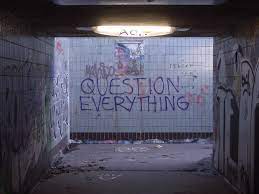
A few weeks ago, @paulaabowles shared an article on the Criminology Facebook page which posed the question of whether graffiti is art or crime. My response was art. And like all art, not all variations, interpretations or styles are for everyone. I know I can look at some graffiti and be quite taken aback at the brightness, boldness and creativity which shines through. I can also look at some and go ‘eugh’. However I have the same reactions to various classical and well-known pieces. My unrefined self does not get all the hype about a number of Picasso’s works (possibly all the ones I have seen). Nevertheless this is the beauty of art: it is down to individual taste.
So for me, I was fairly certain on my opinions and convictions towards graffiti as an art form, and as an example of the CJS further stigmatising and criminalisation young people’s behaviours: something I am certain we are all quite familiar with at this stage in our criminological journey. However those beliefs and informed views were put to the test over the Bank Holiday (BH) Weekend, and in all honesty I think I am still trying to get to grips with them. It is different now…. It happened to me.
Some context: as those of you who have read various blog posts from myself will no doubt remember, my partner runs a small kiosk near one of the Royal Parks in London. Often during the weekends and summer months, I provide an extra pair of hands to help clean and serve during the busier periods. And as a result of the pandemic, my partner finds themselves going from a team of 4 down to just them, and me when I am able to support: this was the case for the BH Weekend. Off we popped, down to London for a day of serving hotdogs, drinks and ice creams. However our day was thrown off course by some ‘ugly’ graffiti all over the front of the kiosk.
My partner was angry, and felt personally attacked (not really sure by who- but guess that’s besides the point). It is not the first time the kiosk has had graffiti on it, but it is the first time I have seen it in person and witnessed my partner’s response. Rather than starting our working day and opening up, we had to clean the graffiti off. My partner set to this: just over 3 hours later some of it has been removed, but so has some of the kiosk’s paint. It looks a mess. We are now at midday and we cannot afford to remain closed and keep cleaning. We have lost 3 hours of trading time to try and remove it, only to remove some of it and some of the kiosk’s paint. I am informed that we shall need to go to B&Q to try and find some graffiti remover: Capitalism wins again! But seeing my partner cleaning for 3 hours, losing the trading hours and for this end result: I can’t help but feel angry, frustrated and in want of some kind of justice. It’s different now… it happened to me.
But what realistically would justice be in the scenario? What do I actually want as a result? I have no idea. I asked my partner who said they just wanted them ‘not to do it’. It is private property, will my partner call the police? Nope: just nuisance annoying behaviour, but not much anyone can do about it. I feel less inclined to call it art. I like my partner’s use of ‘nuisance’ behaviour: it feels very accurate. I do not think my partner was targeted, I think it was available as a surface to be used for that individual or individuals to express themselves. But I am shaken in my previously held convictions. Shouldn’t something be done. We lost 3 hours of trading, the kiosk now needs to be repainted and we shall need to purchase some graffiti remover. All for some expression of ‘art’? Shouldn’t there be some kind of repercussion?
I am not too sure. I also know when this has happened before, and I have not been present to witness the impact it has on my partner and the kiosk I have been very nonchalant about it. ‘Oh dear, that’s frustrating’, ‘ah well, never mind’. But being there and seeing it: I view it differently. And this is something many of us come to grips with when considering hypothetical moral situations and larger ethical questions. We think we will act one way, but if it happened to us: it is quite possible our opinions, informed views and beliefs would change. I still think graffiti is art, but I am not so convinced in my previous assertation that it is not a crime…

Share this:


Alex park: a space of criminological interest?
Almost every day I walk my puppy in the local park. Most days I go around 6-7am when there’s barely anyone around. He’s made a couple of dog friends and we often stop for a chat. It’s tranquil and calm. I’ll listen to an audio book or the birds. The dog mother of Hazel the Italian greyhound tells me which birds are calling.
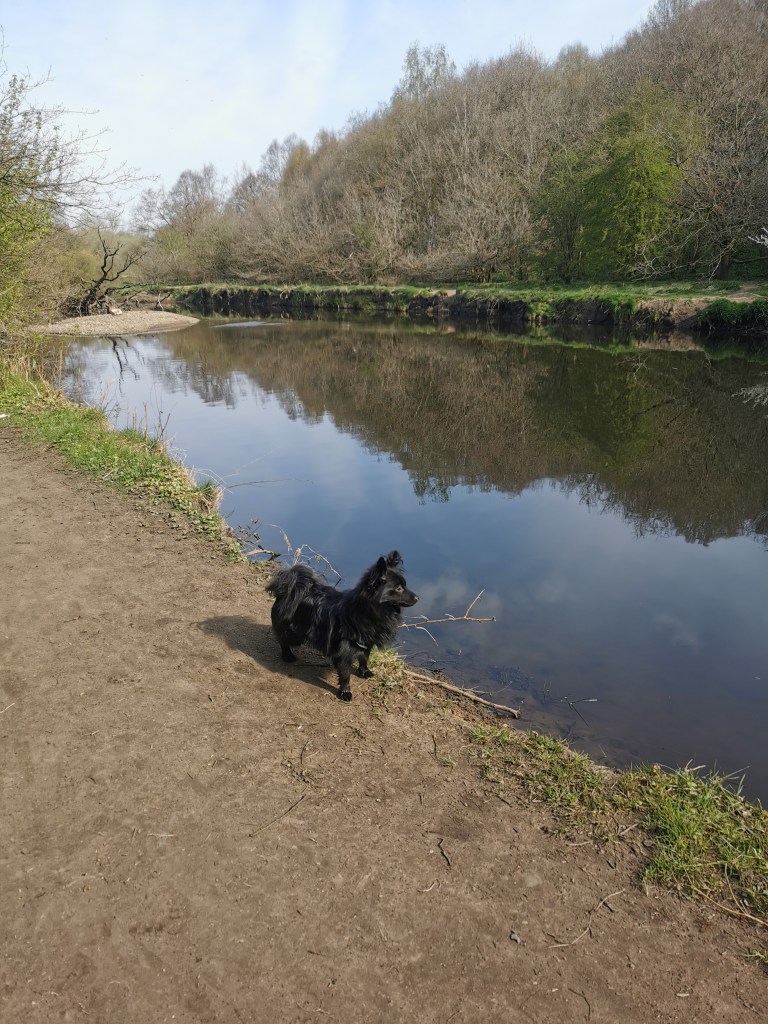
Usually in the evening we go to a huge field so he can quite literally run rings around me. A few weeks ago, we broke tradition and went to the local park in the late afternoon. I had spent the entire day in front of a screen and needed a break. We got to the park and it was different – it looked different, sounded different, and felt different. The sun was out so of course it was busier, and as you’d expect after school there were children playing on the skate park and the playground. There were about a dozen dogs in the dog park (it’s not as fancy as it sounds – just a patch of grass where the dogs dig holes and fetch sticks). Prince was a bit overwhelmed and so was I – at this point I hadn’t seen so many people in one place since pre-covid!
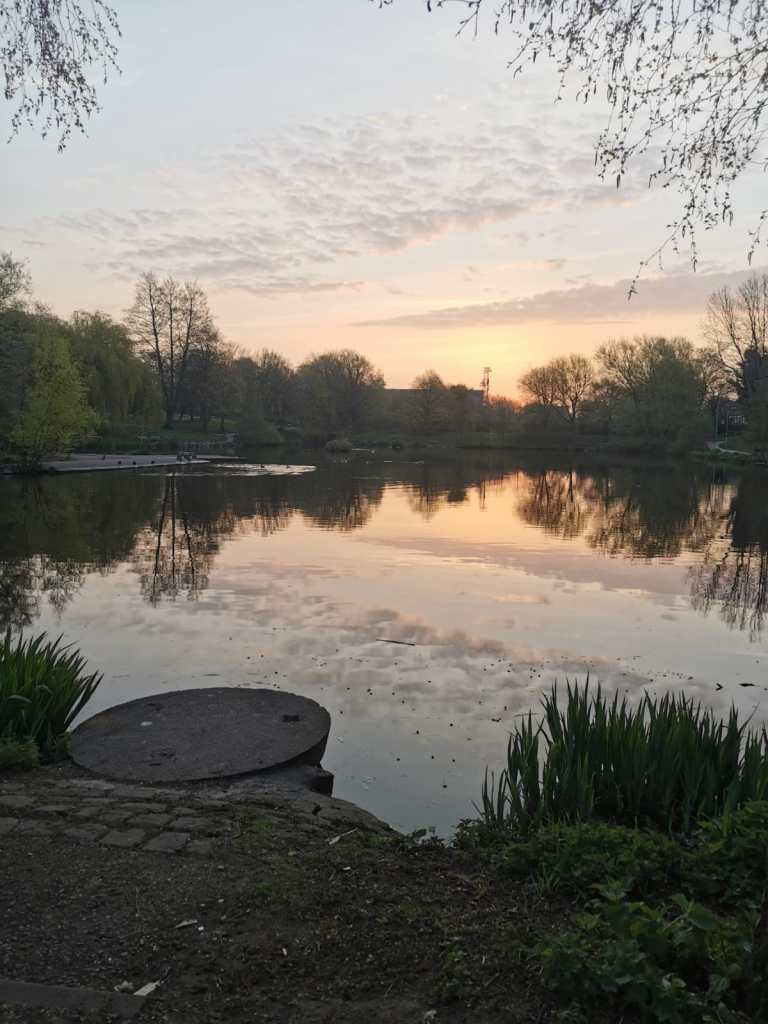
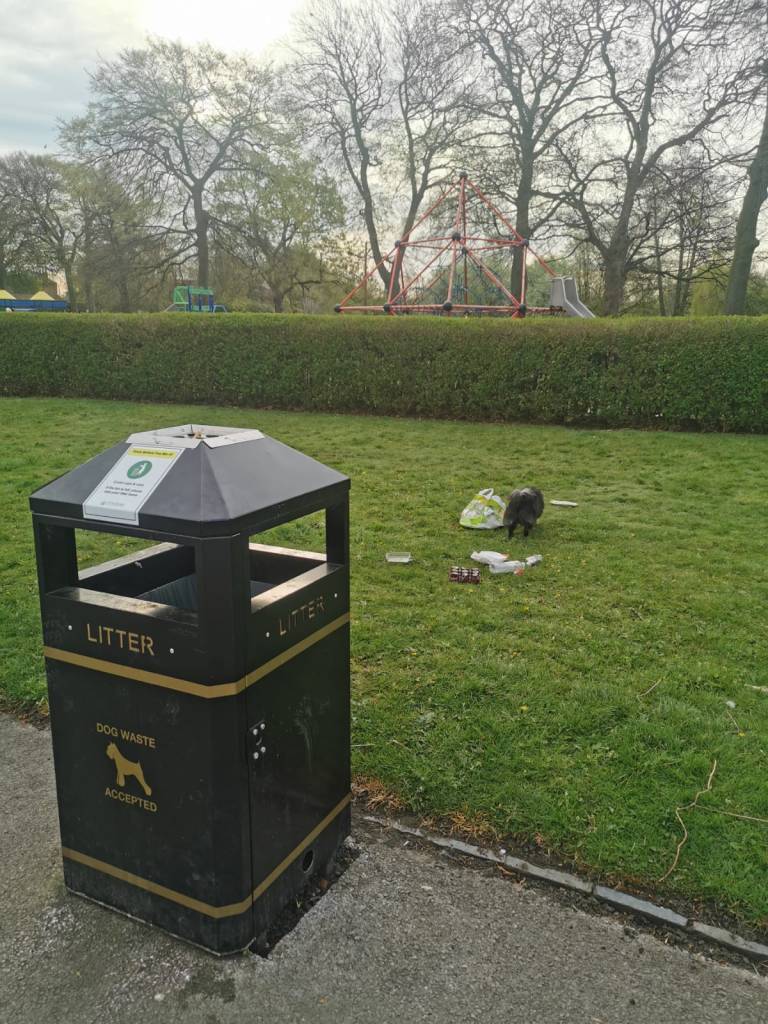
I soon learned that I couldn’t let Prince off his lead on a Monday because the mess from the weekend (even before the outdoor rule of six) would not yet be cleaned and he would eat everything. One Monday he walked an entire lap of the park with a croissant in his mouth that was bigger than his head. Another day he picked up half a joint of cooked meat. I noticed the signs of people having good (and not so good) times, particularly after sunny weekends. Sometimes when it’s warm there’s groups of men fishing, pulling all-nighters, smoking cannabis and drinking. Once, we followed a trail of blood around the path and although it could just as easily come from a child after a fall, the empty, broken alcohol bottles led me to imagine scenarios of violence.
During my visits to the park over the last few months I have seen evidence of alcohol and drug use, and possible violence. In May last year, there were reports of gunshots fired, leading to a man being arrested on suspicion of possessing a firearm. Quite worrying considering I live only a couple of hundred metres away. There have also been incidents involving youths wielding baseball bats and setting fires before attacking firefighters. I had a look at the crime data for the area but Greater Manchester Police have had some IT issues affecting data from 2019 onwards (that’s another story…), however older data showed a pattern of anti-social behavior, arson and a few violent offences as well. This is all very different to the place of tranquility I visit daily with the puppy.

The next day we returned for our early morning walk and I reflected upon the changes in the character of the park and the actors and events that create this. I started thinking about criminology and the environment around us, about how places can change so much throughout the day and across the seasons. I thought about situational crime prevention. My work brain truly switched on and I stopped hearing the birds and started seeing the CCTV and the lighting. I thought to myself that I would not go to the park when it gets dark but if I did, I would stay in the lit areas where the cameras could see me. I would stay away from the groups of fishermen because they were sure to be drunk and stoned by nightfall. I haven’t seen them behave in a threatening manner although I have overheard verbal threats. They are usually asleep when I walk by but as a single woman I’d think twice about walking past a group of lively, drunk men at night.
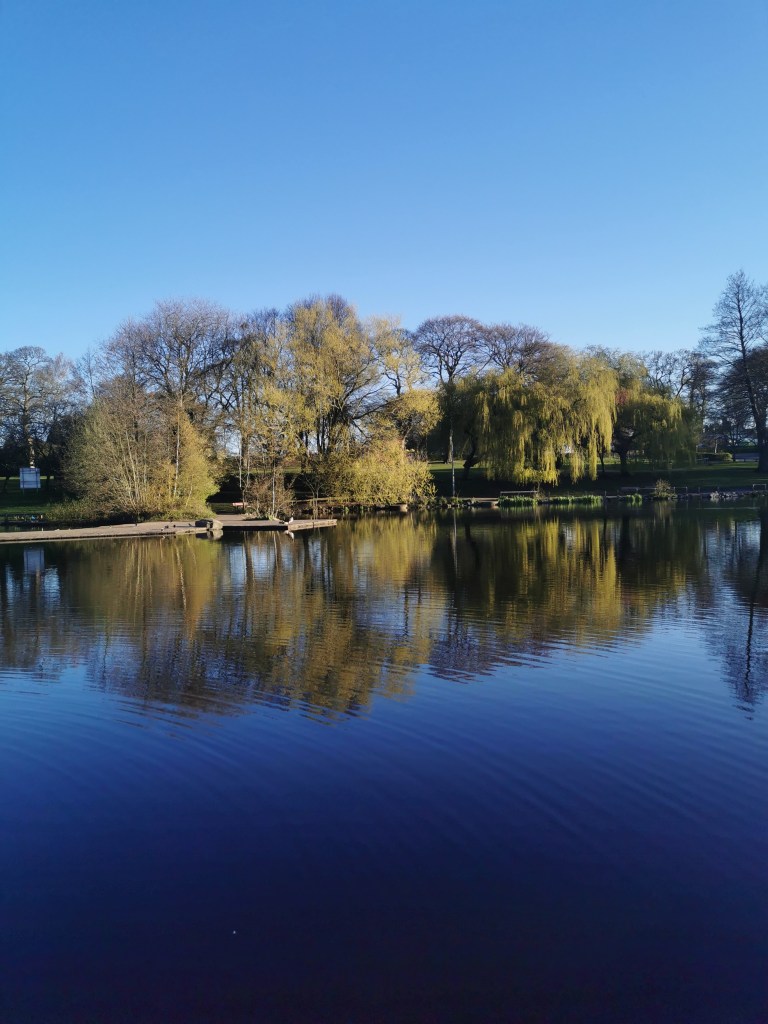
This local park is just one example based on my observations, but the question is, is it a criminogenic space? Or am I criminologist who sees things of criminological interest in everything, everywhere? Or a woman who constantly assesses personal safety? Luckily I haven’t had enough thinking time and space to ponder these questions otherwise this would have been a long read.
Share this:


April Showers: so many tears

What does April mean to you? April showers as the title would suggest, April Fools which I detest, or the beginning of winter’s rest? Today I am going to argue that April is the most criminogenic month of the year. No doubt, my colleagues and readers will disagree, but here goes….
What follows is discussion on three events which apart from their occurrence in the month of April are ostensibly unrelated. Nevertheless, scratch beneath the surface and you will see why they are so important to the development of my criminological understanding, forging the importance I place on social justice.
On 15 April 1912, RMS Titanic sank to the bottom of the sea, with more than 1,500 lost lives. We know the story reasonably well, even if just through film. Fewer people are aware that this tragedy led to inquiries on both sides of the Atlantic, as well, as Limitation of Liability Hearings. These acknowledged profound failings on the part of White Star and made recommendations primarily relating to lifeboats, staffing and structures of ships. Each of these were to be enshrined in law. Like many institutional inquiries these reports, thankfully digitised so anyone can read them, are very dry, neutral, inhumane documents. There is very little evidence of the human tragedy, instead there are questions and answers which focus on procedural and engineering matters. However, if you look carefully, there are glimpses of life at that time and criminological questions to be raised.
The table below is taken from the British Wreck Commissioners Inquiry Report and details both passengers and staff onboard RMS Titanic. This table allows us to do the maths, to see how many survived this ordeal. Here we can see the violence of social class, where the minority take precedence over the majority. For those on that ship and many others of that time, your experiences could only be mediated through a class based system. Yet when that ship went down, tragedy becomes the great equaliser.

On 15th April, 1989 fans did as they do (pandemics aside) every Saturday during the football season, they went to the game. On that sunny spring day, Liverpool Football Club were playing Nottingham Forest, both away from home and over 50,000 fans had travelled some distance to watch their team with family and friends. Tragically 96 of those fans died that day or shortly after. @anfieldbhoy has written a far more extensive piece on the Hillsborough Disaster and I don’t plan to revisit the details here. Nevertheless, as with RMS Titanic, questions were asked in relation to the loss of life and institutional or corporate failings which led to this tragedy. Currently it is not possible to access the Taylor Report due to ongoing investigation, but it makes for equally dry, neutral and inhuman, reading. It is hard to catch sight of 96 lives in pages dense with text, focused on answering questions that never quite focus on what survivors and families need. The Hillsborough Independent Panel [HIP] is far more focused on people as are the Inquests (also currently unavailable) which followed. Criminologically, HIP’s very independence takes it outside of powerful institutions. So whilst it can “speak truth to power” it has no ability to coerce answers from power or enforce change. For the survivors and family it brings some respite, some acknowledgement that what happened that day should have never have happened. However, for those individuals and wider society, there appears to be no semblance of justice, despite the passing of 32 years.

On 22 April 1993, Stephen Lawrence was murdered. He was the victim of a horrific, racially motivated, violent assault by a group of young white man. This much was known, immediately to his friend Duwayne Brooks, but was apparently not clear to the attending police officers. Instead, as became clear during the Stephen Lawrence Inquiry the police investigation was riddled with institutional racism from the outset. The Macpherson report (1999) tries extremely hard to keep focus on Stephen Lawrence as a human being, try to read the evidence given by Duwayne Brooks and Stephen’s parents without shedding a tear. However, much of the text is taken is taken up with procedural detail, arguments and denial. In 2012 two of the men who murdered Stephen Lawrence were found guilty and sentenced to be detained under Her Majesty’s pleasure (both were juveniles in 1993). Since 1999, when the report was published we’ve learnt even more about the police’s institutional racism and their continual attacks on Stephen’s family and friends designed to undermine and harm. So whilst institutions can be compelled to reflect upon their behaviour and coerced into recognising the need for change, for evolution, in reality this appears to be a surface activity. Criminologically, we recognise that Stephen was the victim of a brutal crime, some, but not all, of those that carried out the attack have been held accountable. Justice for Stephen Lawrence, albeit a long time coming, has been served to some degree. But what about his family? Traumatised by the loss of one of their own, a child who had been nurtured to adulthood, loved and respected, this is a family deserving of care and support. What about the institutions, the police, the government? It seems very much business as usual, despite the publication of Lammy (2017) and Williams (2018) which provide detailed accounts of the continual institutional racism within our society. Instead, we have the highly criticised Sewell Report (2021) which completely dismisses the very idea of institutional racism. I have not linked to this document, it is beneath contempt, but if you desperately want to read it, a simple google search will locate it.

In each of the cases above and many others, we know instinctively that something is fundamentally wrong. That what has happened has caused such great harm to individuals, families, communities, that it must surely be a crime. But a crime as we commonly understand it involves victim(s) and perpetrator(s). If the Classical School of Criminology is to be believed, it involves somebody making a deliberate choice to do harm to others to benefit ourselves. If there is a crime, somebody has to pay the price, whatever that may be in terms of punishment. We look to the institutions within our society; policing, the courts, the government for answers, but instead receive official inquiries that appear to explore everything but the important questions. As a society we do not seem keen to grapple with complexity, maybe it’s because we are frightened that our institutions will also turn against us?
The current government assures us that there will be an inquiry into their handling of the pandemic, that there will be some answers for the families of the 126,000 plus who have died due to Covid-19. They say this inquiry will come when the time is right, but right for who?
Maybe you can think of other reasons why April is a criminologically important month, or maybe you think there are other contenders? Either way, why not get in touch?
Share this:


Finding focus in office exile

I have now passed a year of being exiled from my office, separated from people for most of the time. A couple of weeks before the first lockdown I was working in another university and we had just a day or two notice to switch to online teaching. As a doctoral candidate I valued the flexibility of being able to work from home, in the office, and in overpriced coffee shops in Manchester’s Northern Quarter. The weather helped with the first lockdown. I would have virtual office working sessions with my colleagues in the criminology department in my garden. I thought I was coping but the reality was I was masking any fear, sadness and the effects of having no human contact. I was training two or three times per day, counting every calorie I ate. I lost a few pounds, got stronger, fitter and felt physically amazing.
We got some respite in the summer when lockdown restrictions were lessened. However, I lost a family member to Covid-19 and still felt unsure and anxious about going out so I didn’t make the most of it. I did have a couple of work sessions in my local library which was a welcome change of scenery. This was short lived as I currently live in Manchester and we have been in either lockdown or tier 3 restrictions for most of the last year. My saving grace was my gym. We had outdoor sessions, new members joined, and I got to see real people, albeit in socially distanced marked off squares of territory on the gym floor. Life was much better then. I left the house most days.
By December’s lockdown I was starting to struggle. With dark mornings and nights there would be days when I wouldn’t leave the front door. I went from training daily to training once or twice per week and some days I wouldn’t get any more than 2,000 steps in. For my, training is my anti-depressant. It keeps me sane, it keeps be focussed and it keeps me connected to a community of people who value it too. For me, this was a worrying sign.
Fast-forward to today, a year on from lockdown 1. I sit here in front of my laptop day in, day out, trying to concentrate, trying to find the perfect playlist to make me concentrate, taking nootropic supplements (legal, not the drugs), brain vitamins and high caffeine supplements to make me concentrate. I sit here researching symptoms and self-diagnosing ADHD. But really, I just need my office. I need an over-priced lemon and ginger tea, I need a commute, I need people, I need to get out of my living room. But I don’t need it at a cost of losing more lives to Covid-19 so I’ll sit in my living room and wait.
For now, as difficult as it is to focus, I manage. I just have to work harder than ever at it. So for all of our students who are also struggling, I will finish with some of my top tips but bear in mind we all learn differently so find what works for you.

Amy’s top study from home tips:
- Host virtual study sessions with colleagues. I have at least 2 sessions per week with a colleague. We start the session by saying hi and having some human interaction before stating our goals. We keep each other accountable by asking if our goals are achievable within the 2 hour frame and suggesting more specific goals. We then mute and work, coming back at the end of the 2 hours to hold one another accountable and share how we have done. I cannot emphasise enough how much this has helped me!
- Write a to do list each day and week with SMART goals. You’re better off having smaller goals that are achievable than bigger goals that are not
- Use the Pomodoro technique. Ordinarily this is 25 mins work followed by a 5 or 10 minute break. There are online tools and apps or you can set a timer. One of my supervisors recently suggested to me to reduce the working session to 15 minutes to account for my reduced concentration span. This is helping!
- Don’t have the same expectations on yourself as you ordinarily would. These are not ordinary times
- Work with your own mind. My brain works well early in the morning so sometimes I have my laptop open at 5.30am. I have friends that work late in the night. I also know I read well in the afternoon and I do my best thinking when I am on a solitary walk in nature
- Set yourself little goals with rewards. Currently, if I finish editing 5 pages I get an episode of Grey’s Anatomy or a cookie (bad idea) or a 10 minute browse on Instagram
- Lean on the resources available to you. At UoN our students are lucky to have a tonne of informative resources on Skills Hub (see the section on ‘How to Study’), our Learning Development team to help with academic skills, a mental health team who can help support mental wellbeing, and a whole host of other services. Ask for help and accept it when it is offered (this I need to work on)
- Listen to a focus playlist. My go to Spotify playlists are here and here
Share this:


#CriminologyBookClub: Murder at the Grand Raj Palace
As you know from our last #CriminologyBookClub entry a small group of us decided the best way to thrive in lockdown was to seek solace in reading and talking about books. Building on on what has quickly become standard practice, we’ve decided to continue with all seven bloggers contributing! Our latest book was chosen by all of us (unanimously) after we fell in love with the first instalment. Without more ado, let’s see why we all adore Inspector Chopra (retired) et al.:
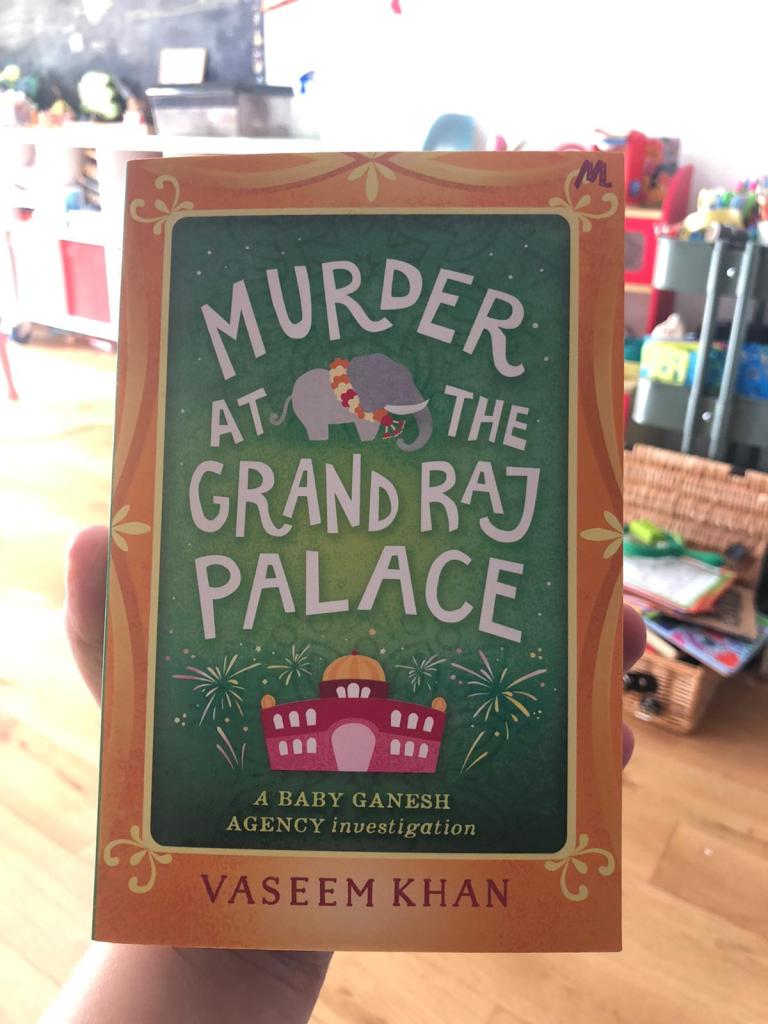
What a great read! I was extremely excited to read another book in the Baby Ganesh Agency Series and once again I was not disappointed. There was more mystery, a rich subplot and of course my favourite baby elephant. Vaseem, charmingly immerses the reader into the colourful and picturesque Grand Raj Palace. The way the book is written sets your mind up as though you are watching a film. The story allows you to escape from the uncertainty and mundane realities of life. Which is always welcome! And thrusts you into a mystery within a mystery. I would advise any reader that is interested in reading the series to definitely consider starting at the beginning, with the Unexpected Inheritance of Inspector Chopra. Although the stories do not pick up from each other, you definitely get an appreciation for the characters as they grow and change throughout the series. I liked the way Poppy is taken out of her supporting character role and is put centre stage, while investigating her own mystery. With laugh out loud humour, dark revenge and whacky characters, this is a book that will entertain you from start to finish.
@svr2727

In this instalment of the baby Ganesh Agency investigates a homicide of a very important person in a very important hotel. Inspector Chopra (retired) is on the case with his very unusual sidekick, investigating the world of corporations, big business and luxury. In the meantime, the Chopra universe is expanding and the characters are becoming more intricate and multifaceted. The household, now apart from the striking tenacious baby elephant, has little Irfan a child Chopra and his wife Poppy so desperately wanted. The story takes us through a different world paying homage to some corporate crimes that made it to the news. The conclusion of the drama is a reveal of whodunit in a very classic revelation scene. One thing you are left wondering, what will happen when the baby elephant grows to his full size?
@manosdaskalou
So far I have loved each of the Baby Ganesh Agency books. They have brightened my day and taken my attention away from life in a pandemic. As ever, with @vaseemk2’s series, you get the heat, the smells, the tastes, the views of India, attacking your senses. In this book, there is a striking contrast between light and dark in the cases resolved by Inspector Chopra (Rtd) and the wonderful Poppy. For me, the exploration of institutional violence caught my attention, the parallels to the Bhopal disaster, drawn clear and bright. Even in fictionalised form, institutional violence takes your breath away in the harm perpetuated and the complete absence of official interest. Lives lost without remark, without empathy. Without giving away any spoilers, equally striking was the almost Agatha Christie-like sleight of hand, where readers are encouraged to embrace their prejudices, only to have them destroyed with the denouement. At this point, I have the 5th book in hand and whilst I am excited to get started, I am also seriously worried. I really don’t want this series and its wonderful characters to come to an end….
@paulaabowles
Murder at the Grand Raj Palace was by far my favourite of the Baby Ganesh Agency novels! I particularly enjoyed the closeness of both cases, the uncomfortableness of Chopra in the presence of a beautiful woman who was not his wife, and Poppy’s strong and independent, yet interconnected, storyline. The twist on who committed the murder at the Grand Raj Palace, and why: I can honestly say I did not see coming! Without trying to give too much away: it is a must read which entwines themes of justice, family and social ills! Inspector Chopra does not disappoint: YET AGAIN!
@jesjames50
What is there to say about this series that we haven’t already? I love these books! They are vibrant and colourful and genuinely immerse you in another place with characters that feel like old friends now. The fourth book was possibly my favourite of the series so far: the setting of the Grand Raj Hotel, the monkey movie star’s assaults on Ganesha, spending more time with Poppy as she solves a mystery of her own, Chopra’s uncompromising resolve to crack the case and his grand unmasking of the criminal at the end. I didn’t want it to be over – bring on book 5!
@saffrongarside
This book includes my favourite sub-plot of the Chopra series so far. Poppy herself plays detective! I thought that it was great that the sub-plot and the main plot were based within the same setting, this made the book seem action-packed. Usually with the Chopra books I enjoy reading at a steady pace but I found this book difficult to put down, and this is not a bad thing. Sometimes when I read books I am disappointed by the ending, with this Chopra series this has not happened yet. Perhaps this is why these books are so pleasing to read. I was very pleased with what happened at the end with the women in red.
@haleysread
As the newest member of book club, I had missed out on the previous books in the Chopra series. Although the book is part of a series, I never felt as though I had missed anything or that I needed to catch up. I immediately liked the characters, particularly Poppy and the baby elephant, Ganesha. I identified with Poppy as a strong woman and Ganesha, despite being an elephant has the personality of a human. Secondly, I enjoyed the way in which the author wrote about India and how his fictional version reflected reality. Having been to India I was instantly reminded of the sights, sounds and smells. Members of the royal families and the fuss around the wedding recalled memories of my sister’s Indian wedding. Indeed, it was Poppy’s investigation which engaged my attention more than the murder. In the end, I was more concerned with the whereabouts of the bride than I was the uncovering of the murderer. This was a joy to read during the Christmas after a frantic first term of lecturing in the pandemic. I have already made a start on the final Chopra episode but I will definitely return to the first few books.
@amycortvriend
Share this:


Never Fear….Spring is almost here (part II)

A year ago, we left the campus and I wrote this blog entry, capturing my thoughts. The government had recently announced (what we now understand as the first) lockdown as a response to the growing global pandemic. Leading up to this date, most of us appeared to be unaware of the severity of the issue, despite increasing international news stories and an insightful blog from @drkukustr8talk describing the impact in Vietnam. In the days leading up to the lockdown life seemed to carry on as usual, @manosdaskalou and I had given a radio interview with the wonderful April Ventour-Griffiths for NLive, been presented with High Sheriff Awards for our prison module and had a wonderfully relaxing afternoon tea with Criminology colleagues. Even at the point of leaving campus, most of us thought it would be a matter of weeks, maybe a month, little did we know what was in store….At this stage, we are no closer to knowing what comes next, how do we return to our “normal lives” or should we be seeking a new normality.
When I look back on my writing on 20 March 2020, it is full of fear, worry and uncertainty. There was early recognition that privilege and disadvantage was being revealed and that attitudes toward the NHS, shop workers and other services were encouraging, demonstrating kindness and empathy. All of these have continued in varying degrees throughout the past year. We’ve recognised the disproportionate impact of coronavirus on different communities, occupations and age groups. We’ve seen pensioners undertaking physically exhausting tasks to raise money for the tax payer funded NHS, we’ve seen children fed, also with tax payer funding, but only because a young footballer became involved. We’ve seen people marching in support of Black Lives Matter and holding vigils for women’s rights. For those who previously professed ignorance of disadvantage, injustice, poverty, racism, sexism and all of the other social problems which plague our society, there is no longer any escape from knowledge. It is as if a lid has been lifted on British society, showing us what has always been there. Now this spotlight has been turned on, there really is no excuse for any of us not to do so much better.
Since the start of the pandemic over 125,000 people in the UK have been killed by Coronavirus, well over 4.3 million globally. There is quotation, I understand often misattributed to Stalin, that states ‘The death of one man: this is a catastrophe. Hundreds of thousands of deaths: that is a statistic!’ However, each of these lives lost leaves a permanent void, for lovers, grandparents, parents, children, friends, colleagues and acquaintances. Each human touches so many people lives, whether we recognise at the time or not and so does their death. These ripples continue to spread out for decades, if not longer.
My maternal great grandmother died during the Spanish flu pandemic of 1918, leaving behind very small children, including my 5 year old nan. My nan rarely talked about her mother, or what happened afterwards, although I know she ended up in a children’s home on the Isle of Wight for a period of time. I regret not asking more questions while I had the chance. For obvious reasons, I never knew my maternal great grandmother, but her life and death has left a mark on my family. Motherless children who went onto become mothers and grandmothers themselves are missing those important family narratives that give a shape to individual lives. From my nan, I know my maternal great grandmother was German born and her husband, French. Beyond that my family history is unknown.
On Tuesday 23 March 2021 the charity Marie Curie has called for a National Day of Reflection to mark the collective loss the UK and indeed, the world has suffered. As you’ll know from my previous entries, here and here, I have reservations about displays of remembrance, not least doorstep claps. For me, there is an internal rather than external process of remembrance, an individual rather than collective reflection, on what we have been, and continue to go, through. Despite the ongoing tragedy, it is important to remember that nothing can cancel hope, no matter what, Spring is almost here and we will remember those past and present, who make our lives much richer simply by being them.
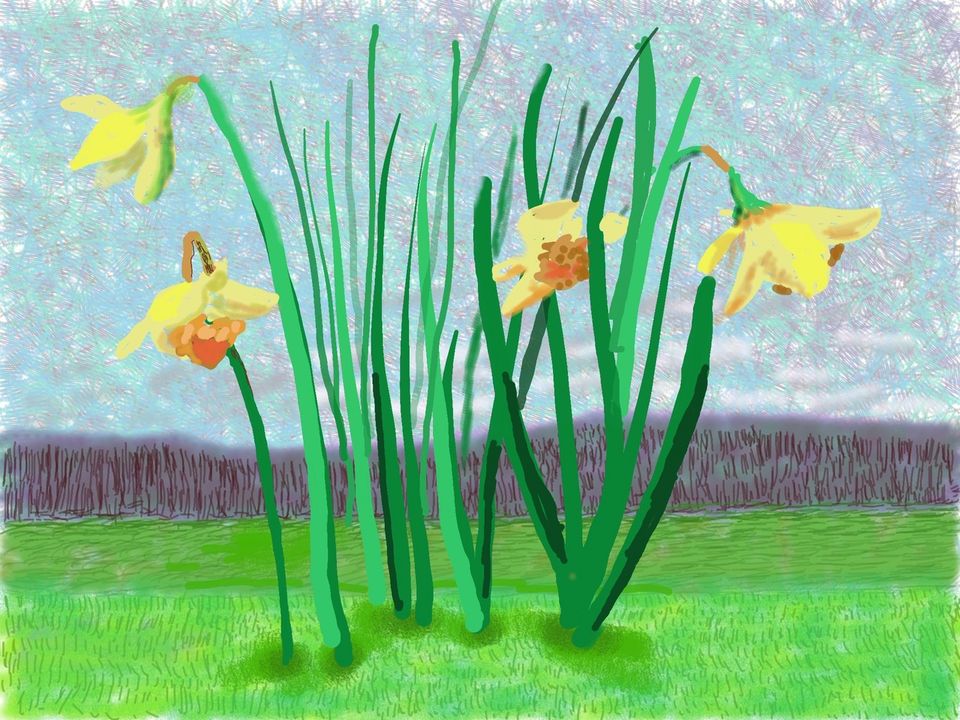
https://www.theartnewspaper.com/comment/a-message-from-david-hockney-do-remember-they-can-t-cancel-the-spring?fbclid=IwAR2iA8FWDHFu3fBQ067A7Hwm187IRfGVHcZf18p3hQzXJI8od_GGKQbUsQU
Share this:


Happy birthday and reflection on the (painful) art of writing

In November 2016, I had an idea that the Criminology team should create and maintain a blog. To that end I set up this account, put out a welcome message and then life (and Christmas, 2016) got in the way…. To cut a long story short, @manosdaskalou, @5teveh and I decided we’d give it a go, and on the 3 March 2017, @manosdaskalou broke our duck with the first post. This, of course, means we are celebrating the blog’s 4th birthday and it seems timely to reflect both on the blog and the (painful) art of writing.
Since that early foray the blog has published almost 500 times and has been read by almost 23,000 people from across the globe. As you can see from the map below, we still have a few areas of the globe to reach, so if you have contacts, be sure to let them know about us 🙂
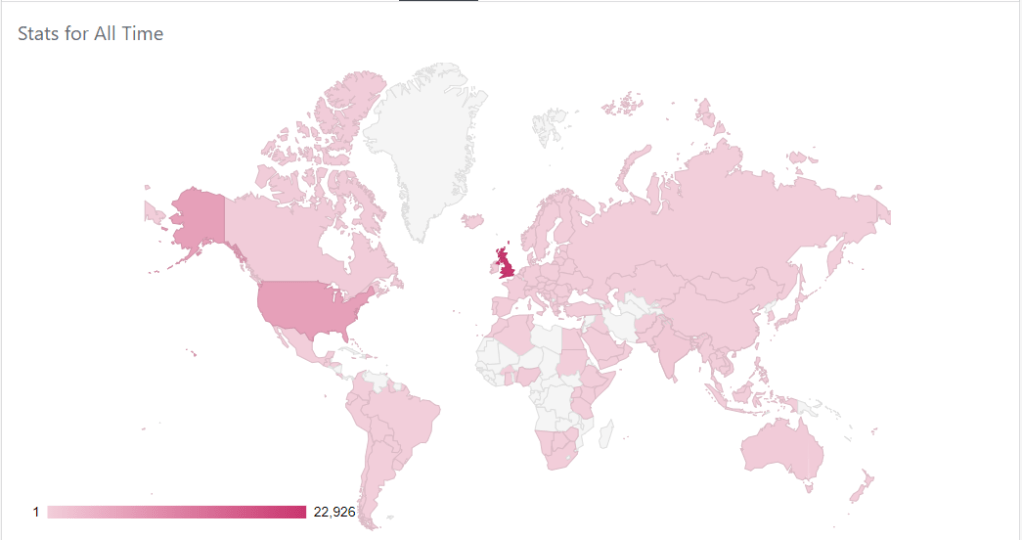
To date, our most read individual entry comes from a current student @zeechee, followed closely behind by one of @manosdaskalou‘s contributions and then one from @treventoursu. But of course, the most popular page of all is the front page where the most current entries are. That’s not to say that some entries don’t crop up again and again, for instance @manosdaskalou‘s most popular entry went live in May 2017, @zeechee‘s in January 2020 and @treventoursu‘s in February 2020. Sometimes these things take time to find their audience, but it shows you can’t hide excellent writing and content finds a way through.
Over the past 4 years we have had contributions from a wide range of people, some have contributed just one or two, others more frequently and the three founding members (once started) have never stopped blogging. During this time, bloggers have covered an enormous range of different topics, some with more frequency than others. Of course, this year much of the content, whether intended or not, has had connections to the ongoing global pandemic. The blog for both writers and readers has offered some distraction, even if only 5 minutes escape whilst waiting for the kettle to boil, from the devastation wrought by Covid-19.
All of the above gives us much to celebrate, not least our stamina and perseverance, but says nothing about the art of writing which I’d like to reflect on now. By the time it’s live on the blog, the process is forgotten, until the next entry becomes due. For some people writing comes easily, for me, it doesn’t. I find all kinds of writing painful and often like pulling teeth. I know what I want to say, I have a reasonable vocabulary, knowledge of my discipline and a keen eye on current affairs. All of this is true until I start the writing process….
Some of my reluctance relates to my individual personality, some to my social class and some to my gender. It is probably the latter two which create the highest barriers and I find myself in a spiral or internalised argument around who would want to read this, why should they, everyone knows this and on and on ad nauseum until I either write the sodding thing or very rarely, give up in disgust at my own ineptitude. I know this is irrational and I know that I have written many thousands of words in my lifetime, most largely forgotten in the fog of time, but still, every time the barriers shoot up. What makes it worse is that I can generally fulfil what ever writing brief I am confronted with, but only after a gargantuan battle of wills with myself.
Despite this a couple of things have helped considerably. The first is a talk originally give by Virginia Woolf in 1931. In this very short piece, entitled ‘Professions for Women’, Woolf details similar struggles, much more eruditely than I have, in relation to writing as a women.
The obstacles against her are still immensely powerful—and yet they are very difficult to define. Outwardly, what is simpler than to write books? Outwardly, what obstacles are there for a woman rather than for a man? Inwardly, I think, the case is very different; she has still many ghosts to fight, many prejudices to overcome. Indeed it will be a long time still, I think, before a woman can sit down to write a book without finding a phantom to be slain, a rock to be dashed against.
Woolf, 1931
She also names the internal conflict the ‘Angel in the House’. For Woolf, this creature has to be murdered in order for the female writer to make progress. For someone, like me committed to non-violence/pacifism, killing, even of an imaginary creature, is challenging, so instead I get in a few nudges, make my ‘angel’ agree to be quiet, even if only for a short time. As Woolf alludes, some days this works well, other times not so much, acknowledging that even when dead, the angel continues to undermine. Nevertheless this short essay helped me to understand that my so-called foibles were actually shared by other women and were formed during our socialisation. Because of this, I have regularly recommended to female students that they have a read and see if it helps them too.
The other thing that has really helped is the blog. The commitment to write regularly, to a deadline, has helped considerably. Although I know that I’m part of a team equally committed to the success of the blog, makes a difference. It ensures accountability. Of course, I could call on anyone of my colleagues to cover my slot, but I would be doing that knowing that I am adding to another person’s workload. Alternatively, I could opt not to write and leave a gapping hole on the blog that day/week, but again that would be letting down everyone on the blogging team, we all have a part to play. So sometimes reluctantly, other times with anger, still more times with passion, the words eventually come. I cannot speak for my fellow bloggers but I can say with some certainty blogging has done wonders for me in terms of accountability, not to mention the pleasure of working with a group of interesting and exciting writers on a regular basis.
Why not join us?
Share this:


Keep Calm and Forget the Pandemic or What to do in a pandemic? Take advantage of the situation
Eleven months now and there is a new spectre haunting Europe; a plague that has taken hold of our lives and altered our lifestyles. Lockdowns, the r rate, viral transmission, mutations are new terms that common people use as if we are experienced epidemiologists. Masks, made of cloth or the surgical ones, gloves and little bottles of antiseptic have become new fashion accessories. Many people report mental fatigue and others a state of confinement inside their own homes. Some people have started complaining that there is no light in this long tunnel, in country after country face with overwhelmed medical staff and system.
The optimist in me is unequivocal. We can make it through. Life is far more powerful than a disease and it always finds a way to continue, even in the most hostile of conditions. In my view however this is not going to be a feat of a great person; this is not going to be resolved by one solution. The answer is in us as a collective. Humanity thrived when it gets together and the ability to form meaningful bonds that is the backbone of our success to survival.
Imagine our ancestors making their first communities; people that had no speed like the felines, no strength like the great apes and no defensive shell to protect them. Coming out of Africa thousands of years ago, this blood creature had no offensive nor defensive structures to prevail. Our ancestors’ survival must have been on the brink. Who could imagine that some thousands of years ago, we were the endangered species? Our endurance lies on the ability to form a group that worked together and understood each other, carried logic, used tools and communicated with each other.
The current situation is a great reminder of the importance of society and its true purpose. People form societies to protect each other and advance their opportunity for success. We may have forgotten that and understandably so, since we have had people who claimed that there is no such thing as a society, only the individual. The prevailing economic system focuses on individual success, values individual recognition and prioritises individual issues. In short, why worry about others, miles away, feet away, steps away from us if we are doing well.
It is interesting to try to imagine a society as a random collection of indifferent individuals, but more people begin to value the importance of the other. After years of austerity and the promotion of individualism, more people live alone, make relationships through social networking and mostly continue to live a solitary life even when they live with others. Communities, as an ex-prime minister claimed as broken and so people waste no time with them. We take from our communities, the things we need, and we discard the rest. Since the start of the pandemic, deliveries, and online companies have been thriving. Whilst physical shops are facing closure, online ones can hardly cope with the demand. As a system, capitalism is flexible enough to retune the way wealth is made. Of course, when you live alone, there are things you cannot have delivered; intimacy, closeness, intercourse. People can fulfil their basic needs apart from the one that makes them people; their socialisation. We will have to address it and perhaps talk about the need to be a community again.
In the meantime, what happens at the top? In the Bible there was the story of the pool of Siloam. This miraculous pond blessed by an angel offered the opportunity for clemency for those who swam in the waters. Wipe the slate clean and start again. So, what do governments do? Interestingly not as much. Right now, as people try to come to terms with loss, isolation and pain, different governments try to address other political issues. One country is rocked by the revelations that its head of state has created a palace to live in. Another one, has finished construction of his summer palace. In another country they are bringing legislation to end abortions, in another they propose the introduction of police on campuses. Others are restricting the right to protest, and in a country famed for its civil rights, legislation is being introduced not to take pictures of police officers in public, even if they may be regarded in violation of duties. It seems that it is open season for the curtail of civil liberties through the back door. In an island kingdom the system has ordered and moves forward with the construction of more and bigger prisons. A sign that they anticipate public upheaval. Maybe; whatever the reason this opportunity to supress the masses may be tantalising, but it is wrong. When ever we come out of this we need to reconnect as a community. If this becomes an opportunity for some, under the suppression of civic rights, things will become problematic. For starters, people will want to see their patience and perseverance rewarded. My advice to those who rule, listen to your base.
Share this:


Criminology is everywhere!
When I think back to thinking about choosing a degree, way back when, I remember thinking Criminology would be a good choice because it is specific in terms of a field: mainly the Criminal Justice System (CJS). I remember, naively, thinking once I achieved my degree I could go into the Police (a view I quickly abandoned after my first year of studies), then I thought I could be involved in the Youth Justice System in some capacity (again a position abandoned but this time after year 2). And in third year I remember talking to my partner about the possibility of working in prisons: Crime and Punishment, and Violence: from domestic to institutional (both year 3 modules) kicked that idea to the curb! I remember originally thinking Criminology was quite narrow and specific in terms of its focus and range: and oh my was I wrong!
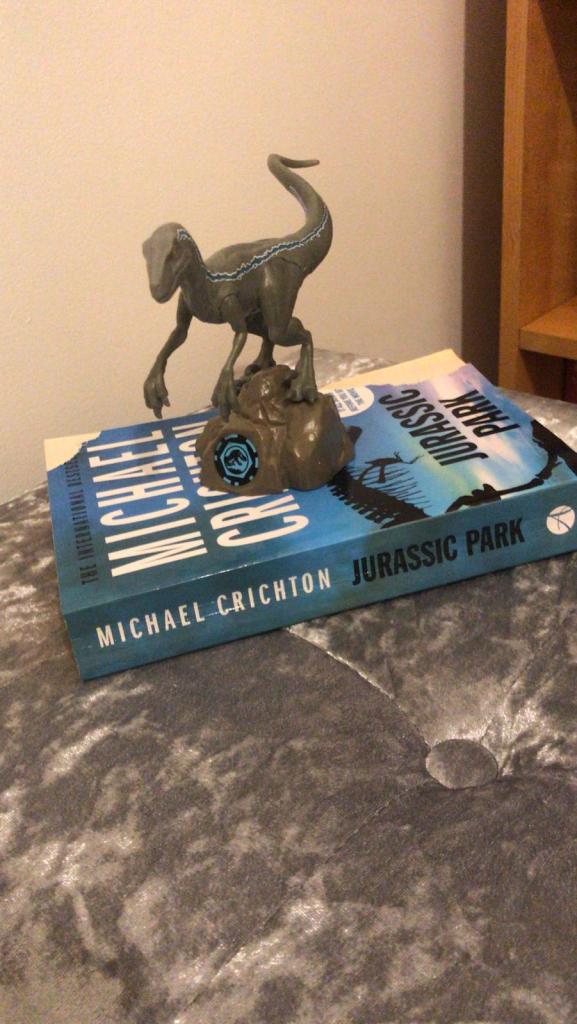
Whilst the skills acquired through any degree transcend to a number of career paths, what I find most satisfying about Criminology, is how it infiltrates everything! A recent example to prove my point which on the outside may have nothing to do with Criminology, when in actual fact it could be argued it has criminological concepts and ideas at its heart is the 2015 film: Jurassic World. It is no secret that I am a huge lover of Crichton novels but also dinosaurs. But what I hope to illustrate is how this film is excellent, not just in relation to dinosaur content: but also in relation to one of my interests in Criminology.
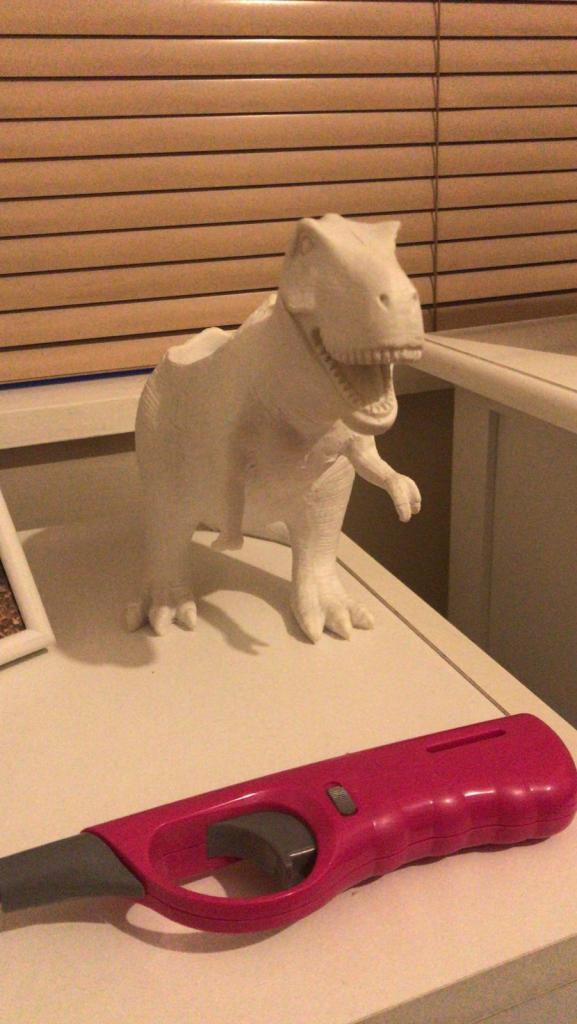
Jurassic World, for those of you who have not had the pleasure of viewing, focuses on the re-creation of a Jurassic Park, sporting new attractions, rides and dinosaurs in line with the 21st century. The Indominus Rex is a genetically modified hybrid which is ‘cooked-up’ in the lab, and is the focus of this film. Long story short, she escapes, hunts dinosaurs and people for sport, and is finally killed by a joint effort from the Tyrannosaurus, Blue the Velociraptor and the Mosasaurus: YAY! But what is particularly Criminological, in my humble opinion, is the focus and issues associated with the Indominus Rex being raised in isolation with no companionship in a steeled cage. Realistically, she lives her whole life in solitary confinement, and the rangers, scientists and management are then shocked that she has 0 social skills, and goes on a hunting spree. She is portrayed in the film as a villain of sorts, but is she really?
Recently in Violence: from domestic to institutional, we looked at the dangers and harms of placing individuals in solitary confinement or segregation. Jurassic World demonstrates this: albeit with a hybrid dinosaur which is fictitious. The dangers, and behaviours associated with the Indominus Rex are symbolic to the harms caused when we place individuals in prison. The space is too small, there is no interaction, empathy or relationships formed with the dinosaur apart from with the machine that feeds it. The same issues exist when we look at the prison system and it raises questions around why society is shocked when individuals re-offend. The Indominus Rex is a product of her surroundings and lack of relationships: there are some problematic genes thrown in there too but we shall leave that to one side for now.
There are a number of criminological issues evident in Jurassic World, (have a watch and see) and all of the Jurassic Park movies. Criminology is everywhere: in obvious forms and not so obvious forms. The issues with the prison system, segregation specifically, transcend to schools and hospitals, society in general and to dinosaurs in a fictional movie. Criminology, and with it critical thinking, is everywhere: even in the Lego Movie where everything is awesome! Conformity and deviance wrapped up in colourful bricks and catchy tunes: have a watch and see…
Share this:


Switching off?
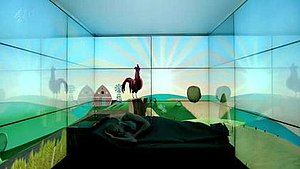
I am not sure whether this relates to age or not but during my late 20s I became increasingly reluctant to engage with watching television, using my phone and engaging in social media. I suppose there are a number of reasons for this. One reason is that I enjoy being able to ‘switch-off’ from looking at any form of screen. The change in the nature of my job role and in this current lockdown context means that at the moment I am less able to ‘switch-off’.
The increased screen time demand plays all sorts of tricks on the human body. We seem to be a nation of people that are experiencing the sensation of a ‘buzzing brains’, ‘square eyes’, headaches and ‘burning faces’ due to too much screen time.
Recently, I made an irrational decision to watch the rather grim Fifteen Million Merits episode of Black Mirror. This episode consists of individuals being forced to look at screens at all hours, and it also included much seedier scenes. This episode has absolutely no resemblance to the current situation that we are all in. Although, the episode did remind me of some of the diffculties that people may be experiencing in terms of not being able to ‘switch-off’ from looking at screens whilst working from home.
Work now consists of me using my laptop in my office. I do wonder whether living in smaller living spaces makes matters worse? In terms of my own flat, my office is six steps away from my living room and two steps away from my bedroom. I have never experienced such close proximity to work. When work ends I then attempt to ‘wind-down’ by using my phone or watching the television. My whole day seems to consist of looking at some form of screen. Some of us are fortunate to have gardens. I wonder if this helps people to spend a bit or time relaxing whilst working from home?

Maybe we will all be diagnosed with ‘square eyes’ and ‘buzzing brain’ disorders in the future. Maybe these terms will make it into the dictionary. What I do know is that when lockdown ends I would love to spend a whole day just staring into space, lying on the grass or floating in a warm sea somewhere outside of the U.K. Is it just me that feels this way? Maybe I have just lost the plot.
The moral of this story is, do not watch dystopian television programmes during a lockdown. As you may begin to reflect about all sorts of nonsense!

 Thoughts from the criminology team