
Home » Criminological imagination (Page 4)
Category Archives: Criminological imagination

What makes a good or bad society?: IV

As part of preparing for University, new students were encouraged to engage in a number of different activities. For CRI1009 Imagining Crime, students were invited to contribute a blog on the above topic. These blog entries mark the first piece of degree level writing that students engaged with as they started reading for their BA (Hons) Criminology. With the students’ agreement these thought provoking blogs have been brought together in a series which we will release over the next few weeks.
A good society can be defined as one with social cohesion with a safe, secure environment and a bad society as one lacking these qualities, when using this definition, we can look at if society is good or bad.
In the media there has been an increase in crimes reported, including individuals being caught and charged for their actions, which would have previously escaped the public eye. With an increase in media use from youths, it puts them at a risk to exploitation due to their vulnerability as young people. Social influencers have been able to exploit their own children through sexualising their actions to attract paedophiles and earn profit from these views. In this situation, parents fail to protect their children from the harmful environment the media can attract. Thus, social media is growing in its dangerous nature making it unsafe.
There has been an increase in violence in all aspects of society, such as shootings and wars. America holds the highest rate of school shootings and has failed to make schools a safe place for children. America suffers from violence due to the legalisation of guns which can be seen with many attempted assassinations of presidents, some of which have been successful. The latest attempt being Donald Trump in 2024, which shows how America has failed to provide people with security no matter their status in society.
Even outside of America there has been a failure to make society safe as seen in East Europe. The Russo Ukrainian war gained attention in 2022 over Russia’s failure to capture Ukraine. This caused anxiety as other countries could not fight due to being part of NATO, instead they provided aid for Ukraine. Despite this the war has continued, making Ukraine unsafe to live in, forcing many to immigrate. The Israel-Hamas war started in 2023 and as a result of this war, businesses who supported Israel were boycotted, which demonstrates the interests between businesses and the public not aligning, resulting in protests over powerful figures’ failure to speak up against the violence, thus there is a lack of social solidarity.
Human rights are not consistent within the world. This can be seen in Islamic countries making homosexuality forbidden, whereas in the West homosexuality can be acted upon in public without punishment. With women’s rights there has been recent debates about abortion and its legalisation within America. 17 states have banned abortion, which shows a lack of consensus between the states as the laws are not consistent throughout America. There has been widespread protests to bring back the right to an abortion to women. Additionally, in some countries women have fewer rights due the ideology of men as being superior. The exclusion to rights means women cannot work or get an education predominantly in the Middle East and Africa, whereas the West aim for equal opportunities, showing how politics between countries are not in agreement as to what is a human right.
Therefore, when looking at these events, there is a lack of social cohesion and safety between countries, and even within the same country there is little agreement, this results in a bad society.
Share this:

What makes a good or bad society?: III
As part of preparing for University, new students were encouraged to engage in a number of different activities. For CRI1009 Imagining Crime, students were invited to contribute a blog on the above topic. These blog entries mark the first piece of degree level writing that students engaged with as they started reading for their BA (Hons) Criminology. With the students’ agreement these thought provoking blogs have been brought together in a series which we will release over the next few weeks.
Introduction
Everyone has a different view on whether our society is good or bad or what they perceive a good society to be. Especially individuals who come from different backgrounds and diverse cultures, people experience different societies, cultures and childhoods which can affect everyone’s versions of what a good society is.
Requirements of a good society
My perception of a good society would be a multicultural and diverse civilisation where crime, racism, misogyny, sexism, ableism and so on is at an all time low or doesn’t exist. I only say an all time low because where people are concerned some kind of deviant behaviour will always exist. I believe a society where men could be able to walk the street without the fear of being assaulted or women could walk the streets without the fear of being sexually assaulted is ideal. Also I believe a good society would have no hierarchy, not to the extreme of communism but in the sense that no one should look down on a job individuals have. No job, car or house is valued more because everyone is trying to improve their quality of life. Everyone no matter what race, ethnicity and gender should have the same amount of respect and in the same sense if someone commits a crime no matter who they are they should be held with the same accountability. Women should be paid the same as men, when they are completing the same tasks and doing the same job there should be no reason for them to have different pay. Another requirement I believe in is easy access to education for everyone. Growing up in a deprived area I understand the struggles with getting an education and I personally believe that helping with funds for students, creating more schools or helping support parents who would rather homeschool their children should be more accessible. Absence of corruption is also another, for a society to work and be the best it can be there should be no corruption. No one should be able to use their power, money or any form of blackmail to get out of situations they have caused. Society would be so much smoother if corruption never existed, leading to there should be no attentiveness to power. People who do have power should not be able to use it to their advantage, I do not believe in removing power however, there should never be a situation where an individual who values themselves to have more ‘power’ then another should feel they can control another.
Good Society?
It’s extremely hard to define and work out all requirements of a good society as it could be never ending to work out everyone’s belief of what a good society is as well as my own. I believe we can all have our own opinion of what a good society would require or how it would function. But I will leave you with this, I always say a good society would be one where my younger siblings and the next generations can walk the street and I will not have to worry about their safety. When we reach that point I believe that’s what a good society would be.
Share this:


A Love Letter: in praise of board games
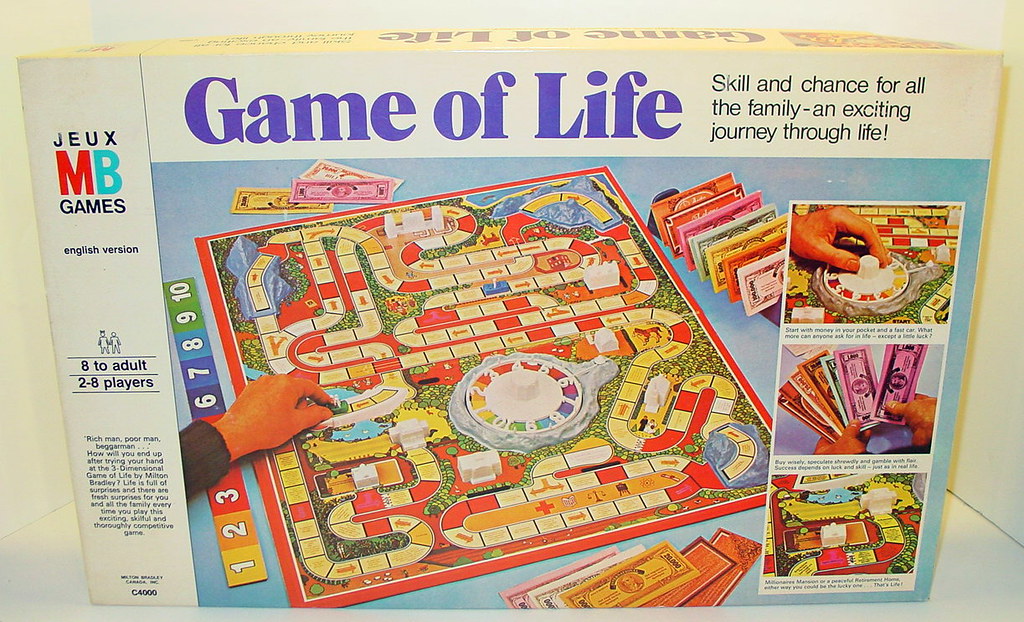
This my fifth love letter, previously I have written in praise of poetry, art, Agatha Christie and the Thoughts from the Criminology Team blog. Since early childhood, I have loved playing games and today’s entry is dedicated to this form of media. In the early years, the focus on fun is paramount, after all who wants to play a dull game? Equally important, the educational aim of games is sometimes explicit, other times less so. Nevertheless, they help us learn to match and sort colours and shapes, to develop our counting skills in an applied setting and improve our memory recall, as well as spelling. Games likes Snap, Happy Families, Hungry Hippos, Snakes and Ladders, Guess Who, Junior Scrabble offer a variety of different ways for children to learn important skills whilst playing. These games enable even very small children to share space, develop important interpersonal skills like taking turns and learn to deal with winning, and of course, losing. Often the latter is a very slow and painful lesson to learn….and one that isn’t always remembered into adulthood!
Of course, one of the most explicit part of playing games is learning the rules of the game, and of course, what happens when we deviate from those rules. It might lead to the loss of a turn or even forfeiture of the entire game. People interpret rules in different ways and families often develop their own “house” rules, but nevertheless there is always an agreed upon set of rules and a way of policing and punishing those who break them.
But once these lessons have been learned, what do games have to teach us as adults? I would say plenty! On a surface level, they offer an opportunity to relax and do something outside of our humdrum lives. Once the games have been purchased, they generally cost nothing to play unlike other forms of leisure time.1 Some can be played alone, others require competitors or even teams. They can aid our thinking, concentration and develop skills of strategy and tactics. They also have the general benefit of not being all consuming (unless at competition level), allowing for conversation to flow. The latter, conversing whilst doing something else, can often be useful for difficult emotional conversations, allowing people to open up without pressure (known colloquially as “health by stealth”).
But do board games have anything to offer to Criminology? Again, I would argue yes! Most games involve chance or luck, will you get the numbers you need, will you have the right pieces/cards in your hand, will the other person play their game in a way that benefits you? It is easy to recognise the role that luck or chance plays in games, but are we equally aware of their role in our lives. More importantly, as criminologists do we fully understand and acknowledge the role played by both in relation to criminality and victimisation?
We have no choice about whether we are born or not, when and where we arrive on the earth, who our parents are. These are all down to forces outside our individual and collective control. Our upbringing, our education, our employment opportunities are largely constrained by geography, money and influence. Compare the opportunities available to a baby born today in Sudan, with one born in the UK, another born in Palestine, and another born in Finland. Compare again, thinking about race, sex, class, disability, sexuality and so on. Very quickly you begin to understand the role played by chance and luck.
So if all of the above are imponderables, how much of a role does luck play in relation to criminality and victimisation? The regular publication of data relating to crime in postcodes, towns/cities and globally show huge diversity in the chance of victimisation. Lucky you, if you were born and live in the ‘Nordic countries of Europe (Norway, Sweden, Denmark, Iceland, and Finland) who rank among the 25 safest globally, most of them also being among the top 10 happiest nations worldwide’. Less fortunate, if you were born in Haiti, Ukraine, Palestine, Sudan or Iraq identified as some of the most dangerous places on earth currently. It is not very difficult to imagine the difference in opportunities in fundamental human rights; food, shelter, healthcare, education and so on. In war ridden nations it is incredibly difficult to separate different typologies of victimisation and for the individuals living under these conditions, it makes no meaningful difference who is/are the perpetrators.
Even if you are living in a “peaceful” state2 such as the UK, there are vast differences in the opportunities available. If you have money you can buy a car to get to work in your evening/night job, if you don’t, maybe you can take a bus, failing that you can walk. Each of those journeys carries its own risks. Your sex, your race, your ethnicity, your sexuality, your abilities/disabilities, your age add the aggravating/mitigating factors and see your risk increase/decrease. All a matter of chance and luck
What about criminality, is this, as the Classical School of Criminology would have us accept, a matter of free will, weighing up the pros and cons and making a deliberate and calculating choice to commit crime? Or can we also identify the same issues of luck and chance as shown above? If your family is loving, everyone has good health, housing is secure, food is plentiful and there are plenty of educational and employment opportunities in your area, would you still choose a life of crime? If there is violence at home, poverty impacts health, housing and regular meals, making it challenging to study or work, would you perceive crime to be a choice?
And what of those board game rules and consequences, real life has its own rules, some written in the forms of laws, others engrained via family, friends, institutions; the norms of our society. In the board game, these rules apply equally (aside from luck and chance) but in real life, not so much. Consider racial and ethnic disproportionality and the treatment of vulnerable women in the CJS, as just two examples. We may all be playing in the same “Game of Life”, but luck, chance and the rules we are subjected to are very different when it comes to criminality and victimisation.
- I appreciate that there are some very expensive board games out there, as well as expansion packs to enhance play. ↩︎
- There are lots of academic arguments around what constitutes a peaceful state, most agree that it more than just the absence of war. Whilst the UK has not seen active warfare on its shores for decades, its military has been involved in conflict throughout the world for more than a century. ↩︎
Share this:

What makes a good or bad society?: II
As part of preparing for University, new students were encouraged to engage in a number of different activities. For CRI1009 Imagining Crime, students were invited to contribute a blog on the above topic. These blog entries mark the first piece of degree level writing that students engaged with as they started reading for their BA (Hons) Criminology. With the students’ agreement these thought provoking blogs have been brought together in a series which we will release over the next few weeks.
Does a good society need morality? A successful criminal justice system? A strong economic system?
What are the requirements for a good society? Personally, I believe the answer to that question depends on the person it is being proposed to, so in this entry you will hear about my own opinion on what a society truly needs to be regarded as “good” and several other outlooks.
Some would argue including myself that a good society must depend on virtues to provide its foundations. Underpinning all values is a firm belief in being respected, regardless of background, age, ethnicity, or gender. Thus, tolerability is a key moral in modern day as the world is constantly progressing into a more diverse, expressible place therefore it is essential people tolerate the qualities that make everyone unique. For society to improve it is vital people listen and reflect on what they have heard, as conflicting opinions do not essentially mean either one is right- a concept that has been lost in today’s society but is a key requirement of a good one.
Respect promotes mutual understanding and contributes to effective communication. It also builds trust between individuals which is imperative to society, a good society must include elements of trust. Trust is found in relationships, friendships and within the work/education setting. It is the key to social harmony as people who trust one another are more willing to cooperate and work productively. Furthermore, research has linked trust with economic growth, democracy, tolerance, charity, community, health, and happiness therefore showing the widespread effects a simple belief can have. With trust comes honesty. In a world that thrives on trust, honesty serves as the ethical foundation upon which a trustworthy society is built. It is through honesty that we establish a social fabric of integrity, reliability, and transparency which are all key values needed for a good society to flourish.
I personally believe along with many others these virtues have the ability to at the very least improve society as they pave the way for cooperation, teamwork and a happier life.
Other people may focus on an effective criminal justice system when they view the requirements of a good society. Why is the Criminal Justice System Important? The criminal justice system is designed to deliver justice for all which means protecting the innocent, convicting criminals, and providing a fair justice process to help keep order across the country. In other words, it keeps our citizens safe. In order for justice to be served the police, the courts, the CPS and probation services all must work together to achieve the common goal, building a better society.
A stable economy may also be seen as a requirement for a good society due to the widespread positive effects it has such as how it improves peoples living standards and contributes to economic growth and development. It also provides people with more employment opportunities and increases public expenditure.
In conclusion, a good society cannot be determined by just one factor but by many.
Share this:

What makes a good or bad society?: I
As part of preparing for University, new students were encouraged to engage in a number of different activities. For CRI1009 Imagining Crime, students were invited to contribute a blog on the above topic. These blog entries mark the first piece of degree level writing that students engaged with as they started reading for their BA (Hons) Criminology. With the students’ agreement these thought provoking blogs have been brought together in a series which we will release over the next few weeks.
I will start off by saying it is difficult to say whether we live in a good society or not because there are a lot of factors to take into consideration before making such a claim.
I believe the justice system, despite what anyone says is still as racist and sexist as ever.
In 2022, out of police officers whose ethnicity was known, white people made up 91.9% of the police force. (gov.uk, 2023), this number shows that the police force is predominantly white, which does not represent diversity, especially because currently society are trying to change to become more diverse and represent equality, that is why we see movements like Black Lives Matter blowing up.
In 2023, 36.8% of police officers were females, (statista, 2023), making the overall police force predominantly, white males. This does not represent the general population at all. It is easy to understand why people often have negative views on the police force and why people feel as though the police are working against them rather than for them, This can reduce the authority people believe the police have over them, thus increasing the rates of crimes.
Another take could be that because of the rise in social media and video games, kids and young adults who have accessed these materials for most of their lives start to forget real life consequences. The aims of some of the most popular video games, such as (Grand Theft Auto, Fortnite and Call of Duty) involve the killing of other characters, whilst some are worse than others, they all present one thing in common, when you kill a character, they come back to life. From when we are young, we understand that when someone passes it is irreversible, However, what the younger generation lack now is the knowledge that consequences have actions. In a video game and on social media people are constantly faced with death, real or not, it is desensitising us and numbing our understanding of how delicate human life is.
I also think that the fact that there is a consequence to every action needs to be taught to the kids of our generation, as more and more kids are being manipulated into selling drugs, by the idea that they will get money out of it, but also that they will be protected and wouldn’t get into trouble for it, also raising the crime rates.
I believe that the society we live in now is corrupted, with people lacking humanity and authority. I believe the world could be better if we gained these things back. It is important for us as humans to feel safe and secure, and with the raising crime rates, I certainly do not feel safe.
Share this:


Realtopia?

I have recently been reading and re-reading about all things utopic, dystopic and “real[life]topic” for new module preparations; Imagining Crime. Dystopic societies are absolutely terrifying and whilst utopic ideas can envision perfect-like societies these utopic worlds can also become terrifying. These ‘imagined nowhere’ places can also reflect our lived realities, take Nazism for an example.
In CRI1009 Imagining Crime, students have already began to provide some insightful criticism of the modern social world. Questions which have been considered relate to the increasing use of the World Wide Web and new technologies. Whilst these may be promoted as being utopic, i.e., incredibly advanced and innovative, these utopic technological ideas also make me dystopic[ly] worry about the impact on human relations.
In the documentary America’s New Female Right there are examples of families who are also shown to be using technology to further a far right utopic agenda. An example includes a parent that is offended because their child’s two favourite teachers were (described as being) ‘homosexuals’, the parents response to this appeared to be taking the child out of school to home school the child instead, but also to give their child an iPad/tablet screen to use as a replacement for the teachers. Another example consisted of a teen using social media to spread far right propaganda and organise a transphobic rally. In the UK quite recently the far right riots were organised and encouraged via online platforms.
I would not advise watching the documentary, aside from being terrifying, the report and their team did very little to challenge these ideas. I did get the sense that the documentary was made to satisfy voyeuristic tendencies, and as well as this, it seems to add to the mythical idea that far right ideology and actions only exists within self identified far right extremist groups when this is not the case.
Mills (1959) suggests that people feel troubled if the society in which they live in has wide scale social problems. So might the unquestioning and increased use of technologies add to troubles due to the spreading of hate and division? And might this have an impact on our ability to speak to and challenge each other? Or to learn about lives different to our own? This reminds me of Benjamin Zephaniah’s children’s book titled People Need People (2022), maybe technologies and use of the internet are both connecting yet removing us from people in some way.
References
Mills, C. W. (2000) The Sociological Imagination. Fortieth anniversary edition. Oxford: Oxford University Press.
Zephaniah, B. (2022) People Need People. (London: Orchard Books)
Share this:


Reflecting on my viva experience
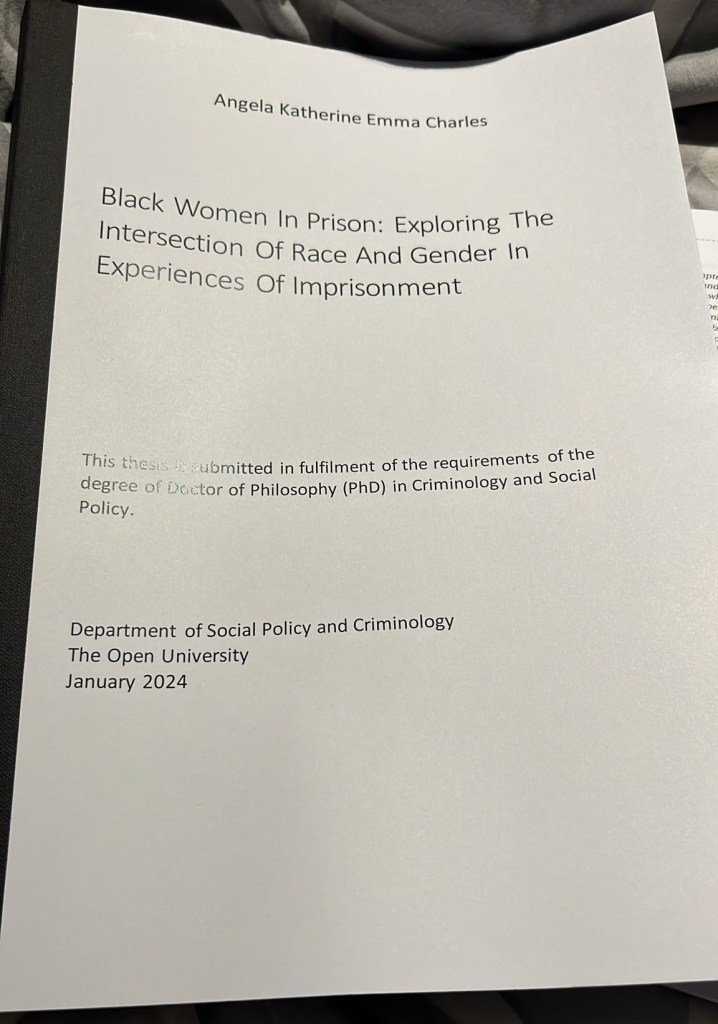
I reflect one week after one of the most important examinations in academia, the viva. Like any examination you never know what is going to come up and therefore you have to be prepared for anything. This makes preparation tricky, uncertain and at times perplexing. There were areas I thought might come up, and in those cases I had a response ready.
On the day, despite all the preparation there were questions that required pause, thought, navigation and discussion. Upon reflection, there were times where I would have liked to provide a more polished and articulate answer, but I am not a robot and therefore my answers are human, with stutters and pauses, passion and dedication; they are unpolished and there is a beauty to that.
What made the difference was having two very supportive examiners that were approachable, interested in my research and wanting me to fulfil my potential. Their additional years in the field/academia over mine were not used to demonstrate their superiority, but instead to guide me in the final process of completing my thesis.
The process acted as a reminder to me that how you approach a situation is so important. In academia, whilst we may be trying to highlight the flaws in a potential project or correcting errors or misconceptions in student’s writing so they can improve, we also ought to put the effort into seeing the good in someone’s work where possible. Think about whether your approach is constructive, how can that individual be supported to the finish line. It pays to maybe think back to the time when your work was being dissected, analysed, with the outcome affecting your academic career in front of you, what type of examiner would you have wanted, maybe that is the one you need to strive to be to others.
I passed with minor corrections that they stressed would only take a few days work. I hope this is acts a testament to what is possible. As a first-generation Black woman that tentatively stepped into academia, achieved a first-class honours degree, navigated a masters at Oxford University, was successful in achieving a funded PhD to then pass with minor corrections, challenge yourself and dare to dream!
Share this:


The 7 Year Itch

Back in 2017, as a team we started talking of developing a forum where we can write about ideas, which we had run out of time to discuss in class or wanted to raise in addition to what we do. The first of our entries was called “Reflections from a Pilot” and it was all about the prison module we were running. Since then, all colleagues, many students, graduates and esteemed fellows have contributed to our blog, bringing a variety of perspectives and opinions. The bulk of the reflections are mostly focused on the discipline of Criminology but there are several others that explore wider educational issues, social situations, and cultural commentary. This alone demonstrates the variety and extent that our discipline can go into inspiring people who have been given the criminological gaze.
700 blog posts later and we are still going strong. As a team we have seen, Brexit, the relocation to a new campus, a global pandemic, war in Europe, environmental issues and many more. We have commented on crimes and criminalities, cultural conventions, and wider social issues. Our students and graduates brought in their reflections from the challenges on studying to presenting their own research and criminological interests. One of our esteemed colleagues Dr Steve O’Brien blogged about the Hillsborough disaster drawing the connections between sports, policing, and criminology. An interesting juxtaposition, but not unique when it comes to criminology.
We produced several posts that followed the academic year, from welcome week to exams and graduation, whilst we simultaneously posed questions about content and material that we thought our students and readers outside of our campus will find interesting. Our objective was to instigate conversations, to inform and to motivate. We have received emails, comments and we have started conversations based on the topics we introduced. Our blog entries have reflected on the life changes colleagues and students have gone through, with the most notable the pandemic, when we tried to make sense of it and keep our spirits up for the team and the people around us. Teams in academia change, form, reform, group, regroup but regardless of that we continue “to keep calm and carry on”. That is the nature of academia! The continued strive for improvement is one of those traits that are so underrated.
Overall, the initial concept of sharing ideas was surpassed by the variety of use we have for the blog. We have found many different creative ways, including posts from our book club, reflections on movies, whilst we also managing to attract guest authors who provide some excellent insight like our travelling blogger Diepiriye or our social commentator Tré who brought in some cultural paradigms to the blog. The blog became a collective noticeboard of ideas that demonstrated the diversity and reach of the discipline of Criminology. In an ever-changing world we feel proud that we raise the flag for issues regarding social justice, equality, education. We took our personal experiences and expertise and put them in a context for our wider academic community but also for anyone who is interested in what we have to say. We would like to thank all those who took the time to read our blogs. Some of you are avid readers and we thank you; to our contributors past and present for your insight and to the people who shared our stories our gratitude for increasing the extent of our readership. From a few people at the beginning, we have become a blog with a readership of over 10K. We are delighted and we raise our virtual glass to all! 7 years went through so quickly, so here’s for the next 7 years and beyond! -Spoiler alert- Next year the team will be celebrating our Silver Jubilee so keep reading as more interesting blogs are to come!

Share this:


Christmas Toys

In CRI3002 we reflected on the toxic masculine practices which are enacted in everyday life. Hegemonic masculinity promotes the ideology that the most respectable way of being ‘a man’ is to engage in masculine practices that maintain the White elite’s domination of marginalised people and nations. What is interesting is that in a world that continues to be incredibly violent, the toxicity of state-inflicted hegemonic masculinity is rarely mentioned.
The militaristic use of State violence in the form of the brutal destruction of people in the name of apparent ‘just’ conflicts is incredibly masculine. To illustrate, when it is perceived and constructed that a privileged position and nation is under threat, hegemonic masculinity would ensure that violent measures are used to combat this threat.
For some, life is so precious yet for others, life is so easily taken away. Whilst some have engaged in Christmas traditions of spending time with the family, opening presents and eating luxurious foods, some are experiencing horrors that should only ever be read in a dystopian novel.
Through privileged Christmas play-time with new toys like soldiers and weapons, masculine violence continues to be normalised. Whilst for some children, soldiers and weapons have caused them to be victims of wars with the most catastrophic consequences.
Even through children’s play-time the privileged have managed to promote everyday militarism for their own interests of power, money and domination. Those in the Global North are lead to believe that we should be proud of the army and how it protects ‘us’ by dominating ‘them’ (i.e., ‘others/lesser humans and nations’).
Still in 2023 children play with symbolically violent toys whilst not being socialised to question this. The militaristic toys are marketed to be fun and exciting – perhaps promoting apathy rather than empathy. If promoting apathy, how will the world ever change? Surely the privileged should be raising their children to be ashamed of the use of violence rather than be proud of it?
Share this:


What cost justice? What crisis?
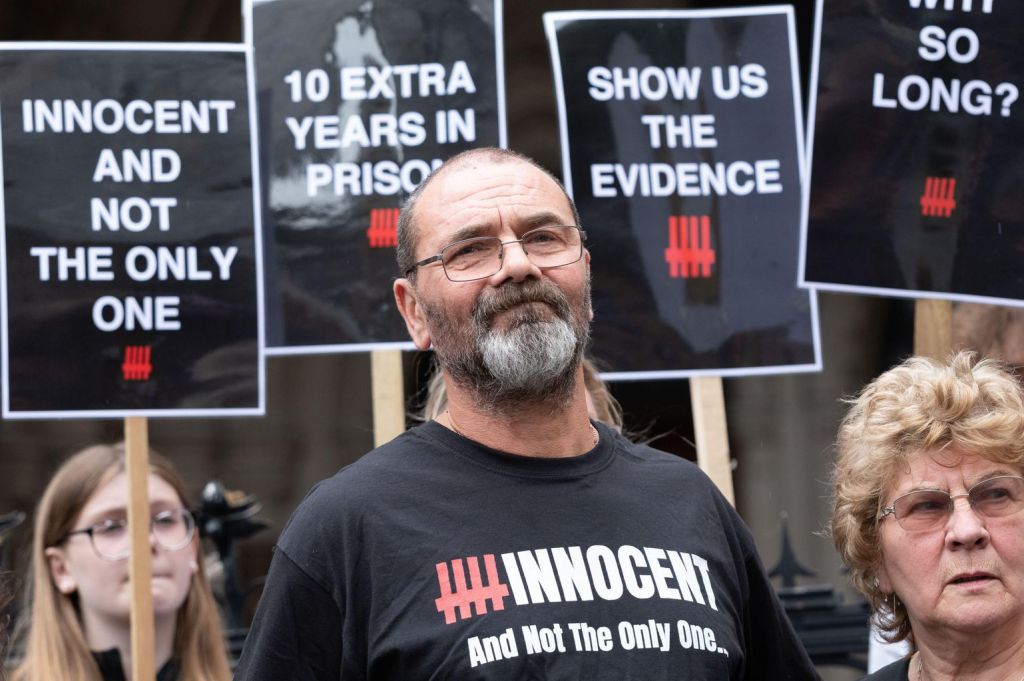
The case of Andrew Malkinson represents yet another in the long list of miscarriages of justice in the United Kingdom. Those that study criminology and those practitioners involved in the criminal justice system have a reasonable grasp of how such cases come about. More often than not it is a result of police malpractice, negligence, culture and error. Occasionally it is as a result of poor direction in court by the trial judge or failures by the CPS, the prosecution team or even the defence team. The tragic case of Stefan Kiszko is a good example of multiple failures by different bodies including the defence. Previous attempts at addressing the issues have seen the introduction of new laws such as the Police and Criminal Evidence Act 1984 and the Criminal Procedure and Investigations Act 1996. The former dealing in part with the treatment of suspects in custody and the latter with the disclosure of documents in criminal proceedings. Undoubtedly there have been significant improvements in the way suspects are dealt with and the way that cases are handled. Other interventions have been the introduction of the Crown Prosecution Service (CPS), removing in part, charging decisions from the police and the introduction of the Criminal Cases Review Commission (CCRC) to review cases where an appeal has been lost but fresh evidence or information has come to light.
And yet, despite better police training regarding interviews and the treatment of suspects, better training in investigations as a whole, new restrictive laws and procedures, the independence of the CPS, the court appeal system and oversight by a body such as the CCRC, miscarriages of justice still occur. What sets the Malkinson case aside from the others appears to be the failure of the CCRC to take action on new information. The suggestion being that the decision was a financial one, with little to do with justice. If the latter is proved to be true, we will of course have to wait for the results of the inquiry, then how can anyone have any confidence in the justice system?
Over the years we have already seen swingeing cuts in budgets in the criminal justice system such that the system is overloaded. Try to pop into the local police station to make a complaint of a crime, you won’t find a station open to the public. Should you have been unfortunate enough to have been caught for some minor misdemeanour and need to go to magistrates’ court for a hearing, you’ll be lucky if you don’t have to travel some considerable distance to get there, good luck with that if you rely on public transport. Should you be the victim of a more serious crime or indeed charged with a more serious offence, triable in crown court, then you’ll probably wait a couple of years before the trial. Unfortunate if you are the alleged offender and on remand, and if you are the victim, you could be forgiven for deciding that you’d rather put it all behind you and disengage with the system. But even to get to that stage, there has to be sufficient evidence to secure a prosecution and it has to be in the public interest to do so. Your day in court as a victim is likely to be hang on the vagaries of the CPS decision making process. A process that has one eye on the court backlog and another on performance targets. Little wonder the attrition rate in sex offences is so high. Gone are the days of letting a jury decide on occasions where the evidence hangs on little more than one person’s word against the other.
Andrew Malkinson and his legal representative have called for a judicial review, a review where witnesses can be compelled to attend to give evidence and documentary evidence can be demanded to be produced. Instead, the government has said there will be an independent inquiry. On a personal note, I have little faith in such inquiries. My experience is that they are rarely independent of government direction and wishes. Andrew Malkinson’s case is a travesty and the least that can be done is to have a proper inquiry. I suspect though that the Malkinson case might just be the tip of the iceberg. The Criminal Justice System is in crisis but budgetary restraint and political whim seem to be far more important than justice. We can look forward to more finger pointing and yet more reorganisation and regulation.


