
Home » Crime and Punishment (Page 13)
Category Archives: Crime and Punishment

Speeding towards disaster: the absence of a capable guardian

Vehicles are lethal weapons, we all recognise that, particularly after the reminders given to us by the terrorist attacks across Europe. Every year in this country, there are more people killed on the roads than there are as a result of murder and yet people still drive on the roads like complete morons. It seems that driving cars, vans, and lorries brings out aggressive behaviour that to most would seem quite out of character. A good few years ago, the media castigated ‘White Van Man’, the drivers of white vans that displayed all the worst of driving behaviours, in particular positioning their vehicles aggressively so close to another vehicles’s rear bumper that they might as well have been sitting in the boot.
The shame of it is that White Van Man is now replaced by the general driving public. Gender and age seem to have no bearing on the manner of driving. Minor mistakes and indiscretions by other drivers are punished with blaring horns, flashing headlights and hand gestures more at home on the football terraces, although if you watched the recent England game, you might suggest on the pitch as well. Drivers barge their way past parked cars despite oncoming traffic and drive at speeds exceeding the speed limit. The dual carriageway that reverts to a single carriageway sees drivers racing to get ahead of each other determined not to let anyone into the now single file of traffic.
And yet, introduce a capable guardian, I borrowed the term from Felson’s 1998 Routine Activity Theory, and behaviour seems to change almost instantaneously; let me explain. The village I live in is fairly large and sits on the outskirts of a county town. The village is expanding rapidly and consequently through traffic can be quite considerable, particularly during school runs. This accompanied by pedestrians on narrow pathways and the gaggle of school children massing around the bus stop waiting for the bus to another village increases risk considerably. The road which meanders in and out of both semi-rural and urbanised space has a thirty mile an hour speed limit and the odd flashing sign that warns motorists to slow down. Not unreasonable given the volume of traffic and pedestrians and yet it has little meaning to drivers, including those carrying children in the car, who regularly exceed the speed limit. Dare to drive at thirty miles an hour and you will rapidly find cars sitting on your rear bumper itching to get by or aggressively getting closer and closer in an attempt to bully you into going faster. A slight glimpse of empty road sees overtaking manoeuvres more suitable to the Silverstone racetrack but accomplished by drivers who probably lack anything like the skill required. Demonic aggression and recklessness is the name of the game and yet the very same drivers will change their driving behaviour just a few minutes later.
About a mile from my village is a small hamlet dissected by a fairly busy road. The speed limit leading up to the hamlet is 40 miles an hour and the speed limit through the hamlet is 30 miles an hour. Watch vehicles traverse this stretch of road and you will see politeness, adherence to the speed limit and gaps between vehicles that would make the author of the highway code proud. Why such change in behaviour, you probably already know? Two somewhat insignificant, inconspicuous, despite the bright yellow paint, average speed cameras. Nobody knows if they function but they certainly work. It seems that altering driver behaviour is simply down to the presence of a capable guardian but it does beg the question why so many people have little regard for the law or their fellow human beings when they get into that driving seat.
Share this:


The Criminology of the Future

As we are gleefully coming towards the start of yet another academic year, we tend to go through a number of perpetual motions; reflect on the year past, prepare material for the upcoming year and make adjustments on current educational expectations. Academics can be creatures of habit, even if their habit is to change things over. Nonetheless, there are always milestones that we all observe no matter the institution or discipline. The graduation, for example brings to an end the degree aspirations of a cohort, whilst Clearing and Welcome Week offer an opportunity of a new group of applicants to join a cohort and begin the process again. Academia like a pendulum swings constantly, replenishing itself with new generations of learners who carry with them the imprint of their social circumstance.
It was in the hectic days at Clearing that my mind began to wonder about the future of education and more importantly about criminology. A discipline that emerged at an unsettled time when urban life and modernity began to dominate the Western landscape. Young people (both in age and/or in spirit) began to question traditional notions about the establishment and its significance. The boundaries that protect the individual from the whim of the authorities was one of those fundamental concerns on criminological discourses. A 19th century colleague questions the notion of policing as an established institution, thus challenging its authority and necessity. An end of 20th century colleague may be involved in the training of those involved in policing. Changing times, arguably. Quite; but what is the implications for the discipline?
My random example can be challenged on many different fronts; the contested nature of a colleague as a singular entity that sees the world in a singular gaze; or the ability to diversify on the perspectives each discipline observes. It does nonetheless, raises a key question: what expectations can we place on the discipline for the 21st century.
If we and our students are the participants of social change as it happens in our society then our impressions and experiences can help us formulate a projective perspective of the future. Our knowledge of the past is key to supplying an understanding of what we have done before, so that we can comprehend the reality in a way that will allow us to give it the vocabulary it deserves. A colleague recently posted on twitter her agony about “vehicles being the new terrorist weapon,” asking what is the answer. The answer to violence is exactly the same; whether a person gets in a van, or goes home and uses a bread knife to harm their partner. Everyday objects that can be utilised to harm. A projection in the future could assert that this phenomenon is likely to continue. The Romans called it Alea iacta est and it was the moment you decide to act. In my heart this is precisely the debate about the future of criminology; is it crime with or without free will?
Share this:


Surviving in a changing environment: the use of illicit drugs

Recent months have seen a rebirth in drug related news stories, often linked to the death of young people or babies or the dealing of drugs by youth and gangs. This led me to consider the place of drugs in British Society, not in terms of their distribution, production, cost, but the reasons why illicit drug use continues to be prominent in UK society. There is plenty of research on this topic and considerable political commentary on the problem, however is drug use really a problem or are we simply more aware of illicit drug use and more open to discussing it? There are certainly arguments for both sides but neither address the reason why drugs are in our society and this led me to consider the speculative argument that cocaine use is increasing, or at least shifting to a newer market.
Cocaine, historically the drug of choice for celebrities and the wealthy is now spreading across society to a wider social demographic by why? The main argument produced by the ACMD is that there is a two-tier market based on purity, the more pure and thus more expensive continues to be used by celebrities and the wealthy but a less pure, cheaper version is now available for those less affluent. I don’t doubt the validity of this argument but I think there is more to this than simply price and purity. Historically, drugs that are now illegal were widely available and staple part of people’s daily lives helping to mask the harshness of life or facilitate their functionality within working and social environments. Has much changed? The political drive to make us do more for less is certainly evident in modern society as is the harsh effects of poverty and deprivation, both of which can lead to drug use, albeit these once legal substances are now illegal.
In addition, developments in technology and globalisation have significantly increased the pace of life for most people; we work longer hours to survive or because it is demanded of us, we juggle more commitments than ever before, we are expected to absorb and process huge amounts of information instantaneously all of which has sped up our lives to the point of sensory overload but are our bodies and minds really designed to cope with this long-term? When I was at university I studied during the day and worked nights so the maximum amount of sleep I would get in any 24 hour period was about 4 hours and this was broken sleep, usually between 4pm and 8pm. At that time the drug of choice was pro plus and without it, I would not have been able to sustain this lifestyle for three years. I’d like to say this was just a small period in my life that such actions were needed to follow my dream but the reality is that as the work-life balance blurs and demands on our time increase, time to sleep erodes and our bodies are not designed to operate well on minimal sleep. This naturally leads to the inclusion of stimulants in our daily lives to help us to function, whether that be caffeine or cocaine is a personal choice but potentially a necessary evil if we wish to survive.
That is not say that I condone the use of illicit drugs but that does not mean that I can’t see the potential benefits of such substances. There are numerous documentaries highlighting the use of uppers to stay awake and downers to sleep amongst the celebrity population whose lifestyles can be chaotic. The question is, has this chaos now spread to wider society as the cost of living increases and the political momentum for us to ‘do more’ continues to grow? If it has, then illicit drugs will remain a staple part of societies coping mechanism, whether that be too dull the harshness of daily life or enable us to survive in a changing environment.
Share this:


Sex Offender Treatment: A Waste of Time and Effort?
Helen is an Associate Lecturer teaching modules in years 1 and 3.
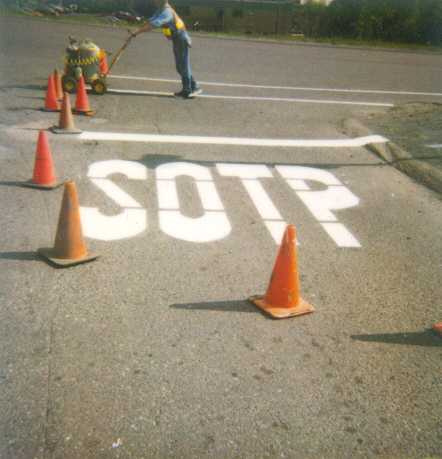
Earlier this year, the Prison Service announced that the Core Sex Offender Treatment Programme and the Extended Sex Offender Treatment Programme would be withdrawn with immediate effect. Offenders in the middle of programmes would be able to complete, but no new programmes would start. No explanation was given. A new suite of programmes, focussed on building strengths for the future rather than analysing past offending, had already been developed but a gradual roll-out had been planned rather than a sudden switch. There were many murmurings among Parole Board members. Why the sudden withdrawal? How would sex offenders now be able to demonstrate that they had reduced their risk? Where was the evidence that the new programmes were any better? We suspected that there had been an unfavourable evaluation, but no one had seen the research.
The truth came to light via The Mail on Sunday on 25th June. There had, indeed, been an unfavourable evaluation of the Sex Offender Treatment Programme (SOTP). When compared to matched offenders who had not completed treatment, those who had done so were more likely to re-offend. The Ministry of Justice had withdrawn the programme but had not published the research. They finally did so on 30th June.
The decision to sit on the research was not helpful. The first information we received about it was filtered through the eyes of The Mail on Sunday. They claimed that “Prisoners who take the rehabilitation courses are at least 25% more likely to be convicted of further sex crimes that those who do not.” This is not true. Of the 2,562 treated sex offenders included in the study, 10% went on to commit another sexual offence. The figure for the matched untreated offenders was 8%. 90% of sex offenders, treated or untreated, did not reoffend within the follow-up period (average 8.2 years). But it is true that treatment made people worse. Two percentage points is a small difference, but with such a large sample size it is significant. The research is robust and well-designed. A randomised control trial would have been more robust, but the matched comparisons in this study were done thoroughly and every attempt was made to take account of possible confounding variables. You can read the study for yourself here:
and the Mail‘s interpretation of it here:
http://www.dailymail.co.uk/news/article-4635876/amp/Scandal-100million-sex-crime-cure-hubs.html
So why did treatment make offenders more likely to reoffend? At this stage we really don’t know. The authors of the research make some suggestions but they are only speculating. Perhaps talking about sex offending in a group setting “normalises” offending. Perhaps groupwork provides offenders with opportunities to network. Perhaps these programmes promoted shame in offenders which ultimately reduced self-esteem and self-efficacy and reduced the chances of building a positive and fulfilling future. The new programmes draw more from the desistance literature. They include much less offence analysis and are more focussed on building strengths for a positive future. They may be more likely to succeed but we will not know for several years until we have had the chance to evaluate them.
So where does that leave the offenders and staff who have worked hard on these programmes over the years? Sex offender treatment is expensive, tiring and takes a psychological toll on those delivering it. A prison officer once told me that delivering SOTP was the best and most fulfilling thing he had ever done, but also the most damaging. A couple of weeks ago, I was talking to a former colleague who used to run SOTP and we reflected, “Was all of that effort for nothing?” We have to take the research seriously, learn the lessons and move on. There is no denying the findings. But perhaps we shouldn’t be too hard on ourselves. SOTP was based on the best research available at the time. It was modified and developed over the years in the light of emerging research. It might have “worked” for some participants, even if it made others worse. We assessed and came to understand a large number of sex offenders. As a result of that work and this evaluation, we now have a better understanding of what might work to reduce reoffending in the future. Of course, there is an argument that all attempts at rehabilitation are futile, that people choose to behave as they wish and we should not try to manipulate them to change. But perhaps that’s a subject for another blog!
Share this:


A Problem with the Criminal Justice System?
Nahida is a BA Criminology graduate of 2017. Her dissertation, ‘On Degradation and Shaming’ explored the problems noted in this post.

Throughout studying for a Criminology degree, we are lectured upon the causation of crime, and how there is no, one single cause. However, it is interesting to see how the stereotypes that were once instilled inside us, are no longer a part of our daily voice of reason. We begin to question the very organisation, many of us want to become a part of; that being the criminal justice system itself. We come to realise, that the system, as most things is flawed.
It is public knowledge that the criminal justice system is full to the brim with defendants, offenders, victims and the innocent; amongst many other people. Therefore, as a result of these massive caseloads, the whole process from a crime being reported, to the guilty being sentenced, can become similar to a factory-line; making the procedure very impersonal. Justice can often be delayed and denied. This has a huge impact on all the parties involved; including the ones accused of a crime i.e. the defendants.
Throughout the whole process, defendants can often feel as though they are being discriminated against. It has been found that the criminal justice system, particularly the courtrooms create distance between society and the defendant. Courtrooms in England and Wales are set up in a manner in which the defendants are removed, and made to stand out of the ordinary. They are often placed in their own cage of sorts, and told to not speak, unless spoken to. This can leave defendants, who are potentially innocent, feel degraded and shamed. Courtrooms can often leave defendants without a voice, prohibiting them to feel, or even express remorse. Disallowing an offender to express remorse, can be detrimental to their rehabilitation; and even the victim’s lives. We, as a society, can have hope for criminal rehabilitation, but the way in which our justice system is set up, can hinder that very process.
Through observations made at the local crown court, it has been found that judges tend to not address the causation of the supposed crime. It is understood that people do not commit crime in a vacuum. Something has to lead them to it. Therefore, not allowing one to truly comprehend what has caused the alleged crime in the first place, can be argued as problematic, for the root issue cannot be solved, if it is not identified in the first place. This could be argued as one of the many reasons why there still remains to be a high reoffending rate. To stop reoffending, one must address the causation. However, it can be found that many parts of our criminal justice system does not perform such investigations. Therefore, how can we expect the system to achieve its aim of reducing crime, when it is potentially causing further criminality, without even intending to?
Share this:


Institutional Violence: unfortunate disaster or crime?

Despite my love of criminology, there are also aspects which I find deeply troubling. One of the earliest things that an undergraduate student learns to parrot is that “crime is a social construct”. Unfortunately, for much criminological research whilst this may be acknowledged it is largely ignored, with the focus firmly on those actions which are defined by law to be criminal. The first of my concerns, is criminology’s potential to do harm all in the name of making contributions to solving the “crime problem”. All this measuring, trying to find out what works, always seems to involve finding innovative ways in which humans can be forced coerced to do another’s bidding. It seems to me that this project is inherently designed to hurt individuals, supposedly in the name of justice.
Another concern is criminology’s seeming inability to address bigger issues, which are often dismissed as some other unspecified form of harm, rather than crime.Those of you who have studied with me are likely to know that my academic interests revolve around institutions and violence. I’m not interested in what they do and how we measure their supposed efficacy and “improve” them – administrative criminology leaves me cold – but the impact of these institutions on individual lives.
Much criminological research focuses on individual motivations for criminality (as reflected in some of our earlier blog entries on cyber crime, murder and manslaughter) and these explanations can offer extraordinary insight. Such individualised explanations often follow the classical tenets of freewill and choice, leading to discussions around punishment, and particularly deterrence. Whilst these offer the promise of understanding crime and criminality they run the risk of decontexualising crime; removing the criminal(s), the victim(s) and the criminal justice system from the environments in which both operate. If we consider events such as the Aberfan (21.10.1966) and Hillsborough (15.04.1989) disasters and more recently the catastrophe of Grenfell Tower; (14.06.2017) individualised criminological explanations make little sense, instead we are faced with complex arguments as to whether or not these are actually crimes. However, the sheer number of deaths and injuries involved in these tragic events cannot simply be dismissed as if they are somehow natural disasters. Furthermore, the violence inherent in all of these events is far bigger than any one individual, making traditional criminological theories appear inadequate.
It would seem that perhaps the concept of institutional violence, although contested, can offer a gateway to a more nuanced understanding of crime and harm. One of my starting points for understanding institutional violence is Steven Lee’s question ‘Is poverty violence?’ (1999: 5). He makes his standpoint explicit and argues that ‘[p]overty results in a whole range of serious physical and psychological harms: higher risks of disease, shortened life spans, stunted mental and emotional development, and inadequate opportunity to lead a meaningful life’ (Lee, 1999: 9).
Such a perspective widens our view of what might be understood as violence, taking it away from the overt (two chaps squaring up after a night out) to something less obvious and arguably more damaging. It also recognises that events such as the fire at Grenfell Tower do not happen in a vacuum but are predicated on historical, social and political factors. Justice for the victims of Grenfell Tower cannot be achieved through blaming individuals and rationalising their actions (important as that may be). What is required is a great deal of soul-searching and an exploration of the wider institutional harms, including poverty. Only then can we really begin to understand the impact of institutional violence on the everyday lives of the residents of Grenfell Tower which ultimately led to such devastation on the night of 14 June 2017.
Lee, Steven, (1999), ‘Is Poverty Violence’ in Deane Curtin and Robert Litke, Institutional Violence, (Amsterdam: Rodopi): 5-12
Share this:


Terrorism? No thank you

Recent terrorist attacks in Manchester and the capital, like others that happened in Europe in recent years, made the public focus again on commonly posed questions about the rationale and objectives of such seemingly senseless acts. From some of the earliest texts on Criminology, terrorism has been viewed as one of the most challenging areas to address, including defining it.
There is no denial that acts, such as those seen across the world, often aimed at civilian populations, are highly irrational. It is partly because of the nature of the act that we become quite emotional. We tend question the motive and, most importantly, the people who are willing to commit such heinous acts. Some time ago, Edwin Sutherland, warned about the development of harsh laws as a countermeasure for those we see as repulsive criminals. In his time it was the sexual deviants; whilst now we have a similar feeling for those who commit acts of terror. We could try to apply his theory of differential association to explain some terrorist behaviours. however it cannot explain why these acts keep happening again and again.
At this point, it is rather significant to mention that terrorism (and whatever we currently consider acts of terror) is a fairly old phenomenon that dates back to many early organised and expansionist societies. We are not the first, and unfortunately not the last, to live in an age of terror. Reiner, a decade ago, identified terrorism as a vehicle to declare crime as “public enemy number 1 and a major threat to society” (2007: 124). In fact, the focus on individualised characteristics of the perpetrator detract from any social responsibility leading to harsher penalties and sacrifices of civil liberties almost completely unopposed. As White and Haines write, “the concern for the preservation of human rights is replaced by an emphasis on terrorism […] and the necessity to fight them by any means necessary” (1996: 139).
For many old criminologists who forged established concepts in the discipline, to simply and totally condemn terrorism, is not so straightforward. Consider for example Leon Radzinowicz (1906-1999) who saw the suppression of terror as the State’s attempt to maintain a state of persecution. After all, many of those who come from countries that emerged in the 19th and 20th centuries probably owe their nationhood to groups of people originally described as terrorists. This of course is the age old debate among criminologists “one man’s terrorist is another man’s freedom fighter”. Many, of course, question the validity of such a statement at a time when the world has seen an unprecedented number of states make a firm declaration to self-determination. That is definitely a fair point to make, but at the same time we see age-old phenomena like slavery, exploitation and suppression of individual rights to remain prevalent issues now. People’s movements away from hotbeds of conflict remain a real problem and Engels’ (1820- 1895) observation about large cities becoming a place of social warfare still relevant.
Reiner R (2007), Law and Order, an honest citizen’s guide to crime and control, Cambridge, Polity Press
White R and Haines F (1996), Crime and Criminology, Oxford, Oxford University Press
Share this:


You’re never too old to learn

Early 2017 the University of the Third Age (U3A) in Market Harborough asked me to give a talk to retired and semi-retired people on ‘The state of the prison system today’. Obviously this is a huge topic and they hoped that I’d include sentencing, courses, attitudes of people, lives and challenges faced, family connections, rehabilitation, demographics and more, in short everything I knew. Making this more of a challenge I was only given 30-40 minutes to talk, rather than a whole day which might have been more feasible. Anyway, I accepted the challenge and on 13 April 2017 I addressed a small group from a range of backgrounds. Unlike a classroom, it is difficult to predict the response you might get, I knew some would challenge my opinion on the prison system and I was not disappointed. At first the group sat quietly and simply absorbed my brief history of the prison system, nodding in places and jotting down a couple of notes. This changed dramatically when I challenged media constructed images of ‘prison being a holiday camp’ and the appropriateness of prison as punishment. Clearly some in the group had been victims so the discussion quickly turned to a punitive knee jerk reaction to all offenders. Underpinning this was a sense of fear, social unrest, and helplessness where crime was concerned. As you might expect comments like ‘in my day a bobby would have clipped you around the ear and taken you home to your parents for a good talking to’, closely followed by ‘parents of today have no control over their children’ or ‘where has the respect and discipline gone, bring back national service’. Whatever the tone, the group was clearly passionate about issues of crime and the ‘state of the prison system’, actively contributing to the discussion. When I led them towards issue of socio-economic conditions, a lack of opportunities, and the impact that prison had on these problems their empathy started to emerge. At this point I was asked the most difficult question of all ‘what is the answer, what can we do? My response was a simple one; try not to judge, put yourself in others shoes, consider carefully who you vote for, and most importantly don’t believe everything the media tells you. In essence I left them with more questions than answers but also a spark in their eye. They were hungry for more, they were hungry for action, and they wanted to be part of the solution. This led me to reflect on two things; firstly the pure joy I felt discussing prisons with a group of people who were fully engaged and curious about the topic area, and why most of our own students don’t exhibit the same level of enthusiasm. Secondly, the lack of fear I experienced in both the preparation and delivery of this talk. This made me think back to my own student years and a conversation I had with a lecturer who said that he’d put together his lecture on the train. At the time I thought this reflected his lack of interest in what he was delivery and I’m ashamed to say, a degree of laziness, however this experience has led me to reconsider my judgement. For instance, had I been asked to do this talk a few years ago I would have probably spent days, maybe weeks agonising over what I would say, writing copious notes, and shaking all through the delivery. The reality is that I spent a couple of hours that morning putting some points together and experienced no nerves at all. In short, I realised that I know a lot more than I thought I did, and my nerves are somewhat a result of not knowing my audience. I knew this audience would be engaged rather than sitting there stone faced or playing on their phones. This leads me to surmise that while I agreed with New Labour’s idea that education should be open to everyone, I no longer believe that that should include university. Too often I’m faced with people who do not want to be at university, or those that simply see it as logical progression, rather than the eager faces of those who want to learn, who are curious and passionate about the world, and make you leave a class with a feeling of elation rather than despondency. In short, the more enthusiastic the audience, the more enthusiastic the lecturer.
Share this:


A walk in the past
Kirsty is a current undergraduate student. She has just completed her second year of study reading Criminology and Sociology.
 The inspiration of this blog has developed from a recent trip to Riga, Latvia. Whilst the city itself is surrounded by cobbled streets, creative buildings and various water attractions; it is merely inevitable to miss Latvia’s criminological past. Many of the city’s museums’ and prominent statues are dedicated to war and occupation, with a particular focus towards the Soviet and Nazi regimes. The two historical landmarks of interest for the discussion of this blog will focus on the KGB Building and Riga Ghetto Holocaust museum.
Firstly, I would like to briefly discuss the concepts of ‘knowledge’ and ‘experience’ as I think they are important to this text. It is easy to read of the happenings of the past; yet, sometimes it is experience that can enable an individual to truly grasp an understanding of how a society once operated. Upon entering a place whereby masses of people endured acts of repeated interrogation, violence and execution; events from the past become very surreal and complex.
To provide a brief history, the KGB was a secretive and secluded state- security organisation, involved in all aspects of life of everyday people in the Soviet Union. The organisation enforced Soviet morals and ideologies with various mechanisms such propaganda, which in turn, politically oppressed all citizens of Latvia. After the War, the KGB selected the Corner House for its headquarters, as its construction made it convenient for secretly transporting individual prisoners. The KGB Building has preserved its original layout, design and furniture from the Soviet times which allows for a genuine feel of its previous context. Interestingly, the tour guide that showed us round the prison was a former Russian prison officer, whereby we were shown various cells and rooms of importance. One aspect that really stood out to myself was a small cell that we were informed to enter, in which we were told roughly 30 prisoners at a time would be held inside singular cells like these. During the day time, lights were kept off and the heating was set to high- as you can imagine, this would have been extremely unpleasant in these conditions. The tour guide then told us to lightly cover our eyes, as he turned on several piercing bright lights, that even after a few minutes started to make myself feel dizzy. It was then explained that prisoners were prevented from sleeping with these lights being on each night; if caught covering their eyes by a prison guard, they would be beaten. Standing in the exact room of where individuals endured this kind of treatment allowed me to reflectively engage, both mentally and physically, of the complex issues of this dark historical time.
It could be argued that the KGB period hits close to home with the case of Alexander Litvinenko: a former officer of the Russian FSB who resided to Britain in escape of arrest by the Secret Service he had once been a part of. Litvinenko was allegedly poisoned to death by two Russian assassins, reinforcing the Soviet Union’s traditions of effectively ‘destroying the enemy’.
Another point of criminological interest was the Riga Ghetto and Holocaust museum; opened with the aim to preserve memories of the Jewish community in Latvia. On arrival, you are met with a memorial wall and informative stand that show the history of WW2 and the Holocaust- more than 70,000 names of Latvian Jews are recorded. Next, I approached a transportation waggon which were simply used to deport Jewish members to concentrations camps. However, oddly to myself, there were several tree branches inside the waggon itself. I then discovered that this represented those who were deemed ‘unfit’ for labour were taken to the Bikernieki forest- Latvia’s largest mass murder cite during the Holocaust period. As previously mentioned, it was the presence of being in a place whereby those same people lived in a society with arguably no humanity that is so difficult to fully digest.


As a Criminology student, visiting these institutions made real some of the key issues that emerge in class discussions, providing valuable, historical and international development of criminological debates. From an academic perspective; it is widely accepted that accounts should remain objective and avoid journalistic traits, yet the mass suffering of these events is inevitable to ignore.
Share this:


How do you punish the incorrigible?

This week saw the (very low key) commemoration of International Conscientious Objectors Day (15 May) which got me thinking about a number of different contemporary issues. Although the events which I describe happened a century ago, the criminalisation, and indeed, punishment of conscience has never truly been resolved.
Conscientious objection in the UK first came to the attention for most after the passing of the Military Services Act 1916. This legislation allowed for the conscription of certain categories of men into the military. The enactment of this law enabled men to be forcibly coerced into military service regardless of their personal and individual aspirations. Subsequent to this, further legislation was passed (Military Training Act 1939, National Service (Armed Forces) Act 1939, National Service Act 1948) continuing this system of coercive enlistment into the military. By default, such legislation also laid the foundations for conscientious objection; after all, without such coercion there is no need to register dissent, simply don’t enlist in the military.
During WWI (and for some considerable time after) Conscientious Objectors [COs] were bullied, cajoled, ridiculed and stigmatised, not to mention, incarcerated, multiple times. In one horrific incident it was alleged that COs were driven to the trenches of France and threatened with a firing squad if they did not comply. Despite this type of treatment the vast majority of COs continued to resist, strongly suggesting that their conscience, moral compass or faith was far stronger than anything the state could throw at them.
In the UK the individual and collective dilemma of the conscientious objector has largely faded into history; although the same cannot be said internationally (for instance; Greece, Israel and the USA). However, their very existence and that of other non-conformists (at different times and places) raises questions around the purpose and supposed effectiveness of incarceration. In essence; what do we do when the “deviant” refuses to conform, how far are we prepared to go, as a society to punish the incorrigible and persistent offender and what do we do when nothing seems to work?
We could attempt the practices used with the WWI COs and keep convicting whilst ratcheting up the tariff of their sentence each time. However, we know from their experiences that this appeared to consolidate their objections and harden their resolve. We can try and talk to individuals in order to help them see the “errors of their ways” but given the conviction held by COs, that the war was fundamentally at odds with their belief system, this is also likely to fail. We could try punishment in the community, but for many of the COs anything which they felt compromised their standpoint was equally resisted, making any such approach also likely to be unsuccessful.
Although the “problem” of the COs no longer exists in 21st century Britain, other individuals and groups have filled the space they have vacated. We could replace the COs with the Black civil rights movement (think Rosa Parks or Martin Luther King) or other protests (think “Tank Man” in Tiananmen Square or Ieshia Evans in Baton Rouge) or those deemed traitors by many (as were the COs) , such as Chelsea Manning, Julian Assange and Edward Snowden. The question remains: is it possible to rehabilitate the heart and mind of someone who is so clear as to their moral standpoint and committed to doing what they perceive to be “the right thing”?

 Thoughts from the criminology team