

‘Quelle surprise’: it’s all in the timing.
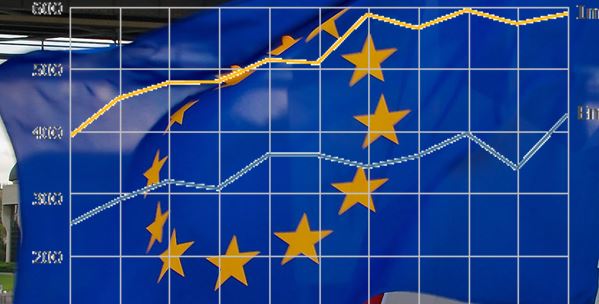
“Inauguration of Polish EU Presidency (011)” by Bruce MacRae is licensed under CC BY-NC-SA 2.0 edited by SH
The Office of National Statistics has admitted to some frailties in its data collection around migration. What a shock it must have been to discover that the manner in which it collected the data was somewhat flawed, so much so that they have now downgraded the data to ‘experimental’.
It might seem almost laughable that an organisation that prides itself in, and espouses data accuracy and has in the past criticised police recorded figures for being inaccurate (we know they are) has itself fallen foul of inaccuracies brought about by its own ill thought out data gathering attempts. The issue though is far greater than simple school boy errors, these figures have had a major impact on government policy for years around immigration with calls for greater control of our borders and the inevitable identification of the ‘other’.
The figures seem to be erroneous from somewhere between the mid-2000s and 2016, although it is unclear how accurate they are now. New analysis shows that European Union net migration was 16% higher in 2015-16 than first thought. Whilst the ONS admits that its estimation of net migration from non-EU countries is overestimated, it is not clear exactly by how much this might be.
Such a faux pas led to the story hitting the news; ‘EU migration to UK ‘underestimated’ by ONS’ (BBC, 2019) and ‘Office for National Statistics downgrades ‘not fully reliable’ official immigration data as experts claim figures have been ‘systematically under-estimating net migration from EU countries’ (Daily Mail, 2019).
So, there we are the ONS gets statistics wrong as well and the adjusted figures simply support what Brexiteers have been telling everyone all along. But why release the figures now? When were these errors identified? Surely if they have been inaccurate until 2016 then the mistake must have been found some short time after that. So why wait until the eleventh hour when ‘Brexit means Brexit’ is about to come to a calamitous conclusion? And why those headlines? Why not the headline ‘Big mistake: net migration from outside the EU vastly overestimated’?
I’m not one to subscribe to conspiracy theories but at times it is difficult to overlook the blindingly obvious. So called independent bodies may not be that independent, the puppet master pulls the strings and the puppets dance. Little value in headlining facts that do not support the right-wing rhetoric but great political value to be had in muddying the waters about the EU and open borders.
This discourse ignores the value of migration and simply plays on the fears of the populace, these are well rehearsed and now age-old arguments that I and many others have made*. The concern though is when ‘independent institutions’ subtly start to join in the furore and the moral compass starts to become distorted, subjugated to political ideals. I can’t help but wonder, what would Durkheim make of it?
* It is well worth watching Hollie McNish’s Mathematics on YouTube.
Share this:


The tyranny of populism

Himmler (1943)
So, we have a new prime minister Boris Johnson. Donald Trump has given his endorsement, hardly surprising, and yet rather than having a feeling of optimism that Boris in his inaugural speech in the House of Commons wished to engender amongst the population, his appointment fills me with dread. Judging from reactions around the country, I’m not the only one, but people voted for him just the same as people voted for Donald Trump and Volodymyr Zelensky, the recently elected Ukrainian president.
The reasons for their success lie not in a proven ability to do the job but in notions of popularity reinforced by predominantly right-wing rhetoric. Of real concern, is this rise of right wing populism across Europe and in the United States. References to ‘letter boxes’ (Johnson, 2018), degrading Muslim women or tweeting ethnic minority political opponents to ‘go back to where they came from’ (Lucas, 2019) seems to cause nothing more than a ripple amongst the general population and such rhetoric is slowly but surely becoming the lingua franca of the new face of politics. My dread is how long before we hear similar chants to ‘Alle Juden Raus!’ (1990), familiar in 1930s Nazi Germany?
It seems that such politics relies on the ability to appeal to public sentiment around nationalism and public fears around the ‘other’. The ‘other’ is the unknown in the shadows, people who we do not know but are in some way different. It is not the doctors and nurses, the care workers, those that work in the hospitality industry or that deliver my Amazon orders. These are people that are different by virtue of race or colour or creed or language or nationality and, yet we are familiar with them. It is not those, it is not the ‘decent Jew’ (Himmler, 1943), it is the people like that, it is the rest of them, it is the ‘other’ that we need to fear.
The problems with such popular rhetoric is that it does not deal with the real issues, it is not what the country needs. John Stuart Mill (1863) was very careful to point out the dangers that lie within the tyranny of the majority. The now former prime minister Theresa May made a point of stating that she was acting in the national Interest (New Statesman, 2019). But what is the national interest, how is it best served? As with my university students, it is not always about what people want but what they need. I could be very popular by giving my students what they want. The answers to the exam paper, the perfect plan for their essay, providing a verbal precis of a journal article or book chapter, constantly reminding them when assignments are due, turning a blind eye to plagiarism and collusion*. This may be what they want, but what they need is to learn to be independent, revise for an exam, plan their own essays, read their own journal articles and books, plan their own assignment hand in dates, and understand and acknowledge that cheating has consequences. What students want has not been thought through, what students need, has. What students want leads them nowhere, hopefully what students need provides them with the skills and mindset to be successful in life.
What the population wants has not been thought through, the ‘other’ never really exists and ‘empire’ has long gone. What the country needs should be well thought out and considered, but being popular seems to be more important than delivering. Being liked requires little substance, doing the job is a whole different matter.
*I am of course generalising and recognise that the more discerning students recognise what they need, albeit that sometimes they may want an easier route through their studies.
Alle Juden Raus (1990) ‘All Jews Out’, Directed by Emanuel Rund. IMDB
Himmler, H. (1943) Speech made at Posen on October 4, 1943, U.S. National Archives, [online] available at http://www.historyplace.com/worldwar2/holocaust/h-posen.htm [accessed 26 July 2019].
Johnson, B. (2018) Denmark has got it wrong. Yes, the burka is oppressive and ridiculous – but that’s still no reason to ban it, The Telegraph, 5th August 2018.
Lucas, A. (2019) Trump tells progressive congresswomen to ‘go back’ to where they came from, CNBC 14 July 2019 [online] available at https://www.cnbc.com/2019/07/14/trump-tells-progressive-congresswomen-to-go-back-to-where-they-came-from.html [accessed 26 July 2019]
Mill, J. S. (1863) On Liberty, [online] London: Tickner and Fields, Available from https://play.google.com/store/books [accessed 26 July 2019]
New Statesman (2019) Why those who say they are acting in “the national interest” often aren’t, [online] Available at https://www.newstatesman.com/politics/uk/2019/01/why-those-who-say-they-are-acting-national-interest-often-arent [accessed 26 July 2019]
Share this:


The same old rhetoric, just another place
 My sister phoned me the other day in great excitement. She’d just met a former criminology student from the University of Northampton, and she had an awful lot to say about it. She wasn’t in her hometown and had asked directions from a stranger to the river embankment. Having visited the embankment, she returned to town only to bump into the stranger again who enquired whether she managed to find it. They ended up chatting, my sister can do a lot of that, and she found out that the stranger was a police officer. My sister asked whether she knew me, why she would ask that I have no idea, it seems that she has formulated some notion in her head that all police officers must know each other or at least know of each other. This is the bit that my sister got so animated about, yes, the stranger did know me, I’d taught her at the University, and she was now in a budding police career. Apparently, I had done so much to help her. Now I don’t know about being that helpful and I suspect that many of my colleagues played a part in her success story, but it reminded me about what it is that we do and aspire to do as lecturers.
Whilst waiting to play my part in talking to school children the other day I started to read a new edition of a seminal piece of work on policing, The Politics of the Police (Bowling et al., 2019). The preface alone makes interesting reading and in ‘mentioning populist political reactions towards crime’, ‘zero tolerance of the marginalised and outsiders’ and ‘laissez-faire economics’ that promotes individual interests, my mind turned to the managerialist ideals that have dogged policing for over three decades. Those ideals saw the introduction of performance indicators, targets and the inevitable policing by objectives (Hallam, 2000), that resulted in some quite appalling manipulation of data and a diminution of service rather than an improvement. The problem was that the targets were never achievable and were simply put in place for managers to simplify the social world over which they had no control. What didn’t get measured, because it never could be, were the myriad of tasks that police officers and staff undertake daily. Dealing with people with mental illness, searching for missing persons and dealing with minor disturbances are an example of just a few such tasks. Bowling et al. (op cit.) subscribe to the notion that the job of the police is to help maintain social order, an ideal that does not lend itself to measurement. Counting the number of crimes committed in an area or the number of detected crimes is only an indication of failure, not success.
How does that policing narrative fit in with my opening paragraph? The former student was not an ideal student from a managerialist viewpoint. She didn’t attain so called ‘good grades’, I’m not even sure if she fully completed her studies. In terms of performance measurement, she doesn’t even feature and yet she, like so many others we have seen in Criminology, has flourished. Whilst concentrating on ‘retention and progression’ and ‘fails’ and ‘good grades’ we neglect the very reason we exist. Just as in policing where the figures were pored over by managerialist who had not slightest notion of the reality of the social world, so too are we in danger of simply seeking pleasing statistics to keep the wolves from the door because explanations of real success and failure are too complex for managers to understand or manage.
Imagine a world where the police just helped maintain social order, where probation were not plagued by notions of payment by results, where patients were just seen in A&E in a reasonable time and where lecturers just opened the minds of students and allowed them to think for themselves. Imagine the time and expense that could be saved and reinvested in providing real service and dare I say it ‘value for money’ if we stopped gathering meaningless data. Imagine managers casting aside the shackles of neoliberalist ideals and managing people, not using numbers as an indication of failure and impending doom. We can but dream, but my reality, as I’m sure is the reality of many of my colleagues, is the success stories that I occasionally hear and can reminisce about. No amount of number crunching can take that away and nor will it ever provide evidence of success or failure.
Bowling, B. Reiner, R. and Sheptycki, J. (2019) The Politics of the Police. (5th ed.) Oxford: OUP.
Hallam, S. (2000) Effective and Efficient Policing: Some Problems with the Culture of Performance, in Marlow, A. and Loveday, B. (eds.) After MacPherson: Policing after the Stephen Lawrence Inquiry. Lyme Regis: Russell House
Share this:


A crime, but who cares?

“IMG_8755 – Copy” by stivoberlin is licensed under CC BY-NC-ND 2.0
Amongst all the furore over Brexit, the European elections and the disintegration of the main political parties in the United Kingdom, a small but not insignificant news story crept into the news melee.
‘The number of physically disabled people affected by homelessness in England increased by three quarters during an almost 10- year period’ (BBC, 2019a, Ministry of Housing, Communities and Local Government, 2019). It is not merely coincidental that the ‘almost 10-year period’ aligns with the austerity measures introduced by the coalition government in 2010. Measures, continuously pursued by the Conservative Government until October 2018 when Theresa May, the soon to be former prime minister, declared at a Tory party conference that austerity was over adding, ‘the end is in sight’ and there are ‘better days ahead’ (Independent, 2018a). Give her her dues, with the demise of the Tory party, the latter part was an insightful prediction. Let’s not let the Liberal Democrats off the hook though, reluctant bedfellows they may have been in the coalition government, but bedfellows they were, and they had the power to vote down many of the Tory party dictats. They may have curried favour with the electorate during the European elections, but we should not forget their part in the austerity measures.
Alongside the issues of homelessness, we see the use of foodbanks has increased phenomenally (Independent, 2018b), fuel poverty affects over 10% of English households (Independent, 2018c) and social care is collapsing (BBC, 2019b; Guardian, 2018). To put it as simply as possible, the common denominator is the austerity measures introduced by government that directly impact on the most vulnerable in our so-called civilised society. This and previous governments can point to the budget deficit, the ineptitude of the previous government and the economic downturn caused by the banking crisis (The Economist, 2013), but how do they justify the impact of their policies on the disadvantaged and those who can least afford any cuts? Bizarrely, the least vulnerable have seen little or no impact on their standard of living other than perhaps for the middle classes there is the monotonous moan about access to doctors or dentists in a timely manner (the rich don’t even have to worry about this).
In my visits around schools I discuss what we mean by the term crime. Reiner (2007:21) states that ‘[t]he term ‘crime’ is usually tossed about as if it has a clear and unambiguous meaning’, but nothing of course is further from the truth. One of the key ideas I posit is that of harm caused. This of course has its own problems in terms of definition and scope, but it does allow one to focus on what is important. If harm done is a measure of crime, or crime is defined by the harm done then we begin to see the world, actions by government, institutions and individuals in a different light. With this notion in mind, we can start to ask when and how do we bring the greedy and those that abuse their power either intentionally or recklessly to book? Maybe, just as Boris Johnson might well be prosecuted for misconduct in a public office over the alleged lies, he made relating to Brexit (BBC, 2019c), we might see ministers held to account for decisions they make that have catastrophic consequences for thousands of the most vulnerable in society.
BBC (2019a) Homeless and disabled: ‘I’m at my wits’ end’, [online] Available at www.bbc.co.uk/news/av/disability-48433225/homeless-and-disabled-i-m-at-my-wits-end [accessed 29 May 2019].
BBC (2019b) English ‘short-changed on care funding’ [online] Available at http://www.bbc.co.uk/news/health-48438132 [accessed 30 May 2019].
BBC (2019c) Brexit: Boris Johnson ordered to appear in court over £350m claim, [online] Available at http://www.bbc.co.uk/news/uk-politics-48445430 [accessed 29 May 2019].
Independent (2018a) Theresa May declares ‘austerity is over’ after eight years of cuts and tax increases, (3 Oct. 2018), [online] Available at www.independent.co.uk/news/uk/politics/theresa-may-austerity-end-over-speech-conservative-conference-tory-labour-a8566526.html [accessed 30 May 2019].
Independent (2018b) Food bank use in UK reaches highest rate on record as benefits fail to cover basic costs (24 April 2018) [online] Available at www.independent.co.uk/news/uk/home-news/food-bank-uk-benefits-trussell-trust-cost-of-living-highest-rate-a8317001.html [accessed 30 May 2019].
Independent (2018) More than one in 10 households living in fuel poverty, figures show (26 June 2018) [online] Available at www.independent.co.uk/news/uk/home-news/fuel-poverty-uk-figures-poor-bills-cost-households-a8417426.html, [accessed 30 May 2019].
Ministry of Housing, Communities and Local Government (2019) Live tables on homelessness [online] Available at http://www.gov.uk/government/statistical-data-sets/live-tables-on-homelessness , [accessed 30 May 2019].
Reiner, R. (2007) Law and Order: An Honest Citizen’s Guide to Crime and Crime Control, Cambridge: Polity.
The Economist (2013) The origins of the financial crisis: Crash course [online] Available at www.economist.com/schools-brief/2013/09/07/crash-course [accessed 30 May 2019].
The Guardian (2018) The social care system is collapsing. So why the government inaction? (3 Oct. 2019) [online] Available at www.theguardian.com/commentisfree/2018/oct/03/social-care-collapsing-government-inaction [accessed 30 May 2019].
Share this:


The logic of racism

A few weeks ago, Danny Rose the Tottenham and England footballer was in the headlines for all the wrong reasons. He indicated he couldn’t wait to quit football because of racism in the game. He’s not the only black player that has spoken out, Raheem Stirling of Manchester City and England had previously raised the issue of racism and additionally pointed to the way the media portrayed black players.
I have no idea what its like to be subjected to racist abuse, how could I, I’m a white, middle class male? I have however, lived in and was for the best part of my life brought up in, a country dominated by racism. I lived in South Africa during the apartheid regime and to some extent I suppose I suffered some racism there, being English, a rooinek (redneck) but it was in the main limited to name calling from the other kids in school and after all, I was still white. There was some form of logic in apartheid; separate development was intended to maintain the dominance of the white population. Black people were viewed as inferior and a threat, kaffirs (non-believers) even though the majority were probably more devout than their white counterparts. I understand the logic of the discourse around ‘foreigners coming into this country and taking our jobs or abusing our services’, if you are told enough times by the media that this is the case then eventually you believe. I always say to colleagues they should read the Daily Mail newspaper and the like, to be informed about what news fables many of the population are fed.
I understand that logic even though I cannot ever condone it, but I just don’t get the logic around football and racism. Take the above two players, they are the epitome of what every footballing boy or girl would dream of. They are two of the best players in England, they have to be to survive in the English Premiership. In fact, the Premiership is one of the best football leagues in the world and has a significant proportion of black players in it, many from other parts of the world. It is what makes the league so good, it is what adds to the beautiful game.
So apart from being brilliant footballers, these two players are English, as English as I am, maybe more so if they spent all of their lives in this country and represent the country at the highest level. They don’t ‘sponge’ off the state, in fact through taxes they pay more than I and probably most of us will in my lifetime. They no doubt donate lots of money to and do work for charities, there aren’t many Premiership footballers that don’t. The only thing I can say to their detriment, being an avid Hammers fan, is that they play for the wrong teams in the Premiership. I’m not able to say much more about them because I do not know them. And therein lies my problem with the logic behind the racist abuse they and many other black players receive, where is that evidence to suggest that they are not entitled to support, praise and everything else that successful people should get. The only thing that sets them aside from their white fellow players is that they have black skins.
To make sense of this I have to conclude that the only logical answer behind the racism must be jealousy and fear. Jealousy regarding what they have and fear that somehow there success might be detrimental to the racists. They are better than the racists in so many ways, and the racists know this. Just as the white regime in South Africa felt threatened by the black population so too must the racists* in this country feel threatened by the success of these black players. Now admit that and I might be able to see the logic.
*I can’t call them football supporters because their behaviour is evidence that they are not.
Share this:


Back to school; who would have thought it could be fun?

A few years ago, probably about three or four, I found myself appointed as some form of school liaison person for criminology. I’m still trying to conjure up a title for my office worthy of consideration as grand poohbah. As I understood my role, the university marketing department would arrange for schools to visit the university or for me to visit schools to promote the university and talk about criminology.
In the beginning, I stumbled around the talks, trying to find my feet and a formula of presentation that worked. As with most things, it’s trial and error and in those earlier days some of it felt like a trial, and there were certainly a few errors (nothing major, just stuff that didn’t work). The presentations became workshops, the ideas morphed from standing up and talking and asking a few questions, with very limited replies, to asking students to think about ideas and concepts and then discussing them, introducing theoretical concepts along the way. These days we try to disentangle scenarios and try to make sense of them, exploring the ideas around definitions of crime, victims and offenders.
There is nothing special about what I do but the response seems magical, there is real engagement and enthusiasm. I can see students thinking, I can see the eyes light up when I touch on topics and question society’s ideas and values. Criminology is a fascinating subject and I want everyone to know that, but most importantly I want young minds to think for themselves and to question the accepted norms. To that extent, criminology is a bit of a side show, the main gig is the notion that university is about stretching minds, seeking and acquiring knowledge and never being satisfied with what is supposedly known. I suppose criminology is the vehicle, but the driver decides how far they go and how fast.
As well as changing my style of presentation, I have also become a little more discerning in choosing what I do. I do not want to turn up to a school simply to tell pupils this is what the course looks like, these are the modules and here are a few examples of the sorts of things we teach at the university. That does nothing to build enthusiasm, it says nothing about our teaching and quite frankly, its boring, both for me and the audience.
Whilst I will turn up to a school to take a session for pupils who have been told that they have a class taken by a visitor, I much prefer those sessions where the pupils have volunteered to attend. Non-compulsory classes such as after school events are filled with students who are there because they have an interest and the enthusiasm shines through.
Whilst recognising marketing have a place in arranging school visits, particularly new ones, I have found that more of my time is taken up revisiting schools at their request. My visits have extended outside of the county into neighbouring counties and even as far as Norfolk. Students can go to university anywhere so why not spread the word about criminology anywhere. And just to prove that students are never too young to learn, primary school visits for a bit of practical fingerprinting have been carried out for a second time. Science day is great fun, although I’m not sure parents or carers are that keen on trying to clean little inky hands (I keep telling them its only supposed to be the fingers), I really must remember not to use indelible ink!
Share this:


Damned if you do, damned if you don’t: it’s a funny old world.
“Did you just look at me?” says Queen Anne to the footman and, as he shakes his head staring into oblivion clearly hoping this was not happening, she shouts “Look at me”. He reluctantly turns his head, looking at her in obvious discomfort when she screams “how dare you; close your eyes?” A short vignette from the television commercial advertising the award-winning film ‘The Favourite’ and very much a case of damned if you do and damned if you don’t for the poor hapless footman.
A few weeks ago, I accompanied my wife to a bear fair in London; she makes vintage bears as a hobby and occasionally takes to setting up a stall at some fair to sell them. As I sat behind the stall navel gazing and wandering what the football scores were, when I was going to get something to eat and when would be an appropriate time to go for a wander without giving off the vibe that enthusiasm was now waning, my wife said, ‘did you see that’? ‘What’ I asked peering over a number of furry Ursidae heads (I’m told they don’t bite)? ‘That woman in the orange top’ exclaimed my wife. Scouring the room for a woman that had been Tango’d, I listened to her explaining that a 30ish year old woman had just come out of the toilets wearing a bright orange top and emblazoned across her generous chest were the words ‘eye contact’. ‘I suppose it’s a good message’ said my wife as I settled back down to my navel gazing.
I thought about the incident, if you can call it that, on the way home and that was when the film trailer came to mind as a rather good analogy. I get the message, but it seems a rather odd way to go about conveying it. From a distance we are drawn to looking but then castigated for doing so. A case of look at me, why are you looking at me? And so, it seems to me that the idea behind the message is somehow diluted and even trivialised. The top is no more than a fashion item in the sense of it being a top but also in a sense of the message. The message is commercialised; I wonder whether the top was purchased because of the seriousness of the message it conveyed or because it would look good and attract attention?
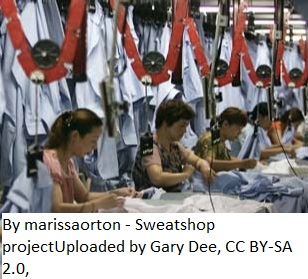
I discussed this with a colleague and she brought another dimension to the discussion. Simply this, where was the top made? Quite possibly, even likely, in a sweat shop in Asia by impoverished female workers. And so, a seemingly innocent garment symbolises all the wrong things; entrapment, commercialism and inequality. I can’t help thinking on this International Women’s Day that it’s a funny old world that we live in.
Share this:


And time waits for no one, and it won’t wait for me*

Last week in my blog I mentioned that time is finite, and certainly where mere mortals are concerned. I want to extend that notion of finite time a little further by considering the concepts of constraints placed upon our time by what might at times be arbitrary processes and other times the natural order of things.
There are only 24 hours in a day, such an obvious statement, but one which provides me with a good starting point. Within that twenty fours we need to sleep and eat and perform other necessary functions such as washing etc. This leaves us only a certain amount of time in which we can perform other functions such as work or study. If we examine this closer, it becomes clear that the time available to us is further reduced by other ‘stuff’ we do. I like the term ‘stuff’ because everyone has a sense of what it is, but it doesn’t need to be specific. ‘Stuff’ in this instance might be, travelling to and from work or places of study, it might be setting up a laptop ready to work, making a cup of coffee, popping to the toilet, having a conversation with a colleague or someone else, either about work or something far more interesting, or taking a five-minute break from the endless staring at a computer screen. The point is that ‘stuff’ is necessary but it eats into our time and consequently the time to work or study is limited. My previous research around police patrol staffing included ‘stuff’, managerialists would turn in their graves, and therefore it became rapidly apparent that availability to do patrol work was only just over half the shift. So, thinking about time and how finite it is, we only have a small window in a 24-hour period to do work or study. Reduced even further if we try to do both.
I mentioned in my previous blog that I’m renovating a house and have carried out most of the work myself. We have a moving in date, a bit arbitrary but there are financial implications of not moving in on that date, so the date is fixed. One of the skills that I have yet to master is plastering. I can patch plaster but whole walls are currently just not feasible. I know this, having had to scrape plaster from several walls in the past and the fact that there was more plaster on the floor and me than there was on the wall. I also know that with some coaching and practice, over time, I could become quite accomplished, but I do not have time as the moving in date is fixed. And so, I employ plasterers to do the work. But what if I could not employ plasterers, what if, I had to do the work myself and I had to learn to do it whilst the deadline is fast approaching? Time is finite, I can try to extend it a little by spending more time learning in each 24-hour segment but ‘stuff’, my proper job and necessary functions such as sleeping will limit what I can do. Inevitably the walls will not be plastered when we move in or the walls will be plastered but so will the floor and me. I will probably be plastered in a different sense from sheer exacerbation. The knock-on effect is that I cannot move on to learn about, let alone carry out, decorating or carpet fitting or floor laying or any part of renovating a house.
As the work on the house progresses, I have become increasingly tired, but the biggest impact has been that my knees have really started to give me trouble to the extent that some days walking up and down stairs is a slow and painful process. I am therefore limited as to how quickly I can do things by my temporary disability. Where it took me a few minutes to carry something up the stairs, it now takes two to three times the amount of time. So, more time is required to do the work and there is still the need to sleep and do ‘stuff’ in a finite time that is rapidly running out.
You might think well so what? Let me ask you now to think about students in higher education. Using my plastering skills as an analogy, what if students embarking on higher education do not have the basic skills to the standard that higher education requires? What if they can read (patch plaster) but are not able to read to the standard that is needed (plastering whole walls)? How might we start to take them onto bigger concepts, how might they understand how to carry out a literature review for example? Time is not waiting for them to learn the basics, time moves on, there is a set time in which to complete a degree. Just as I cannot decorate until the walls are plastered so too can the students not embark on higher education studies until they have the ability to read to a requisite standard. So, what would the result be? Probably no assignments completed, or completed very poorly or perhaps, just as I have paid for plastering to be done….
Now think about my temporary disability, what if, like me, it takes students twice as long to complete a task, such as reading an article, because they have a disability? There is only so much time in a day and if they, like everyone else, have ‘stuff’ to do then is it not possible that they are likely to run out of time? We give students with learning difficulties and disabilities extra time in exams, but where is the extra time in the course of weekly learning? We accept that those with disabilities have to work harder, but if working harder means spending more time on something then what are they not spending time on? Why should students with disabilities have less time to do ‘stuff’?
The structure and processes within HE fails to take cognisance of time. Surely a rethink is needed if HE is not to be condemned as institutionally failing those with disabilities and learning difficulties. Widening participation has widening implications that seem to have been neglected. I’ll leave you with those thoughts, a quick glance at my watch and I had best go because in the words of the white rabbit, ‘Oh dear! Oh dear! I shall be late’ (Carroll, 1998: 10).
Carroll, L. (1998) Alice’s Adventures in Wonderland and Through the Looking-Glass: The centenary edition, London: Penguin books.
*Richards, K. and Jagger, M (1974) Time waits for no one. Warner/Chappell Music, Inc.
Share this:


A Matter of Time

Christmas was a rather sombre time in our household this year, my step dad died a few days before. It wasn’t a surprise, he had been ill for some time, but it still felt like a huge shock. Unlike the time when my dad died, some 12 years ago now, I didn’t have to deal with the all of the aftermath, my step brother did that and as a consequence, I was left with time to think and reflect. The death of someone, particularly as we get older, reminds us of our own mortality. Phrases such as ‘time marches on’ simply remind us of the inevitable fact that our time is finite, unlike time itself, I’m not sure Stephen Hawking would agree with this (see below). The hard part about someone dying is that they cannot give you any more of their time, just as you cannot give them any of yours. It is this use of time that I want to reflect on using an eclectic mix of what may seem random ideas.
Coincidentally, I was given a book at Christmas authored by Stephen Hawking. Most of you will be aware that he wrote A Brief History of Time: From the Big Bang to Black Holes (Hawking, 1995) and his latest book Brief Answers to the Big Questions (Hawking 2018) revisits some of the ideas. I confess, I do not really understand some of the things he discusses although I do get the general idea. While reading, I started to think about how I would gain a better understanding of some of his key concepts. I decided two things were needed, time and effort. So, the question for me was, simply this, do I want to spend time and effort in gaining this understanding? On reflection, it became rapidly apparent that to understand quantum physics, for example, I would need to start with some basics around mathematics and physics. I think, given enough time and effort, I would be able to crack it. But I must acknowledge that given other priorities, I simply do not have enough time to embark on this endeavour. Consequently, I have to read, somewhat uncritically, Stephen’s ideas and accept them on face value. This is not something that sits comfortably with me because I have always been a ‘I get it, but… person’. I still want to know what was before the ‘big bang’, although Hawking (2018) says this is a pointless question.
Some time ago a colleague complimented another colleague’s writing. It cannot be coincidence that the author of the eloquent piece has over many years, spent an inordinate amount of time reading academic literature. So, time and effort spent doing something seems to produce rewards.
Whilst talking to another colleague, I described how I was renovating a house, much of the work I was doing myself. How did I know how to do all of this, he asked? On reflection, it is through experience which, equates to time and effort put into finding out how to do things and then doing them. That’s not to say that I can plumb a bathroom as quickly as a plumber or do the tiling in the same time as a professional tiler, or lay a floor as quick as someone that does it every day. I have to spend more time thinking about what I want to do and thinking about how I’m going to do it. I have to read and reread the instructions and research how to do certain things. The more I practice, the better I get, the less effort required and perhaps the less time needed. My dad always told me that a half a job is a double job, in other words, do it properly in the first place. The example of my colleague being able to write eloquently, suggests that time spent doing something might also produce better results as well as saving time and effort in the long run.
And so, I reflect on my time, which is finite, and marches on. My time is valuable, just as your time is valuable. I need to use my time wisely, so too should you. Giving people my time requires effort but as recent experience has demonstrated those that are close will not always be around to share time. Time and effort are required to achieve our goals, the more time we spend on something, accompanied by the requisite effort, the more likely we are to achieve what we want. Some things will take more time and effort but there is little that cannot be achieved. ‘Be brave, be curious, be determined, overcome the odds. It can be done’ (Hawking, 2018: 22).
Hawking, S. (1995) A Brief History of Time: From the Big Bang to Black Holes, London: Bantam Books.
Hawking, S. (2018) Brief Answers to the Big Questions, London: John Murray.
Share this:


Forgotten
It is now nearly two weeks since Remembrance Day and reading Paula’s blog. Whilst understanding and agreeing with much of the sentiment of the blog, I must confess I have been somewhat torn between the critical viewpoint presented and the narrative that we owe the very freedoms we enjoy to those that served in the second world war. When I say served, I don’t necessarily mean those just in the armed services, but all the people involved in the war effort. The reason for the war doesn’t need to be rehearsed here nor do the atrocities committed but it doesn’t hurt to reflect on the sacrifices made by those involved.
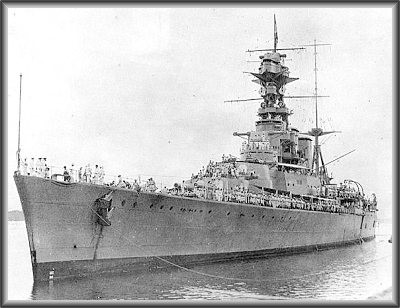
My grandad, now deceased, joined the Royal Navy as a 16-year-old in the early 1930s. It was a job and an opportunity to see the world, war was not something he thought about, little was he to know that a few years after that he would be at the forefront of the conflict. He rarely talked about the war, there were few if any good memories, only memories of carnage, fear, death and loss. He was posted as missing in action and found some 6 months later in hospital in Ireland, he’d been found floating around in the Irish Sea. I never did find out how this came about. He had feelings of guilt resultant of watching a ship he was supposed to have been on, go down with all hands, many of them his friends. Fate decreed that he was late for duty and had to embark on the next ship leaving port. He described the bitter cold of the Artic runs and the Kamikaze nightmare where planes suddenly dived indiscriminately onto ships, with devastating effect. He had half of his stomach removed because of injury which had a major impact on his health throughout the rest of his life. He once described to me how the whole thing was dehumanised, he was injured so of no use, until he was fit again. He was just a number, to be posted on one ship or another. He swerved on numerous ships throughout the war. He had medals, and even one for bravery, where he battled in a blazing engine room to pull out his shipmates. When he died I found the medals in the garden shed, no pride of place in the house, nothing glorious or romantic about war. And yet as he would say, he was one of the lucky ones.
My grandad and many like him are responsible for my resolution that I will always use my vote. I do this in the knowledge that the freedom to be able to continue to vote in any way I like was hard won. I’m not sure that my grandad really thought that he was fighting for any freedom, he was just part of the war effort to defeat the Nazis. But it is the idea that people made sacrifices in the war so that we could enjoy the freedoms that we have that is a somewhat romantic notion that I have held onto. Alongside this is the idea that the war effort and the sacrifices made set Britain aside, declaring that we would stand up for democracy, freedom and human rights.
But as I juxtapose these romantic notions against reality, I begin to wonder what the purpose of the conflict was. Instead of standing up for freedom and human rights, our ‘Great Britain’ is prepared to get into bed with and do business with the worst despots in the world. Happy to do business with China, even though they incarcerate up to a million people such as the Uygurs and other Muslims in so called ‘re-education camps’, bend over backwards to climb into bed with the United States of America even though the president is happy to espouse the shooting of unarmed migrating civilians and conveniently play down or ignore Saudi Arabia’s desolation of the Yemini people and murder of political opponents.
In the clamber to reinforce and maintain nationalistic interests and gain political advantage our government and many like it in the west have forgotten why the war time sacrifices were made. Remembrance should not just be about those that died or sacrificed so much, it should be a time to reflect on why.

 Thoughts from the criminology team