

#Criminology Book Club: The Silent Patient
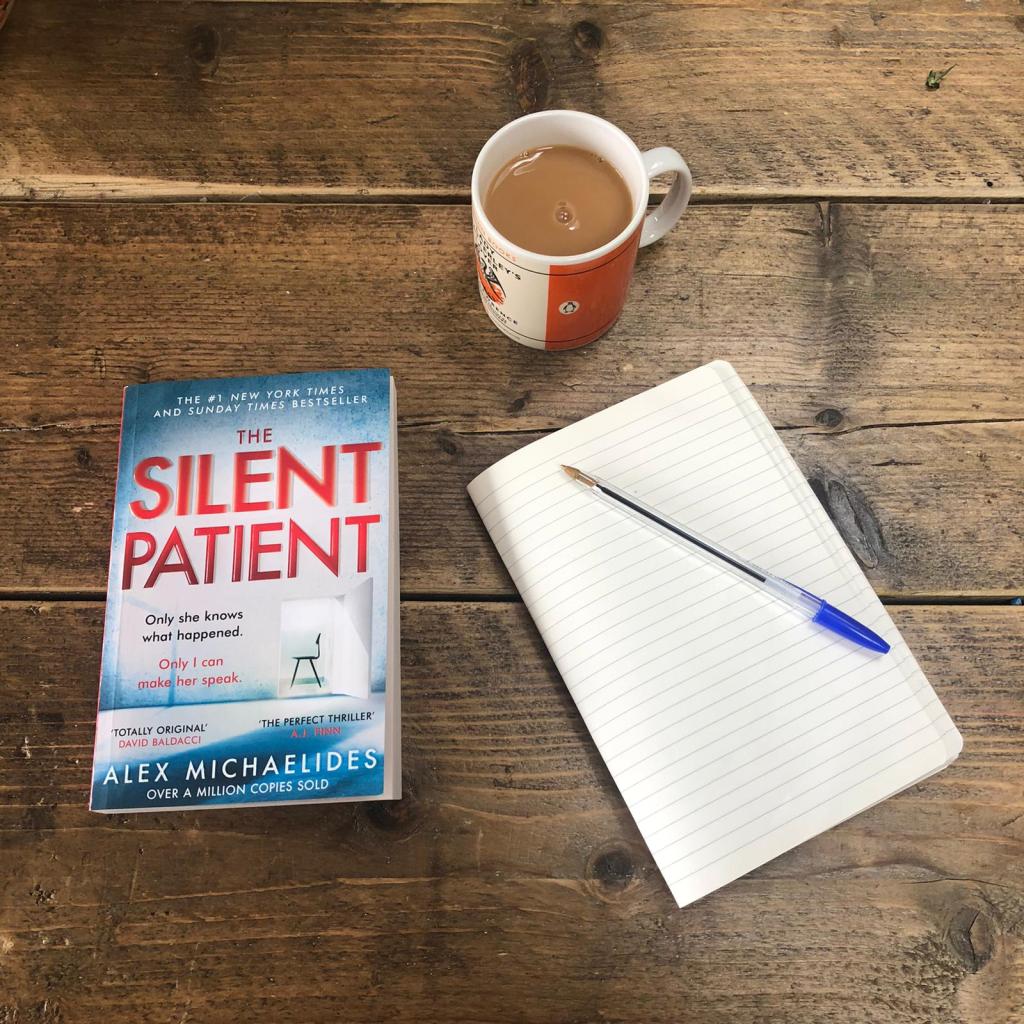
As you know from our last #CriminologyBookClub entry a small group of us decided the best way to thrive in lockdown was to seek solace in reading and talking about books. Building on the success of the last blog entry, we’ve decided to continue with all seven bloggers contributing! Our third book was chosen by @5teveh and it’s got us all talking! Without more ado, let’s see what everyone thought:
I enjoyed reading The Silent Patient – it was a quick and gripping read that kept me guessing (and second guessing!) throughout. I found it almost impossible to put down and could have happily read it in one sitting if time allowed. I didn’t empathise with many of the characters however, and found a couple of the plot points frustrating. I’d still recommend it though!
@saffrongarside

This is a psychological thriller that embraces Greek drama and pathos. From the references to Alcestis by Euripides and the terrible myth of death swapping to the dutiful Dr Diomedes, the characters are lined up as they are preparing from their dramatic solo. The doctor is trying to become a comforting influence in the fast pace of the story only to achieve the exact opposite. In the end he leaves in a puff of smoke from one of his cigars. The background of this story is played in a psychiatric facility, that is both unusual and conducive to amplify the flaws of the characters. This is very reminiscent of all Greek tragedies where the hero/heroine is to meet their retribution for their hubris. Once punishment comes the balance of the story is restored. This norm seems to be followed here.
@manosdaskalou
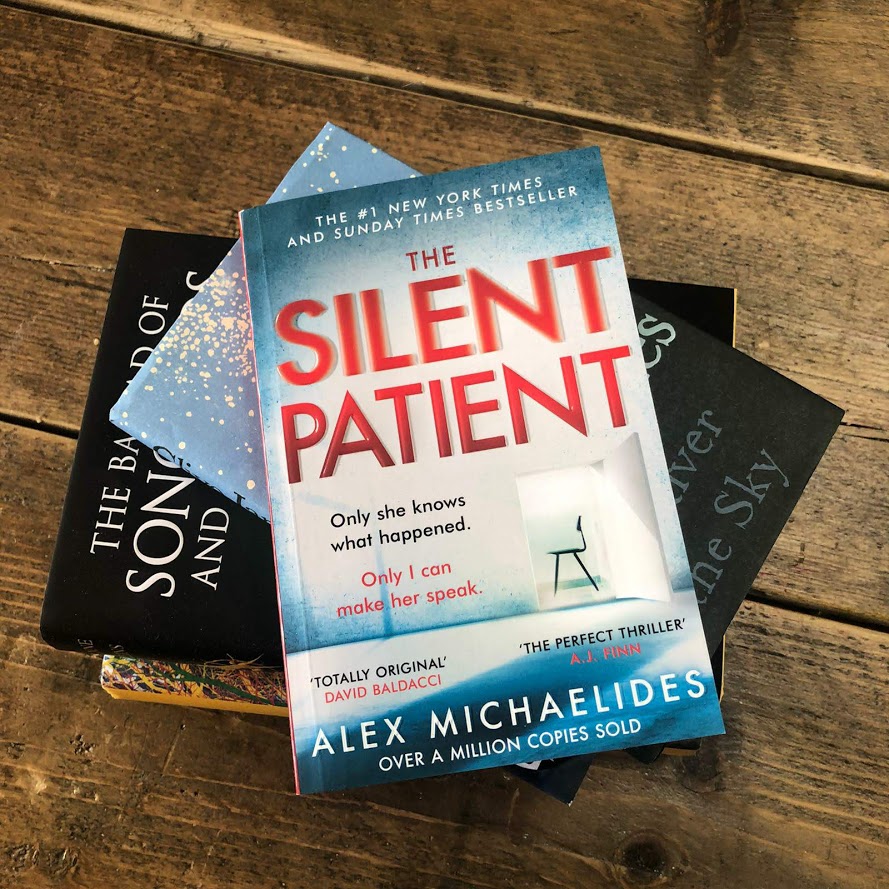
Well done to @Steve for selecting the anxiety inducing book that is The Silent Patient. I found it difficult to put this book down, as it was easy to read and a definite page turner. Once I started reading, I desperately wanted to find out what had actually happened. If Alicia had a perfect life then why would she shoot her husband FIVE TIMES in the head? It’s difficult to say much about this book without giving the plot away. I did feel for Alicia as she was surrounded by a sea of creepy and unlikable characters. Some might find the portrayal of mental health and Alicia (as the main female character) slightly insulting. Although, as we discussed in the book club, perhaps we should see this book for the thriller that it- and not try to criminologically analyse it?! As far as thrillers go, I think the book is a very good read.
@haleysread
The Silent Patient is 339 pages of suspense-filled, gripping fiction which leaves the reader with their jaw wide open. As a novel it is brilliant. Binge-worthy, unbelievable and yet somehow believable: that is until you have finished the book, and you sit back and start to pull the novel apart. DO NOT DO THIS! Get lost in the story of Theo and Alicia, be gripped and seated on the edge of your seat. It is worthy of the hype (in my humble opinion)!
@jesjames50
The Silent Patient is without a doubt a page turner! From start to finish the mystery of Alicia Berenson’s silence keeps you guessing. It is important for me to warn perspective readers that, when you start reading, it is difficult to put down, so clear your schedule. Throughout the novel you are guided through the complex life of psychotherapist Theo Faber and his mission to understand and connect with his patient that has ‘refused’ to talk, after she is found guilty of killing her husband. Alicia Berenson is admitted to a mental health hospital. This is the backdrop to disturbing yet intriguing story of how Alicia’s seemingly perfect life comes crashing down. With quirky characters, shocking revelations and suspense throughout The Silent Patient is a must read. Don’t take the story at face value, as there is a brilliant twist at the end.
As is only right and proper, we’ll leave the final word to @5teveh, after all he did choose the book 🙂
@svr2727
Not the normal sort of book I’d read, I was drawn in by the comments on the cover. It is impossible to warm to any character in The Silent Patient. The book is quite fast paced, and the writing makes it a real page turner. If you think you’ve got it, you are probably wrong. This is not a usual ‘who done it’ narrative. There are twists and turns that lead the reader through a small maze of sub plots involving characters in a tight setting. If you are looking for a hero or heroine and a happy ending, this is not the book for you. An enjoyable read in a sadistic sort of way.
@5teveh
Share this:


When I grow up what will I be?

Don’t worry I’ve not regressed, well not yet anyway. I was watching Match of the Day last night, not quite the usual programme, as there are no football matches at the moment. In its place was a podcast by three football legends, the usual presenter Gary Lineker (he does more than Walkers’ crisp adverts), Ian Wright and Alan Shearer. It was more like three old codgers around a kitchen table reminiscing about football than a Match of the Day programme, but it was funny and enlightening. One of the topics that arose was what made a top striker, was it being gifted or was it hard work and tenacity? I have to confess by this time I was half falling asleep aided by three gin and tonics and a large helping of pizza, but I do recall through the haze, that the three of them seemed to agree that it was a bit of both, maybe 50/50. What did make me sit up was when Shearer declared , or was it Lineker, who cares, there were a number of more talented players around when they were younger but they didn’t stick at it and, I presume fell by the wayside. So, three very talented footballers agree that hard work and tenacity has a major part to play in success.
When I was young, I wanted to be a doctor. By the age of 14, I had this firmly set in my mind. I was good at the sciences, maths and English were no problem and I was predicted to get good grades when leaving school, university was on the cards. Then the teenage years really took hold, I grew lazy, rebelled, preferred football, rugby and girls. Hard work at school sucked and I stopped working, anyway someone told me that I had to do 7 years at medical school if I wanted to be a doctor. F*** that, I thought, I want out of school now, not to prolong it by another 7 years. We were overseas at the time, so when I returned to England, I ended up going to college to complete my ‘O’ levels. I remember thinking the work was a breeze, it seemed that I had been working at a higher level at my overseas school. I found myself a part time job, occasionally skipped college classes but in general my attendance was good. I achieved 5 good ‘O’ level grades. I do remember working very hard at science as a subject (I achieved an A for that) but the rest, well you know, it just happened. English language was my worst subject (a grade C), mind numbingly boring.
So, after school, well a job in a petrol station as a cashier, it was a job, better than nothing. I do remember one of my college lecturers coming into the station and was almost apoplectic about me working there. I was better than that, I think was the gist of it. Then my family went back overseas again. I found myself a few jobs overseas and simply drifted; I could have had an apprenticeship, but we were returning to England, so not much point. On our return though I decided I needed a job, not so easy. This was the early 1980s, UB40 released a song One in Ten, I was one of those one in ten unemployed souls. Disheartening wouldn’t describe it adequately. My working mates were going out to pubs and clubs and eating kebabs after to soak up the alcohol, I couldn’t afford a kebab, let alone the alcohol and you don’t meet girls on the dole queue.
I always had a hankering to join the Royal Navy, probably fuelled by the fact my grandad had been in the navy. I liked the idea of being an engineer, so I went along to the recruitment office and eventually turned up for an entrance exam. I failed, maths of all things. I remember sitting there and panicking whilst trying to do equations and fractions. Basic stuff that I’d breezed through at ‘O’ level. Nobody told me about preparation, and I didn’t even think about it. Why would I, up to that point I really hadn’t had to work hard at anything other than my science subject at ‘O’ level. Reality hit home. I signed up for an A level maths course at college – free to the unemployed. I wrote to Whitehall to explain how well I’d done in my entrance exam apart from the sticky little subject, maths, but pointed out that I was doing something about that. I didn’t want to wait the usual statutory year to retake the exam and I wasn’t disappointed; they wrote back stating I could take it in 6 months’ time. Someone obviously thought this boy’s got a bit of gumption. But six months of unemployment is a long and depressing time. An advert in the local Sunday newspaper caught my attention, the police were recruiting. I applied and found myself in a career that was to last thirty years. Not something I planned or even wanted.
Maybe that’s when the hard work and tenacity started, I don’t know. Maybe it started when I was driven by the desperation of being unemployed. One thing I learnt though is that sitting on your backside and drifting along doesn’t get you anywhere. Having a gift or intelligence will not in itself get you success. Only hard work and of course, that all important thing called opportunity, helps to garner something.
The recruitment process for the police wasn’t the same as it is now. Maybe I should leave that for another blog.
Share this:


Putting the I back into responsibility

As I sit in our ensuite, I gaze around with pride remembering how I built this. I built the room structure before plumbing in a toilet, sink and shower. I tiled the walls and laid the flooring. The only thing I didn’t do was plaster the walls, not really my forte and sometimes we have to recognise our own limitations. A few weeks ago though, I wasn’t admiring a job well done; the shower leaked. Nothing drastic, but nonetheless there would be a small pool of water outside of the shower after use. The problem being that the floor wasn’t level, therefore the shower tray wasn’t level, and this left a gap under the shower door. I’d tried to adjust the frame but had taken it to its limit which meant the door was wobbly. I didn’t think much of the mastic job around the shower either, uneven and already starting to lift slightly in places.
The problem is obvious, the floor is not level, I didn’t build the house so that’s someone else’s fault. There’s not enough compensation in the frame to rectify the first problem, poor shower design if you ask me. I can’t think of an excuse for the mastic debacle.
Now I can sit in the ensuite every morning for as long as I like lamenting others’ poor workmanship and poor design, and I did for a while, but it won’t solve the problem.
I decided to try to fix the issue, after all, in the current climate we do have to try to keep ourselves amused. Thinking about this, I really ought to have made a better job of levelling the shower tray in the first place. Too late now though, it’s bonded in place. I decided to move the shower frame away from the wall slightly, this adjustment was enough to stabilise the door, why I didn’t do this in the first place I can’t say, probably too focused on finishing the job, maybe a bit of laziness crept in. The adjustment also meant that the gap below the door was minimised and this solved the leak. I took all the mastic off around the shower tray and started again. A far better finish was achieved.
In deciding to do something about the problem, I stopped seeing it as a problem, stopped blaming others and stopped thinking about my misfortune. I took responsibility for my own poor workmanship, realising that I had failed to take into account the fact the floor wasn’t level.
Sometimes we spend too much time complaining about problems, finding fault in others, that we fail to see where we might have done better. When we fall short, we blame others or blame circumstances, rarely do we consider that we could have done the job better or handled the situation differently. If we start to take responsibility for our own shortcomings, then the world becomes a better place. Putting the ‘I’ back into ‘responsibility’ really is quite empowering. ‘When fate hands us a lemon, let’s try to make a lemonade’ (Carnegie, 1998:185).
Reference
Carnegie, D (1998) How to Stop Worrying and Start Living, London: Vermilion
Share this:

Technology and Learning: A baby and the bathwater moment

I recently shared some thoughts about the problems with technology and working from home. I suppose the nub of the matter was twofold firstly, if I have problems with technology, why would this not also impact some of my colleagues and students, thus limiting what can be delivered online. Secondly, whatever is delivered online does not suit everyone and whilst as educators we need to adapt to circumstances and new ways of working, we should be cognisant that simply imposing the new ways on students does not always suit what they want or more importantly, what they need. If we acknowledge that everyone learns in different ways at different times, then a one size fits all approach is not delivering anything like a premium learning environment.
In writing my previous blog, I also started to think about how difficult it is to be motivated whilst working from home and how my experiences have at least partially prepared me for this. I say partially because past experiences did not encompass being in lockdown.
When I was 15, I returned from overseas and went to the local college to study for my ‘O’ levels (GCSE now) rather than a school. It was far more relaxed in respect of attending classes. This was a time when at 16 people could leave school, so the college was full of students who were 16 and essentially independent from the school regime. I turned 16 whilst at college. I remember not going to every class, sometimes perhaps because I preferred to spend time playing football in the sunshine and at other times because there was some casual work somewhere that would earn me a bit of money. There were no distractions such as computers and mobile phones so actually attending college was in the main better than being bored outside of it. That was one incentive to engage in my education, I had others such as friends being at college but probably above all I recognised I needed some qualifications. I think my parents might also have been a little peeved if I’d not done anything. I had a structure to my life and a major part of it was getting up in the morning and attending college on my bicycle; rain or shine, for the most part I was there.
At an early point in my policing career, I decided I would like to take the promotion exam to sergeant. An annual exam which incorporated, as I recall, three two-hour papers, one relating to crime, one traffic and one general police duties. An awful lot of legislation and procedure was to be tested and all of it could be found in the regularly updated promotion manual. A tome, if ever there was one, divided into various sections that covered everything a would-be sergeant needed to know and in addition, legislation for the inspector’s exam. Years went by with well intentioned attempts to study, followed by a lack of action. I just couldn’t get my head round how to do this, despite trying to answer the questions in the promotion section of the Police Review magazine.
I can’t remember exactly when it was but there was an announcement that the promotion process was to change, the exam which gave you a ticket to a promotion board, was to be replaced with an assessment centre. This new way involved not only an exam, but scenario based assessments. That year I decided I really needed to pass the promotion exam to avoid the new process, so I purchased access to a correspondence course. It wasn’t cheap, and it was before computers as we know them. I received a plethora of books each divided up into various chapters and each requiring me to answer questions that were then sent by mail to someone to mark and provide feedback. What this required was organisation and commitment. I was lucky, I was working in a very disciplined job, organisation and commitment were to some extent, if I set my mind to it, second nature. And two added incentives, an easier passage to promotion as I saw it, and I’d paid out a lot of money that I wasn’t going to waste. That year I passed the sergeants and the inspector’s exam, two in the bank although it was still some time before I was promoted.
When I embarked on my degree, I had to apply the same self-discipline. Despite it being part-time, attendance for lectures and seminars was difficult, there was no way I could attend everything whilst doing shift work, but I tried my best. I even had to take time out because I was involved in a major investigation that took me away from home for 6 months. By this time, I had a very young family, so every assignment was a challenge to complete and there was no online Google access to papers and blogs and the like. It was library based work, sometimes the university library, other times local libraries and often late nights in the office at work. What it needed was self-discipline, commitment and a structure to each day, well as best as possible given the demands of shift work, major enquiries and long working hours. Every time I faltered I reminded myself that I’d done a lot of work, put a lot into this and I wasn’t about to throw all of that away.
When I embarked on my Ph.D. my commitment and self-discipline was sorely tested at times. Tragedy and life altering events pushed me to the limits, but I managed to maintain that commitment and self-discipline, sometimes aided by others at work who tried to make things a little easier. The office at work provided space for both my day job and my Ph.D. The two morphing into one at times.
Why tell you all of this, well its simply this. I ask myself what makes a student engage in their course and more importantly, what inhibits them? Firstly, they need self-discipline. When I went to college, there were a number of things that ensured I would turn up; my parents wouldn’t have countenanced my staying in bed or around the house all day; day time telly was rubbish (only three channels) and there wasn’t an awful lot else to do. My friends were either at school, at college or working and there were no mobile phones, so contact was either at college or in the evenings and weekends. Learning could only be done at college, no recorded lectures or Collaborate or e-books. I also recognised I needed qualifications to get on in life.
When I embarked on my promotion exams I recognised the need to have a structure to my learning. This was partly provided by the correspondence course and the way it was set up and partly provided by discipline I learnt in my work. It did though need a structure provided by the course and an incentive to do it at that moment in time.
My degree also needed self-discipline, nobody chased me to turn up and nobody chased me for assignments. Not being there, meant missing out on discussions and learning from other students, not just the lecturers. I’d paid for this as well so another incentive to succeed, this was not some loan to be possibly paid in the future, this was real money, my money up front. And the more I did the more determined I became that I wasn’t going to waste my efforts.
Anyone will tell you that a Ph.D. is challenging and that for the most part, the achievement is not about knowledge or brilliance but about gritted determination to complete it. That determination requires self-discipline and that self-discipline for me was aided by tagging the Ph.D. onto my job. My office at work was my sanctuary, it was easier to stop working on one thing and then seamlessly move onto writing up the Ph.D. I had a structure to my studying and my work.
So, I begin to wonder, do recorded lectures, Collaborate, ebooks, the internet, social media and a plethora of other advances really help students? Why get up in the morning to attend lectures if you can watch a recorded version of it later, ‘a must get round to it moment’? Why bother to go to the library when you can Google stuff and read, well at least skim’ e-books? Why bother with classes when you can chat with your mates and so called ‘friends’ on Facebook or the plethora of other social media apps. There is no financial incentive when the payment for the course is made on your behalf and whilst you have a massive debt on paper, the reality is that you will never pay it back (If you don’t believe me, have a look at the Martin Lewis website). There are no parents to get you up in the morning or to scorn your lethargy, at worst any failure will be chided sometime in the misty future. All that students can rely on is self-discipline and their own belief in commitment. A hard ask when you don’t have all the anchors you had at school and college. I was lucky, I grew up in an era of much fewer distractions. I was employed in a job that required a high degree of disciple, so self-discipline was much easier. I was also a mature student so could call on a vast amount of experience.
I’ll leave you with a thought. The year 1840 saw the introduction of the first stamp, the Penny Black. Despite the advent of emails, texts and the internet, nearly two hundred years later, Royal Mail are still delivering letters and packages. Whilst you can get your bank statements online, you can still have paper copies. Whilst you can read books on Kindle and other contraptions, book stores still exist, and hard copy books are still sold by the millions. Whilst, music can now be delivered in so many different electronic formats, there is still a clamour for vinyl records. Whilst films are available at home in so many different ways, people still go to see films at the cinema.
Technology is wonderful and is a great enabler in so many ways. That doesn’t give us licence though to ignore the value of what by some may be seen as ‘old fashioned, stick in the mud’ structures, processes and transactions. Sometimes things are the way they are for a reason, change them and there are at times problematic unintended consequences. Making changes through the use of technology and ignoring tried and trusted methods might actually be akin to ‘throwing out the baby with the bathwater’.
Share this:


Teaching, Technology, and reality
I’m not a fan of technology used for communication for the most part, I’d rather do things face to face. But, I have to admit that at this time of enforced lockdown technology has been to a large extent our saviour. It is a case of needs must and if we want to engage with students at all, we have to use technology and if we want to communicate with the outside world, well in the main, its technology.
However, this is forced upon us, it is not a choice. Why raise this, well let me tell you about my experiences of using technology and being shut at home! Most, if not all my problems, probably relate to broadband. It keeps dropping out, sometimes I don’t notice, that is until I go to save my work or try to add the final comment to my marking. I know other colleagues have had the same problem. Try marking on Turnitin only to find that nearly all of your feedback has just disappeared in a flash. Try talking to colleagues on Webex and watch some of them disappearing and reappearing. Sometimes you can hear them, sometimes you can’t. And isn’t it funny when there is a time lag, a Two Ronnies moment when the question before the last is answered. ‘You go, no you go’, we say as we all talk over each other because the social cues relied on in face to face meetings just aren’t there. I’ve tried discussion boards with students, it’s not like WhatsApp or Messenger or even text. It is far more staid than that. Some students take part, but most don’t and that in a module where attendance in class before the shutdown was running at over seventy per cent. I’m lucky to get 20% involved in the discussion board. Colleagues using Collaborate tell me a similar tale, a tale of woe where only a few students, if any appear. Six hours of emptiness, thumb twiddling and reading, that’s the lecturer, not the students.
Now I don’t know whether my problems with the internet are resultant of the increased usage across the country, or just in my area. I suspect not because I had problems before the lockdown. I live in a village and whilst my broadband package promises me, and delivers brilliant broadband speed at times, it is inconsistent, frequently inexplicably dropping out for a minute or two. It is frustrating at times, even demoralising. I have a very good laptop (supplied by the university) and it is hardwired in, so not reliant on Wi-Fi, but it makes little difference. I suspect the problems could be anywhere in the broadband ether. It could be at the other end, the university, it could be at Turnitin for instance or maybe its somewhere in a black hole in the middle. Who knows, and I increasingly think, who cares? When my broadband disappeared for a whole day, a colleague suggested that I could tether my phone. A brilliant idea I thought as our discussion became distorted and it sounded like he was talking to me from a goldfish bowl. I guess the satellite overhead moved and my signal gradually disappeared. I can tell you now that my mobile phone operator is the only one that provides decent coverage in my area. Tethered to a goldfish bowl, probably not a solution, but thanks anyway.
If I suffer from IT issues, then what about students? We are assured that those that live on campus have brilliant Wi-Fi but does this represent the majority of our student body? Not usually and certainly not now. Do they all have good laptops; do they all have a decent Wi-Fi package? I hazard a guess, probably not. But even if what they have is on par with what I have available to me could they not also be encumbered with the same problems? We push technology as the way forward in education but don’t bother to ask the end user about their experience in using it. I can tell you from student feedback that many don’t like Collaborate, find the discussion boards difficult to engage with and some are completely demotivated if they cannot attend physical classes. That’s not to say that all students feel this way, some like recorded lectures as it gives them the opportunity to watch it at their leisure, but many don’t take that final step of actually watching it. They intend to, but don’t for whatever reason. Some like the fact that they can get books electronically, but many don’t, preferring to read from a hard copy. Even browsing the shelves in the library has for some, a mystical pleasure.
I’ll go back to the beginning, technology has undoubtedly been our saviour at this time of lockdown, but wouldn’t it be a real opportunity to think about teaching and technology after this enforced lockdown? Instead of assuming all students are technology savvy or indeed, want to engage with technology regardless of what it is, should we not ask them what works for them. Instead of telling staff what they can do with technology, e.g. you can even remotely mark students’ work on a Caribbean island, should we not ask staff what works? Let’s change the negative narrative, “you’re not engaging with technology”, to the positive what works in teaching our students and how might technology help in that. Note I say our students, not other students at other universities or some pseudo student in a theoretical vacuum. We should simply be asking what is best for our students and a starting point might be to ask them and those that actually teach them.
Share this:


RTFQ and the real world
The other day I had occasion to contact Her Majesty’s Revenue and Customs (HMRC) and I did this via a web chat. My query was simply about seeking an explanation regarding tax relief. I compiled my question starting off with ‘good morning, I’ve had my tax code updated and am a little confused.’ I then went on to explain in a few short words where the confusion lay.
The response back was quite familiar, it would be to those that use web chat and quite expected, ‘Thank you for your patience, the next available advisor will be with you shortly. You are 7 in the queue’. Little was I to know at this stage, that my patience was about to be severely tested, not by the waiting time but by the advisor who, to avoid any embarrassment to the real person, we will simply call ‘Jo’. After eight minutes of waiting (not a particularly long time) I was through to Jo and greeted with a request for my details for security.
Once supplied, I was told that Jo would be looking at my record. Jo then responded by telling me that the adjustment in my tax code was due to an underpayment from the 18/19 tax year, explained how much it was and the fact it would be collected through the tax code. Now I should point out, this was not the question I was asking, RTFQ, I wanted to know about an aspect of tax relief and just to add to the confusion, the HMRC website tells me I do not owe any tax from the 18/19 year. The latter makes sense to me because I paid off the amount owed in 19/20. A little agitated I responded with my question again trying to make it a little clearer, as if it wasn’t clear enough. I added to this by asking if my assumptions were perhaps incorrect and if so could Jo tell me when the rules had changed. The response was ‘one moment’. Four minutes later I asked, ‘are you still there?’, the terse response was, ‘yeah, i (sic) am looking through the guidance for you’. This does not bode well!
Trying to be helpful, I responded by explaining the tax relief I received last year, and the fact that I ought to receive it this year, unless of course the rules have changed the response, ‘one moment please’. To be followed by ‘the 480 is from 480.00/40% = 1200 so its at 40%’. Now I’m no Trigger (see Only Fools and Horses) but this mathematical genius has me somewhat perplexed, so I pushed a little further to see if I could get an explanation of this. I ended up with ‘480.00/40% =1200 which is 40% of the 480’.
My patience wearing a little thin now, I asked to speak to a supervisor only to be told there was no supervisor available and ‘They will be telling you the same thing, you can call in to speak to someone else if you want’. So, I can hang up on the web chat, start another and in the lottery of numpties, I will take my chance that I might not get another Jo to answer my query, I think not. To add insult to injury, Jo had just previous to this provided me with an answer that was in fact the basis of my question, we seemed to have gone full circle (RTFQ). In desperation and trying to prevent my blood pressure rising further I tried to draw this to a close by pointing out the problem as I see it, prefixing this with, ‘I’m not trying to be difficult. I just want an explanation as to why …’. I followed this up with, ‘If you cannot answer that, then please just say so’. The response, ‘I have explained to you the best way i (sic) can Stephen’. Now that’s me told! Best not push it further.
I recall first hearing the term RTFQ when I was about to sit a promotion exam. RTFQ the invigilator shouted, before gazing upon my quizzical expression, ‘read the f*** question’ he explained. I frequently remind my students of this mantra before they sit exams, it is one that serves us well, not just at university when sitting exams or completing assignments, but in life. Although I’m not sure that RTFQ is something that Jo needs to prioritise whilst tripping through the wonderment of mathematical equations.
Or maybe, just maybe, it is a new tactic by HMRC to limit enquiries. I certainly won’t be calling back in a hurry.
Share this:


“My Favourite Things”: 5teveh

My favourite TV show - Probably Ashes to Ashes. I enjoyed Life on Mars but Ashes to Ashes was more my era

My favourite place to go - Newmarket Race course. We had our wedding reception there and we go back regularly for the races

My favourite city - Rome. Every corner turned is another surprise. The architecture and history is just amazing

My favourite thing to do in my free time - Mend clocks. Grandfather clocks can tell you so much about history

My favourite athlete/sports personality - Ian Wright. He just seems so down to earth

My favourite actor - Tom Hanks. He is an amazing actor and plays some fantastic roles. Long live Forrest Gump

My favourite author - It has to be Stephen Hawking. I read Brief Answers to the Big Questions (2018) and it just spoke to me. Having read it I thought ‘I get it’ even though Stephen Hawking points out I’m wasting my time thinking about what was in existence before the big bang

My favourite drink - Probably coffee. Surprised, well its what I drink most of the time. I do like a glass of red wine and certainly gin and tonic. In fact, the more of those I have, the more I consider gin and tonic to be my favourite tipple.

My favourite food - It has to be roast chicken dinner. My wife makes the best roast potatoes ever. Give me a roast anytime

My favourite place to eat - Funnily enough at home. I’ve been lucky enough to eat in places all over the world, South Africa, Hong Kong, Mauritius, West Indies, and Europe (too many places to name). I’ve eaten in Balti houses in Birmingham and even a Michelin starred restaurant, but you really can’t beat just being at home with family and friends

I like people who - I’m not really a people person. But if I have to choose, I like people that are genuine and have integrity. I’ve met a lot of people in my time from all walks of life and I get on with most, but there are not that many I think are genuine and have integrity.

I don’t like it when people - Are disingenuous. I don’t like people that use others to their own ends.

My favourite book - See above re: favourite author, but I have to say, The Circle runs a close second. It really resonates.

My favourite book character - Probably Paddington Bear. I get the hard stare from him.

My favourite film - Jungle Book, there's nothing like the ‘bear necessities of life’

My favourite poem - If by Rudyard Kipling. I think the poem speaks for itself, it’s worth returning to occasionally as a reminder

My favourite artist/band - Queen – Freddie Mercury. What a band and what a talent. I never managed to see them live with Freddie although I’ve seen them twice with Adam Lambert (brilliant singer). My friend introduced Queen to me in 1977, we listened to Brighton Rock on his dad’s hi-fi (that’s a music system invented long after the gramophone but before iPhone). I bought my first single shortly after,

My favourite song - Love of my Life. A Queen classic but I must admit Bridge over Troubled Water by Simon and Garfunkel runs a close second.

My favourite art - Impressionist painting is probably my favourite. Monet’s Impression Sunrise has a life about it that is difficult to describe.

My favourite person from history - Mother Theresa I think. Its difficult to tell because my only knowledge of historic people is what I’ve read or heard about in the news or history books. Mother Theresa stands out because she was from all accounts a loving caring person and had little herself.

Share this:


Things I Miss (and don’t) – 5teveh

I was chatting with my wife the other day about household finances in the current situation. My wife has lost her two zero hours contract jobs (I’m not sure why they call it a contract when basically it’s a one-way thing; you work when we want you to and if you don’t agree then you don’t work) and adjustments have to be made. I’m not moaning about our finances, just stating a fact, things have to change. Anyway, my wife declares that whilst she enjoys visiting coffee shops it’s not something she particularly misses. A bit ironic really as we can’t go out for coffee anyway in the current countrywide shutdown. Of course, not going out for coffee saves money. The conversation got me thinking about what I miss, and conversely what I don’t in these unusual circumstances.
In a previous conversation, a friend and colleague said he missed the chats over coffee that we’d have on a weekly basis. I too miss this, but it wasn’t just the chats but also the venue, where we were able to somehow hide ourselves in our own little sanctuary, away from what at times felt like the madness of the daily machinations of campus life.
I never thought I’d say this, but I miss the classes, lectures, seminars, workshops, call them what you will. I miss the interaction with the students and that spark that sometimes occurs when you know they’ve got it, they comprehend what it is you are saying. I don’t miss the frustration felt when students for what ever reason just can’t or won’t engage. I don’t miss travelling into work in all the traffic. At least my fuel bill has gone down, and the environment is benefitting.
I miss seeing my boys, I get to speak to them or text them all the time but its not quite the same. They are grown men now but, they are still my boys. I miss being able to see my mum, she’s getting on a bit now. Sometimes I thought it a bit of a chore having to visit her, a duty to be carried out, but now… well its hard, despite speaking to her everyday on the phone.
I miss being able to pop out with my wife to various antique shops and auction rooms in pursuit of my hobby. I’m repairing an old clock now and need some parts. Ebay is useful but its not quite the same as sourcing them elsewhere.
I miss going out to meet my best mate for a beer and a Ruby (calling it a curry just isn’t cool). We’ve been friends for over forty years now and perhaps only meet up every three or four months. We text and chat but its not quite the same.
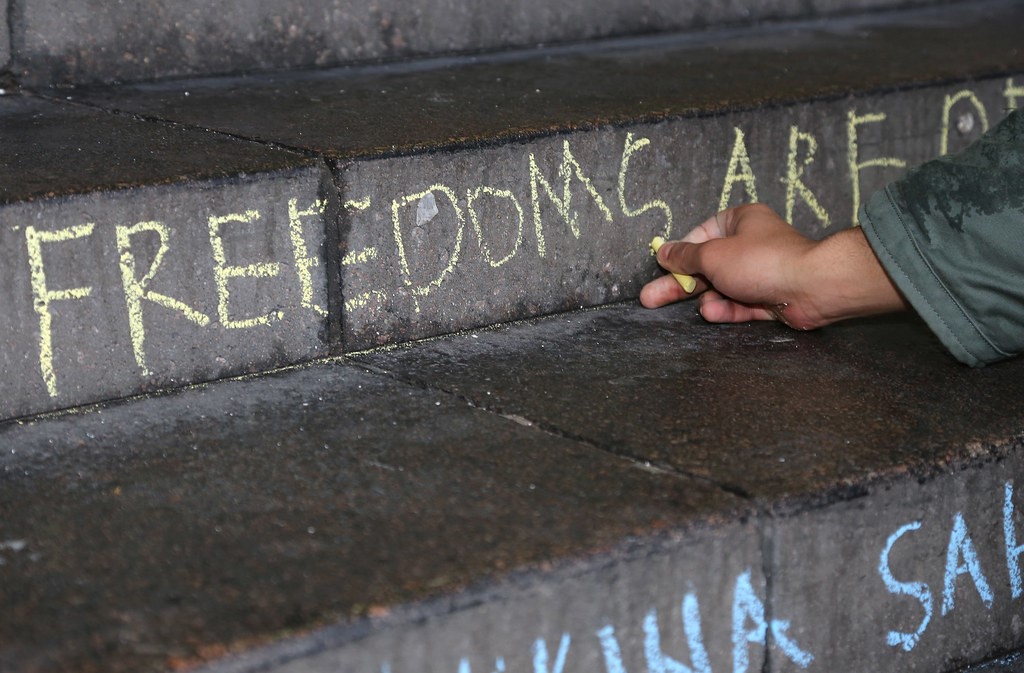
But what I miss most of all, is freedom. Freedom to see who I like and when I like. Freedom to visit where I like and to chat to whom I like, whether that be in a coffee shop with the owner or another customer or at an auction with other bidders and onlookers. It’s funny isn’t it, we take our freedom for granted until it is taken away from us. All those things that we moan about, all the problems that we see, real or imagined, pale into insignificance against a loss of freedom.
Share this:


Hypocrites or just human?

At a time of a significant religious festival in the Christian calendar and at a time of global anxiety, sacrifice and distress, it seems apt to reflect on where we stand in it all.
Like most, I watch the television, listen to the radio, tap into social media (albeit only on limited occasions), receive emails and listen to family, friends and colleagues.
I am amazed by the sacrifice that some people make to protect or look after others and yet dismayed by the actions and comments of some. And yet as I ponder on the current situation I realise that it only brings into focus behaviours, actions and comments that were already there. Perhaps, the circumstances have allowed some to shine or provided more of a focus on those that already do outstanding things, and this is a good thing but human nature as it is, doesn’t really change. Here are a few examples, I’m sure if you reflect on these you will think of more.
- We lament at the inequality in the world, but we do little about it. Instead, we fight to buy up all the toilet rolls that we can, lest we run out.
- We complain the government haven’t done enough in the current crisis and then flout the guidelines they gave us on social gatherings and movement or cause others to do so (did you really need that Amazon order?)
- We complain about our work conditions, but we are content for the company or organisation to continue paying us, often saying they don’t pay us enough
- We are upset by colleagues who do us a disservice and then denigrate others because of their so-called ineptitude
- We complain about being bullied but go on to display the same bullying behaviours that we complained about
- We call people misogynistic but then in the same breath suggest that the world would be better without men or that women do a better job
- We accuse people of being racist but then use derogatory and stereotypical language to describe those that we accuse
- We condemn those that we see as privileged and suggest they should give up their wealth and status. And yet we fail to consider our own privilege and are not prepared to give up what we have (see the first comment re inequality)
- We see the criminal justice system as unfair but would be the first to complain if we were a victim of crime and the offender wasn’t brought to justice. What we see as justice is dependent on the impact the wrongful act has on us
- We commit crimes, albeit perhaps minor ones or committed crimes when we were younger and didn’t know better, yet we castigate others for being criminal. Welfare cheats are awful, but tax payments are to be avoided
I could go on, but I think by now you get the general idea. I’ll return to religion if I may, not that I’m religious, but I did start off the blog with an acknowledgement of the timing in line with the Christian calendar: “He that is without sin among you, let him cast the first stone at her”, (John, 8:7). Maybe we should be a little more honest with ourselves and think about what we say or do before we judge and condemn others. I do wonder though, are we all hypocrites, or is it part of the pathology of just being human?
Share this:


A utilitarian argument for human rights
I am minded to write something about both utilitarianism and human rights as a consequence of watching the news the other night. Two separate but linked news articles struck a chord. The first about police being heavy handed in applying the emergency laws surrounding the restricting of movement and the second about the emergency laws being passed to suspend jury trials in Scotland. Both have an impact in respect of human rights.
Turning to the first, the complaint is that the police across England and Wales have in some cases been disproportionate in their dealing with the public when attempting to manage the restrictions around movement. The example shown was the uploading of videos onto social media depicting people walking around the Peak District. The captions simply asked whether the trip was necessary.
The government guidance is pretty clear regarding staying at home but perhaps is a little less clear about travelling to a location to partake in exercise. I must admit though I am a little perplexed at the accusation of heavy handedness. The Human Rights Act 1998 provides for a right to life and it has been held that the government and its agencies have a positive obligation to facilitate this. There are of course some caveats as it would be almost impossible to ensure this in all circumstances. There is no doubt that people are dying from Covid-19. The approach to enforce social distancing, presently predominantly through information and the reliance on responsibility and good will, seems to be the only current viable approach to combating this killer. The curtailment of some Human Rights is it seems necessary to ensure the greater good and to preserve life. The latter of course is a primary duty that most police officers would recognise. The greater good for the many is it seems compatible with a key principle of human rights.
Turning to the second news article. The right to a fair trial is a fundamental human right. The suspension of a jury may be against longstanding legal principles but, the Human Rights Act does not specify that the trial should be before a jury, merely an independent judge. The argument could be made that trials should be suspended but this might be impinging on rights in respect of defendants being held in custody awaiting trial. The convening of a jury would flout the rationale behind current legislation in place to enforce social distancing and would quite simply be contrary to obligations to protect life.
The notions of utilitarianism are often viewed as in conflict with individual rights and therefore the Human Rights Act. Many see the two as incompatible, one relates to the many and the other the individual. This argument though fails to have vision, it is not truly consequentialist. Human Rights are utilitarian in their very nature. Is it not to the greater good that people have a right to life, a right to freedom of association, a right to a fair trail to name but a few? Should it not be considered that every individual case that is examined under the Human Rights Act has consequences for the many as well as the individual? A breach of the Act if unchallenged opens the way for abuses by governments and their agencies, it is utilitarian in nature, it is there for the greater good, not just the individual circumstances that are being examined. But should we also not consider that there is a need to prioritise rights, particularly in the circumstances the country and world finds itself in? Some parts of the Act are in clearly on occasions, incompatible with others. Curtailment of some freedoms and rights is necessary for the greater good but more importantly, it is necessary to save lives, perhaps even the life of the individual complaining of the curtailment. We can but hope that amidst all of this, good sense prevails.


