
A grand day out
Have you noticed how the news is reported these days in respect of Covid-19? Gone are the individualised and personalised stories of the casualties of this awful virus. Gone are the stories of individual and collective heroism of ordinary, actually extraordinary, people. Gone is the mention of the R rate and the discussion around it. Gone are those pictures of the people that died. No longer the headline, Covid- 19 is reduced to the middle order and consists predominately of the number of cases and the number of deaths. We watch these figures rise on a daily basis and we hear discussion about local lockdowns and areas with high incidents. We hear confusing stories about lockdown and then no lock down and then lockdown or is it partial lockdown and where exactly does it apply? We hear about areas that have high incidents where no action is being taken, well not yet anyway. And companies that remain open despite outbreaks only to be forced to close, let’s be honest, because of media scrutiny. We hear more from Nicola Sturgeon the first minister of Scotland than we do from our own prime minister.
We are sucked into a world of tourism, safe corridors and safe countries, lists and the plight of the aviation industry. We hear tourists moaning about self-isolation (I constantly scream at the tv you made that choice you ****). We are sucked into the debacle around schools and qualifications and returning to school. And we are told by Boris that we should all go back to work, back to the office. We hear of tourists returning on flights having contracted Covid-19 and passengers not wearing masks on flights. At the same time, we are told by bosses in the aviation industry that the industry is doomed unless something is done about it, this self-isolation malarkey really isn’t good for business. Once again, I shout at the tv (I don’t suppose you’ll be getting on one of those cattle trucks in a hurry you ***). Do I sound angry, I guess I am?
When the virus first struck, whenever that was, we all probably didn’t take it that seriously, serious but you know, not that serious. Then there was the lockdown, now that was serious, and it hit home how serious it was. Then we watched the tv and that reinforced how serious it was and if you weren’t a little concerned for yourself, your friends and your loved ones then you really weren’t in touch with reality. And then the economic costs started to rack up and that became really serious. And then, the government decided that since the NHS hadn’t been overwhelmed it was now permissible to open things up. And then, the government decided that it would pass the responsibility for the management of Covid to local authorities. And somewhere along the line, the responsibility for ensuring my safety, and yours became that of business. As long as businesses could assure us that they were Covid safe then we could go back to work and go shopping and eat out. In fact, you could eat out for 50% less in some places aided by a government scheme. A scheme to get businesses back on their feet which of course involved packing people in. Just how Covid secure are these places, well you take your chance, but you can feel assured.
I decided to venture out with my wife to get ourselves a new mattress. The old one has had its day, we meet in the middle of the bed every night, whether we want to or not, the only solution, to try to sleep as close to the edge as you can and if possible somehow cling on. Time for a new mattress. I’m not sure about these new-fangled mattresses (you know, the ones that come in a box and then pop out never to be returned to the box) and so rather than shopping on line we went to a store. We entered the store, masked up as is required, to be greeted by an assistant who pointed to the hand sanitiser. “oh, that bottle doesn’t work”, she says, “try the other but you’ll have to hit it quite hard”. Oh well, at least she’s wearing a face shield and I notice the other assistants are doing the same, except that theirs are up, a bit like a visor really, as they hang about talking to each other. One saunters over to us and after a brief conversation leaves us to look at and try the mattresses. Now that sounds alright doesn’t it, except that not only was his face shield not down, he’d taken it off altogether and thrown it onto the bed. We kept our distance. So, the markings on the floor suggesting 2 metre distance and the hand sanitiser at the entrance and the issue of face shields to staff are all Covid compliant but in operation, not really. Still we had a grand day out and felt quite assured.
As we hear the clamour to get schools back up and running, we hear about the plight of the school children and as a consequence, the voices and concerns of the teachers are drowned out. As we hear the concerns of lecturers from their union, the lecturers themselves and even the medical profession, their voices are drowned out. The only thing that seems to matter now is the economy and business. Those that run it are not on the coal face and will not be putting themselves at risk, but they tell us how we must all do our bit and return to work. If you wonder how getting children back to school fits in, well parents caring for children at home are not in the office working.
I selected some passages from the government guidelines regarding Covid 19.
“The more people you have interactions with, the more chance the virus has to spread. Therefore, try to limit the number of people you see – especially over short periods of time”
“limit the number of different activities which you partake in succession to reduce the potential chain of transmission”
“group size should be limited to the minimum which allows the activity to take place”
Now isn’t that confusing. We must all get back to work and back to the offices and, yet the government’s own guidelines seem to suggest this should not happen unless absolutely necessary. How exactly does this fit with teaching and class sizes and the number of students that teachers interact with? The same applies to lecturers at university, of course they have the added problem that the students will have come from all over the country and then come together in a Covid -19 cauldron. Pack them all in but you can feel assured that schools and campuses are Covid safe (a bit like those planes returning from foreign climes).
I feel like I am in a socio-economic experiment. An experiment where I see the disadvantaged and weak in our society put at risk for the sake of business. Where the older generation are made to feel dispensable and unimportant. Where figures are manipulated to downplay the seriousness of the problem. Die on day 29 after infection and you won’t be included in the Covid statistics. I see an experiment where facts are bent, ignored, and a narrative that subjugates the truth to management and business ideals. It looks like I’m going to be shouting at the tv for a very long time and I must be honest I really don’t feel very assured.

Share this:


What price justice?

Having read a colleague’s blog Is justice fair?, I turned my mind to recent media coverage regarding the prosecution rates for rape in England and Wales. Just as a reminder, the coverage concerned the fact that the number of prosecutions is at an all-time low with a fall of 932 or 30.75% with the number of convictions having fallen by 25%. This is coupled with a falling number of cases charged when compared with the year 2015/16. The Victims’ Commissioner Dame Vera Baird somewhat ironically, was incensed by these figures and urged the Crown Prosecution Service to change its policy immediately.
I’m always sceptical about the use of statistics, they are just simple facts, manipulated in some way or another to tell a story. Useful to the media and politicians alike they rarely give us an explanation of underlying causes and issues. Dame Vera places the blame squarely on the Crown Prosecution Service (CPS) and its policy of only pursuing cases that are likely to succeed in court. Now this is the ironic part, as a former Labour member of parliament, a minister and Solicitor General for England and Wales, she would have been party to and indeed helped formalise and set CPS policy and guidelines. The former Labour Government’s propensity to introduce targets and performance indicators for the public services knew no bounds. If its predecessors, the Conservatives were instrumental in introducing and promulgating these management ideals, the Labour government took them to greater heights. Why would we be surprised then that the CPS continue in such a vein? Of course, add in another dimension, that of drastic budget cuts to public services since 2010, the judicial system included, and the pursuit of rationalisation of cases looks even more understandable and if we are less emotional and more clinical about it, absolutely sensible.
My first crown court case involved the theft of a two-bar electric fire. A landlady reported that a previous tenant had, when he moved out, taken the fire with him. As a young probationary constable in 1983, I tracked down the culprit, arrested him and duly charged him with the offence of theft. Some months later I found myself giving evidence at crown court. As was his right at the time, the defendant had elected trial by jury. The judicial system has moved a long way since then. Trial by jury is no longer allowed for such minor offences and of course the police no longer have much say in who is prosecuted and who isn’t certainly when comes to crown court cases. Many of the provisions that were in place at the time protected the rights of defendants and many of these have been diminished, for the most part, in pursuit of the ‘evil three Es’; economy, effectiveness and efficiency. Whilst the rights of defendants have been diminished, so too somewhat unnoticed, have the rights of victims. The lack of prosecution of rape cases is not a phenomenon that stands alone. Other serious cases are also not pursued or dropped in the name of economy or efficiency or effectiveness. If all the cases were pursued, then the courts would grind to a halt such have been the financial cuts over the years. Justice is expensive whichever way you look at it.
My colleague is right in questioning the fairness of a system that seems to favour the powerful, but I would add to it. The pursuit of economy is indicative that the executive is not bothered about justice. To borrow my colleague’s analogy, they want to show that there is an ice cream but the fact that it is cheap, and nasty is irrelevant.
Share this:


Covid-Universities and what if
Over the past week or so there have been some mutterings about whether it is safe to open up universities. There is the advice from the scientific advisors (Universities get some Indie SAGE advice on reopening campuses in September) and some thoughts from academics ‘Why universities must move all teaching online this autumn’.
As we move closer to the start of term, so my dread of what is ahead comes into sharper focus. I try to imagine what it would be like and try to reassure myself that the risk assessments have been done and the reassurances that the universities are Covid safe are true rather than simply fantasy and wishful thinking.
In this safe environment I imagine that the number of students and staff on campuses will be carefully managed as it is with many large stores.
I imagine that all staff and students will be wearing face coverings. This is not for protection of themselves, as the use of coverings is a somewhat altruistic venture, I cover my face and protect you and you cover yours and protect me.
I imagine that all thoroughfares will be marked and monitored. Social distancing is important, and we need to be at least a metre apart.
I imagine that the classrooms will be laid out in such a way that social distancing can be maintained and that the classrooms will be well ventilated, even in the middle of winter. I imagine all the chairs and desks and any other equipment will be wiped down after each session.
I imagine that face to face teaching will be limited and interactions with multiple groups of students will be severely curtailed to ensure lecturers are not put at unnecessary risk. I imagine each class will comprise only a few students to minimise risk.
I imagine that anyone who is symptomatic will not attend a university and will after being tested self-isolate. I imagine that all the people they have been in contact with will do the same for a whole, boring, 14 days.
I imagine that the universities’ management will be at each university, leading from the front. They will be checking to ensure the safety of students and staff. They will be mixing with staff and students, receiving feedback and continuously monitoring. I imagine the safety of the students and staff is paramount.
And then I think, what if…
What if campuses are a free for all. Students can come and go as they please, there is no monitoring of volumes. Or what if there is, but it is impossible to enforce with limited staff to do so. And those staff tasked with this endeavour are at greater risk due to the proximity with large volumes of students.
What if people decide not to wear face coverings or having got into the building decide to take them off or several people are exempt for some reason or another. Altruism has gone out of the window. I’m a criminologist and I know that people break the rules for all sorts of reasons and the only certainty is that some people will break the rules.
What if social distancing becomes all too difficult. Many of us have experienced it in stores. A one-way system works for most, but a significant number just don’t abide by it, for whatever reason. People break rules.
What if the social distancing in classes is impossible, there just isn’t enough classes to maintain it with the volume of students on the course. What if ventilation is impossible, other than air conditioning, some classes are in the middle of buildings. Who will clean the chairs and equipment after each class? Go to a restaurant and tables and chairs are wiped down after each use so who will do it at a university?
What if lecturers have to teach multiple groups face to face as there are not enough staff to spread the load. Teaching in a classroom for two hours multiple times in a day with different groups each time must surely expose lecturers to much greater risk.
What if students are of the age group where they are more likely to be asymptomatic? How many that are infected might be at a university, spreading the virus around campus and around the locality. Even if they are symptomatic, how likely are they to self-isolate? Judging by the street parties and illegal raves reported on the news, there is a good chance that some will break the rules. Let’s be realistic, if you are only likely to suffer affects akin to a cold, why would you be that bothered about social distancing or self-isolation?
And finally, what if all managers avail themselves of the much-vaunted government advice, work from home if you can. Leadership from the rear, the bottom line is more important than the safety of others. We can of course dress this up in management psychobabble about what the students need.
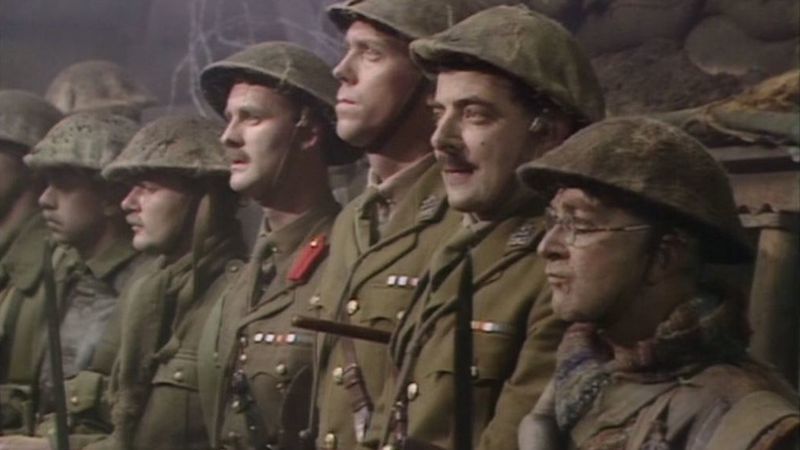
Never mind, ‘Tally ho and all of that sort of thing and over the top we go’*.
* For those of you that are lost at this point it might be worth a visit to the last episode of Blackadder Goes Forth.
Share this:


Imagine and what if…

‘Imagine’, a simple word and one that evokes memories of a song written by John Lennon and released in 1971. In that song we are asked to think about ideas that would perhaps lead us into notions of utopia, if only the ideas were true. Though, often what we see as a simple solution proves to be far from simple and in each solution, lies a paradox that gives lie to the fact that our solution was a solution at all. If we imagine a solution or a scenario we should also ask ourselves ‘what if’. ‘What if’ that were true, what would it look like and what would the consequences be? I like the idea of ‘what if’. ‘What if’ allows me to jump ahead, ‘what if’ allows me to see whether a solution would work, ‘what if’ allows me to play out various scenarios in my mind and ‘what if’ causes me more trouble than imagine. In imagine I can dream, in ‘what if’, I tear those dreams apart, dissecting each bit into practical reality. A reality that has its basis in science and my limited knowledge of human nature. And so, I’d like to begin my journey of ‘imagine’ and ‘what if’.
I suppose my thinking behind this short piece was to set the scene for a number of other pieces without trying to explain the background and rationale of each piece. ‘Imagine’ and ‘What if’ are the rationale. Perhaps the idea might provide a spark for other bloggers, I hope so. And so, I begin….
Imagine a chain of nice restaurants (not the greasy spoon type but perhaps not the Michelin star type either), each restaurant with its own chef. Imagine the work that goes into running a restaurant*, for those of you that watch MasterChef, ‘it isn’t hard to do’. Let’s start with the basics.
Well of course there is the food. Decent food, requires decent ingredients. So, sourcing the ingredients is important, a fair amount of research required to do this and then of course there is the logistics of purchasing the food at the right time in the right quantities and ensuring the quality at the same time.
Then there is the menu, what is put onto the menu is carefully planned around what ingredients are available, what the chef wants to produce and what the customer might want. If the theme of the restaurant is Vegetarian cuisine, there is little point in putting a chicken Balti on the menu. The actual menu needs to be produced, not some scrap of paper, it needs to be carefully planned, printed and delivered. The food then needs to be cooked and served. There is a lot of planning and careful consideration that goes into this. Dishes are tried and tried again until they are right and are aesthetically pleasing on the plate. The customers need to be looked after in the restaurant, shown to their tables, their orders taken, and drinks served.
Imagine how the restaurant is advertised, perhaps on Facebook, maybe its own website and imagine what the advertising would promise. Perhaps a congenial atmosphere, good food and fine service. Imagine you can book online. Imagine the amount of work that goes into building that website or Facebook page. Imagine the work that goes into servicing the bookings. Imagine the organisation of running a restaurant. So, what if…
The chef was responsible for:
- The design and implementation of the website or Facebook page
- The planning, sourcing and cooking of the food
- The design and printing of the menu
- The taking of the orders and the delivery of the food to the customers
- In fact, the chef was responsible for delivering just about everything.
What if…
The customers that came to the restaurant decided they don’t like Vegetarian cuisine and are more at home with burgers and chips, but somebody told them it was a good idea to try the restaurant, or maybe they didn’t have anything better to do on the day.
The restaurant chain managers decided that more customers were better for business and they crammed in as many as they could each day, whilst berating the chef for not servicing the website bookings in line with published timelines.
The restaurant managers decided that the chef could run it all on their own as it is better for the bottom line.
What if…
The feedback from customers is filled with complaints about the untimely service, the crammed conditions and the fact they don’t like Vegetarian food and couldn’t understand why burgers and chips weren’t on the menu as well.
The management scrutinise the restaurant Facebook page or website looking for inaccuracies or areas that don’t fit the restaurant chain’s USP and appear to have little interest in the food produced or the service given to customers.
The management introduce new policies to ‘ensure better customer service and a better customer experience’. The policies increase the workload for the chef.
Just imagine you are that chef ….
NB I apologise to all chefs out there. As with anything in life we have little idea of the amount of work something involves until we have to do it ourselves.
Share this:

What is the value of your ‘yes’ when you never say ‘no’?

A good few years ago a senior colleague asked me that very question. It was more of a statement, than a question and it was designed to make me think about how I approached work and perhaps more importantly how others saw me in the workplace. It fits very nicely with another saying, ‘if you want the job done, give it to a busy person’. It seems there are those in the workplace that get the job done and those that don’t. There are those that always say ‘yes’ and others that often say ‘no’. There are those that solve problems and those that don’t. Another saying from a senior manager, ‘don’t bring me problems, just bring me solutions’ sums up the majority of relationships in organisations.
My experience of managers (both middle and upper) has been varied, but unfortunately most have fallen into the category of poor, bordering on awful. Perhaps that colours my judgement, but I do know that I’ve also had some very good managers. The good managers always made me feel like I was working in partnership with them and, yet I knew who was the boss. I always tried to find a solution to a problem but if I couldn’t then the boss knew that it was a problem he or she needed to deal with, they trusted my judgement. Often what appears to be the most trivial of problems can be a show stopper, a good boss knows this. If I said ‘no’ to a piece of work, then the boss negotiated which other piece of work would be set to one side for now. Sometimes everything is a priority, and everything is important, it is for those at the most senior level to make the decisions about what will or will not get done. Making no choice is an abrogation of responsibility, suggesting it is another person’s problem is just as bad if not worse.
Good managers understand how much work people are doing and trust their workers to get on with the job in hand. A good manager knows that even the most menial of tasks takes more time than might be imagined and that things rarely go exactly to plan. There is always an element of redundancy. When someone says ‘no’ to a piece of work they understand that there is a reason for that ‘no’ and rather than simply seeing that person as being difficult or lazy, they listen and seek solutions. More importantly, they take responsibility for the problem, ‘bring me the problem and I’ll help you find the solution’.
As we move into a summer of uncertainty where the ‘new normal’ is an anxious time for most, where the ‘yes’ people are needed more than ever, and the managers need to lead from the front, if you are a manager, what will you response be when your undervalued ‘yes’ person says ‘no’?
Share this:


Ignorance is bliss: the problem with education

I woke up this morning with a feeling of the weight of the world on my shoulders. My problems are insignificant compared to many others, but I did think, wouldn’t it be nice to get off this merry-go-round. Wouldn’t it be nice if I could stop thinking about the injustices in the world and the part I play in them, how the problems might be solved, how best I can do my job online and give all of my students what they need, how best I can deal with tricky relationships at work and do my best for all concerned How I might ensure that my family are looked after and take on significant responsibilities in looking after the interests of an elderly relative whilst ensuring fairness all round. How can I do the right thing and not send myself into bouts of depression?
And as I thought of all of these things I came to an interesting question. Is it better to be ignorant, inept and irresponsible?
If I was ignorant, if I didn’t bother to watch the news, to critique, to engage in discussion, to think about the social world and my place in it. If I was to carry on in blissful ignorance of what is going on around me would I not be happier? If I am not aware of social injustices, then it would be easy to take a stance that what matters is simple, law and order for instance. I could become a Sun reader, more interested in the pictures than the content. The headlines would capture my imagine for a nano second and I could simply agree about how terrible this or that issue is before blissfully moving on to something else. I don’t know what everyone else is complaining about, I’m alright Jack, or should that be Jill, I must stop thinking.
If I was inept, I make a bit of an assumption here that I’m not, I guess others will judge, then that ineptitude would ensure that I wasn’t given any responsibilities, well none that really mattered. Cock things up a few times and suddenly you find that nobody wants to give you the work and nobody really wants to do any work to deal with your ineptitude, and nobody thanks them if they do. In other words, you are ‘quids in’, minimal work and nobody on your back. Couple this with blissful ignorance and life is so much easier.
If I was irresponsible, or at least seen as that, then I wouldn’t be asked to take on responsibility and all of the ramifications that go with it. No longer asked to do something that is important and has significant ramifications if you cock it up. That takes us back to ineptitude, being inept leads to no responsibility, being irresponsible gives the appearance of being inept. If I am blissfully ignorant of what people might think of me or what I might have cocked up, then no need to worry.
The only fly in the ointment here, is that in being educated, I am able to write this blog. I am able to place myself in society and sadly acknowledge my part in it. I pride myself in doing a good job and I don’t shy away from responsibility although I might get there kicking and screaming at myself for the angst and inner turmoil it sometimes creates. Knowledge is powerful, education gives you knowledge and self-awareness. The greater the knowledge the greater the self-awareness, the greater the self-awareness, the greater the thirst for knowledge. Unfortunately, there is nothing blissful to be found there though.
Share this:


Nothing is black and white: the intransigence of fools

One thing we criminologists know is that it is impossible to prevent crime. Many a great criminologist has tried to theorise why crime occurs (my shelves are full of their books) and whilst almost all have made valuable contributions to our understanding of crime, it is an unfortunate fact that crime continues. But then crime itself is difficult to define and has its basis in time, power, opportunity and social discourses. What is criminal today will not be criminal tomorrow and what is important today will lose its importance tomorrow, in favour of some new or maybe, old, manifestation of that elusive concept we call crime. Perhaps we should we grateful, for in the industry of crime lies mass employment. From criminologists to those that attempt to stem the tide of crime, those that deal with its aftermath and those that report on it or write about it (real or fictional), there is money to be made. If we stopped crime, we would all be out of a job.
Most, if not all of us have at some stage in our lives committed some sort of crime. Most crimes will fortunately be almost inconsequential, maybe a flouting of a law such as driving a car over the speed limit. Other crimes will be more serious and whilst some criminals will be brought to book most are not. The inconsequential crime of driving over the speed limit, albeit perhaps due to a lapse of concentration, can have dire consequences. There is clear evidence that the survival rates of pedestrians struck by cars has a direct correlation with speed. So the inconsequential becomes the consequential, the ephemerality of crime, the reality.
When we think of crime, we often have little concept of its reality. We apply labels and our own rules to that we know and find acceptable. Speeding is not criminal, well not generally, unless it’s a boy racer. Drink driving is a no-no, but we might take it to the alcohol limit when having a drink. Drugs (the criminalised type) are ok, well some are and some aren’t, it all depends on your viewpoint. Drugs (the prescription type) are ok, even if they impair our ability to drive. Alcohol, well that’s absolutely ok, even if the abuse of it leads to more deaths than drugs and the consequences of that misuse has a really significant impact on the NHS. Tax evasion, illegal if you get caught, ok if you don’t. A bit like fraud really, ok if you can get away with it but then maybe not, if the victim is a little old lady or me. Assault, well it depends on the seriousness and the situation and probably the victim. Robbery, not good to go into an off licence with a gun and threaten the shopkeeper, bullying if you take lunch money off the lad outside the school gates.
Criminals don’t walk around with a label that says ‘criminal’ and even if they did, there would have to be a method of bestowing the label in an instance. Nonsense of course, only a fool would suggest such a thing. What about the people that committed a crime but have changed their ways I hear my colleagues ask? What about those that haven’t, or have and then relapse, I reply.
Nothing is black and white; the concept of crime is elusive, as are criminals (both by concept and nature). And yet we happily castigate those that attempt to uphold the law on our behalf and in doing so view crime and criminals as clear concepts. Each has a clear label, each is clearly identifiable, so how can they get it so wrong so many times. Whilst criticising those that attempt, and let’s be quite honest, fail most of the time to stem this tide of crime, perhaps we might also think about the impossibility of the job in hand. That’s not to say that a lot of the criticisms are not justified, nor that things should not change, but if we only examine all that is wrong, we lose sight of reality and only an intransigent fool would continue an argument that sees the problems and solutions as simply black and white.
Share this:


A racist and no solution

I am a white, middle class some might say (well my students anyway), ageing, male. I wasn’t always middle class, I’m from working class stock. I’m a university lecturer now but wasn’t always. I spent 30 years in the police service in a small, ethnically diverse, county in England. I didn’t consider myself a racist when I was in the police service and I don’t consider myself a racist now. Nobody has called me a racist to my face, so why the title? It’s how I’m constantly labelled. Every time someone says the police are racist or the police are institutionally racist, they are stating that about me. Just because I have left the police organisation doesn’t change who I am, my beliefs or my values. So, if the police are racist, then by default, I must be.
I’m not suggesting that some police officers are not racist, of course some are. Nor am I denying that there has been and probably still is some form of institutional racism within the police service, perhaps as a whole or perhaps at a more localised or departmental level. But bad apples and poorly thought-out, naïve or even reckless policies, strategies and procedures are not enough to explain what is going on in policing and policing of ethnic minority groups in particular. I’m talking about policing in this country, not across the pond where policing is very different in so many ways that it is hard to even suggest a realistic comparison. That of course is the first problem, what happens in the United States of America is immediately translated into what happens here.
As a lecturer, I constantly hear from students and read students’ work about the racist and brutal police, often interchanging commentary from the United States with commentary here in the United Kingdom, whilst also failing to recognise that there is different policing in Scotland and Northern Ireland. Institutional racism, as defined by Macpherson, is now part of the lexicon, but it no longer has the meaning Macpherson gave it, it is now just another way of saying the police are and every police officer is racist. Some students on finding out that I was a police officer show an instant dislike and distrust of me and sometimes it can take the whole three years to gain their trust, if at all. Students have been known to request a different dissertation supervisor, despite the fact that their research subject is in policing. This is not a complaint, just a statement of facts, painful as it is.
As I try to make sense of it all, I have so many unanswered questions. What is exactly going on? What is causing this conflict between the police and ethnic minority groups? Why is there a conflict, why is there distrust? More importantly, how can it be fixed? Some of the answers may lay in what the police are asked to do, or at least think they are asked to do. Reiner suggests that policing is about regulating social conflict, but which conflict and whose conflict is it? Other authors have suggested that the police are simply a means to allow the rich and privileged to maintain power. There may be some merit in the argument, but most policing seems to take place in areas of deprivation where the disadvantaged are committing crimes against the disadvantaged. The rich and powerful of course commit crimes but they are nowhere near as tangible or easy to deal with. One the problems might be that the rich and powerful are not particularly visible to policing but the disadvantaged are.
Maybe some of the answers lay in notions of stereotyping, sometimes even unconsciously. Experience or narratives of experiences cause a wariness, even a different stance to one people might normally assume. Being thumped on the nose by a drunk, does tend to make a person wary of the next drunk they encounter. So, could stereotyping be a problem on both sides of the divide? My dissertation student that didn’t want me as a supervisor was later to reveal experiences of racist abuse aimed at the police officers she went out on patrol with. Policing is dominated by white males and despite recruitment drives to address the ethnicity gap, this really hasn’t been that successful. If it was meant to help solve a problem, it hasn’t.
I get the sense though that the problem is much deeper routed than policing. Policing and the problems of policing is just a sub plot in a much wider issue of a divided society and one that is in constant conflict with itself. If the police are guilty of racism, then it is society that has caused this. Our society’s values, our society’s beliefs. An unequal society where the poorest suffer the most and the rich get richer regardless. A society where we are all equal but only because someone somewhere said so at some time, it is not reality. I think of Merton’s ‘American Dream’, I don’t buy into the whole concept, but there is something about not having opportunities, equally when I think of Lea and Young and the concept of relative deprivation, whilst not explaining all crime, it has some merit in that notion that the disenfranchised have no voice.
As I write this I am conscious that I have commentated on a very emotive subject particularly at this time. As I watch the events unfold in America, I fear the worst, action followed by reaction. Both becoming increasingly violent and I see the possibility of it happening in this country. I fear that the term ‘police racism’ will become another convenient label. Convenient in the sense that the problems are seen solely as that of policing. If we examine it through a different lens though, we might just find that policing is simply part of the whole rotten tree, society. Fix society and you fix policing. If the label racist fits, it fits the society we live in.

Share this:

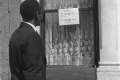
Deniable racism: ‘I’m alright Jack’

Photograph: Bill Orchard/Rex/Shutterstock
I heard on the news a week or so ago that an investigation by ITV news had found that the majority of NHS Trusts have not completed full risk assessments on BAME staff. Considering that BAME groups are impacted disproportionately by COVID-19 I have to ask why? And, probably more importantly, now that the issue has been raised, what are the government doing to make sure that the risk assessments are carried out? Since I heard about it I’ve seen no response, so I guess I can answer my own question ‘nothing’.
But then maybe I shouldn’t be surprised, I read an article on Racism and the Rule of Law and you can’t but be appalled by the number of recommendations from various inquiries and reviews that have failed to be acted upon. The problem is that the action requires more than just the eloquently spoken or written word; to put it very bluntly and maybe crudely, ‘put your money where your mouth is’. It is easy to state that this is wrong or that is wrong in our institutions, the term ‘institutional racism’ trots off the tongue, seized upon by the wronged and more worryingly banded about by the societal racists of the elite who are only too willing to blame someone else. In thinking about this I wonder whether when we use the term racism, we are all talking the same language. The ‘deniable’ racism is easy to identify, ‘we don’t use that sort of language anymore’, ‘we no longer put those signs in our windows’, we have laws that say you can’t act in that way. ‘Actually, I’m not a racist’. But the statistics don’t lie, they can be bent, manipulated to some extent to favour one argument or another but there are some very basic inescapable facts, BAME groups are over represented in the wrong areas of our society and under represented in the right areas. And most of this I dare say does not owe itself to ‘deniable’ racism, it’s more than that, it’s embedded in our society, it’s not institutional racism, it’s societal racism and it’s hidden. The problem with societal racism is that we only see the positive attributes of people that are like us and we promote those that excel in showing those attributes. Hence, we have the elite in business and government that are not ‘deniable’ racists but nonetheless are the epitome of, and lead a racist society.
I want to return to the idea of ‘putting your money where your mouth is’ mantra. They say money makes the world go around, I’m not sure that is entirely true, but it certainly goes a long way to getting things done and conversely the lack of it ensures that nothing happens or in some cases that good things come to an end. A prime example is the austerity measures put in place in 2010 that saw budgets to government agencies and funding to councils cut significantly. Those that suffered were the most deprived. Even worse, was the fact that funding for youth projects in inner cities suffered and those initiatives that were aimed at reducing violent crime amongst young people ground to a halt. Policing saw huge cuts and with it the withdrawal of neighbourhood policing. This link to communities was severed and any good work that was going on was quickly undone. That doesn’t explain all that is wrong with policing, but it certainly doesn’t help in building bridges. Who in their right mind would embark upon fiscal policies with no regard to such outcomes, our elected government did. If we think now about the so-called return to normality post the Covid-19 pandemic, which caring company or institution would suggest that the most impacted by the virus should continue or return to work, or study, or any other activity, without considering their specific risks and needs? Probably those that have more concern for the bottom line than peoples’ lives. ‘I’m alright Jack’ comes to mind or at least I want to make sure I am.
In thinking about policies, procedures, risk assessments or recommendations, managers have an eye to finance. In the NHS, the day to day business still has to happen, in policing, incidents still need to be attended to, so where is the money to do the extra? Everything comes at a cost and every recommendation in every review will cost something. The NHS risk assessments will cost money. The question is whether government and all of us in society really believe that ‘black lives matter’. If we do, then then it’s time to acknowledge the type of society we live in and who we really are and for government to ‘put the money where its mouth is’ so that the recommendations can be acted on. Or of course, we could just have another review and ‘Jack’ will do very nicely out of that as well thank you.
Share this:


The pandemic and me – Lessons I’ve learnt from the #lockdown

This lockdown has certainly given us time to think and perhaps reflect on a variety of topics and situations. I’ve shared a few thoughts below and I wonder just how many are universal in some way.
I need to ensure I have a structure to my day and week. I think we all need some sort of structure to our lives and that structure is often given to us by work and perhaps other sociable events such as going to the gym or going to a coffee shop. It may be that the weekly shopping provides us with an anchor, Saturday may be a shopping day or religion might dictate a visit to a place of worship on a particular day. At times I’ve found myself getting confused about what day it is, Groundhog Day, I think. However, for the most part, I think I’ve got it sorted out. My wife and I discuss our schedule every morning over a cup of coffee. We have sorted out a routine of work, daily chores, fun bits and exercise.
My willpower is tested but I can be determined. I have never been a heavy drinker, the occasional binge, yes but then who hasn’t? It is however, quite easy to slip into the habit of having a glass or two of wine in the evening, every evening and perhaps a gin and tonic or two. I can’t go anywhere so thinking about having to drive the next day is not an issue. It’s not until you start totting up the consumption that you realise maybe you might have to reign this in. ‘School nights’ are back again, no drinking in the week. I make up for it at the weekend though.
I’m not risk adverse, I just like to think I’m logical. I don’t think it takes a rocket scientist or in fact any scientist to work out that the government (particularly a Conservative government) would not enforce the cessation of most business in the country without a very, very, very good reason. Stay in has been the mantra and of course we all know how difficult it is and we all know that as usual, the most vulnerable in society have been hit the hardest by this pandemic. Logic dictates, well at least to me, that going out to any store anywhere carries a risk. Some risks are necessary, for instance a trip to the chemist to pick up a prescription, but a trip to a DIY store, really? I’m sorry but given the risks, I think it’s a no brainer. Not only do I not want to catch the virus, but I would be distraught if I thought that through my own selfishness I had passed it onto someone else.
I never really thought about all those people that are truly special. We clap every week for the carers and the NHS and all those involved who are truly remarkable. I do ask myself though, would I want to turn up to work in a supermarket? Would I want to be out delivering parcels or the post? Would I be a NHS volunteer? Would I be happy working on public transport or emptying dust bins? There are so many people doing ordinary, even mundane jobs and volunteering roles that I now appreciate more than ever. And I would go far as to say I am humbled by what they do and continue to do despite the risks.
I appreciate the world around me. Not being able to go out and socialise in some way, be that work, or friends or family has provided more time for other activities. Our walks to the next village and back on roads devoid of most traffic has revealed an astonishing array of wildlife to be gazed upon and appreciated. That is of course if you’re not gasping for breath following a walk up a steep hill (well I call it steep but in a car its barely noticeable).
Some things don’t change. I’ve also noticed the gate to the footpath across the fields near our house has gone. A heavy wooden gate which, apparently has been stolen. On our walks we have noticed the increased number of cyclists whizzing along the road. Most give a wide birth, but some don’t seem to have a care for others, one nearly colliding with us as he flew around the corner. It seems with the reduction of cars; the idiotic driver has now given way to the idiotic cyclist.
What will a ‘new normal’ look like. At some stage we will get back to normal but its difficult to contemplate when that will be and what it will look like. Maybe getting back to the old normal is not what is needed. I’m trying to envisage how I will make changes in consideration of what I have learnt during this lockdown. What changes will you make?


