
Home » Violence (Page 8)
Category Archives: Violence

2020 Vision
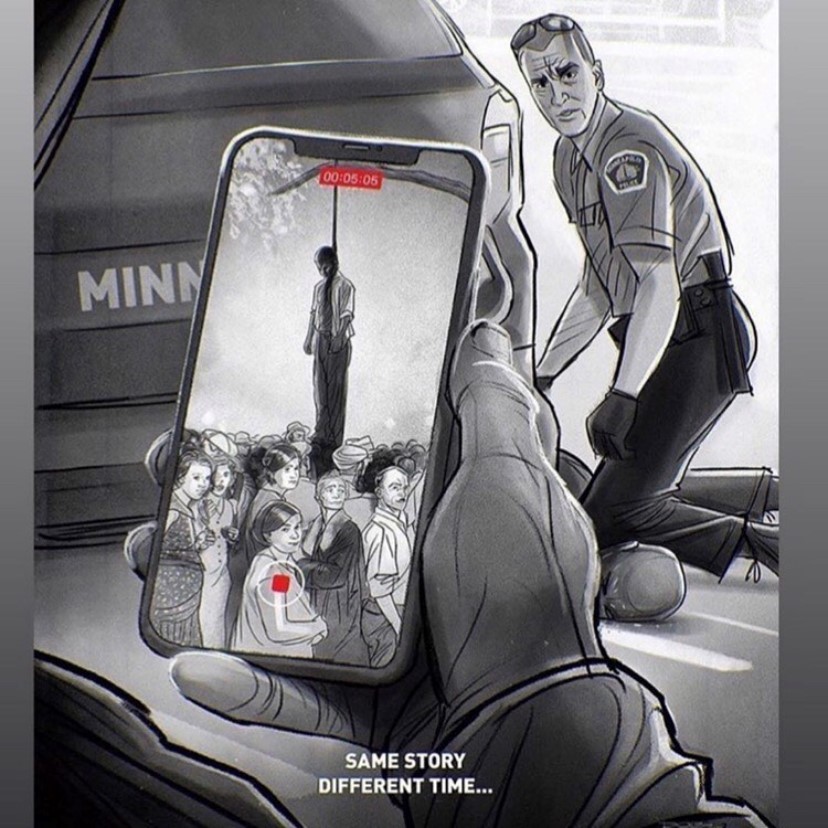
From a young age the Golden Rule is instilled in us, treat others the way you want to be treated. We follow the rule staying home to protect the NHS in these difficult times, we are all humans we want to be safe; we want to protect our loved ones and cover them with a blanket of safety. We supported captain Tom on his quest to raise money for the NHS, we have complimented his humanitarianism.
It has been a hard time for us all. But in a time of uncertainty we have come together as a community to support each other. We have all had a sense of worry, if we leave the house to buy the necessities, the fear of the invisible killer plagues us. We have all helped play the part in flattening the curve. We have felt sadness for the families that have become victims to this killer. But we have not lost hope, we are still hoping for a vaccination to be ready to protect us. Its great that we have the NHS to help us if we are attacked by this enemy. The police were given extra powers to prevent us from breaking the rules and whatever the opinion is of the police we have to acknowledge that these powers that they have been given symbolises law and order and the order being the contribution to stopping the spread of this horrific virus which in essence will help to protect us.
I am contemplating on this because although there have been bumps in the road throughout this lockdown, we all have the same goal……… to live. If we didn’t want to live we would leave our houses unmasked, ignoring all government advice. If we didn’t want to protect our loved ones and our community we wouldn’t support the NHS.
I am going into deep thought……….
Imagine a world where you are not protected, imagine being at war every time you leave your house, imagine a world where you are not safe in your house……..
Picture this an intruder walks into your house, is outraged by the colour of your skin BANG she shoots you in cold blood. The offender uses the excuse she thought she was being robbed, she thought you were the intruder. However, she was the one who let herself into your house. The media and the police sympathise with this woman, as she is a police officer. In their eyes she does not look dangerous, the victim of this crime is seen as a danger to society based only on the colour of his skin. She is not arrested straight away because she has a thing that is more powerful than anything in America, she has White privilege. Imagine a loved one is killed in this way and during the sentencing of the murderer, the judge hugs the offender as if she has done nothing wrong and disregards the feelings of your loved ones. How would you feel?
This did not happen during the civil rights movement, this happened in 2019.
Imagine going for a for some much needed exercise, you are jogging, listening to your music, taking in the fresh air. You are thinking about getting your physique ready for the summer. Two men hunt you down like cattle where they shoot you in broad daylight and they are not arrested straight away. instead your innocence is debated because you are a BLACK man that has left your neighbourhood and entered theirs…..
Imagine it is not a secret that your race can and is used as a weapon against you.
I have seen people gossip about the activities of others during lockdown. I have witnessed the police being called on youths that are skateboarding in a skate park. I have seen the outrage of the people who have been reported by the police for leaving their houses and seemingly not following the rules. Imagine going to the park, having a picnic, going for a walk and being told by a stranger they are going to call the police on you and they can use your race as a weapon, they know by telling the police the colour of your skin it will have an automatic punishment. After all, All Black people are criminals right?
Imagine the police are called on your father as he is suspected of committing a non-violent crime. He is handcuffed and pinned to the floor by a police officer. The officer is leaning on your father’s neck. He can’t breathe, he is begging for mercy, he is calling out for your grandmother, his mother…… he’s an EX con, a criminal, he took drugs, he robbed somebody, he went to prison. But I ask this should he have been executed?
Imagine the people who can see this crime being committed, imagine your 17 year old sister, daughter, friend recorded the execution of George Floyd and she could only record the crime because she fears that the other officers will turn their guns on her if she speaks out.…..After all we must protect the police from these ANGRY BLACK WOMEN they are a big problem with society……
Imagine being BLACK in America.
In recent months I have struggled to go on Facebook. The reason why is because, while many people enjoy the platform discussing current issues and sharing pictures, more and more I have seen subtle tokens of racism becoming more and more prevalent. I refuse to argue with morons who seemed to have lost all sense of humanity. It is gut wrenching when you have Facebook friends who think it’s acceptable to be outright racist. I understand we do not all hold the same values, I understand we do not all advocate for the the hurt and pain of others. But I do not stand with people who do not want to try and understand that their actions destroy communities. No, I’m not talking about the ones who use the sentiment #All Lives Matter, I agree all lives do matter. But there is a deeper message to the Black Lives Matter movement. And so many people of different colours have been understanding of this notion and want to get an understanding of the disproportionate treatment of the Black community and for that I appreciate your support.
I’m talking about the ones that use George Floyd’s reputation to try and denounce the feelings of the Black community. I’m talking about the ones who act surprised that police brutality against the BLACK community is not a new phenomena. I’m talking about the ones who have a problem with #Blackout Tuesday, #Black Lives Matter and the ones who have jumped on the band wagon to make their businesses and institutions look like they are progressive when they have done nothing but use oppressive practices keep BLACK people in their place. I SEE YOU!
It is very hard to understand how people have been so sheltered by this phenomena, even though social media has been covered with news footage of the Breonna Taylor’, Oscar Grant’, Ahmaud Arbery’, Jordan Davis’ the Tamir Rice’ murder I could go on……..
So, I’m going to round this post off by saying a few small words. For the ones who I have a problem with. I am not your bredrin, don’t use me as the Black friend when you run your mouth and show your true racism and need a token Black friend to save you from your mess. It’s cool when you want to dance to our music, eat our food, wear our fashion, appropriate our hairstyles and when you have a fifth cousin twice removed that has mixed race kids or you decide you want to experiment by dating someone that is Black I SEE YOU! don’t try and hide behind the smoke and mirrors and don’t use your relationships as a platform to validate your racism. You have no right to talk negatively about our oppression, you have no right to invalidate our pain. Don’t pretend you see us as your equal, don’t pretend we are accepted into your circle. Stay silent while we are being brutalised, stay silent while we are disproportionately dying of Covid! continue to stay in your bubble I hope you never need to call on the Black community to speak up for YOU! A lot of people have said 2020 is a year they will cancel, as it’s been a year of devastation, but I say 2020 has given me the 2020 vision to see people for exactly who they are.
Share this:


Another one bites the dust #AhmaudAbery #BlackenAsiaWithLove
There is newly released video evidence of Maud, as he was known to kin, minutes before he was shot to death during a so-called citizen’s arrest. On the video, Maud paused during his job, caught his breath, and for exactly six minutes can be seen on video surveillance surveying a neighborhood construction site shortly before he was killed by a “homegrown posse.” This is exactly as my husband would do along his jogs.

‘Let’s get in Formation!’
My husband is fascinated with how things work, and how they are built. He can repair and engine, a toilet, a lawn-mower, locks, hinges, and plenty of things on our house. He got that from his daddy, who has an entire workshop in their basement dedicated towards up-keeping their home. He even made hubby and I a bench. My husband grew up in a German village believing that owning property was a communal enterprise. He certainly feels entitled to inspect any work that impacts the landscape of the hood. So now when he ‘inspects’ things, he behaves as if he has the right to know what’s going on in the world. I don’t have those rights.
A citizen’s arrest means an entitled citizen can stop and attain anyone whom they believe to be a criminal; legally they must have witnessed the crime. On the 9-1-1 call, Maud’s killers couldn’t even tell the emergency responder what crime they’d supposedly seen, nor were there records of these so-called string of break-ins that had allegedly occurred, justifying their anger and pursuit of the unarmed jogger. “Why make a citizen’s arrest when 9-1-1 was an available option?” emphasizes one cable news pundit during the rolling coverage of yet another Black boy slain.

I hasten to think of how Fox News is covering this story. Does it matter that he was unarmed? So what if the law doesn’t consider Maud’s right to stand his ground? Why even mention that some neighbors regularly saw Maud out jogging? Who cares that Maud was loved? We’ll forget that Maud’s alleged crime does not fit the punishment.

We make our own videos. Beyoncé’s controversial music video Formation ends in a back alley, a little Black boy slays a whole SWAT team in attack formation, with the graffiti: “Stop killing us” This directly echoes the censored ending to Michael Jackson’s 1991 Black or White video. After the music finishes, a black panther morphs into our hero, who then slays racist graffiti in the back alley of a fancy Hollywood studio. Ouch. Importantly, “as his skin became whiter, his work became blacker,” observed one Guardian writer 11 years after the singer’s tragic death. Jackson removed it and apologized after public outcry over his violence and crotch-grabbing. Maybe it reminded folks of a lynching!
-No justice, no peace.
Share this:


#CriminologyBookClub: The Yellow Room

In times of crisis it is beneficial to occupy yourself with things to do. This helps us to cope with boredom, and to distract us from the bleakness of reality. What better way to help with this than to start a book club? That’s right, whilst some of us were sitting at home twiddling our thumbs, @paulaabowles had sent us all a book that we were to read and discuss in virtual book club meetings. Little did we know that this book club was to be our very own ray of sunshine during such an unprecedented time.
Our first book is The Yellow Room by Mary Robert Rinehart (dubbed the American Agatha Christie by the blurb, which is generous). Set in Maine (USA) during WWII, this is a classic whodunit crime novel. With the wealthy Spencer family finding themselves tangled in a web of evidence that instigates their involvement with a dead woman that is found in the closet of their holiday home. The book is filled with intrigue and the plot thickens with each chapter, with more and more clues being thrown into the mix. Until too much is thrown in, and what is left of the book is quite simply… a mess.
The book consists of 30 chapters, and we think the club is in agreeance that the first 20-24 chapters are pretty great. Rinehart throws a number of spanners in the works, with near misses, burning hillsides, death by frights, illegitimate children and secret marriages. We all had our theories, some boarding on plagiarism (they know who they are!). However as it turns out a few of us were half right, and then so were some of the others. We will not give away any spoilers, but the ending, the answer we were all waiting for was disappointing and quite frankly we are still not 100% sure who did it, and what was actually done. The leading lady of the book Carol Spencer, dubbed drippy Carol by the club, because she is, well… DRIPPY, does nothing but smoke and drink coffee, whilst surrounded by crime and uncertainty. But, alas, when all is righted, she finds herself in the arms of an arrogant moody man, all happily engaged! Possibly a romance (although a bad one) or possible a classic whodunit (a half decent one), who can tell?
Overall the book was a success: it inspired intrigue and discussion! The virtual book club even more so! A bunch of misfits, gathered together (20minutes after the allotted time because one member of the group is late- @manosdaskalou), discussing the book, thinking about the social context, the characters, and how it is received today. It is a fantastic virtual club consisting of familiar suspects: the princess, the athlete, the criminal, the brain, the basket case, the parent and the “carol” (representations may not be literal or accurate). What will the misfits think of the next book? Will they all agree? Will one read ahead and sit silently and sheepishly, without the others knowing? Stay tuned…
@jesjames50 and @haleysread – founding members of the #CriminologyBookClub
Share this:


“My Favourite Things”: Helen Trinder

My favourite TV show - I don’t generally like watching violence on TV – I deal with enough real-life violence that I don’t find it entertaining, but I love Killing Eve. It’s full of wit, and interesting complex personalities while being far-fetched enough to provide some escapism. In complete contrast, I also love The Great Pottery Throw Down. There’s something soothing and weirdly sensual about watching people doing pottery and I’m fascinated by how easily Keith is moved to tears by the efforts of the contestants!

My favourite place to go - There are lots of places I like to go but now that I can’t go anywhere the thing that I miss most is watching my son sail. Since he became good at it, just over a year ago, we have been to a number of sailing clubs across the country, but our home club is just down the road in Haversham. It’s a lovely tranquil spot, only a stone’s throw from Milton Keynes. In a normal summer we would be there three or four times a week, and would often camp there over the weekend

My favourite city - Of all the cities I’ve visited, my favourite is New Orleans, although I haven’t been there since it was devastated by Hurricane Katrina. I visited in 1992 and again in 1997 when it was vibrant, jazzy and very cool. I also love Oxford. I lived there for three years and still visit regularly

My favourite thing to do in my free time - I play cornet in a brass band. I enjoy making music, particularly with other people, and sharing it with an appreciative audience. No band practice at the moment, but I’m doing more personal practice than I have for a long time!

My favourite athlete/sports personality - I think Dina Asher-Smith is a great role-model, completing her degree while also training to become a world champion. I also think that Gareth Southgate is an example of a good leader. He is calm, rational and professional, he listens to his players and he puts their interests first

My favourite actor - For the ability to make me laugh and to convey so many thoughts and feelings with his face and body it has to be Rowan Atkinson. And for a huge body of very diverse work, always portrayed with sensitivity, warmth and humour, I choose Julie Walters

My favourite author - I haven’t read any of her books for a while (they can be a bit of a marathon!) but my favourite author is George Eliot. She portrays complex characters with all their qualities and flaws, and the gradual ways in which they change over time in response to their experiences

My favourite drink - Gin and tonic, preferably with some kind of fancy artisan gin

My favourite food - A bacon sandwich, obviously!

My favourite place to eat - It depends what I’m eating. If it’s the aforementioned bacon sandwich, then a warm, sunny campsite. Fish and chips taste best at the seaside, seasoned by the sea air. A Sunday roast is best at home with my family

I like people who -are enthusiastic, open-minded and willing to look at things from different perspectives

I don’t like it when people -are negative or rigid in their thinking. I’m not very tolerant of pessimists!

My favourite book - is still Winnie the Pooh by A.A. Milne. Lots of gentle humour and gems of wisdom.

My favourite book character - I have a soft spot for Adrian Mole. I first discovered him when I was about 11 or 12 and he was 13¾. We have grown up together!

My favourite film - The Pink Panther films featuring Peter Sellers as Inspector Clouseau always have my husband and I rolling round with laughter

My favourite poem - My favourite poet is John Betjeman. I like the rhythm of his writing and his use of brand names, place names and technical terms which convey a strong sense of time and place. However, I think my favourite poem is A Gift by Henry Normal. It describes someone bringing an amazing gift (a mountain) which the recipient doesn’t really understand

My favourite artist/band - I’m a big fan of 90's Britpop and I particularly like Pulp. I think their songs have clever and sophisticated lyrics

My favourite song - Following on from the above, my favourite song is Common People. It is both humorous and moving, with a strong message to people like me who come from a position of privilege and want to promote social justice. However well-meaning we may be, sometimes we just don’t get it! If I wanted some feel-good music though, I would choose Sandstorm by Darude

My favourite art - When I was 20, I went inter-railing with a friend from university. We visited the Vatican and spent a good 20 minutes simply staring at the ceiling of the Sistine Chapel. The art is exquisite – so much detail and so much movement and fluidity in the painting

My favourite person from history - As a Shropshire girl, and the daughter of an industrial archaeologist, I’m going to say Abraham Darby, who first smelted iron ore using coke instead of charcoal at Coalbrookdale. He took what he had learned from quite different contexts and applied his knowledge to provide a novel solution that kick-started the industrial revolution. And as a Quaker he also took a keen interest in social justice, in supporting his workforce and developing his community

Share this:


Within Grey Walls
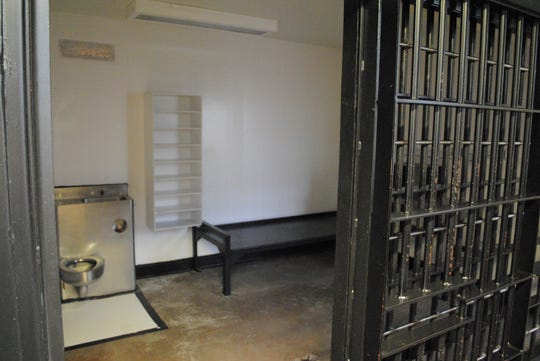
“Waking up to gray walls and black bars…in the silence of ones own thoughts, leaves one to a feeling of somberness…as those around begin to stir and began their individual day, hope creeps into ones mind….as the discussions regarding legal strategies began, hope then becomes more than just a shadow…as guys began to discuss their potential future beyond prison and being locked in a cell for days at a time, hope becomes more than just a fleeting moment! Silence can sometimes be ones own enemy on death row:-…So I condition myself to discover the “why” I fight through the fits of depression and despair, instead of focusing on the “how’s”….because pursuit of the “why’s” bring about methods of finding a solution….encouragement to remain hopeful!”
Everyone has the right to life, liberty and security of person (1).
Without the right to life, we cannot enjoy the freedoms set forth in the Universal Declaration of Human Rights.
However, what if one’s life was imprisoned and waiting to be ended for crime? In addition, what if a person was to be put to death for associating with a particular demographic?
The death penalty is the authorization of the state to kill a citizen for a crime, whether it’s murder, rape, treason, or more severe crimes, such as crimes against humanity and genocide (2).
Whilst the death penalty can be a deterrent, provide justice, and be the ultimate punishment for a crime and justice for victims, it is also used in some countries to persecute minority groups, such as the LGBT community (3) (4). (In references, there is a link to an interactive map of countries that utilize the death penalty for LGBT groups).
According to the Death Penalty Information Centre (DPIC), around 82% of cases involving capital punishment, race was a determining factor of giving this punishment, in comparison to white counterparts (5). However, the justice system is far from perfect, and miscarriages of justice occur. Due to issues of racism and racial bias (particularly within the American Justice System), this has seen members of minority groups and innocent people put on death row whilst a criminal still walks free. A damning example of a miscarriage of justice, and a clear demonstration of racism, is the case of George Stinney, whom, at the age of 14, was wrongly accused of murdering 2 girls. He was taken to court, tried by an all white jury, and was given the electric chair (6).
This, ultimately, is the state failing to protect its citizens, and causing irreparable damage to others. The George Stinney case is a condemnatory example of this. On top of that, it is hard to measure deterrence, and whether capital punishment actually deters people from committing crime.
However, what is it actually like being on death row?
June 2017 saw the start of a new friendship – a unique friendship. What simply started out with me wanting to reach out and be a ray of light to someone on death row, turned into a wonderful experience of sharing, support and immeasurable beauty. In June 2017, I began writing to a man on death row, and simply wanted to be a ray of light to someone in a dark place.
He has shared some of his thoughts of what it is like to be on death row:
“Perseverance. This is key when facing a day in prison (physically and mentally) because is never “where” you are physically, but your ability and willingness took push through those times of adversity and overcome the very things that have the power to bring you down….such as evil”. BUT- when we examine the word “evil” look closely…. Do you see it yet? ….. It’s “LIVE” backwards and to me its when we lose our patience to “LIVE” that we have brushes with “evil”…no???? So within these walls I do my best to find the “silver lining” and develop the better aspects of me”.
Now, it may seem effortlessly -but- in all honestly….its very difficult to face each day with the uncertainty of knowing whether the presence I have is one that has significance….in here I have to prepare myself on a constant basis in order to be the best version of myself no matter what lays ahead.
Thankfully….I have met an incredible person, who guides me by way of her words…offers me comforts by way of her thoughts and prayer and encourages me through her never ending presence! She is beautiful in every aspect of the word…She has helped me to discover that EVERYTHING and NOTHING awaits beyond forever!
References
(1) Universal Declaration of Human Rights (UNDH) Article 1 Available online at: https://www.un.org/en/universal-declaration-human-rights/ Accessed on 21/01/2020
(2) Louise Gaille ’15 Biggest Capitol Pros and Cons’ Available online at: https://vittana.org/15-biggest-capital-punishment-pros-and-cons Accessed on 24/03/2020
(3) The Human Dignity Trust ‘Saudi Arabia: Types of Criminalisation’ Available online at: https://www.humandignitytrust.org/country-profile/saudi-arabia/ Accessed on 24/03/2020
(4) Death Penalty Information Centre ‘Executions By Race and Race of Victim’ Available online at: https://deathpenaltyinfo.org/executions/executions-overview/executions-by-race-and-race-of-victim
(5) Ibid
(6) Snopes Fact Check ‘Did South Carolina Execute 14-year-old George Stinney, then declare him innocent 70 years later?’ Available online at: https://www.snopes.com/fact-check/george-stinney-execution-exoneration/ Accessed on 24/03/2020
Other
Interactive map of countries where the death penalty is used against the LGBT community: https://www.humandignitytrust.org/lgbt-the-law/map-of-criminalisation/?type_filter=crim_gender_exp
Human Writes: https://www.humanwrites.org
Share this:


New Heroes for the Twenty-First Century? (Clue: they don’t wear khaki)
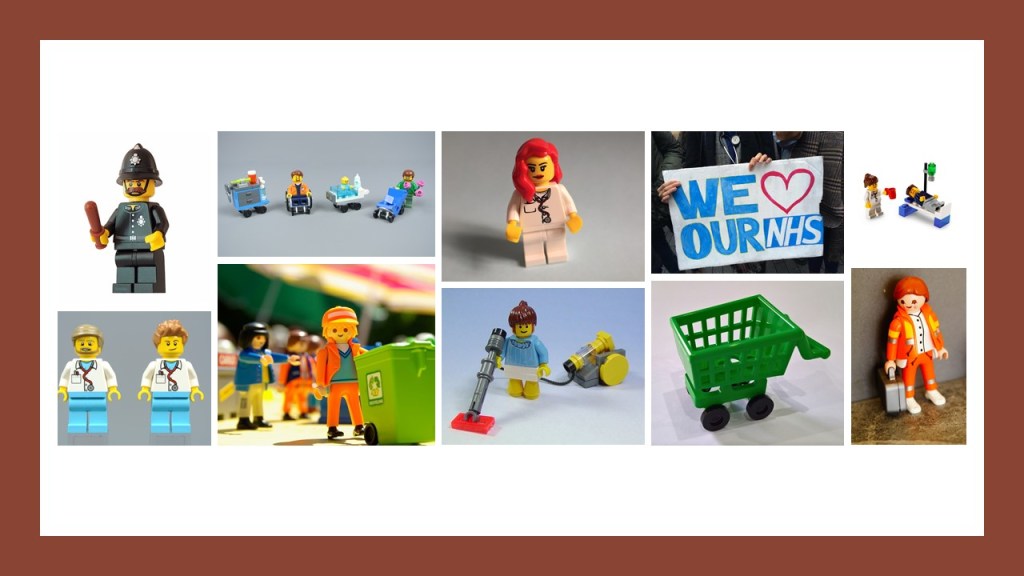
I have blogged before on the way in which society seems to choose what to remember and what to forget. Similarly, I have mused on remembrance, the poppy and the increasing militarisation inherent in paying homage to Britain’s war generation. In the current crisis, despite the despair, I sense a change in our understanding of the term heroism, which I will explore further below.
In the 20th century there was concerted focus on idolising the military man and his function within British society. This is unsurprising, it is not for nothing that Camus describes this period as ‘the century of fear’ (1946/2007: 27). This period was, and remains remarkable, for the two world wars, as well as a variety of other conflicts, within which Britain was involved (along with many other nations). The two world wars provide foundations for the way in which the twentieth-century is discussed and understood, with substantial periods of time often delineated into the short-hand of pre-war, inter-war and post-war.
Although only twenty years in, it is clear that the twenty-first century, cannot be described as peaceful. Rather it has continued with the same approach to international relations, often argued to be immoral, if not illegal, of using military violence to obtain, what Britain views as, reasonable and tangible gains. Whether we focus on Afghanistan, Iran, Iran, Libya, Sierra Leone or Syria, British military might is deemed appropriate, proportionate and necessary (as least in Britain). Certainly, a number of authors have already dubbed our current century, as being in a perpetual, ‘war without end’ (cf. McAlister, 2002, Tertrais, 2004, Schwartz, 2008).
However, in 2020 the world is facing a far more challenging enemy, one which threatens us all, Coronovirus, or as it is more scientifically known, Covid-19. More importantly this is an enemy that cannot be shot, exploded, tortured or conquered in the traditional, well-worn ways of warfare. Instead, this crisis calls for a different kind of hero, one who does not have recourse to an arsenal of increasingly, terrifying weapons.
As with the war, there are two distinctly different experiences, those on the front line and those who are not. Each group has a role to play, for some they will take their lives in their hands, on a daily basis, to tend to the sick, to deliver supplies to organisations, communities and individuals, to maintain vital services. This group will see things, again and again, that are upsetting, that will test their resolve, their empathy, their patience, good-humour and their confidence. For others, their role is to stay out of the way, to stay indoors, to ensure that the disease does not spread further. Each group will have their own tales to tell to each other, as well as to the generations which will follow.

Once this is all over, once we emerge from our enforced isolation, we will have a return to some kind of “normality”, yet this experience is unlikely to disappear from our individual and collective memories. As our forebears, had the war experience to shape their lives, and that of those who followed them (in many unexpected ways), so shall we have a similar defining moment. Whilst the hero of the twentieth century was indisputably a white, straight, able bodied, (nominally) Christian man dressed in khaki, the hero of the twenty-first century will appear in a variety of diverse guises. From the supermarket worker to the school teacher to the carer to the paramedic to the police officer to the undertakers to the cleaners to the small business owners to the scientists, to the nurses, paramedics, doctors, surgeons and all the others, each are serving on the front line of the fight against coronavirus. They are women, men, Black, Asian, white, Muslim, Buddhist, Sikh, Christian and atheist, they are young and old, they are experienced professionals and those just starting out on their working lives, they are well-renumerated, they are poorly paid, they have fears and anxieties, families, friends, and those that love and fear for their safety.
These people have little in common but their humanity and they are redefining heroism second by second, minute by minute, hour by hour, day by day.

References
Calhoun, Laurie, (2002), ‘The Phenomenology of Paid Killing,’ The International Journal of Human Rights, 6, 1: 1-18
Camus, Albert, (1946/2007), Neither Victims Nor Executioners: An Ethic Superior to Murder, tr. from the French by Dwight Macdonald, (Eugene: Wipf and Stock Publishers)
McAlister, Melani, (2002), ‘A Cultural History of the War without End,’ The Journal of American History, 89, 2: 439-455
Tertrais, Bruno, (2004), War Without End, (New York: The New Press)
Schwartz, Michael, (2008), War Without End: The Iraq Debacle in Context, (Chicago: Haymarket Books)
Share this:


Solitude.
Time alone, socially with ourselves, can be a truly healing ordeal. When we’re alone, we tend to think. Thinking is hard work. It really takes a disciplined mind to reflect, to look at different items in life and piece them together differently than they are presented to us.…perhaps with more clarity. We may experience anxiety, left with our own thoughts in the solitude of quarantine. From whatever source or another, you may feel anxious about being alone. Develop calming practices. Curate calming activities in your life that bring you peace.
You may experience restlessness. What to do with all that time? Many of you will want to be productive. Do something you enjoy. What do you like to do with your (wrestling) hands? Hold a book? Saw wood? Bake? Knit me a scarf?!?
Whether you enjoy listening to music and talking about the memories and times music evokes, explore what you like to do. Me? I dance, read, write, binge on TV series, and digging my hands in dirt to grow stuff. I especially love propagating plants. I try any plant I can get ahold of. In my garden, I have a beautiful crawling flower I clipped in Barcelona. It spreads over soil and has bright green leaves with bright red flowers that unfold into a star at dusk. Curate creative activities in your life that bring you peace.
Solitude gives us time for introspection – a kind of dialogue with ourselves. We love all forms of art because of the internal dialogue with ourselves as we observe a movie, painting, sculpture, fashion, performance, etc. We know at the heart of each of those creations, there was an artist in solitude.
In my solitude…

First edition
Alice walker sat and wrote The Color Purple with pen and paper. The screenwriters later came along and did the same. Each actor received their own script. On screen we watch Ms. Sofia tell Ms. Celie to “bash Mister’s head in and think about heaven later,” after confronting her for telling her step-son to beat her. Imagine how Oprah read all of THAT from just a few letters to god. On the page, Celie acknowledges her jealousy of Sofia’s power – she’s just as “poor, Black and ugly” as she. She apologizes and reconciles by helping Harpo’s next woman recognize her own power. There’s a whole storyline about this. The book more keenly develops more characters and their transformations. In our solitude, we read The Color Purple and for the first time view it in Technicolor.
In the book, of course, we neither see the bruises and blood nor hear the screams the children must have hears when Mister beats Celie senselessly throughout their marriage. We read how Celie gained the courage to leave this batterer. Oh, and the grandest surprise is that Shug reveals to Celie that God ain’t a man, and he ain’t white, neither. If God were a white man, neither could believe in him, according to the book. Both their redemptions came from there, not as the film shows. In the film, Shug is a floozy who redeems herself by becoming ‘respectable’. The film doesn’t question the heteropatriarchal god, a central narrative in the book.
The book is really queer. Harpo loves to cook, clean and take care of kids while his woman works. Harpo resolves his Oedipal dilemma by accepting that he’s not a patriarch like his father. The film depicts his struggle but not this resolution. In the book, there’s an entire sub-narrative about how Celie’s kids in Africa – raised by her sister Nettie – reject the traditional gender roles. This is only hinted at in the film.

Celie & Shug’s only on-screen kiss
Of course, Celie’s a lesbian, Shug’s bisexual and Mister is cool with their love triangle. In the book, Mister’s redemption is there, literally becoming just a tiny bit more feminist, though still not nearly as the flashy boxer Shug later marries. Another big twist is that in the book is that Shug and her husband split amicably; he moves south of the border with Harpo’s woman, Mary Agnes, to run their very own marijuana plantation.
Celie encouraged Mary Agnes to stop people from calling her Squeak, a sub-narrative that only is hinted at in the film’s iconic Thanksgiving scene, aka Celie’s uprising. I love Celie’s nasty retort to Mister’s sinister dad in this scene: “Seem like if he hadn’t been your boy, he might a made somebody a halfway decent man.” Shug helps Mary Agnes have her own singing career, as implied in the Thanksgiving scene when she says she’s leaving with Celie and Shug Avery. In a deep hearty laugh that breaks the dramatic tension, Sofia declares: “Oh, Sofia(‘s) home.”

“You told Harpo to beat me!” Oprah’s breakout character & breakout scene
Self-love and women supporting women are huge themes that can’t be captured in a movie, it needs a whole mini-series to watch at home. Serendipitously, at the end of the scene when their boarding the car, Celie’s hex on Mister is almost taken directly from the pages. “Until you do right by me, ev’ry thing you even think about gonna fail!”
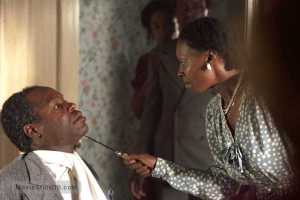
Celie’s Thanksgiving uprising
Finally, in the book, Celie and Mister eventually become friends. Come back with her long-lost kids and the dear sister Nettie he’d banished and “whoop his ass.” I love, love, love the film, but all of this was erased from book to script. I discovered all of this in my solitude.
The Color Purple was originally written as Celie’s prayers, the way she escaped the hell of her existence. In the book, she found this through love. On the paper, we can see that she stops writing to “God” and instead addresses the letters to her sister Nettie, the one who taught her to read (in both versions). The pages, not the movie, clearly reveal this spiritual transformation. Celie continues to write to Nettie, not knowing anything of her fate, only having found the old letters Mister had stashed away for years. Their love was so strong that in her solitude, writing the letters brought her peace. Curate writing activities that bring you peace.

The revised book cover following the film’s success
Do you keep a journal, dabble in poetry, admire the prose in your head? Set aside time as a family for writing and reading. Experience solitude together. Share your work. Curate activities that bring you peace. Use this quarantine to strengthen your capacity to love.
Share this:


Behind Closed Doors
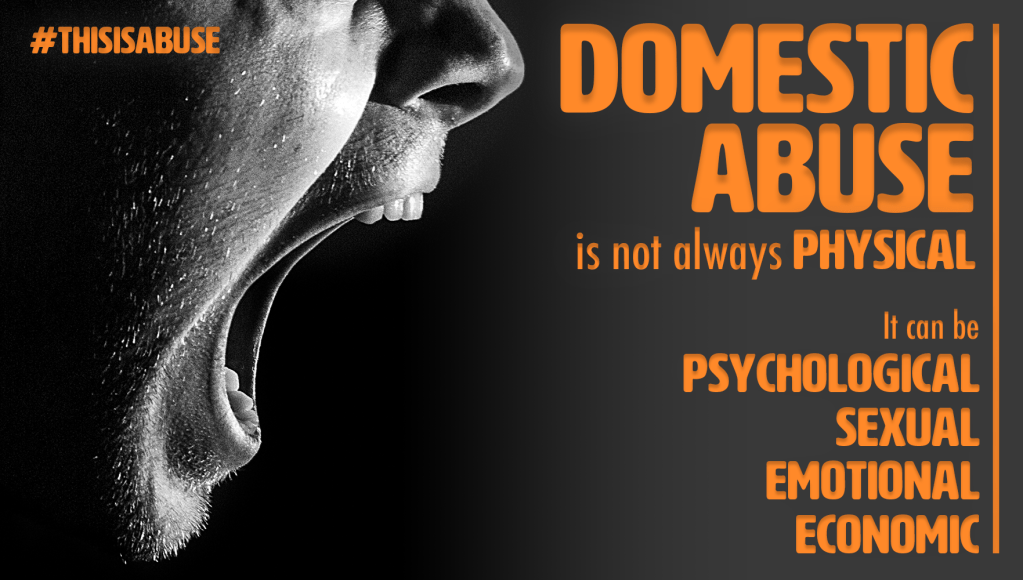
1 in 4 women will be affected by intimate partner violence (1).
I remember when I first heard that statistic in my teenage years, I thought to myself ‘that’s a lot of women! That’s a scary statistic!’ Having never been in a relationship till my mid-twenties, it was something I had never personally experienced, but saw it happen to some of my friends, and I know many people, and have met so may women, (and some men) who have been in violent and abusive relationships…
At the age of 17, whilst doing my A-levels, I saw some of my close female friends suddenly not show up to class. 6 months later, she came back and opened up about being in a violent relationship, and how her partner made her sick, and used to physically beat her.
When I was a university student, another friend of mine was in a violent relationship and struggled to cope with the ordeal whilst doing her degree. To this day, I still do not know how she pulled through being a university student whilst going through what she experienced.
At my local food bank, I have met many women who escaped violent relationships, and were living in supported accommodation. One lady I helped had even escaped honor based violence! She was no longer allowed to go back to her home country otherwise she would be killed for divorcing a violent man.
Following an event with the Himaya Haven (2) with a guest speaker talking about her experience of domestic violence, I was inspired and felt compelled to do more to help women affected by domestic abuse. After weeks of planning, praying, preparations and getting everything arranged, the event took place. October 25th 2018, with the help of a dear friend, we hosted and ran a domestic violence workshop, followed by a beauty therapy session to help women who had been affected by domestic violence. This was blogged about here: Incredible Women!
The types of domestic abuse I encountered was not just physical or psychological… I met women who were affected by financial domestic abuse, sexual violence and rape, honor based violence, coercion, possessiveness, controlling behavior, stalking, manipulation and gas-lighting, and some had even been banned from seeing family members and friends, and were not allowed to leave their homes unless their partners/husbands went with them….
Whilst I aim to raise awareness of this for International Women’s Day, let’s also highlight that women are extraordinary! All of my friends, family members and colleagues who have been affected by the scourge that is intimate partner violence, are still exceptional and exemplary human beings who are unique and amazing in their own special way.
Women are powerful – whatever is thrown at us, we will power through it and overcome it! Every single one of my friends and family members who have been affected by domestic abuse are powerful women who overcame all odds; regardless of the situation.
More statistics from Living Without Abuse and Office for National Statistics
- Domestic abuse will affect 1 in 4 women and 1 in 6 men in their lifetime
- 2 women are murdered each week and 30 men per year from domestic abuse
- Has more repeat victims than any other crime (on average there will have been 35 assaults before a victim calls the police) (3)
- The year ending March 2019, 2.4 million adults had experienced domestic abuse (1.6 million women and 786,000 men) (4)
References
(1) Living Without Abuse (LWA) Statistics Available online at: https://www.lwa.org.uk/understanding-abuse/statistics.htm Accessed on 08/03/2020
(2) Himaya Haven About Us Available online at: http://himayahaven.co.uk Accessed on 08/03/2020
(3) Living Without Abuse (LWA) Statistics Available online at: https://www.lwa.org.uk/understanding-abuse/statistics.htm Accessed on 08/03/2020
(4) Office for National Statistics ‘Analysis of Domestic Abuse Data’ Available online at: https://www.ons.gov.uk/peoplepopulationandcommunity/crimeandjustice/bulletins/domesticabuseinenglandandwalesoverview/november2019 Accessed on 08/03/2020
Share this:


Can there be Justice for Benjamin Arum Izang? An Unfortunate Victim of Forum Shopping
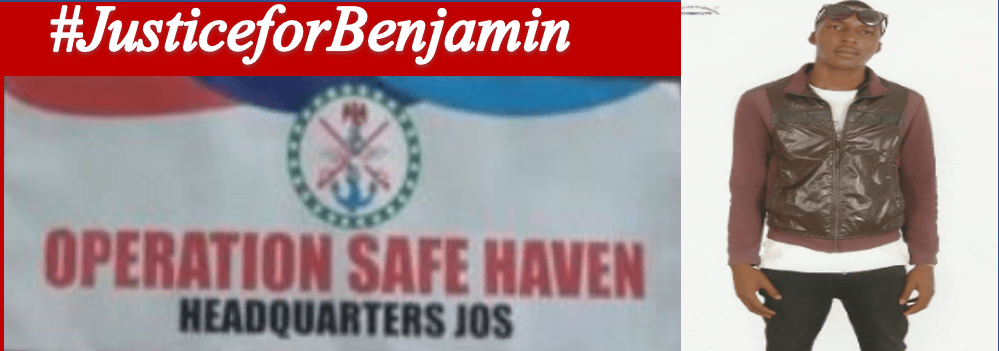
So Jos[1] tweeter community was agog with the scandal of the alleged torture of 31 year old Benjamin Arum Izang by personnel of the Operation Safe Haven (OPSH) Military Special Task Force (STF) conducting internal security operations in Plateau State. The family reported that the torture eventually led to Benjamin’s demise because of the fatality of the injury inflicted on him by the military personnel.
The sad event that led to this unfortunate incidence is reported to be an altercation over a fifty-naira egg (approximately 11 cents) between the deceased and a certain Blessing, an egg hawker whose egg was said to be broken by Benjamin. Failure to reach an understanding led Blessing to report the matter to the personnel of the STF, who quickly swung into action, albeit, one that involved the torture of Benjamin.
An investigation by Dickson S. Adama (a media correspondent) revealed that the Media Officer of the STF indicates not been aware of the incident. However, the family and the concerned public are crying for justice as this is not the first of such cases in the State. Rightfully so, scholars and practitioners of peace and conflict consider this incidence as forum shopping,[2] a decision by disputants to choose a security agency to intervene in their dispute, based on the expectation that the outcome will favour them, even if they are the party at fault. Studies[3] including my doctoral research on the military security operations in Plateau State indicates this as a recurring problem when the military conducts security operations in society.[4]
Often, when dispute ensues between two or more parties and both desire to emerge victorious or to exert their position on the other, desperate actions can be taken to ensure victory. One of such actions is the decision to invite a third party such as the military which is often not the suitable institution to handle matters of civilian disputes. In my doctoral research, I detailed the factors that makes the military the most unsuitable agency for this role, key among which is that they are neither trained nor indoctrinated for law enforcement duties. More so, the task and skill of law enforcement and managing civilian disputes which involves painstaking investigation and ascertaining guilt before conviction/serving punishment is the primary role of the police and the criminal justice system, which the military is not a part of. The military trains for war and combat mission, to kill and to obliterate and essentially, their culture and indoctrination is designed along these tenets.
Given this, when the military is involved internally as in the case of Benjamin and Blessing, it engenders numerous challenges. First, with the knowledge that the military dispenses ‘instant justice’ such as punishment before determining guilt, civilians such as Blessing will always seek this option. Tweeps such as @ByAtsen tweeted for instance that ‘same soldiers at the same outpost did this to another who, unlike Benjamin, is still alive nursing his wounds.’ One challenge is that where forum shopping denies justice, it breeds lawlessness and can further evoke public outrage against the military. In turn, this can erode the legitimacy of the security role of the military. Where this occurs, a more worrying challenge is that it can exacerbate rather than ameliorate insecurity, especially where civilians feel compelled to seek alternative protection from coercion from State forces and threats from the armed groups the military was meant to avert.
[1] Jos is the capital city of Plateau State Nigeria. The State was once the most peaceful State in Nigeria (arguable) but is now embroiled in intermittent and protracted violence, between the mostly Christian natives and Hausa/Fulani ‘settlers,’ and series of insurgent style attacks of rural farming communities by marauding herdsmen widely believed to be Fulani herdsmen.
[2] Keebet Von Benda-Beckmann, ‘Forum Shopping and Shopping Forums: Dispute Processing in a Minangkabau Village in West Sumatra’, Journal of Legal Pluralism, 19 (1981), 117–59.
[3] Judith Verweijen, ‘The Ambiguity of Militarization: The Complex Interaction between the Congolese Armed Forces and Civilians in the Kivu Provinces, Eastern DR Congo’ (Utrecht University, 2015).
[4] Sallek Yaks Musa, ‘Military Internal Security Operations in Plateau State, North Central Nigeria: Ameliorating or Exacerbating Insecurity?’ (Stellenbosch University, 2018) <https://scholar.sun.ac.za/handle/10019.1/104931> [accessed 14 March 2019].
Share this:


“TW3” in Criminology
In the 1960s, or so I am told, there was a very popular weekly television programme called That Was The Week That Was, informally known as TW3. This satirical programme reflected on events of the week that had just gone, through commentary, comedy and music. Although the programme ended before I was born, it’s always struck me as a nice way to end the week and I plan to (very loosely) follow that idea here.
This week was particularly hectic in Criminology, here are just some of the highlights. On Monday, I was interviewed by a college student for their journalism project, a rather surreal experience, after all, ‘Who cares what I think?’
On Tuesday, @manosdaskalou and I, together with a group of enthusiastic third years, visited the Supreme Court in London. This trip enabled a discussion which sought to unpack the issue of diversity (or rather the lack of) within justice. Students and staff discussed a variety of ideas to work out why so many white men are at the heart of justice decisions. A difficult challenge at the best of times but given a new and urgent impetus when sat in a courtroom. It is difficult, if not impossible, to remain objective and impartial when confronted with the evidence of 12 Supreme Judges, only two of which are women, and all are white. Arguments around the supposed representativeness of justice, falter when the evidence is so very stark. Furthermore, with the educational information provided by our tour guide, it becomes obvious that there are many barriers for those who are neither white nor male to make their way through the legal ranks.

Wednesday saw the culmination of Beyond Justice, a module focused on social justice and taught entirely in prison. As in previous years, we have a small ceremony with certificate presentation for all students. This involves quite a cast, including various dignitaries, as well as all the students and their friends and family. This is always a bittersweet event, part celebration, part goodbye. Over the months, the prison classroom leaves its oppressive carceral environment behind, instead providing an intense and profound tight-knit learning community. No doubt @manosdaskalou and I will return to the prison, but that tight-knit community has now dissipated in time and space.

On Thursday, a similarly bitter-sweet experience was my last focused session this year on CRI3003 Violence: From Domestic to Institutional. Since October, the class has discussed many different topics relating to institutional violence focused on different cases including the deaths of Victoria Climbié, Blair Peach, Jean Charles de Menezes, as well as the horror of Grenfell. We have welcomed guest speakers from social work, policing and the fire service. Discussions have been mature, informed and extremely sensitive and again a real sense of a learning community has ensued. It’s also been my first experience of teaching an all-female cohort which has informed the discussion in a variety of meaningful ways. Although I haven’t abandoned the class, colleagues @manosdaskalou and @jesjames50 will take the reins for a while and focus on exploring interpersonal violence. I’ll be back before the end of the academic year so we can reflect together on our understanding of the complexity of violence.
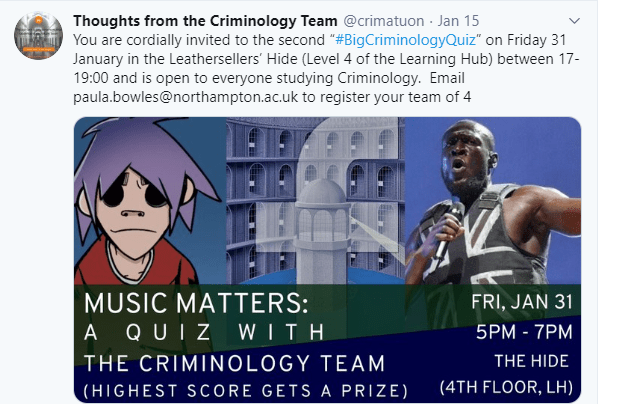
Finally, Friday saw the second ever #BigCriminologyQuiz and the first of the new decade. At the end of the first one, the participants requested that the next one be based on criminology and music. Challenge completed with help from @manosdaskalou, @treventoursu, @svr2727, @5teveh and @jesjames50. This week’s teams have requested a film/tv theme for the next quiz so we’ll definitely have our work cut out! But it’s amazing to see how much criminological knowledge can be shared, even when you’re eating snacks and laughing. [i]
So, what can I take from my criminological week:
- Some of the best criminological discussions happen when people are relaxed
- Getting out of the classroom enables and empowers different voices to be heard
- Getting out of the classroom allows people to focus on each and share their knowledge, recognising that
- A classroom is not four walls within a university, but can be anywhere (a coach, a courtroom a prison, or even the pub!)
- A new environment and a new experience opens the way for discord and dissent, always a necessity for profound discussion within Criminology
- When you open your eyes and your mind you start to see the world very differently
- It is possible (if you try very hard) to ignore the reality of Friday 31 January 23:00 ☹
- It is possible to be an academic, tour guide, mistress of ceremonies and quiz mistress, all in the same week!
Here’s looking forward to next week….not least Thursday’s Changemaker Awards where I seem to have scored a nomination with my #PartnerinCriminology @manosdaskalou.
[i] The first quiz was won by a team made up of 1st and 2nd years. This week’s quiz was won by a group of third years. The next promises to be a battle royale 😊 These quizzes have exposed, just how competitive criminologists can be….


