Home » Violence (Page 11)
Category Archives: Violence

“Letters from America”: III
 For those of you who follow The Criminology Team on Facebook you might have caught @manosdaskalou and I live from Eastern State Penitentiary [ESP]. In this entry, I plan to reflect on that visit in a little more depth.
We first visited ESP in 2011 when the ASC conference was held in Washington, DC. That visit has never left me for a number of reasons, not least the lengths societies are prepared to go in order to tackle crime. ESP is very much a product of its time and demonstrates extraordinarily radical thinking about crime and punishment. For those who have studied the plans for Jeremy Bentham’s panopticon there is much which is familiar, not least the radial design (see illustration below).
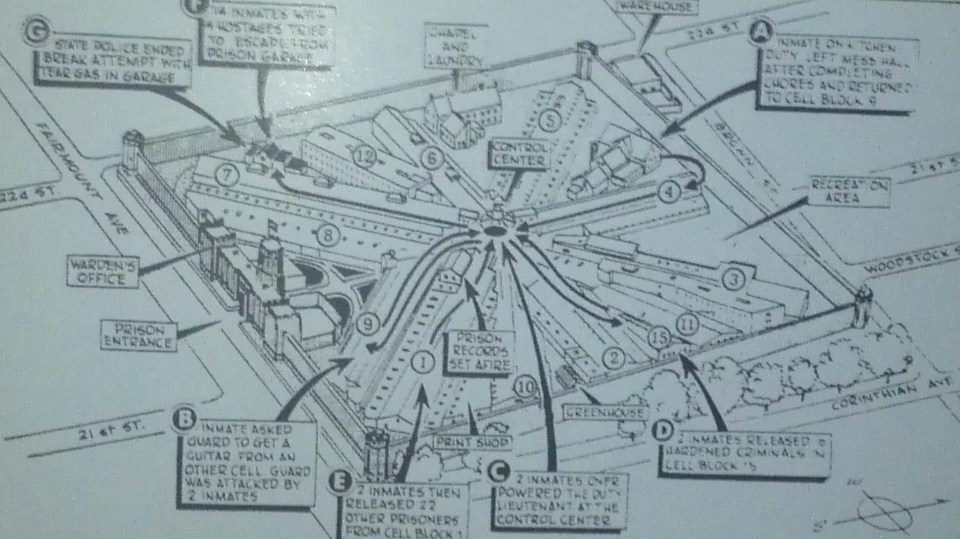
This is an institution designed to resolve a particular social problem; crime and indeed deter others from engaging in similar behaviour through humane and philosophically driven measures. The Philadelphia Society for Alleviating the Miseries of Public Prisons* was philanthropic and guided by religious principles. This is reflected in the term penitentiary; a place for sinners to repent and In turn become truly penitent.
This philosophy was distinct and radical with a focus on reformation of character rather than brutal physical punishment. Of course, scholars such as Ignatieff and Foucault have drawn attention to the inhumanity of such a regime, whether deliberate or unintentional, but that should not detract from its groundbreaking history. What is important, as criminologists, is to recognise ESP’s place in the history of penology. That history is one of coercion, pleading, physical and mental brutality and still permeates all aspects of incarceration in the twenty-first century. ESP have tried extremely hard to demonstrate this continuum of punishment, acknowledging its place among many other institutions both home and abroad.
For me the question remains; can we make an individual change their behaviour through the pains of incarceration? I have argued previously in this blog in relation to Conscientious Objectors, that all the evidence suggests we cannot. ESP, as daunting as it may have been in its heyday, would also seem to offer the same answer. Until society recognises the harm and futility of incarceration it is unlikely that penal reform, let alone abolition, will gain traction.
*For those studying CRI1007 it is worth noting the role of Benjamin Rush in this organisation.
Share this:

Tackling Firearms Trafficking: Follow the Gun!
Dr Helen Poole is Deputy Dean in the Faculty of Health and Society and Lead for University of Northampton’s Research Centre for the Reduction of Gun Crime, Trafficking and Terrorism
Last week I attended the 4th Interpol Firearms Forensics Symposium in Dubrovnik, Croatia. This was the second I have attended, having presented the interim findings of the EU Project EFFECT in Singapore in 2015. EFFECT, which I co-lead with Professor Erica Bowen, looked at many aspects of gun crime, but the focus on trafficking became the predominant area of interest from our findings and recommendations following the Paris attacks, and was a strong focus of this year’s event. In particular, the links between organised firearms trafficking and terrorism were a key focus.
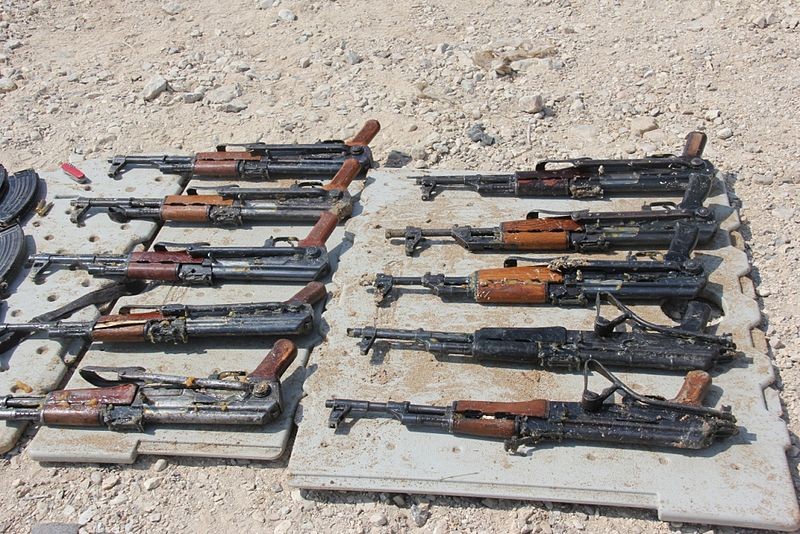
The UK is landlocked and has some of the most rigorous firearms licensing regulations and criminal legislation in the World which helps to keep us relatively safe from this threat, but still we are seeing rising rates of gun related crime in the UK, and some of the guns in use are moving from post-conflict areas such as the Balkan region. In 2015 The Shilling Gang were intercepted smuggling a large haul of military grade firearms into the UK via boat, a number of which emanated from Eastern Europe, and we know that firearms, their parts and accessories, are being imported from the US and Africa via both the dark web and the open net. The threat from junk, antique, converted and 3D printed weapons also present a threat.
Approximately 200 law enforcement officers, forensics experts and academics were present at the event, which highlighted two issues above all else: the importance of investigating officers to ‘follow the gun’; and the need for international cooperation to reduce the threat posed by small arms and light weapons. All too often officers will seize a firearm and identify the suspect, and close the case as detected. However, such an approach risks losing valuable intelligence in terms of where the gun came from, where else it might have been used, and the identification of trafficking routes. By using ballistics comparison technology, such as the International Ballistics Intelligence Network (IBIN), it is possible to compare ballistics intelligence to match crime scenes and, when combined with other forms of evidence and intelligence, identify the individuals or organised groups behind the supply of weapons. This may also lead to the detection of more crimes. However, this requires cooperation between nations to share information in a timely way, facilitated in many cases by Interpol, as well as a change in the mindset of detectives. Following the gun may be regarded as merely creating more work for the individual officer or department, and the detection of the individual crime may be required as the only positive outcome required. However, in terms of harm reduction, following the gun is more likely to reduce the number of future victims, and the serious harm caused to families and communities as a result of the number of crime guns in circulation.
Share this:

A Troubling Ambiguous Order?
Sallek is a graduate from the MSc Criminology. He is currently undertaking doctoral studies at Stellenbosch University, South Africa.
Having spent the early years of my life in Nigeria, one of the first culture shock I experienced in the UK was seeing that its regular police do not wield arms. Unsurprising, in my lecture on the nature and causes of war in Africa, a young British student studying in Stellenbosch University also shared a similar but reverse sentiment – the South African police and private security forces wield arms openly. To her, this was troubling, but, even more distressing is the everyday use of most African militaries in society for internal security enforcement duties. This is either in direct conflict to the conventional understanding on the institutions involved in the criminal justice system, or African States have developed a unique and unconventional system. Thus, this raises a lot of questions needing answers and this entry is an attempt to stimulate further, thoughts and debate on this issue.
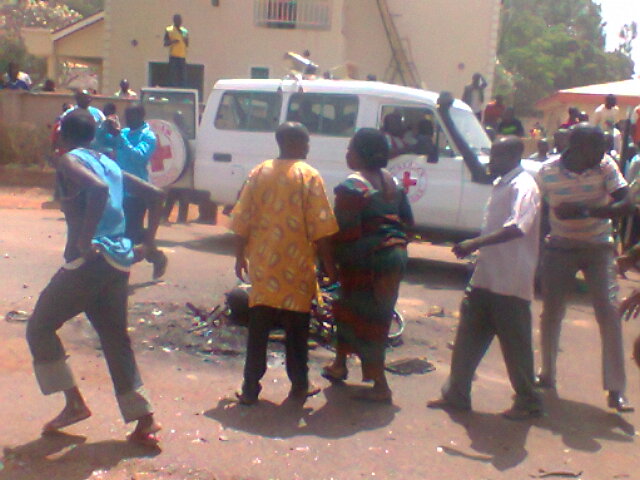
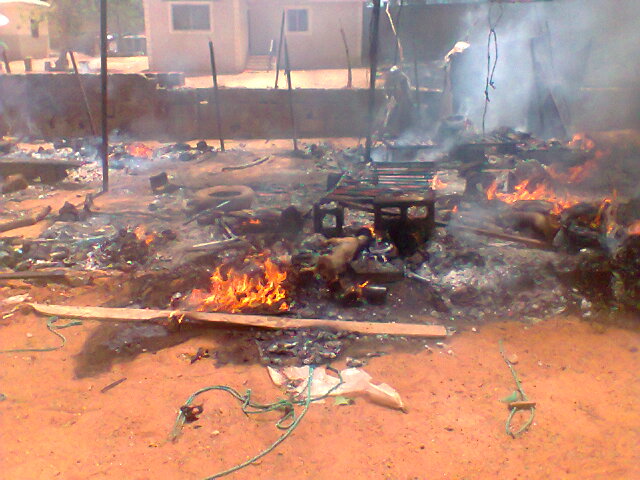
Conventionally, two spheres make up state security, the internal sphere of policing and law enforcement and the external sphere of defence and war-fighting. However, since the end of the Cold War, distinguishing between the two has become particularly difficult because of the internal involvement of the military in society. Several explanations explain why the military has become an active player in the internal sphere doing security enforcement duties in support of the police or as an independent player. Key among this is the general weakness and lack of legitimacy of the police, thus, the use of the military which has the capacity to suppress violence and ‘insurgence.’ Also, a lack of public trust, confidence, and legitimacy of the government is another key reason States resort to authoritarian practices, particularly using the military to clamp down civil society. The recent protests in Togo which turned ‘bloody’ following violent State repression presents a case in point. The recent carnage in Plateau State, Nigeria where herdsmen of similar ethnic origin as the President ‘allegedly’ killed over fifty civilians in cold blood also presents another instance. The President neither condemned the attacks nor declared a national mourning despite public outcry over the complicity of the military in the massacre.
Certainly, using the military for internal security enforcement otherwise known as military aid to civil authority in society comes with attendant challenges. One reason for this is the discrepancy of this role with its training particularly because military training and indoctrination focuses extensively on lethality and the application of force. This often results to several incidences of human rights abuses, the restriction of civil liberty and in extreme cases, summary extrajudicial killings. This situation worsens in societies affected by sectarian violence where the military assumes the leading role of law enforcement to force the return to peace as is the case in Plateau State, Nigeria. The problem with this is, in many of these States, the criminal justice system is also weak and thereby unable to guarantee judicial remedy to victims of State repression.
Consequently, citizens faced by the security dilemma of State repression and violence from armed groups may be compelled to join or seek protection from opposition groups thereby creating further security quandary. In turn, this affects the interaction of the citizenry with the military thereby straining civil-military relations in the State with the end result been the spinning of violence cycle. It also places huge economic burden with lasting impact on State resources, individuals, and corporate bodies and where the military is predatory, insecurity could worsen. The sectarian violence in Plateau State and the Niger Delta region in Nigeria where such military heavy-handedness remains the source of (in)security shows the weakness of this approach, and unless reconsidered, peace could remain elusive. Thus, now more than ever, this ambiguous (dis)order requires reconsideration for a civil approach to security in Africa.