
Home » Violence (Page 10)
Category Archives: Violence

Goodbye 2018….Hello 2019

Now that the year is almost over, it’s time to reflect on what’s gone before; the personal, the academic, the national and the global. This year, much like every other, has had its peaks and its troughs. The move to a new campus has offered an opportunity to consider education and research in new ways. Certainly, it has promoted dialogue in academic endeavour and holds out the interesting prospect of cross pollination and interdisciplinarity.
On a personal level, 2018 finally saw the submission of my doctoral thesis. Entitled ‘The Anti-Thesis of Criminological Research: The case of the criminal ex-servicemen,’ I will have my chance to defend this work, so still plenty of work to do.
For the Criminology team, we have greeted a new member; Jessica Ritchie and congratulated the newly capped Dr Susie Atherton. Along the way there may have been plenty of challenges, but also many opportunities to embrace and advance individual and team work. In September 2018 we greeted a bumper crop of new apprentice criminologists and welcomed back many familiar faces. The year also saw Criminology’s 18th birthday and our first inaugural “Big Criminology Reunion”. The chance to catch up with graduates was fantastic and we look forward to making this a regular event. Likewise, the fabulous blog entries written by graduates under the banner of “Look who’s 18” reminded us all (if we ever had any doubt) of why we do what we do.
Nationally, we marked the centenaries of the end of WWI and the passing of legislation which allowed some women the right to vote. This included the unveiling of two Suffragette statues; Millicent Fawcett and Emmeline Pankhurst. The country also remembered the murder of Stephen Lawrence 25 years earlier and saw the first arrests in relation to the Hillsborough disaster, All of which offer an opportunity to reflect on the behaviour of the police, the media and the State in the debacles which followed. These events have shaped and continue to shape the world in which we live and momentarily offered a much-needed distraction from more contemporaneous news.
For the UK, 2018 saw the start of the Grenfell Tower Inquiry, the Windrush scandal, the continuing rise of the food bank, the closure of refuges, the iniquity of Universal Credit and an increase in homelessness, symptoms of the ideological programmes of “austerity” and maintaining a “hostile environment“. All this against a backdrop of the mystery (or should that be mayhem) of Brexit which continues to rumble on. It looks likely that the concept of institutional violence will continue to offer criminologists a theoretical lens to understand the twenty-first century (cf. Curtin and Litke, 1999, Cooper and Whyte, 2018).
Internationally, we have seen no let-up in global conflict, the situation in Afghanistan, Iraq, Myanmar, Syria, Yemen (to name but a few) remains fraught with violence. Concerns around the governments of many European countries, China, North Korea and USA heighten fears and the world seems an incredibly dangerous place. The awarding of the Nobel Peace Prize to Denis Mukwege and Nadia Murad offers an antidote to such fears and recognises the powerful work that can be undertaken in the name of peace. Likewise the deaths of Professor Stephen Hawking and Harry Leslie Smith, both staunch advocates for the NHS, remind us that individuals can speak out, can make a difference.
To my friends, family, colleagues and students, I raise a glass to the end of 2018 and the beginning of 2019:
‘Let’s hope it’s a good one, without any fear’ (Lennon and Ono, 1974).
References:
Cooper, Vickie and Whyte, David, (2018), ‘Grenfell, Austerity and Institutional Violence,’ Sociological Research Online, 00, 0: 1-10
Curtin, Deane and Litke, Robert, (1999) (Eds), Institutional Violence, (Amsterdam: Rodopi)
Lennon, John and Ono, Yoko, (1974) Happy Xmas (War is Over), [CD], Recorded by John and Yoko: Plastic Ono Band in Shaved Fish. PCS 7173, [s.l.], Apple
Share this:

“Political Drillin”

A recent track that has come to light which incorporates Drill Music is that called ‘Political Drillin’. On the track the artist manages to incorporate quotes from politicians; which proves he is highly deserving of his title ‘DrillMinister’.
What was particularly shocking to me was how easy it was for the governmental quotes to actually fit in with what he was initially rapping about, considering how frowned upon the genre is by these same figures.
It becomes very obvious that the slurs deemed as “violent” are ones that much of us are accustomed to hearing on a daily basis. In my interpretation, the artist seems to be bringing this to light. When young people use similar racial, derogatory terms towards one another it is seen to be violent and makes headlines, but politicians seem to throw these around in parliament without being reprimanded for their actions. Why is this continuously tolerated?
The fact that these comments are known to all and no action is taken against them demonstrates that there is a certain calibre of people that can be deemed as criminal and those who will not. Once again shedding light on the class, age and racial division that is hanging over society.
So once again I put the question out…is drill music a cause of violent crime, or are we simply a criminal society? If the DrillMinister can be labelled violent, surely politicians should be too?
*The image contains a quote from Jess Phillips MP utilised as a lyric by DrillMinister:
https://www.youtube.com/watch?v=spJoRLpDLLM
Share this:


Halloween Prison Tourism

Haley Read is an Associate Lecturer teaching modules in the first and third years.
Yes, that spooky time of the year is upon us! Excited at the prospect of being free to do something at Halloween but deterred by the considerable amount of effort required to create an average-looking carved pumpkin face, I Google, ‘Things to do for Halloween in the Midlands’.
I find that ‘prison (and cell) ghost tours’ are being advertised for tourists who can spend the night where (in)famous offenders once resided and the ‘condemned souls’ of unusual and dangerous inmates still ‘haunt’ the prison walls today. I do a bit more searching and find that more reputable prison museums are also advertising similar events, which promise a ‘fun’ and ‘action packed’ family days out where gift shops and restaurants are available for all to enjoy.
Of course, the lives of inmates who suffered from harsh and brutal prison regimes are commodified in all prison museums, and not just at Halloween related events. What appears concerning is that these commercial and profit-based events seem to attract visitors through promotional techniques which promise to entertain, reinforce common sensical, and at times fabricated (see Barton and Brown, 2015 for examples) understandings of history, crime and punishment. These also present sensationalistic a-political accounts of the past in order to appeal to popular fascinations with prison-related gore and horror; all of which aim to attract customers.
The fascination with attending places of punishment is nothing new. Barton and Brown (2015) illustrates this with historical accounts of visitors engaging in the theatrics of public executions and of others who would visit punishment-based institutions out of curiosity or to amuse themselves. And I suppose modern commercial prison tourism could be viewed as an updated way to satisfy morbid curiosities surrounding punishment and the prison.
The reason that this concerns me is that despite having the potential to educate others and challenge prison stereotypes that are reinforced through the media and True Crime books, commercialised prison events aim to entertain as well as inform. This then has the danger of cementing popular and at times fictional views on the prison that could be seen as being historically inaccurate. Barton and Brown (2015) exemplify this idea by noting that prison museums present inmates as being unusual, harsh historical punishments as being necessary and the contemporary prison system as being progressive and less punitive. However, opposing views suggest that offenders are more ordinary than unusual, that historical punishments are brutal rather than necessary and that many contemporary prisons are viewed as being newer versions of punitive discipline rather than progressive.
Perhaps it could be that presenting a simplified, uncritical and stereotyped version of the past as entertainment prevents prison tourists from understanding the true pains experienced by those who have been incarcerated within the prison (see Barton and Brown, 2015, Sim, 2009). Truer prison museum promotions could inform visitors of staff corruption, the detrimental social and psychological effects of the prison, and that inmates (throughout history) are more likely to be those who are poor, disempowered, previously victimised and at risk of violence and self-harm upon entering prison. But perhaps this would attract less visitors/profit…And so for another year I will stick to carving pumpkins.
Photo by Markus Spiske temporausch.com on Pexels.com
Barton, A and Brown, A. (2015) Show me the Prison! The Development of Prison Tourism in the UK. Crime Media and Culture. 11(3), pp.237-258. Doi: 10.1177/1741659015592455.
Sim, J. (2009) Punishment and Prisons: Power and the Carceral State. London: Sage.
Share this:


Questions, questions, questions…..
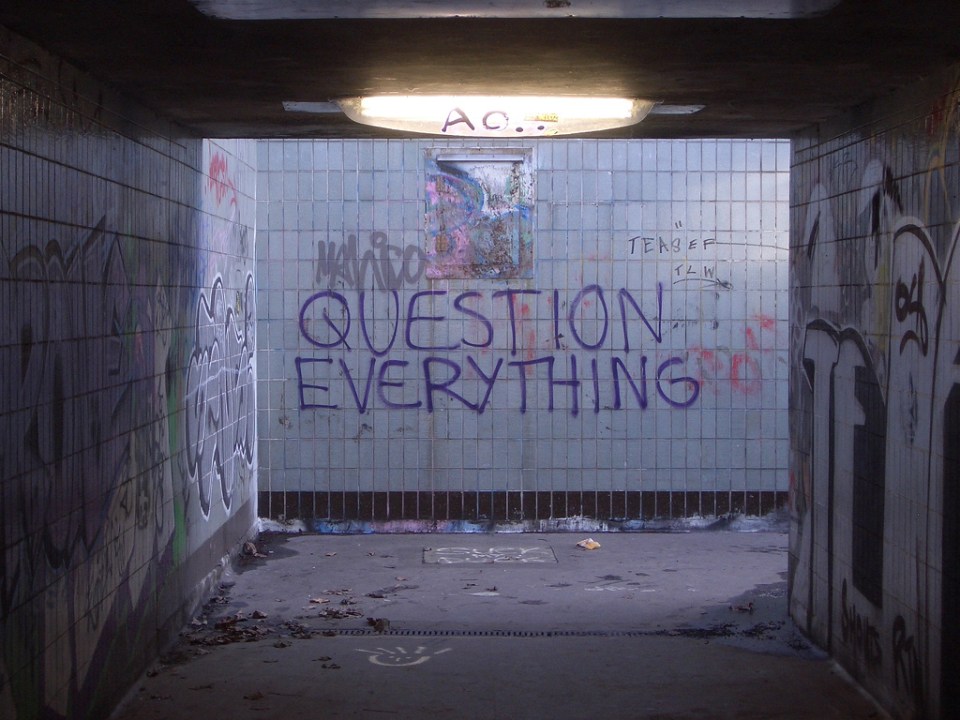
Over the last two weeks we have welcomed new and returning students to our brand-new campus. From the outside, this period of time appears frenetic, chaotic, and incredibly noisy. During this period, I feel as if I am constantly talking; explaining, indicating, signposting, answering questions and offering solutions. All of this is necessary, after all we’re all in a new place, the only difference is that some of us moved in before others. This part of my role has, on the surface, little to do with Criminology. However, once the housekeeping is out of the way we can move to more interesting criminological discussion.
For me, this focuses on the posing of questions and working out ways in which answers can be sought. It’s a common maxim, that within academia, there is no such thing as a silly question and Criminology is no exception (although students are often very sceptical). When you are studying people, everything becomes complicated and complex and of course posing questions does not necessarily guarantee a straightforward answer. As many students/graduates over the years will attest, criminological questions are often followed by yet more criminological questions… At first, this is incredibly frustrating but once you get into the swing of things, it becomes incredibly empowering, allowing individual mental agility to navigate questions in their own unique way. Of course, criminologists, as with all other social scientists, are dependent upon the quality of the evidence they provide in support of their arguments. However, criminology’s inherent interdisciplinarity enables us to choose from a far wider range of materials than many of our colleagues.
So back to the questions…which can appear from anywhere and everywhere. Just to demonstrate there are no silly questions, here are some of those floating around my head currently:
- This week I watched a little video on Facebook, one of those cases of mindlessly scrolling, whilst waiting for something else to begin. It was all about a Dutch innovation, the Tovertafel (Magic Table) and I wondered why in the UK, discussions focus on struggling to feed and keep our elders warm, yet other countries are interested in improving quality of life for all?
- Why, when with every fibre of my being, I abhor violence, I am attracted to boxing?

3. Why in a supposedly wealthy country do we still have poverty?
4. Why do we think boys and girls need different toys?

5. Why does 50% of the world’s population have to spend more on day-to-day living simply because they menstruate?
6. Why as a society are we happy to have big houses with lots of empty rooms but struggle to house the homeless?

7. Why do female ballroom dancers wear so little and who decided that women would dance better in extremely high-heeled shoes?
This is just a sample and not in any particular order. On the surface, they are chaotic and disjointed, however, what they all demonstrate is my mind’s attempt to grapple with extremely serious issues such as inequality, social deprivation, violence, discrimination, vulnerability, to name just a few.
So, to answer the question posed last week by @manosdaskalou, ‘What are Universities for?’, I would proffer my seven questions. On their own, they do not provide an answer to his question, but together they suggest avenues to explore within a safe and supportive space where free, open and academic dialogue can take place. That description suggests, for me at least, exactly what a university should be for!
And if anyone has answers for my questions, please get in touch….
Share this:


The Voice Behind the Music

Marginalised voices were the focal point of my dissertation.
My dissertation explored social issues through the musical genres of Rap and Hip-Hop. During the time period of writing my dissertation there was the rising debate surrounding the association of a new genre, Drill music, being linked to the rise in violent crimes by young people in England (London specifically). The following link to an article from the Guardian newspaper will provide a greater insight to the subject matter:
The idea of music having a direct correlation with criminality sweeps issues such as poverty, social deprivation, class and race all under the rug; when in reality these are just a few of the definitive issues that these marginalised groups face. We see prior examples of this in the late 80s, with rap group N.W.A with their song “F*** the police”. The song surrounded the topic of police brutality and brought light to the disgust and outrage of the wider community to this issue. Simultaneously to this, the N.W.A were refused from running concerts as they were accused of starting revolts. The song was made as a response to their environment, but why is freedom of speech limited to certain sectors of society?
In the present day, we see young people having lower prospects of being homeowners, high rates of unemployment, and the cost of living increasing. In essence the rich are getting richer and the poor continue to struggle; the violence of austerity at its finest. Grenfell Tower is the perfect example of this, for the sake of a cheaper cost lives were lost. Simply because these individuals were not in a position to greatly impact the design of their housing. Monetary status SHOULD NOT determine your right to life, but unfortunately in those circumstances it did.
The alienation of young people was also a topic that was highlighted within my research into my dissertation. In London specifically, youth clubs are being closed down and money is being directed heavily towards pensions. An idea would be to invest in young people as this would potentially provide an incentive and subsequently decrease the prospect of getting involved in negative activities.
In no means, was the aim to condone the violence but instead to simply shed light on the issues that young people face. There is a cry for help but the issue is only looked at from the surface as a musical problem. If only it were that simple, maybe considering the voice behind the music would lead to the solution of the problem.
Share this:


The not so beautiful game?

Dr Stephen O’Brien is the Dean for the Faculty of Health and Society at the University of Northampton
The country is in the middle of “World Cup Fever”. At the time of writing, England play Sweden in a quarter final match tomorrow that if successful would see them through to a World Cup semi-final for the first time since Italia 90. We all know what happened next; the so called Gazza semi-final ending in tears. There is a large caveat though to this current wave of football fever. I suspect my friends north of the border are not sharing this fever in the way people are in England given the historic rivalry associated with one of the oldest international contests on a football pitch. That set aside, which is difficult when one is married to a Scot, as a dedicated football supporter the World Cup in Russia has, thus far, been a roaring success. It is probably the best tournament that I can remember watching for all sorts of reasons. Established football nations with a pedigree such as Holland and Italy failed to qualify and the so called “lesser” nations have been punching above their football weight in knocking out pre-tournament favourites Germany and Argentina. It is according to the vast majority of media reports a fantastic spectacle. Everyone seems to have forgotten the political disquiet about awarding the tournament to Russia in the first place with on-going concerns about their recent sporting track record and their place generally on the world’s political stage. I suspect even in Ukraine we are all entranced by the festival unfolding before our very eyes on our television screens each day. Football at Russia 2018 is indeed the beautiful game.
Scratch the surface however and things are perhaps not so beautiful. Any quick google search of the terms football and crime will yield a plethora of news stories, documentaries and other media. The major headline is always hooliganism which has dogged football for years. At its height in the UK in the 1970s the establishment response to this was robust with reference to legislative change, new criminal offences and the re-construction of football grounds to be hooligan proof. Hillsborough changed all that. Not immediately because the hooligan narrative was pervasive throughout the initial reporting, police response, subsequent enquiries and reports. A future blog will explore Hillsborough and the fall out in much more detail. For now let’s return to the World Cup. The hooligan narrative was certainly played out in the run up to the tournament with media reports of the dangers posed by staging it in Russia. By and large this has not materialised, but it must be clear that hooliganism and violence are never far away when passions run high but let’s hope it stays away. The other term which crops up in the google search is corruption and FIFA as the lead organisation has over the past years never been too far away from claims and counter claims about corruption linked to financial irregularity, bribing of officials in an attempt to win the right to stage the tournament, tax issues and ticket touting. Indeed the evidence suggests that financial irregularity appears to be rife from the top to the bottom of the football organisational structure. This has affected clubs as diverse as Juventus, Leeds United, Hartlepool and Glasgow Rangers. Football is a global business and the financial rewards are immense. The consequences are far reaching for clubs, organisations and the very game itself. I would argue that negativity around the financial implications of football has driven a wedge between club, country and the ordinary fan. Many have become disillusioned with the game.
However, despite the concerns about Russia 2018 and Qatar 2020 something about the actual tournament, the teams competing and the players themselves has changed in many peoples’ minds over the past three weeks. It looks like the ordinary fan is reconnecting. The England team, young and inexperienced they may be but they are social media savvy and have shown that they are also fans of the game and not aloof from the rest of us who marvel at how they and others play. I have even heard die hard Scottish fans remark that they are finding it hard to dislike the England team. Now that is a turn up for the books. The beautiful game may well be a terrible beauty to quote to W. B. Yeats but let’s revel in the current beauty. If anyone is in doubt about the game’s beauty take a look at Brazil’s fourth goal in the 1970 final against Italy. Scored by Carlos Alberta but crafted like a fine poem by the rest of the team. It is magical and my personal World Cup favourite moment.
So as we venture into the final rounds of this year’s World Cup we can all enjoy this international festival of football and hope that things are genuinely starting to change. Success on the pitch means everything and has such an impact on the country as a whole. By the time you read this that fever I mentioned at the start might have been ratcheted up or indeed may have dissipated. As a confessed Republic of Ireland fan I have to admit I’m quietly enjoying England’s success to date and secretly wish them well.
Share this:


Public attitudes towards male victimisation

I graduated from the University of Northampton as a Criminology student in July 2016 and not a day goes by where I don’t miss studying. I miss everything about the University experience, from the lectures and seminars, to the countless hours spent working in the library. One of the positive things about being a graduate however, is that any time spent scrolling through social media or binge-watching a Netflix series is guilt-free. There is no dissertation to write or any exams to revise for any more, meaning you can enjoy your leisure time without the dreaded guilt that you’re not spending your time productively. I have, admittedly, taken this privilege too far, and spend far too much time on my phone. Bizarrely, I spend a lot of my time scrolling through comments on social media posts, even when I know there are bound to be comments which will annoy me.
For instance, last month, a video clip from ITV’s ‘This Morning’ emerged on Twitter and Instagram, in which Phillip Schofield and Holly Willoughby interviewed a young male who had suffered as a victim of domestic violence at the hands of his female partner. He revealed how he had been starved, physically and mentally abused by his girlfriend and that his injuries were so severe, they were almost fatal. What was really encouraging to see, were the hundreds of supportive comments left by people online. The majority of people were praising the man for his bravery and recognised that there needs to be much greater awareness for male victimisation. Sadly, the comments that caught my attention were “what a wimp” and “…he shoulda manned up sooner!”. These comments really riled me, as for my own dissertation, I interviewed an organisation specialising in support for male victims of domestic violence. It was shocking to discover the challenges the organisation face in terms of securing public funding, professional support, and most importantly, encouraging male victims to come forward and seek help. One of the over-arching themes which emerged was that men are still very reluctant to seek help, largely due to embarrassment and fears of being ridiculed. There is still a societal perception that men should be able to deal with problems by themselves, and that if they are unable to, they must be “weak”. It is for this reason that these particular comments left by strangers online infuriated me so much. Quite simply, domestic violence is a human issue, not just a gender one. Not only this, but these few words have the potential to be extremely damaging and may deter men who are suffering in silence from getting the help they need.
Over two years have passed since I carried out my research on this topic area and I am still very passionate about it. I have nothing but admiration for the young male on ‘This Morning’ and am hopeful that his bravery will encourage other male victims to seek help. I also hope that the positive comments online will always overshadow the thoughtless, negative ones. Help is out there and no victim, regardless of their gender, should be discouraged from seeking it.
Share this:


(In)Human Rights in the “Compliant Environment”
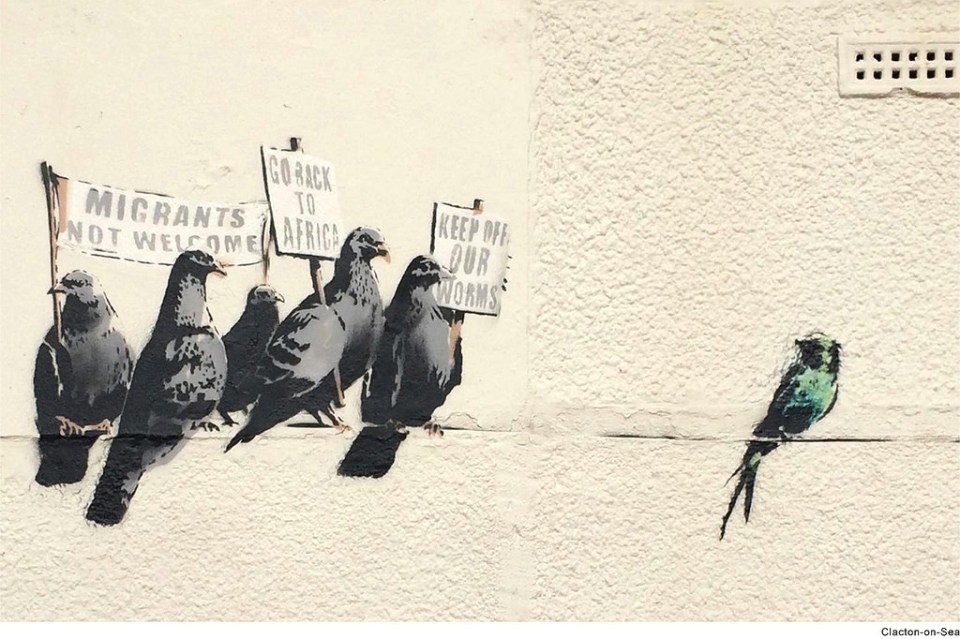
In the aftermath of the Windrush generation debacle being brought into the light, Amber Rudd resigned, and a new Home Secretary was appointed. This was hailed by the government as a turning point, an opportunity to draw a line in the sand. Certainly, within hours of his appointment, Sajid Javid announced that he ‘would do right by the Windrush generation’. Furthermore, he insisted that he did not ‘like the phrase hostile’, adding that ‘the terminology is incorrect’ and that the term itself, was ‘unhelpful’. In its place, Javid offered a new term, that of; ‘a compliant environment’. At first glance, the language appears neutral and far less threatening, however, you do not need to dig too deep to read the threat contained within.
According to the Oxford Dictionary (2018) the definition of compliant indicates a disposition ‘to agree with others or obey rules, especially to an excessive degree; acquiescent’. Compliance implies obeying orders, keeping your mouth shut and tolerating whatever follows. It offers, no space for discussion, debate or dissent and is far more reflective of the military environment, than civilian life. Furthermore, how does a narrative of compliance fit in with a twenty-first century (supposedly) democratic society?
The Windrush shambles demonstrates quite clearly a blatant disregard for British citizens and implicit, if not, downright aggression. Government ministers, civil servants, immigration officers, NHS workers, as well as those in education and other organisations/industries, all complying with rules and regulations, together with pressures to exceed targets, meant that any semblance of humanity is left behind. The strategy of creating a hostile environment could only ever result in misery for those subjected to the State’s machinations. Whilst, there may be concerns around people living in the country without the official right to stay, these people are fully aware of their uncertain status and are thus unlikely to be highly visible. As we’ve seen many times within the CJS, where there are targets that “must” be met, individuals and agencies will tend to go for the low-hanging fruit. In the case of immigration, this made the Windrush generation incredibly vulnerable; whether they wanted to travel to their country of origin to visit ill or dying relatives, change employment or if they needed to call on the services of the NHS. Although attention has now been drawn to the plight of many of the Windrush generation facing varying levels of discrimination, we can never really know for sure how many individuals and families have been impacted. The only narratives we will hear are those who are able to make their voices heard either independently or through the support of MPs (such as David Lammy) and the media. Hopefully, these voices will continue to be raised and new ones added, in order that all may receive justice; rather than an off-the-cuff apology.
However, what of Javid’s new ‘compliant environment’? I would argue that even in this new, supposedly less aggressive environment, individuals such as Sonia Williams, Glenda Caesar and Michael Braithwaite would still be faced with the same impossible situation. By speaking out, these British women and man, as well as countless others, demonstrate anything but compliance and that can only be a positive for a humane and empathetic society.
Share this:


‘I read the news today, oh boy’
 The English army had just won the war
A crowd of people turned away
But I just had to look
Having read the book
(Lennon and McCartney, 1967),
The news these days, without fail, is terrible. Wherever you look you are confronted by misery, death, destruction and terror. Regular news channels and social media bombard us with increasingly horrific tales of people living and dying under tremendous pressure, both here in the UK and elsewhere in the world. Below are just a couple of examples drawn from the mainstream media over the space of a few days, each one an example of individual or collective misery. None of them are unique and they all made the headlines in the UK.
‘Deaths of UK homeless people more than double in five years’
‘Syria: 500 Douma patients had chemical attack symptoms, reports say’
‘London 2018 BLOODBATH: Capital on a knife edge as killings SOAR to 56 in three months’
So how do we make sense of these tumultuous times? Do we turn our backs and pretend it has nothing to do with us? Can we, as Criminologists, ignore such events and say they are for other people to think about, discuss and resolve?
At the beginning of the twenty-first century, Stanley Cohen, posed a similar question; ‘How will we react to the atrocities and suffering that lie ahead?’ (2001: 287). Certainly his text States Of Denial: Knowing about Atrocities and Suffering makes clear that each of us has a part to play, firstly by ‘knowing’ that these things happen; in essence, bearing witness and acknowledging the harm inherent in such atrocities. But is this enough?
Cohen, persuasively argues, that our understanding has fundamentally changed:
The political changes of the last decade have radically altered how these issues are framed. The cold-war is over, ordinary “war” does not mean what it used to mean, nor do the terms “nationalism”, “socialism”, “welfare state”, “public order”, “security”, “victim”, “peace-keeping” and “intervention” (2001: 287).
With this in mind, shouldn’t our responses as a society, also have changed, adapted to these new discourses? I would argue, that there is very little evidence to show that this has happened; whilst problems are seemingly framed in different ways, society’s response continues to be overtly punitive. Certainly, the following responses are well rehearsed;
- “move the homeless on”
- “bomb Syria into submission”
- “increase stop and search”
- “longer/harsher prison sentences”
- “it’s your own fault for not having the correct papers?”
Of course, none of the above are new “solutions”. It is well documented throughout much of history, that moving social problems (or as we should acknowledge, people) along, just ensures that the situation continues, after all everyone needs somewhere just to be. Likewise, we have the recent experiences of invading Iraq and Afghanistan to show us (if we didn’t already know from Britain’s experiences during WWII) that you cannot bomb either people or states into submission. As criminologists, we know, only too well, the horrific impact of stop and search, incarceration and banishment and exile, on individuals, families and communities, but it seems, as a society, we do not learn from these experiences.
Yet if we were to imagine, those particular social problems in our own relationships, friendship groups, neighbourhoods and communities, would our responses be the same? Wouldn’t responses be more conciliatory, more empathetic, more helpful, more hopeful and more focused on solving problems, rather than exacerbating the situation?
Next time you read one of these news stories, ask yourself, if it was me or someone important to me that this was happening to, what would I do, how would I resolve the situation, would I be quite so punitive? Until then….
Whoever fights monsters should see to it that in the process he does not become a monster. And when you look long into an abyss, the abyss also looks into you (Nietzsche, 1886/2003: 146)
References:
Cohen, Stanley, (2001), States Of Denial: Knowing about Atrocities and Suffering, (Cambridge: Polity Press)
Lennon, John and McCartney, Paul, (1967), A Day in the Life, [LP]. Recorded by The Beatles in Sgt Pepper’s Lonely Hearts Club Band, EMI Studios: Parlaphone
Nietzsche, Friedrich, (1886/2003), Beyond Good and Evil: Prelude to a Philosophy of the Future, tr. from the German by R. J. Hollingdale, (London: Penguin Books)
Share this:


A Failing Cultural or Criminal Justice System?
Sallek is a graduate from the MSc Criminology. He is currently undertaking doctoral studies at Stellenbosch University, South Africa.
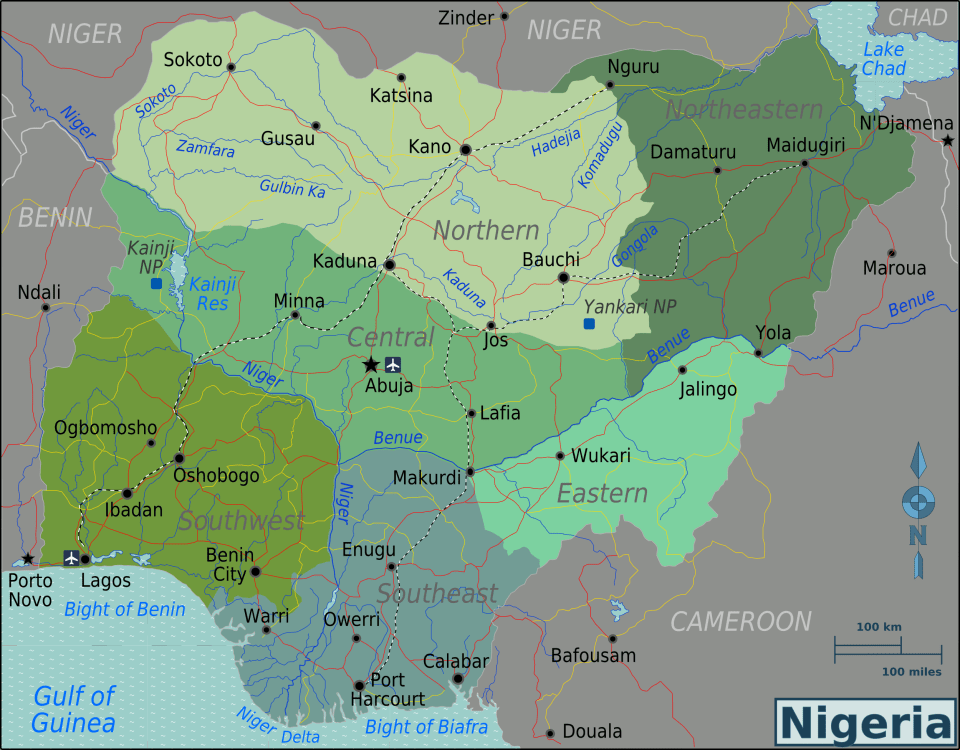
In this piece, I reflect on the criminal justice system in Nigeria showing how a cultural practice evoked a social problematique, one that has exposed the state of the criminal justice system of the country. While I dissociate myself from the sect, I assume the place of the first person in contextualizing this discourse.
In line with the norm, our mothers were married to them. Having paid the bride wealth, even though they have no means, no investment and had little for their upkeep, they married as many as they could satisfy. In our number, they birth as many as their strength could allow, but, little did we know the intention is to give us out to tutelage from religious teachers once we could speak. So, we grew with little or no parental care, had little or no contact, and the street was to become our home where we learnt to be tough and strong. There we learnt we are the Almajiri (homeless children), learning and following the way and teaching of a teacher while we survived on alms and the goodwill of the rich and the sympathetic public.
As we grew older, some learnt trades, others grew stronger in the streets that became our home, a place which toughened and strengthened us into becoming readily available handymen, although our speciality was undefined. We became a political tool servicing the needs of desperate politicians, but, when our greed and their greed became insatiable, they lost their grip on us. We became swayed by extremist teachings, the ideologies were appealing and to us, a worthy course, so, we joined the sect and began a movement that would later become globally infamous. We grew in strength and might, then they coerced us into violence when in cold blood, their police murdered our leader with impunity. No one was held responsible; the court did nothing, and no form of judicial remedy was provided. So, we promised full scale war and to achieve this, we withdrew, strategized, and trained to be surgical and deadly.
The havoc we created was unimaginable, so they labelled us terrorists and we lived the name, overwhelmed their police, seized control of their territories, and continued to execute full war of terror. We caused a great humanitarian crisis, displaced many, and forced a refugee crisis, but, their predicament is better than our childhood experience. So, when they sheltered these displaced people in camps promising them protection, we defiled this fortress and have continued to kill many before their eyes. The war they waged on us using their potent monster, the military continuous to be futile. They lied to their populace that they have overpowered us, but, not only did we dare them, we also gave the military a great blow that no one could have imagined we could. The politicians promised change, but we proved that it was a mere propaganda when they had to negotiate the release of their daughters for a ransom which included releasing our friends in their custody. After this, we abducted even more girls at Dapchi. Now I wonder, these monsters we have become, is it our making, the fault of our parents, a failure of the criminal justice system, or a product of society?


