
Home » State (Page 2)
Category Archives: State

Protect international law

In criminological discourses the term “war crime” is a contested one, not because there are no atrocities committed at war, but because for some of us, war is a crime in its own right. There is an expectation that even in a war there are rules and therefore the violation of these rules could lead to war crimes. This very focused view on war is part of a wider critique of the discipline. Several criminologists including, Ruggiero, DiPietro, McGarry and Walklate, to name a few, have argued that there is less focus on war as a crime, instead war is seen more as part of a metaphor used in response to social situations.
As far back as the 1960s, US President Johnson in his state of the union address, announced “The administration today here and now declares unconditional war on poverty in America”. What followed in the 1964 Economic Opportunity Act, was seen as the encapsulation of that proclamation. In some ways this announcement was ironic considering that the Vietnam war was raging at the time, 4 years before the well documented My Lai massacre. A war crime that aroused the international community; despite the numbers of soldiers involved in the massacre, only the platoon leader was charged and given a life sentence, later commuted to three and a half years incarceration (after a presidential intervention). Anyone can draw their own conclusion if the murder of approximately 500 people and the rape of women and children is reflected in this sentence. The Vietnam war was an ideological war on communism, leaving the literal interpretation for the historians of the future. In a war on ideology the “massacre” was the “collateral damage” of the time.
After all for the administration of the time, the war on poverty was the one that they tried to fight against. Since then, successive politicians have declared additional wars, on issues namely drugs and terror. These wars are representations of struggles but not in a literal sense. In the case of drugs and terrorism criminology focused on trafficking, financing and organised crimes but not on war per se. The use of war as a metaphor is a potent one because it identifies a social foe that needs to be curtailed and the official State wages war against it. It offers a justification in case the State is accused being heavy handed. For those declaring war on issues serves by signalling their resolve but also (unwittingly or deliberately) it glorifies war as an cleansing act. War as a metaphor is both powerful and dangerous because it excuses State violence and human rights violations. What about the reality of war?
As early as 1936, W.A Bonger, recognised war as a scourge of humanity. This realisation becomes ever more potent considering in years to come the world will be enveloped in another world war. At the end of the war the international community set up the international criminal court to explore some of the crimes committed during the war, namely the use of concentration camps for the extermination of particular populations. in 1944 Raphael Lemkin, coined the term genocide to identify the systemic extermination of Jews, Roma, Slavic people, along with political dissidents and sexual deviants, namely homosexuals.
In the aftermath of the second world war, the Nuremberg trials in Europe and the Tokyo trials in Asia set out to investigate “war crimes”. This became the first time that aspects of warfare and attitudes to populations were scrutinised. The creation of the Nuremberg Charter and the outcomes of the trials formulated some of the baseline of human rights principles including the rejection of the usual, up to that point, principle of “I was only following orders”. It also resulted in the Nuremberg Code that set out clear principles on ethical research and human experimentation. Whilst all of these are worthwhile ideas and have influenced the original formation of the United Nations charter it did not address the bigger “elephant” in the room; war itself. It seemed that the trials and consequent legal discourses distanced themselves from the wider criminological ideas that could have theorised the nature of war but most importantly the effects of war onto people, communities, and future relations. War as an indiscriminate destructive force was simply neglected.
The absence of a focused criminological theory from one end and the legal representation as set in the original tribunals on the other led to a distinct absence of discussions on something that Alfred Einstein posed to Sigmund Freud in early 1930s, “Why war?”. Whilst the trials set up some interesting ideas, they were criticised as “victor’s justice”. Originally this claim was dismissed, but to this day, there has been not a single conviction in international courts and tribunals of those who were on the “victors’” side, regardless of their conduct. So somehow the focus changed, and the international community is now engaged in a conversation about the processes of international courts and justice, without having ever addressed the original criticism. Since the original international trials there have been some additional ones regarding conflicts in Yugoslavia and Rwanda. The international community’s choice of countries to investigate and potentially, prosecute has brought additional criticism about the partiality of the process. In the meantime, international justice is only recognised by some countries whilst others choose not to engage. War, or rather, war crimes become a call whenever convenient to exert political pressure according to the geo-political relations of the time. This is not justice, it is an ad hoc arrangement that devalues the very principles that it professes to protect.
This is where criminology needs to step up. We have for a long time recognised and conceptually described different criminalities, across the spectrum of human deviance, but war has been left unaccounted for. In the visions of the 19th and 20th century social scientists, a world without war was conceptualised. The technological and social advancements permitted people to be optimistic of the role of international institutions sitting in arbitration to address international conflicts. It sounds unrealistic, but at the time when this is written, we are witness to another war, whilst there are numerous theatres of wars raging, leaving a trail of continuous destruction. Instead of choosing sides, splitting the good from the bad and trying to justify a just or an unjust war, maybe we should ask, “Why war”? In relation to youth crime, Rutherford famously pondered if we could let children just grow out of crime. Maybe, as an international community of people, we should do the same with war. Grow out of the crime of war. To do so we would need to stop the heroic drums, the idolisation of the glorious dead and instead, consider the frightened populations and the long stain of a violence which I have blogged about before: The crime of war
Share this:


No April Fools
The first of April has consisted of a steep 54% rise in what energy company’s can charge customers for using energy, with further rises set to occur in October. This coincides with rises to other bills such as council tax, national insurance and water within a climate of inflation. Previous to this many were struggling to make ends meet…what are these people supposed to do now?
Russia’s atrocities and Covid-19 have been blamed for the steep price increases and inflation. I suspect that employers will be using this as a reason to not increase the persistent low rises in wages that workers are receiving, all whilst their bosses are becoming richer and richer. Of course, both Russia and Covid will have a significant impact on the economy, however, it does not take a genius to be aware that people have been struggling to survive well before this, hence terms like, food poverty, period poverty and fuel poverty predate these issues. Also, so do the persistent low rises in wages for workers.
Apparently, MPs are due a £2,200 pay rise which whilst it seems low (2.7%) compared to inflation, a few MPs themselves (such as Zarah Sultana) have stated that they do not need this pay rise as they already receive a high paying wage.
Oh, and let us not forget that the increasing energy prices will ensure that privatised fuel companies such as Shell and BP continue to profit, with a predicted profit of £40 BILLION for this year.
Meanwhile benefits for those who are not formally employed and spend a higher proportion of money on household bills and rent are set to increase by 3.1% – a rise which will not cover these price increases.
How is it that employers and the State cannot afford to pay people more – but can ensure high wages for the already rich, privileged and powerful?
It is not surprising that the government’s measures to deal with the problem, such as one-off payments and energy loans, have been heavily criticised as inadequate and significantly failing to support the lowest income homes. The government employs a group of elites and many are completely out of touch with reality. Apparently the man presiding over these measures, millionaire Rishi Sunak and his billionaire wife, often donate to charitable causes, such as donating £100,000 to Rishi’s former elitist private school. Because a private school in need is a pressing cause…yeah right!

The opposition parties have rightly criticised the Conservatives take on this but listening to Keir Starmer’s bumbling take on what Labour would do to solve these issues is also worrying. During an interview he stated that windfall tax could be a solution ‘for right now’ with no feasible long term plan. My usual vote for Labour in May will be damage control against more Tory time in power.
A long term TAX on THE RICH to use this money to support those that need it is not even that simple, given that the government accepts donations from the super-rich it is unlikely that decisions would be made to genuinely reduce inequality between the rich and poor. The world will never be a better place if those in power continue to focus on their own interests and huge profits in place of looking after people. The rise in energy prices on the first of this month was no April Fools’ joke…I really wish that it was.
Share this:


Rule makers, rule breakers and the rest of us
There are plenty of theories about why rules are broken, arguments about who make the rules and about how we deal with rule breakers. We can discuss victimology and penology, navigating our way around these, decrying how victims and offenders are poorly treated within our criminal justice systems. We think about social justice, but it seems ignore the injustice perpetrated by some because we can somehow find an excuse for their rule breaking or point out some good deed somewhere along the line. And we lament at how some get away with rule breaking because of their status or power. But what is to be done about people that break the rules and in doing so cause or may cause considerable harm to others; to the rest of us?
Recently, Greece imposed a new penalty system upon those over 60 that are not vaccinated against Covid. Pensioners who have had real reductions in their pensions are now to be hit with a fine, a rolling fine at that, if they do not get vaccinated. This is against a backdrop of poor vaccination rates which seem to have improved significantly since the announcement of what many see as draconian measures by a right-wing government. There are those that argue that vaccination ought to be a choice, and this has been brought into focus by the requirements for health workers and those in the care profession to be vaccinated in this country. And we’ve heard arguments from industry against vaccination passports which would allow people to get into large venues and a consistent drip-drip effect of how damaging the covid rules are to the leisure industry and aviation, as well as the young people in society.
So, would it have been far more acceptable to have no rules at all around Covid? Should we have simply carried on and hoped that eventually herd immunity would kick in? Let’s not forget of course that the health service would have been so overwhelmed that many people will have died from illnesses other than Covid (they undoubtedly have to some extent anyway). The fittest will have survived and of course, the richest or most resourceful. Businesses will have been on their knees as workers failed to turn up for work, either because they were too ill or have moved on from this life and few customers will have thought about quaffing pints, clubbing, or venturing off to some faraway sunny place (not that they’d be particularly welcome there coming from plague island). It would have felt more like some Darwinian evolutionary experiment than civilised society.
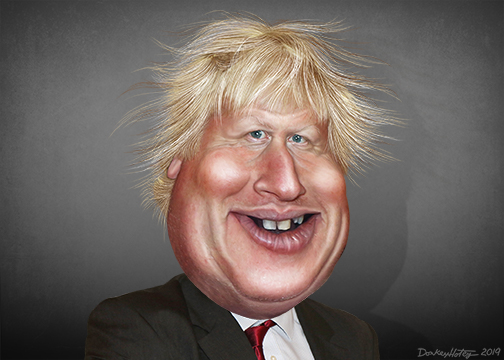
It seems that making some rules for the good of society is necessary. Of course, there will be those that break the rules and as a society, we struggle to determine what is to be done with them. Fines are too harsh, inappropriate, draconian. Being caring, educating, works for some but let’s be honest, there are those that will break the rules regardless. Whilst we can argue about what should be done with those that break the rules, about the impact they have on society, about victims and crimes, perhaps the most pressing argument is about equality of justice. The rest of us, those that didn’t break the rules, might question how draconian the rules were (are) and we might question the punishments meted out to those that broke the rules. But what really hurts, where we really feel hard done by, let down, angry is to see that those that made the rules, broke the rules and for them we don’t get to consider whether the punishment is draconian or too soft. There are no consequences for the rule makers even when they are rule breakers. It seems a lamentable fact that we have a system of governance, be that situated in politics or business, that advocates a ‘do as I say’ rather than ‘do as I do’ mentality. The moral compass of those in power seems to be seriously misaligned. As the MP David Davis calls for the resignation of Boris Johnson and says that he has to go, he should look around and he might realise, they all need to go. This is not a case of one rotten apple, the whole crop is off, and it stinks to high heaven.
Share this:


The pathology of performance management: obscuration, manipulation and power

My colleague @manosdaskalou’s recent blog Do we have to care prompted me to think about how data is used to inform government, its agencies and other organisations. This in turn led me back to the ideas of New Public Management (NPM), later to morph into what some authors called Administrative Management. For some of you that have read about NPM and its various iterations and for those of you that have lived through it, you will know that the success or failure of organisations was seen through a lens of objectives, targets and performance indicators or Key Performance Indicators (KPIs). In the early 1980s and for a decade or so thereafter, Vision statements, Mission statements, objectives, targets, KPI’s and league tables, both formal and informal became the new lingua franca for public sector bodies, alongside terms such as ‘thinking outside the box’ or ‘blue sky thinking’. Added to this was the media frenzy when data was released showing how organisations were somehow failing.
Policing was a little late joining the party, predominately as many an author has suggested, for political reasons which had something to do with neutering the unions; considered a threat to right wing capitalist ideologies. But policing could not avoid the evidence provided by the data. In the late 1980s and beyond, crime was inexorably on the rise and significant increases in police funding didn’t seem to stem the tide. Any self-respecting criminologist will tell you that the link between crime and policing is tenuous at best. But when politicians decide that there is a link and the police state there definitely is, demonstrated by the misleading and at best naïve mantra, give us more resources and we will control crime, then it is little wonder that the police were made to fall in line with every other public sector body, adopting NPM as the nirvana.
Since crime is so vaguely linked to policing, it was little wonder that the police managed to fail to meet targets on almost every level. At one stage there were over 400 KPIs from Her Majesty’s Inspectorate of Constabulary, let alone the rest imposed by government and the now defunct Audit Commission. This resulted in what was described as an audit explosion, a whole industry around collecting, manipulating and publishing data. Chief Constables were held to account for the poor performance and in some cases chief officers started to adopt styles of management akin to COMPSTAT, a tactic born in the New York police department, alongside the much vaunted ‘zero tolerance policing’ style. At first both were seen as progressive. Later, it became clear that COMPSTAT was just another way of bullying in the workplace and zero tolerance policing was totally out of kilter with the ethos of policing in England and Wales, but it certainly left an indelible mark.
As chief officers pushed the responsibility for meeting targets downwards through so called Performance and Development Reviews (PDRs), managers at all levels became somewhat creative with the crime figures and manipulating the rules around how crime is both recorded and detected. This working practice was pushed further down the line so that officers on the front line failed to record crime and became more interested in how to increase their own detection rates by choosing to pick what became known in academic circles as’ low hanging fruit’. Easy detections, usually associated with minor crime such as possession of cannabis, and inevitably to the detriment of young people and minority ethnic groups. How else do you produce what is required when you have so little impact on the real problem? Nobody, perhaps save for some enlightened academics, could see what the problem was. If you aren’t too sure let me spell it out, the police were never going to produce pleasing statistics because there was too much about the crime phenomenon that was outside of their control. The only way to do so was to cheat. To borrow a phrase from a recent Inquiry into policing, this was quite simply ‘institutional corruption’.
In the late 1990s the bubble began to burst to some extent. A series of inquiries and inspections showed that the police were manipulating data; queue another media frenzy. The National Crime Recording Standard came to fruition and with it another audit explosion. The auditing stopped and the manipulation increased, old habits die hard, so the auditing started again. In the meantime, the media and politicians and all those that mattered (at least that’s what they think) used crime data and criminal justice statistics as if they were somehow a spotlight on what was really happening. So, accurate when you want to show that the criminal justice system is failing but grossly inaccurate when you can show the data is being manipulated. For the media, they got their cake and were scoffing on it.
But it isn’t just about the data being accurate, it is also about it being politically acceptable at both the macro and micro level. The data at the macro level is very often somehow divorced from the micro. For example, in order for the police to record and carry out enquiries to detect a crime there needs to be sufficient resources to enable officers to attend a reported crime incident in a timely manner. In one police force, previous work around how many officers were required to respond to incidents in any given 24-hour period was carefully researched, triangulating various sources of data. This resulted in a formula that provided the optimum number of officers required, taking into account officers training, days off, sickness, briefings, paperwork and enquiries. It considered volumes and seriousness of incidents at various periods of time and the number of officers required for each incident. It also considered redundant time, that is time that officers are engaged in activities that are not directly related to attending incidents. For example, time to load up and get the patrol car ready for patrol, time to go to the toilet, time to get a drink, time to answer emails and a myriad of other necessary human activities. The end result was that the formula indicated that nearly double the number of officers were required than were available. It really couldn’t have come as any surprise to senior management as the force struggled to attend incidents in a timely fashion on a daily basis. The dilemma though was there was no funding for those additional officers, so the solution, change the formula and obscure and manipulate the data.
With data, it seems, comes power. It doesn’t matter how good the data is, all that matters is that it can be used pejoratively. Politicians can hold organisations to account through the use of data. Managers in organisations can hold their employees to account through the use of data. And those of us that are being held to account, are either told we are failing or made to feel like we are. I think a colleague of mine would call this ‘institutional violence’. How accurate the data is, or what it tells you, or more to the point doesn’t, is irrelevant, it is the power that is derived from the data that matters. The underlying issues and problems that have a significant contribution to the so called ‘poor performance’ are obscured by manipulation of data and facts. How else would managers hold you to account without that data? And whilst you may point to so many other factors that contribute to the data, it is after all just seen as an excuse. Such is the power of the data that if you are not performing badly, you still feel like you are.
The above account is predominantly about policing because that is my background. I was fortunate that I became far more informed about NPM and the unintended consequences of the performance culture and over reliance on data due to my academic endeavours in the latter part of my policing career. Academia it seemed to me, had seen through this nonsense and academics were writing about it. But it seems, somewhat disappointingly, that the very same managerialist ideals and practices pervade academia. You really would have thought they’d know better.
Share this:


Do we have to care?

In recently published The end-to-end rape review report on findings and actions the responsible minister admitted that “victims of rape [are] being failed”. This stark admission is based on data that indicates that the current situation on dealing with rape is far worst than 5 years ago. The ministers are “ashamed” of the data but luckily in their report they offer some suggestions on how to improve things; what to do to bring the conviction rates to the 2016 level and to move more cases forward for trial, leading to successful convictions. At that point, the report presents the Criminal Justice System [CJS] as a singular entity that needs to address the issue collectively. This, in part, is a fair assessment although it ignores the cultural differences of the constituent parts of the system. Nonetheless, the government has identified a problem, commissioned a report and has a clear “ambitious” plan of how to address it.
The report indeed presents some interesting findings and I urge people to review it whenever they can (https://www.gov.uk/government/publications/end-to-end-rape-review-report-on-findings-and-actions). We know for example already that the number of cases that went into prosecution were low; in the last years this has become even lower. That despite the prevalence rate remaining more or less the same. Victims report that they are treated poorly, not believed arguing that the investigative model needs changing. No wonder the ministers appear apologetic of the situation. A headline crime category that is likely to cause an uproar and whilst thinking of the political fallout they come out in support of the victims! Who wouldn’t? Supporting a victim of crime, any crime is one of the main objectives of the CJS; once they have handed out retribution and prioritised on making an example of specific crimes and focusing on particular criminals, then their focus is on the victims! The findings were expected, but even so when reading about the higher vulnerability of disabled women to rape and sexual abuse, underscores the systemic failure to deal with this crime. It does not read like care!
If I was an agitator, I would say that a criminal committing rape has less chance (statistically) to be convicted than someone who commits theft; but then I will be making a criminological cardinal sin; conflating criminalities and confusing the data. In our profession we deal with data all the time. Many of them come in the form of metrics looking at the way different crimes are reported, recorded etc. We also know that context gives a perspective to these data. Numbers may look the same, but that is arguably part of the problem. It does not take into account the source of the data and their circumstances. Not all numbers are the same and most importantly they do not measure similar trends. The way the success rates are to be measured is not dissimilar from before and without owning a magic ball, it can be foreseen that rape will remain as is. Of course, the metrics may change colour to signal improvement, but that will not alter the fundamental issues.
On the day, one may have their car broken into, to report the incident can be a requirement from their insurance if they are to cover the cost. On the day, the said person got raped by a current/former partner the matter is not about insurance. These acts are not similar and to treat criminality as a singularity draws up uneven comparisons. In this case we have a list of recommendations trying to ameliorate the bad metrics. What are the recommendations? The focus is again on the police and the Crime Prosecution Service [CPS] and the court experience the victims will have. Again, indicates that these institutions have been criticised before for similar failings. The change of practices in the police does not go as far as exploring the institutional culture. The CPS’s requirement to do more is tied with the successful cases they will prosecute. The need for the two organisations to work together more closely has been a discussion point for the last 20 years; as for the better experience in courts, it is definitely welcomed but in recent years, Victim Support as an organisation was stripped bare, the additional services cut and the domestic violence shelters disappearing. The call for more services was continuously met with the offer of voluntary organisations stepping in, into such a complex area to provide help and support. One may think that if we are to prioritise on victim experience these services may need to become professional and even expand the current ones.
Lastly in this document the tone is clear; the focus yet again is reactionary. We have some bad data that we need to change somehow; we have got some clear action plans and we can measure them (as the report intimates) at regular times. This approach is the main problem on dealing with rape! It does not offer any interventions prior to the crime. There is nothing to deal say with rape culture, the degradation of women, the inequality and the rape myths that women are still subjected to. Interestingly there are mention of empathy toward the rape victim but there is not a plan to instil empathy for people more widely. No plan to engage the educational system with respect for the other (whoever the other is; a woman, a person of colour, disability, different origin) regarding sexual behaviours. The report tenuously mentions consent (or lack of understanding it) instead of making plans how it can be understood across. Unfortunately, this crime reveals the challenges we face in the discipline but also the challenges we face as a society that has traded care for metrics and the tyranny of managerialism.
Share this:


Late: The word that defines the UK’s Coronavirus pandemic management

Picture the scene. We are in Downing Street and the news media are awaiting another coronavirus press conference. Professor Chris Whitty, the Chief Medical Officer for England is ready. Sir Patrick Vallance the Chief Scientific Advisor is ready. Where is the Prime Minister (PM)? Late again.
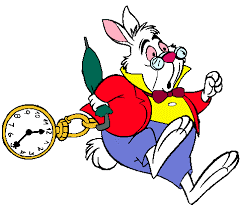
I have this vision of our PM frantically scurrying around like the White Rabbit in Alice in Wonderland humming “I’m late I’m late for very important date”. We might all smile at this vision but I’m afraid the analogy of being late is not a laughing matter when it is applied as the major theme for the UK governments management of what I described in a previous blog as the worst public health crisis in my lifetime. I also recall the PM famously using the phrase “A stitch in time saves nine” which is indeed true however in a pandemic being late or not sewing that stitch in time can and has cost thousands of lives.
In the week that has seen the UK pass 100,000 deaths it is right to reflect on the tragic loss of life. The call from government saying this is not the time to analyse why the UK has done so badly is in my view the wrong line to take. The government could learn a thing or two from the UK health care professions who for years have developed themselves as reflective practitioners. Donald Schon (1983) wrote extensively about reflection in terms of the creation of learning organisations who can both reflect in and on action. It is the former that has been sadly lacking in the UKs response to the coronavirus crisis. Reflection needs to be on the table throughout the pandemic and had it been, we may not have repeated the same mistakes. The management of pandemics is well documented in the medical literature. Professor Chris Whitty the Chief Medical Officer for England outlines how to manage a pandemic in this useful lecture at Gresham College.
Indeed it is also important to remind us of the words of Sir Patrick Vallance who when recommending the urgency of action in a pandemic implored that we “go earlier than you think you want to, go a bit harder than you think you want to and go broader than you think you want to in terms of restrictions.” My observation of the UK pandemic response leads me to conclude that we failed to do any of these. However, for this blog let’s focus on timing. Going early in terms of restrictions and other actions can have an enormous beneficial impact.
The last year has been to coin an overstated phrase “unprecedented” with many arguing that any government would have been overwhelmed and struggled to manage the crisis. Is this fair? One can look at other countries who have managed the situation better and as such have had better outcomes. New Zealand, Australia, Korea for example. Others will point to the differences between countries in terms of geography, population, culture, transport, relative poverty, healthcare systems, reporting mechanisms and living conditions which make comparisons inherently complex.
With the current death toll in the UK so high and continuing to rise, and many scientists telling us that things will inevitably get worse before they get better the question everyone is asking is : What has gone wrong? In this blog I’m going to argue that in large part our problems are based on a lack of urgency in acting. I’m arguing that we have not followed Sir Patrick Vallance’s recommendation and in particular we have been late to act throughout. Below I will set out the evidence for this and propose some tentative reasons as to why this has been the case.
Firstly, despite a pandemic being recognised as the largest threat to any country (it will always be top of any country’s risk register) the UK was slow to recognise the impending crisis and late to recognise the implications of a virus of this nature and how quickly it can spread globally. History informs us of how quickly Spanish flu spread in 1918. The UK was never going to be immune. Late recognition and poor pandemic preparedness meant we were late to get in place the critical infrastructure required to mount a response. Despite several warnings and meetings of the civil contingencies committee (COBR) the health secretary Matt Hancock was dismissive of the threat playing it down. Indeed, the PM failed to attend several early meetings giving the impression that the UK were not taking this as seriously as they should.
When faced with a looming medical/public health emergency it is important that the scientific advisors are in place early (which they were) and that their advice is acted upon. The evidence clearly points to a slow response to this advice which manifested itself in several critical late decisions early in the pandemic. The UK did not close its borders and implement quarantine measures allowing the virus to seed extensively in all parts of the community. Once community transmission had been established it was too late. It did not have in place a substantive testing regime, largely because we were unprepared. It very quickly became clear when we switched from community testing to testing only those in hospital with Covid symptoms that we lacked critical mass testing capacity and hence spent months trying to catch up. Evidence from previous outbreaks of SARS and MERS demonstrated how important mass testing was in controlling the spread, a position advocated by the World Health Organization (WHO). The UK saw case numbers grow rapidly and was slow to get the important public health messages out. Consequently, hospital admissions increased, and the death toll leapt. We were in serious danger of the NHS becoming overwhelmed with critically ill Covid patients.
Public health, medical and scientific experts suggested through their modelling exercises that the death toll, if we didn’t act quickly, could exceed 500,000; a situation socially and politically unpalatable. Therefore, in the absence of no known treatments and no vaccine we would have to resort to the tried and tested traditional methods for the suppression of a respiratory borne virus. Robust hand hygiene, respiratory/cough etiquette and maintaining social distance to reduce close social interaction. The logical conclusion was that to radically reduce social contacts we needed to lockdown. It is widely acknowledged now that the UK was at least a week late in introducing the first lockdown in March 2020.
In the meantime, the virus was sweeping through vulnerable elderly groups in care homes. We were again late to recognise this threat and late to protect them despite Hancock’s claims of throwing a ring of protection around them. The death toll continued to mount. At this stage both the Health (NHS) and care sectors were under enormous pressure and ill equipped to manage. The greatest worry at that stage was lack of adequate Personal Protective Equipment (PPE). Due to our ill preparedness we were late to provide appropriate PPE to both the NHS and the care home sector, exposing healthcare workers to undue risk. The death toll of healthcare workers in any pandemic is high and we were now starting to see this rise in the UK.
Another major criticism during the earlier months was how slow we were in ramping up testing capacity, tracking, tracing cases and ensuring isolation measures were in place. Indeed, concerns about test, trace and isolation continue today. However, lockdown and other public health measures did reduce the case numbers through the summer but inevitably the virus, which thrives in cold damp conditions started to cause further problems as we approached autumn and winter. Combined with this the UK saw a new variant of the virus emerge in the autumn with greater transmissibility. Cases started to rise again along with the inevitable hospital admissions and deaths. It appeared despite warnings from all scientists and health professionals that a second wave was highly possible we were late to recognise the emergence of a second wave of infections. The signs of which were there in September 2020. This led to a second lockdown in November when the advice from the scientific advisors was to lockdown in mid-October or earlier. This decision was compounded by a complex tiered restrictions arrangement to manage outbreaks locally aimed at the avoidance of unnecessary restrictions. Meanwhile the death toll continued to mount.
Notwithstanding the emergence of a new variant of the virus during the second lockdown everyone’s attention was switched to Christmas. The advice offered from government that restrictions would be relaxed for five days was met with incredulity by health professions who argued that this would simply allow the virus to be spread exponentially through greater household mixing. All the evidence at this stage pointed to household mixing as the primary source of transmission. As the situation worsened following the release of lockdown in early December it became obvious that the Christmas guidance had to change. To no ones surprise the advice was changed at the last-minute meaning everyone would have to rearrange their plans. The late change to the Xmas guidance probably meant more family mixing than would have happened had the advice been robust and communicated to the public earlier. Very quickly after Christmas we saw rapid changes to the tier management despite calls for a further lockdown. Cases rose rapidly, hospital admissions were now worse than in the first wave and scientists called for a lockdown. Consequently, we were late implementing Lockdown 3.
Throughout the pandemic the government has provided detailed guidance on restrictions, care homes, travel arrangements and education. It’s difficult to get this right all the time but the issuing of guidance was at times so late it became difficult to interpret the issues with clarity. Probably one the best examples of this relates to the advice provided to schools. Should they stay open or close? What should the Covid secure measures be? How do you construct bubbles of students to reduce social contact? Covid testing of pupils and staff? examinations and assessment guidance? However, the final straw was surely when schools opened in January after the Christmas break to only be told they had to close the very next day as we moved into Lockdown 3.

In conclusion it is said that to manage a pandemic you need a clear, robust strategic plan. The evidence presented here would suggest a lack of strategic planning with crisis decision making on the hoof. Some have argued that we have a PM who struggles to take the big decisions required, who procrastinates and inevitably is left with Hobson’s choice. If you couple this with a group of key ministers who appear to lack the competence to carry their portfolios we have the recipe for a disaster. The consequence of which means the UK has experienced a terrible outcome across a whole set of health, education and economic indicators.
References
Schon, D. (1983) The reflective practitioner: how professionals think in action Basic Books, New York
Whitty, C. (2018) How to Control an Epidemic https://www.youtube.com/watch?v=rn55z95L1h8
Share this:


Coronavirus (Covid-19): The greatest public health crisis in my lifetime
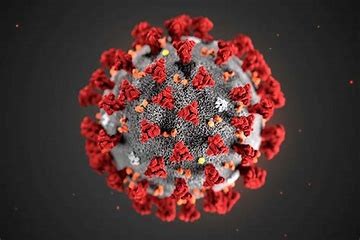
The coronavirus has caused an ongoing pandemic of coronavirus disease 2019 (COVID-19), caused by severe acute respiratory syndrome. The outbreak started in Wuhan, Hubei province, China, as early as November 2019. The World Health Organization (WHO) declared the outbreak to be a Public Health Emergency of International Concern on 30 January 2020 and recognized it as a pandemic on 11 March 2020. Whilst we all have an interest in the ongoing spread and consequence of the greatest public health crisis in generations it holds a specific interest for me given my visits to Wuhan and Hubei province whilst working for Coventry University. Wuhan is a massive city with over 11 million of a population, but little heard of until this outbreak. It is believed that its origins are most likely linked to the Huanan Seafood Wholesale Market, in Wuhan which also sold live animals, and one theory is that the virus came from one of these kinds of animals. The virus spread quickly through the population of Wuhan City which led to comprehensive lockdown to contain the virus. However, the virus spread beyond the city across China and into other countries. The scale of the spread has been significant and by the time the World Health Organisation declared the outbreak a full pandemic in March 2020 there were cases recorded in hundreds of countries.
Cases in the UK emerged on January 31st 2020, which prompted a government response to manage the outbreak. In the early stages there was some discussion about “taking it on the chin” and allowing the virus to spread through the population in order to gain “herd immunity”. However, the public health, medical and scientific experts at Imperial College London suggested that the death toll through their modelling exercises, if this strategy played out, could be in excess of 500,000. This was a situation that would be socially and politically unpalatable, and a change of thinking emerged with a combination of social distancing, public health advice on washing hands and a strategy to protect the capacity of the NHS to cope with escalating cases. A new lexicon emerged that we are now all familiar with: flattening the curve, delaying the spread, the peak of the infection and latterly the language of the health professionals in the frontline supporting and caring for people acutely ill with Covid-19; Personal Protective Equipment (PPE), Continuous Positive Airway Pressure (CPAP), ventilation and oxygen saturation and therapy. This is because the virus can attack the respiratory system leading to pneumonia and in several cases an immune response that leads to multi-organ shutdown. The media presentation of this crisis is all very frightening.
At the time of writing the pandemic has progressed relentlessly in the UK with currently over 65,000 people have tested positive and of those hospitalised nearly 8,000 patients have died. Some commentators have suggested that the UK was slow to recognise the seriousness of the virus and was slow to initiate the “lockdown” measures required to halt the spread. In addition, the UK’s position on testing for the virus has been criticised as slow, lacking preparation despite the global warnings from WHO and a shortage of the essential materials required. Whether these criticisms are valid only time will tell but the UK’s data on cases, hospitalisation, need for critical care and deaths is on a trajectory like other countries which could be described as liberal democracies. Here is the first clue to the timing of the response. The measures required to halt the spread of the virus have massive economic consequences. Balancing these two issues is incredibly difficult and has led to some commentators suggesting all liberal democracies will struggle to respond quickly enough.
What is now abundantly clear is that this is going to take some time for us to get through as a society and the consequences for large sections of our society are going to be devastating. However, what I’d like to discuss in the remainder of this blog are a number of early lessons and personal observations in terms of what we are seeing play out.
First, the data emerging indicates that the narrative about the “virus does not discriminate” is a false one. It is clear that health professionals are much more greatly exposed and that the data on cases and deaths indicate higher numbers of the socially deprived and BAME community. This should not be a surprise as the virus will be keenest felt in communities negatively impacted by health inequalities. This has been the case ever since we recognised this in the “Black Report” (DHSS 1980). The Report showed in detail the extent to which ill-health and death are unequally distributed among the population of Britain and suggested that these inequalities have been widening rather than diminishing since the establishment of the National Health Service in 1948. It is generally accepted that those with underlying health issues and therefore most at risk will be disproportionately from socially deprived communities.
Second, the coronavirus will force the return of big government. The response already supports this. In times of real crisis, the “State” always takes over. Will this lead to more state intervention going forward? If so then we will witness the greatest interventionist Conservative government in my lifetime.
Third, the coronavirus provides one more demonstration of the mystique of borders and will help reassert the role of the nation state. Therefore, the coronavirus is likely to strengthen nationalism, albeit not ethnic nationalism. To survive, the government will ask citizens to erect walls not simply between states but between individuals, as the danger of being infected comes from the people we meet most often. It is not the stranger but those closest to you who present the greatest risk.
Fourth, we see the return of the “expert”. Most people are very open to trusting experts and heeding the science when their own lives are at stake. One can already see the growing legitimacy that this has lent to the professionals who lead the fight against the virus. Professionalism is back in fashion, including recognition of the vital role of the NHS.
Fifth, the coronavirus could increase the appeal of the big data authoritarianism employed by some like the Chinese government. One can blame Chinese leaders for the lack of transparency that made them react slowly to the spread of the virus, but the efficiency of their response and the Chinese state’s capacity to control the movement and behaviour of people has been impressive.
Sixth, changing views on crisis management. What governments learned in dealing with economic crises, the refugee crisis, and terrorist attacks was that panic was their worst enemy. However, to contain the pandemic, people should panic – and they should drastically change their way of living.
Seventh, this will have an impact on intergenerational dynamics. In the context of debates about climate change and the risk it presents, younger generations have been very critical of their elders for being selfish and not thinking about the future seriously. Ironically the coronavirus reverses these dynamics.
Finally, I return to a point made earlier, governments will be forced to choose between containing the spread of the pandemic at the cost of destroying the economy or tolerating a higher human cost to save the economy. In conclusion, I have heard many say that this crisis is different to others we may have faced in the past 30 years and that as a result we can see society changing. Whilst I’m sure a number of the issues raised in this blog could potentially lead to society change it is also a truism that our memories are short, and we may return to life as it looked before this crisis quite quickly. Only time will tell.
Reference
“The Black Report” (1980): Inequalities in Health: Report of a Research Working Group. Department of Health and Social Security, London, 1980.
Share this:


When the Police takes to Tweeter HashTags to Seek ‘Justice’

https://twitter.com/PoliceNG/status/1159548411244371969?s=20)
I am tempted to end this blog in one sentence with the famous Disney lyrics, “disaster is in the air” but this may do no justice to the entry as it lacks a contextual background. So last week, Nigerian Twitter was agog with numerous tweets, retweets, comments, and reactions following the news that soldiers of the Nigerian Army had allegedly killed one civilian and three police personnel in the line of duty. A brief summary of the case is that the killed police personnel had arrested an alleged notorious and ‘wanted’ kidnaper and were transporting him to a command headquarters when they ran into a military checkpoint. Soldiers at the checkpoint allegedly opened fire at close range, killed the police who were said to have attempted identifying themselves, and freed the handcuffed ‘kidnapper.’
In a swift reaction, a Joint Investigation Panel comprised of the Police and the Army was constituted to investigate the incident. Notwithstanding this, the Police took to their Twitter handle @PoliceNG calling out for justice and expressing dissatisfaction and concerns in what metamorphosed into series of threads and hashtags – #WhereIsEspiritDCorp and #ProvideAnswersNigerianArmy. Ordinarily, this should have aroused and generated wide condemnation and national mourning, but, the comments, tweets and reactions on twitter suggests otherwise. While Nigerians expressed sympathy to the victims of the unfortunate incident, they also took to the social media platform to unravel their anger with many unleashing unsympathetic words and re-stating their distrust in the Police. In fact, it was the strong opinion of many that the incident was just a taste of their medicine as they often infringe on the rights of civilians daily, and are notoriously stubborn and predatory.
Certainly, this issue has some criminological relevance and one is that it brings to light the widely debated conversation on the appropriateness and the potency of deploying the military in society for law enforcement duties which they are generally not trained to do. Hence, this evokes numerous challenges including the tendency for it to make civilians loathe to interact with the military. I have previously argued that the internal use of the Nigerian military in law enforcement duties has exacerbated rather than ameliorated insecurity in several parts of the country. As with this instance, this is due to the penchant of the military to use force, the unprofessional conduct of personnel, and a weak system of civil control of the military to hold personnel accountable for their actions.
Similarly, this issue has also raised concerns on the coordination of the security forces and the need for an active operational command which shares security information with all the agencies involved in internal security. However, the reality is that interagency feud among the numerous Nigerian security agencies remains a worrying concern that not only undermine, but hinders the likelihood for an effective coordination of security activities.
Another angle to the conversation is that the social media provides a potent weapon for citizens to compel response and actions from state authorities – including demanding for justice. However, when the police is crippled and seemingly unable to ensure the prosecution of rights violations and extrajudicial killings, and they resort to twitter threads and hashtags to call out for justice, overhauling the security architecture is extremely necessary.
Share this:


Come Together

For much of the year, the campus is busy. Full of people, movement and voice. But now, it is quiet… the term is over, the marking almost complete and students and staff are taking much needed breaks. After next week’s graduations, it will be even quieter. For those still working and/or studying, the campus is a very different place.
This time of year is traditionally a time of reflection. Weighing up what went well, what could have gone better and what was a disaster. This year is no different, although the move to a new campus understandably features heavily. Some of the reflection is personal, some professional, some academic and in many ways, it is difficult to differentiate between the three. After all, each aspect is an intrinsic part of my identity.
Over the year I have met lots of new people, both inside and outside the university. I have spent many hours in classrooms discussing all sorts of different criminological ideas, social problems and potential solutions, trying always to keep an open mind, to encourage academic discourse and avoid closing down conversation. I have spent hour upon hour reading student submissions, thinking how best to write feedback in a way that makes sense to the reader, that is critical, constructive and encouraging, but couched in such a way that the recipient is not left crushed. I listened to individuals talking about their personal and academic worries, concerns and challenges. In addition, I have spent days dealing with suspected academic misconduct and disciplinary hearings.
In all of these different activities I constantly attempt to allow space for everyone’s view to be heard, always with a focus on the individual, their dignity, human rights and social justice. After more than a decade in academia (and even more decades on earth!) it is clear to me that as humans we don’t make life easy for ourselves or others. The intense individual and societal challenges many of us face on an ongoing basis are too often brushed aside as unimportant or irrelevant. In this way, profound issues such as mental and/or physical ill health, social deprivation, racism, misogyny, disablism, homophobia, ageism and many others, are simply swept aside, as inconsequential, to the matters at hand.
Despite long standing attempts by politicians, the media and other commentators to present these serious and damaging challenges as individual failings, it is evident that structural and institutional forces are at play. When social problems are continually presented as poor management and failure on the part of individuals, blame soon follows and people turn on each other. Here’s some examples:
Q. “You can’t get a job?”
A “You must be lazy?”
Q. “You’ve got a job but can’t afford to feed your family?
A. “You must be a poor parent who wastes money”
Q. “You’ve been excluded from school?”
A. “You need to learn how to behave?”
Q. “You can’t find a job or housing since you came out of prison?”
A. “You should have thought of that before you did the crime”
Each of these questions and answers sees individuals as the problem. There is no acknowledgement that in twenty-first century Britain, there is clear evidence that even those with jobs may struggle to pay their rent and feed their families. That those who are looking for work may struggle with the forces of racism, sexism, disablism and so on. That the reasons for criminality are complex and multi-faceted, but it is much easier to parrot the line “you’ve done the crime, now do the time” than try and resolve them.
This entry has been rather rambling, but my concluding thought is, if we want to make better society for all, then we have to work together on these immense social problems. Rather than focus on blame, time to focus on collective solutions.
Share this:


Celebrations and Commemorations: What to remember and what to forget

Today is Good Friday (in the UK at least) a day full of meaning for those of the Christian faith. For others, more secularly minded, today is the beginning of a long weekend. For Blur (1994), these special days manifest in a brief escape from work:
Bank holiday comes six times a year
Days of enjoyment to which everyone cheers
Bank holiday comes with six-pack of beer
Then it’s back to work A-G-A-I-N
(James et al., 1994).
However, you choose to spend your long weekend (that is, if you are lucky enough to have one), Easter is a time to pause and mark the occasion (however, you might choose). This occasion appears annually on the UK calendar alongside a number other dates identified as special or meaningful; Bandi Chhorh Divas, Christmas, Diwali, Eid al-Adha, Father’s Day, Guys Fawkes’ Night, Hallowe’en, Hanukkah, Hogmanay, Holi, Mothering Sunday, Navaratri, Shrove Tuesday, Ramadan, Yule and so on. Alongside these are more personal occasions; birthdays, first days at school/college/university, work, graduations, marriages and bereavements. When marked, each of these days is surrounded by ritual, some more elaborate than others. Although many of these special days have a religious connection, it is not uncommon (in the UK at least) to mark them with non-religious ritual. For example; putting a decorated tree in your house, eating chocolate eggs or going trick or treating. Nevertheless, many of these special dates have been marked for centuries and whatever meanings you apply individually, there is an acknowledgement that each of these has a place in many people’s lives.
Alongside these permanent fixtures in the year, other commemorations occur, and it is here where I want to focus my attention. Who decides what will be commemorated and who decides how it will be commemorated? For example; Armistice Day which in 2018 marked 100 years since the end of World War I. This commemoration is modern, in comparison with the celebrations I discuss above, yet it has a set of rituals which are fiercely protected (Tweedy, 2015). Prior to 11.11.18 I raised the issue of the appropriateness of displaying RBL poppies on a multi-cultural campus in the twenty-first century, but to no avail. This commemoration is marked on behalf of individuals who are no longing living. More importantly, there is no living person alive who survived the carnage of WWI, to engage with the rituals. Whilst the sheer horror of WWI, not to mention WWII, which began a mere 21 years later, makes commemoration important to many, given the long-standing impact both had (and continue to have). Likewise, last year the centenary of (some) women and men gaining suffrage in the UK was deemed worthy of commemoration. This, as with WWI and WWII, was life-changing and had profound impact on society, yet is not an annual commemoration. Nevertheless, these commemoration offer the prospect of learning from history and making sure that as a society, we do much better.
Other examples less clear-cut include the sinking of RMS Titanic on 15 April 1912 (1,503 dead). An annual commemoration was held at Belfast’s City Hall and paying guests to the Titanic Museum could watch A Night to Remember. This year’s anniversary was further marked by the announcement that plans are afoot to exhume the dead, to try and identify the unknown victims. Far less interest is paid in her sister ship; RMS Lusitania (sank 1915, 1,198 dead). It is difficult to understand the hold this event (horrific as it was) still has and why attention is still raised on an annual basis. Of course, for the families affected by both disasters, commemoration may have meaning, but that does not explain why only one ship’s sinking is worthy of comment. Certainly it is unclear what lessons are to be learnt from this disaster.
Earlier this week, @anfieldbhoy discussed the importance of commemorating the 30th anniversary of the Hillsborough Disaster. This year also marks 30 years since the publication of MacPherson (1999) and Monday marks the 26th anniversary of Stephen Lawrence’s murder. In less than two months it will two years since the horror of Grenfell Tower. All of these events and many others (the murder of James Bulger, the shootings of Jean Charles de Menezes and Mark Duggan, the Dunblane and Hungerford massacres, to name but a few) are familiar and deemed important criminologically. But what sets these cases apart? What is it we want to remember? In the cases of Hillsborough, Lawrence and Grenfell, I would argue this is unfinished business and these horrible events remind us that, until there is justice, there can be no end.
However, what about Arthur Clatworthy? This is a name unknown to many and forgotten by most. Mr Clatworthy was a 20-year-old borstal boy, who died in Wormwood Scrubs in 1945. Prior to his death he had told his mother that he had been assaulted by prison officers. In the Houses of Parliament, the MP for Shoreditch, Mr Thurtle told a tale, familiar to twenty-first century criminologists, of institutional violence. If commemoration was about just learning from the past, we would all be familiar with the death of Mr Clatworthy. His case would be held up as a shining example of how we do things differently today, how such horrific events could never happen again. Unfortunately, that is not the case and Mr Clatworthy’s death remains unremarked and unremarkable. So again, I ask the question: who decides what it is worthy of commemoration?
Selected Bibliography:
James, Alexander, Rowntree, David, Albarn, Damon and Coxon, Graham, (1994), Bank Holiday, [CD], Recorded by Blur in Parklife, Food SBK, [RAK Studios]

 Thoughts from the criminology team