
Home » Social distancing (Page 3)
Category Archives: Social distancing
A grand day out
Have you noticed how the news is reported these days in respect of Covid-19? Gone are the individualised and personalised stories of the casualties of this awful virus. Gone are the stories of individual and collective heroism of ordinary, actually extraordinary, people. Gone is the mention of the R rate and the discussion around it. Gone are those pictures of the people that died. No longer the headline, Covid- 19 is reduced to the middle order and consists predominately of the number of cases and the number of deaths. We watch these figures rise on a daily basis and we hear discussion about local lockdowns and areas with high incidents. We hear confusing stories about lockdown and then no lock down and then lockdown or is it partial lockdown and where exactly does it apply? We hear about areas that have high incidents where no action is being taken, well not yet anyway. And companies that remain open despite outbreaks only to be forced to close, let’s be honest, because of media scrutiny. We hear more from Nicola Sturgeon the first minister of Scotland than we do from our own prime minister.
We are sucked into a world of tourism, safe corridors and safe countries, lists and the plight of the aviation industry. We hear tourists moaning about self-isolation (I constantly scream at the tv you made that choice you ****). We are sucked into the debacle around schools and qualifications and returning to school. And we are told by Boris that we should all go back to work, back to the office. We hear of tourists returning on flights having contracted Covid-19 and passengers not wearing masks on flights. At the same time, we are told by bosses in the aviation industry that the industry is doomed unless something is done about it, this self-isolation malarkey really isn’t good for business. Once again, I shout at the tv (I don’t suppose you’ll be getting on one of those cattle trucks in a hurry you ***). Do I sound angry, I guess I am?
When the virus first struck, whenever that was, we all probably didn’t take it that seriously, serious but you know, not that serious. Then there was the lockdown, now that was serious, and it hit home how serious it was. Then we watched the tv and that reinforced how serious it was and if you weren’t a little concerned for yourself, your friends and your loved ones then you really weren’t in touch with reality. And then the economic costs started to rack up and that became really serious. And then, the government decided that since the NHS hadn’t been overwhelmed it was now permissible to open things up. And then, the government decided that it would pass the responsibility for the management of Covid to local authorities. And somewhere along the line, the responsibility for ensuring my safety, and yours became that of business. As long as businesses could assure us that they were Covid safe then we could go back to work and go shopping and eat out. In fact, you could eat out for 50% less in some places aided by a government scheme. A scheme to get businesses back on their feet which of course involved packing people in. Just how Covid secure are these places, well you take your chance, but you can feel assured.
I decided to venture out with my wife to get ourselves a new mattress. The old one has had its day, we meet in the middle of the bed every night, whether we want to or not, the only solution, to try to sleep as close to the edge as you can and if possible somehow cling on. Time for a new mattress. I’m not sure about these new-fangled mattresses (you know, the ones that come in a box and then pop out never to be returned to the box) and so rather than shopping on line we went to a store. We entered the store, masked up as is required, to be greeted by an assistant who pointed to the hand sanitiser. “oh, that bottle doesn’t work”, she says, “try the other but you’ll have to hit it quite hard”. Oh well, at least she’s wearing a face shield and I notice the other assistants are doing the same, except that theirs are up, a bit like a visor really, as they hang about talking to each other. One saunters over to us and after a brief conversation leaves us to look at and try the mattresses. Now that sounds alright doesn’t it, except that not only was his face shield not down, he’d taken it off altogether and thrown it onto the bed. We kept our distance. So, the markings on the floor suggesting 2 metre distance and the hand sanitiser at the entrance and the issue of face shields to staff are all Covid compliant but in operation, not really. Still we had a grand day out and felt quite assured.
As we hear the clamour to get schools back up and running, we hear about the plight of the school children and as a consequence, the voices and concerns of the teachers are drowned out. As we hear the concerns of lecturers from their union, the lecturers themselves and even the medical profession, their voices are drowned out. The only thing that seems to matter now is the economy and business. Those that run it are not on the coal face and will not be putting themselves at risk, but they tell us how we must all do our bit and return to work. If you wonder how getting children back to school fits in, well parents caring for children at home are not in the office working.
I selected some passages from the government guidelines regarding Covid 19.
“The more people you have interactions with, the more chance the virus has to spread. Therefore, try to limit the number of people you see – especially over short periods of time”
“limit the number of different activities which you partake in succession to reduce the potential chain of transmission”
“group size should be limited to the minimum which allows the activity to take place”
Now isn’t that confusing. We must all get back to work and back to the offices and, yet the government’s own guidelines seem to suggest this should not happen unless absolutely necessary. How exactly does this fit with teaching and class sizes and the number of students that teachers interact with? The same applies to lecturers at university, of course they have the added problem that the students will have come from all over the country and then come together in a Covid -19 cauldron. Pack them all in but you can feel assured that schools and campuses are Covid safe (a bit like those planes returning from foreign climes).
I feel like I am in a socio-economic experiment. An experiment where I see the disadvantaged and weak in our society put at risk for the sake of business. Where the older generation are made to feel dispensable and unimportant. Where figures are manipulated to downplay the seriousness of the problem. Die on day 29 after infection and you won’t be included in the Covid statistics. I see an experiment where facts are bent, ignored, and a narrative that subjugates the truth to management and business ideals. It looks like I’m going to be shouting at the tv for a very long time and I must be honest I really don’t feel very assured.

Share this:


Covid-Universities and what if
Over the past week or so there have been some mutterings about whether it is safe to open up universities. There is the advice from the scientific advisors (Universities get some Indie SAGE advice on reopening campuses in September) and some thoughts from academics ‘Why universities must move all teaching online this autumn’.
As we move closer to the start of term, so my dread of what is ahead comes into sharper focus. I try to imagine what it would be like and try to reassure myself that the risk assessments have been done and the reassurances that the universities are Covid safe are true rather than simply fantasy and wishful thinking.
In this safe environment I imagine that the number of students and staff on campuses will be carefully managed as it is with many large stores.
I imagine that all staff and students will be wearing face coverings. This is not for protection of themselves, as the use of coverings is a somewhat altruistic venture, I cover my face and protect you and you cover yours and protect me.
I imagine that all thoroughfares will be marked and monitored. Social distancing is important, and we need to be at least a metre apart.
I imagine that the classrooms will be laid out in such a way that social distancing can be maintained and that the classrooms will be well ventilated, even in the middle of winter. I imagine all the chairs and desks and any other equipment will be wiped down after each session.
I imagine that face to face teaching will be limited and interactions with multiple groups of students will be severely curtailed to ensure lecturers are not put at unnecessary risk. I imagine each class will comprise only a few students to minimise risk.
I imagine that anyone who is symptomatic will not attend a university and will after being tested self-isolate. I imagine that all the people they have been in contact with will do the same for a whole, boring, 14 days.
I imagine that the universities’ management will be at each university, leading from the front. They will be checking to ensure the safety of students and staff. They will be mixing with staff and students, receiving feedback and continuously monitoring. I imagine the safety of the students and staff is paramount.
And then I think, what if…
What if campuses are a free for all. Students can come and go as they please, there is no monitoring of volumes. Or what if there is, but it is impossible to enforce with limited staff to do so. And those staff tasked with this endeavour are at greater risk due to the proximity with large volumes of students.
What if people decide not to wear face coverings or having got into the building decide to take them off or several people are exempt for some reason or another. Altruism has gone out of the window. I’m a criminologist and I know that people break the rules for all sorts of reasons and the only certainty is that some people will break the rules.
What if social distancing becomes all too difficult. Many of us have experienced it in stores. A one-way system works for most, but a significant number just don’t abide by it, for whatever reason. People break rules.
What if the social distancing in classes is impossible, there just isn’t enough classes to maintain it with the volume of students on the course. What if ventilation is impossible, other than air conditioning, some classes are in the middle of buildings. Who will clean the chairs and equipment after each class? Go to a restaurant and tables and chairs are wiped down after each use so who will do it at a university?
What if lecturers have to teach multiple groups face to face as there are not enough staff to spread the load. Teaching in a classroom for two hours multiple times in a day with different groups each time must surely expose lecturers to much greater risk.
What if students are of the age group where they are more likely to be asymptomatic? How many that are infected might be at a university, spreading the virus around campus and around the locality. Even if they are symptomatic, how likely are they to self-isolate? Judging by the street parties and illegal raves reported on the news, there is a good chance that some will break the rules. Let’s be realistic, if you are only likely to suffer affects akin to a cold, why would you be that bothered about social distancing or self-isolation?
And finally, what if all managers avail themselves of the much-vaunted government advice, work from home if you can. Leadership from the rear, the bottom line is more important than the safety of others. We can of course dress this up in management psychobabble about what the students need.
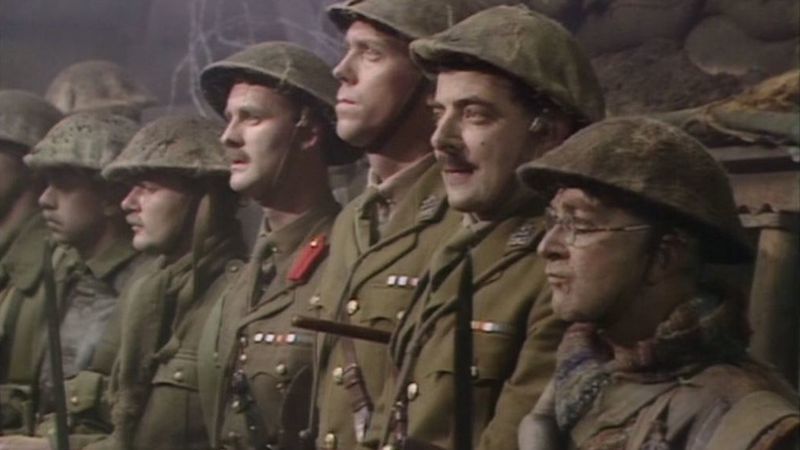
Never mind, ‘Tally ho and all of that sort of thing and over the top we go’*.
* For those of you that are lost at this point it might be worth a visit to the last episode of Blackadder Goes Forth.
Share this:


Some lessons from the lockdown
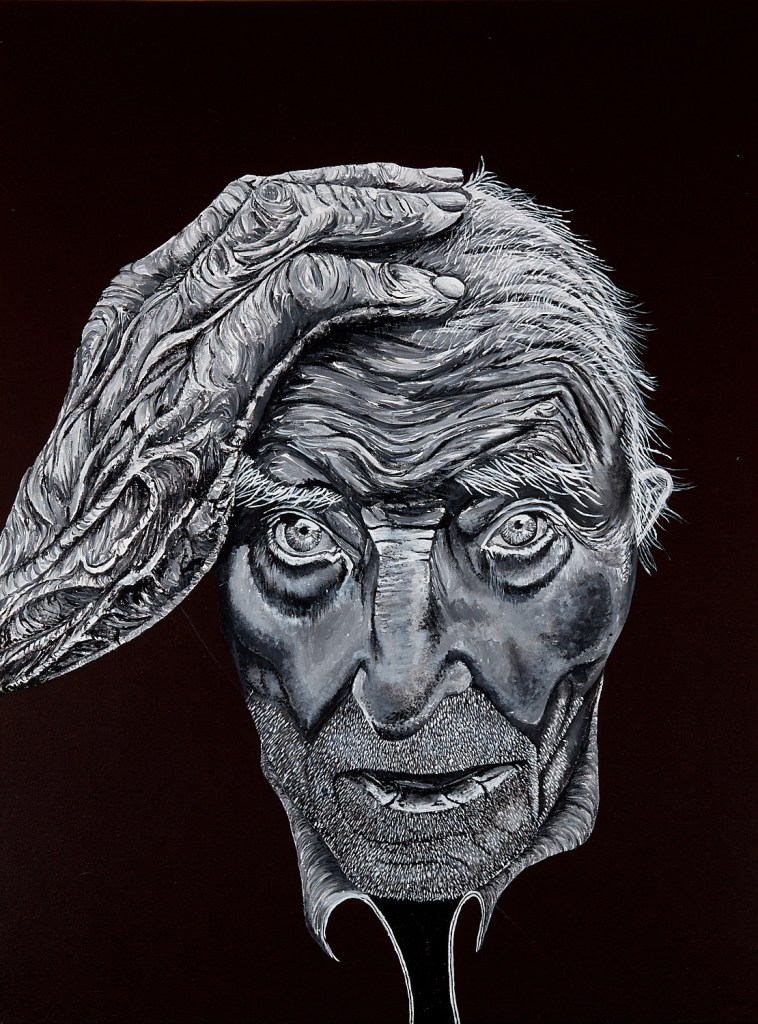
Koestler Arts (2019), Another Me: The Redwoods Centre (secure mental health unit), James Wood QC Silver Award for Portrait, 2019
In March 23, 2020, the UK went into lockdown. The advice given, albeit conflicting in parts, was clear. Do not leave your home unless absolutely necessary, banning all travel and social interactions. This unprecedented move forced people to isolate at home for a period, that for some people will come to an end, when the WHO announces the end of the pandemic. For the rest of us, the use of a face mask, sanitiser and even plastic gloves have become modern day accessories. The way the lockdown was imposed and the threat of a fine, police arrest if found outside one’s home sparked some people to liken the experience with that of detention and even imprisonment.
There was definite social isolation during the pandemic and there is some future work there to be done to uncover the impact it has had on mental health. Social distancing was a term added to our social lexicon and we discovered online meetings and working from home. Schools closed and parents/guardians became de facto teachers. In a previous blog entry, we talked about the issues with home schooling but suffice to say many of our friends and colleagues discovered the joys of teaching! On top of that a number of jobs that in the past were seeing as menial. Suddenly some of these jobs emerge as “key professions”
The first lesson therefore is:
Our renewed appreciation for those professions, that we assumed just did a job, that was easy or straightforward. As we shall be coming back eventually to a new normality, it is worth noting how easy it will be to assign any job as trivial or casual.
As online meetings became a new reality and working from home, the office space and the use of massive buildings with large communal areas seemed to remain closed. This is likely to have a future impact on the way business conduct themselves in the future.
Second lesson:
Given how many things had to be done now, does this mean that the multi occupancy office space will become redundant, pushing more work to be done from home. This will alter the way we divide space and work time.
During the early stages of the lockdown, some people asked for some reflection of the situation in relation to people’s experiences in prisons. The lockdown revealed the inequality of space. The reality is that for some families, space indicated how easy is to absorb the new social condition, whilst other families struggled. There is anecdotal information about an increase on mental health and stress caused from the intensive cohabitation. Several organisations raised the alarm that since the start of the lockdown there has been a surge in incidents of domestic violence and child abuse. The actual picture will become clearer of the impact the lockdown had on domestic violence in future years when comparisons can be drawn. None the less it reveals an important issue.
Third lesson:
The home is not always the safest place when dealing with a global pandemic. The inequality of space and the inequality in relationships revealed what need to be done in the future in order to safeguard. It also exposed the challenges working from home for those that have no space or infostructure to support it.
In the leading up to the lockdown many households of vulnerable people struggled to cope with family members shielding from the virus. These families revealed weaknesses in the welfare system and the support they needed in order to remain in lockdown. Originally the lack of support was the main issue, but as the lockdown continued more complex issues emerged, including the financial difficulties and the poverty as real factors putting families at risk.
Fourth lesson:
Risk is a wider concern that goes beyond personal and family issues. The lockdown exposed social inequality, poverty, housing as factors that increase the vulnerability of people. The current data on Covid-19 fatalities reveal a racial dimension which cannot longer be ignored.
During the lockdown, the world celebrated Easter and commemorated Mayday, with very little interaction whilst observing social distancing. At the end of May the world watched a man gasping for breath that died in police custody. This was one of the many times the term police brutality has related to the dead of another black life. People took to the streets, protested and toppled a couple of statues of racists and opened a conversation about race relations.
Fifth lesson:
People may be in lockdown, but they can still express how they feel.
So, whilst the lockdown restrictions are easing and despite having some measures for the time being, we are stepping into a new social reality. On the positive side, a community spirit came to the surface, with many showing solidarity to those next to them, taking social issues to heart and more people talked of being allies to their fellow man. It seems that the state was successful to impose measures that forced people indoors that borderline in totalitarianism, but people did accept them, only as a gesture of goodwill. This is the greatest lesson of them all in lockdown; maybe people are out of sight, appear to be compliant in general but they are still watching, taking note and think of what is happening. What will happen next is everyone’s guess.
Share this:


A weekend in London…. It’s not what you think

The weekend just gone has mirrored many weekends we have experienced in lockdown: glorious sunshine, hot temperatures, and longing to spend time with family and friends! However this weekend marked the beginning of an attempt at normalcy for our household, as we spent the weekend in London serving hotdogs, burgers, ice creams and cold drinks to park visitors. Something we have done year on year, summer after summer, weekend after weekend: yet this weekend was remarkably different. Therefore the notion that we can return to normalcy soon, doesn’t seem to be ringing true.
For some context: my partner works in/runs a takeaway kiosk by a park in London. It has been closed during lockdown, but re-opened this weekend. This time last year, there were 3, sometimes 4 members of staff (including myself in the summer and on weekends when an extra pair of hands are required), serving customers and giving directions to residents, visitors and tourists of London. This year, there is my partner and I: in a 4metre kiosk it is not possible to safely maintain a 2metre distance so the other members of staff are left waiting until it is safe and viable for them to come to work. They know this, and are happy with the decision as in times like these, safety should be at the forefront of all decisions.
And the added safety precautions are what makes this weekend so unrecognisable at the little kiosk in London (albeit rightly so). It is and has always been a cash business: cash is quicker to process, easier to return should it be required and safer with regards to checking for counterfeit (no issues of hacking machines or someone using stolen cards). In line with the current climate, the decision was made to try and move to contactless payments in order to help reduce the spread of COVID-19. This in itself was hassle and problematic, but I shall not bore you with those details. Alas the machine is here, and off we go. But it requires a steady 4G signal, which by a park is hit and miss, it also disconnects when it has not been used for periods of 30minutes, which happened frequently over the weekend, and there is a minimum spend in order to make the interest rate/payment of the machine justifiable. It is also slow when customer’s contactless does not work, in which case they have to hold and touch the machine, which then results in us having to clean down the machine after this has happened before we can move on to the next transaction, which is certainly not quicker than cash. And whilst most customers I must say have been patient and understanding, this has resulted in several getting quite verbal at the time it is taking to serve them (we are talking a matter of minutes instead of what used to be seconds with cash).
The differences are not just with the use of card, but also how the hot food is done (my area of expertise). Usually customers could apply their own sauces, but now in order to prevent lots of people touching the various sauces on offer and potentially spreading anything, it is left to me to apply. This has resulted in a whole host of comments relating to being stingy with sauces: ‘I know times are hard but come on’, or ‘I actually want to be able to taste the mustard’. I, personally, like to drown food in sauce, no actually mayo, not that fussed about other sauces. However my partner is the complete opposite, the smallest most pathetic amount of sauce you could imagine: that is what he applies to his food! But it is safer and easier to apply too little and add more than the other way, so I am justified in using a little amount of sauce! It has nothing to do with what the sauce costs! Grrrrrr! Cold drinks used to be placed on the top counter, which customers could take themselves, and then once all their selected items have been placed on top, we would charge them and handle the money. Now at the risk of people touching and then returning the item (which results in us having to clean down the bottle or can, slowing everything down), we are asking for money first: which people apparently are not pleased about. They want to feel how cold the drink is: it has come out of the fridge, which it has been in overnight and business is so slow the drinks are not being re-stocked: so trust me it is cold! (Face hitting emoji!)
All in all, it was a stressful weekend, when the amount of customers we served should not have meant it was stressful. I do not mind change and I appreciate that the changes in place are needed to keep everyone safer, which is fine. But things will be slower, things will be different. The media has pushed at the 15th June to resemble something we recognise as ‘normal’: but I do not think this is the case. ‘Normal’ whatever that really means, will not return and maybe this is not such a bad thing. But I will be grateful when it is safe again for customers to apply their own blooming sauces!
Share this:


The pandemic and me – Lessons I’ve learnt from the #lockdown

This lockdown has certainly given us time to think and perhaps reflect on a variety of topics and situations. I’ve shared a few thoughts below and I wonder just how many are universal in some way.
I need to ensure I have a structure to my day and week. I think we all need some sort of structure to our lives and that structure is often given to us by work and perhaps other sociable events such as going to the gym or going to a coffee shop. It may be that the weekly shopping provides us with an anchor, Saturday may be a shopping day or religion might dictate a visit to a place of worship on a particular day. At times I’ve found myself getting confused about what day it is, Groundhog Day, I think. However, for the most part, I think I’ve got it sorted out. My wife and I discuss our schedule every morning over a cup of coffee. We have sorted out a routine of work, daily chores, fun bits and exercise.
My willpower is tested but I can be determined. I have never been a heavy drinker, the occasional binge, yes but then who hasn’t? It is however, quite easy to slip into the habit of having a glass or two of wine in the evening, every evening and perhaps a gin and tonic or two. I can’t go anywhere so thinking about having to drive the next day is not an issue. It’s not until you start totting up the consumption that you realise maybe you might have to reign this in. ‘School nights’ are back again, no drinking in the week. I make up for it at the weekend though.
I’m not risk adverse, I just like to think I’m logical. I don’t think it takes a rocket scientist or in fact any scientist to work out that the government (particularly a Conservative government) would not enforce the cessation of most business in the country without a very, very, very good reason. Stay in has been the mantra and of course we all know how difficult it is and we all know that as usual, the most vulnerable in society have been hit the hardest by this pandemic. Logic dictates, well at least to me, that going out to any store anywhere carries a risk. Some risks are necessary, for instance a trip to the chemist to pick up a prescription, but a trip to a DIY store, really? I’m sorry but given the risks, I think it’s a no brainer. Not only do I not want to catch the virus, but I would be distraught if I thought that through my own selfishness I had passed it onto someone else.
I never really thought about all those people that are truly special. We clap every week for the carers and the NHS and all those involved who are truly remarkable. I do ask myself though, would I want to turn up to work in a supermarket? Would I want to be out delivering parcels or the post? Would I be a NHS volunteer? Would I be happy working on public transport or emptying dust bins? There are so many people doing ordinary, even mundane jobs and volunteering roles that I now appreciate more than ever. And I would go far as to say I am humbled by what they do and continue to do despite the risks.
I appreciate the world around me. Not being able to go out and socialise in some way, be that work, or friends or family has provided more time for other activities. Our walks to the next village and back on roads devoid of most traffic has revealed an astonishing array of wildlife to be gazed upon and appreciated. That is of course if you’re not gasping for breath following a walk up a steep hill (well I call it steep but in a car its barely noticeable).
Some things don’t change. I’ve also noticed the gate to the footpath across the fields near our house has gone. A heavy wooden gate which, apparently has been stolen. On our walks we have noticed the increased number of cyclists whizzing along the road. Most give a wide birth, but some don’t seem to have a care for others, one nearly colliding with us as he flew around the corner. It seems with the reduction of cars; the idiotic driver has now given way to the idiotic cyclist.
What will a ‘new normal’ look like. At some stage we will get back to normal but its difficult to contemplate when that will be and what it will look like. Maybe getting back to the old normal is not what is needed. I’m trying to envisage how I will make changes in consideration of what I have learnt during this lockdown. What changes will you make?
Share this:


“My Favourite Things”: Saffron Garside

My favourite TV show - It's probably Peep Show, I've rewatched it so many times and it doesn't stop being funny. I often find myself quoting it to other people too and it's what I put on when I don't want to think about anything

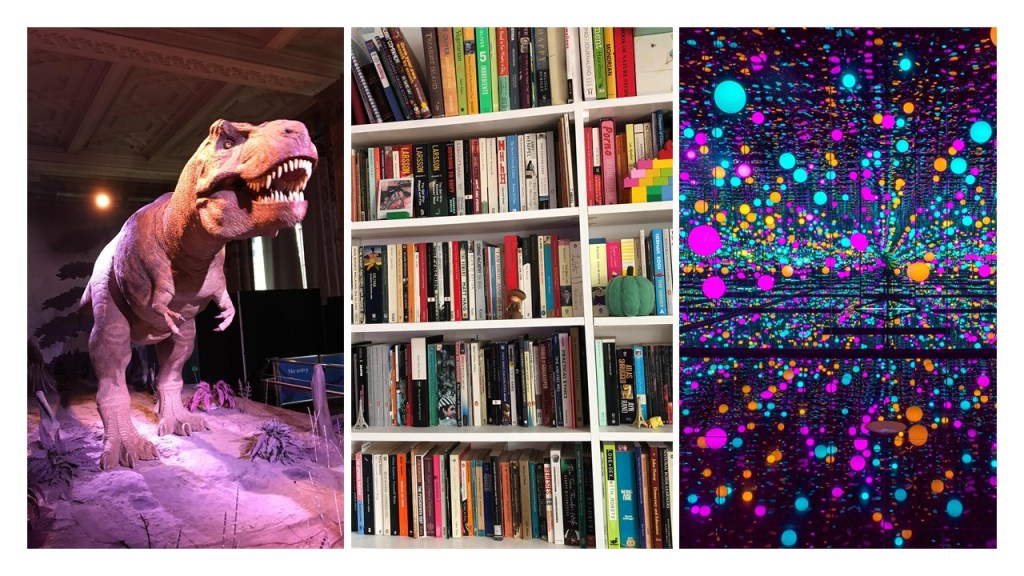
My favourite place to go - The Natural History Museum has been my favourite place to go for a very long time - the building is beautiful and you could spend days in there and still not see everything. I learn something new every time I go. I also love taking the kids there now - some stuff is still the same as when I was small like the T-Rex and the earthquake room! It'll be one of the first places we go when museums and galleries reopen

My favourite city - It's definitely Paris - it really reminds me of London in a lot of ways, it feels small and big at the same time and there is so much to see and do there. I was lucky enough to go at the beginning of March on a surprise trip - it was fun to be a tourist and we walked so much!

My favourite thing to do in my free time - Read! If I'm not doing something else then I'm usually reading. I carry a book everywhere just in case I get a couple of minutes to read. I'm in two book clubs so always juggling a few books at once

My favourite athlete/sports personality - I'm not a big sports fan and I'm not sure this counts but the kids and I have been loving doing PE with Joe Wicks. It's been great for keeping us moving during the lockdown and it's a pretty big commitment to show up every day. He always seems so positive

My favourite actor - Edward Norton. I think I've seen nearly all the films he's ever been in!

My favourite author - It's too difficult to choose. I really like Chuck Palahniuk and I've reread the Harry Potter series by J.K. Rowling a lot of times!

My favourite drink - I'm not sure you can beat a good cup of tea. It's about the most comforting thing I can think of and it's never not a good time to put the kettle on

My favourite food - caramel shortbread - but it has to be one of the really good ones (no digestive base!) and you need a good chocolate to caramel ratio!

My favourite place to eat - Every Sunday my husband and I take it in turns to cook a big family meal (complete with pudding!) and we play lots of board games after. It's one of my favourite times in the week and it always feels special.

I like people who - are enthusiastic about life and the things they are learning about, who want to share stories and make spontaneous decisions

I don’t like it when people - don't communicate their feelings or try to resolve things through conversation - I think things would often be simpler if people tried to talk about things honestly

My favourite book - I think my favourite book of all time is Treasure Island by Robert Louis Stevenson it's such a good adventure story and bits of it are really scary!

My favourite book character - Bilbo Baggins! I really enjoyed The Hobbit as a child and my kids love it so much we've already read it together twice. There is something wonderful about how his character develops throughout his quest - he goes from being a reluctant adventurer to the person holding the whole thing together. He isn't motivated by greed or fame and commits himself to seeing it through. Whenever he feels disheartened he dreams of the comforts of home; cooked meals, a boiling kettle, a warm fire

My favourite film - Fight Club is easily my favourite film- great actors, great soundtrack, great twist!

My favourite poem - Wild Geese by Mary Oliver. She's my absolute favourite poet and it felt like magic when I first discovered her! She writes about nature with such reverence and wonder

My favourite artist/band -  For more than half my life it's been Green Day so I think I am stuck with them now!

My favourite song - In My Mind - Amanda Palmer. I really, really love this song - positive messages and ukulele, what more do you need?

My favourite art - I don't know if I have a very favourite piece of art - I love going to a modern art gallery like the Tate Modern in London or the Centre Pompidou in Paris and just spending hours losing myself in all the emotions that get stirred up. I really love the work of Yayoi Kusama but haven't been lucky enough to see her art in person yet

My favourite person from history - Mary Anning made some really important fossil discoveries but didn't really get the recognition she deserved during her lifetime. Plus she was struck by lightning as a baby, which is a pretty cool story!
Share this:


Criminology 2020 AD

2020 will be a memorable year for a number of reasons. The big news of course was people across the world going into lockdown and staying home in order to stop the transmission of a coronavirus Covid-19. Suddenly we started counting; people infected, people in hospitals, people dead. The social agenda changed and our priorities altered overnight. During this time, we are trying to come to terms with a new social reality, going for walks, knitting, baking, learning something, reading or simply surviving, hoping to see the end of something so unprecedented.
People are still observing physical distancing, and everything feels so different from the days we were discussing future developments and holiday plans. During the last days before lockdown we (myself and @paulaabowles) were invited to the local radio by April Dawn to talk about, what else, but criminology. In that interview we revealed that the course started 20 years ago and for that reason we shall be having a big party inviting prospective, current and old students together to mark this little milestone. Suffice to say, that did not happen but the thought of celebrating and identifying the path of the programme is very much alive. I have written before about the need to celebrate and the contributions our graduates make to the local, regional and national market. Many of whom have become incredibly successful professionals in the Criminal Justice System.
On this entry I shall stand on something different; the contribution of criminology to professional conduct, social sciences and academia. Back in the 1990s Stan Cohen, wrote the seminal Against Criminology, a vibrant collection of essays, that identified the complexity of issues that once upon a time were identified as radical. Consider an academic in the 1960s imagining a model that addresses the issue of gender equality and exclusion; in some ways things may not have changed as much as expected, but feminism has entered the ontology of social science.
Criminology as a discipline did not speak against the atrocities of the Nazi genocide, like many other disciplines; this is a shame which consecutive generations of colleagues since tried to address and explain. It was in the 1960s that criminology entered adulthood and embraced one of its more fundamental principles. As a theoretical discipline, which people outside academia, thought was about reading criminal minds or counting crime trends only. The discipline, (if it is a discipline) evolved in a way to bring a critical dimension to law and order. This was something more than the original understanding of crime and criminal behaviour and it is deemed significant, because for the first time we recognised that crime does not happen in a social vacuum. The objectives evolved, to introduce scepticism in the order of how systems work and to challenge established views.
Since then, and through a series of events nationally and internationally, criminology is forging a way of critical reflection of social realities and professional practices. We do not have to simply expect a society with less crime, but a society with more fairness and equality for all. The responsibilities of those in position of power and authority is not to use and abuse it in order to gain against public interest. Consider the current pandemic, and the mass losses of human life. If this was preventable, even in the slightest, is there negligence? If people were left unable to defend themselves is that criminal? Surely these are questions criminology asks and this is why regardless of the time and the circumstances there will always be time for criminology to raise these, and many more questions.
Share this:

Please don’t clap or cheer

In an uncomfortable irony, my regular blog entry has fallen on the 8 May 2020, the seventy-fifth anniversary of the end of World War 2 in Europe. I say uncomfortable because I find this kind of commemoration particularly challenging to comprehend, given my pacifist tendencies. I’m therefore going to take a rather circuitous route through this entry.
On the 20 March 2020 I wrote the first Thoughts from the Criminology team blog entry (focused on Covid-19), just a few hours after the University had moved to virtual working. Since then the team has tackled the situation in a variety of different ways. In that I detailed my feelings and observations of life, as we knew it, suddenly coming to abrupt halt. Since then we have had 7 weeks of lockdown and it is worth taking stock of where we are currently.
At present the UK has recorded over 30,000 deaths attributed to the virus. These figures are by necessity inaccurate, the situation has been moving extremely fast. Furthermore, it is incredibly challenging to attribute the case of death, particularly in cases where there is no prior diagnosis of Covid-19. There has been, and remains a passionate discourse surrounding testing (or the lack of it), the supplies of Personal Protective Equipment (or the lack of it) and the government’s response (or lack of) to the pandemic. Throughout there has been growing awareness of disparity, discrimination and disproportionality. It is clear that we are not in all this together and that some people, some groups, some communities are bearing the brunt of the current crisis.
Having studied institutional violence for many years, it is evident that the current pandemic has shown a spotlight on inequality, austerity and victimisation. The role of institutions has been thrown into sharp relief, with their many failings in full view of anyone who cared to look. In 1942, Beveridge was clear that his “five giant evils” could have been addressed, prior to World War 2, yet in the twenty-first century we have been told these are insurmountable. Suddenly, in the Spring of 2020, we find that councils can house the homeless, that hungry children can be fed, that money can be found to ensure that those same children have access to educational resources. We also find that funds can be located to build emergency hospitals and pay staff to work there and across all other NHS sites.
Alongside this new-found largesse, we find NHS staff talking about the violences they face. The violence of being unable to access the equipment they need to do their jobs, the violence of being deprived of regular breaks, the violence of racism, which many staff face both internally and externally. We hear similar tales from care workers, supermarkets workers, delivery drivers, the list goes on. Yet we are told by the government that we are all in this together. This we are told, is demonstrated by gathering on doorsteps to clap the NHS and carers. It can be compared with the effort of those during World War II, or so we are told. If we just invoke that “Blitz Spirit” “We’ll Meet Again” at the “White Cliffs of Dover”.
However, such exhortations come cheap, it costs nothing in time, or money, to clap, or to sing war time songs. To do so puts a veneer of respectability and hides the violent injustices inherent in UK society and the government which leads it. It disguises and obfuscates the data that shows graphic racial and social economic disparity in the death toll. Similarly, it avoids discussion of the role that different individuals, groups and communities play in working to combat this horrible virus. As a society we have quickly forgotten discussions around deserving/undeserving poor, the “hostile environment” and those deemed “low-skilled”. It camouflages the millions of people who are terrified of unemployment, poverty and all of the other injustices inherent within such statuses. It hides the fact that these narratives are white and male and generally horribly jingoistic by ignoring the contribution of anyone, outside of that narrow definition, to WWII and to the current pandemic. It is trite and demonstrates an indifference to human suffering across generations.
Let’s stop focusing on the cheap, the obvious and the trite and instead, once this is over, treat people (all people) with respect. Pay decent wages, enable access to good quality nutrition, education, health care, welfare and all of the other necessities for a good life. And by all means commemorate the anniversary of whatever you like, but do not celebrate war, the biggest violence of all, without which many more lives would be improved.
Share this:


Teaching, Technology, and reality

I’m not a fan of technology used for communication for the most part, I’d rather do things face to face. But, I have to admit that at this time of enforced lockdown technology has been to a large extent our saviour. It is a case of needs must and if we want to engage with students at all, we have to use technology and if we want to communicate with the outside world, well in the main, its technology.
However, this is forced upon us, it is not a choice. Why raise this, well let me tell you about my experiences of using technology and being shut at home! Most, if not all my problems, probably relate to broadband. It keeps dropping out, sometimes I don’t notice, that is until I go to save my work or try to add the final comment to my marking. I know other colleagues have had the same problem. Try marking on Turnitin only to find that nearly all of your feedback has just disappeared in a flash. Try talking to colleagues on Webex and watch some of them disappearing and reappearing. Sometimes you can hear them, sometimes you can’t. And isn’t it funny when there is a time lag, a Two Ronnies moment when the question before the last is answered. ‘You go, no you go’, we say as we all talk over each other because the social cues relied on in face to face meetings just aren’t there. I’ve tried discussion boards with students, it’s not like WhatsApp or Messenger or even text. It is far more staid than that. Some students take part, but most don’t and that in a module where attendance in class before the shutdown was running at over seventy per cent. I’m lucky to get 20% involved in the discussion board. Colleagues using Collaborate tell me a similar tale, a tale of woe where only a few students, if any appear. Six hours of emptiness, thumb twiddling and reading, that’s the lecturer, not the students.
Now I don’t know whether my problems with the internet are resultant of the increased usage across the country, or just in my area. I suspect not because I had problems before the lockdown. I live in a village and whilst my broadband package promises me, and delivers brilliant broadband speed at times, it is inconsistent, frequently inexplicably dropping out for a minute or two. It is frustrating at times, even demoralising. I have a very good laptop (supplied by the university) and it is hardwired in, so not reliant on Wi-Fi, but it makes little difference. I suspect the problems could be anywhere in the broadband ether. It could be at the other end, the university, it could be at Turnitin for instance or maybe its somewhere in a black hole in the middle. Who knows, and I increasingly think, who cares? When my broadband disappeared for a whole day, a colleague suggested that I could tether my phone. A brilliant idea I thought as our discussion became distorted and it sounded like he was talking to me from a goldfish bowl. I guess the satellite overhead moved and my signal gradually disappeared. I can tell you now that my mobile phone operator is the only one that provides decent coverage in my area. Tethered to a goldfish bowl, probably not a solution, but thanks anyway.
If I suffer from IT issues, then what about students? We are assured that those that live on campus have brilliant Wi-Fi but does this represent the majority of our student body? Not usually and certainly not now. Do they all have good laptops; do they all have a decent Wi-Fi package? I hazard a guess, probably not. But even if what they have is on par with what I have available to me could they not also be encumbered with the same problems? We push technology as the way forward in education but don’t bother to ask the end user about their experience in using it. I can tell you from student feedback that many don’t like Collaborate, find the discussion boards difficult to engage with and some are completely demotivated if they cannot attend physical classes. That’s not to say that all students feel this way, some like recorded lectures as it gives them the opportunity to watch it at their leisure, but many don’t take that final step of actually watching it. They intend to, but don’t for whatever reason. Some like the fact that they can get books electronically, but many don’t, preferring to read from a hard copy. Even browsing the shelves in the library has for some, a mystical pleasure.
I’ll go back to the beginning, technology has undoubtedly been our saviour at this time of lockdown, but wouldn’t it be a real opportunity to think about teaching and technology after this enforced lockdown? Instead of assuming all students are technology savvy or indeed, want to engage with technology regardless of what it is, should we not ask them what works for them. Instead of telling staff what they can do with technology, e.g. you can even remotely mark students’ work on a Caribbean island, should we not ask staff what works? Let’s change the negative narrative, “you’re not engaging with technology”, to the positive what works in teaching our students and how might technology help in that. Note I say our students, not other students at other universities or some pseudo student in a theoretical vacuum. We should simply be asking what is best for our students and a starting point might be to ask them and those that actually teach them.
Share this:

The day after!
“I know not with what weapons World War III will be fought, but World War IV will be fought with sticks and stones.” This quote allegedly belongs to A. Einstein who imagined a grim day in the aftermath of a world war among nations who carried nuclear arms.
It is part of human curiosity to imagine beyond the current as to let the mind to wonder on the aftermath of this unique international lockdown! Thoughts wonder on some prosaic elements of the lockdown and to wonder the side effects on our psyche. Obviously as I do not have a vast epidemiological knowledge, I can only consider what I know from previous health scares.
The previous large-scale health scare was in the 1980s. I still remember the horrible ad with the carved headstone that read AIDS. One word that scared so many people then. People were told to practice safe sex and to avoid sharing needles. People became worried and at the time an HIV diagnoses was a death sentence. Images of people suffering Kaposi’s sarcoma began to surface in what became more than a global epidemic; it became a test in our compassion. Early on, gay people reported discrimination, victimisation and eventual, vilification. It took some mobilisation from the gay community and the death of some famous people to turn the tide of misconceptions, before we turned the tide of the disease. At this stage, HIV is not a death sentence and people who are in receipt of medical attention can live full and long lives.
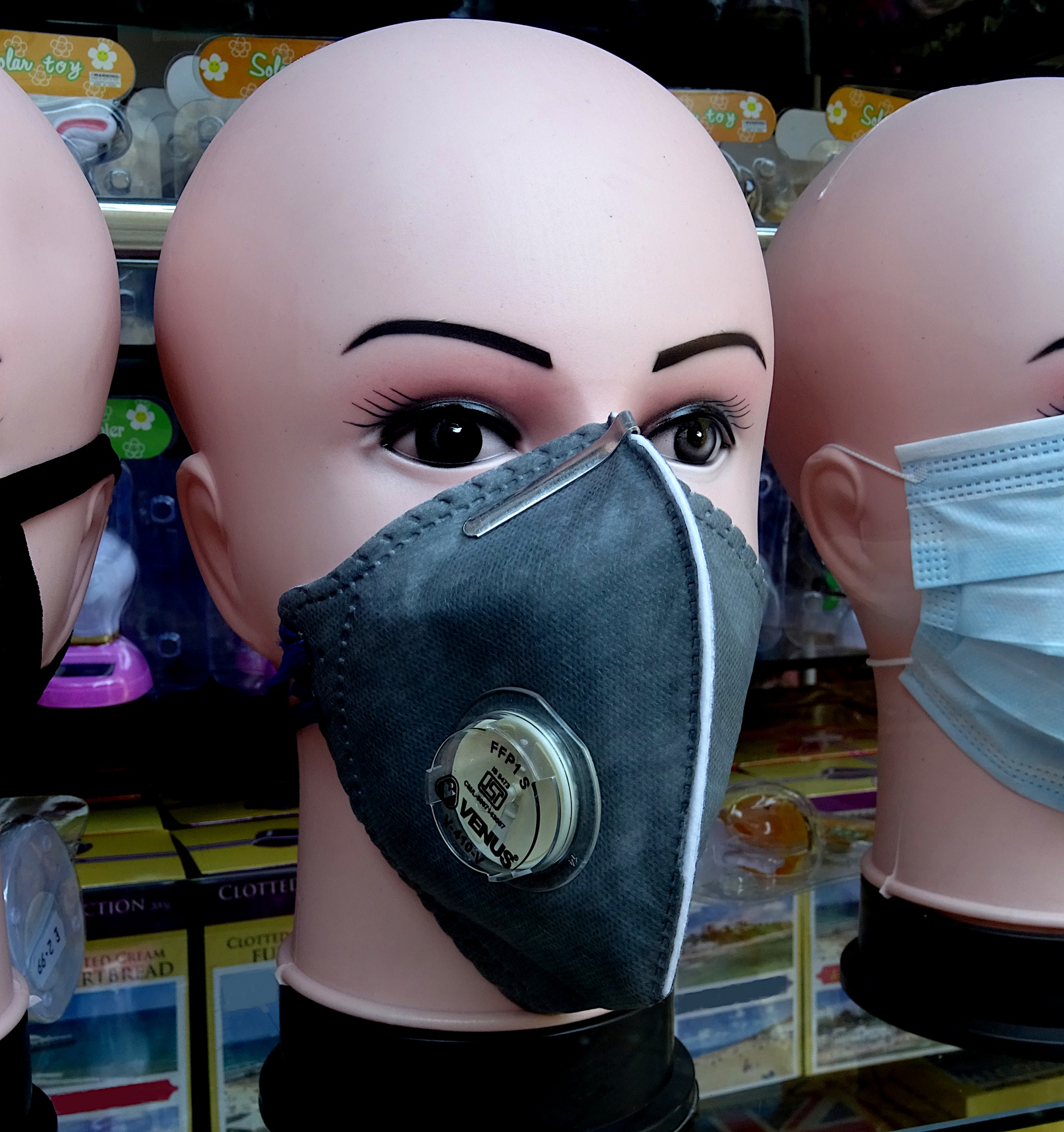
It is interesting to consider how we will react to the easing of the restrictions and the ushering on a new age. In some Asian countries, since SARS in 2003 some people wear face masks and gloves. Will that become part of our attire and will it be part of professional wear beyond the health care professions? If this becomes a condition, how many people will comply, and what will happen to those who will defy them.
We currently talk about resilience and the war spirit (a very British motif) but is this the same for all? This is not a lockdown on equal terms. There are people in isolation in mansions, whilst some others share rooms or even beds with people, they would rather they did not. At the same time, we talk about resilience, all domestic violence charities speak of a surge in calls that have reached crisis levels. “Social distancing” has entered the lexicon of our everyday, but there are people who simply cannot cope. One of the effects the day after, will be several people who will be left quite traumatised. Some may develop an aversion to people and large crowds so it will be interesting to investigate if agoraphobia will surge in years to come.
In one of my exercise walks. I was observing the following scene. Grandparents waving at their children and grandchildren from a distance. The little ones have been told not to approach the others. You could see the uneasiness of contactless interaction. It was like a rehearsal from an Ibsen play; distant and emotionally frigid. If this takes a few more months, will the little ones behave differently when these restrictions are lifted? We forget that we are social animals and although we do not consciously sniff each other like dogs, we find the scent of each other quite affirming for our interactions. Smell is one of the senses that has the longest memory and our proximity to a person is to reinforce that closeness.
People can talk on social media, use webcams and their phones to be together. This is an important lifeline for those fortunate to use technology, but no one can reach the level of intimacy that comes from a hug, the touch on the skin, the warmth of the body that reassures. This was what I missed when my grandparents died, the ability to touch them, even for the last time.
If we are to come out of social distancing, only to go into social isolation, then the disease will have managed something that previous epidemics did not; to alter the way we socialise, the way we express our humanity. If fear of the contagion makes us withdrawn and depressed, then we will suffer a different kind of death; that of what makes us human.
During the early stages of the austerity we saw the recurrence of xenophobia and nationalism across Europe. This was expected and sociologically seemed to move the general discussions about migration in rather negative terms. In the days before the lockdown people from the Asian community already reported instances of abusive behaviour. It will be very interesting to see how people will react to one another once the restrictions are lifted. Will we be prepared to accept or reject people different from ourselves?
In the meantime, whilst doctors will be reassessing the global data the pandemic will leave behind, the rest of us will be left to wonder. Ultimately for every country the strength of healthcare and social systems will inevitably be evaluated. Countries will be judged, and questions will be asked and rightfully so. Once we burry our dead, we must hold people to account. This however should not be driven by finding a scapegoat but so we can make the most of it for the future. Only if we prepare to see the disease globally, we can make good use of knowledge and advance our understanding of the medicine.
So maybe, instead of recriminations, when we come outside from our confinement, we connect with our empathy and address the social inequalities that made so many people around us, vulnerable to this and many other diseases.

 Thoughts from the criminology team