
Home » Reading (Page 4)
Category Archives: Reading

#CriminologyBookClub: The Reluctant Fundamentalist

As you know from our regular #CriminologyBookClub entries a small group of us decided the best way to thrive in lockdown was to seek solace in reading and talking about books. Building on on what has quickly become standard practice, we’ve decided to continue with all eight bloggers contributing! Our tenth book was chosen by @amycortvriend As can be seen from below, this text gave us plenty to think and talk about.
This was an interesting choice. Having lived through 2001, it was interesting to reflect on events almost two decades ago. I’ve read quite a lot of material around the area, so the content of The Reluctant Fundamentalist didn’t really have any surprises. The use of just one voice to tell the story was interesting and left you wondering what (if anything) the other person in the conversation was saying. I found the sex scenes with Erica rather disturbing, primarily recognising that this was a vulnerable women, regardless of Changez’ motivations. Overall an interesting read, with many unanswered questions left hanging. I know I’ve filled in the blanks, but equally I recognise that other members of the criminology book club may have very different answers….
@paulaabowles
Set in a Lahore café it is easy to imagine the scene and the changing scenery as day turns to night and a one-sided conversation takes place between the narrator and a stranger. In a story of the clash of two cultures and ideologies, the protagonist explains how he at first embraces the ‘American Dream’, soaking up the capitalist vision and the pathway to riches and success only to turn against these ideas as a result of some inner turmoil that he cannot fully explain. For the reader the explanation may become somewhat clearer as each page is turned but still you are left with the question, what is the purpose of this conversation? All becomes clear at the end or does it? A cleverly written plot that captivates from the start. The storyline takes the reader on a journey that is carefully narrated and beautifully descriptive. I really enjoyed the book and it took me back to some of the academic work around terrorism and fundamentalism. A good read that certainly makes you ponder some western values.
@5teveh
When I think back to The Reluctant Fundamentalist, I remember being swept up in the unique style of writing, the timely and thought-provoking themes and the somewhat questionable characters. I struggled to put it down and I think it navigates some themes well (I’ll be careful of spoilers). However, once I had finished the book I was left with a crucial question: ‘What is the ending?’. I struggled with the ‘love’ relationship depicted, even more so upon reflection. And was rooting for a love interest between the protagonist and his boss, Jim, but that was not to be. All in all, I could not put the book down and thoroughly enjoyed it, however as always when I take time for critical reflection: things become a little unstuck. However, excellent choice @amycortvriend!
@jesjames50
The book mostly consists of a person telling his life-story in a restaurant. For me, the storyteller’s life experiences were at times very sad, and when reflecting on scenes involving the women who he loved…maybe even a little strange. The book includes plenty of themes that are relevant to the field of criminology so I think it’s a book that criminology students would find interesting. I was intrigued by this book as I wanted to know more about the main character’s story, I also wanted to know why he was bothering to tell his story to a stranger in such detail in the first place. Overall, I thought the book was good, despite ambiguous ending!
@haleysread
I did not enjoy this book. I really struggled to get past the style in which it was written which I found at times irritating and at others uncomfortable. The descriptions of the narrator’s ‘relationship’ with Erica were particularly difficult to read. There were too many things left unknown to the reader which made it difficult to feel sympathetic to any of the characters involved and the ambiguous ending was more frustrating than intriguing.
@saffrongarside
The Reluctant Fundamentalist, is a novel that we as a society should read. This novel will not give you a manual on how to treat people, but it will hopefully get you to reflect on the implicit ignorance of society and the violence that is legitimised in the name of politics.
Although the backdrop of the novel is set during the 9/11 terror attacks, Mohsin Hamid, does not address the clichés of terrorism, or the morals of individuals. The focus of the novel rests on the problematic treatment and labels that society pushes onto ‘suspect’ communities, and the power that Western society holds over the rest of the world.
The main character of the story Changez, is not necessarily a likeable or loveable character, he is human, he is flawed he holds the qualities that all humans possess. But being a Pakistani national that is living in the U.S at such a volatile time, creates an atmosphere of angst that is exclusive to him and people that look like him. Throughout the novel I constantly wanted him to comply with the ideals of Western society so that he could fit in to win and be Othered less.
As an individual that is deemed different than the ‘norm’ and part of a suspect community, it is difficult to ignore how hard it is to be completely accepted and given access into a society that only gives you part membership. The blurred boundaries between fiction and nonfiction of this novel, allows for uncomfortable reflection of my own tireless navigation through society and the problematic narratives that has been thrust upon others.
This book will not solve the problems of the world, but it will allow us to reflect on who we are, how we treat each other and how we can do better as humans.
@svr2727
The Reluctant Fundamentalist was definitely a fascinating read. It leaves an impression to you. There is something unsettling about the way the story progresses, and you are always on edge about what is likely to happen next. The story is a constant narration as a one-way conversation. At first the novelty of the conversation is interesting and engaging, but in parts it is stretching it, feeling a bit exaggerated. The protagonist is unclear if they are a hero or a villain, friend or foe and this sustains that suspense even further. We are left wondering as we trace different parts of his story through a seemingly random recollection of events. The writing is good and engaging leaving you wanting to know more, but for those who like the certainty of what happens this may not be for you. After I finished the book, I wasn’t sure if I liked it or not, mainly because I wasn’t sure of how I felt about the characters. One thing is for sure the subject matter and the pace of writing will leave you guessing.
@manosdaskalou
Having read another of the author’s novels, I was looking forward to The Reluctant Fundamentalist and it did not disappoint. It took me a chapter or two to get used to the writing style which was almost a one-sided conversation which made you constantly wonder who the other person is, why they are there and what they are saying. Spoiler alert: we never find out. I like that the ending is open, leaving the reader to draw their own conclusions. I also enjoyed the journey of the protagonist from his desperation of wanting to succeed in his pursuit of the American dream to the realisation, triggered by 9/11, that he never truly would fit in, nor does he want to anymore.
@amycortvriend
Share this:


Let it be Light

You may have probably heard of the title before and you may or may not be able to place it. It is a quote from the bible! It is profoundly creationist proclaiming the world created in days; from the 1st for the light and the 6th for the people and animals. A seemingly busy week for an almighty being who needed a day of rest afterwards. The contribution of organised religion to everyday life, the realisation that people need rest and recuperation from the labours of work. This however is not the reason I chose this dive into scriptures. I am not a theologian so I will not examine the religious content.
Instead there are two different reasons I have chosen to start with this quote; the first is the positive affirming message it conveys, the second is its immediacy. What we have here is light and brightness that is instant gratification. This message feels like a piece of chocolate melting in your mouth, releasing sweet sensations, as a flooding of smooth cocoa disintegrates, releasing its sensual solids. Therefore, the command on creating light resonates; we rejoice because unlike reality we find pleasure in immediate gratification.
Would we care that light was not created but emerged after the Big Bang and took billions of years to form in the way we now recognise it as our sun? Does it matter that progress is long and arduous and not immediate as the command suggests? Our sense of time dwarfs in the time required for events to happen. It is astonishing that we still try to comprehend the vastness of time through human lifetime. The command is also palatable because it happens without virtually any real effort. It does not represent the labours, pains of creation and development. In short, evolution is painful, long but here is presented as something immediate and effortless. In that a series of commands completing complex processes seems preferable to the reality of evolution. Maybe it is pertinent to point out that the command reveals the “majestic totalitarianism” of the divine against the great equalizer of nature and progression.
In life however, big creations cannot happen by command. “Let it be Baby!” I wonder how many mothers would favour this one, or in our line of work “let it be knowledge” how many will choose this option. This is when we realise that this pleasant message is shielding us from the reality of the process and the nature of reality itself. We may want things to happen immediately, but this is not necessarily the best option. In parenting, if you could more forward into having a baby, why not move further past the terrible twos or even further into the dreadful adolescent years of having your authority challenged. Essentially have a child created fully functioning and obedient to parental will. Maybe because this is not parenting. The stories that remain are those of growing pains; without growth there is no parenting. Let’s explore it in knowledge; can we find shortcuts in the way we learn a trade, an education, a professional identity? Maybe skipping the first parts on getting to know how to write in the appropriate conventions; perhaps we can skip on the tedious referencing process that only anally retentive individuals apparently enjoy. What if instead of books and hours of reading different texts we got laminated sheets with terms and conditions and whenever we embark on writing we are told step by step what we write. Because this will not be knowledge. The slow and arduous process has an exceptional trait within it; insight! After reading my books, making notes on my articles, going over my notes and trying to make sense of what it the point I am trying to make; in a moment after hours and hours of studying, suddenly and unexpectedly, the “penny drops”! This moment of insight is like a lightbulb moment…and that is light! A light, not by magic or immediate gratification, but the sustained understanding that comes from knowledge. It has been a difficult year for all of us but please remember that light comes from inside and to quote a great teacher Goethe, “more light”.
Share this:


#CriminologyBookClub: Murder at the Grand Raj Palace
As you know from our last #CriminologyBookClub entry a small group of us decided the best way to thrive in lockdown was to seek solace in reading and talking about books. Building on on what has quickly become standard practice, we’ve decided to continue with all seven bloggers contributing! Our latest book was chosen by all of us (unanimously) after we fell in love with the first instalment. Without more ado, let’s see why we all adore Inspector Chopra (retired) et al.:
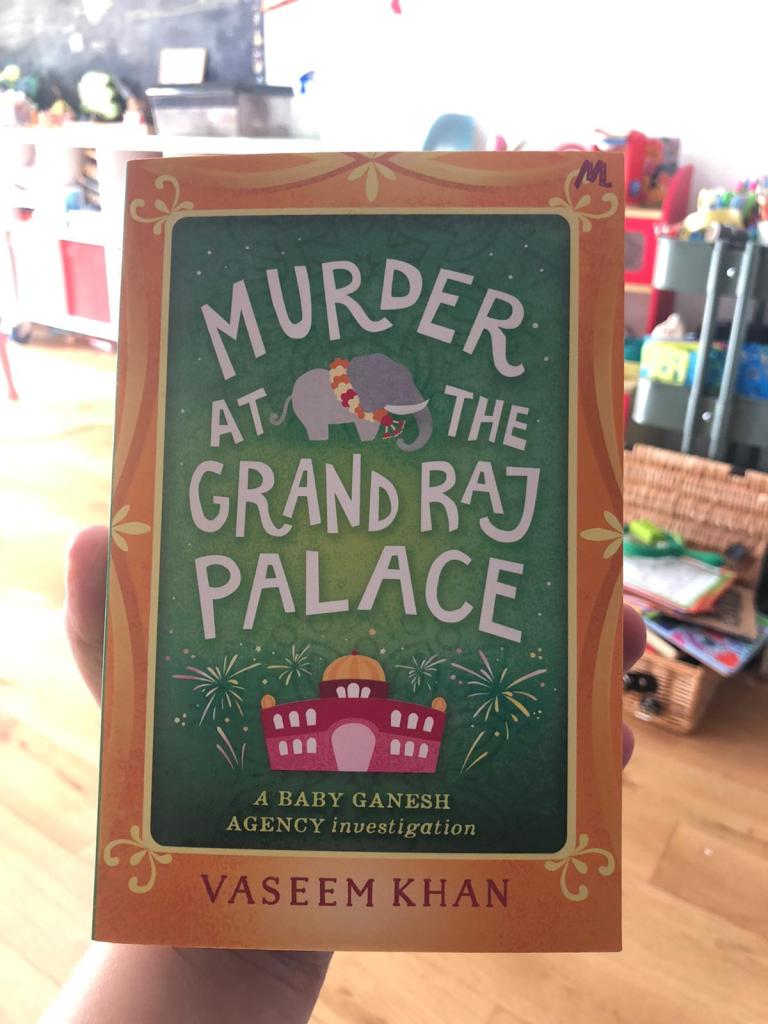
What a great read! I was extremely excited to read another book in the Baby Ganesh Agency Series and once again I was not disappointed. There was more mystery, a rich subplot and of course my favourite baby elephant. Vaseem, charmingly immerses the reader into the colourful and picturesque Grand Raj Palace. The way the book is written sets your mind up as though you are watching a film. The story allows you to escape from the uncertainty and mundane realities of life. Which is always welcome! And thrusts you into a mystery within a mystery. I would advise any reader that is interested in reading the series to definitely consider starting at the beginning, with the Unexpected Inheritance of Inspector Chopra. Although the stories do not pick up from each other, you definitely get an appreciation for the characters as they grow and change throughout the series. I liked the way Poppy is taken out of her supporting character role and is put centre stage, while investigating her own mystery. With laugh out loud humour, dark revenge and whacky characters, this is a book that will entertain you from start to finish.
@svr2727

In this instalment of the baby Ganesh Agency investigates a homicide of a very important person in a very important hotel. Inspector Chopra (retired) is on the case with his very unusual sidekick, investigating the world of corporations, big business and luxury. In the meantime, the Chopra universe is expanding and the characters are becoming more intricate and multifaceted. The household, now apart from the striking tenacious baby elephant, has little Irfan a child Chopra and his wife Poppy so desperately wanted. The story takes us through a different world paying homage to some corporate crimes that made it to the news. The conclusion of the drama is a reveal of whodunit in a very classic revelation scene. One thing you are left wondering, what will happen when the baby elephant grows to his full size?
@manosdaskalou
So far I have loved each of the Baby Ganesh Agency books. They have brightened my day and taken my attention away from life in a pandemic. As ever, with @vaseemk2’s series, you get the heat, the smells, the tastes, the views of India, attacking your senses. In this book, there is a striking contrast between light and dark in the cases resolved by Inspector Chopra (Rtd) and the wonderful Poppy. For me, the exploration of institutional violence caught my attention, the parallels to the Bhopal disaster, drawn clear and bright. Even in fictionalised form, institutional violence takes your breath away in the harm perpetuated and the complete absence of official interest. Lives lost without remark, without empathy. Without giving away any spoilers, equally striking was the almost Agatha Christie-like sleight of hand, where readers are encouraged to embrace their prejudices, only to have them destroyed with the denouement. At this point, I have the 5th book in hand and whilst I am excited to get started, I am also seriously worried. I really don’t want this series and its wonderful characters to come to an end….
@paulaabowles
Murder at the Grand Raj Palace was by far my favourite of the Baby Ganesh Agency novels! I particularly enjoyed the closeness of both cases, the uncomfortableness of Chopra in the presence of a beautiful woman who was not his wife, and Poppy’s strong and independent, yet interconnected, storyline. The twist on who committed the murder at the Grand Raj Palace, and why: I can honestly say I did not see coming! Without trying to give too much away: it is a must read which entwines themes of justice, family and social ills! Inspector Chopra does not disappoint: YET AGAIN!
@jesjames50
What is there to say about this series that we haven’t already? I love these books! They are vibrant and colourful and genuinely immerse you in another place with characters that feel like old friends now. The fourth book was possibly my favourite of the series so far: the setting of the Grand Raj Hotel, the monkey movie star’s assaults on Ganesha, spending more time with Poppy as she solves a mystery of her own, Chopra’s uncompromising resolve to crack the case and his grand unmasking of the criminal at the end. I didn’t want it to be over – bring on book 5!
@saffrongarside
This book includes my favourite sub-plot of the Chopra series so far. Poppy herself plays detective! I thought that it was great that the sub-plot and the main plot were based within the same setting, this made the book seem action-packed. Usually with the Chopra books I enjoy reading at a steady pace but I found this book difficult to put down, and this is not a bad thing. Sometimes when I read books I am disappointed by the ending, with this Chopra series this has not happened yet. Perhaps this is why these books are so pleasing to read. I was very pleased with what happened at the end with the women in red.
@haleysread
As the newest member of book club, I had missed out on the previous books in the Chopra series. Although the book is part of a series, I never felt as though I had missed anything or that I needed to catch up. I immediately liked the characters, particularly Poppy and the baby elephant, Ganesha. I identified with Poppy as a strong woman and Ganesha, despite being an elephant has the personality of a human. Secondly, I enjoyed the way in which the author wrote about India and how his fictional version reflected reality. Having been to India I was instantly reminded of the sights, sounds and smells. Members of the royal families and the fuss around the wedding recalled memories of my sister’s Indian wedding. Indeed, it was Poppy’s investigation which engaged my attention more than the murder. In the end, I was more concerned with the whereabouts of the bride than I was the uncovering of the murderer. This was a joy to read during the Christmas after a frantic first term of lecturing in the pandemic. I have already made a start on the final Chopra episode but I will definitely return to the first few books.
@amycortvriend
Share this:


Thank F**k it’s Easter!

A number of years ago I wrote a blog entitled: ‘Thank F**k it’s Christmas!’. In it, I had a general moan (nothing new there) about how exhausted the staff and students were in the first term of the new academic year: Christmas break felt desperately needed. At the time, I was still an Associate Lecturer but had just begun my MSc at Leicester as well as supporting my partner on the weekends. I felt burned out, overwhelmed, and ridiculously grateful that the Christmas break had arrived. I also commented on the importance and need for work-life balance for both staff and students, something which many of us have still not managed to achieve and something which appeared increasingly challenging during the various Lockdowns. Yes; a number of us have worked/studied from home, but that has blurred what used to be clear working hours (in theory), and home life. I honestly do not know where one ends and the other begins. Therefore, I find myself back in a head space which is screaming: ‘Thank F**k it’s Easter!’.
This term has been challenging, term 2 always is. We have navigated another lockdown, assessments, lectures, workshops, all sorts. Now, throw into the mix a cyber attack on the University and ‘Thank F**k it’s Easter’ rings louder. Staff and students have persevered in the name of education and demonstrated resilience. Something I think we should all be proud off. But the anxiety, frustrations and exasperation which the lack of IT services has generated, feels like it might take some time to overcome. I am cautious to advise us to consider work-life balance as we go into the Easter Break, as I fear I will sound hypocritical. I advised the need to take time to ourselves before, and to organise some kind of work-life balance, and in all fairness that went straight out the window once we returned from Christmas break (maybe a week of two after, I am sure I attempted a balance to begin with).
Nevertheless, I do think it is important to recognise our strengths, our achievements and to take time to breathe! For many of us, we have been without our families and friends for months. Lockdown is easing, and I am naively hopeful that this will mean we can see those who are dear to us again soon: safely and sensibly. But until we reach that point, I am also exceptionally grateful that the Easter weekend is upon us. Whether we celebrate the bringing of chocolate by the Easter Bunny, or the death and resurrection of Christ: we should all celebrate that we have made it to the end of term 2. Celebrate our achievements no matter how big or small, timetable some time to yourselves: read, run, drink gin, watch films, cross-stitch, do whatever brings you some kind of peace and most importantly: breathe. The University is closed from Friday 2nd April and re-opens on Wednesday 7th April. Lets all take some time for ourselves and breathe. Happy Easter Everyone!
Share this:


Helpfully unhelpful: The pathology of being too supportive

When I first arrived in London, I needed to find my way across the city to the now former site of the Home Office at St Anne’s Gate. I didn’t have a clue about how to get there so I asked a member of staff at St Pancras railway station. He helpfully pointed me in the direction of the London Underground. I was swept along by a torrent of people, all going about their business with a purpose, I however, didn’t have a clue where I was going. Finding sanctuary in a quiet eddy and desperately looking around I spotted a member of staff across the concourse. Fighting against the current I scrambled to where the member of staff was and implored upon them to rescue me. Thankfully the underground staff had all been briefed, not specifically about me, I should hasten to add, but about how by being super helpful they could increase customer satisfaction, reduce complaints and attract even more customers. And having explained my dilemma, I was very helpfully led through the ticket barriers, now struggling to hold back the surge, and down the escalator to the platform below. I was told to get on the next train and to get off at St James’ Park. Having arrived at my destination I became confused as to which exit to use and once again found a very helpful staff member who led me part way to the exit, where I spilled out into the sunlight a matter of yards away from my destination.
The following week I once again plunged into the torrent and confident that I knew which underground line to take I allowed myself to be swept along to the barriers and through, and then panic. Which platform and am I sure that was the right line? Once again, a beacon of hope shone across the dark morass, a member of underground staff. Once again, I was led to the platform in a super helpful way and got on the first train. But this time I didn’t arrive at my destination for some, I have to say, traumatic hours. The problem was the first train was not the train to catch, it was the second that I needed; I will most definitely have to complain about that member of staff being unhelpful.
This pattern of visits to London and assistance rendered by sometimes grumpy but always super helpful members of underground staff continued for some weeks. Often, I would stay in London for a week at a time before returning home outside of the metropolis at the weekend. During my stays I visited numerous police stations as part of my work and every time I used the underground, I sought out a helpful member of staff to assist me. Sometimes, if they rather unhelpfully simply pointed me in the right direction, I would set off and then return to them explaining that I didn’t understand their instructions. Armed with more information I would again purposefully set off and then duly return until the succumbed and rather reluctantly but helpfully led me to the correct platform.
Then in a fortnight, two things happened. Firstly, the underground staff went on strike and on arriving at the gates of St James’ Park underground station I found the gates closed. There were a couple of members of staff there, but they weren’t very helpful. ‘What should I’ do I asked, ‘Dunno’, was the reply. Now that was not very helpful, complaint forthcoming I feel. I didn’t make my appointments that day and the following day had to use taxis to get around. Much easier to use taxis you might say, yes but not really justifiable in terms of cost, my boss told me when I suggested I would forego using the underground altogether. After three days the underground opened up again but for some reason there were no staff around to ask for help. I became increasingly anxious and found myself avoiding the underground, using taxis at my own expense, and walking long distances. I was exhausted I can tell you.

The next week I ventured into the underground again, I couldn’t avoid it forever. I found a member of staff and duly asked them, in an almost ritualistic fashion, how to get across London to another underground station near yet another police station. Instead of pointing me in the right direction, which we all know by now is a rather fruitless, time wasting and unhelpful exercise, or super helpfully taking me to the correct platform, they took me to a rather large underground map on the wall. ‘This is where we are’, the very nice lady said, ‘and this is where you want to be’, she added. She then continued to explain how to use the map, how to follow the signs dotted around the stations, how to look for the signs before entering the platforms so as to work out which platform to be on and how to ensure I get on the correct train. I was nervous following her instructions as I made my way to the platform, but I got to my destination and I made my own way back, with help of the wall map of course. From that point onwards, I made my way around London on the underground with increased confidence, I wouldn’t say with consummate ease, but confidently. I made mistakes but because I knew how to read the map, I was able to rectify them and if I couldn’t I knew that I could ask. Of course, now that I drive, I use maps, I would probably have been pestering police officers and random members of the public otherwise and we know how the rare the sight of the former are on our streets. Anyway, I don’t think they’ve had the ‘super helpful’ briefing. Lately though I’ve been using my satnav, and sometimes getting into a right pickle. It seems you can’t beat good old-fashioned map reading.
What’s the point of this nonsensical tale? Well the clue is in the title. As educators we need to consider the purpose of what we are doing and how this will add value to students’ learning and knowledge. We can give students the answers to the essay questions, how to structure a particular essay, what arguments to include, what books and journal articles to read. We can supply them with reading lists that contain links to the books and journal articles, we can coach them to such an extent that their journey is in fact our journey, just as my journey to the underground platform was the staff member’s journey. We can repeat this many times over so that students are capable of completing that essay, but like me on my journey through the underground, they will need the same coaching for every piece of assessment and whilst they may complete each journey as I did, they have learnt very little and become increasingly disempowered and crippled by our helpfulness and their increasing reliance on it. Our jobs as educators is not to provide answers but to equip students with the tools to find the answers themselves. That process requires a willingness to learn, to discover and to take risks. Super helpfulness should not be an organisational strategy to ensure each part of the journey is easily manoeuvred and completed, it should be about ensuring that people can complete any journey independently and confidently. Sometimes by appearing to be super helpful we are simply being very unhelpful and disempowering people at the same time.
Share this:


Happy birthday and reflection on the (painful) art of writing

In November 2016, I had an idea that the Criminology team should create and maintain a blog. To that end I set up this account, put out a welcome message and then life (and Christmas, 2016) got in the way…. To cut a long story short, @manosdaskalou, @5teveh and I decided we’d give it a go, and on the 3 March 2017, @manosdaskalou broke our duck with the first post. This, of course, means we are celebrating the blog’s 4th birthday and it seems timely to reflect both on the blog and the (painful) art of writing.
Since that early foray the blog has published almost 500 times and has been read by almost 23,000 people from across the globe. As you can see from the map below, we still have a few areas of the globe to reach, so if you have contacts, be sure to let them know about us 🙂
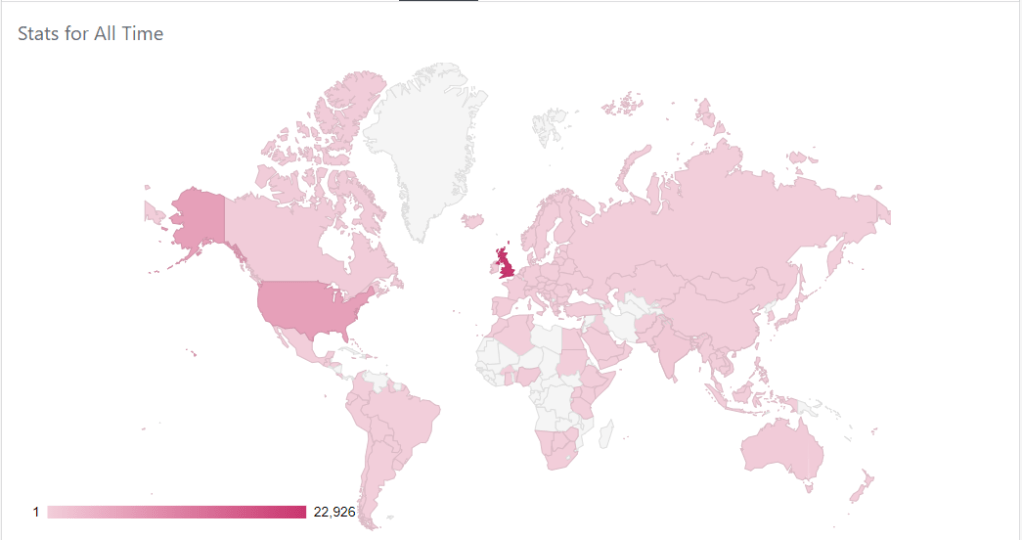
To date, our most read individual entry comes from a current student @zeechee, followed closely behind by one of @manosdaskalou‘s contributions and then one from @treventoursu. But of course, the most popular page of all is the front page where the most current entries are. That’s not to say that some entries don’t crop up again and again, for instance @manosdaskalou‘s most popular entry went live in May 2017, @zeechee‘s in January 2020 and @treventoursu‘s in February 2020. Sometimes these things take time to find their audience, but it shows you can’t hide excellent writing and content finds a way through.
Over the past 4 years we have had contributions from a wide range of people, some have contributed just one or two, others more frequently and the three founding members (once started) have never stopped blogging. During this time, bloggers have covered an enormous range of different topics, some with more frequency than others. Of course, this year much of the content, whether intended or not, has had connections to the ongoing global pandemic. The blog for both writers and readers has offered some distraction, even if only 5 minutes escape whilst waiting for the kettle to boil, from the devastation wrought by Covid-19.
All of the above gives us much to celebrate, not least our stamina and perseverance, but says nothing about the art of writing which I’d like to reflect on now. By the time it’s live on the blog, the process is forgotten, until the next entry becomes due. For some people writing comes easily, for me, it doesn’t. I find all kinds of writing painful and often like pulling teeth. I know what I want to say, I have a reasonable vocabulary, knowledge of my discipline and a keen eye on current affairs. All of this is true until I start the writing process….
Some of my reluctance relates to my individual personality, some to my social class and some to my gender. It is probably the latter two which create the highest barriers and I find myself in a spiral or internalised argument around who would want to read this, why should they, everyone knows this and on and on ad nauseum until I either write the sodding thing or very rarely, give up in disgust at my own ineptitude. I know this is irrational and I know that I have written many thousands of words in my lifetime, most largely forgotten in the fog of time, but still, every time the barriers shoot up. What makes it worse is that I can generally fulfil what ever writing brief I am confronted with, but only after a gargantuan battle of wills with myself.
Despite this a couple of things have helped considerably. The first is a talk originally give by Virginia Woolf in 1931. In this very short piece, entitled ‘Professions for Women’, Woolf details similar struggles, much more eruditely than I have, in relation to writing as a women.
The obstacles against her are still immensely powerful—and yet they are very difficult to define. Outwardly, what is simpler than to write books? Outwardly, what obstacles are there for a woman rather than for a man? Inwardly, I think, the case is very different; she has still many ghosts to fight, many prejudices to overcome. Indeed it will be a long time still, I think, before a woman can sit down to write a book without finding a phantom to be slain, a rock to be dashed against.
Woolf, 1931
She also names the internal conflict the ‘Angel in the House’. For Woolf, this creature has to be murdered in order for the female writer to make progress. For someone, like me committed to non-violence/pacifism, killing, even of an imaginary creature, is challenging, so instead I get in a few nudges, make my ‘angel’ agree to be quiet, even if only for a short time. As Woolf alludes, some days this works well, other times not so much, acknowledging that even when dead, the angel continues to undermine. Nevertheless this short essay helped me to understand that my so-called foibles were actually shared by other women and were formed during our socialisation. Because of this, I have regularly recommended to female students that they have a read and see if it helps them too.
The other thing that has really helped is the blog. The commitment to write regularly, to a deadline, has helped considerably. Although I know that I’m part of a team equally committed to the success of the blog, makes a difference. It ensures accountability. Of course, I could call on anyone of my colleagues to cover my slot, but I would be doing that knowing that I am adding to another person’s workload. Alternatively, I could opt not to write and leave a gapping hole on the blog that day/week, but again that would be letting down everyone on the blogging team, we all have a part to play. So sometimes reluctantly, other times with anger, still more times with passion, the words eventually come. I cannot speak for my fellow bloggers but I can say with some certainty blogging has done wonders for me in terms of accountability, not to mention the pleasure of working with a group of interesting and exciting writers on a regular basis.
Why not join us?
Share this:


#CriminologyBookClub: The Tiger’s Wife
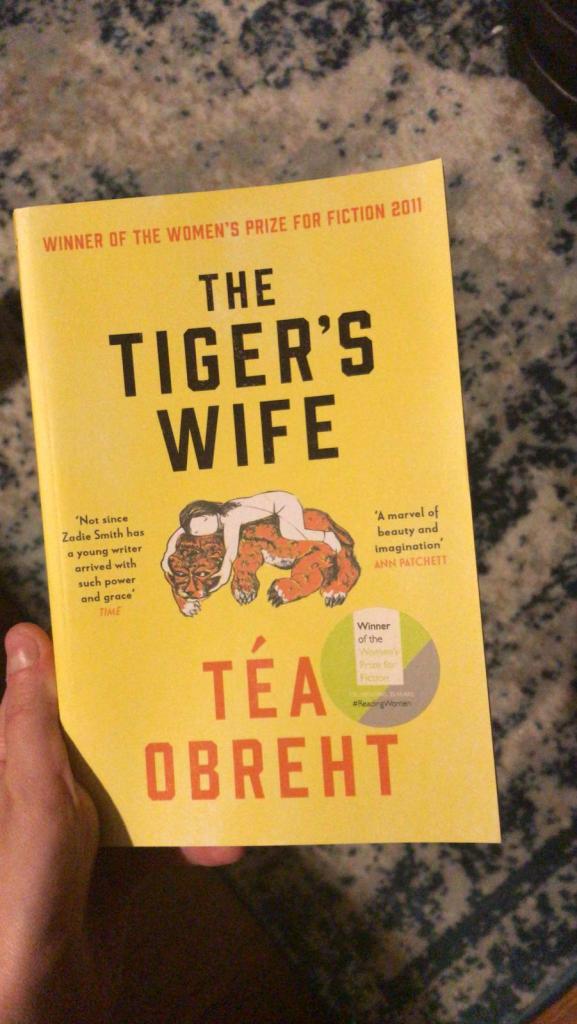
I selected The Tiger’s Wife for us all to read for book club. On first impressions the book seemed to be very interesting. My understanding was that the book would be about a tiger, his wife, a grandad and The Jungle Book. I have very little knowledge of Disney, but I did enjoy the upbeat ‘Bare Necessities’ Jungle Book song as a child. As it turns out, both The Jungle Book and The Tiger’s Wife are both grim tales. In terms of The Tiger’s Wife, I enjoyed the elements of humour within the book. I also enjoyed reading about the smells, scenery and tastes of another country given that I have not been able to leave Britain for a while. The ‘deathless man’ character was also quite intriguing. I do feel unsure about this book though. At times I was puzzled about the plot. It is also an incredibly sad and heavy tale which covers themes like war, death, disease and domestic violence – perhaps not the most appropriate choice given that we are in a national lockdown! I think this is a book that I may return to in better times.
@haleysread
What struck me about the book was that it centred around death but was largely devoid of emotion. The grandmother was described as being emotional about the death of her husband, but the book was narrated in such a way that this emotion was not felt by the reader because the grandmother was not wholly present. She was always at the other end of the phone and therefore removed from the reader. Instead, the book was lightened with humorous characters such as the Deathless Man and folk tales of superstition. These characters and tales transformed what could (and perhaps should) have been a depressing tale to a mildly sorrowful yet darkly comedic series of tragedies.
@amycortvriend
This was quite possibly my favourite of all the book club reads so far, although it is a particularly tight call (4th instalment of inspector Chopra is a gem: but shhhh spoilers)! I am quite surprised by how much I enjoyed this book which appears much to the contrast of my esteemed friends in book club. It was beautifully written, depressing, full of escapism and challenging at the same time. I was truly lost in this book as a story: I am not sure I can tell you what the story is about or what the message or meaning behind it is. But I adored it. It made me think of Big Fish and The Bee Keeper of Aleppo all mixed together (another 2 gems if you have not read them). I can appreciate how perhaps it was not the most fitting for a global pandemic, but nevertheless it is a text that I will most certainly read again!
@jesjames50
In a far away corner in Europe, people try to live with the aftermath of a war. The conflict has brought up in the community, wounds that take time to heal and the doctors who look after the physical wounds are trying to cope with the long-term effects of harm. In the backdrop of that, the story of a young doctor who is remembering her beloved grandfather takes central stage. The woman discovers a grandfather through the eyes of others. This is a post war society and many things do not make sense. The author, Téa Obreht, stitches together a story of reality with a lot of surrealism to underline the absurdness of war especially a civil conflict. Symbolism becomes intricate to the story and in the end you are left wondering who is The Tiger’s Wife?
@manosdaskalou
I found the book to be hard going. That’s not to say that there weren’t some parts of it that I enjoyed but on the whole I didn’t find much in the book to excite me and at the end I was left with a feeling of …’and’. I found that too often I was unable to follow the plot getting bogged down in, what I must admit, were beautiful descriptions of countryside, villages, animals and people. For me, the story lacked purpose, describing old superstitions, combined with historical tales which seemed to have little purpose other than to provide perhaps a vivid description of the cruelty of war and its aftermath. On a more positive note, it has prompted me to research the wars in the Balkans and maybe, that will push me to return to the book
@5teveh
The timing of The Tiger’s Wife as our book club read was impeccable. Leading up to the Christmas holidays, everything seemed to become overwhelming and I felt rather numb. Reading The Tiger’s Wife with its dreamlike qualities suited my mood extraordinarily well. The subject of war, and the damage it causes, is close to my heart. In this book, it is not tales of heroes and villains, but the quiet, pervasive harm which war leaves in its wake, touching everyone and everything, in small, often indiscernible ways. We may not be at war in the UK, but it made me consider what life will be like after the pandemic, when many of those harms are also prevalent. For instance, our NHS workers may not have been in battlefield hospitals, but treating severely ill Covid-19 patients, with a high death rate, on a daily basis will undoubtedly have a profound impact. Ultimately, The Tiger’s Wife is an anti-war book, with more questions than answers, but as the pandemic has shown us, uncertainty does not mean the end of hope.
@paulaabowles

Share this:


#CriminologyBookClub: The Strange Disappearance of a Bollywood Star
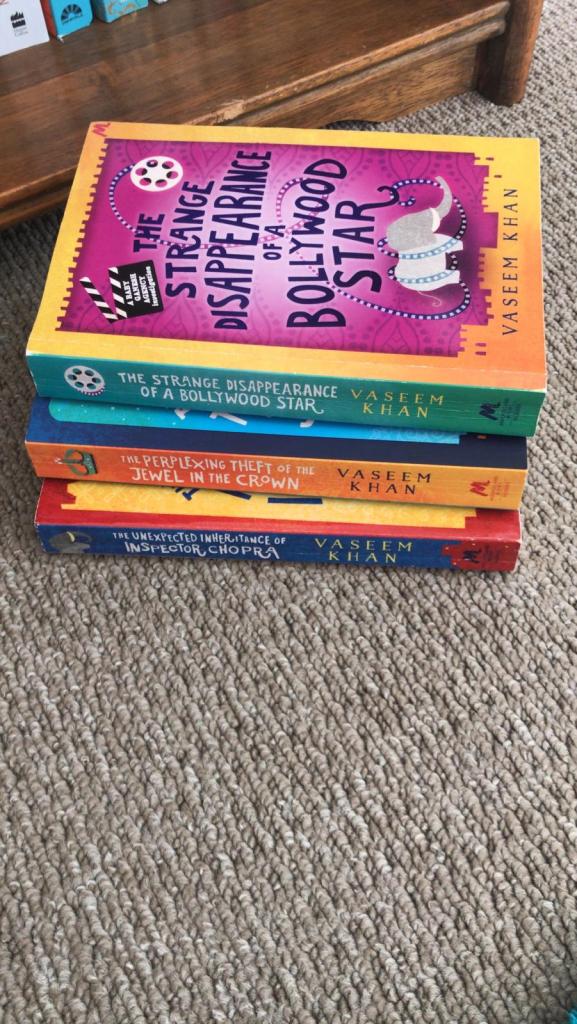
As you know from our last #CriminologyBookClub entry a small group of us decided the best way to thrive in lockdown was to seek solace in reading and talking about books. Building on on what has quickly become standard practice, we’ve decided to continue with all bloggers contributing! Our seventh book was chosen by all of us (unanimously) after we fell in love with the first and second instalment. While we struggled with fitting in the discussions of book club, due to the rigours of an academic term, we all found space for reading about the adventures of Inspector Chopra (retired) et al.:
I find the predictable happy endings of Vaseem’s novels to be quite comforting, especially during such an unprecedented time. What I enjoy mostly about these novels is that each has a moral message. In this novel it is characters like the blind homeless teacher, the prison inmates and the eunuchs that remind me that we should all try to be better people, as this will help to build a better society. The Chopra series continues to be a top lockdown read.
@haleysread
The 3rd mystery for Inspector Chopra brings him to the glittering world of Bollywood. An unusual place for the inspector and his pet elephant who seems to enjoy the attention conjuring images of other elephants working in the entertainment industry. This instalment of the crime mystery novels seemed to have matured the characters, giving their relationships more depth. Even the acerbic mother-in-law grows in ways to give us a greater understanding of their lives. The combination of the everyday with the obscure is done seamlessly and makes the surrealism even more profound. Even the pachyderm, gains more of a character reaching the intellectual age of a rebellious teenager. In the end, the mystery is solved, revealing some more social injustices behind the façade of the sparkling movie industry. As always we are left, wanting more.
@manosdaskalou
The third Chopra book was a welcome return to familiar and colourful characters. This was my favourite book in the series so far for its strong themes of kindness and reflections on what it means to be a good person. The subplot was just as gripping as the main story and lovely Ganesha kept me smiling throughout.
@saffrongarside
You could be forgiven for ignoring the plaudits on the first page of most novels, consigning them to the usual blurb written by reviewers that feel the need to say something nice to aid publicity and sales. In this case you would be foolish to ignore the plaudits, if anything they are somewhat understated. Having read the first two books in the series I picked this up with anticipation and excitement. I wasn’t disappointed. Transported to a world of vivid colour, pungent and aromatic smells and the hubbub of a bustling metropolis, the description of Mumbai and its citizens fuels the imagination and leaves the reader eagerly turning pages. The bifurcation of the storyline means there is never a dull moment, Insp. Chopra (retired) has his hands full and as a consequence ‘The Baby Ganesh Agency’ has to make use of its ever-increasing, albeit quirky staff and associates. And so Rangwalla, Chopra’s sidekick finds himself in a rather trying and unusual circumstance. Of course, what is now becoming the indomitable Ganesh gets his usual share of adventure and inevitably saves the day at some point aided by Poppy, Chopra’s wife and rock. The book is a triumph as it provides wonderful descriptions of both the lighter and darker side of the city and its residents. As usual good triumphs over evil but in the case of Chopra’s nemesis, ACP Rao, the door has been left firmly open for more mischief to come.
@5teveh
Rarely do I get the opportunity to read a book that I struggle to put down. A book that put a smile on my face and gave me a warm feeling at its conclusion.
The third instalment of Chopra and gang is just as delightful and entertaining as the previous novels. For me, the third story in the series has crossed over to the fantasy genre, whereas the previous two were toeing the line. I want to make it abundantly clear: this is not a criticism of the book. I still loved every page, as I have with the others. But for me, when reading I felt as if I was in a fantasy world with villains and heroines, magical elephants and mystical tales. The realism was somewhat lost on me this time around.
What I absolutely adored about ‘The Strange Disappearance of a Bollywood Star’ was how Vaseem Khan beautifully tackles the topic area of prejudices. Rangwalla’s journey in this book was possibly my favourite aspect of the Inspector Chopra series so far. Rangwalla attempts to face his prejudices; and in a way that mirrors reality. Vaseem has reminded us through Rangwalla’s experienced that our prejudices need to be constantly put in check, and this requires a conscious effort from us all. Roll on book number 4!
@jesjames50
If ever a year called for some escapism, 2020 certainly did. Fortunately, @vaseemk2’s tales of Inspector Chopra et al. have provided that, in bucket loads. The books transport me to a place I’ve never been, the heat, the colour and the vibrancy recreate India in front of my very eyes. The third volume in the series, is probably my favourite to date. The sparkling glamour of Bollywood, juxtaposed against dark issues of discrimination, prejudice and social injustice, creates a story which will stay with me. In particular, the bringing to life of the eunuch community and the recognition that prejudice is within us all and can be combatted, gave me a great deal of pause for thought. With it’s overarching themes of kindness and striving to do the right thing against all odds, this book captures the (hopefully) enduring lessons of lockdown, that we all need each other.
@paulaabowles

Share this:


Reality and the fairy tale world of policy and procedures

In the concept of managerialism, we see that both policy and procedures form part of the techniques employed to enhance productivity and cultural changes. These changes use a ‘calculative and rationalistic knowledge base’ which appears both ‘universalistic’, and [at first sight] ‘seems entirely good sense’ (Gilling, 2014:82).
However, this knowledge base is far from universalistic and to the ‘street level bureaucrat’ (Lipsky, 1980) often falls little short of complete naivety. Lipsky (2010) provides a valuable insight into how individuals in public service adapt unworkable policies and procedures as the idealistic meets the reality of overstretched resources and ever demanding and needy consumers of services.
Whilst both working in and studying the police as an organisation subjected to and adopting managerialist policies, I witnessed the nonsensical notions of measuring activities and the subjugation of professionalism to management ideals (Hallam, 2009). Perhaps, there could be no better example than the measurement of the length of time a call handler spent dealing with a call. This derived from the need to answer calls within a target time period. It all made sense until you begin to take into account reality – the lack of resources and the nature of calls which demanded that on some occasions operators ought to spend far longer on the phone to deal with more protracted matters, such as someone in crises who really needed help and a comforting voice whilst someone was on their way. The result of the measurements was often counterproductive, officers being sent to incidents that amounted to little more than a waste of time, ‘My Jimmy is missing and I haven’t seen him for three days’ – when the officers turn up, Jimmy turns out to be a cat or, officers being sent to locations where information regarding the incident is scant because little time has been spent on the phone to get sufficient details. In the clinical world of the policy maker, there are ideal call takers, those that have knowledge about every eventuality, and ideal call makers, those that are precise, unemotional and to the point. Nothing of course could be further from reality.
Disappointingly, I find little solace in academia. Policy and procedures abound. Teaching styles are based, not on the nuances of student types but on the ideal student. The student that has the requisite skills to read and write and think critically. The student that is always engaged and always turns up and above all else, teaching is based on idealistic (see Morse and Lewis for tutorial sizes) small student classes. Policies that are well meaning such as catering for additional needs, become unworkable in an environment where class sizes and teaching demands outstrip available resources. Like the call handler, for the lecturer, it becomes impossible to cater for those that need more attention and time. And like the call handler, lecturers are subjected to managerialist idealistic measurements of success and failure. I once heard of a manager that referred to academics as ‘slackademics’, I think is probably just an indication of how far removed from reality managers are. There are two worlds in organisations that provide a service to the public, one is based on reality the other, a fairy tale world of policies and procedures based on the ideal.
References
Gilling, D. (2014) Reforming police governance in England and Wales: managerialisation and the politics of organisational regime Change, Policing and Society, 24 (1): 81-101.
Lipsky, M. (2010) Street-Level Bureaucracy: Dilemmas of the Individual in Public Services. New York: Russell Sage Foundation.
Share this:


Time to meet our newest colleague: Jessica James

It is quite difficult to write an introductory blog, introducing yourself to new, current and Alumni Criminology students at UoN when you have been there for the past 8 years as either a student or member of staff. What is particularly difficult is figuring out where to start: how do I (re)introduce myself to students, both past and present? What do students want to know? What am I willing to share? What follows is a brief overview of my own journey as a student and with the UoN, as well as a some ‘fun’ (I use this term very lightly) facts about me.
I began my criminological journey in 2012 at the UON. I lived in halls, and had no previous knowledge of anything criminological (or so I thought). I had studied Philosophy and Ethics at A-level which proved helpful throughout my degree (and life in all honesty), but I had not studied psychology or sociology before. I don’t have the fondest memories of year 1; it was all quite overwhelming and A LOT of information to absorb and try to make sense of. And in all truthfulness my grades for the first year were not great (by my standards at least). I think I had feedback from every assessment throughout that first year telling me to check the Harvard Reference Guide! And thankfully in the summer between year 1 and 2, I did check the Guide, in fact I studied the full 100 odd page guide, and never looked back (well occasionally).
Year 2 I decided I was going to get serious about my studies, and serious I got! I didn’t miss a session, I read pretty much everything on the reading lists for my modules and found my voice in a number of seminars. I would say that in comparison to year 1, I really enjoyed my second year of Criminology, especially the placement (yes: even I have completed the placement report and presentation). And my grades reflected the commitment, passion and seriousness which I had applied.
Year 3 was pretty similar to year 2, although the stress levels were heightened. I loved my dissertation, which was an empirical piece on single parenthood and fears around juvenile delinquency. I also loved all the modules I took in year 3, which I cannot say the same for the previous years (sorry team)! Year 3 is when I realised that I would never be bored in Criminology. That is not to say that I do not find some topic areas less interesting than others, or that there are not some theories or perspectives that I do not agree with. But they are not boring (although some topics areas are pushing it). So in one way or another I had decided that my academic journey in Criminology would not end after graduation. And it didn’t.
I became an Associate Lecturer the September after I graduated, and have been on True Crime and Other Fictions and The Science of Crime and Criminals since that first year. I have also led seminars in Research Methods for Criminology, and taken lectures for Violence: From Domestic to Institutional. And basically I never left!
Alongside my AL role, I have completed my MSc in Criminology from the University of Leicester (would have done it at UON but they do not run one: cough cough). I had assumed I would continue my focus on juvenile offending in some capacity, but no I took an entirely different route to one I was familiar with and completed an empirical dissertation on The Prevalence of Rape Myths. Going forward I will hopefully do a PhD, and I currently envisage it being within the realm of Violence Against Women (VAW): but who knows?
In terms of ‘fun’ facts about me, you can know the following:
- I have two house rabbits who are both 6 years old, and have chewed every note book/pad I have ever owned. If the connection goes via online teaching, they might be responsible
- I adore pretty much all of the Disney animations, yes even the outright racist and misogynistic ones
- I eat chocolate every day without fail: pretty sure my body would just stop without it. The same goes for coffee
- And shocker: I love to read!
So to all new Criminology students, I look forward to meeting you (albeit virtually for the time being) and to all returning students (most of whom I shall have met in some capacity) I look forward to meeting you again! And finally I look forward to the next stage in my academic journey as a Lecturer in Criminology.


