
Home » Professionals/practitioners (Page 3)
Category Archives: Professionals/practitioners

The Criminology Toolbox

Whilst sitting at my desk at work recently I realised just how much I took away with me in my toolbox from my time studying Criminology. I wanted this blog to be about exactly how this discipline has helped me in my personal and working life and the transferable skills I acquired without even realising I was using them.
In 2011 I came to University an 18 year old with a very closed and one sided mind set and this is something I will openly admit to! A memory that I feel will stick with me forever is from a Crime and Society seminar in the first year with @manosdaskalou. I remember openly saying to him that I felt prisoners should not be allowed to have televisions whilst in prison and that they were there to do their sentence and not watch this week’s Hollyoaks (@manosdaskalou you may remember that sour faced girl sat in front of you, although the sour face is still very much there!). I am sure those of you reading will be cursing BUT my self-righteous opinions did change and the more I attended various lectures and seminars, the more I became open to listening to and respecting the opinions of my peers and became further educated about the impact rehabilitation and second chances have on lives.
In my second year I volunteered for an organisation focusing primarily on helping individuals who had been in the Criminal Justice System with gaining employment and education. As soon as I walked through those doors I saw first-hand the positive impact this organisation had on the lives of those using the service.
I had an opportunity to assist on a healthy living course for individuals recovering from drug and alcohol addictions. Some of those attending the course had never taken an exam before or even been in an educational setting and others struggled with reading. I quickly realised the privileged position I was in to be able to even be at University and do things I feel we all take for granted sometimes such as reading. I also provided some advice to a young female who completely freaked out at the idea of taking a multiple choice test. I gave her some tips before that I had acquired from my own experiences. She was so very thankful to me and I will always remember her.
In terms of the other skills I now have in my toolbox, the thought of standing up and presenting in front of my peers at University terrified me, however in doing that I can now confidently stand up in front of my colleagues and bosses to present information and contribute in meetings. I can also provide evidence in court thanks to learning about the criminal process.
Having the opportunity to debate certain issues within the criminological world and society has taught me to have a voice and provide my point in a professional manner whilst listening to others. From the assignments set, to working within a timetable, it has all enabled me to build upon my time management and organisational skills. Working to tight deadlines also does not daunt me especially when I now have work to them daily.
I think we can all be truthful here and say we did groan a little bit when we were given extra reading to do at home and to critically analyse various pieces of text for the next seminar (heaven forbid!). However, being able to analyse a piece of text is a skill I use every day in my job with Northamptonshire Police especially when building court files and reading the fibs and fairy tales that some of our customers can provide. Criminology taught me to be critical of everything around me, take on board criticism and ask questions. I now ensure I stick my head above the parapet and often put the police officers in their place, as they do need it sometimes!
On the whole, I am thankful for the transferable skills I acquired from studying Criminology despite using them daily and not realising until my desk epiphany! I graduated in 2014 with a toolbox of skills ready for the big wide world and I will cherish them always. Who knows, it may even help me with becoming a parent in November!
Share this:


Racism in the work place

Growing up in a small town and having dealt with racism from a young age; I felt as if getting a degree would prove that I deserve to sit with the top dogs and that would be the end of me experiencing racism.
But I was sadly mistaken. I have experienced racism at 3 out of the 4 jobs I have had since graduating. I never dealt with it head on. I would just apply for other jobs and pray that the next job would be different. Thinking of reporting people for the comments they said was never an option for me as they were managers or supervisors.
Until I had the 3rd person who said a racist comment and I broke down. At this point I was done with running. I reporte d it and it was dealt with. But since then I have been dealing with covert racism. Being the only black person in a department of over 100 people has not been easy. I have not always received the same opportunities as my colleagues. But I never gave up. I might have my melt down for a few hours or days. But I knew I had to work twice as hard as a white person to even get recognition. I have a degree that relates to my occupation and have paid over a £1,000 for courses just to be recognised. Yet, my colleagues never had to pay for those courses.
The truth of the matter is, it has taken centuries for prejudicial thoughts to be embedded in people’s heads. And it will take the same amount of time to get rid of it. That does not excuse it or make it right. All, you can do is work hard and never give up. You should not have to accept being mistreated. Stand up for yourself, no matter what. Do not suffer in silence!
Share this:

The Other Side of Intelligence

After I graduated I had a bit of tunnel vision of what I wanted to do. I wanted to either work with young offenders or work with restorative justice. Many opportunities actually came up for me to do several different things, but nothing really worked out and nothing felt right.
I carried on working in retail till February 2018; I was honestly starting to lose hope that I would find something that I would enjoy. I started working for a security company that does many things; from employment vetting to gaining intelligence of various kinds. Although the role is not focused on the criminality side entirely, the theme is very much apparent. I find myself thinking about all the different concepts of criminology and how it ties in to what I am doing.
A big part of my role is intelligence and at first, I didn’t think I would enjoy it because I remember in third year in the module, Violence: Institutional Perspectives*; we looked at the inquiry Stockwell 1; an inquiry into the metropolitan police force following the death of Jean Charles de Menezes. Jean Charles was mistaken by intelligence officers for Hussain Osman, one of the terrorists responsible for the failed bomb attacks in London. This particular inquiry frustrated me a lot, because I just felt like, how is it possible for the police to mistake an individual for an innocent person. I just couldn’t accept when we were going through this case how trained officers were able to fail to identify the correct person, regardless of all the other factors that pointed to Jean Charles being the culprit. However, now being in a similar position I understand more how difficult it actually is to identify an individual and being 100% sure. There have been times in my line of work that I have had to question myself 2, 3, even 8 times if the person I found was really who I was looking for.
I do think I question it a lot more because I know how much my job can affect a person’s life and/or future. I do think criminology has been one of the best decisions I made. I know that I view things differently from other people I work with, even my family. Just little things that people tend not to notice I see myself. Thinking, but could it be because of this, or could it be because of that. Criminology really is part of everyday life, it is everywhere, and knowing everything I know today I wouldn’t have it any other way.
*Now CRI3003 – Violence: From Domestic To Institutional
Share this:

An Officer’s Perspective

Northampton University…. In 2011, I first moved up to Northampton to study criminology and sociology. At the time I had never moved away from home before and it was a somewhat daunting experience. However, now looking back at this, it was one of the best decisions I have made.
Before I set out to go to university I had always said to my family I wanted to join the police force. I chose to study criminology as I believed this was going to help me with joining the police and also provide me with an insight as to what I was potentially going to be letting myself in for.
From studying criminology for three years I learnt about various ideas surrounding police and their interactions with communities, portrayal within the media and about the history of the police and how it has developed into the service we have today.
I remember, in particular, being interested in the way in which the media portrayed the police and the impact this had on how young people, and whether this influenced their opinions on police, so much to the point I completed a dissertation on this topic. This interest came about from a module called YOUTH CRIME AND MEDIA. Ultimately, I found that young people, in particular those aged between 18-25, were influenced by the media and this helped them form their opinions of the police.
Whilst I was at Northampton University, I was a Special Constable for the Metropolitan Police having joined them in 2013, my third year at uni. This began to give me some experience into what the police dealt with on a day to day basis. Although I was only doing this for 16 hours per month, I would recommend this to anybody who is considering joining the police.
Since graduating from Northampton University, I joined the Metropolitan Police as a PC and I have been with the Met now for 2 years. I can honestly say that, when people say this is a job like no other, they are all correct. I go to work not knowing what I am going to encounter from one call to the next. The one thing which has really stood out for me since joining as a PC, and having graduated from university, is how misunderstood the role of police appears to have become. When I was growing up I remember thinking that the role of police was to chase criminals and drive fast cars. However, this nowadays is a small proportion of the work we do and the role of police officers is a lot more diverse and changing daily. We have a lot of interactions with people who are suffering a mental health crisis who may need our assistance because they are feeling suicidal, investigate the disappearance of missing people and even attend calls where someone is suffering a cardiac arrest and a defibrillator is required, as police officers now carry these in their vehicles.
However. I feel the biggest thing that my criminology degree has assisted me with in relation to my job is how I analyse situations. Criminology was largely centred around different theories and analysing these perspectives. On a day to day basis I regularly find myself analysing information provided to me and trying to understand different accounts people provide me with and trying to use these accounts to decide what action needs to be taken. Overall criminology has allowed me to take a step back from somewhat stressful situations and analyse what has happened. This has given me the confidence to present different viewpoints to people and also challenge people at times on controversial topics or viewpoints they may have.
I do think that I took the right path to becoming a police officer; criminology did equip me with various different skills that I utilise in my day-to-day role. I wouldn’t change the path I took. I enjoyed every bit of my degree, and the lecturers were always supportive.
Share this:


Autism: Police discretion and decision making in an uncertain environment

A question that always strikes when discussing my dissertation topic is why did I chose that particular area to research – is it a topic that I was passionate about, or was it my personal life experience that lead me into that field? The answer to these questions is quite simply, no. In fact, it was a topic I accidentally fell into after reading existing research on the area for one of my other modules in second year. Intellectual disabilities within the Criminal Justice System are quite often misunderstood, and as with all academics, the more I read the more questions I had. Taking this topic at face value, the field is extremely vast, therefore after taking some time to digest many angles of research I narrowed my topic down into two areas. Firstly, an institution that I have always been interested in, policing, and one intellectual disability in particular, autism (ASD).
To give you a brief background; the examination of the relationship between criminal offending and intellectual impairments is proved as complex and problematic. This is due to the issues associated with the definition of intellectual disability, as well as the contribution of unreported crime which means researchers can only examine individuals who are currently involved in the criminal justice process (Talbot, 2007). From a policing perspective, these complexities and concerns increase in terms of conflicting procedures and relevant training which can later impact levels of service and effective results (Mercier, 2011). Amongst academic literature, it is evident that contemporary policing institutions are subject to increasing budget cuts which means that police staff must exercise discretion in processing large amounts of work with inadequate resources, in which shortcuts and simplifications are made (Lipsky 2010; Loftus 2012). This is highly problematic as policies have a tendency to occupy a one size fits all approach. In effect, this becomes increasingly difficult when dealing with individuals with autism, as increased support and time is needed to sufficiently deal with vulnerable groups.
In terms of Autistic Spectrum Disorder (ASD), this is a common form of learning impairment which can affect patterns of behaviour within a social setting. Autism is characterised by a triad of impairments, which includes difficulties in social interactions, communication and repetitiveness in daily activities (Roth, 2010, p.6). The varying expression and severity of these characteristics means that autism is recognised into sub-types, and therefore, is also considered as a spectrum disorder (King and Murphy, 2014).
On the occasions that an individual with ASD comes into contact with the police and wider criminal justice services, it is normally a result of their social and communication skills being misunderstood which means that they are not given the appropriate support (Cockram, 2005; Tucker et al, 2008). Research suggests that autistic individuals are likely to become extremely distressed in unfamiliar, confusing and loud situations whereby their actions and behaviour can be easily misinterpreted and subsequent actions could escalate the situation (Hayes, 2007). Complimented by the current implications previously discussed that are faced by the police and wider services, it is no surprise that there are issues and concerns surrounding police responses and decision-making processes towards the ASD community. After personally interviewing police constables and custody officers from Northamptonshire Police to investigate the initial responses when dealing with such individuals; the realities of such dilemmas were highlighted.
After now completing my studies with First Class Honours, I am now fortunate enough to work for The Appropriate Adult Service (TAAS) where such theoretical standpoints are often presented to me in a practical environment. From a personal judgement, Appropriate Adults can be easily dismissed, but just being a friendly face who can help and support a vulnerable person within a custody setting is far more rewarding than meets the eye. In fact, it is my dissertation itself that has lead me into this career and has now also given me a thirst for further study in my chosen research area.
References
Lipsky, M. (2010) Street- Level Bureaucracy: Dilemmas of the Individual in Public Services. New York: Russell Sage Foundation.
Loftus, B. (2012) Police culture in a changing world. Oxford: Oxford University Press.
Mercier, C. (2011) The first critical steps through the criminal justice system for persons with intellectual disabilities. British Journal of Learning Disabilities. 39(2), pp.130-138.
Roth, L. (2010) Autism: an evolving concept. In: Roth, L. (ed.) The Autism Spectrum in the 21st Century: Exploring Psychology, Biology and Practice. 1st ed. London: Jessica Kingsley Publishers, pp.1-29.
Share this:

White and Male: the diversity of the judiciary
My name is Anita and I graduated with a Criminology degree in 2016. I did have a great time at the University of Northampton. The course was challenging and intense however this meant that it provided me with the opportunity to overcome my barriers and develop myself both academically and personally. I miss going to lectures and seminars, revising for exams and even writing the dissertation. If you are reading this and you are in your third year, you are probably thinking that I am mad but I do miss it. I can’t help it! I can honestly say that going to University was the best decision I ever made and I would love to go back and do a postgraduate course. My advice to all students is enjoy it because time goes by so fast.
Before we start, please stop and think…… What percentage of court judges would you guess are women? How many members of the judiciary are from ethnic minorities?
If your guess is that we have a substancial amount of women and members from ethnic minorities in the judiciary, then this blog post might dissapoint you.
Let’s define the judiciary before we progress any further. The judiciary can be defined as ‘the judges of a country or a state, when they are considered as a group’ (Hornby, 2000, p.700).
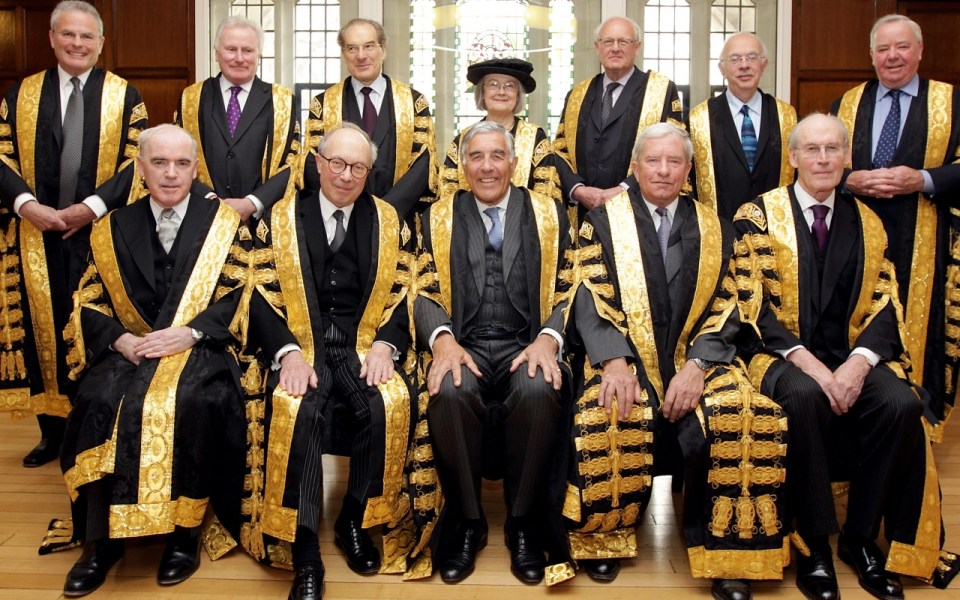
The judiciary in the UK is dominated by Oxbridge educated white middle-class men. It is estimated that three quarters of all judges in England and Wales are male and 95% are white (Lieven, 2017). The gender imbalance can be well illustrated by looking at the Supreme Court. There is only one woman among the 12 Justices on the Supreme Court. Lady Hale is the only woman ever to serve on the Court and all of the judges are and have always been white. Only Armenia and Azerbaijan have lower proportions of women in their judiciary than the UK (Lieven, 2017). This is unacceptable in 2018, changes must be made to address this gender imbalance.
In terms of race, as at 1 April 2017, only 7% of court judges were Black, Asian or Minority Ethnic (BAME). Of these Asian and Asian British accounted for 3% and the remaining three groups, Black and Black British, Mixed Ethnicity and Other Ethnic Group at around 1% each (Ministry of Justice, 2017).
This shows that judges are not reflective of wider society. This is a significant problem because the public should be confident that the judiciary delivers justice fairly. The lack of diversity means that concerns about the legitimacy and objectivity of judgements may be raised.
There are three main explanations for the continuing lack of diversity. The first explanation is that there are not enough women, BAME people and people from less privileged backgrounds who would be suitable for appointment. However, I would question the validity of this argument. This explanation seems to suggest that women or BAME people might be lacking lacking adequate knowledge or experience. There is no evidence to support this argument.
The second explanation given is that women and BAME candidates do not apply for appointment. However, it could be argued that the issue is more complicated than simply failing to apply. For example, Allen (2009) found that when BAME candidates and solicitors do apply for appointment they are significantly less likely to be successful than white candidates or barristers. This shows that the issue is not the lack of applications received from women or BAME candidates but perhaps the discriminatory recruitment process.
The third explanation is that the key principle governing our appointments to judicial office is merit. Unfortunately, the term ‘merit’ is not defined, but the implication is that achieving merit and diversity are at odds.
In conclusion, the lack of diversity in the judicial system is very concerning and should be addressed as soon as possible. This needs to be done to ensure that our justice system is fair, accessible and efficient. It is in our interest to produce a judiciary of the highest quality that reflects the make-up of our nation. Difference should be valued and not feared.
References
Allen, A (2009) Barriers to Application for Judicial Appointment Research. London: Judicial Appointments Commission.
Hornby, A.S (2000) Oxford Advanced Learner’s Dictionary. 6th ed. Oxford: Oxford University Press.
Lieven, N (2017) Increasing judicial diversity. London: Justice.
The Ministry of Justice (2017) Judicial Diversity Statistics 2017. London: MOJ.
Share this:


Why Criminology terrifies me

Cards on the table; I love my discipline with a passion, but I also fear it. As with other social sciences, criminology has a rather dark past. As Wetzell (2000) makes clear in his book Inventing the Criminal: A History of German Criminology 1880-1945 the discipline has (perhaps inadvertently) provided the foundations for brutality and violence. In particular, the work of Cesare Lombroso was utilised by the Nazi regime because of his attempts to differentiate between the criminal and the non-criminal. Of course, Lombroso was not responsible (he died in 1909) and could not reasonably be expected to envisage the way in which his work would be used. Nevertheless, when taken in tandem with many of the criticisms thrown at Lombroso’s work over the past century or so, this experience sounds a cautionary note for all those who want to classify along the lines of good/evil. Of course, Criminology is inherently interested in criminals which makes this rather problematic on many grounds. Although, one of the earliest ideas students of Criminology are introduced to, is that crime is a social construction, which varies across time and place, this can often be forgotten in the excitement of empirical research.
My biggest fear as an academic involved in teaching has been graphically shown by events in the USA. The separation of children from their parents by border guards is heart-breaking to observe and read about. Furthermore, it reverberates uncomfortably with the historical narratives from the Nazi Holocaust. Some years ago, I visited Amsterdam’s Verzetsmuseum (The Resistance Museum), much of which has stayed with me. In particular, an observer had written of a child whose wheeled toy had upturned on the cobbled stones, an everyday occurrence for parents of young children. What was different and abhorrent in this case was a Nazi soldier shot that child dead. Of course, this is but one event, in Europe’s bloodbath from 1939-1945, but it, like many other accounts have stayed with me. Throughout my studies I have questioned what kind of person could do these things? Furthermore, this is what keeps me awake at night when it comes to teaching “apprentice” criminologists.
This fear can perhaps best be illustrated by a BBC video released this week. Entitled ‘We’re not bad guys’ this video shows American teenagers undertaking work experience with border control. The participants are articulate and enthusiastic; keen to get involved in the everyday practice of protecting what they see as theirs. It is clear that they see value in the work; not only in terms of monetary and individual success, but with a desire to provide a service to their government and fellow citizens. However, where is the individual thought? Which one of them is asking; “is this the right thing to do”? Furthermore; “is there another way of resolving these issues”? After all, many within the Hitler Youth could say the same.
For this reason alone, social justice, human rights and empathy are essential for any criminologist whether academic or practice based. Without considering these three values, all of us run the risk of doing harm. Criminology must be critical, it should never accept the status quo and should always question everything. We must bear in mind Lee’s insistence that ‘You never really understand a person until you consider things from his point of view. Until you climb inside of his skin and walk around in it’ (1960/2006: 36). Until we place ourselves in the shoes of those separated from their families, the Grenfell survivors , the Windrush generation and everyone else suffering untold distress we cannot even begin to understand Criminology.
Furthermore, criminologists can do no worse than to revist their childhood and Kipling’s Just So Stories:
I keep six honest serving-men
(They taught me all I knew);
Their names are What and Why and When
And How and Where and Who (1912: 83)
Bibliography
Browning, Christopher, (1992), Ordinary Men: Reserve Police Battalion 101 and the Final Solution in Poland, (London: Penguin Books)
Kipling, Rudyard, (1912), Just So Stories, (New York: Doubleday Page and Company)
Lee, Harper, (1960/2006), To Kill a Mockingbird, (London: Arrow Books)
Lombroso, Cesare, (1911a), Crime, Its Causes and Remedies, tr. from the Italian by Henry P. Horton, (Boston: Little Brown and Co.)
-, (1911b), Criminal Man: According to the Classification of Cesare Lombroso, Briefly Summarised by His Daughter Gina Lombroso Ferrero, (London: G. P. Putnam’s Sons)
-, (1876/1878/1884/1889/1896-7/ 2006), Criminal Man, tr. from the Italian by Mary Gibson and Nicole Hahn Rafter, (London: Duke University Press)
Solway, Richard A., (1982), ‘Counting the Degenerates: The Statistics of Race Deterioration in Edwardian England,’ Journal of Contemporary History, 17, 1: 137-64
Wetzell, Richard F., (2000), Inventing the Criminal: A History of German Criminology 1880-1945, (Chapel Hill: The University of North Carolina Press)
Share this:

My Calling in Life

I used to think waking up for lectures was the hardest thing in life. Little did I know that the 9am until 5pm isn’t a joke!
I graduated nearly 3 years ago now. Since then I have been trying to find my ‘calling’ in life. The world showed me it is not always easy finding this calling. If you want something you have to go and get it. Having a degree does not mean you will be successful. I had to start from the bottom and through trial and error; I can say I am starting to get there. Initially I was applying for any and every job possible. My first job was for an IT and Business training company and I was made redundant. That was difficult. Here I was thinking redundancy is for old people. Life had just started teaching its lessons.
After that I realised my passion was Criminology and I was determined in finding a job within this sector. So I started working for my County Court as clerk. I realised that I was definitely not cut out for the public sector. The frustration from the public because the court system is so slow (which I completely understood I would have been annoyed too). Don’t even get me started on the fact that I had to use dial up internet and buy my own teabags and milk! From that moment on I knew I had to get back into the private sector but still have a job in Criminology
I applied for a job as a Financial Crime Analyst for a bank and I was given the job without an interview! I knew I had found my ‘calling’. It is more Compliance based. I have had to start from the bottom. My senior managers appreciate the fact that I have a Criminology degree. But my colleagues make remarks like “Oh, you went to uni and we are still at the same level”. It is a slap in the face. But I am grateful for my degree. It has made me humble and look at people in a different light. When my colleagues are laughing at the crimes people commit such as an 80 year old man being involved in the drug trade or an 18 year old running a brothel. As a Criminologist I can ask questions such as “I wonder if this person is being coerced into this” or “I wonder if they have an drug problem or they did not grow up in a happy home”. I can empathise with these people and see beyond the information that is presented in front of me. I have been told I am too soft. But that is the life of a Criminologist and I would not change it for the world!
Share this:

Graduation: the end of the beginning?

Helen is an Associate Lecturer teaching on modules in years 1 and 3.
I joined the University of Northampton as an associate lecturer in 2009, teaching at first on the Offender Management foundation degree and then joining the Criminology team, although I had been a visiting lecturer in Criminology for a number of years prior to that. I am sorry that a prior commitment means that I am unable to join you for the Big Criminology Reunion, although the occasion has inspired me to reflect on the professional journey that starts with graduation.
Last week I received an e-mail from a former student in the 2010 Offender Management cohort. She is just about to qualify as a probation officer and she was asking for advice about giving evidence at Parole Board hearings. It was great to think back, to remember what a vibrant and enthusiastic student she was, and to project forwards; perhaps I’ll see her at an oral hearing soon. She will probably make an excellent probation officer, and the fact that she is asking for advice before she even starts is evidence of that. She will possibly be the first of our offender management students to become an offender manager!
A couple of years ago I was at a Parole Hearing at HMYOI Aylesbury where I was very impressed by the evidence of the trainee psychologist. She had prepared a clear, concise but thorough and analytical report on the prisoner and she gave her oral evidence confidently and thoughtfully. After the end of the hearing, she popped back in to tell me that she had been initially inspired to take up prison psychology after hearing my guest lecture on Manos’ Forensic Psychology module. I saw her again earlier this year and she’s still doing a great job!
For undergraduates, completing a degree, submitting a dissertation, putting the pen down at the end of the last exam and then graduating with friends, seems like the end of a long and arduous process. And of course it is! But as the stories above show, it is also just the beginning. Just the beginning of a professional journey which may or may not involve direct application of the subjects covered on the course. Not all our students become probation officers or prison psychologists or academic criminologists, but they will take something of what they learn out into the world with them. It may be a more critical way of digesting the news, a wider appreciation of the social forces that shape our world, a readiness to reflect and question and see the world from different perspectives. All of that will help them on their journey. I hope that you all have a great time at the reunion and that as you compare each other’s journeys you have fond memories of the degree course that seemed a marathon at the time but was really only the first step!
Share this:


Justice on Trial
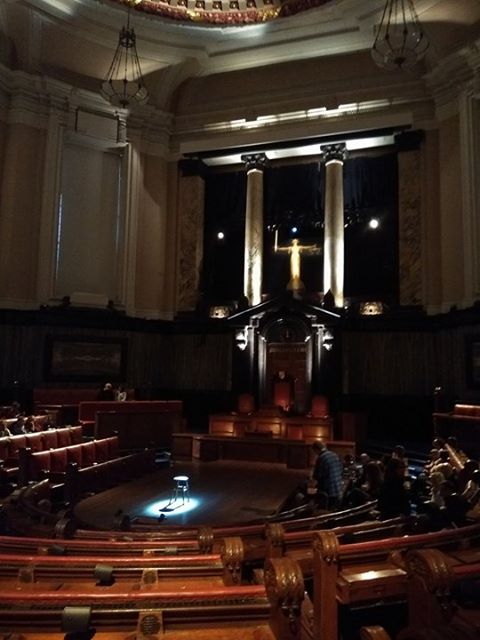
Last weekend I was fortunate enough to be treated to theatre tickets for Agatha Christie’s Witness for the Prosecution. The setting – London’s County Hall – was exquisite, the play sublime and the actors fabulous. An afternoon of sheer escapism, even for a die hard Christie fan like myself. Having read the short story/play many times is no replacement for seeing this on the stage. The theatre offers the opportunity to see the action from all perspectives; you can put yourself in the shoes of the defendant, the court actors and of course, the witnesses. Such a perspective vividly demonstrates the immense power of the State, not only through physical violence (although this is also evident) but through verbal dexterity. To see the defendant – Leonard Vole – on trial; so small and defenceless against the majesty of the courtroom, is thought provoking. Furthermore, this environment is staffed by legal professionals, who unlike him, understand the world in which they operate. The cut and thrust of legalistic argument performed in the play (and in modern day courts daily) conceals the sheer ferocity of authority’s attack on the individual. Remember at the time the play was written, the death penalty was still in force, and Leonard Vole is on trial for the capital crime of murder. In essence, he is openly fighting for his very life, but subjected to the machinations and mediation of professionals who openly profess to be seeking justice. When he tries to speak, to argue, to cajole, he is silenced. There is no place for the defendant’s perspective unless it is expressed via the mandated professional who speaks on his (or her) behalf.
In the twenty-first century (and indeed, for the latter part of the twentieth century), capital punishment in the UK has not been a sentencing option. Whilst defendants may not be faced with a possible date with the hangman, the finality of sentencing and punishment is no laughing matter. Whilst there is no doubt that dramatic denouements have their place in the theatre, in the serious business of the criminal courts such antics seem out of place. If we look at the criminal court as a theatrical scene, we start to observe all manner of incongruity (cf. Carlen, 1976). For starters; the language used and the costumes worn. For anyone that has ever grappled to understand the works of Shakespeare or the Brontë’s, such reading requires patience and perseverance to understand the beauty of such writing. In 2018, we would not request that our surgeons operate on us without the benefit of anaesthesia, neither would we want to be treated with procedures such as bloodletting or trepanning. Similarly, we don’t expect soldiers to carry muskets or form into schiltrons just because that’s how it used to be. Yet we accept and arguably, expect our courts to run as if they were stuck in time. What chance does the individual defendant have in this archaic, theatrical setting? After all, they are the star of the show, yet they have neither costume, nor the opportunity to learn their lines. It is hard to argue, that such practices are conducive to the pursuit of justice.
On the surface, going to the theatre appears to offer a pleasurable break from academia, yet the reality is it offers the opportunity to consider criminology from a novel perspective. Reading (and you all know how keen I am on reading!!) is only part of Criminology; talking, listening, thinking and exploring away from the classroom are equally important. My advice; get out, explore – the arts; theatre, cinema, literature, museums – and add this experiential knowledge to your academic studies. See things from a different perspective and unleash your Criminological Imagination (Young, 2011).
References:
Carlen, Pat, (1976), ‘The Staging of Magistrates’ Justice,’ The British Journal of Criminology, 16, 1: 48–55
Christie, Agatha, (2018), Witness for the Prosecution, Directed by Lucy Bailey. London County Hall, [11 February 2018]
Young, Jock, (2011), The Criminological Imagination, (London: Polity)

 Thoughts from the criminology team