
Home » politics (Page 2)
Category Archives: politics

Meet the Team: Liam Miles, Lecturer in Criminology

Hello!
I am Liam Miles, a lecturer in criminology and I am delighted to be joining the teaching team here at Northampton. I am nearing the end of my PhD journey that I completed at Birmingham City University that explored how young people who live in Birmingham are affected by the Cost-of-Living Crisis. I conducted an ethnographic study and spent extensive time at two Birmingham based youth centres. As such, my research interests are diverse and broad. I hold research experience and aspirations in areas of youth and youth crime, cost of living and wider political economy. This is infused with criminological and social theory and qualitative research methods. I am always happy to have a coffee and a chat with any student and colleague who wishes to discuss such topics.
Alongside my PhD, I have completed two solo publications. The first is a journal article in the Sage Journal of Consumer Culture that explored how violent crime that occurs on British University Campuses can be explained through the lens of the Deviant Leisure perspective. An emerging theoretical framework, the Deviant Leisure perspective explores how social harms are perpetuated under the logics and entrenchment of free-market globalised capitalism and neoliberalism. As such, a fundamental source of culpability towards crime, violence and social harm more broadly is located within the logics of neoliberal capitalism under which a consumer culture has arisen and re-cultivated human subjectivity towards what is commonly discussed in the literature as a narcissistic and competitive individualism. My second publication was in an edited book titled Action on Poverty in the UK: Towards Sustainable Development. My chapter is titled ‘Communities of Rupture, Insecurity, and Risk: Inevitable and Necessary for Meaningful Political Change?’. My chapter explored how socio-political and economic moments of rupture to the status quo are necessary for the summoning of political activism; lobbying and subsequent change.
It is my intention to maintain a presence in the publishing field and to work collaboratively with colleagues to address issues of criminal and social justice as they present themselves. Through this, my focus is on a lens of political economy and historical materialism through which to make sense of local and global events as they unfold. I welcome conversation and collaboration with colleagues who are interested in these areas.
Equally, I am committed to expanding my knowledge basis and learning about the vital work undertaken by colleagues across a breadth of subject areas, where it is hoped we can learn from one another.
I am thoroughly looking forward to meeting everyone and getting to learn more!
Share this:


2024: the year for community and kindness?



The year 2023 was full of pain, loss, suffering, hatred and harm. When looking locally, homelessness and poverty remain very much part of the social fabric in England and Wales, when looking globally, genocide, terror attacks and dictatorships are evident. Politics appear to have lost what little, if any, composure and respect it had: and all in all, the year leaves a somewhat bitter taste in the mouth.
Nevertheless, 2023 was also full of joy, happiness, hope and love. New lives have been welcomed into the world, achievements made, milestones met, communities standing together to march for a ceasefire and to protest against genocide, war, animal rights, global warming and violence against women to name but a few. It is this collective identity I hope punches its way into 2024, because I fear as time moves forward this strength in community, this sense of belonging, appears to be slowly peeling away.
When I recollect my grandparents and parents talking about ‘back in the day’ what stands out most to me is the community identity: the banding together during hard times. The taking an interest, providing a shoulder should it be required. Today, and even if I think back critically over the pandemic, the narrative is very singular: you must stay inside. You must be accountable, you must be responsible, you must get by and manage. There is no narrative of leaning on your neighbours, leaning on your community to the extent that, I’m under the impression, existed before. We have seen and felt this shift very much so within the sphere of criminal justice: it is the individual’s responsibility for their actions, their circumstances and their ‘lot in life’. And the Criminologists amongst you will be uttering expletives at this point. I think what I am attempting to get at, is that for 2024 I would like to see a shared identity as humankind come front and central. For inclusivity, kindness and hope to take flight and not because it benefits us as singular entities, but because it fosters our shared sense of, and commitment to, community.
But ‘community’ exists in so much more than just actions, it is also about our thoughts and beliefs. My worry: whilst kindness and support exist in the world, is that these features only exist if it does not disadvantage (or be perceived to disadvantage) the individual. An example: a person asks me for a sanitary product, and having many of them on me the vast majority of the time, means I am able and happy to accommodate. But what if I only had one left and the likelihood of me needing the last one is pretty high? Do I put myself at a later disadvantage for this person? This person is a stranger: for a friend I wouldn’t even think, I would give it to them. I know I would, and have given out my last sanitary product to strangers who have asked on a number of occasions. And if everyone did this, then once I need a product I can have faith that someone else will be able to support me when required. The issue, in this convoluted way of getting there, is for most of us (including me as evidenced) there is an initial reaction to centralise ‘us’ as an individual rather than focus on the community aspect of it. How will, or even could, this impact me?
Now, I appreciate this is overly generalised, and for those that foster community to all (not just those in their community and are generally very selfless) I apologise. But in 2024, I would like to see people, myself included, act and believe in this sense of community rather than the individualised self. I want people to belong, to support and to generally be kind and not through thinking about how it impacts them to do so. We do not have to be friends with everyone, but just a general level of kindness, understanding and a shared want for a better, inclusive, and safe future would be great!
So Happy New Year to everyone! I hope our 2024 is full of peace, prosperity, community, safety and kindness!

Share this:


Christmas Toys

In CRI3002 we reflected on the toxic masculine practices which are enacted in everyday life. Hegemonic masculinity promotes the ideology that the most respectable way of being ‘a man’ is to engage in masculine practices that maintain the White elite’s domination of marginalised people and nations. What is interesting is that in a world that continues to be incredibly violent, the toxicity of state-inflicted hegemonic masculinity is rarely mentioned.
The militaristic use of State violence in the form of the brutal destruction of people in the name of apparent ‘just’ conflicts is incredibly masculine. To illustrate, when it is perceived and constructed that a privileged position and nation is under threat, hegemonic masculinity would ensure that violent measures are used to combat this threat.
For some, life is so precious yet for others, life is so easily taken away. Whilst some have engaged in Christmas traditions of spending time with the family, opening presents and eating luxurious foods, some are experiencing horrors that should only ever be read in a dystopian novel.
Through privileged Christmas play-time with new toys like soldiers and weapons, masculine violence continues to be normalised. Whilst for some children, soldiers and weapons have caused them to be victims of wars with the most catastrophic consequences.
Even through children’s play-time the privileged have managed to promote everyday militarism for their own interests of power, money and domination. Those in the Global North are lead to believe that we should be proud of the army and how it protects ‘us’ by dominating ‘them’ (i.e., ‘others/lesser humans and nations’).
Still in 2023 children play with symbolically violent toys whilst not being socialised to question this. The militaristic toys are marketed to be fun and exciting – perhaps promoting apathy rather than empathy. If promoting apathy, how will the world ever change? Surely the privileged should be raising their children to be ashamed of the use of violence rather than be proud of it?
Share this:


Stop the boats, Stop the visas, Meet the thresholds and You are in!

The Tory party has witnessed a number of challenges in recent years and with the appointment of Rishi Sunak, a brief sense of stability was felt amidst the chaos. As different parties look to the upcoming elections, each party have begun to move pieces on its chess board. While campaigns have unofficially begun, some commentators have argued that Sunak’s recent policy on migration could be one of his game plans.
Let’s take a closer look into this recent migration policy. Attention seemed to have slowly shifted away from the plan of redirecting boats to Rwanda to the need to suppress legal migration. To restrict LEGAL migration, Sunak’s government instituted policies limiting opportunities on student visas, banning dependents on care visas, increasing the minimum income threshold for skilled worker and family visas, and revising rules around shortage occupation lists.
Starting with the skilled worker visas, the government imposed a £38,700 minimum salary requirement to gain entry into the UK. Simply put, if you are coming to work in the UK, you must search for a job that pays nothing less than £38,700 in annual income, or else you will not qualify. For me, I think some clarification is needed here for what the government considers as skilled jobs exactly. I say this because junior doctors, nurses and train operators would be considered as being part of a skilled workforce. However, these skilled work force have undertaken multiple strike action over dispute on wages in the last few months. This leads me to another question – how many ‘skilled job’ workers earn a salary of £38,700 in the current day economy? Although the government implied that the reason for this is to force organisations to look to British citizens first rather than relying on legal migrants – which could be thought as quite commendable however, a number of UK workers earn less than the new threshold annually anyway. So this logic needs further clarity in my view.
In terms of curbing student’s visas, UK higher education has long attracted international students, yet these new policies outrightly banning postgraduate dependents and targeting post-study work visas seem quite harsh, especially given the exorbitant £13,000 to £18,000 yearly tuition fees already paid by these students. If the aim is transforming education into a type of transitory/knowledge based tourism, this should be transparent so aspiring international scholars are not misled into believing they are wanted for anything beyond their hefty bank balances.
On family visas and so forth, it is without a doubt that these new rules will tear apart families because it also imposes a £38,700 minimum income threshold on family visas from £18,600. The technicality around this is that legal migrants will not be the only ones to be affected by these new rules, British citizens will also be affected. Let us consider this scenario. Consider Linda, a British citizen working part-time in retail earning £33,000 annually. She aims to marry her long-term boyfriend from Sri Lanka next summer, but both of them fall short of the minimum income threshold. Under the current rule, Linda now faces a dilemma. It’s either she increases her earnings above the threshold by the next spring or uproot her British life to reunite with her partner abroad. Contrast her plight with Kelvin, a non British citizen who has recently secured a Band 7 physiotherapy role in the NHS. He is entering the UK from Mozambique and has managed to negotiate a £47,000 pay deal with his trust. Kevin has the right to move his family freely over to the UK without any disruption. This seems more like double standards because for the less affluent, it seems the right to create a family across borders will become an exclusive privilege reserved only for the rich under this new policy.
The clock may be running out for advocacy groups hoping to see a repeal of these new regulations by the House of Lords and it seems doubtful there is enough procedural means in the Commons to withdraw the policies.
Share this:


Saluting Our Sisters: A Reflection on the Living Ghost of the Past
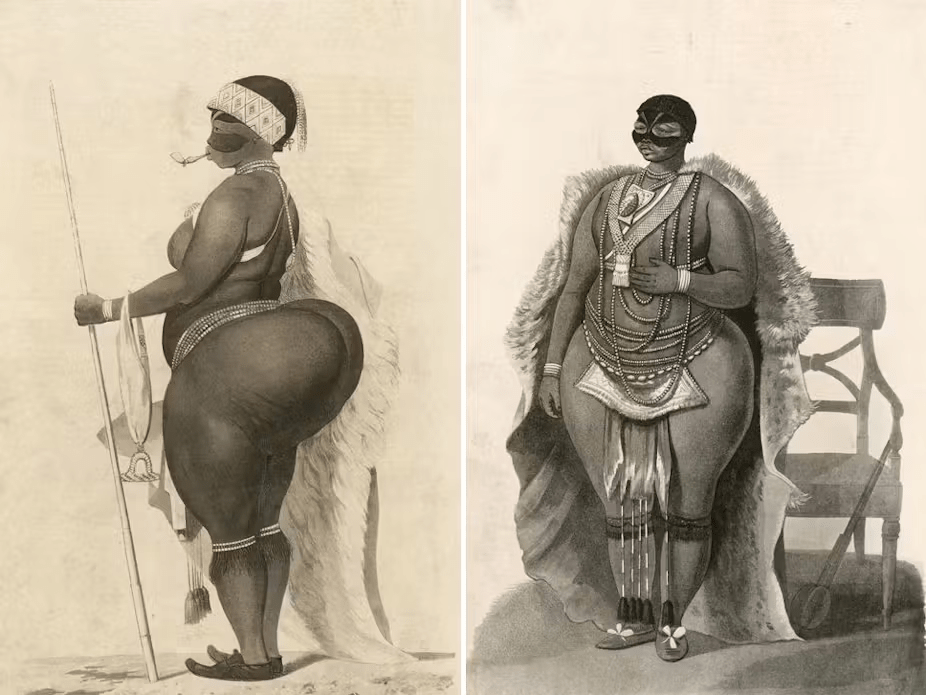
Sarah Baartman. Image source: https://shorturl.at/avLO4
In the 20th century, many groups of people who had been overpowered, subdued, and suppressed by imperialist expansionist movements under arbitrary boundaries began challenging their subjugation. These emancipation struggles resulted in the emergence of quasi-independent, self-governed African nation-states. However, avaricious socio-economic opportunists were aided into political leadership and have continued to perpetuate imperial interests while crippling their own emerging nations. Decades later, it has become clear that these ‘new states’ have become shackled under the grips of strong and powerful men who lead a backward and dysfunctional system with the majority of people impoverished while they enervate justice and political institutions.
Prior to this, the numerous nation states now recognised as African states had developed their distinct social, political, and economic systems which emerged from and reflected their distinctive norms and cultural values. Barring communal disputes and conflicts, robust inter-communal associations, interaction, and commerce subsisted amongst the nations, and paced socio-economic developments were occurring until external incursions under different guises began. Notably, the tripartite monsters of transatlantic slave trade, pillage of natural resources, and colonisation which not only lasted for centuries, disrupted the steady pace and development of these nations. It destroyed all existing social fabric and capital of the people, and forcefully installed a religious, socio-political, and economic systems that are alien to the people.
Ironically, while the transatlantic slave trade and colonialism were perpetuated under the guise of a “civilizing mission,” it took over three centuries for the “civilised” to realise that these abhorrent incursions were far from being civilising, and that they themselves required the civilisation they purported to be administering. However, while one might imagine that this awareness would lead to remorse and guilt-tripped sincere repentance for the pillage, pain, and atrocities, the abolition and relinquishing of political power to natives, the following events symbolized the contrary. Neo-colonialism was born, and international systems and conglomerates have continued the pillage on different fronts as aided by the greedy political class. Thus, it is unsurprising that yet again, strong, and powerful men are revolting against and deposing the self-perpetuating, avaricious socio-economic opportunists who wield political power against the interests of their nations in series of military coup d’état.
It is clear that the legacy of exploitation and subjugation has brought about a new set of challenges. Leaders entrusted with the responsibility of fostering prosperity in their nations often succumbed to personal gain, perpetuating a cycle of exploitation reminiscent of the imperialist era. This grim reality creates a stark contrast: while the majority of citizens are trapped in poverty, a powerful minority wields disproportionate influence, eroding the foundations of justice, economic prosperity, and political stability. As a result, for the vulnerable, seeking safety, economic freedom, and escaping from dysfunctional systems through deadly and illegal migration to other parts of the world becomes the only viable option. However, unbeknownst to many, the lands they risk everything to reach are grappling with their own challenges, including issues of acceptance and association with once labelled ‘uncivilized’ peoples.
Black History Month sheds light on these challenges faced by the black community and other marginalized ethnic groups globally. This year, the theme ‘Saluting our Sisters’ invites us to reflect on the contributions of Black women to society and the challenges they continue to face. It is also important to reflect deeply on how we consciously or unconsciously perpetuate rather than disprove, discourage, and distance ourselves from sustaining and growing the living ghost of the past. As Chimamanda urges, perhaps considering a feminist perspective in our actions, practices, and behaviour can be a powerful step toward recognizing and acknowledging how we perpetuate these problems. Dear Sister, I admire and salute you for your resilience and tenacity in making the world a better place.
Share this:


Cash Strapped, Vote-Buying, Petroleum Scarcity, and the Challenge of a 21st Century Election
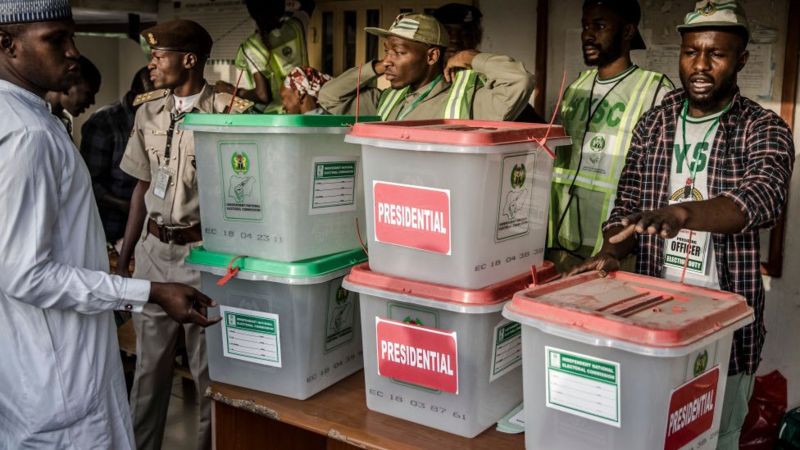
Democratic elections are considered an important mechanism and a powerful tool used to choose political leaders. However, the level of transparency and the safety of votes, the electorates, and the aspirants as recent elections in supposed strong democracies indicate is not a given. Even more, in weak and fragile states, voters grapple with uncertainties including the herculean task of deciding on whom or perhaps what to pledge allegiance to?
Nigerians face such uncertainties as over 93 million voters are set to decide the new leadership of the most populous country in Africa in less than 24 hours. Three contestants: Ahmed Bola Tinubu of the ruling All Progressive Congress (APC); Peter Obi of the Labour Party(LP); and Atiku Abubakar of the Peoples Democratic Party (PSP) are considered the major contestants of the coveted seat of the presidency. All 3 contestants are neither strangers to political power nor free of controversies. Nevertheless, a plethora of problems awaits the successful candidate, including a spiking impatience with government policies from the populace.
Since assuming office in 2015, President Muhammadu Buhari has consciously implemented numerous policies aimed at changing the tide of the crippling economy of Nigeria. One of this was tightening control of foreign exchange and forex restrictions to minimise pressure on the weak exchange rate of the naira against other currencies, and to encourage local manufacturing. Furtherance to this, the government implemented more restrictions including closing all its land borders in August 2019 to curtail smuggling contrabands and to boost agricultural outputs. These policies have been criticised for increasing the hardship of the mostly poor masses and failing to yield desired goals, despite its resulting in an increase in local production of some agricultural products.
The aviation sector and multinational companies were also heavily impacted by the forex restrictions. International airliners were unable to access and repatriate their business funds and profits. As a result, some suspended operations while some multinationals closed down completely. Flawed policy articulation and implementation and a slow or total failure to respond to public disenchantment has been the bane of the 8 years of Buhari regime which ends in a few months. While the masses grappled with surviving movement restrictions during the Covid-19 lockdown, palliative meant for to ease their suffering were hoarded for longer than necessary, thereby provoking series of mass looting and destruction of the storage warehouses.
Demands for action and accountability over police reform also assumed a painful dimension. On 20 October 2020, peaceful protesters demanding the abolishment of a notoriously corrupt, brutal, rogue, and stubborn police unit called SARS were attacked by government forces who killed at least 12 protesters. Incidents as this supports Nigeria’s ranking as an authoritarian regime on the democratic index. Unsurprisingly, the regime appears numb to the spate of violence, insecurity, and recurring killings perpetrated by a complex mix of militias, criminal groups, terrorists, and state institutions as the #EndSARS massacre demonstrates. Thus, a wave of migration among mainly skilled and talented young Nigerians now manifests as a #Japa phenomenon. The two most impacted sectors, health and education ironically supply significant professionals in nations where the political class seek medical treatment or educate their children while neglecting own sectors.
Certainly, the legacy of the Buhari regime would be marred by these challenges which his party presidential candidate and prominent party stalwarts have distanced from. Indeed, they fear electorates would vote against the party as a protest over their suffering. Suffice it that Nigerians lived through the previous year in acute scarcity and non-availability of petroleum products, which further deepened inflation. Currently, cash scarcity is causing untold hardship due to the implementation of a currency redesign and withdrawal limits policy. The timing of the implementation of the policy coincides with the election and is thought to aim at curtailing vote-buying as witnessed in party primary elections. However, there is no guarantee that bank officials would effectively implement the policy.
Thus, as Nigeria decides, the 3 contestants present different realities for the country. For some, voting in the ruling APC candidate who has a questionable history could mean a continuation of the woes endured during the Buhari regime. The PDP candidate who was instrumental in the 2015 election of Buhari has severally been fingered for numerous controversies and corruption, despite having not been prosecuted for any. Similarly, allegations levelled against the LP candidate who has found wide popularity and acceptance amongst the young population has not resulted in any prosecution. However, while the candidate is popular for his anti-establishment stance and desire to change the current system, it is unclear if his party which has no strong political structure, serving governors, or representatives can pull the miracle his campaign has become associated with to win the coveted seat.
Share this:


A world without prisons follow-up. A student/staff reflection piece
As a department Criminology has pushed the envelope in promoting discussions around the key disciplinary debates. @franbitalo and myself co-ordinated a conversation where the main focus was to imagine “a world without prisons”. The conversation was very interesting, and we decided to post parts of it as a legacy of the social debates we engage in. The discussion is captured as a series of comments made by the students with some prompts in bold.
The original question stands, can you imagine a world without prisons? First thing first, there is a feeling that prisons will always exist as mechanisms to control our society. Mainly because our society is too punitive and focused on punishment rather than rehabilitation. We live in a society that ideologically sees the prison as the representation of being hard on crime. Further to this point we may never be able to abolish the prison, so it can always remain as the last resort of what to do with those who have harm others. Especially for those in our society who deserve to be punished because of what they did. Perhaps we could reform it or extend the use of the probation service dealing with crime.
In an ideal world prisons should not exist especially because the system seems to target particular groups, namely minorities and people from specific background. It important to note that it does stop people seeking or taking justice into their hands and deflecting any need for vengeance “eye for an eye”. Prison is a punishment done in the name of society, but it does carry political overtones. There are parts of political ideology that support the idea that punishment is meant to make an example of those breaking the law. This approach is deeply rooted, and is impervious to reform or change. Which can become one of the biggest issues regarding prisons.
Then there is the public’s view on prisons. When people hear that prisons will go they will be very unhappy and even frightened. They will feel that without prisons people will go crazy and commit crimes without any consequences. Society, people feel, will go into a state of anarchy where vigilantism will become the acceptable course of action. This approach becomes more urgent when considering particular types of criminals, like sex offenders and in particular, paedophiles. Regardless of the intention of the act, these types of crime cause serious harm that the victim carries for the rest of their lives. The violation of trust and the lack of consent makes these crimes particularly repulsive and prison worthy. How about child abduction? Not sure if we should make prison crime specific. That will not serve its purpose, instead it will make it the dumping ground for some crime categories, sending a message that only some people will go to prison.
Will that be the only crime category worthy of prison? In an ideal world, those who commit serious financial crimes should be going to prison, if such a prison existed. Again, here if we are considering harm as the reason to keep prisons open these types of crime cause maximum harm. The implication of white-collar crime, serious fraud and tax evasion deprive our society of taxes and income that is desperately needed in social infrastructure, services and social support. Financial crime flaunts the social contract and weakens society. Perhaps those involved should be made to contribute reparations. The prison question raises another issue to consider especially with all the things said before! Who “deserves” to go to prison. Who gets to go and who is given an alternative sentence is based on established views on crime. There are a lot of concerns on the way crime is prioritised and understood because these prioritisations do not reflect the reality of social disorder. Prison is an institution that scapegoats the working classes. Systematically the system imprisons the poor because class is an imprisonable factor; the others being gender and race.
If we keep only certain serious crimes on the books, we are looking at a massive reduction in prison numbers. Is that the way to abolitionism? The prison plays too much of a role in the Criminal Justice System to be discounted. The Industrial Prison Complex as a criminological concept indicates the strengths of an institution that despite its failings, hasn’t lost its prominence. On the side of the State, the establishment is a barrier to any reform or changes to this institution. Changes are not only needed for prison, but also for the way the system responds to the victims of crime as well. Victims are going through a process of re-victimisation and re-harming them. This is because the system is using the victims as part of the process, in giving evidence. If there is concern for those harmed by crime, that is not demonstrated by the strictness of the prison.
As a society currently we may not be able to abolish prisons but we ought to reduce the harm punishment has onto people. In order to abolish prisons, the system will have to be ready to allow for the change to happen. In the meantime, alternative justice systems have not delivered anything different from what we currently have. One of the reasons is that as a society we have the need to see justice being served. A change so drastic as this will definitely require a change in politics, a change in ideology and a change in the way we view crime as a society in order to succeed. The conversation continues…
Thank you to all the participating students: Katja, Aimee, Alice, Zoe, Laura, Amanda, Kayleigh, Chrissy, Meg, and Ellie also thank you to my “partner in crime” @franbitalo.
Share this:


A race to the bottom
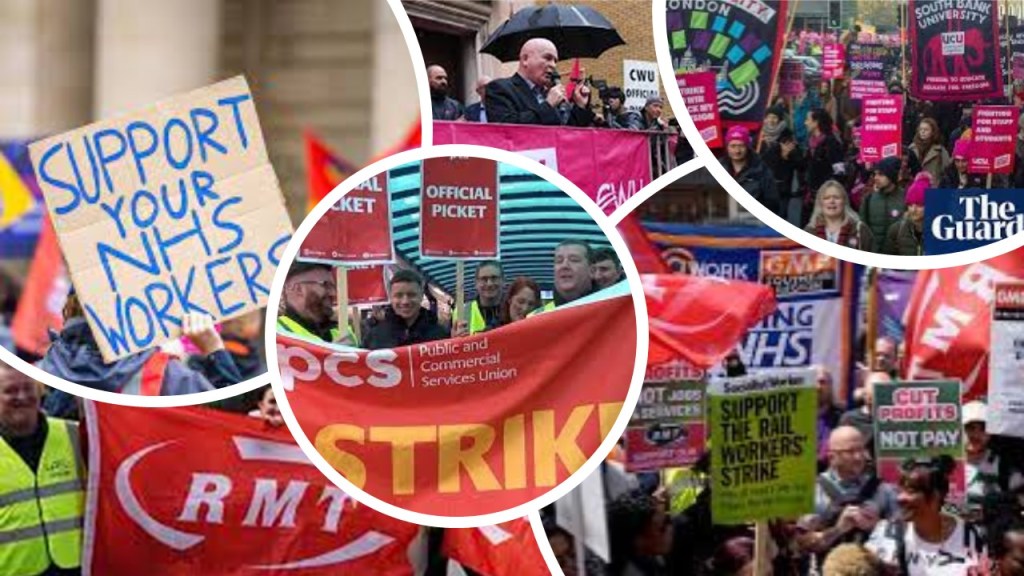
Happy new year to one and all, although I suspect for many it will be a new year of trepidation rather than hope and excitement.
It seems that every way we turn there is a strike or a threat of a strike in this country, reminiscent, according to the media, of the 1970s. It also seems that every public service we think about (I mean this in the wider context so would include Royal Mail for example,) is failing in one way or another. The one thing that strikes me though, pardon the pun, is that none of this has suddenly happened. And yet, if you were to believe media reporting, this is something that is caused by those pesky unions and intransigent workers or is it the other way round? Anyway, the constant rhetoric of there is ‘no money’, if said often enough by politicians and echoed by media pundits becomes the lingua franca. Watch the news and you will see those ordinary members of the public saying the same thing. They may prefix this with ‘I understand why they are striking’ and then add…’but there is no money’.
When I listen to the radio or watch the news on television (a bit outdated I know), I am incensed by questions aimed at representatives of the railway unions or the nurses’ union, amongst others, along the lines of ‘what have you got to say to those businesses that are losing money as a result of your strikes or what would you like to say to patients that have yet again had their operations cancelled’? This is usually coupled with an interview of a suffering business owner or potential patient. I know what I would like to say to the ignorant idiot that asked the question and I’m sure most of you, especially those that know me, know what that is. Ignorant, because they have ignored the core and complex issues, wittingly or unwittingly, and an idiot because you already know the answer to the question but also know the power of the media. Unbiased, my ….
When we look at all the different services, we see that there is one thing in common, a continuous, often political ideologically uncompromising drive to reduce real time funding for public services. As much as politicians will argue about the amount of money ploughed into the services, they know that the funding has been woefully inadequate over the years. I don’t blame the current government for this, it is a succession of governments and I’m afraid Labour laying the blame at the Tory governments’ door just won’t wash. Social care, for example, has been constantly ignored or prevaricated over, long before the current Tories came to power, and the inability of social care to respond to current needs has a significant knock-on effect to health care. I do however think the present government is intransigent in failing to address the issues that have caused the strikes. Let us be clear though, this is not just about pay as many in government and the media would have you believe. I’m sure, if it was, many would, as one rather despicable individual interviewed on the radio stated, ‘suck it up and get on with it’. I have to add, I nearly crashed the car when I heard that, and the air turned blue. Another ignoramus I’m afraid.
Speak to most workers and they will tell you it is more about conditions rather than pay per se. Unfortunately, those increasingly unbearable and unworkable conditions have been caused by a lack of funding, budget restraints and pay restraints. We now have a situation where people don’t want to work in such conditions and are voting with their feet, exacerbating the conditions. People don’t want to join those services because of poor pay coupled with unworkable conditions. The government’s answer, well to the nurses anyway, is that they are abiding by the independent pay review body. That’s like putting two fingers up to the nurses, the health service and the public. When I was in policing it had an independent pay review body, the government didn’t always abide by it, notably, they sometimes opted to award less than was recommended. The word recommendation only seems to work in favour of government. Now look at the police service, underfunded, in chaos and failing to meet the increasing demands. Some of those demands caused by an underfunded social and health care service, particularly mental health care.
Over the years it has become clear that successive governments’ policies of waste, wasted opportunity, poor decision making, vote chasing, and corruption have led us to where we are now. The difference between first and third world country governments seems to only be a matter of degree of ineptitude. It has been a race to the bottom, a race to provide cheap, inadequate services to those that can’t afford any better and a race to suck everyone other than the rich into the abyss.
A government minister was quoted as saying that by paying wage increases it would cost the average household a thousand pound a year. I’d pay an extra thousand pound, in fact I’d pay two if it would allow me to see my doctor in a timely manner, if it gave me confidence that the ambulance would turn up promptly when needed, if it meant a trip to A&E wouldn’t involve a whole day’s wait or being turned away or if I could get to see a dentist rather than having to attempt DIY dentistry in desperation. I’d like to think the police would turn up promptly when needed and that my post and parcels would be delivered on time by someone that had the time to say hello rather than rushing off because they are on an unforgiving clock (particularly pertinent for elderly and vulnerable people).
And I’m not poor but like so many people I look at the new year with trepidation. I don’t blame the strikers; they just want to improve their conditions and vis a vis our conditions. Blaming them is like blaming cows for global warming, its nonsensical.
And as a footnote, I wonder why we never hear about our ex-prime minister Liz Truss and her erstwhile Chancellor Kwasi Kwarteng; what a fine mess they caused. But yesterday’s news is no news and yet it is yesterday’s news that got us to where we are now. Maybe the media could report on that, although I suspect they probably won’t.
Share this:


Regulation and the Internet

*Trigger warning: article contains mentions of suicide, mental illness and self harm in regard to a recent news article*
It seems that internet usage, regulation and monitoring can be a divisive topic for some. The internet can be a fantastic tool for learning, communicating and employment, among other things. However, as with everything, there is a dark side to it. I once watched a video about the internet and regulation, the narrator likened internet usage to when people drove cars with no seatbelts. The world now has this wonderful tool, with little to no effective safety mechanisms, and with many young people, and vulnerable people being able to view harmful content without regulation, we are seeing extreme and negative repercussions.
I think one of the main appeals of the internet is the inherent freedom that it gives the user, the key word here is freedom. It seems that some people believe that unregulated usage of the internet is now an inherent part of their freedoms. This is perhaps why attempting to further regulate usage could result in disagreement and objection. The topic of internet regulation is a very nuanced topic; it toes the line of freedom and restriction and profit and protection. Algorithms are one way that social media companies can prolong the amount of time a person is scrolling through their newsfeed, for example: If you ‘liked’ a picture of a cat, it is more likely that related content would then be shown to you. For social media companies, more engagement equals more money. The algorithmic style of newsfeeds seems great in theory but they can become harmful. If we replace viewing cat content on Instagram with viewing suicide related content, we can see how this can become very problematic very quickly.
Questions concerning the ‘wild west’ type environment that is the internet are becoming more common. With the recent inquest concerning the suicide of Molly Russel, these questions are even more relevant. Molly Russel saved thousands of images related to self harm and suicide months before her death, posts also included some promoting depressive content and encouragement to not seek the help from a mental health professional. Tech giant Meta’s response in the inquest was that the majority of these posts did not breach their social media posting guidelines (they conceded a few did breach the rules). Their response totally contradicts the reactions of those present at the court, with Molly Russel’s father stating that these images were graphic, dark and harmful. With mental health resources already being stretched beyond capacity, this unregulated environment that is legally accessible to children will surely exacerbate these problems. Molly Russel’s experience will not be the only one, thousands of vulnerable and impressionable people, young and old experience similar things and view similar medias. Whether it be accessing pro-anorexia content, content which promotes weapons and violence or content which advocates for avoiding professional mental health support.
The repercussions of an ineffectively regulated internet are unmeasured and the continuation of this deregulation is for the pursuit of profit fuelled by misguided ideas about what freedom of action and freedom of expression mean.
Share this:


The ‘Chocolate Cost-of-Living Crisis’
Despite the turmoil and mess the country is currently in, this week’s blog post is dedicated to chocolate, and how to maintain a very much needed chocolate fix during the cost-of-living crisis and the sh** storm which British Politics currently is. Do not even get me started on the Casey Review (2022) which has been overshadowed by that sh** storm I previously mentioned. So, in an attempt to address a serious concern plaguing us all, but disproportionately those most vulnerable, I would like to share some of my findings on the ‘chocolate cost-of-living crisis’.
Before the ‘official’ cost-of-living crisis hit, chocolate was seriously upping its price tag. What used to be 99p or £1 for branded ‘share’ bag (I mean who actually has the self-control to share a share bag?!), has now risen to a huge £1.25 per bag! Now this is for Cadbury’s ‘share’ bags (buttons, wispa bites, twirl pieces to name a few), you are looking at £1.35 for Mars products (Magic stars, Minstrels, Maltesers, MnMs)! Those of us that eat Vegan, lactose-free chocolate are looking at an even higher price tag for an even smaller product. Supermarket chocolate has also gone up in price, and remains nowhere near as scrumptious as the likes of Cadbury, Mars and even Nestle (although I myself am not a Nestle loving due to their questionable ethical practices*). But given the sh** storm the Country is currently in, and the impact of the cost-of-living crisis is having, we need chocolate more than ever! But do not fear: I have some handy tips when it comes to selecting the most reasonably priced and therefore affordable chocolate to help get us through these sh***y times.
The key when looking at the cost of chocolate, and all products, is to look at the price per g/kg. This is usually in teeny tiny writing at the bottom of the price tag on the shelves. Most chocolate (and because I am a self-proclaimed chocolate snob, I am discussing branded chocolate) is coming in around the 85p+ per 100g mark. But there are some sneaky little joys which are undercutting this, and I highly recommend stocking up!
Terry’s Milk Chocolate Orange: £1, (63p/100g): a clear winner! They have various types, dark chocolate, white chocolate and popping candy, and these vary in weights but come in between 63p/100g to 69p/100g!
Cadbury Dairy Milk (360g bar): £3, (83p/100g): the key to Cadburys is the bigger the cheaper! Do not be fooled by the smaller bars and their ‘cheaper’ price. They are not cheaper: and lets be honest who wouldn’t want 360g of chocolate over 150g?!
HOWEVER
Galaxy Caramel (135g bar): 99p (73p/100g): good news for caramel lovers! The smaller caramel bar is cheaper than the 360g Galaxy smooth milk bar (97p/100g), so in this case less is actually more!
Galaxy Minstrels ‘More to Share’ Bag: £1.99 (83p/100g): best value share bag out there at the moment. Again, do not be tricked by the smaller and what may seem like cheaper bags, because they are not!
Growing up with a single-parent father who worked the ‘mum’ shift in a warehouse meant we were very stringent and careful with money: mainly because we didn’t have much. This skill of checking value for money and the price per g/kg is something engrained within me, and something I am extremely grateful for! Check those £’s per g/kg people! It may mean you can have a treat at the end of the week, which doesn’t burn through your pockets, to help off-set the sh** we are currently dealing with.
*it has recently been brought to my attention, the unethical historical practices of Cadbury’s in relation to the Slave Trade, and their racist advertisements in the early 2000’s (not sure how I missed this)! Morally, as I try to avoid Nestle products due to their unethical practices, I will also attempt the same with Cadbury’s: but I fear this will not be an easy transition.

 Thoughts from the criminology team