
Home » Pandemic (Page 4)
Category Archives: Pandemic

Reflecting on International Women’s Day
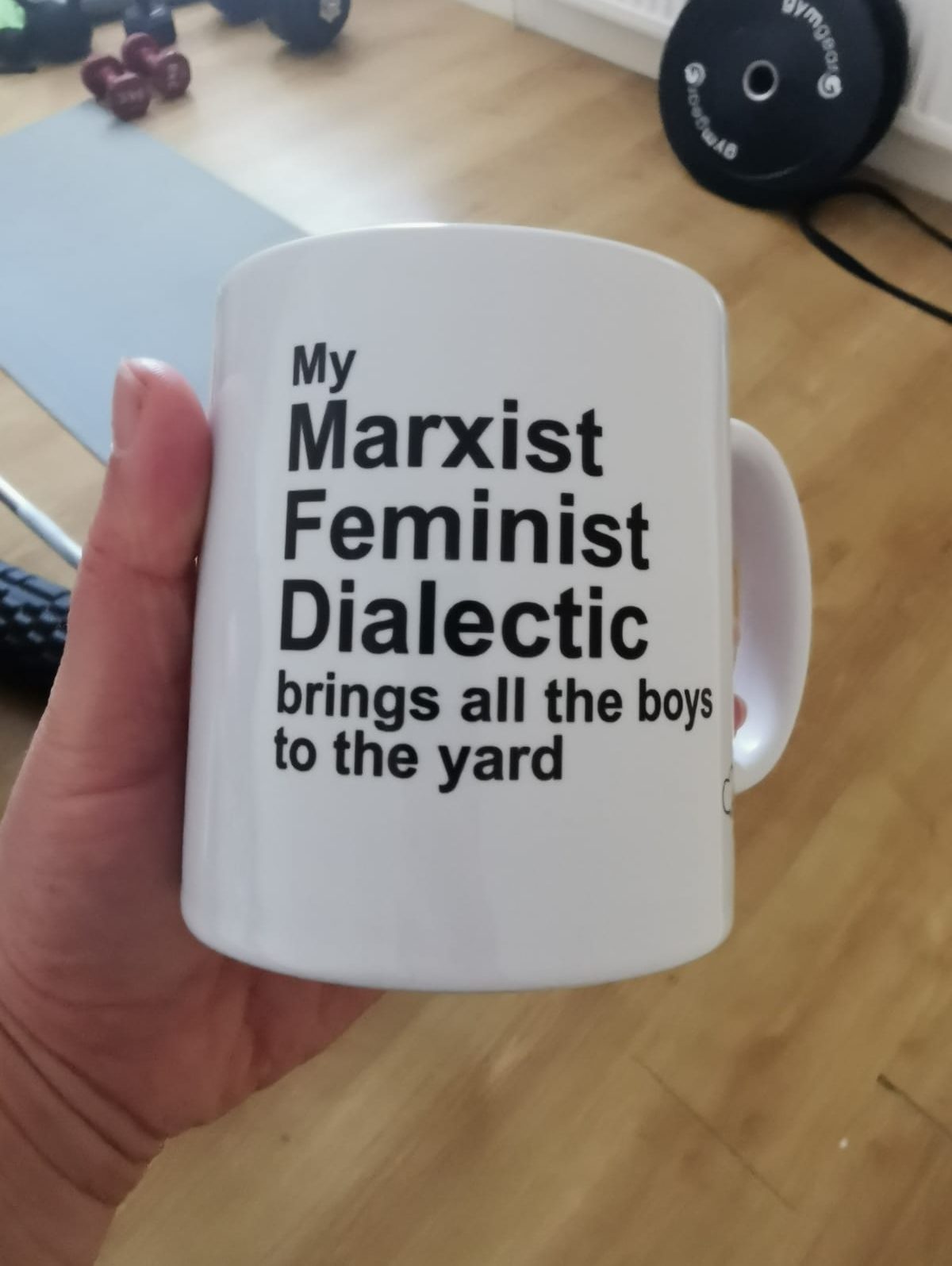
On International Women’s Day I wanted to write a blog to celebrate the incredible women who have inspired me, supported me, fought for the rights of women all over the world both past and present. Perhaps that post will come but I felt sadness and anger, rage that made me want to shout and swear from the rooftops that feminism is not done. Gender equality has not been completed. We may have advanced a few levels, but patriarchy is still alive and free right here in England as well as throughout the world. The reality is that gender equality is a myth. Ordinarily I’m more hopeful and positive and maybe the pandemic combined with finishing my PhD is pushing me over the edge. But as well as celebrating International Women’s Day I wanted to identify some of the areas in which there is work to do, both in the UK and worldwide.
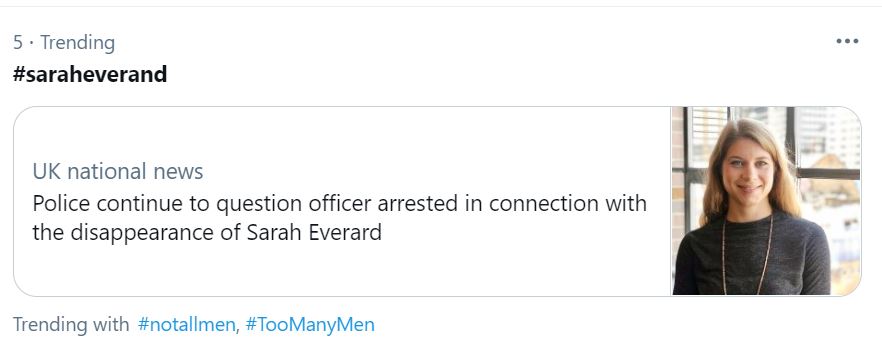
On the week of International Women’s Day, the media has been filled with women, but not for the right reasons. Let us start with the interview broadcasted on International Women’s Day with Megan Markle and Prince Harry which highlighted not only her position as a woman but also the intersectionality of being a woman of colour in the royal family and the implications of this. The interview was responded in an appalling manner by Piers Morgan who questioned her experience of feeling suicidal which was then reflected on social media (never read the comments!!!). A woman’s experiences with mental health were questioned and ridiculed. Not long after the tragic death of Caroline Flack, people – including many other women – have forgotten to #bekind. The investigation over the disappearance of Sarah Everard was responded to by the Met police advising women in the local area not to go out at night, perpetuating a culture of victim blaming. A woman’s actions were being questioned. So here we are in 2021 with our internal thoughts and emotions and our external actions being judged by others. When women have spoken out about our right to feel safe walking home at night, about how we walk the long way home and hold a key between our fingers for protection, #notallmen resurfaces on Twitter, in a similar tone to #alllivesmatter last year. When one group renews a call for equality, the patriarchs and supremacists oppress harder. These are just a couple of examples in the media, the public domain, this week but there is also clear inequality in domestic life.
Throughout the pandemic there have been numerous reports suggesting that women have disproportionately undertaken childcare which has had a devastating impact, particularly for single mothers. While data from the Office for National Statistics shows that home schooling is distributed equally in mixed sex couples, women have undertaken substantially more of non-developmental childcare – the bathing, bedtime routine, feeding etc. I recall the days of being a working single parent with a small child. With no after school club and no family available to chip in, I relied on childcare swaps, a childminder (who I couldn’t afford to pay more than a couple of days per week). It was a case of beg, borrow or steal whatever childcare I could get to get to work and would often miss lectures because I didn’t have any childcare (note to students – if you have childcare responsibilities and are struggling please do not hesitate to drop me an email. I have almost a decade of experience juggling kids with studies and I am always happy to share tips or just have a mutual rant about how hard it is!). I cannot imagine how I would have managed with the pandemic if my children were younger. I am lucky enough to work in a team where my colleagues don’t bat an eyelid when my teenager pops her head in asking for food or help with schoolwork but I do have friends telling me how their male counterparts have given them advice on how to juggle virtual meetings with parenting small children. Men (not all men – some men are excellent allies) having no clue how hard women have to fight as women to do it all – the career, the childcare, the housework, all while earning less than our male counterparts (currently 15.5% less). Of course the data on equal pay is complex but the bottom line is we get paid less, it’s harder to advance our careers because as we live in the bodies that produce babies and we have career breaks when we take maternity leave or go part time while the children are young – the only way that can change is if we choose not to have kids and we are criticised for that too!
I have so far established that the UK is hostile in the media and not equal in the home and employment but where do we sit globally? It was placed 21st on the Global Gender Gap Index 2020. Do you think you could guess which countries are higher than the UK? Go on, spend a minute and write down who you would expect to be in the top 20. Of course, there are the countries one might expect – Iceland is top of the list, Norway, Finland and New Zealand too. But let’s throw a curveball in there. Albania. Having worked with and interviewed many female Albanian asylum seekers and refugees who have usually fled Albania due to at least one but often many forms of gendered violence this comes as quite a surprise to me. Of course, I have a biased experience and have only come into contact with those who have had devastating experiences of patriarchy in the country. Rwanda is up there too within the top 10. Not long after the devastating genocide in Rwanda where women were brutally raped as a weapon of war (see here for a cheeky plug and an analysis of sexual violence in conflict in a different geographical context). Today, women make up half of the politicians in the country. Women have risen up and have taken power. In the UK I look at the female politicians in power today and in recent years and I recoil in horror. Priti Patel is probably (barring the Queen) the most powerful female politician in England. I witness first hand in my work with asylum seekers the harm she causes every day. Intentional harm, following in Theresa May’s footsteps to create a hostile environment for migrants. These women are not the people I want to look up to, or want my children to look up to. In fact, one of the few shared interests my daughter and I have is our disdain for these women.
The women I do look up to are those asylum seekers Patel and her band of merry men at the Home Office are trying to repel. Those who have fled situations that I, as a middle class white woman cannot even begin to comprehend. All the women who I have interviewed in my doctoral research had either fled gendered violence including forced and child marriage, domestic abuse, sex trafficking and honour violence; or their gender had intersected with other forms of persecution making their living situation untenable because they were women. They fled life or death situations to the point of leaving their homes, families and countries because their governments could not, or would not, protect them. They arrive in the UK and are faced with the hostile environment conjured by May and continued by Patel and both the Home Secretaries in between. They face structural violence in the forms of forced poverty, illegal detention, substandard and sometimes dangerous accommodation perpetrated under the mandate of women. All the while being vilified by the tabloids and swathes of the public. Some of my participants arrived here as children and were bullied in school because they were asylum seekers, being told that they were taking jobs and money. The bullies could not comprehend that they were prohibited by law from working and were given £5 per day to live on. They then hid their identities, never telling anyone that they were an asylum seeker, lying to their friends about why they couldn’t go on college trips abroad, why they couldn’t have a bank account, why they couldn’t get a job or go to university.
I want to celebrate Amira* who defied the odds. She came here when she was in her early teens, knowing just a few words of English. She worked hard to learn the language and passed her GCSEs and A-levels, gaining a competitive Sanctuary scholarship which funded her university education. I want to celebrate Drita, an Eastern European woman who was physically abused by her father as a child, forced to marry an abusive man who eventually left her destitute with three children. She then left her children with her parents while she sought work, got a boyfriend who sold her into sex slavery, set her room on fire to kill herself but managed to escape, picked up her children and fled a lifetime of gendered violence from every man she had ever met. She spent 2 days in a lorry with her children to get to the UK. Not really the UK, she would have gone anywhere, just out of her country to safety. These women are survivors. These women fought to stay alive. They fought to escape. They didn’t escape. They arrived here to face May’s legacy of a hostile environment. These women are terrified every time they have to report to the Home Office, every letter they get threatens them with detention and deportation and reminds them that they or on bail, literally equating them with a process usually found in the criminal justice system. These women are heroes and should be celebrated for surviving. On International Women’s Day yes, let us celebrate all that all we have achieved so far but it cannot end here. Each year we need a renewed call for action for women.
*All names are pseudonyms to protect the anonymity of participants
Share this:


Lockdown and Locked In

The COVID-19 pandemic has caused a whole range of issues for so many people. Everything from job losses, businesses closing down, people being unable to leave the house, people panic buying and stock piling. There has also been a sharp increase in mental health issues, loneliness, isolation, and fears about what the future holds.
However, one thing that has been reported on, is the increase in domestic violence that has occurred across the country. In April 2020, phone calls to the charity Refuge were up by 49%, (1) and people accessing their website seeking help had increased by 417% (2). As more people are working from home, abusers are at home too, making it harder for survivors of domestic abuse to get away from their partners.
In an effort to combat domestic abuse, and to provide confidential help to survivors, the government launched the ‘Ask for ANI‘ codeword scheme (Action Needed Immediately) whereby a survivor of abuse can go to their local pharmacy and get private and confidential help. Survivors can ask if they want to get help from a domestic violence refuge, or to get the police involved. Everything will be led by the survivor who will be in the private consultation room with the pharmacist helping the survivor (3)
References
(1) Home Office (2021) ‘Domestic Abuse and Risks of Harm Within the Home’ Available online at: https://publications.parliament.uk/pa/cm5801/cmselect/cmhaff/321/32105.htm#_idTextAnchor000 Accessed on 19/02/2021
(2) House of Commons (2020) ‘Home Affairs Committee’ Available online at: https://publications.parliament.uk/pa/cm5801/cmselect/cmhaff/correspondence/HASC-transcript-15-April.pdf – page 24. Accessed on 19/02/2021
(3) HM Government (2020) ‘Guidance for Pharmacies Implementing the Ask for ANI Domestic Abuse Codeword Scheme’ Available online at: https://assets.publishing.service.gov.uk/government/uploads/system/uploads/attachment_data/file/940379/Training_information_-_Ask_for_ANI.pdf Accessed on 19/02/2021
Other Sources
Unlisted (2020) ‘Domestic Abuse Codeword Pharmacy Training Video’ Available online at: https://www.youtube.com/watch?v=OOs3awxx5YU&feature=youtu.be Accessed on 19/02/2021
Share this:


Happy birthday and reflection on the (painful) art of writing

In November 2016, I had an idea that the Criminology team should create and maintain a blog. To that end I set up this account, put out a welcome message and then life (and Christmas, 2016) got in the way…. To cut a long story short, @manosdaskalou, @5teveh and I decided we’d give it a go, and on the 3 March 2017, @manosdaskalou broke our duck with the first post. This, of course, means we are celebrating the blog’s 4th birthday and it seems timely to reflect both on the blog and the (painful) art of writing.
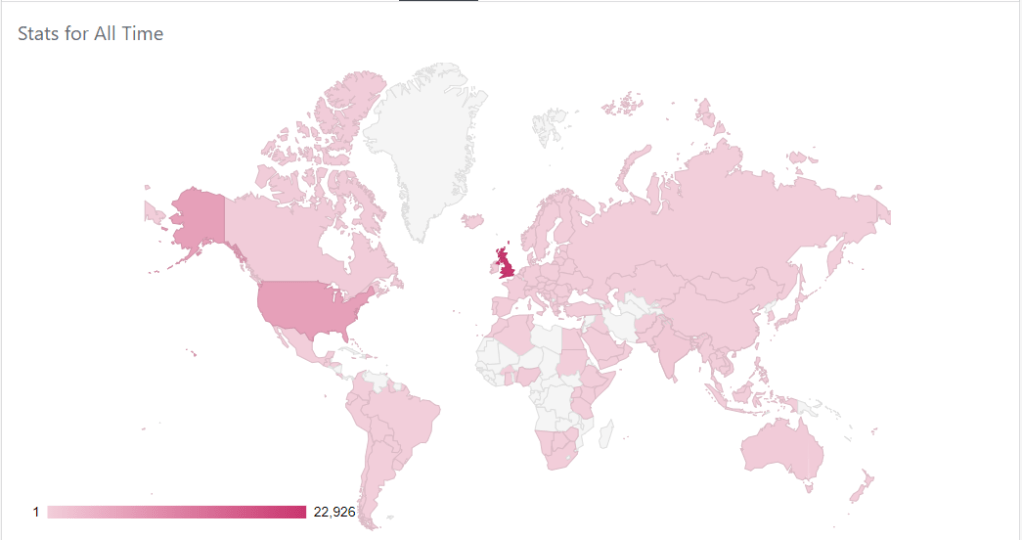
Since that early foray the blog has published almost 500 times and has been read by almost 23,000 people from across the globe. As you can see from the map below, we still have a few areas of the globe to reach, so if you have contacts, be sure to let them know about us 🙂
To date, our most read individual entry comes from a current student @zeechee, followed closely behind by one of @manosdaskalou‘s contributions and then one from @treventoursu. But of course, the most popular page of all is the front page where the most current entries are. That’s not to say that some entries don’t crop up again and again, for instance @manosdaskalou‘s most popular entry went live in May 2017, @zeechee‘s in January 2020 and @treventoursu‘s in February 2020. Sometimes these things take time to find their audience, but it shows you can’t hide excellent writing and content finds a way through.
Over the past 4 years we have had contributions from a wide range of people, some have contributed just one or two, others more frequently and the three founding members (once started) have never stopped blogging. During this time, bloggers have covered an enormous range of different topics, some with more frequency than others. Of course, this year much of the content, whether intended or not, has had connections to the ongoing global pandemic. The blog for both writers and readers has offered some distraction, even if only 5 minutes escape whilst waiting for the kettle to boil, from the devastation wrought by Covid-19.
All of the above gives us much to celebrate, not least our stamina and perseverance, but says nothing about the art of writing which I’d like to reflect on now. By the time it’s live on the blog, the process is forgotten, until the next entry becomes due. For some people writing comes easily, for me, it doesn’t. I find all kinds of writing painful and often like pulling teeth. I know what I want to say, I have a reasonable vocabulary, knowledge of my discipline and a keen eye on current affairs. All of this is true until I start the writing process….
Some of my reluctance relates to my individual personality, some to my social class and some to my gender. It is probably the latter two which create the highest barriers and I find myself in a spiral or internalised argument around who would want to read this, why should they, everyone knows this and on and on ad nauseum until I either write the sodding thing or very rarely, give up in disgust at my own ineptitude. I know this is irrational and I know that I have written many thousands of words in my lifetime, most largely forgotten in the fog of time, but still, every time the barriers shoot up. What makes it worse is that I can generally fulfil what ever writing brief I am confronted with, but only after a gargantuan battle of wills with myself.
Despite this a couple of things have helped considerably. The first is a talk originally give by Virginia Woolf in 1931. In this very short piece, entitled ‘Professions for Women’, Woolf details similar struggles, much more eruditely than I have, in relation to writing as a women.
The obstacles against her are still immensely powerful—and yet they are very difficult to define. Outwardly, what is simpler than to write books? Outwardly, what obstacles are there for a woman rather than for a man? Inwardly, I think, the case is very different; she has still many ghosts to fight, many prejudices to overcome. Indeed it will be a long time still, I think, before a woman can sit down to write a book without finding a phantom to be slain, a rock to be dashed against.
Woolf, 1931
She also names the internal conflict the ‘Angel in the House’. For Woolf, this creature has to be murdered in order for the female writer to make progress. For someone, like me committed to non-violence/pacifism, killing, even of an imaginary creature, is challenging, so instead I get in a few nudges, make my ‘angel’ agree to be quiet, even if only for a short time. As Woolf alludes, some days this works well, other times not so much, acknowledging that even when dead, the angel continues to undermine. Nevertheless this short essay helped me to understand that my so-called foibles were actually shared by other women and were formed during our socialisation. Because of this, I have regularly recommended to female students that they have a read and see if it helps them too.
The other thing that has really helped is the blog. The commitment to write regularly, to a deadline, has helped considerably. Although I know that I’m part of a team equally committed to the success of the blog, makes a difference. It ensures accountability. Of course, I could call on anyone of my colleagues to cover my slot, but I would be doing that knowing that I am adding to another person’s workload. Alternatively, I could opt not to write and leave a gapping hole on the blog that day/week, but again that would be letting down everyone on the blogging team, we all have a part to play. So sometimes reluctantly, other times with anger, still more times with passion, the words eventually come. I cannot speak for my fellow bloggers but I can say with some certainty blogging has done wonders for me in terms of accountability, not to mention the pleasure of working with a group of interesting and exciting writers on a regular basis.
Why not join us?
Share this:


Keep Calm and Forget the Pandemic or What to do in a pandemic? Take advantage of the situation
Eleven months now and there is a new spectre haunting Europe; a plague that has taken hold of our lives and altered our lifestyles. Lockdowns, the r rate, viral transmission, mutations are new terms that common people use as if we are experienced epidemiologists. Masks, made of cloth or the surgical ones, gloves and little bottles of antiseptic have become new fashion accessories. Many people report mental fatigue and others a state of confinement inside their own homes. Some people have started complaining that there is no light in this long tunnel, in country after country face with overwhelmed medical staff and system.
The optimist in me is unequivocal. We can make it through. Life is far more powerful than a disease and it always finds a way to continue, even in the most hostile of conditions. In my view however this is not going to be a feat of a great person; this is not going to be resolved by one solution. The answer is in us as a collective. Humanity thrived when it gets together and the ability to form meaningful bonds that is the backbone of our success to survival.
Imagine our ancestors making their first communities; people that had no speed like the felines, no strength like the great apes and no defensive shell to protect them. Coming out of Africa thousands of years ago, this blood creature had no offensive nor defensive structures to prevail. Our ancestors’ survival must have been on the brink. Who could imagine that some thousands of years ago, we were the endangered species? Our endurance lies on the ability to form a group that worked together and understood each other, carried logic, used tools and communicated with each other.
The current situation is a great reminder of the importance of society and its true purpose. People form societies to protect each other and advance their opportunity for success. We may have forgotten that and understandably so, since we have had people who claimed that there is no such thing as a society, only the individual. The prevailing economic system focuses on individual success, values individual recognition and prioritises individual issues. In short, why worry about others, miles away, feet away, steps away from us if we are doing well.
It is interesting to try to imagine a society as a random collection of indifferent individuals, but more people begin to value the importance of the other. After years of austerity and the promotion of individualism, more people live alone, make relationships through social networking and mostly continue to live a solitary life even when they live with others. Communities, as an ex-prime minister claimed as broken and so people waste no time with them. We take from our communities, the things we need, and we discard the rest. Since the start of the pandemic, deliveries, and online companies have been thriving. Whilst physical shops are facing closure, online ones can hardly cope with the demand. As a system, capitalism is flexible enough to retune the way wealth is made. Of course, when you live alone, there are things you cannot have delivered; intimacy, closeness, intercourse. People can fulfil their basic needs apart from the one that makes them people; their socialisation. We will have to address it and perhaps talk about the need to be a community again.
In the meantime, what happens at the top? In the Bible there was the story of the pool of Siloam. This miraculous pond blessed by an angel offered the opportunity for clemency for those who swam in the waters. Wipe the slate clean and start again. So, what do governments do? Interestingly not as much. Right now, as people try to come to terms with loss, isolation and pain, different governments try to address other political issues. One country is rocked by the revelations that its head of state has created a palace to live in. Another one, has finished construction of his summer palace. In another country they are bringing legislation to end abortions, in another they propose the introduction of police on campuses. Others are restricting the right to protest, and in a country famed for its civil rights, legislation is being introduced not to take pictures of police officers in public, even if they may be regarded in violation of duties. It seems that it is open season for the curtail of civil liberties through the back door. In an island kingdom the system has ordered and moves forward with the construction of more and bigger prisons. A sign that they anticipate public upheaval. Maybe; whatever the reason this opportunity to supress the masses may be tantalising, but it is wrong. When ever we come out of this we need to reconnect as a community. If this becomes an opportunity for some, under the suppression of civic rights, things will become problematic. For starters, people will want to see their patience and perseverance rewarded. My advice to those who rule, listen to your base.
Share this:


#CriminologyBookClub: The Tiger’s Wife
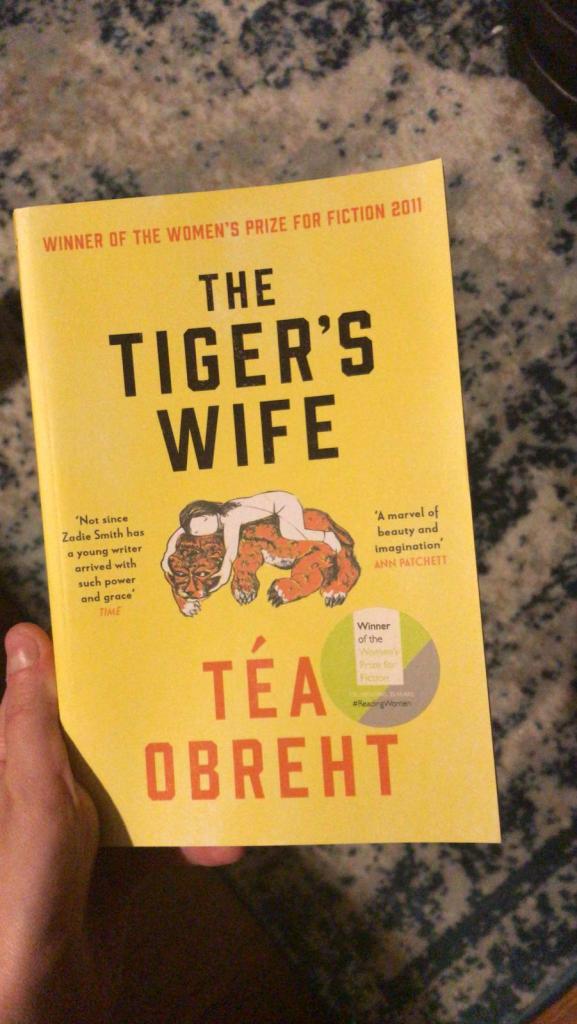
I selected The Tiger’s Wife for us all to read for book club. On first impressions the book seemed to be very interesting. My understanding was that the book would be about a tiger, his wife, a grandad and The Jungle Book. I have very little knowledge of Disney, but I did enjoy the upbeat ‘Bare Necessities’ Jungle Book song as a child. As it turns out, both The Jungle Book and The Tiger’s Wife are both grim tales. In terms of The Tiger’s Wife, I enjoyed the elements of humour within the book. I also enjoyed reading about the smells, scenery and tastes of another country given that I have not been able to leave Britain for a while. The ‘deathless man’ character was also quite intriguing. I do feel unsure about this book though. At times I was puzzled about the plot. It is also an incredibly sad and heavy tale which covers themes like war, death, disease and domestic violence – perhaps not the most appropriate choice given that we are in a national lockdown! I think this is a book that I may return to in better times.
@haleysread
What struck me about the book was that it centred around death but was largely devoid of emotion. The grandmother was described as being emotional about the death of her husband, but the book was narrated in such a way that this emotion was not felt by the reader because the grandmother was not wholly present. She was always at the other end of the phone and therefore removed from the reader. Instead, the book was lightened with humorous characters such as the Deathless Man and folk tales of superstition. These characters and tales transformed what could (and perhaps should) have been a depressing tale to a mildly sorrowful yet darkly comedic series of tragedies.
@amycortvriend
This was quite possibly my favourite of all the book club reads so far, although it is a particularly tight call (4th instalment of inspector Chopra is a gem: but shhhh spoilers)! I am quite surprised by how much I enjoyed this book which appears much to the contrast of my esteemed friends in book club. It was beautifully written, depressing, full of escapism and challenging at the same time. I was truly lost in this book as a story: I am not sure I can tell you what the story is about or what the message or meaning behind it is. But I adored it. It made me think of Big Fish and The Bee Keeper of Aleppo all mixed together (another 2 gems if you have not read them). I can appreciate how perhaps it was not the most fitting for a global pandemic, but nevertheless it is a text that I will most certainly read again!
@jesjames50
In a far away corner in Europe, people try to live with the aftermath of a war. The conflict has brought up in the community, wounds that take time to heal and the doctors who look after the physical wounds are trying to cope with the long-term effects of harm. In the backdrop of that, the story of a young doctor who is remembering her beloved grandfather takes central stage. The woman discovers a grandfather through the eyes of others. This is a post war society and many things do not make sense. The author, Téa Obreht, stitches together a story of reality with a lot of surrealism to underline the absurdness of war especially a civil conflict. Symbolism becomes intricate to the story and in the end you are left wondering who is The Tiger’s Wife?
@manosdaskalou
I found the book to be hard going. That’s not to say that there weren’t some parts of it that I enjoyed but on the whole I didn’t find much in the book to excite me and at the end I was left with a feeling of …’and’. I found that too often I was unable to follow the plot getting bogged down in, what I must admit, were beautiful descriptions of countryside, villages, animals and people. For me, the story lacked purpose, describing old superstitions, combined with historical tales which seemed to have little purpose other than to provide perhaps a vivid description of the cruelty of war and its aftermath. On a more positive note, it has prompted me to research the wars in the Balkans and maybe, that will push me to return to the book
@5teveh
The timing of The Tiger’s Wife as our book club read was impeccable. Leading up to the Christmas holidays, everything seemed to become overwhelming and I felt rather numb. Reading The Tiger’s Wife with its dreamlike qualities suited my mood extraordinarily well. The subject of war, and the damage it causes, is close to my heart. In this book, it is not tales of heroes and villains, but the quiet, pervasive harm which war leaves in its wake, touching everyone and everything, in small, often indiscernible ways. We may not be at war in the UK, but it made me consider what life will be like after the pandemic, when many of those harms are also prevalent. For instance, our NHS workers may not have been in battlefield hospitals, but treating severely ill Covid-19 patients, with a high death rate, on a daily basis will undoubtedly have a profound impact. Ultimately, The Tiger’s Wife is an anti-war book, with more questions than answers, but as the pandemic has shown us, uncertainty does not mean the end of hope.
@paulaabowles

Share this:


Data collection in a pandemic: Discovering what’s up with WhatsApp *or any other instant messaging service

Many of our students will be thinking about or preparing for, their dissertations. Ordinarily this is the fun part of a degree. The part where you have the freedom to research a topic of interest. Two or three years ago, none of us could have predicted we would be in the midst of a global pandemic which limits research opportunities, particularly for undergraduates who have practical and ethical limitations. One thing that I would encourage students – or indeed anyone doing research in the pandemic – to do, is to be innovative and think outside of the box when planning research. Here in the UK we are lucky enough that most of us have access to the internet. The way I communicate with friends, family and colleagues most frequently is using instant messaging services and so I incorporated this technology into my own research. In sharing my own experience of using instant messaging as a data collection tool, I hope to offer some hope that where there are obstacles, there are also ways to overcome them.
I conducted my most recent research prior to the pandemic, however I had other barriers to navigate. I was researching the victimisation of asylum seekers, and wanted to understand if, and how, they coped with these experiences. I was lucky enough to undertake two face to face interviews with most of the participants which helped me to gain an understanding of their life histories and the broader aspects of their experiences but I also wanted to understand the day to day stressors and how they coped with these events. I knew that a diary method would be an appropriate approach to elicit the data I required, however there were some limitations with using traditional written journals. All the asylum seekers who participated in my research spoke some English as a second language and some spoke the language but could not read or write proficiently. In addition to this, traditional journal entries can be time consuming and there were additional practical considerations to consider such as how I would retrieve the journals. To overcome these obstacles I decided to use digital technology to collect diary data, in part because electronic methods have been found to increase response rates, but also because most asylum seekers I have come across own a mobile phone. Mobile phones are essential to enable to contact their family in their country of origin as well as maintaining contact with their solicitor and other agencies working with them.
Once I had decided to use mobile technology, I sent weekly messages to each of the people I interviewed, asking them how they were that day and how their week had gone, what were some of the good and bad things that had happened. I did this for 12 weeks before conducting their follow up interviews. For the purpose of my doctoral thesis, the method provided data that would help me understand the day to day stress of being an asylum seeker, often resulting from structural harms perpetrated by the Home Office. This may be the mother feeling guilty after being late to pick her children up from school because she had to catch three buses to report to the Home Office and fulfil the conditions of her immigration bail; or the feeling of dread in the pit of her stomach when a brown envelope came through the door, fearful that this may be what feels like a death warrant from the Home Office ordering her deportation. Events such as these were often not mentioned during interview, when interviewees would often recall the major life events and forget the moments of everyday life. Using mobile technology meant that participants could write in their first language and either them or I could translate it. It also meant that they could quickly send a message in the moment, while a particular event was fresh in their minds.
Using mobile technology to collect data worked well for me as it helped me to stay in contact with participants and inform my follow up interviews as well as providing the information I required to answer the research questions. As anticipated the response rate was good – even those who could not afford credit were often able to access Wi-Fi and send a message from a public space. The use of mobile technology to collect diary entries overcame more barriers than it presented, and the method proved fit for purpose, gaining the data required to get a fuller picture of those I was researching. For students planning dissertations or other research projects that are to be undertaken soon, I urge you to think creatively about your research methods and modes of data collection. Although a large part of our teaching focuses on traditional methods, I encourage you to be independent thinkers and so solve the problem of doing research in a pandemic.
Share this:


Late: The word that defines the UK’s Coronavirus pandemic management

Picture the scene. We are in Downing Street and the news media are awaiting another coronavirus press conference. Professor Chris Whitty, the Chief Medical Officer for England is ready. Sir Patrick Vallance the Chief Scientific Advisor is ready. Where is the Prime Minister (PM)? Late again.
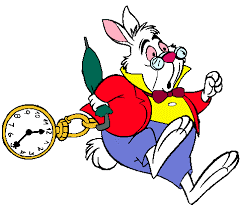
I have this vision of our PM frantically scurrying around like the White Rabbit in Alice in Wonderland humming “I’m late I’m late for very important date”. We might all smile at this vision but I’m afraid the analogy of being late is not a laughing matter when it is applied as the major theme for the UK governments management of what I described in a previous blog as the worst public health crisis in my lifetime. I also recall the PM famously using the phrase “A stitch in time saves nine” which is indeed true however in a pandemic being late or not sewing that stitch in time can and has cost thousands of lives.
In the week that has seen the UK pass 100,000 deaths it is right to reflect on the tragic loss of life. The call from government saying this is not the time to analyse why the UK has done so badly is in my view the wrong line to take. The government could learn a thing or two from the UK health care professions who for years have developed themselves as reflective practitioners. Donald Schon (1983) wrote extensively about reflection in terms of the creation of learning organisations who can both reflect in and on action. It is the former that has been sadly lacking in the UKs response to the coronavirus crisis. Reflection needs to be on the table throughout the pandemic and had it been, we may not have repeated the same mistakes. The management of pandemics is well documented in the medical literature. Professor Chris Whitty the Chief Medical Officer for England outlines how to manage a pandemic in this useful lecture at Gresham College.
Indeed it is also important to remind us of the words of Sir Patrick Vallance who when recommending the urgency of action in a pandemic implored that we “go earlier than you think you want to, go a bit harder than you think you want to and go broader than you think you want to in terms of restrictions.” My observation of the UK pandemic response leads me to conclude that we failed to do any of these. However, for this blog let’s focus on timing. Going early in terms of restrictions and other actions can have an enormous beneficial impact.
The last year has been to coin an overstated phrase “unprecedented” with many arguing that any government would have been overwhelmed and struggled to manage the crisis. Is this fair? One can look at other countries who have managed the situation better and as such have had better outcomes. New Zealand, Australia, Korea for example. Others will point to the differences between countries in terms of geography, population, culture, transport, relative poverty, healthcare systems, reporting mechanisms and living conditions which make comparisons inherently complex.
With the current death toll in the UK so high and continuing to rise, and many scientists telling us that things will inevitably get worse before they get better the question everyone is asking is : What has gone wrong? In this blog I’m going to argue that in large part our problems are based on a lack of urgency in acting. I’m arguing that we have not followed Sir Patrick Vallance’s recommendation and in particular we have been late to act throughout. Below I will set out the evidence for this and propose some tentative reasons as to why this has been the case.
Firstly, despite a pandemic being recognised as the largest threat to any country (it will always be top of any country’s risk register) the UK was slow to recognise the impending crisis and late to recognise the implications of a virus of this nature and how quickly it can spread globally. History informs us of how quickly Spanish flu spread in 1918. The UK was never going to be immune. Late recognition and poor pandemic preparedness meant we were late to get in place the critical infrastructure required to mount a response. Despite several warnings and meetings of the civil contingencies committee (COBR) the health secretary Matt Hancock was dismissive of the threat playing it down. Indeed, the PM failed to attend several early meetings giving the impression that the UK were not taking this as seriously as they should.
When faced with a looming medical/public health emergency it is important that the scientific advisors are in place early (which they were) and that their advice is acted upon. The evidence clearly points to a slow response to this advice which manifested itself in several critical late decisions early in the pandemic. The UK did not close its borders and implement quarantine measures allowing the virus to seed extensively in all parts of the community. Once community transmission had been established it was too late. It did not have in place a substantive testing regime, largely because we were unprepared. It very quickly became clear when we switched from community testing to testing only those in hospital with Covid symptoms that we lacked critical mass testing capacity and hence spent months trying to catch up. Evidence from previous outbreaks of SARS and MERS demonstrated how important mass testing was in controlling the spread, a position advocated by the World Health Organization (WHO). The UK saw case numbers grow rapidly and was slow to get the important public health messages out. Consequently, hospital admissions increased, and the death toll leapt. We were in serious danger of the NHS becoming overwhelmed with critically ill Covid patients.
Public health, medical and scientific experts suggested through their modelling exercises that the death toll, if we didn’t act quickly, could exceed 500,000; a situation socially and politically unpalatable. Therefore, in the absence of no known treatments and no vaccine we would have to resort to the tried and tested traditional methods for the suppression of a respiratory borne virus. Robust hand hygiene, respiratory/cough etiquette and maintaining social distance to reduce close social interaction. The logical conclusion was that to radically reduce social contacts we needed to lockdown. It is widely acknowledged now that the UK was at least a week late in introducing the first lockdown in March 2020.
In the meantime, the virus was sweeping through vulnerable elderly groups in care homes. We were again late to recognise this threat and late to protect them despite Hancock’s claims of throwing a ring of protection around them. The death toll continued to mount. At this stage both the Health (NHS) and care sectors were under enormous pressure and ill equipped to manage. The greatest worry at that stage was lack of adequate Personal Protective Equipment (PPE). Due to our ill preparedness we were late to provide appropriate PPE to both the NHS and the care home sector, exposing healthcare workers to undue risk. The death toll of healthcare workers in any pandemic is high and we were now starting to see this rise in the UK.
Another major criticism during the earlier months was how slow we were in ramping up testing capacity, tracking, tracing cases and ensuring isolation measures were in place. Indeed, concerns about test, trace and isolation continue today. However, lockdown and other public health measures did reduce the case numbers through the summer but inevitably the virus, which thrives in cold damp conditions started to cause further problems as we approached autumn and winter. Combined with this the UK saw a new variant of the virus emerge in the autumn with greater transmissibility. Cases started to rise again along with the inevitable hospital admissions and deaths. It appeared despite warnings from all scientists and health professionals that a second wave was highly possible we were late to recognise the emergence of a second wave of infections. The signs of which were there in September 2020. This led to a second lockdown in November when the advice from the scientific advisors was to lockdown in mid-October or earlier. This decision was compounded by a complex tiered restrictions arrangement to manage outbreaks locally aimed at the avoidance of unnecessary restrictions. Meanwhile the death toll continued to mount.
Notwithstanding the emergence of a new variant of the virus during the second lockdown everyone’s attention was switched to Christmas. The advice offered from government that restrictions would be relaxed for five days was met with incredulity by health professions who argued that this would simply allow the virus to be spread exponentially through greater household mixing. All the evidence at this stage pointed to household mixing as the primary source of transmission. As the situation worsened following the release of lockdown in early December it became obvious that the Christmas guidance had to change. To no ones surprise the advice was changed at the last-minute meaning everyone would have to rearrange their plans. The late change to the Xmas guidance probably meant more family mixing than would have happened had the advice been robust and communicated to the public earlier. Very quickly after Christmas we saw rapid changes to the tier management despite calls for a further lockdown. Cases rose rapidly, hospital admissions were now worse than in the first wave and scientists called for a lockdown. Consequently, we were late implementing Lockdown 3.
Throughout the pandemic the government has provided detailed guidance on restrictions, care homes, travel arrangements and education. It’s difficult to get this right all the time but the issuing of guidance was at times so late it became difficult to interpret the issues with clarity. Probably one the best examples of this relates to the advice provided to schools. Should they stay open or close? What should the Covid secure measures be? How do you construct bubbles of students to reduce social contact? Covid testing of pupils and staff? examinations and assessment guidance? However, the final straw was surely when schools opened in January after the Christmas break to only be told they had to close the very next day as we moved into Lockdown 3.

In conclusion it is said that to manage a pandemic you need a clear, robust strategic plan. The evidence presented here would suggest a lack of strategic planning with crisis decision making on the hoof. Some have argued that we have a PM who struggles to take the big decisions required, who procrastinates and inevitably is left with Hobson’s choice. If you couple this with a group of key ministers who appear to lack the competence to carry their portfolios we have the recipe for a disaster. The consequence of which means the UK has experienced a terrible outcome across a whole set of health, education and economic indicators.
References
Schon, D. (1983) The reflective practitioner: how professionals think in action Basic Books, New York
Whitty, C. (2018) How to Control an Epidemic https://www.youtube.com/watch?v=rn55z95L1h8
Share this:

Education, education, education: We’ve lost the plot
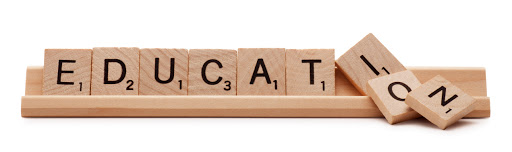
Some of you might remember Tony Blair’s speech introducing the Labour party’s education manifesto in 2001. In it he proclaimed that education was at the forefront of government policy. Education is often high on government’s agenda even if it is only to berate previous administrations for failing our youngsters. I have watched with interest the current government’s farcical approach to education and in particular the attainment of qualifications during the first period of Covid lockdown and to some extent even felt sorry for them as they grappled with what were not insignificant problems. My benevolence, however, has long been drained as I watch the news more recently only to see the same farce emerging. But what really intrigues me is the conflation of the notion of qualifications and education. It seems to me the clamber to get children back into school is only right given that they are missing out on education and other social aspects. However, I cannot see how the dealing with the qualifications issue can ignore the fact that the students have not received all of their education.
In a previous blog I have used the analogy of a driving instructor giving lessons to a pupil. In that blog the point being made was that the education of the pupil was a two-way enterprise. If the pupil didn’t engage or didn’t turn up for their lessons, then the instructor could not be held responsible for the pupil’s failure in the driving test. But what of the test itself, what is that designed to achieve? It is not simply to provide a person with a driving licence, what would be the point of that? It is to ensure that the person taking the test can drive to a satisfactory standard that would help ensure the roads were safe for all users. So, the point of the driving lessons is to provide the education in ‘road craft’ and the point of the driving test is to test knowledge and ability in that ‘road craft’ to ensure it meets satisfactory standards. The driving licence is a form of certificate that states the driver has achieved the knowledge and skills required.
So, what of education? Surely GCSEs, A levels, BTec and so on are a test of the knowledge and skills acquired. A degree is the same, is it not? How then could we reasonably expect students to pass any of these tests if they have lost significant periods of tutorship or teaching? The suggestion, dumb down the tests in some way by only testing what they have been taught, or as in the case of university students suggestions, be more lenient with the marking. Now as I understand it, that would be akin to saying to a learner driver that because through no fault of their own, they could not engage in all of their lessons, they will only be tested on their ability to park and not on their ability to carry out an emergency stop as they hadn’t been taught the latter. How ridiculous would that be? Imagine then that the very same driver, who now has a driving licence, goes onto some advanced motoring course. A course that starts with the premise that they have all the skills tested in a ‘full’ driving test.
Whilst, I can understand students’ preoccupation with tests and qualifications, I somehow think that government and teaching establishments should be more concerned with education and the knowledge gap. How will they ensure that students have the requisite skills and knowledge? Tony Blair may have said ‘Education, Education, Education’ and subsequent governments might well nod in agreement, but somehow I think they’ve all lost the plot.
Share this:


A year of many firsts
2020 was a year of many firsts for myself, and therefore in spite of the global pandemic (which brought with it the destruction of lives both figuratively and literally) it was actually quite an interesting personal year. I am exceptionally fortunate to be able to say I still have my health (physical, cannot claim with as much certainty about my mental health), a job, a roof over my head and have not suffered direct loss of loved ones due to COVID. Therefore, I feel a content warning is required: this blog does not look to boast or minimalize all the loss, hardship and destruction that was experienced in 2020. But taking a leaf out of my colleagues’ book, I would like to try and reflect upon 2020 positively where possible: and in all honesty I experienced some really beautiful firsts in 2020.
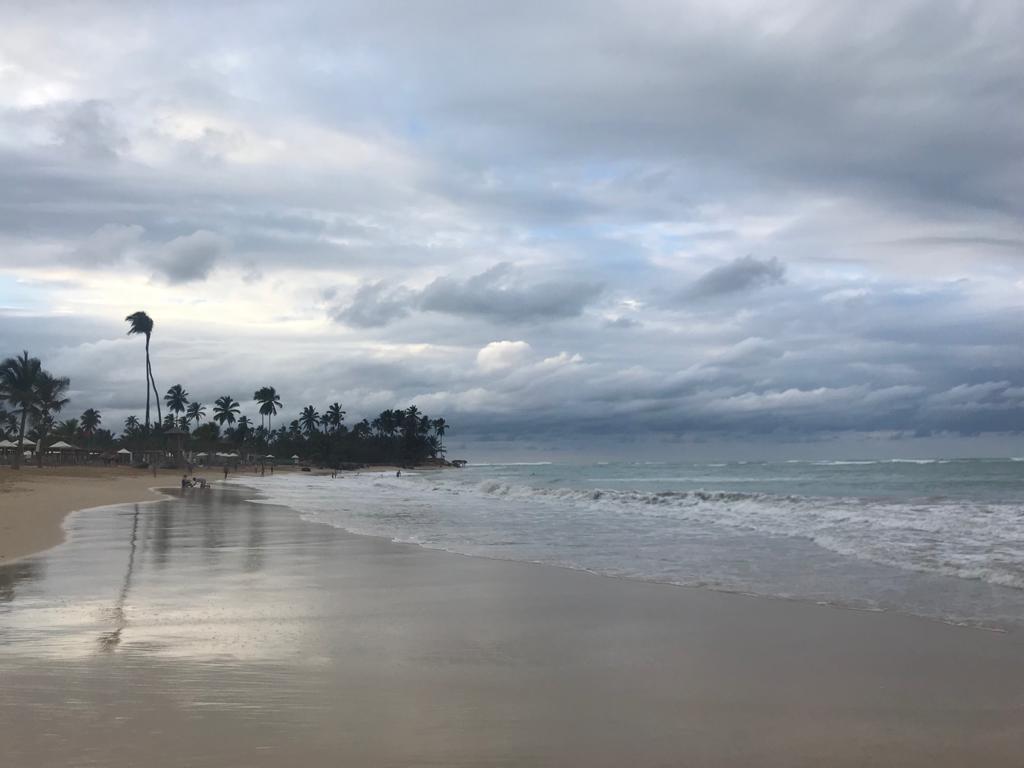
January 2020 saw the most magical ‘first’ I have experienced in my life: the first (and I am very hopeful my only) day as a bride! The day was filled with so much love, joy, food and laughter: where memories where created which cause me to smile on even my darkest days! And with this magical day came a wonderful honeymoon where my first experiences as a newly-wed were not too shabby at all! The Dominican Republic was beautiful in scenery, activities and people! Again, memories which fill me with warmth.
January also saw me graduate with my first masters, although I did not attend the graduation as was sunning it up with cocktails and novels in the DR!
During the first lockdown, my partner and I moved. This brought with it my first experience of living without a washing machine, along with my first experience of purchasing a washing machine (not that fun and quite expensive!). It was also my first experience of living in a house with my partner, with more than 3 rooms! Which, during a lockdown, proved to be essential in many ways: a luxury I know many could not afford.
The Criminology book club began in lockdown (not my first book club: sorry guys), but it was my first virtual book club which is something! Along with this came the delivery of workshops online, another first, and later in the year the delivery of lectures online, again another first! I also experienced my first online interview (panel, presentation the whole works) which was joyous. And received my first offer of full-time employment.
The holiday season brought with it the odd few firsts as well. It was the first holiday season my partner did not work in all the years I have known them (not through choice unfortunately), it was the first time we both drank on Christmas day (partner is usually driving or conscious of work on Boxing day). And it was the first time I did not feel the ‘lull’ in between Christmas and New Years, which was more scary than anything else.
2020 started out with such promise and hope, and threw some serious ‘end of the world’ vibes at us, and for some these were more than just vibes. It has been hard for all and catastrophic for many, but there have been glimmers throughout the year which have kept us going when it did not seem possible. For me 2020 will always be the year of destruction but also a year of firsts: some of which are currently up there as the best days, experiences and moments of my life 😊
Share this:


My new year nightmare: finance, political imperatives and a lack of strategy

The new year is here. At its last knockings, the previous year offered hope of some sort of return to normality. The second new vaccine was on its way, far easier to store and distribute, it offered hope. Unfortunately, the joy of the new year has been somewhat muted as we have witnessed Covid-19 cases rise to new heights. Talks of stricter measures have turned into our new reality, as one minute the government insisted on schools opening then the next a partial U-turn before a forced full-scale retreat. But as we watch all of this unfold, I am reminded of a comment I heard from a radio presenter on the lead up to Christmas. Her view was that there was much to be happy about, we know more about the virus now than we ever did and scientists have developed a vaccine, several vaccines, in record time. Over the Christmas and new year period I reflected on last year and tried to think about what we have learnt.
Brexit has just proved to be a complete farce. Promises of a good deal turn out to be not so good, ‘no deal is better than a bad deal’ the politicians said. And then in desperation, realising that any deal was better than no deal and that the best deal was the one where we were in the European Union they settled on something and thanked the gods that there was far more pressing bad news to hide their incompetence. So, we are now a ‘sovereign’ nation but poorer to boot and whilst we think we have regained control over our borders, it is only limited to bureaucratic, time consuming form filling, as we beg people to come here to work in our care homes and on the farms for a pittance. Perhaps the refugees that we have reluctantly accepted might help us out here. Brexit has been delivered but at what cost? No wonder Stanley wants to take up his opportunity for a French passport.
We are all equal its just that some are far more equal than others. We saw the rise of the Black Lives Matter movement and I have a feeling that I wouldn’t be able to do that discussion justice; I’ll leave that to others that are far more capable. It did have a profound impact on me though as a former serving police officer, I would like to think it had an impact on others both retired and serving, but I’m not so sure. I think that quite often the police are simply a reflection of our society and I’m not willing to bet much on that changing rapidly. I remember Michael Holding, a former West Indian cricketer, turned commentator, talking about ‘white privilege’ and he provided what I thought at the time was a good example. Now I’m not so sure, this so called ‘white privilege’, isn’t privilege at all, it’s rights. It’s the rights that white people avail themselves of everyday in a democratic society (well that’s what we are supposed to be in anyway) without a second thought. The problem isn’t that white people have those rights, it’s that Black and ethnic minority individuals don’t, or where they do, the rights are somehow conditional. I might be wrong in my thinking, but I know one thing, without some very clear leadership from government, institutions and general societal attitudes are unlikely to change sufficiently. Although footballers and staff take a knee before every match, I fear that the momentum is likely to be lost. By the way, I’m not holding out much hope on the leadership gambit.
Sticking to the we are all equal theme; the pandemic has shone a spotlight on poverty in this country. Yes, Mr high and mighty Reece-Mogg, there really are very poor people in this country and they do need a helping hand. The fact that food banks are even required is shameful. The fact that foodbanks rely on charity is an even more shameful indictment of our government. The fact that a senior politician can stand up in the house of commons and accuse a charity of political motives when distributing aid beggar’s belief. I find it extraordinary that pre pandemic, homeless people were left to their own devices on the streets, reliant on charity and handouts and yet as soon as we went into lockdown, the government found money from somewhere to house them. What changed? My worry is that when the pandemic is over, the government are going to be more concerned about balancing the books than they are about the pervasive poverty endemic in our nation.
Children returning to school has been a huge issue for government and they rely on evidence that suggests that the best place for children is at school. A headmaster reminded us in an interview on the radio that this ‘online learning’ phrase that trips off the tongue is far easier to talk about than to achieve. What hits home is the huge disparity in opportunity for children to avail themselves of online learning. Poorer families cannot provide the technology required. Poorer families are likely to live in cramped conditions making it impossible for children to concentrate on work as siblings run around trying to keep themselves amused. And let’s not forget the plight of the parents who are more likely to be in jobs that require them to be at work, not home. Then of course there are those children that are vulnerable where school is a safe haven from abuse, whether that’s physical or mental or simply because school is where they will be fed. So, in a sense for many, school is a better place than home, but we really ought to be asking why that is. What does that say about our society? If I were to hazard an educated guess, I’d say its broken. The return of children to school had wider implications. What about the teachers and staff? It seems to me that government have different standards of risk depending on what suits. I’ll come back to this in time but I think the closure of schools owes itself more to the action of teachers in their refusal to turn up to work in an unsafe environment than it does any sensible government strategy.
Sticking to the education theme, the pandemic shone a rather harsh spotlight on higher education too. What became increasingly obvious was that the return of students to campus was purely financially driven. At least one vice chancellor put his head above the parapet and stated as much. His university would fail if he did not fill the halls of residence. So here we had a situation where scientific advisors were stating it was folly to open universities and yet universities did so with the backing of government. The reason, we can’t put education on hold and yet how many students take a gap year, before going to university? Putting education on hold doesn’t appear to be that damaging to the individual, but it is very damaging to a morally corrupt educational business model that needs halls of residence to be filled to prop up the system. To make matters worse, students flocked to university only to find that face to face teaching was patchy, the university experience was not what they were promised or envisaged it would be, and more time was spent in isolation and lock down than was healthy. If education was supposed to be good for their mental health, it had the opposite effect for many. I don’t think it required a rocket scientist to work out that online teaching was really going to be a default position, so either management and government were very naïve and reckless, or they were somewhat economical with the truth. Time to revisit higher education, I think.
Talking about government advisors, what’s the point in having them? Everything I read suggests that government advisors say one thing and government does something else or dillies and dallies its way into a dead end where it finally admits the advisors are in some way right, hence another eleventh hour lock down. The advisor’s said universities should not go back, they did and is it coincidence it coincided with a rise in Covid-19 cases? Advisors were saying schools shouldn’t go back but the government insisted they should and many did for just one day. There is a saying about tactics and strategy. Strategy is unlikely to be achieved without tactics but tactics without a strategy are useless. I have yet to understand what the government strategy is, there is however a plethora of disparate (or is that desperate?) tactics . The result though, anguish and suffering to more than is necessary. Some of the tactics seem to be based on decision regarding who is most at risk. We hear that term an awful lot. I watched the prime minister at lunch time, the man who promised us a fantastic Brexit deal, as he explained how important it was that children went back to school. Children are at very little risk going to school he said and then added, and teachers are not at very much risk or at least at no more risk than they would be normally. He bumbled and blustered over the latter part; I wonder why? A few hours later he told us schools would be closed until at least the 15th February. What happened to ‘no risk’? When we talk about risk, there are a number of ways of viewing it. There is the risk of death, easily understood and most definitely to be avoided, but what seems to be neglected is the risk of serious illness or the risk of ‘long Covid’. By ordering schools to be opened or that universities resume face to face teaching, the policy seems to have been that as long as you are not at a high risk of death then it is an acceptable risk. Time for a bit of honesty here. Does the government and do managers in these organisations really think that a group of people in a room for a number of hours with inadequate ventilation is not a serious risk to the spreading of the disease? Maybe some of the managers could reassure us by doing most of the face to face teaching when we prematurely come out of lock down again.
It seems to me that much is being made, on the news in particular, about the effect a lock down has on mental health, especially children. And I do understand the mental health issues, I can’t help but think though that whilst this is a very valid argument there is the elephant in the room that is either ignored or conveniently understated. The elephant; the fear engendered by the virus, the fear and anguish of those that have had to face the loss of a loved one. Just to put that in perspective that’s over 70,000 people whose families and friends have had to go through firstly the fear and anxiety of a loved one being ill and then the additional fear and anxiety of having lost them. Add to this the fear and anxiety of those that have caught the virus and ended up in hospital coupled with the fear and anxiety of their loved ones. Now add to this the fear and anxiety of those who have to work in conditions where they are at serious risk of catching Covid and the fear and anxiety of their loved ones. And then of course there is the fear and anxiety caused to the general population as the virus spins out of control. Somehow I think a little perspective on mental health during lock down might be needed. Is it any wonder teachers decided that what they were being asked to do was unsafe and unnecessary?
And then I think about all of those parties and gatherings despite restrictions. The shopping trips from tier 4 areas into tier two areas to snap up bargains in the sales. The Christmas and New years eve parties that defy any logic other than pure self-indulgence. Just as we see all of those selfless people that work in organisations that care for others or keep the country running in some capacity, we see a significant number of selfish people who really don’t care about the harm they are causing and seem to be driven by hedonism and a lack of social values. Unfortunately, that accusation can also be aimed at some of the very people that should be setting an example, politicians.
We should of course be happy and full of hope. We have a new vaccine (that’s providing it still works on the mutated virus) and normality is around the corner, give or take a few months and a half decent vaccination strategy (that’s us done for). A vaccine that was found in an extraordinary time period. I wonder why a vaccine for Ebola wasn’t found so quickly? I agree with my colleague @paulaabowles when she says we all must do better but more importantly I think its about time we held government to account, they really must do better. After the second world war this country saw the birth of the NHS and the welfare state. What we need now is a return to the fundamental values that prompted the birth of those provisions. There are so many pressing needs and we really mustn’t allow them to be forgotten. A strategy to tackle poverty might just ameliorate a raft of other ills in our society and the cost of tackling it might easily be mitigated by a reduction in demand in the NHS and many other public services. I can but dream, but my reality envisages a nightmare world driven by finance, political imperatives and a lack of strategy.

 Thoughts from the criminology team